The FP-1 Reconstruction
FP-1 is the conservative, preservative end of the range: you are replacing teeth and nothing else. The gum around them has not been damaged, so the new teeth emerge from the patient's own tissue exactly where the originals did, and nothing artificial is visible. It is also the hardest class to do well.
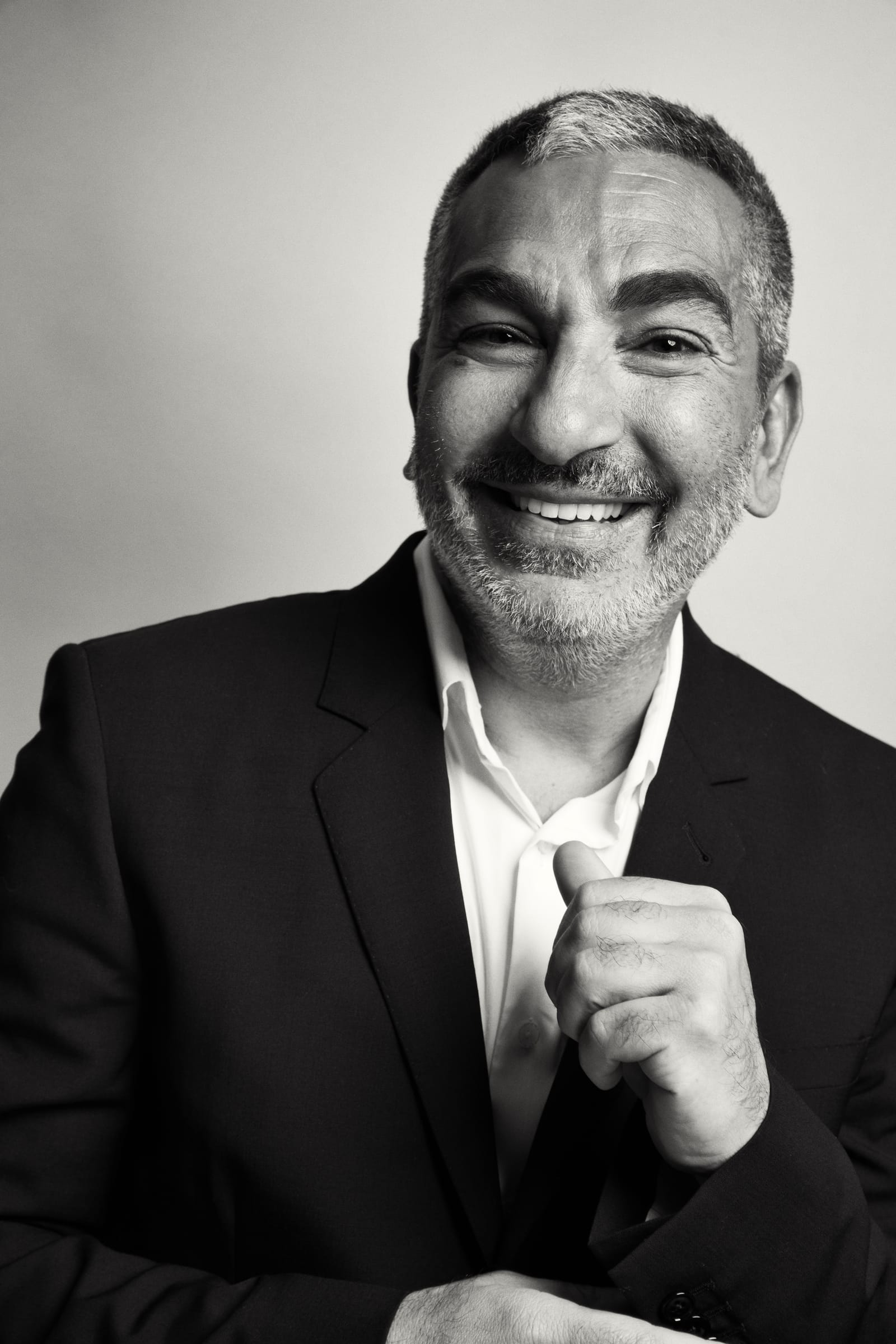
FP-1
The Tooth, and Nothing Else
Preserving the Foundation
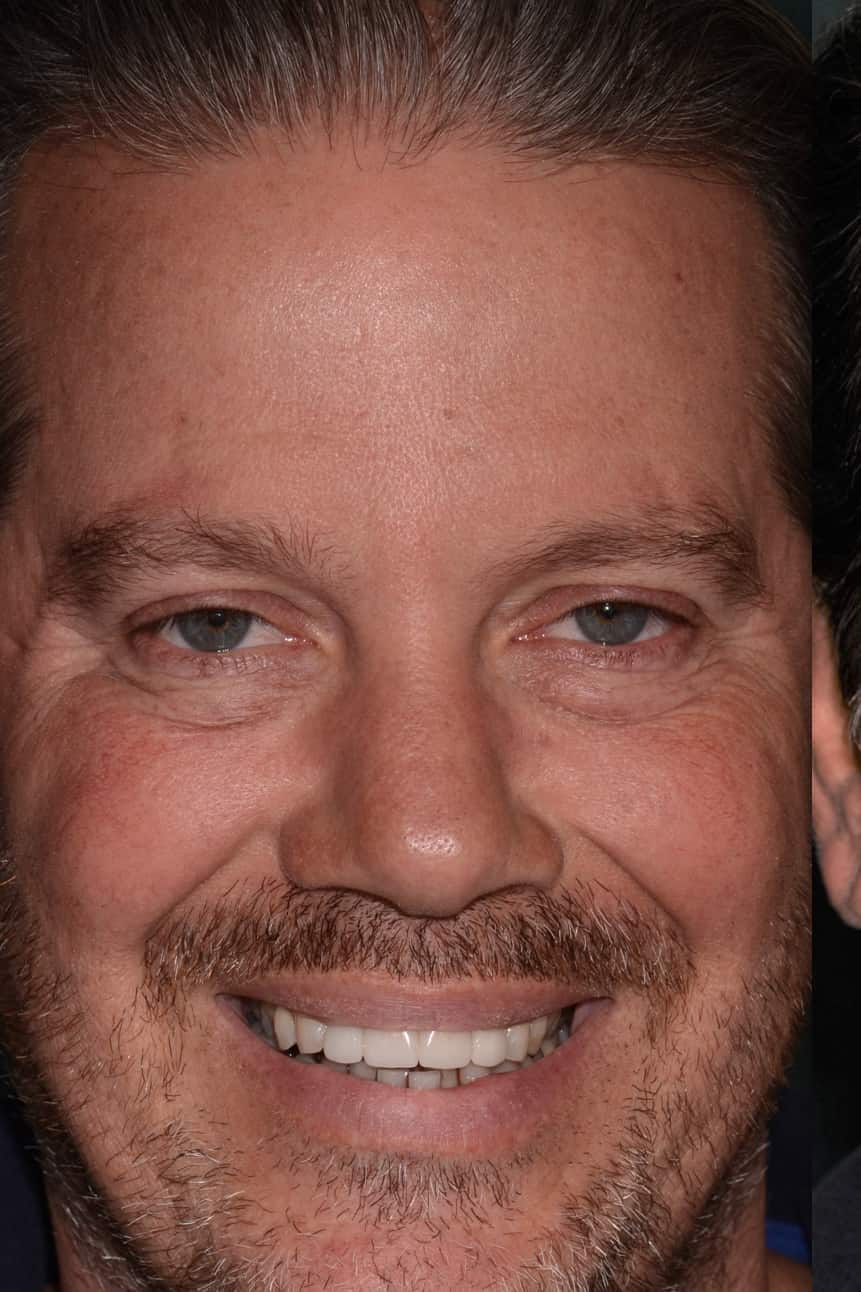
Failing root-filled teeth under old crowns, a bite collapsing forward onto them, and sinuses too enlarged for implants at the back. The upper teeth were replaced on implants. The gum was not: through atraumatic surgery and selective root submergence the ridge kept its height and width, so the final restorations emerge from his own tissue. No pink porcelain anywhere.
The result
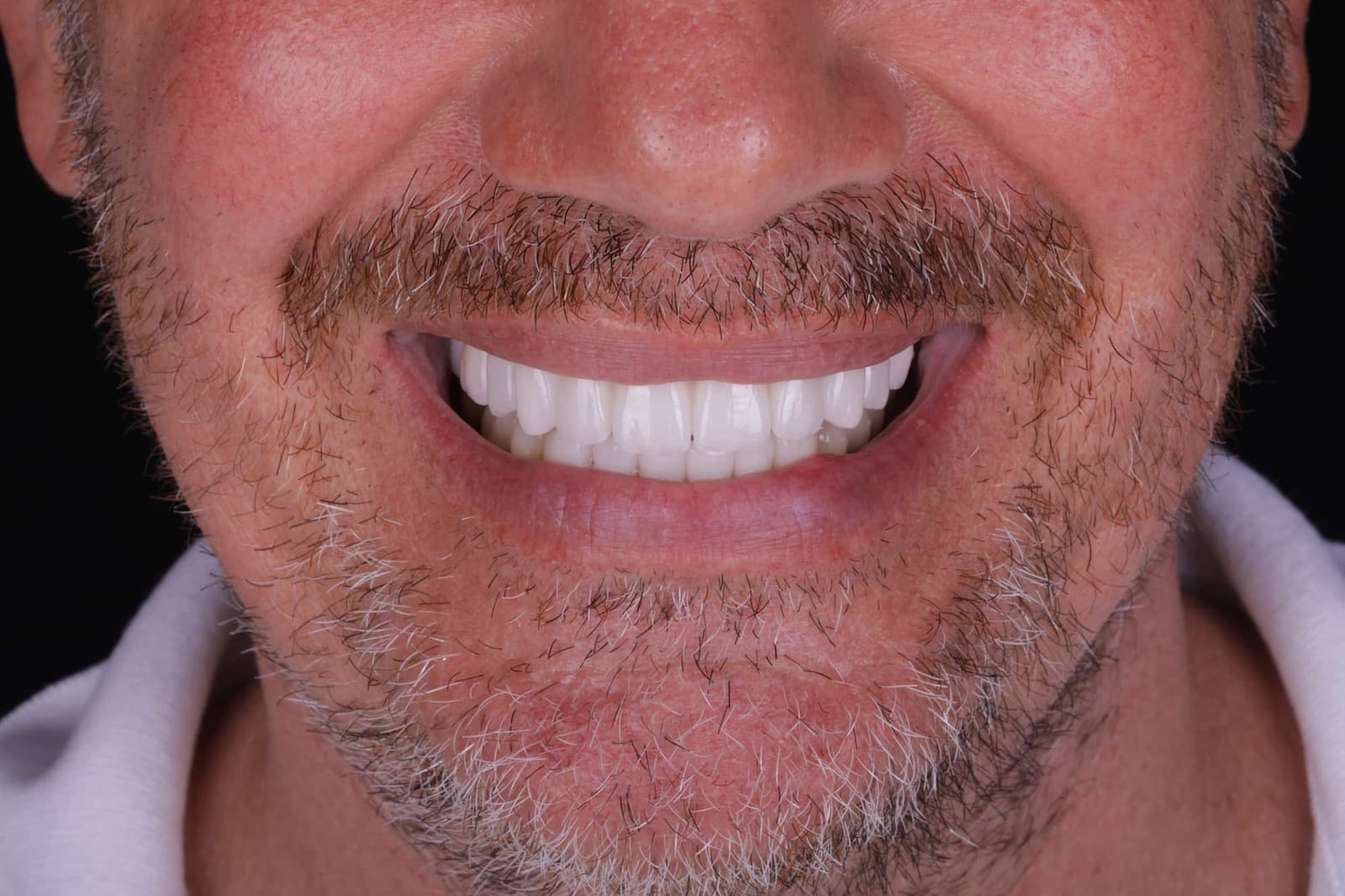
Smile, before and after
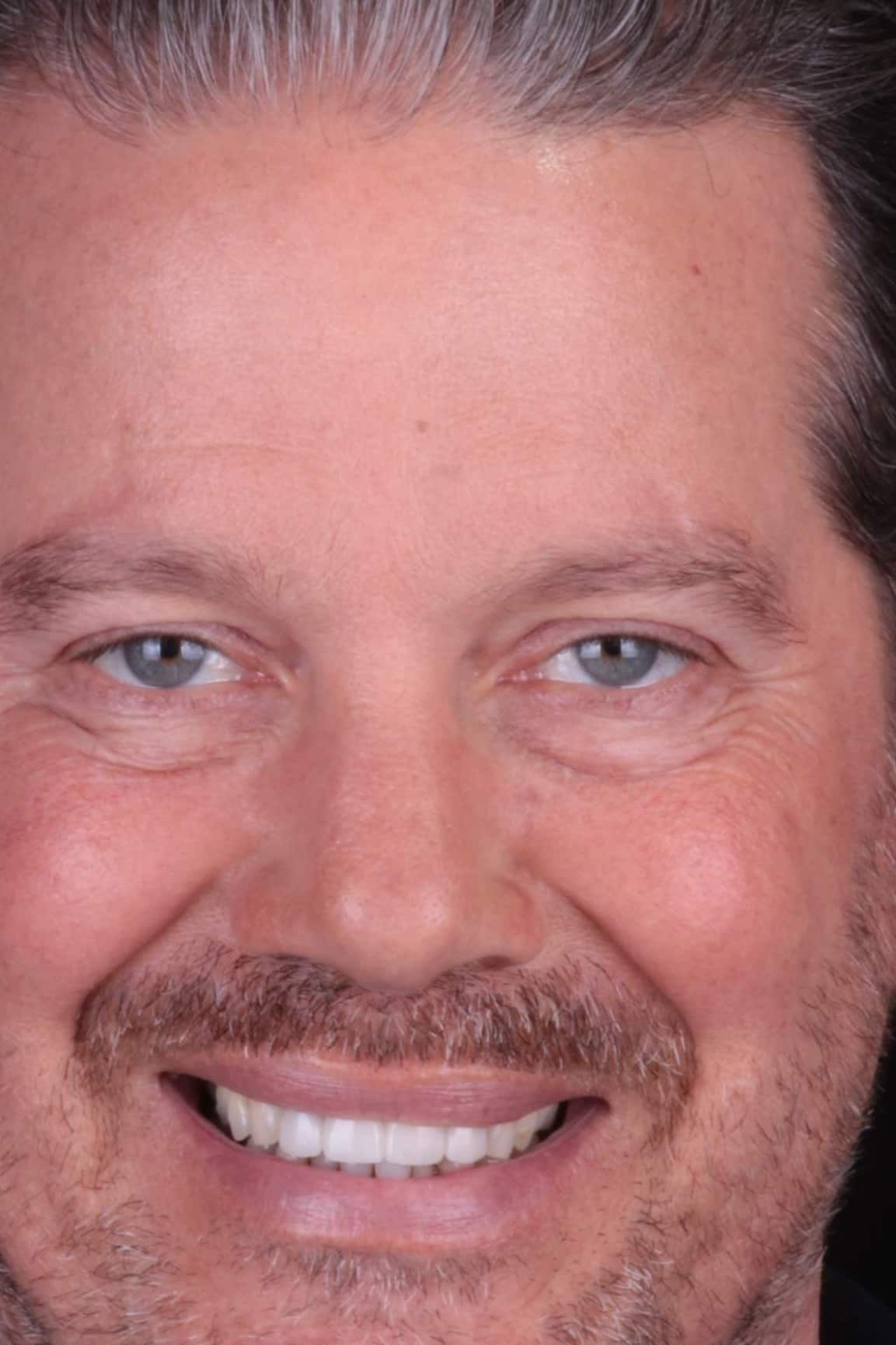
The same smile, close. The gum between the new teeth is his, kept through treatment rather than replaced.
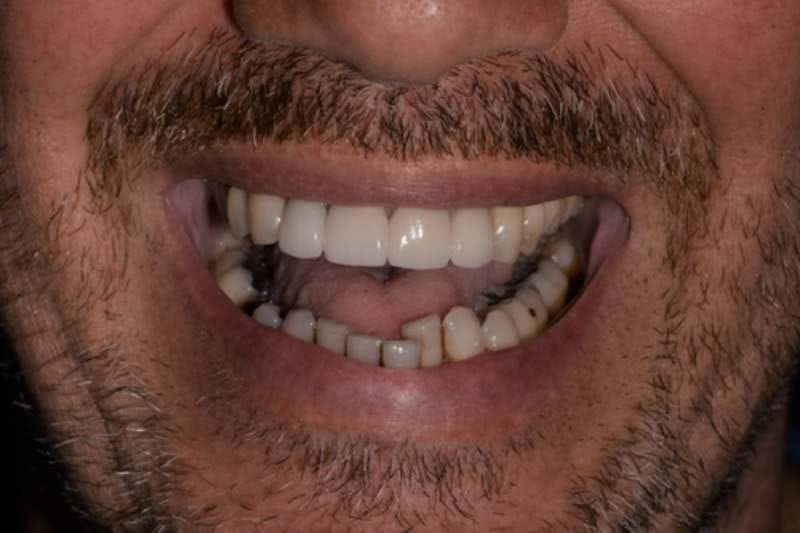
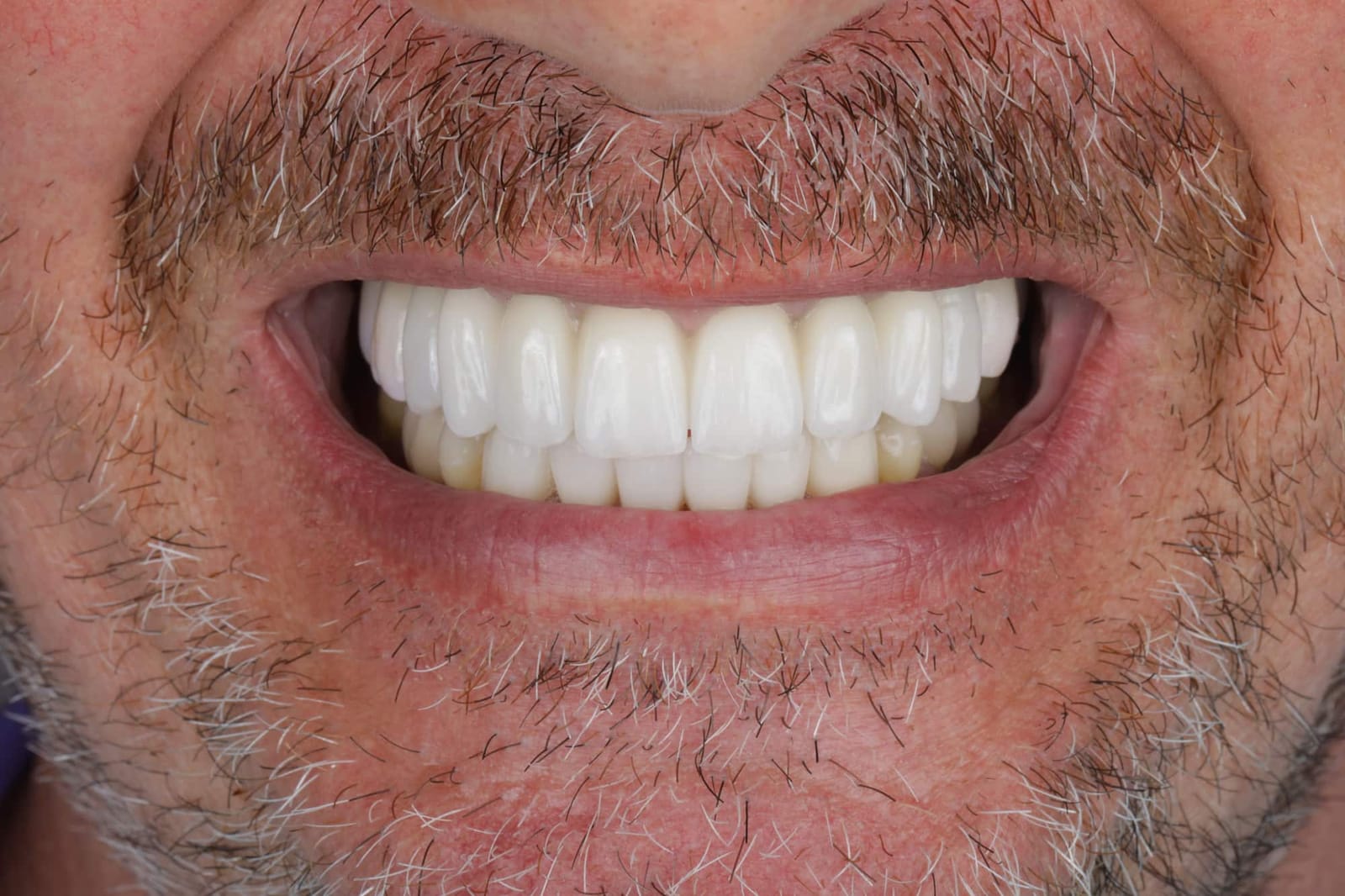
Full mouth, before and after
Retracted views. Before: crowns with failing root canals beneath them, and lower front teeth that were crowded and stained but healthy. After: the upper restorations on implants with the gum contoured around them, and the lower front teeth improved, not replaced.
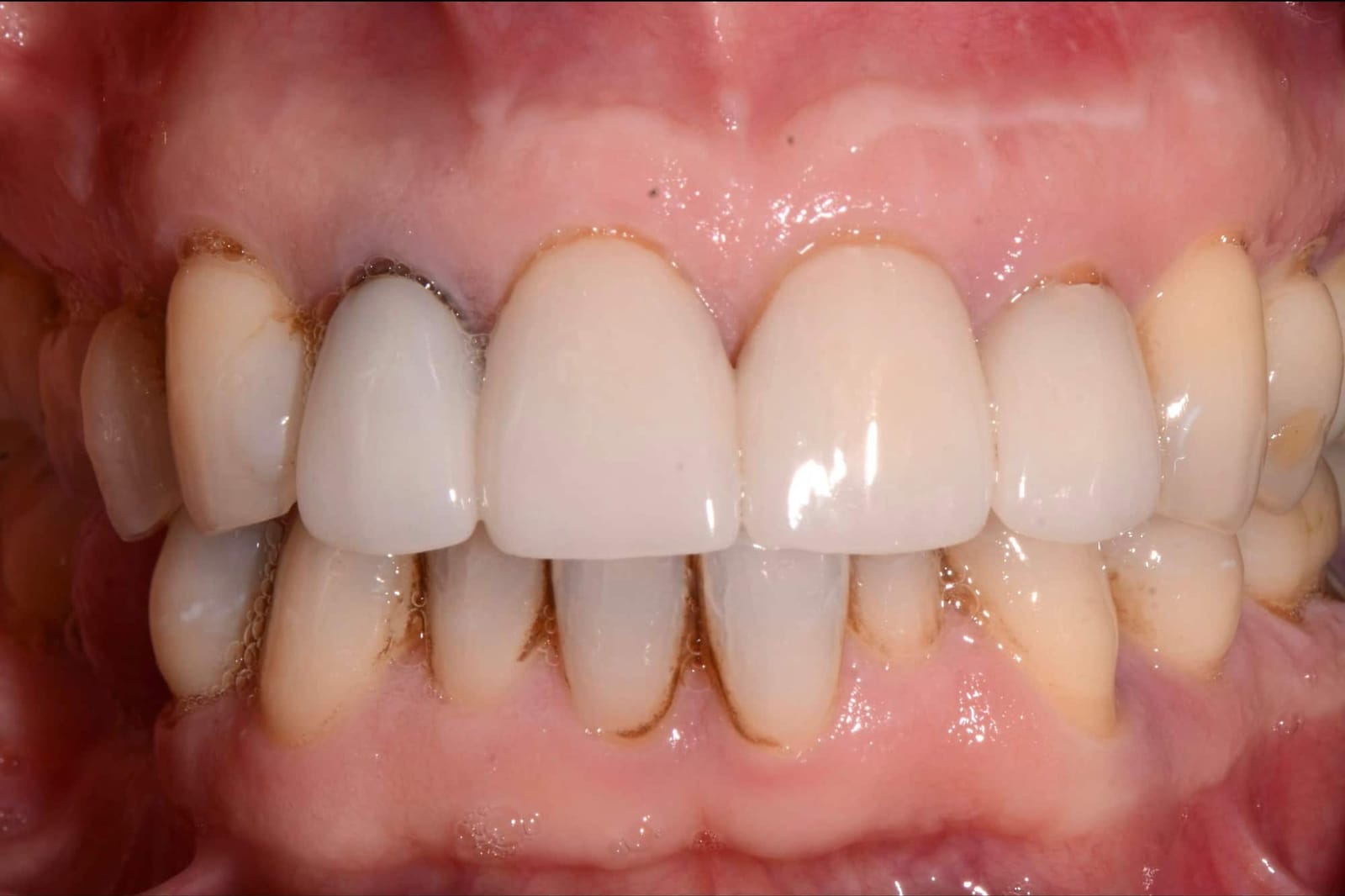
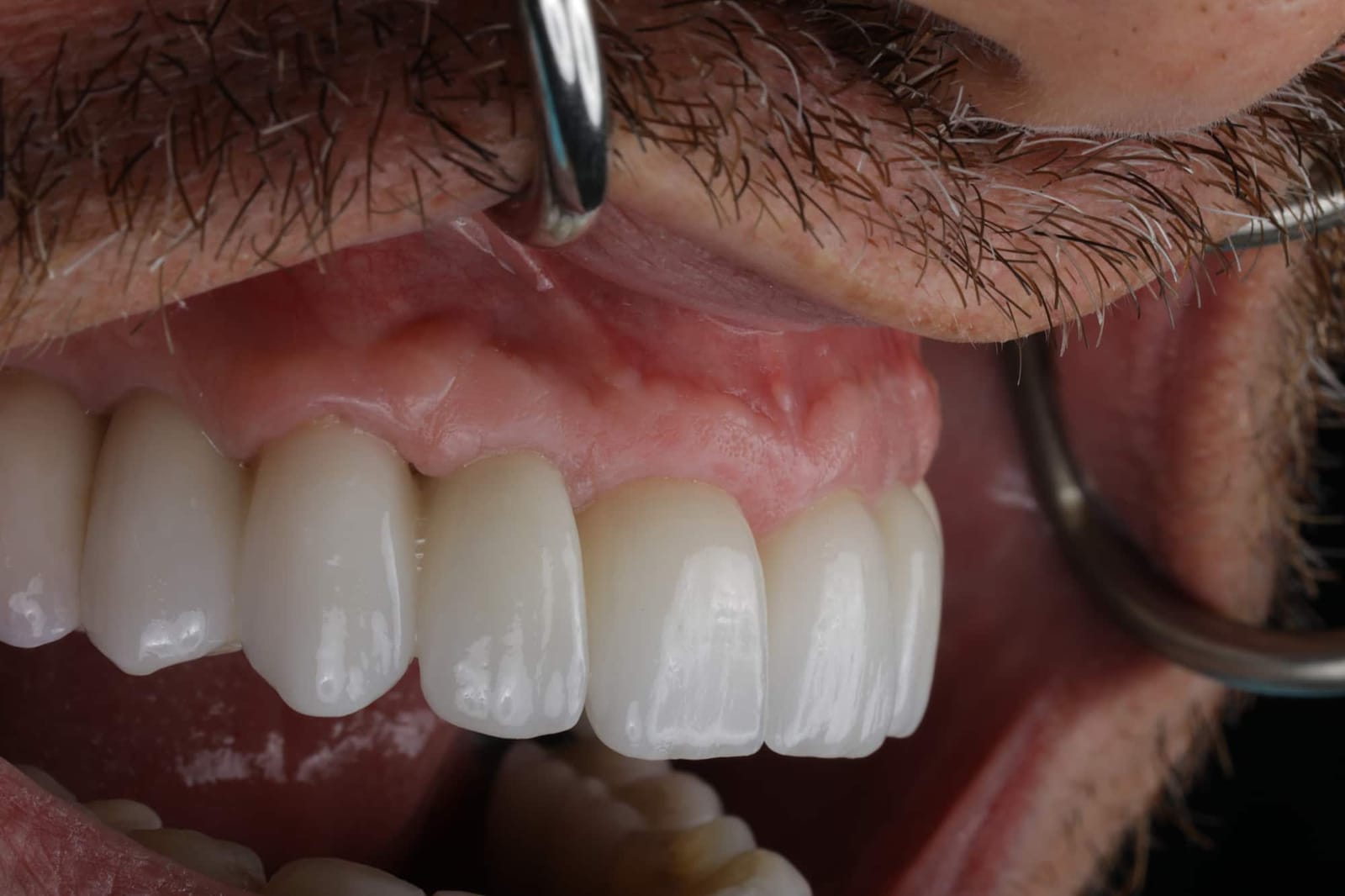
From either side
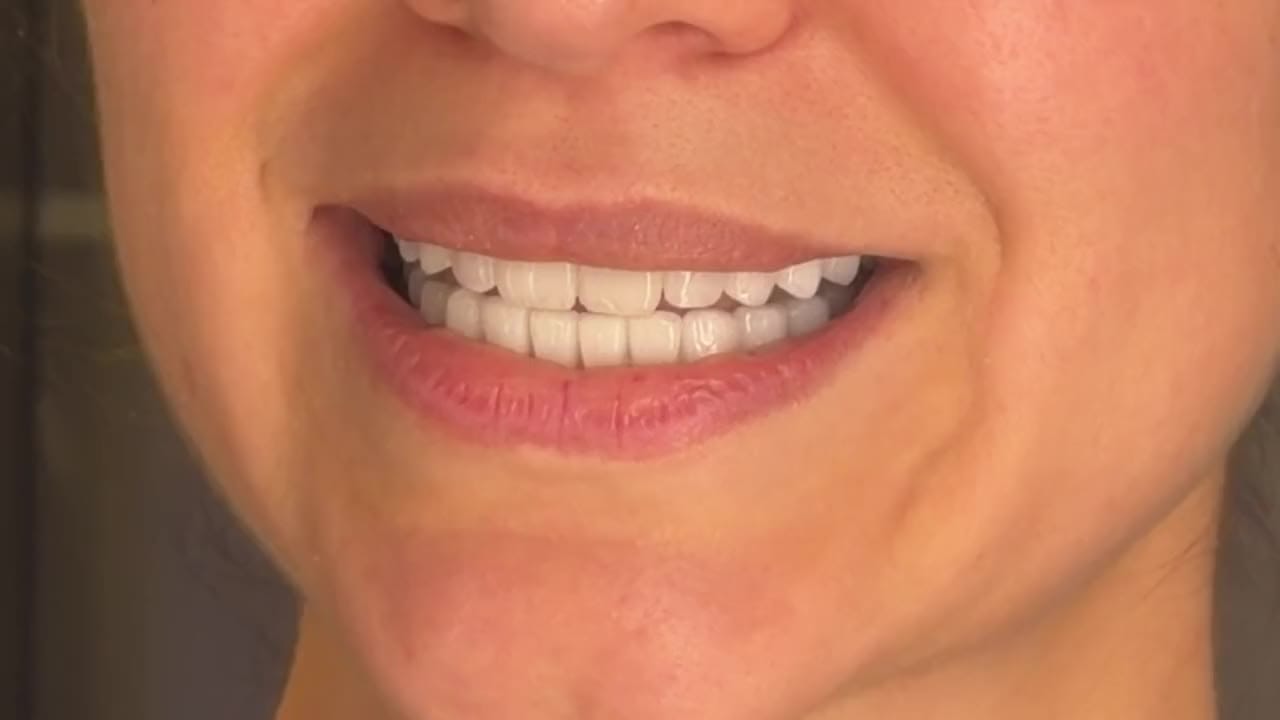
One smile from two angles; both frames are after treatment. This is what FP-1 means: the new teeth stand where the originals did, and nothing artificial shows.
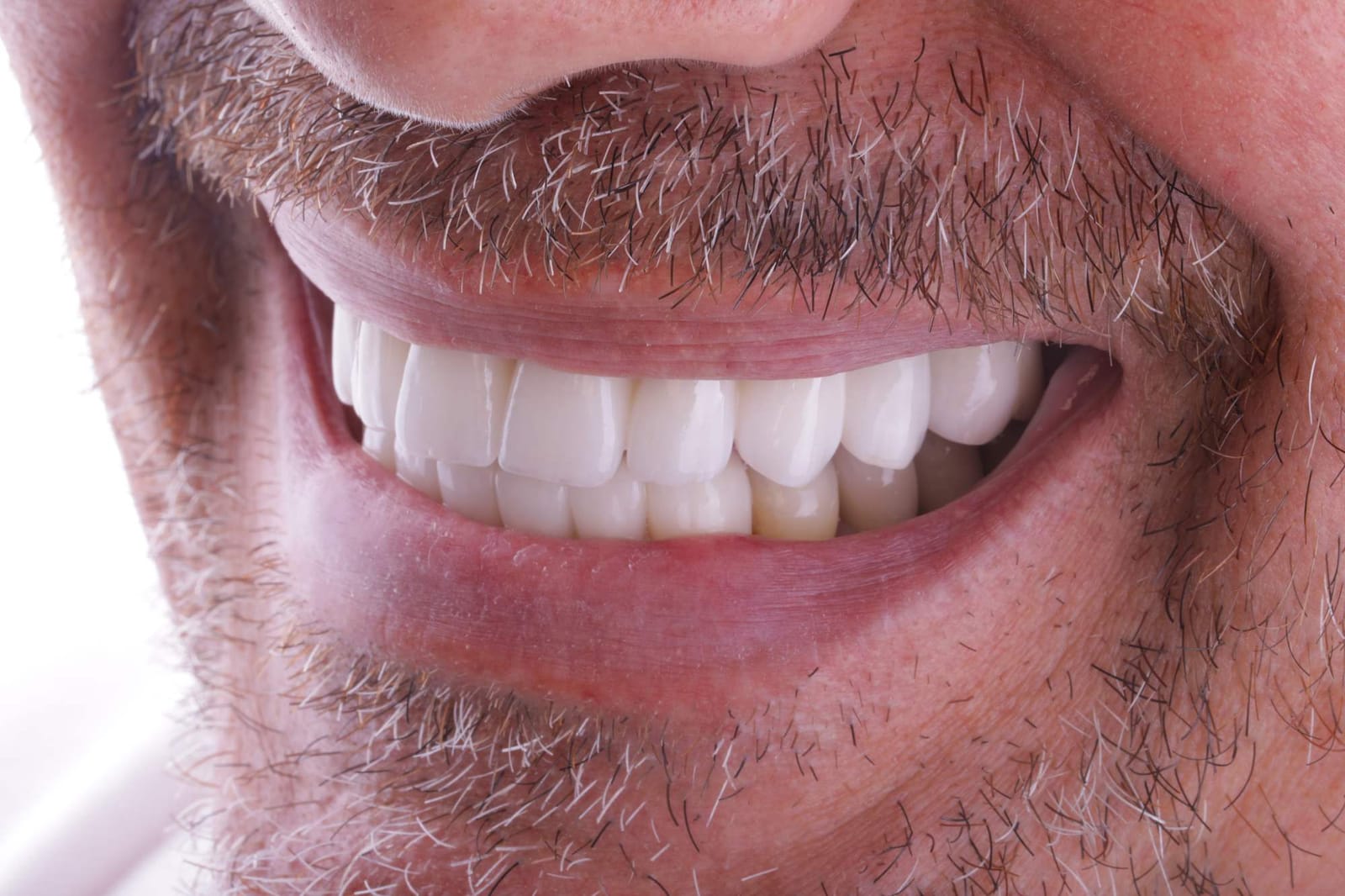
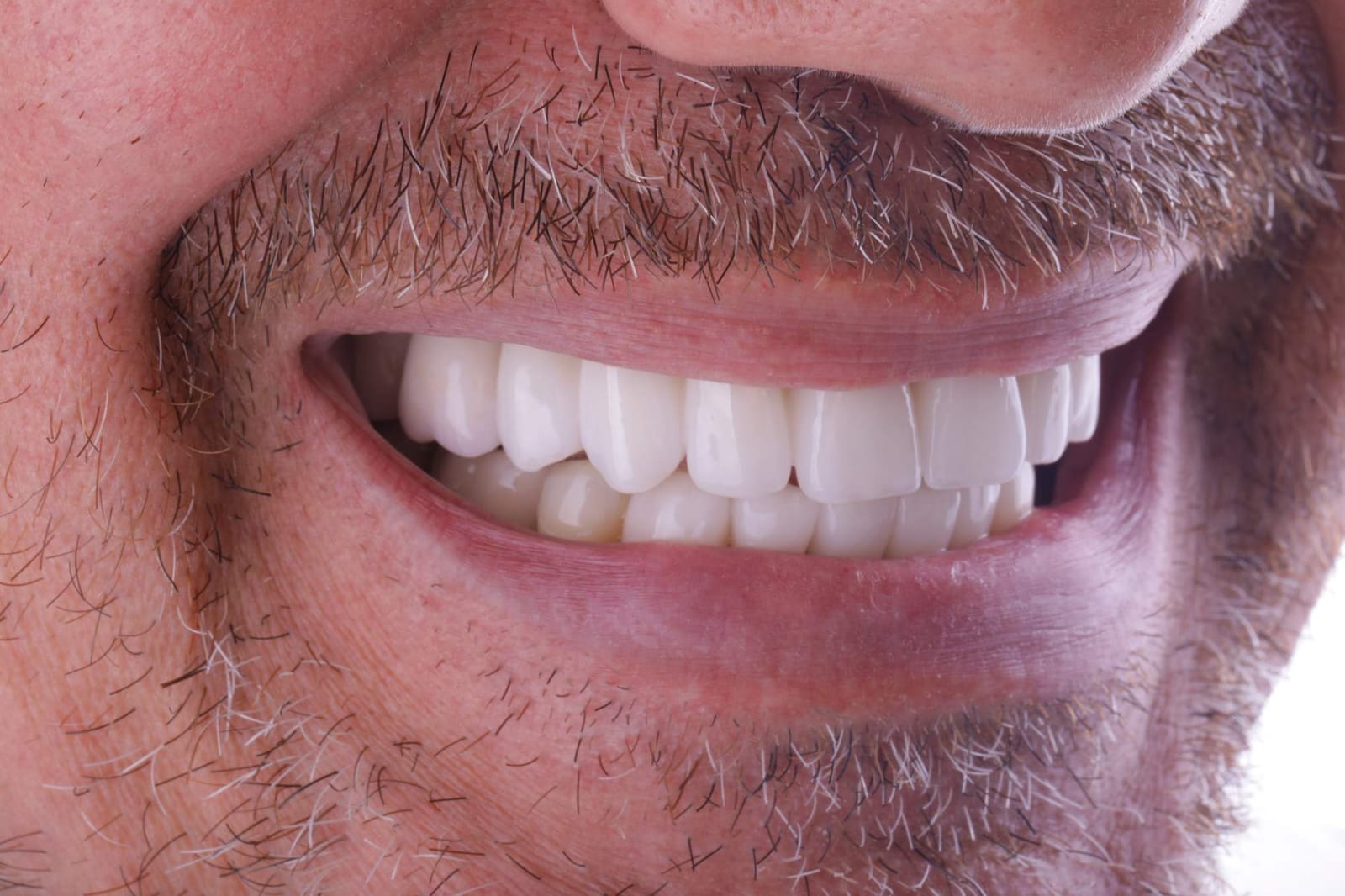
Before and after
Treated in 2019. The preserved gum around these teeth has held its shape since.
Restoring a Collapsed Bite Without Removing Everything
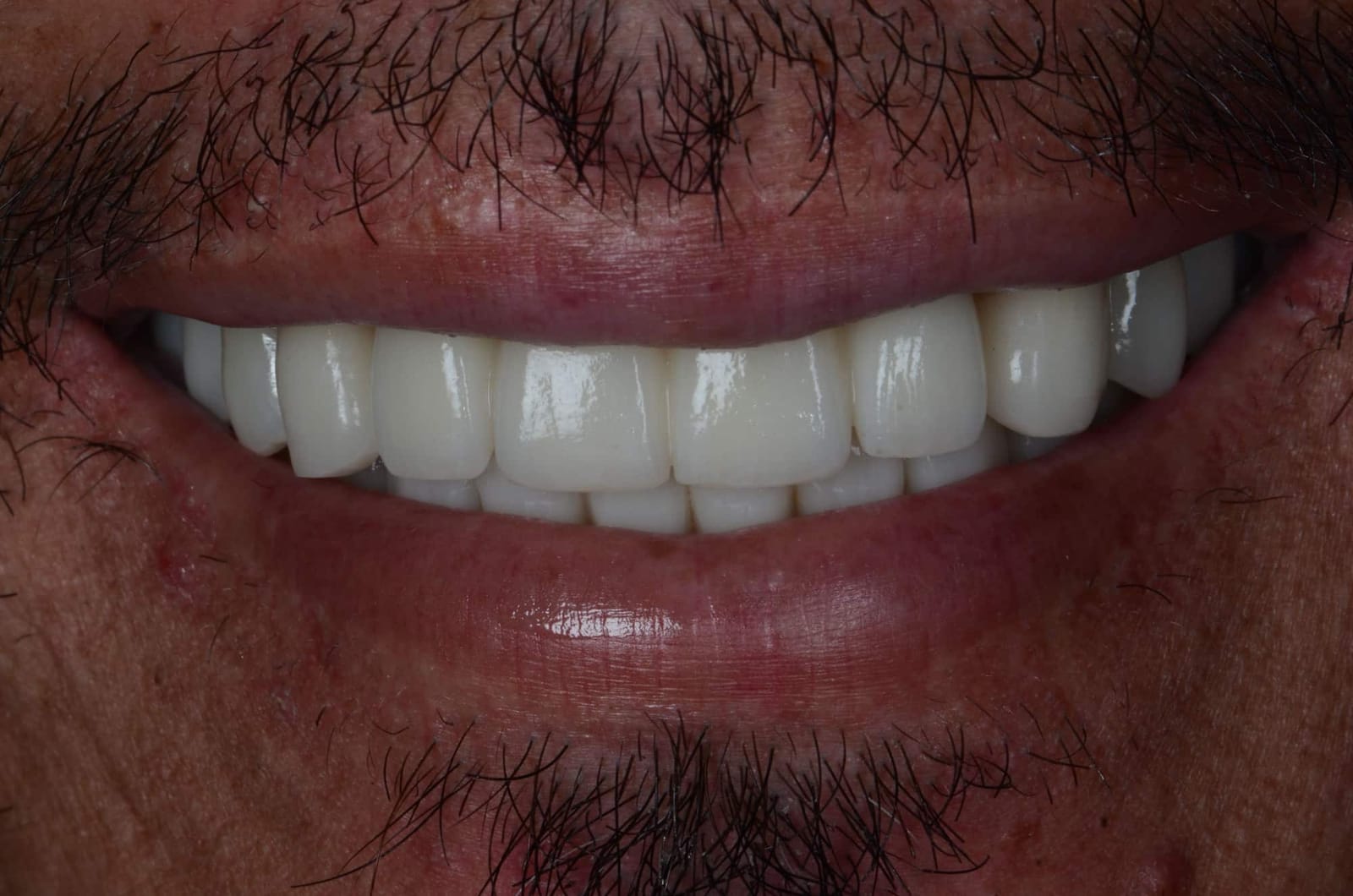
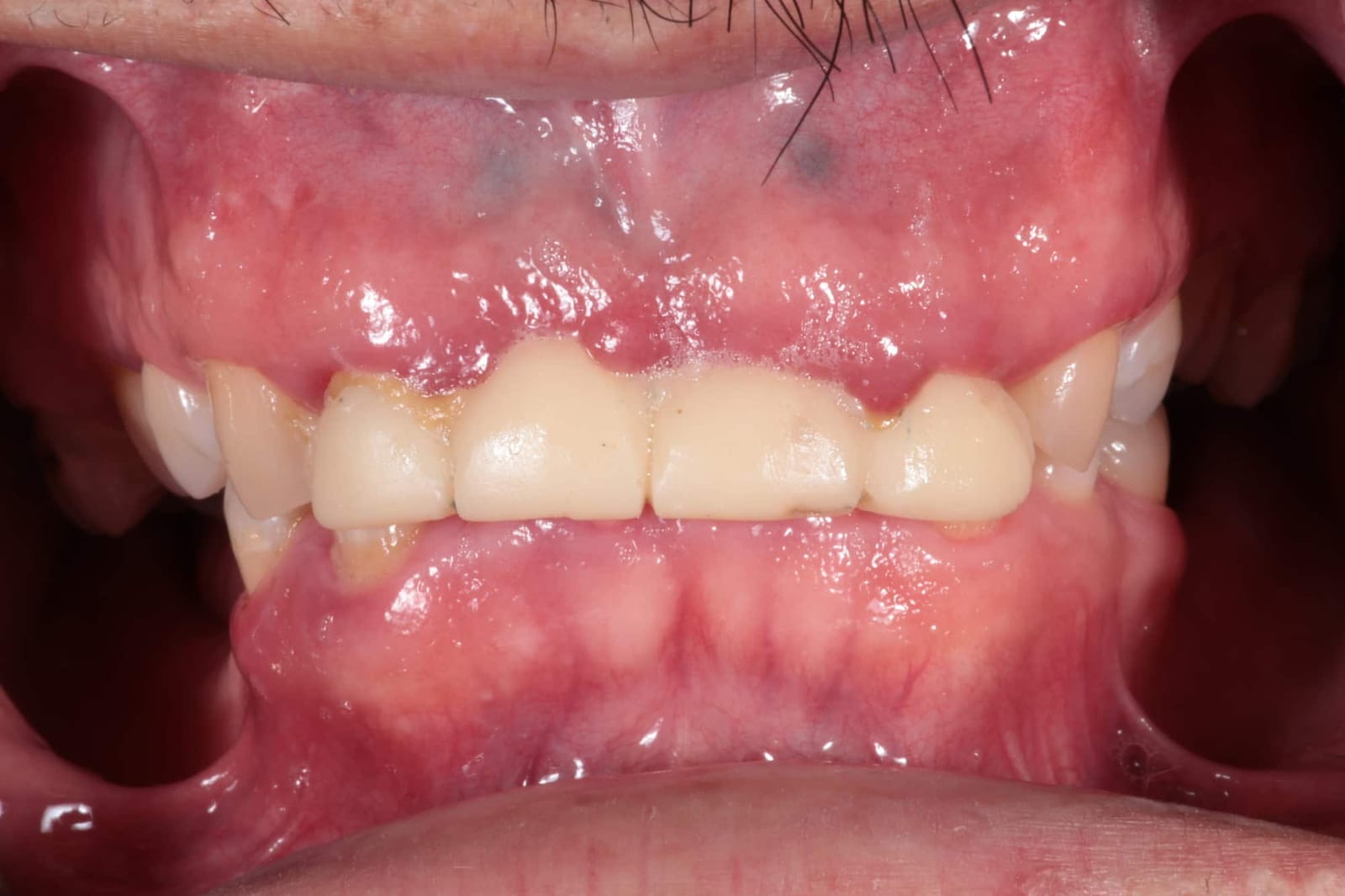
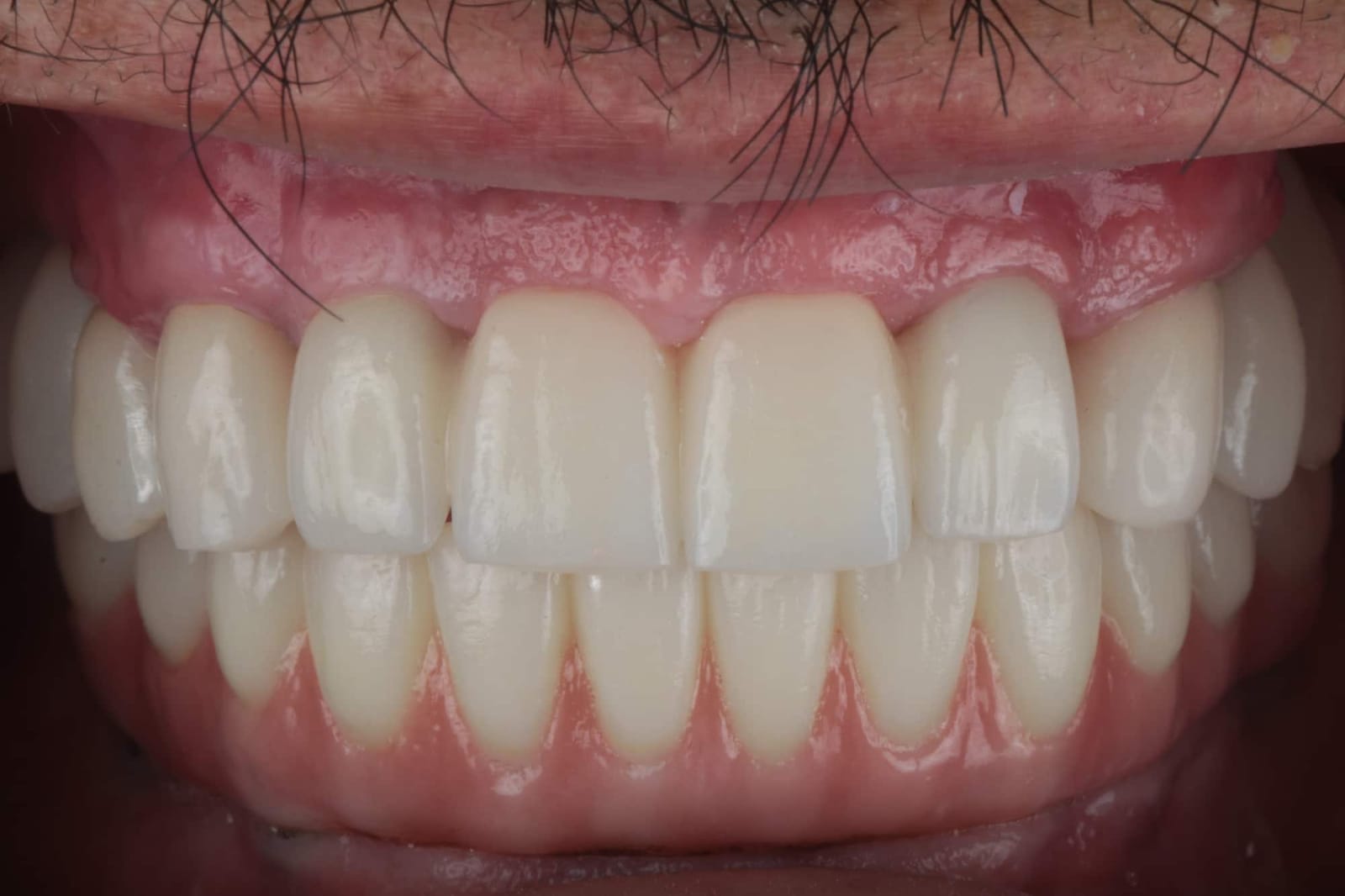
Over-erupted upper teeth had carried the jaw and the gum down with them: a vertical overlap of one hundred percent where ten to fifteen is normal, and a smile that showed gum. The space was created surgically and the hopeless teeth were replaced on implants. The canines were kept whole, and where no implant was going a sliver of root was deliberately left in the socket, so the bone stayed and the gum held the scallop it was shaped to. The ceramics now emerge from gum that was shaped by the provisional, not replaced with pink porcelain.
The result
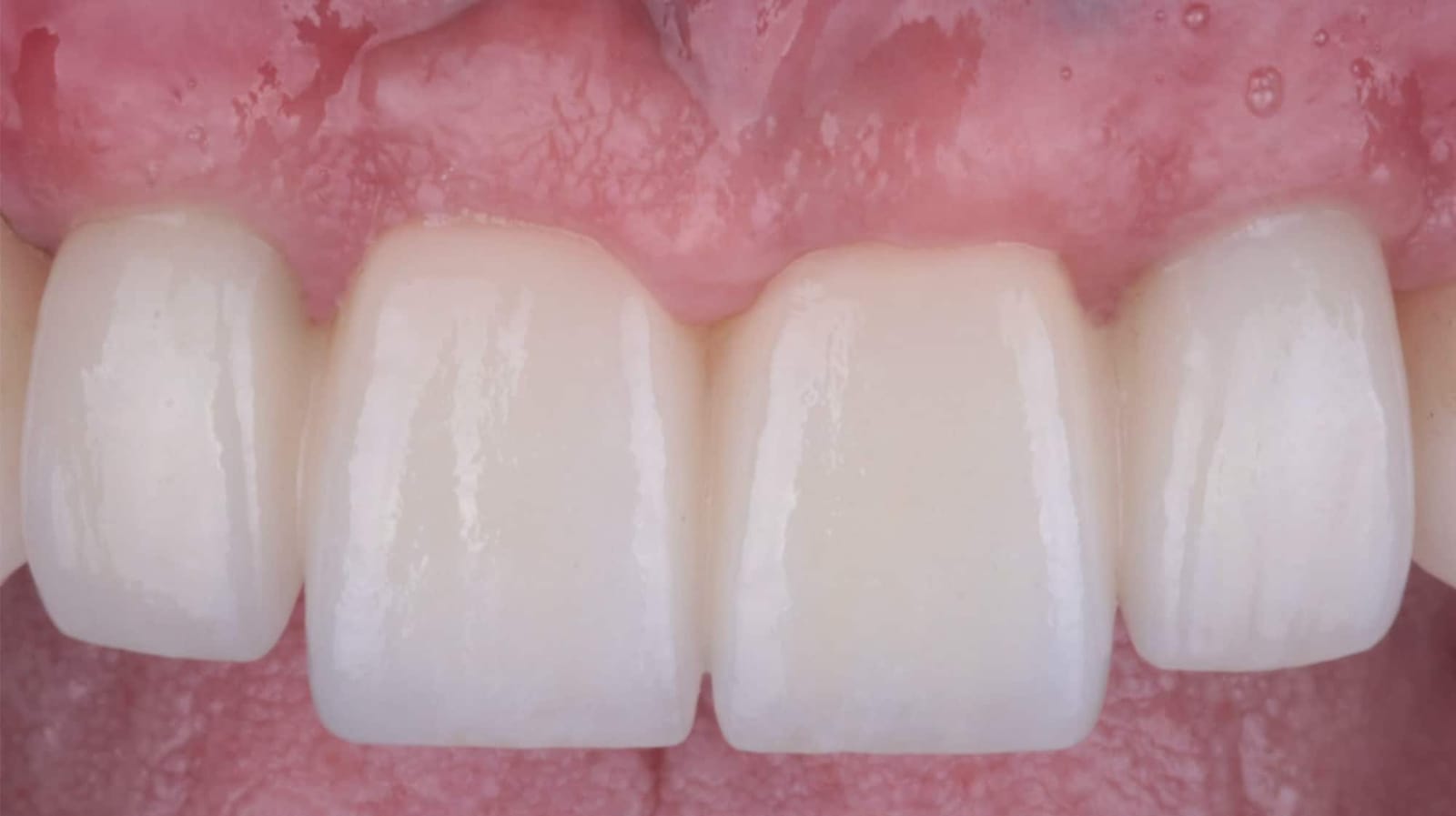
Smile, before and after
Before, at the first consultation in 2019: worn upper teeth under a wide band of gum. After, at the three-year follow-up in 2023.
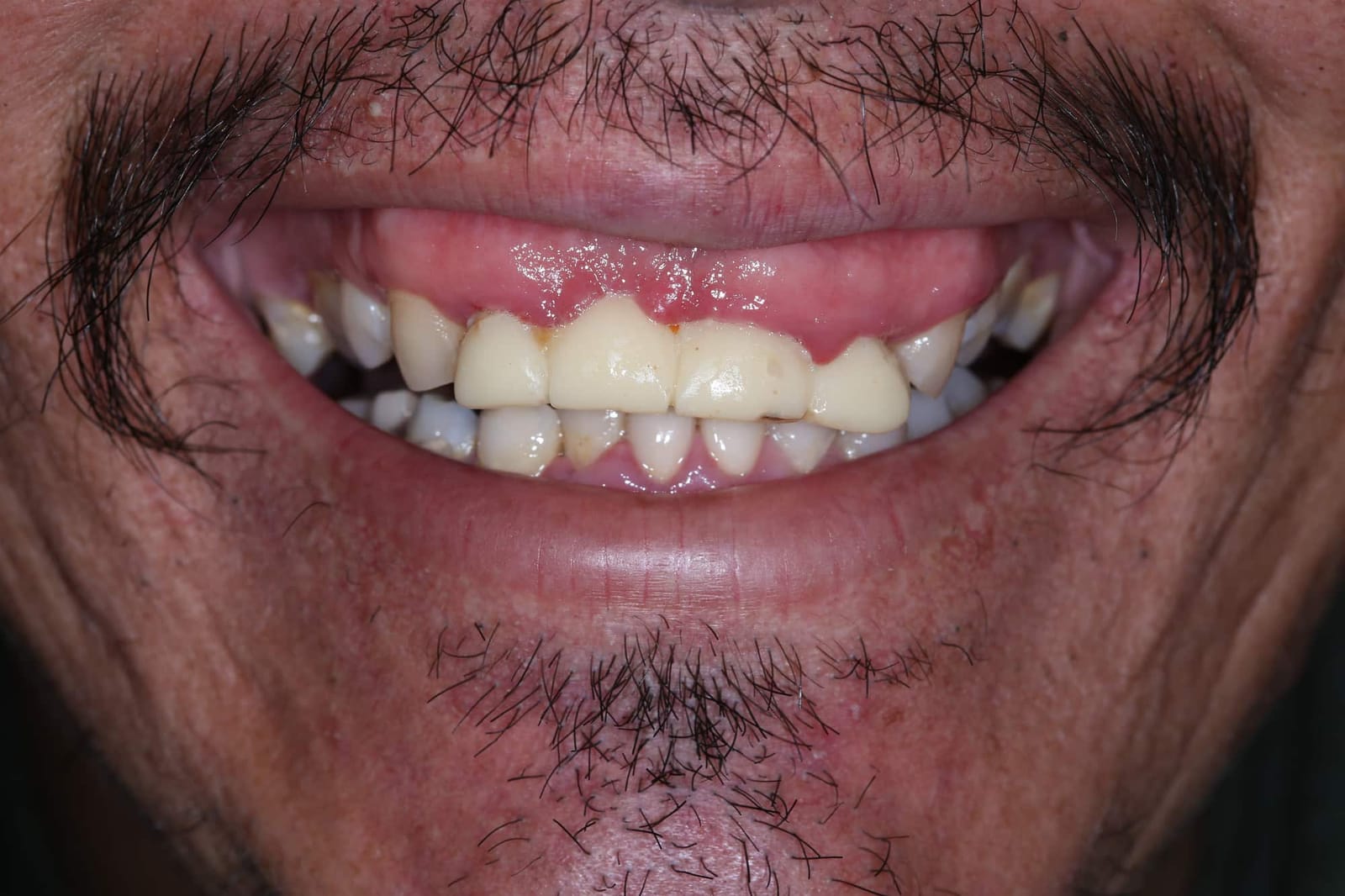
Full mouth, before and after
Retracted views. Before: the upper teeth worn short under overgrown gum, closing fully over the lower teeth. After: upper and lower restored, the upper teeth overlapping the lower by ten to fifteen percent.
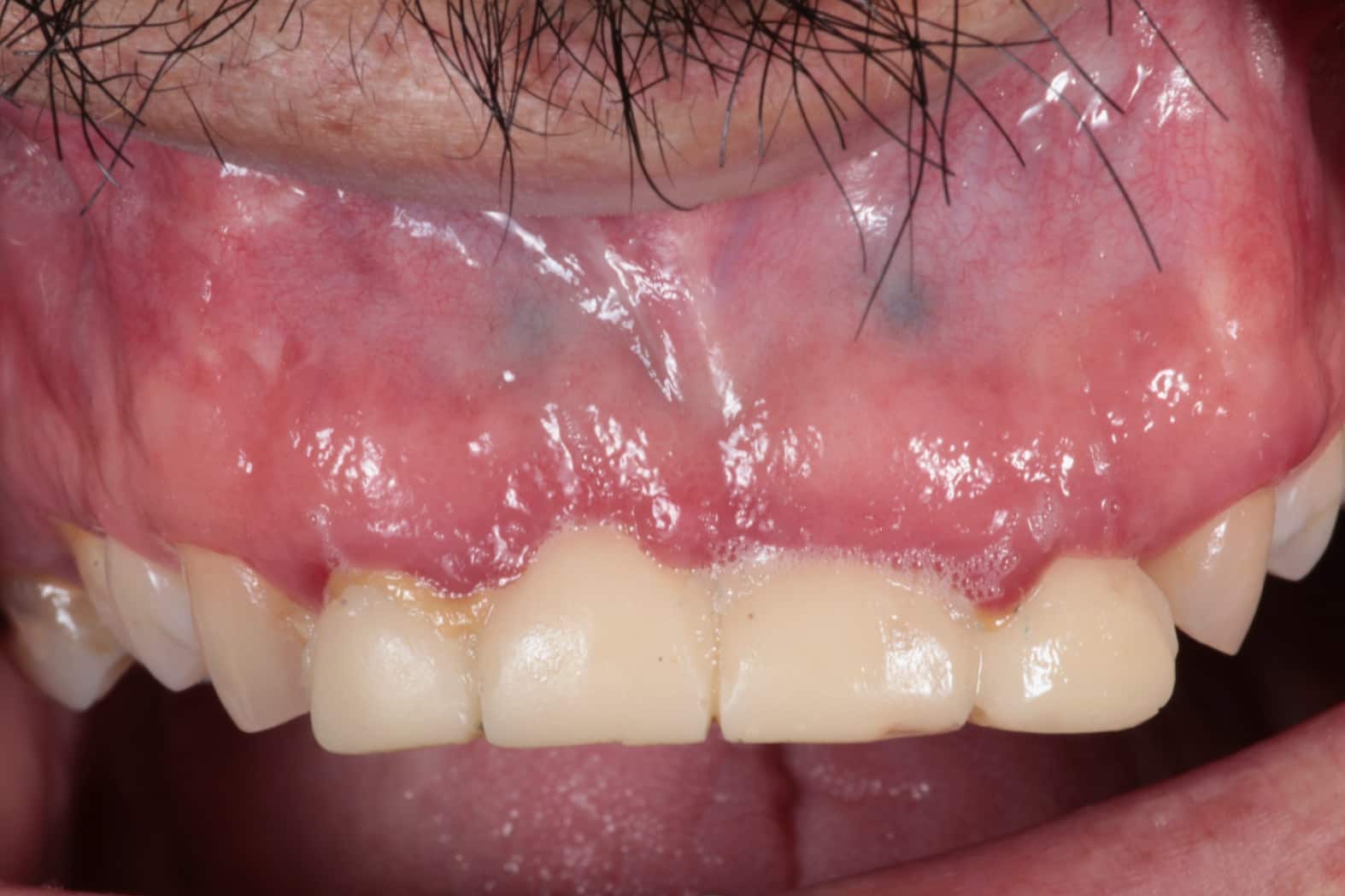
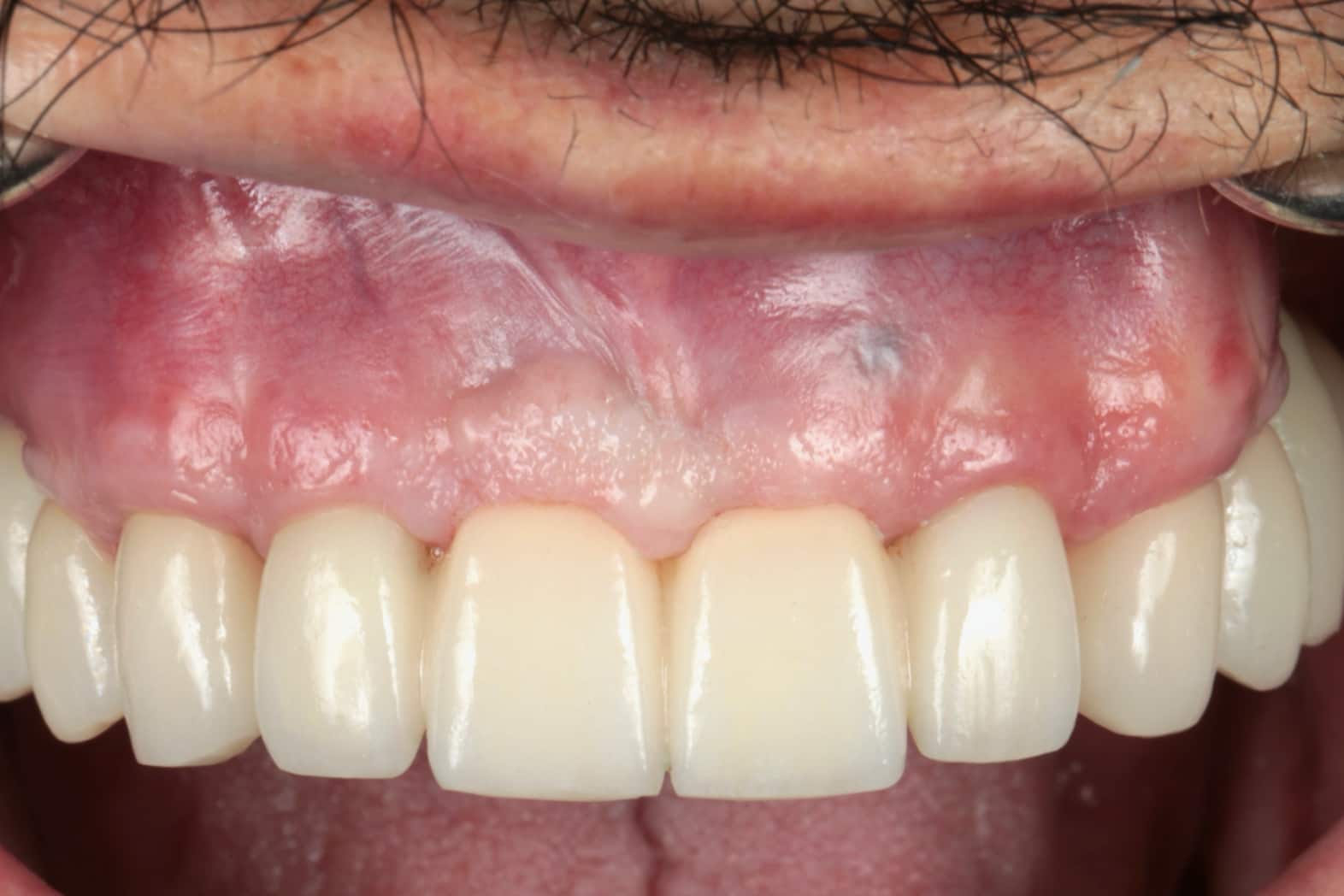
Where the ceramic meets the gum
The same upper gum line before and after. An even scallop, and restorations that emerge from it the way teeth do. Some of his own teeth are still in there; it is impossible to tell which are teeth and which are implants.
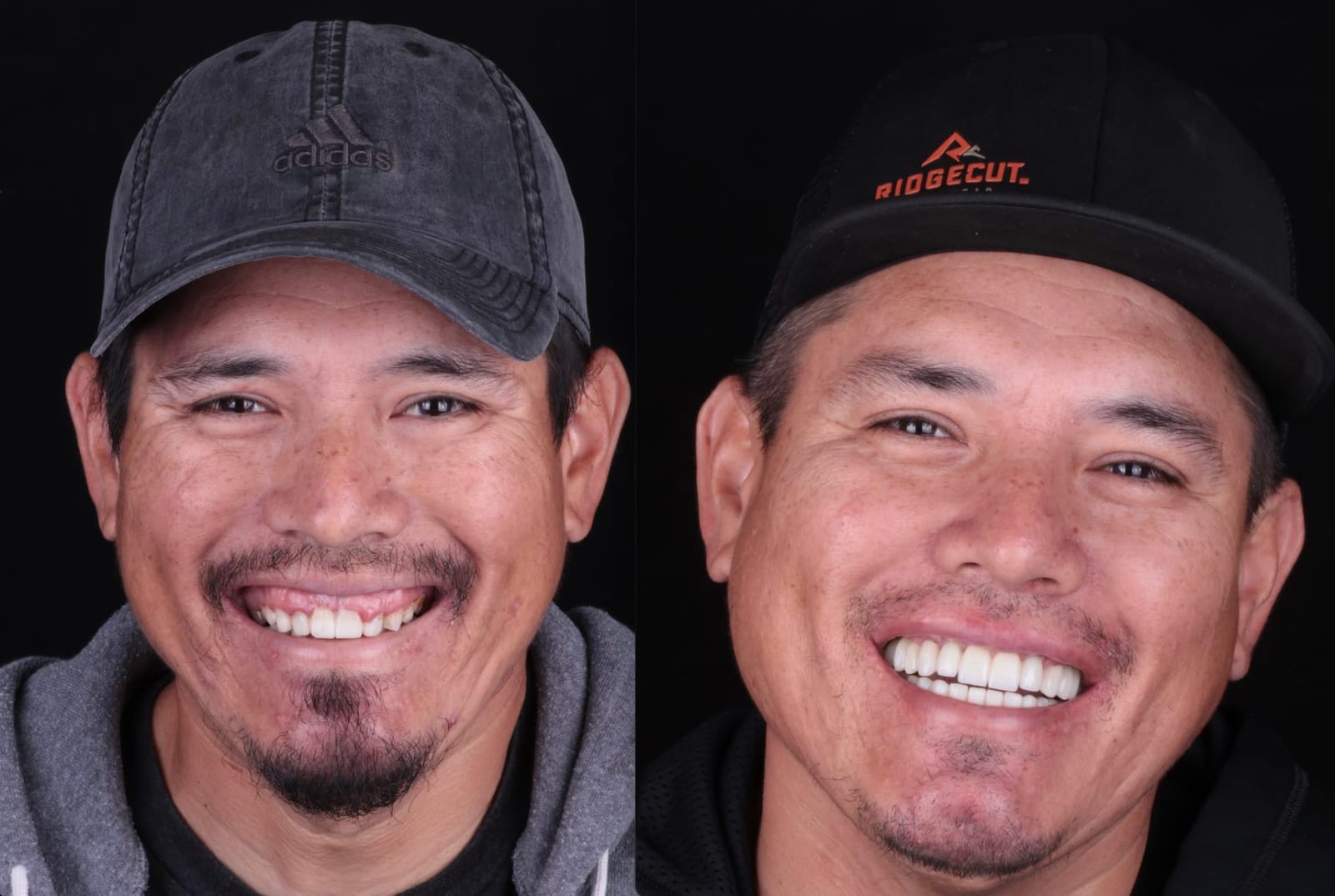
Before and after
Balance restored. Function restored. You can see it in how he approaches the camera in the after photograph compared with the before.
The hardest class to do well
FP-1 is possibly the most challenging way to do a reconstruction. What we are usually trying to do is preserve what the patient has at the front of the mouth and replace the tooth alone — a tooth is about eleven millimetres long, and that is all we are putting back.
Where the gum and the bone underneath have gone, we sometimes rebuild that area first, so that what follows still looks like nothing more than a missing tooth being replaced. Rebuilding gum and bone is difficult, and that difficulty is one of the reasons this is the hardest class to do well.
There is another way to look at it, and that is preservation. A patient arrives with teeth that have failed, but the gum and the bone around them are still intact. The minute those teeth come out, the gum and the bone shrink away — and once that has happened you are into replacing gum with prosthetic pink.
So the skill is to design the case and to catch it early enough to use those hopeless teeth. These hopeless teeth are not useless. We use the roots: with current techniques we submerge them, bury them, and let that root structure keep the body believing the roots are still there, so the gum does not shrink away. Then we build the tooth and tissue structures on top of that, so the gum looks as though it is growing out of the teeth.
It actually is. That is the illusion, and it rests on a proper foundation.
FP-1, FP-2 and FP-3
When a reconstruction is fixed to implants, what it has to replace depends on how much was lost before treatment began — and the thing that matters most is not the teeth, it is the gum. Dentistry describes that in three classes, FP-1 through FP-3. They are not grades of quality; one is not better than another. They describe how much of the tooth and how much of the surrounding pink tissue the new teeth are standing in for.
Which class a case belongs to is settled at the planning stage, before anything is placed, because it changes where the implants go. That is the whole argument for planning the finished teeth first and working backwards to the surgery — the classification is a consequence of the plan, not a label applied afterwards.
FP-1
The tooth, and nothing else — this page.
FP-2 →
A tooth, and a little of the root
FP-3 →
The teeth, and the gum that went with them
The Lip-Line Classification →
How Dr. Reshad classifies every full-arch case before surgery, so the join between gum and prosthesis stays under the lip.
Frequently Asked Questions
FP-1 is the class of fixed implant reconstruction that replaces the tooth alone — about eleven millimetres of tooth and nothing else. The gum and bone around it are the patient's own, so the new tooth emerges from natural tissue exactly as the original did and nothing artificial shows.
Because it leaves nowhere to hide. Where gum and bone have been lost they sometimes have to be rebuilt first, so that the result still reads as nothing more than a missing tooth being replaced; rebuilding gum and bone is difficult, and that difficulty is what makes this the hardest class to do well.
Once the gum and bone have shrunk, replacing them means prosthetic pink, which moves the case toward FP-2 or FP-3. That is why timing matters: catching a failing dentition early enough to use the roots — submerging them so the body keeps the bone — is what keeps a case in FP-1.
Medically reviewed by Dr. Mamaly Reshad, BDS (Lond), MSc (Lond), Cert Pros (USC), Prosthodontist — Last reviewed July 2026
Ready to Transform Your Smile?
Schedule a private consultation with Dr. Reshad to discuss your goals and explore your options.