FP-1 Case 1 · Implants · Reconstruction
Preserving the Foundation
He was worried about how little tooth structure was left under his upper front crowns, about the failing root canals beneath them, and about whether those infections were reaching the rest of his body. His teeth were so sensitive it was close to unbearable.
What he came in with
He came in in pain, and he came in worried.
Worried about what was left underneath crowns that still looked fine from the outside. Worried that infection sitting in his jaw was doing something to the rest of his health. Sensitivity that had stopped being discomfort a while ago and became something he thought about all day.
And underneath all of that, the thing patients rarely lead with. He did want a change: a better shape, a better color, a better form than the teeth he had been living with. If everything was being restored anyway, he wanted the improved version of his own smile, built on as much of his own natural foundation as could be saved.
What the examination showed
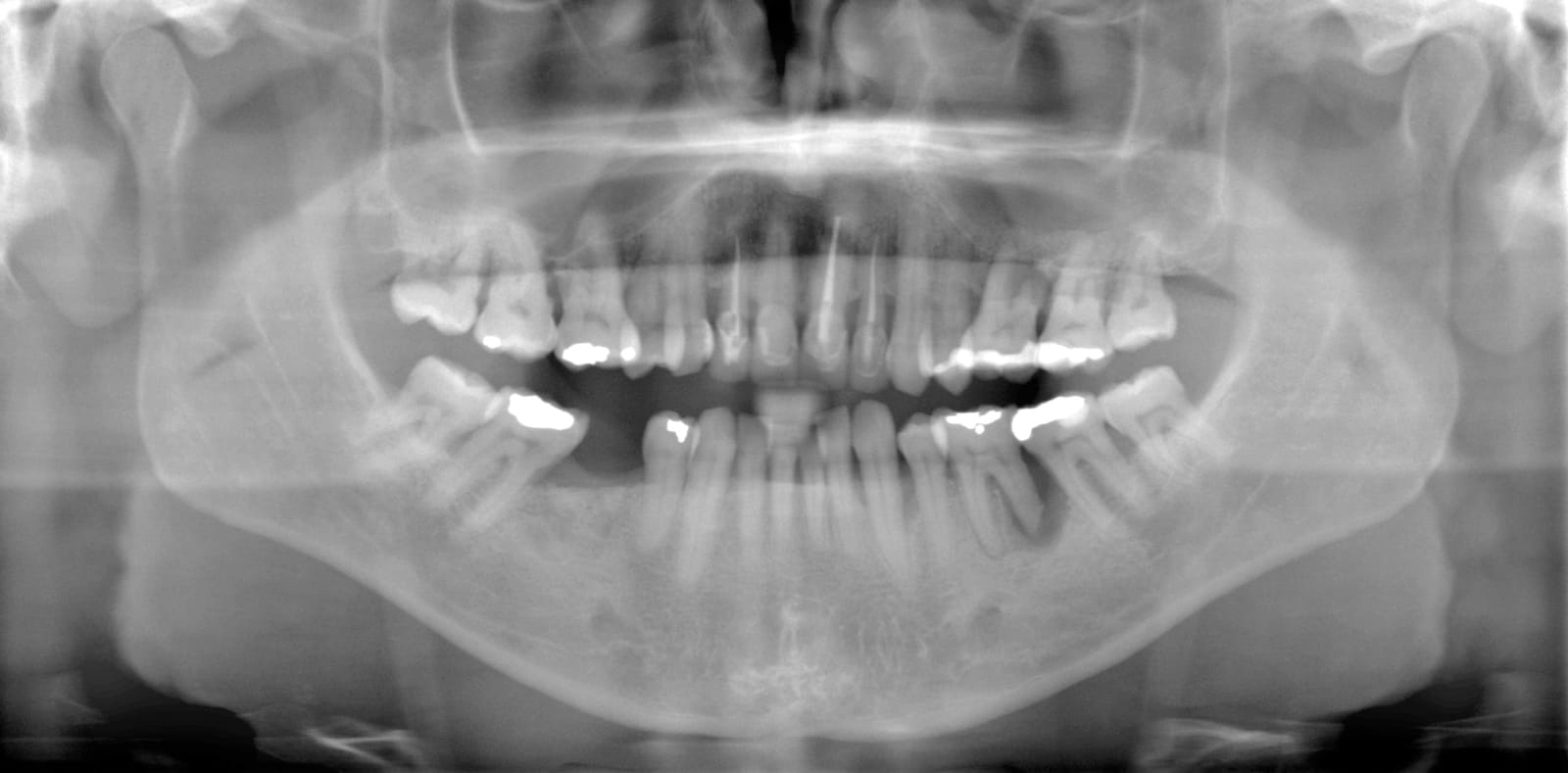
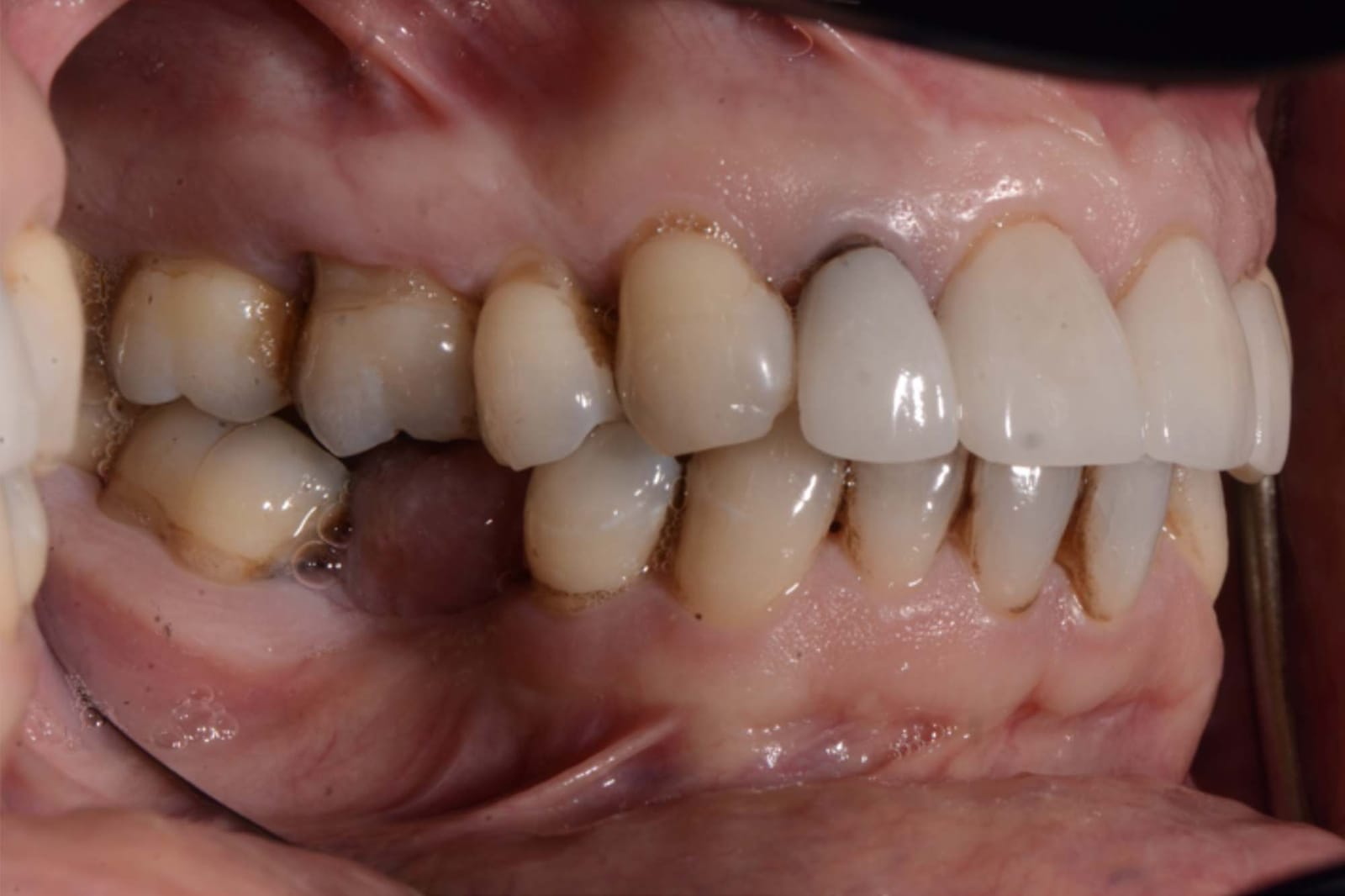
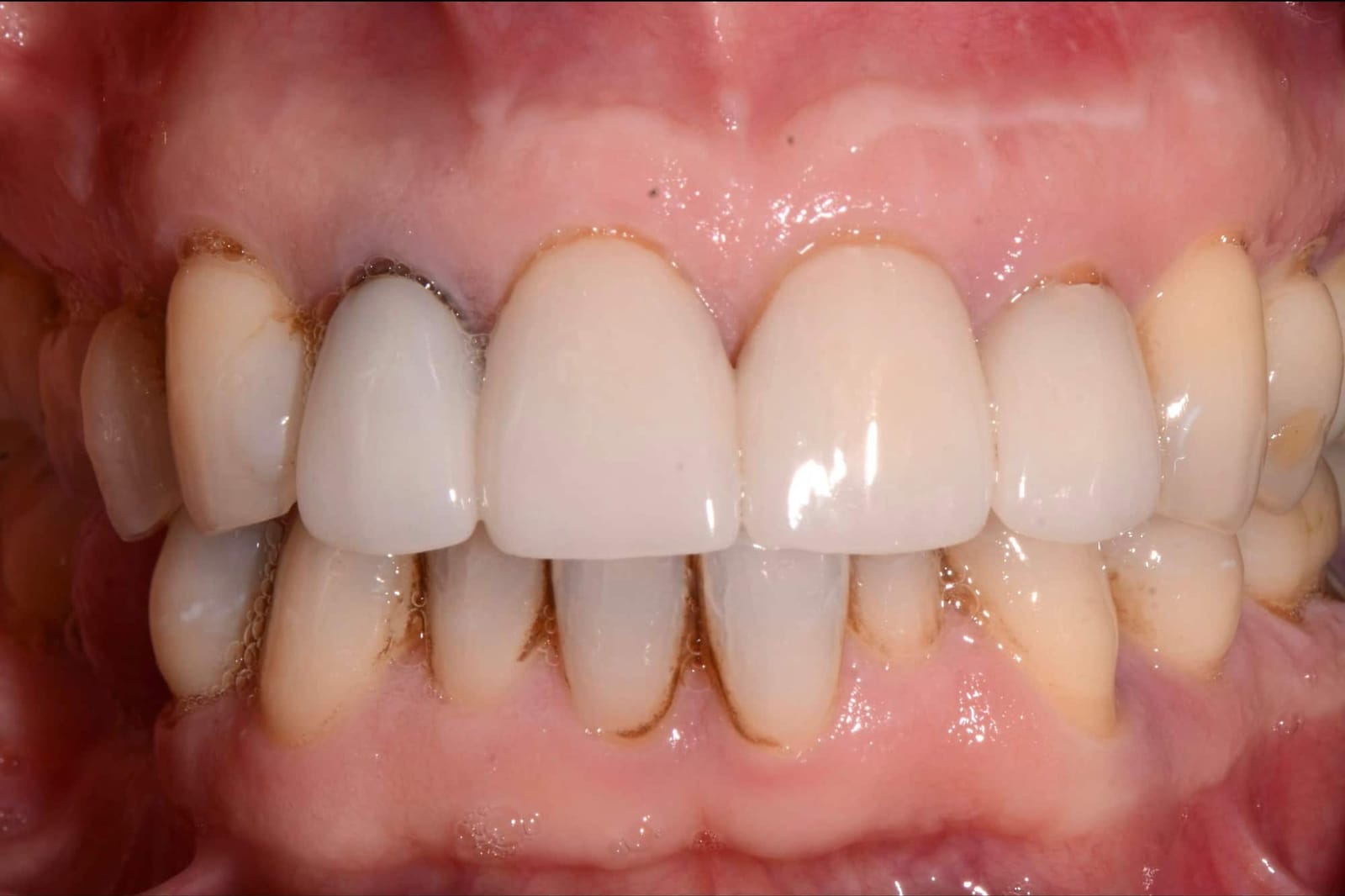
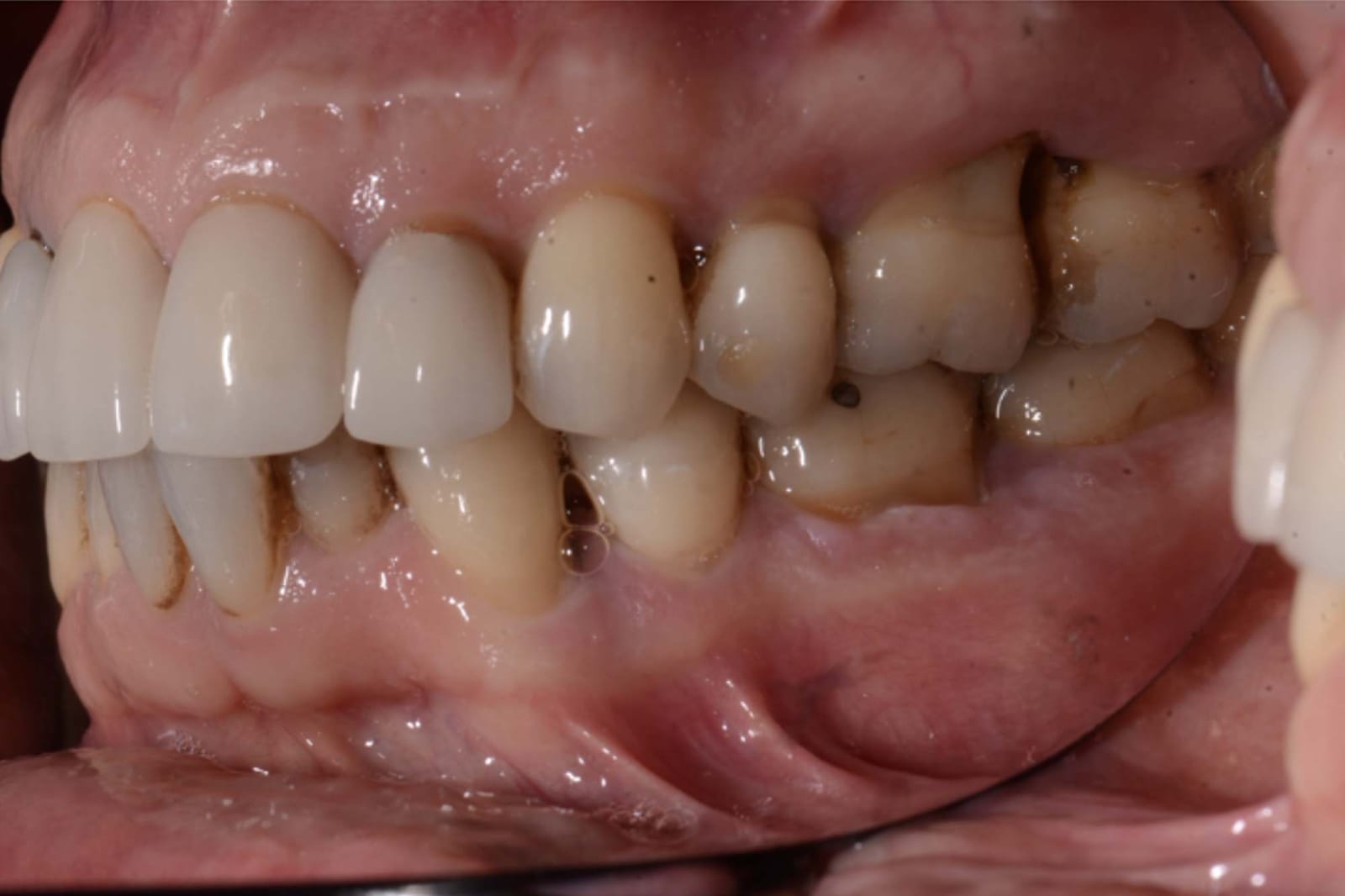
Missing and weakened teeth had started the bite collapsing. With no support at the back, the load transfers forward, onto front teeth already carrying infection and already weakened by over preparation from previous dentistry. Those teeth were going to fail. The only question was when.
That made it urgent. Stabilize the patient, then get him back on track.
The lower front teeth were a separate matter: crowded and stained, but healthy. He wanted them improved, not replaced. Healthy things get kept.
Why the cheekbone was not the answer
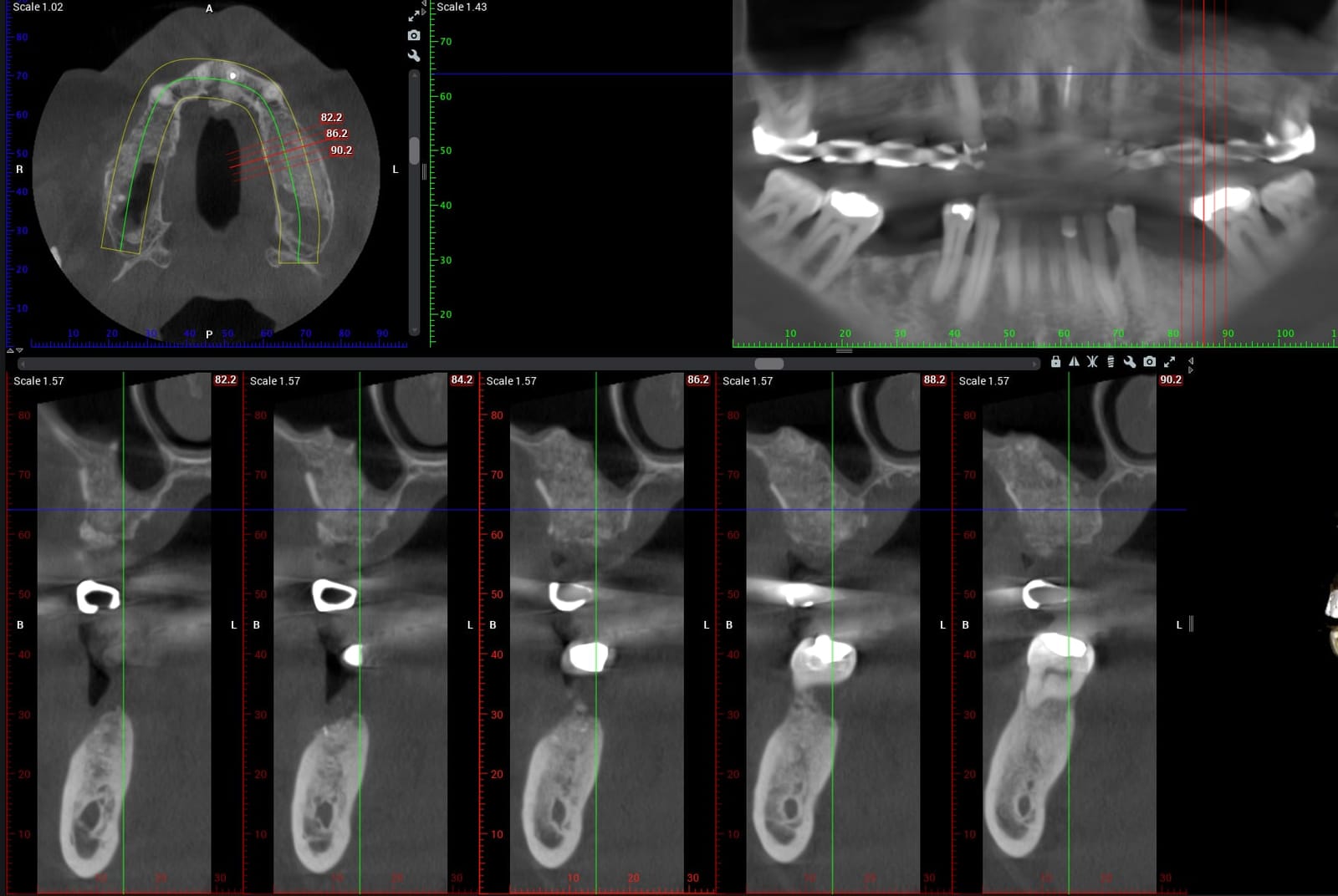
Inside the cheeks are cavities called sinuses. They are part of how you breathe. They enlarge with age, and some people end up with sinuses larger than is ideal for placing implants. His were pneumatized: large enough, in their current state, to interfere with implant placement altogether.
The traditional approach is a sinus lift. The floor of the sinus is raised and filled with bone. Done properly, that bone solidifies and becomes the housing for the implants that support the back teeth.
The traditional route
Two options were put to him. After detailed discussion with Dr. Reshad, he chose the traditional one: staged, with grafting.
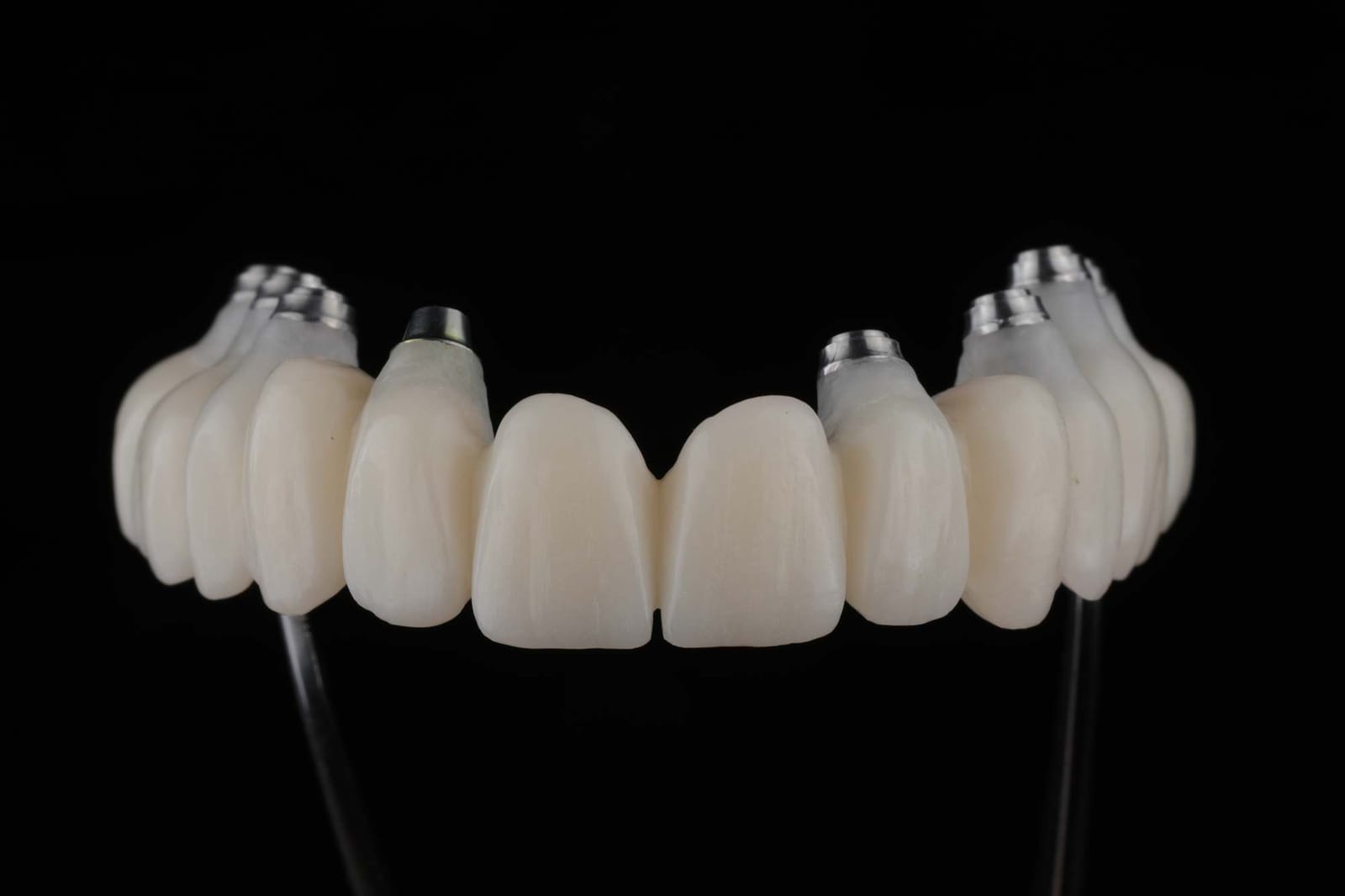
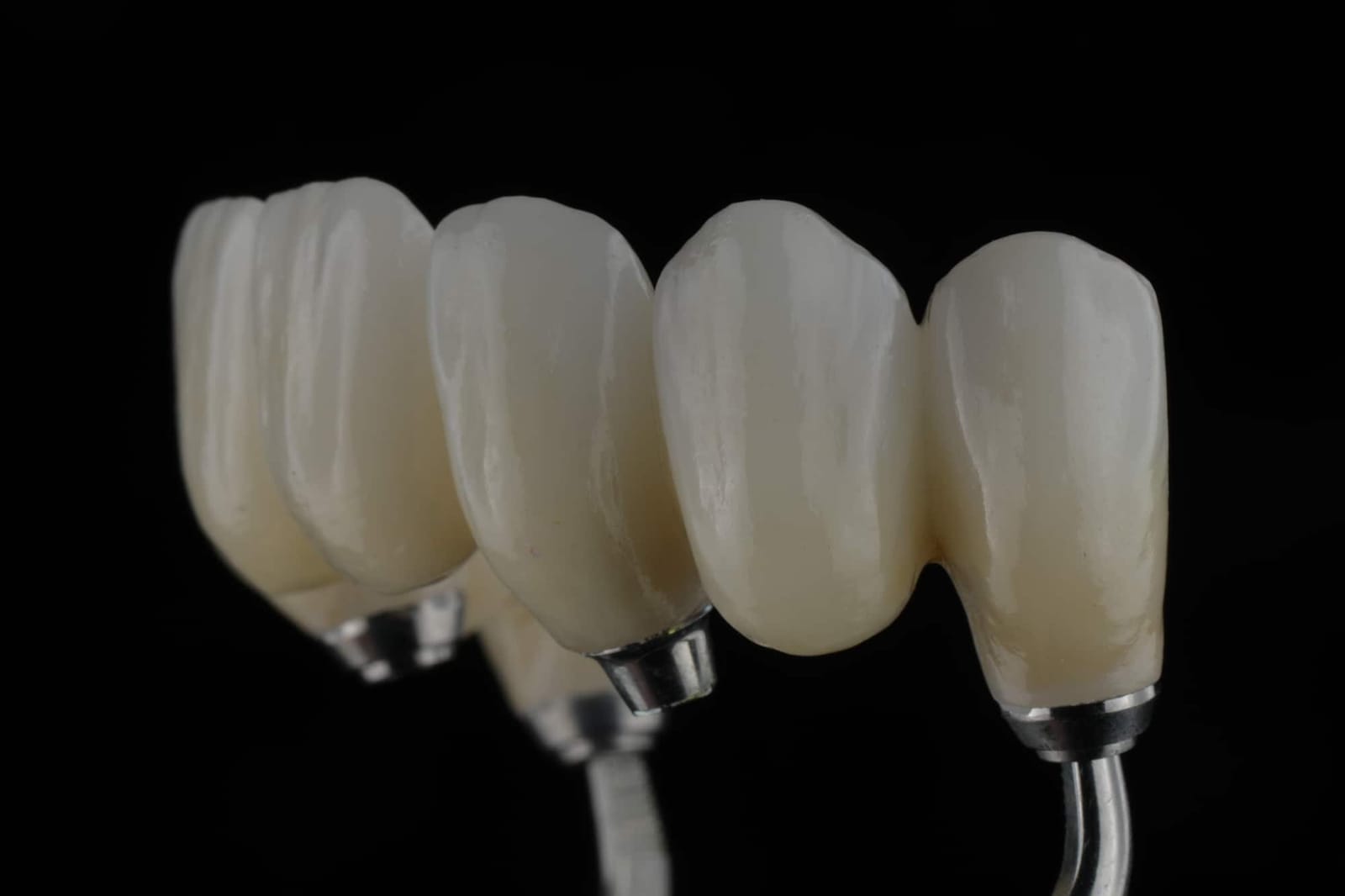
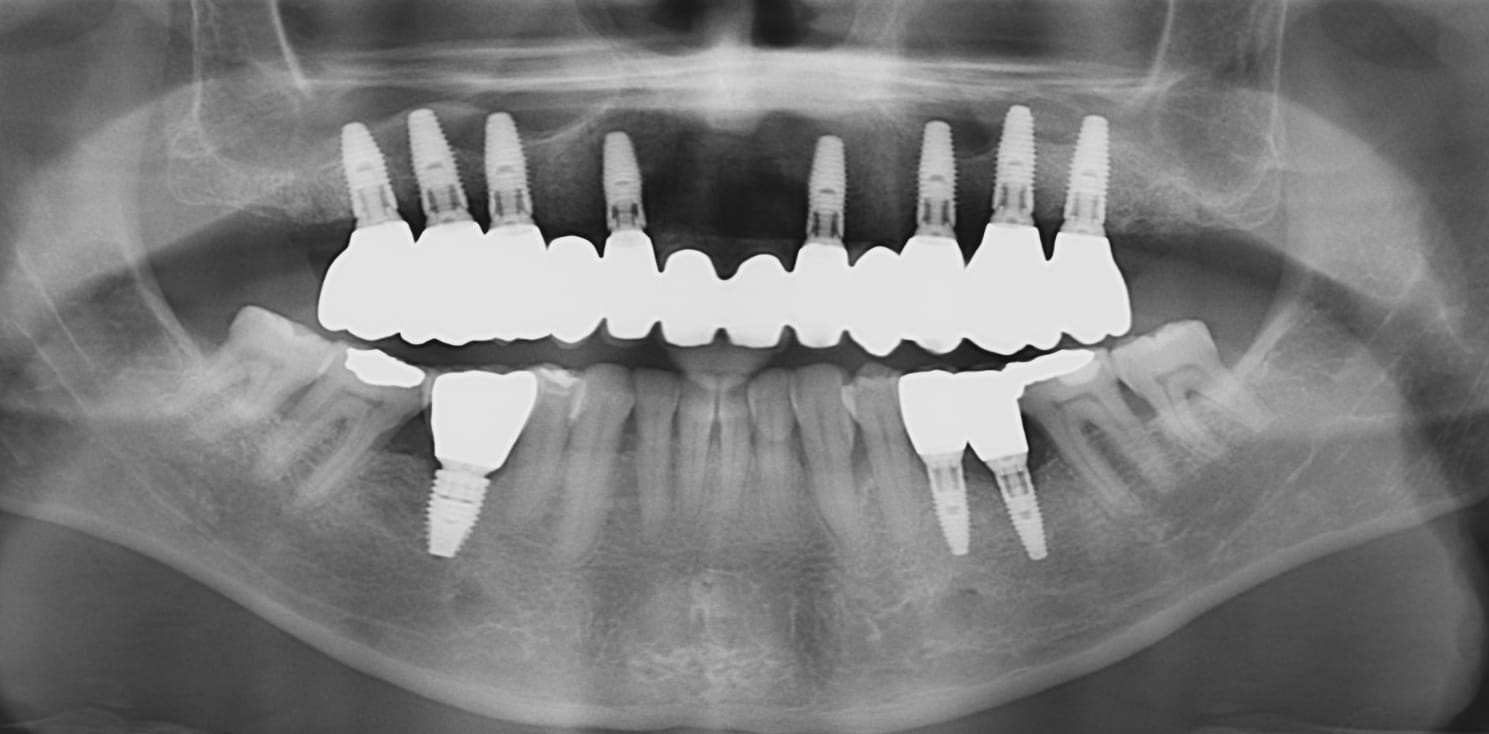
A few strategic teeth kept in the short term to hold the upper provisional in place, removed only once the implants had integrated and become part of his body. Then an implant supported provisional across the arch, and after his approval on form, function, speech and aesthetics, twelve upper teeth built as three implant bridges on seven to eight implants. Two single implant crowns in the lower jaw. Orthodontics and whitening for the lower front teeth he was keeping.
Eleven to thirteen months. Longer, and a different mouth at the end of it.
You will never leave without teeth
That sentence was in his consultation letter before treatment started, and it held for the whole of it.
A prosthodontist is trained to plan the treatment around the patient's comfort while it is happening. If a patient arrives with real teeth, we do not put them into dentures for a year while the bone develops. He came in with real teeth. He was transitioned on cemented temporaries carrying dummy teeth, held by the strategic teeth we kept back for exactly that purpose. Once the implants integrated, those teeth came out and he moved to implant temporaries, so we could evaluate aesthetics, form, function and phonetics on the implants themselves.
Only once all of that was settled did we proceed to the final restoration.
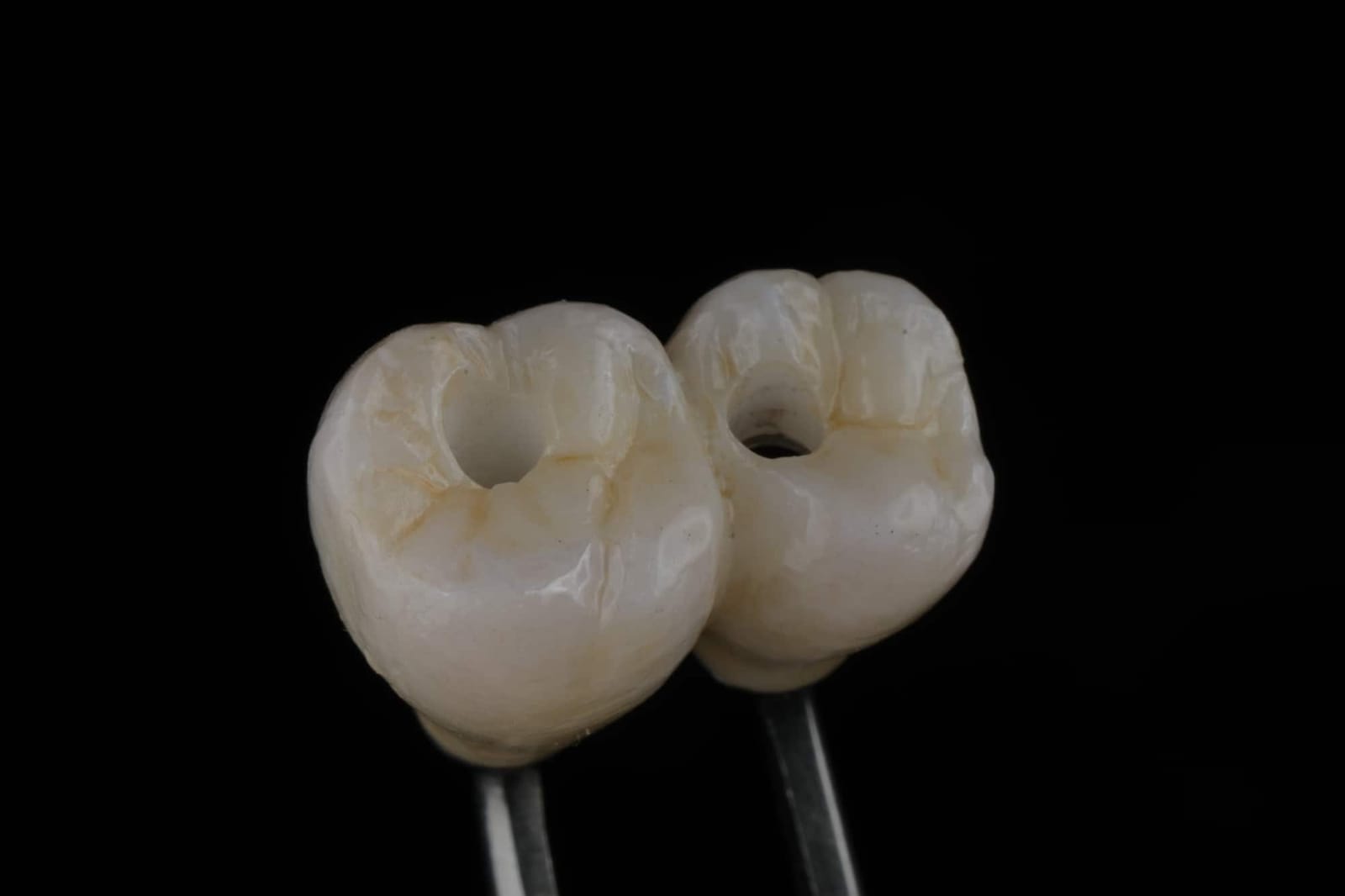
Precision, restraint, surgical sophistication
The upper jaw is always the greater challenge.
In his case the goal was not to replace his gums with pink ceramic. The goal was to preserve them.
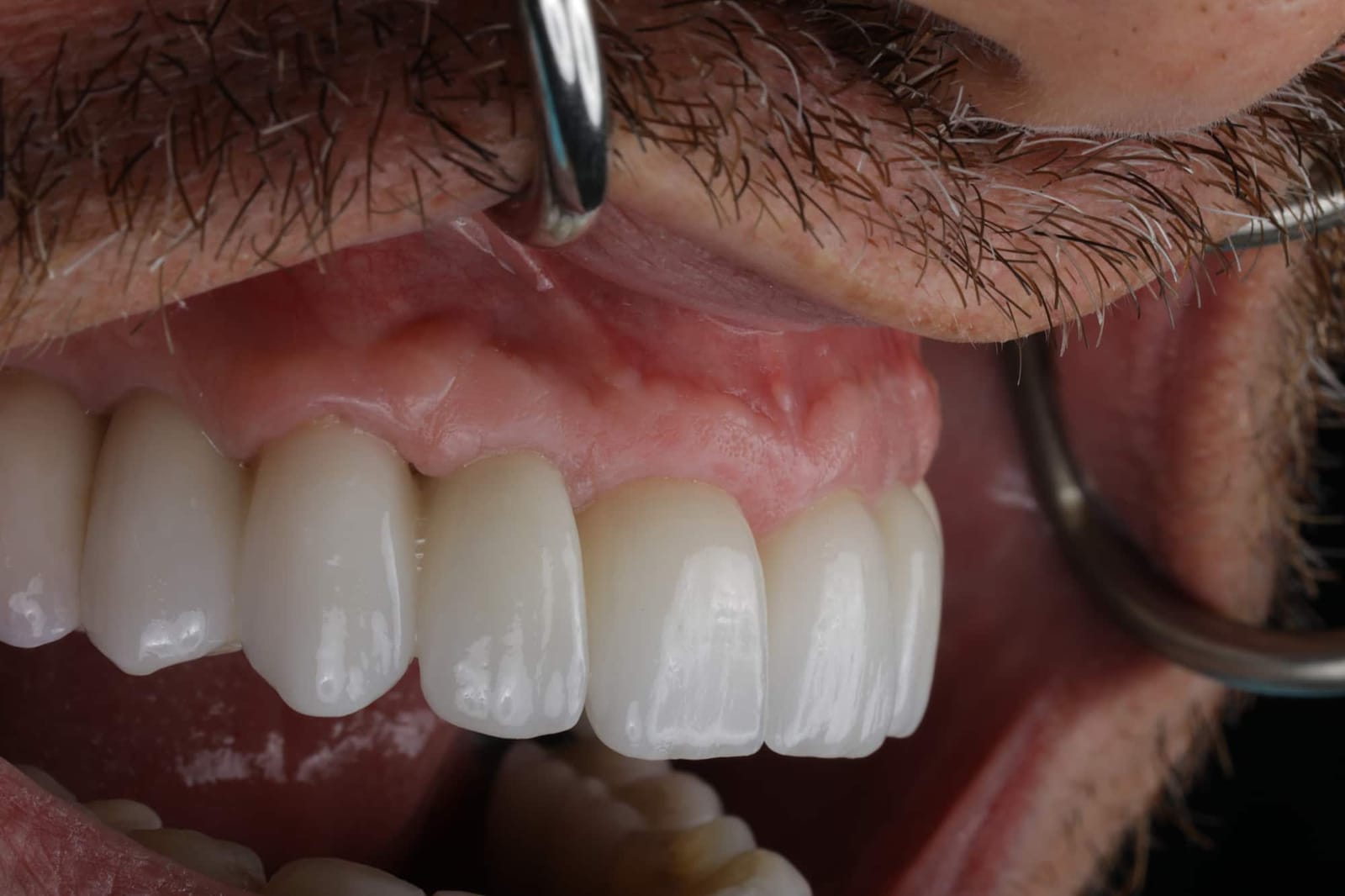
Through meticulous, atraumatic surgery and advanced tissue management, we maintained the height and width of his gingiva and his ridge contours. Selective root submergence preserved the papillae and held the natural architecture around the implant sites. By protecting the frame, which is the patient's own soft tissue, we allowed the final restorations to emerge naturally.
No artificial pink porcelain. No prosthetic replacement of what biology could maintain.
We shaped the tissue in the pontic sites, molded the emergence profiles carefully, and recreated contours that mimic, and arguably refine, nature itself.
That is the difference between replacing tissue and respecting it.
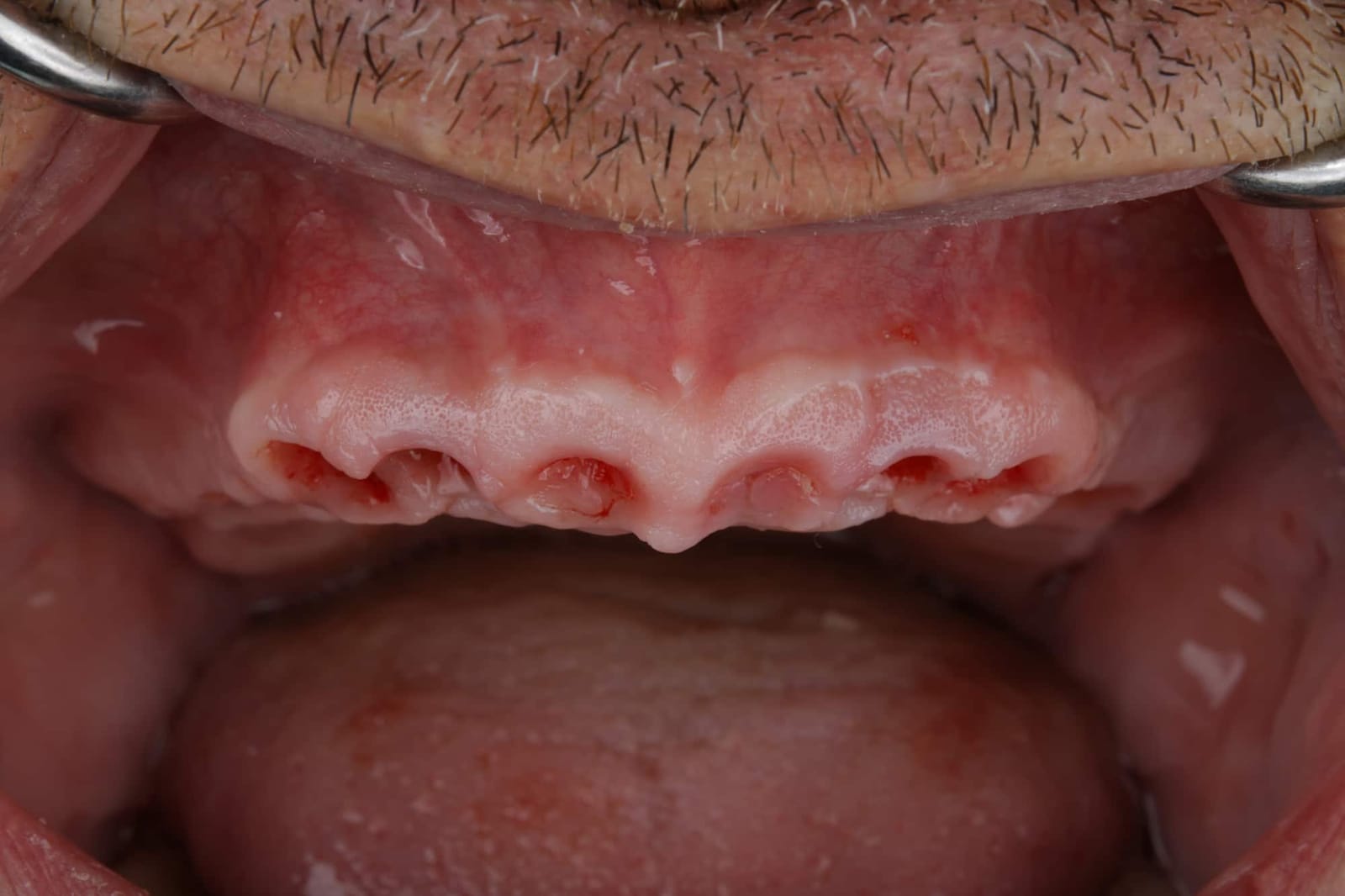
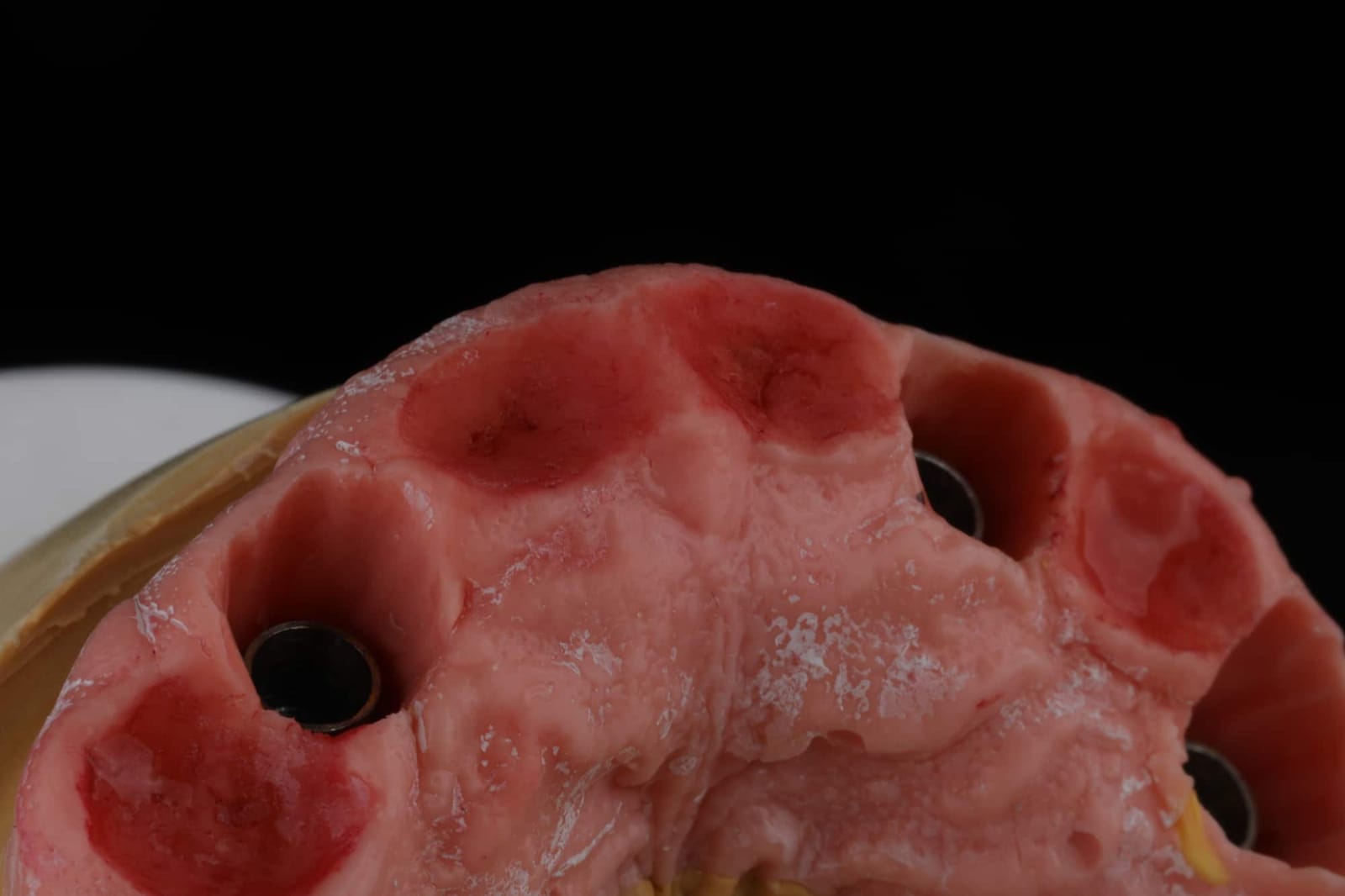
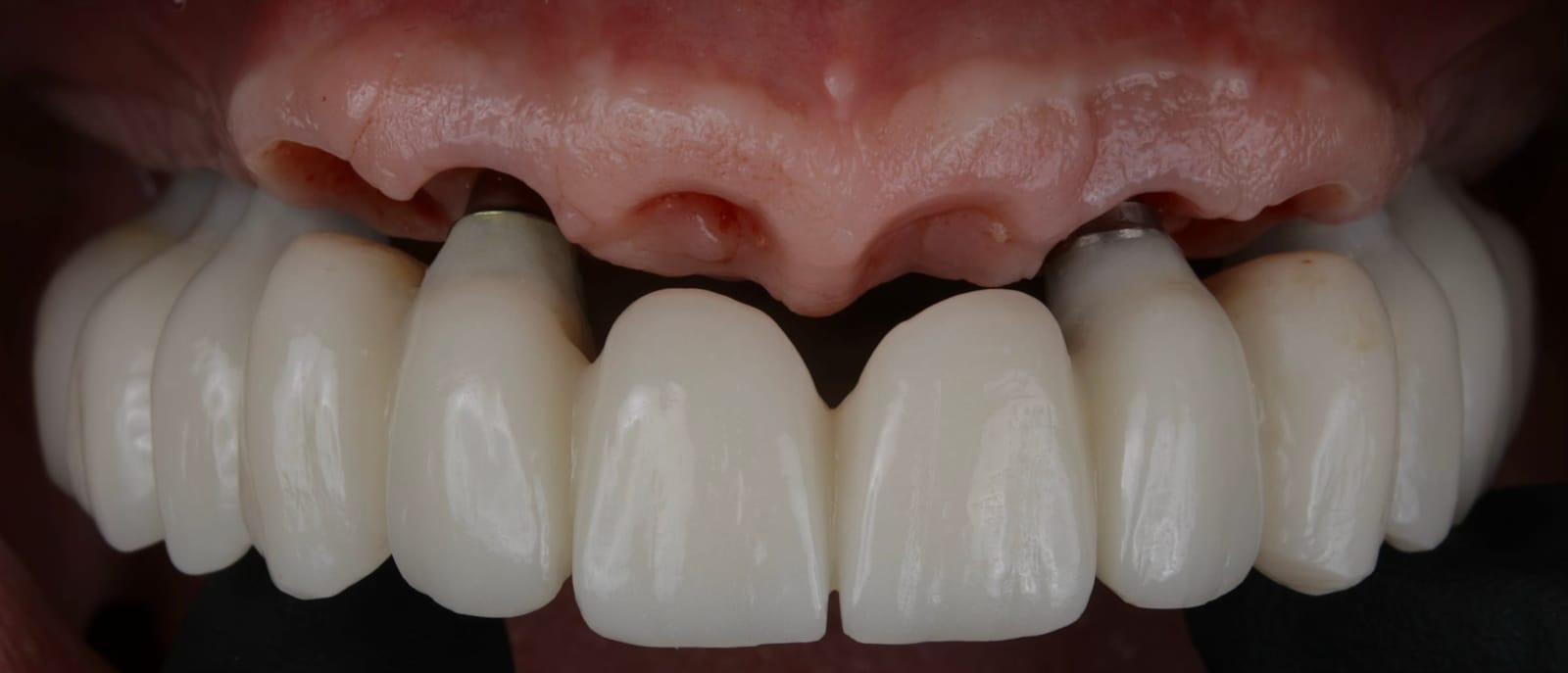
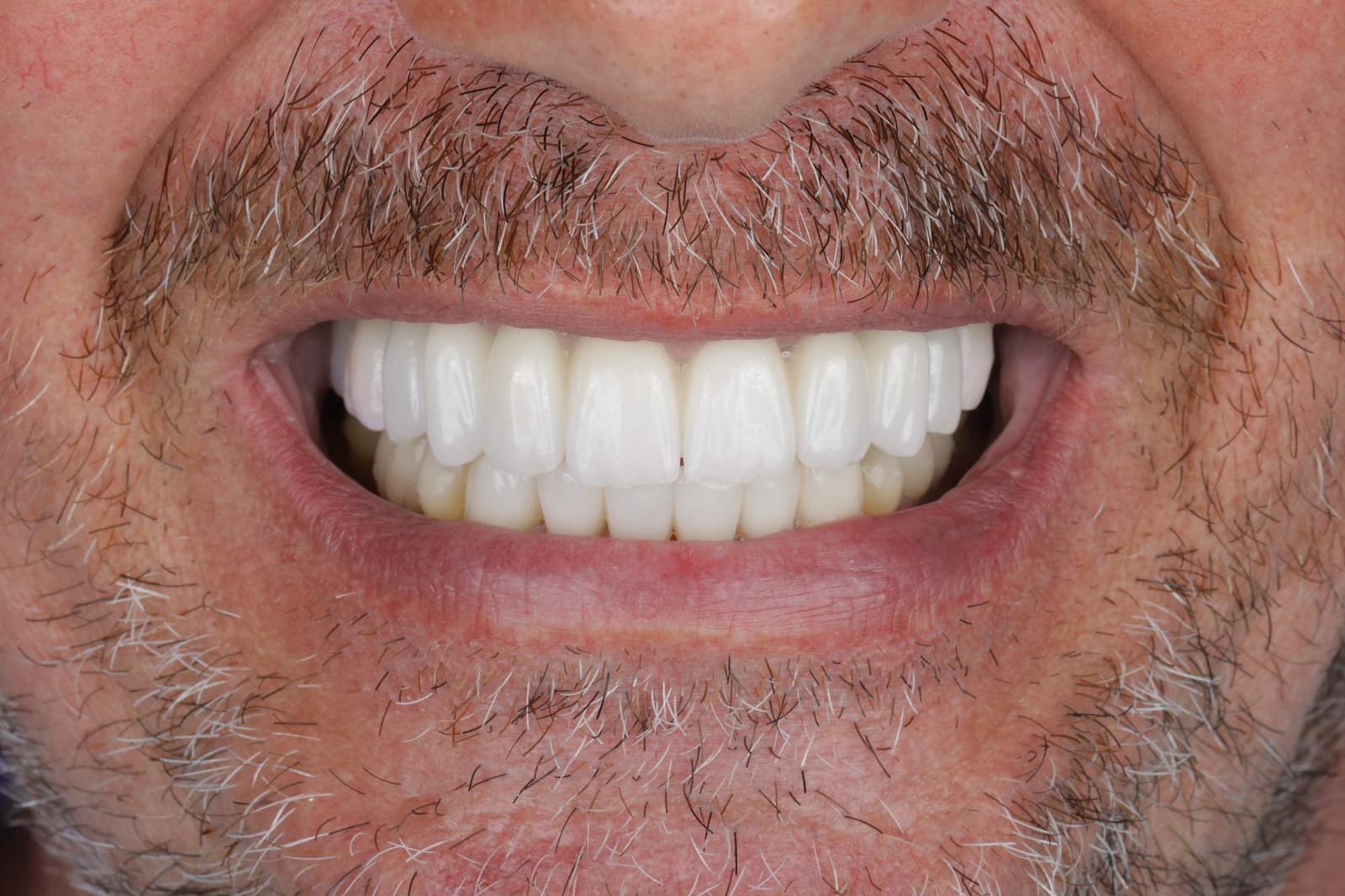 Labial contourOvate pontic sitesEmergence around each implantPapillae, kept
His own tissue, shaped and kept
The pontic sites were shaped so each tooth emerges from the gum as a natural tooth does, and the papillae between them were never lost.
One protocol for everybody
He is a young man. Nobody that age wants ceramic gums.
Many clinics run one product. Everyone who walks in receives an all on four, whatever they actually need. Cut the bone, cut the gum, deliver a screw in set of teeth with pink gums, often advertised as teeth in a day.
The other path takes a specific skillset and a great deal of training. Knowing when to extract, when to submerge a root, which teeth to keep and for how long, where the implants go between them, how to manipulate tissue through the temporary phase. That is a specialist team, planned by a prosthodontist and executed with the surgeon alongside him.
He was headed for zygomatic implants and end of the line treatment. Instead he received bespoke work that looks like he has had veneers done and nothing else.
Not every zirconia is the same
He received an implant reconstruction in the upper jaw and more conservative treatment in the lower.
Zirconia is the strongest material available to us, and the most popular. It is also unforgiving. Manipulated incorrectly it behaves the wrong way: it breaks, it irritates the gums, it damages the tissue around the implant, it drives bone loss, it fails to seat properly on the implants. The material is not the guarantee. The control of it is.
That control is material science applied to biology. How the zirconia is processed and finished, how smooth the surface is, how it meets the restoration, how it seats on the implant, and how the whole design lets the tissue stay clean and healthy around it. Get those right and you get strength, longevity, and gums that hold.
It is what Dr. Reshad specializes in, and it is the reason to have a prosthodontist controlling these parameters. Advanced training is what turns a popular material into teeth that feel good, bite well, and stand the test of time without damaging what they sit on.
Before & After
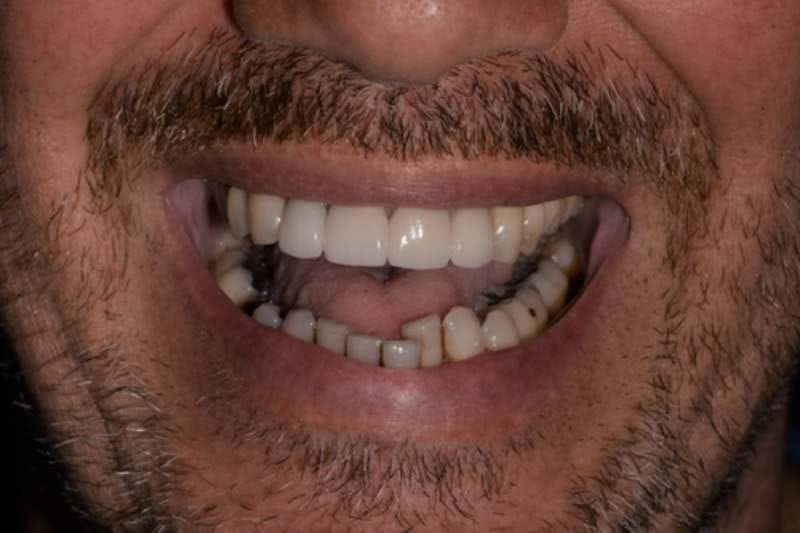
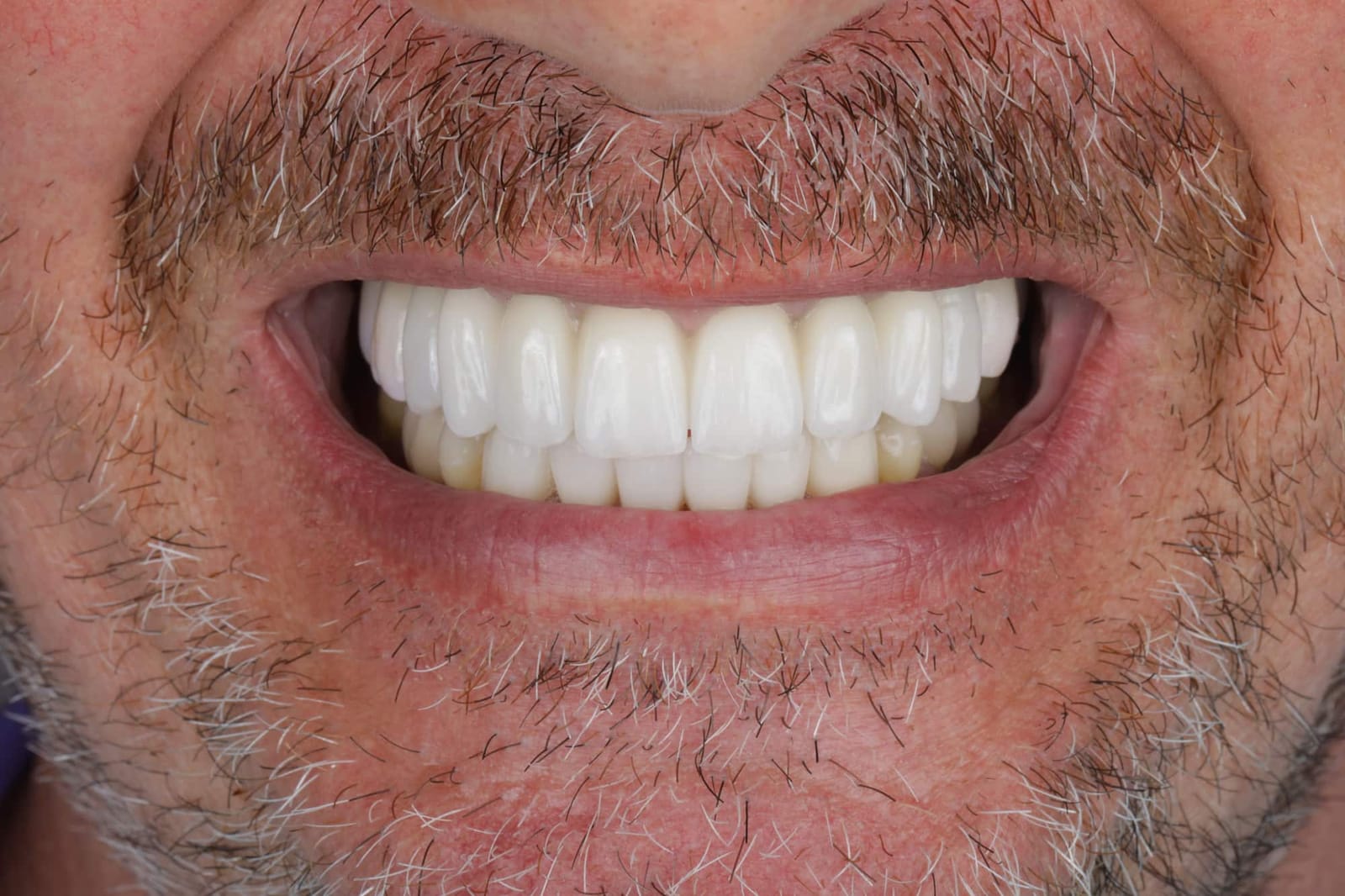
Standing the test of time
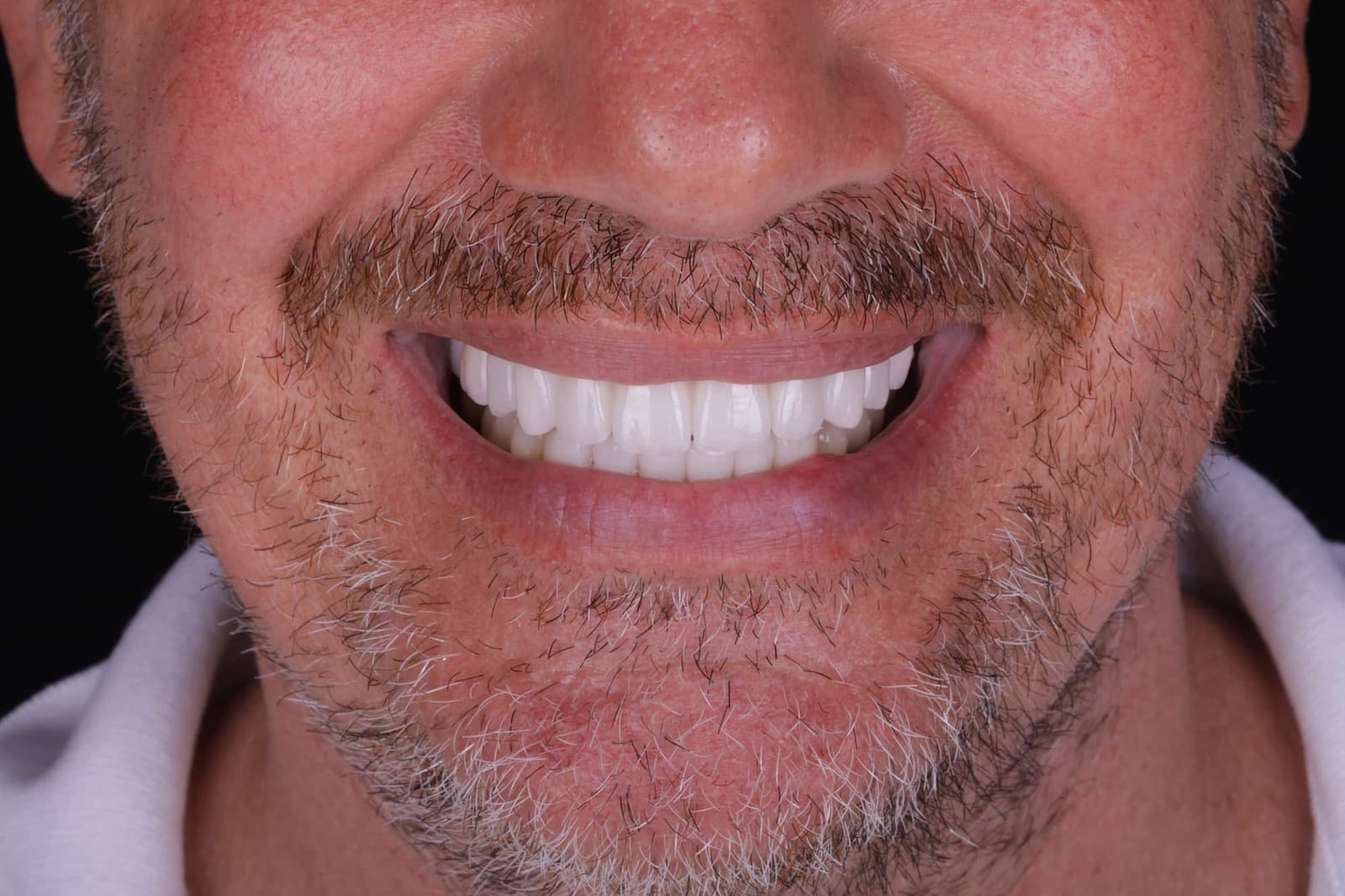
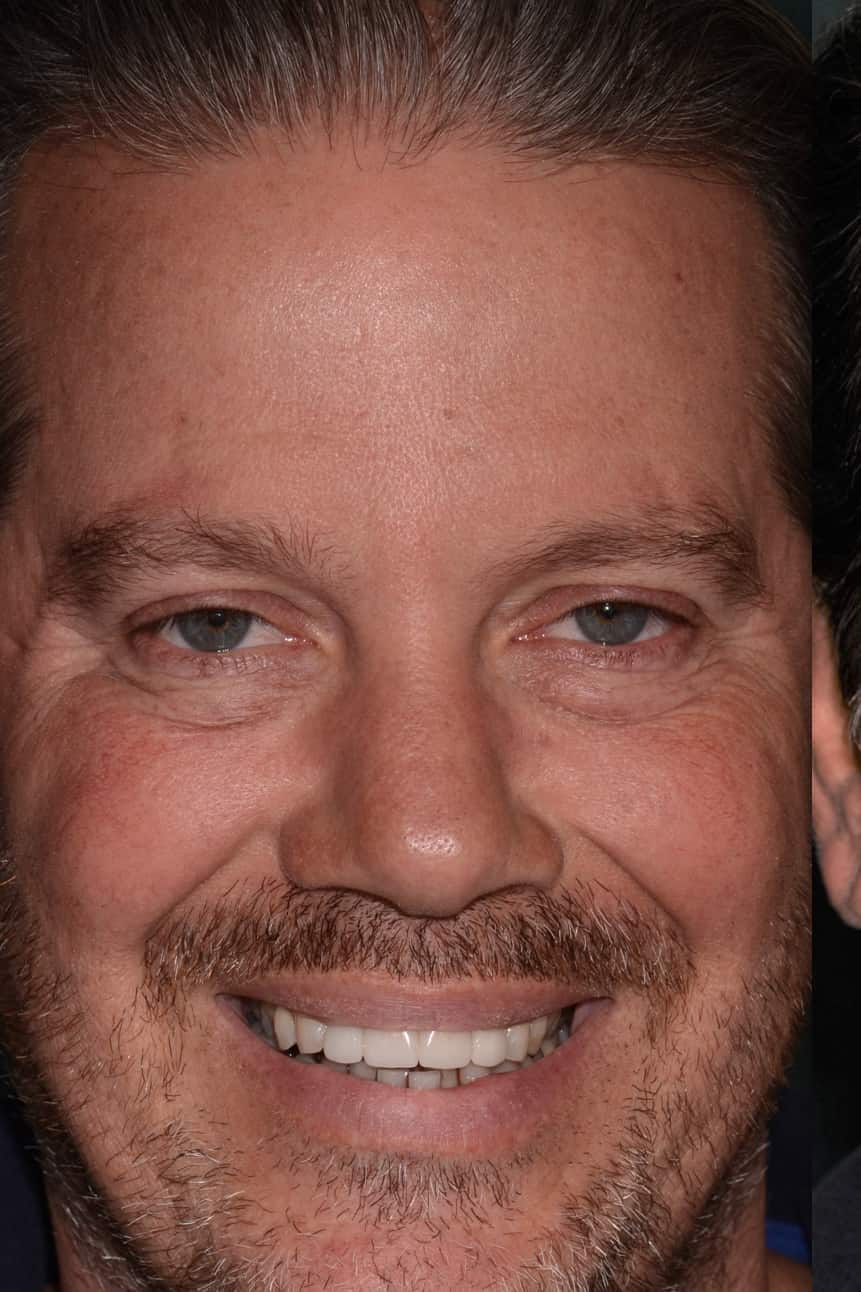
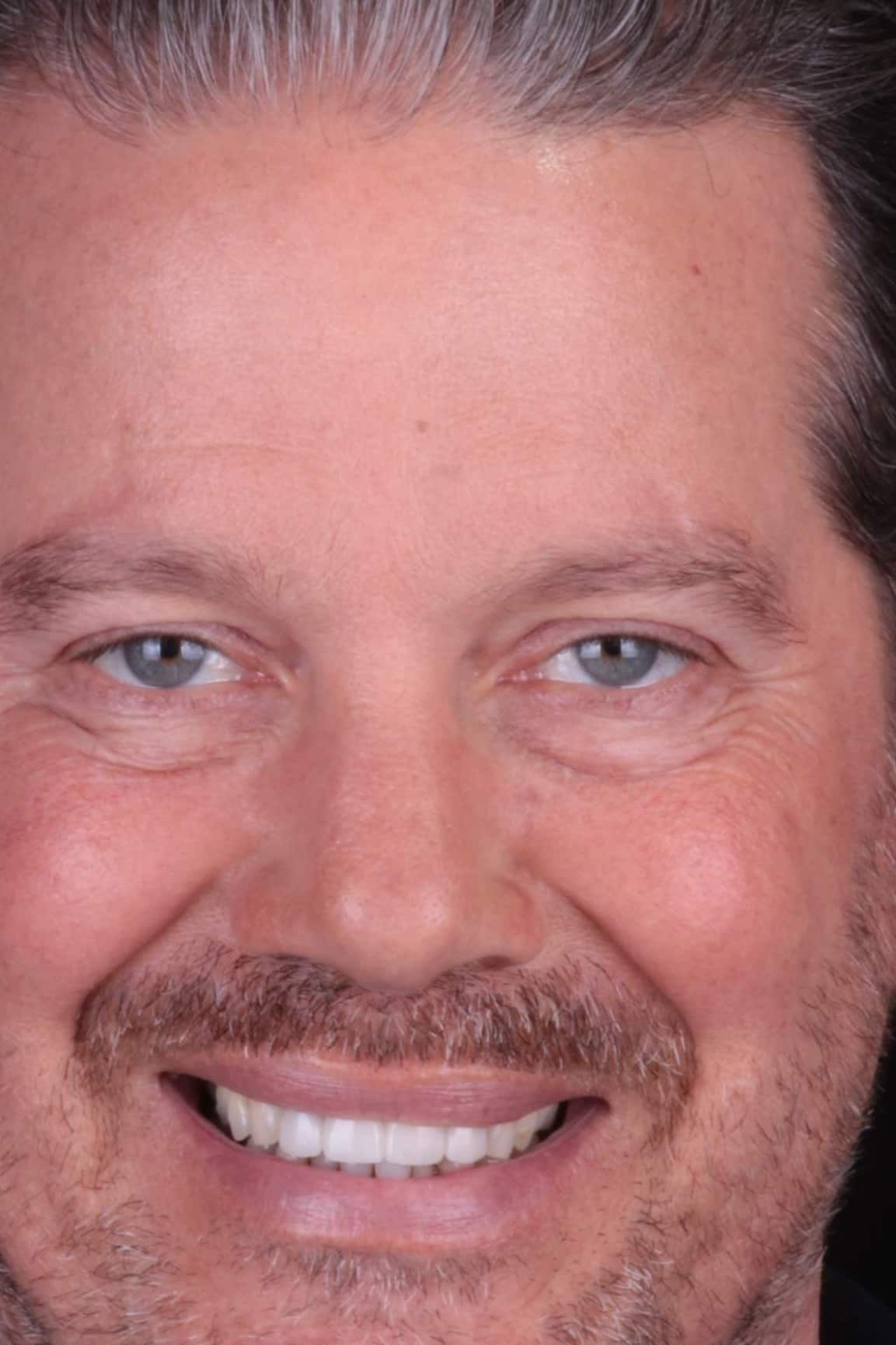
The preserved gums around these teeth have stood the test of time. They have flourished into a beautiful shape, and they are growing stronger year by year.
Done properly, the gum strengthens and grows between the teeth rather than shrinking away from them. Looked after well, it behaves almost like natural tissue around natural teeth.
Planned for a life, not a decade
It is not about placing a number of implants. It is about designing restorations around what the patient needs and wants, as close to nature as possible.
Then it is about surviving. Five years, ten, fifteen, twenty. For a younger patient we plan further still. Medical histories change. Small problems arise. There is a near certainty, in a case of this complexity, that something unpredicted will happen somewhere along the way, and almost always it is minor.
So we plan for retrievability as well as longevity, with simple solutions to maintain the patient beyond twenty years. If something does not work, there are strategies in place. The patient stays with teeth, stays functional, stays aesthetic, and keeps options that are not removable, even at twenty or thirty years.
That is also why he returns every three to four months. The maintenance is part of the treatment, not an afterthought to it.
The finished smile
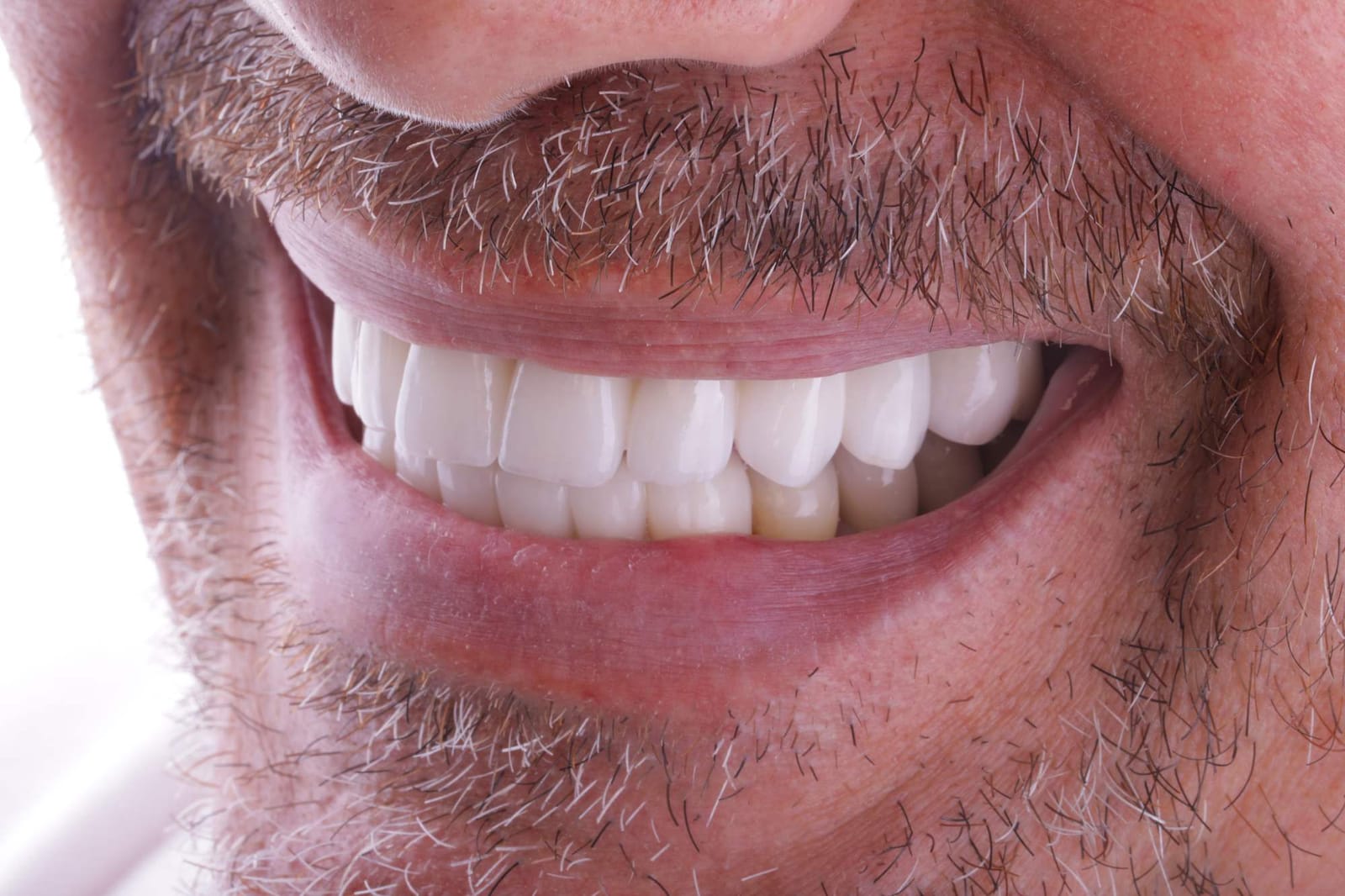
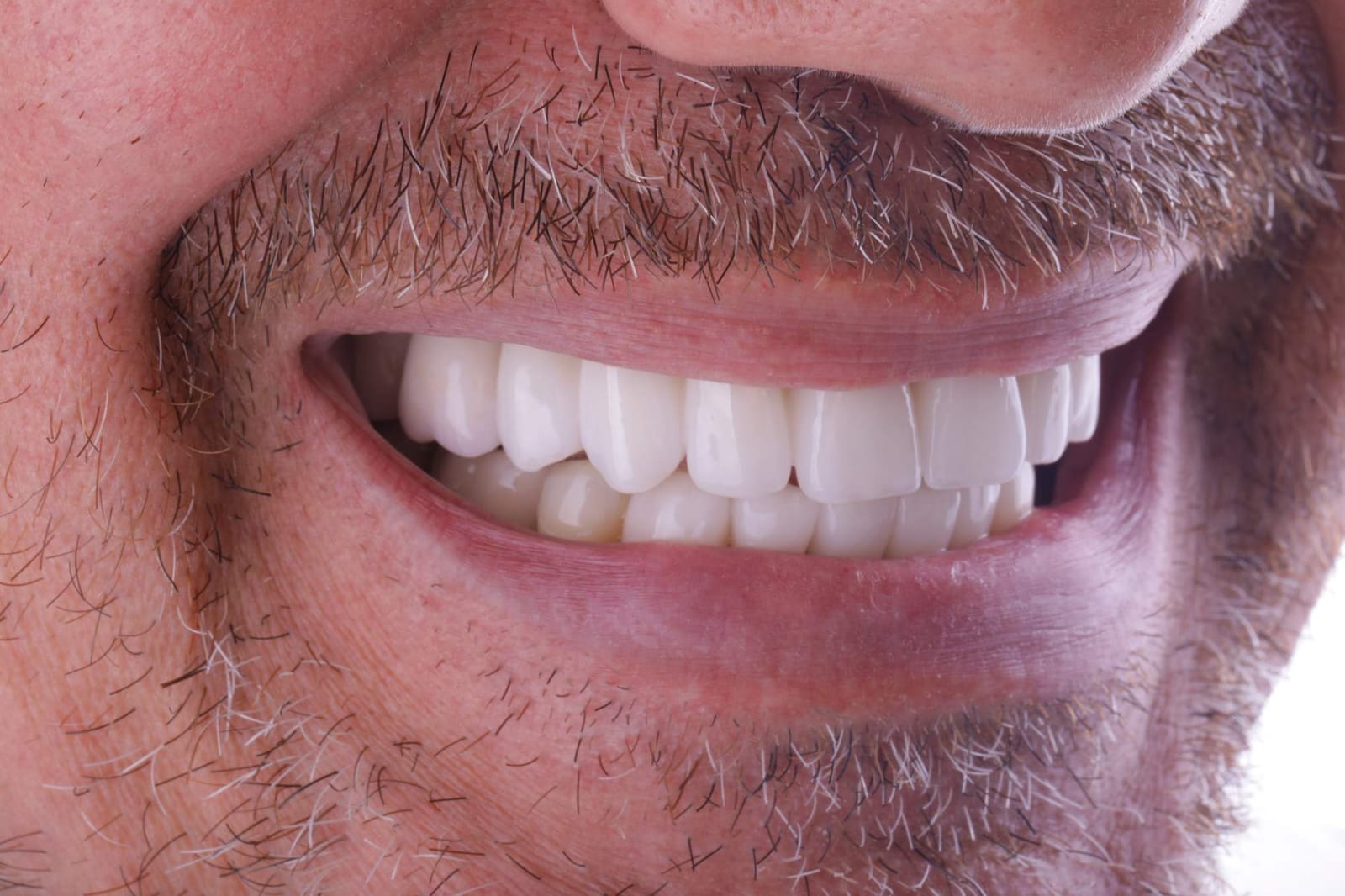
They design for decades, not for delivery day
You do not go to a prosthodontist for a set of teeth. You go because of how the set of teeth is designed.
It is designed to last decades. It is designed for long term health and stability, so the tissue around it stays healthy rather than slowly giving way. And it is designed to be retrieved. If something does go wrong years from now, it can be taken off, fixed and put back, without starting the reconstruction again.
Dr. Reshad's practice is the testimony to that. Hundreds of patients return for regular hygiene visits with these reconstructions in their mouths, and the great majority are stable over very long periods of time.
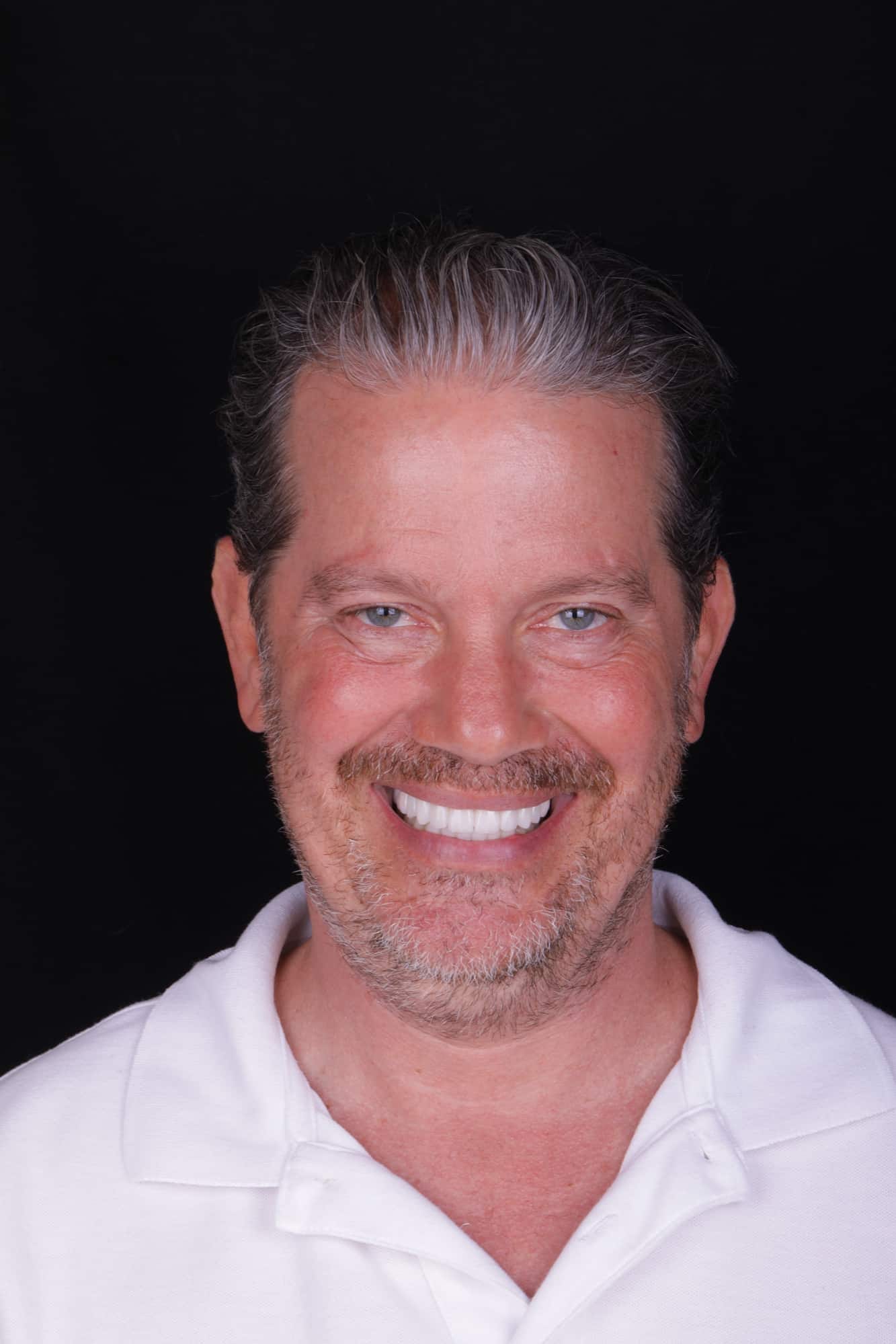
Every case is planned around one person's anatomy. Individual results vary, and what was right for this patient may not be right for you.