How Do We Rebuild a Damaged Tooth?
A root-treated tooth can be rebuilt in many ways, from a cast gold post and crown to a bonded restoration that removes almost nothing. Both have saved teeth for decades. The skill lies in knowing which one your tooth needs, and in protecting it from your bite afterwards.
Do you still need a post?
Many root-treated teeth no longer need a post. Modern bonding can rebuild them while keeping far more of the tooth.
Heavily broken-down teeth often still need posts, crowns, gold restorations or crown lengthening. These remain some of the most reliable treatments in dentistry.
Dr. Reshad has practised and taught both approaches for over two decades, so the choice is made for your tooth, not for a technique.
Evidence, sense, experience
“The most savage controversies are those about matters as to which there is no good evidence either way.” — Bertrand Russell
How to restore a root-treated tooth has been argued over for decades, and good evidence is not always available. Sound treatment planning rests on three things together.
What the research shows, including the studies published since 2013 summarised on this page.
The mechanics of the tooth: how much is left, where the forces go, and what will fail first.
Cases followed for ten, twenty and in some cases over thirty years, including the ones that did not go to plan.
Why root-treated teeth fail
Why these teeth break, and what gives them a firm foundation.
Our Beverly Hills office at 414 N. Camden Dr., Suite 750 opens in January 2027. Until then, call (310) 444-5217 and we'll arrange your consultation.
The ferrule
The single most important factor is the ferrule: a collar of sound tooth above the gum, ideally about 1 mm thick and 2 mm high, all the way around. The crown hugs this collar like the metal band on a wooden tool handle, and it is what stops the tooth splitting.
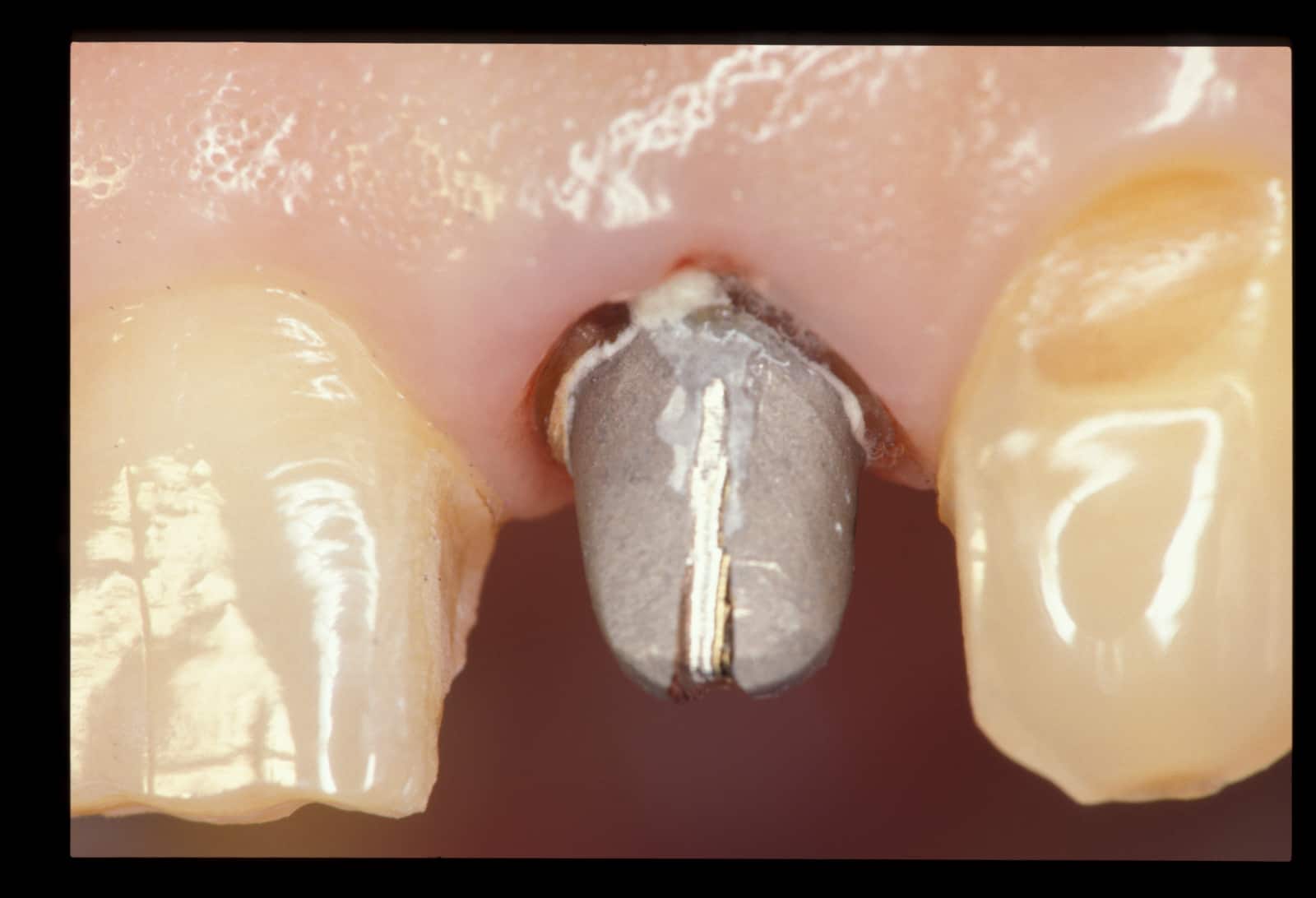
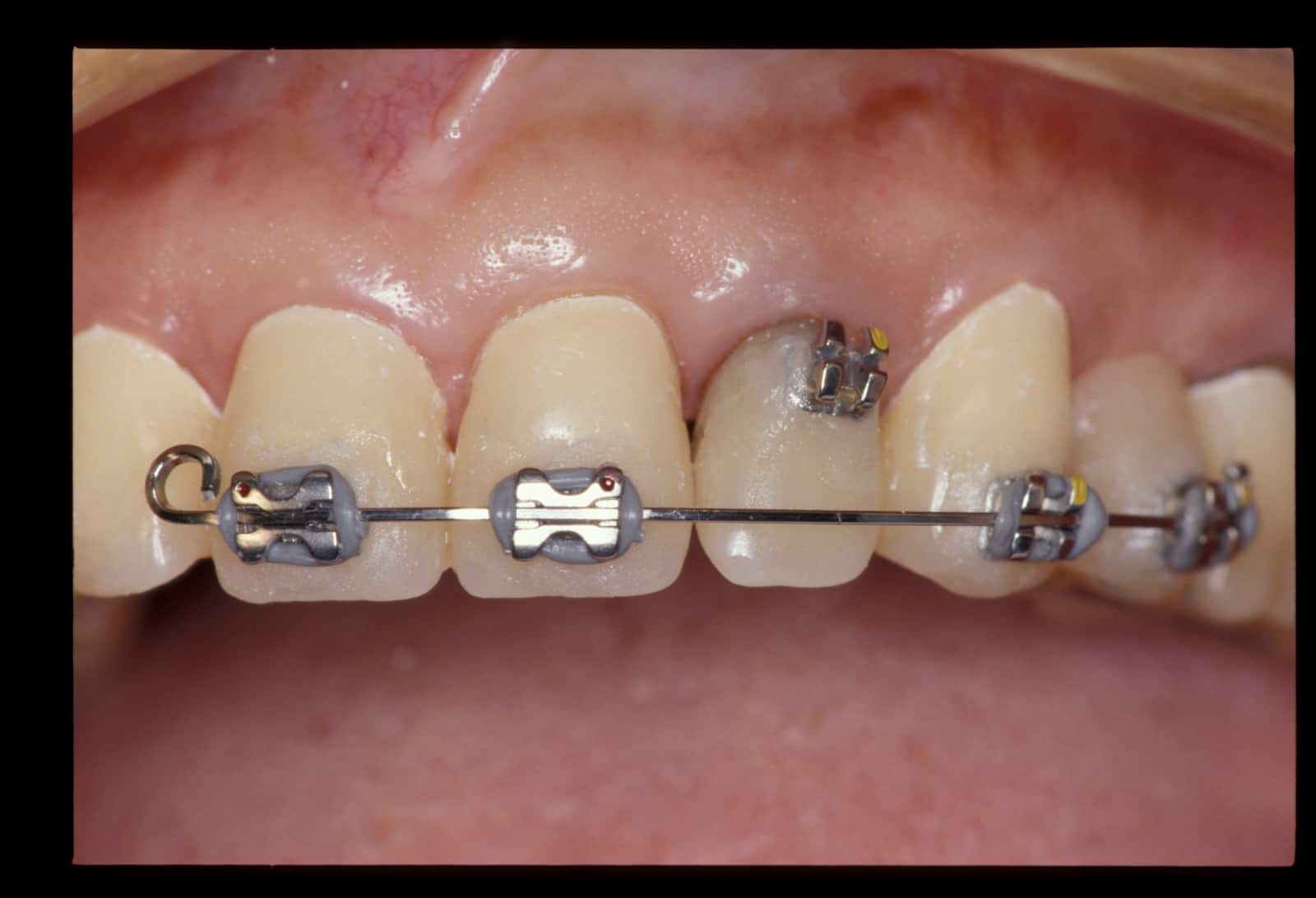
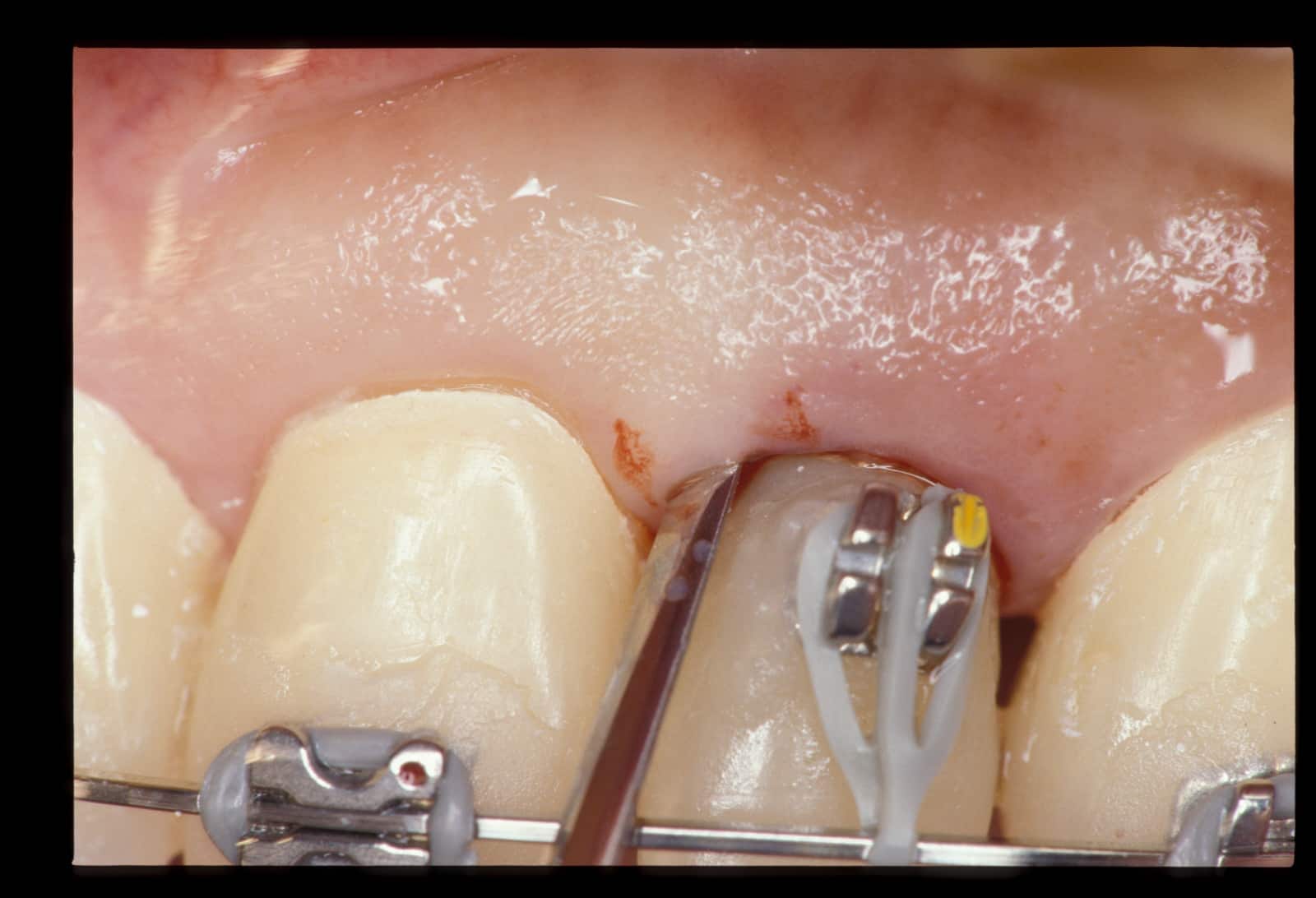
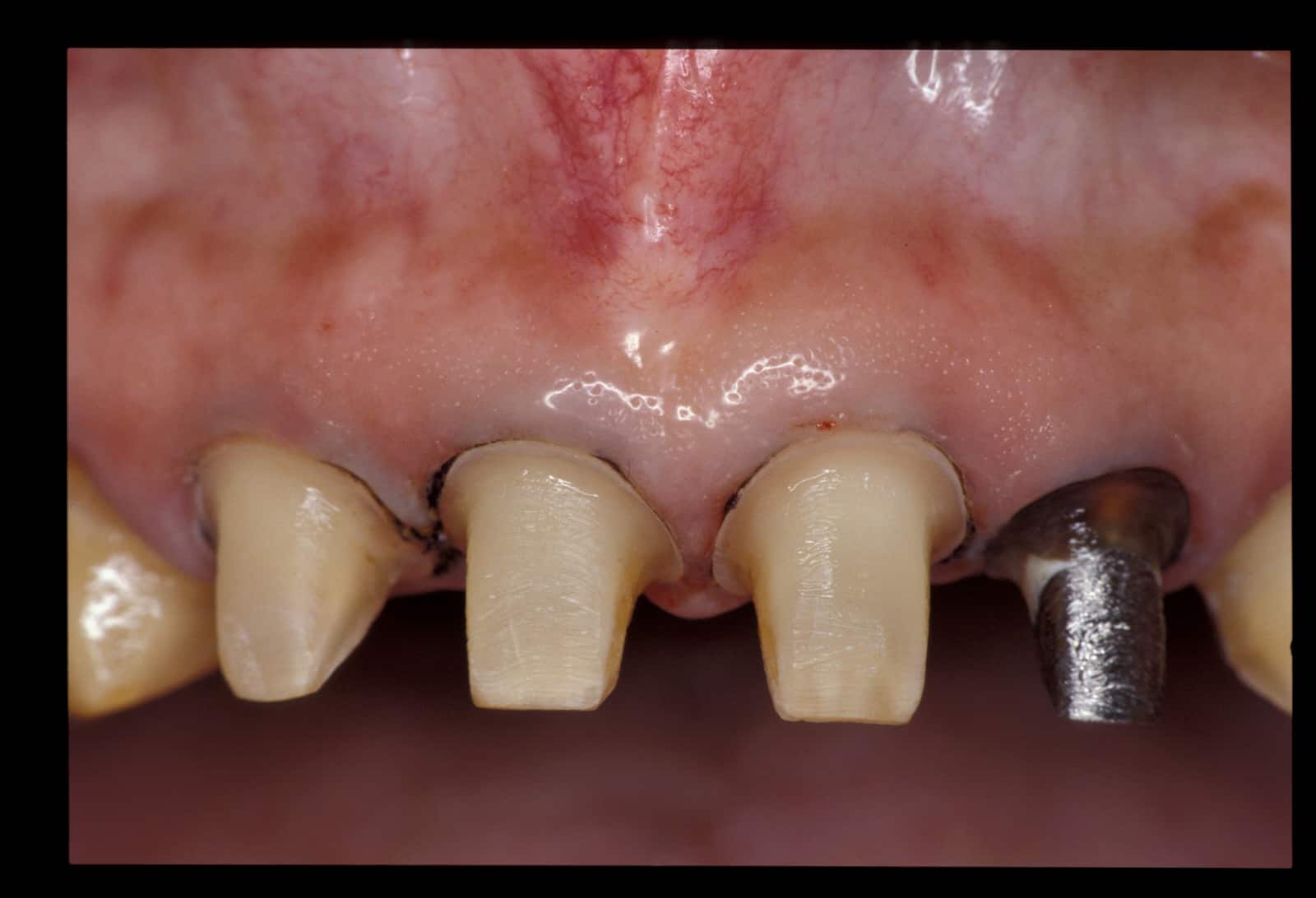
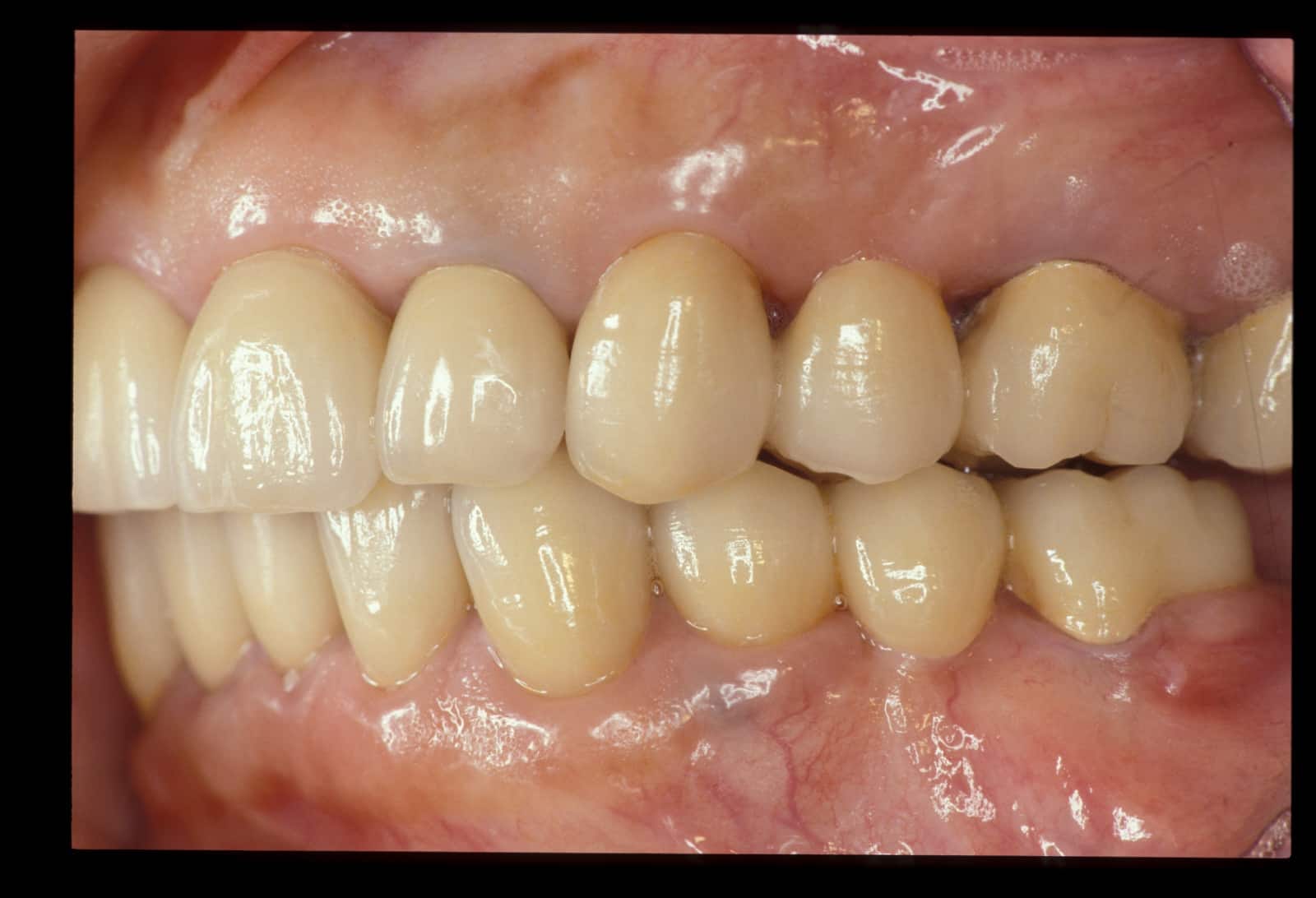
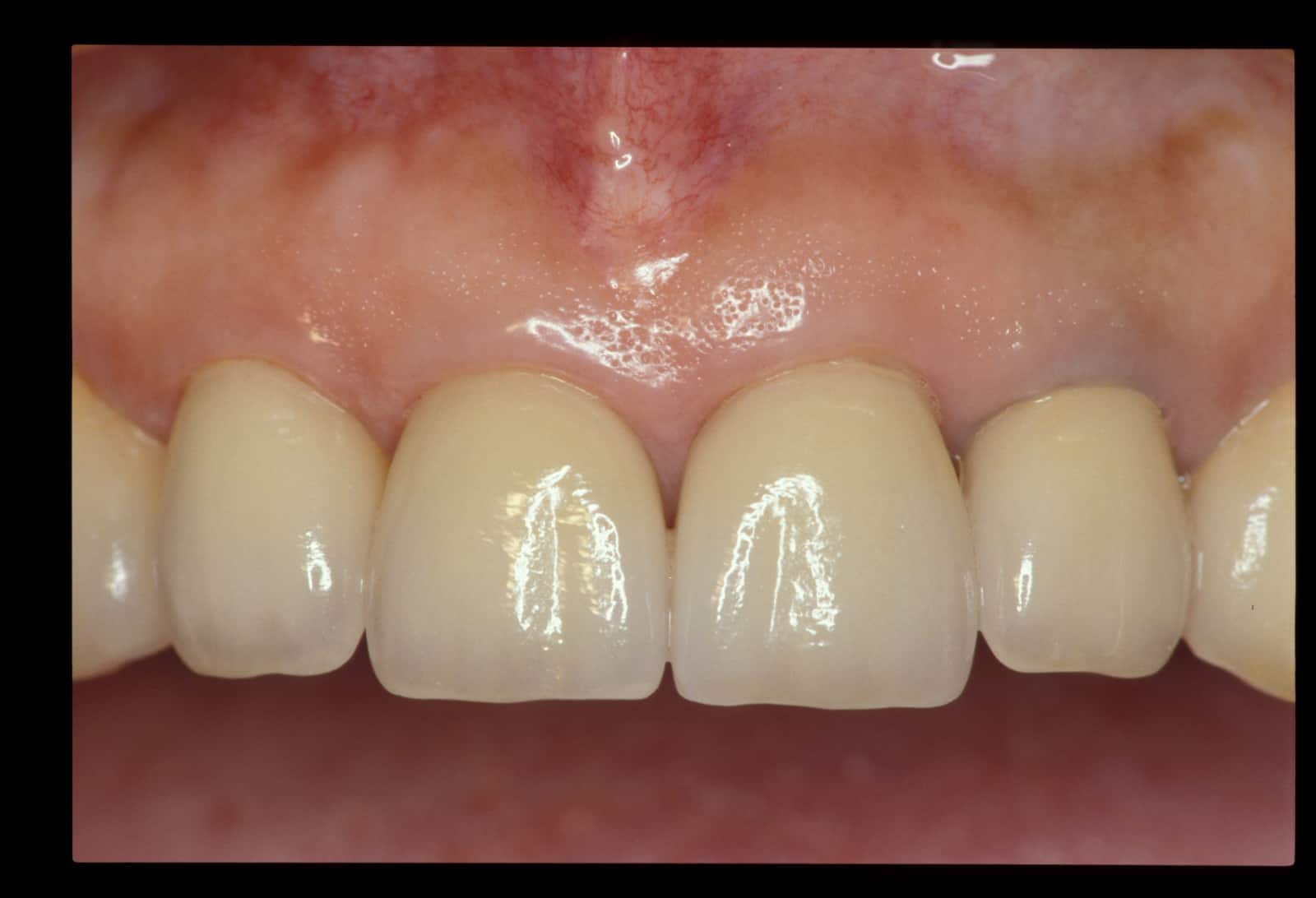
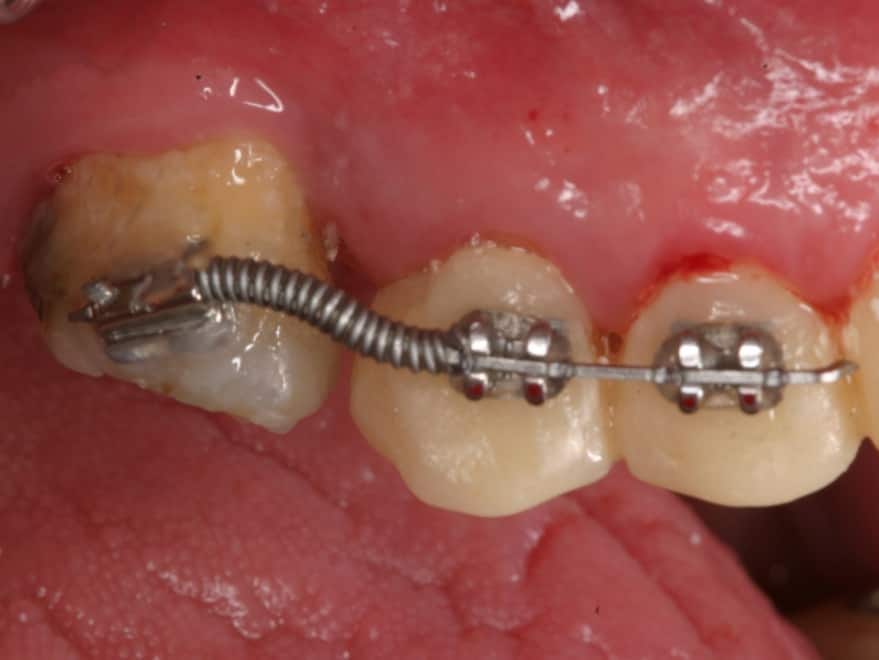
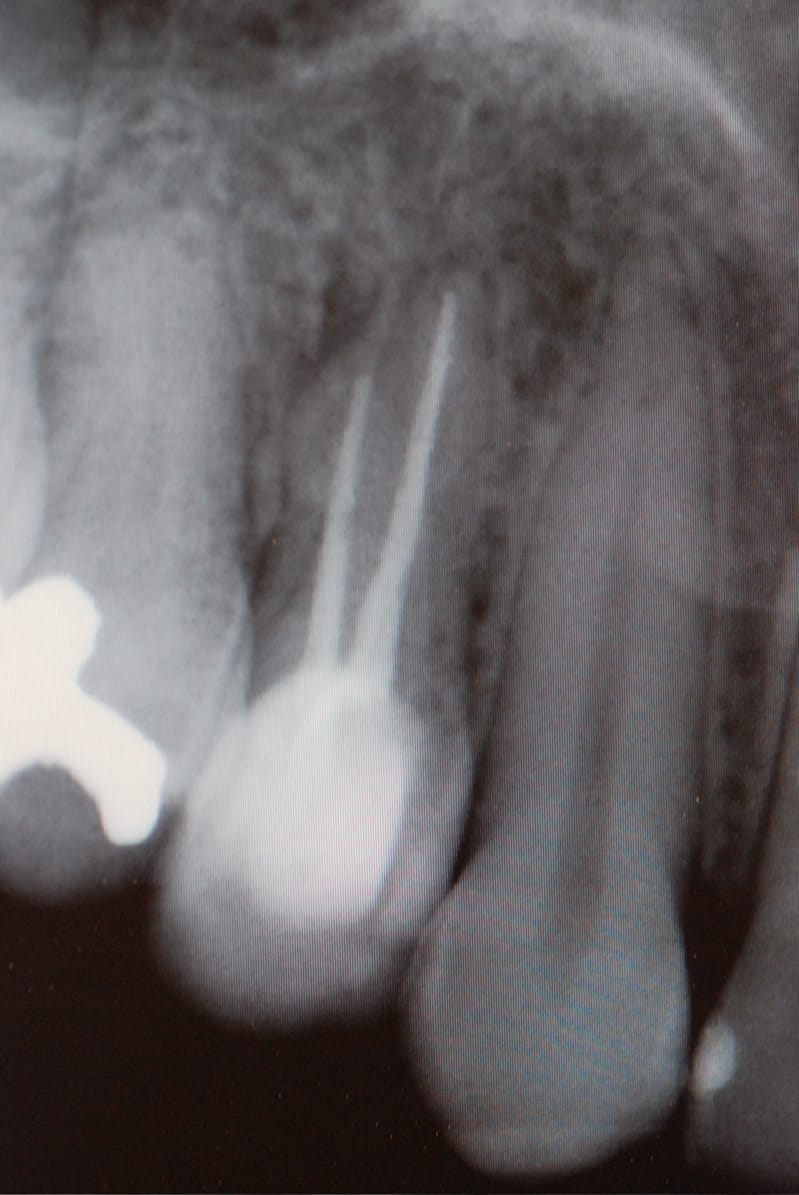
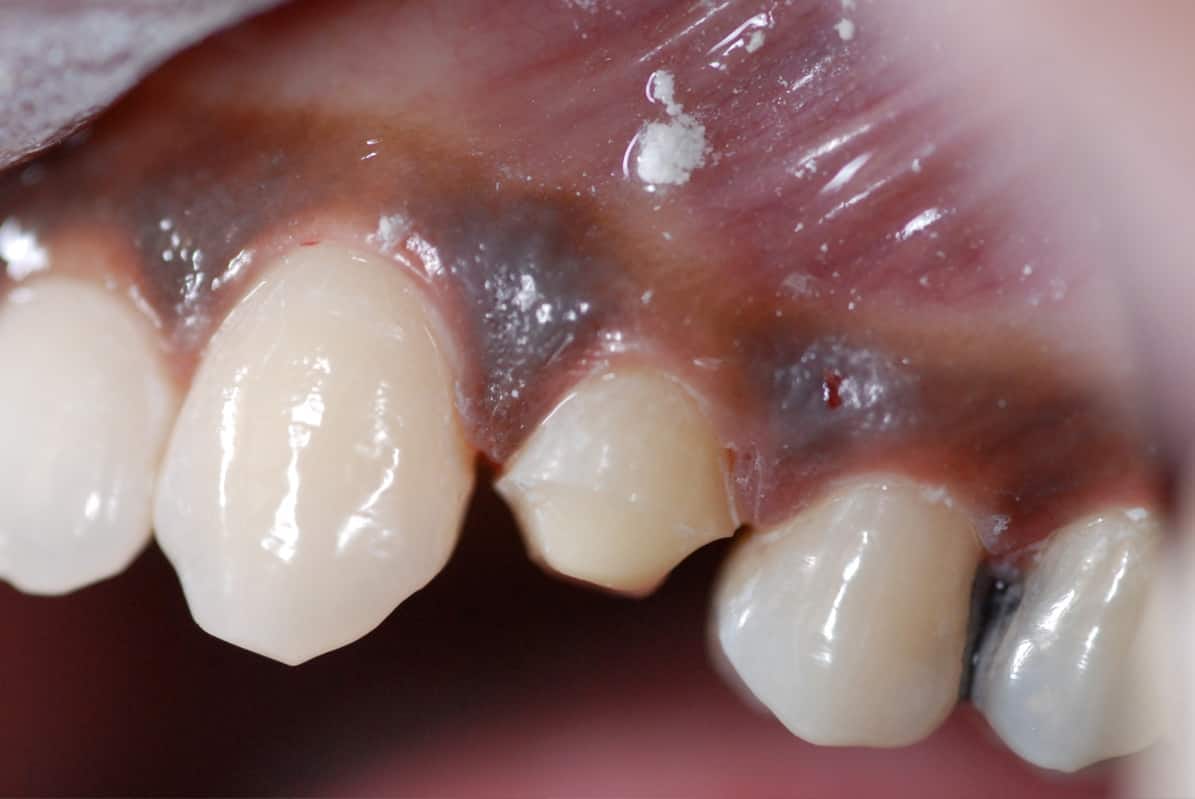
When a tooth has broken to the gum line, there is nothing for the crown to grip. Rather than removing it, the root can be gently extruded with a small orthodontic appliance over a few weeks, bringing healthy tooth up into view. This works as long as enough root remains in the bone: at least as much root as crown, and ideally more.
Saving a front tooth with rapid extrusion
When a post splits the root
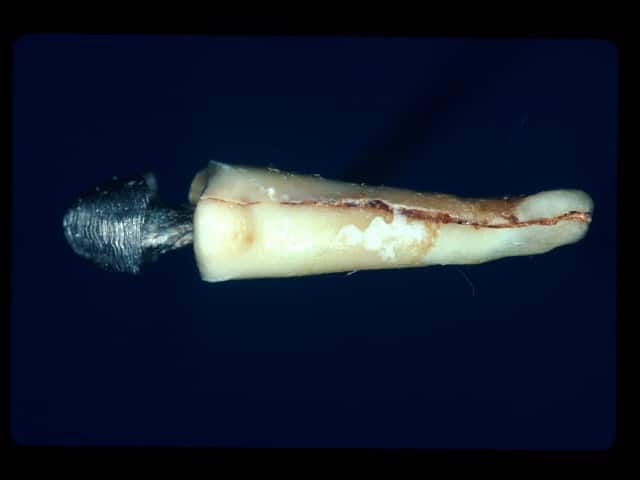
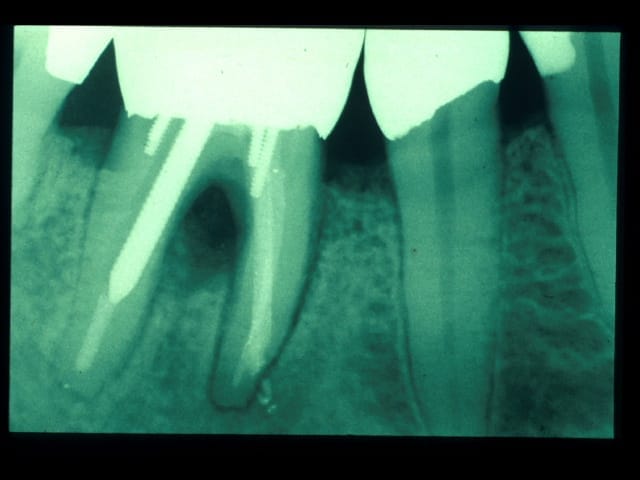
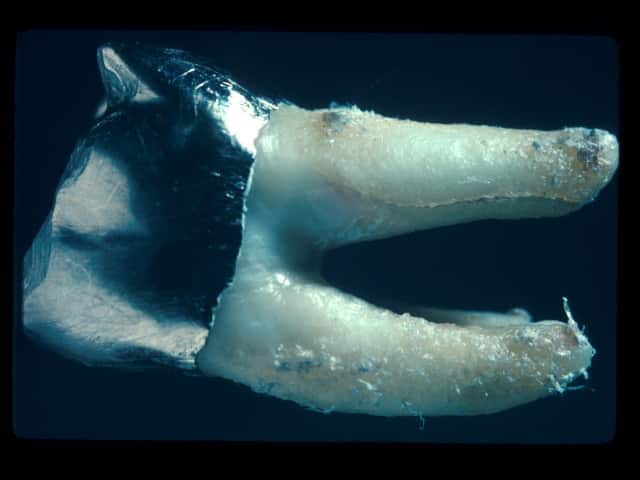
A root is not solid. It is a slightly flexible tube that thins in places. Put a large, rigid post inside it, under a rigid crown, with no ferrule, and every bite wedges the root from the inside. Over years this fatigue can crack it. Once a crack runs below the bone, the tooth cannot be restored, and the dark shadow it leaves in the bone on an x-ray is often how it is found.
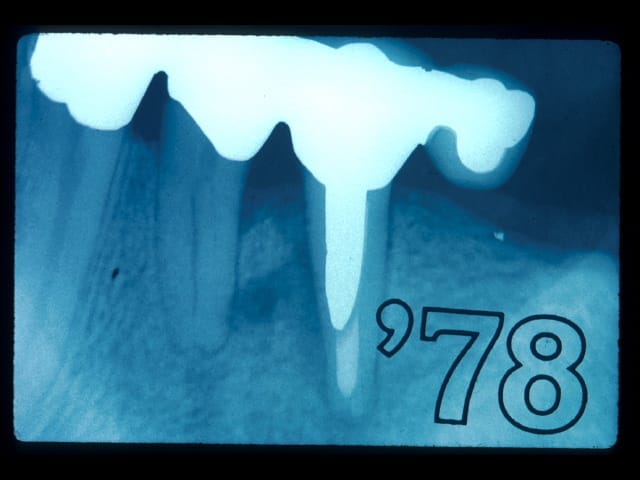
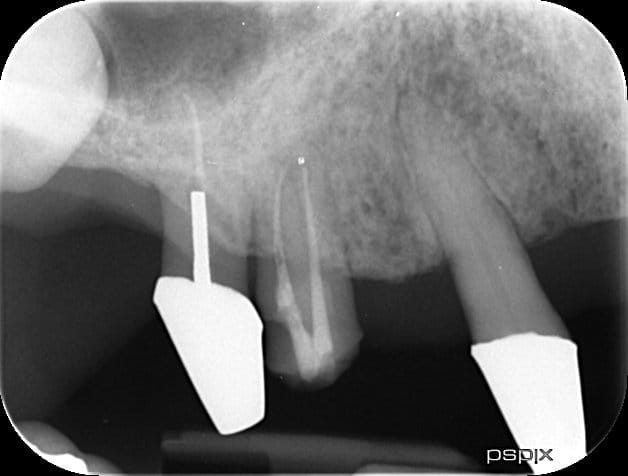
A lesson from 1975
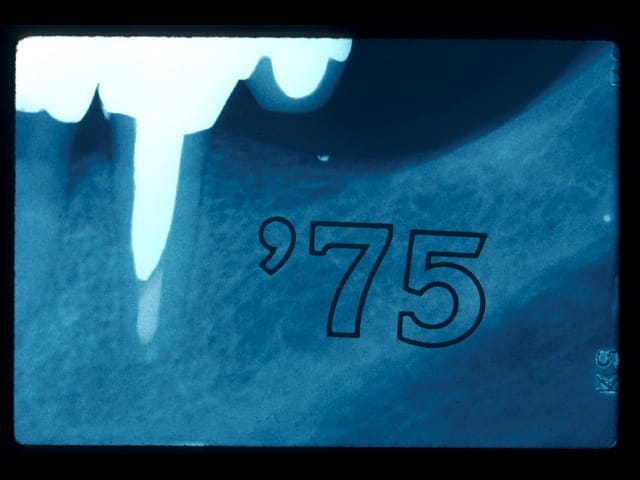
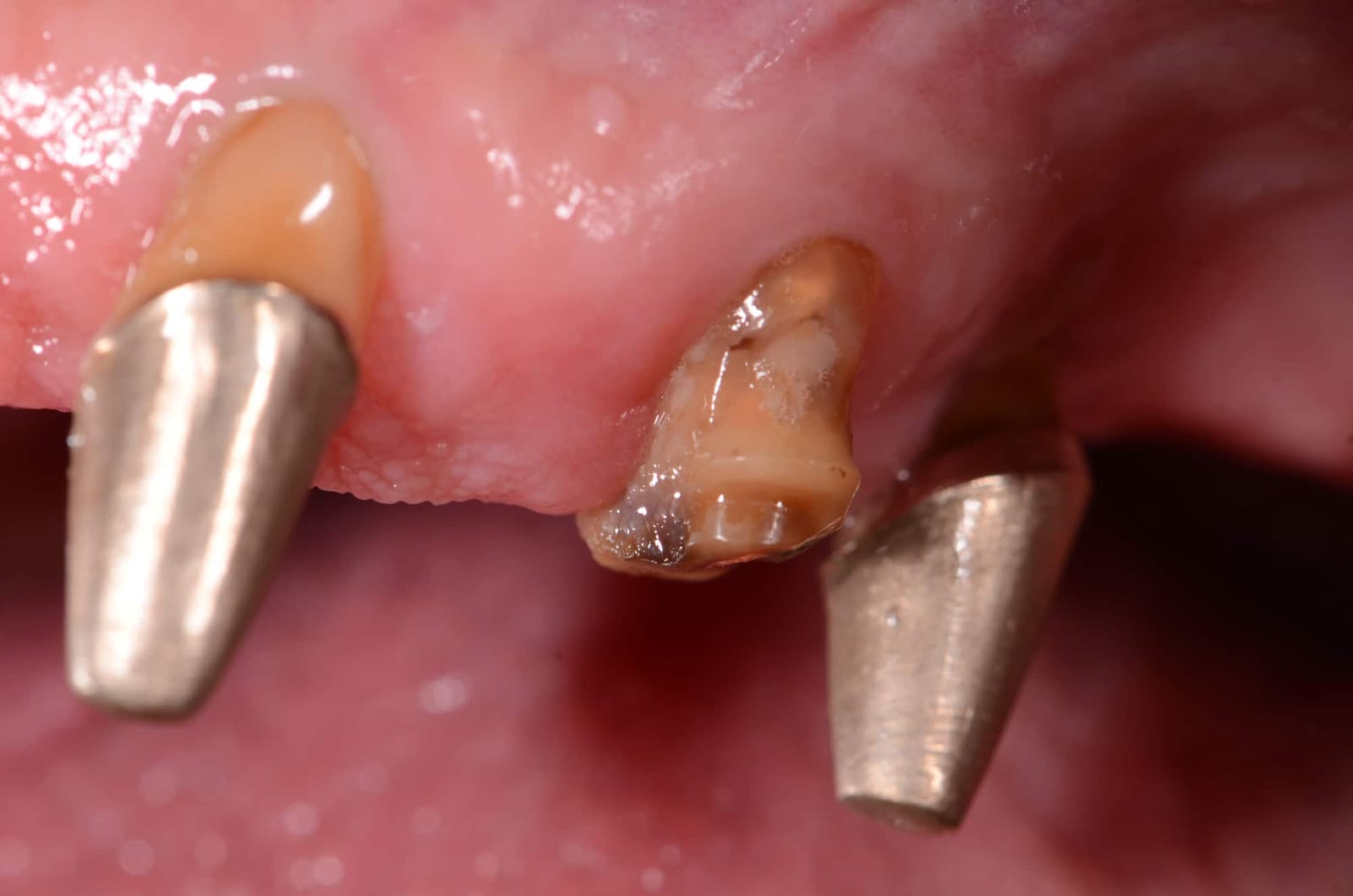
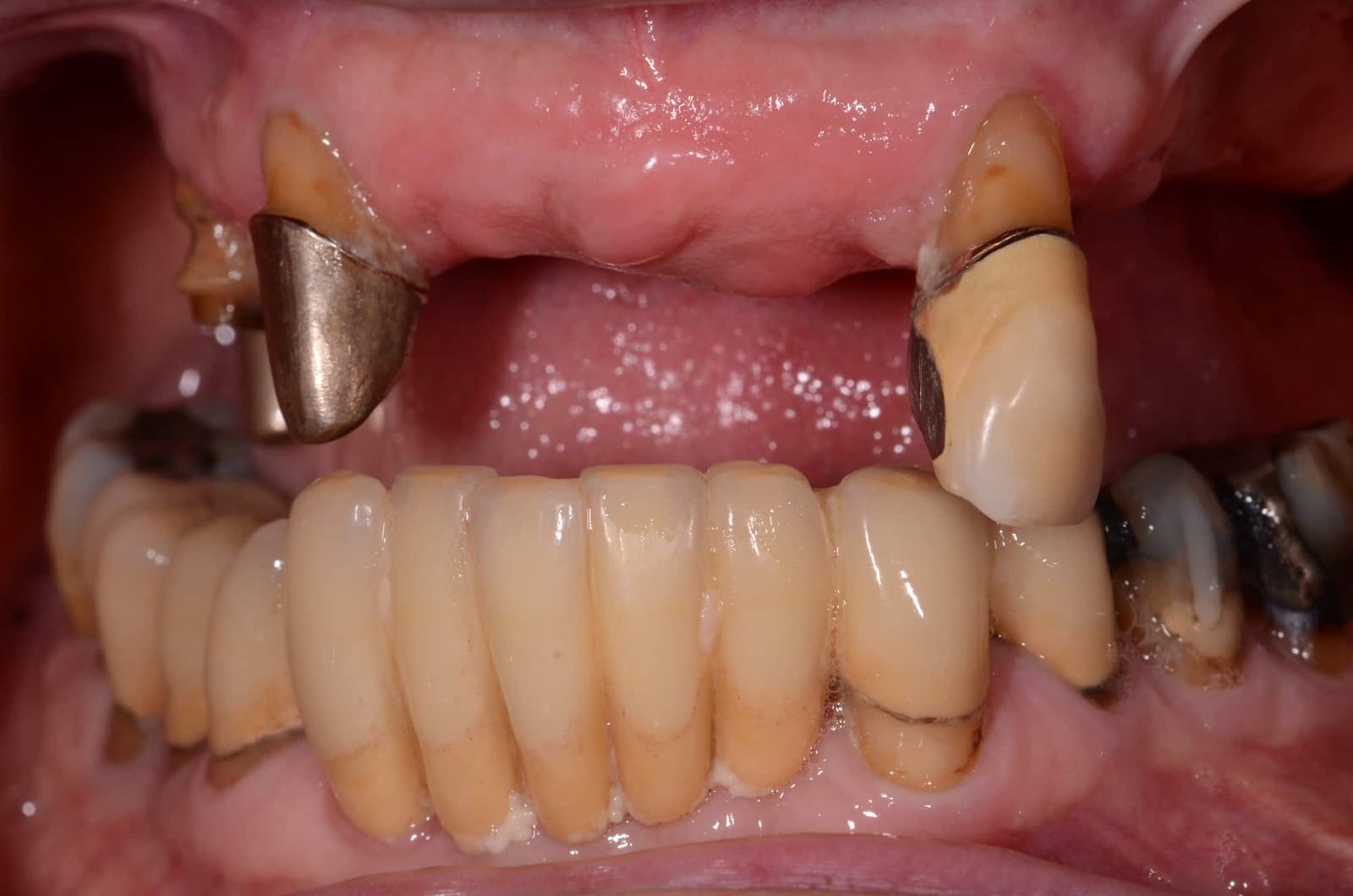
This patient came to Dr. Reshad with x-rays going back to 1975. A wide, rigid gold post had been placed and joined to the neighbouring teeth, with a small cantilever extension at the back. This was before implants, and splinting everything together was thought to add stability. A cantilever magnifies biting force, and by 1978 the post had wedged the root apart.
Our Beverly Hills office at 414 N. Camden Dr., Suite 750 opens in January 2027. Until then, call (310) 444-5217 and we'll arrange your consultation.
What weakens a tooth
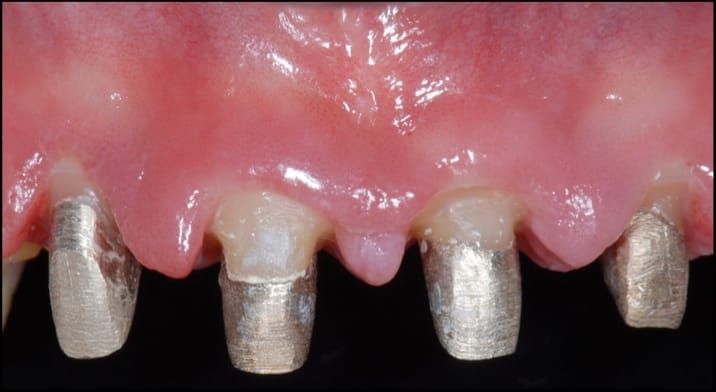
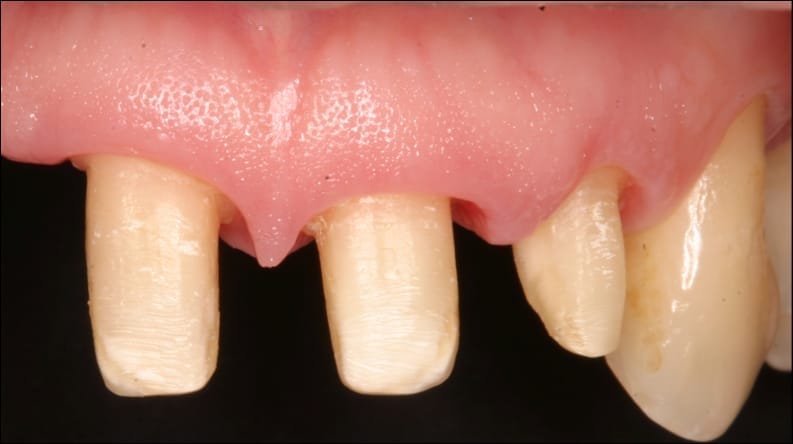
The root canal itself takes very little strength from a tooth. The damage comes from what is cut away, and above all from losing the ridges of tooth along the sides that hold the cusps together.
Front teeth behave the same way. In laboratory studies by Magne and Douglas, each step of tooth removal made the crown of an incisor more flexible, even after it was restored.
A post does not strengthen a tooth
In the 1970s it was believed that a post “reinforced” a root-treated tooth. Laboratory work by Guzy and Nicholls in 1979 showed it does not, and clinical studies since have agreed. A post's only job is to hold the core that retains the crown. When one is needed, it is because too little tooth remains to do that job.
Clinical trials found no benefit from placing a post. The ferrule and the remaining walls decided the outcome.
Naumann et al., J Endod 2018A fibre post under a bonded overlay did not make root-treated molars any stronger.
Scotti et al., J Dent 2012Of post-restored teeth had complications over about six years across 12 studies and 2,784 teeth: loosening 5%, root fracture 3%.
Goodacre et al., J Prosthet Dent 2003Whether a tooth can be saved at all, and how, depends on more than the post:
How much sound structure remains above the gum
Damage from earlier fillings, crowns or large posts
Loss of tooth and deep margins under the gum
Heavy or poorly managed biting forces
Bruxism multiplies the load; night guards matter
A tooth anchoring a partial denture or bridge end takes extra strain
This is where a prosthodontist earns their keep. Even a compromised tooth can survive for many years in a well-balanced bite.
Our Beverly Hills office at 414 N. Camden Dr., Suite 750 opens in January 2027. Until then, call (310) 444-5217 and we'll arrange your consultation.
The tooth in its coffin
Richard Simonsen described how teeth are usually lost: not in one event, but through a cycle of ever larger treatments, each reasonable at the time.
That raises the central question in restoring these teeth. Do we build the strongest, most rigid restoration possible, or do we protect the tooth itself? For a badly broken-down tooth, a rigid post and crown may be the last resort that buys another ten or fifteen years, and that can be exactly the right choice. For a younger patient, or a tooth that is less damaged, keeping the tooth intact matters more.
The traditional craft
Gold, posts, crowns and crown lengthening: for many patients, still the only way to keep their teeth.
Gold: the long-distance runner
Cast gold has served dentistry for over a century. It is kind to the opposing teeth, seals superbly, and does not depend on bonding. Its drawback is colour, which is why many patients no longer ask for it. On back teeth, and particularly second molars that take the heaviest loads, it remains an outstanding choice.
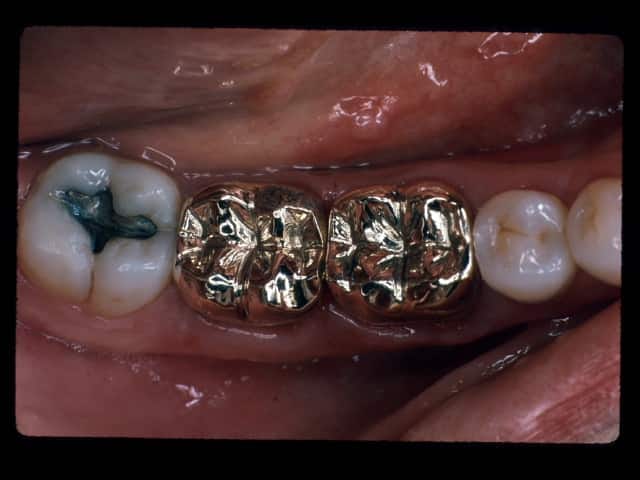
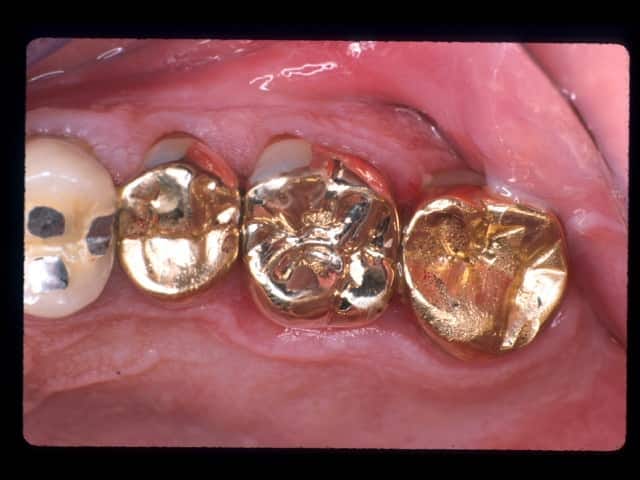
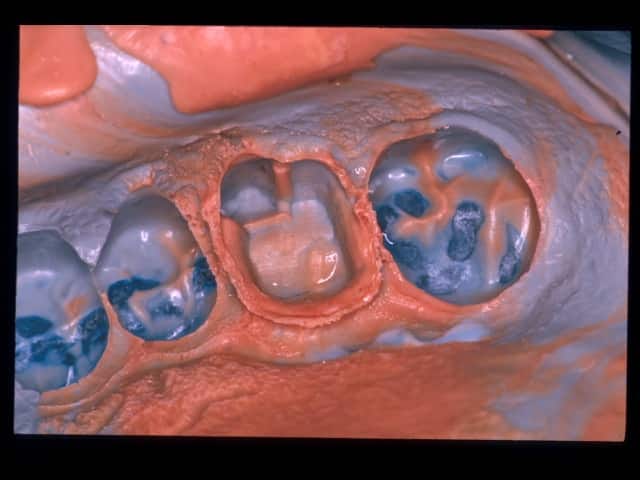
Of 2,071 gold inlays were still in place after 25 years in one specialist practice.
Erpenstein et al., Clin Oral Investig 20011,314 cast gold restorations from Dr. Richard Tucker's Seattle practice, some in service for over half a century.
Donovan et al., J Esthet Restor Dent 2004Gold versus ceramic partial crowns still in place at 20 years in a randomised trial. The difference was not significant.
Cieplik et al., Dent Mater 2025Our Beverly Hills office at 414 N. Camden Dr., Suite 750 opens in January 2027. Until then, call (310) 444-5217 and we'll arrange your consultation.
When there is no alternative
Bonding needs sound, healthy dentin and a dry field. Traditional restorations are the right choice when:
- Very little tooth is left. A cast post and core may be the only way to hold a crown.
- The dentin is poor. Old, sclerotic or heavily restored dentin does not bond reliably.
- Margins are deep under the gum. If the area cannot be kept dry, a cemented crown is more predictable, sometimes after crown lengthening.
- Decay risk is high. Gold's precise fit and seal make it a strong choice.
- Access or isolation is difficult, or the bite is extreme.
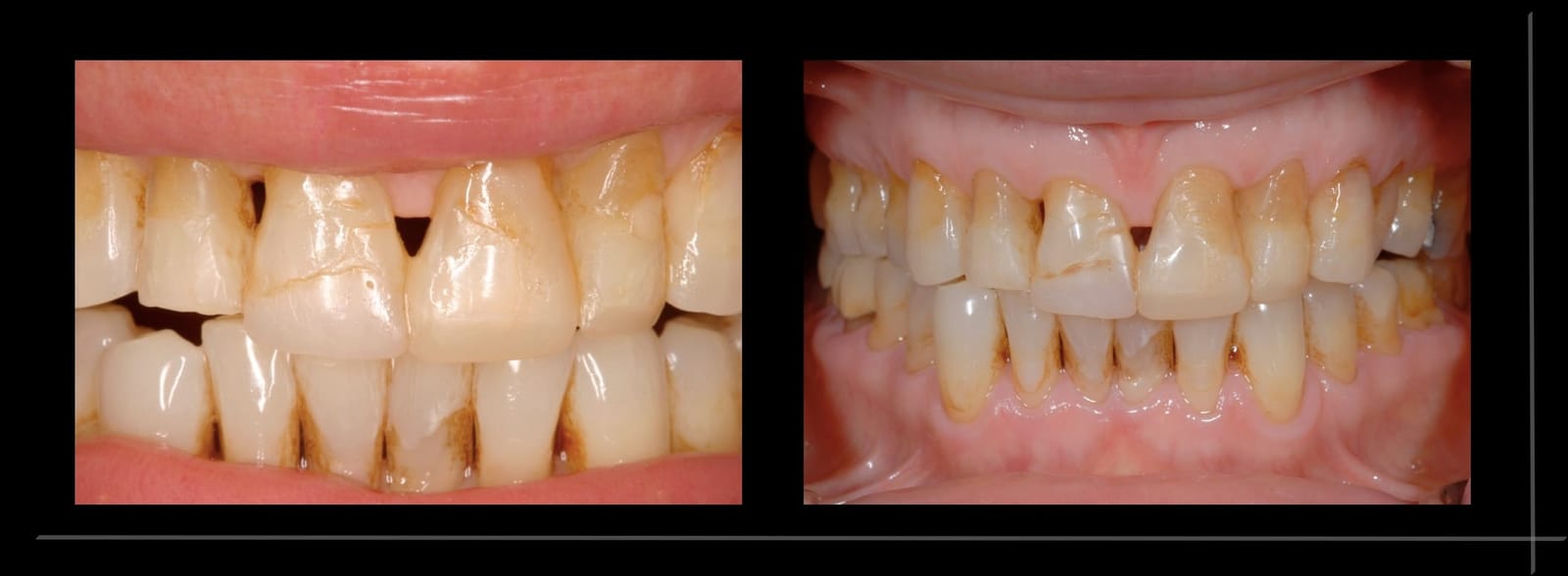
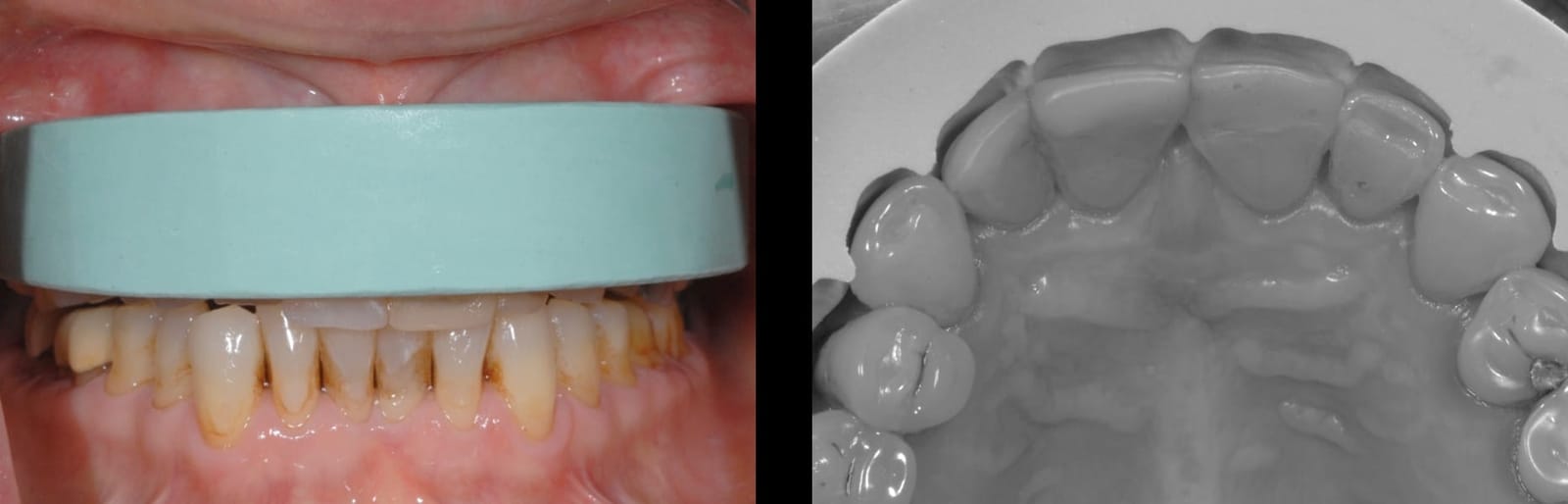
A collapsed bite, rebuilt the traditional way
This patient had ground through his teeth into the roots and bone, and his bite had collapsed. The aim was restoration integrity: rebuild his bite height and give him something strong enough to survive severe grinding.
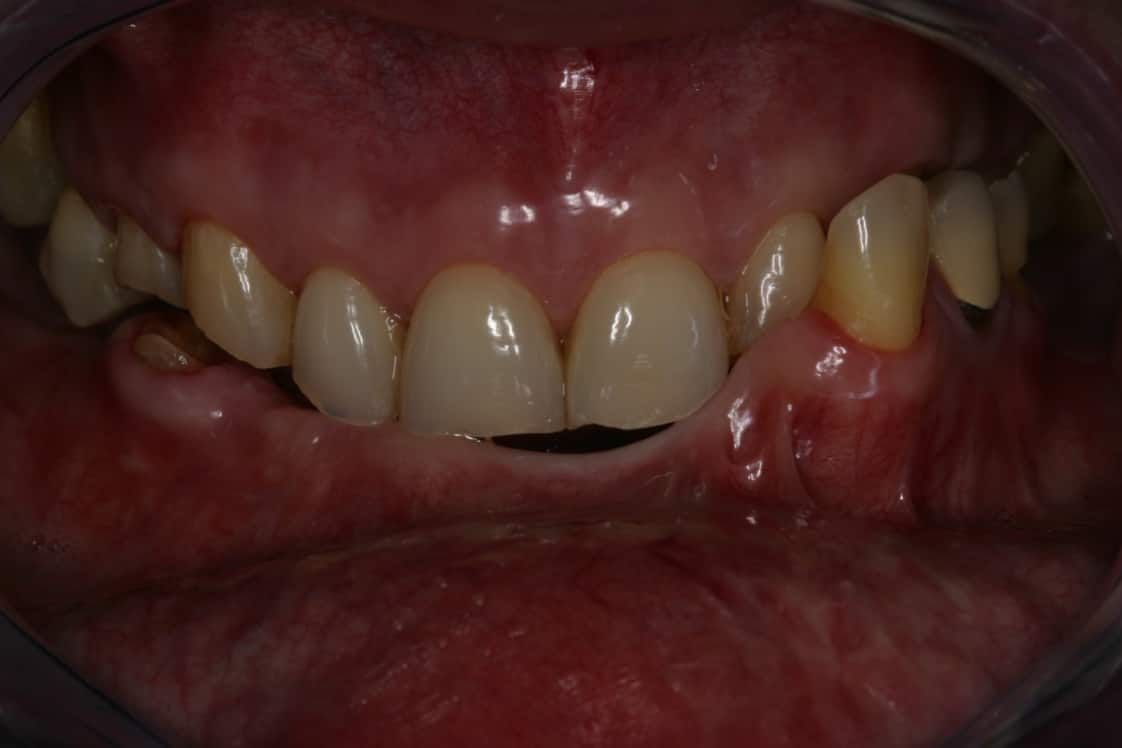
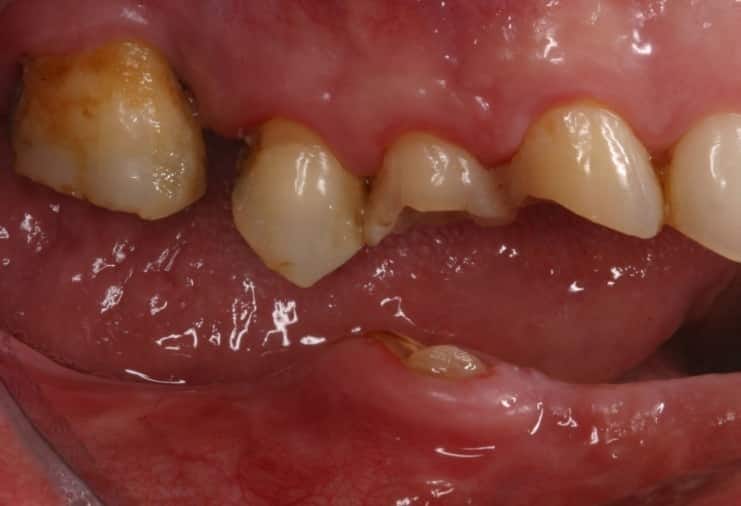
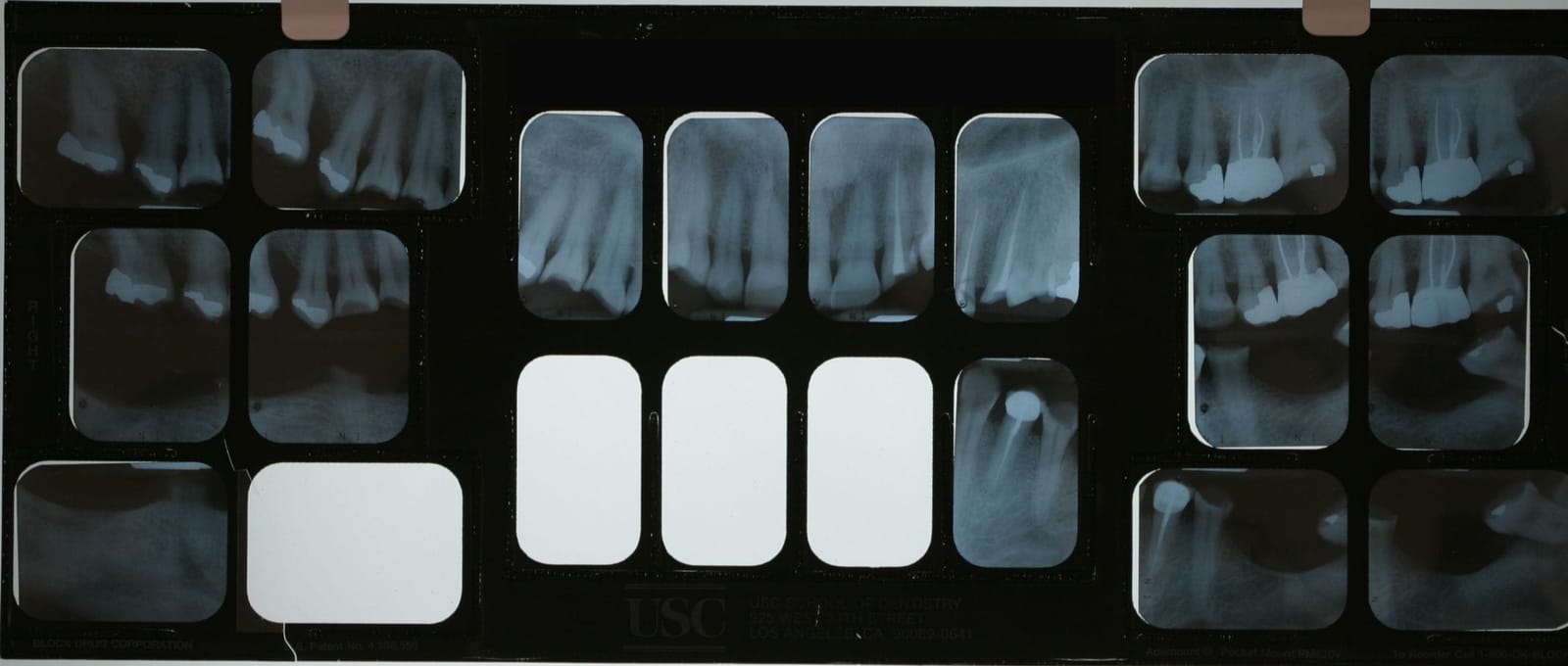
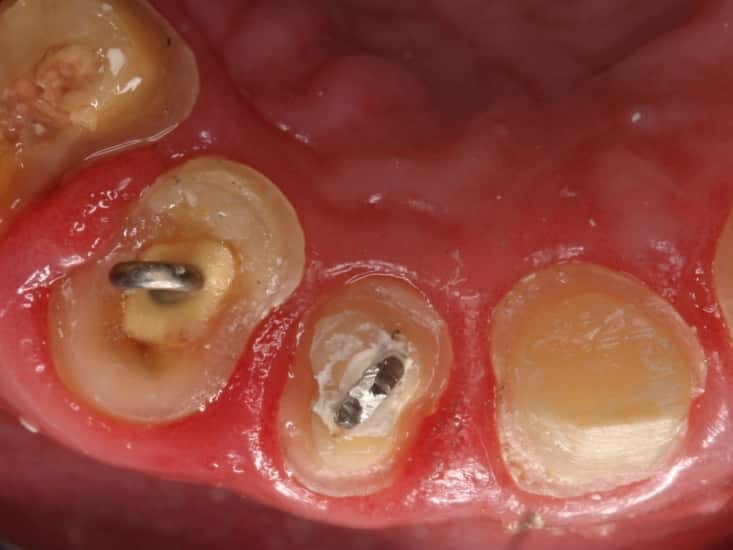
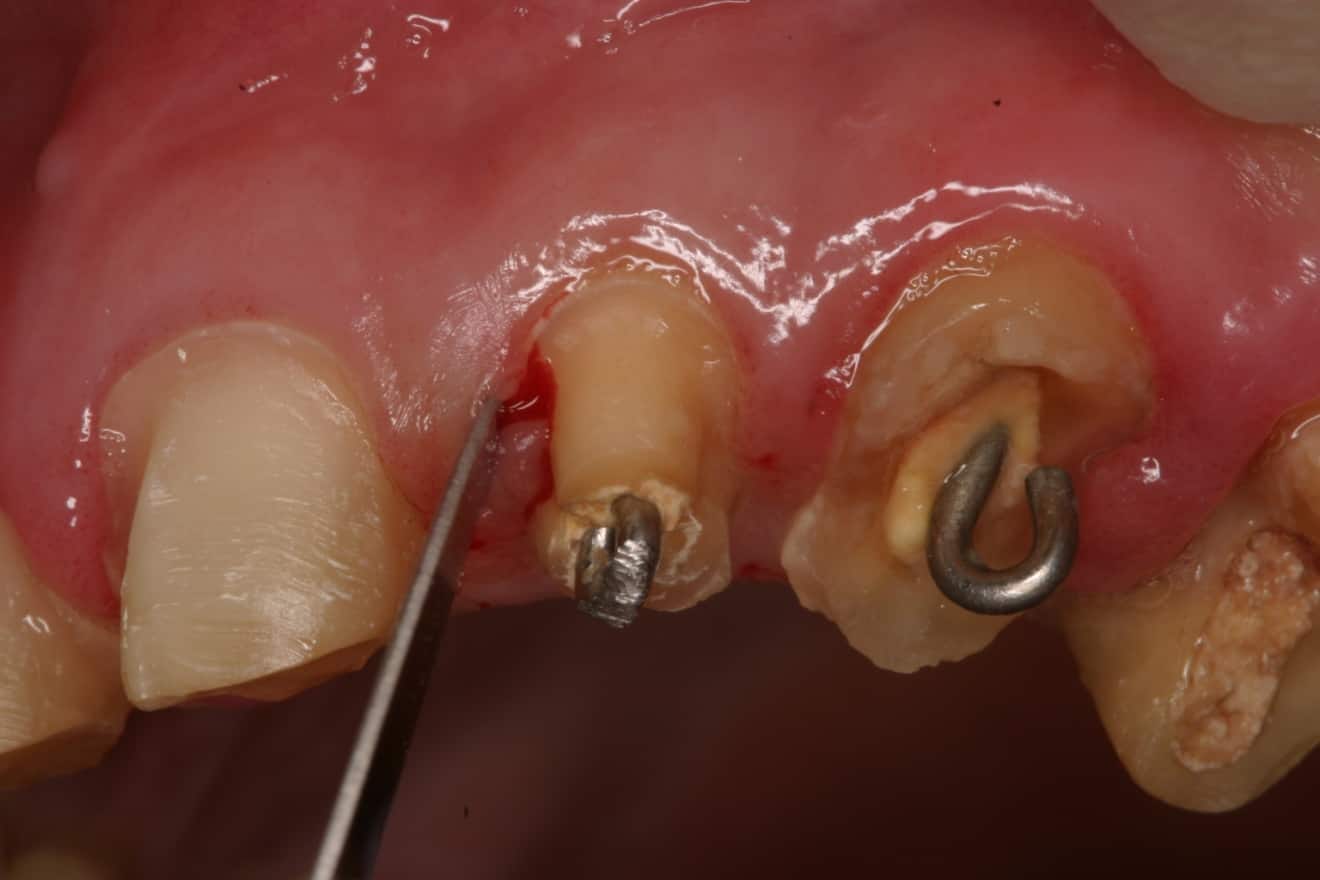
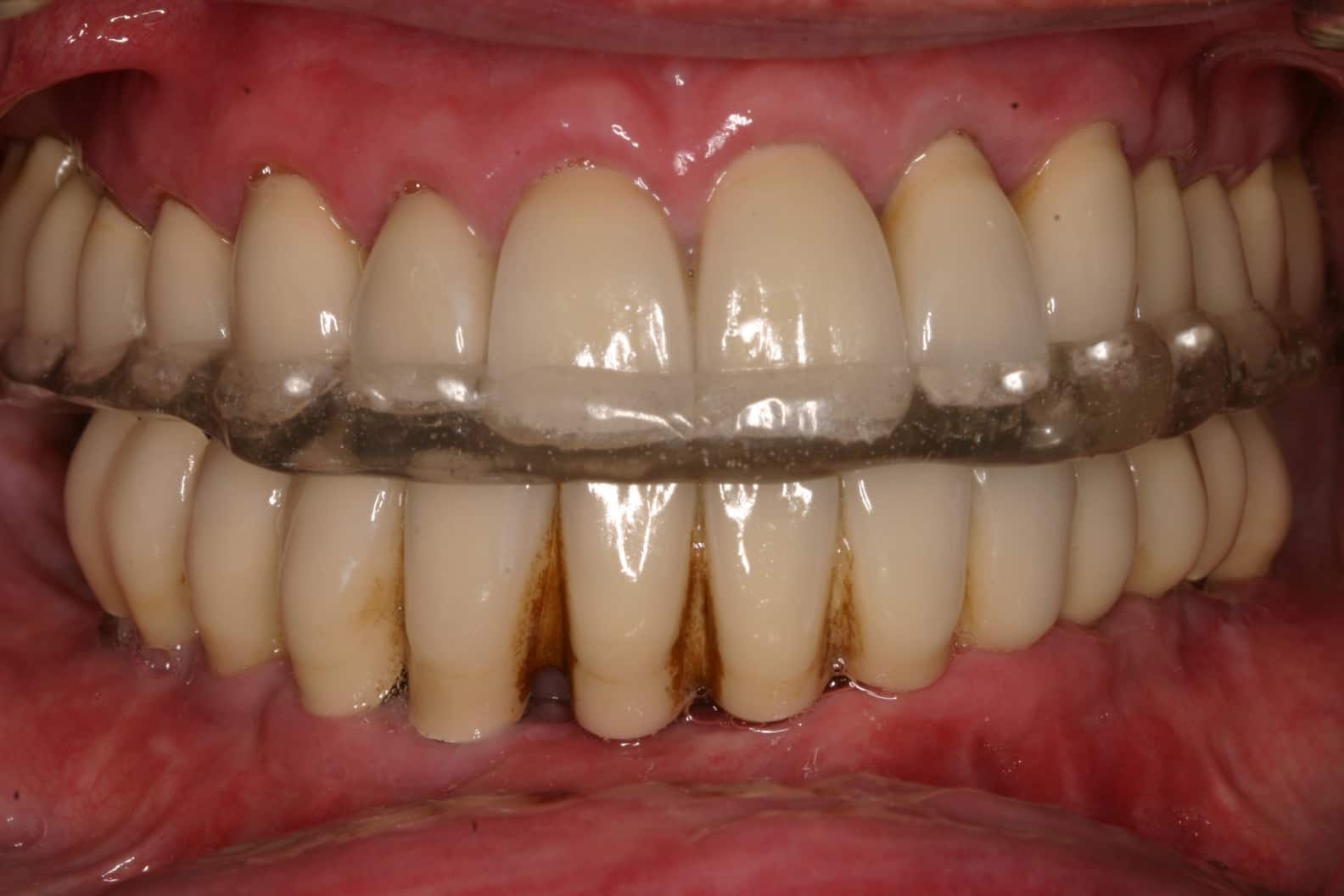
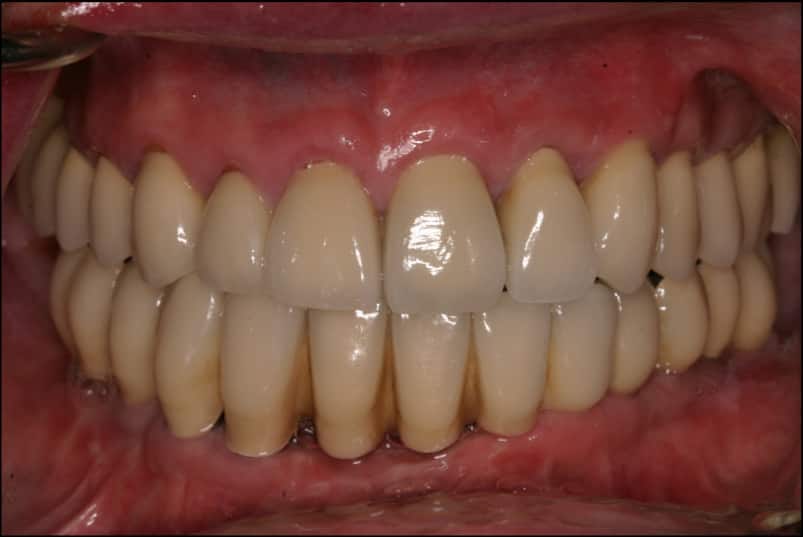
Rebuilding a bite this far gone takes the traditional toolkit: root treatment, posts, crowns and a rigid metal biting surface, protected by a night guard. For a heavy grinder with this much destruction, it is the treatment that keeps the teeth working.
Adhesive dentistry
Many teeth that once needed a root canal, post and crown can now be rebuilt with little or no drilling. Dr. Reshad has taught and developed these techniques for over two decades.
A paradigm shift
Classical crowns rely on retention and resistance form: the tooth is shaped with a drill so the crown holds on mechanically. They work, and they still have their place. Bonded restorations are glued to the tooth instead, so far less needs to be removed, and sometimes nothing at all.
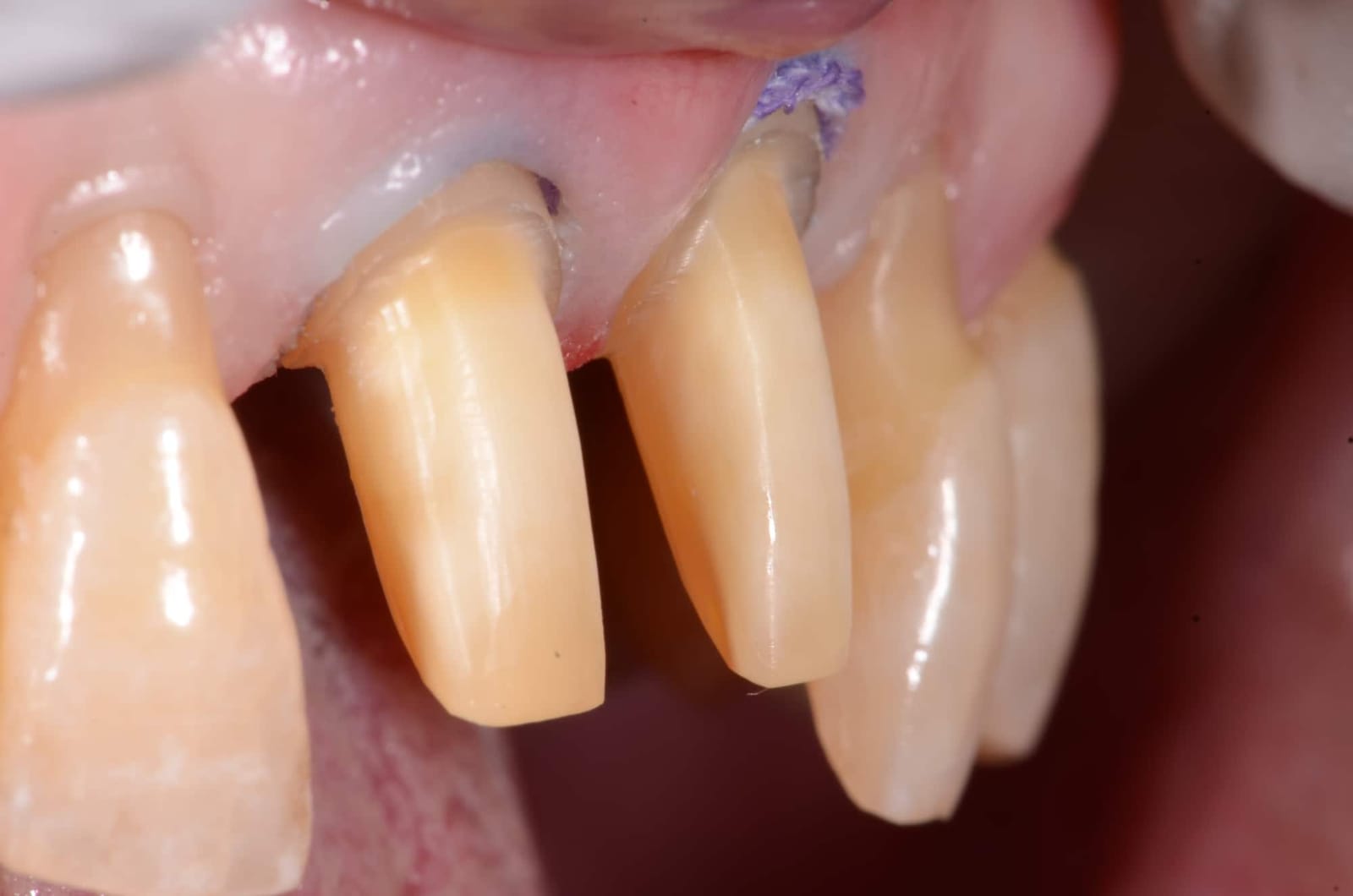
The idea is borrowed from engineering. Cars have crumple zones: the part designed to fail protects the passengers. In a bonded tooth, the restoration is that part. Stronger is not always better, because a restoration far stiffer than the tooth passes the load into the root.
Our Beverly Hills office at 414 N. Camden Dr., Suite 750 opens in January 2027. Until then, call (310) 444-5217 and we'll arrange your consultation.
Immediate dentin sealing
The key to a lasting bond is sealing the freshly cut dentin immediately, before impressions are taken, rather than weeks later when the final restoration is fitted. It protects the tooth in between and produces a much stronger, more durable bond.
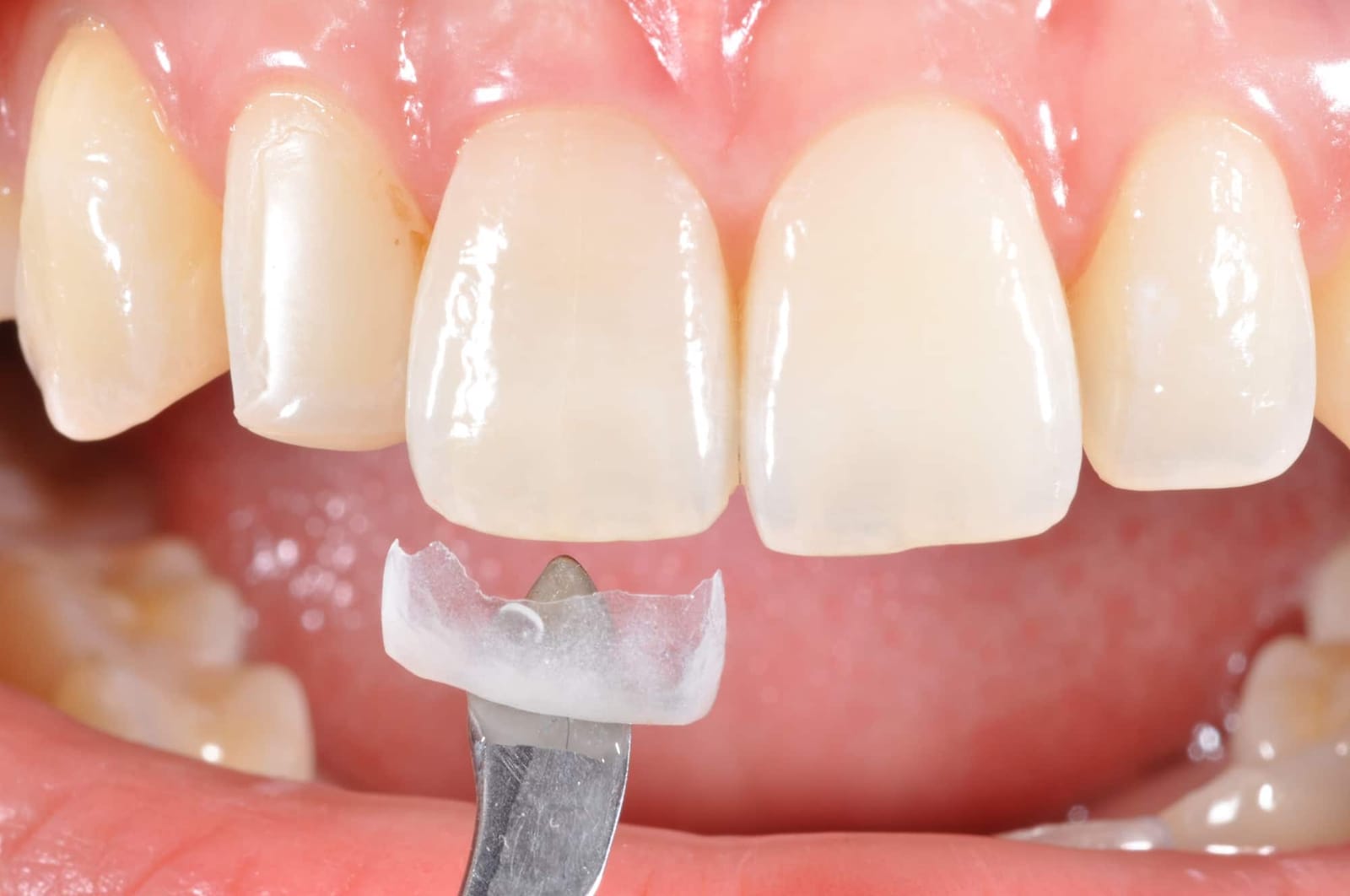
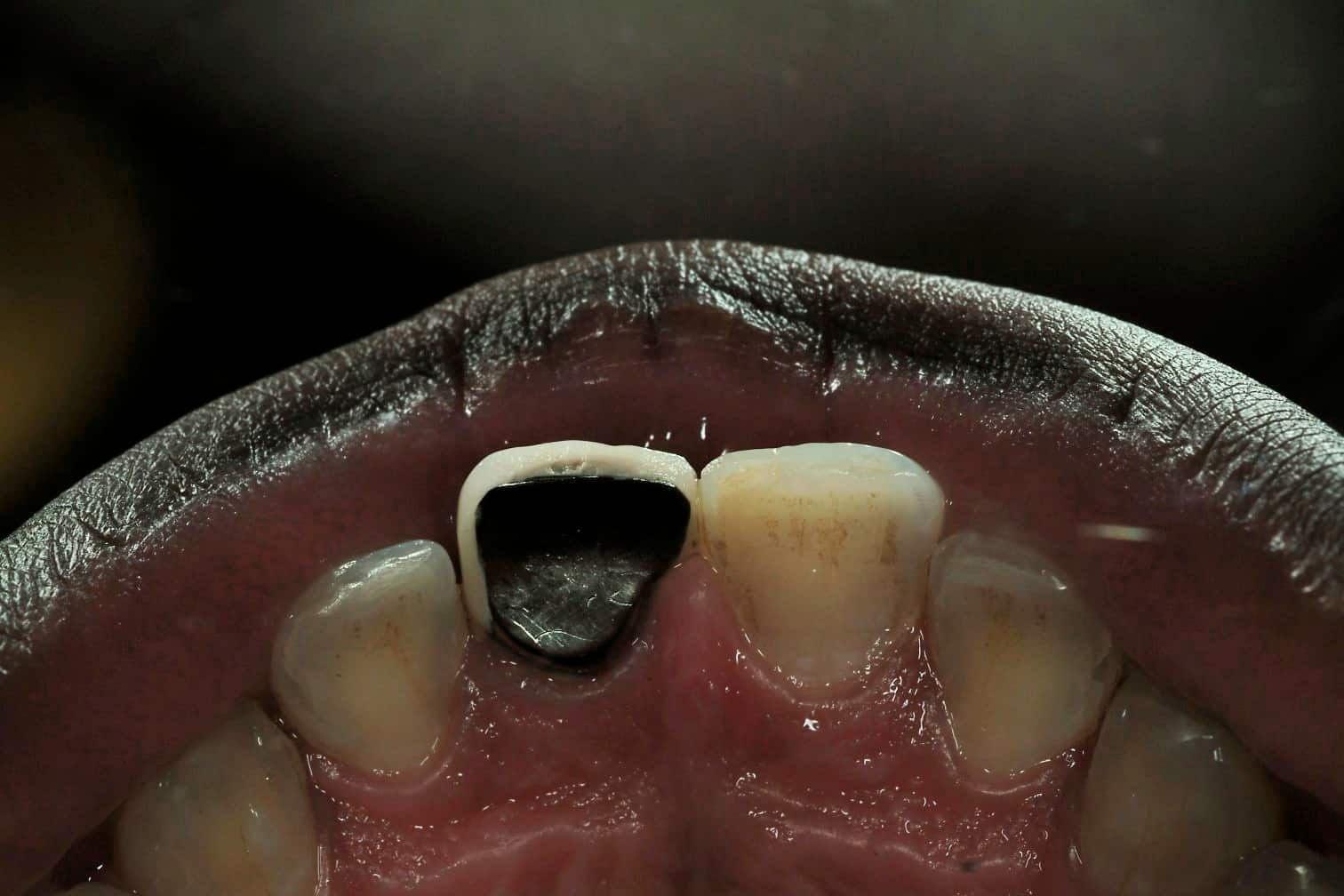
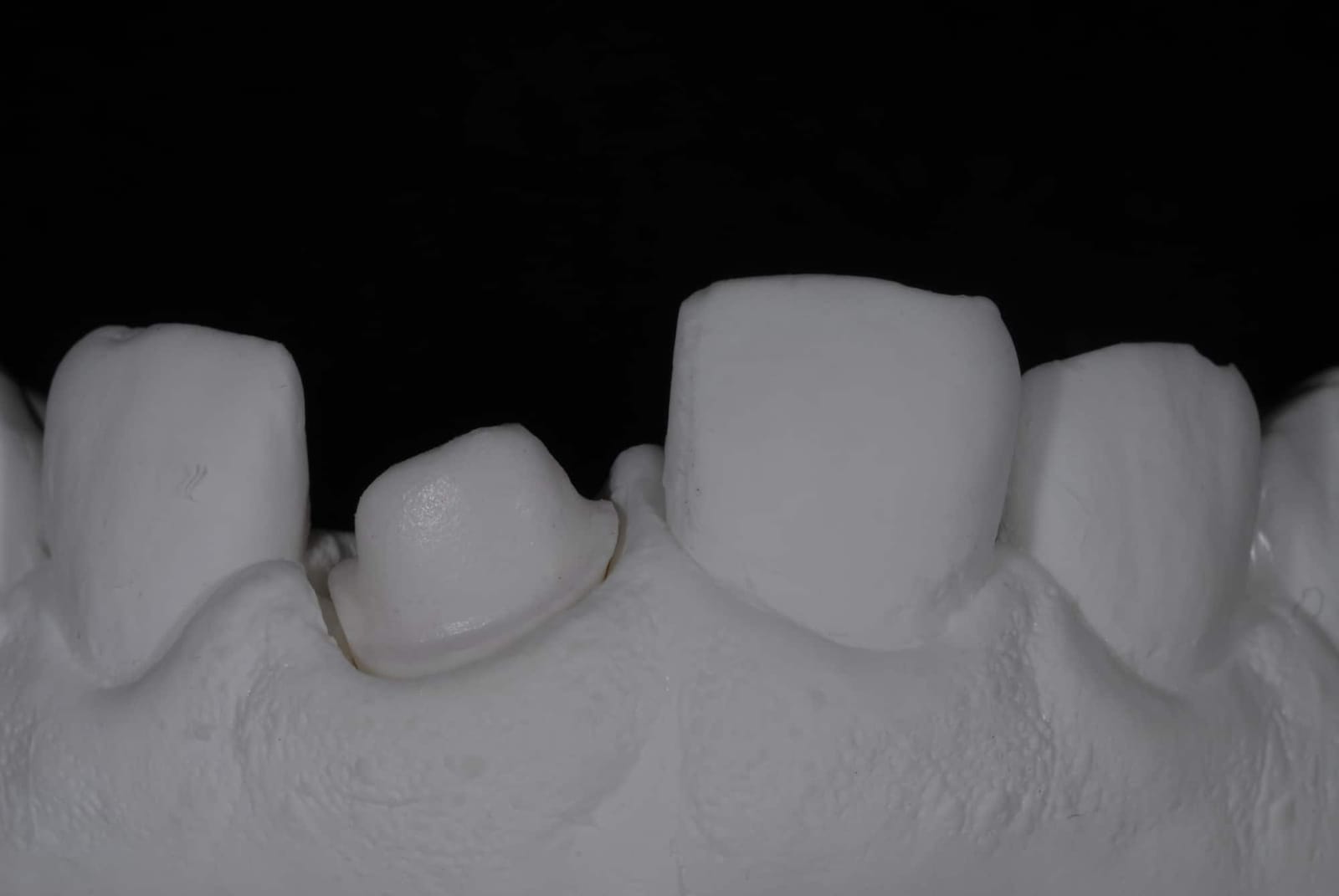
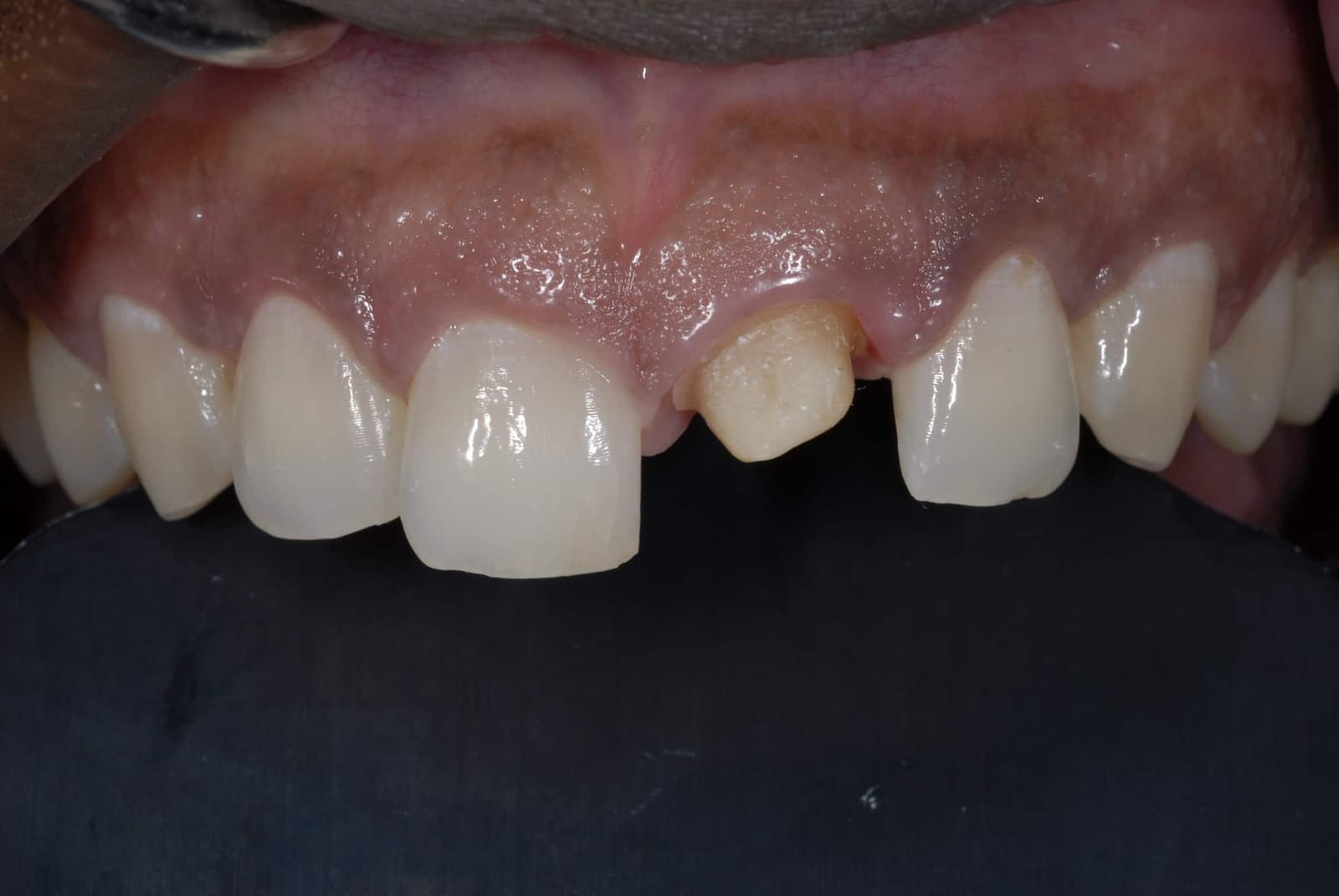
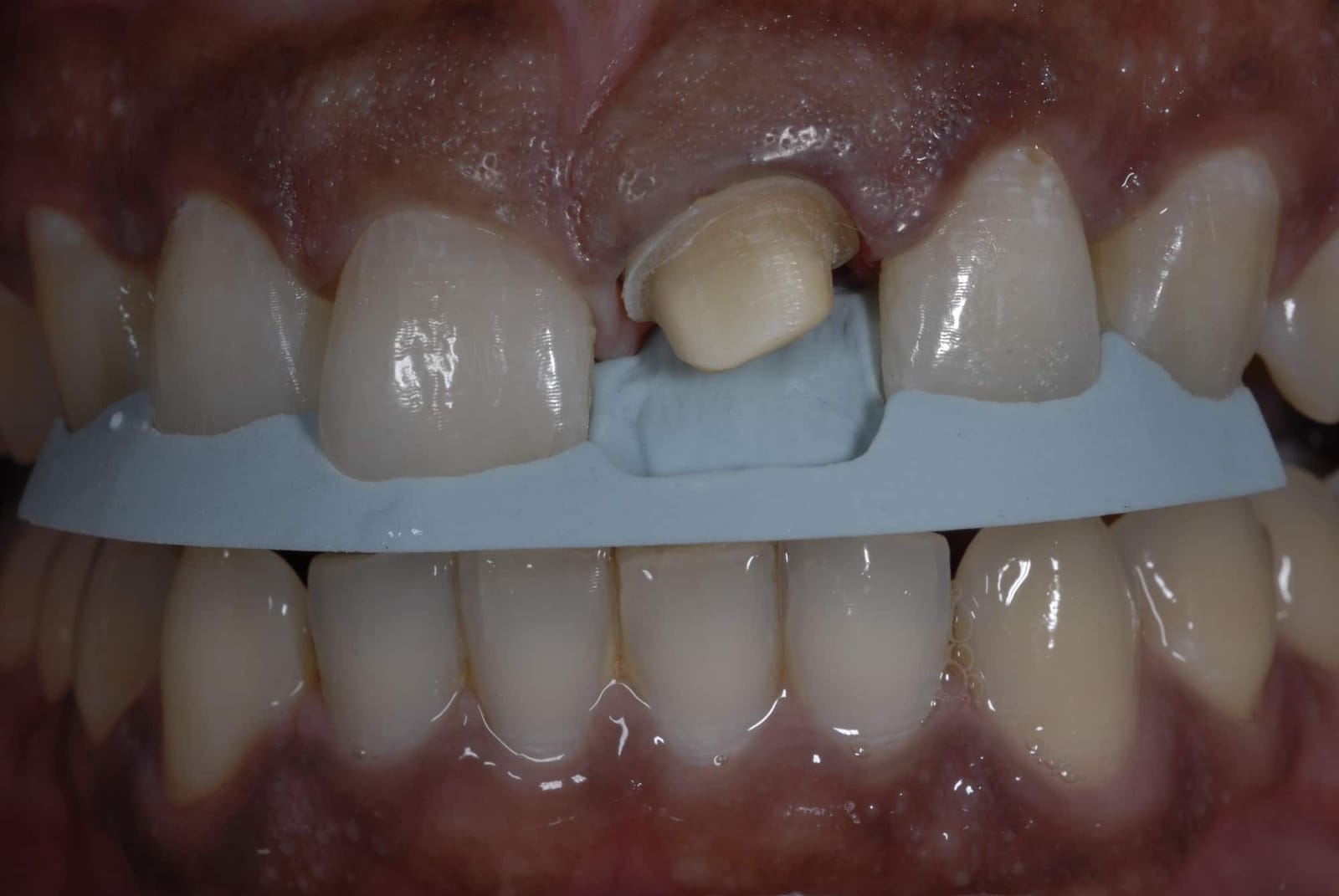
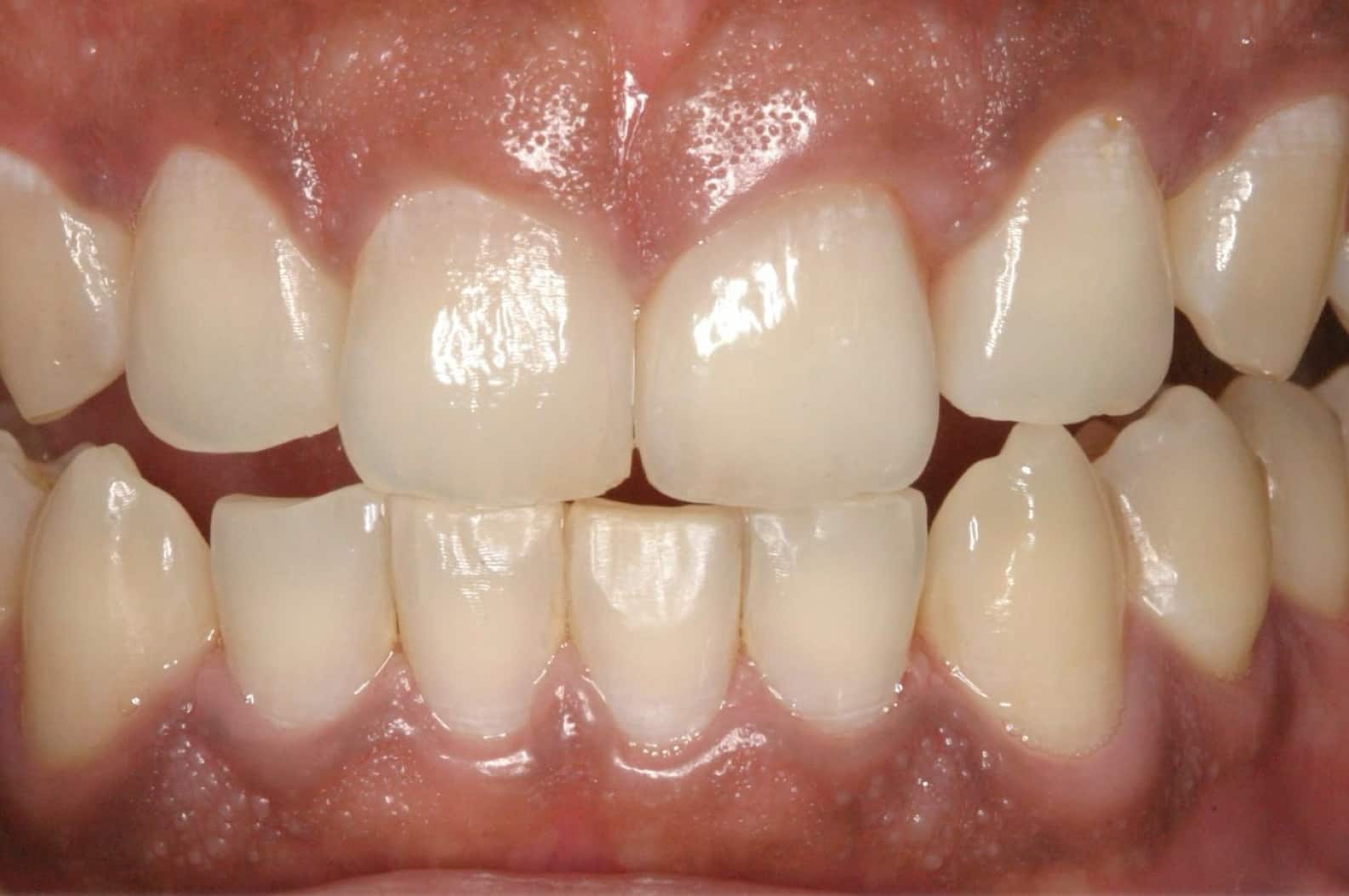
Front teeth, rebuilt without a post
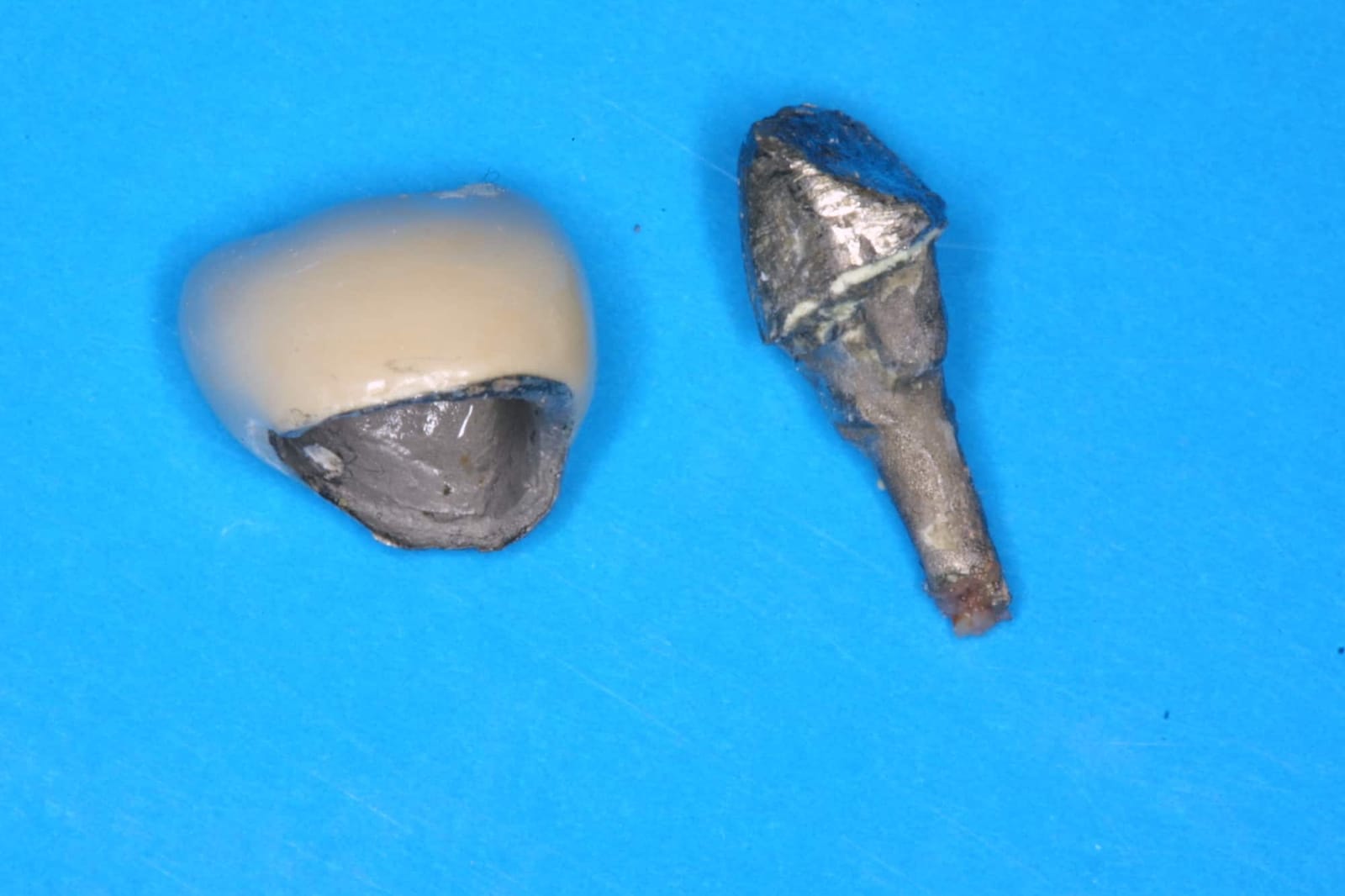
When the old crown was removed from the incisor below, very little tooth remained. Traditionally this tooth would have needed a root canal, a rigid post, a crown and possibly crown lengthening surgery. Using immediate dentin sealing and a bonded porcelain restoration, none of that was needed. It was placed by Dr. Reshad over twenty years ago and is still in place.
A broken incisor, bonded instead of crowned
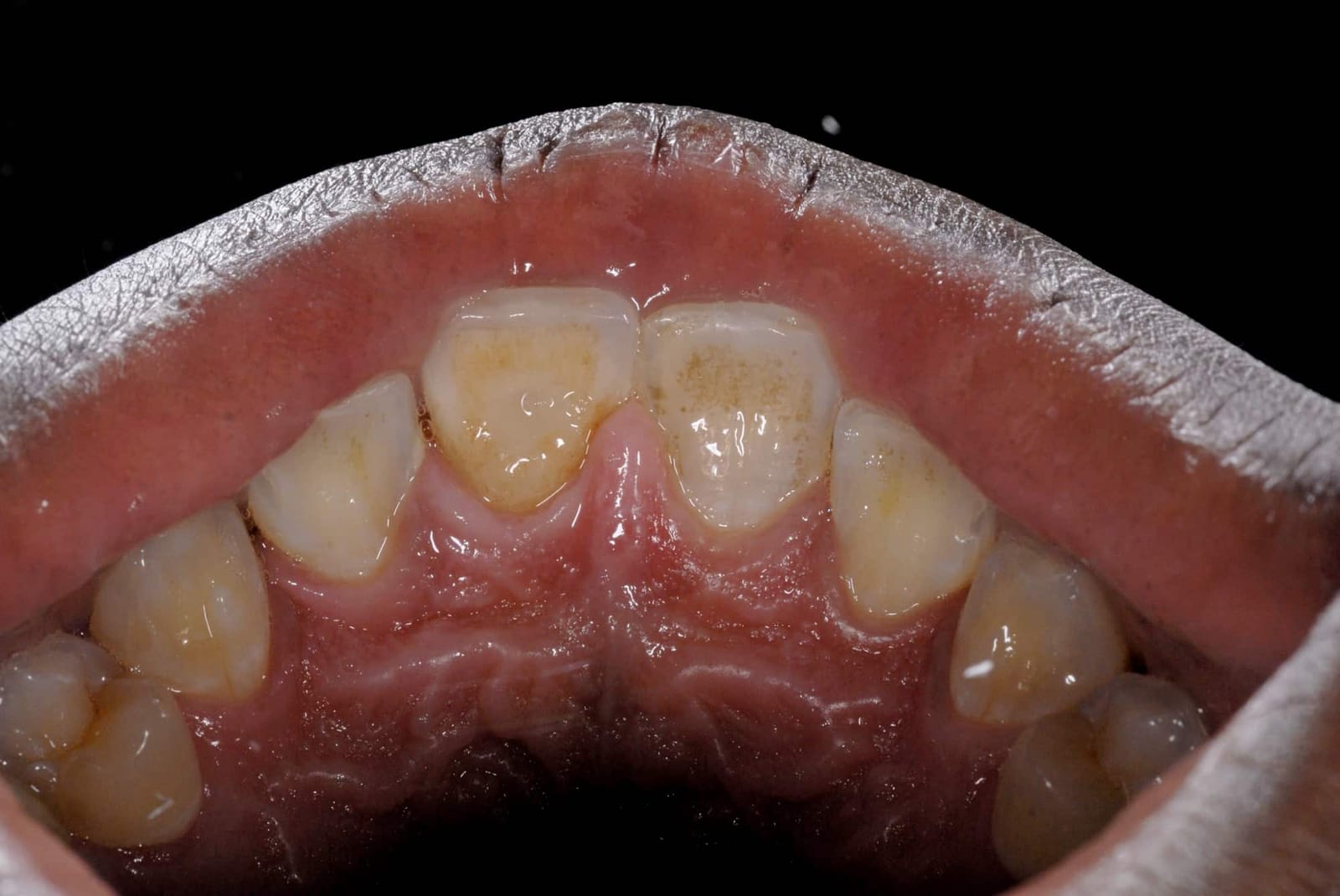
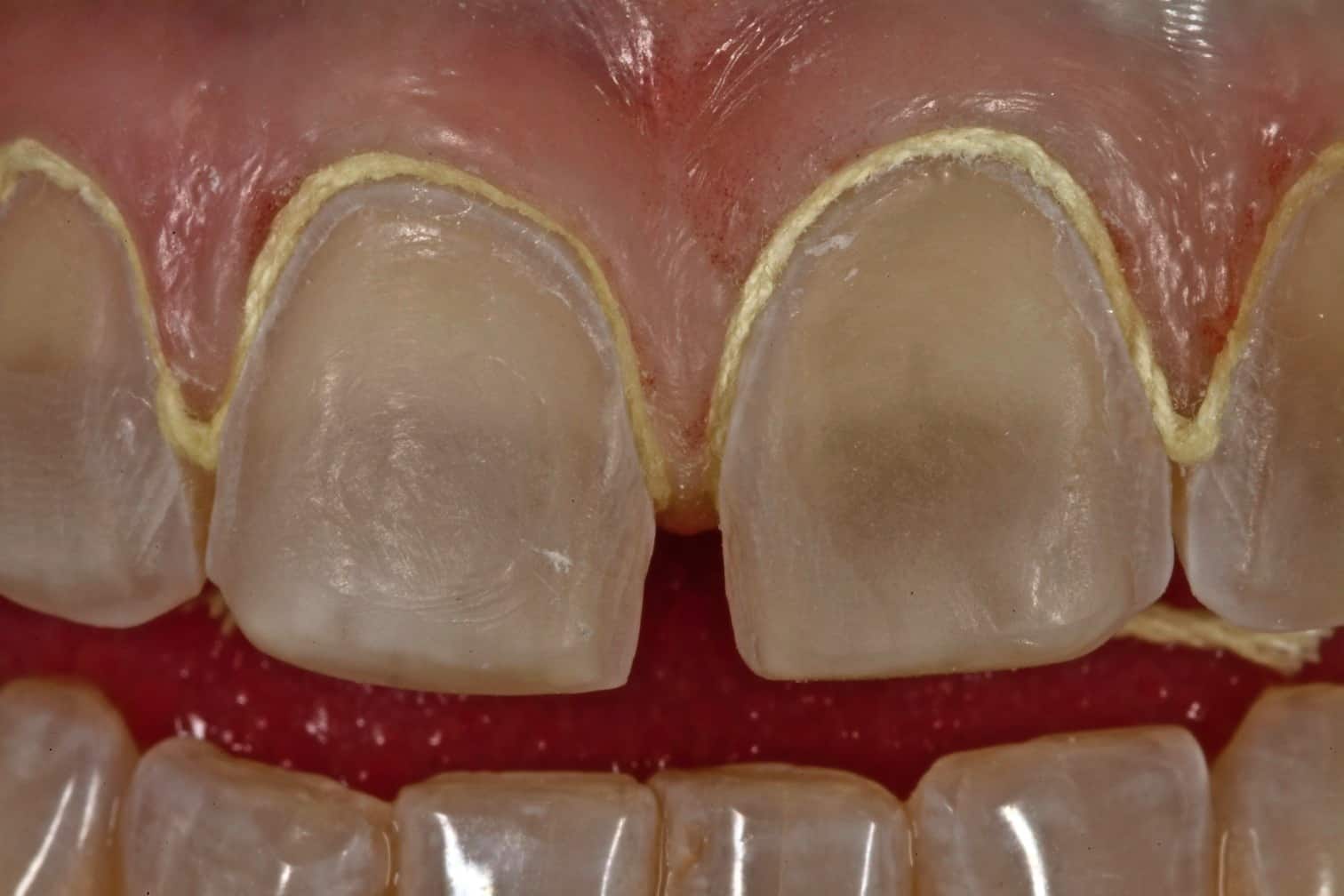
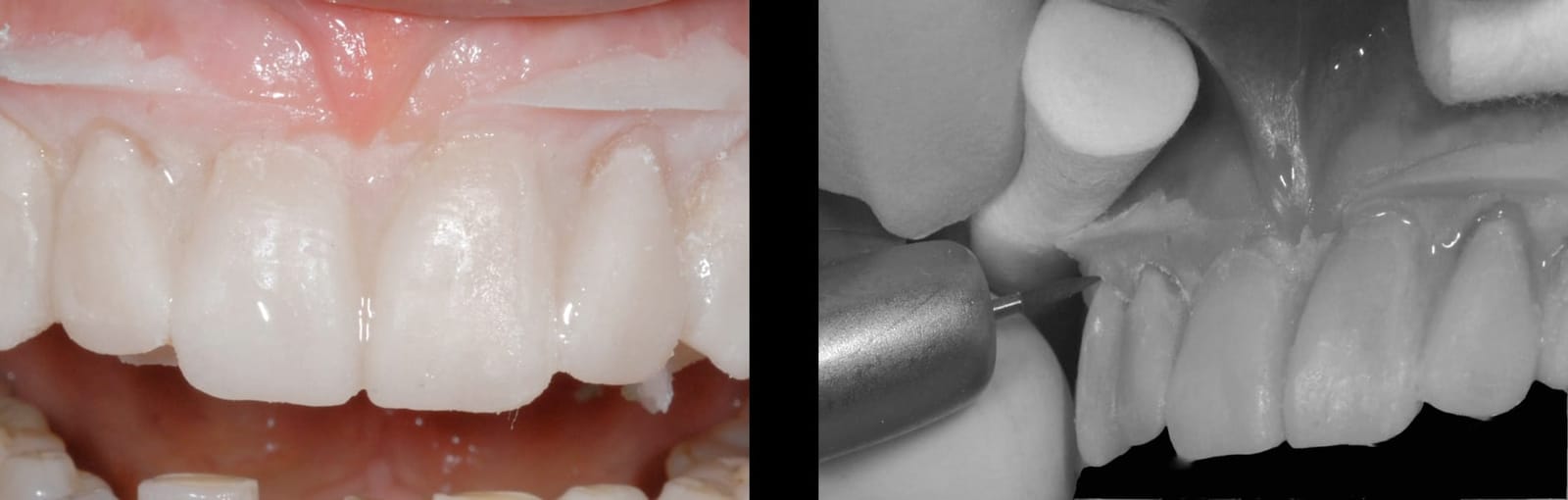
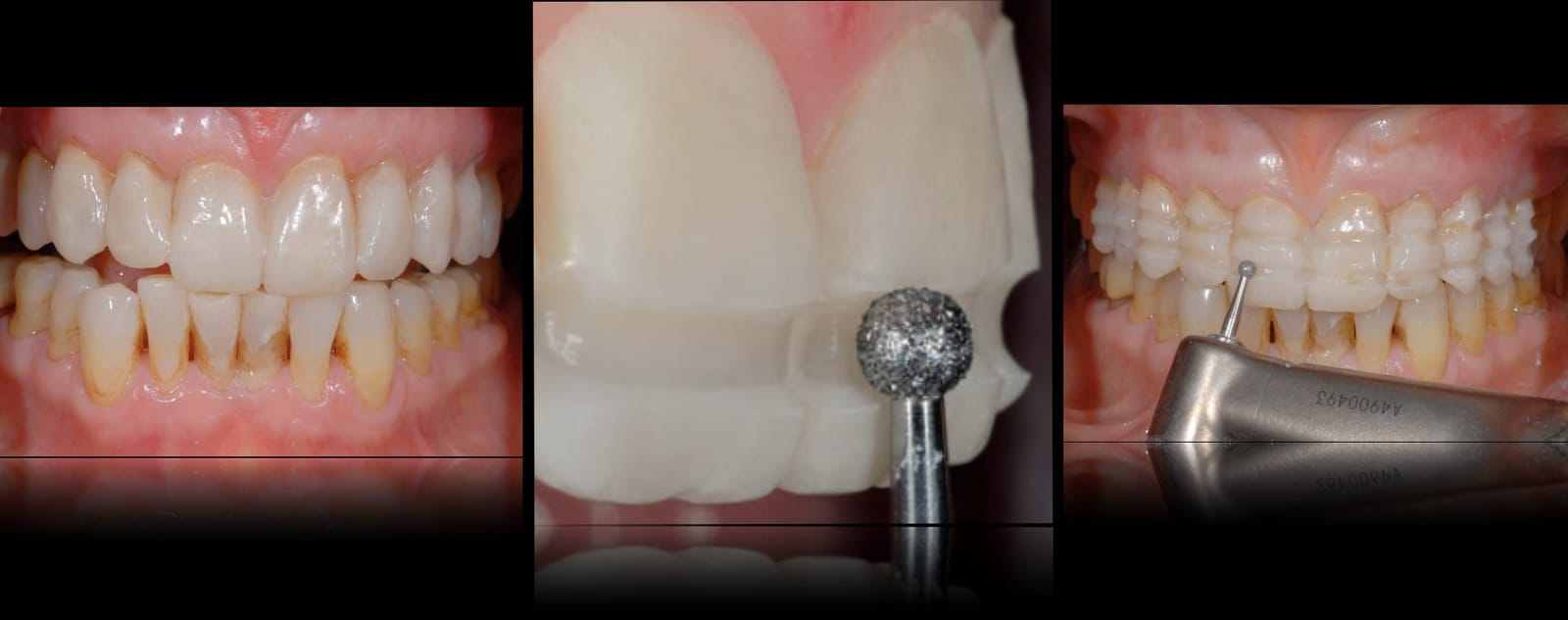
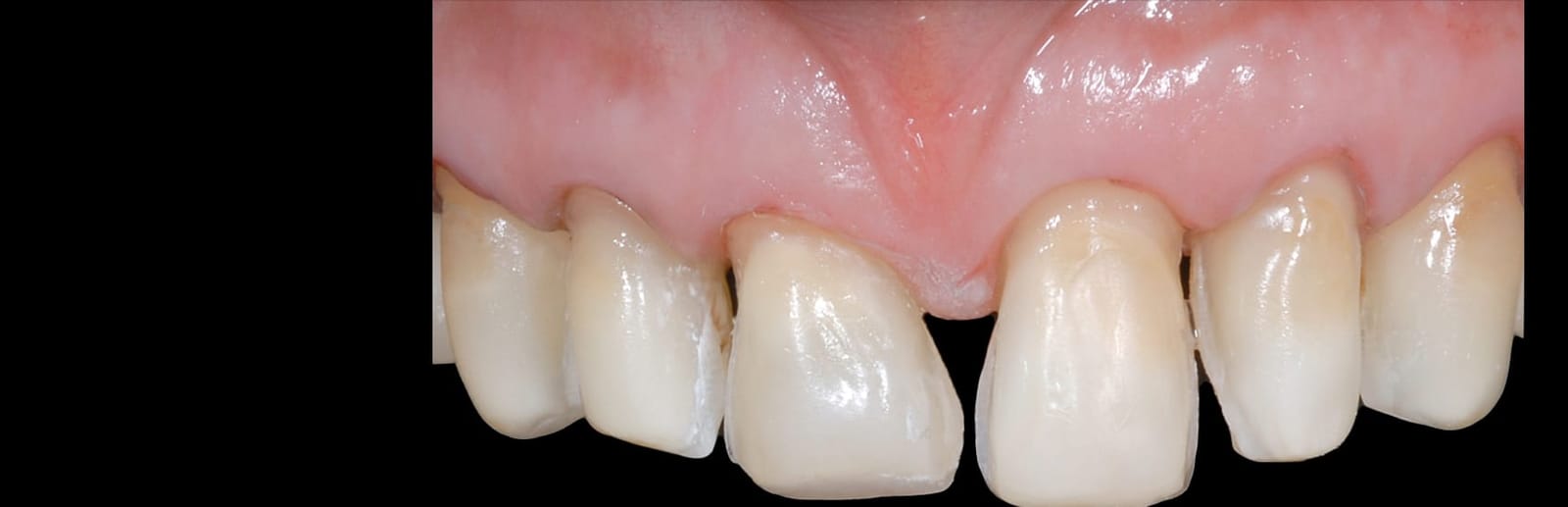
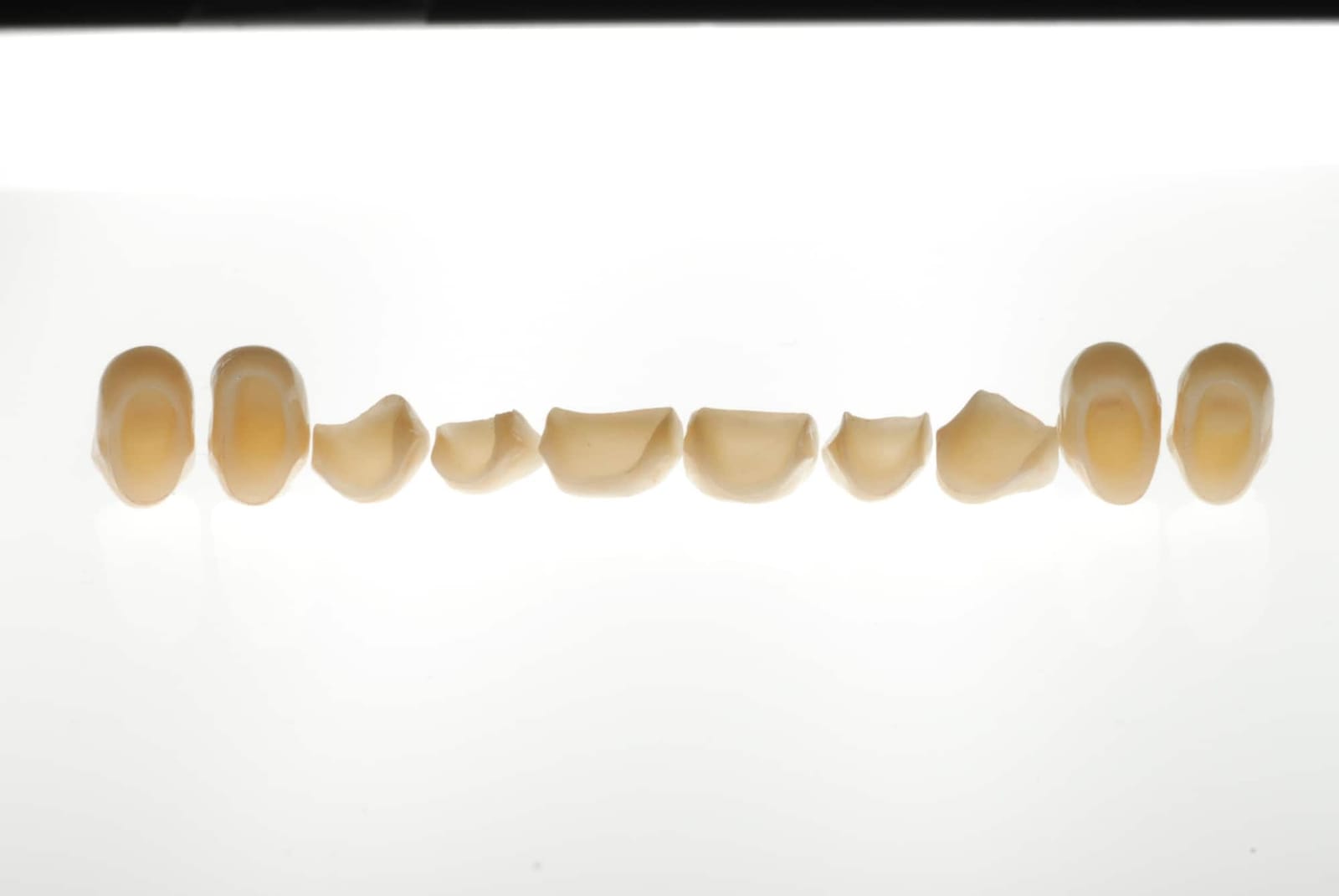
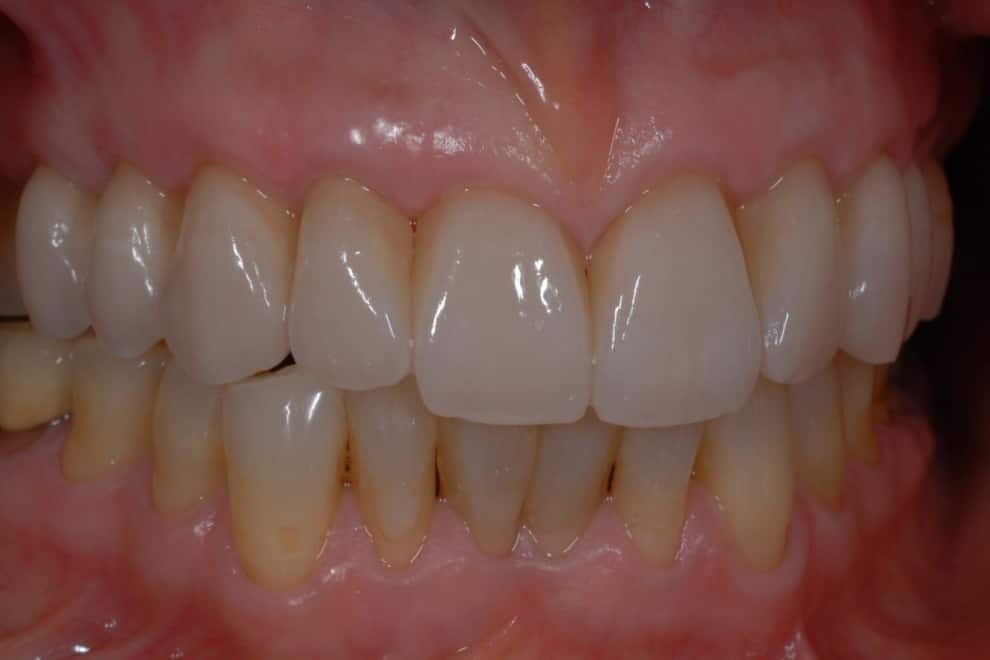
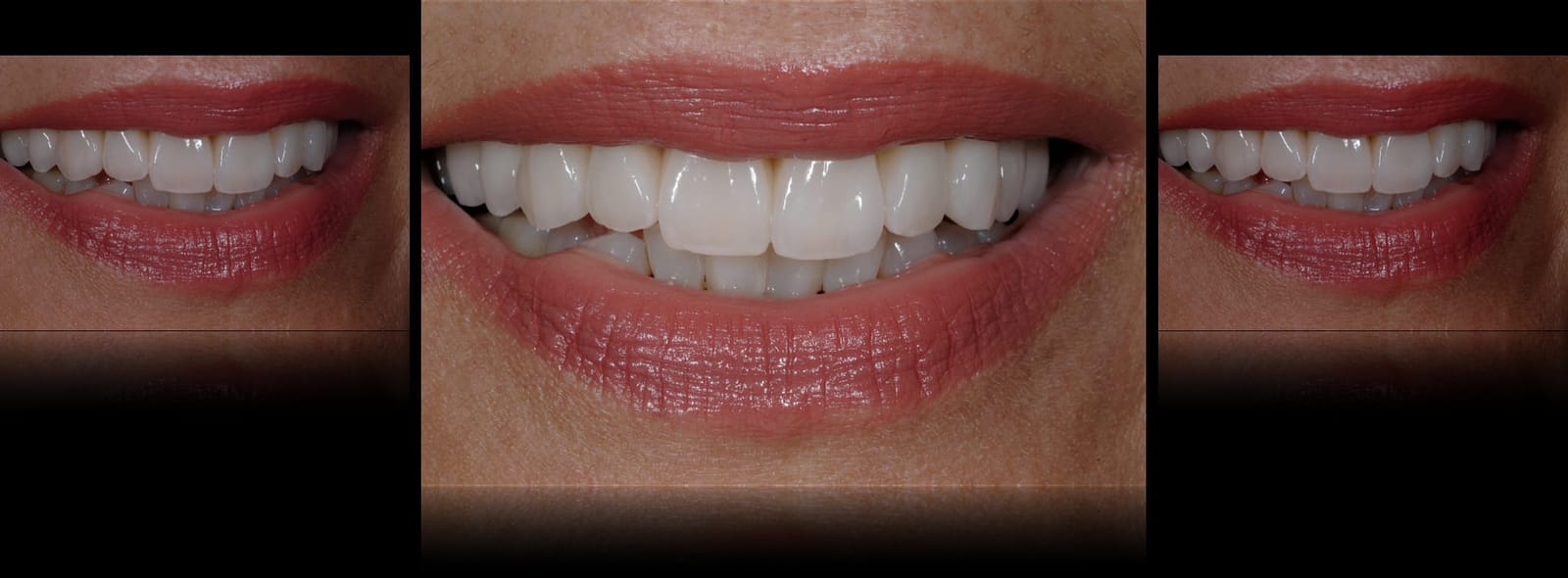
Acid erosion, restored with almost no drilling
This patient had lost a great deal of tooth to acid erosion from outside sources such as diet. A wax-up and a mock-up in the mouth let her approve the design first. The teeth were then prepared through the mock-up, so only what was needed was touched, and the dentin was sealed immediately.
Our Beverly Hills office at 414 N. Camden Dr., Suite 750 opens in January 2027. Until then, call (310) 444-5217 and we'll arrange your consultation.
Back teeth, rebuilt without a post
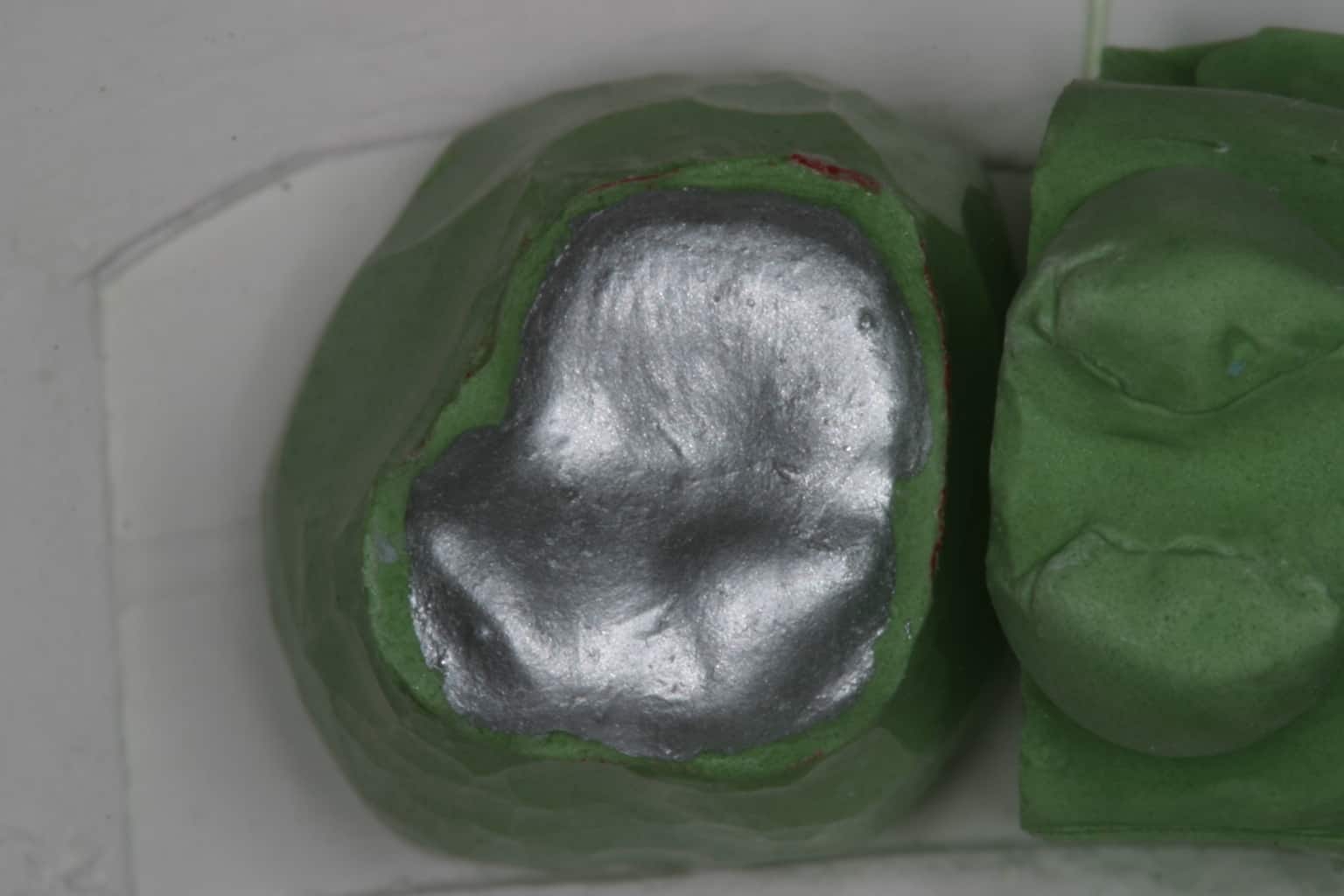
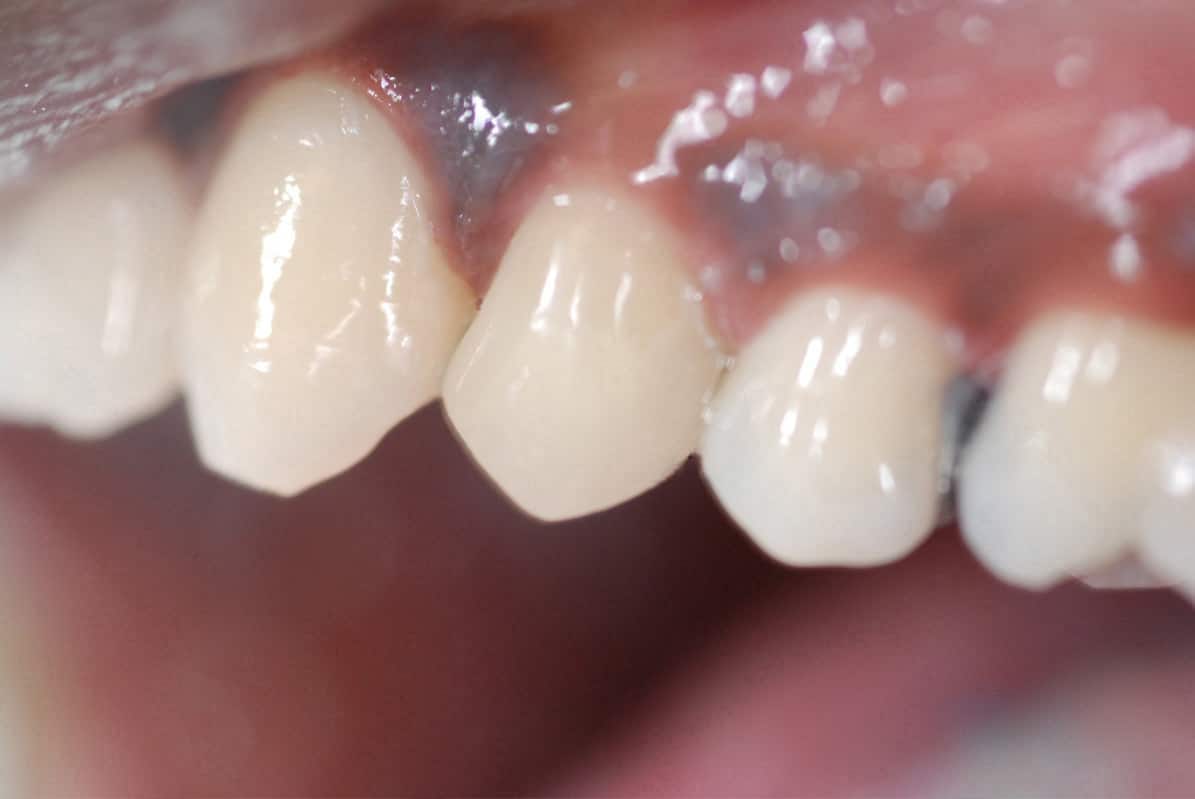
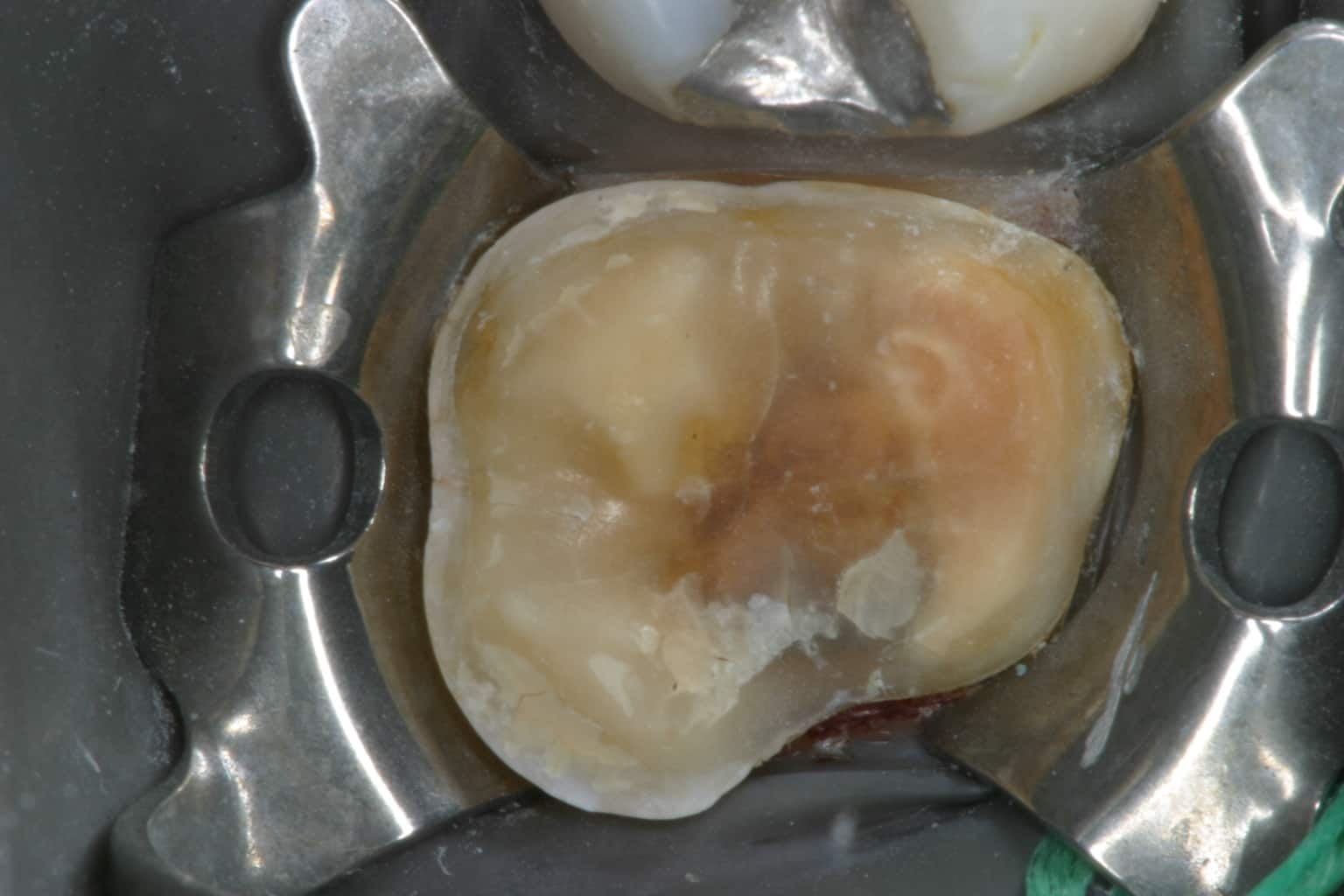
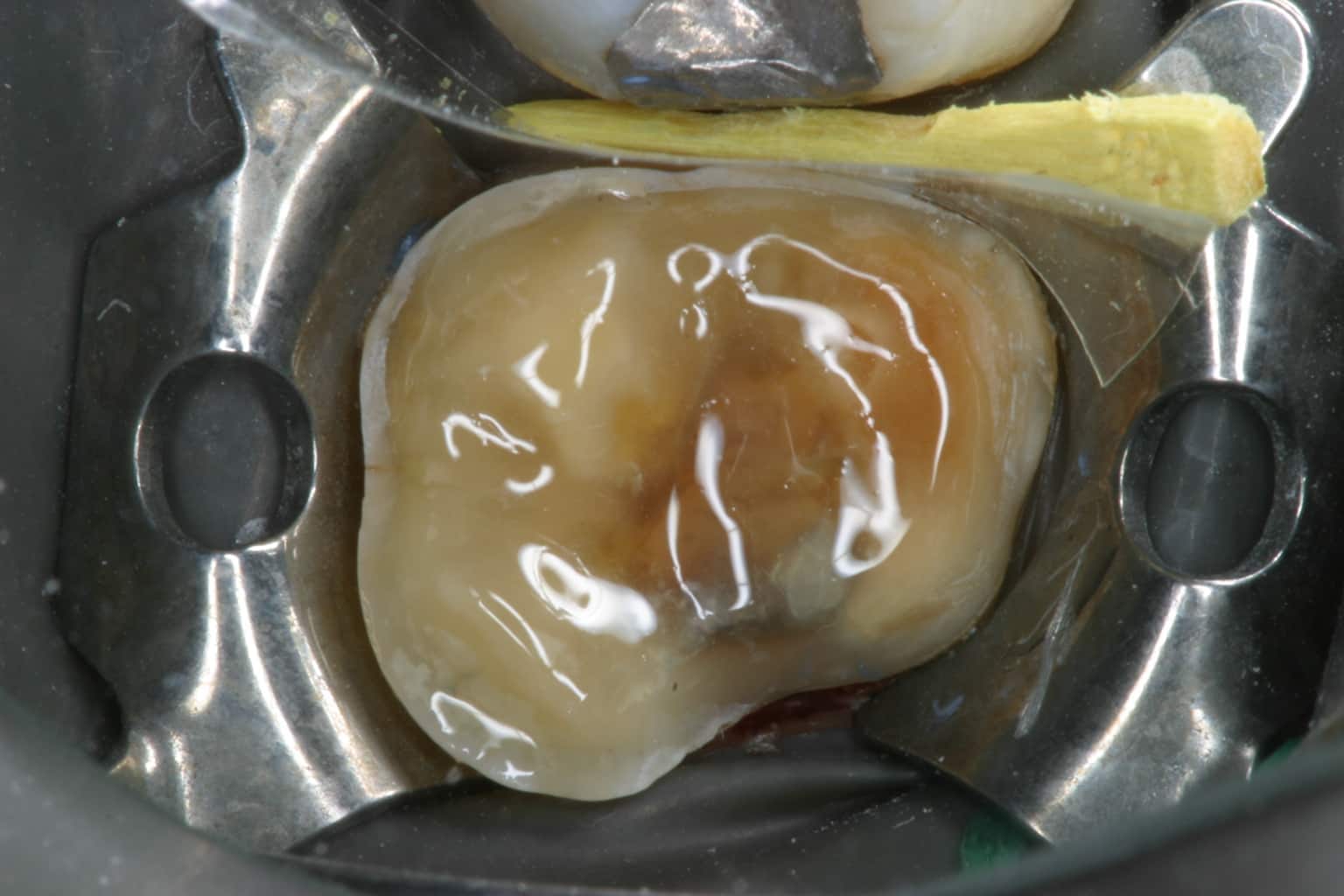
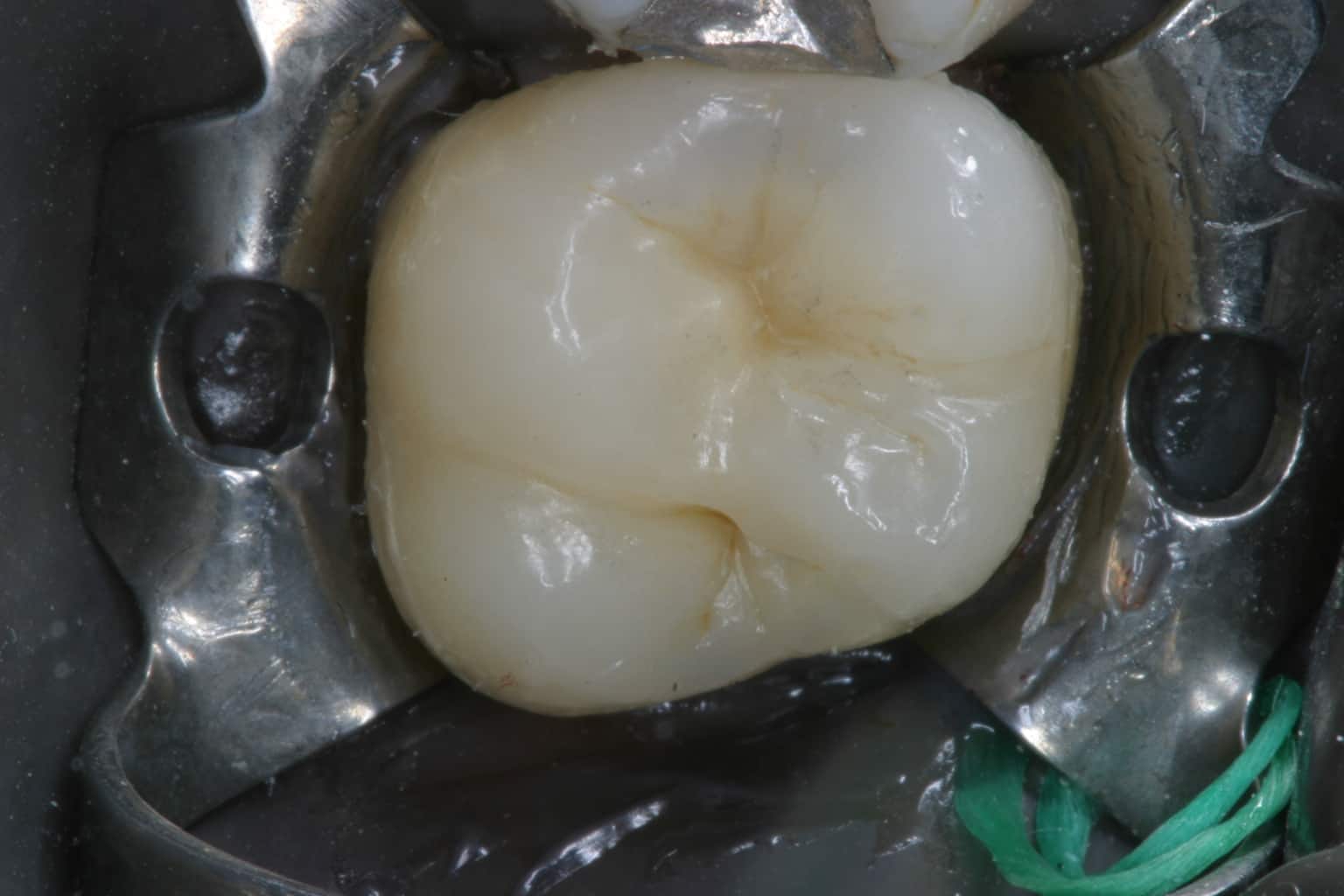
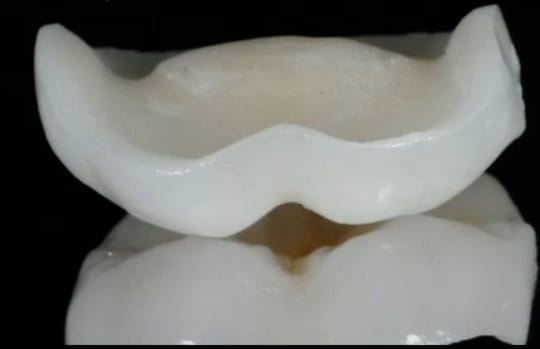
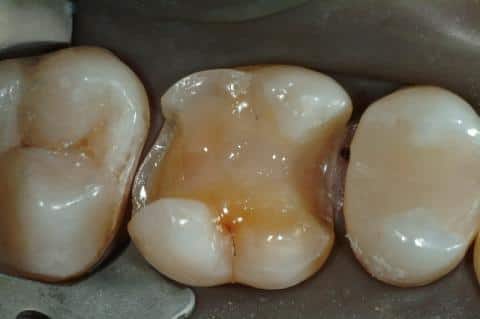
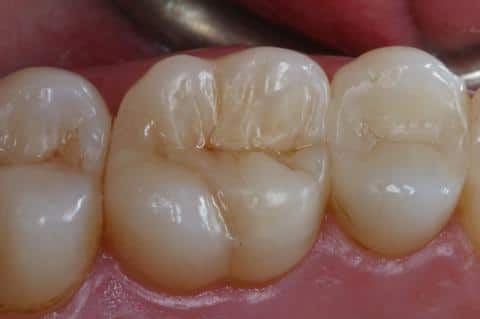
With almost nothing left of the molar below, the usual plan would be a post and crown, or extraction and an implant. After immediate dentin sealing, the overlay was bonded with warmed composite, vibrated into place, forming a thick, durable resin seal.
No tooth above the gum, and no post
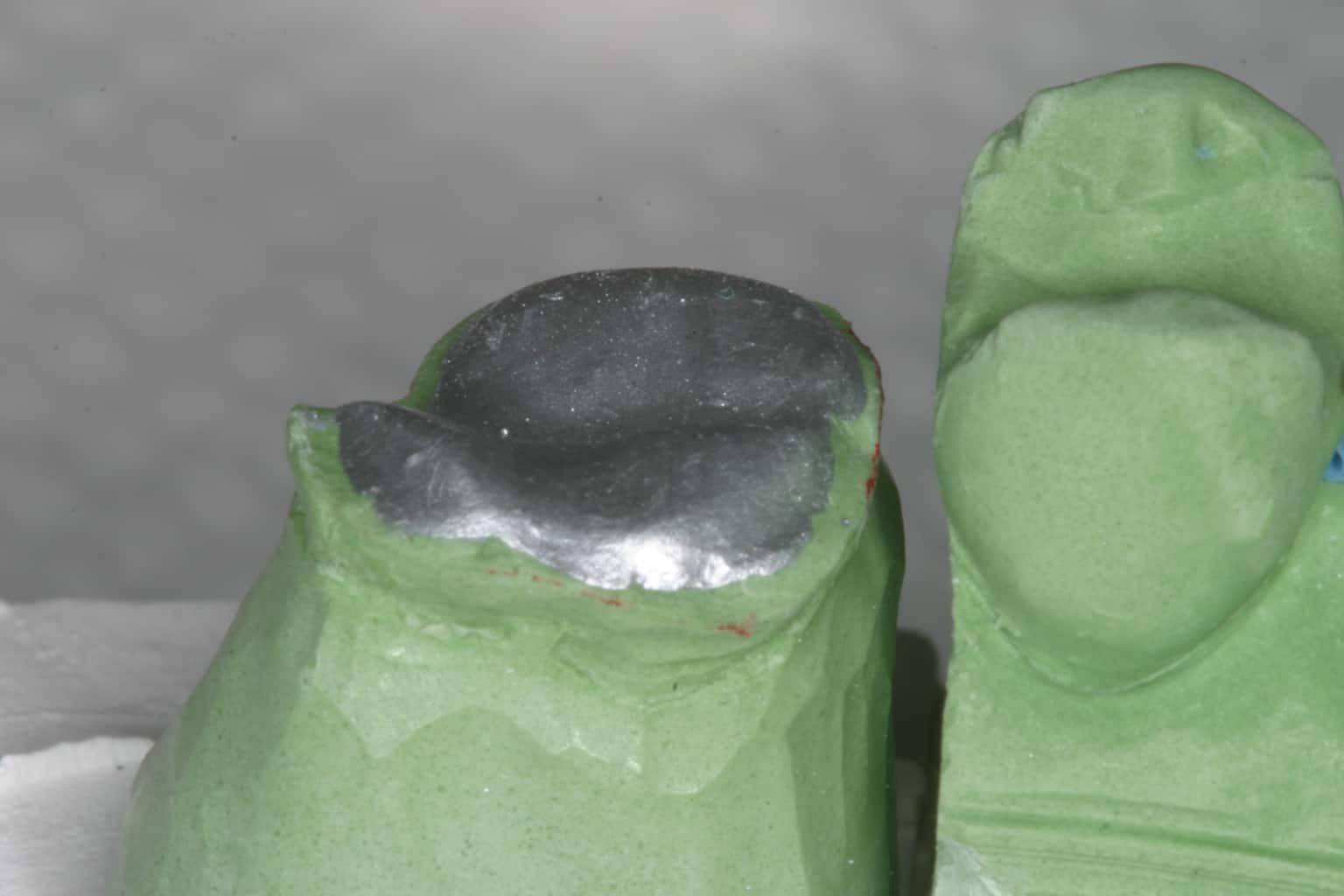
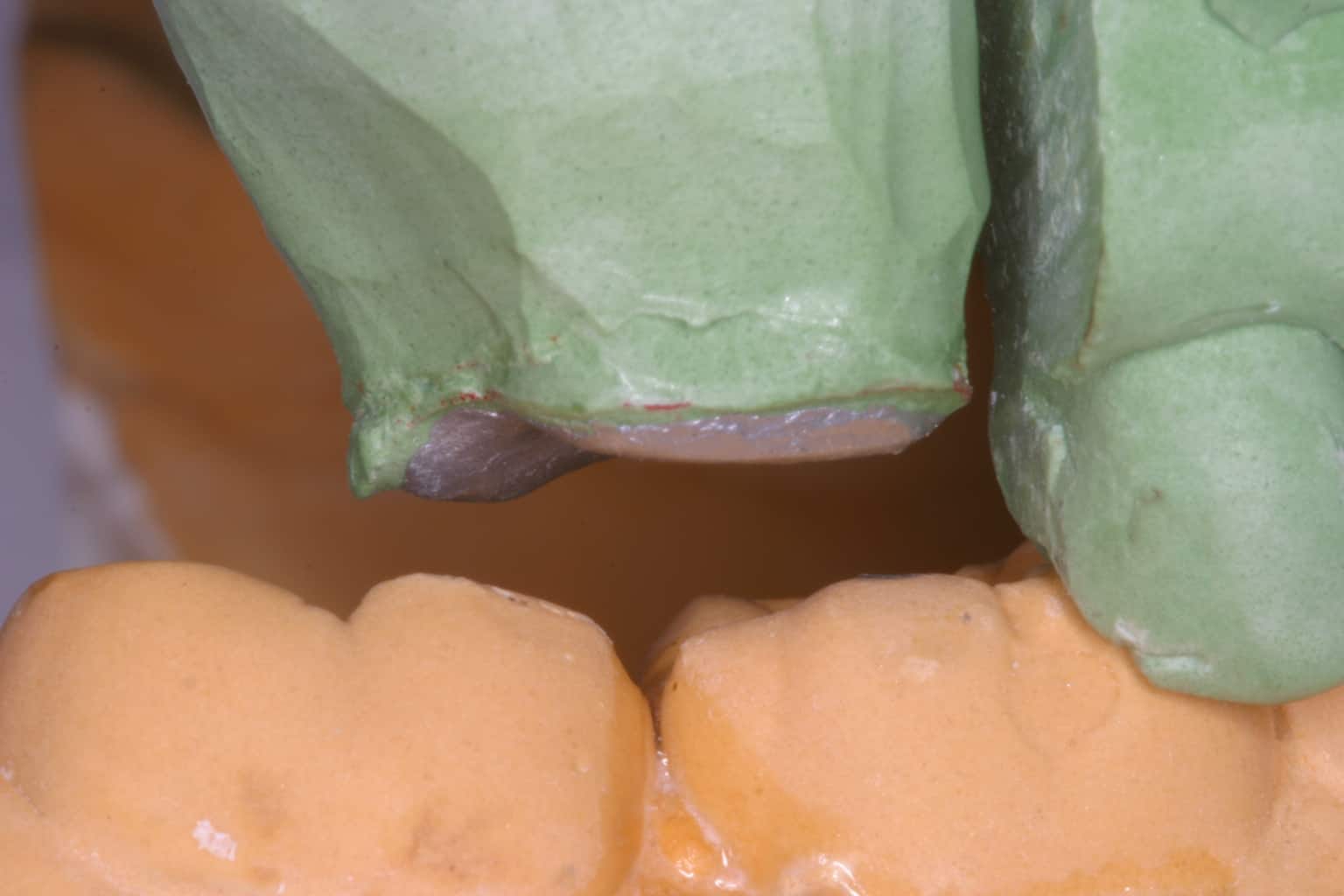
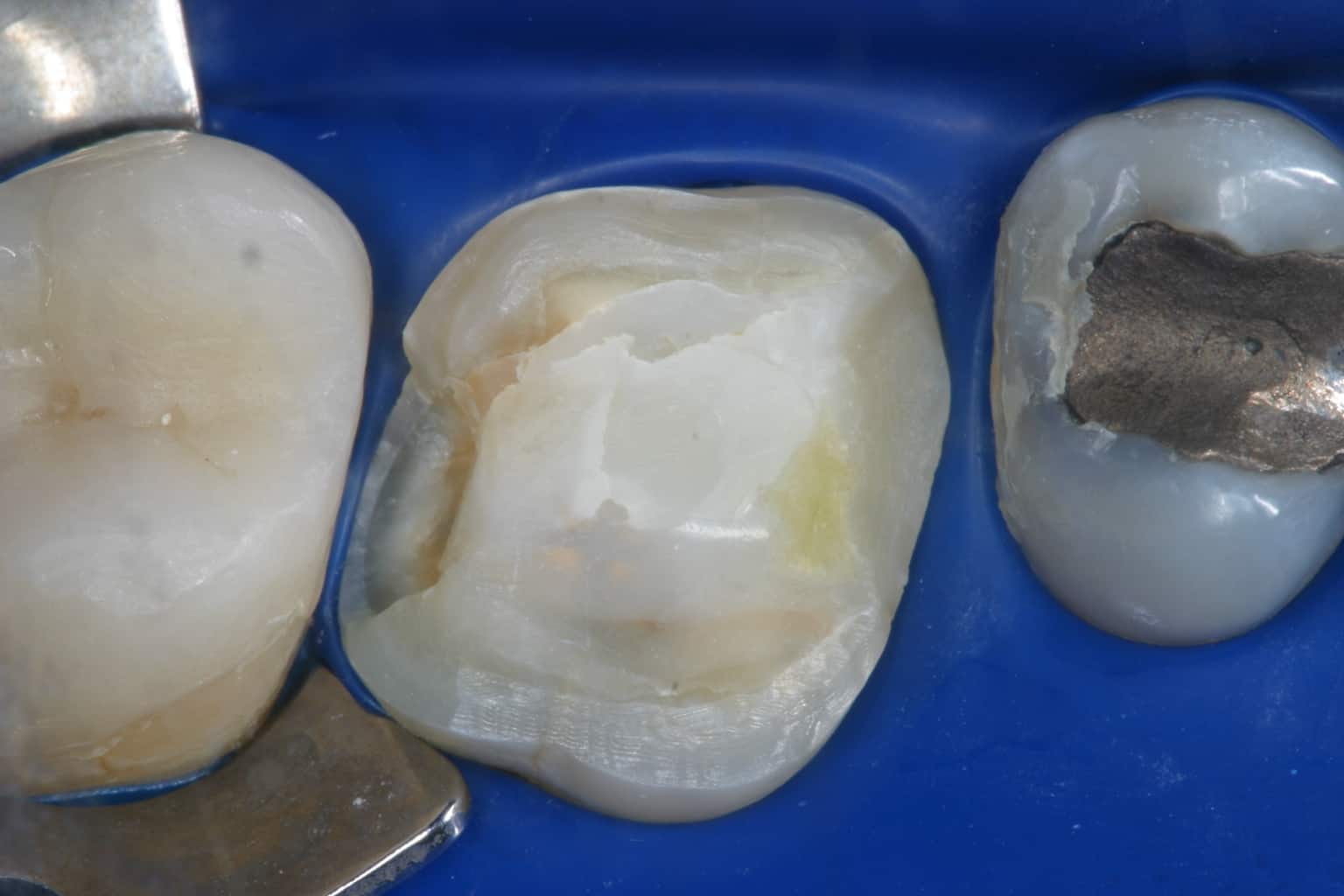
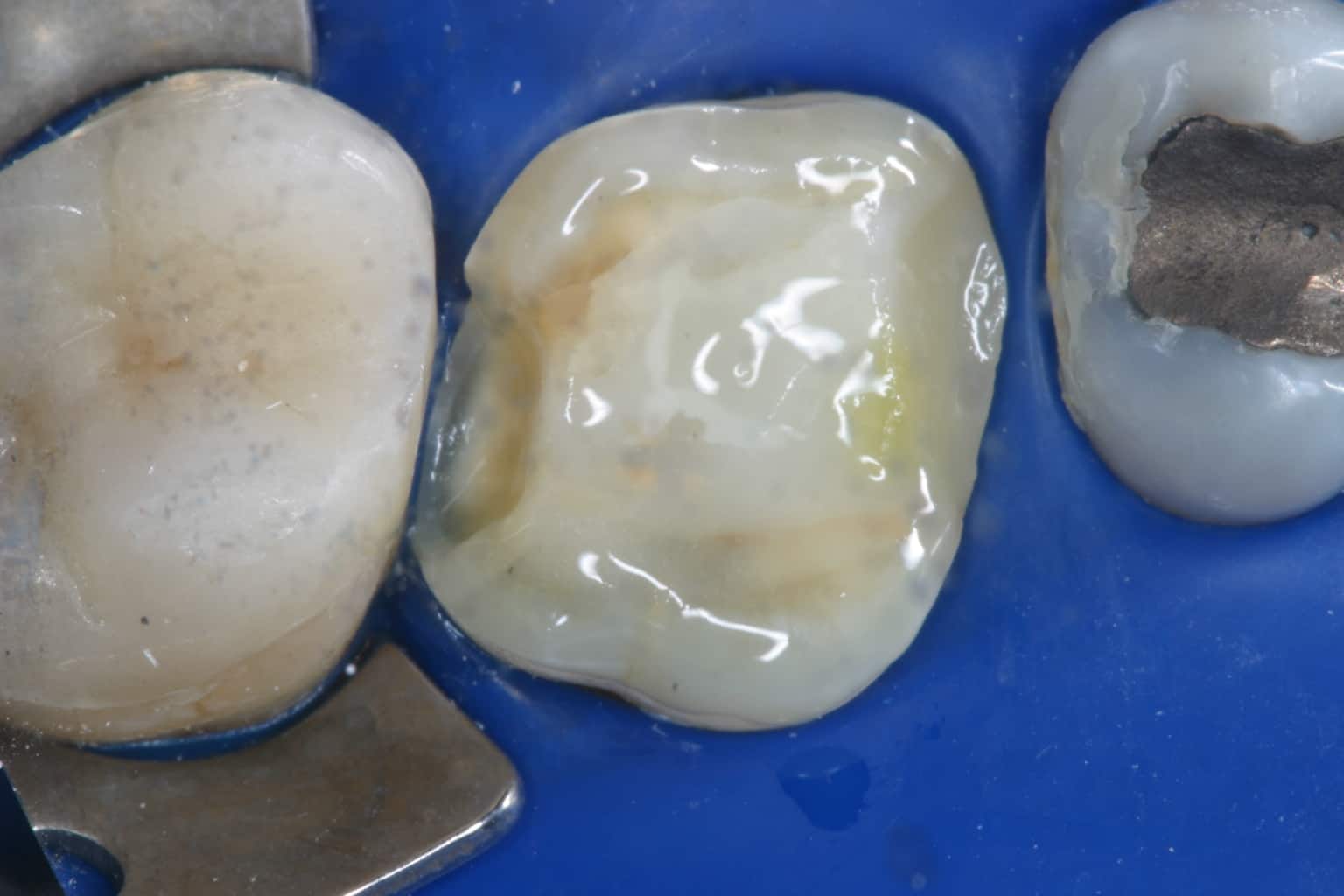
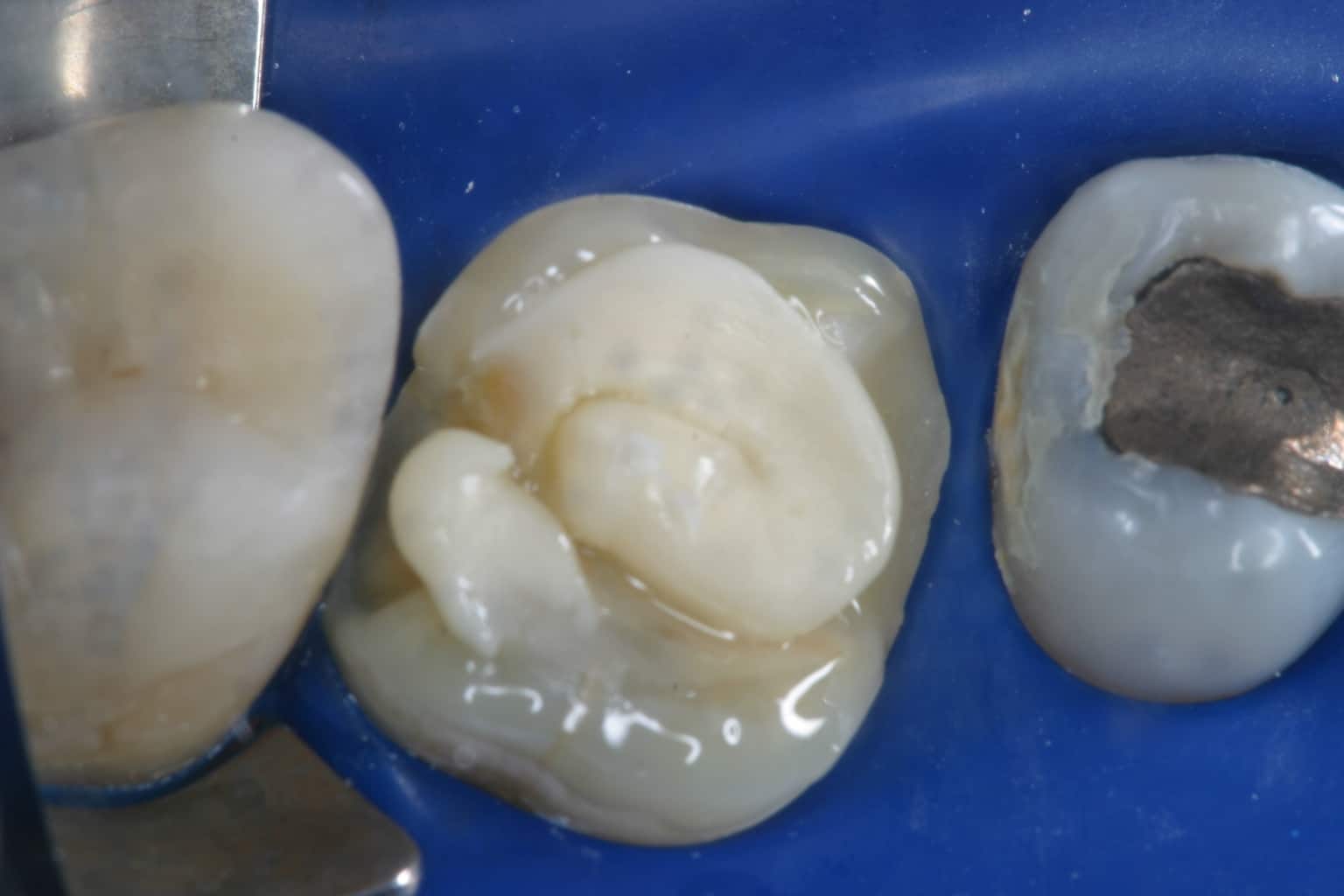
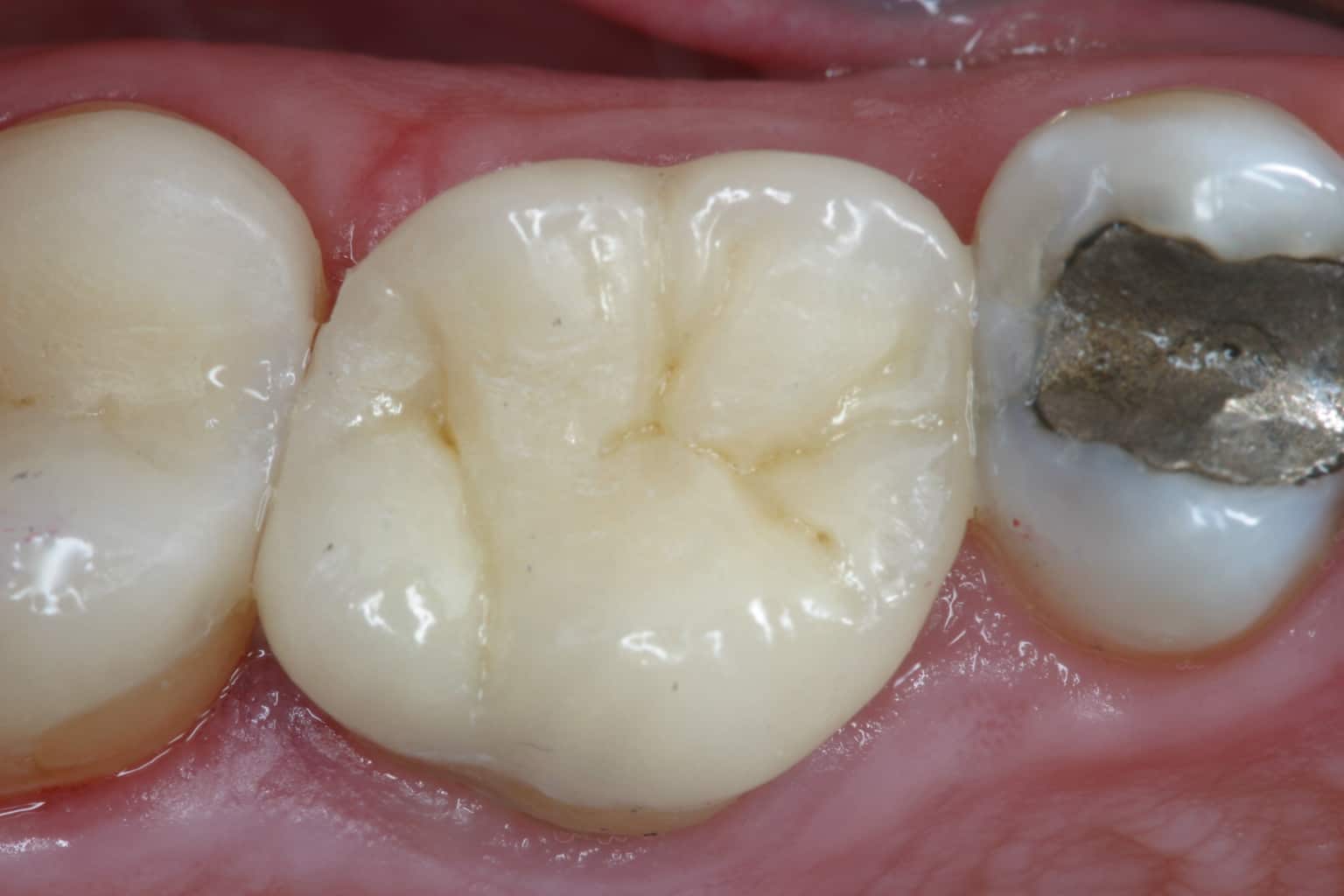
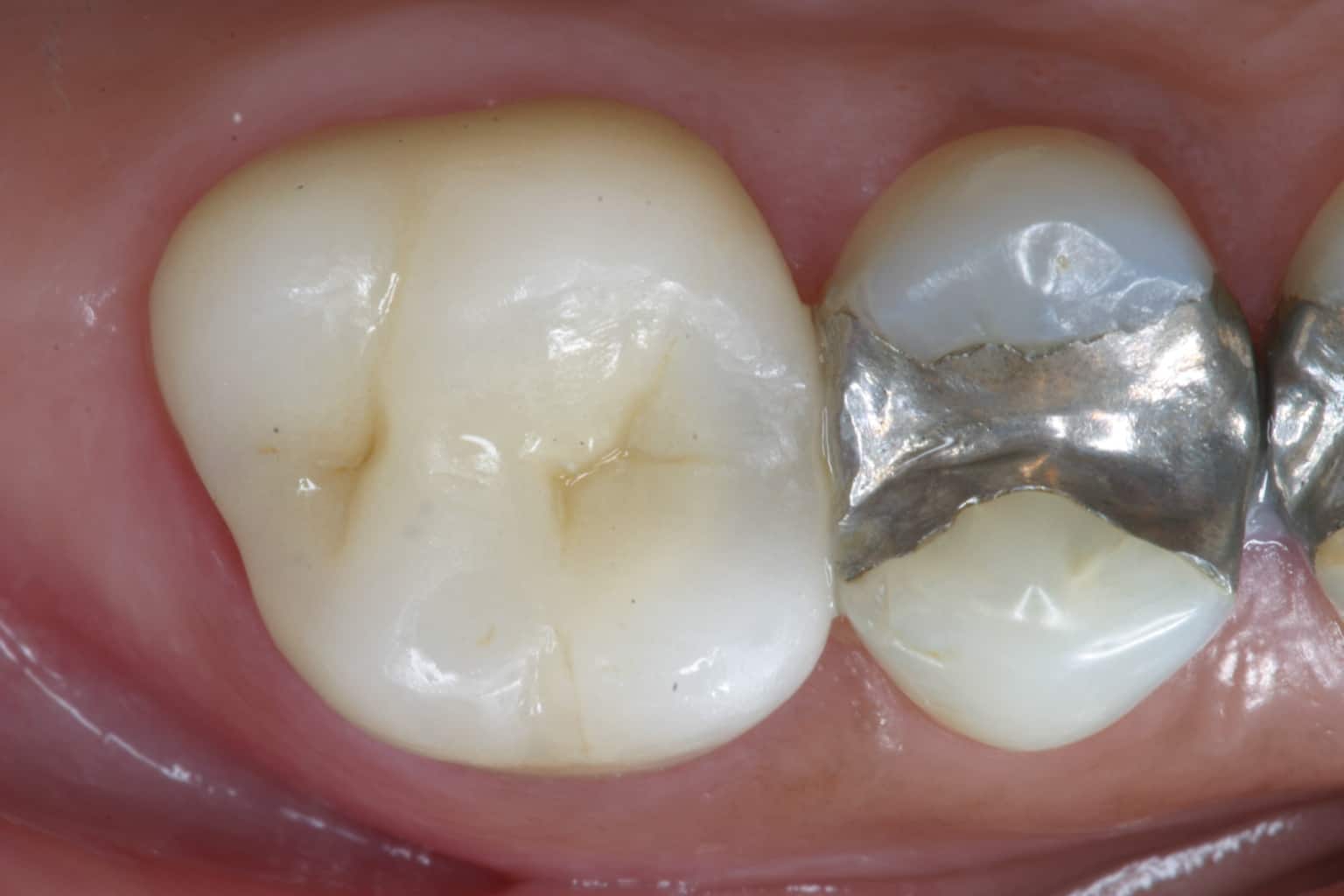
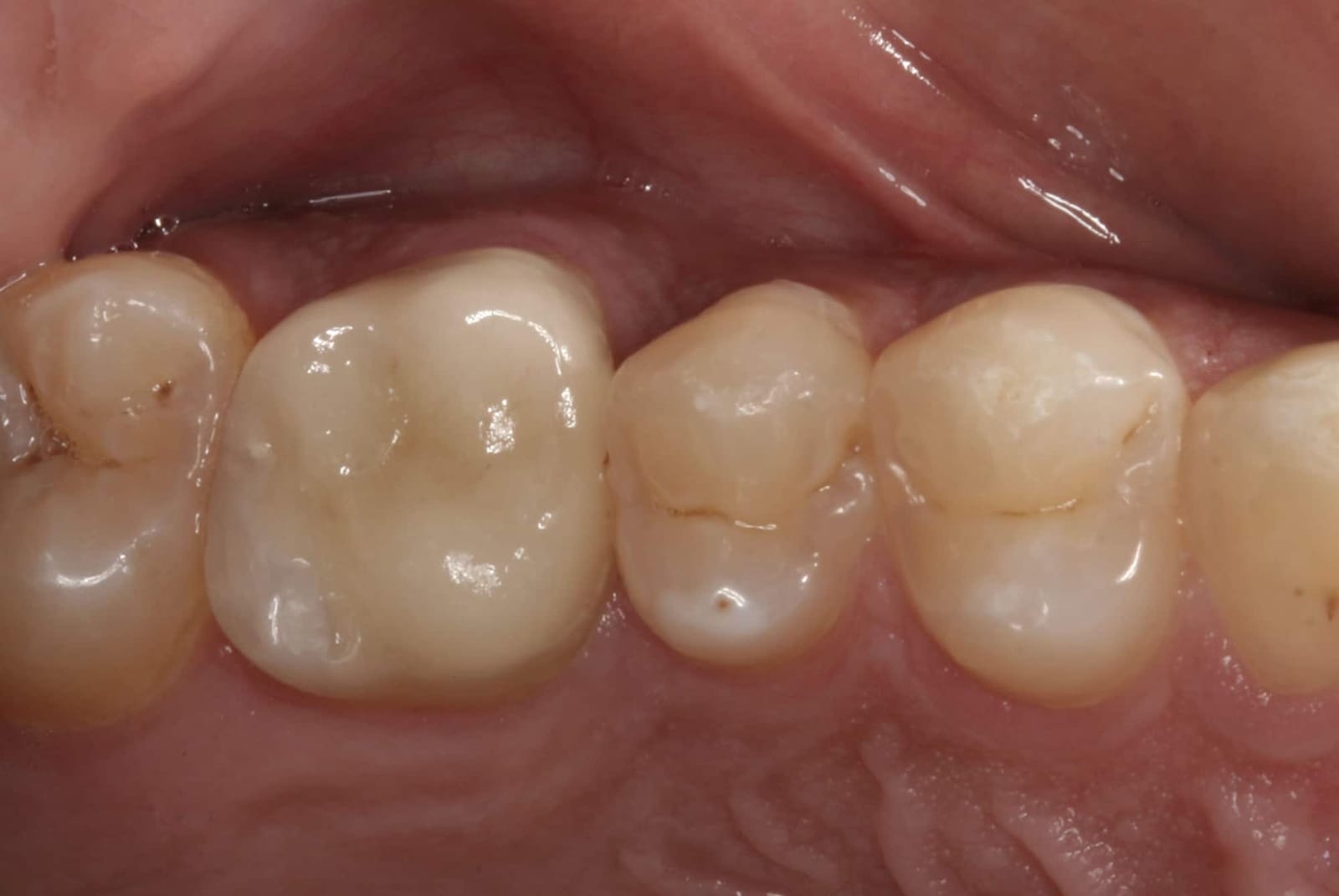
A premolar and a second molar, the same way
Porcelain or composite?
Both are excellent, and both can break. What matters is how they break. In fatigue testing on root-treated molars with a 3 mm overlay and no post, failures stayed within the restoration and the dentin seal held. A broken overlay can be replaced; the tooth underneath survives.
Porcelain
- Stronger and more wear-resistant
- Keeps its colour and polish
- Dr. Reshad's usual preference further back in the mouth
- Stiffer, so in extreme overload a fracture can take tooth with it
Composite
- Acts as a shock absorber and protects the root
- Kind to opposing teeth and easy to repair
- Useful nearer the front and for heavily compromised teeth
- Wears and stains more over time
Front teeth that need a post
When too much is lost to bond alone, a post is still needed. The choice of post matters.
Our Beverly Hills office at 414 N. Camden Dr., Suite 750 opens in January 2027. Until then, call (310) 444-5217 and we'll arrange your consultation.
Fibre posts
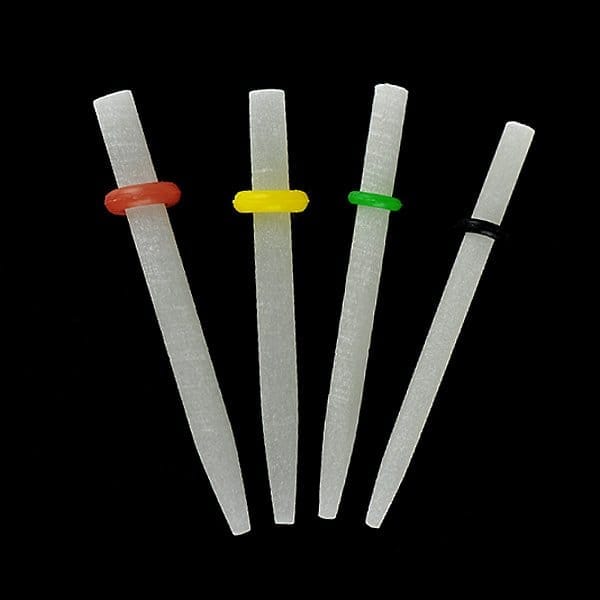
Glass-fibre posts are tooth-coloured, translucent and bonded in place. They flex much like dentin, so stress is shared rather than concentrated in the root, and they transmit light beautifully. Where the destruction is not extreme, they are the preferred choice for front teeth. Cast posts still have their place when very little tooth remains.
Cast gold post and core
Custom-cast to fit the canal. Rigid and durable, for teeth with very little left.
Ready-made metal post
Titanium or stainless steel. Far stiffer than tooth.
Glass-fibre post
Tooth-coloured, translucent and bonded. Flexes like dentin.
Custom-fitted fibre post
Relined to fit wide or oval canals without removing more tooth.
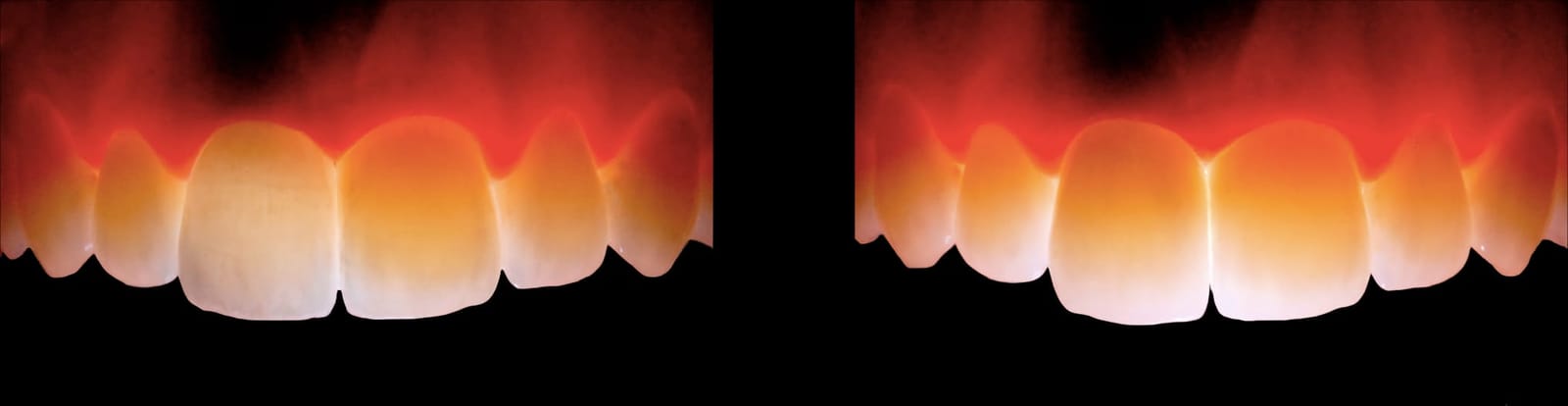
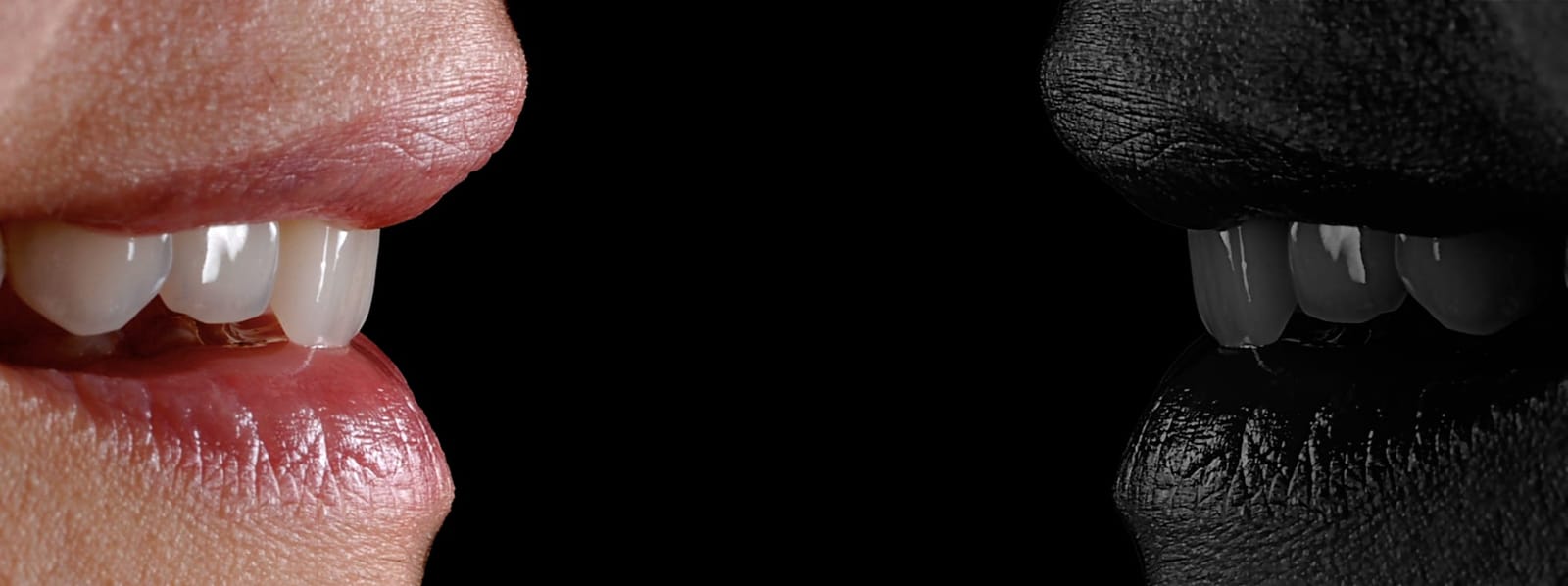
A Cochrane review found the evidence too limited for firm conclusions, but trials since have leaned the same way: similar or better survival for fibre, and fewer root fractures. Case selection is what matters most.
Adhesion meets implants
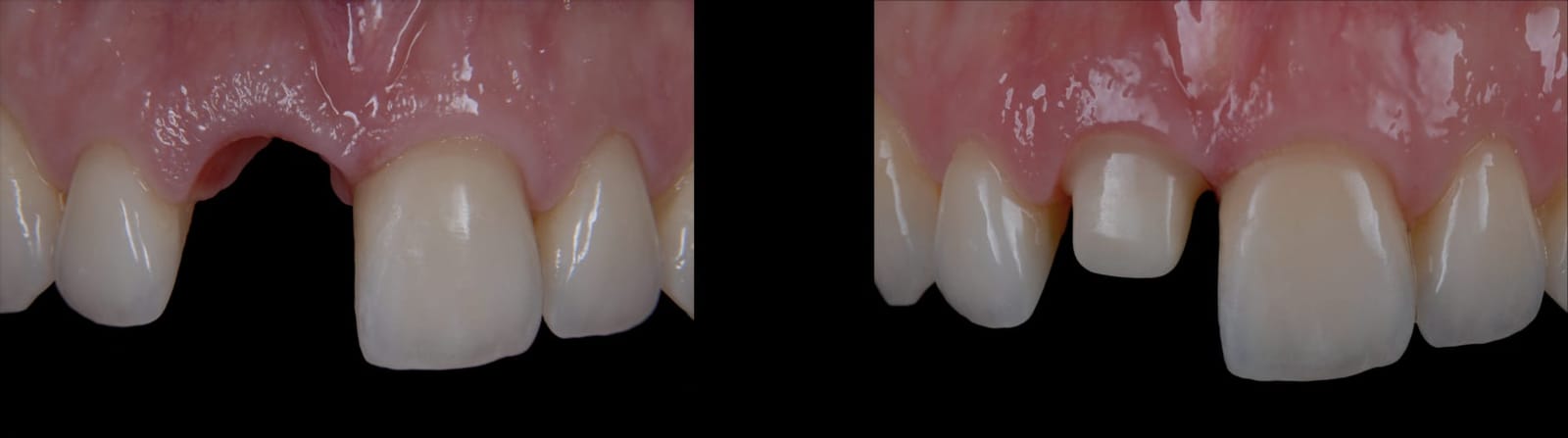
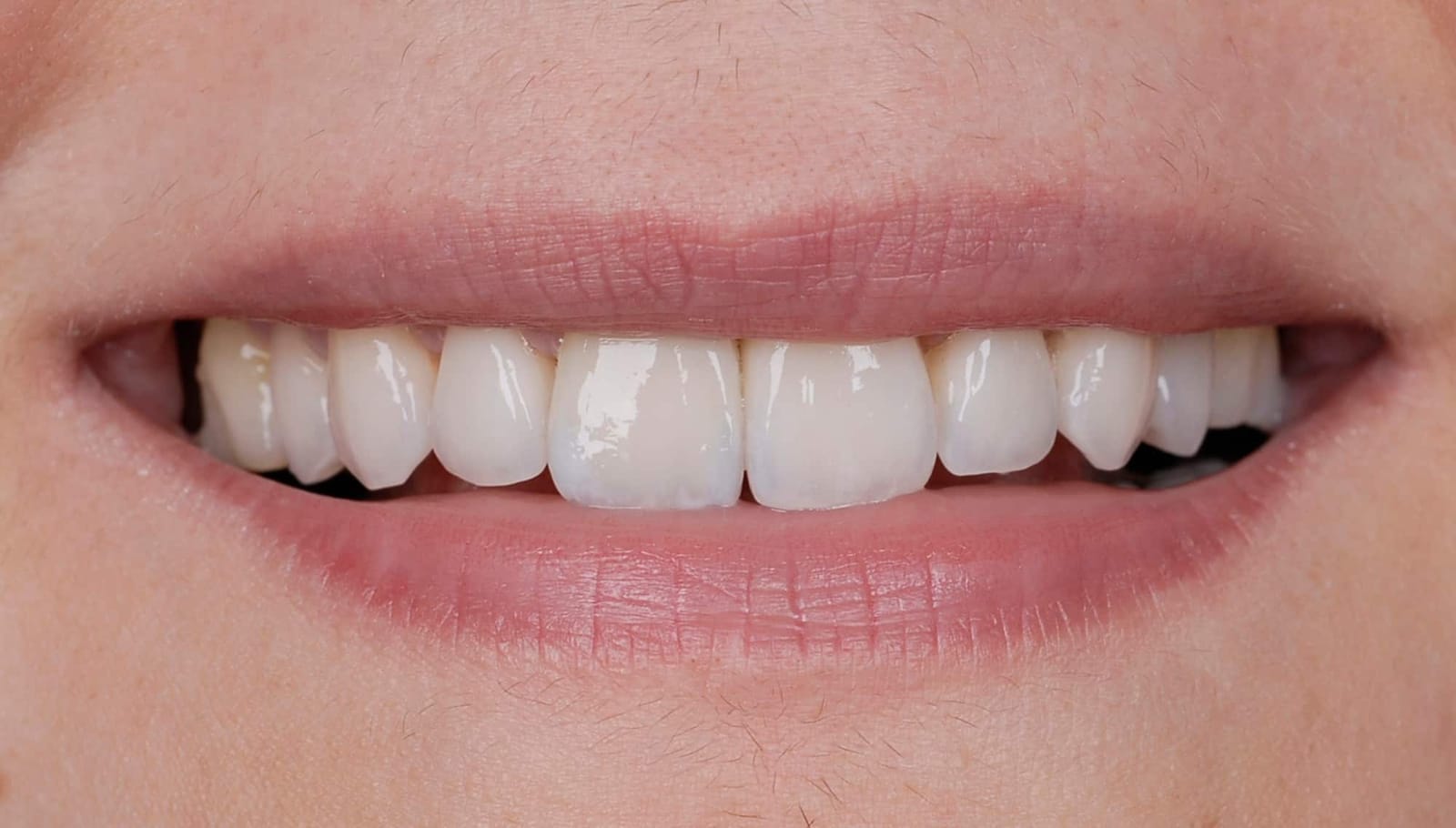
Understanding materials and light lets bonded restorations sit alongside implants and natural teeth invisibly, even in the most demanding smiles.

What the research shows
2013 to 2026. Both approaches work; the long-term numbers, side by side.
Our Beverly Hills office at 414 N. Camden Dr., Suite 750 opens in January 2027. Until then, call (310) 444-5217 and we'll arrange your consultation.
Survival over time
Each study reports survival for its own patients, materials and length of follow-up, so the charts below compare trends rather than single numbers. Traditional gold, metal and crowns sit beside bonded and fibre-post restorations; back teeth are then set head to head.
The consistent message: back teeth that have lost their side walls need their cusps covered. Whether that is a bonded onlay, a gold onlay or a crown depends on the tooth.
Why you need a prosthodontist
Because Dr. Reshad practises both approaches every week, he has no reason to favour one. The traditional reconstruction and the bonded restoration are both tools; the right one depends on how much tooth is left, the quality of what remains, where the margins sit, your decay risk and, above all, your bite.
The bite is the most destructive force a restoration will face. Beautiful work that is not protected from it will not stay beautiful. Managing the bite, and fitting a night guard where there is grinding, is what keeps a result looking and working as it did on the day it was placed.
Is there a collar of healthy tooth, about 1.5 to 2 mm, all the way around?
Is a post necessary? Sometimes. Your prosthodontist will know.
Every tooth is different. Wherever possible, Dr. Reshad preserves your natural tooth with bonded, biomimetic techniques. Where a tooth needs the strength of gold, a post or a crown, he uses those with the same care. Knowing which is which, and protecting the result with a well-managed bite, is the heart of prosthodontics.
“First, do the right thing. Then, do the thing right.”
Dr. William McHorris, 1986
Frequently Asked Questions
Not always. Bonding needs healthy dentin, a dry field and a manageable bite. Some teeth are too broken down, and for them a crown, a post or gold is the treatment that will actually save the tooth.
No. Gold onlays and crowns have some of the longest track records in dentistry, with restorations lasting decades. Their only real drawback is colour.
The root canal itself takes very little strength. The weakness comes from tooth already lost to decay, cracks or old fillings, which is why how the tooth is rebuilt matters so much.
It can happen. When it does, it usually breaks within the restoration and leaves the tooth intact, so it can be repaired or replaced rather than losing the tooth.
Yes, significantly. Grinding is one of the strongest predictors of failure for any restoration. We assess your bite first and will usually recommend a night guard.
Not if it is doing its job. Removing a post can risk the root, so we only do it if the tooth needs retreatment or the restoration has failed.
Explore More Services
Medically reviewed by Dr. Mamaly Reshad, BDS (Lond), MSc (Lond), Cert Pros (USC), Prosthodontist — Last reviewed July 2026
Evidence reviewed September 2026. Adapted from Dr. Reshad's lecture “Is a Post Necessary?”, first presented in 2013.
- Guzy GE, Nicholls JI. In vitro comparison of intact endodontically treated teeth with and without endo-post reinforcement. J Prosthet Dent 1979;42:39.
- Reeh ES, Messer HH, Douglas WH. Reduction in tooth stiffness as a result of endodontic and restorative procedures. J Endod 1989;15:512.
- Simonsen RJ. New materials on the horizon. JADA 1991;122:24.
- Magne P, Douglas WH. Quintessence Int 2000;31:5.
- Ferrari M, Vichi A, Garcia-Godoy F. Clinical evaluation of fiber-reinforced epoxy resin posts and cast post and cores. Am J Dent 2000;13:15B.
- Erpenstein H, Kerschbaum T, Halfin T. Long-term survival of cast-gold inlays in a specialized dental practice. Clin Oral Investig 2001.
- Barghi N, Berry TG. Clinical evaluation of etched porcelain onlays: a 4-year report. Compend Contin Educ Dent 2002;23:657.
- Edelhoff D, Sorensen JA. Tooth structure removal associated with various preparation designs for anterior teeth. J Prosthet Dent 2002;87:503.
- Goodacre CJ et al. Clinical complications in fixed prosthodontics. J Prosthet Dent 2003;90:31.
- Donovan T, Simonsen RJ, Guertin G, Tucker RV. Retrospective clinical evaluation of 1,314 cast gold restorations in service from 1 to 52 years. J Esthet Restor Dent 2004;16:194.
- Bolla M et al. Root canal posts for the restoration of root filled teeth. Cochrane Database Syst Rev 2007.
- Magne P, So WS, Cascione D. Immediate dentin sealing supports delayed restoration placement. J Prosthet Dent 2007;98:166.
- Magne P, Knezevic A. Simulated fatigue resistance of composite resin versus porcelain CAD/CAM overlay restorations on endodontically treated molars. Quintessence Int 2009;40:125.
- Scotti N et al. Fibre post insertion under indirect composite onlays in endodontically treated molars. J Dent 2012;40:814.
- Landys Borén D, Jonasson P, Kvist T. Long-term survival of endodontically treated teeth at a public dental specialist clinic. J Endod 2015.
- Raedel M et al. Survival of teeth treated with cast post and cores over up to 19.5 years. J Prosthet Dent 2015.
- Naumann M et al. “Ferrule comes first. Post is second!” A systematic review. J Endod 2018;44:212.
- Al-Dabbagh RA. Survival and success of endocrowns: a systematic review and meta-analysis. J Prosthet Dent 2021;125(3).
- Al-Dabbagh RA et al. Effect of a circumferential ferrule on fibre-post restored teeth. J Prosthet Dent 2024;132(6).
- Tsintsadze N et al. Glass-fibre-reinforced versus metal posts: systematic review and meta-analyses. J Prosthet Dent 2024.
- Prott LS et al. Survival and complications of partial coverage restorations on posterior teeth. J Esthet Restor Dent 2025;37:620.
- Van Landuyt KL et al. Glass-fiber versus metal posts in single-crowned teeth: 15-year follow-up of a randomized trial. J Dent 2025.
- Abu-Awwad M et al. Direct restorations versus full crowns in endodontically treated molars: a three-year randomized trial. J Dent 2025.
- Cieplik F et al. Gold vs. CAD/CAM ceramic partial crowns: 20-year randomized clinical study. Dent Mater 2025.
Clinical photographs are from Dr. Reshad's own cases. Diagrams are simplified for clarity. This page is general information, not a diagnosis. Every case is planned around one person's anatomy, and individual results vary.
Ready to Transform Your Smile?
Schedule a private consultation with Dr. Reshad to discuss your goals and explore your options.