Smile Makeover
They say a smile is the most important thing you can wear. Now imagine if your smile could be designed as well. Imagine a smile designed for you, now.
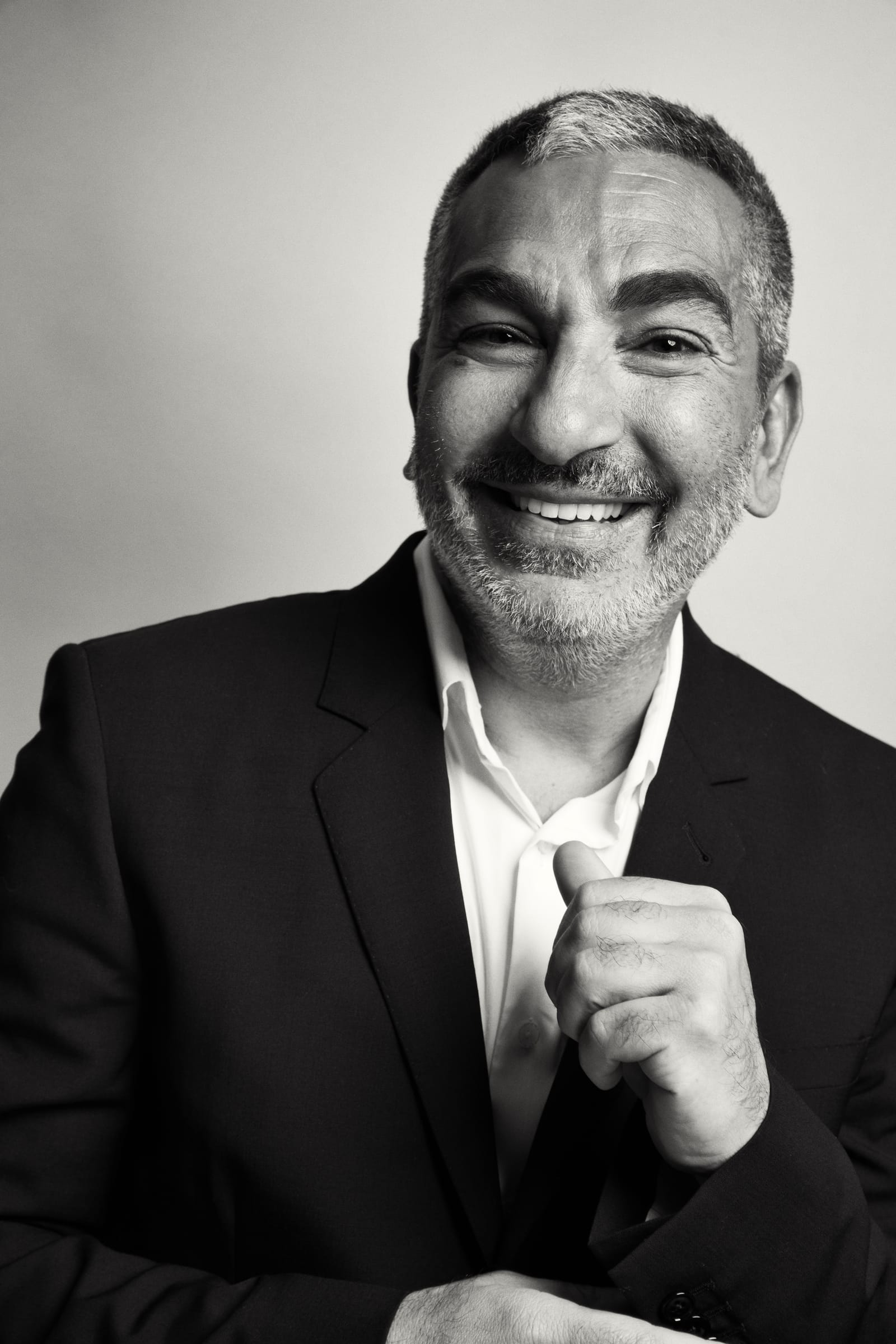
The Whole Smile, Before and After
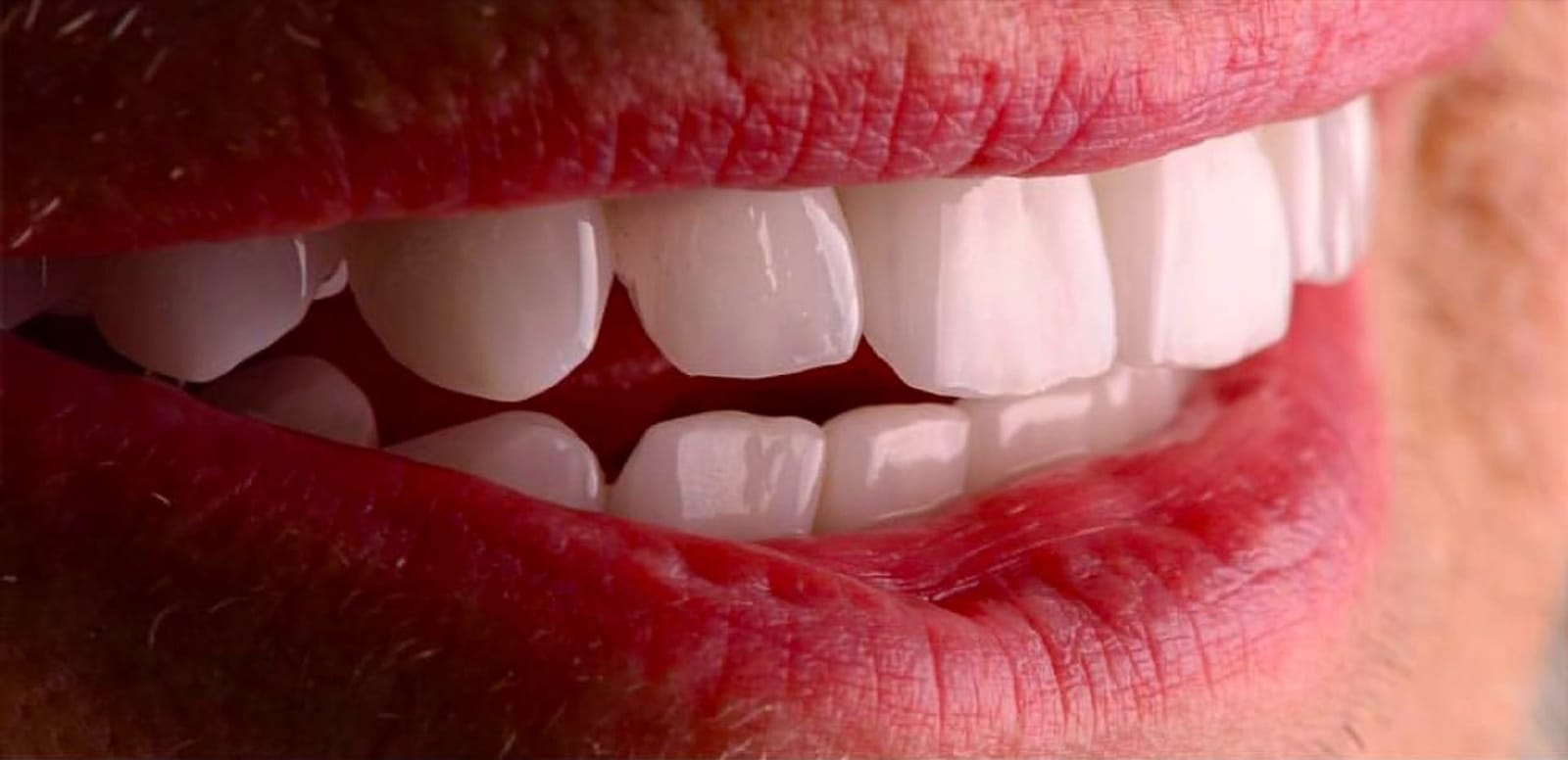
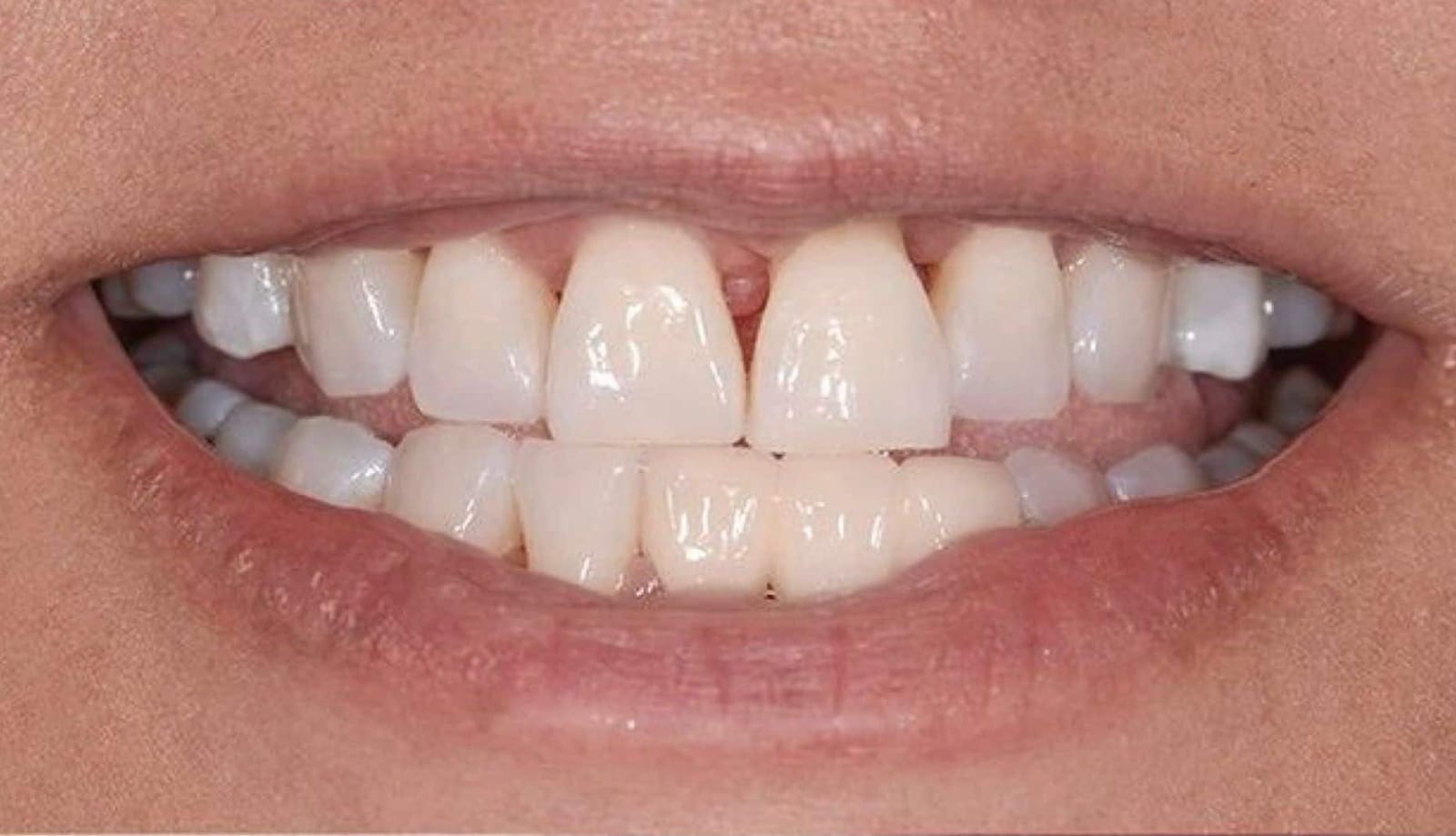
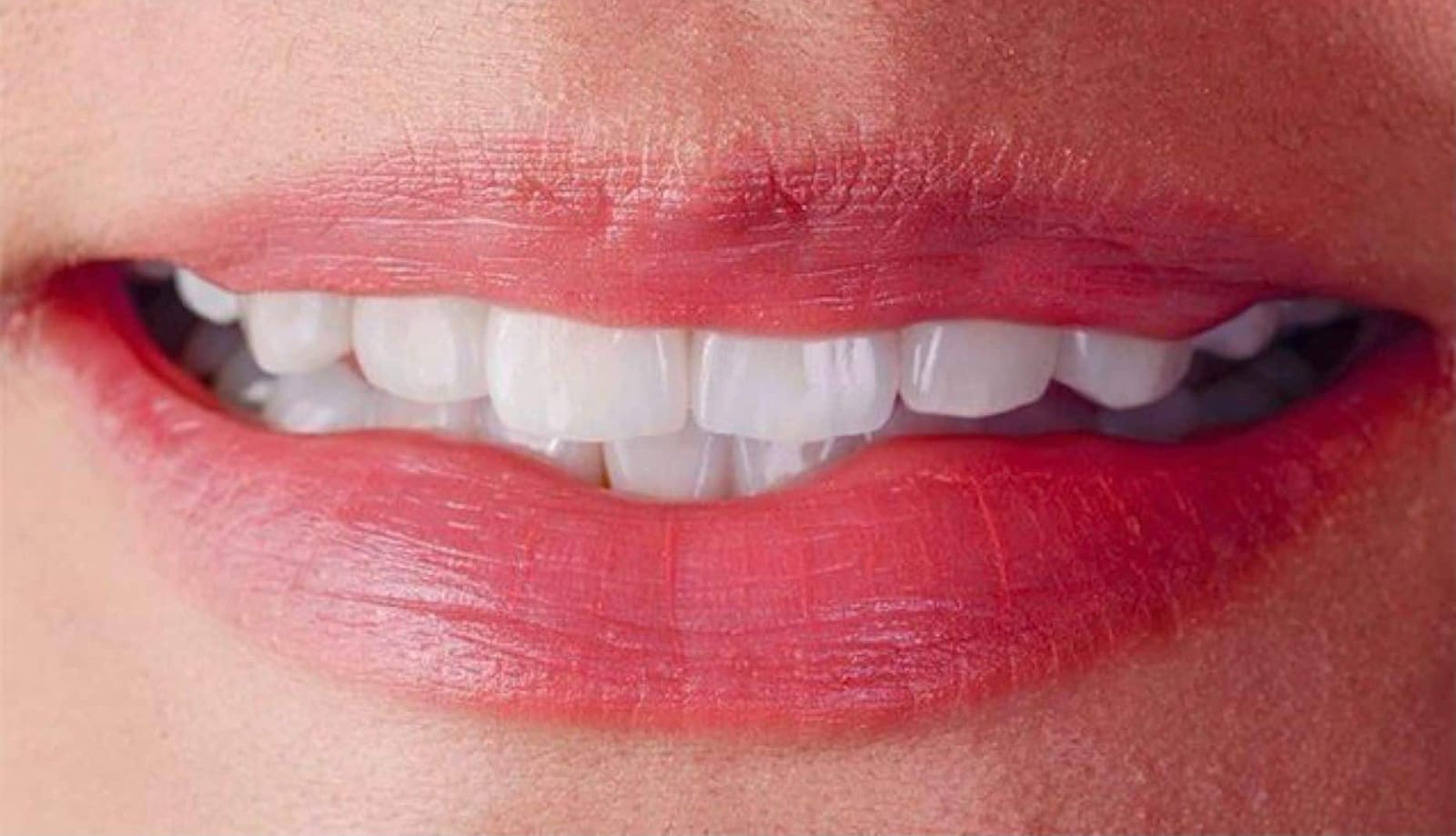
A Smile Made for the Lens
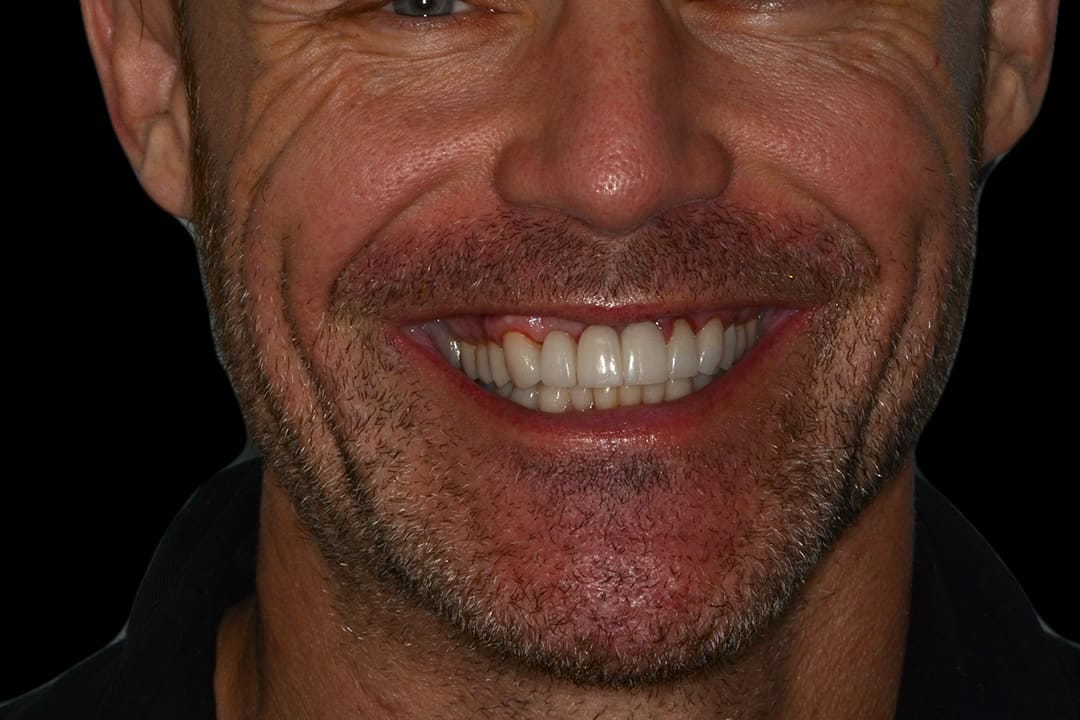
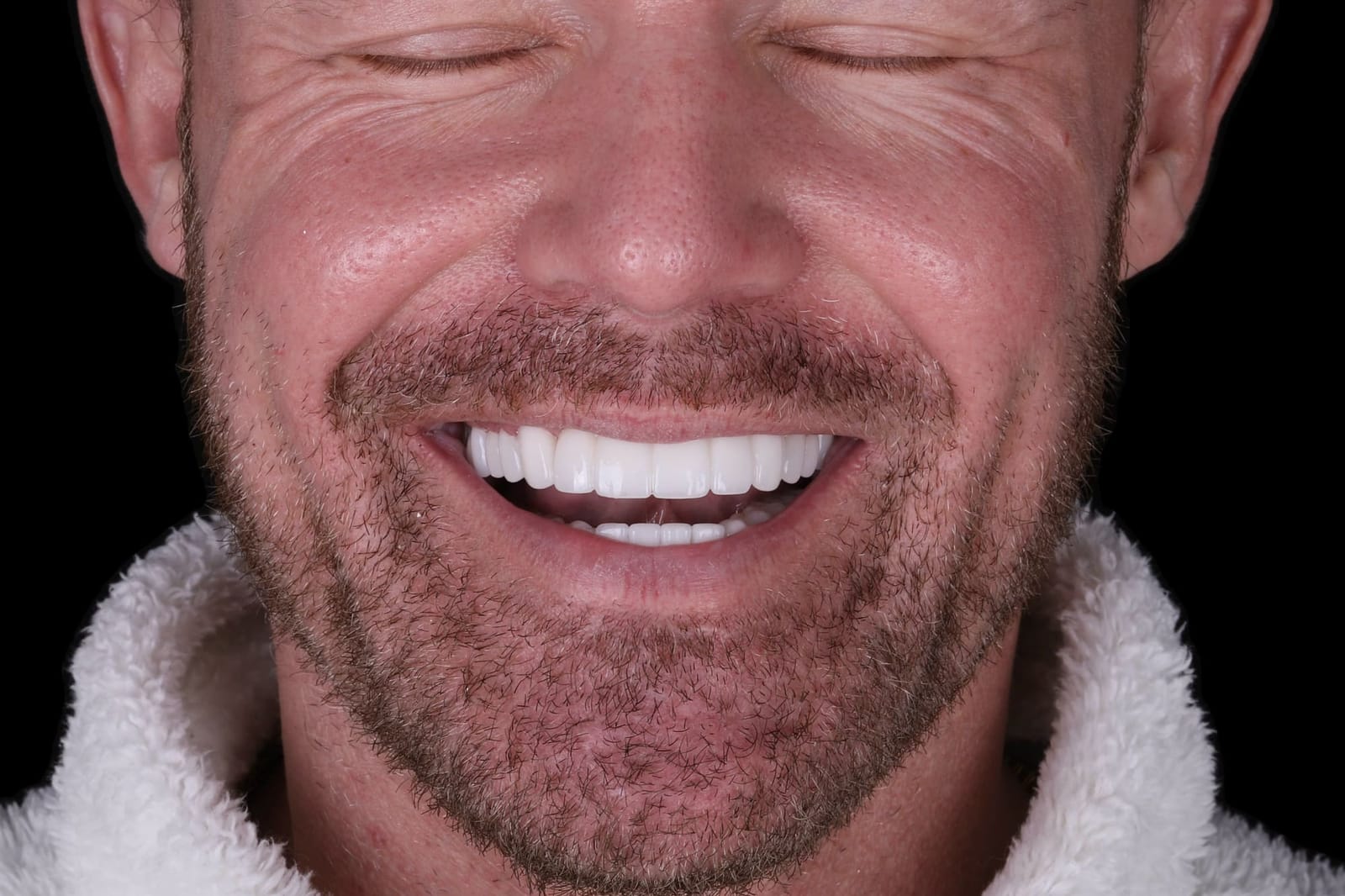
Designed for the Lens
A few small problems are still a decision. He chose to have all of it done at once, so that every tooth would match the ones beside it.
It did not begin with the camera. It began with a few concerns, and a few things that had started to give him problems — the kind that are easy to put off one more year. Dealing with them one at a time would have left him with a smile that still did not agree with itself.
That is what turned a repair into a decision: do the whole thing, once, and have every tooth match the ones beside it. The work he does made the standard for that higher than most. This patient is in front of a camera, and his smile has to match his face and his persona under conditions built to expose everything.
On camera, teeth have to reflect light in a particular way. Shade, surface texture, translucency and the way an incisal edge catches a key light all read differently through a lens than they do across a room. So the materials and the design are chosen for that requirement, not for how the work looks on the day it is delivered.
This work has been done here for actors, producers and directors working in the entertainment industry.
One Crown, and the Tooth Beside It
One crown on a front tooth, made to disappear beside the natural tooth next to it.
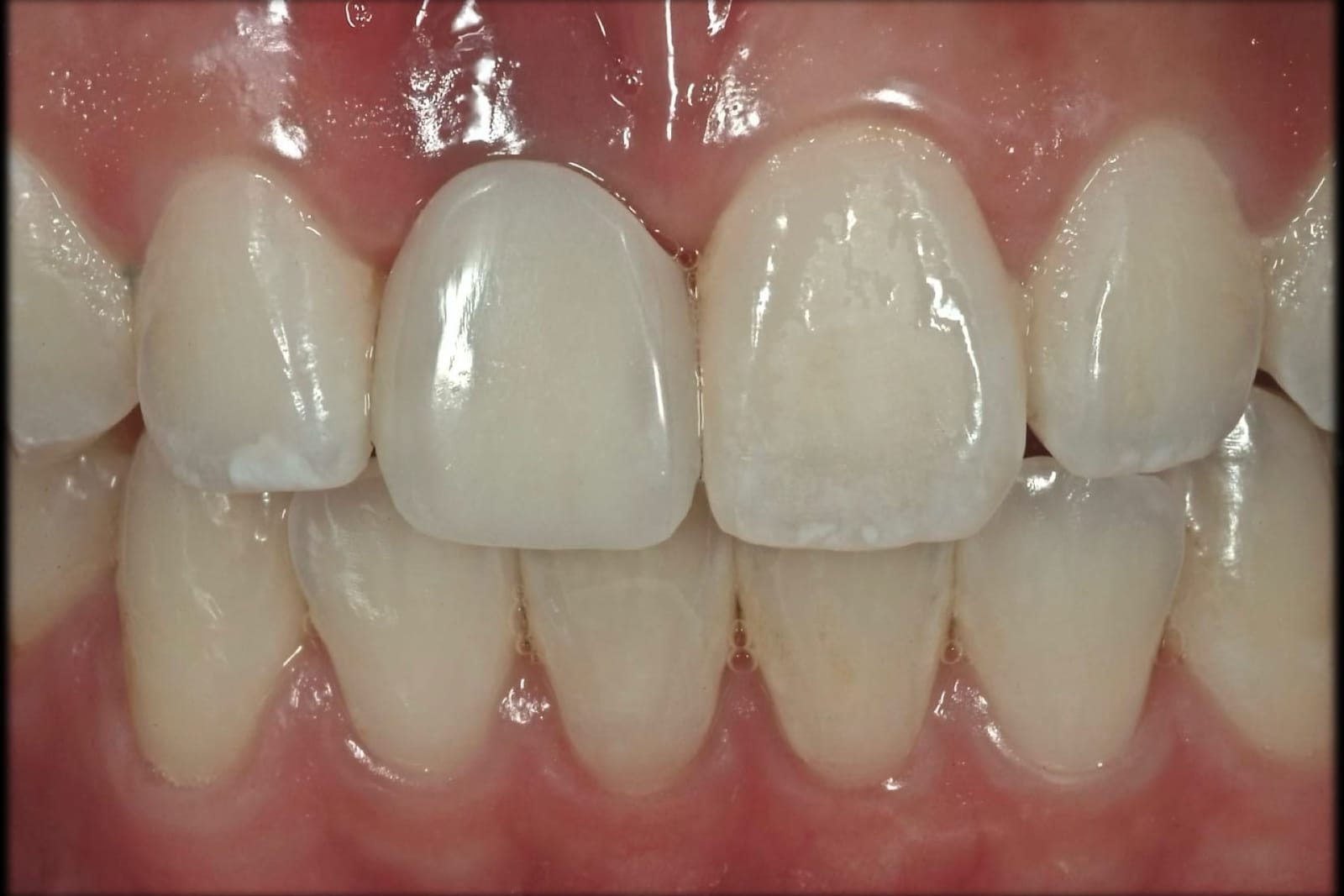
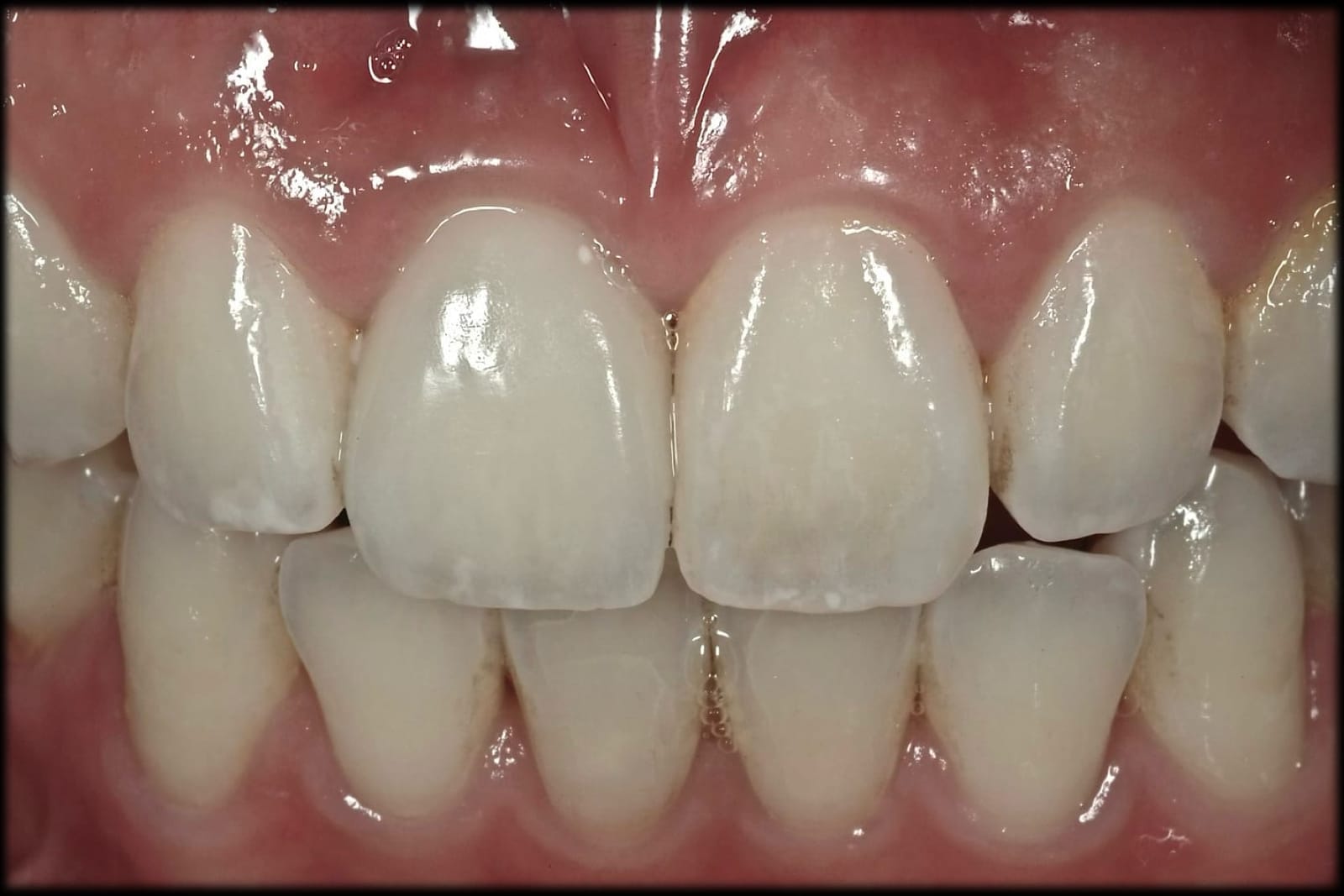
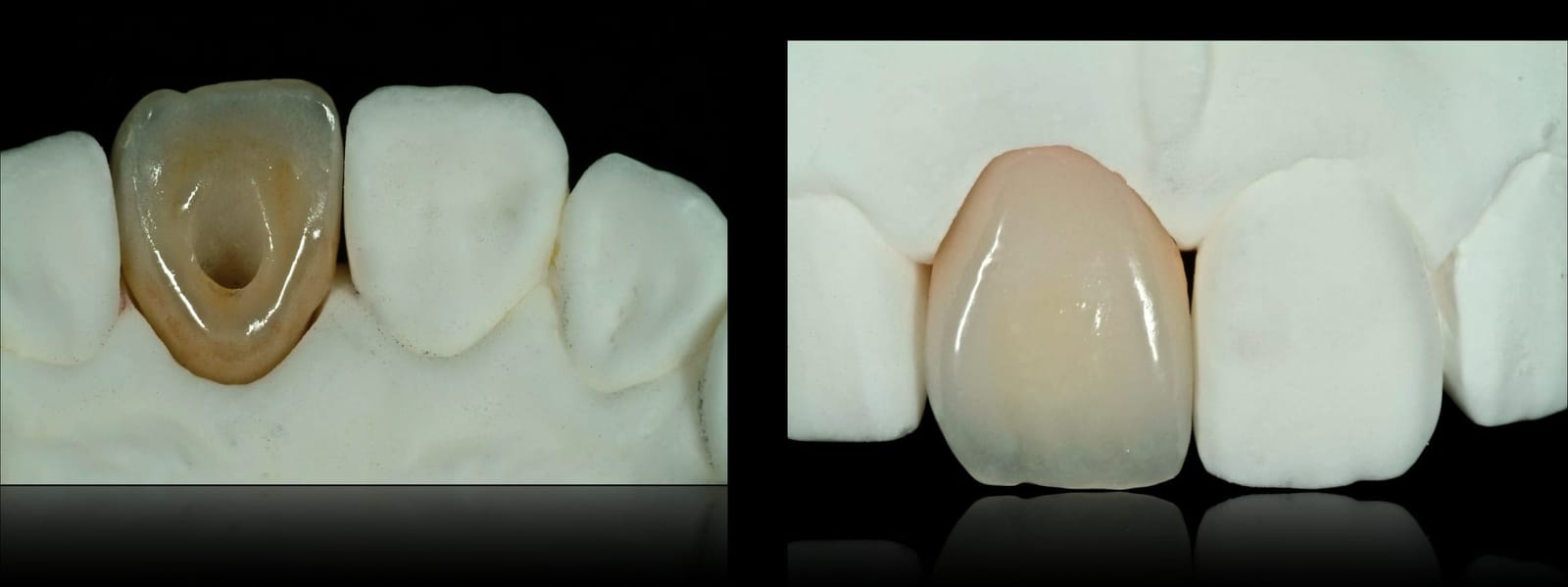
The restoration before it was seated, and the tooth it had to disappear beside.
Read the caseEvery case is planned around one person's anatomy. Individual results vary.
Rebalancing a Smile by Addition, Not Subtraction
Some teeth are chipped, worn, or simply too small, but the tooth underneath is sound.
The usual answer is to cut it down for a full veneer or crown. Dr. Reshad's answer is to leave it alone.
The technique is his own. He developed it with the late master ceramist Willi Geller, and it has been published in Quintessence textbooks since 2011. He has refined it ever since. Instead of preparing the tooth, a thin partial-coverage veneer is bonded onto the surface to replace only what is missing. Nothing is drilled away.
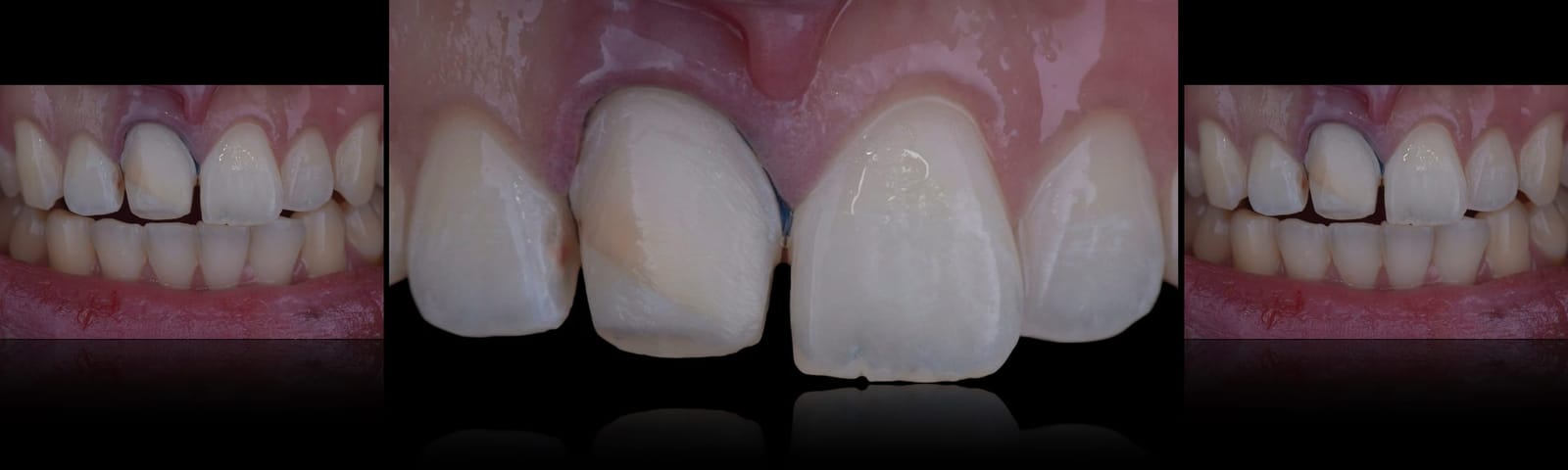
It works only with a full understanding of the material.
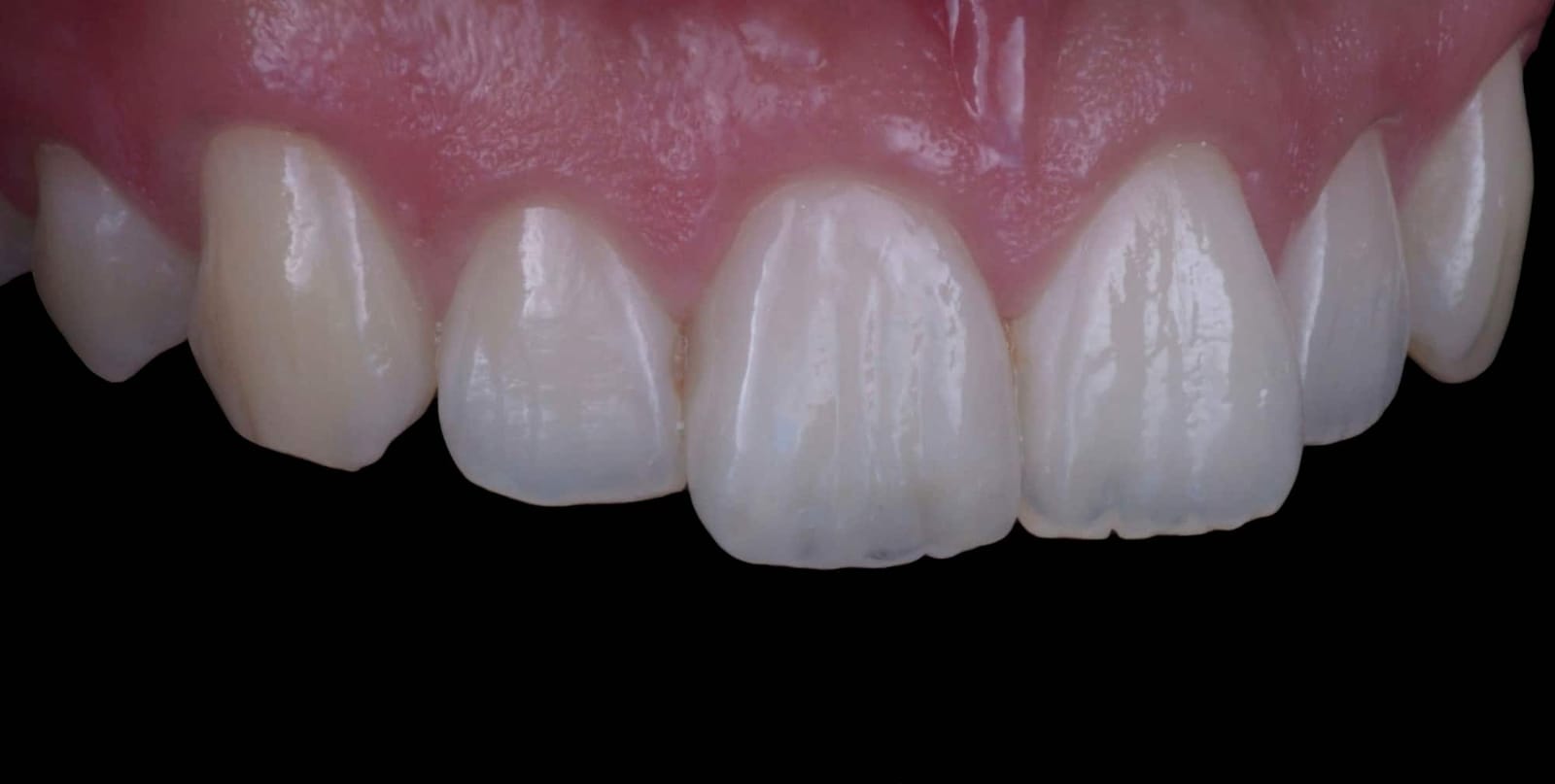
The ceramic is translucent, and its edge is finished with a very specific texture that lets it merge with the enamel. Once it is bonded, finished, and polished, it sits on the tooth like a contact lens. The margin disappears, and the veneer takes on the colour of the tooth beneath it.
Composite bonding can look good on the day it is placed, but it is a plastic, and over the years it dulls and stains. Ceramic keeps its colour and lasts far longer, often by decades. Here it does so while the natural tooth remains exactly as it was.
Every case is planned around one person's anatomy. Individual results vary.
A Single Tooth in Ordinary Light
The measure of a single tooth restoration is that nobody can point to it.
The definitive restoration among the natural teeth, in motion and in ordinary light.
One Tooth, and the Ceramic Made for It
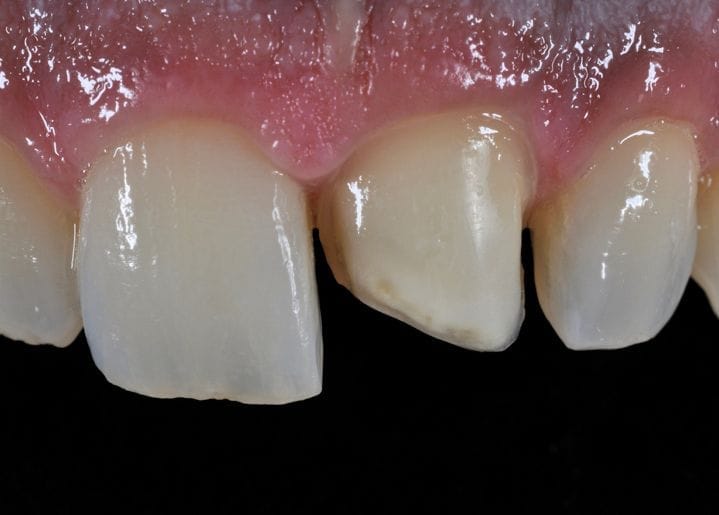
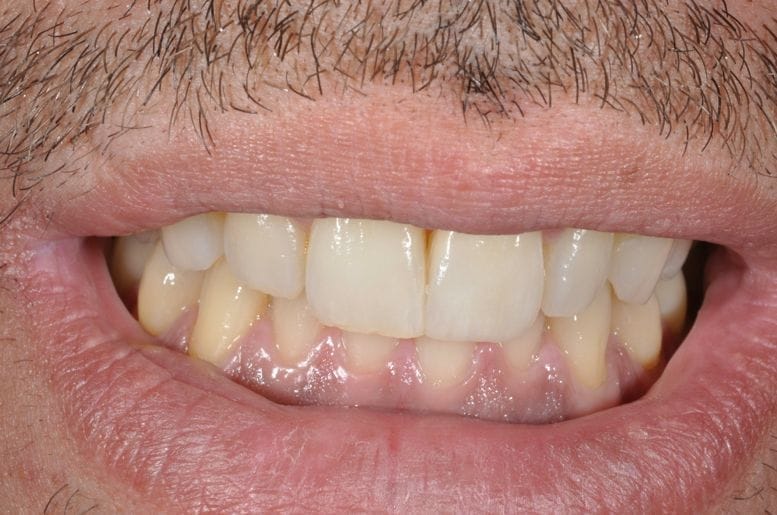
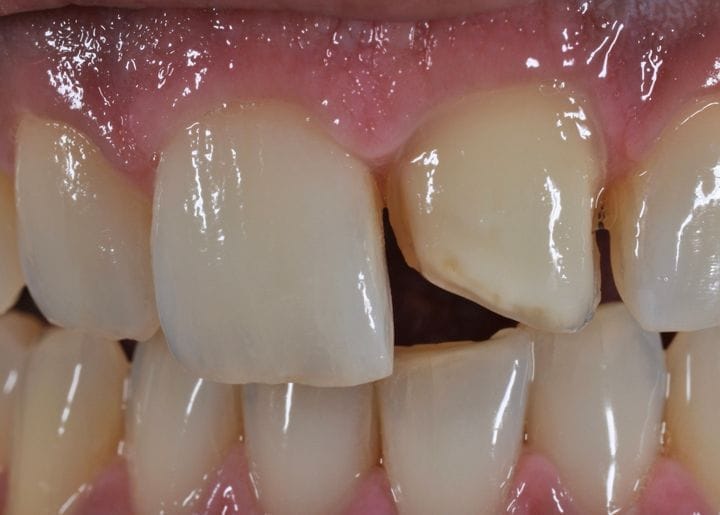
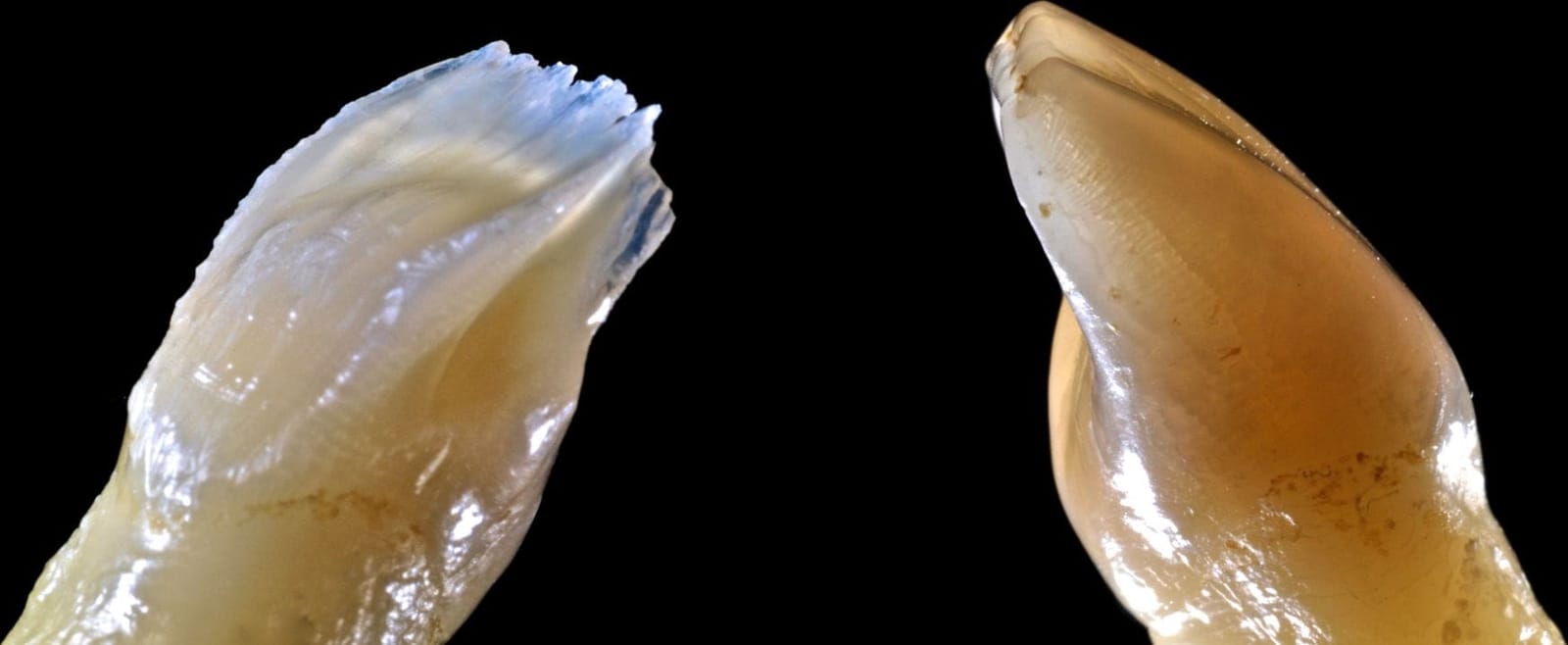
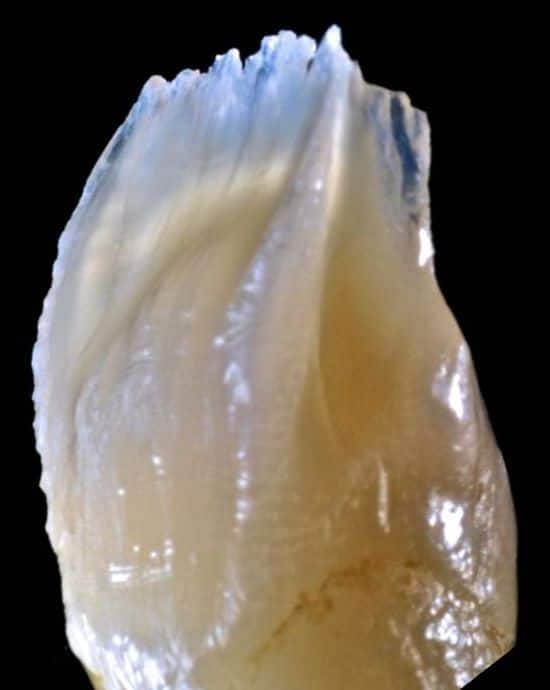
Every case is planned around one person's anatomy. Individual results vary.
One Implant Crown, One Veneer, Symmetry Restored
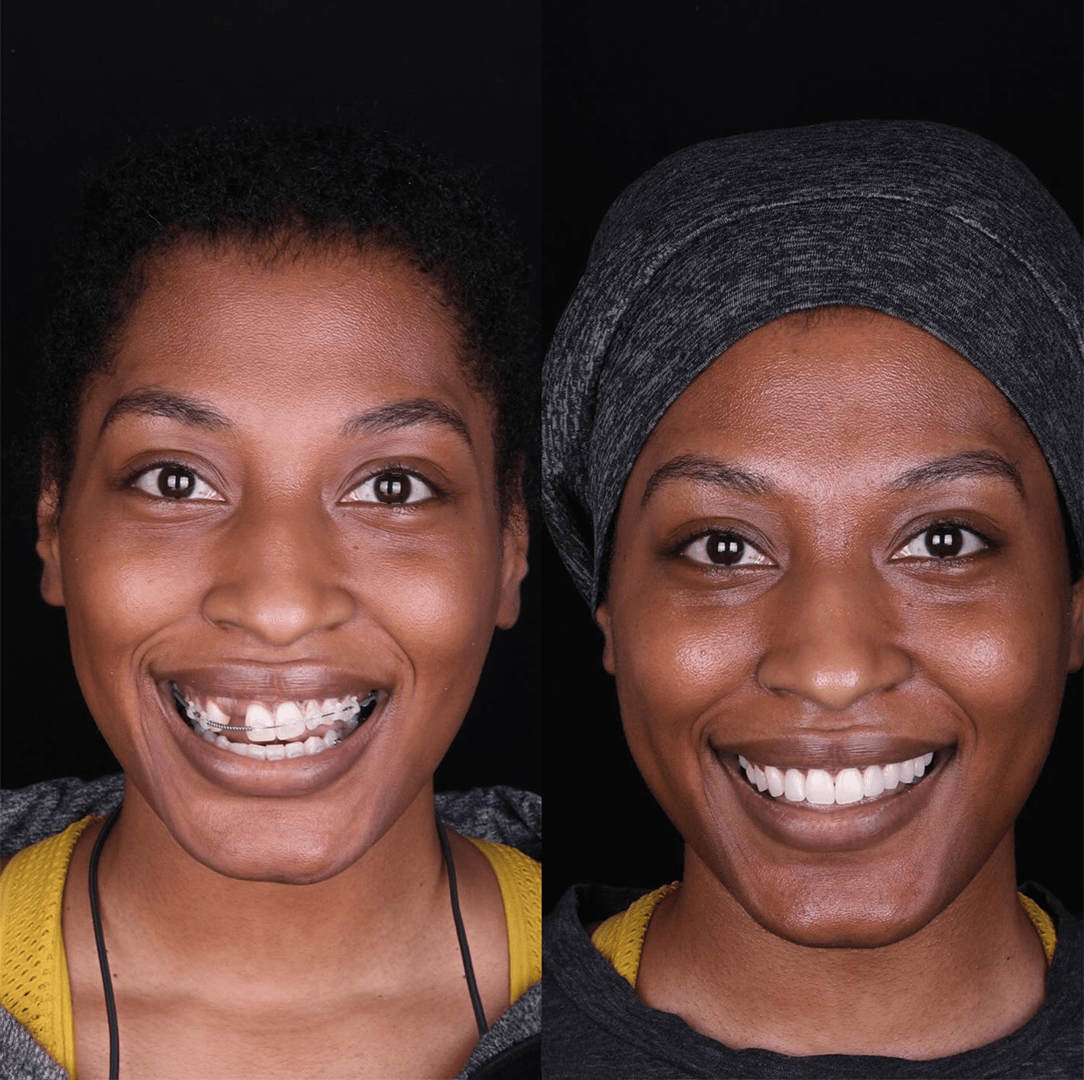
True Interdisciplinary Treatment Planning
The prosthodontist is the quarterback. Every decision, every phase, every specialist involved answers to one thing: the final result.
This patient presented with midface canting, a congenitally missing upper left lateral incisor, and a peg-shaped lateral on the opposite side. Without a clear restorative plan driving the process, this case falls apart.
The prosthodontist mapped the end point first, then directed every phase backward from there. Orthodontics moved the teeth into ideal position. Periodontics corrected the excessive tissue display through osteotomy. The implant was placed where the final restoration demanded it.
One implant crown. One ceramic veneer. Symmetry restored. Tissue preserved. Healthy tooth structure left untouched.
Minimal invasion, maximum impact — a smile that looks like it was never worked on at all.
The Back Teeth
Where the smile is wide enough to show them
Some people have a big smile, and a big smile shows more than the front six.
When decay reaches teeth that are visible when you laugh, the work back there has to meet the same standard as the work at the front, and it has to survive a different job. The last molar in the arch carries around two hundred pounds of force.
That is the real problem with a beautiful posterior restoration: it has to be beautiful under load. Which means controlling how the tooth is pressured, how the jaw moves around it, and where the force is allowed to land, while still building something that matches the teeth beside it.
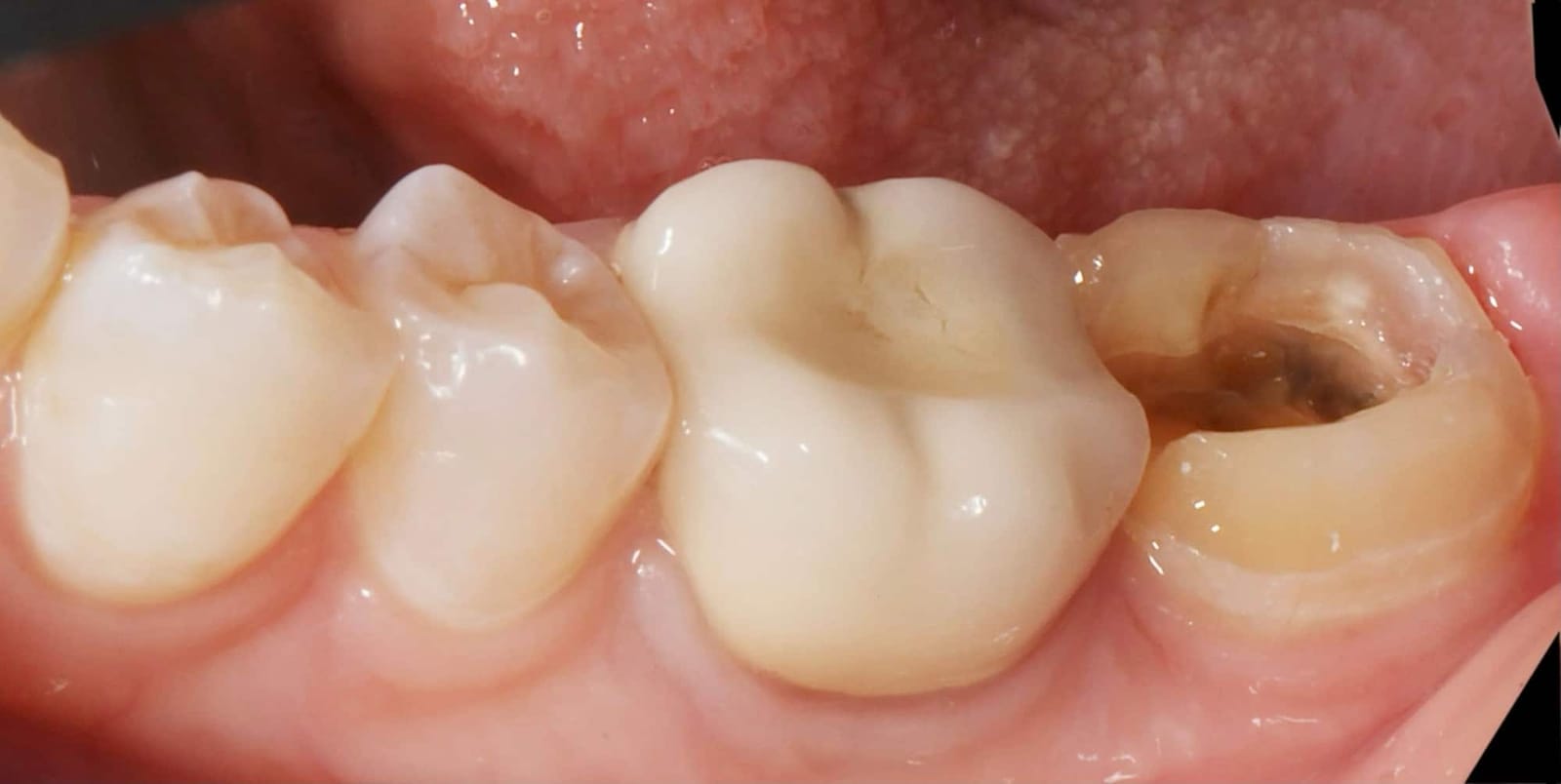
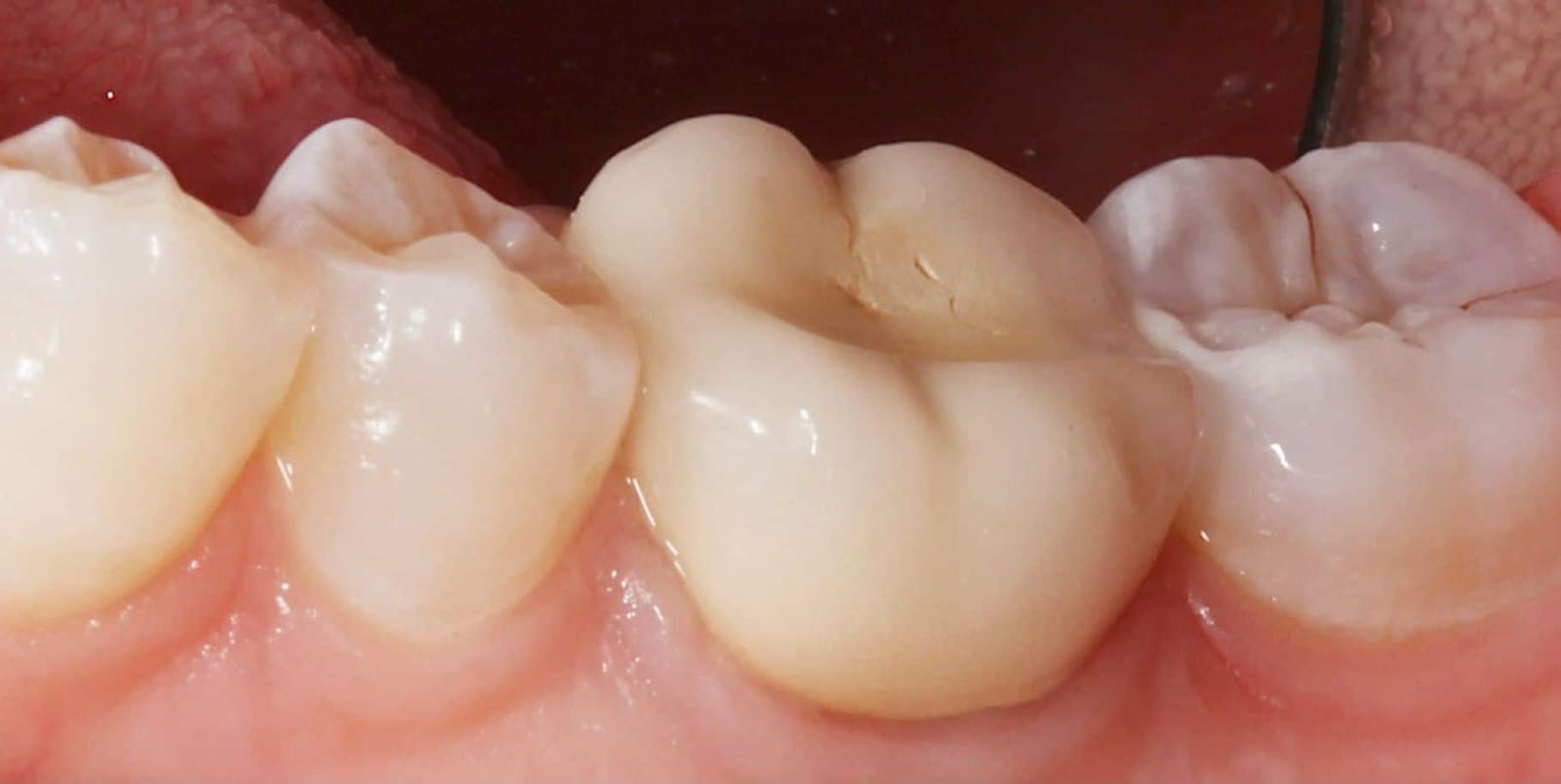
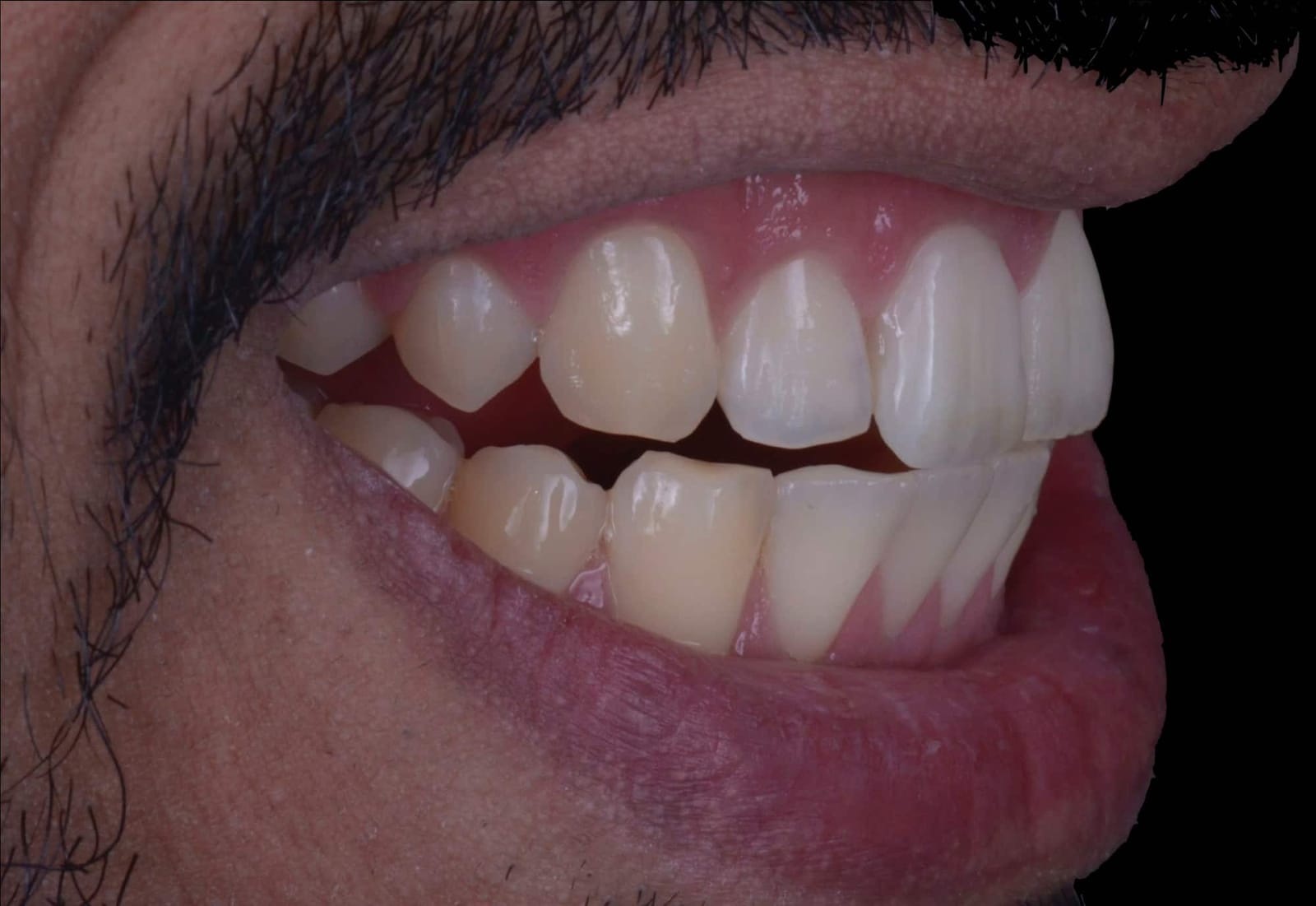
Buccal view
A tooth this broken down is frequently declared hopeless. There is not much structure left, so the recommendation is extraction and an implant, or crown lengthening first to push the gum down and find something to hold onto. Those are real treatments with real indications, and they are also a great deal more than many of these teeth actually need.
Biomimetic dentistry and modern adhesive technology often make the surgery unnecessary. Bonded correctly, ceramic can rebuild a severely damaged tooth and behave the way tooth structure behaves, which means the tooth stays. Dr. Reshad taught this at USC during his tenure as Chairman of Fixed and Operative Dentistry, and it is the reason a case that arrives labeled hopeless frequently is not.
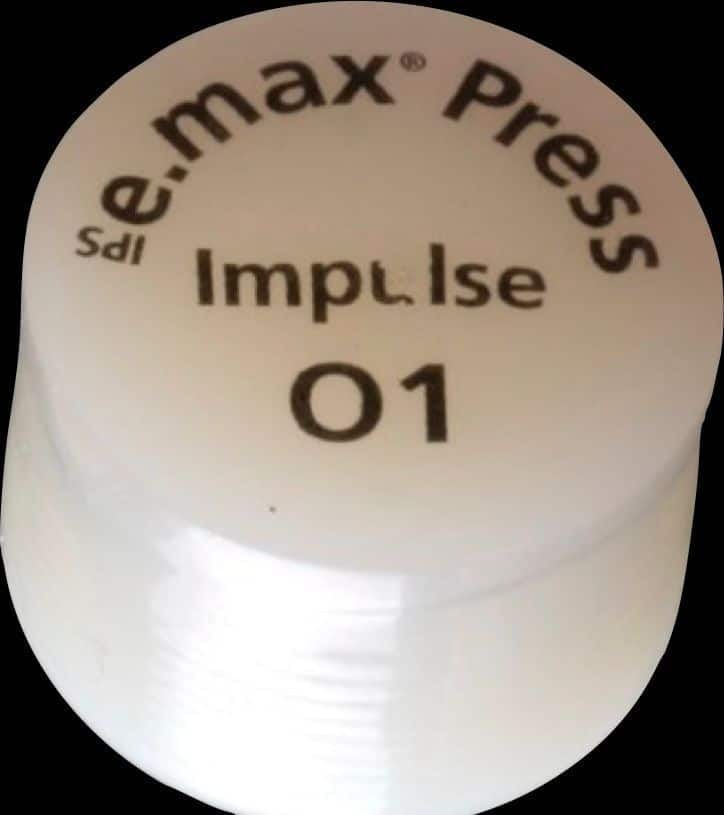
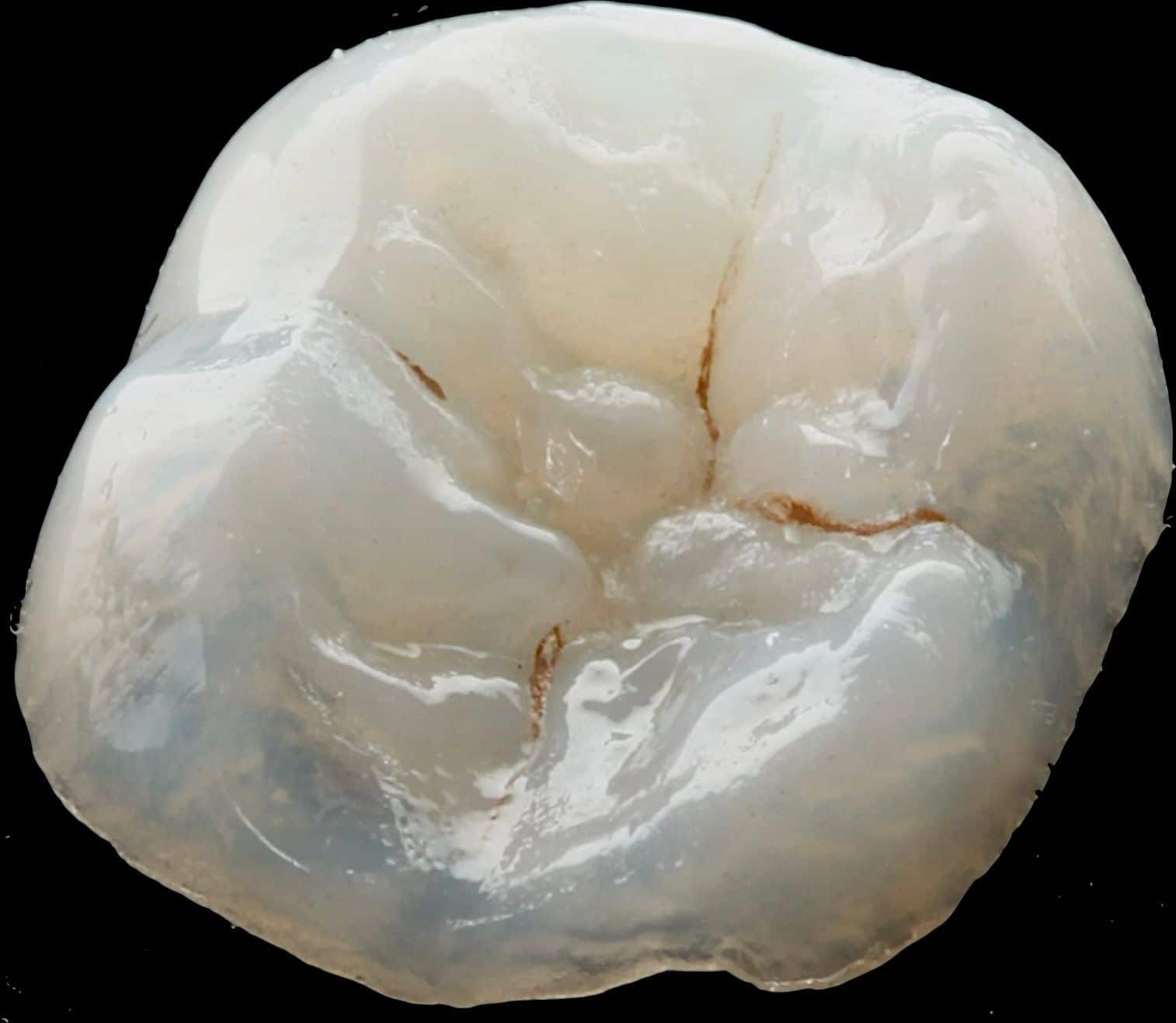
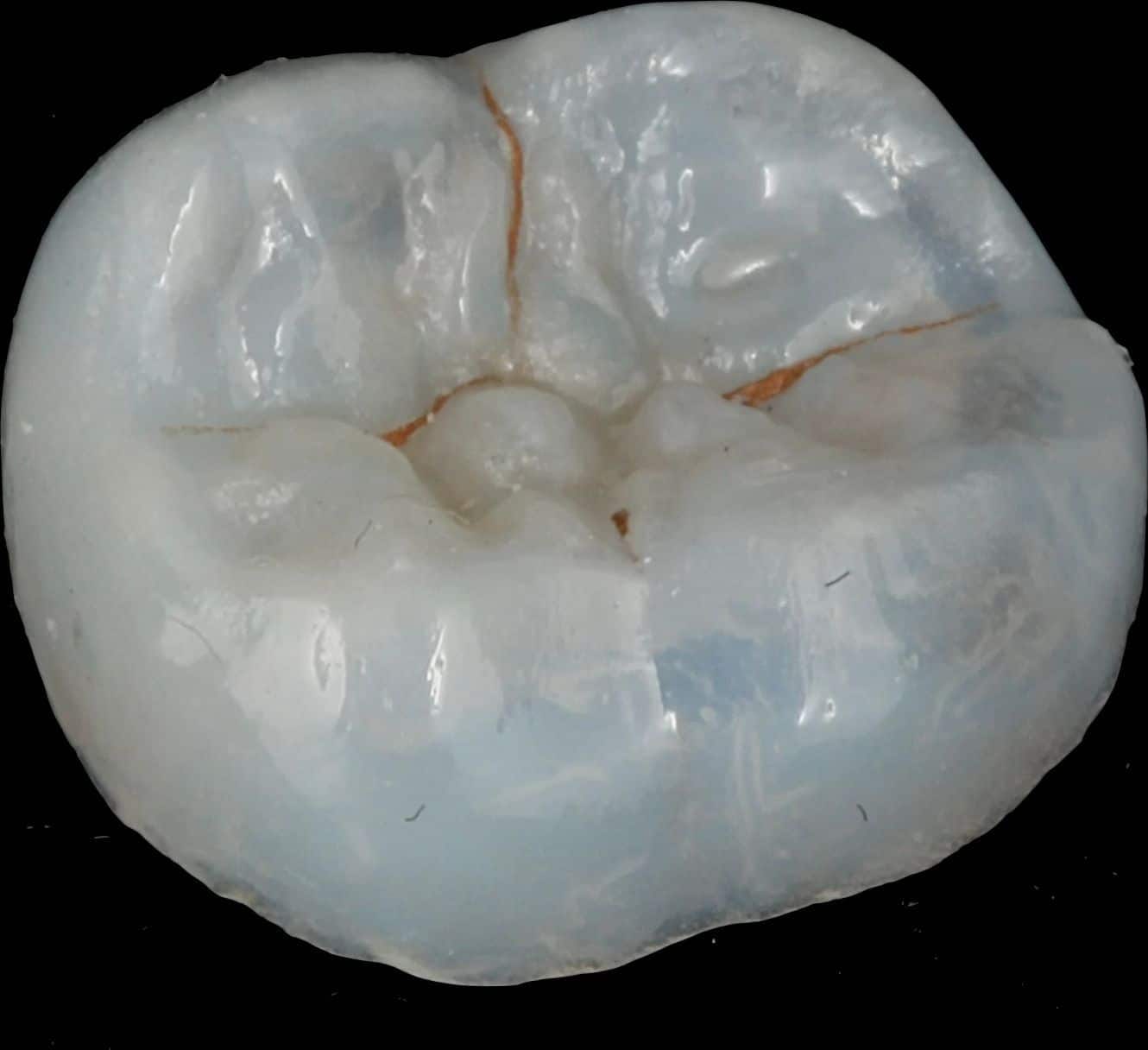
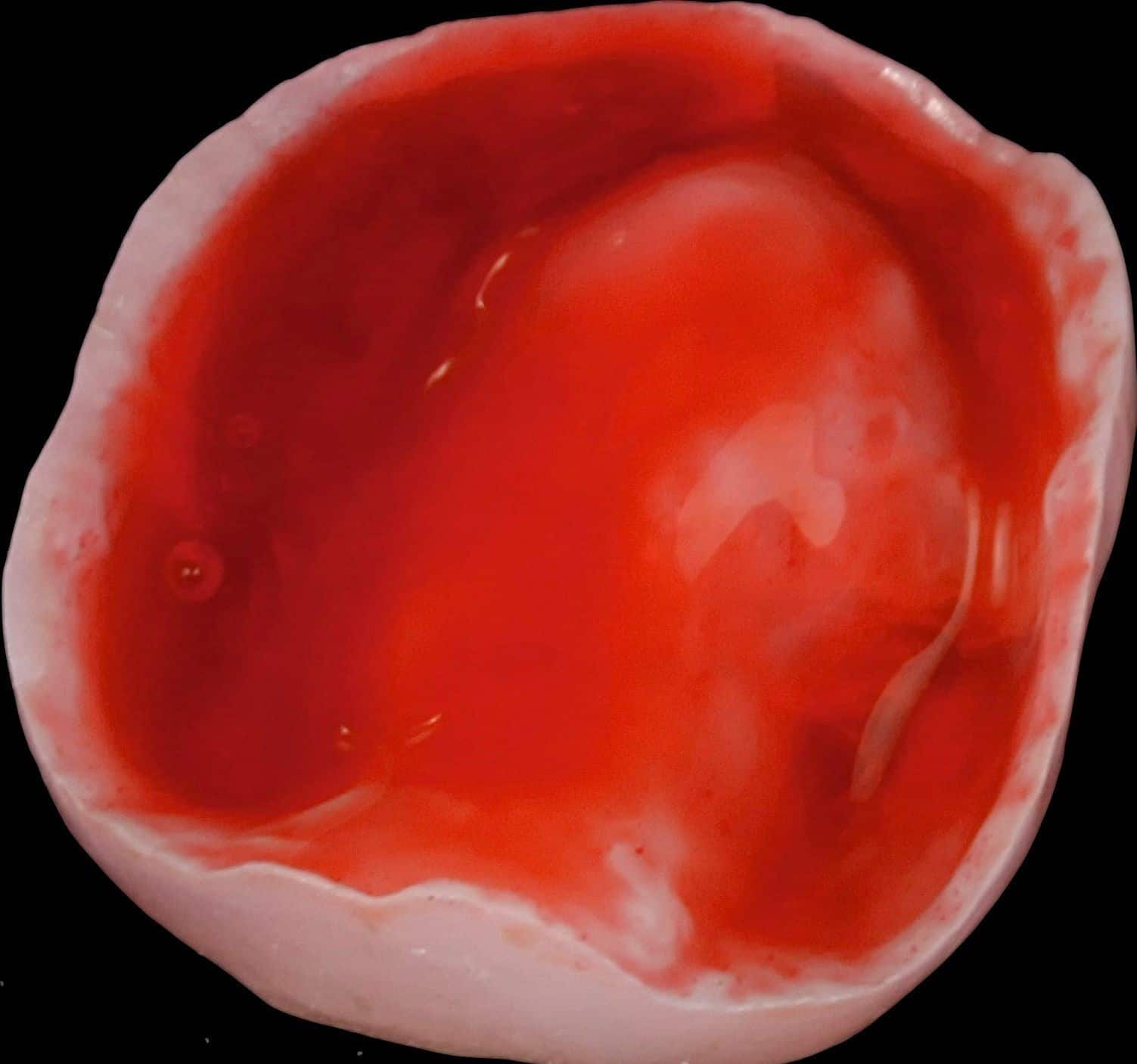
Here the tooth was rebuilt in lithium disilicate, bonded under proper isolation, and it disappears into the mouth around it.
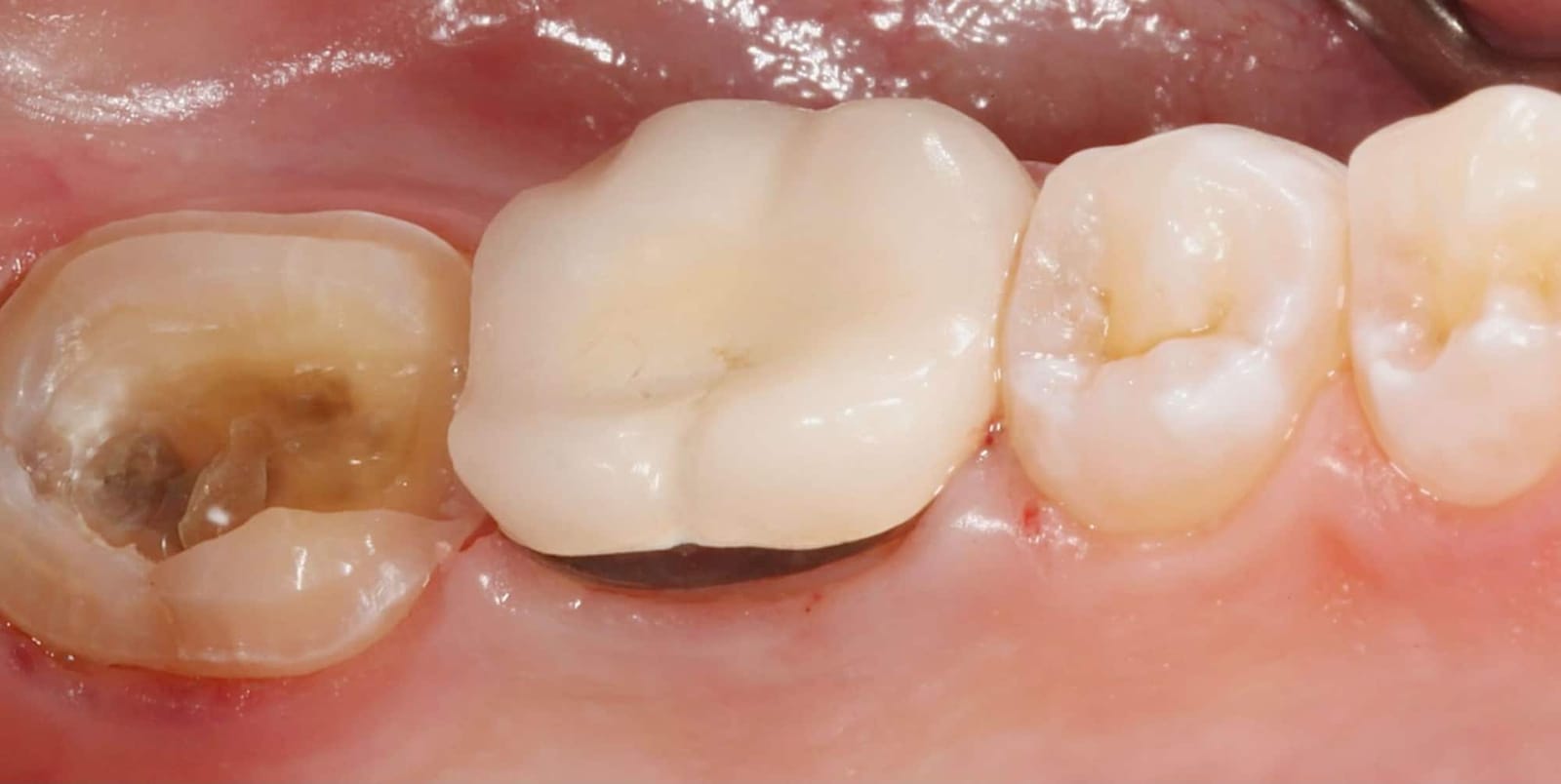
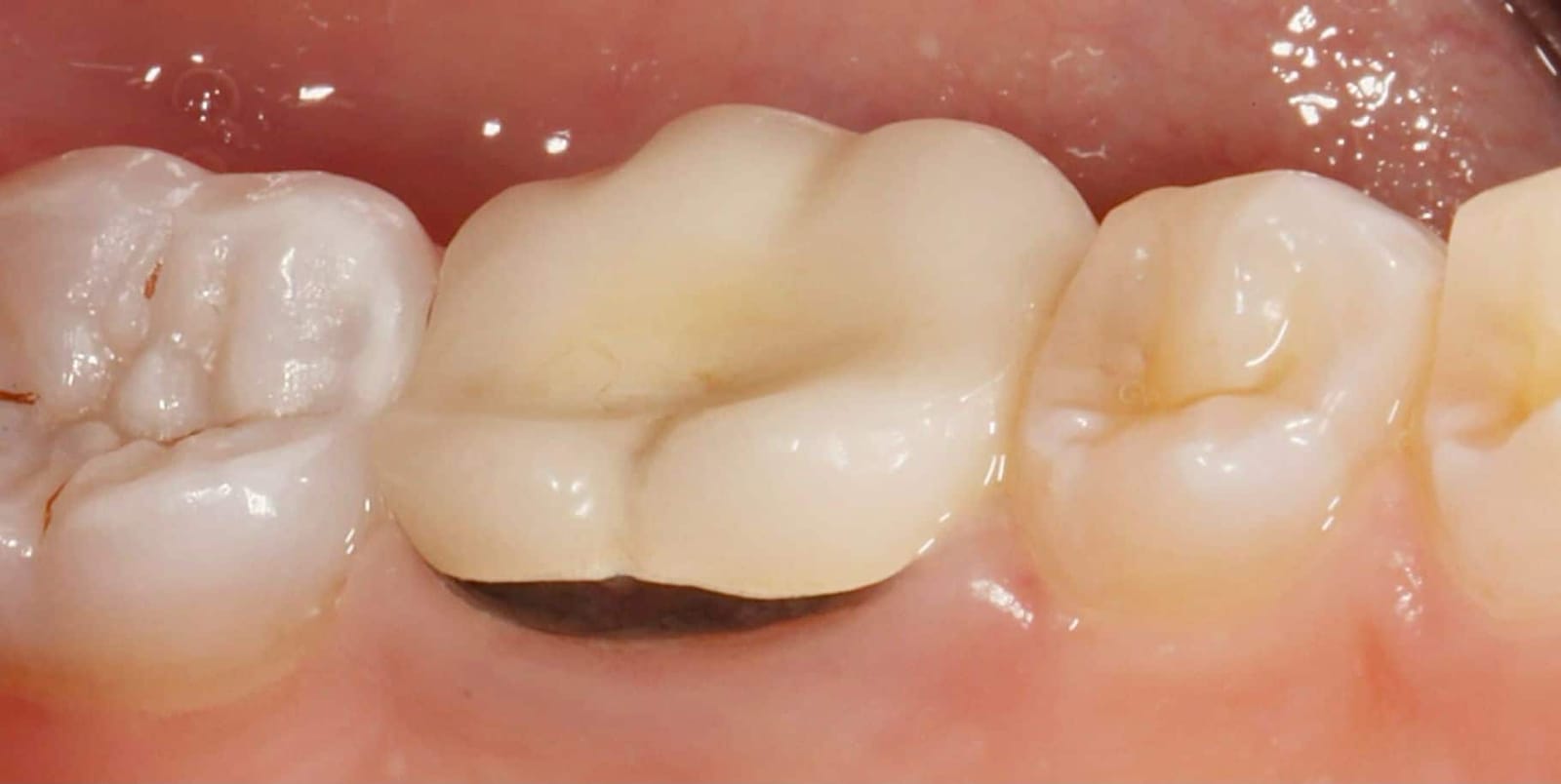
Occlusal view
Hundreds of teeth are restored here as ordinary, unremarkable work that blends seamlessly. Every one of them still gets the same attention, because no tooth is unimportant to the person it belongs to.
Beautiful dentistry throughout the mouth, not only where it is easiest to photograph. And wherever the tooth can be saved rather than replaced, it is.
Bonded Veneers & Single Implant
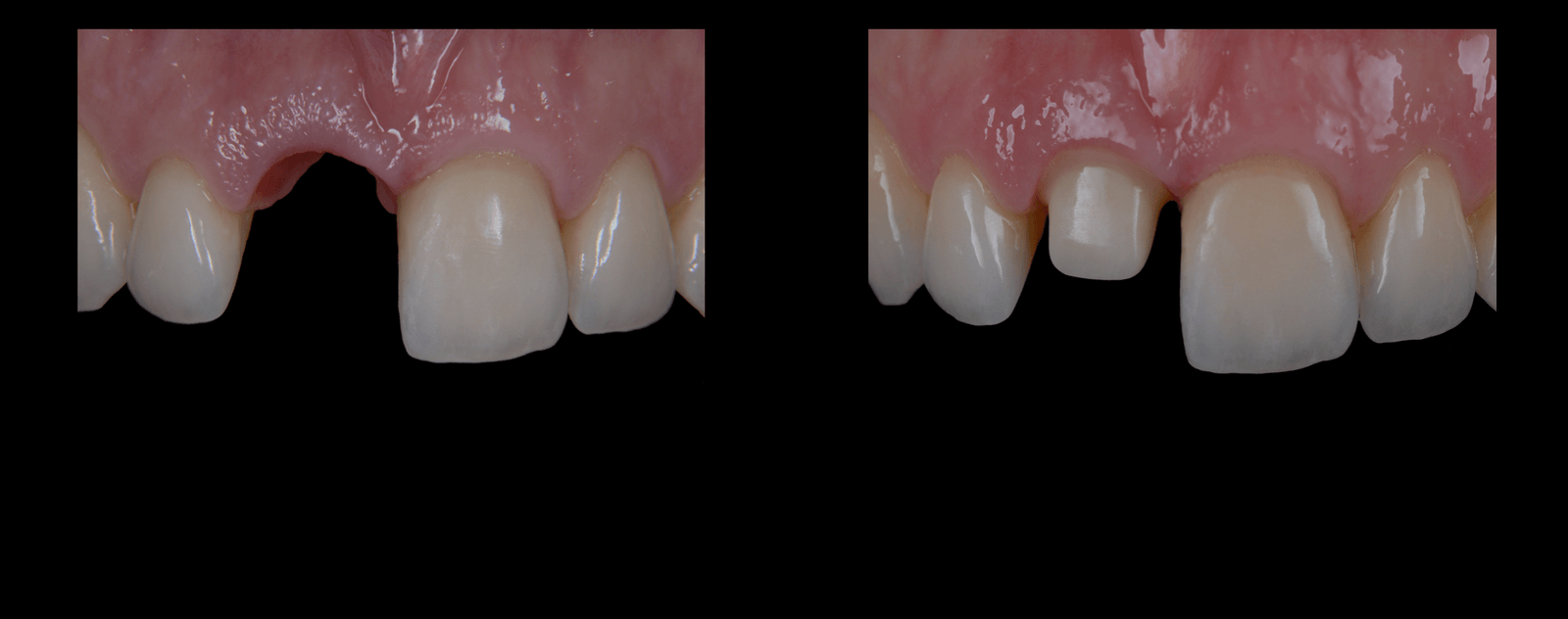
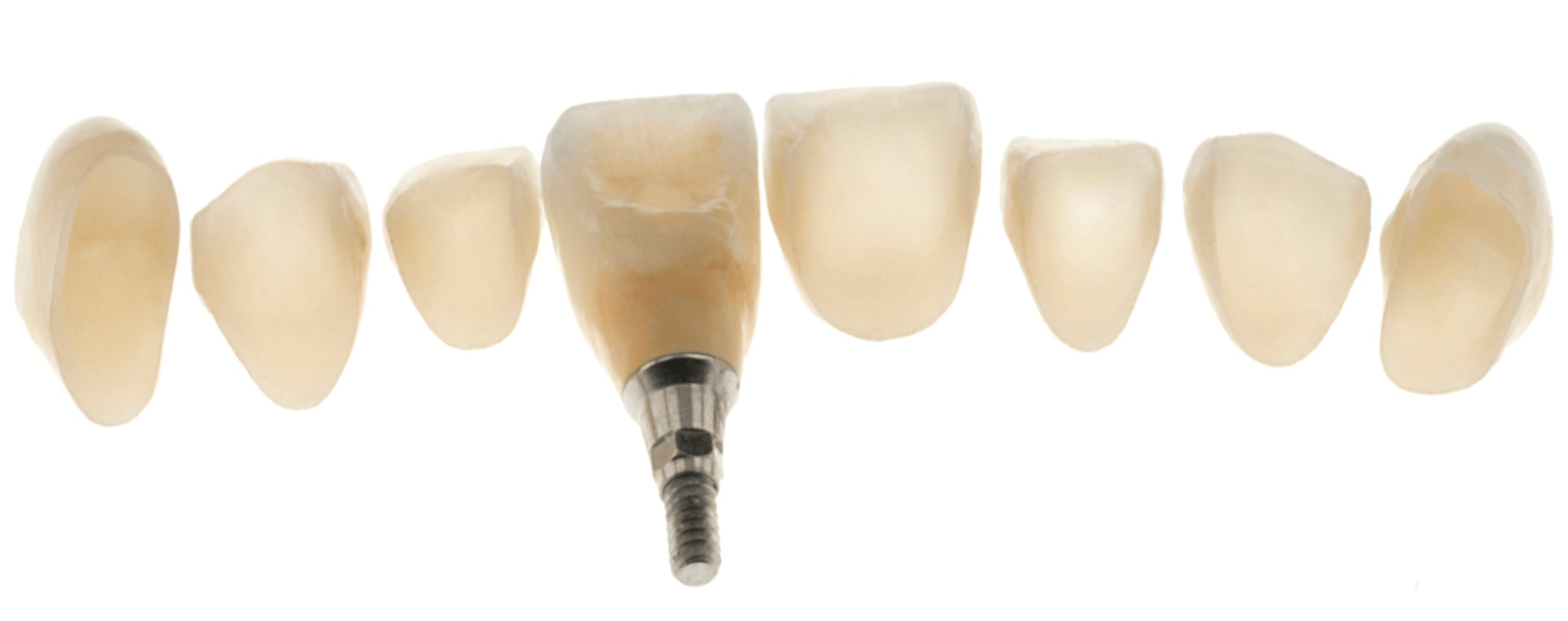
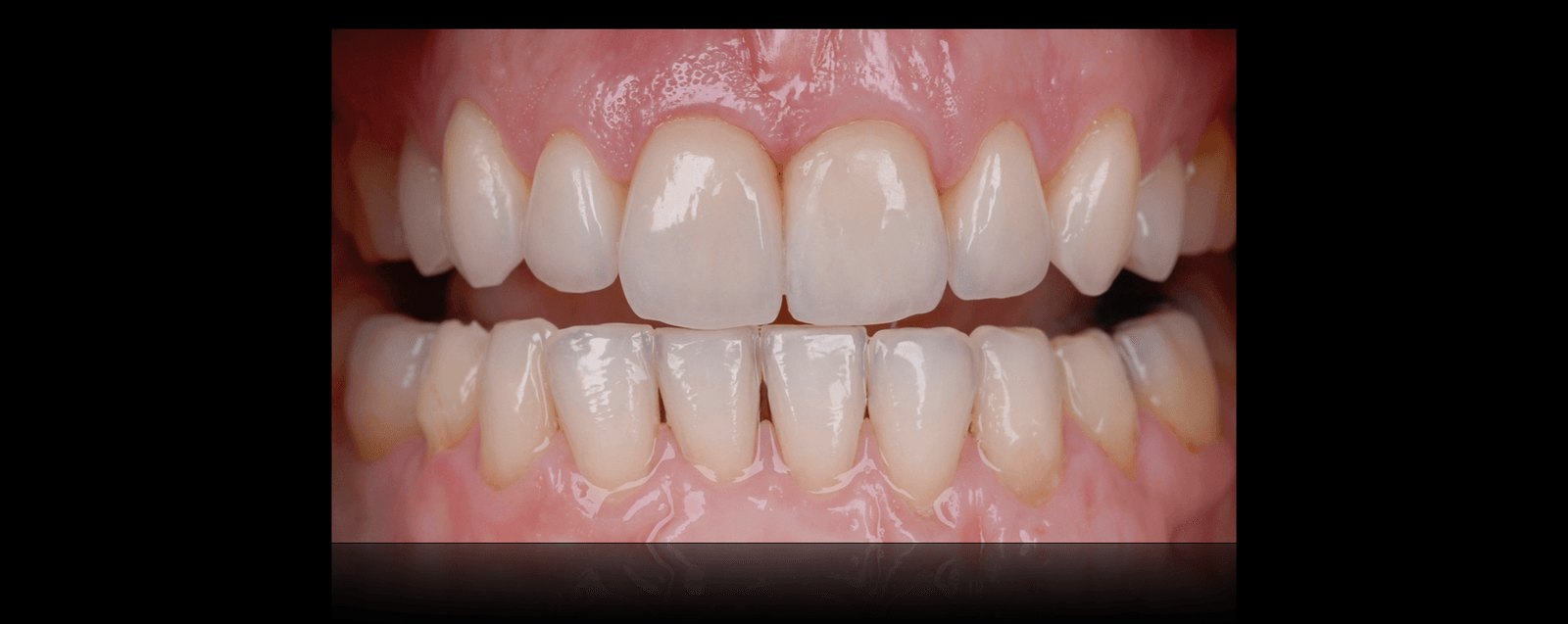
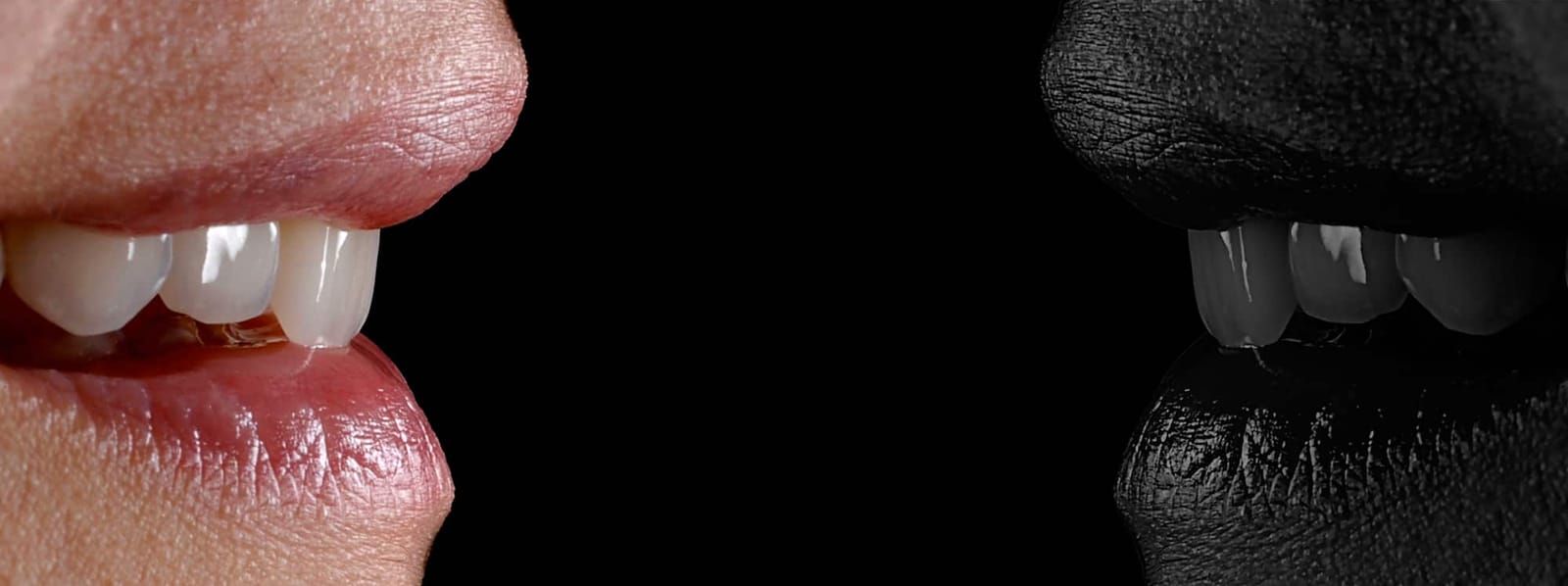
"One implant. Bonded veneers. A single unified composition."
Precision ceramics by master technician
Correcting the Gum Display, Not Just the Teeth
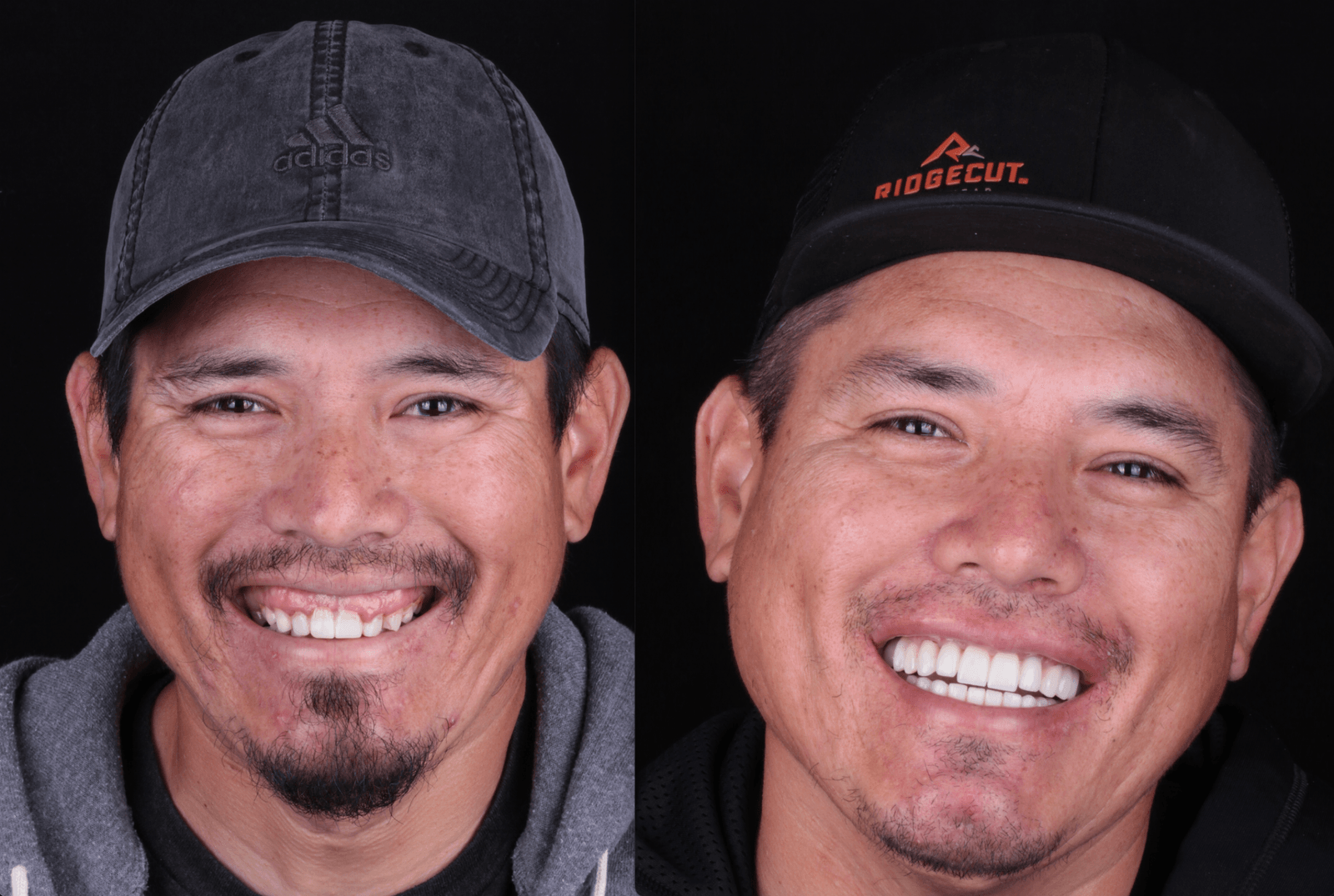
Other Specialists Treat in Parts. The Prosthodontist Sees the Whole Picture.
This patient presented with a severe gummy smile and extruded teeth. Replacing the teeth alone would have solved nothing. The real challenge was correcting the gummy display while restoring everything in harmony with his lips, his speech and his bite.
The prosthodontist planned every detail before anything was touched. Implants were placed deeper, not at the default position, but where natural gum levels demanded them. Every angle was calculated around how this patient speaks, how his lips move and how his bite functions. No pink ceramics. No artificial gumline. Nothing to fake what should be real.
This is what implant dentistry actually means when it is done right. It is not just about replacing what is missing. It is about understanding how the entire system works together and building within it.
Seven years later, this smile still looks the way it did the day it was delivered. Stable. Healthy. Natural.
When the planning is precise and the execution is patient, the results speak for themselves for years.
Two Crowns Instead of Twenty
She had been quoted between ten and twenty restorations.
What she actually had were two problems. Her teeth were discolored, and two of them, including a front tooth, were broken down and root treated.
The shapes of her teeth were beautiful, and shape is the expensive part. If the form is right, the teeth do not need replacing. So the plan came down to two things: brighten everything, and crown the two teeth that were genuinely compromised.
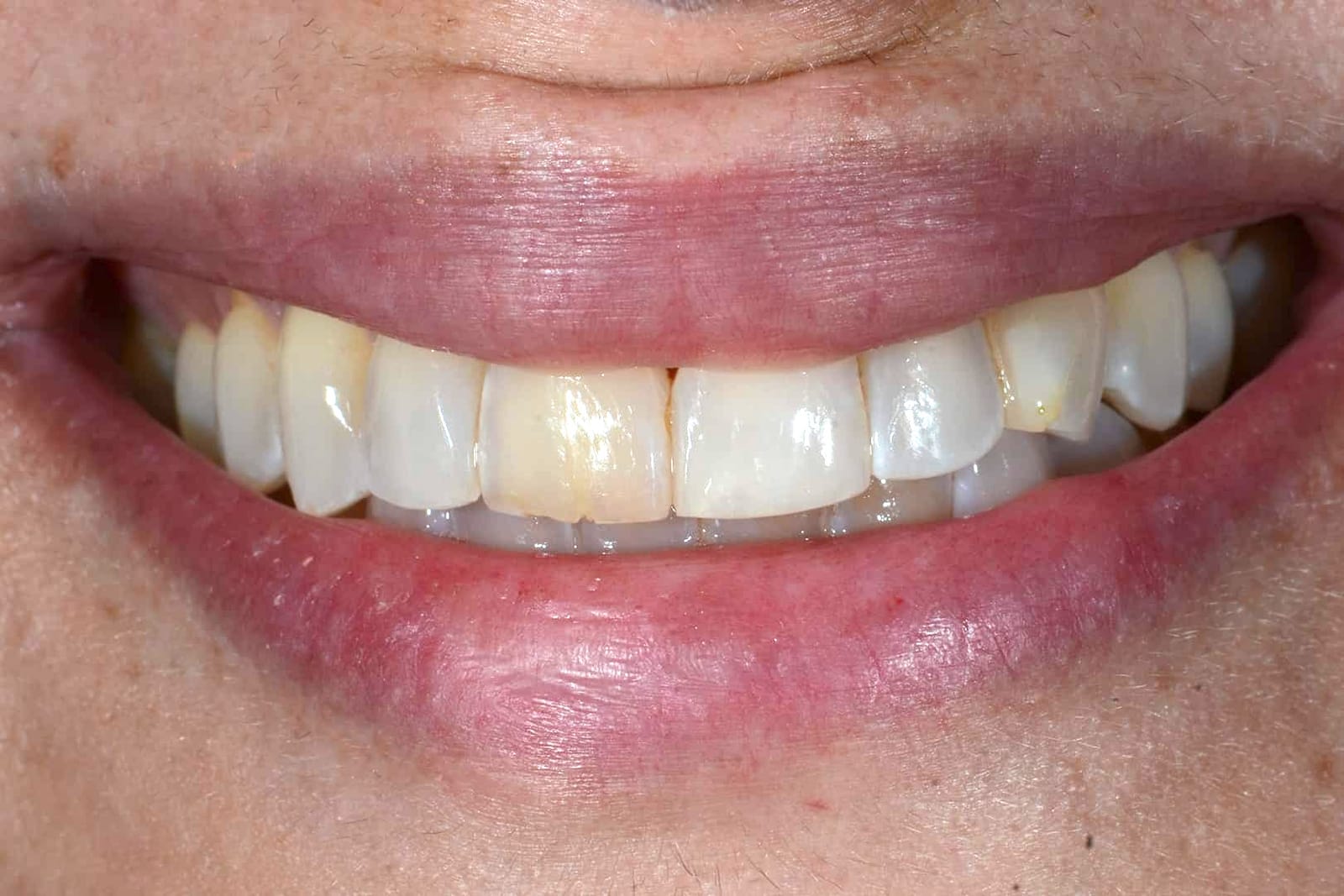
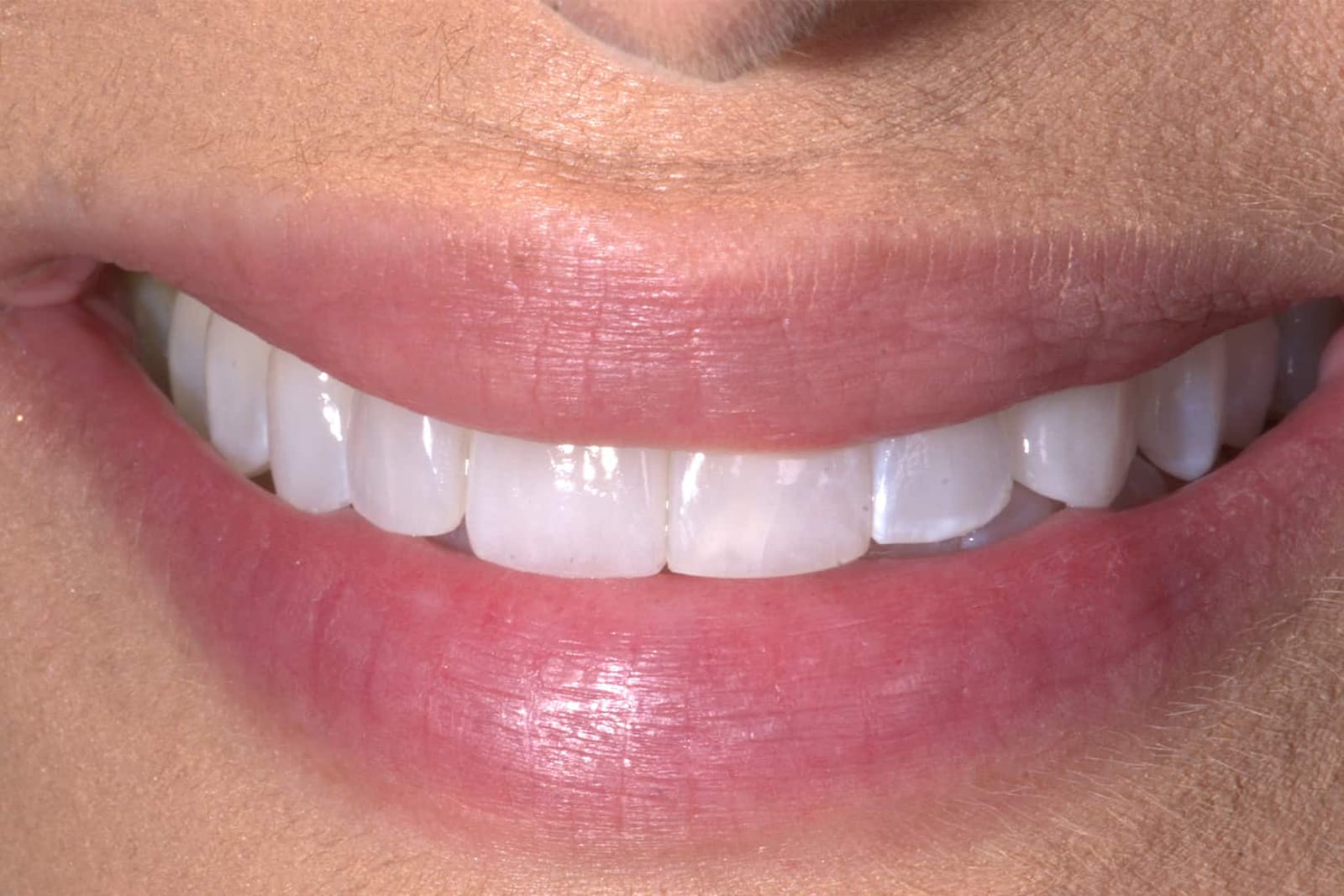
Matching two teeth to everything around them.
Matching one or two restorations to the natural teeth on either side, in every lighting condition, is the hardest thing in aesthetic dentistry. It is layering, color matching and surface texture, executed precisely enough that the eye cannot find the boundary.
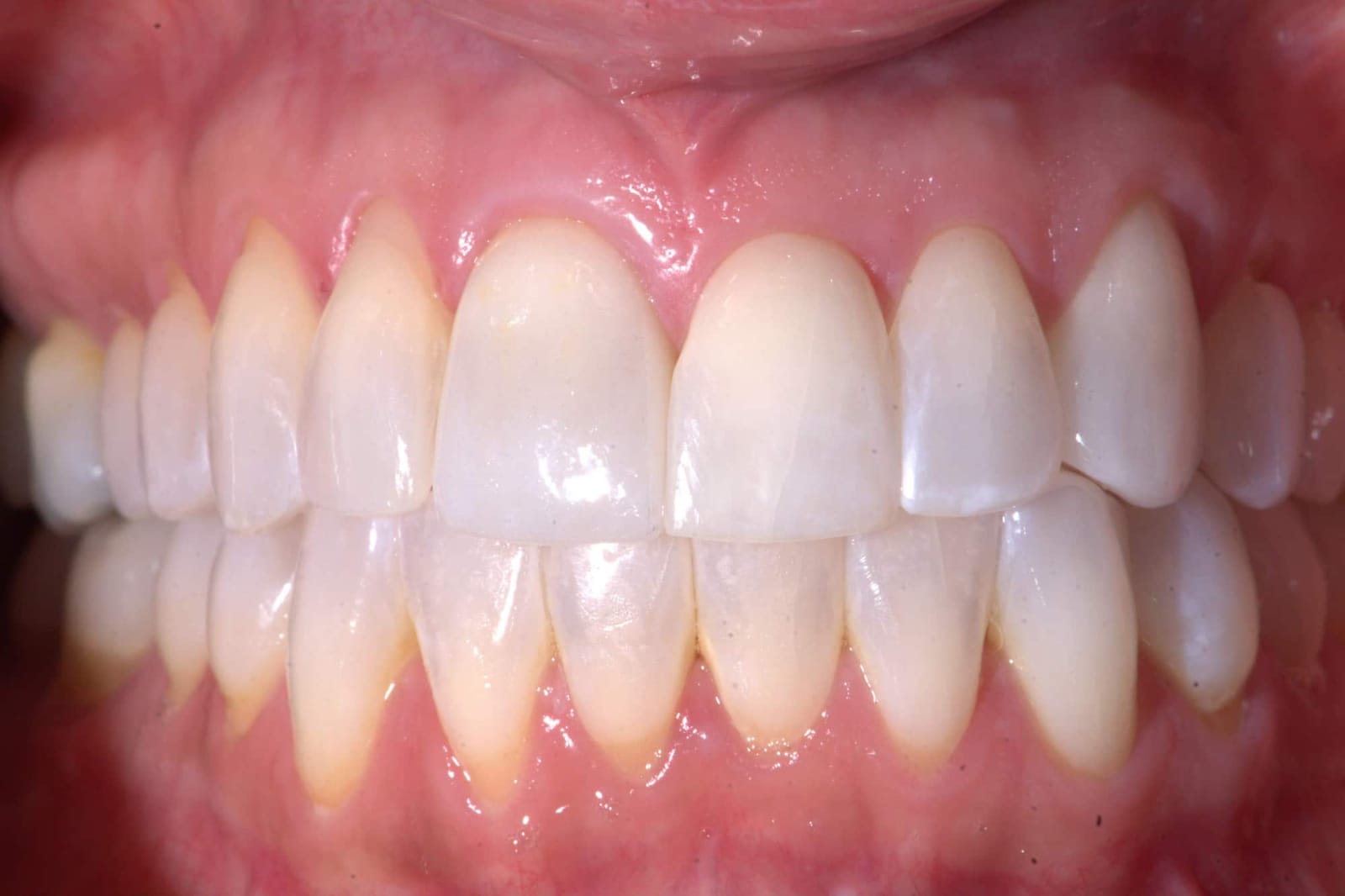
She kept her own teeth. Two of them carry crowns because two of them needed crowns.
Read the caseThe Finished Smile, Unposed
A smile makeover is finished when the patient stops thinking about it. This is the result the way everyone else sees it: in ordinary light, unposed.
Every case is planned around one person's anatomy. Individual results vary.
Aesthetic Dentistry
They say a smile is the most important thing you can wear. Anyone can switch up a wardrobe to suit any occasion. Clothes can be tailored, customized, and made-to-order to fit best and flatter the subject. Shirts can be specially made, personalized, and custom-cut. Shoes can be constructed to tackle the tasks at hand. Everything from cars to homes to daily appliances can be designed. Nearly every material aspect of a person's life can be enhanced, enriched, and elevated. Now imagine if your smile could be designed as well. Imagine a smile designed for you, now.
The truth is, the perfect smile really can be created. We call it a smile makeover.
Not only can your smile be created, but it can also be remade, reshaped, and reconstructed to better match your personal goals and aspirations. With the right Prosthodontist, the perfect smile is well within reach, and is an investment that won't shrink, tear, stretch, wrinkle, or wear thin. It's an investment that can last a lifetime and will be fashionable forever.
Case Study: All On Four / Aesthetic Dentistry
This patient was in desperate need of a new smile makeover. After doing a lot of research he was confident That Dr. Mamaly Reshad of ArtLab Dentistry was the solution to his major dental problems.
His case was very challenging. His bite and teeth had completely collapsed to such an extent that it impacted his entire facial profile. Check out these amazing before and after photos.
Frequently Asked Questions
Smile makeovers are planned by prosthodontist Dr. Mamaly Reshad at ArtLab Dentistry, 414 N. Camden Dr., Suite 750, Beverly Hills. Cosmetic dentistry is not a specialty of its own; as a prosthodontist he designs the smile and the bite together. Call (310) 444-5217.
A smile makeover is a coordinated process of treatments — which may include porcelain veneers, dental implants, crowns, and reconstruction — designed to create your ideal smile. It is not a single procedure; it is a carefully planned sequence tailored to your goals.
A full mouth reconstruction restores both function and appearance when many or all teeth are damaged or missing, while a smile makeover focuses on designing your ideal smile. Both are processes rather than single procedures, and at ArtLab Dentistry both are planned and executed by a prosthodontist.
Yes. Using its onsite fabrication laboratory, ArtLab Dentistry can create temporary veneers the same day as your consultation, letting you 'test drive' your new smile before making it official.
With the right prosthodontist, a smile makeover is an investment that can last a lifetime. Durable materials, a custom fit, and regular care and maintenance determine longevity.
Your consultation begins with an in-person meeting where your vision for your smile is discussed, your condition is evaluated and accurately diagnosed, and a tailored treatment plan is designed — considering color, spacing, shape, alignment, visual balance, facial foundation, and smile line.
Medically reviewed by Dr. Mamaly Reshad, BDS (Lond), MSc (Lond), Cert Pros (USC), Prosthodontist — Last reviewed July 2026
Ready to Transform Your Smile?
Schedule a private consultation with Dr. Reshad to discuss your goals and explore your options.