Dentures
Losing teeth changes how you look, how you eat, and how you feel about being seen. That is the honest version, and it is why this is worth doing properly.
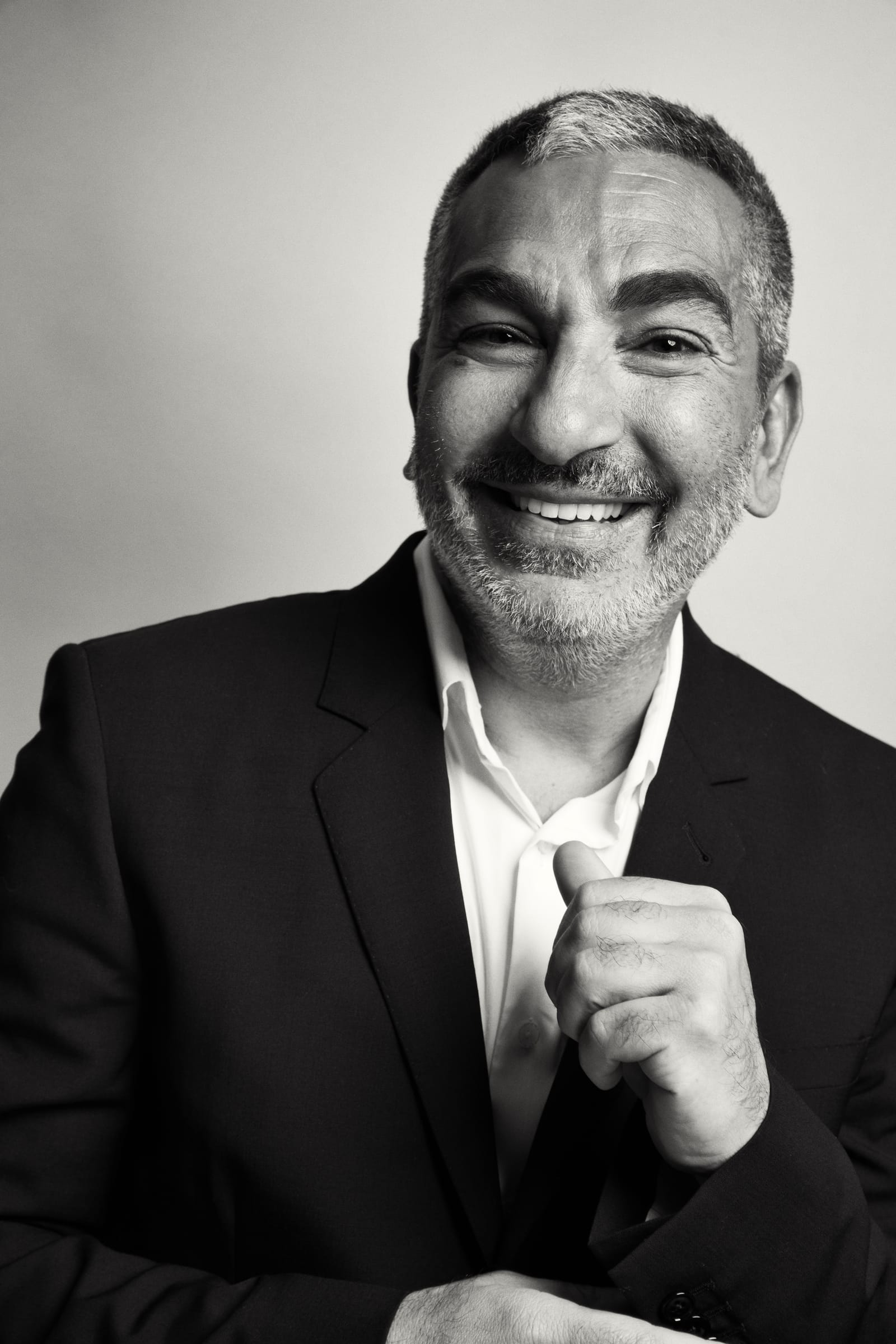
Bespoke Custom Dentures from Dr. Reshad
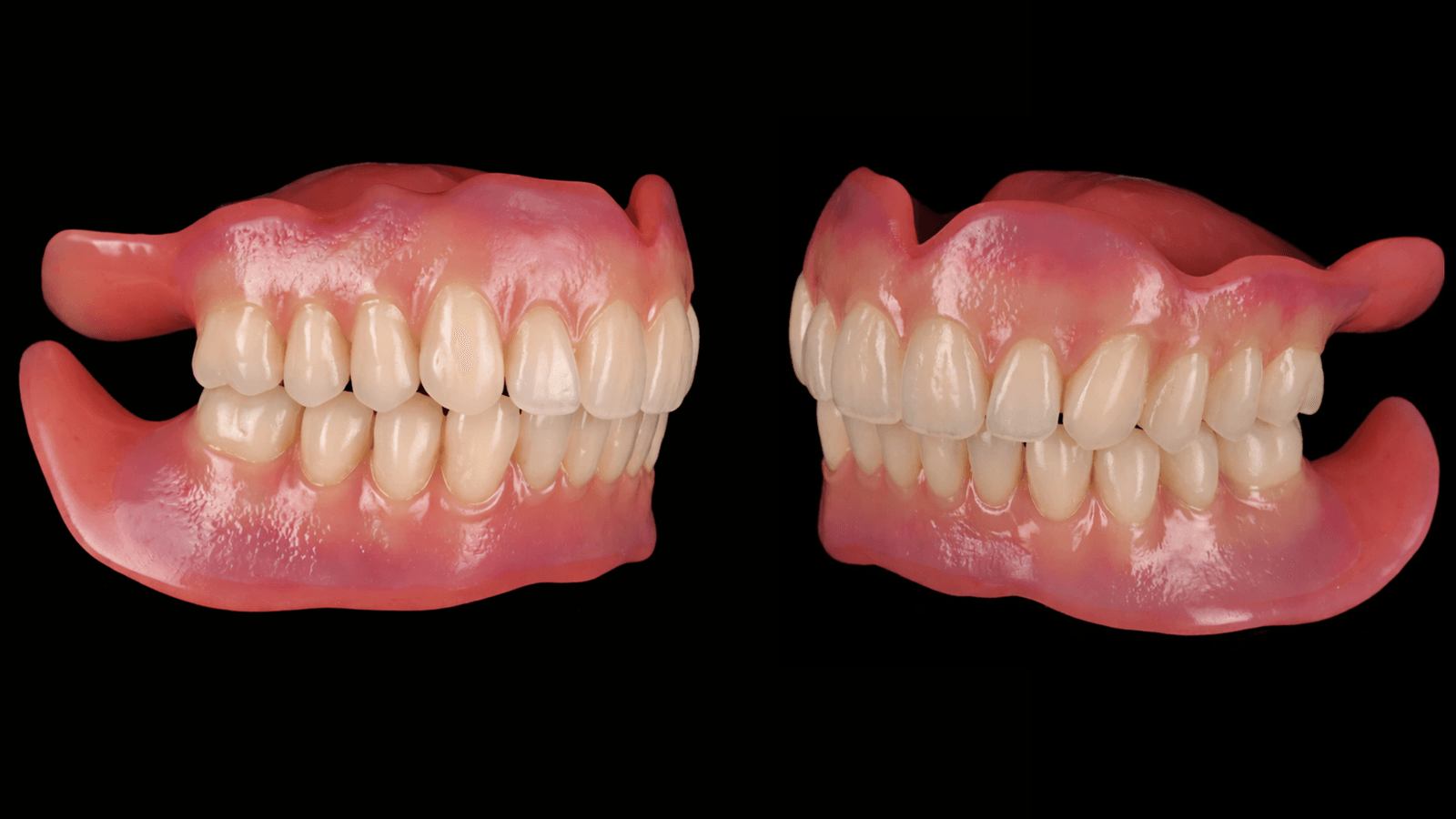
Modern dentures are not the false teeth of previous generations. Lighter, stronger, more resilient, built with current materials and digital technology to a fit that is measured rather than approximated.
But the materials are not what make one good.
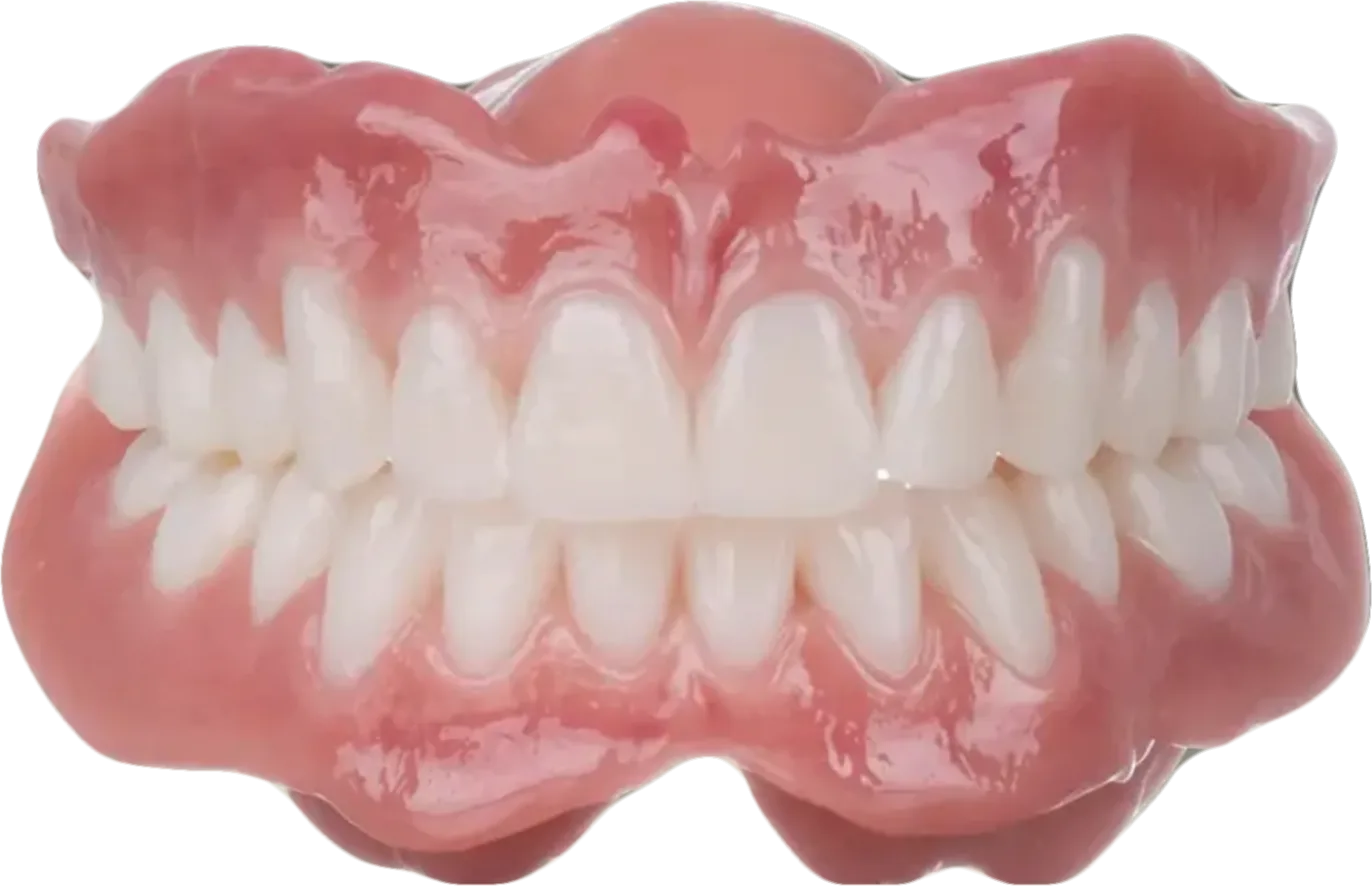
What actually makes a denture high end
It is not one material. It is not one technique. It is not one decision.
It is the accumulation of hundreds of small decisions, each made correctly, in the right order. Below is what those decisions actually are, because most patients are never told.
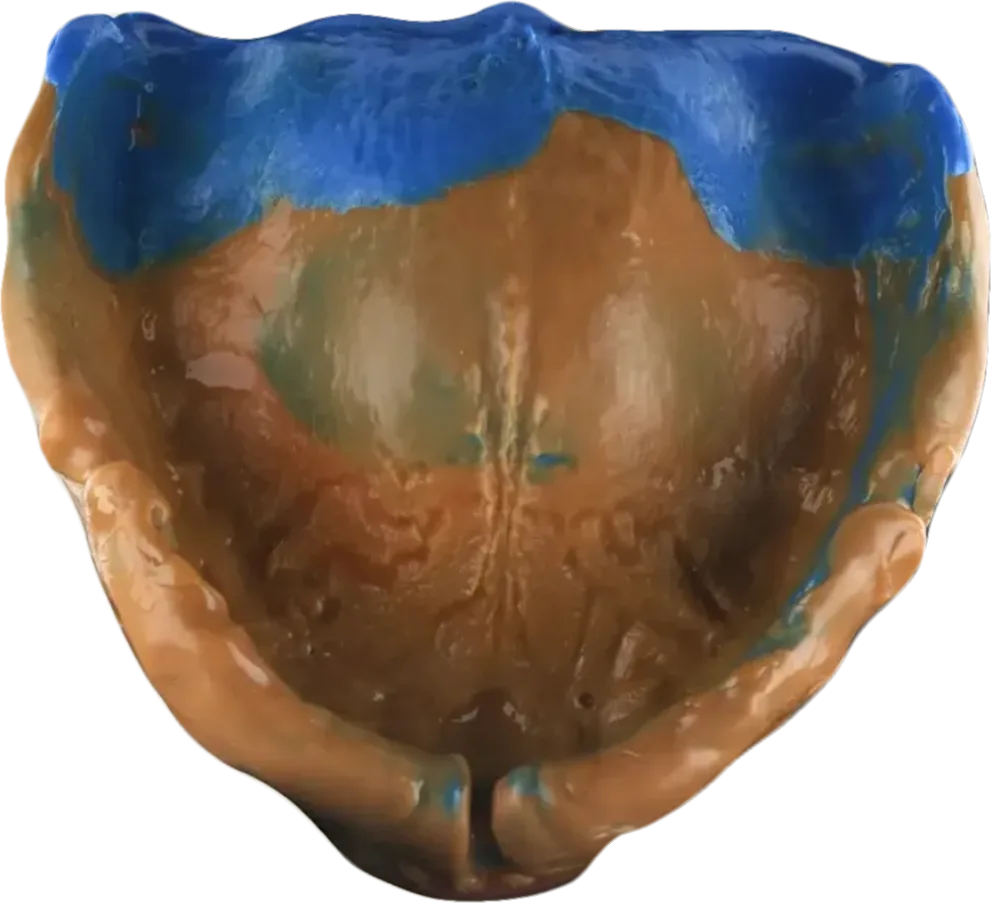
It starts with the impression
Everything downstream is built on this.
The impression has to capture the anatomy of the area the denture will sit on, and it has to establish the functional margins, the borders shaped by your own muscles as they move. A denture that ends in the wrong place does not stay in place, however beautiful the teeth on it are.
This is the foundation, and it cannot be corrected later by anything.
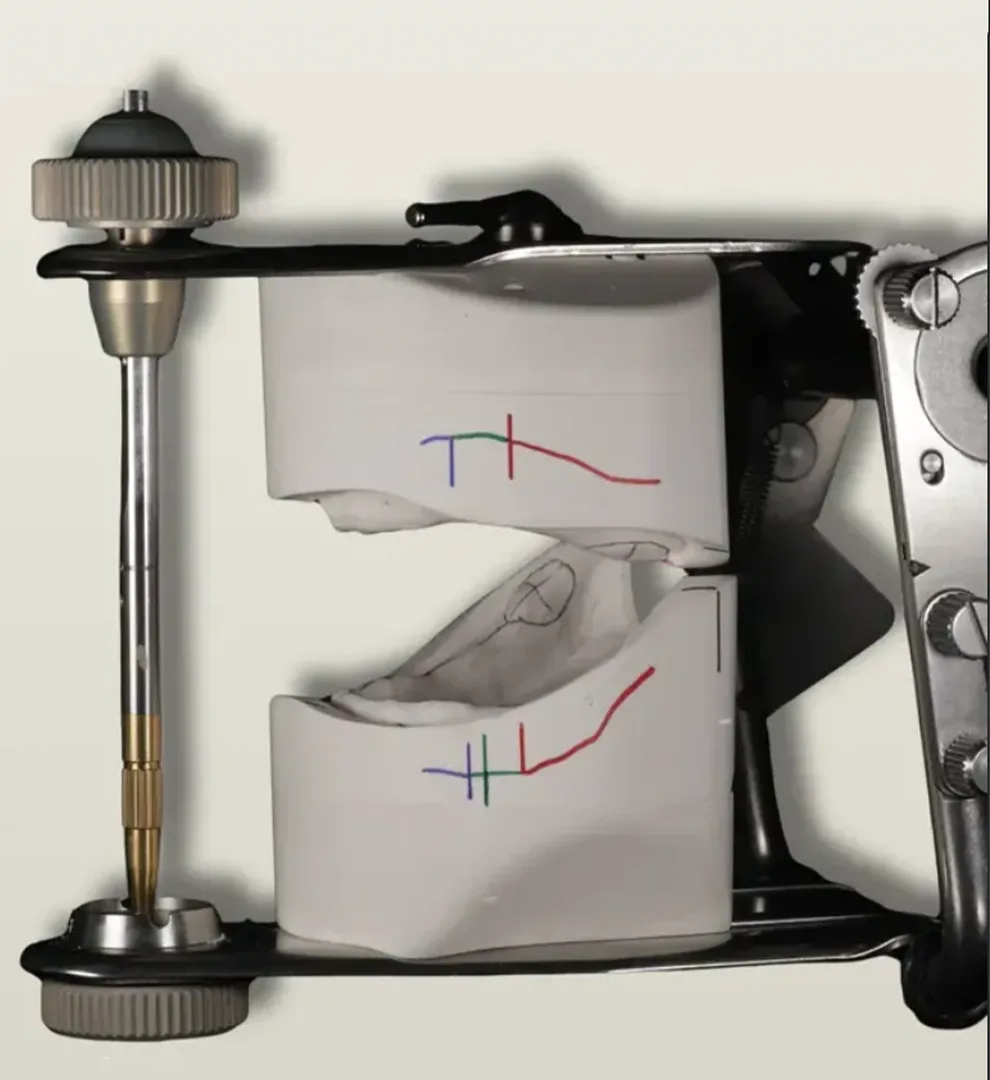
Teeth do not exist independently of the patient
The relationship between your upper and lower jaw sets the framework for everything that follows.
Where the two jaws meet, at what height, and how they travel against each other, determines where every tooth can go. Record that relationship inaccurately and the finished denture is a well made object built to the wrong specification.
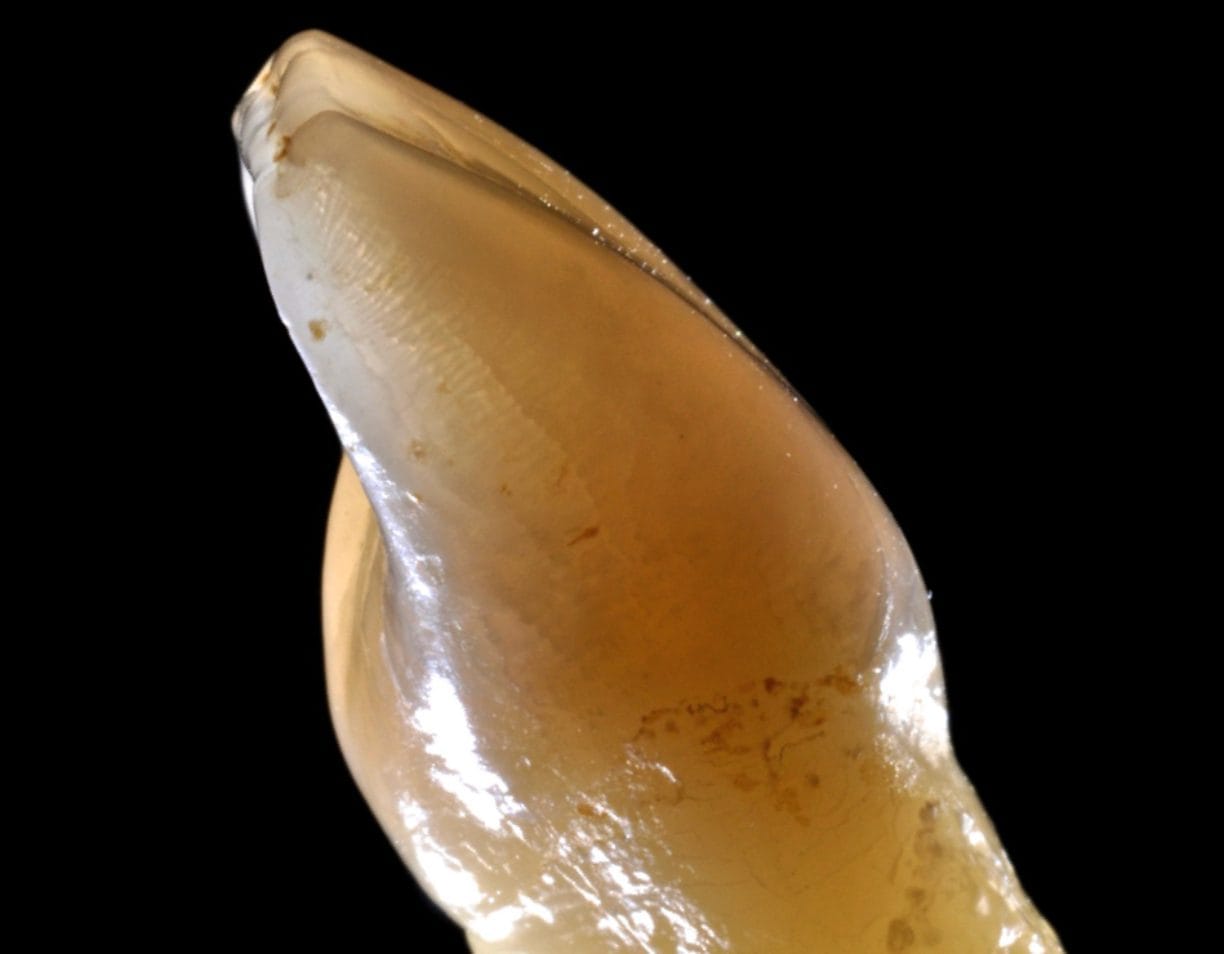
Aesthetic teeth are easy to admire. Functional teeth are harder to engineer
A denture has to work as well as look right, and the working part is the harder half.
Tooth shape and the way the surfaces meet govern stability, function, and how the whole prosthesis behaves in the mouth. A denture that is not engineered for that will move when you eat, sore your gums, and lose its fit faster.
This is prosthodontic territory rather than cosmetic, and it is where most of the difference lives.
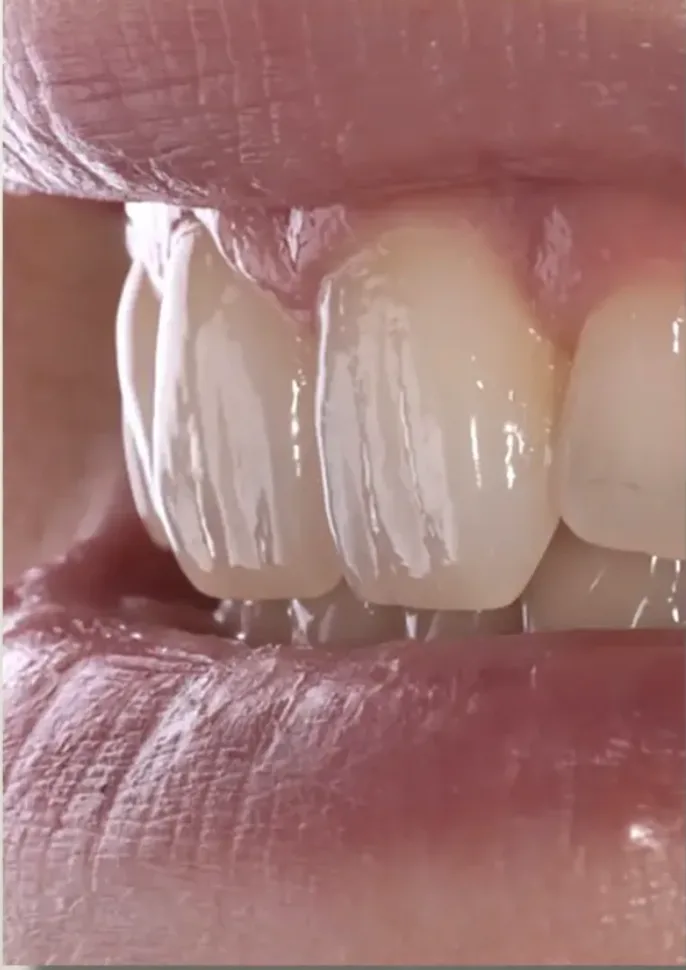
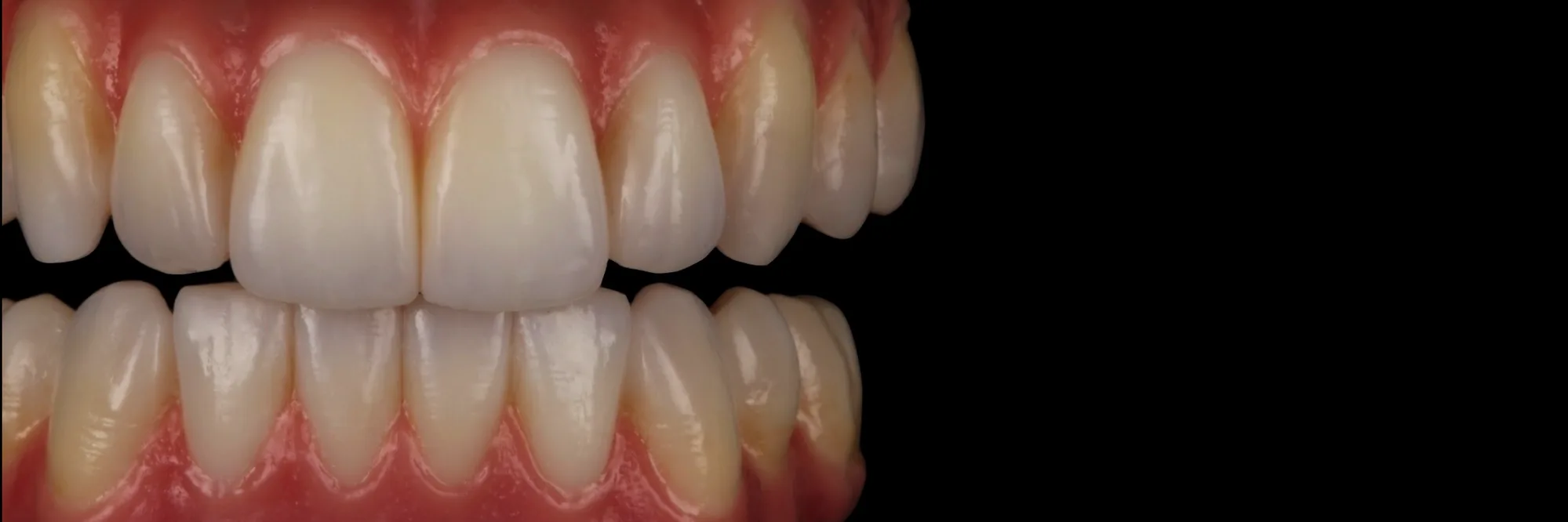
Natural does not happen by accident
Six things are decided deliberately, one at a time.
Tooth shape. Composition, meaning how the teeth are arranged as a set rather than individually. Incisal display, how much tooth shows at rest and when you smile. Lip support, which is what keeps the face from collapsing inward. Gingival contours, so the gum line reads as gum rather than as pink acrylic. And characterization, the small irregularities that make teeth look like they grew rather than like they were ordered.
Skip any one and the result looks like dentures. Get all six and people notice you rather than your teeth.
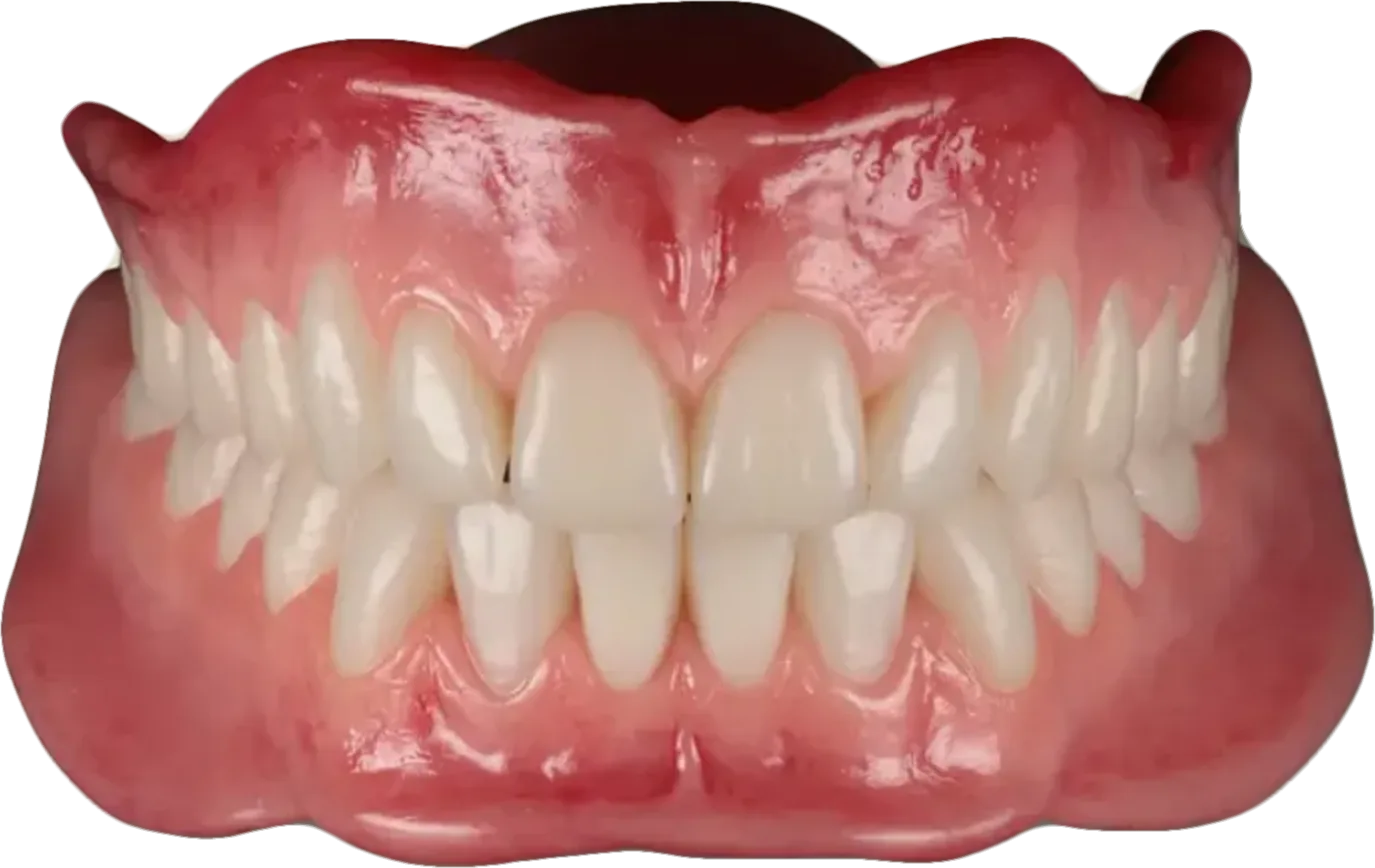
High end is not one material. One technique. One decision.
It is the accumulation of hundreds of small decisions made correctly.
WHAT A DENTURE SITS ON
Four foundations, from the gums upward
Everything above is about how a denture is made. This is about what it holds on to, which is the other half of whether it stays where you put it.
There are four answers and they run in order. Each one puts more engineering underneath the same prosthesis, and each one holds it more firmly. More is not automatically better. Some patients need very little and some need all of it, and what decides is the jaw in front of us rather than the catalogue.
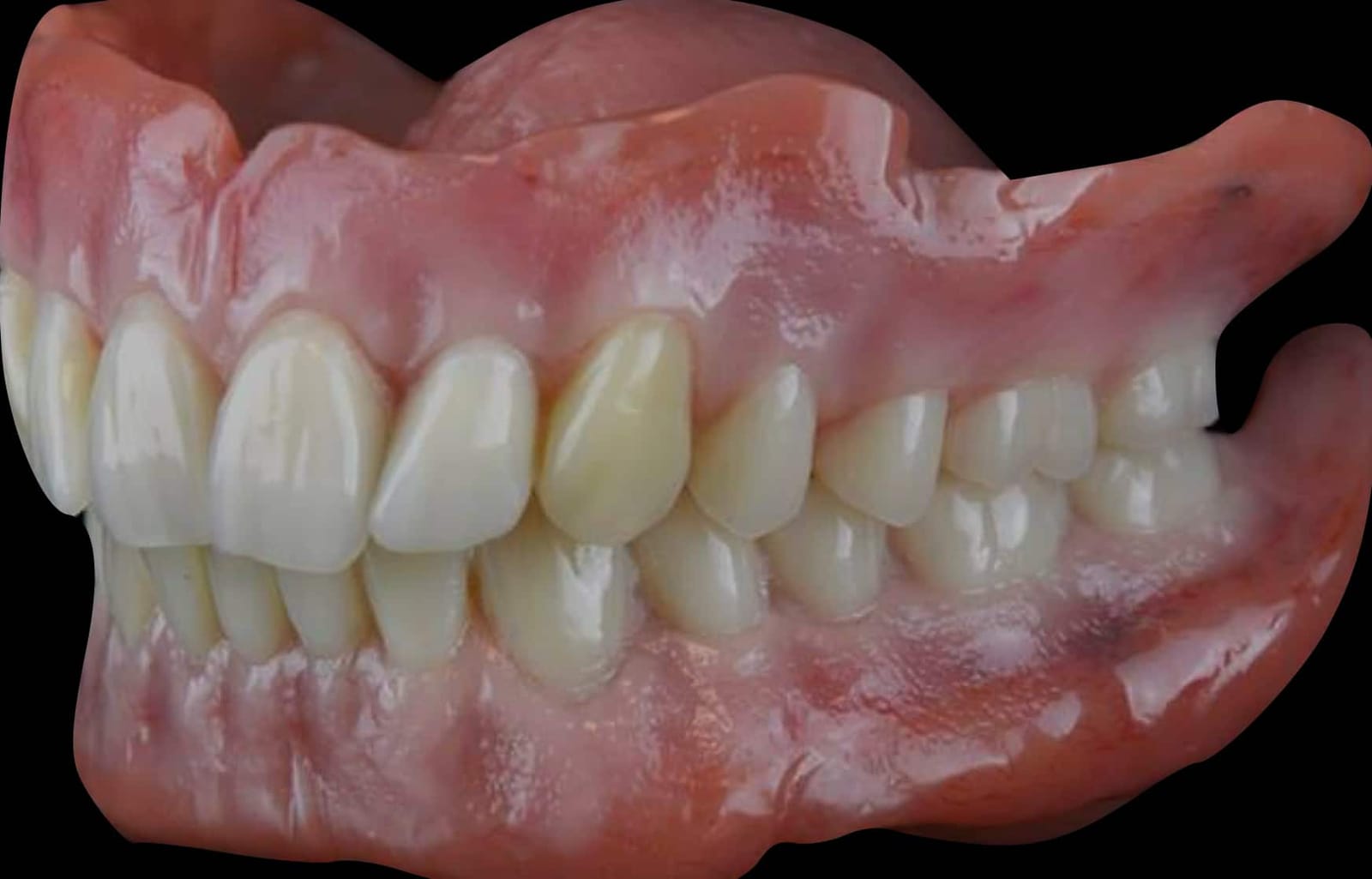
Shape, support and extensions
The denture rests on the ridge itself
A conventional full denture is held by three things: the fit of its borders, the suction that fit creates, and the muscles of the lip, cheek and tongue closing around it. There is no surgery and no hardware. It is the most affordable answer here, and for a great many patients it is the right one.
Made properly it works, which is what the whole sequence above is about. Its limit is simply what it stands on. Gum and bone change shape over the years, so the fit has to be maintained, and a lower denture has far less surface to hold on to than an upper one.
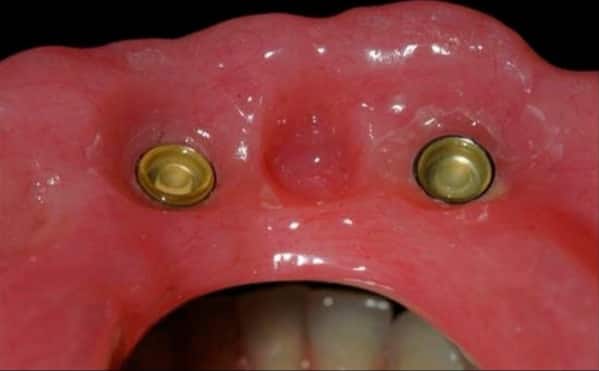
Two implants, two studs, and the denture snaps down
Two implants go into the jaw. A small stud sits on each one, and the fitting surface of the denture carries a matching socket that clicks onto it.
It is still a removable denture. It still comes out to be cleaned, and it still rests partly on the tissue. What changes is that it stops lifting, not when you talk, not when you laugh, not when you bite into something. Of everything on this page, this is the smallest intervention that makes the largest difference to a day.
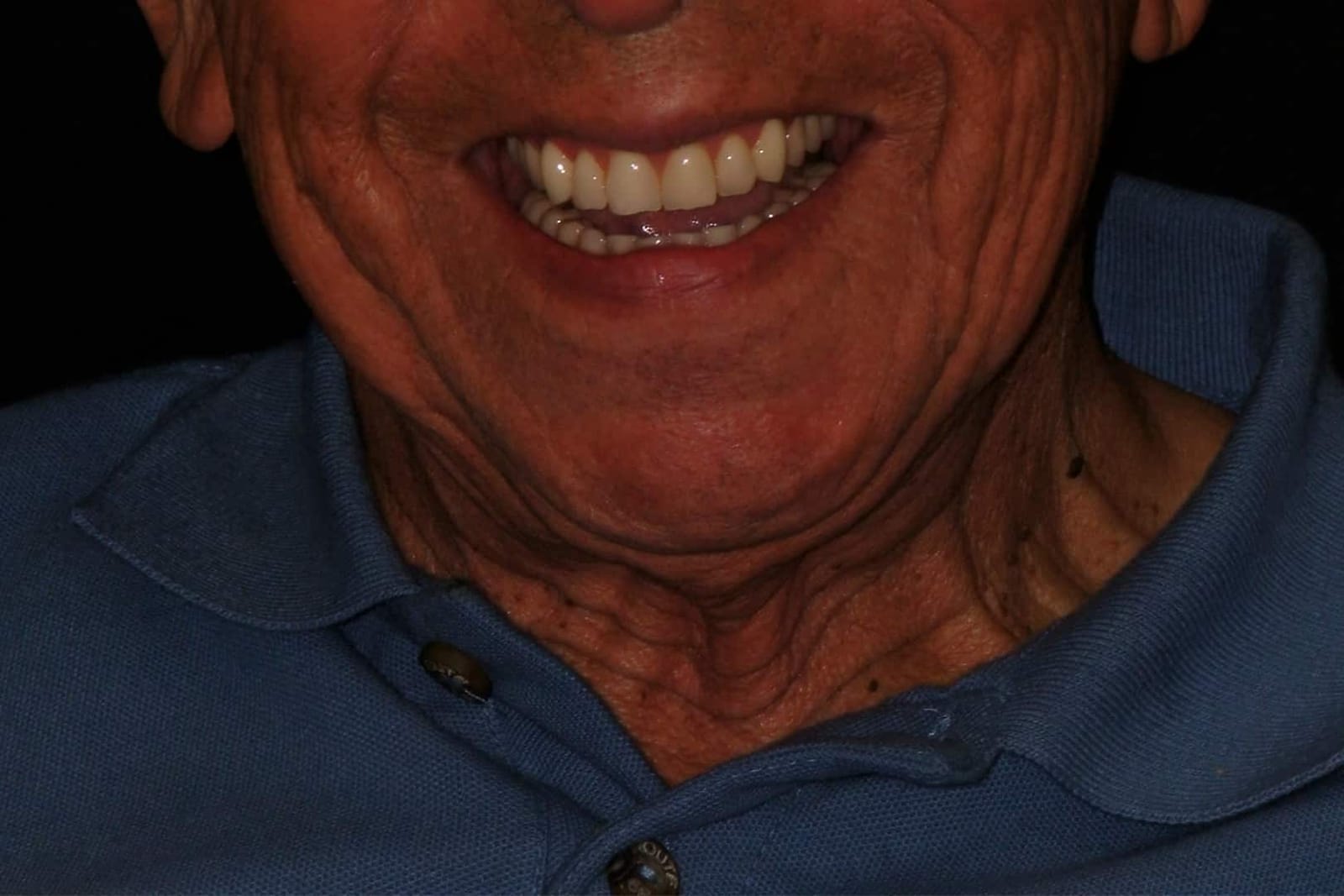
The implants are joined to one another
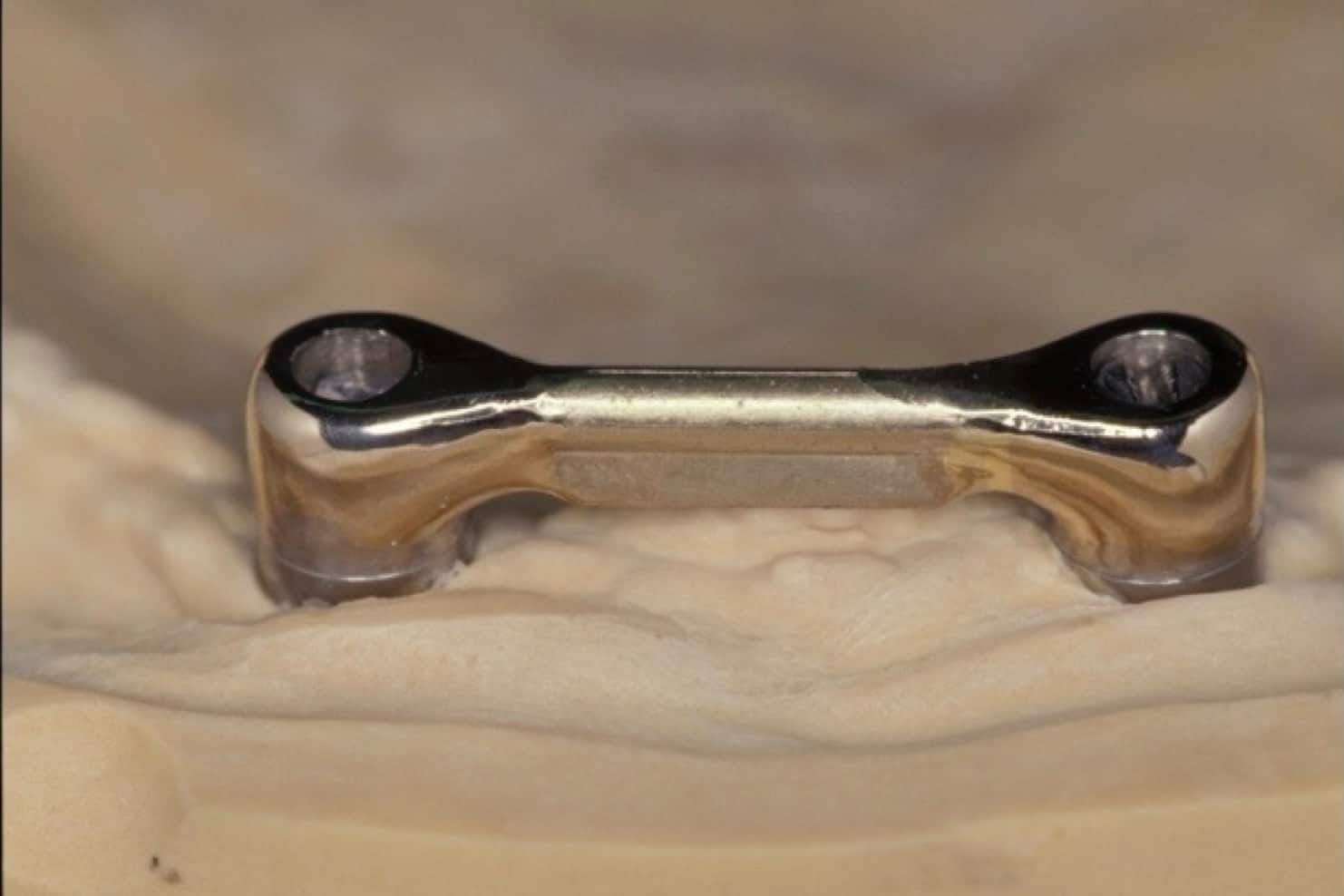
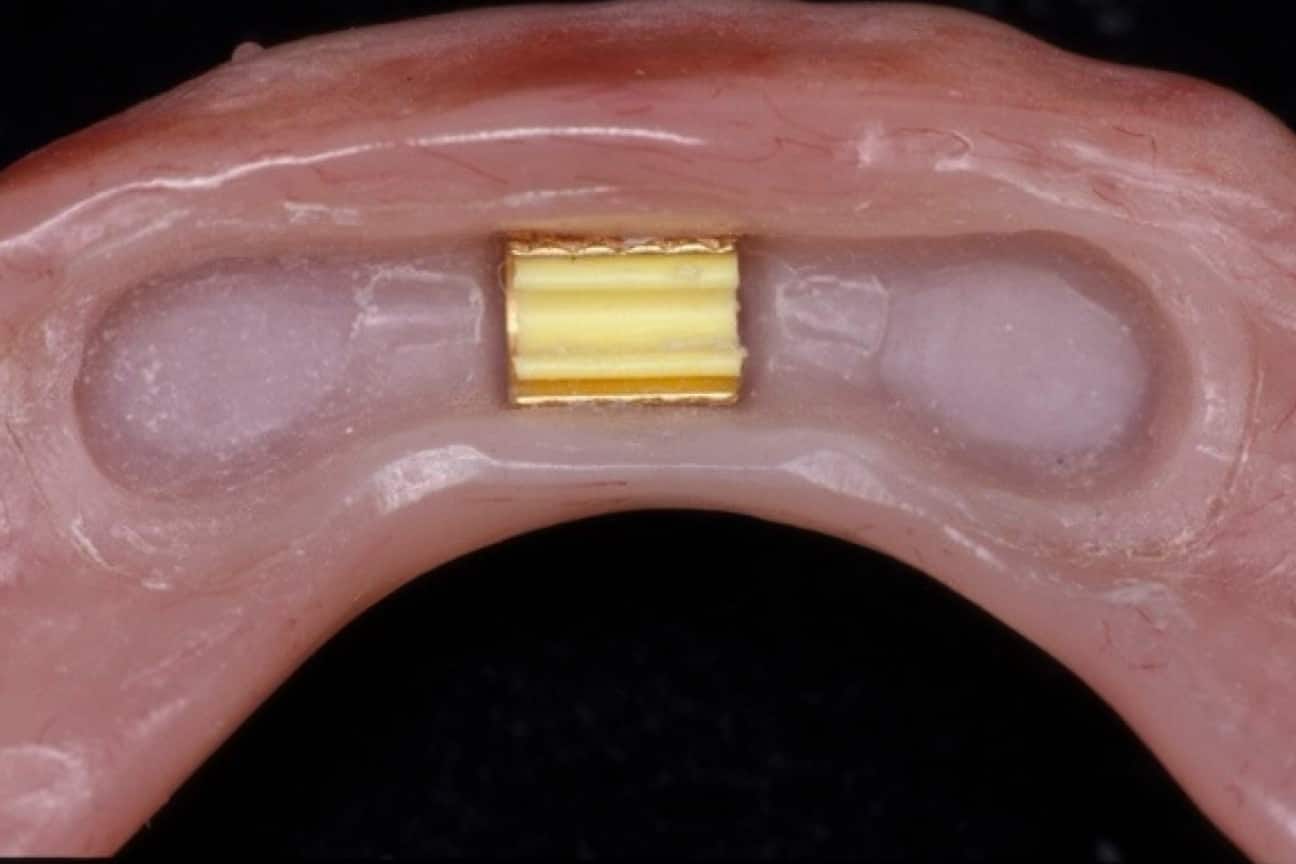
Instead of two separate studs, the implants are splinted together by a bar that follows the curve of the arch, and the denture clips onto the bar along its length.
Joining them is the whole point. A load that would have landed on one implant is shared across all of them, grip comes from the whole span rather than from two points, and because the bar carries the prosthesis rather than the gum, the denture itself can be made slimmer and cover less of the mouth.
The second frame is the half patients never see: the clip, processed into the acrylic of the denture so that bar and prosthesis engage as one mechanism rather than as two parts that happen to touch.
More implants, a longer and thicker bar
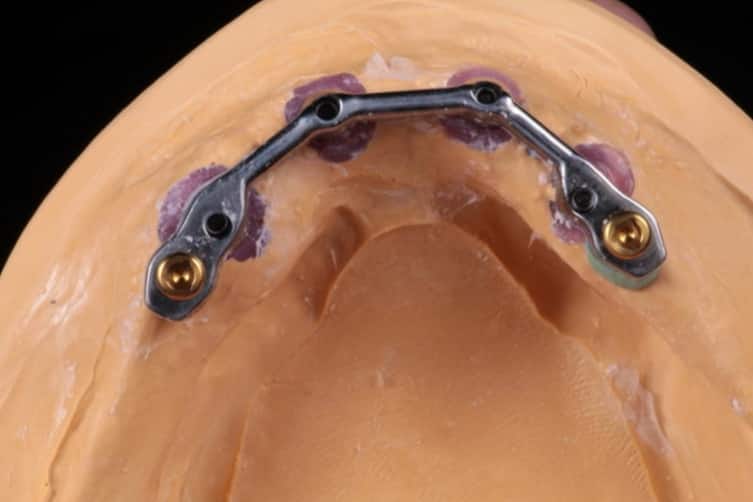
The same idea, built heavier: more implants beneath it, a bar with more substance to it, more attachments spaced along its length. The prosthesis now stands on the bar rather than on the tissue.
A bar this size does more than hold the denture down. Its walls guide the prosthesis onto one path as it goes in, so it arrives in the same position every time, which is what makes a large prosthesis feel like part of the jaw rather than like something being balanced on it.
This is as much support as a removable prosthesis can be given. It sits one step short of teeth that never come out, and it keeps the advantage that fixed teeth give up: it lifts away, so everything underneath it can be cleaned properly.
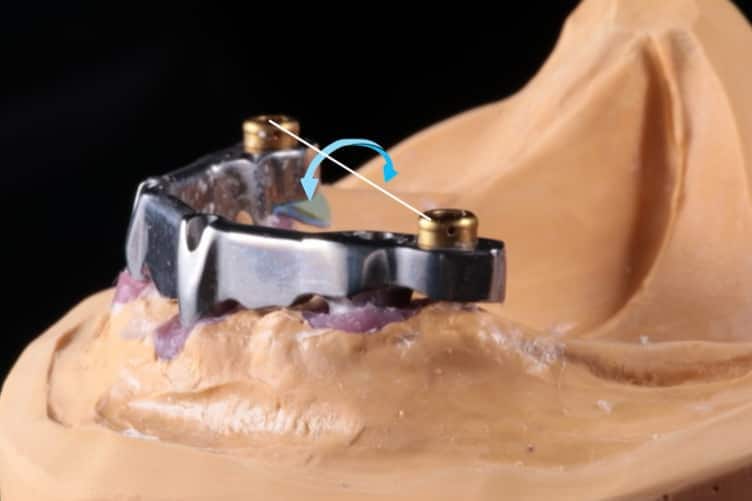
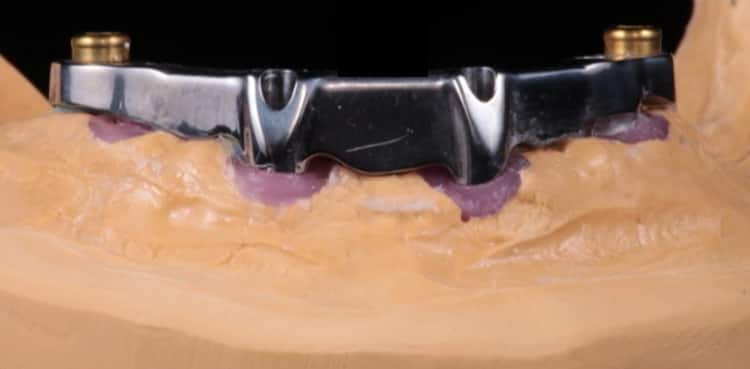
Different ways to support a lower denture
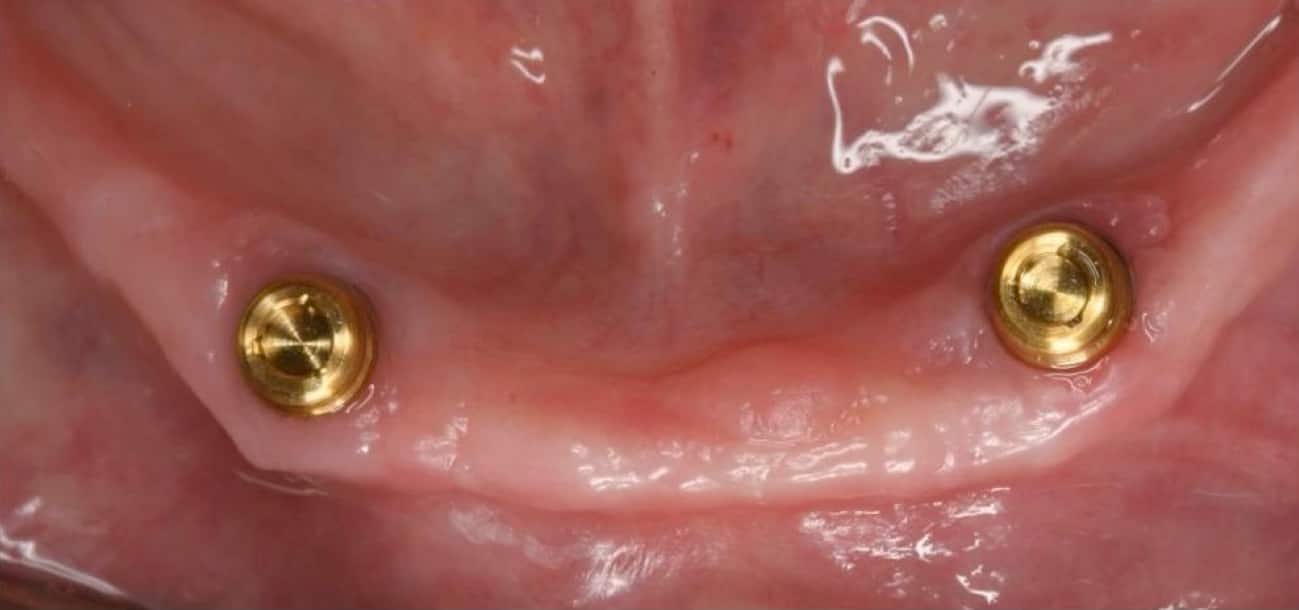
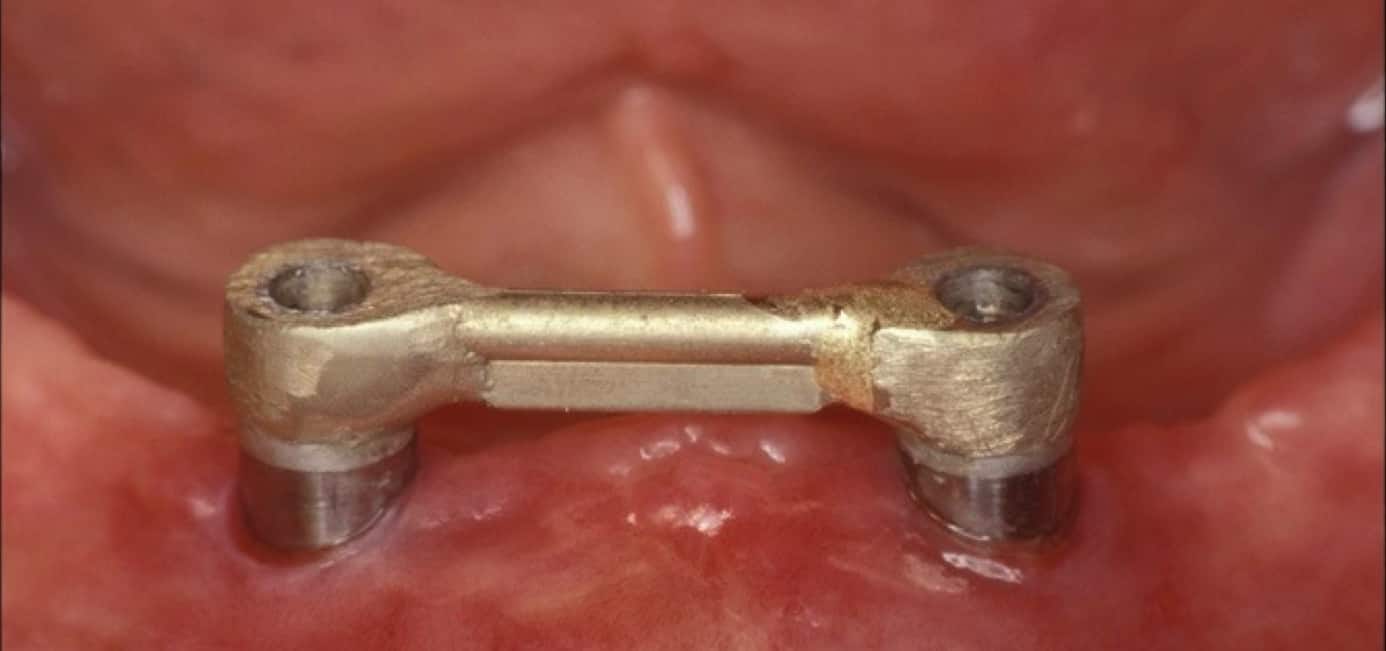
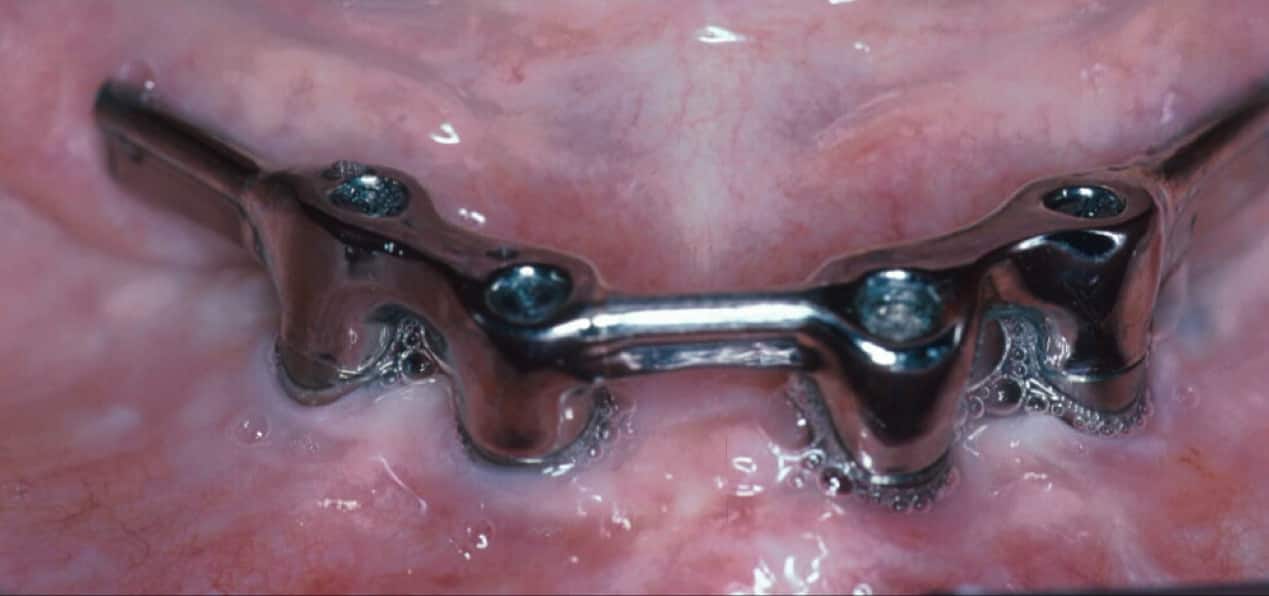
The same denture, four foundations. As the machinery underneath gets more complicated, the prosthesis gets more sturdy, and the skill is in choosing the least machinery that will do the job for the jaw it is going into.
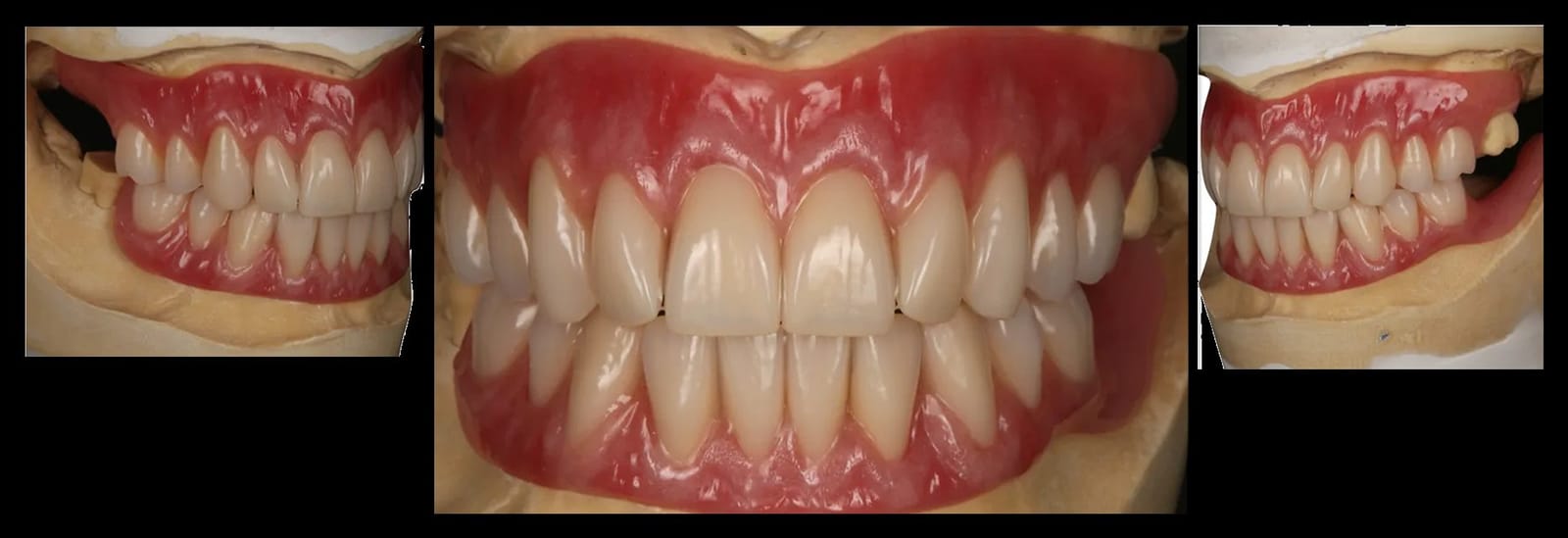
A stable bite, made rather than hoped for
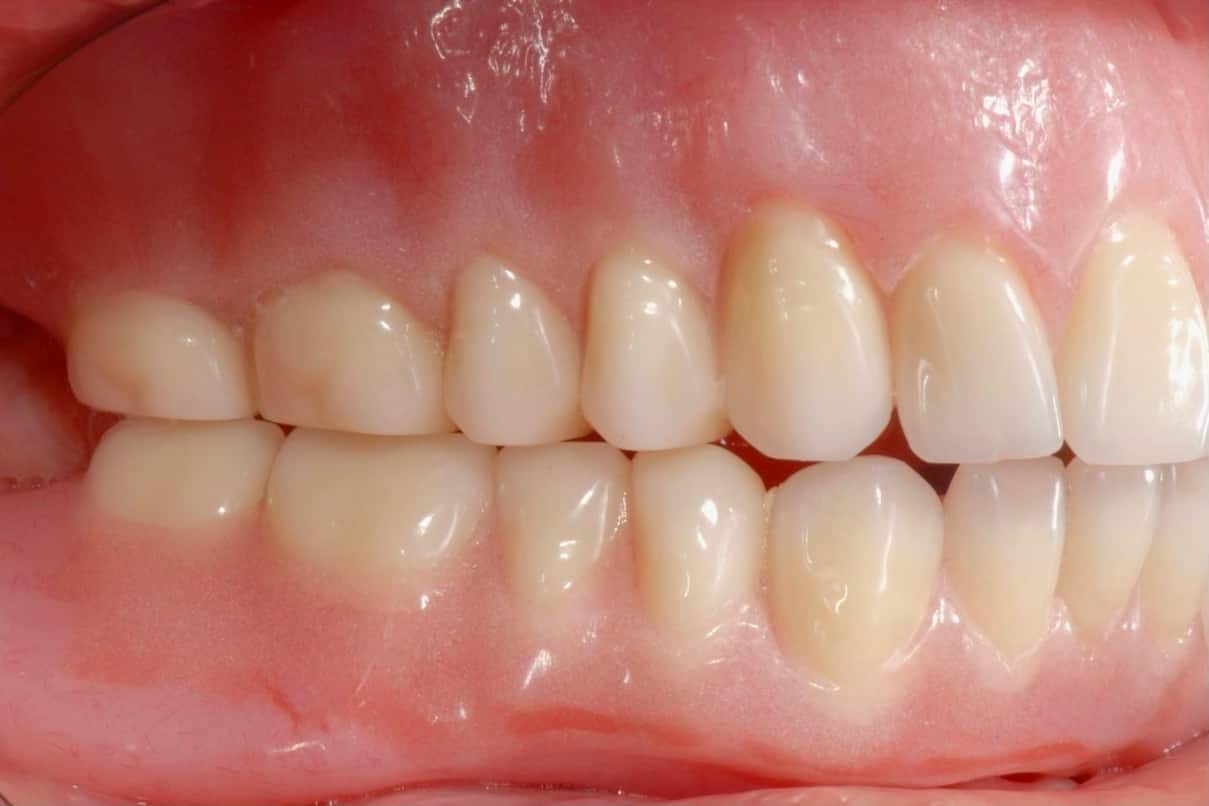
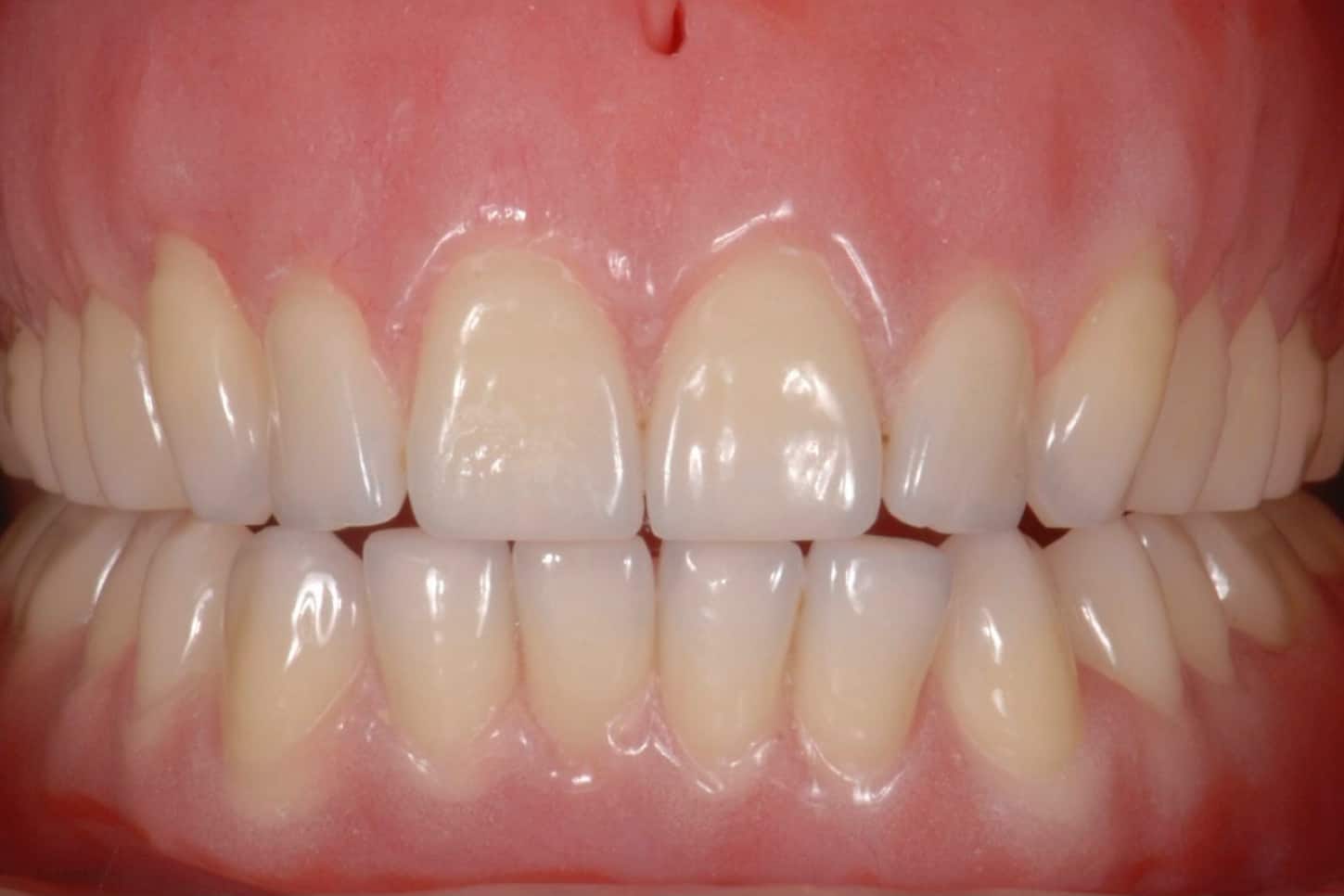
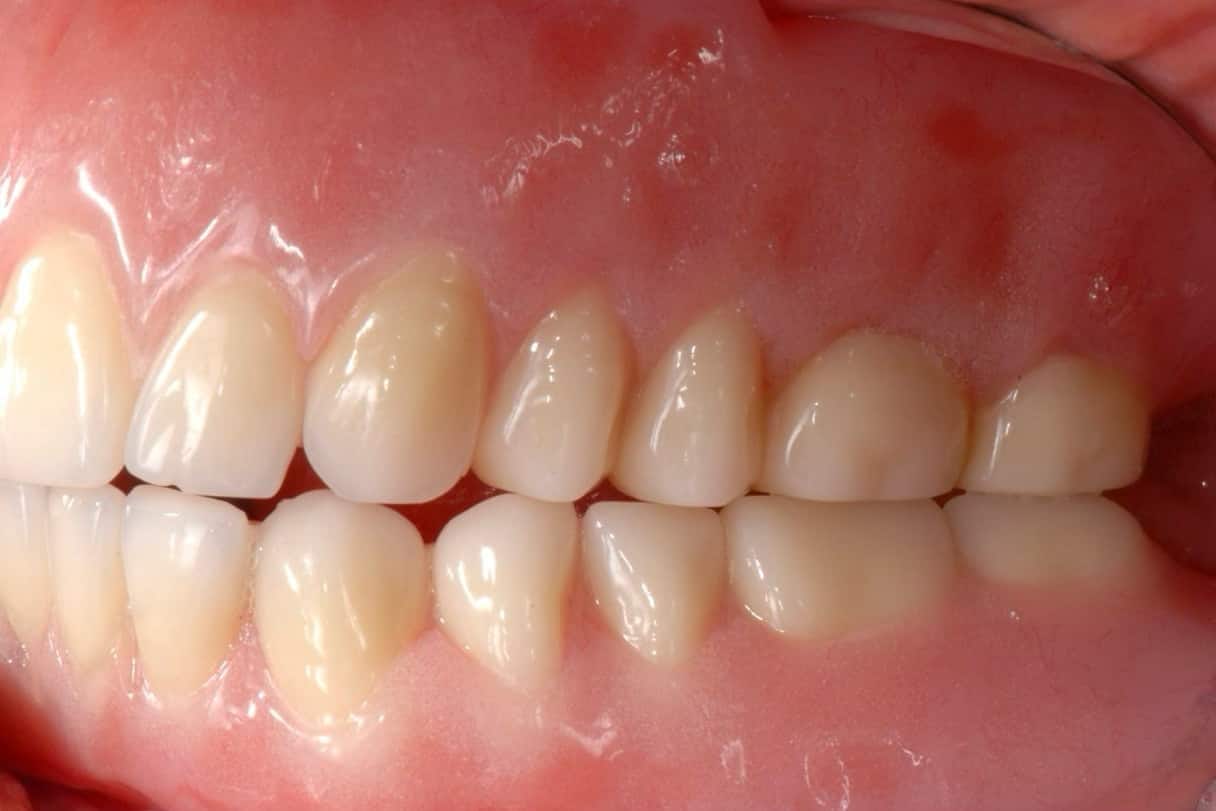
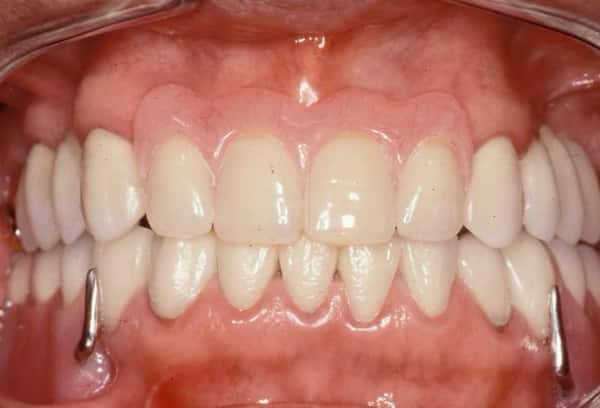
Left, front and right. Wherever the support came from, the test is the same one: the teeth meet where they were designed to meet, and they go on meeting there.
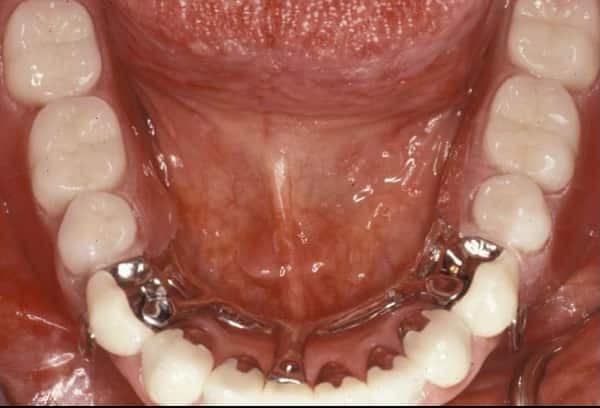
A partial denture, made to the same standard
A partial fills the gaps by holding on to the teeth you still have. It is the most economical answer on this page, and it is made here with the same precision as everything else on it.
The framework is designed so that the clasps hold without loading the remaining teeth in ways that shorten their life, and so that the metal sits where the lip and tongue do not meet it. Fit, comfort and cost, in that order.
What are dentures
Artificial teeth designed and made to replace natural teeth in both appearance and function.
Full removable sets are still the right answer for many patients, but they are no longer the only one. Conventional dentures, partial dentures and implant supported solutions all sit under the same heading, and some are permanent and cannot be removed at all.
Types of dentures
Full dentures replace an entire upper or lower arch, resting on the gums and held by suction and the contours of your own mouth. Among the most affordable solutions, with no surgery.
Partial dentures replace one or more missing teeth while keeping your natural teeth. Made in plastic, metal, or a combination for support and rigidity.
Cantilever dentures attach at one end only, supported by a single crown or implant. Faster and less expensive, with less durability than an end to end design.
Immediate dentures go in straight after extraction, protecting the gums and keeping you functional while the mouth heals.
Implant supported dentures fix an entire arch onto implants, permanently. They also address the one thing removable dentures cannot: bone resorption, the slow shrinking of the jaw that follows tooth loss.
Our Beverly Hills office at 414 N. Camden Dr., Suite 750 opens in January 2027. Until then, call (310) 444-5217 and we'll arrange your consultation.
How dentures are made
Two routes, and we use both.
Conventional. A physical impression, a plaster cast, wax models set with teeth, then a multi stage process of processing, finishing and characterization. Several appointments across several weeks.
Digital. A 3D scan captures the whole mouth, more comfortably and more accurately than an impression tray. The data becomes a manipulable model that can be sculpted with a control no wax allows, and the denture is printed in house, often in a day.
We combine them. Digital precision for the fit and the framework, traditional hand characterization for the parts that make a denture look alive. A printer cannot hand stain a gum line, and a wax knife cannot hold a tolerance. Both are needed.
The process here
Consultation. Dr. Reshad assesses your oral health, discusses what you want, and recommends the solution that suits your situation.
Impressions and design. Precise impressions and measurements, then a design built around your facial features and the aesthetics you have asked for.
Try in. A trial denture is made so you can evaluate the look, fit and feel before the final one exists. You test drive your smile before committing to it.
Fabrication and characterization. The denture is made and hand characterized, with the natural grooves and gum detail that produce a lifelike result.
Placement. Delivered and adjusted for comfort and function.
Follow up. Regular adjustments as your mouth settles around the new prosthesis.
Our Beverly Hills office at 414 N. Camden Dr., Suite 750 opens in January 2027. Until then, call (310) 444-5217 and we'll arrange your consultation.
Are there affordable dentures
Yes. Dentures remain the most affordable way to restore a full arch of teeth.
Individual implants run substantially higher per tooth, and while they offer real advantages, the cost is prohibitive for many people. Dentures cost considerably less, involve no surgery, need minimal recovery and do not depend on how much bone you have left.
Three questions decide it: does it suit how you live, does it address your dental health, and does it fit your budget. Answer those honestly and the right option usually becomes obvious.
Alternatives worth knowing about
Conventional dentures have real limitations. They rely on suction, they do not stop bone resorption, and some patients never fully make peace with how they feel.
Dental bridges span a gap by connecting a replacement tooth to crowns on the teeth beside it, or to implants at either end.
Dental implants are placed into the jawbone, feel like natural teeth, and stimulate the bone rather than letting it shrink away.
Implant retained full arches combine implant stability with a fixed full arch prosthesis, often with same day temporary teeth.
Which of these is right depends entirely on your anatomy, and that is a conversation rather than a menu.
Our Beverly Hills office at 414 N. Camden Dr., Suite 750 opens in January 2027. Until then, call (310) 444-5217 and we'll arrange your consultation.
Why ArtLab Dentistry
A prosthodontist's training is specifically in the design and fabrication of dental prosthetics, and it goes considerably beyond what a general dentist receives. That shows up directly in fit, in function and in how natural the result looks.
Our onsite laboratory means we control every stage rather than sending your case away and waiting to see what returns. CAD/CAM precision and traditional laboratory artistry, under one roof.
And exceptional results are never made by a laboratory alone. They come from the clinician and the technician working as one, where the information passing between them is complete: the quality of the impression, the accuracy of the jaw relationship, the functional records, and a clear account of how the prosthesis should perform rather than only how it should look.
The clearer the vision, the more precisely it can be executed.
Whether you need a simple partial or a complex implant supported solution, the standard is the same. Teeth that look, feel and work like your own.
"Dr. Reshad you truly are an artist! You not only fixed my bite and gave me an incredible smile, you totally exceeded my expectations."
Frequently Asked Questions
Conventional dentures, dentures that click onto implants and fixed full-arch teeth are all made by prosthodontist Dr. Mamaly Reshad at ArtLab Dentistry, 414 N. Camden Dr., Suite 750, Beverly Hills. Call (310) 444-5217 to talk through which suits you.
With proper care, dentures typically last 5 to 10 years before they need to be replaced. However, natural living tissues change shape over time, so dentures require periodic refitting and replacement. Regular check-ups are important as the shape of your mouth changes, which can affect the fit.
Yes. Modern dentures are designed to restore full chewing function. There may be a brief adjustment period, but most patients return to eating their favorite foods within a few weeks. Implant-supported dentures offer the closest experience to natural teeth.
Implant-supported dentures offer superior stability, comfort, and bone preservation compared to traditional dentures. They eliminate the need for adhesives and prevent the bone loss that occurs with conventional dentures. Because dental implants embed into the jawbone like natural dental roots, they transfer stimulating forces that maintain bone depth and density.
Remove and rinse dentures after eating. Brush them daily with a soft brush and denture cleaner — never use regular toothpaste as it can scratch the surface. Soak them overnight in a denture solution. Handle them carefully to avoid damage, and visit your prosthodontist for regular check-ups.
Well-fitted, well-designed custom dentures generally won't fall out at slight provocation. However, if security is a concern, implant-supported dentures permanently anchor in place and eliminate any worry about displacement. Modern digital fabrication enables precise fits far superior to older methods.
A properly fitted denture should not require adhesive to stay in place. If you find yourself relying on adhesive, it may be time for a refitting. Implant-supported dentures eliminate the need for adhesive entirely.
Medically reviewed by Dr. Mamaly Reshad, BDS (Lond), MSc (Lond), Cert Pros (USC), Prosthodontist — Last reviewed July 2026
Ready to Transform Your Smile?
Schedule a private consultation with Dr. Reshad to discuss your goals and explore your options.