Dental Crowns
A crown is the restoration that goes on top: a ceramic or gold cap that gives a tooth back its shape and takes the bite. It needs a foundation to grip, and whether your tooth still has one is the first question Dr. Reshad asks. This page is about the crown itself; the guide to rebuilding a damaged tooth explains when a crown is the right choice and when bonding can do the job with less.

Two Crowns Instead of Twenty
She had been quoted between ten and twenty restorations. She needed two.
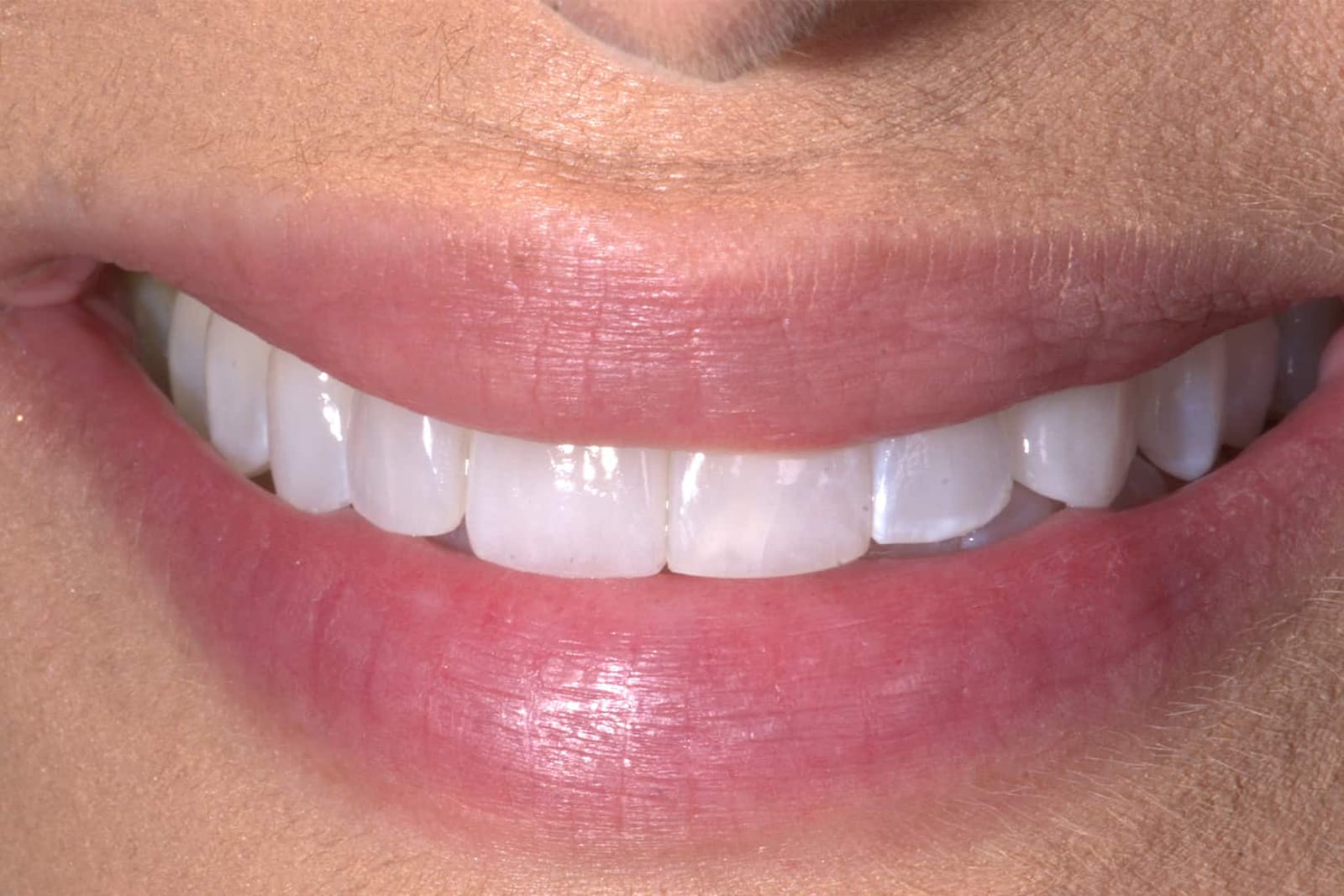
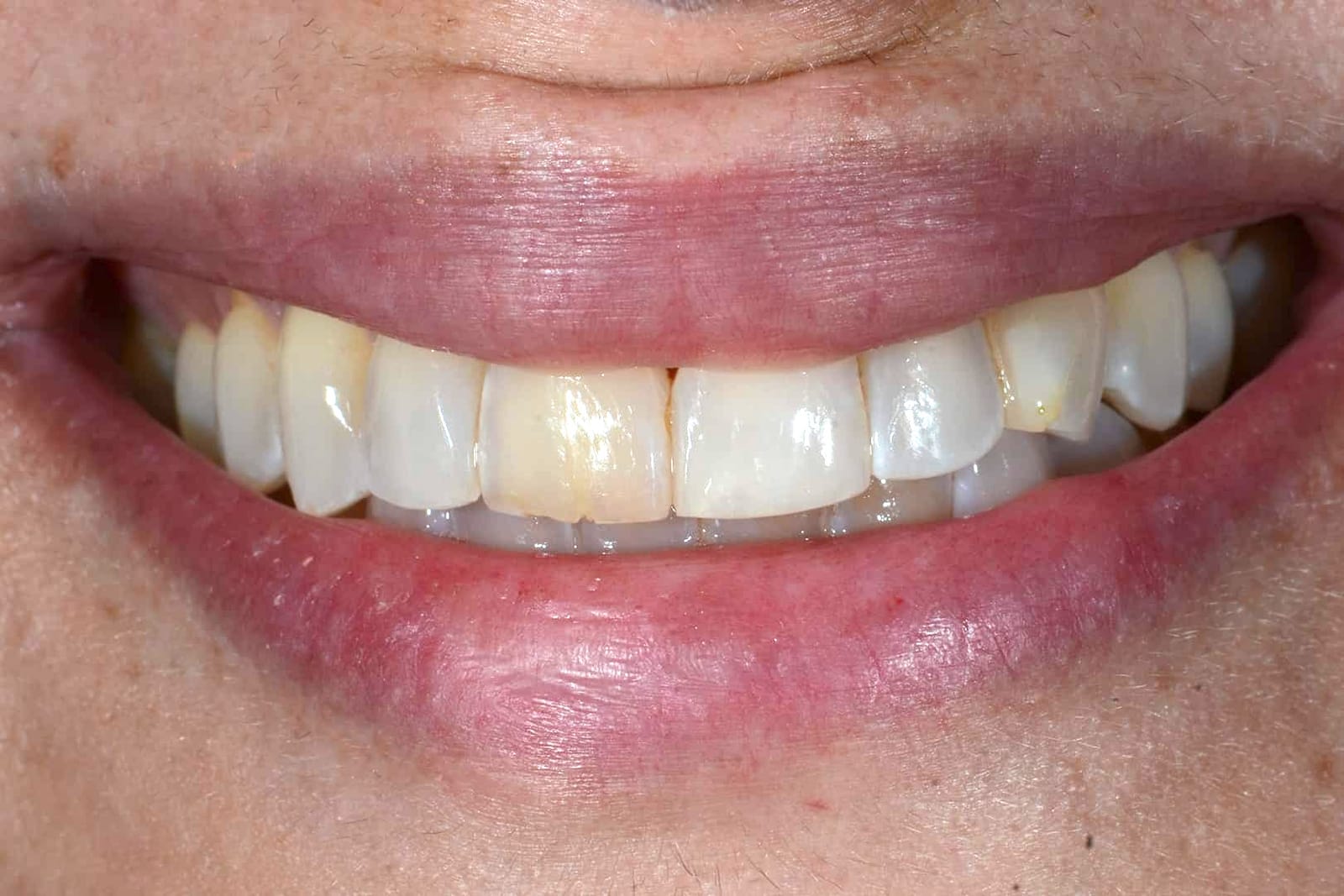
Her teeth were discolored, and two of them, including a front tooth, were broken down and root treated. The shapes were beautiful, so nothing else was touched: three months of bleaching, then two crowns matched into the teeth around them.
Read the caseA Restoration, Both Sides
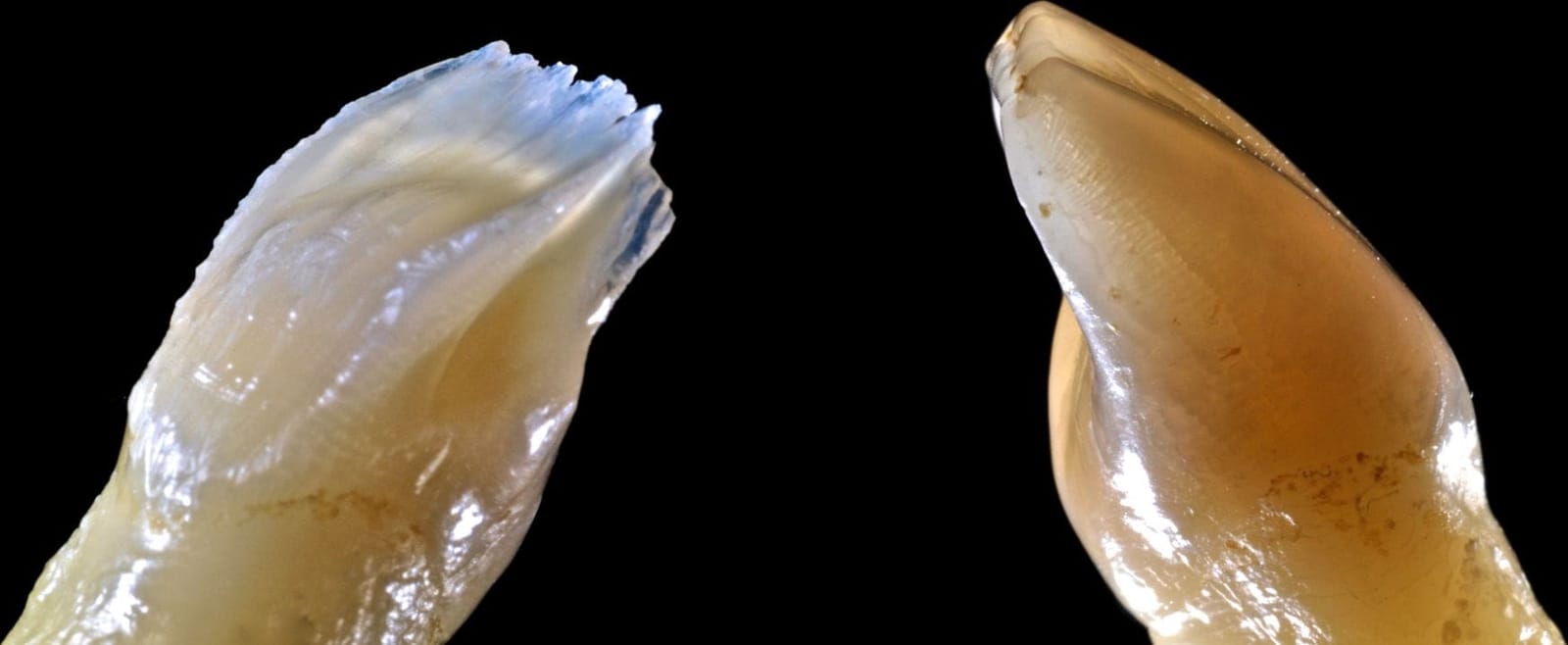
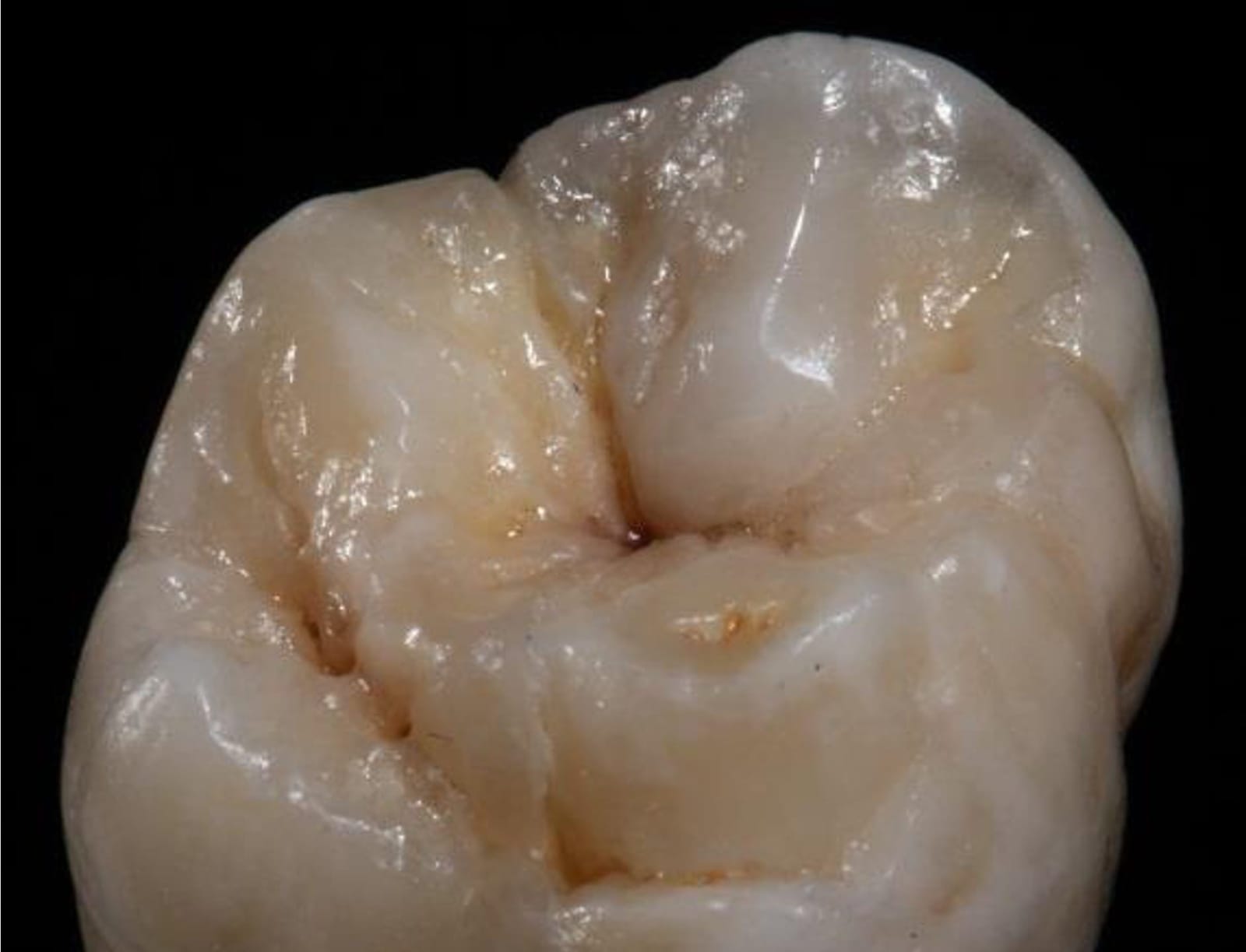
A single ceramic restoration, photographed on black before it is seated: the outer surface that will read as tooth, and the fitting surface that will meet the prepared tooth beneath it.
Two Teeth That Read as One Pair
The two front teeth carry the smile.
They have to be the dominant pair, the right length, and mirror images of each other, with the gum line level from left to right. Restoring one is hard. Restoring both, when each is failing for a different reason, is harder still.
Often the two problems are not the same. One tooth may be missing and need an implant. The other may be dark from an old root canal, or broken down. A tooth over an implant and a tooth over a discoloured core transmit light differently, and the two have to look identical from every angle and in every kind of light.
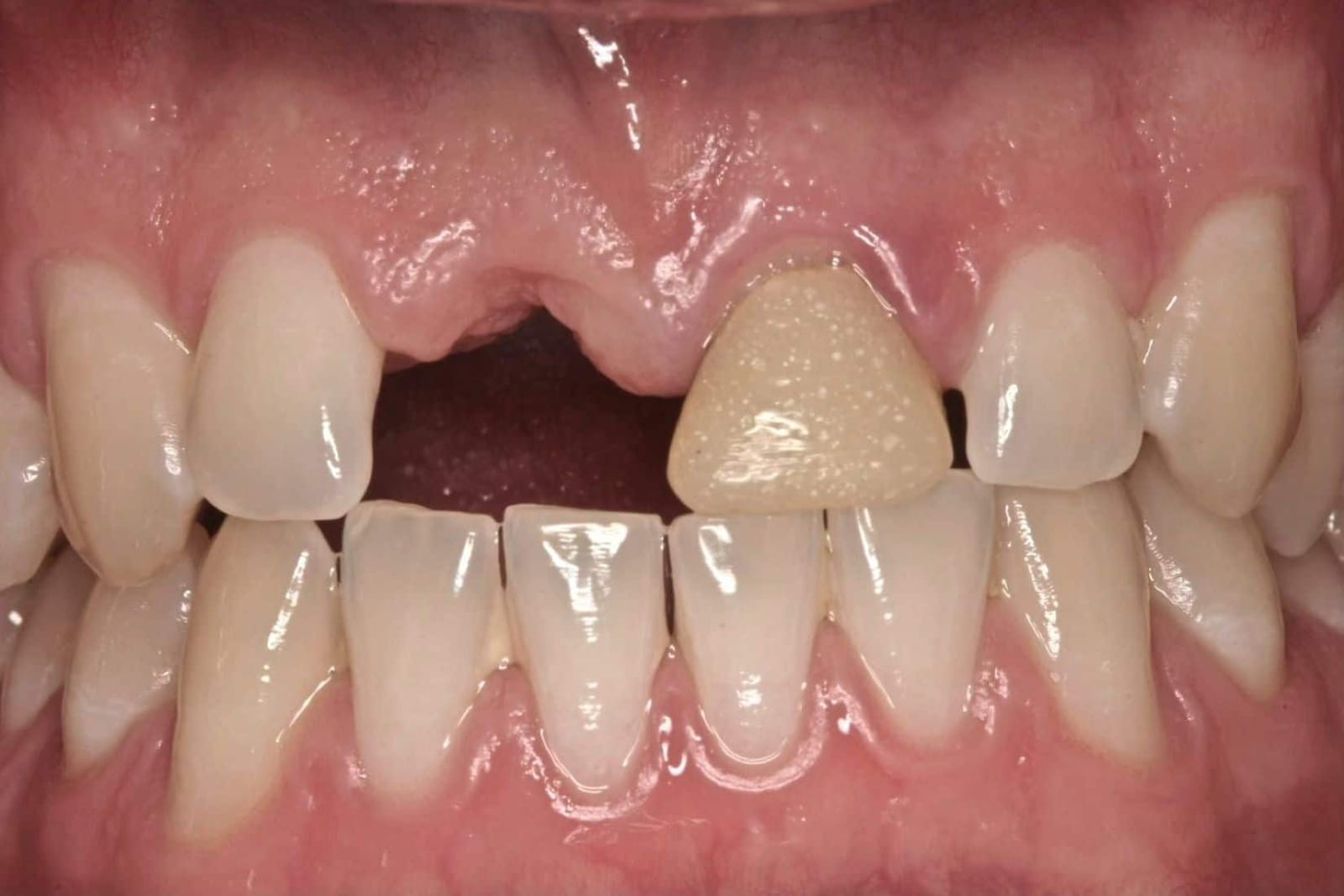
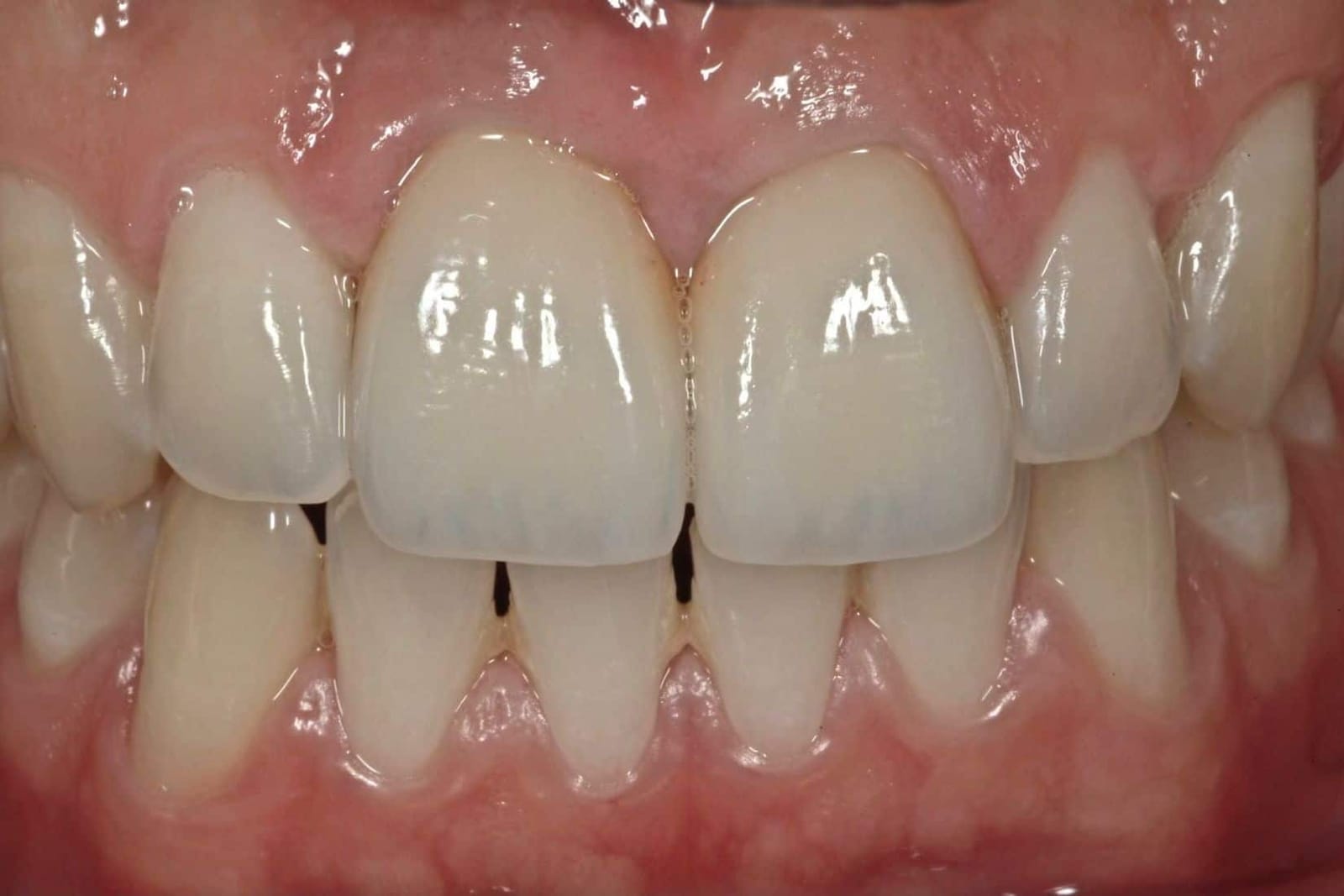
The frame comes first.
What makes a front tooth look natural is the tissue around it: the scallop of gum, the balance of the two sides, the smile line. That is rebuilt so both teeth emerge from the same line.
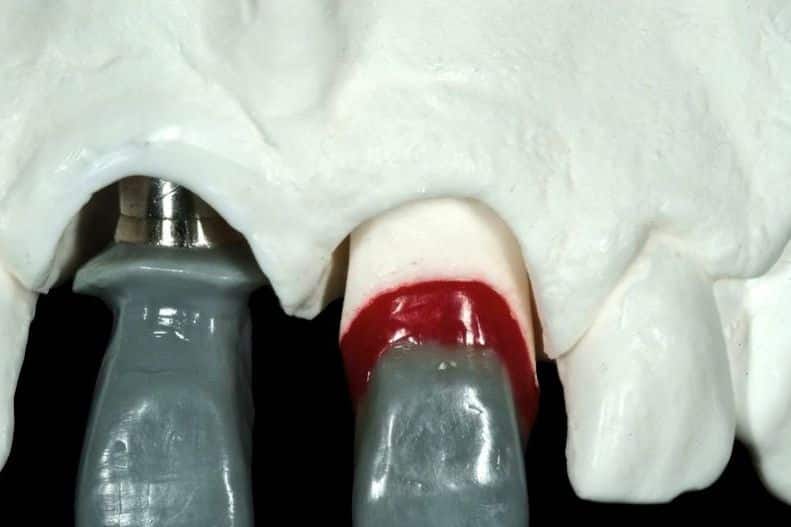
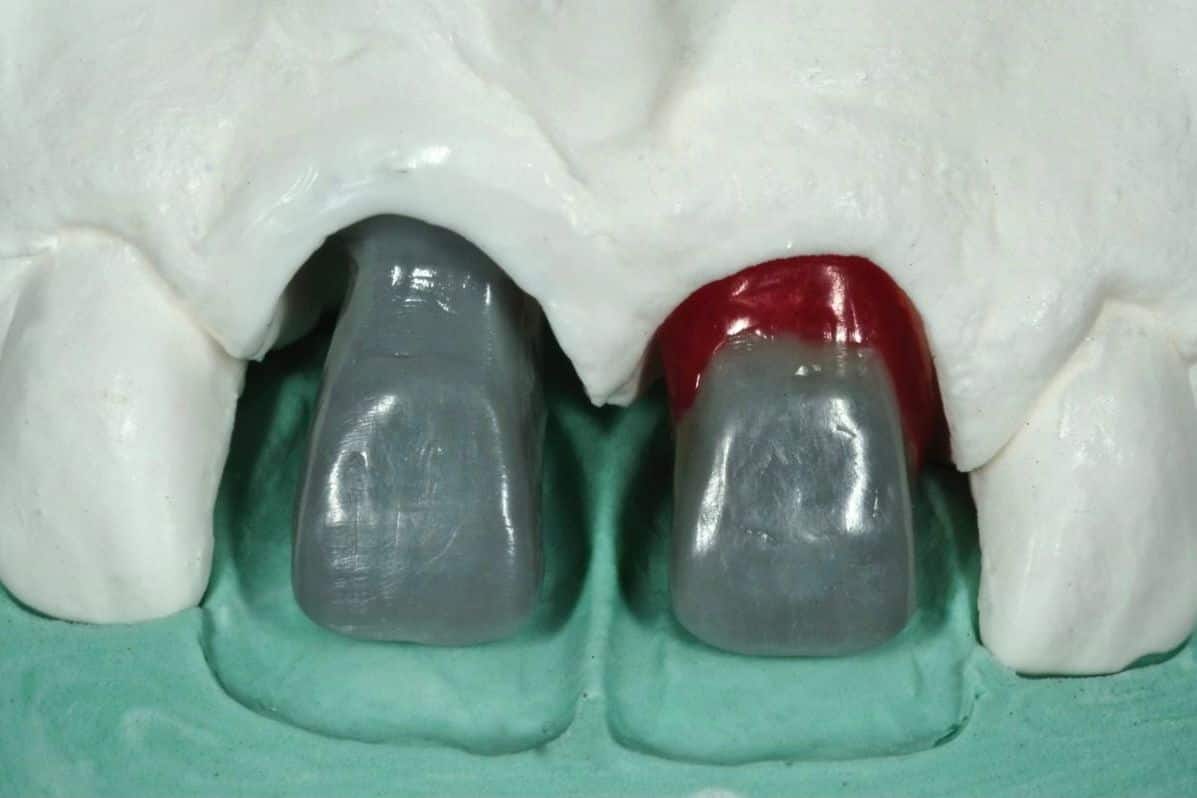
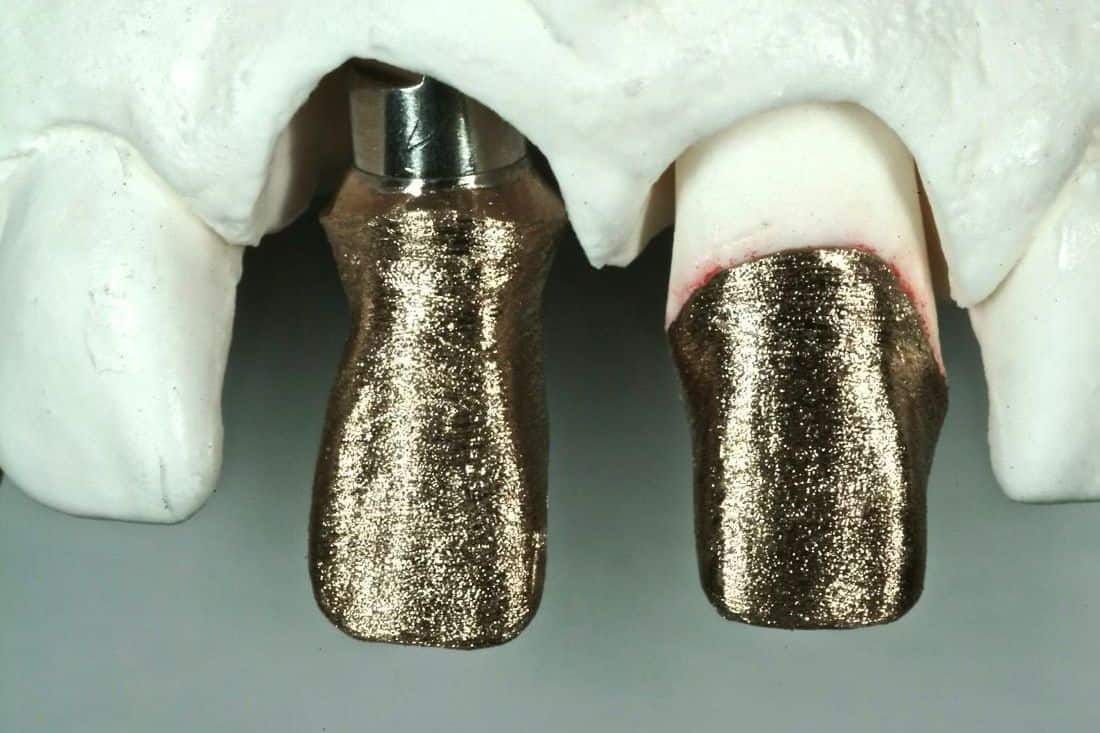
Then the colour underneath is dealt with.
A deep discoloration will show through ordinary ceramic, so a thin gold substructure may be used to block it, and the core is opaqued before layering begins. Working with a master technician, Dr. Reshad then builds the ceramic up in layers on both teeth: colour, translucency, shape, and surface texture, at the thickness the material needs to hide what is beneath it and still let light through. It is worked out in wax first, then in the frameworks, and finally in the ceramic.
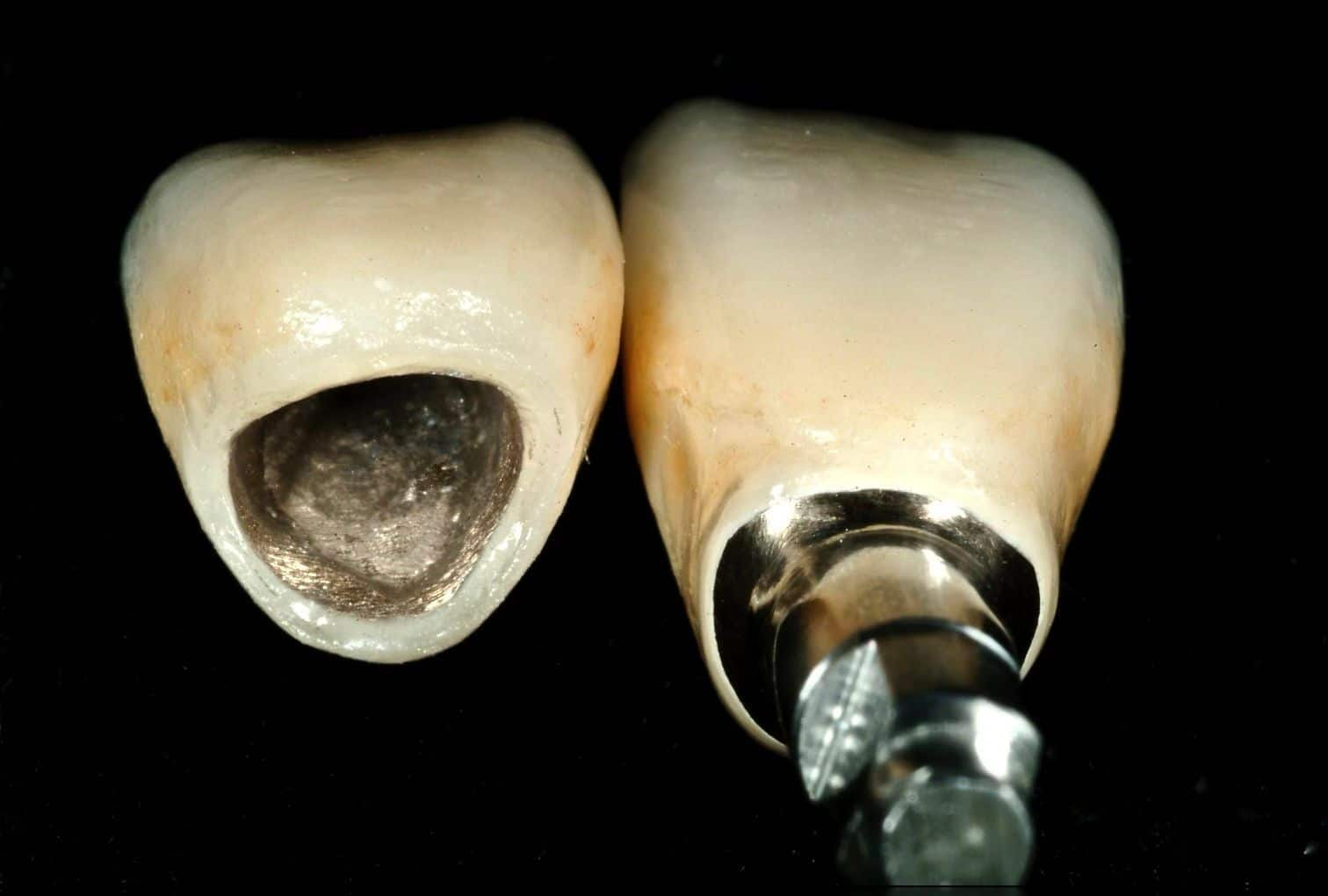
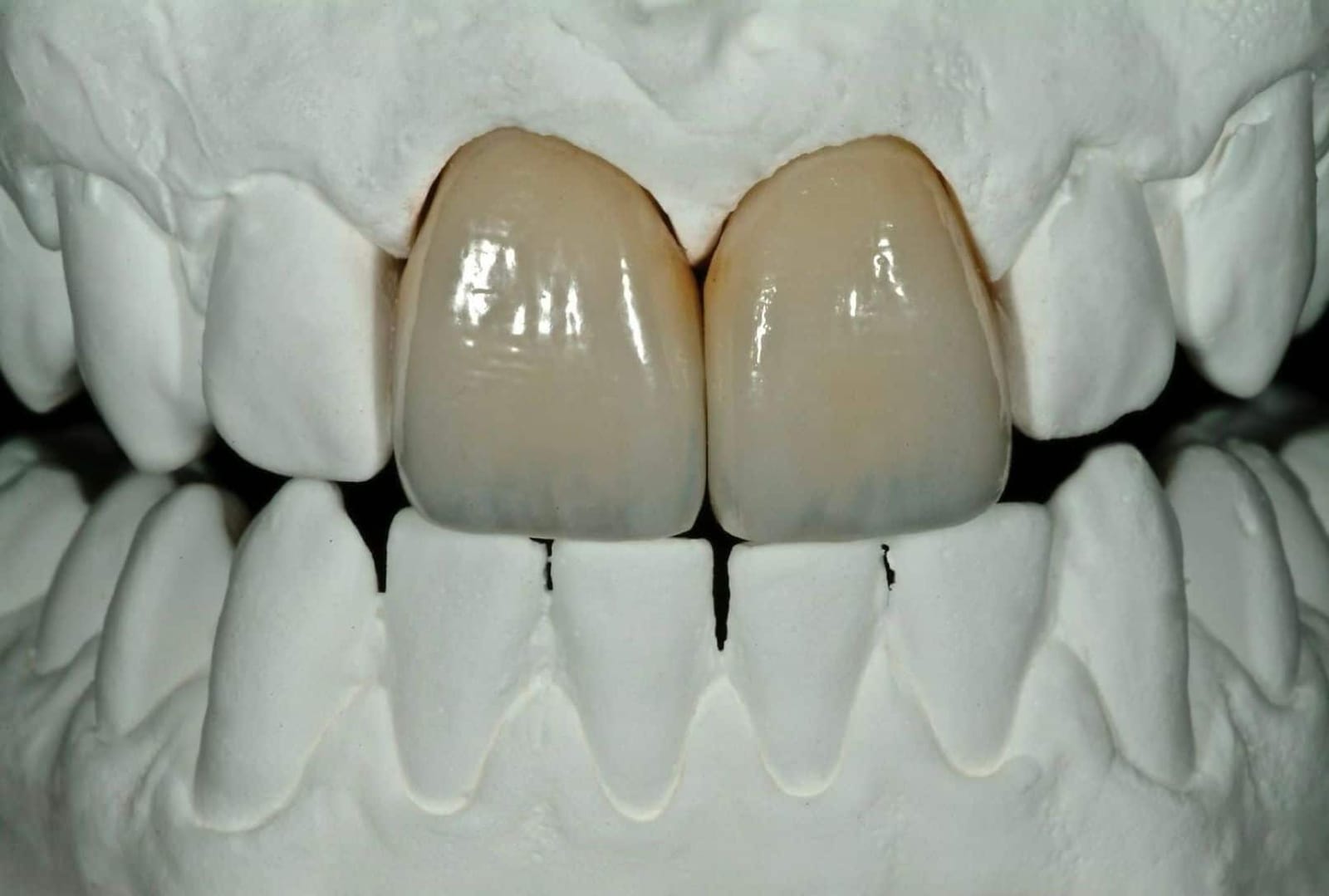
The aim is two teeth that read as one natural pair, with nothing else in the mouth restored.
Aesthetic, but respectful of the biology.
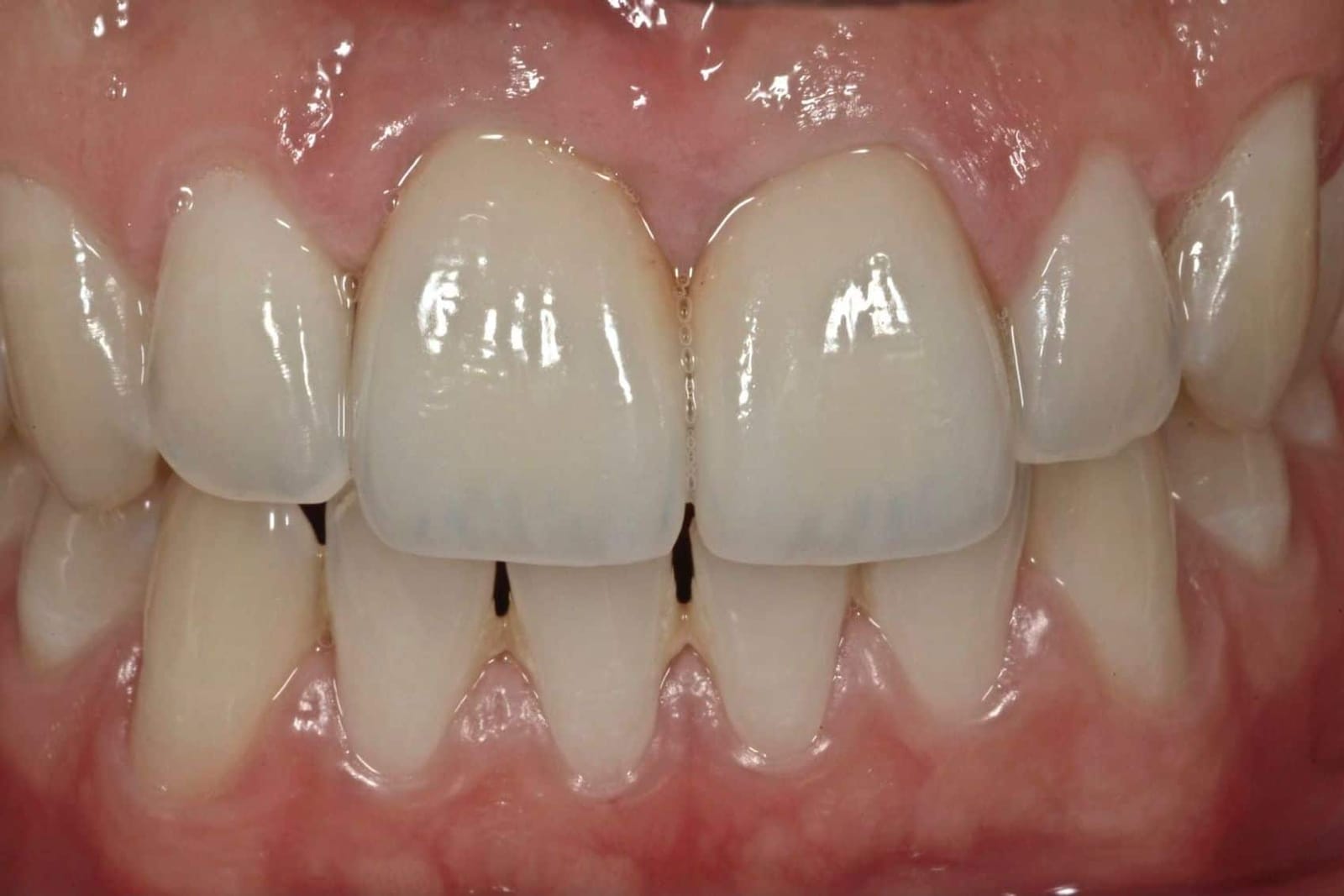
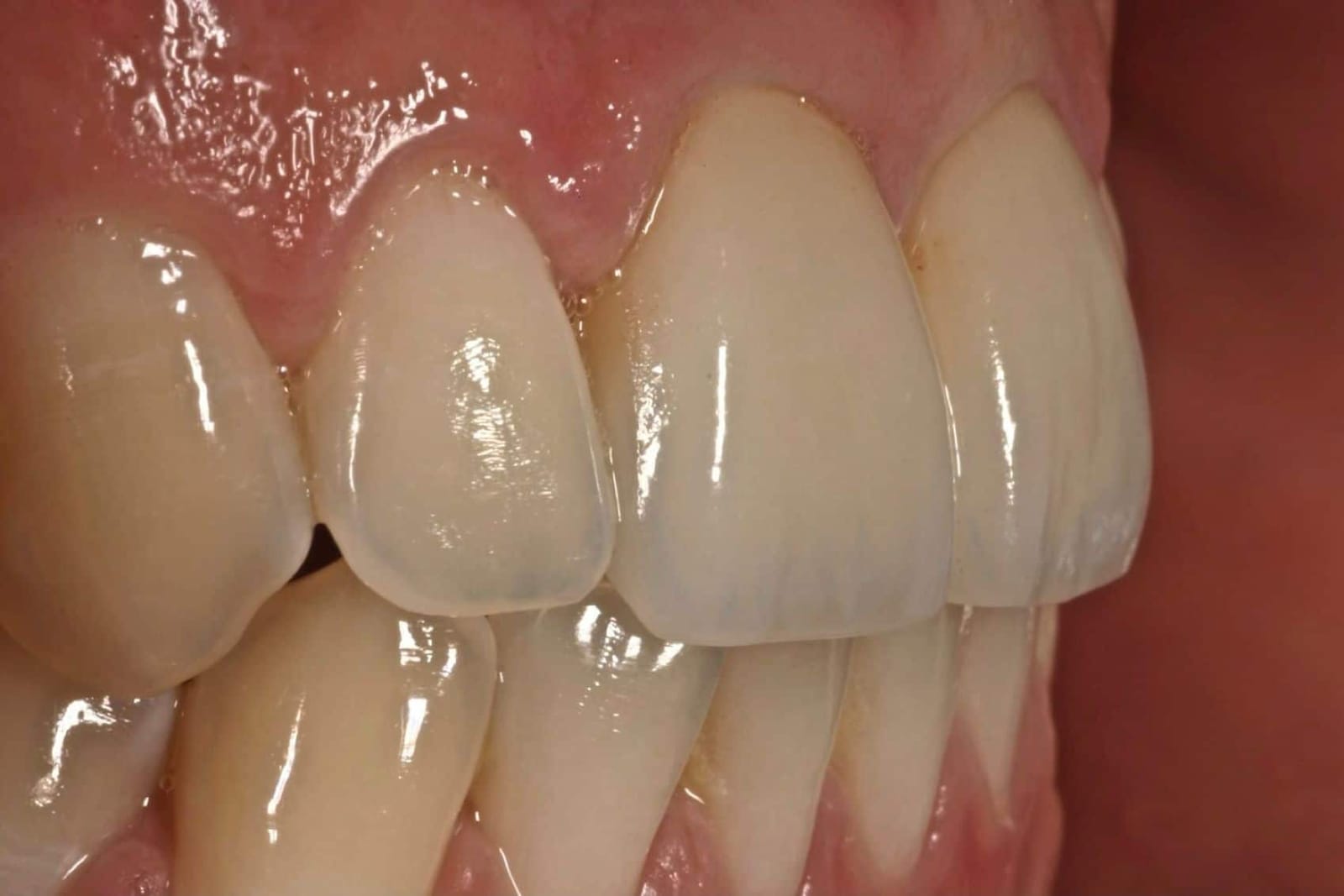
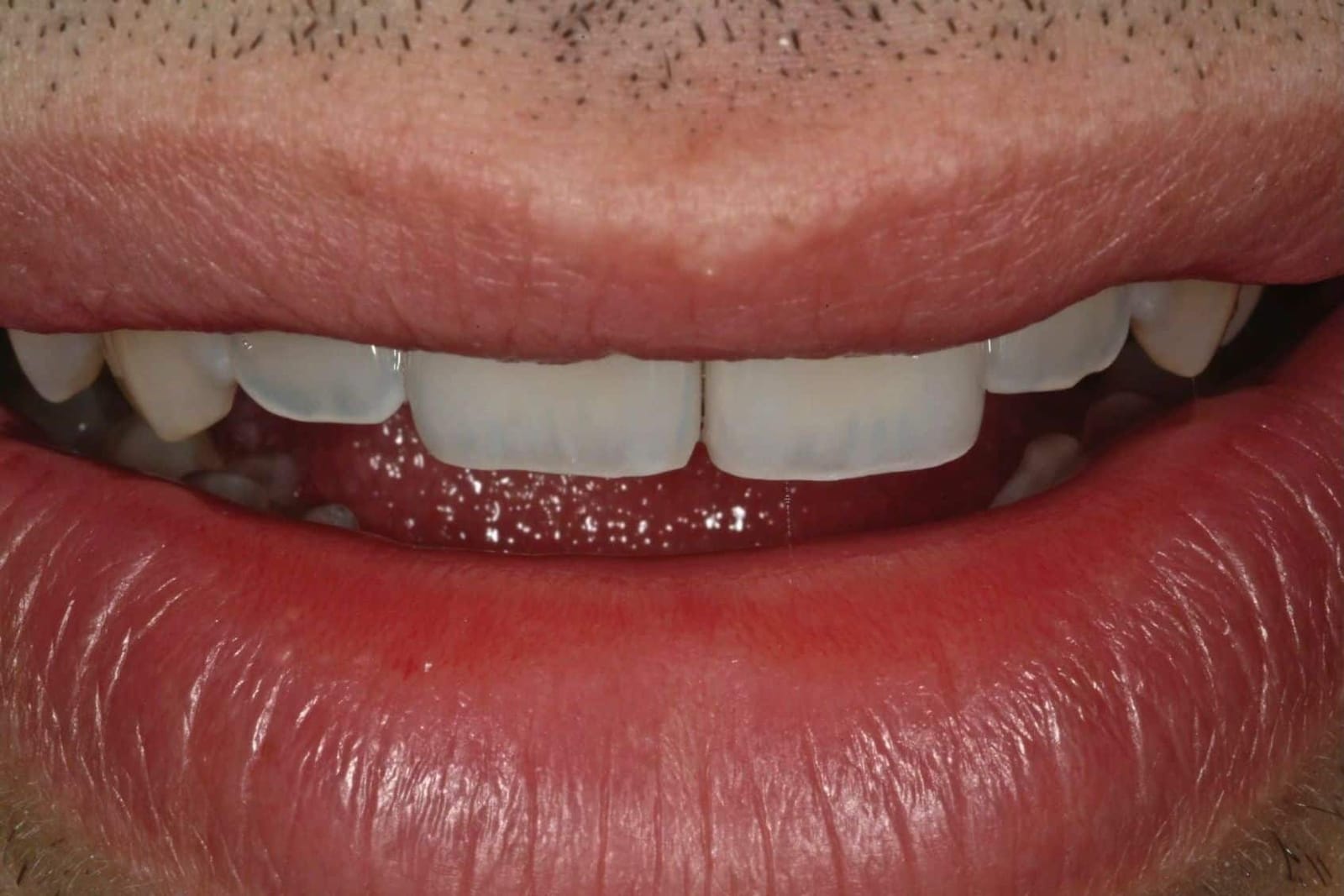
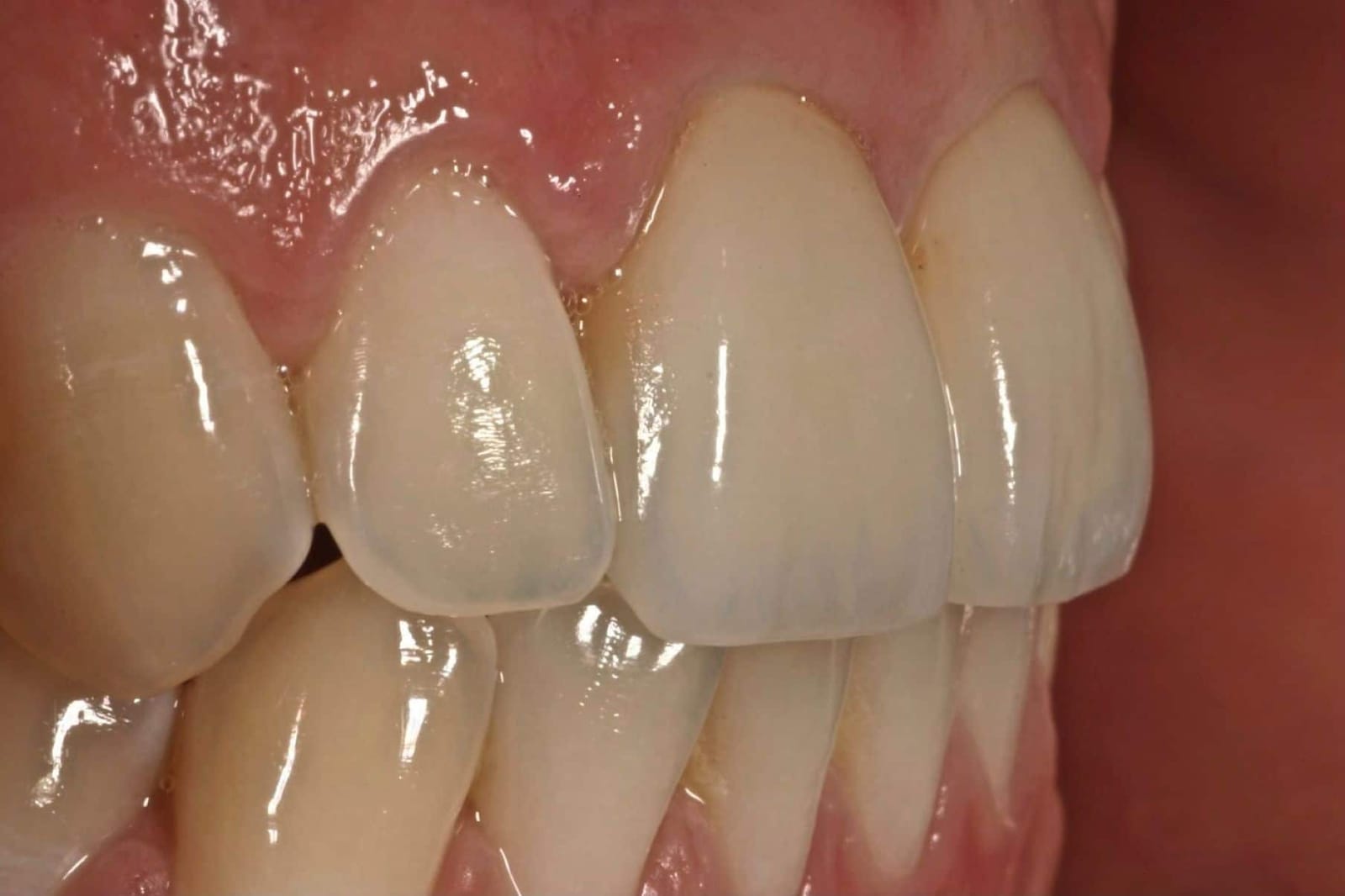
Every case is planned around one person's anatomy. Individual results vary.
A Crown Is a Superstructure
A dental crown covers the whole of a tooth above the gum. Unlike a veneer, which is bonded to the front surface, a crown encapsulates the tooth and holds on mechanically: the tooth is shaped so the crown grips it, and the crown is cemented in place. It is the classic way to give a broken-down tooth its shape and strength back.
What a crown grips matters more than the crown. The single most important factor is the ferrule: a collar of sound tooth above the gum, ideally about 1 mm thick and 2 mm high, all the way around. The crown hugs this collar like the metal band on a wooden tool handle, and it is what stops the tooth splitting. Where a tooth has broken to the gum line, that collar can sometimes be created first, by orthodontic extrusion or crown lengthening.
When a Crown Is the Right Choice
Bonding needs sound, healthy dentin and a dry field. A cemented crown, sometimes on a cast post and core, is the right choice when:
Very little tooth is left. A cast post and core may be the only way to hold a crown.
The dentin is poor. Old, sclerotic or heavily restored dentin does not bond reliably.
Margins are deep under the gum. If the area cannot be kept dry, a cemented crown is more predictable, sometimes after crown lengthening.
Decay risk is high. Gold's precise fit and seal make it a strong choice.
Access or isolation is difficult, or the bite is extreme.
A post does not strengthen a tooth. Its only job is to hold the core that retains the crown; when one is needed, it is because too little tooth remains to do that job.
Our Beverly Hills office at 414 N. Camden Dr., Suite 750 opens in January 2027. Until then, call (310) 444-5217 and we'll arrange your consultation.
Gold or Ceramic
Cast gold has served dentistry for over a century. It is kind to the opposing teeth, seals superbly, and does not depend on bonding. Its drawback is colour, which is why many patients no longer ask for it. On back teeth, and particularly second molars that take the heaviest loads, it remains an outstanding choice.
The record is long. In one specialist practice, 73% of 2,071 gold inlays were still in place after 25 years; 1,314 cast gold restorations from Dr. Richard Tucker's Seattle practice had been in service for up to 52 years; and in a randomised trial, 69% of gold partial crowns and 53% of ceramic ones were still in place at 20 years, a difference that was not significant.
Ceramic is the choice where the crown will be seen. Layered by a master technician on a core that hides what is underneath, it reads as tooth in every light; the two front teeth above are the proof. Both materials can break, and what matters is how. Porcelain is stronger and keeps its polish, but it is stiffer, so in extreme overload a fracture can take tooth with it. Composite acts as a shock absorber and is easy to repair, but wears and stains more over time.
How a Crown Is Made Here
Planning first. Dr. Reshad assesses what is left of the tooth, the bite it will meet and what you want the result to look like, and shows you the projected result before anything is touched. The tooth is then shaped for the crown, and an impression or scan taken. A crown preparation removes more tooth than any bonded restoration, which is exactly why the choice between them is made before the drill is picked up.
Fabrication. The crown is built to your tooth's shade and shape, with CAD/CAM precision and a master technician's layering, so it looks like a tooth rather than a cap.
Placement. The finished crown is tried in, adjusted to the bite and cemented. You leave with full use of the tooth the same day; some sensitivity to hot and cold can follow and usually settles within a week.
Our Beverly Hills office at 414 N. Camden Dr., Suite 750 opens in January 2027. Until then, call (310) 444-5217 and we'll arrange your consultation.
Protecting the Result
The bite is the most destructive force a restoration will face. Beautiful work that is not protected from it will not stay beautiful. Managing the bite, and fitting a night guard where there is grinding, is what keeps a result looking and working as it did on the day it was placed.
A crown, a bonded onlay, gold or a post: the guide walks through how a damaged tooth is rebuilt, traditional and modern, with the evidence behind each choice and Dr. Reshad's own cases followed for decades.
Read the guide to rebuilding damaged teethFrequently Asked Questions
Crowns are designed by prosthodontist Dr. Mamaly Reshad at ArtLab Dentistry, 414 N. Camden Dr., Suite 750, Beverly Hills. He first checks whether the tooth still has the foundation a crown needs, and whether bonding could do the job with less. Call (310) 444-5217.
A dental crown is a cap-like restoration, in ceramic or gold, that covers the whole of a tooth above the gum. Unlike a veneer, which is bonded to the front surface, a crown encapsulates the tooth and holds on mechanically.
A crown is the right choice when a tooth has lost too much to be rebuilt by bonding alone: very little tooth left, poor dentin, margins deep under the gum, a high decay risk or an extreme bite. A crown also caps a dental implant and, less commonly, carries a bridge.
Sometimes. A post does not strengthen a tooth; its only job is to hold the core that retains the crown, so one is placed only when too little tooth remains to do that job. The guide to rebuilding damaged teeth explains how the choice is made.
Decades, when the foundation is sound and the bite is managed. The longest records are gold: 73% of over two thousand gold inlays were still in place after 25 years, and cast gold restorations have been followed for over half a century. Ceramic partial crowns were close behind in a 20-year randomised trial.
Gold where strength matters most and colour does not, particularly on second molars. Ceramic where the crown will be seen. Neither depends on bonding, which is why both are the choice when the dentin is poor or the margins sit deep under the gum.
A typical crown takes two visits: a planning and preparation visit where the tooth is shaped and an impression taken, and a placement visit where the finished crown is cemented and adjusted. You wear a temporary crown in between while your custom crown is fabricated with CAD/CAM technology and lab artistry.
Recovery from a dental crown procedure is short — patients typically have full use of their teeth within a few hours. Some sensitivity to hot or cold is possible and generally subsides within a week.
Explore More Services
Rebuilding Damaged Teeth
Crowns, onlays, gold or a post: how the choice is made, with the evidence.
Learn MoreMinimally Invasive Dentistry
Bonded onlays, overlays and veneers that keep the tooth.
Learn MoreDental Implants
When a tooth cannot be saved: replacing one tooth or many, root and all.
Learn MoreMedically reviewed by Dr. Mamaly Reshad, BDS (Lond), MSc (Lond), Cert Pros (USC), Prosthodontist — Last reviewed July 2026
Ready to Transform Your Smile?
Schedule a private consultation with Dr. Reshad to discuss your goals and explore your options.