Crowns Case 2 · Cosmetic · Crowns · Bleaching
Two Crowns Instead of Twenty
She had been quoted between ten and twenty restorations.
Veneers, crowns, or some combination of both, by more than one dentist. She was finishing orthodontic treatment, unhappy with how her teeth looked, and the answer she kept receiving was to do the whole mouth.
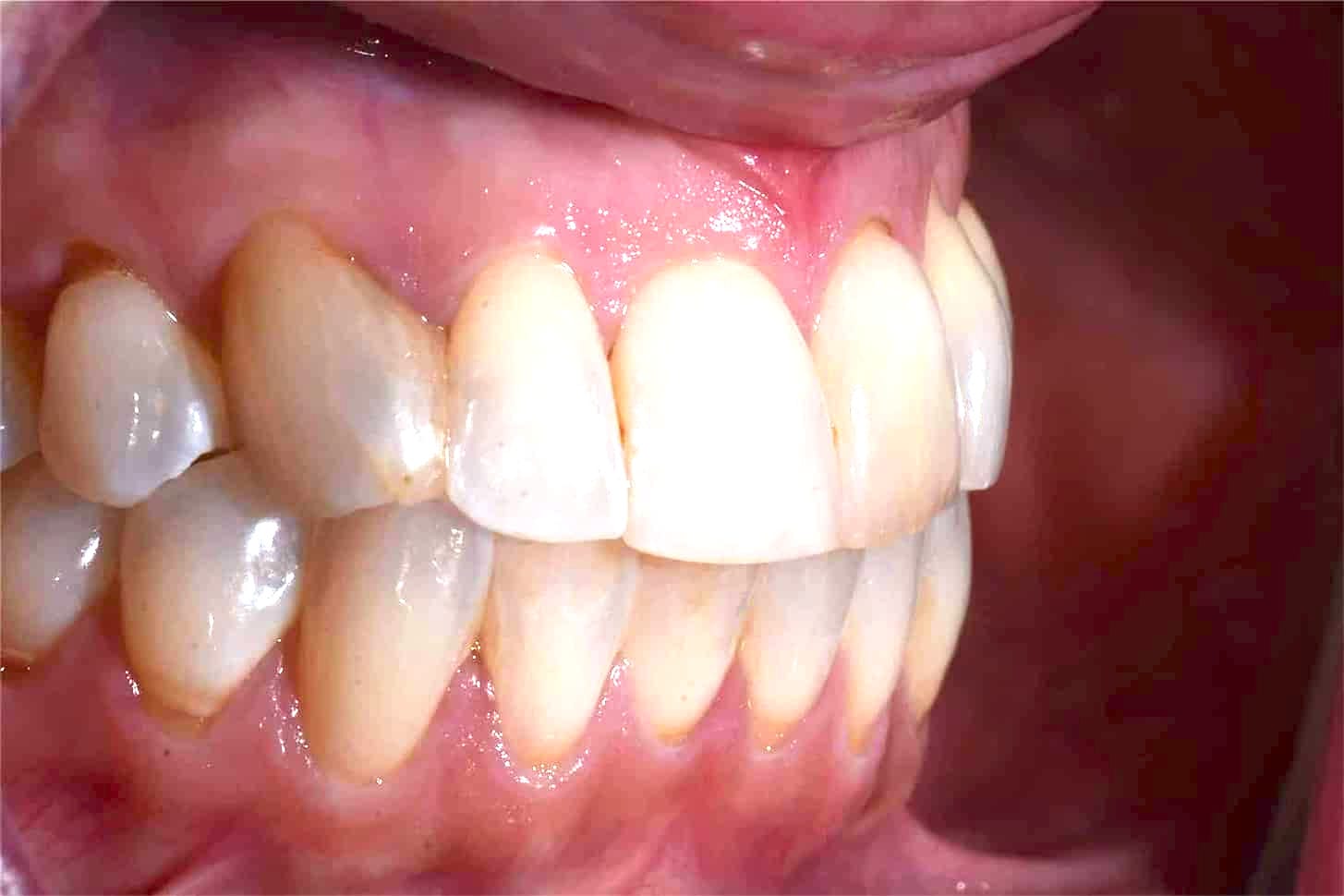
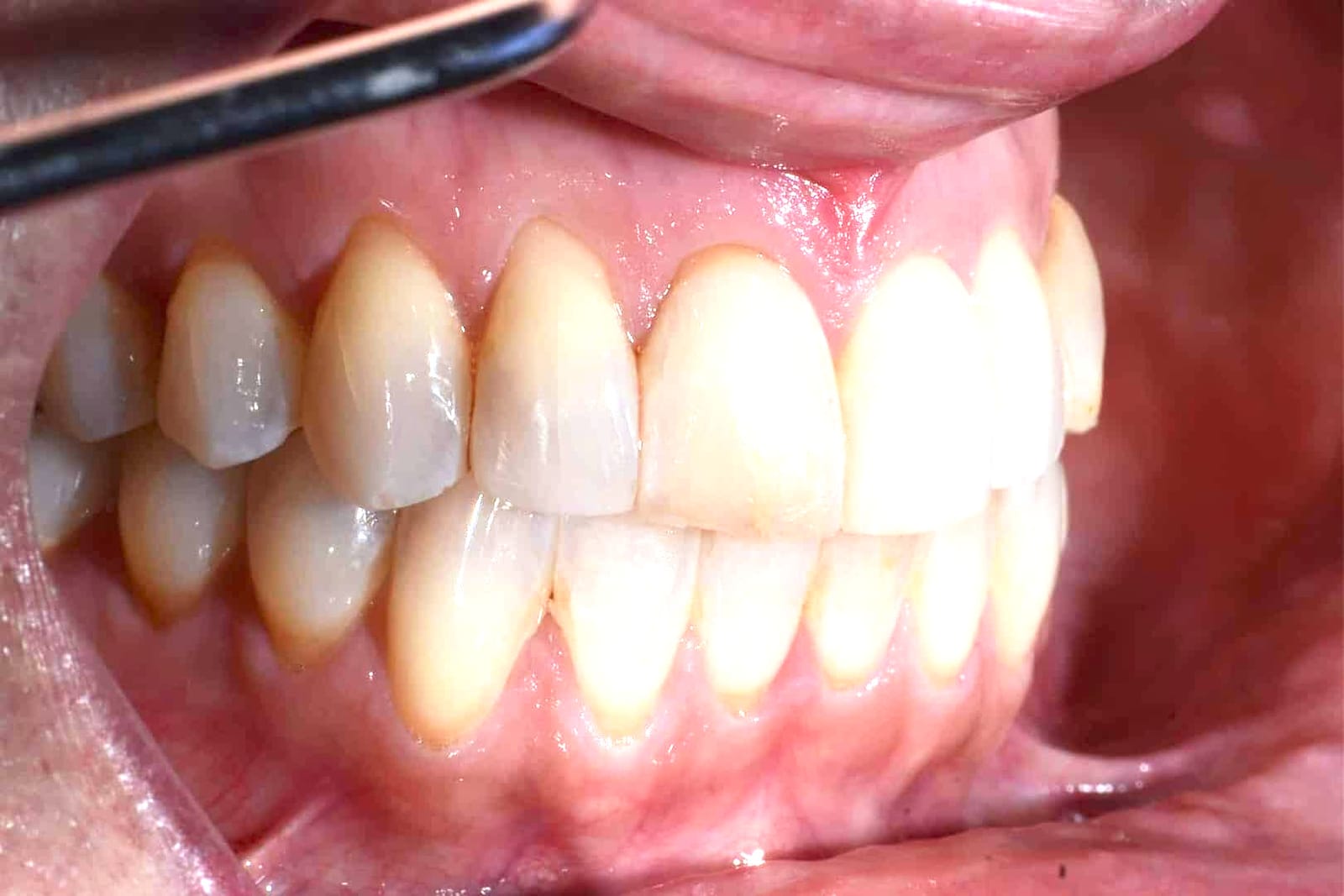
What she actually had were two problems. Her teeth were discolored, and two of them, including a front tooth, were broken down and root treated.
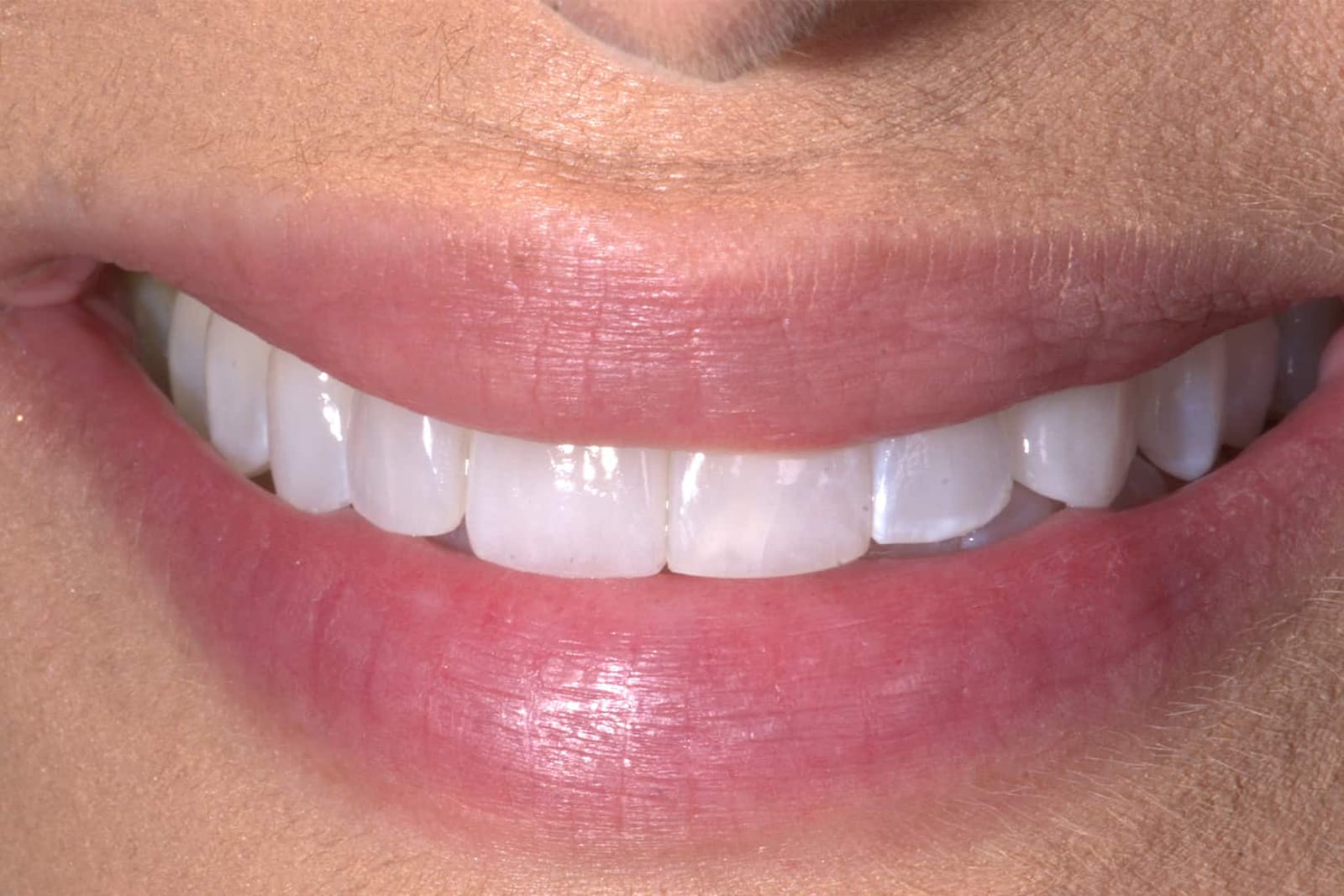
Before and after
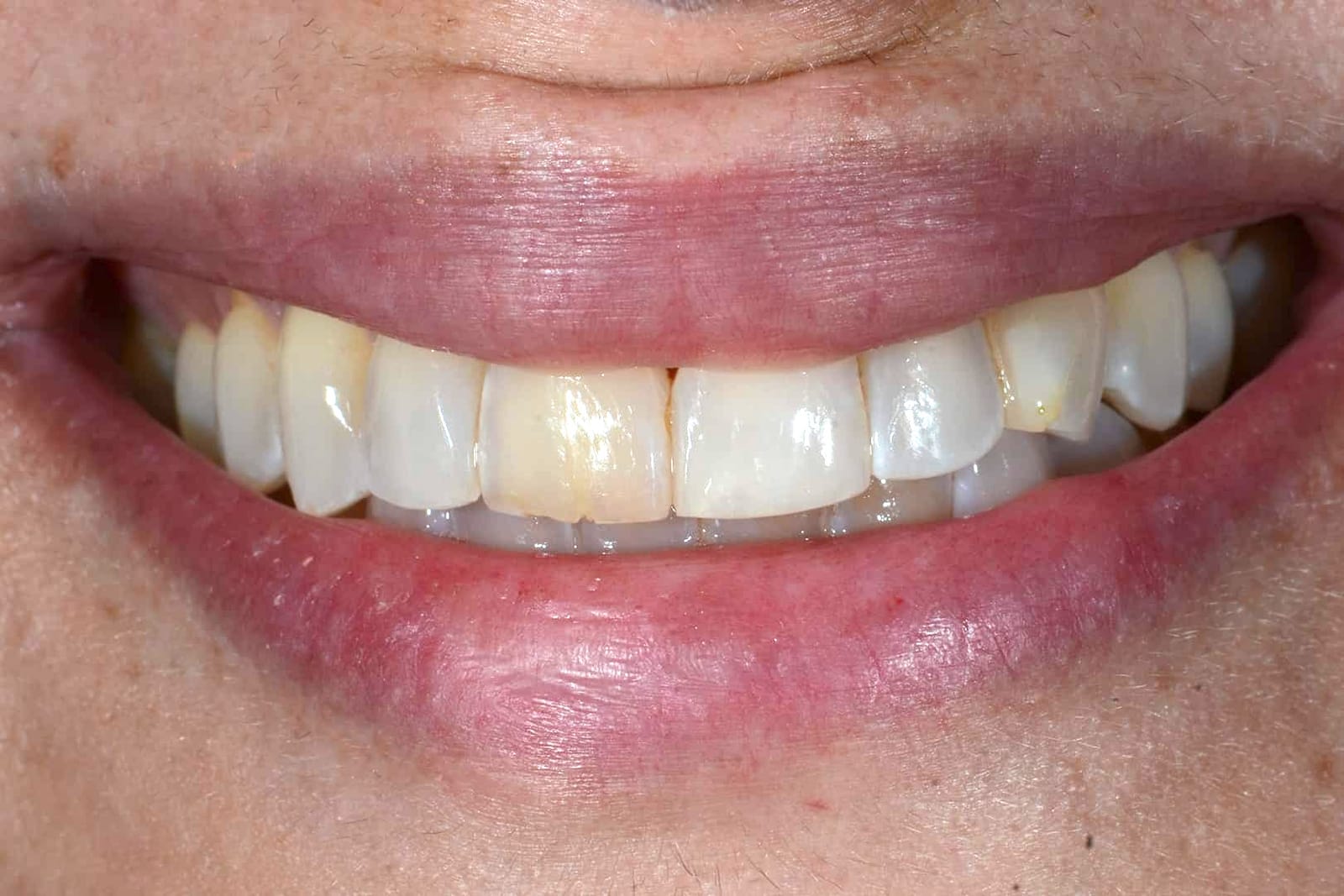
What a long conversation established
The examination found something the quotes had passed over. The shapes of her teeth were beautiful.
That matters enormously, because shape is the expensive part. If the form is right, the teeth do not need replacing. They need their color corrected, which is not the same problem and does not require the same treatment.
So the plan came down to two things. Brighten everything. And crown the two teeth that were genuinely compromised, numbers eight and eleven.
Two crowns. Not twenty restorations.
Arriving

Slowly, and to her judgment
The two damaged teeth went into provisional restorations first, so she had something in place while the rest of the work happened.
Then a long term bleaching process, run over about three months rather than compressed into an afternoon, until the brightness reached the level she wanted. Her judgment, arrived at gradually, rather than a shade decided for her.
Then it was allowed to settle. Bleached teeth rebound slightly in the weeks after treatment stops, so two to three weeks passed before anything was matched to them. Match too early and the crowns are wrong within a month.
Matching two teeth to everything around them
Only once the color had stabilized were the definitive crowns made.
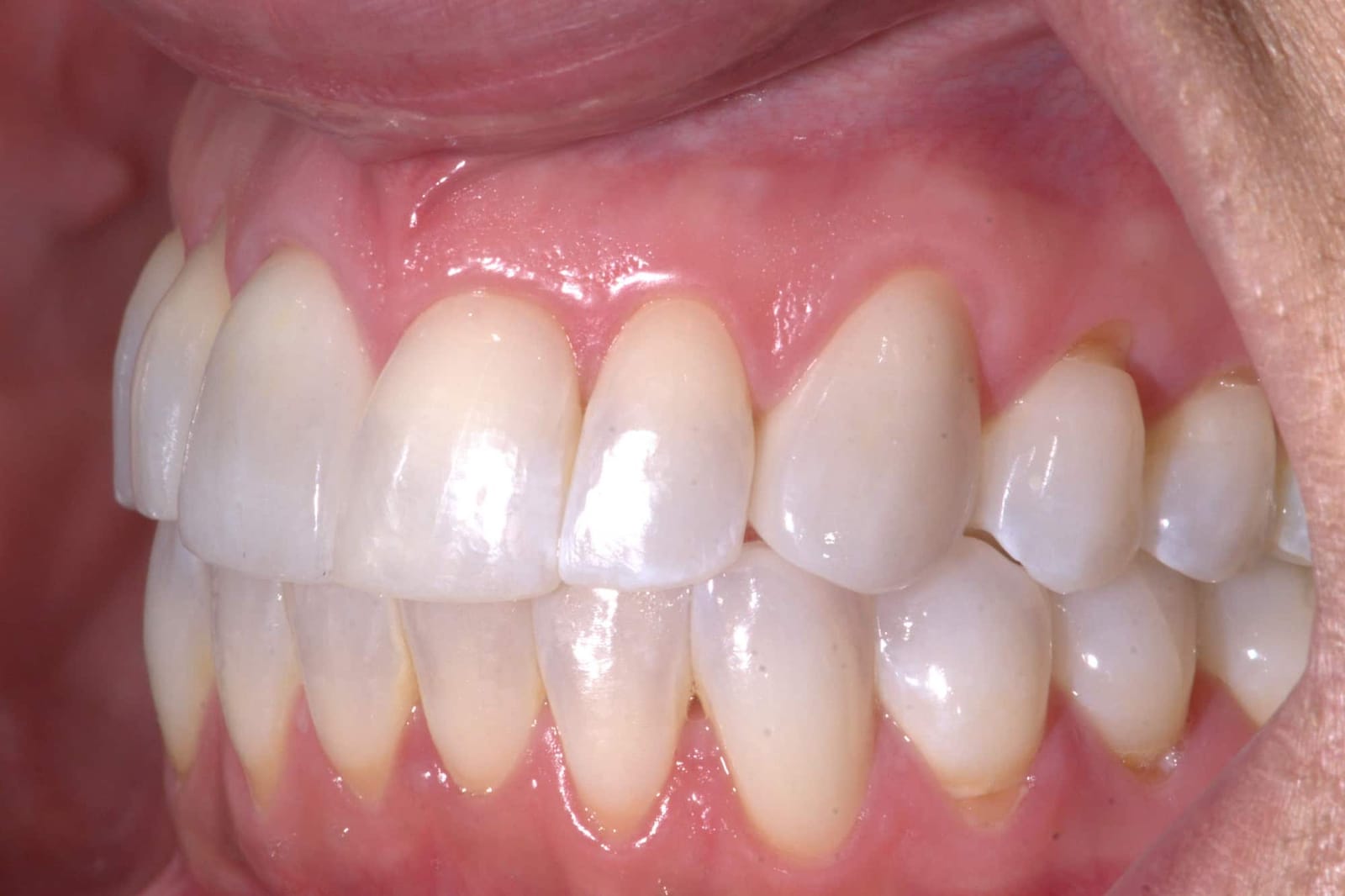
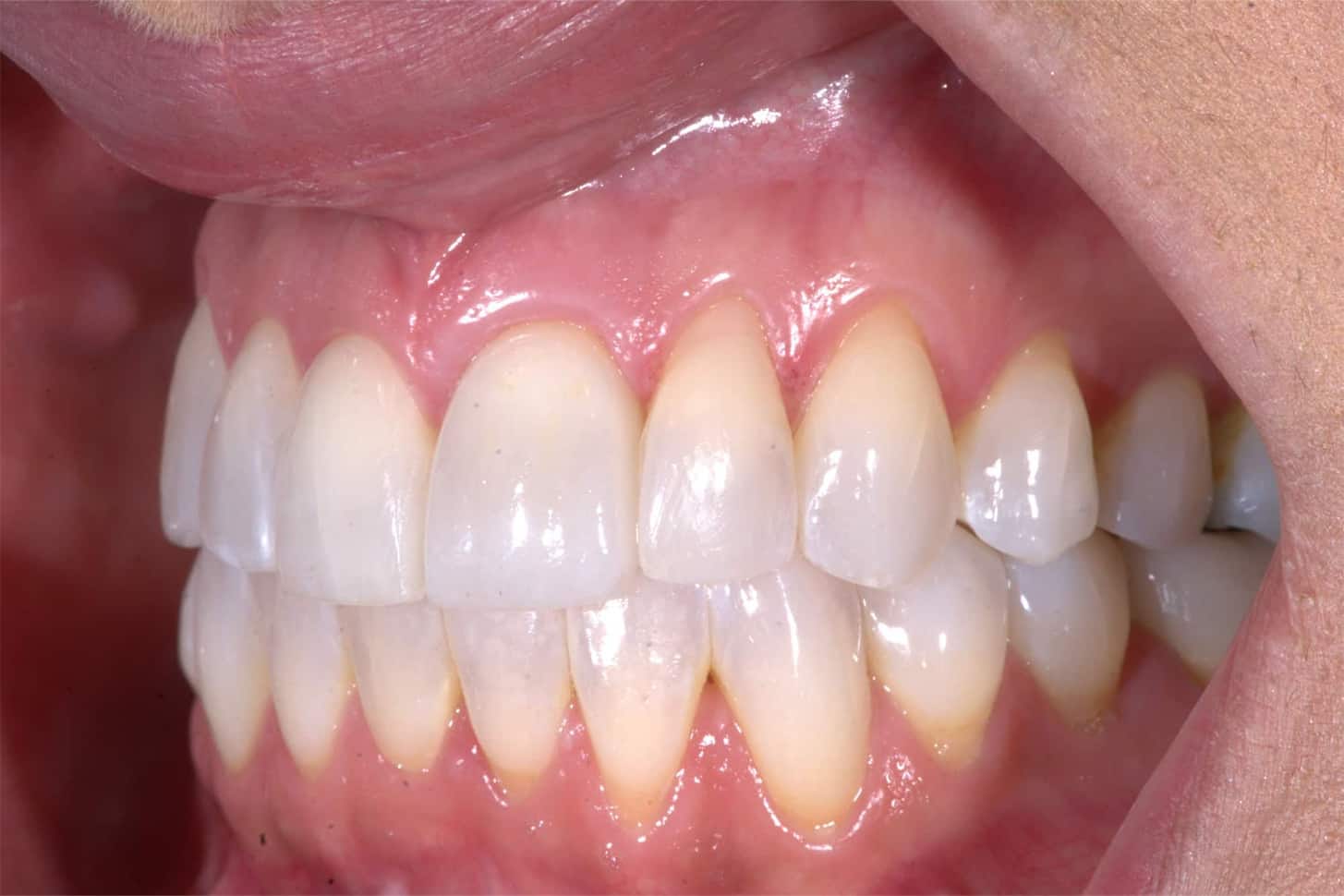
Matching one or two restorations to the natural teeth on either side, in every lighting condition, is the hardest thing in aesthetic dentistry. There is no trick to it. It is layering, color matching and surface texture, executed precisely enough that the eye cannot find the boundary.
Her teeth also carried a further complication: the tooth structure beneath the crowns was discolored, and discoloration wants to show through whatever sits on top of it. So the core material was chosen to block that color, and the beauty was built over it in layers, translucent above, opaque beneath.
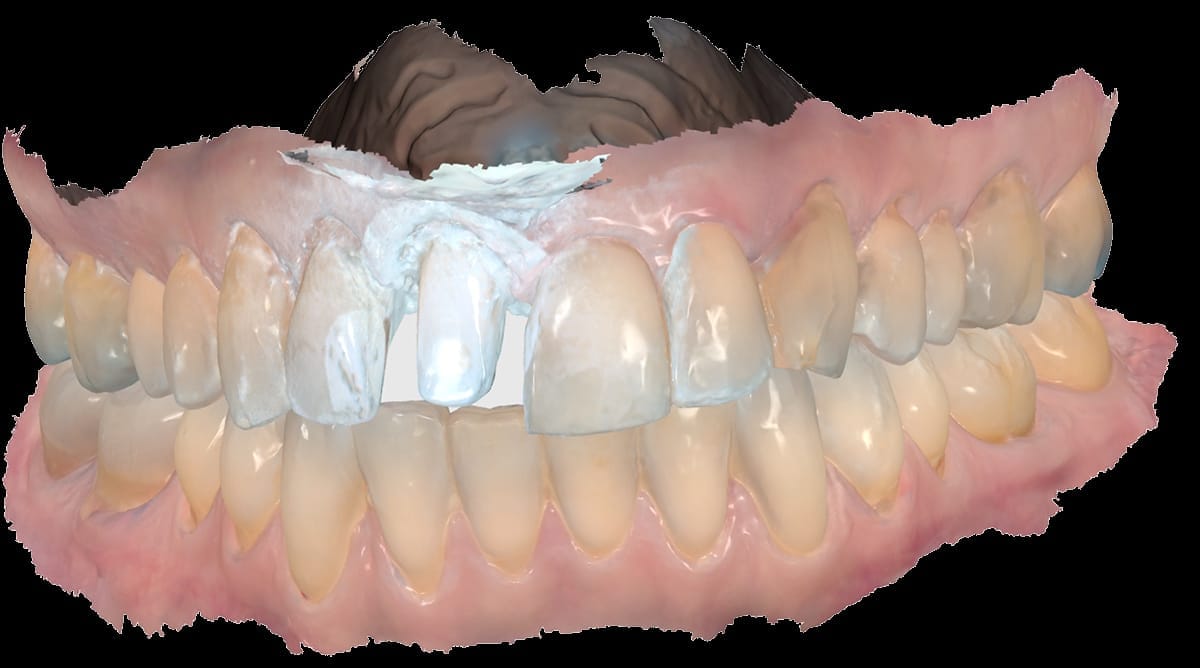
The scan
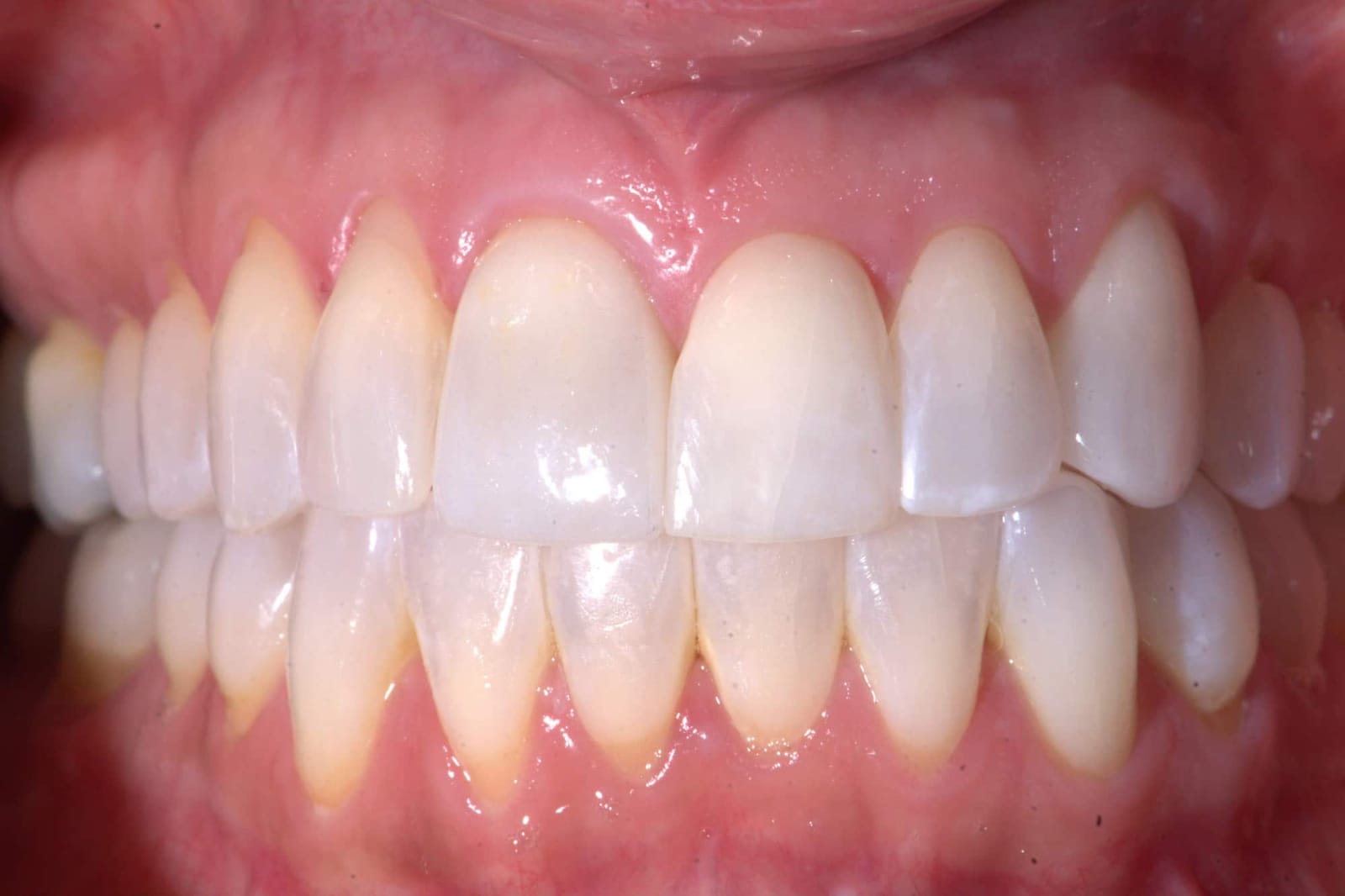
The finished crowns, retracted
Before, from each side
After, from each side
The difference, plainly
A veneer covers the front of a tooth and wraps slightly around the sides.
A crown covers the whole tooth, all the way around, and it is what a badly compromised tooth needs in order to be held together rather than merely resurfaced.
Crowns have a reputation for looking like crowns. They do not have to. With the right understanding of material and translucency, and the right core beneath, a crown can be indistinguishable from the tooth beside it.
What the other quotes would have cost her
Doing the whole mouth is easier than doing two teeth well. It is also more expensive, and the money is the smaller loss.
Preparing ten or twenty healthy teeth means removing tooth structure that does not grow back, and committing her to replacing those restorations for the rest of her life. Every restoration eventually needs redoing. The more you place, the more that is true.
She kept her own teeth. Two of them carry crowns because two of them needed crowns.
A full transformation, minimally
A complete change in how her smile looks, achieved with two restorations and a bleaching program.
That is the aim here every time: the most optimal result with the least intervention, so patients are not over treated and the relationship is one they can trust going forward.
Before and after
Knowing how little to do
Anyone can prepare twenty teeth. It is a straightforward way to control the appearance of a smile, because everything is new and nothing has to be matched.
Matching two new restorations into an existing mouth, under all lighting, over discolored foundations, is considerably harder, and it is the option that leaves the patient with her own teeth.
Choosing the harder route because it is the better one for the person is the whole job.
Every case is planned around one person's anatomy. Individual results vary, and what was right for this patient may not be right for you.