The FP-2 Reconstruction
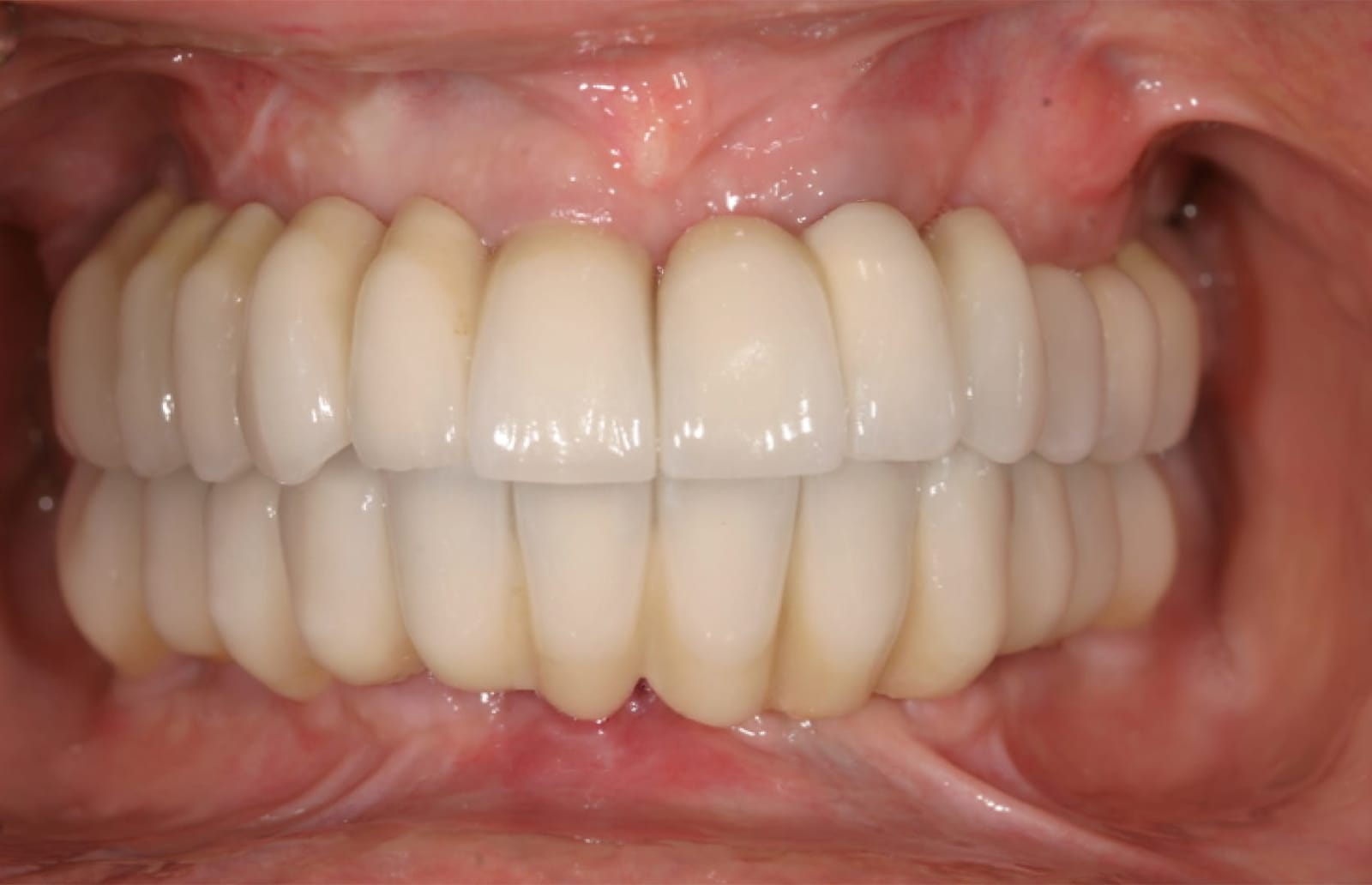
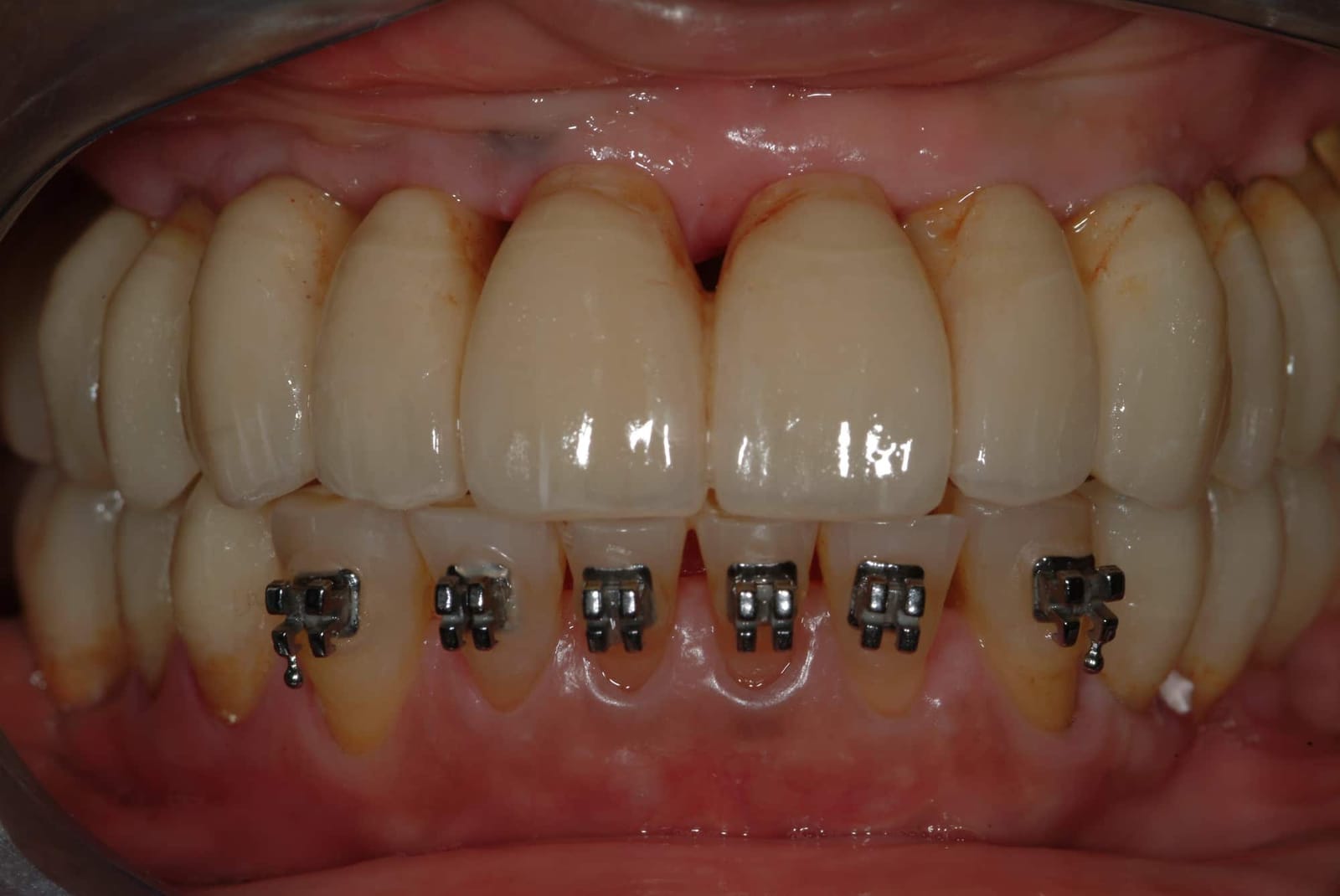
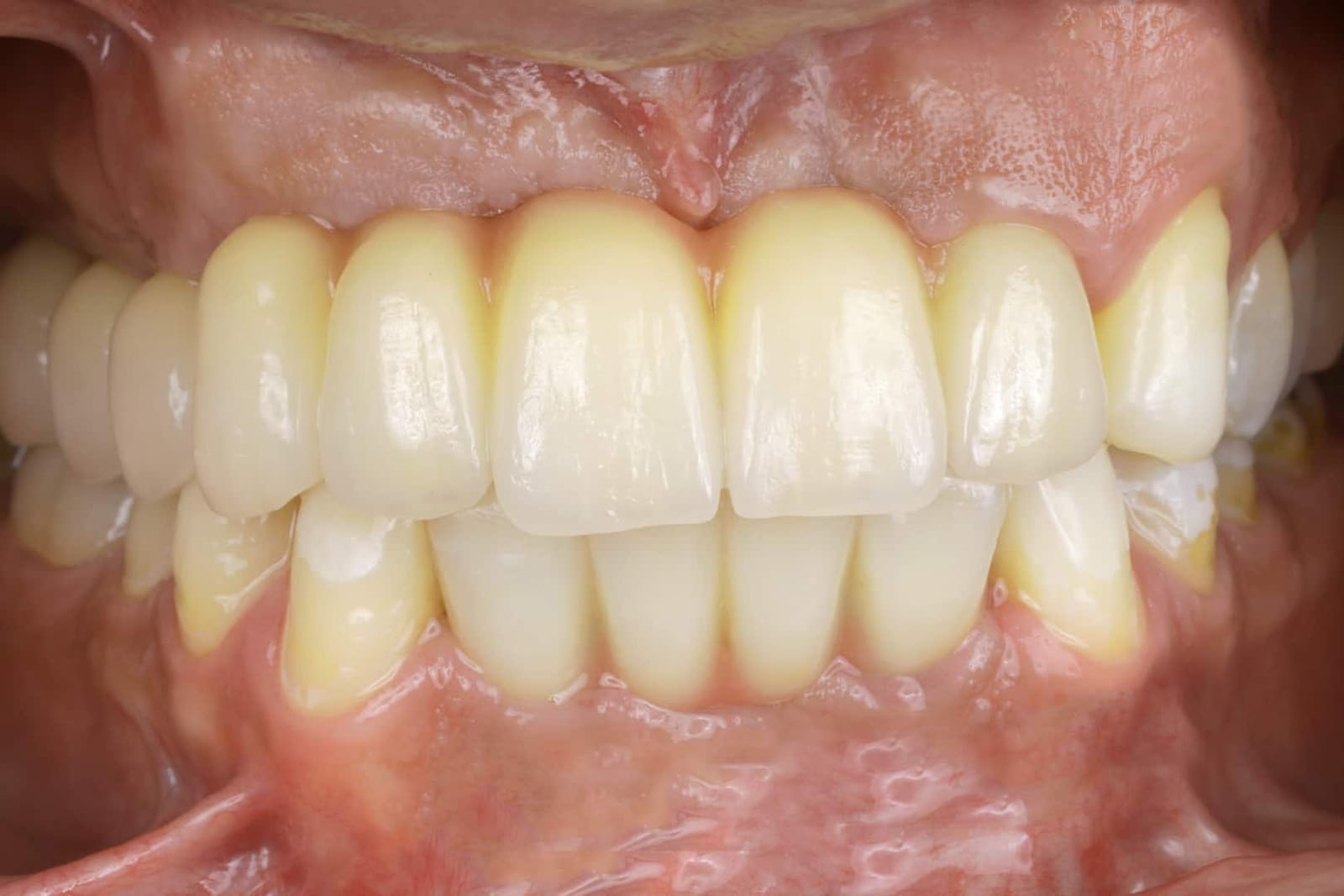
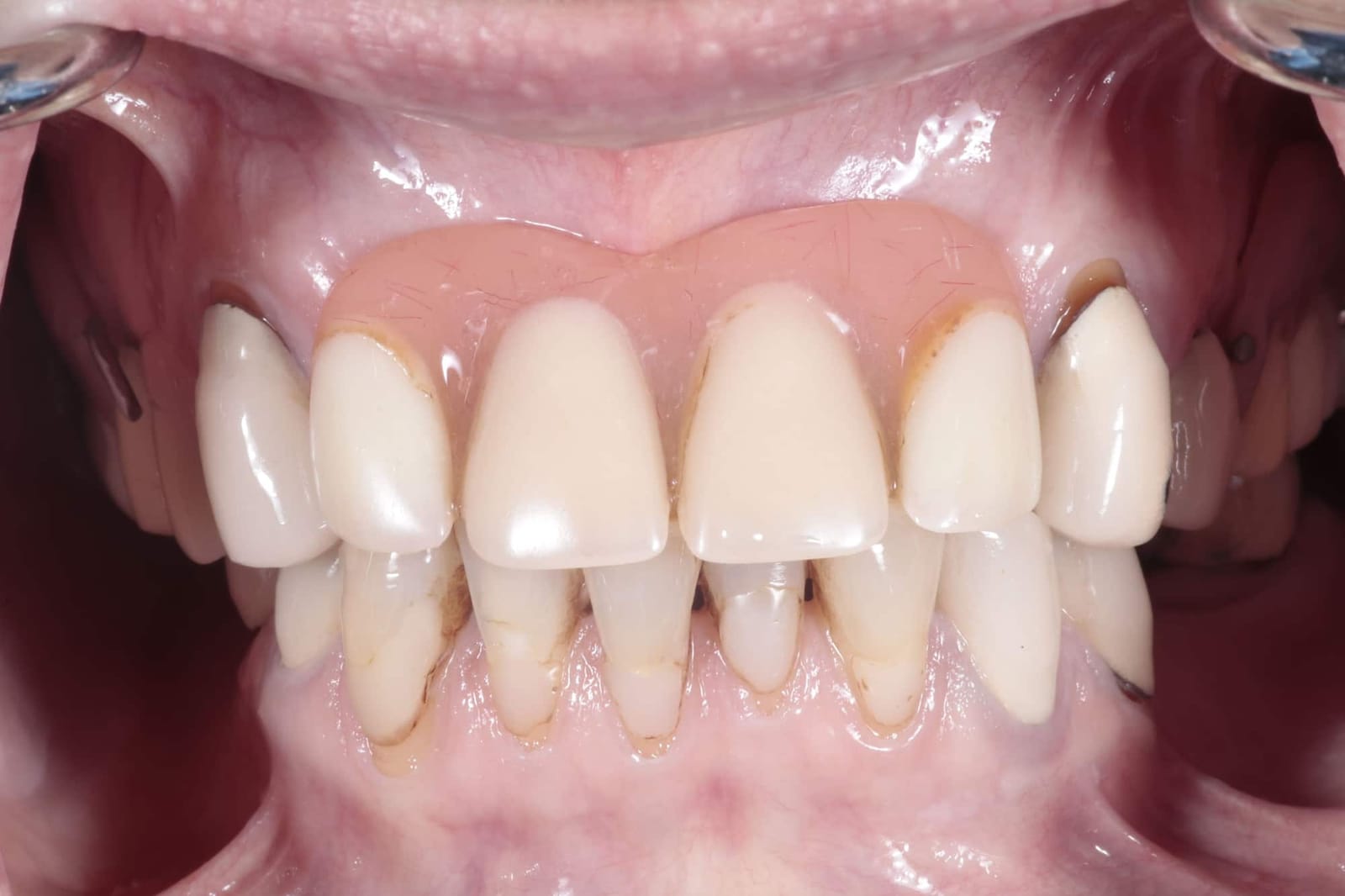
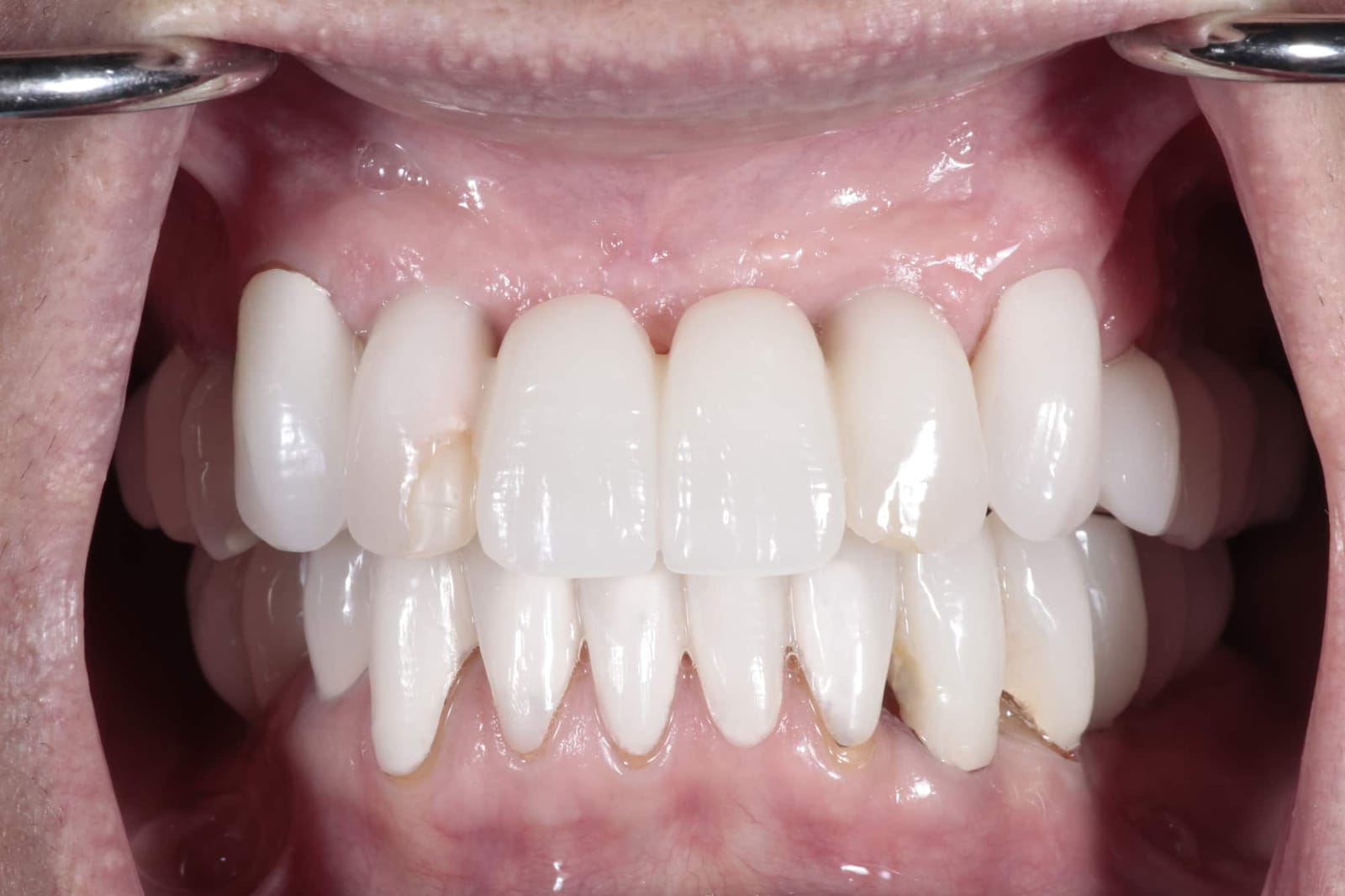
FP-2 begins where the gum starts to go. As more teeth are lost the gum keeps shrinking back, and restoring the teeth alone would leave them looking too long. So the tooth is made with a little of its root in ceramic — sometimes with a little pink between — meeting the gum beneath the lip, where the extra length is never seen.

FP-2
A Tooth, and a Little of the Root
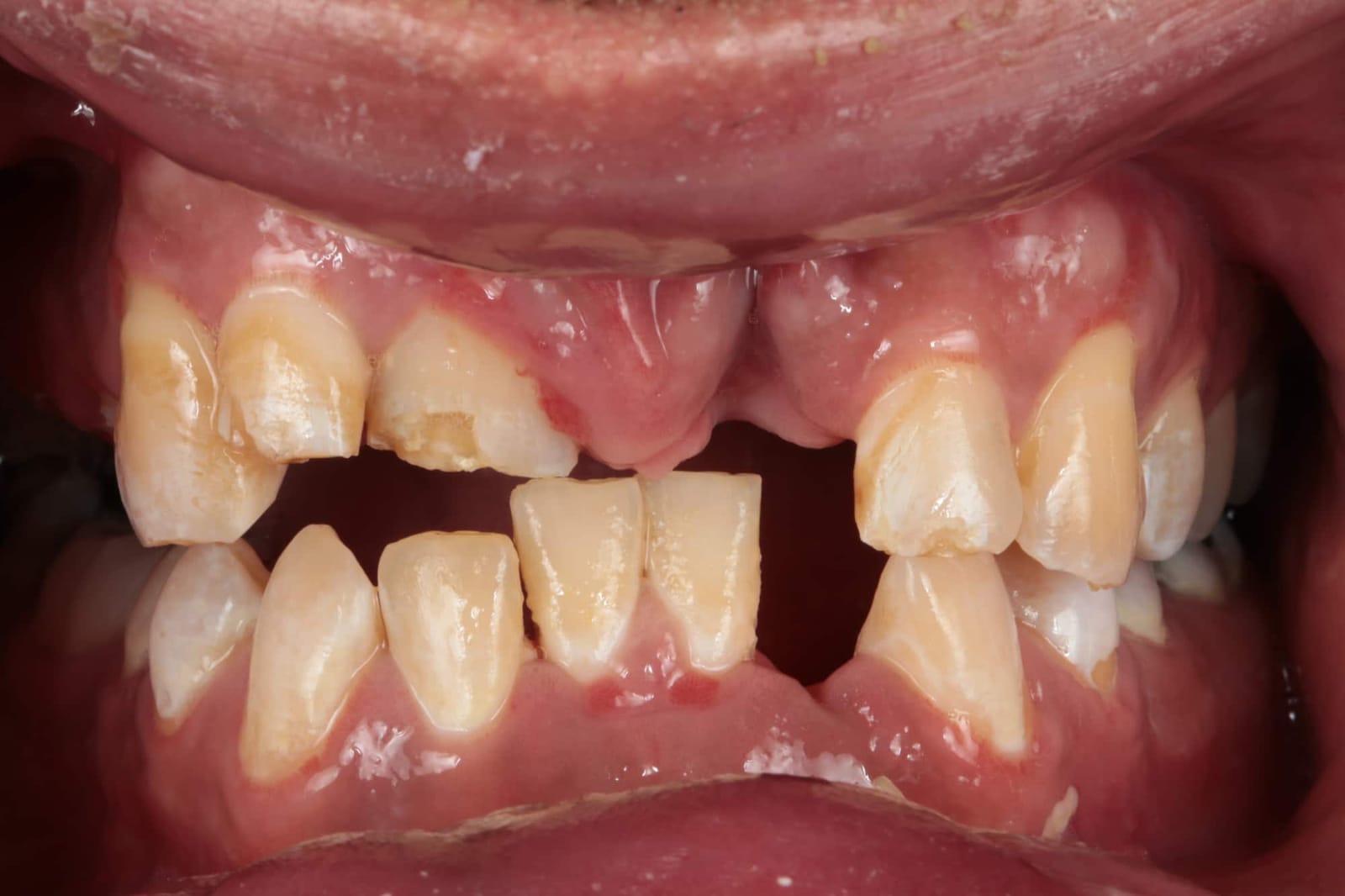
FP-2 is the situation where the patient may still have their own teeth, but the bone underneath them has already gone. Certain patterns of bone loss simply do not let you rebuild the tooth in full, and the minute the teeth are extracted the gum collapses and what you are left with looks long.
So an FP-2 is the eleven millimetre tooth plus another two or three millimetres of root shape, meeting the gum underneath and closing the spaces. That is the design.
Sometimes, because of earlier damage or bone loss or teeth that have been missing for years, the space is longer than eleven millimetres — eleven to thirteen, or fourteen. The extra three or four millimetres can be done as root forms: ceramic shaped into the form of a root, sometimes with a little pink between them, but generally just the root form itself.
It makes a very long tooth, and it gives the illusion of a tooth with its root showing beneath the lip. It is hidden under the lip, so it is not unattractive; lift the lip and you see root structure, like a longer tooth.
It is an option, and it is a conversation to have with Dr. Reshad — whether you would be comfortable with an FP-2 design, or whether you would prefer more pink ceramic. You can always ask whether your ridge can be rebuilt far enough to reach the FP-1 option instead, which is not available to every patient, because of long-term damage. These are the things that become clear during your consultation.
FP-1, FP-2 and FP-3
When a reconstruction is fixed to implants, what it has to replace depends on how much was lost before treatment began — and the thing that matters most is not the teeth, it is the gum. Dentistry describes that in three classes, FP-1 through FP-3. They are not grades of quality; one is not better than another. They describe how much of the tooth and how much of the surrounding pink tissue the new teeth are standing in for.
Which class a case belongs to is settled at the planning stage, before anything is placed, because it changes where the implants go. That is the whole argument for planning the finished teeth first and working backwards to the surgery — the classification is a consequence of the plan, not a label applied afterwards.
FP-1 →
The tooth, and nothing else
FP-2
A tooth, and a little of the root — this page.
FP-3 →
The teeth, and the gum that went with them
The Lip-Line Classification →
How Dr. Reshad classifies every full-arch case before surgery, so the join between gum and prosthesis stays under the lip.
Frequently Asked Questions
FP-2 is the class where the patient may still have teeth but the bone beneath them has already gone, so the tooth cannot be rebuilt in full. The restoration is the eleven-millimetre tooth plus two or three millimetres of root shape in ceramic, meeting the gum underneath and closing the spaces.
The extra length sits beneath the lip, so it is not seen in a smile. Lift the lip and you see root structure, like a longer tooth — the illusion of a tooth with its root showing, which is what a natural tooth does when gum has receded.
Sometimes. It depends on whether the ridge can be rebuilt far enough to let the teeth emerge from natural tissue, and that is not available to every patient because of long-term damage. It is one of the things that becomes clear during the consultation, along with whether you would prefer root forms or a little more pink ceramic.
Medically reviewed by Dr. Mamaly Reshad, BDS (Lond), MSc (Lond), Cert Pros (USC), Prosthodontist — Last reviewed July 2026
Ready to Transform Your Smile?
Schedule a private consultation with Dr. Reshad to discuss your goals and explore your options.