FP-1 Case 2 · Implants · Reconstruction
Restoring a Collapsed Bite Without Removing Everything
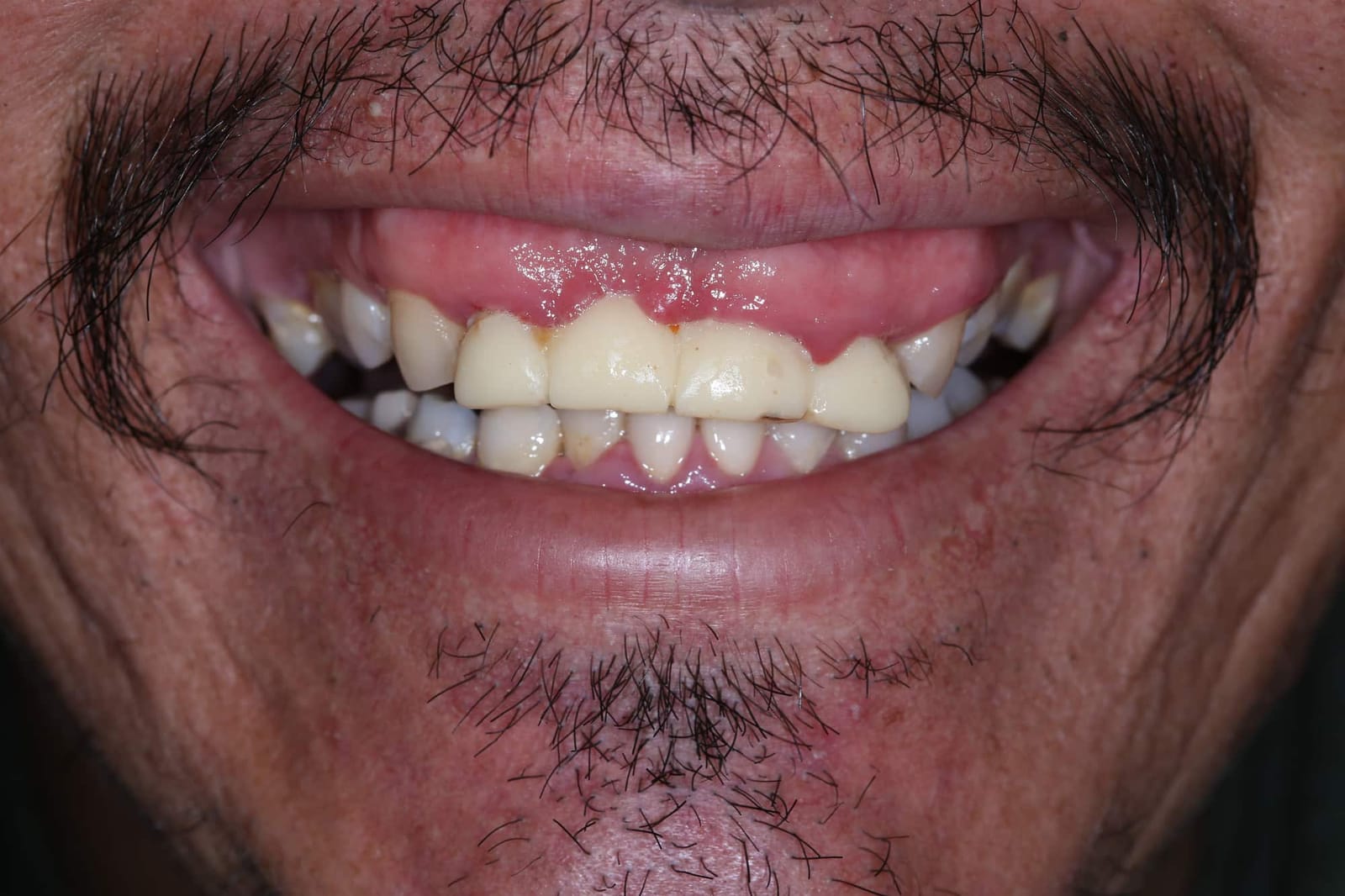
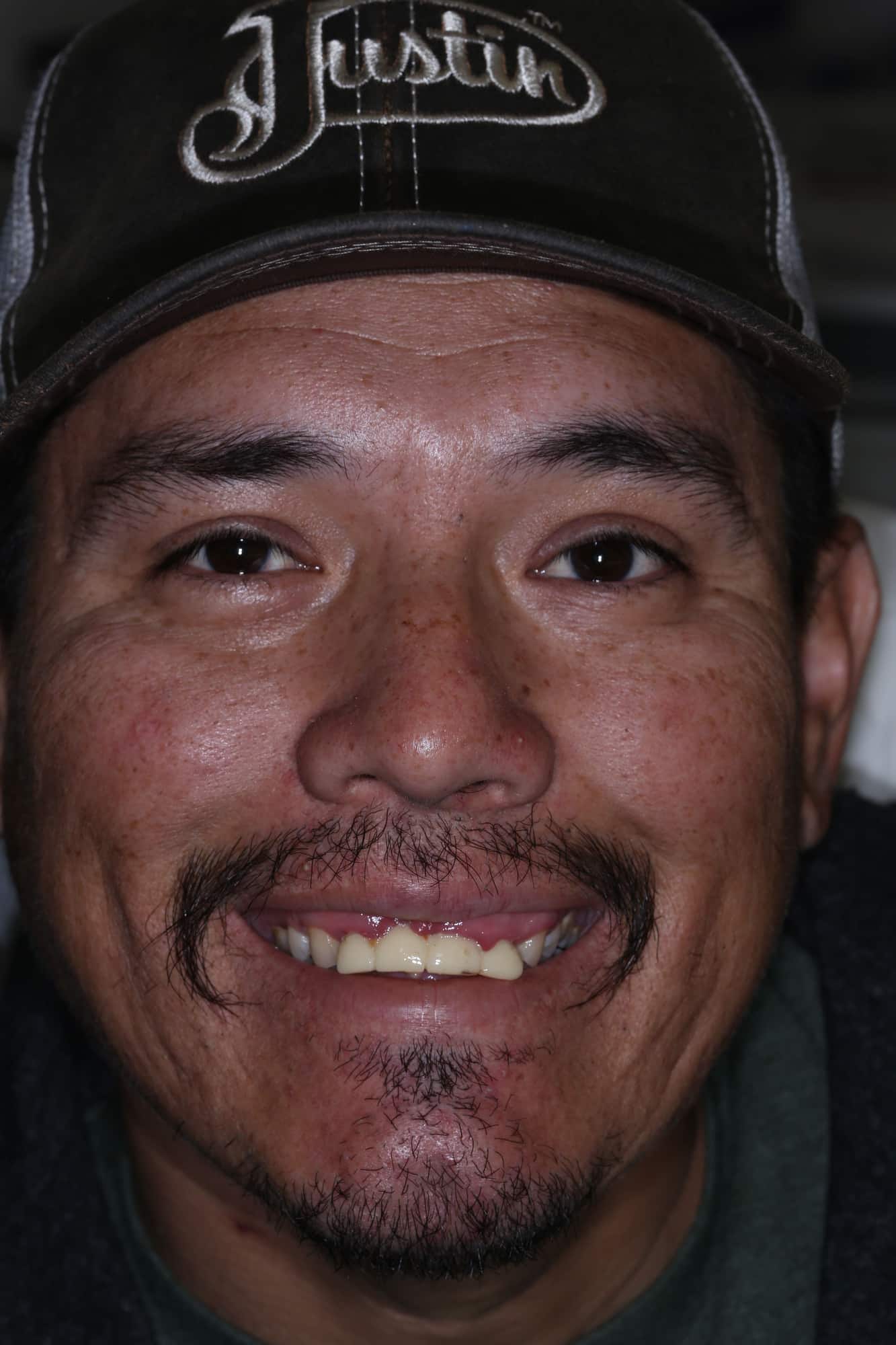
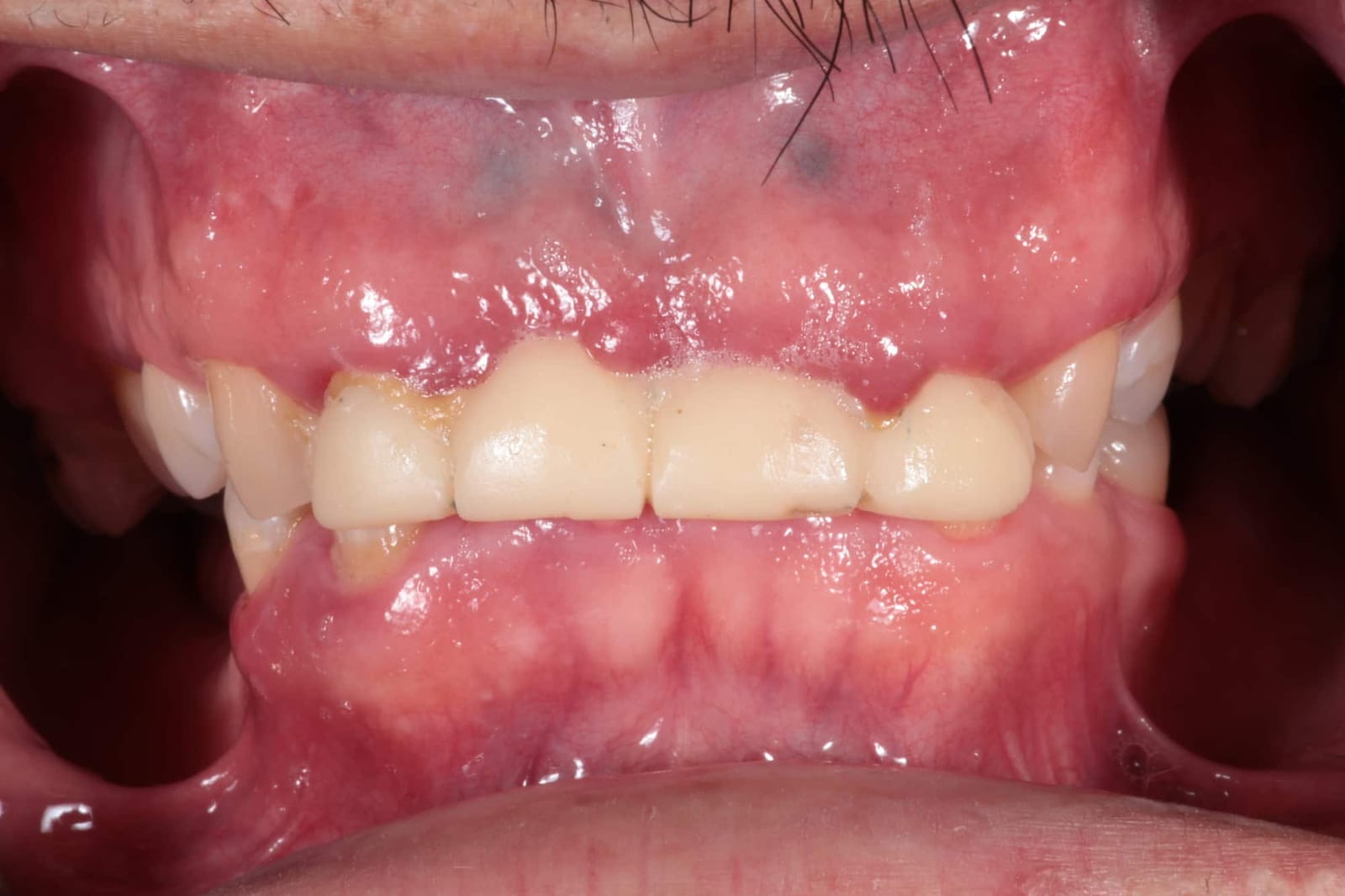
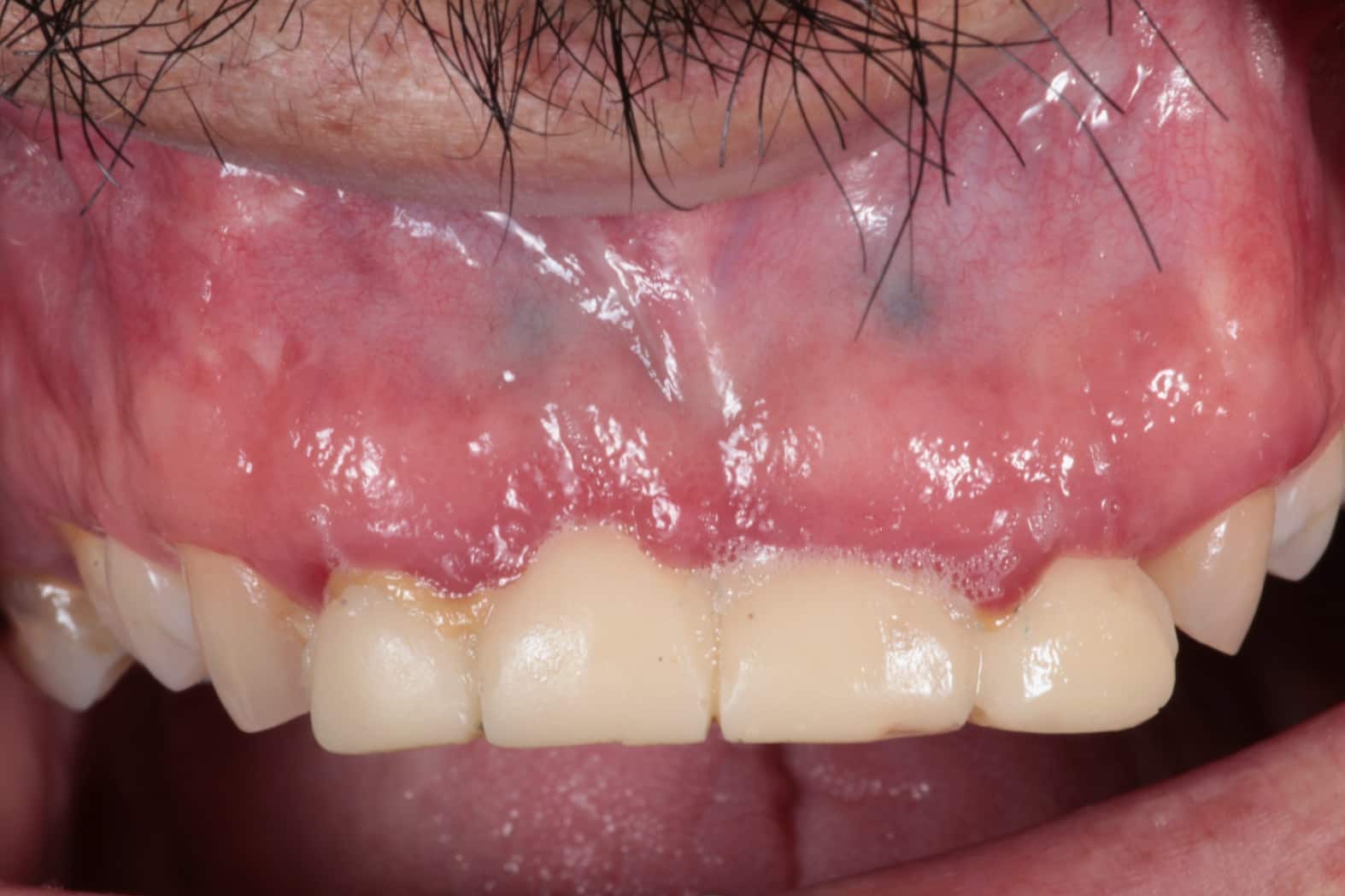
A completely collapsed bite. From outside, a gummy smile and teeth worn to almost no height. Inside, worse.
First consultation
What the collapse had done
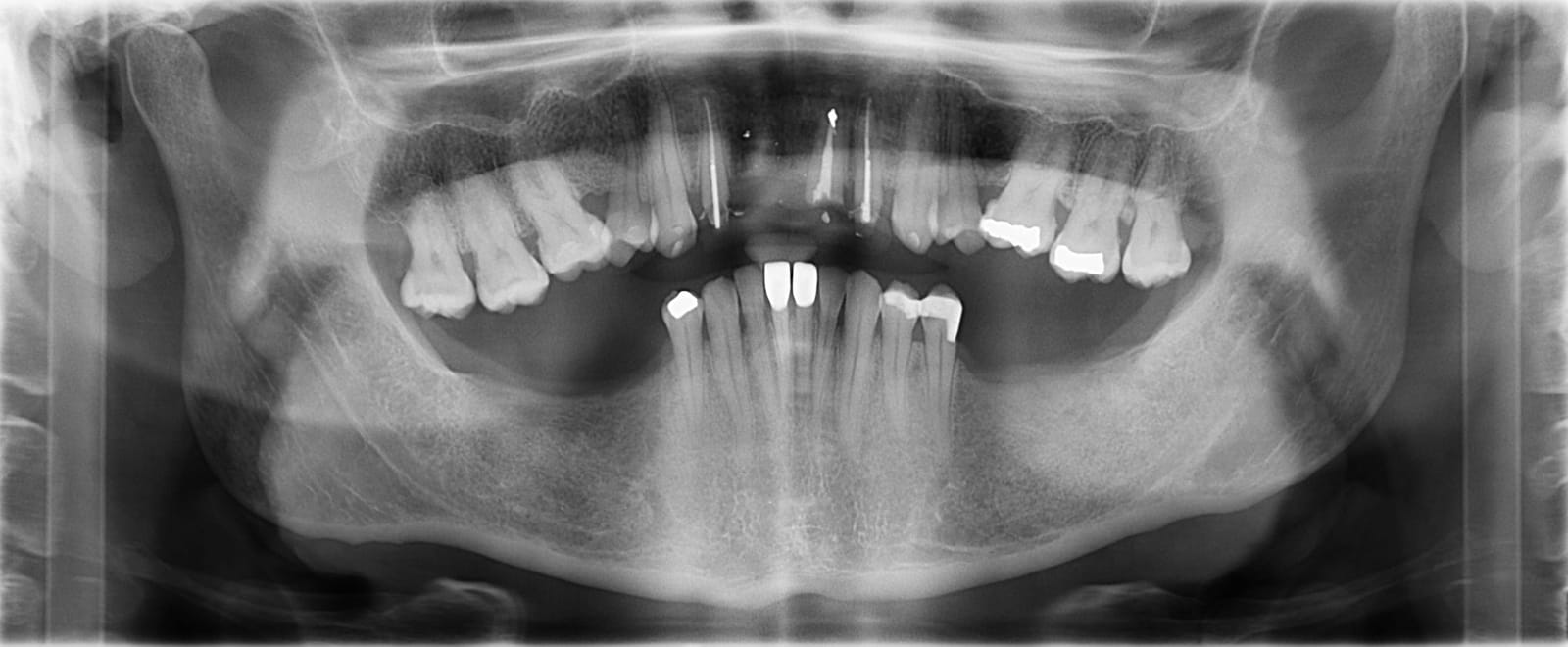
His upper teeth had overgrown so far that they had brought the upper jaw down with them. The gum came with it. What you see when he smiles is gum.
Then there is the relationship between the two jaws. Upper front teeth should cover only ten to fifteen percent of the lower ones. His covered one hundred percent. A massive over closure, and a front dynamic that had nowhere left to work.
This is not a case of replacing teeth. It is a complete restructuring: the bite, the tooth display, the gum display, the jaw position, and the relationship between the upper jaw and the lower.
Defined by the specialty, not by preference
By the definitions set out in the Glossary of Prosthodontic Terms, which sits within the American Dental Association's approval system, this is a case for a prosthodontist.
The training is the reason. Managing complexity of this order without damaging the structures underneath. Executing form, function, biomechanics and aesthetics together rather than in sequence. And protecting the health of the jaw joints over the long term, which is the part nobody sees and everybody feels.
The same problem, upside down
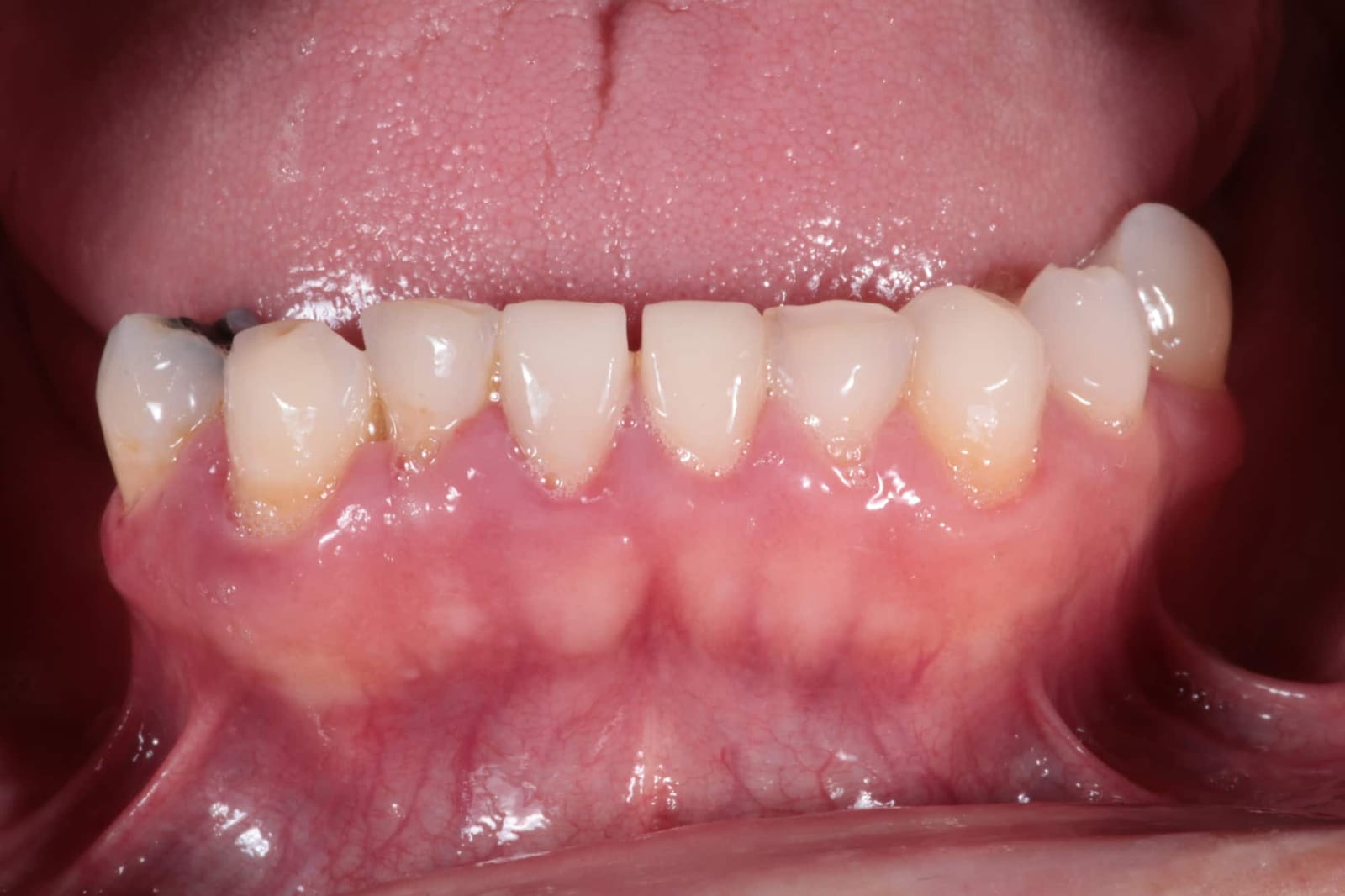
The lower teeth had worn too, and the same compensatory mechanism had run there: as the teeth shortened, the gum and bone in the lower jaw overgrew to fill the space.
With no stable relationship to bite into, those teeth kept erupting until they were striking the palate.
Everything had to be brought back into position at once, while protecting function and speech, and while arriving somewhere aesthetic at the end of it.
The end is decided first
A prosthodontist envisions the finished result before anything is touched, through a series of scans and measurements.
Reference points in the mouth and in the face determine where everything should end up. The training and the tools are what connect the starting point to that ideal end point, and then fill in every step in between.
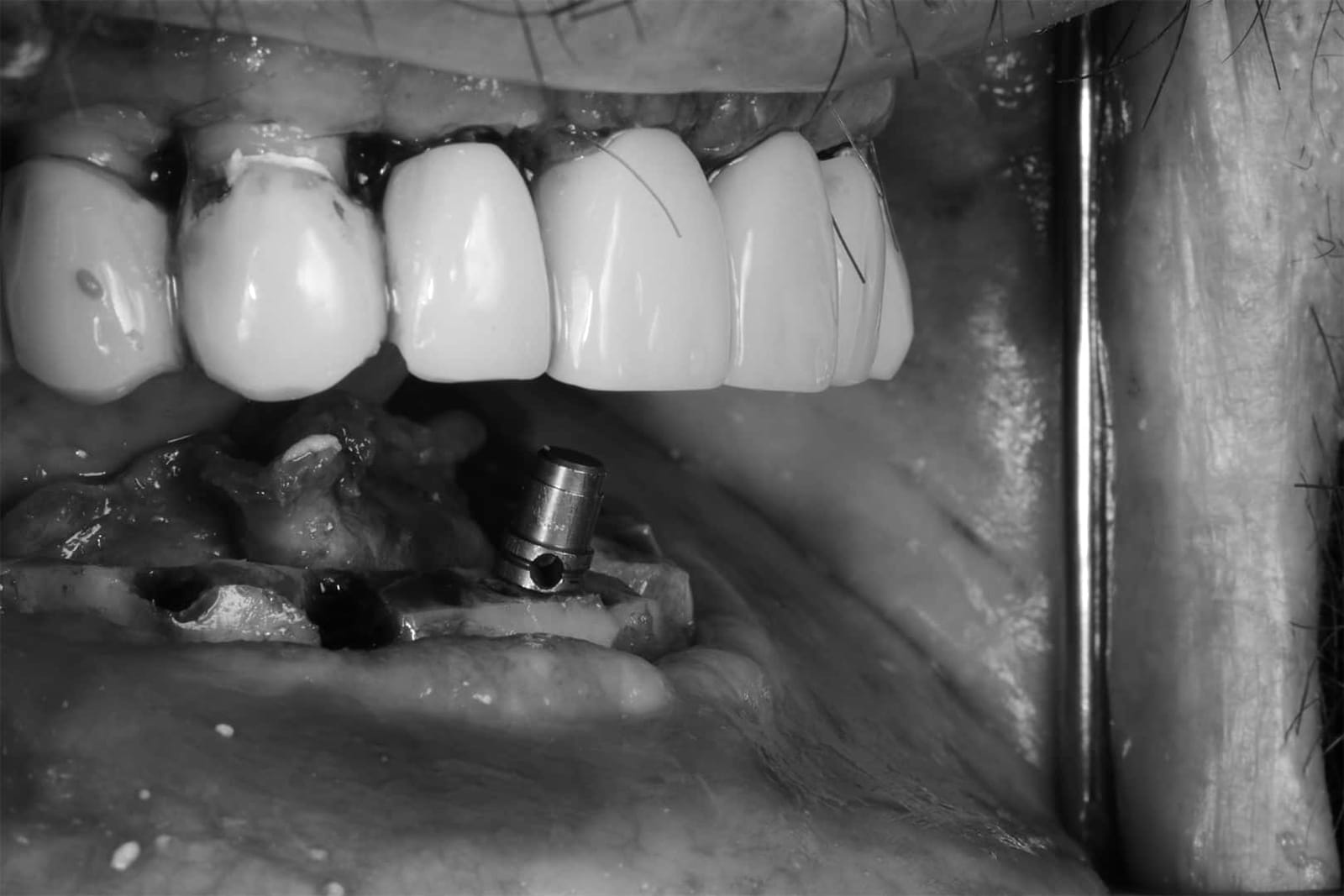
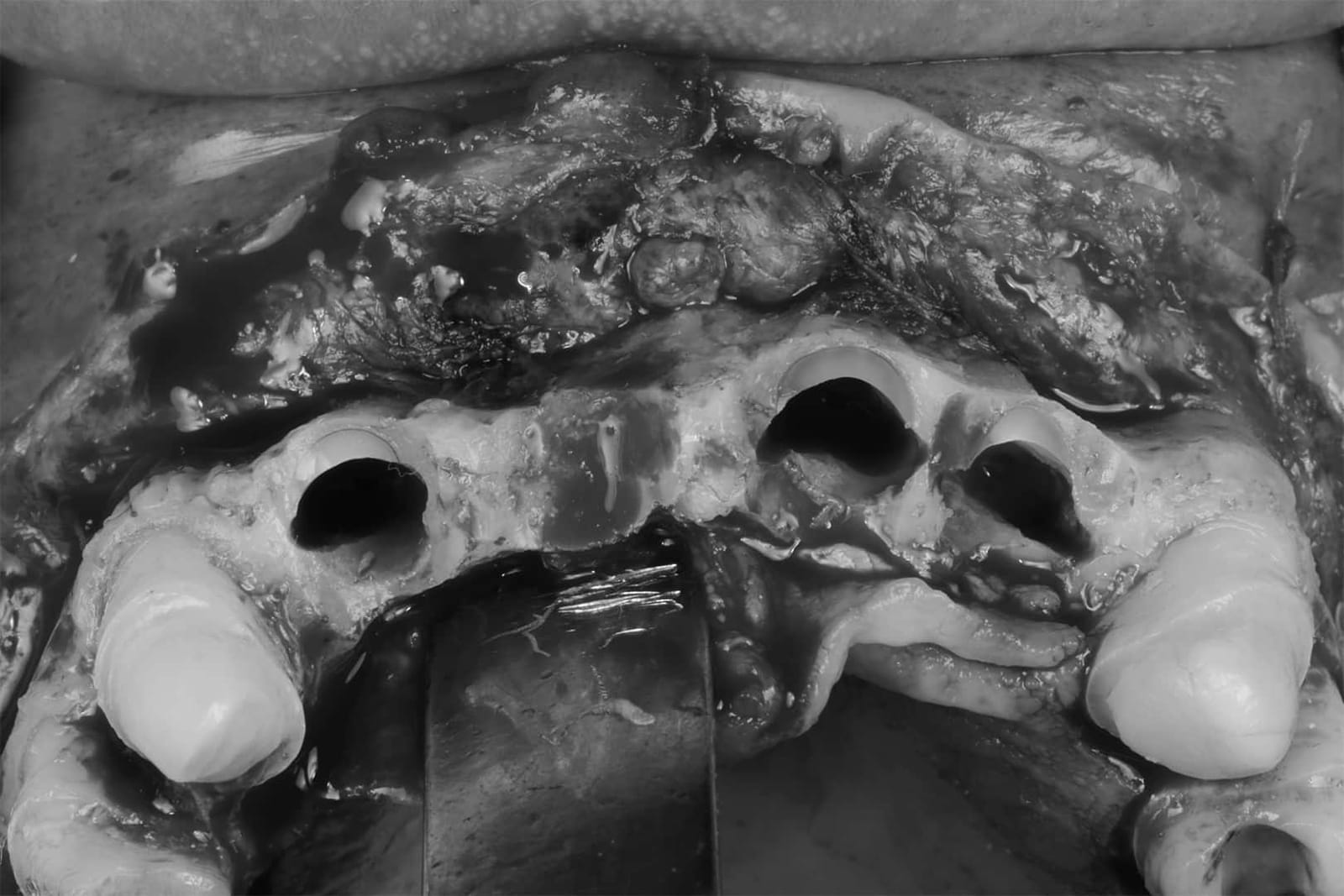
Here that meant opening the bite, reducing the overgrown bone height in the lower jaw to create room, and placing the upper implants far deeper than the current bone level. A series of events performed together rather than one after another, which shortens the treatment and moves quickly to an aesthetic provisional that is already an improvement.
Three prognoses, three different decisions
Walk into an implant practice and every tooth comes out. A prosthodontist sorts them instead.
Teeth with a good to excellent prognosis are kept. Teeth with a hopeless prognosis are removed. Teeth with a fair to poor prognosis can still do useful work: retained in part, they preserve the bone and the structures around them.
That combination is what keeps a case conservative. Preserve as much of the natural anatomy as possible, and the biology behaves as though nothing was ever lost. The body is not told that a tooth has gone, so the gum does not shrink away from the space.
This is what makes his case remarkable. Some teeth preserved, others removed, gum lines reshaped, parts of roots retained, and implants placed among them. Layer on layer of technique, arriving at something unaggressive, healthy, natural and built to last.
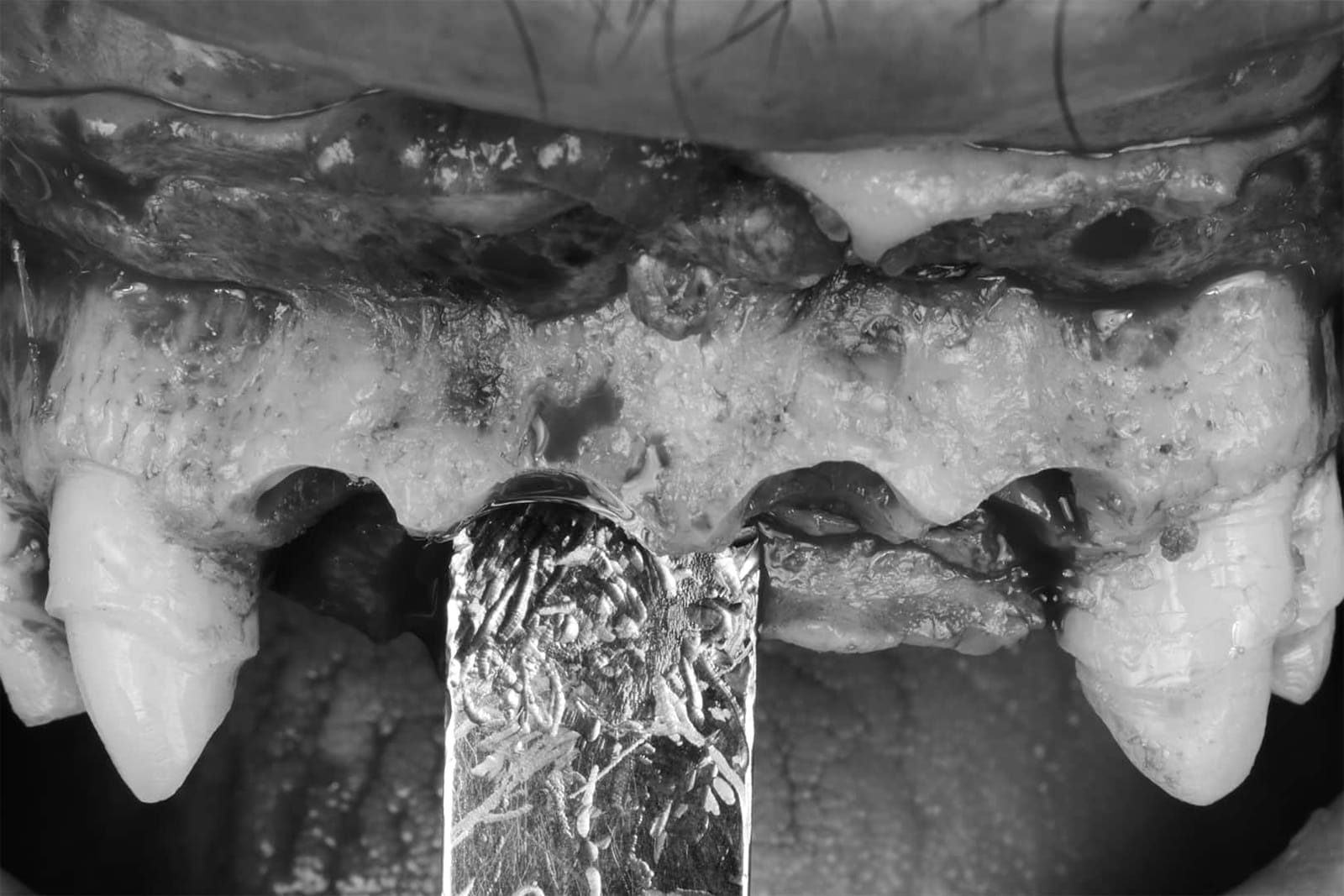
To the scallop of the gum that will sit on it
The bone is shaped to the scallop of the future gum, not to the bone that happens to be there.
Build the housing to the shape the tissue needs to take, and the tooth that emerges from it looks like it grew there.
Keeping a sliver of the root
Where an implant is not going into that space, slivers of the original root are deliberately left behind.
A root is not passive. Its ligaments communicate with the bone, and that conversation is what tells the bone to stay. Remove the root entirely and the stimulus disappears, so the bone resorbs and the architecture collapses inward.
Retaining a sliver keeps the conversation going. The body reads it as a tooth still present, holds the bone, and holds the shape of the gum we intend to build. Implants are then placed in and around those sites.
The technique is socket shielding, and the advanced form of it used here has been developed and refined by Dr. Reshad and his team. Understood properly, it produces results that hold their shape and their health for the long term.
Everything behind him in a day
With the planning and the design done in advance, and the surgery controlled under prosthodontic supervision, all of it was completed in a single visit.
Within the same day, inside twenty four hours, he had a full set of teeth he could function with.
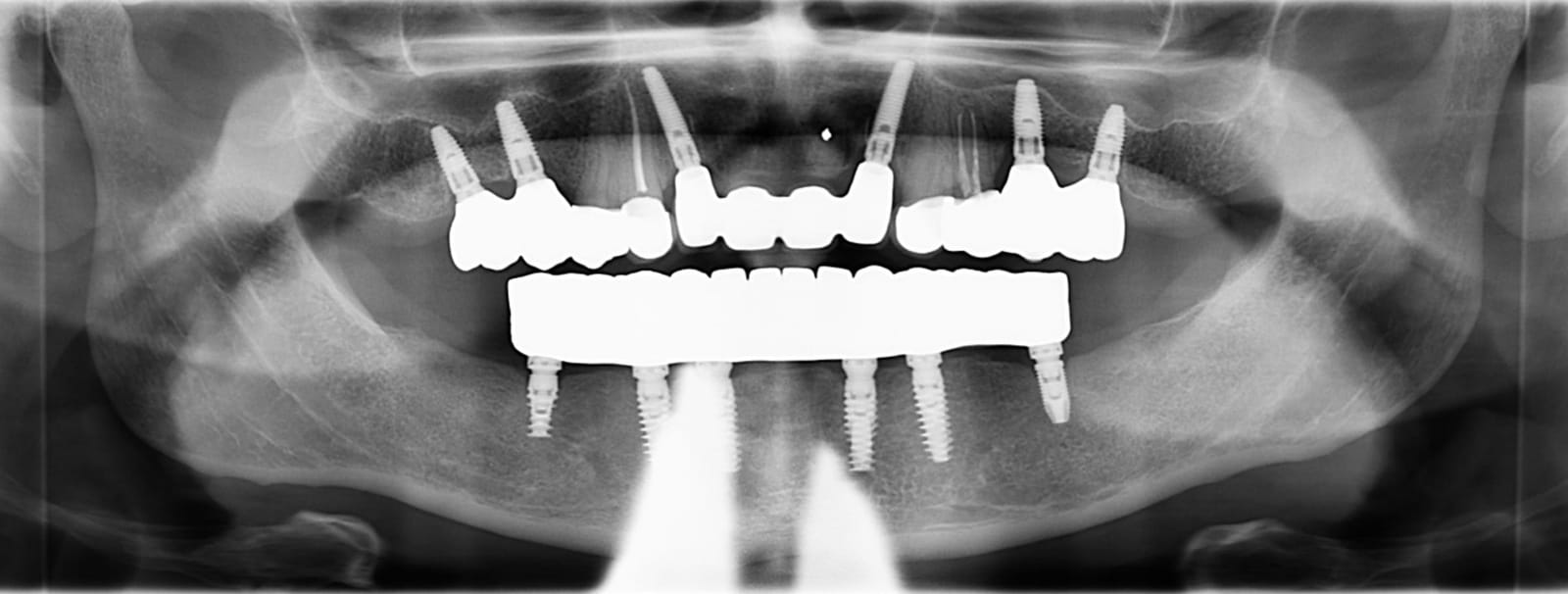
Radiographs of provisional phase
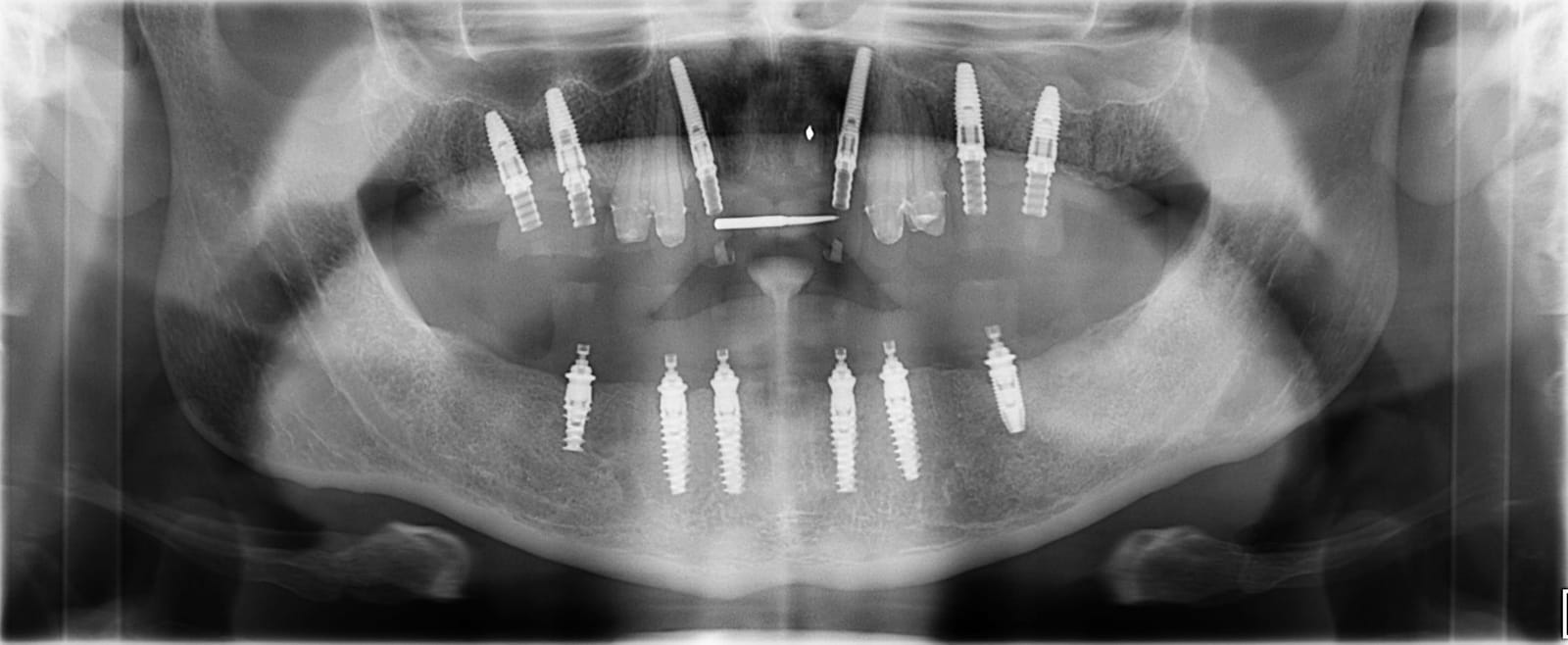
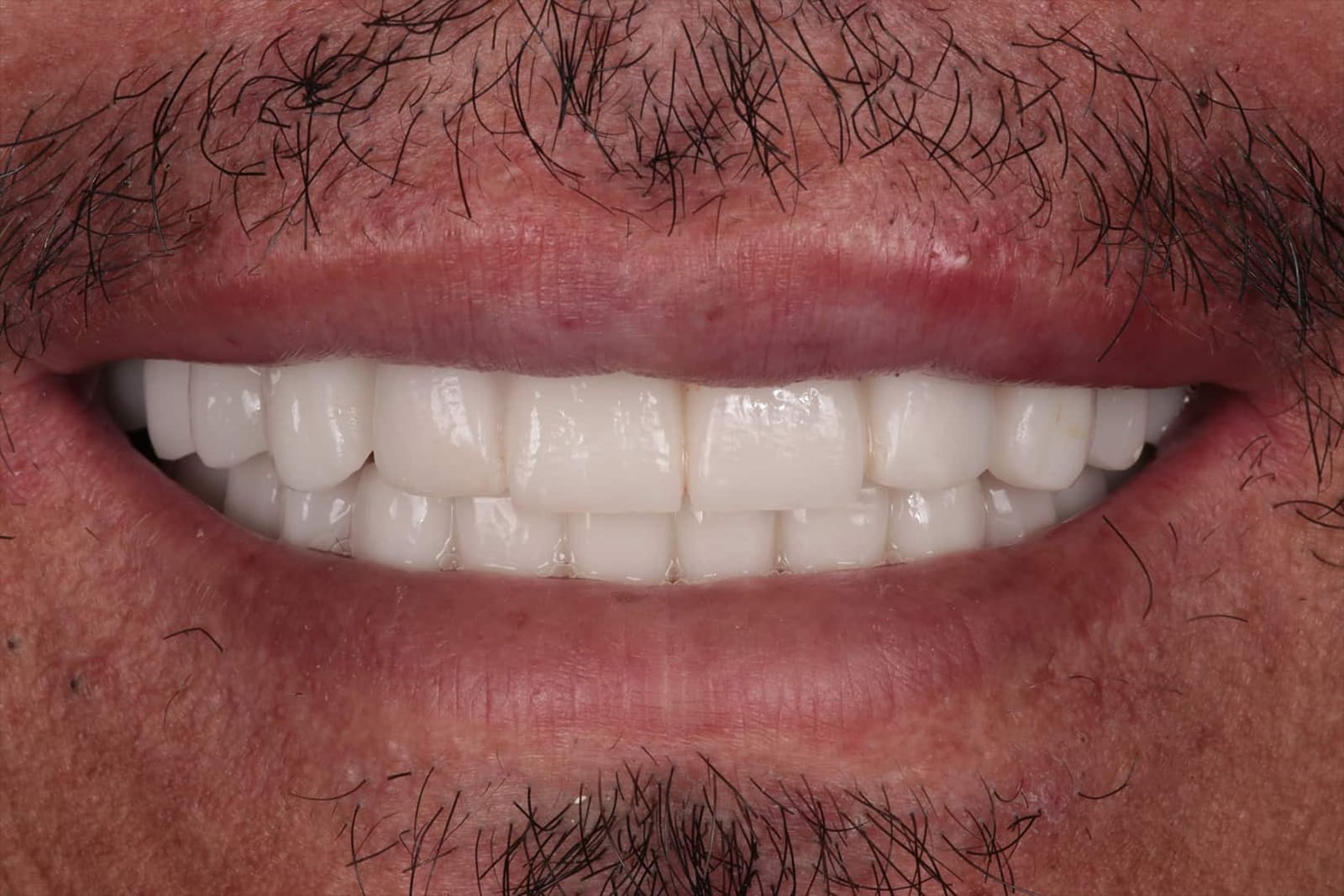
The temporaries are the study
Those teeth were not only functional. They were the test.
Over the following four months, while healing and integration ran their course, form, function, aesthetics and phonetics were all evaluated in his own mouth. He already looked fantastic, and the collapse and the aesthetic problems were resolved. What remained was adaptation, which can only be observed over time. A cheek caught in one area. A slight speech discrepancy. A little roughness somewhere.
Each of those is small, and each is worth catching before anything becomes permanent. If the implants are integrating and the tissue is forming beautifully, only then do we proceed to the finals.
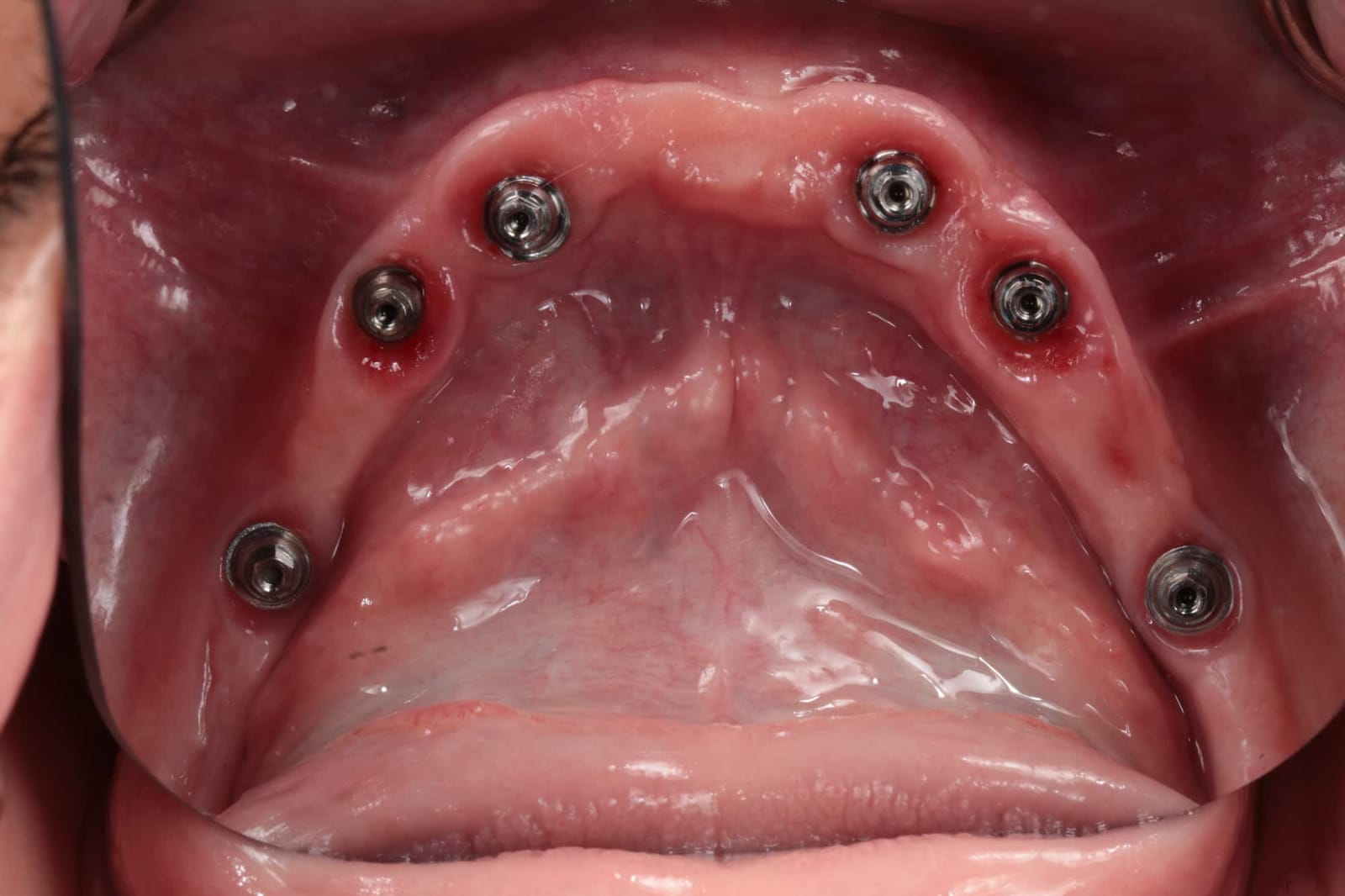
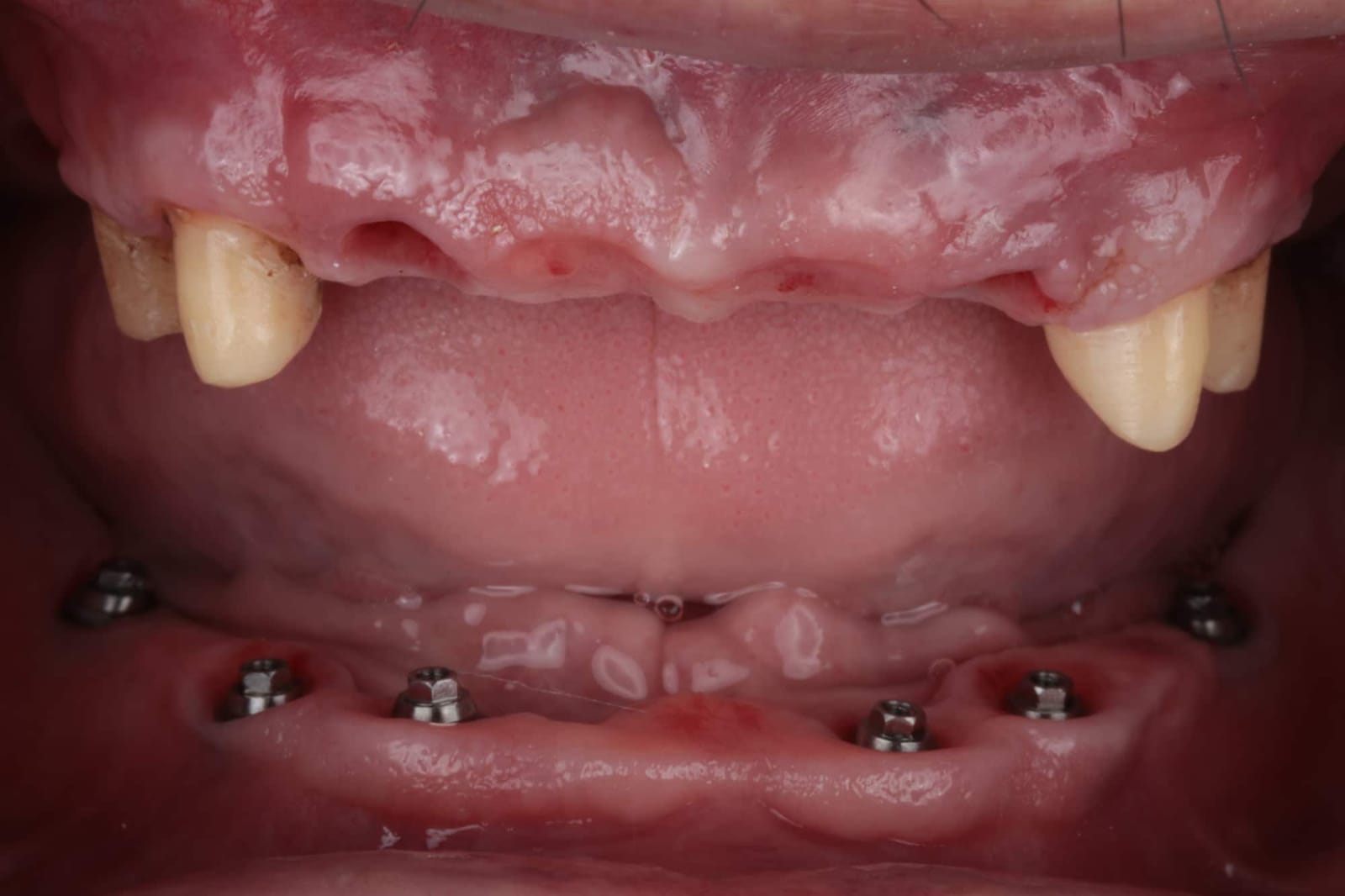
Shaped by the provisional, not by a laser
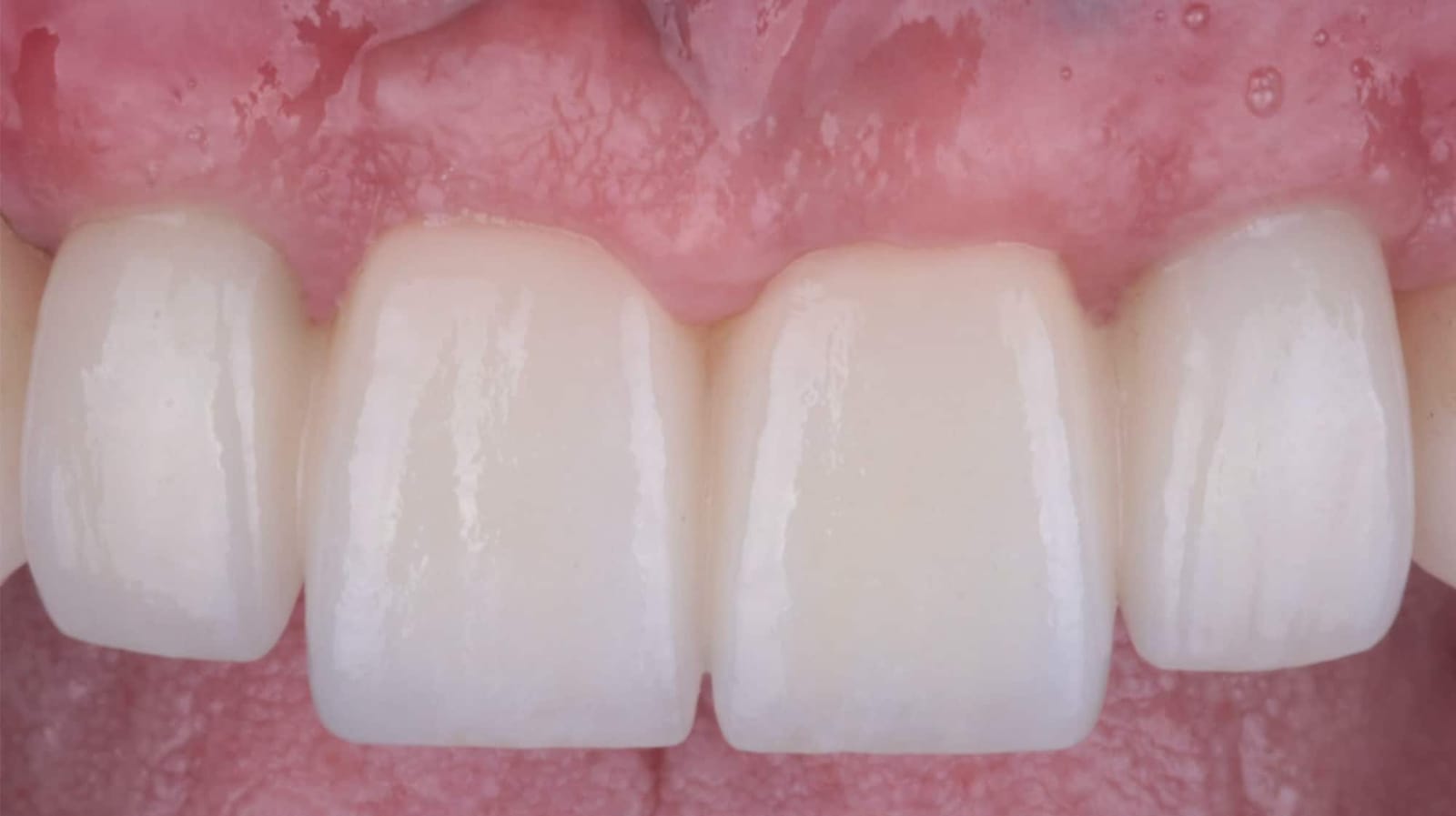
Proper provisionalization produced gum that is healthy and pink, correctly shaped, and fitted to the restoration for cleansing and health. Stable, so it stays where it is, and far less likely to open into gaps beneath.
The scalloping in the upper jaw is the result of a novel pontic design that Dr. Reshad has developed over more than twenty years and published extensively in peer reviewed journals.
The alternative most patients receive is repeated lasering and reshaping: burning tissue into shape and damaging it in the process. This creates the same natural gum architecture through the temporary design itself, during healing, with the evidence behind it to show that it is healthy.
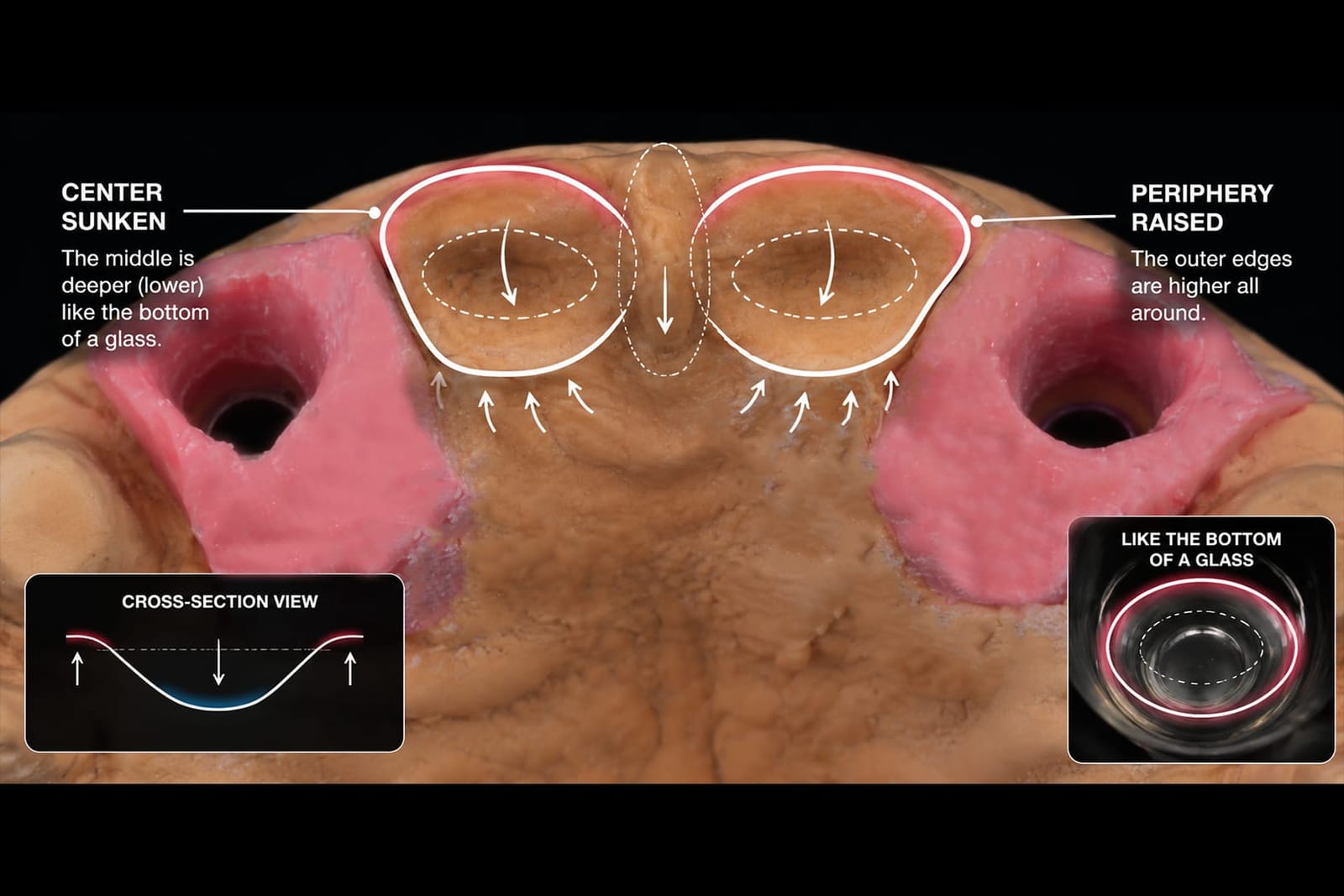
Digital, then physical, then digital again
With minor refinements of shape and aesthetics in ceramic, the final phase could begin with confidence.
Then the digital world comes back into the physical one, and nothing changes shape unless we intend it to. Specific models of the implants and teeth are made, so everything can be proven to work in the real world before it returns to digital and then to his mouth. Everything is verified on a solid cast first. That is part of the skill set too.
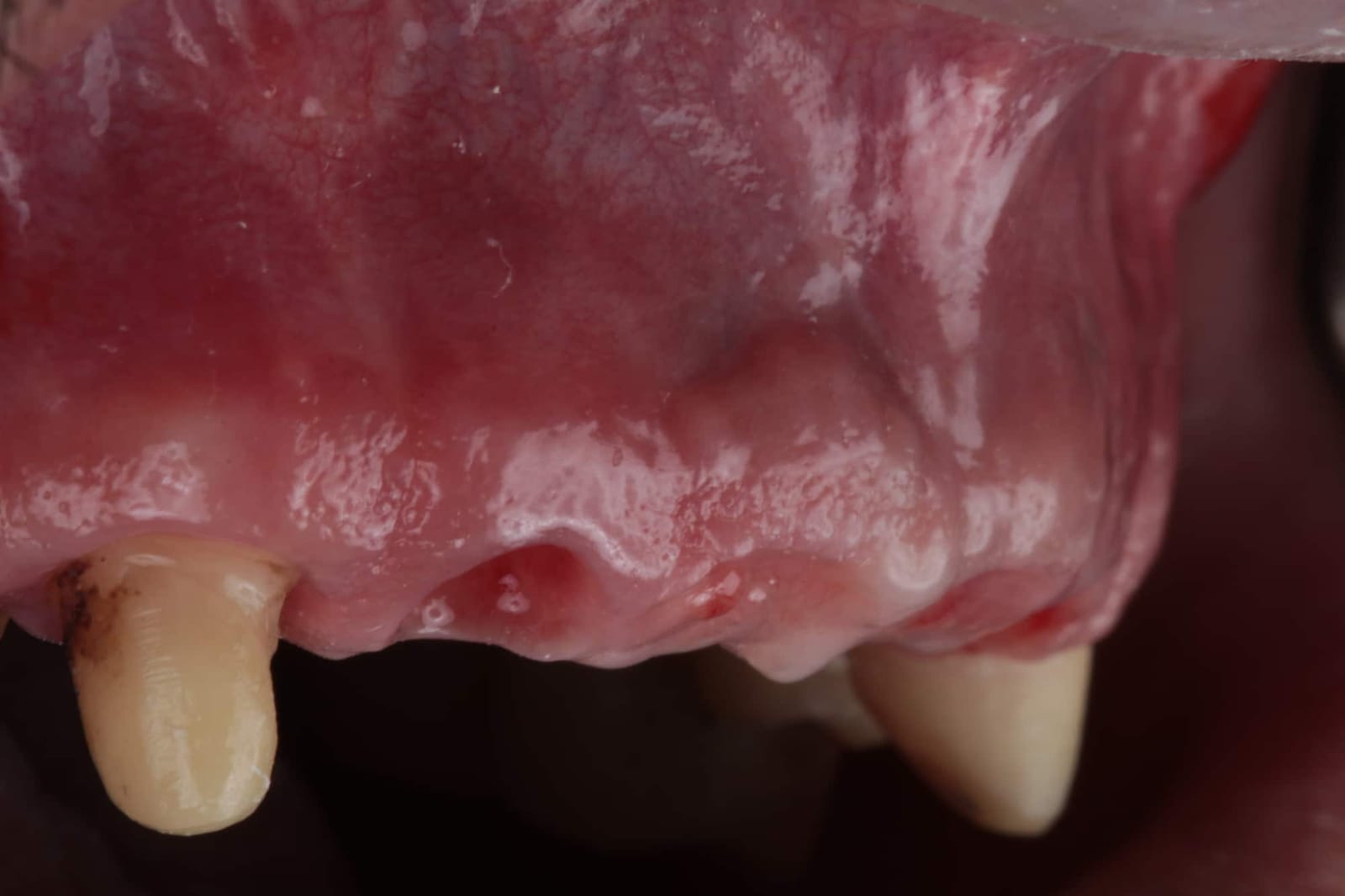
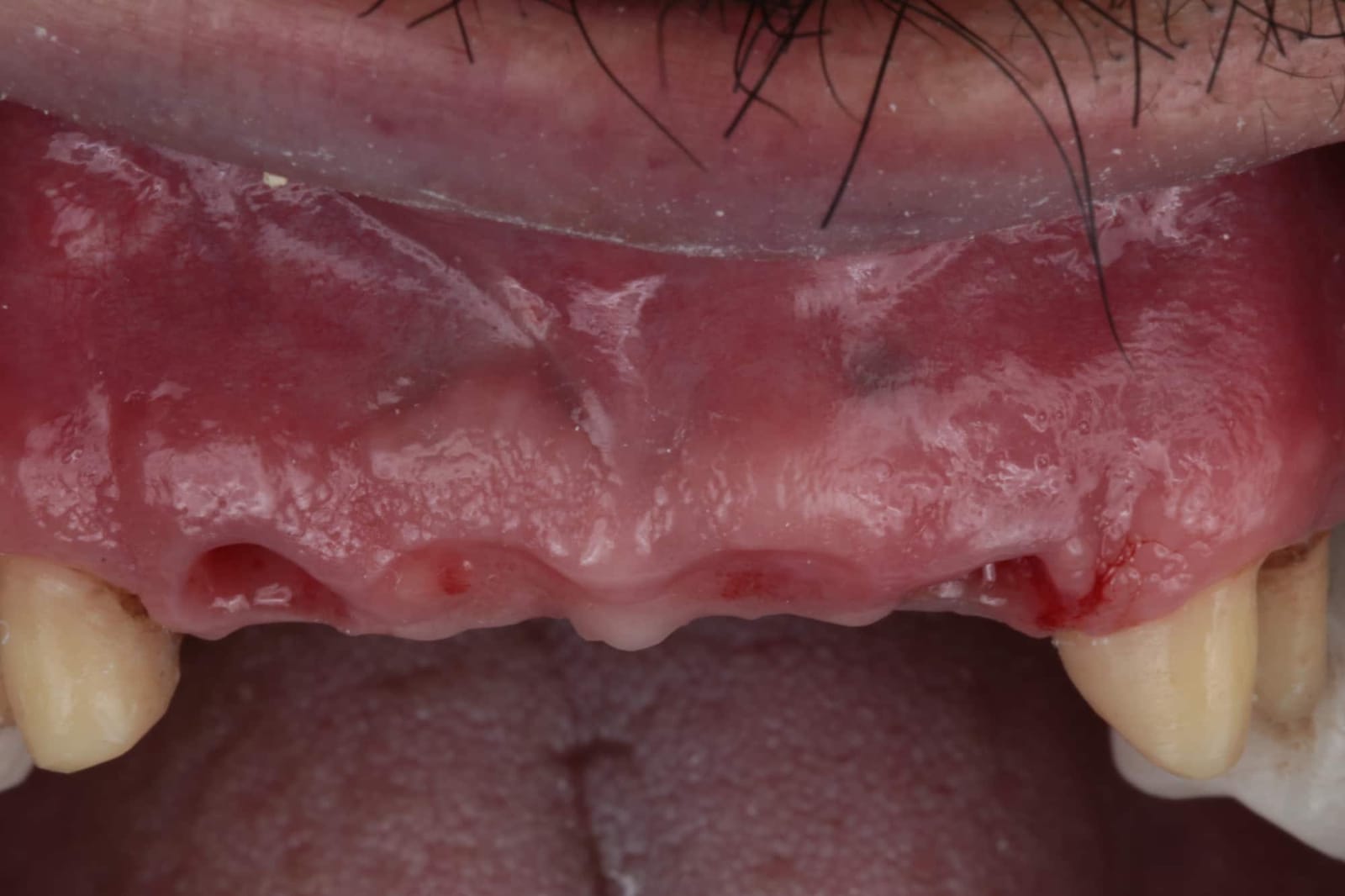
Why the corner teeth were worth keeping
The canines matter most. They are large teeth with long roots, sitting at the corners of the mouth, carrying a significant blood supply and holding the architecture of the arch. Remove them for convenience and the arch tends to collapse inward. Keep them and you keep the fullness of the bone, its tone, and the sculpture of the soft tissue above it.
Designed to what he asked for
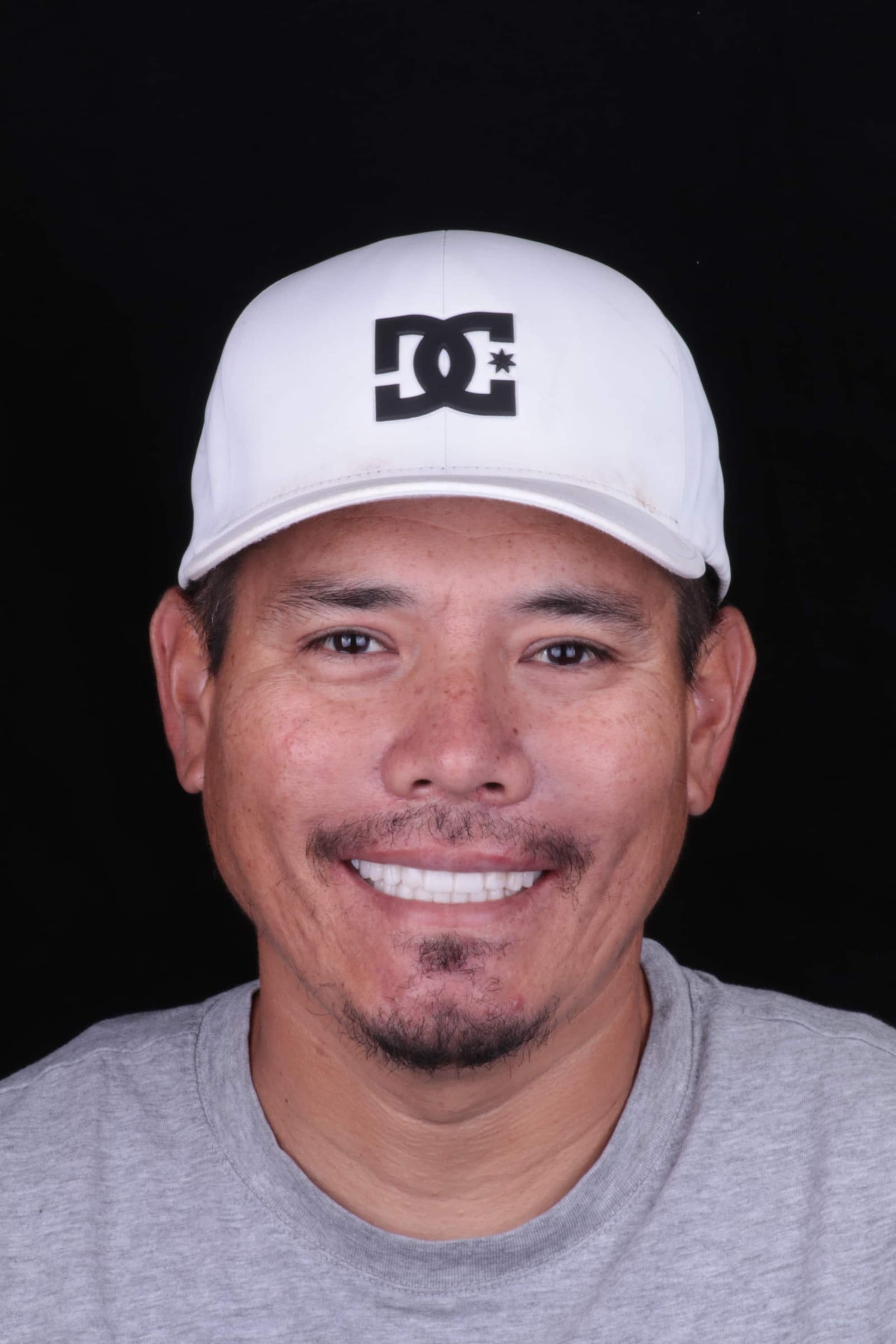
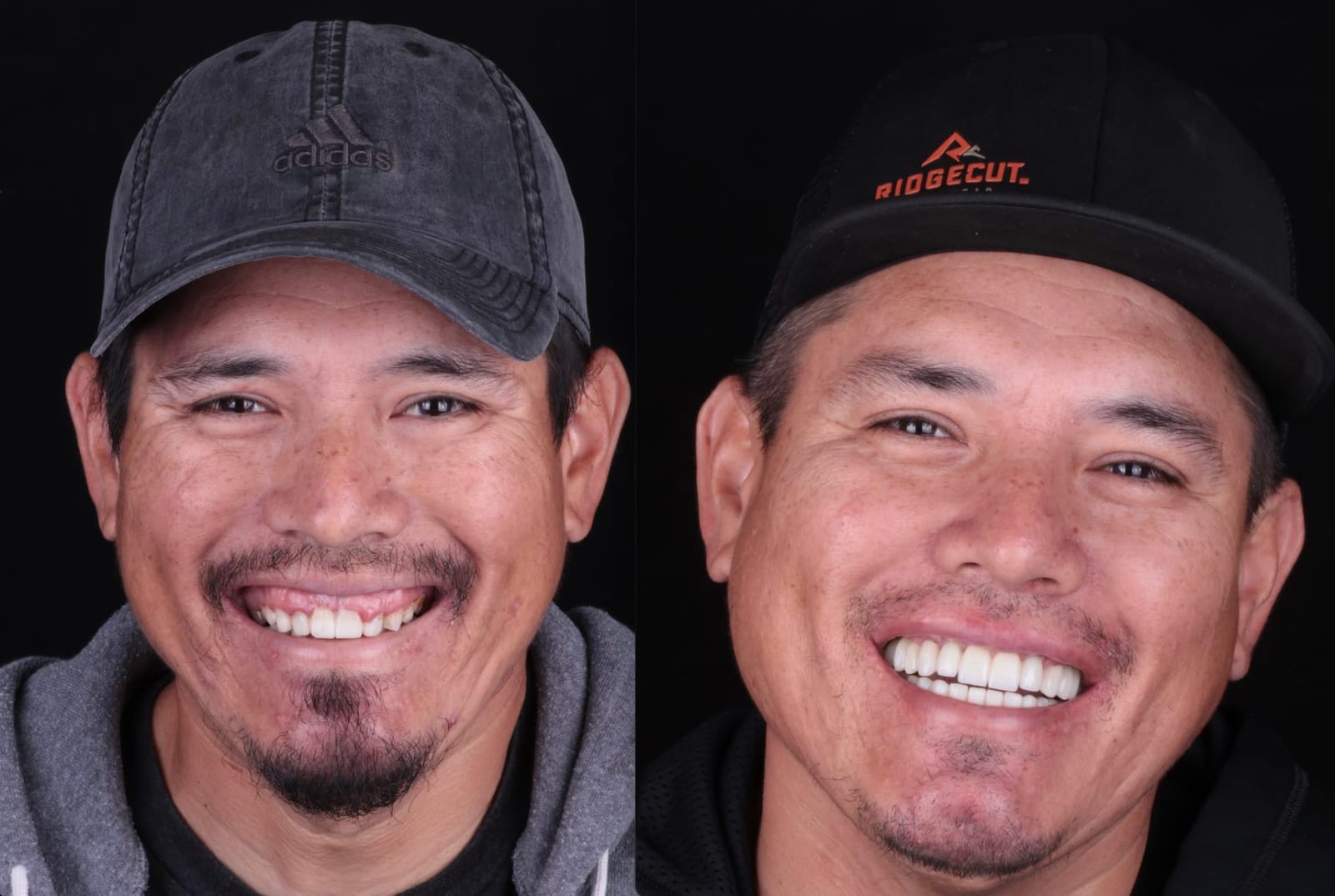
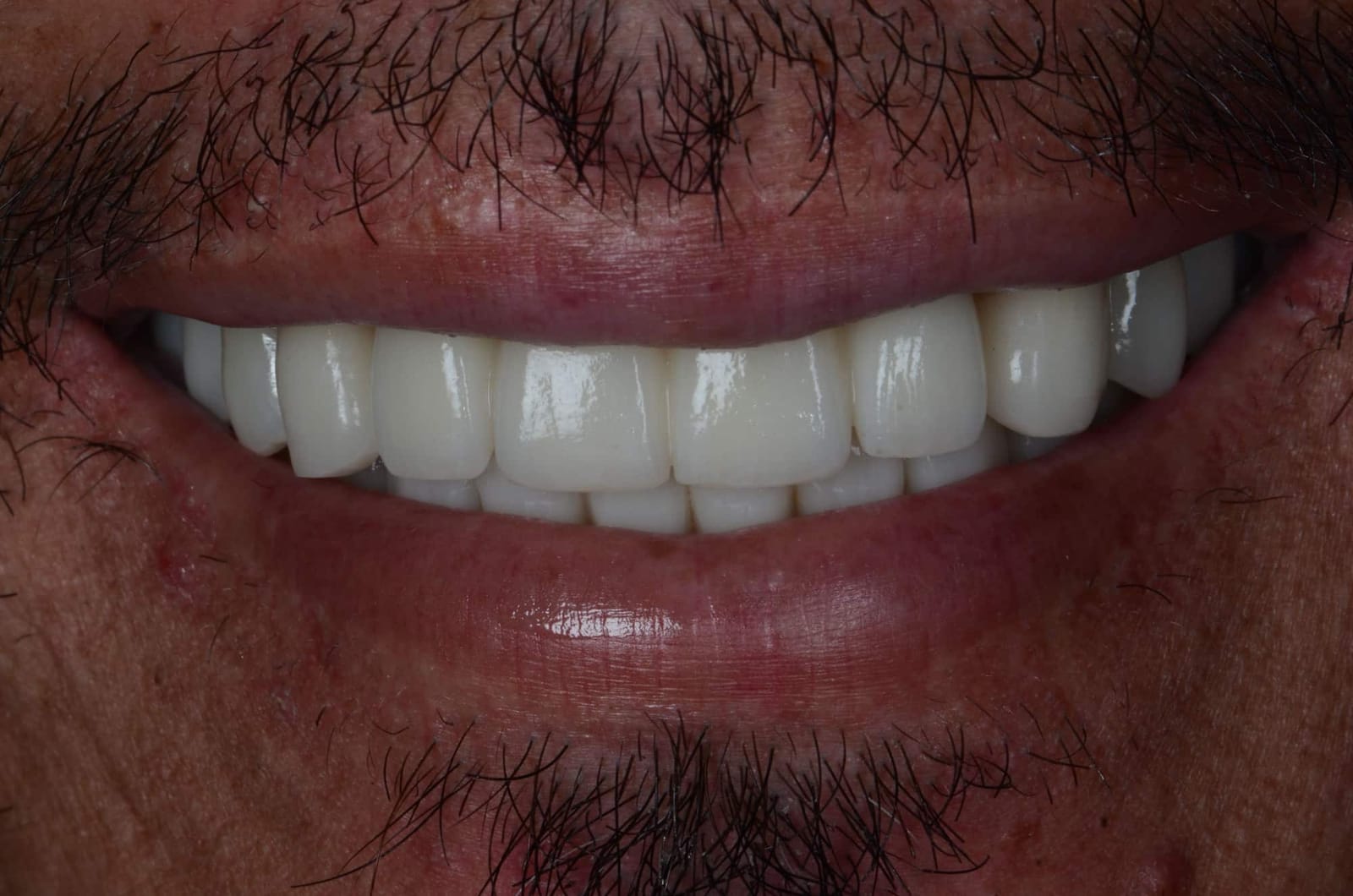
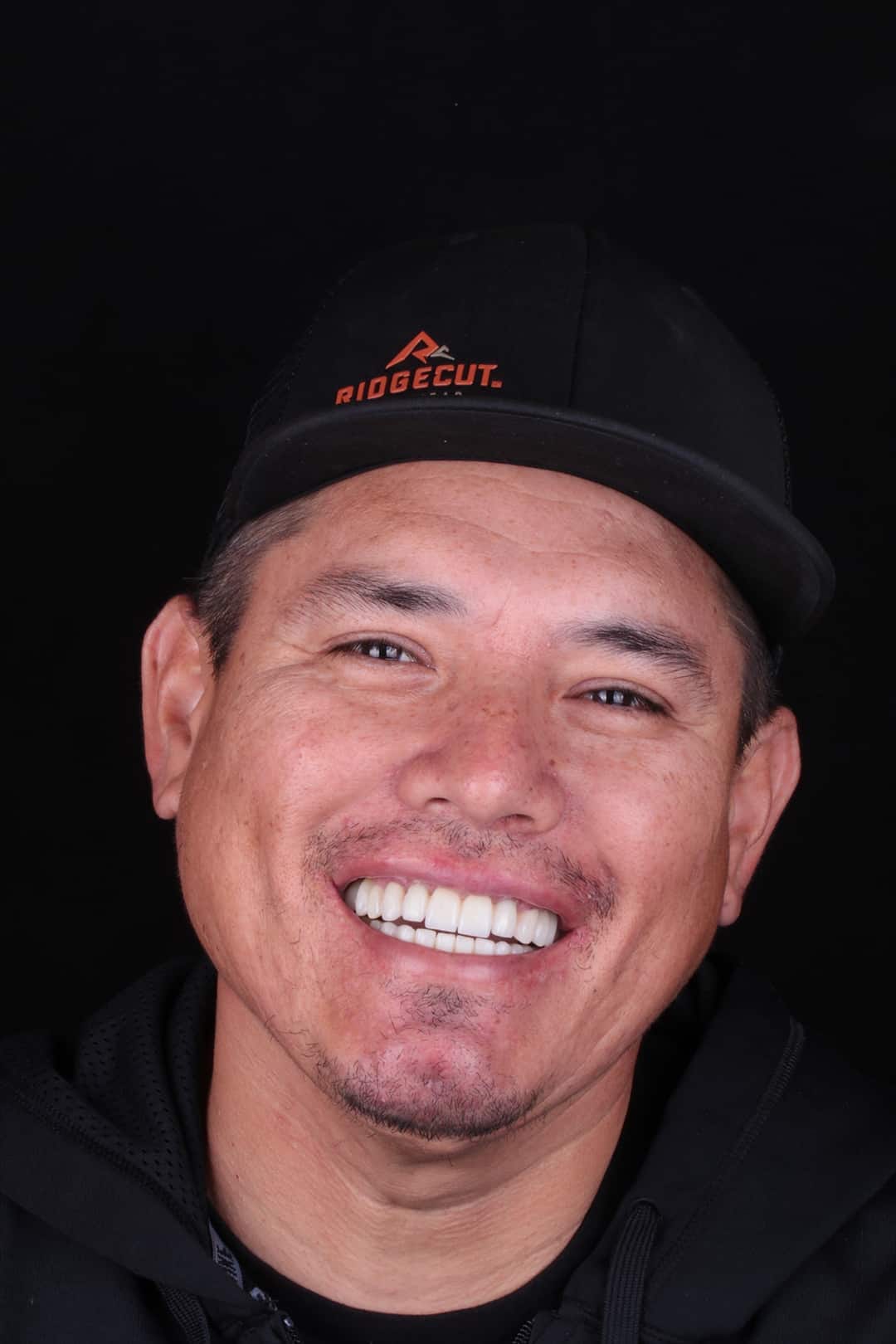
He wanted a more masculine, more structured look. That is what he has.
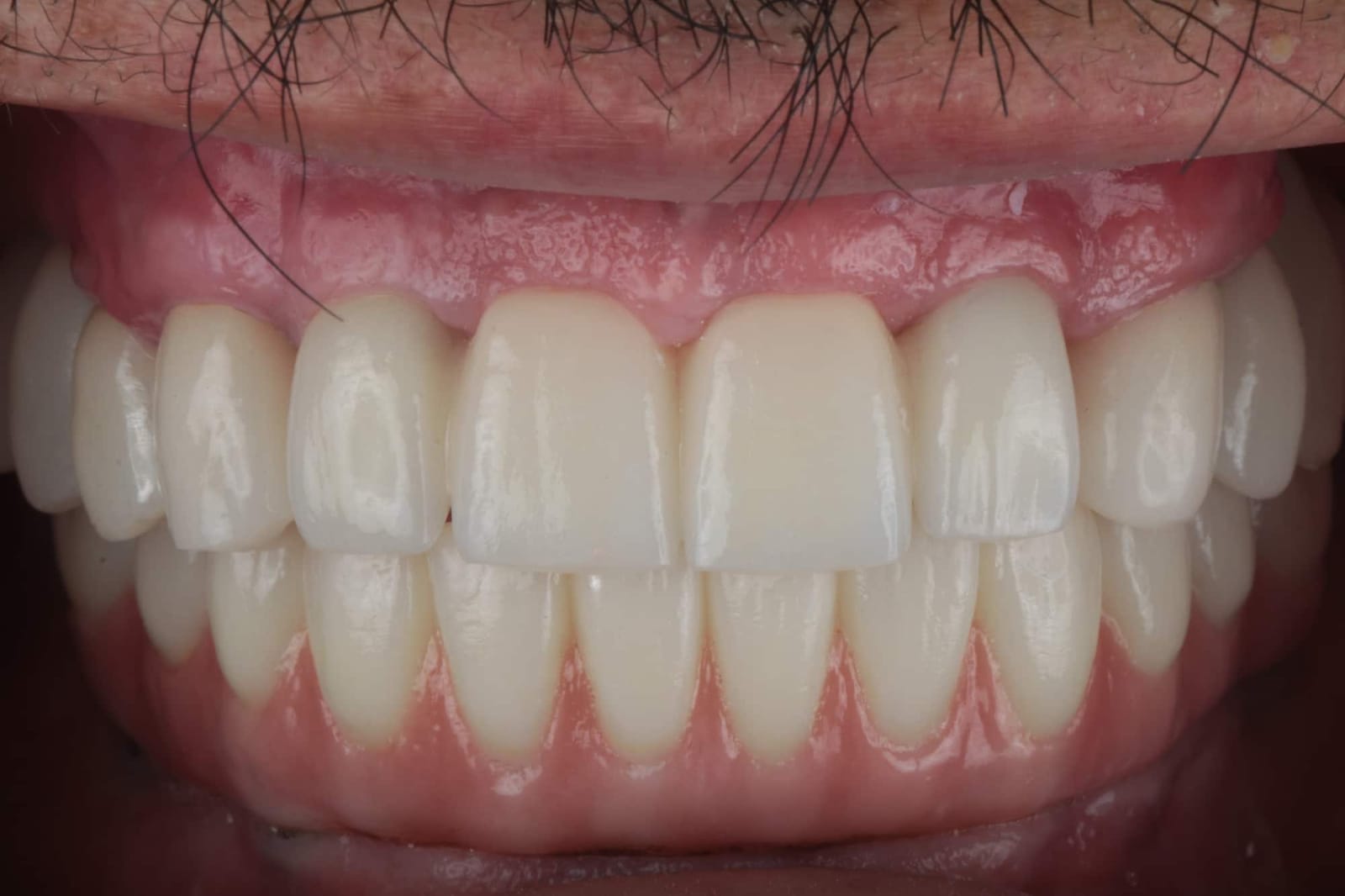
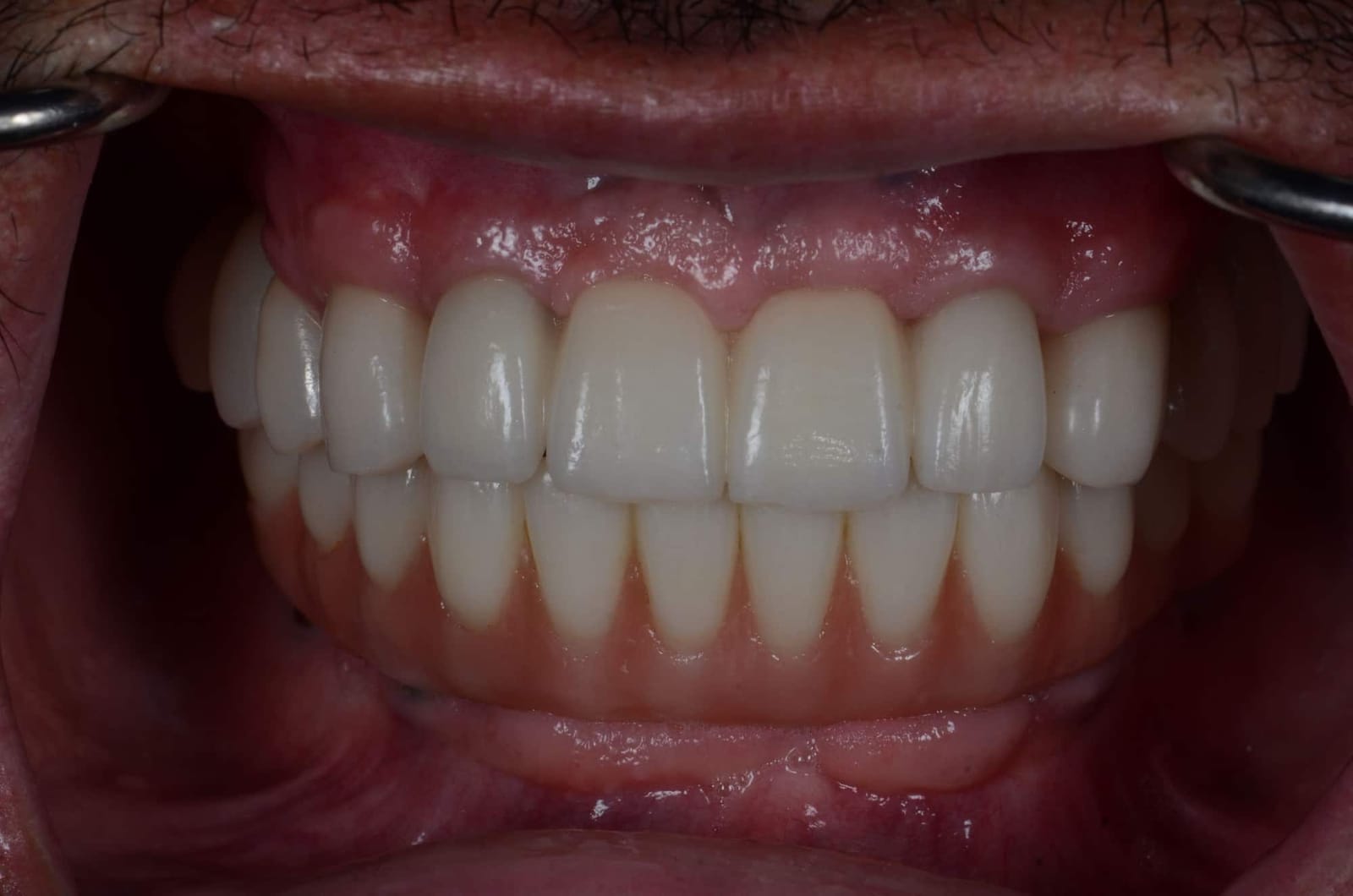
The upper teeth now overlap the lower by ten to fifteen percent, exactly as promised, which is the arrangement you would see in someone who has just finished orthodontics. Good size, good proportion, and emergence from the gum that reads as natural because the tissue underneath was built to produce it.
Some of his own teeth are still in there. It is impossible to tell which are teeth and which are implants.
And all of it can be cleaned, which is what keeps a smile fresh for years rather than months.
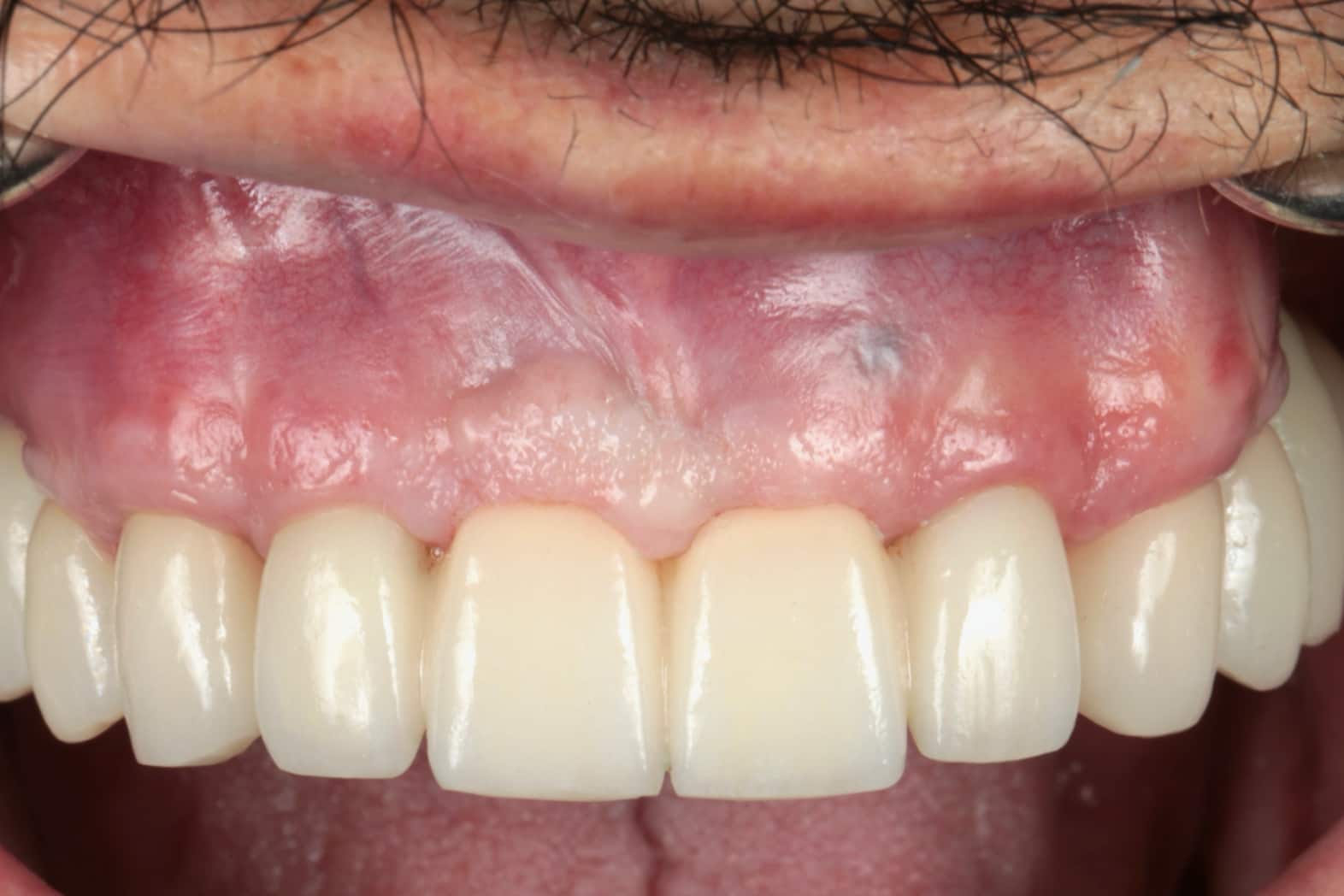
Balance, restored
The excess gum display is gone. The imbalance is gone. The severe malpositioning of the jaws, which had reduced his teeth to almost no height at all, has been corrected.
Balance restored. Function restored. Aesthetics, chewing, quality of life, all of it re established. You can see it in how he approaches life in the after photographs compared with the before.
None of that comes from putting a set of teeth in, and none of it comes from putting them in quickly. It comes from meticulous attention to detail. Nothing good is achieved at speed. It is perfection at every small step, one after another, until you arrive.
Teeth put in that way go in and stay in.
Objectives, met
Every primary objective of a complex case, achieved through proper planning, knowing where you are going, and proper execution.
That is the promise of a prosthodontist. Meticulous attention to detail, in service of the objectives set at the beginning.
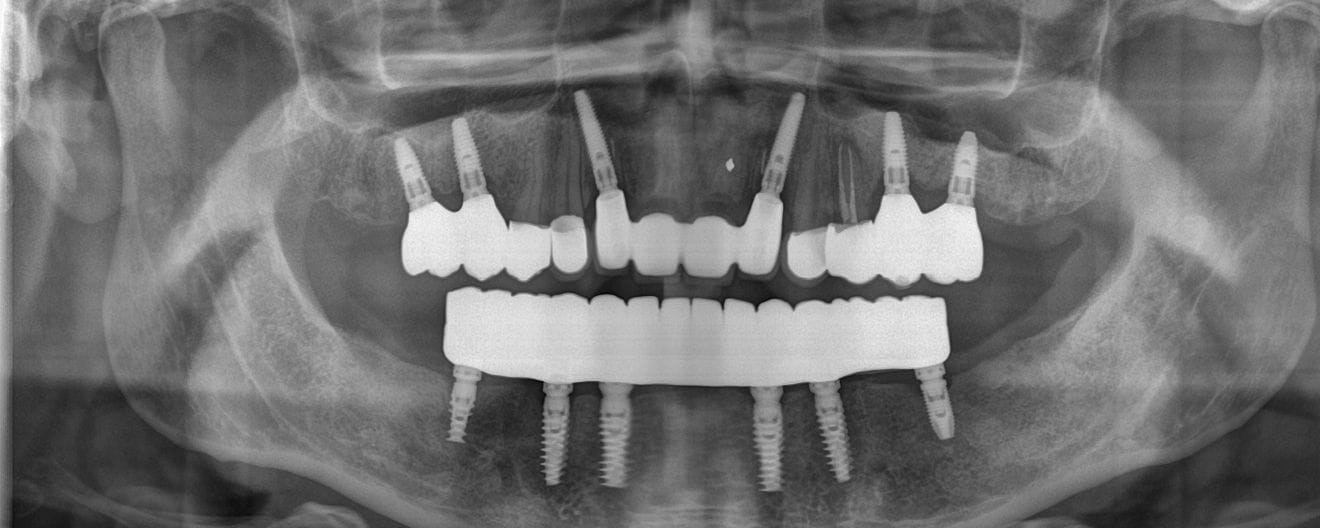
Three-year follow-up
X-ray
Every case is planned around one person's anatomy. Individual results vary, and what was right for this patient may not be right for you.