FP-1 Case 9 · Implants · Reconstruction · Revision Dentistry
A Failing Bridge, Replaced by a Whole Upper Arch
She arrived with a bridge on two implants, nothing behind it, and a bite that had given up. The work that had been done for her was failing, and she needed it fixed, not repeated.
Earlier implant work had left her upper jaw with a six-unit bridge at the front, carried on two implants, and no teeth behind it. The bite had collapsed onto what was left. She needed a healthy mouth back, and she needed the result to last.
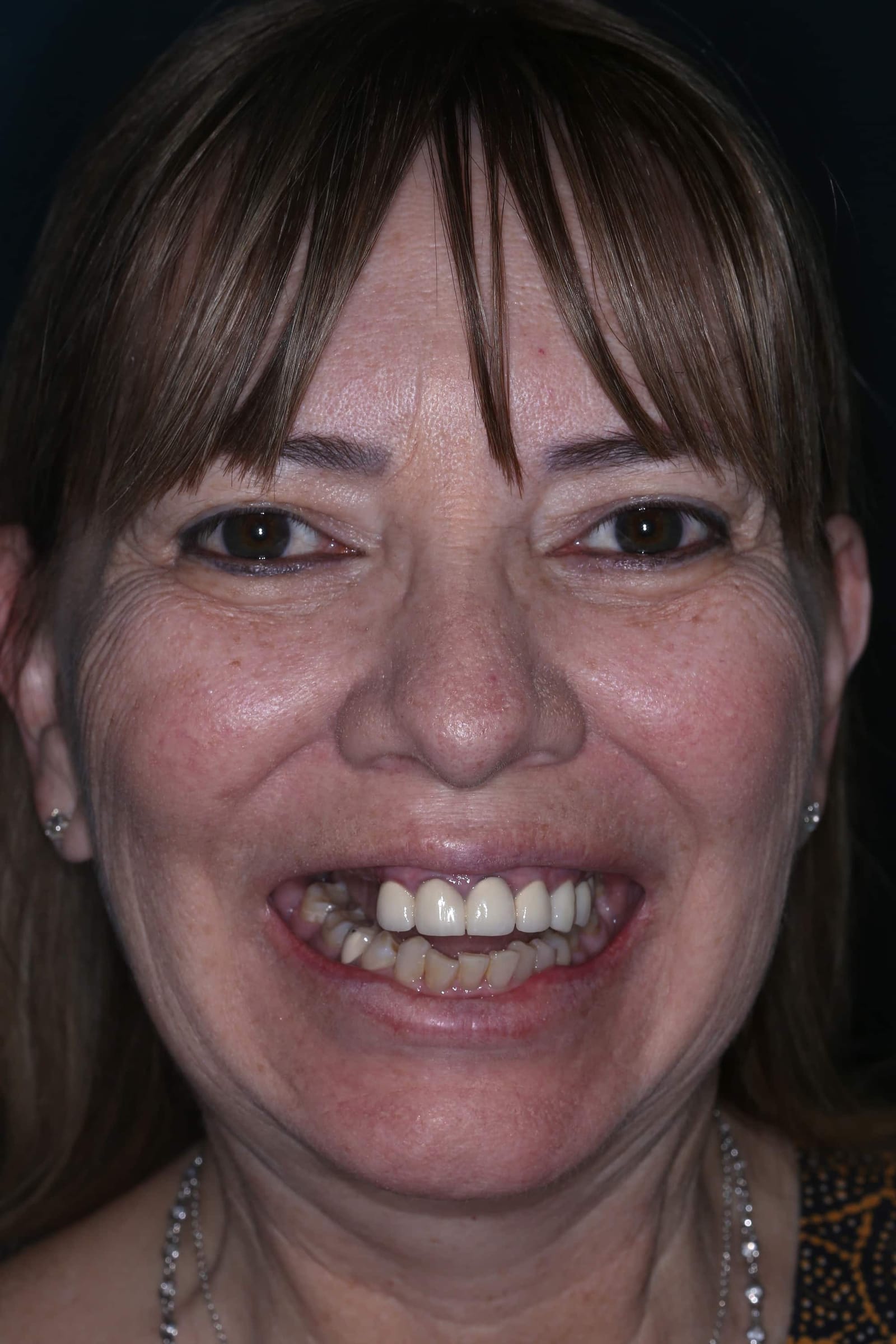
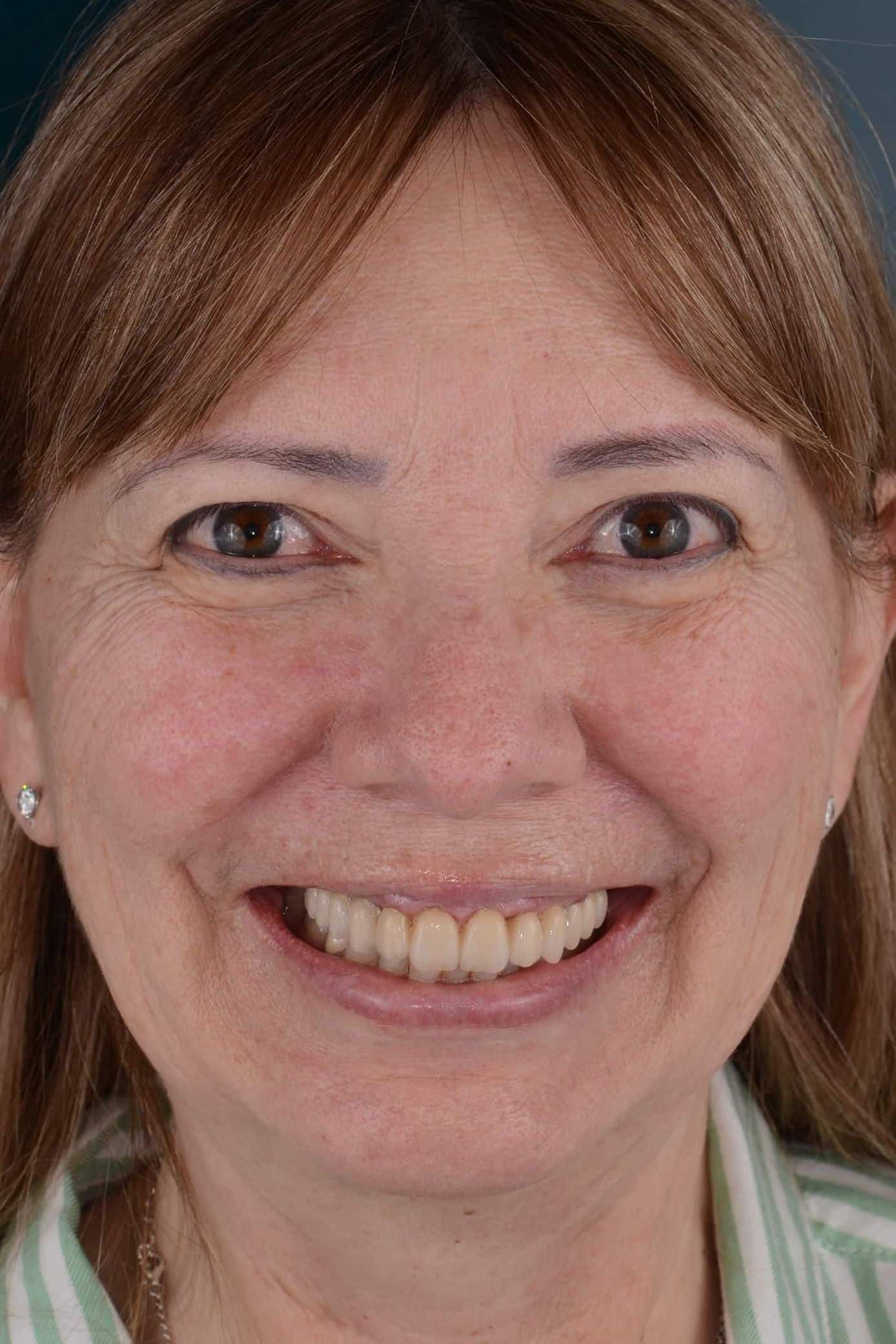
Dr. Reshad rebuilt the whole upper arch on implants with no pink ceramic anywhere: the teeth emerge from her own gum, the way her natural teeth did. She was carried through a provisional phase of fixed teeth first, and was never without them. The photographs run from her first visit in 2019 to delivery in January 2021 and the review two weeks later.
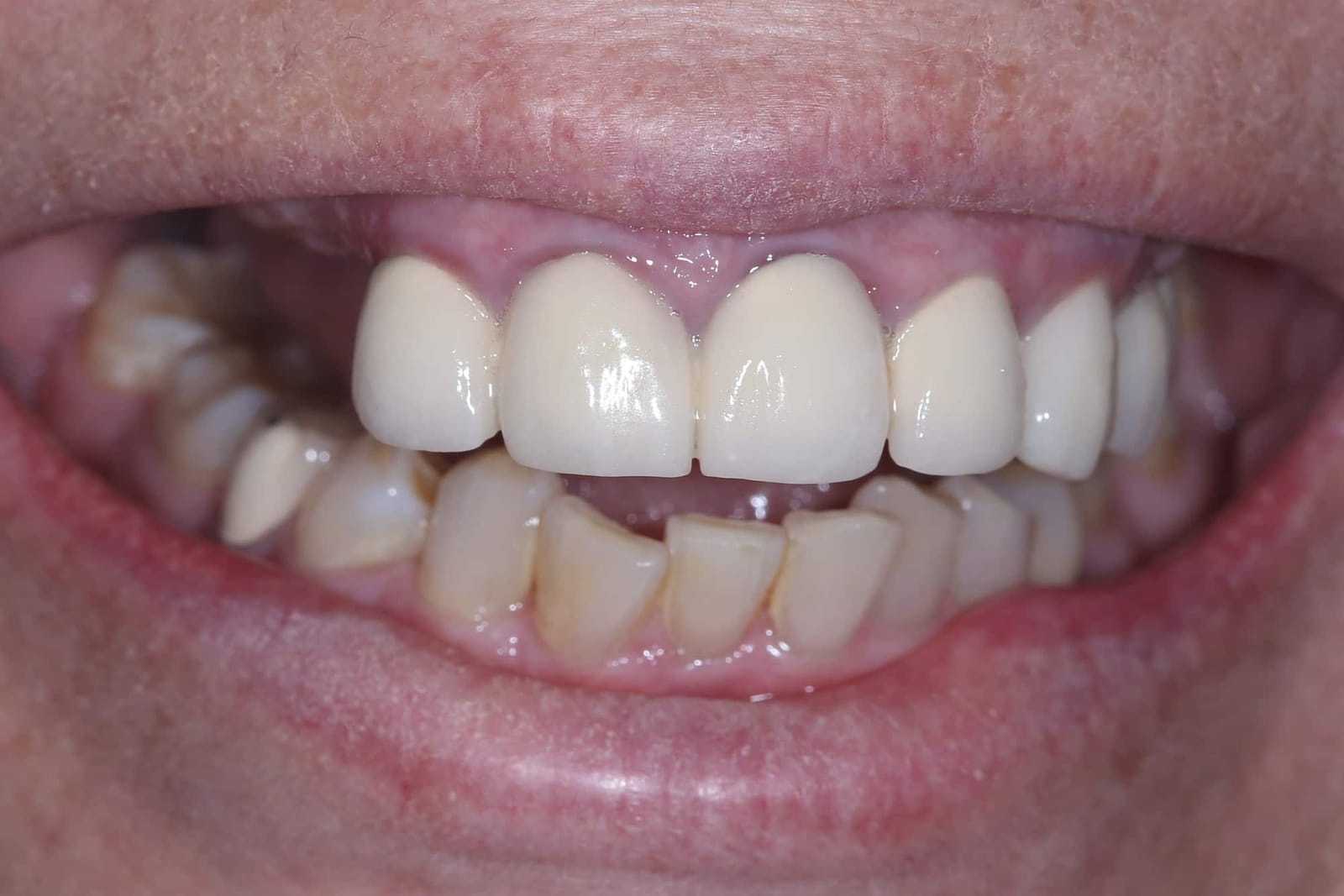
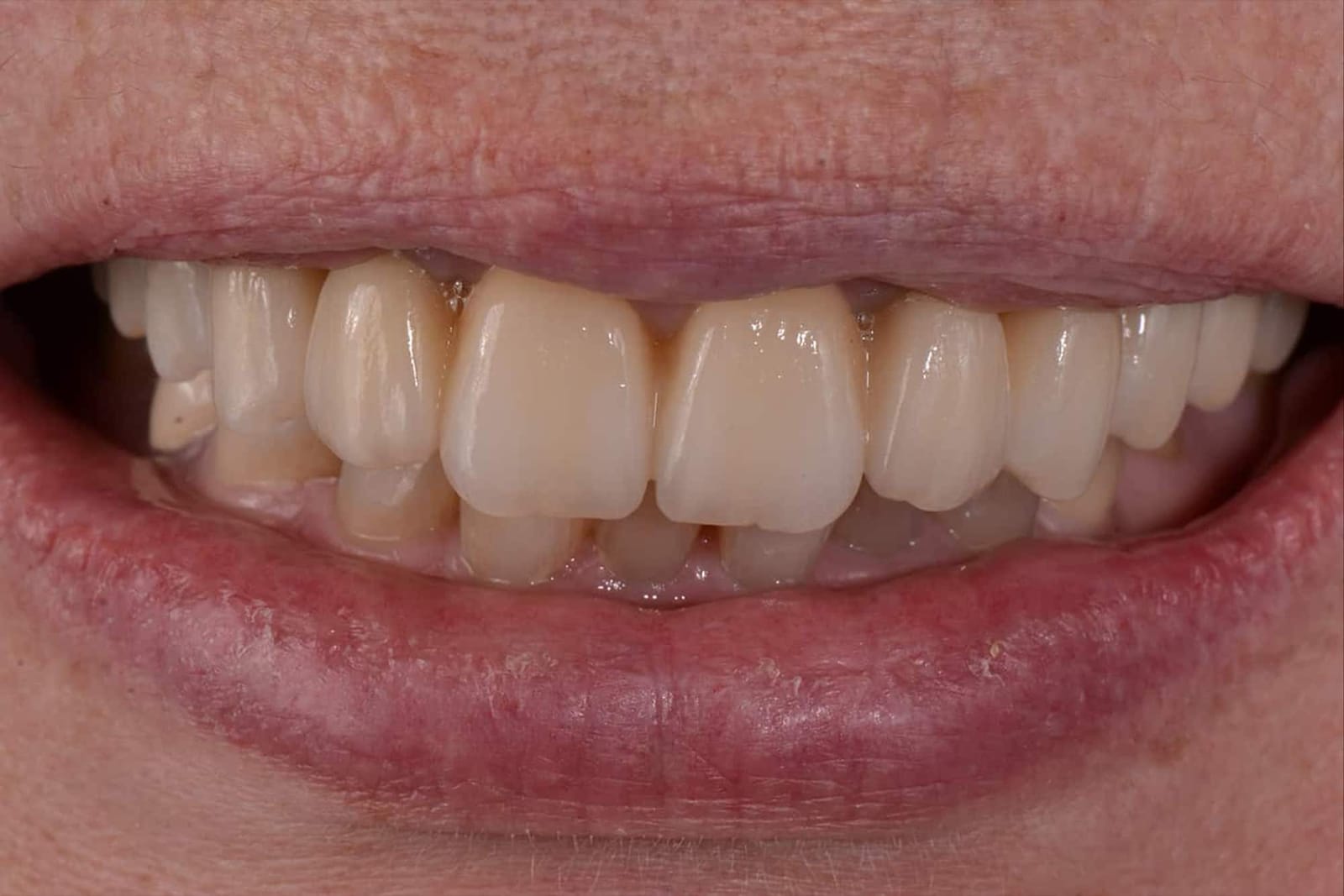
The smile, from each side
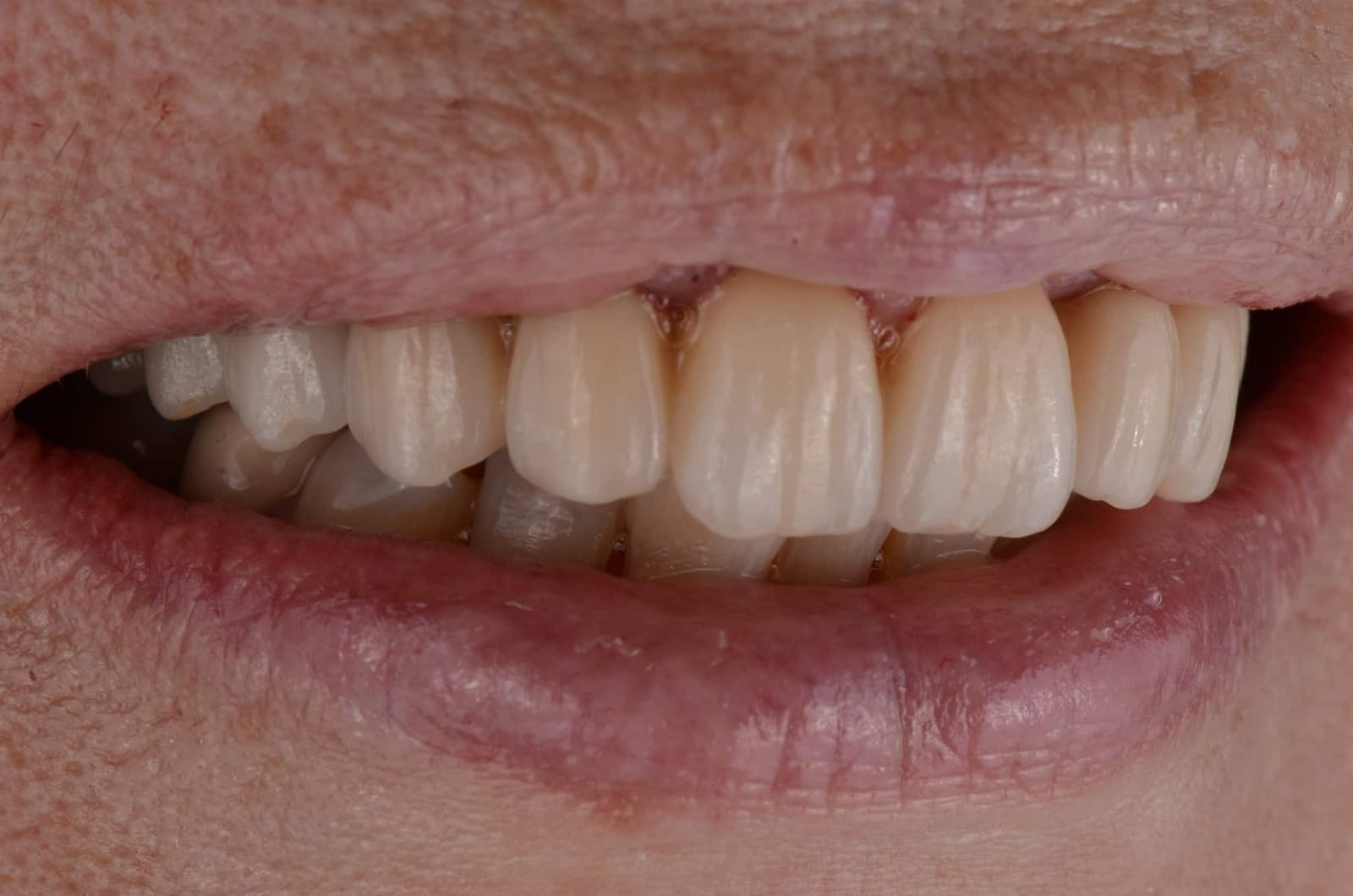
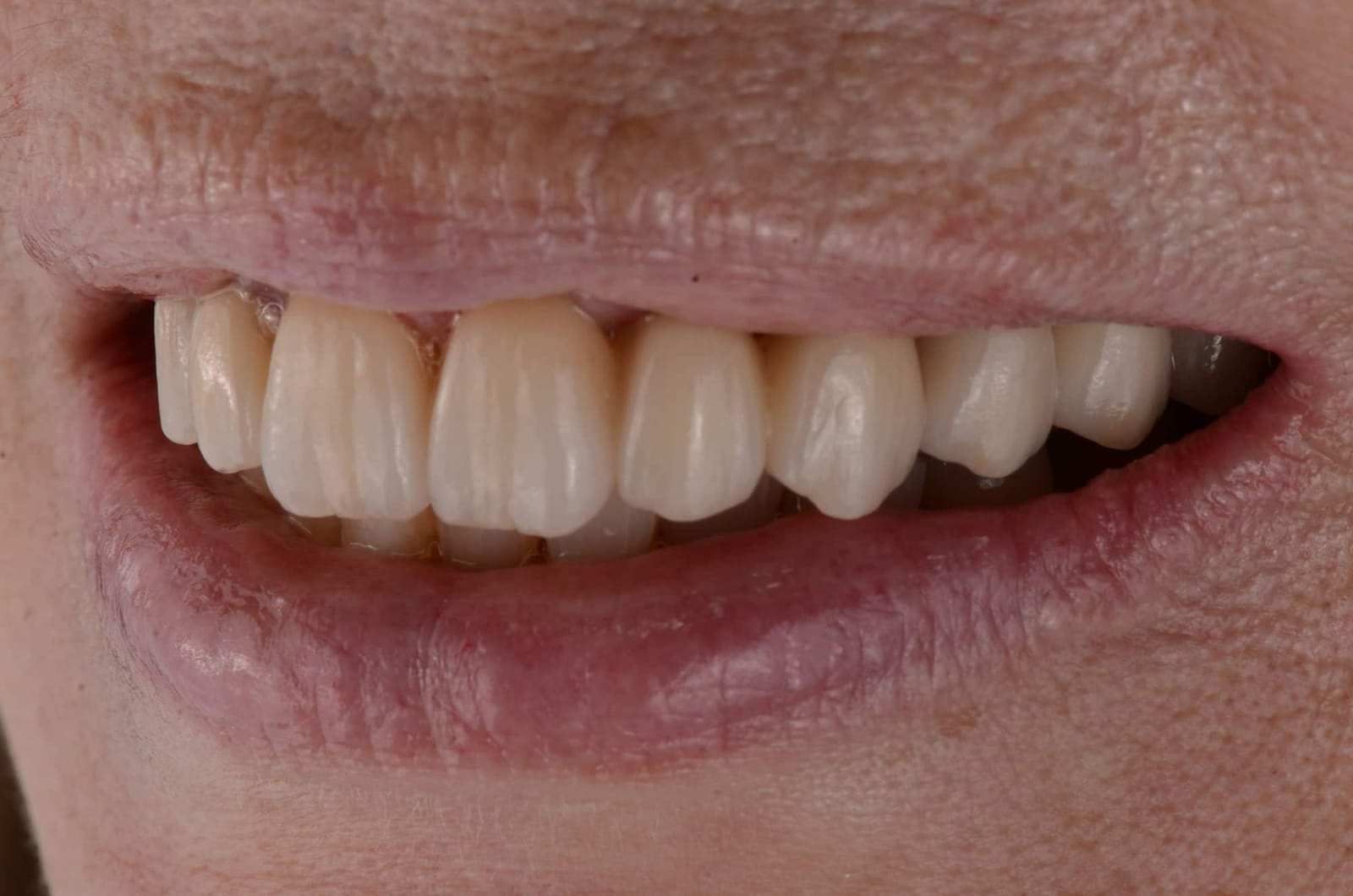
Her face
Lips held back
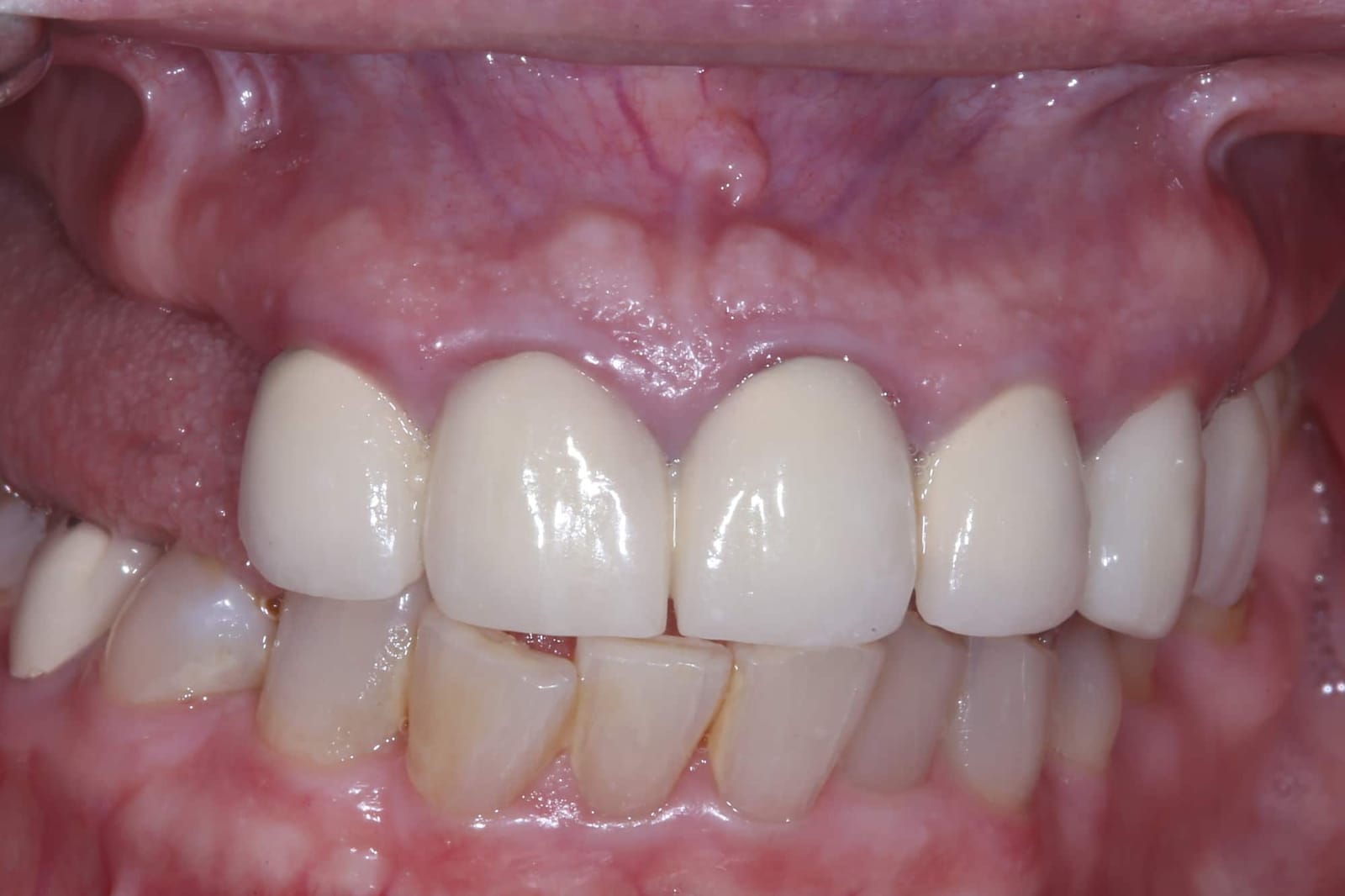
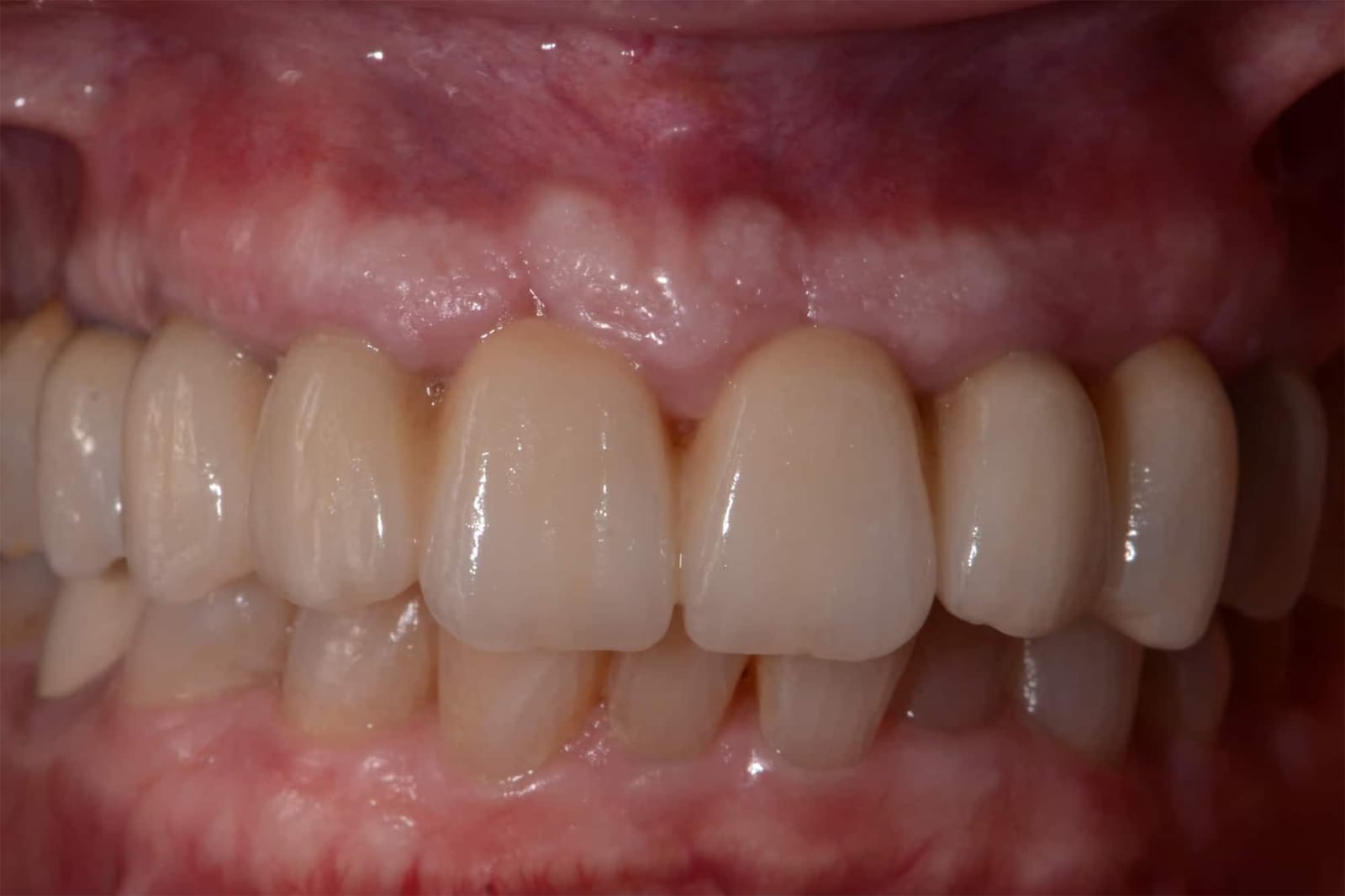
A bridge on two implants, and nothing behind it.
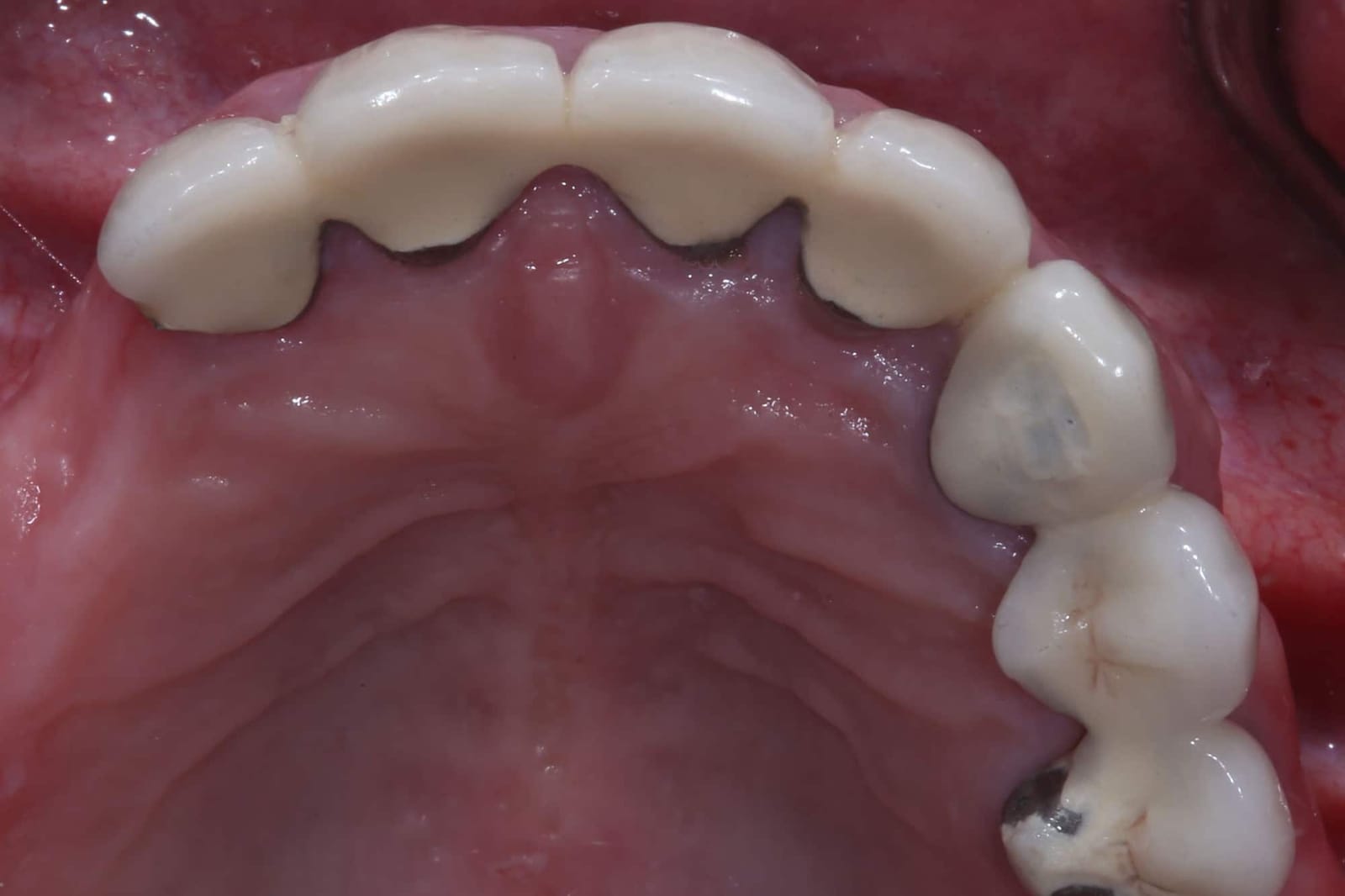
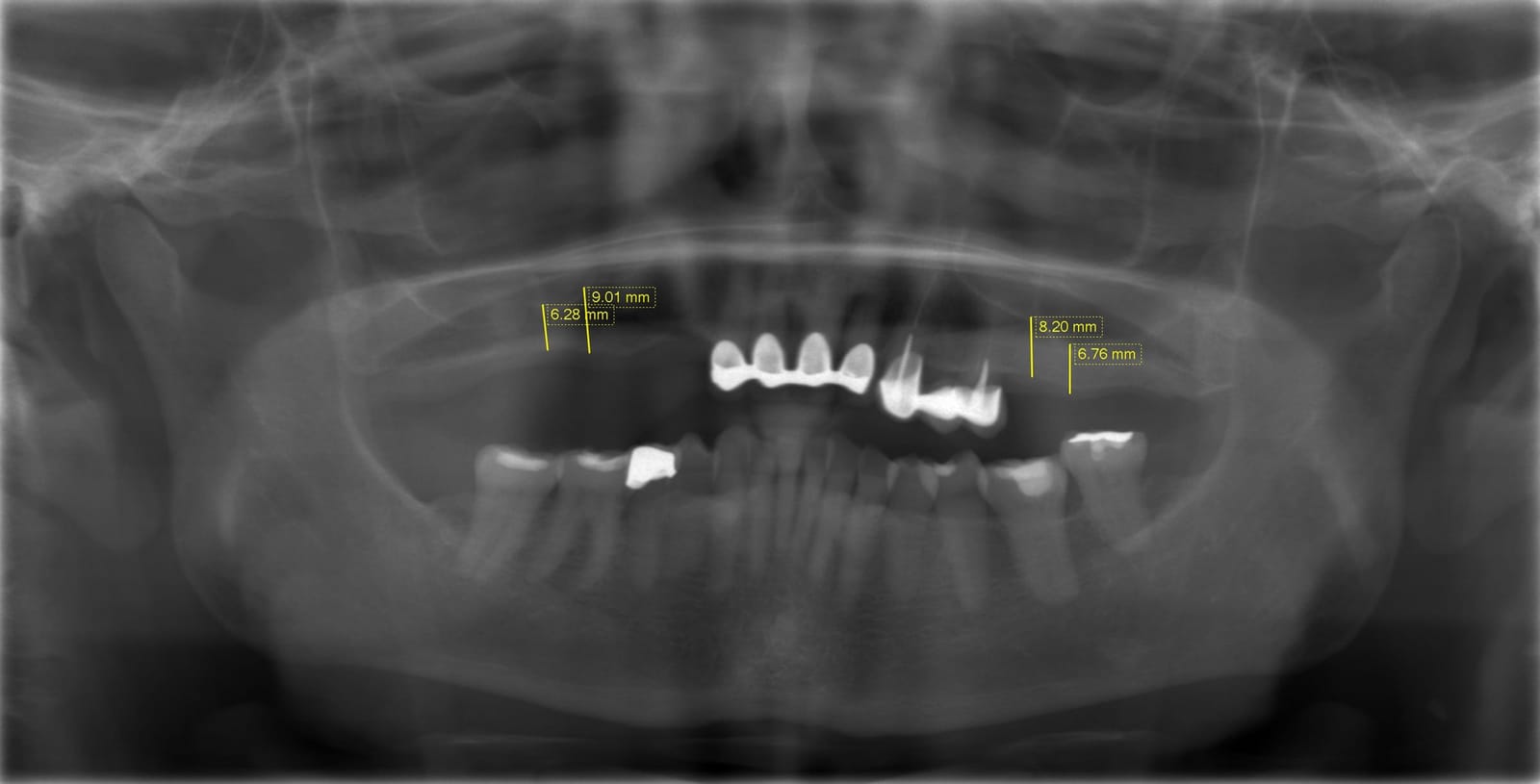
She was referred to Dr. Reshad with implant work that was already failing. At the front of her upper jaw sat a six-unit bridge on two implants. Behind it, on both sides, there were no teeth at all, so every bite landed on those two implants and the front teeth below them.
A bite with no back teeth is a bite that has collapsed. The front teeth wear, the jaw closes further than it should, and whatever is carrying the load eventually gives way. The task was to fix the problem properly and bring her back to a healthy state, not to patch the bridge again.
Losing your teeth in the middle of life is not only a dental problem. It is one more part of life slipping out of your control. Dr. Reshad's team looked after her through the whole process, not just her mouth.
From the side
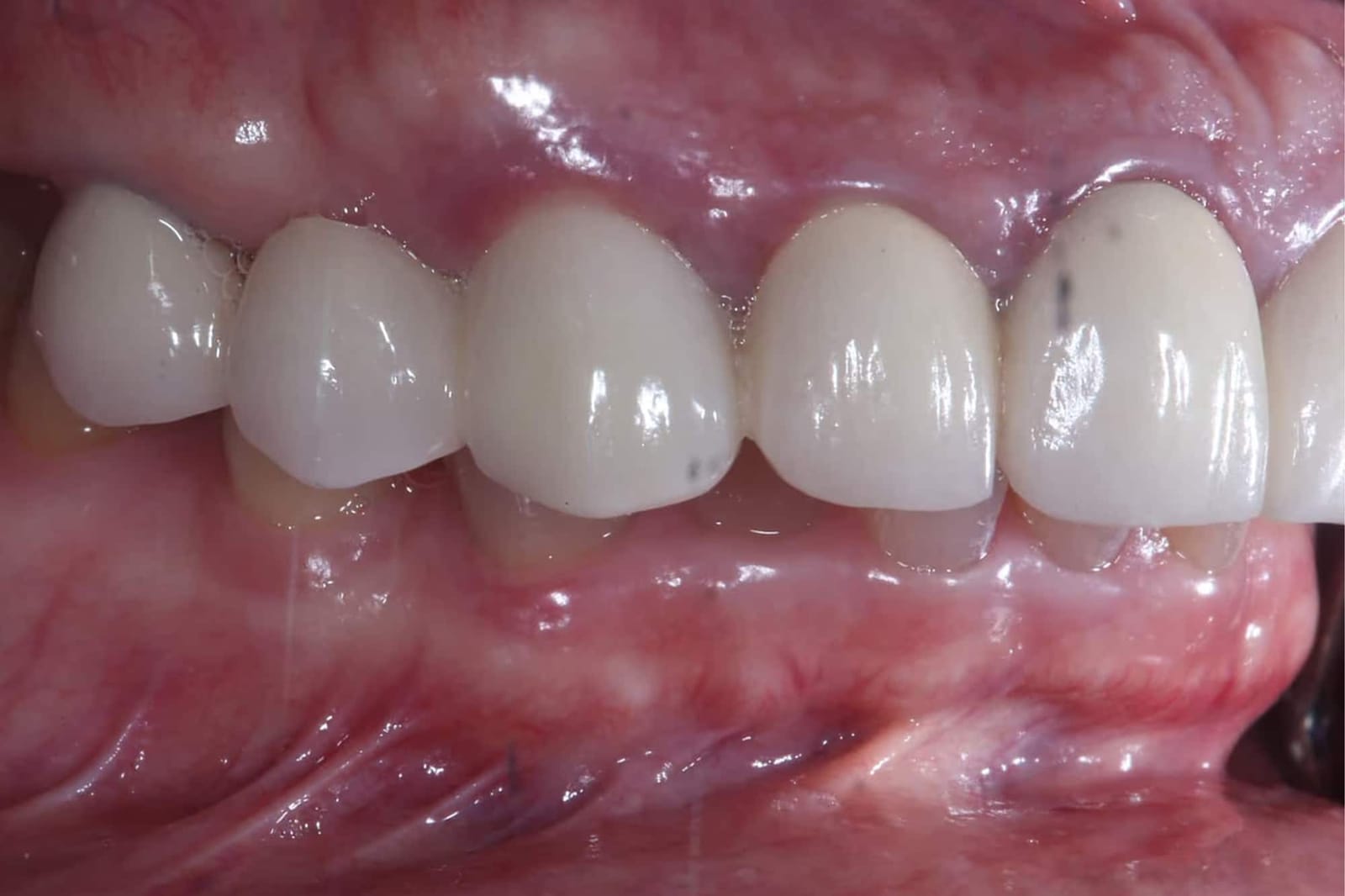
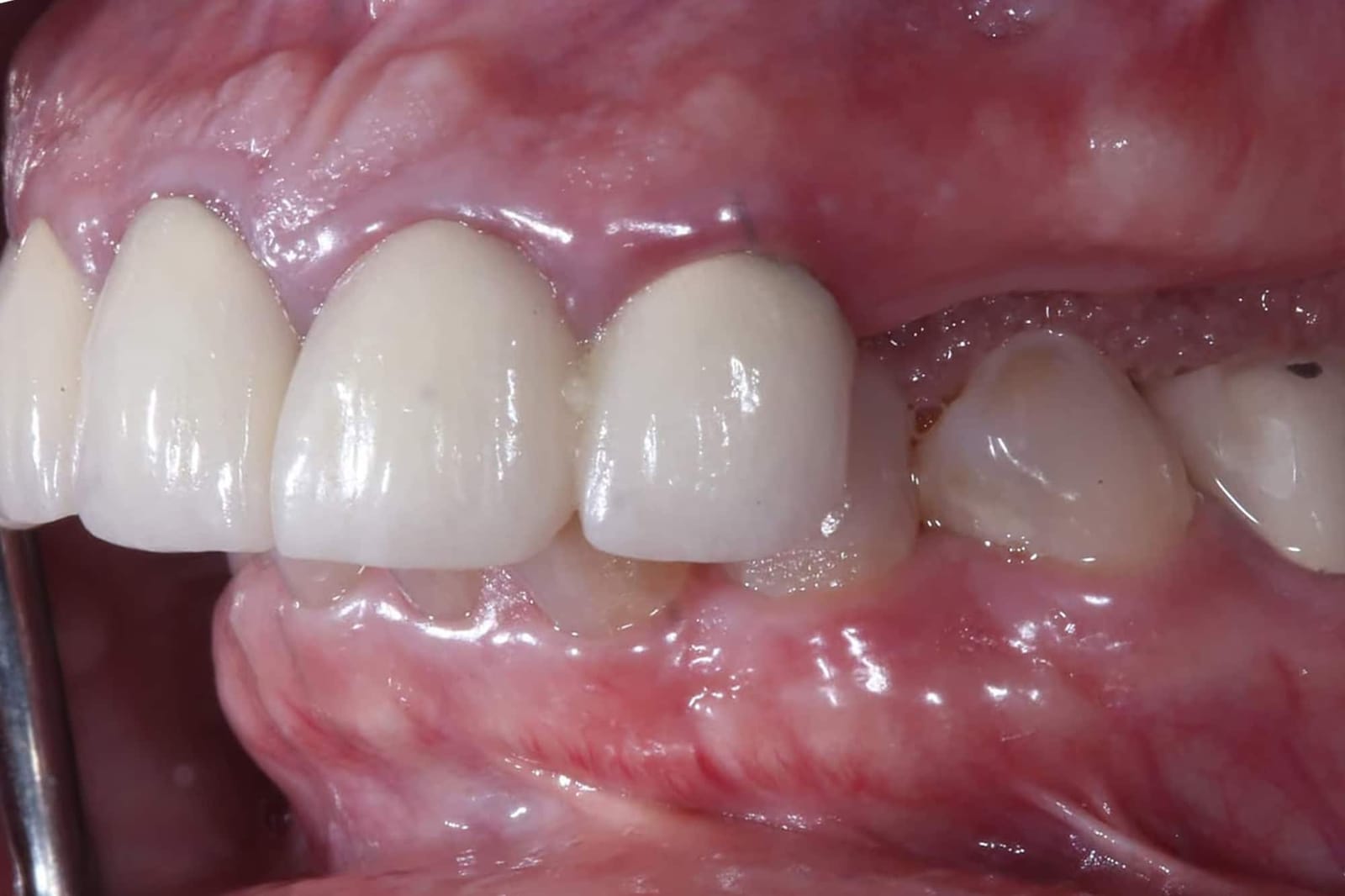
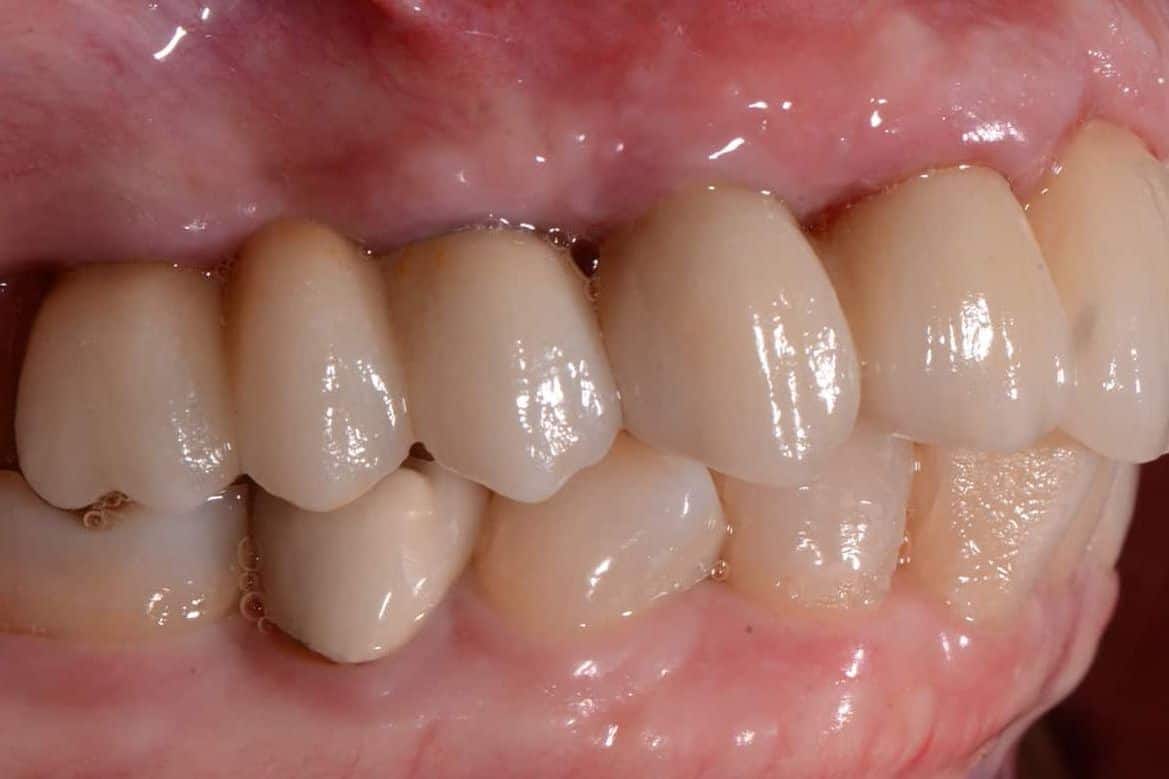
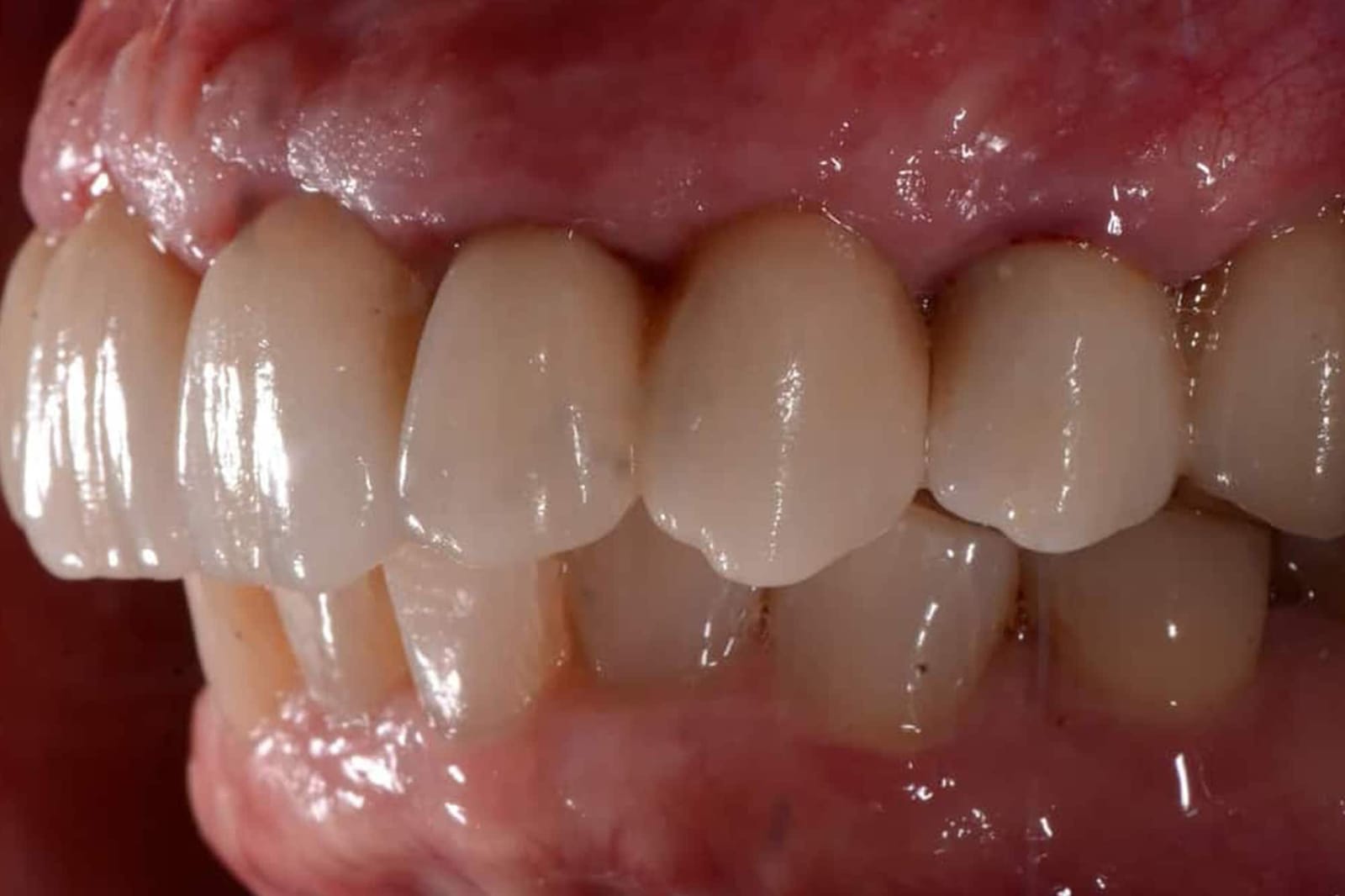
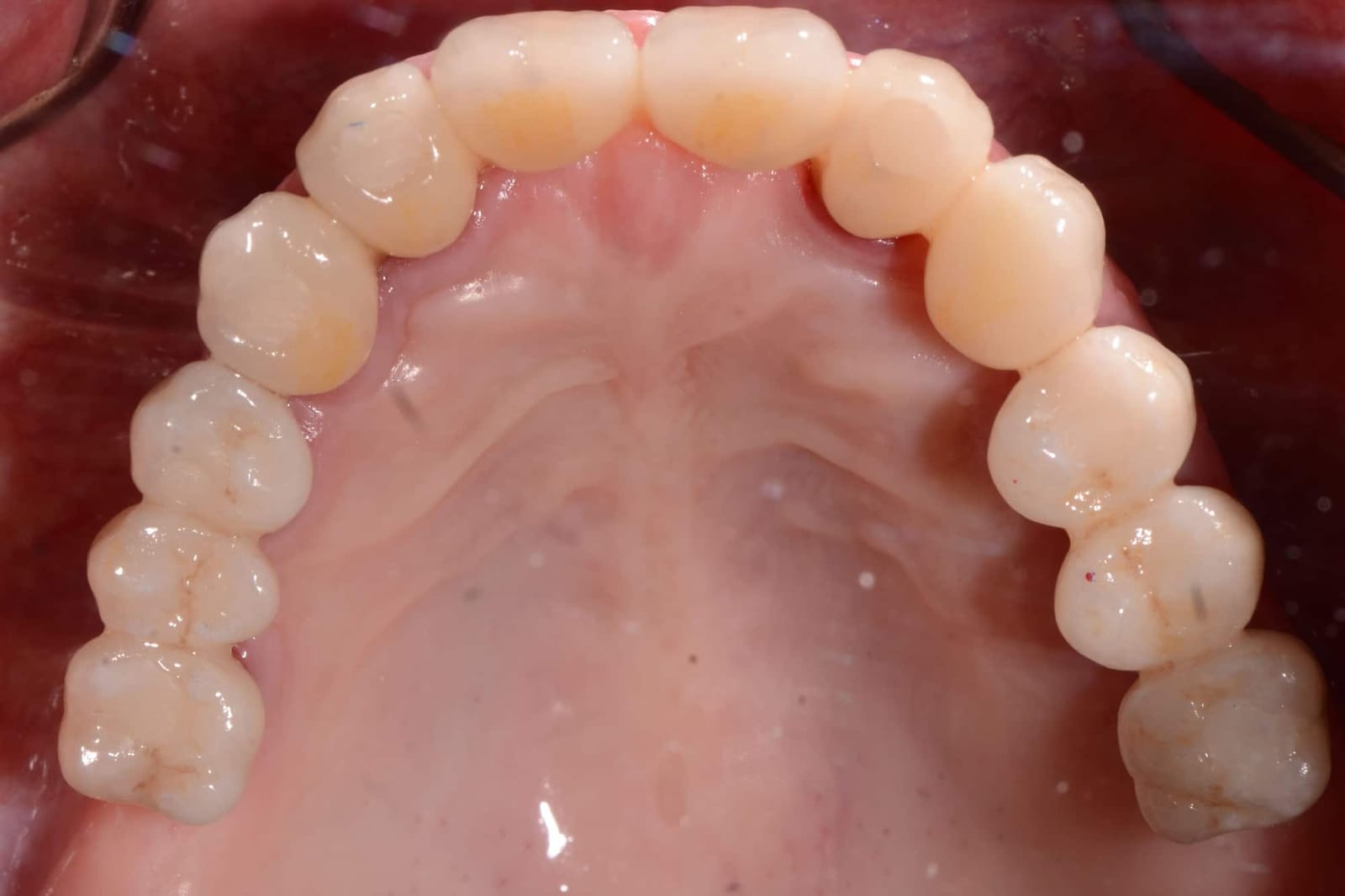
From above
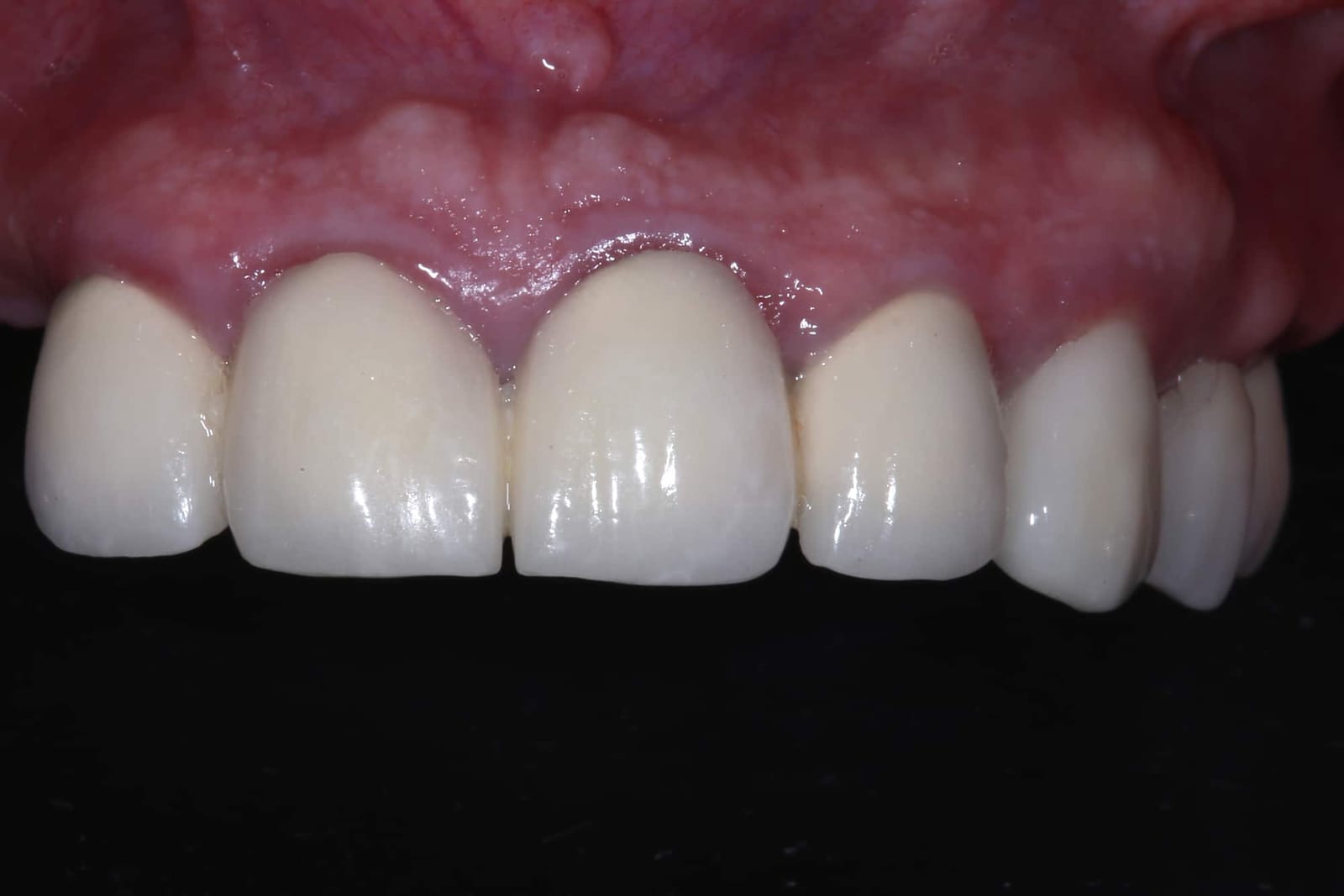
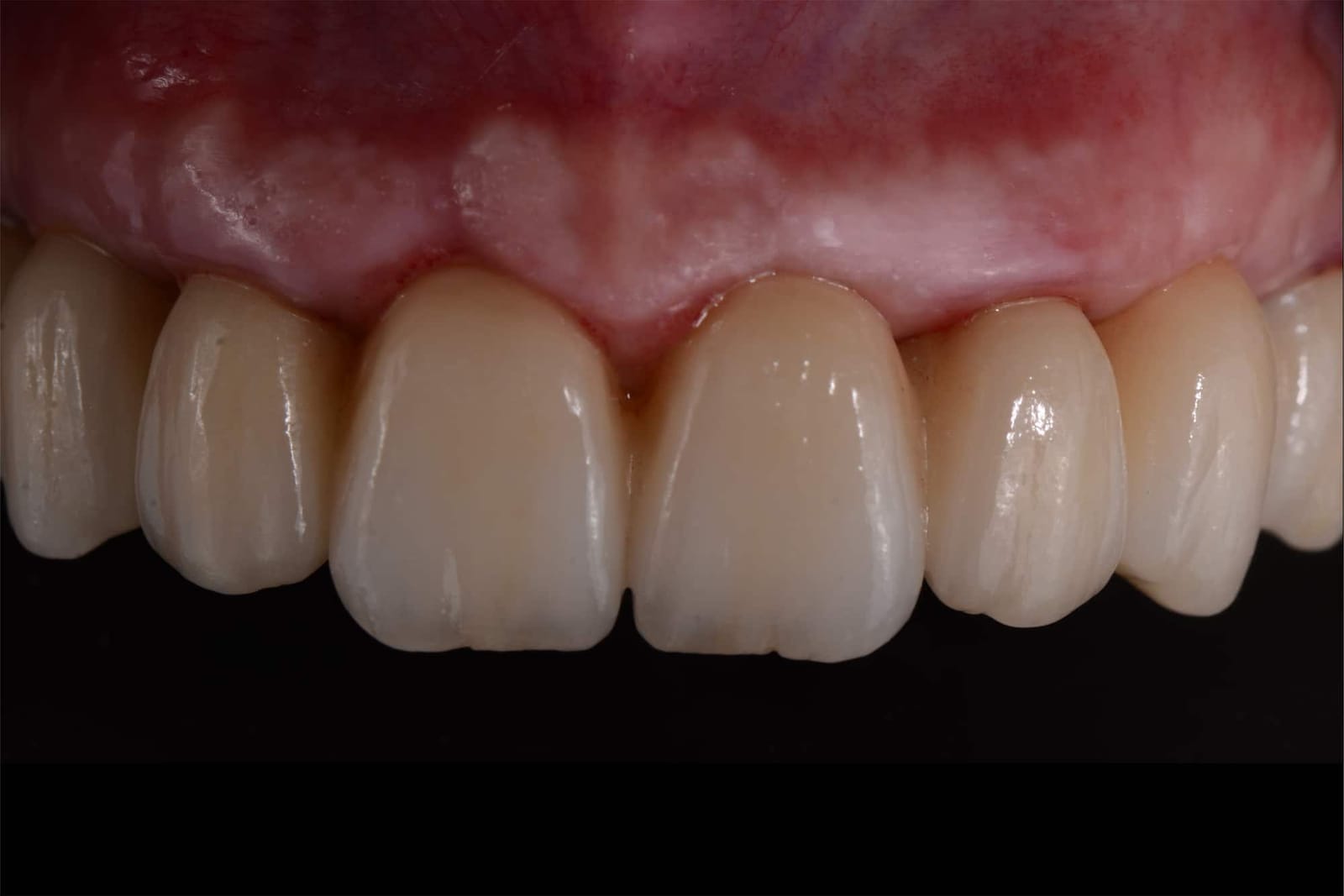
On black
A smile that shows the gum line.
When she smiles, the junction between teeth and gum is on show. That sets the rules for the whole case: no gum or bone can be lost along the way, and nothing artificial can sit where the eye will land.
Most full-arch implant cases are built with a band of pink ceramic standing in for gum. Pink ceramic catches the light differently from real tissue, and the line between the two is visible every time the lips lift. For her, that was not an option.
So the restoration had to be an FP1: ceramic teeth emerging directly from her own gum, with no pink anywhere. That is a more demanding way to build an arch, and it only works if the tissue is protected at every step.
On the model
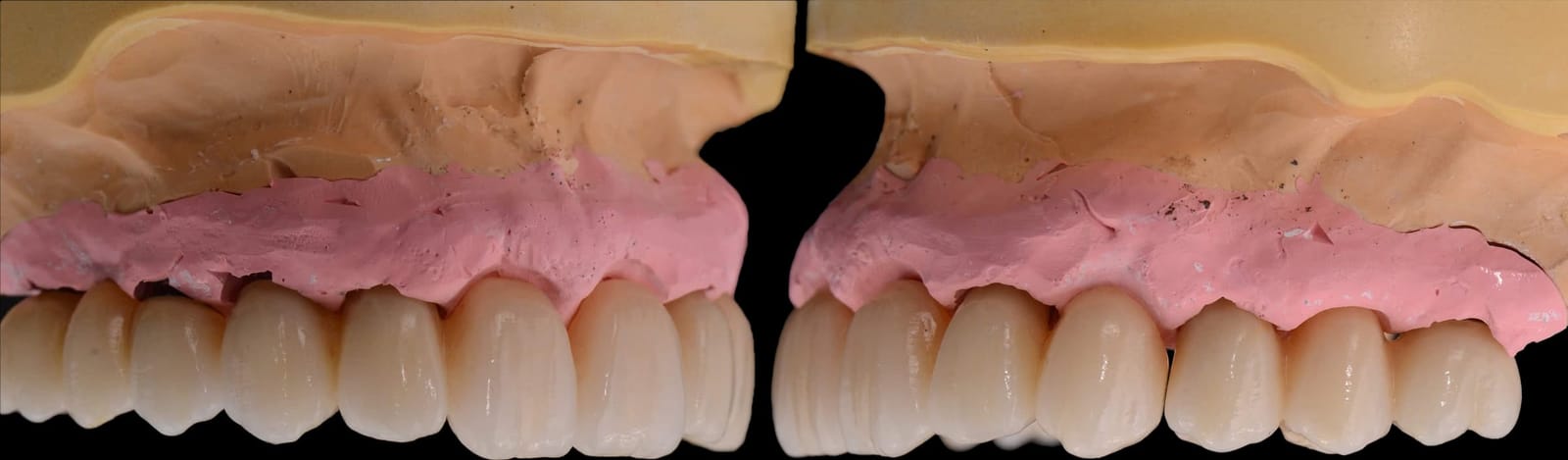
The final restoration, from each side
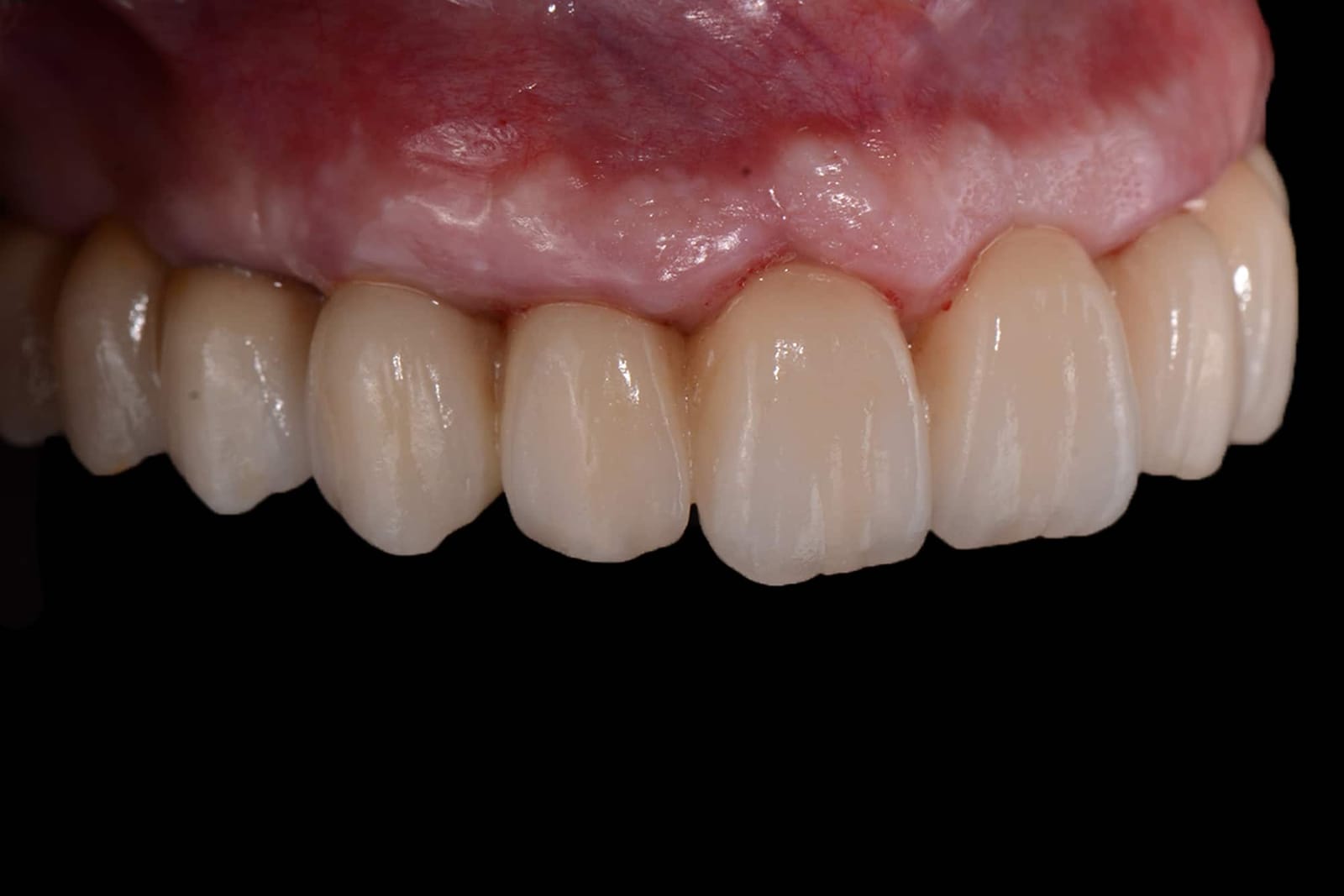
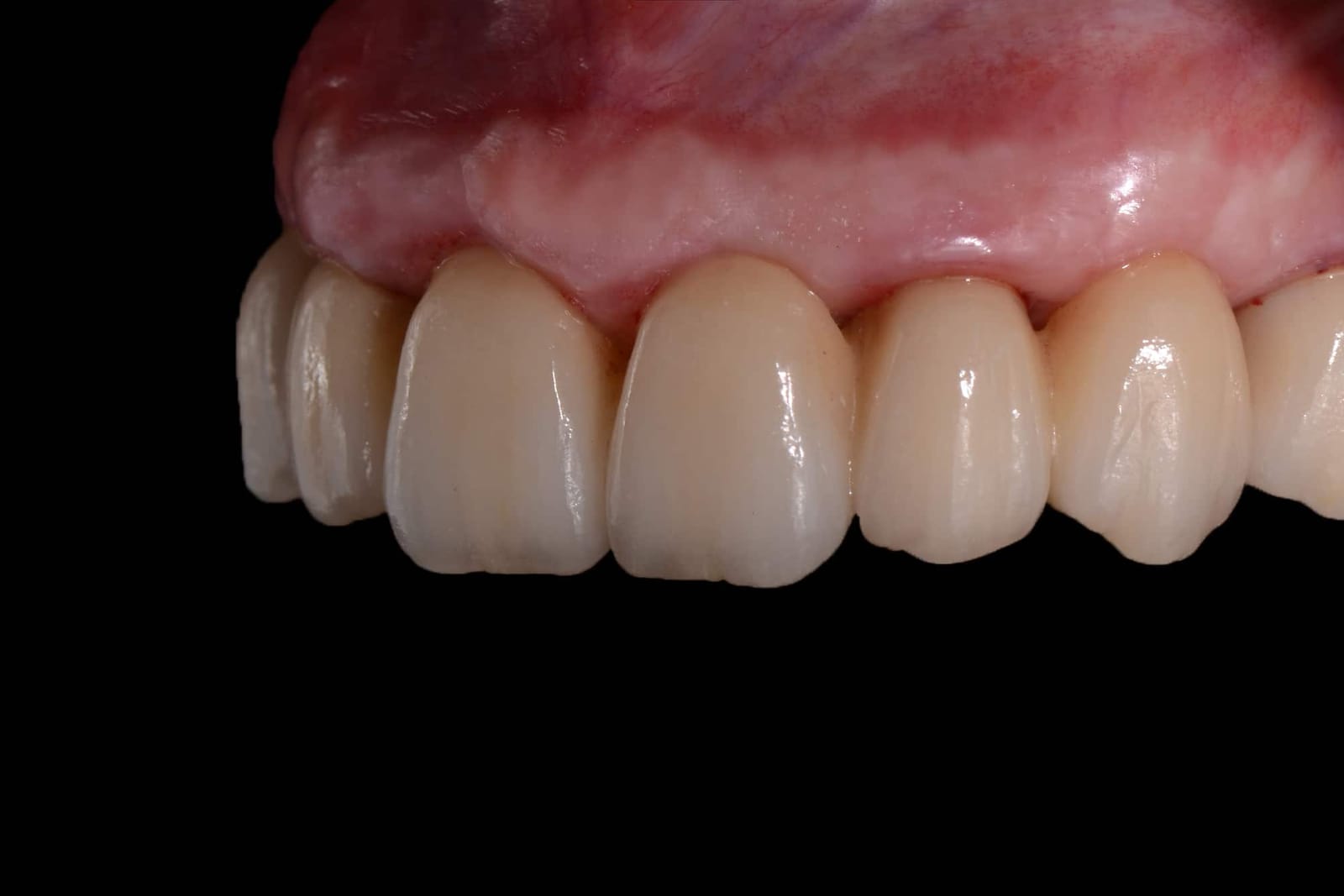
The final restoration
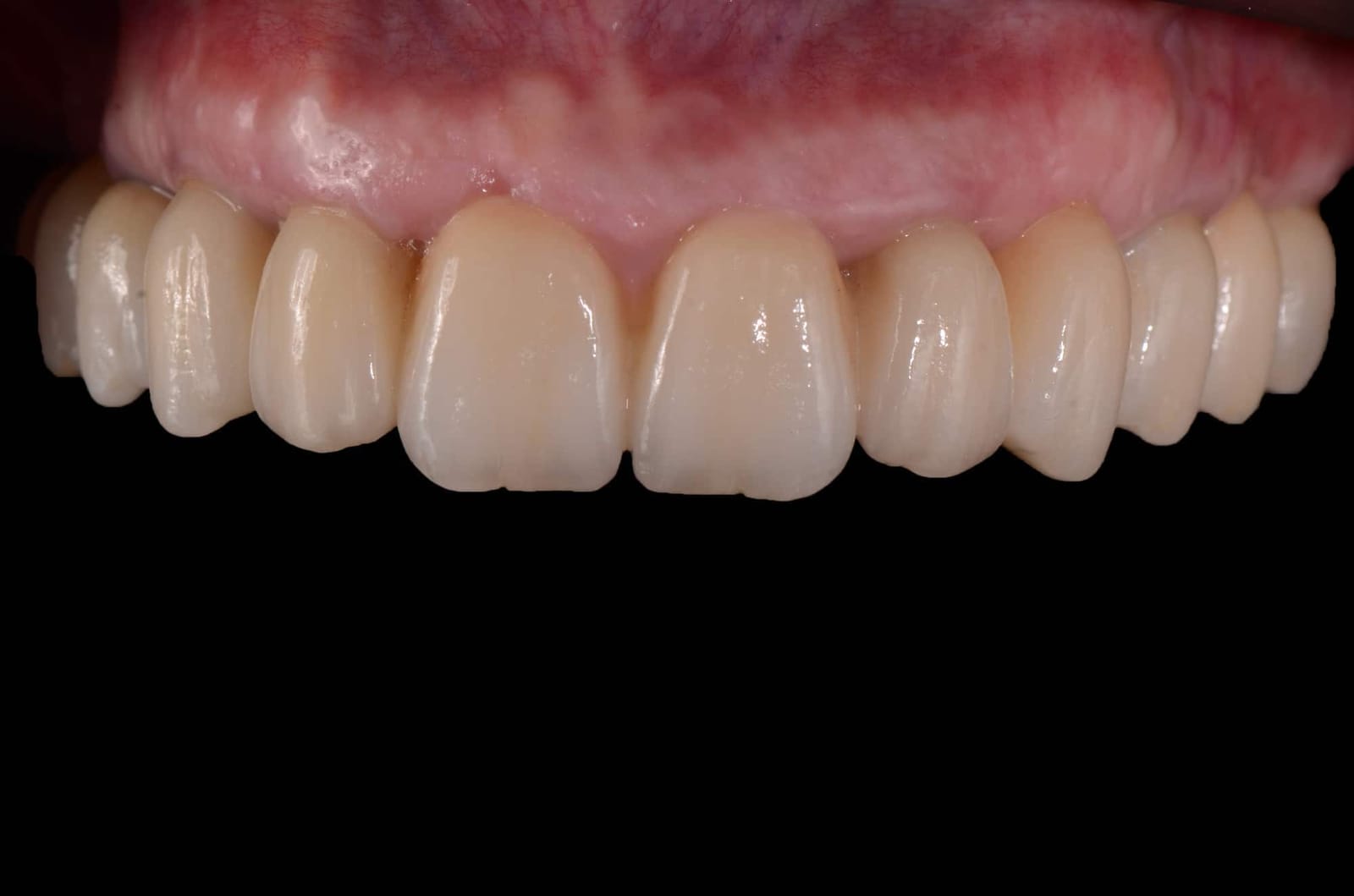
Transition slowly. Keep every millimeter of tissue.
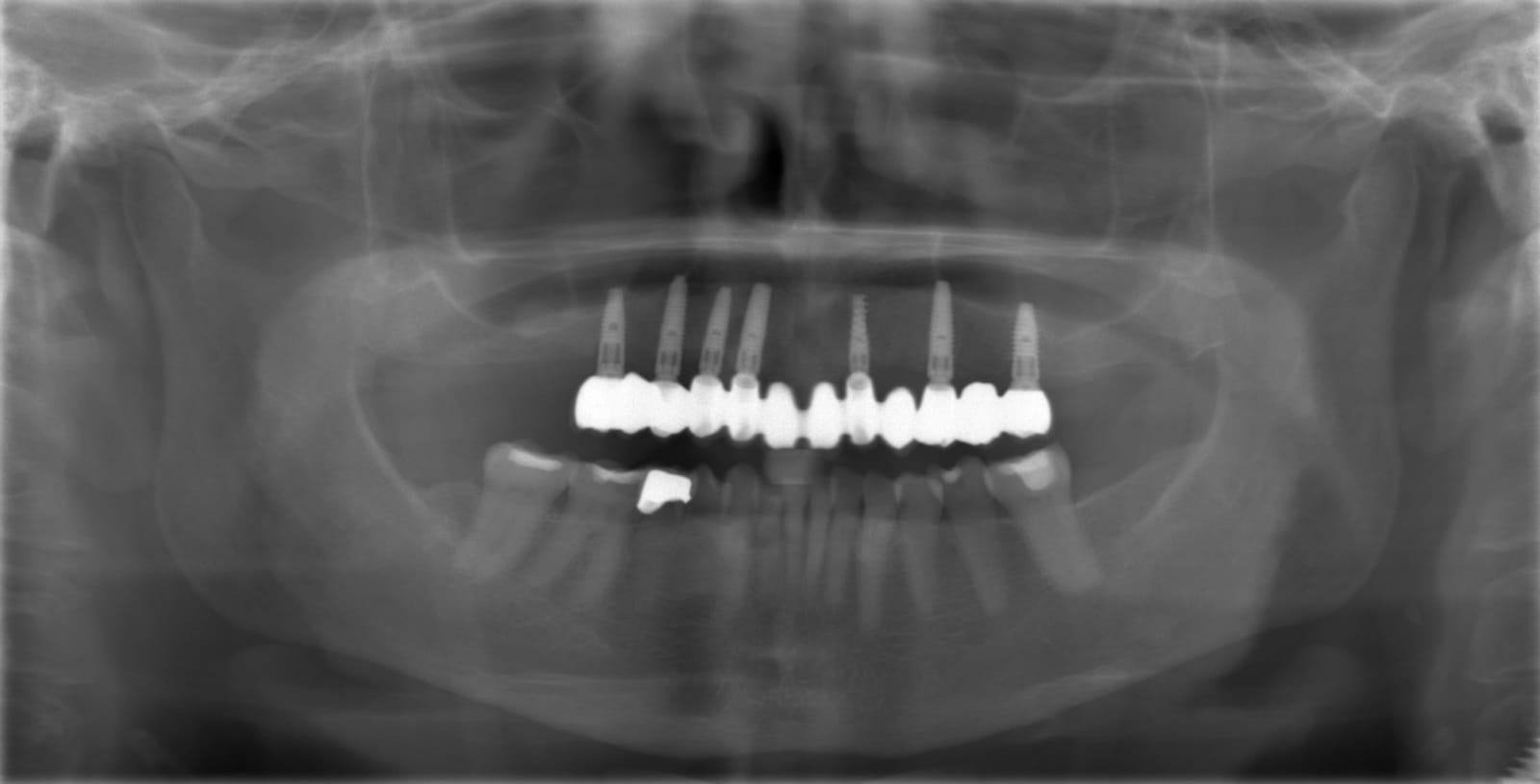
The old bridge came off and new implants went in: seven across the upper jaw, placed where the final teeth needed them. She was never without fixed teeth. A provisional phase carried her through, with the prototype arch shaped and reshaped until the gums had settled exactly where they needed to be.
Only then was the final arch made. It is screwed to the implants, carries no pink ceramic, and meets her own lower teeth in a bite that has back teeth again. She was not left worse off than she arrived. Her natural smile was kept.
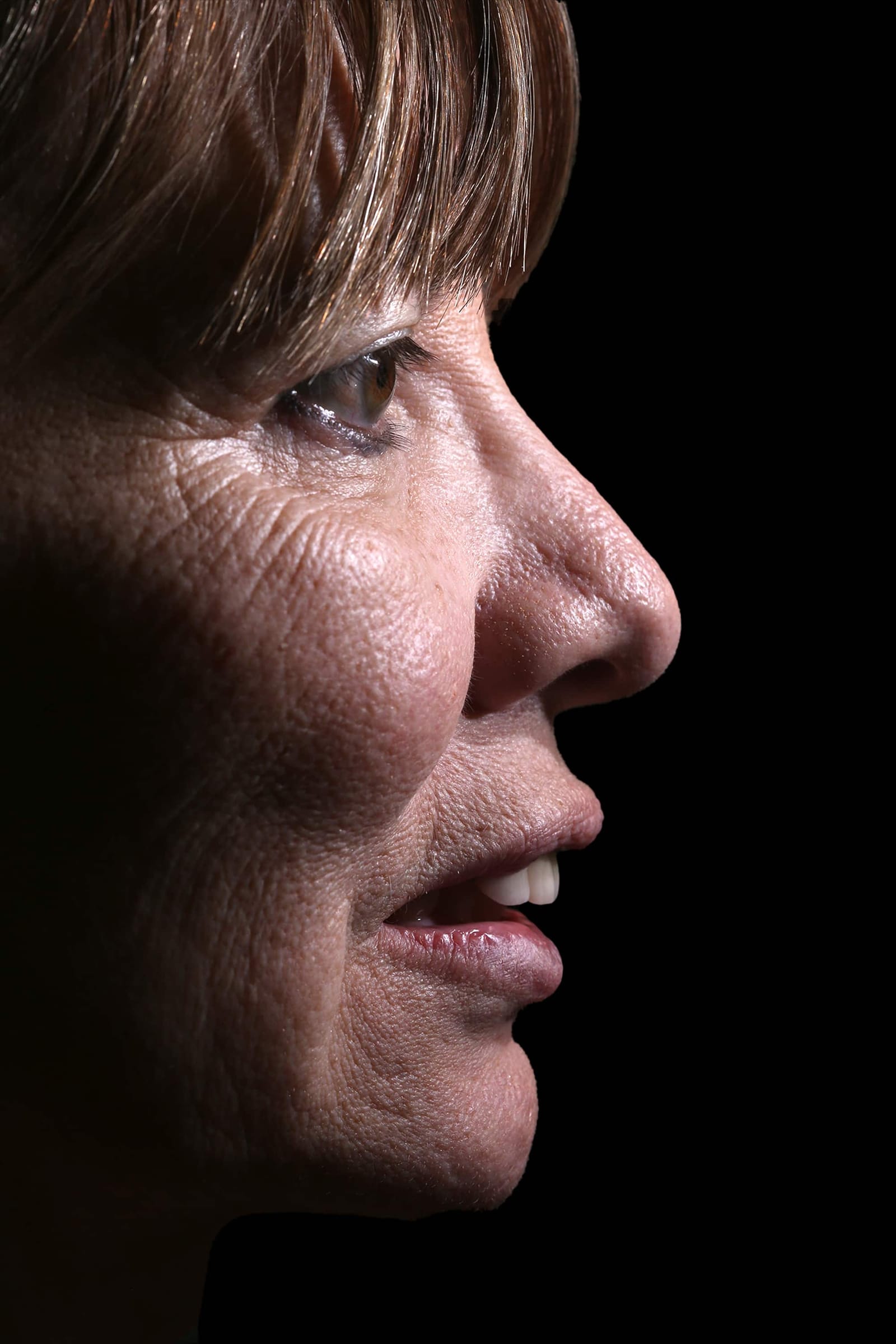
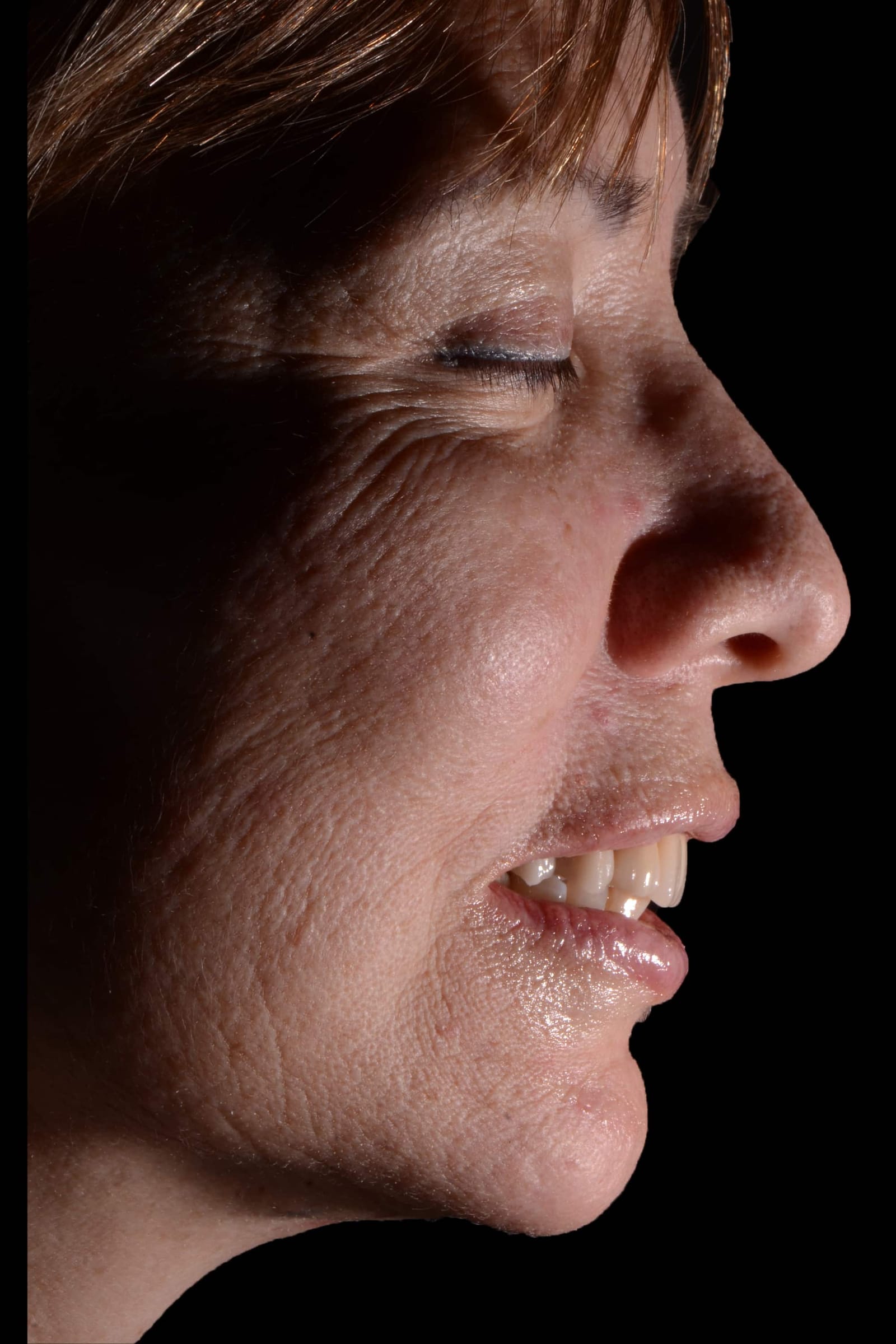
In profile
The radiographs
The work starts the day you get your teeth.
Implants are rigid. Ceramic is rigid. Everything around them keeps changing. A reconstruction like this survives on a little bite polishing at each visit, a check of the tissue around the implants, and the practice's cleaning protocol. It is the patients who disappear from recall who come back with problems.
Plenty of people have had similar implant work elsewhere and nothing but trouble from it: odors, fractures, pieces breaking off. A case that is managed properly keeps maturing in function, health, looks and speech for as long as the patient keeps up the maintenance.
The goal is not to redo a reconstruction at ten years. It is to reach twenty-five with, at most, a minor repair.
A revision case means inheriting someone else's decisions.
The implants were already in. The bite was already lost. A prosthodontist plans the end result first, then works back through what can be kept, what must be replaced, and what the tissue will tolerate. In a smile that shows the gum line, that planning is the whole case.
Complex full-arch implant revisions are the kind of case Dr. Reshad is known for. And when a case like this arrives before anyone else has started on it, with full control from the first visit, the result can be better still.
Before and after
Every case is planned around one person's anatomy. Individual results vary, and what was right for this patient may not be right for you.