Revision Case 10 · All-on-X · Revision Dentistry
Fixed Teeth for Her Golden Years
Ten years on a removable implant denture had worn through the framework and exposed an implant.
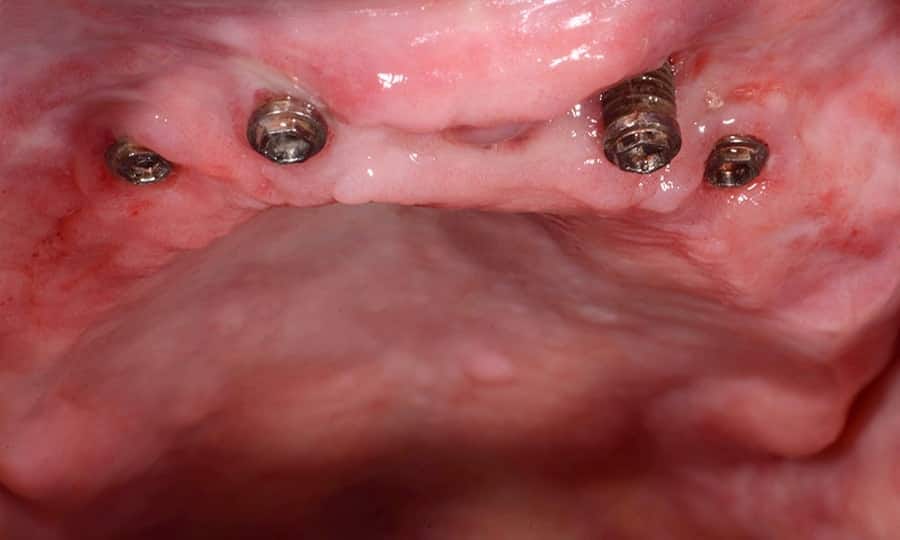
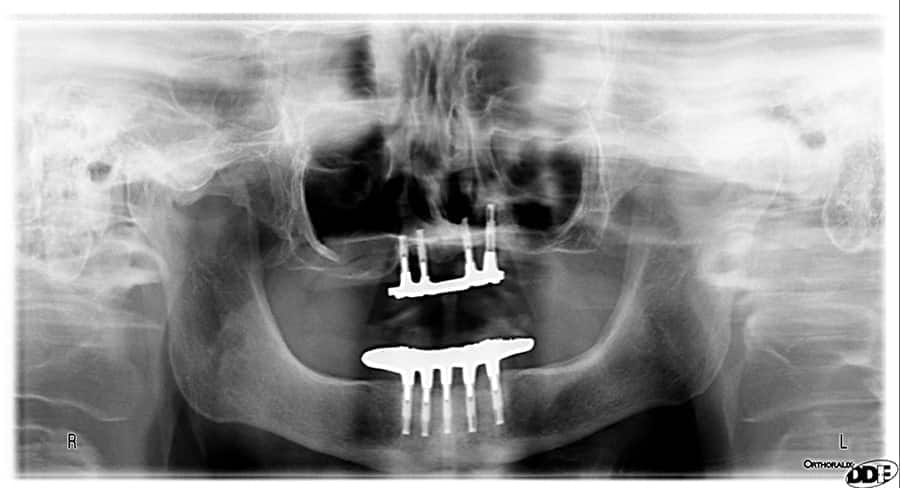
She came to Dr. Reshad with a failing removable upper implant prosthesis that had deteriorated over the ten years she had worn it. The framework was damaged, the denture fractured, and one implant exposed. Her upper jaw needed complete restoration.
The denture had been made at UCLA and had served her well for about a decade. The problem with removable overdentures is that they move.

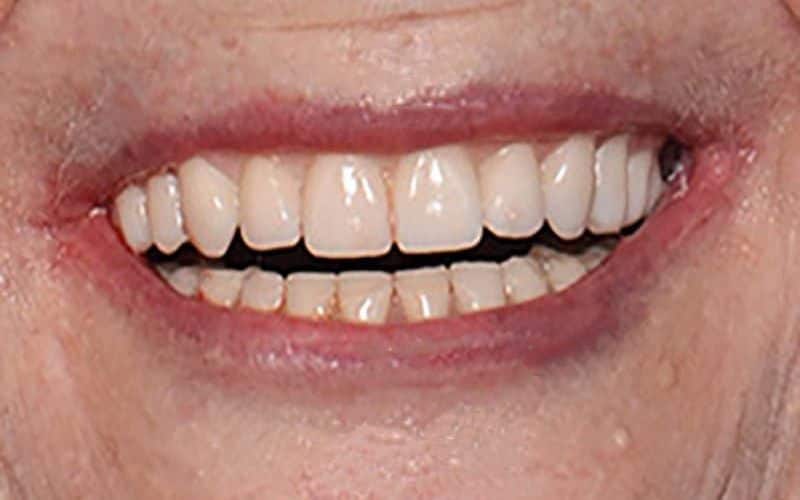
Before and after
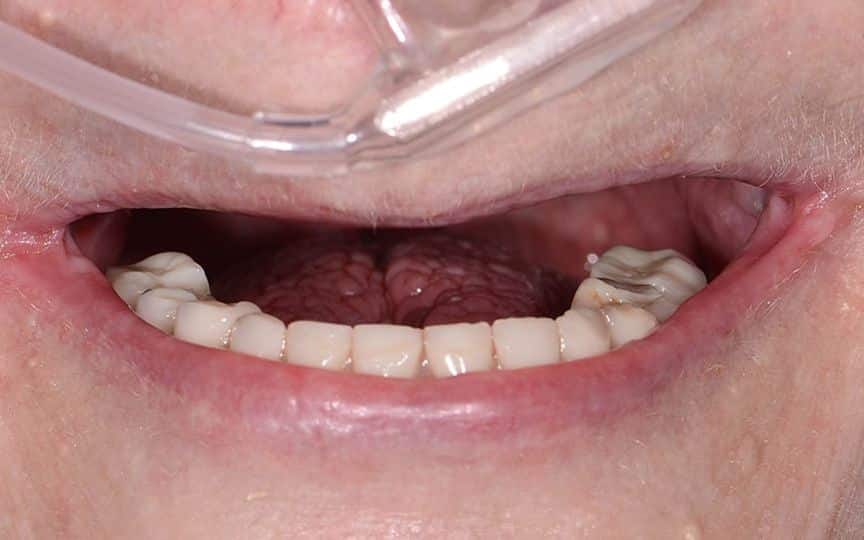
What ten years of movement had done
Over the long term the movement of an appliance causes wear, damage, fracture and bone loss around the implants. The problems come from the movement and fatigue that accumulate over the life of the prosthesis: the more shifting force applied to an implant, the more likely the screw, the framework and the restoration are to fracture.
In her case, besides the fractures to the prosthesis and the bar, bone loss had begun around the implants, and because the prosthesis sat over failing, exposed implants there were hygiene problems as well.
Failing implants
A bar denture designed by the laboratory
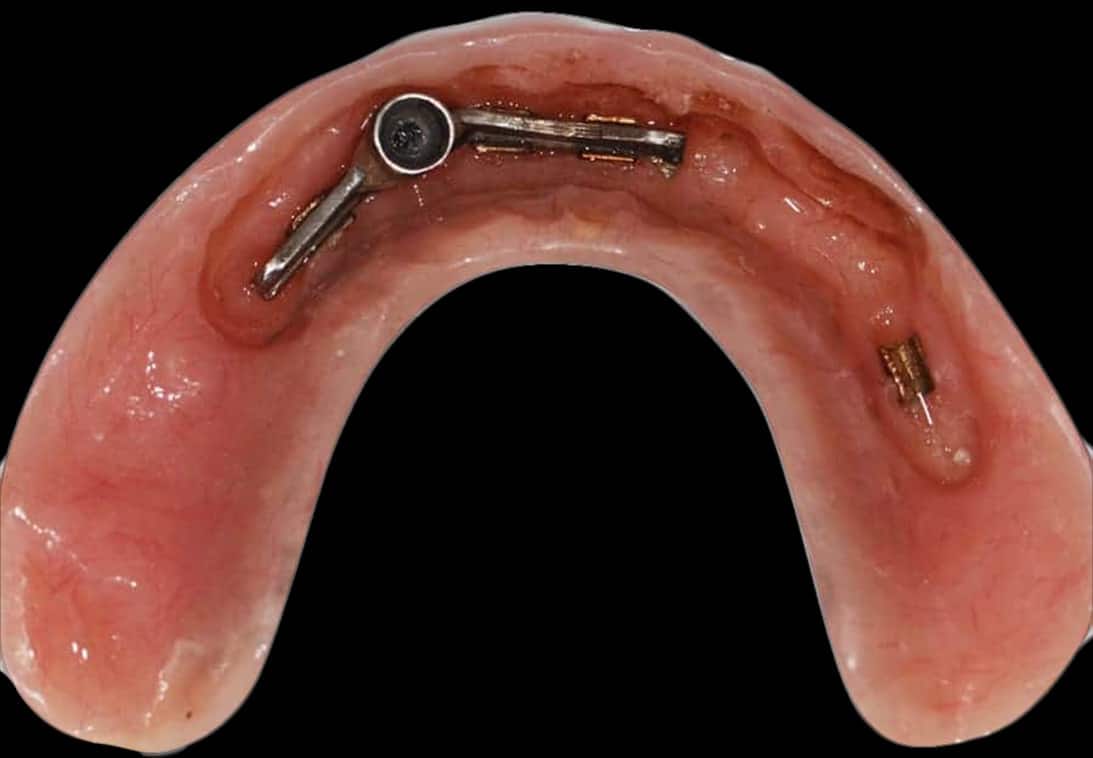
Her lower teeth were a removable denture clipping onto a bar screwed to two implants. The design had come from the laboratory, not from a clinician; her dentist was not familiar with restoring implants this way, so the lab guided him.
A bar overdenture is unforgiving. Designed wrong, it loads the implants and the denture with excessive force: teeth break, the framework fractures, and implants can be pulled loose from the bone. Designing one to last decades rather than a few years is what prosthodontic training is for.
The bar overdenture
Too few implants, in the wrong places
The original implants were too few and poorly distributed for the lower jaw ever to carry fixed teeth. The plan had been built around the clinician's limits, not around what she needed.
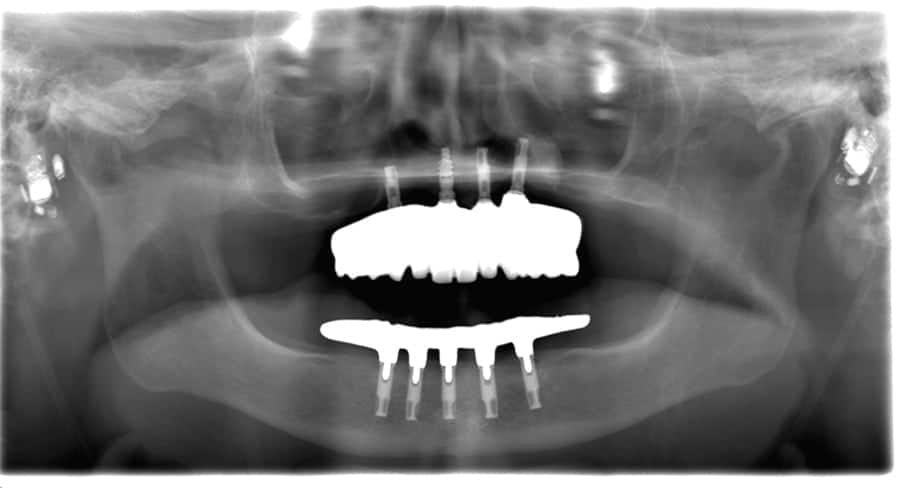
Dr. Reshad replaced the failing front implants and placed the new ones in a better distribution across the jaw. She left with fixed teeth and full function the same day.
As we age, we need fewer teeth
Dr. Reshad researched this question twenty years ago and has published on it on two continents: how many teeth each age group actually needs. The answer is fewer as we get older. By our eighties, about ten teeth per jaw is enough.
This is called a shortened dental arch. The missing back teeth rarely show when you smile, and ten well-placed teeth chew, function and look as good as a full set.
Fewer surgeries, sooner teeth
For her the shortened arch meant no implants far back near the sinuses, no sinus lift, and no zygomatic or transosteal implants. With the biomechanics designed correctly, a moderate front-to-back spread of implants across the jaw still supports fixed teeth while avoiding the sinuses entirely.
That is what a prosthodontist's planning buys: fewer surgeries, lower cost, and teeth sooner.
Exposed threads come out
The exposed, failing implants in the upper front were removed. When threads are exposed, bacteria attach to the rough surface and cause further bone loss; the rough surface of an implant belongs below the gum line. Removing ailing implants with exposed surfaces is always the right call.
Fixed teeth for the length of healing
A new appliance was built on new implants anchored firmly in bone. She was transitioned onto a fixed provisional restoration so that she could function through the healing phase. Made of acrylic resin, it lasted the length of her treatment, about nine months.
The provisional
Radiographs
The prosthesis
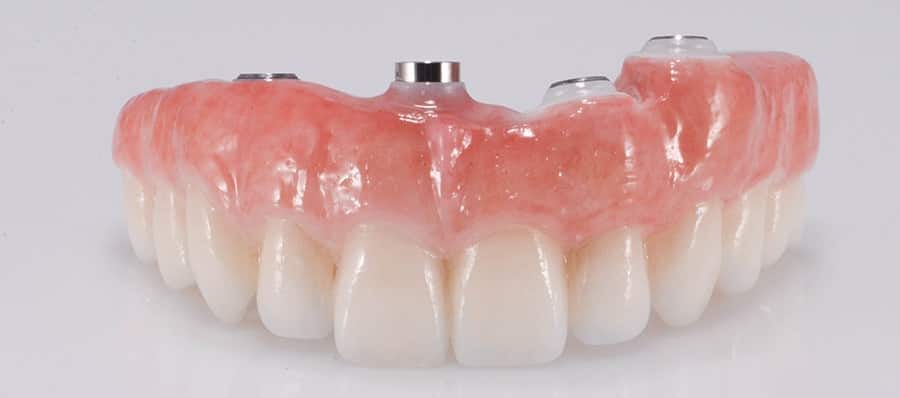
A zirconia prosthesis, and easier breathing
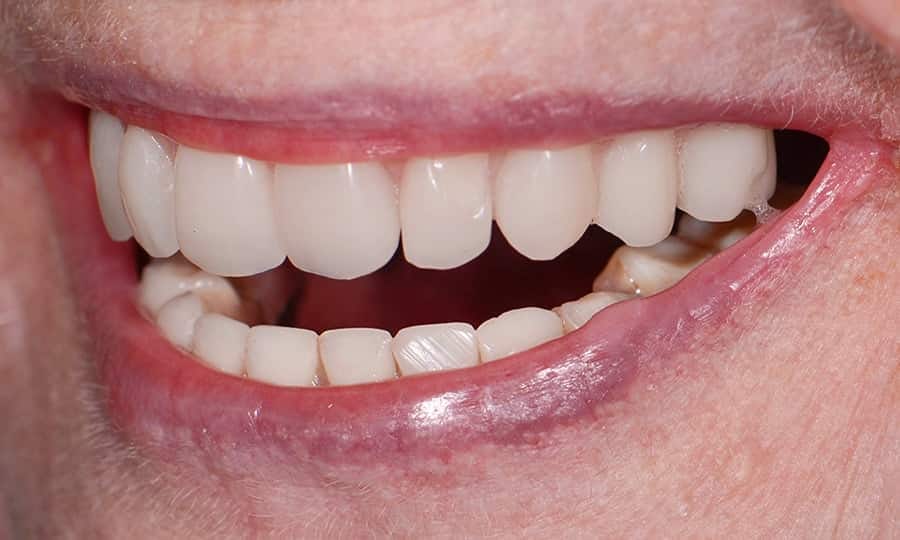
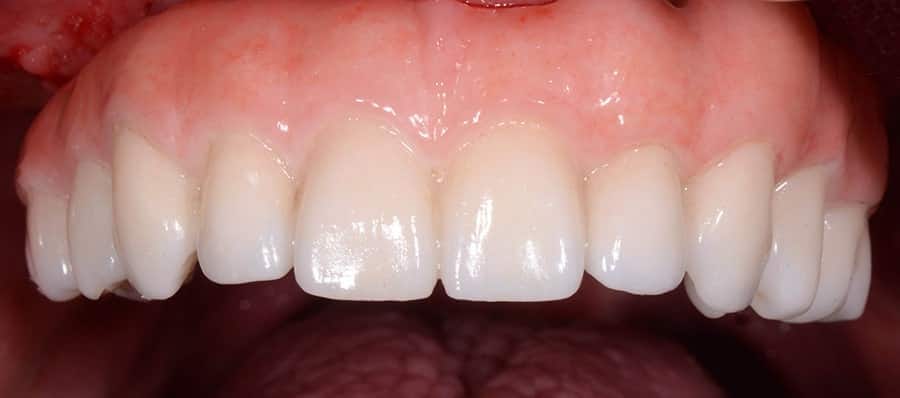
After several months of healing, she received her final restoration: a zirconia prosthesis for the upper jaw. It has changed her appearance, her health, how she feels, her quality of life, and even her breathing. An appliance made correctly, with less bulk, restricts the tongue less, and the patient speaks and breathes more easily.
Transitioning from a failed implant denture through a provisional phase that stabilized her at once, and finishing with a restoration this beautiful, is what gave her this smile.
Final ceramics, and nothing more to worry about
Within four to six months she had ceramic restorations that will never need to be removed. She lived out her life with these teeth, and dentistry was never a worry again.
Provisional and final


With Dr. Reshad
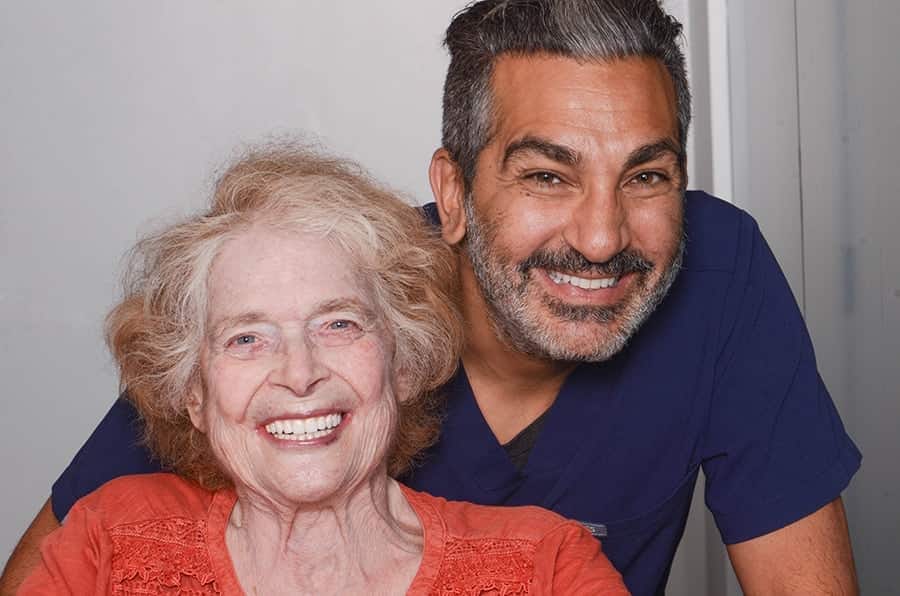
Every case is planned around one person's anatomy. Individual results vary, and what was right for this patient may not be right for you.