Front Teeth Case 4 · Implants · Pink Ceramic · Revision Dentistry
The Gap That Surgery Could Not Close
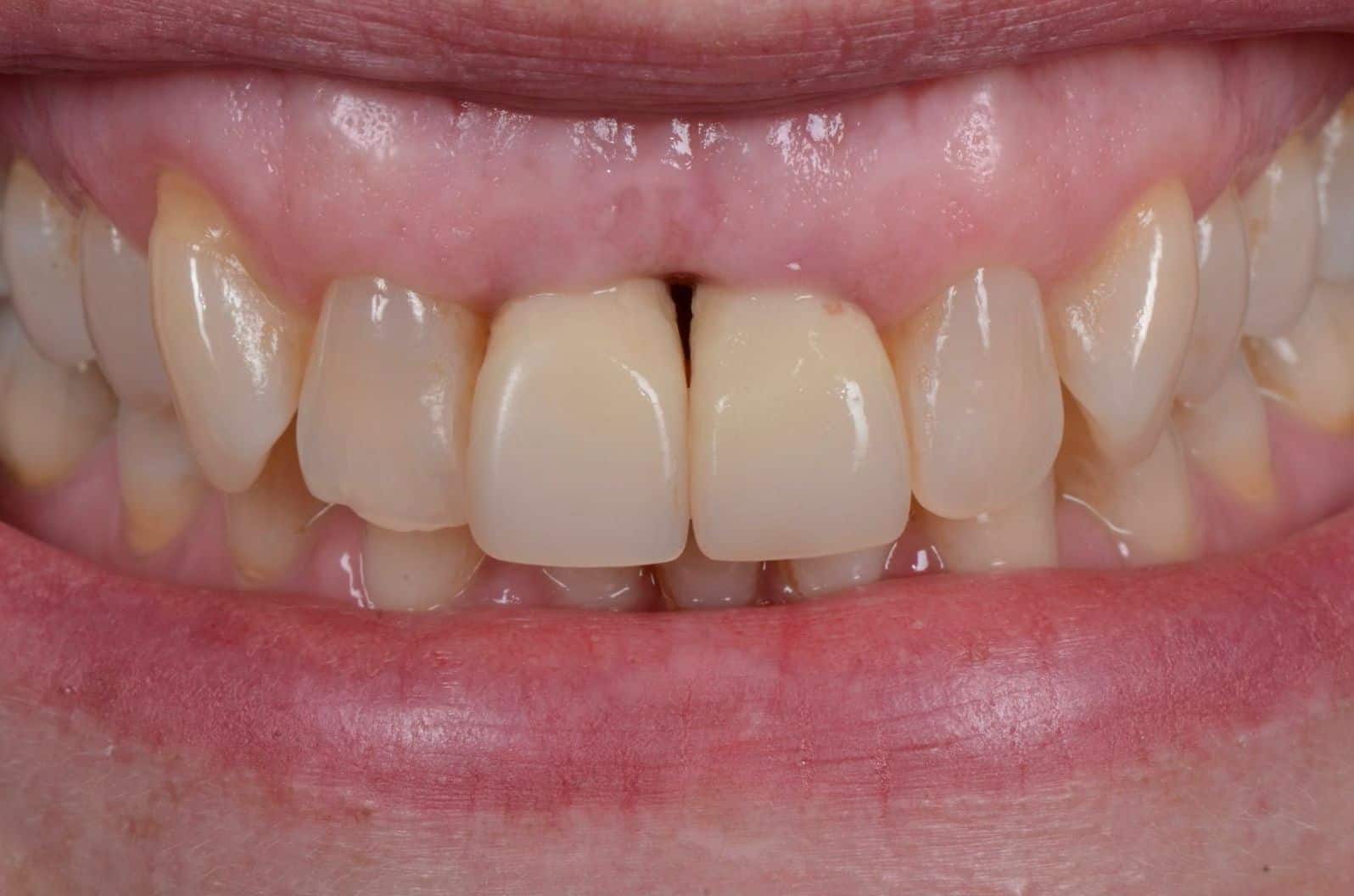
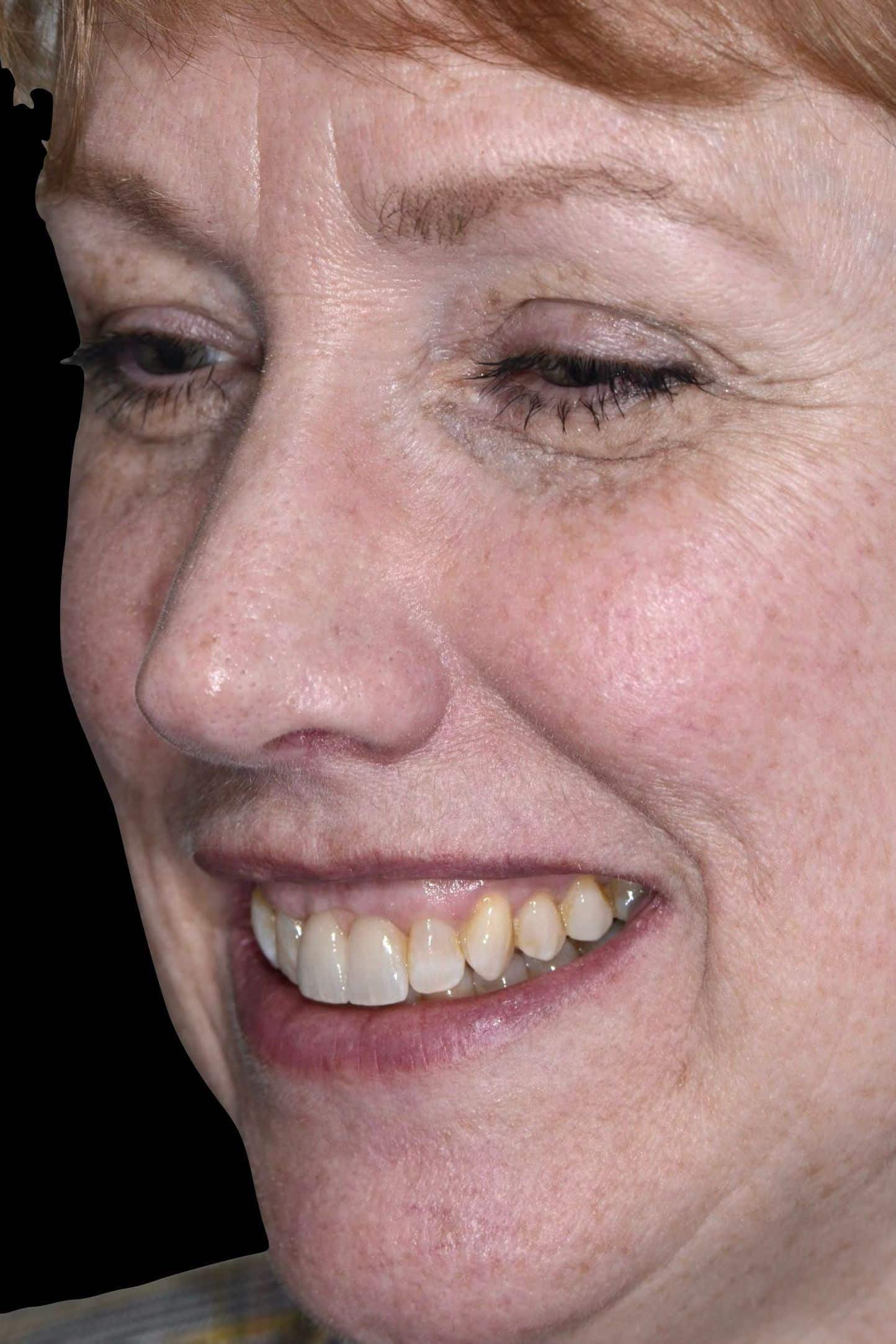
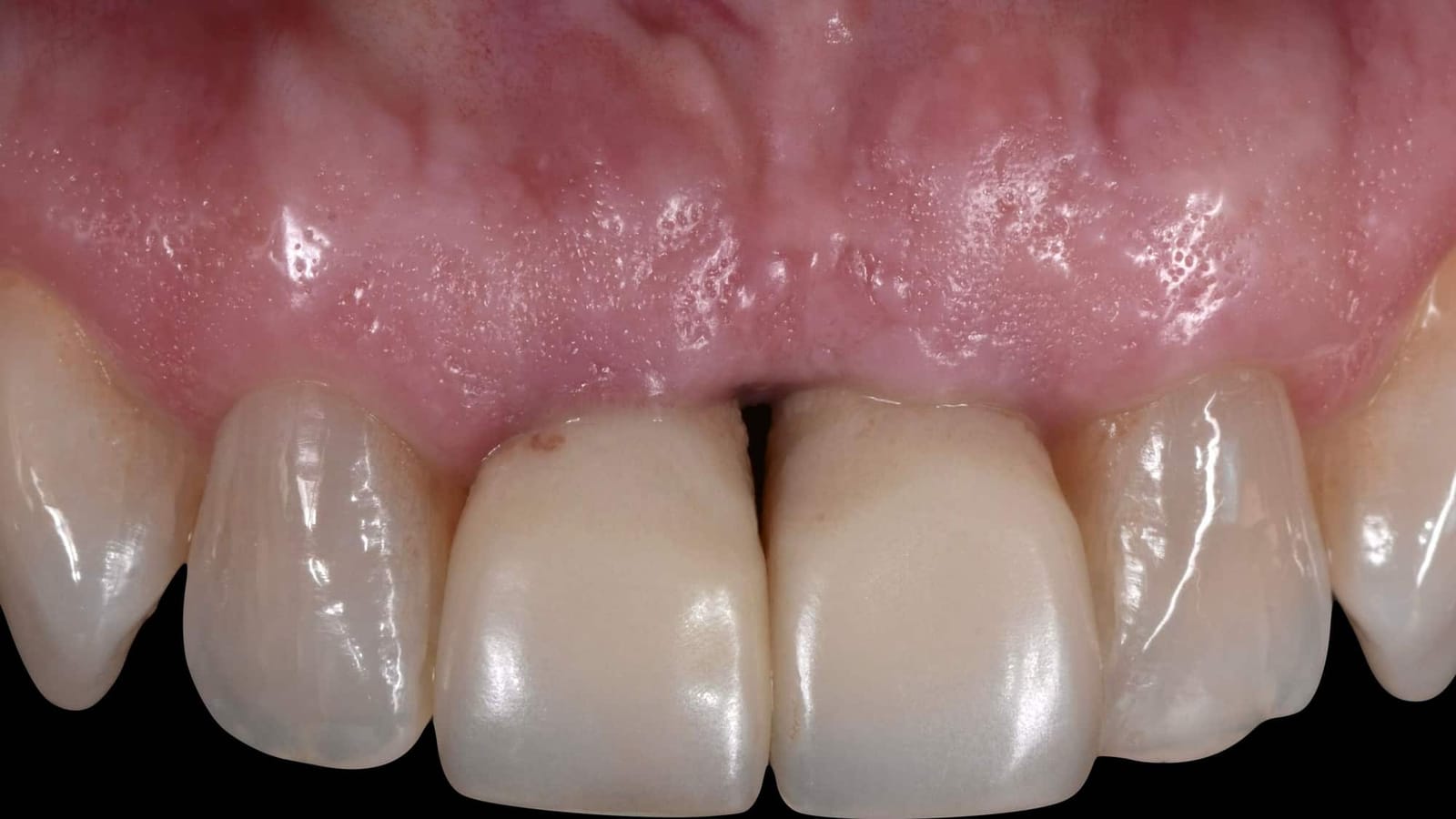
A dark gap sat directly between her two front teeth, and she showed a great deal of gum when she smiled.
Everything had already been tried. Surgical attempts to rebuild the tissue had failed, and each one had left her where she started, with the most visible defect in the mouth in the most visible position.
She flew in from Idaho, referred by a doctor who had trained under Dr. Reshad for years and who told her plainly that he could not fix this and knew who could.
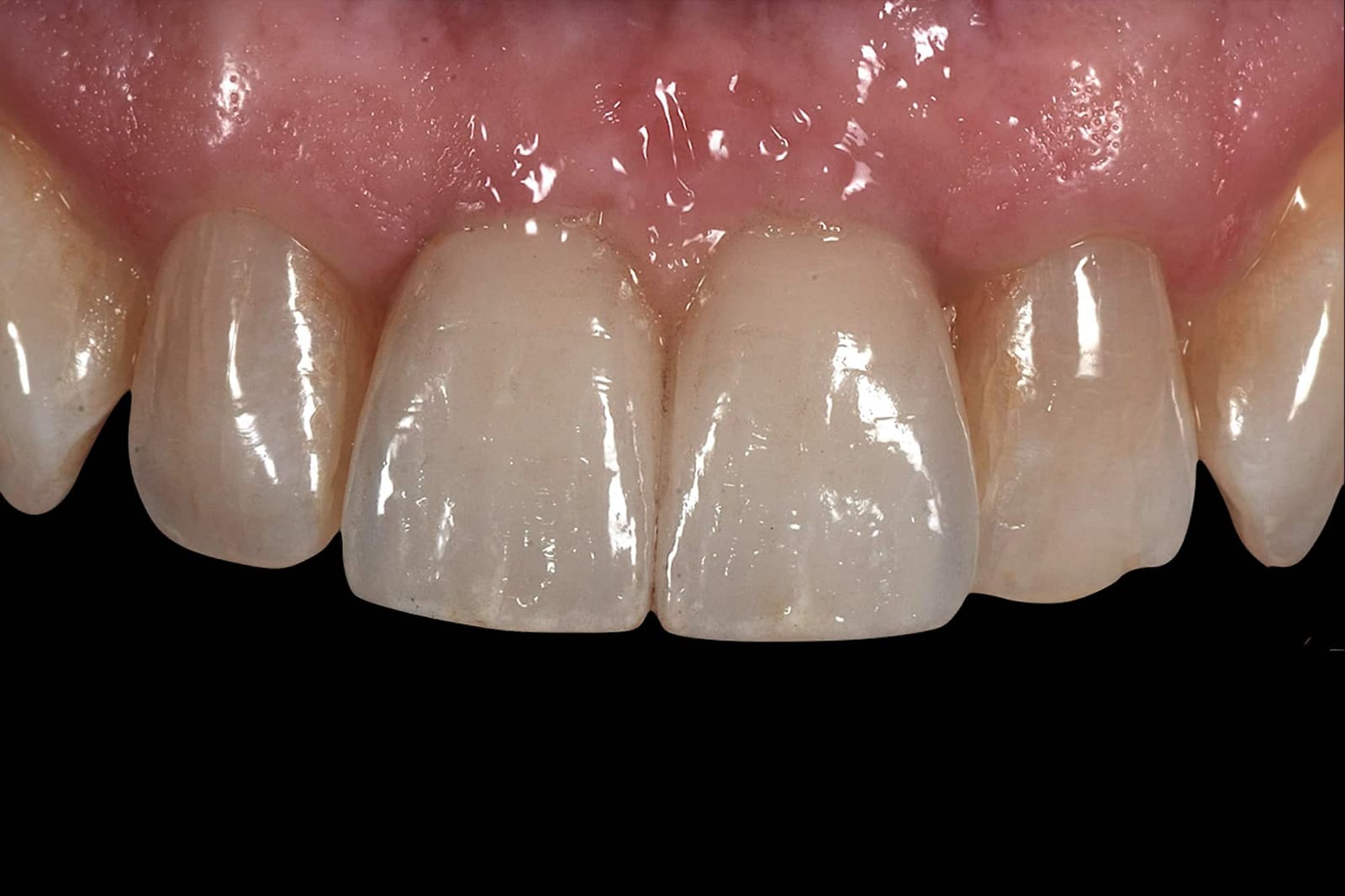
Before and after
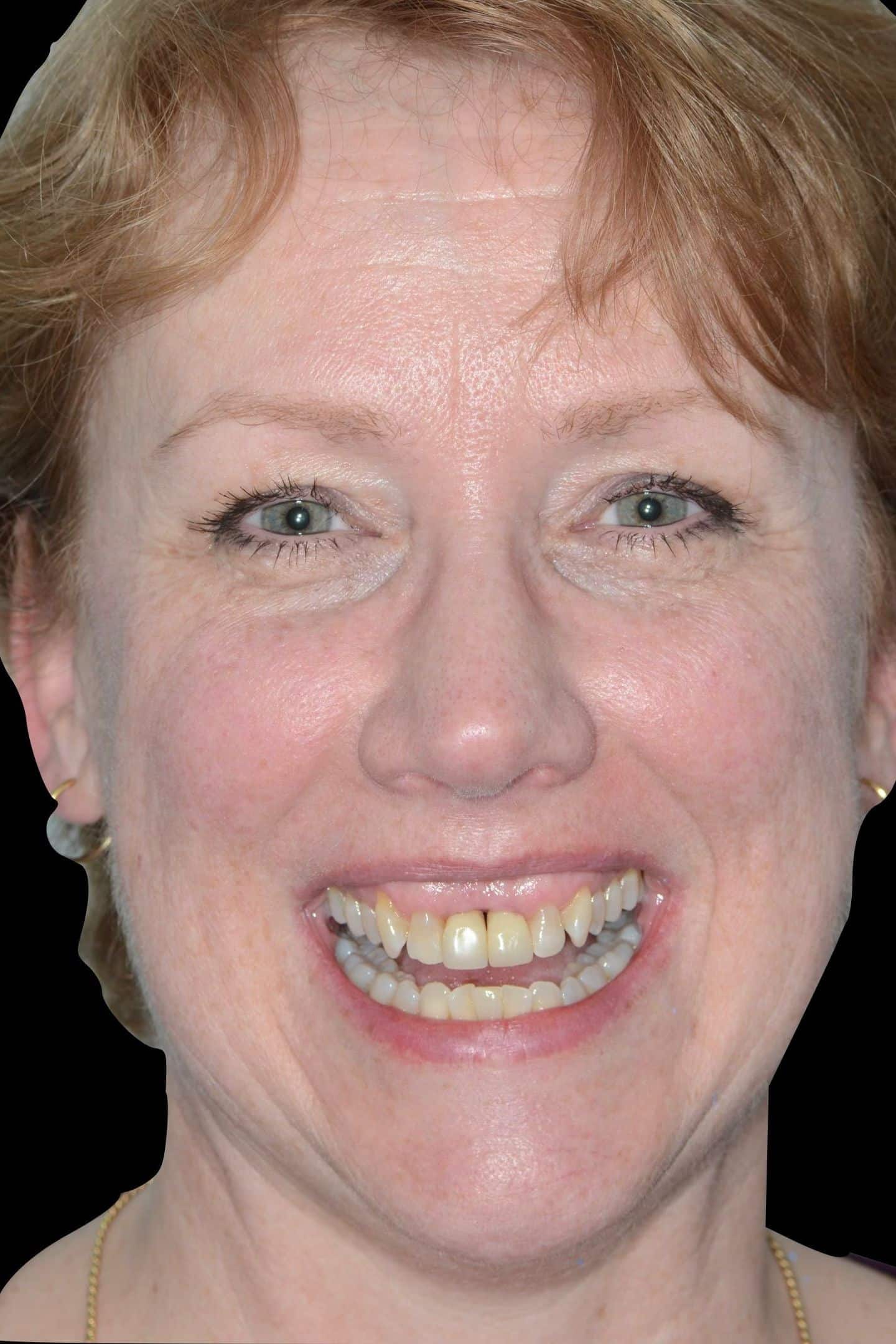
Three problems compounding
The gap alone would have been enough. She had two more things working against her.
Excess maxilla, meaning the upper jaw sits lower than average, so more of it shows. And a short, hypermobile upper lip, which rises further than most lips do when she smiles.
Neither can be corrected. You cannot lengthen a lip. So everything in her smile, all the way up past the gum line, was permanently on display, and a defect at the center of it had nowhere to hide.
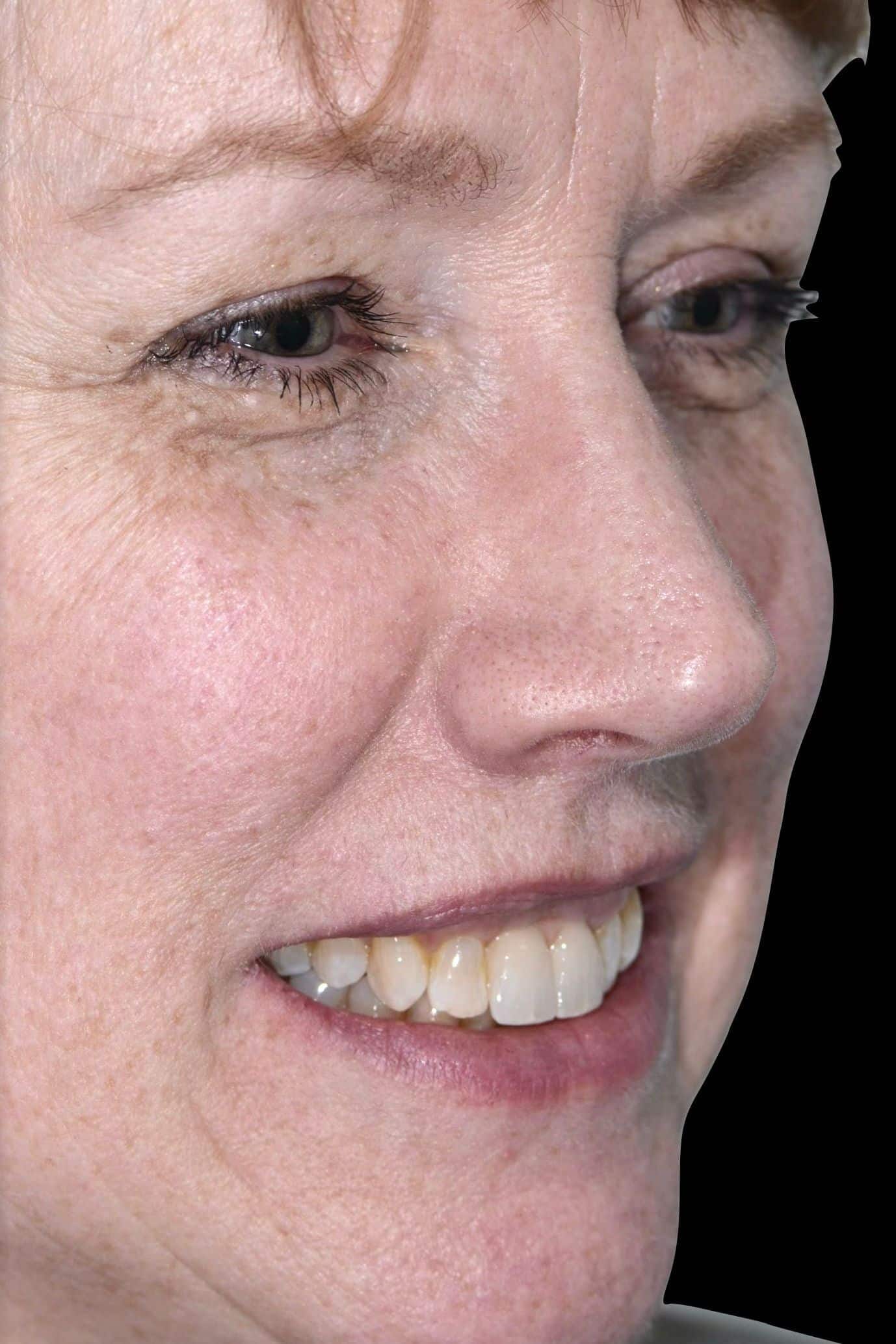
The smile at arrival
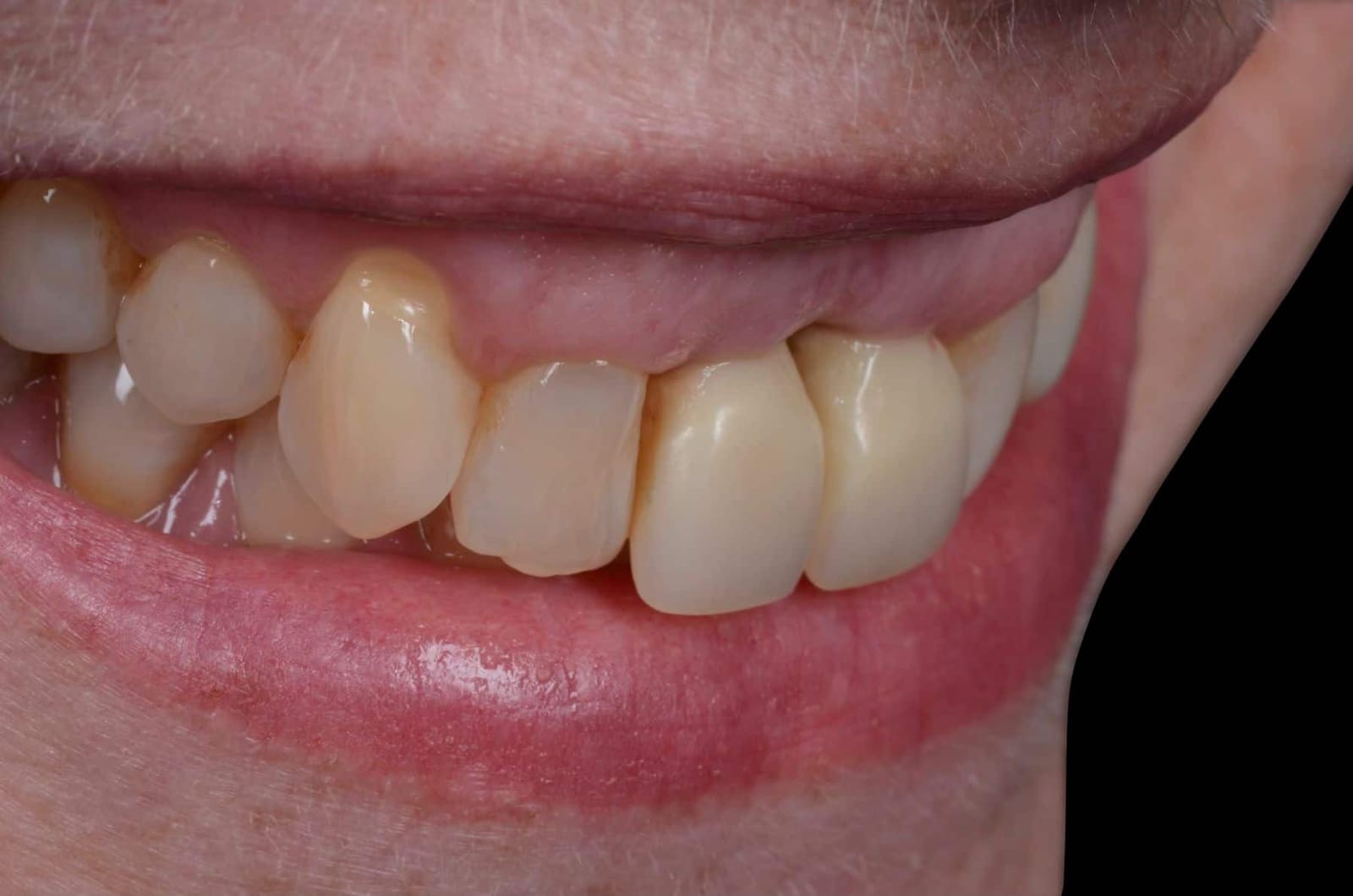
Blood supply, and the distance between implants
This is the science, and it explains why the surgery kept failing.
The papilla is the peak of gum that rises between two teeth. Between two natural teeth it has a reliable blood supply and it survives. Between two implants it does not, because implants have no periodontal ligament and therefore no supply from the side.
The research on this, from Tarnow and Chu and colleagues, established that when implants are placed too close together the bone between them resorbs, and when that bone goes the papilla goes with it. It is an anatomical consequence, not a surgical failure.
Which is why repeated grafting could not fix her. The biology required to hold tissue in that space was no longer there. Removing the implants to start again would have been enormously destructive, and she was right to refuse it.
Replace the tissue rather than regrow it
After a long session with Dr. Reshad and the master technician, she got the news nobody had given her: it could be solved, the implants could stay, and it could be done with prosthetics alone.
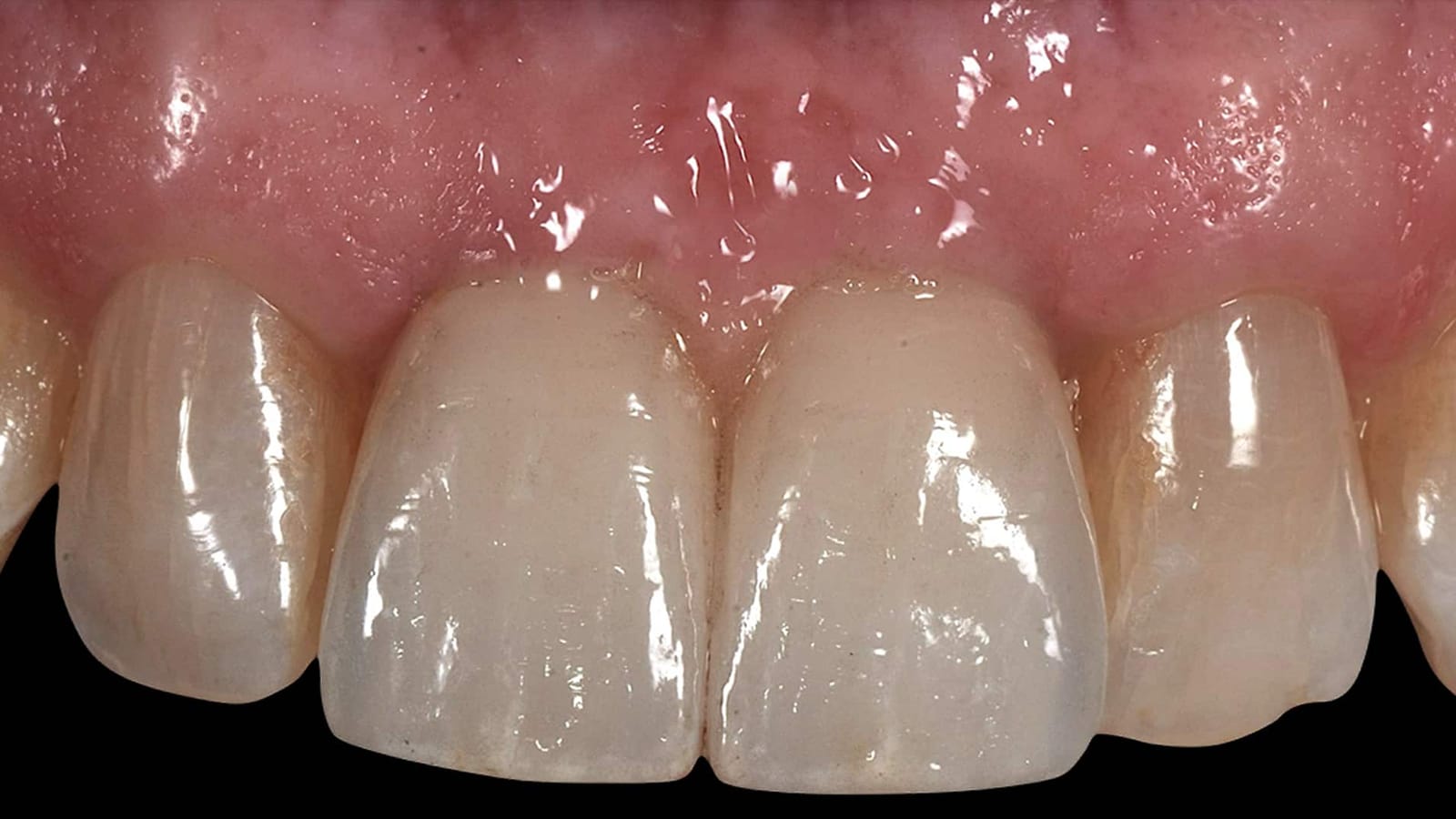
The missing gum is replaced in pink ceramic.
That is a discipline of its own. Prosthodontists are trained to replace missing structure, teeth and gum, and in maxillofacial work ears and noses too. Replacing tissue is part of the specialty's definition rather than an extension of it, and pink ceramic in the aesthetic zone is among the hardest versions of it.
Made correctly it is hygienic, healthy and cleansable. Made correctly it also disappears, which requires a complete command of ceramic: the colors, the translucency, and how both behave against the real tissue beside them.
Three weeks, from start to finish
Because she was traveling from out of state, the whole treatment was compressed into two appointments.
At the first, impressions of the tissue, the data collected, and the colors of both gum and teeth measured from every angle rather than matched to a single shade.
Three weeks later, the final prosthesis was delivered.
A center that no longer draws the eye
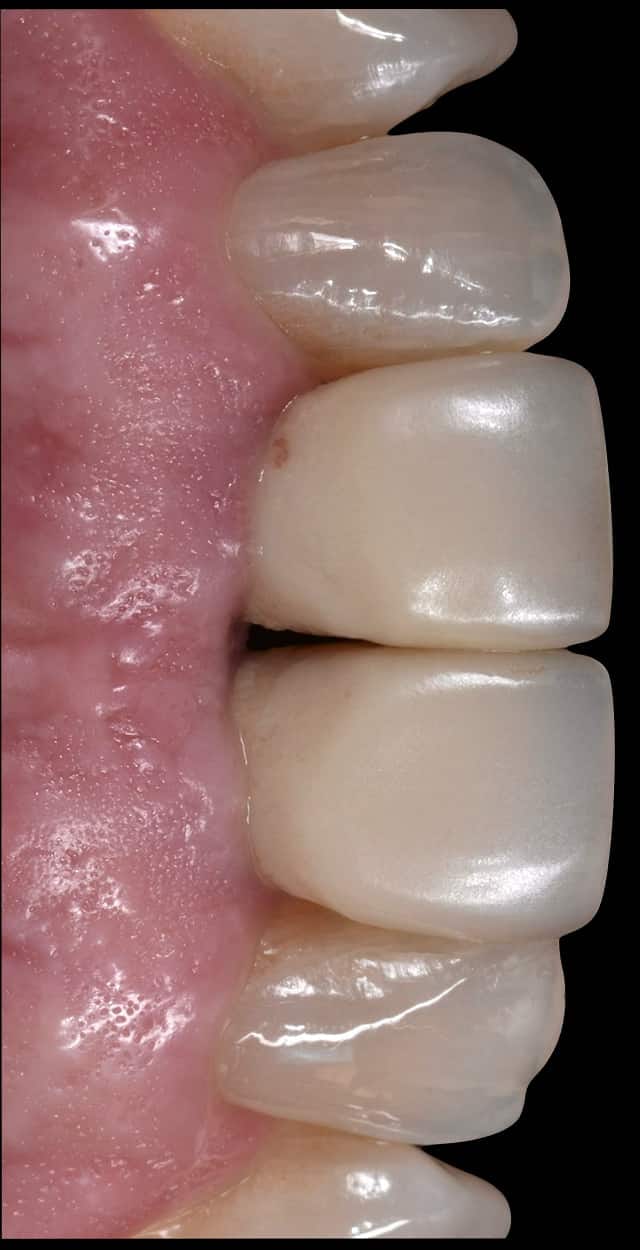
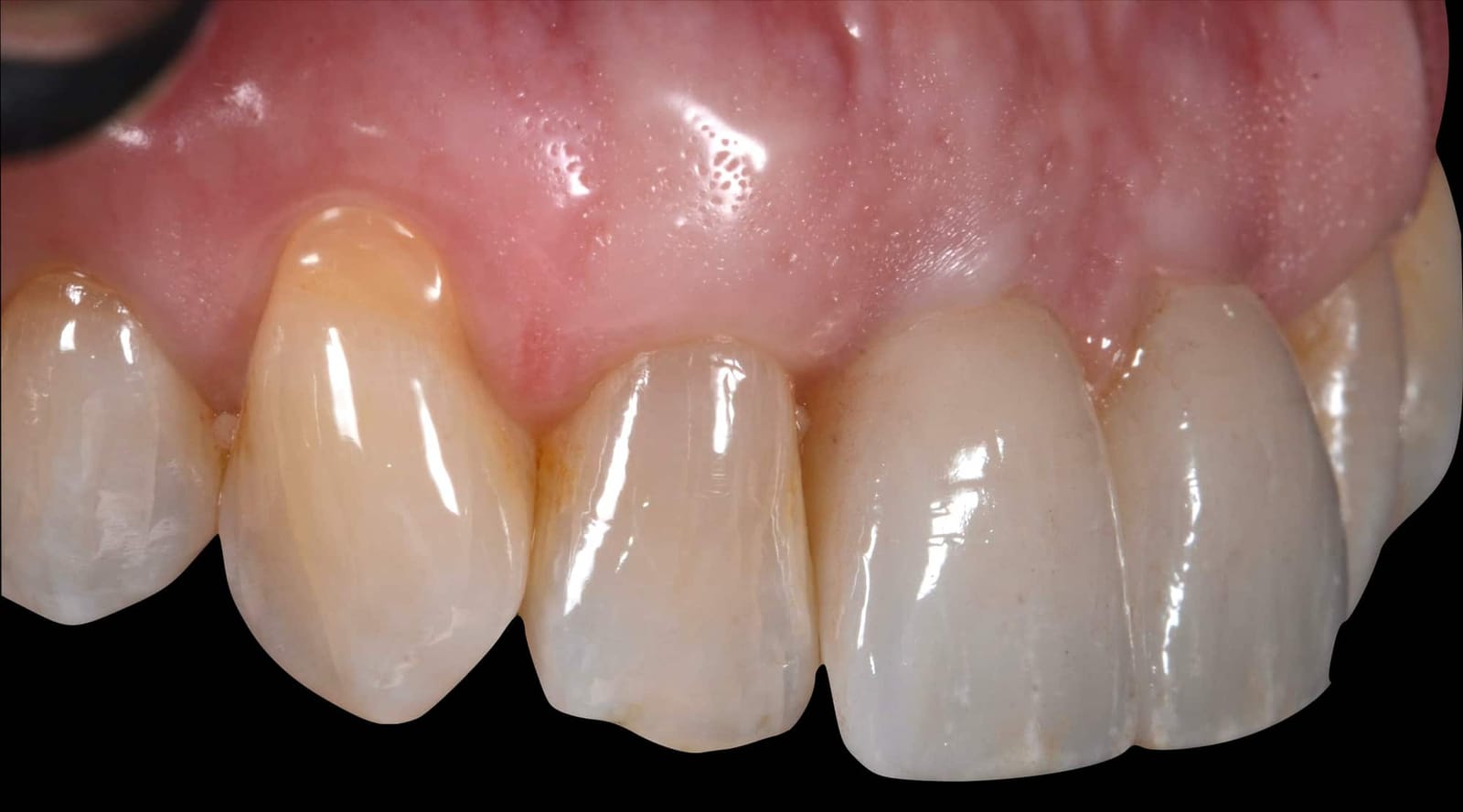
The black triangle at the middle of her smile is gone.
What replaced it reads as tissue, blends with the gum around it, and can be cleaned. Her implants are still hers. No further surgery was performed.
Given a smile that shows everything, that is the whole achievement.
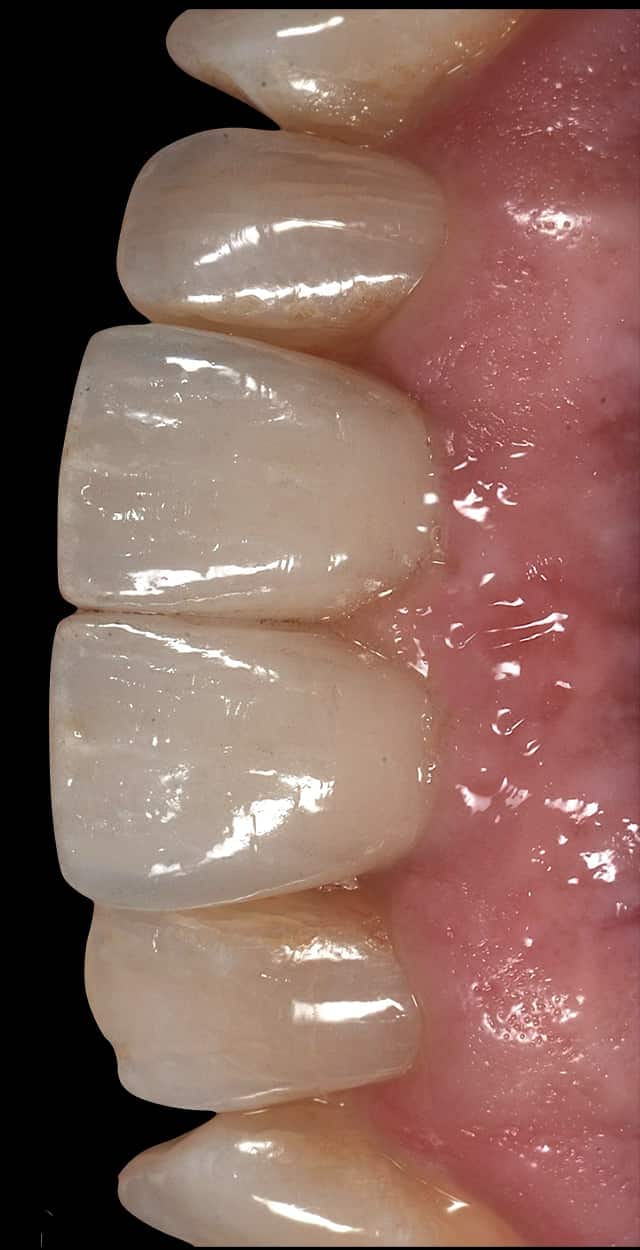
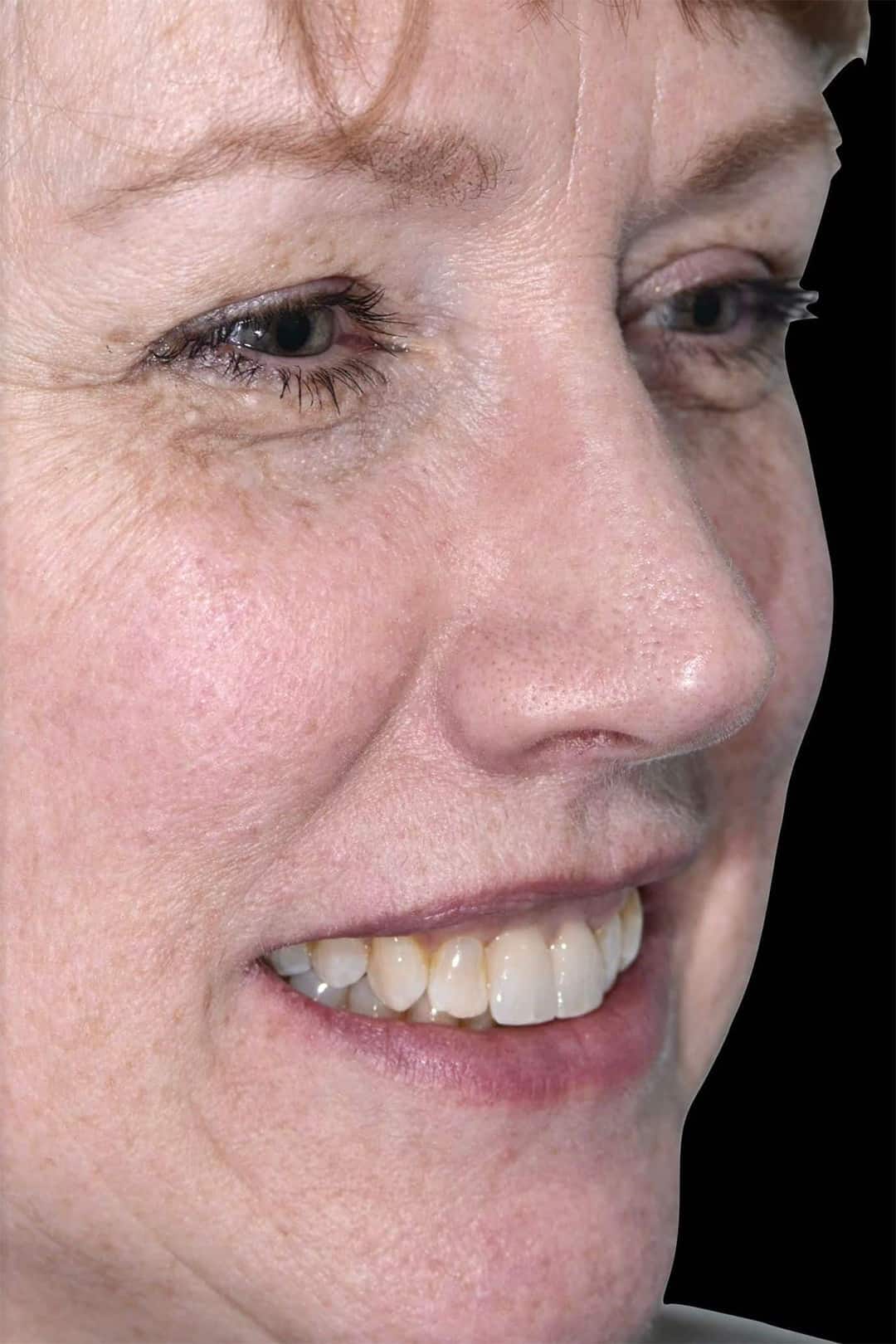
The finished upper arch
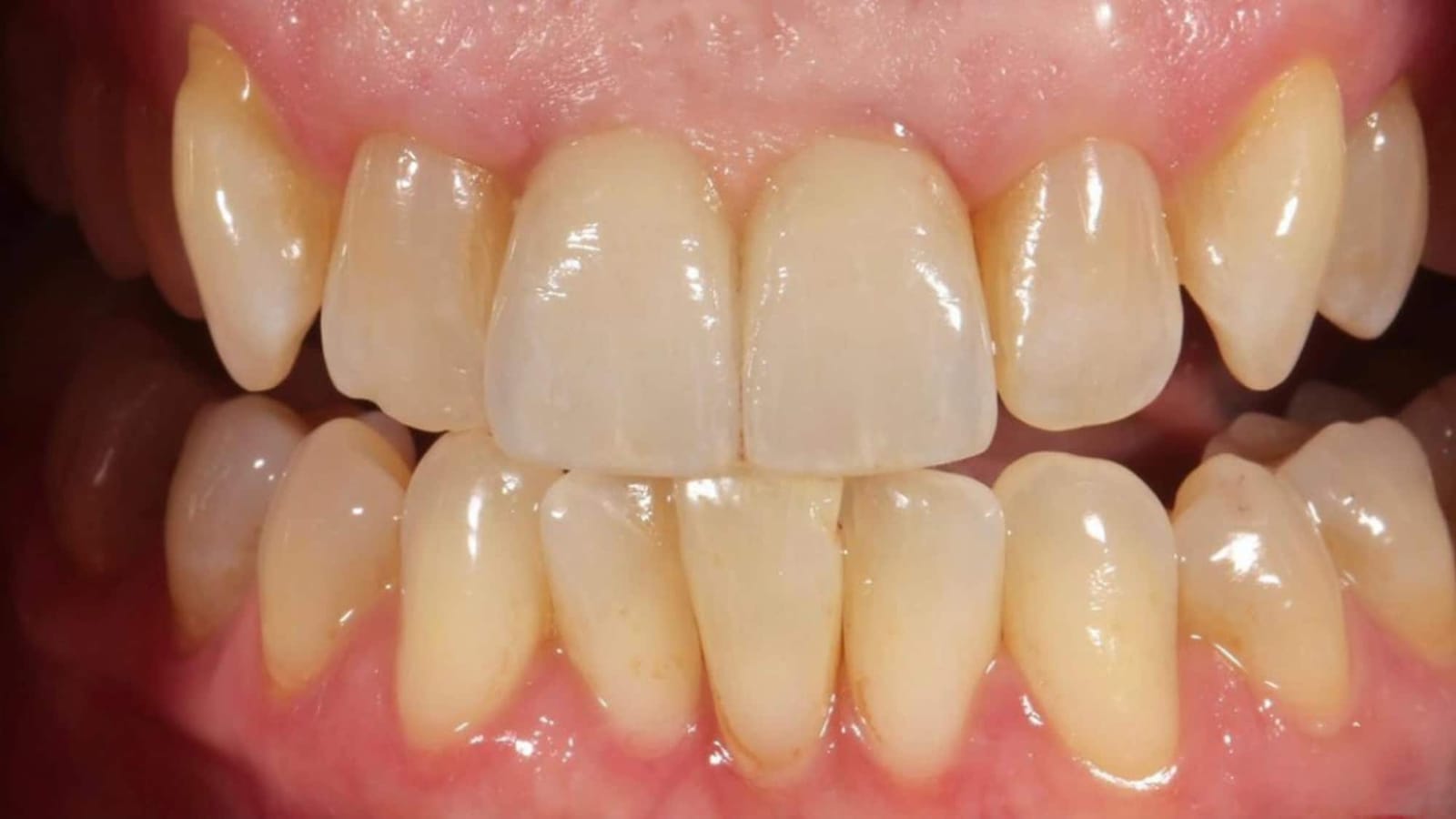
From the side
Where pink ceramic belongs
This is not only for cases as extreme as hers.
Gum recedes. It shrinks after implant surgery, after gum surgery, and sometimes during treatment for reasons nobody can prevent. Small amounts of missing tissue open small dark spaces, and those spaces are what make a restoration look like a restoration.
Being able to replace tissue precisely, wherever it is missing, so everything blends and no dark spaces remain, is a standard part of the toolkit here rather than an emergency measure.
When the answer is not surgical
She had already been through the surgical route and it had not worked, because in her anatomy it could not.
Knowing that, rather than trying again, is the first part. Knowing that the tissue can be replaced instead of regrown is the second. Executing it in ceramic at a standard that survives a high smile line is the third.
Only one specialty trains for all three.
Before and after
The upper arch
Every case is planned around one person's anatomy. Individual results vary, and what was right for this patient may not be right for you.