Revision Case 8 · Revision Dentistry · Full-Arch Reconstruction · Bite & TMJ
Planned From the Neutral Zone Outward
He could not tolerate his teeth. Not with the denture in. Not with it out.
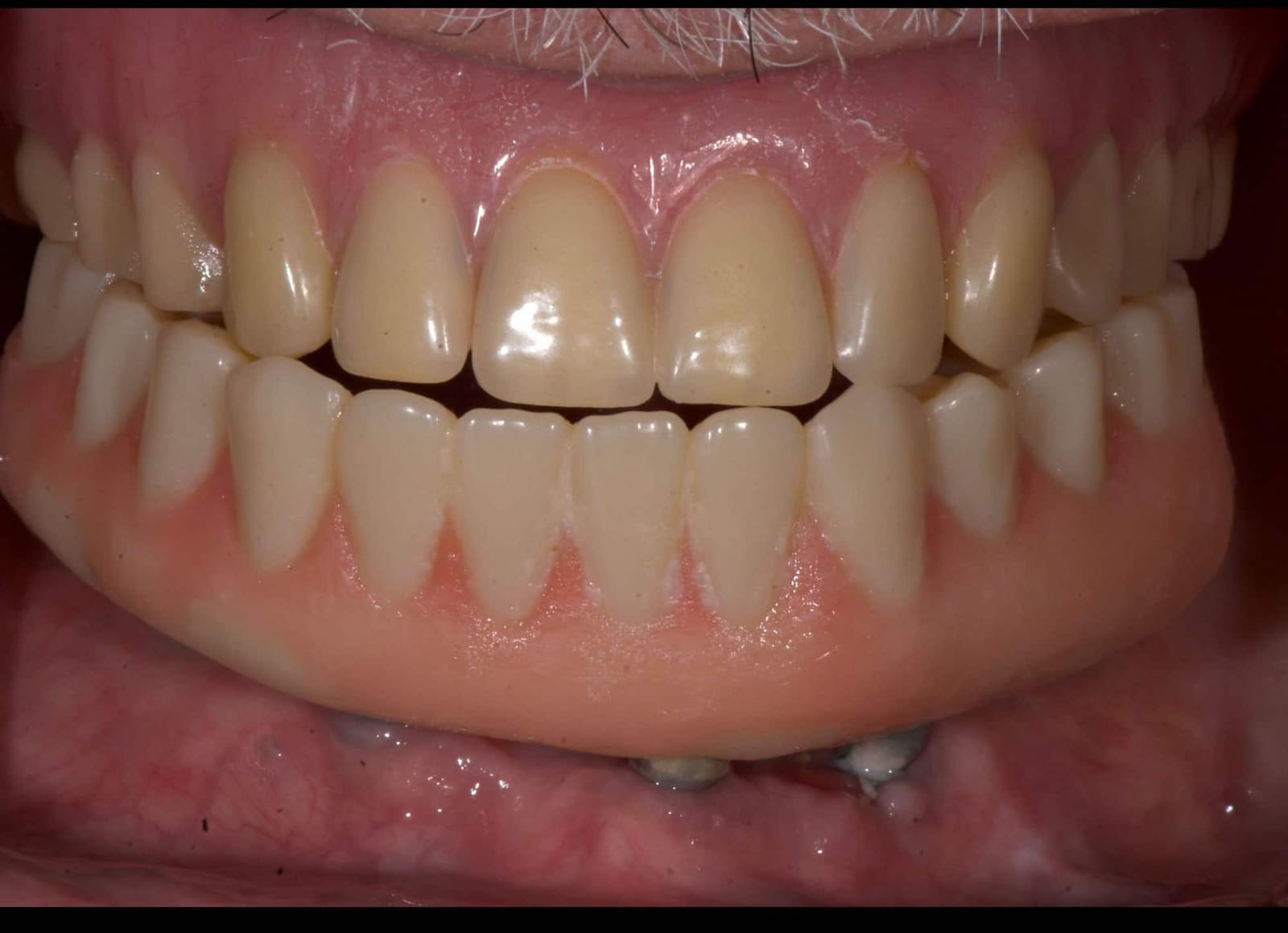
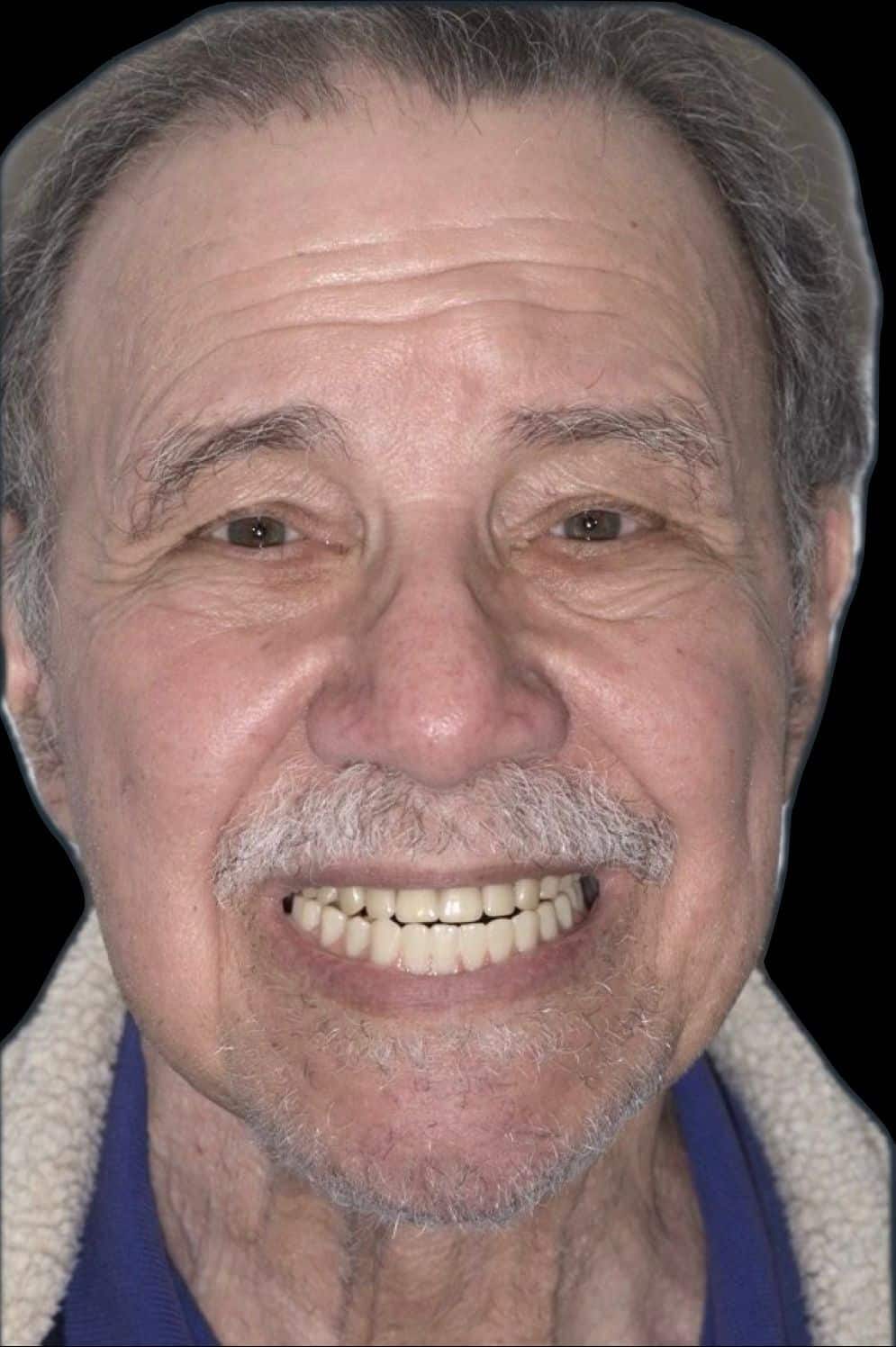
He came to us with an upper complete denture and a lower fixed bridge on implants, both made elsewhere. His lips and cheeks felt pushed forward, his tongue had nowhere to go, speaking was an effort and swallowing was uncomfortable. He had been told the work was technically sound and that he would adapt.
He had not. When the teeth are in the wrong place, no amount of adjustment will make them comfortable.
Not enough bone for conventional implants is a reason to change the anchorage, not a reason to stop.
At presentation: lips at rest, smiling with the denture in, full smile
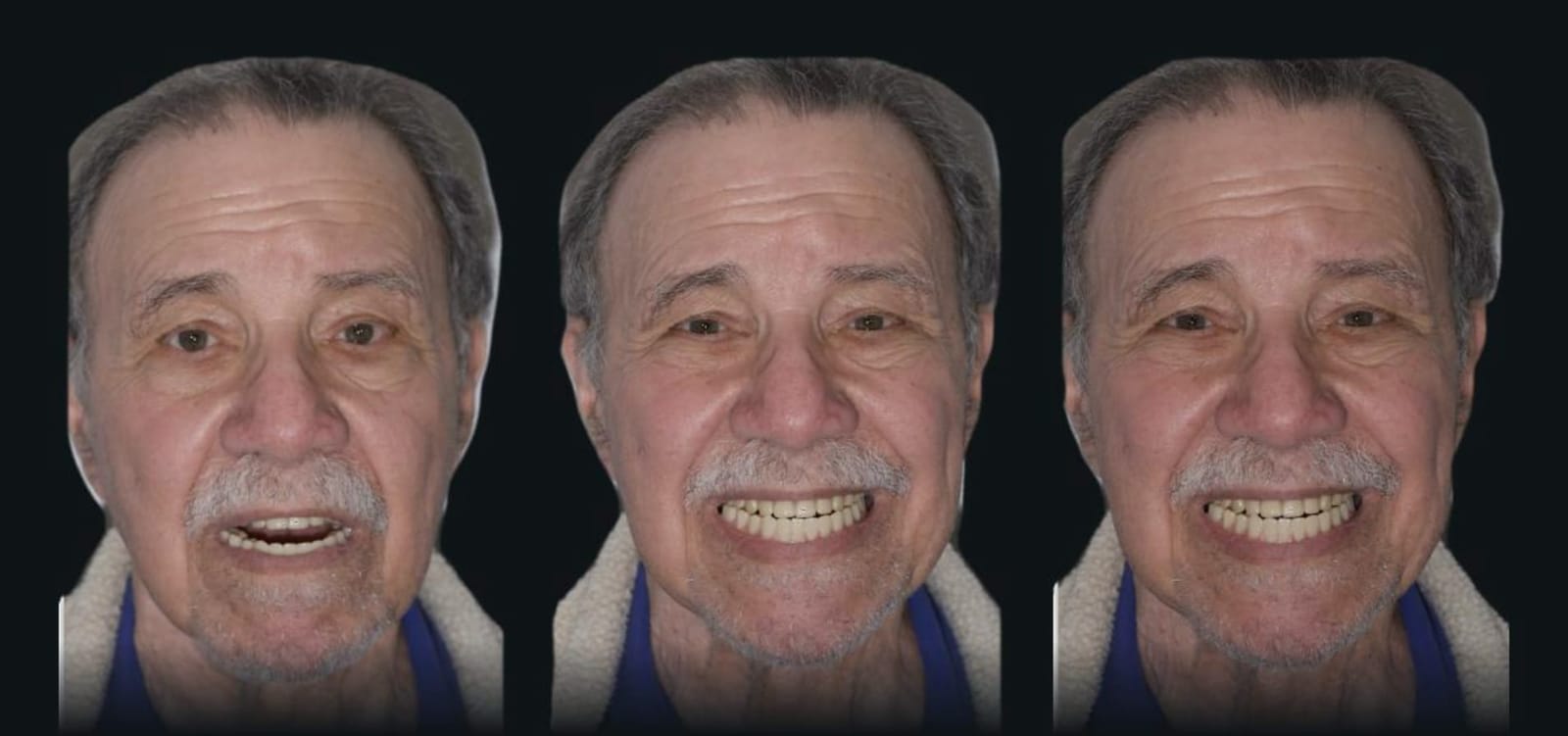
What he came in with
Taking the denture out did not help. The lower bridge was fixed, and it was doing the same thing.
So this was not a denture problem. Both prostheses were pushing against the same muscles, from the same wrong position.
The smile
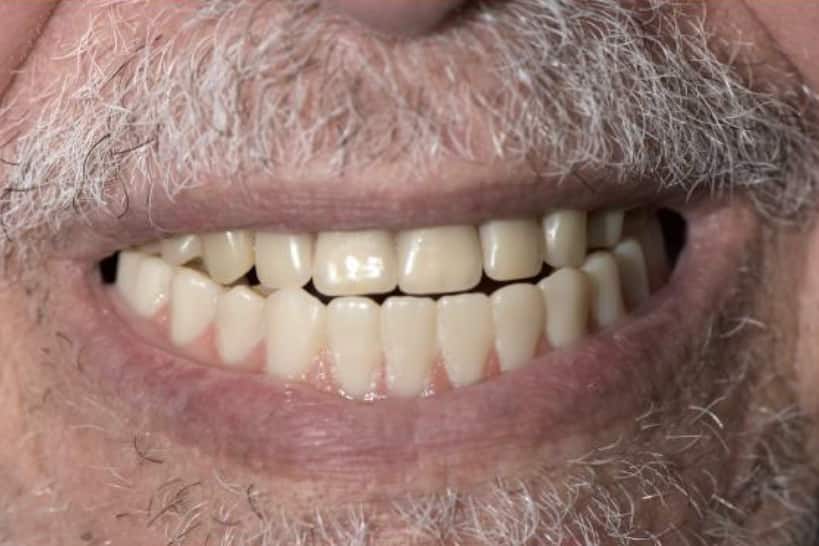
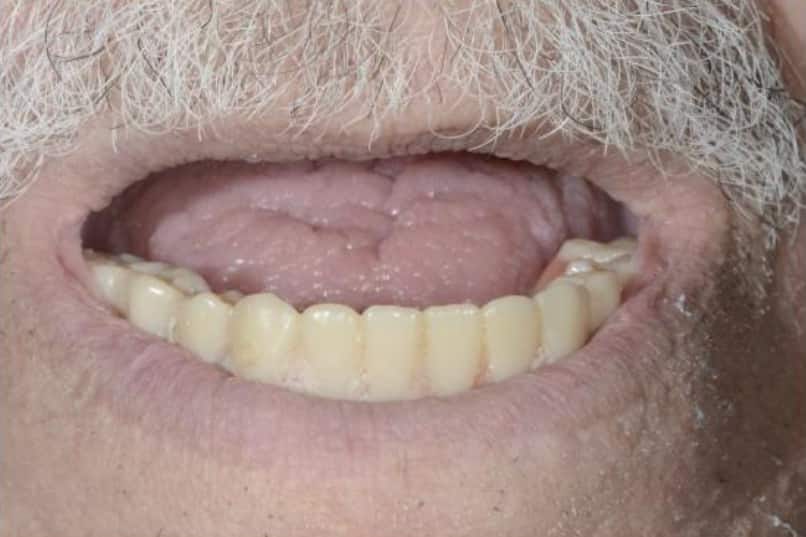
In profile
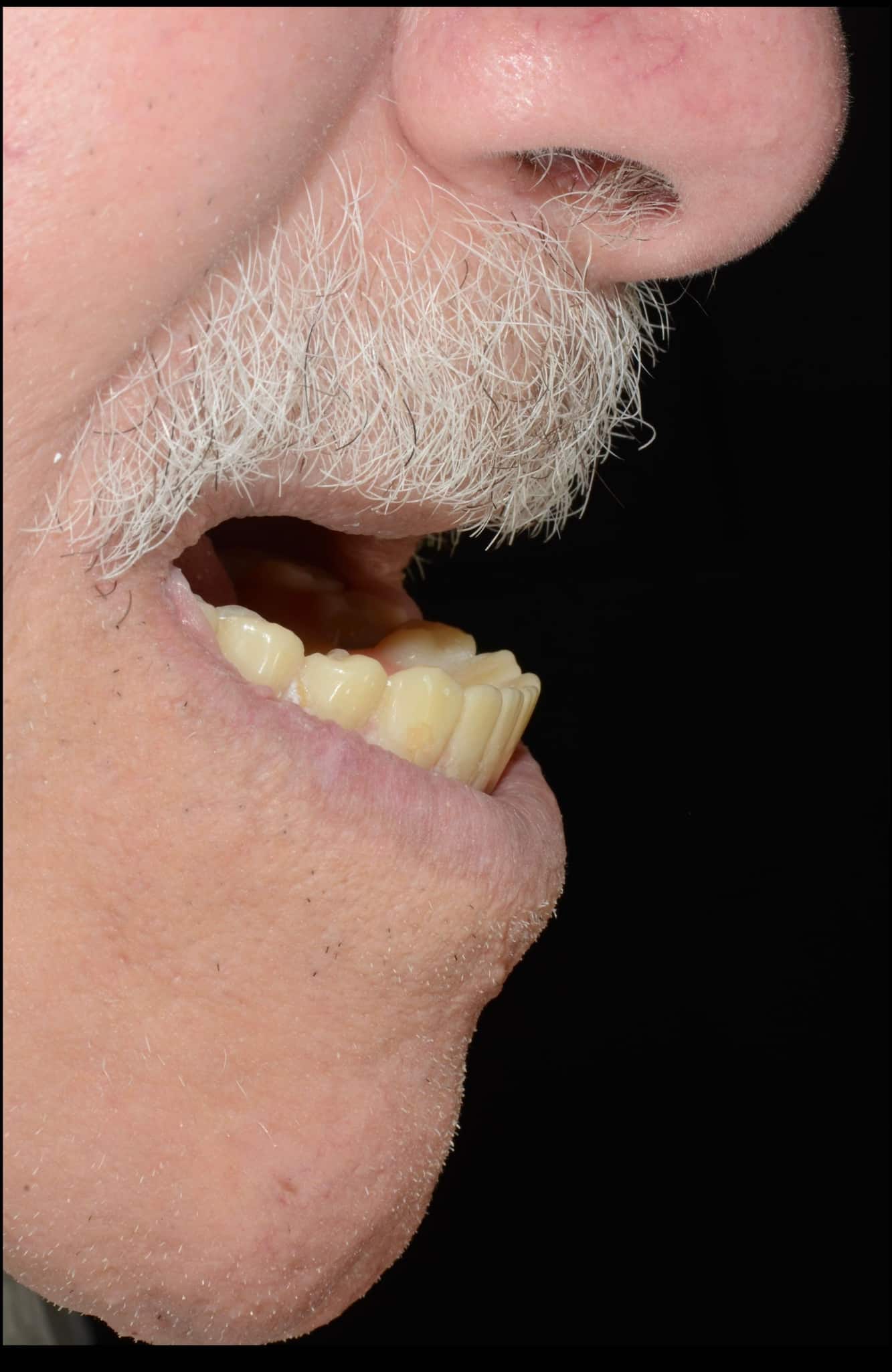
Old dentures in the mouth
How it got here
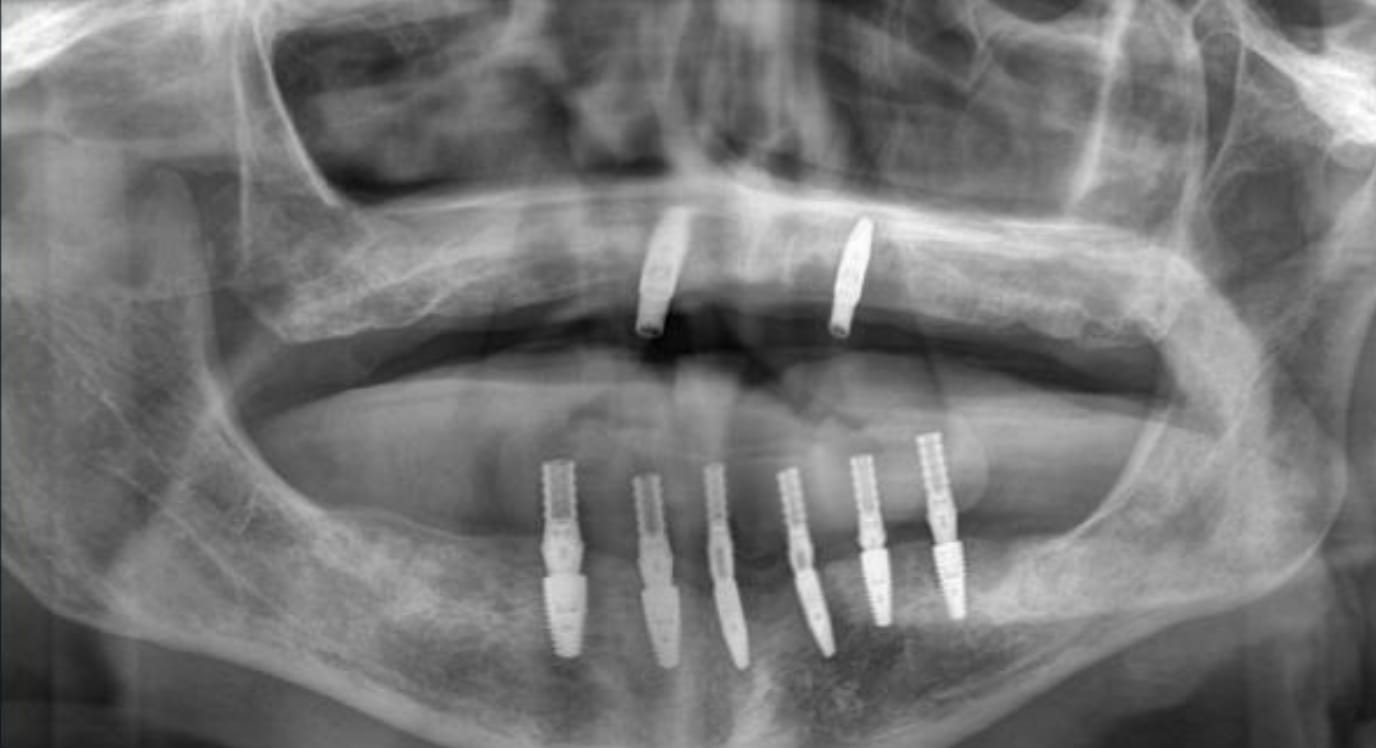
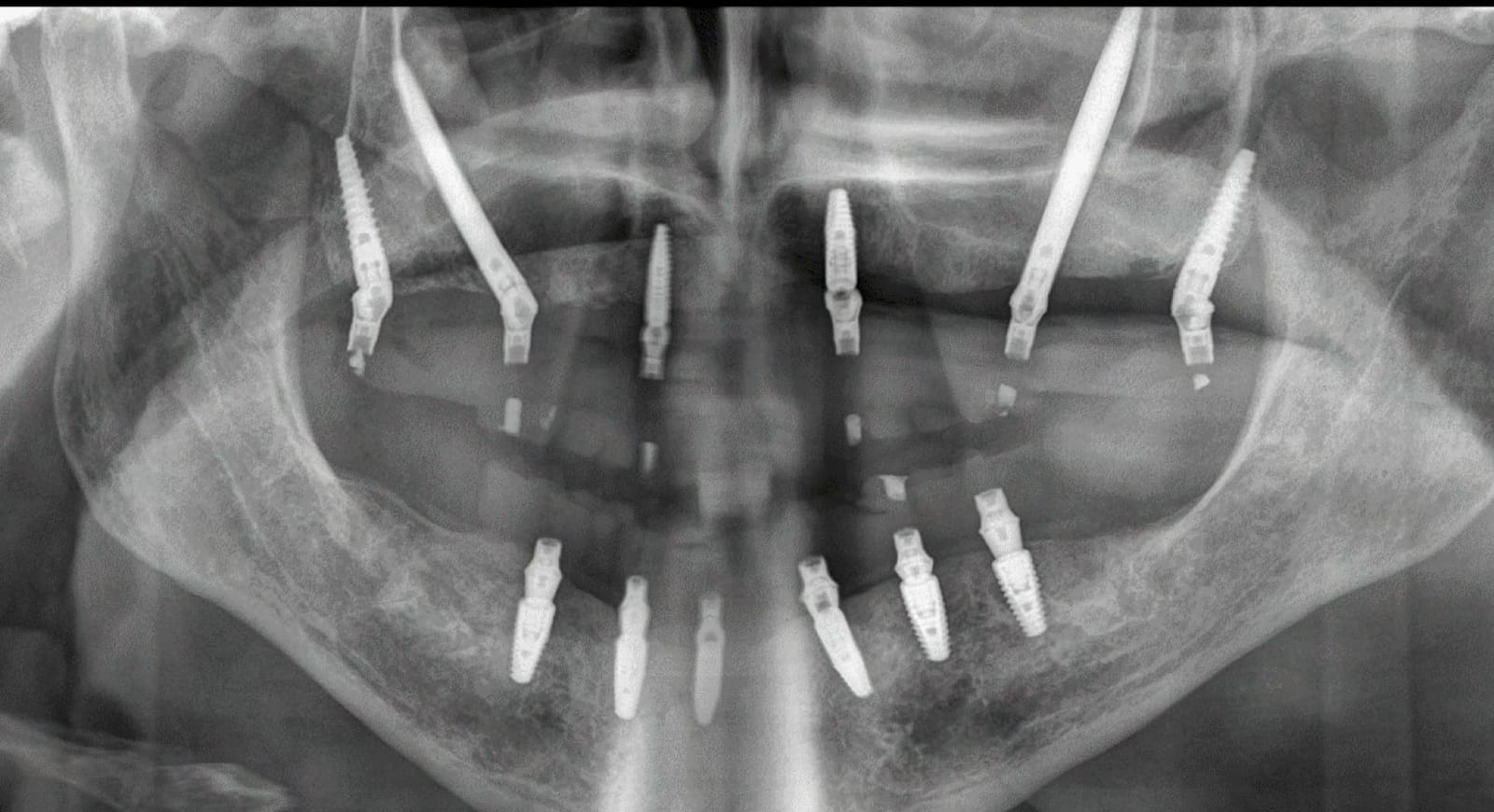
The upper teeth had been extracted with the promise of a full arch of implants. The previous team placed two. The further surgeries were abandoned, the bone that would have carried conventional implants resorbed, and he was told the denture was permanent.
In the lower jaw, six sound implants carried a fixed restoration. The teeth on top had been built where the implants happened to be, not where the tongue, lips and cheeks needed them.
Two separate problems: an upper jaw described as having no bone, and a lower prosthesis in the wrong place. Neither was going to be solved by remaking the denture.
Panoramic radiograph at presentation
What was actually wrong
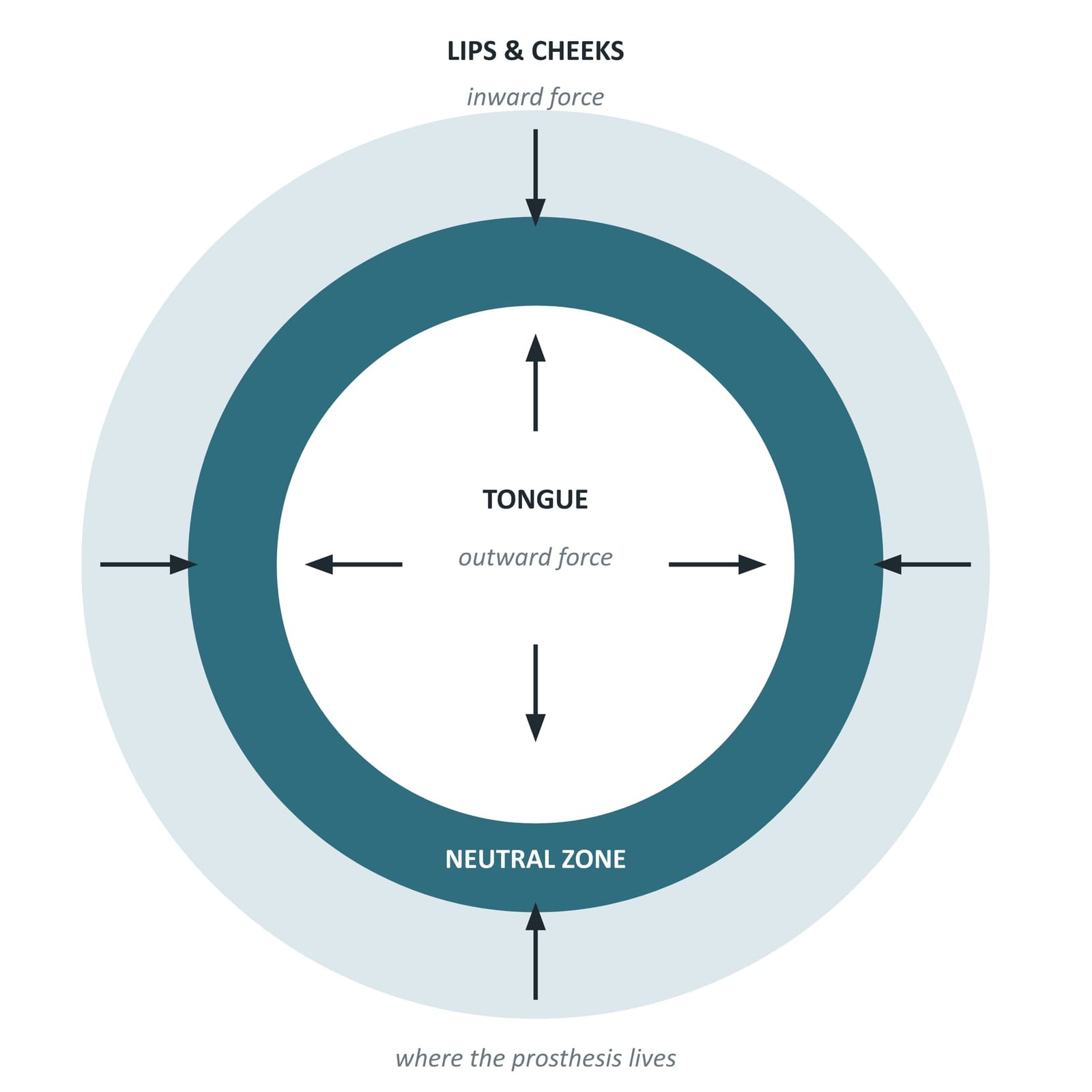
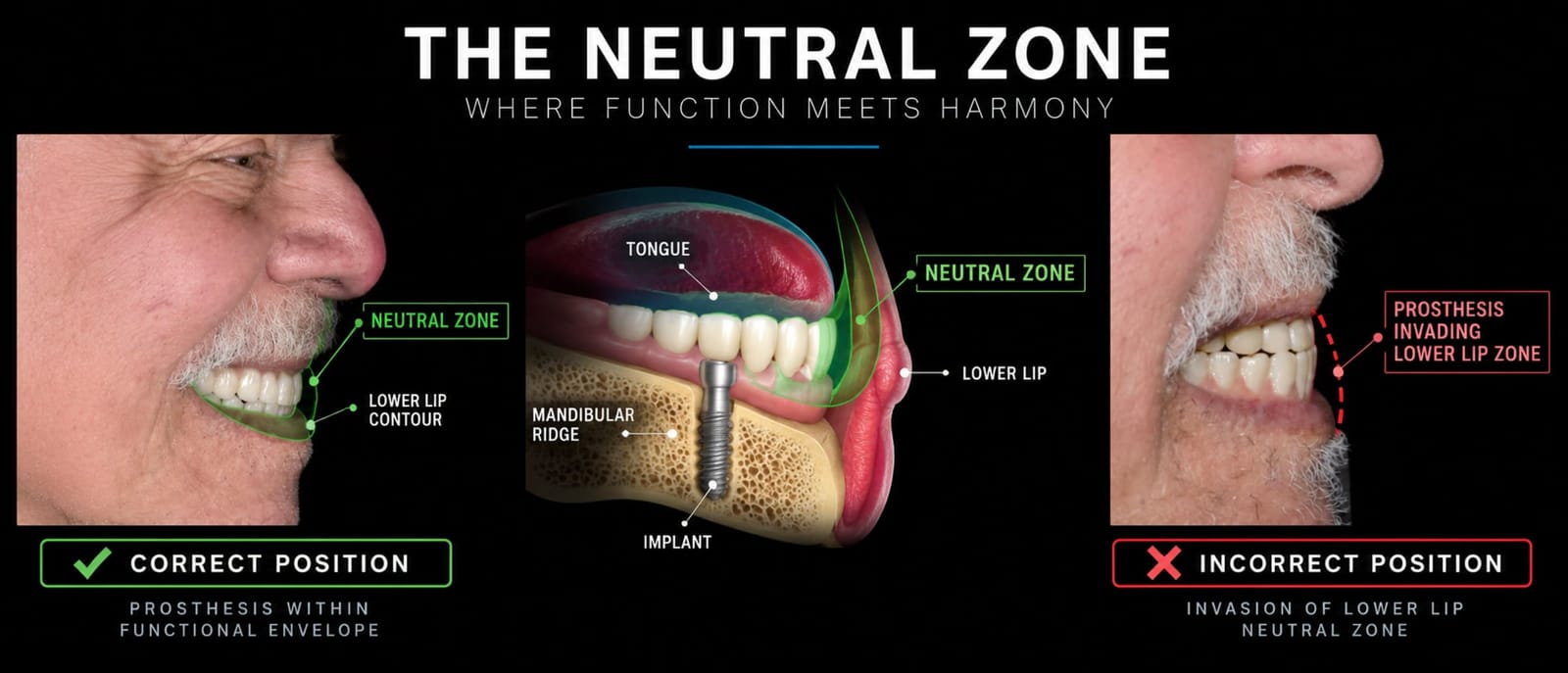
Every mouth has a space in which the outward pressure of the tongue is balanced by the inward pressure of the lips and cheeks. Wilfred Fish described it in the 1930s and called it the neutral zone. A prosthesis inside that zone is held in place by the muscles around it. A prosthesis outside it is fought by them, every minute of every day.
Both of his prostheses had been built outside the zone. The discomfort was not something he would adapt to. It was built into the position of the teeth.
The neutral zone
Teeth first, then everything else
The prosthesis must occupy the patient's functional envelope, not invade it.
So the position of the teeth is decided first, from his own anatomy, lips and speech. Everything else, including where the implants go, is made to serve that position. The implants never dictate where the teeth end up. That is the reverse of how most failed full-arch cases were planned, and it is the reason they failed.
Record what he was living with
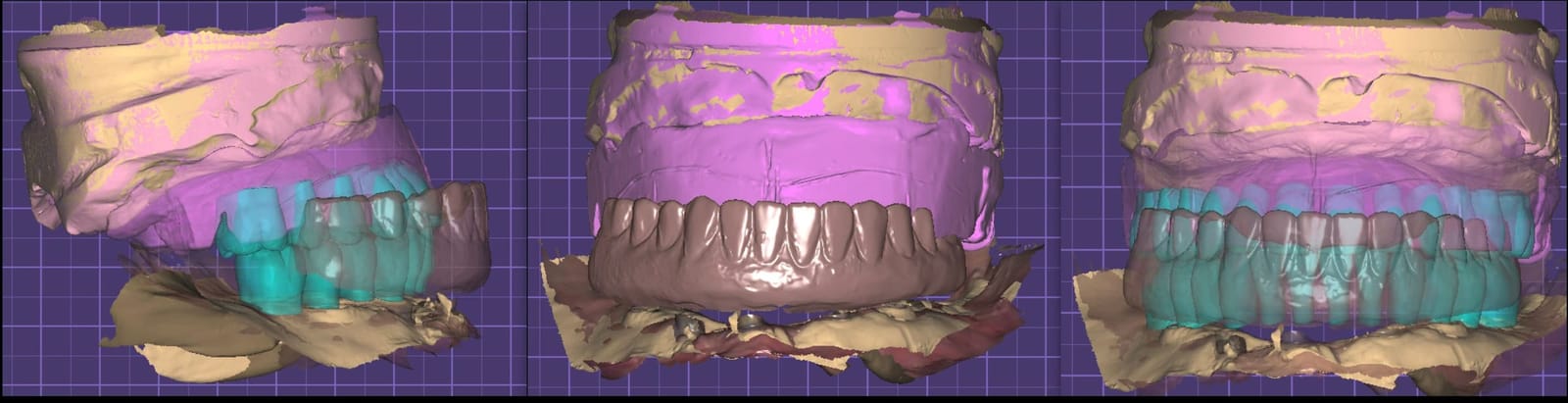
Before anything was designed, everything he was living with was recorded with the 3Shape intraoral scanner: the denture and the lower bridge in place and in occlusion, a 360-degree scan of the denture outside the mouth, the opposing arch and soft tissues, and a bite registration at a verified vertical dimension.
These files are the datum for the whole case. Nothing downstream can be better than this record.
Where the prosthesis lives
Every record, in one sitting
The denture itself was scanned outside the mouth, fitting surface and flanges and tooth position, then back in the mouth against the lower bridge with the bite recorded between them. The three scans were merged into one model of the situation as it stood.
The merged record
Put the teeth where they belong
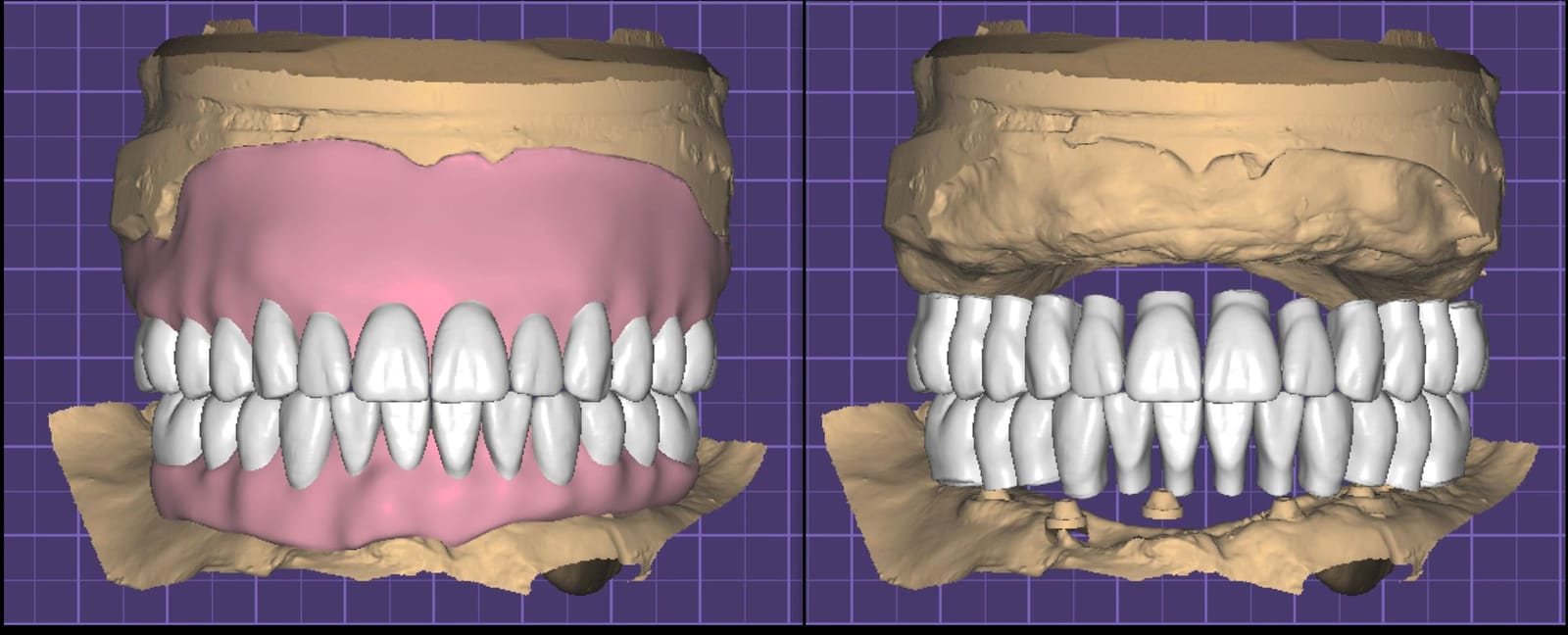
On that record the teeth were reset on the ridge and positioned inside the neutral zone. Lip support, incisal edge and phonetics were checked with him before any surgery was considered.
This set-up became the blueprint. The surgical guide, the implants and every prosthesis that followed were designed from it.
The set-up, with and without the gum
Planned from the teeth, not the bone
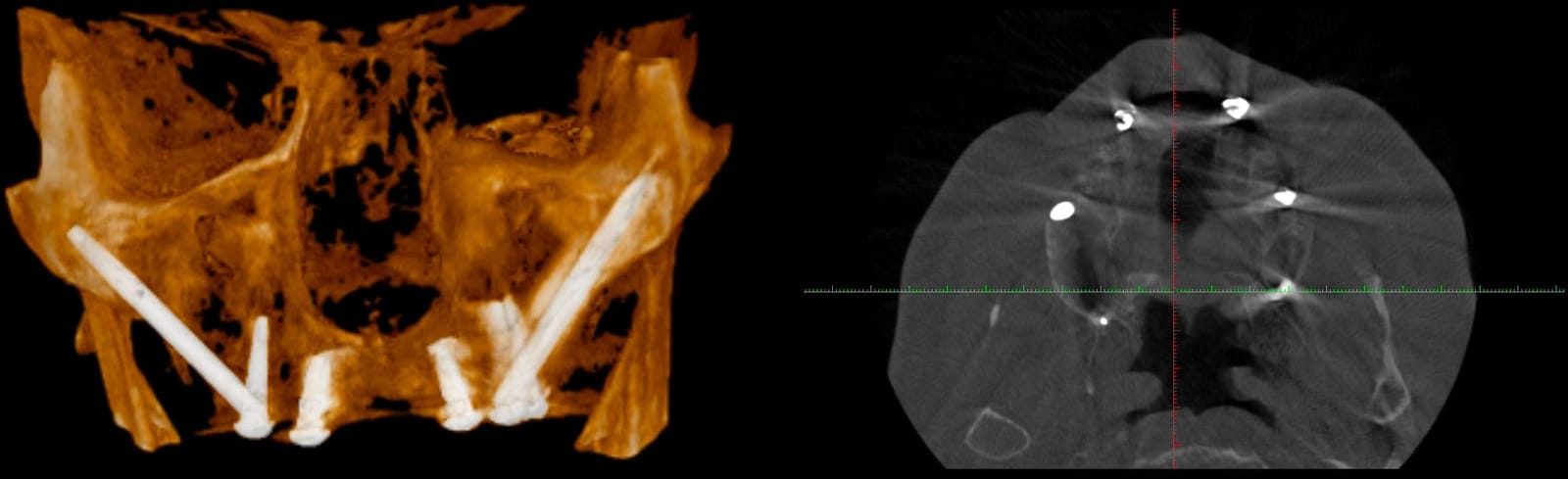
His upper jaw was atrophic and damaged from previous treatment, with too little bone for conventional implants in the back of the mouth. "Not enough bone" is a reason to change the anchorage, not a reason to stop. Rather than compromise the tooth position to suit the bone, zygomatic and pterygoid implants were placed, which anchor in the cheekbone and behind the maxilla, to a surgical guide generated from the set-up. Fiducial markers placed in the maxilla at the start of surgery gave every later record a fixed reference that does not move.
Once the implants were in, their exact positions were captured by photogrammetry and the soft tissue by intraoral scan, merged and registered to Design 1 through the markers. The provisional was then designed around the approved tooth position, with the screw access falling wherever the implants happened to be. The set-up did not move to suit the implants.
The zygomatic implants on the CBCT
Milled the same day, proven in daily life
A milled PMMA provisional was made from that design and fitted the same day, screw-retained, because the implants had met the torque criteria for immediate loading. He left with fixed teeth in the correct position on the day of surgery.
He wore it for a minimum of four weeks. Comfort, speech, swallowing and appearance were tested in daily life, not in the chair. Minor refinements were made, and once he confirmed the teeth felt as though they belonged to him, the proven provisional was scanned and copied.
The smile
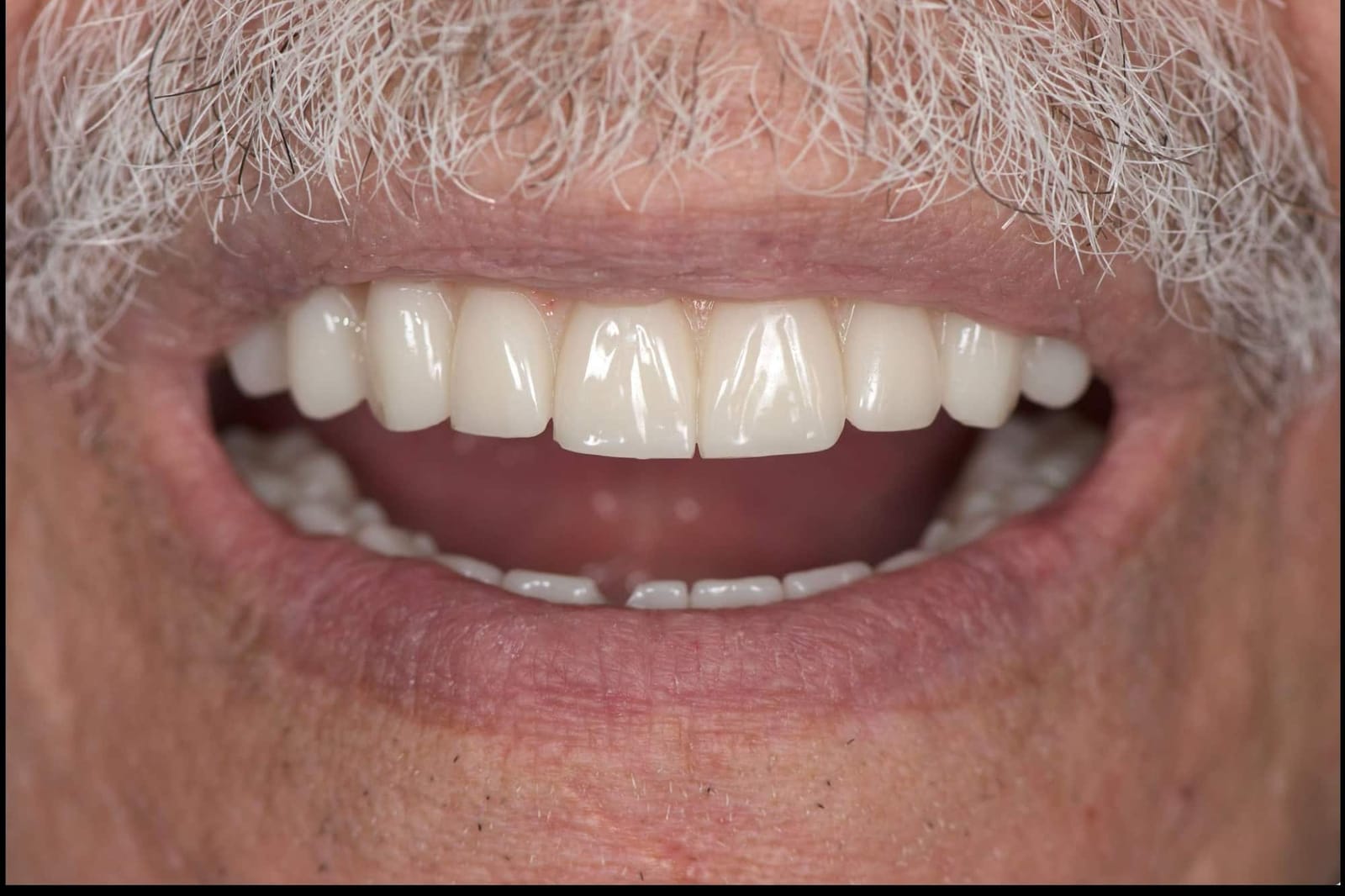
Copied from the provisional he had already lived with
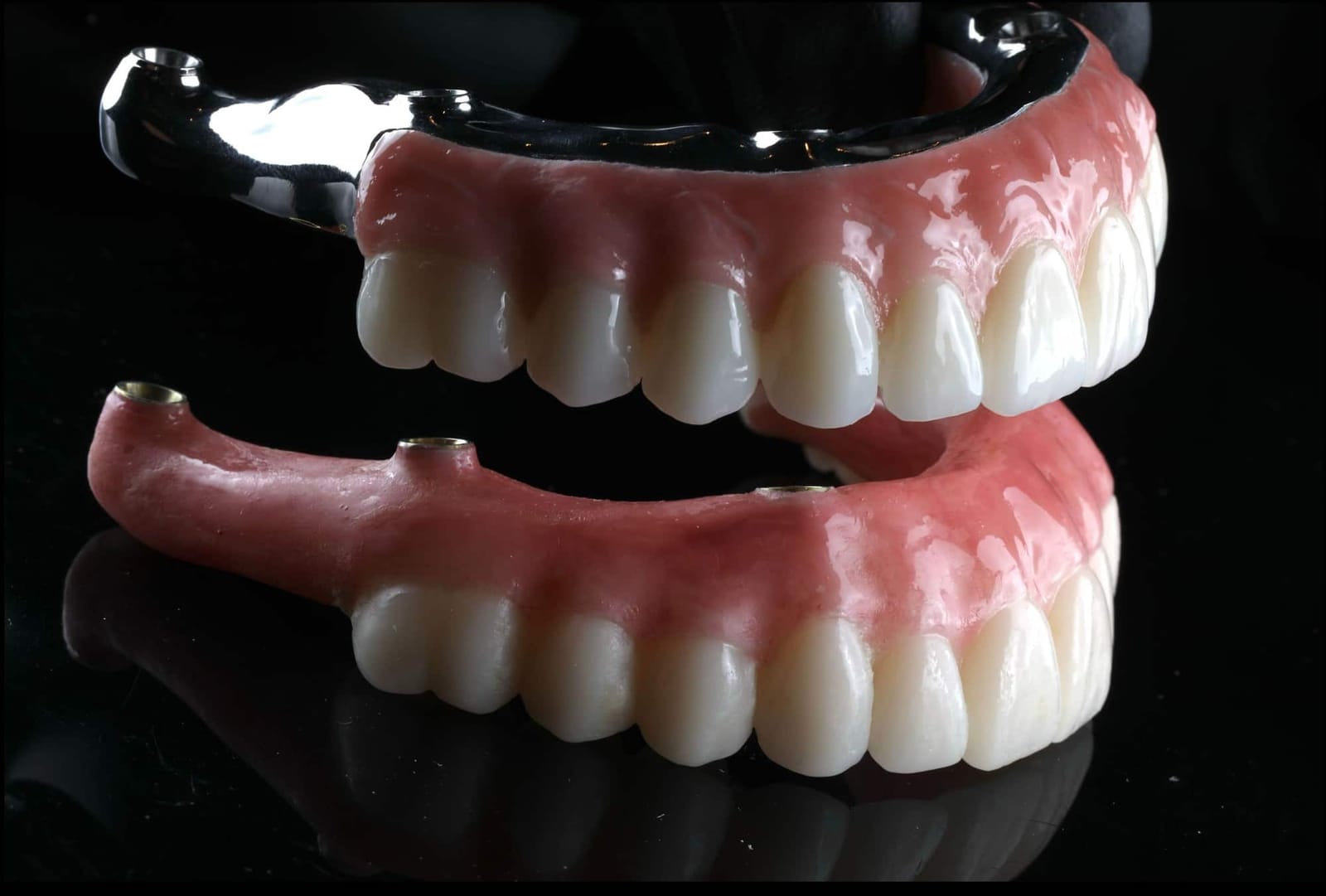
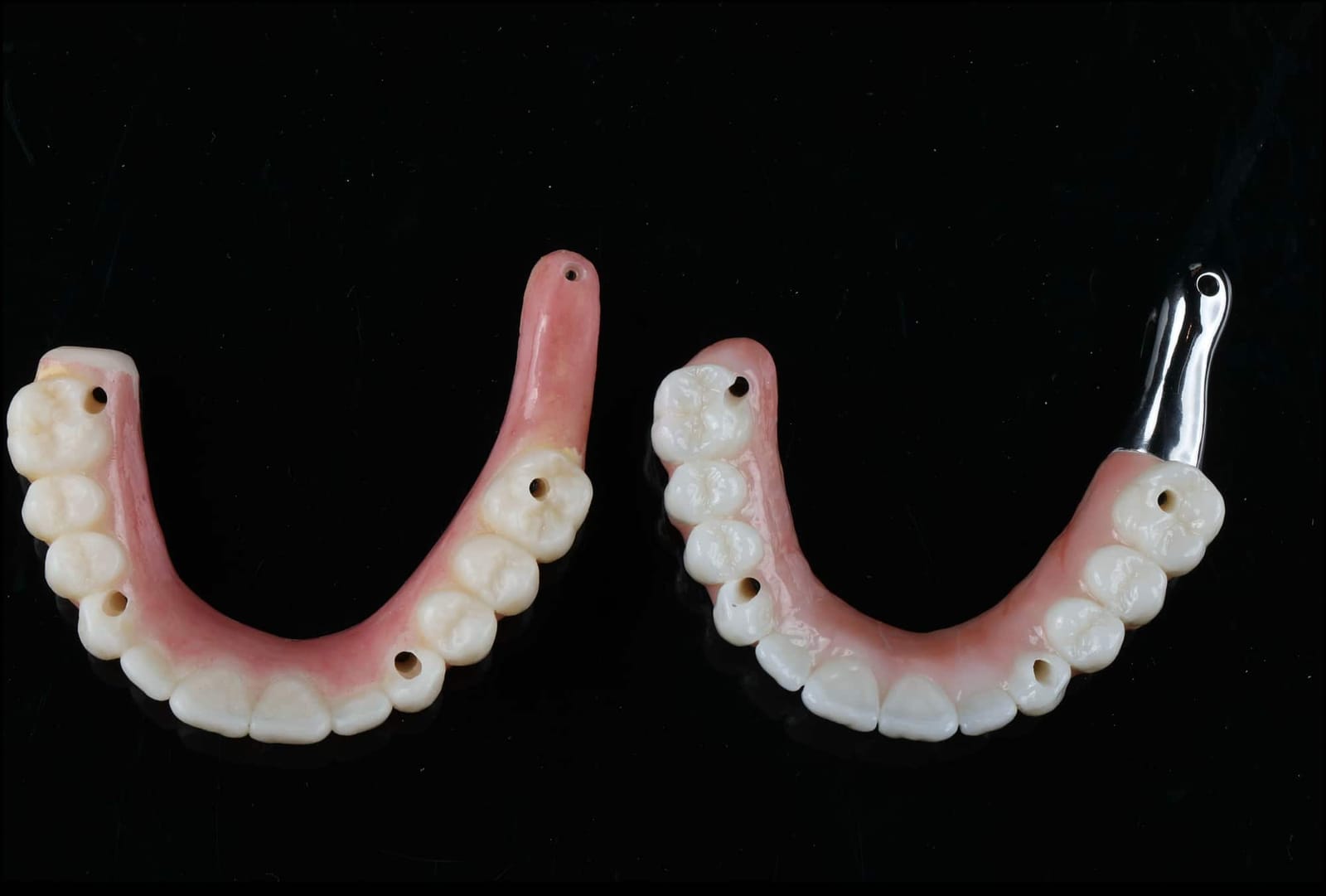
The definitive prostheses were made on a milled titanium bar with a zirconia superstructure, copied from the provisional. Passive fit was verified on every implant. Occlusion was checked at the planned vertical dimension. Phonetics and lip support were confirmed with him speaking rather than smiling.
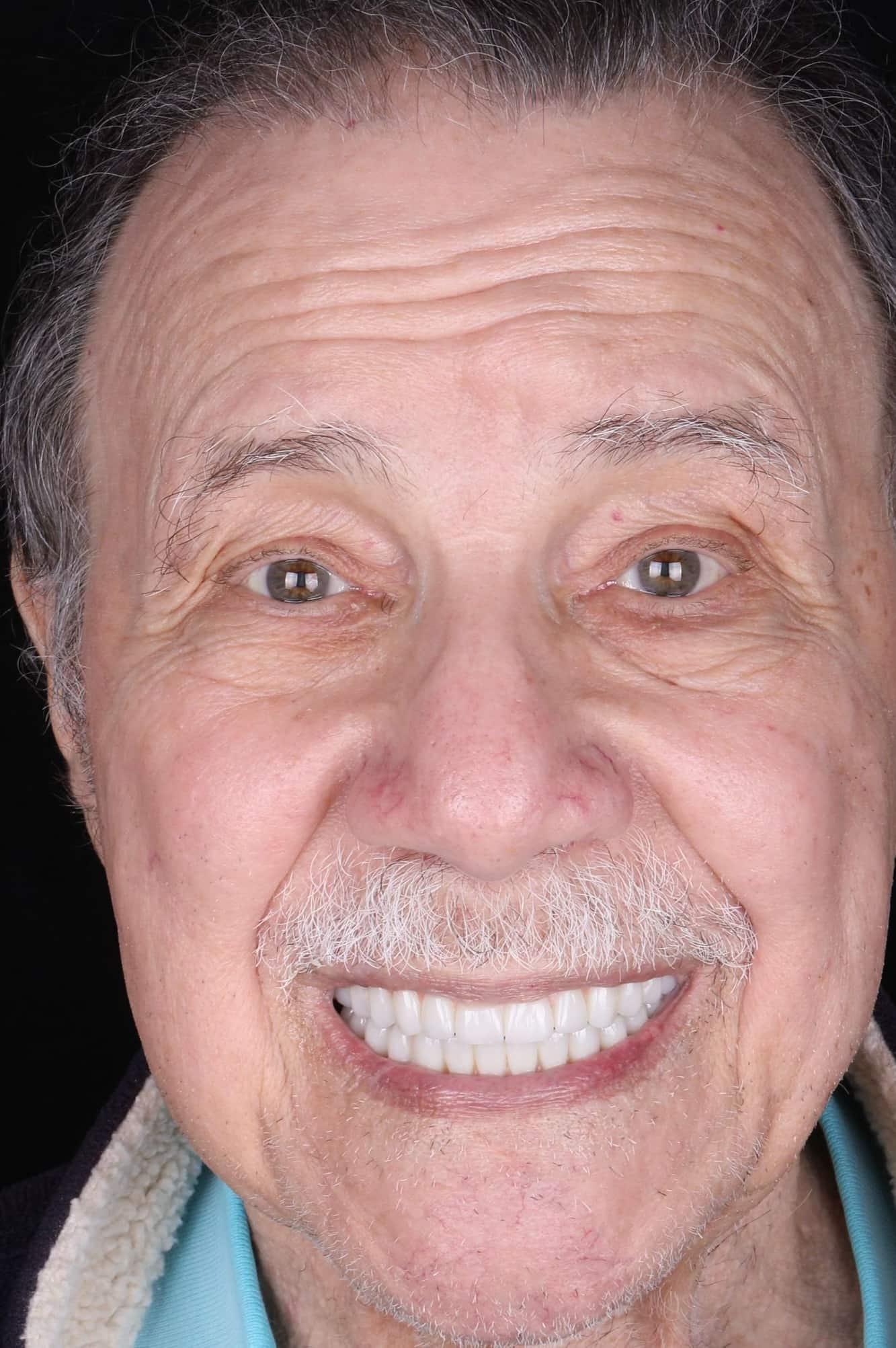
The final restorations
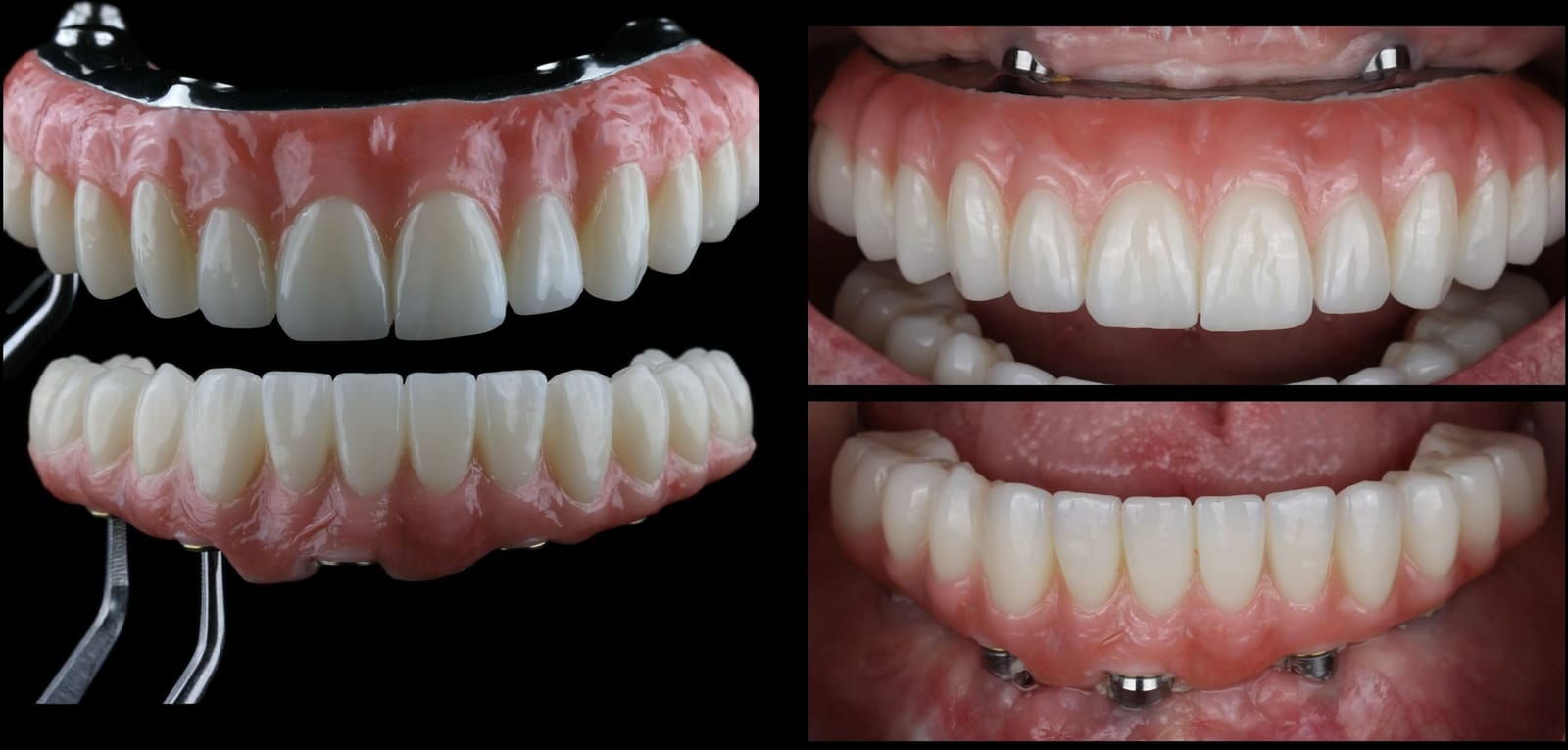
On the bench
In the face
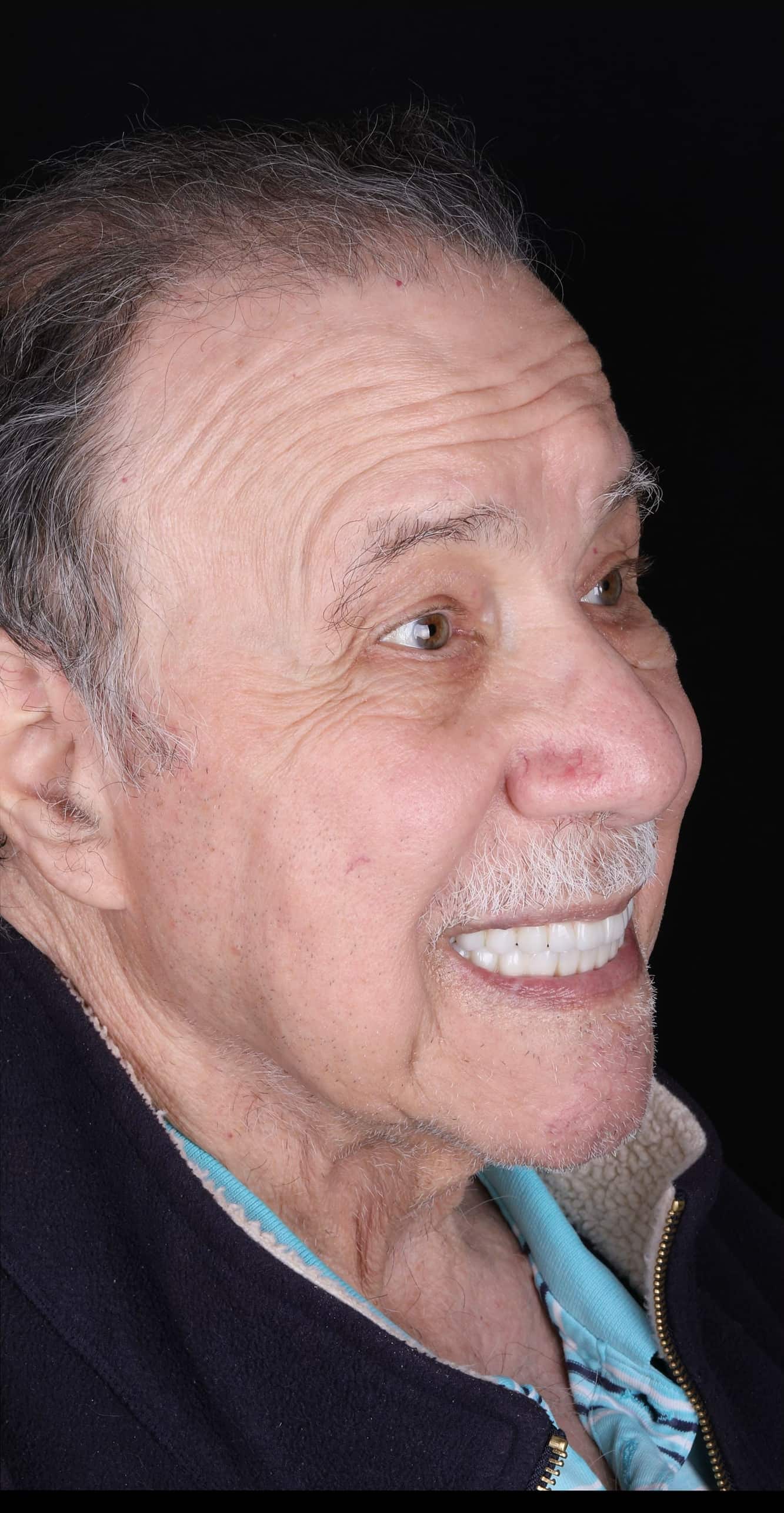
Same lips, same muscles
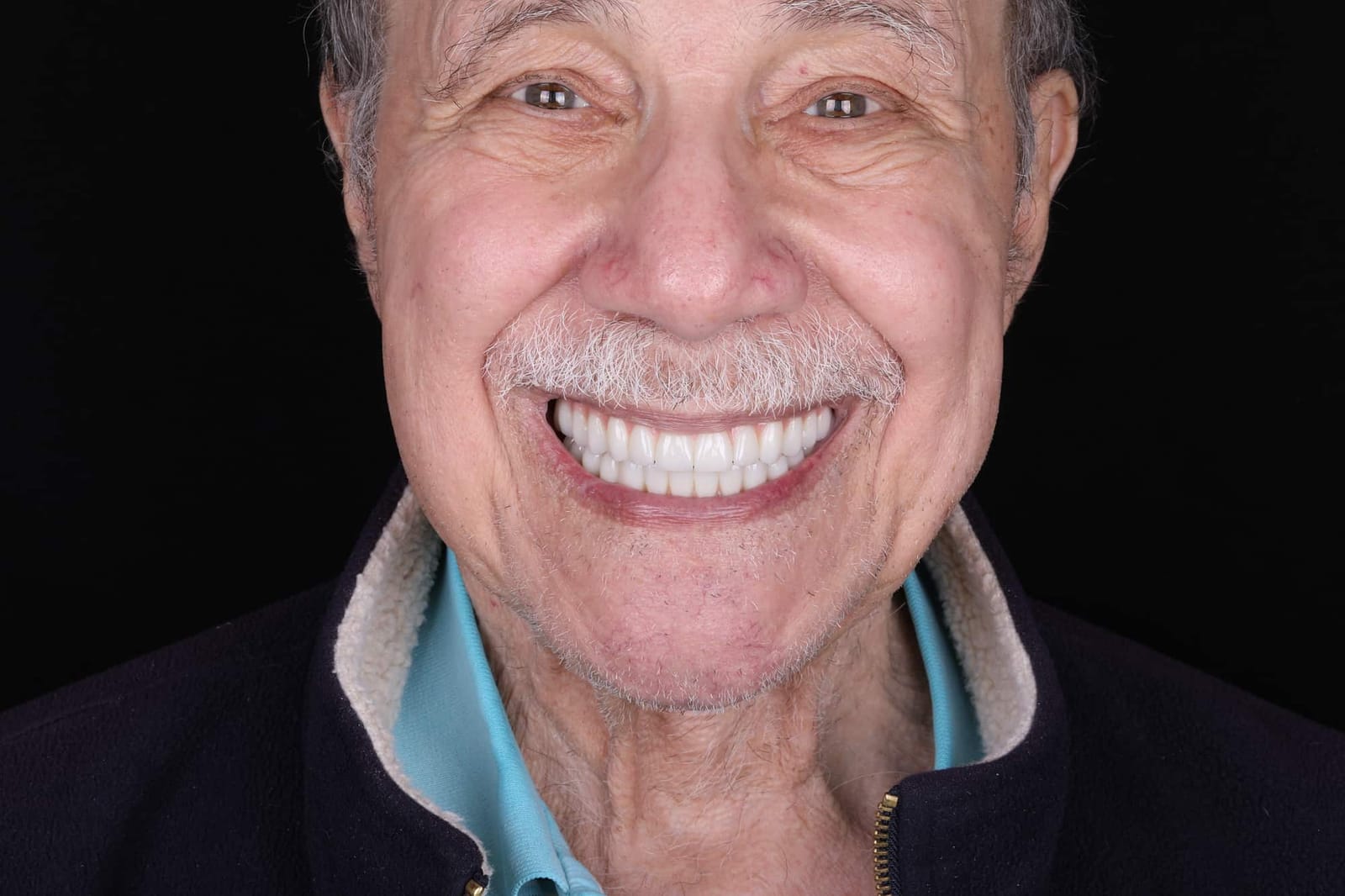
Same lips, same smile line, same muscles. The teeth are simply where they belong.
The patient who could not tolerate his teeth in either state now forgets he has them.
Panoramic radiograph
His face
Failures of position
Most failed full-arch cases we see were not failures of surgery or of materials. They were failures of position. The implants were placed where the bone allowed, the teeth were built to meet them, and the patient was left to adapt to a prosthesis fighting his own muscles.
Revision starts by giving back the space the mouth was designed around. Once the teeth are in the neutral zone, the implants, the guide, the provisional and the final all follow from it. That sequence is not a preference. It is why revised cases last.
Not a shortcut
Zygomatic and pterygoid implants are used when the upper jaw does not have enough bone for conventional implants and the alternative is extensive grafting or a removable prosthesis. They demand precise planning and a prosthodontist and surgeon working from the same design.
They are not a shortcut, and they are not right for everyone. If your case has been described to you as "not enough bone", it is worth a second opinion before accepting a denture.
Every case is planned around one person's anatomy. Individual results vary, and what was right for this patient may not be right for you.