Tooth-Borne Case 2 · Reconstruction
Rebuilding Worn Teeth Without Replacing Them
Severe tooth wear, and a bite that had collapsed with it.
His teeth were less than half their normal size. His gums had overgrown to compensate. The bite had closed down so far that there was no room left to fit new teeth into.
The question in a case like this is never only how to rebuild. It is whether the teeth need to come out at all.
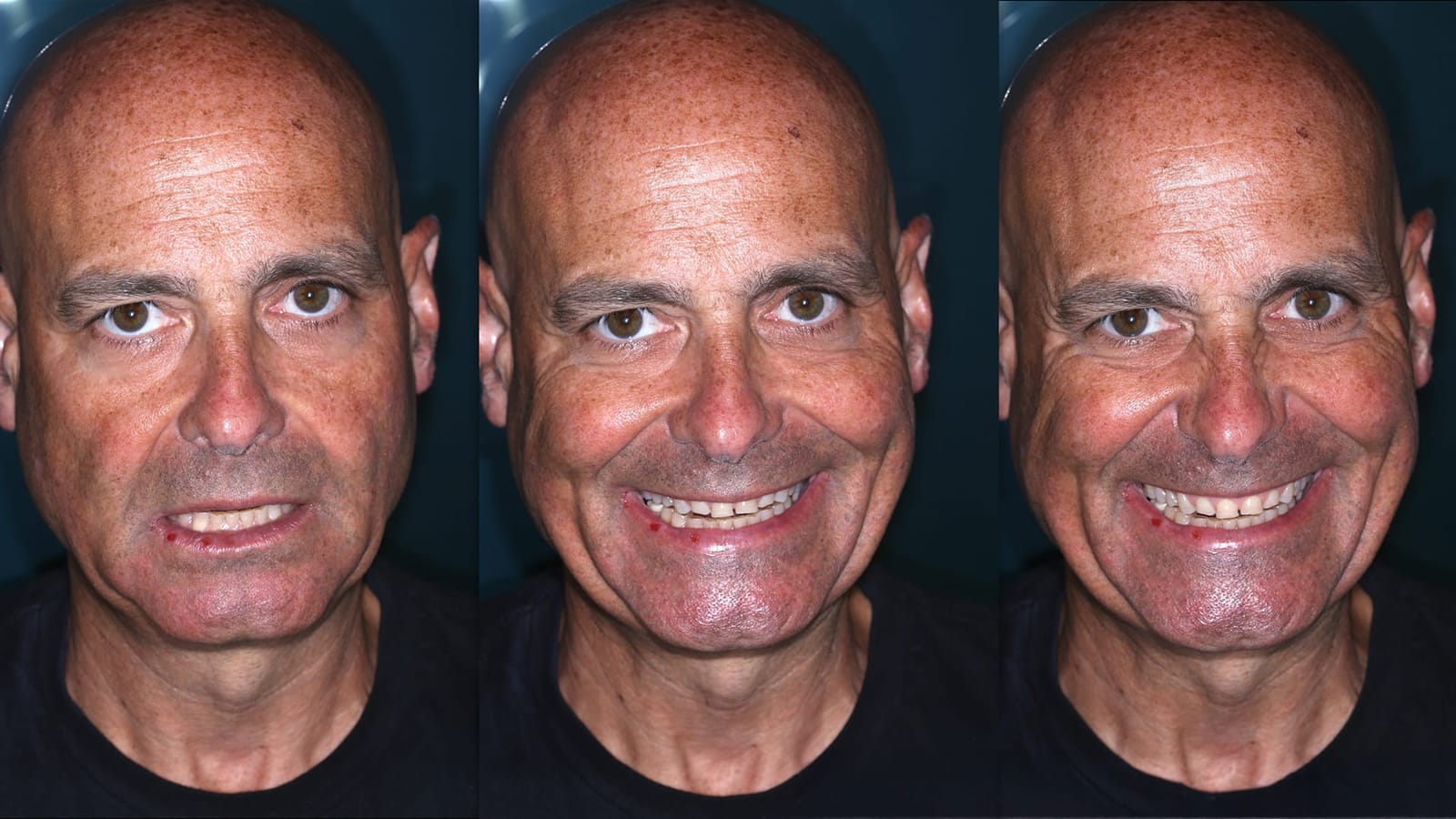
What he came in with
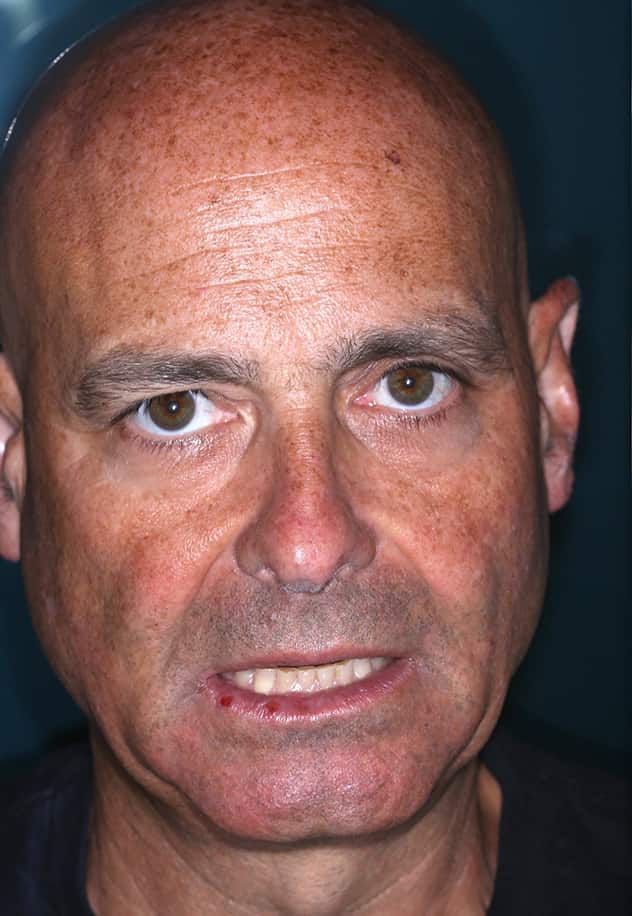
He came in for how it looked. Teeth worn short enough to have aged his whole face. A smile that no longer showed when he smiled.
The rest came out during the examination, the way it usually does. Function that had quietly narrowed around him. A bite that was not doing what a bite should. And a sleep and breathing pattern that turned out to be part of the cause rather than a separate problem.
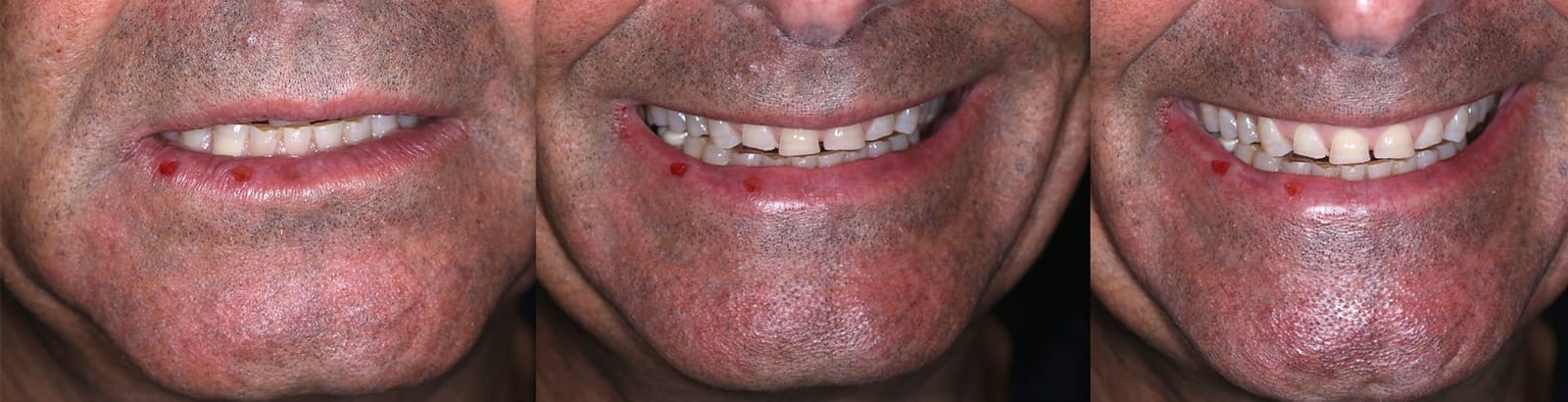
What the occlusal views showed
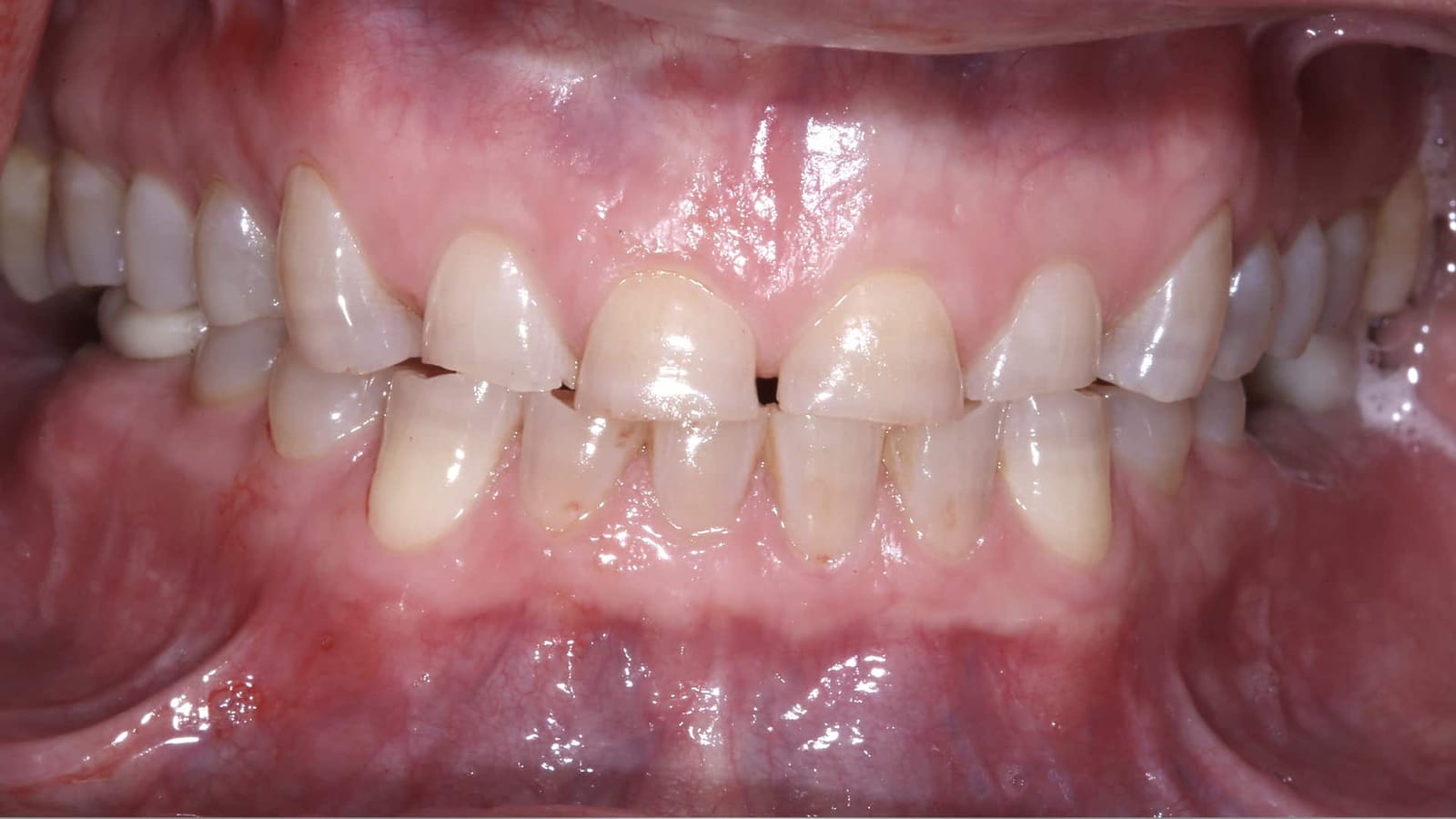
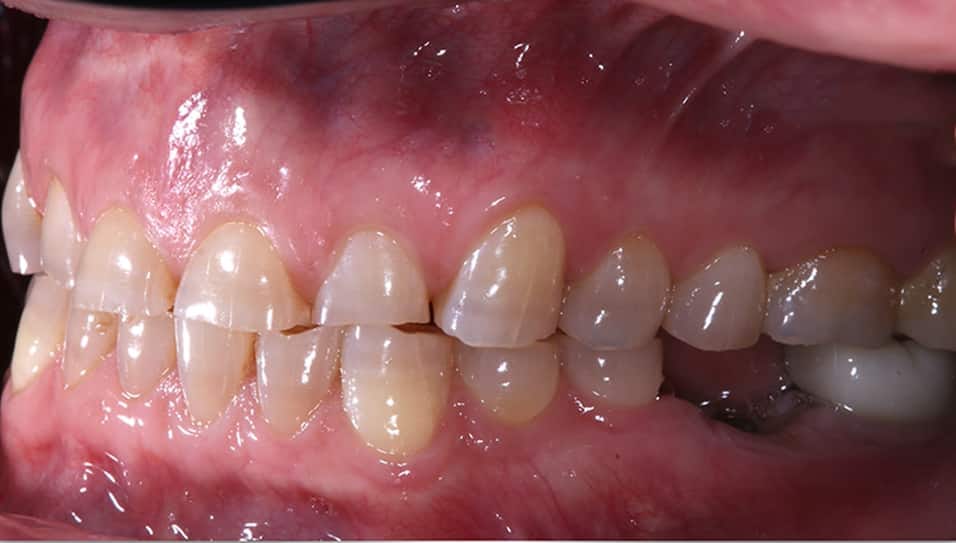
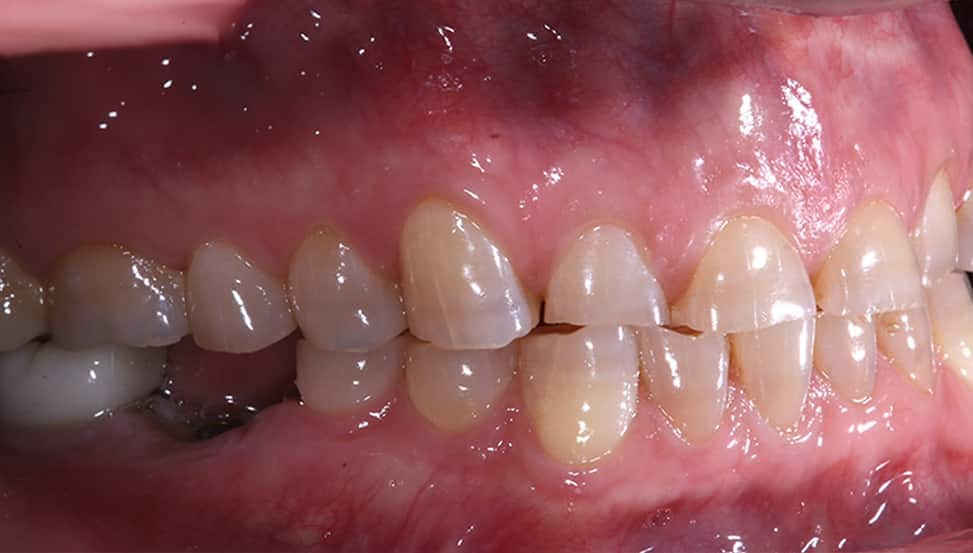
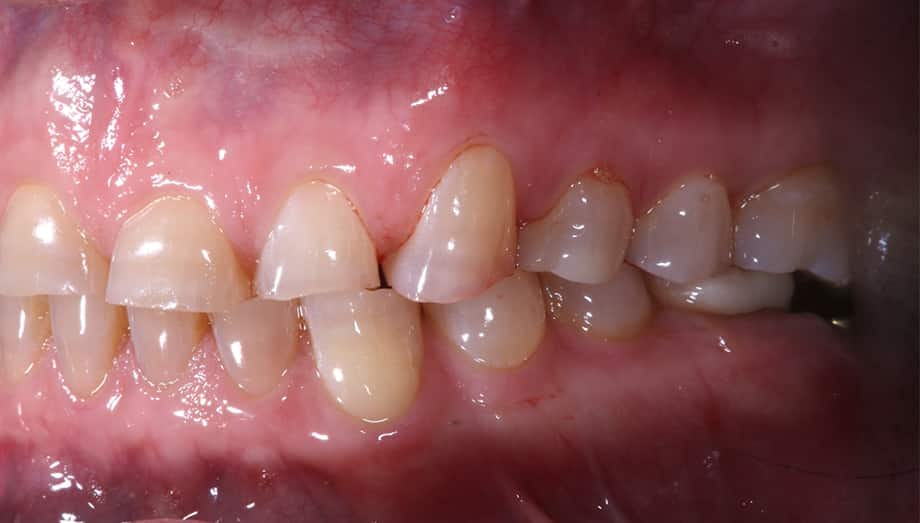
From the front, the teeth are visibly reduced and the gum has grown down over them. From the side, more obvious still.
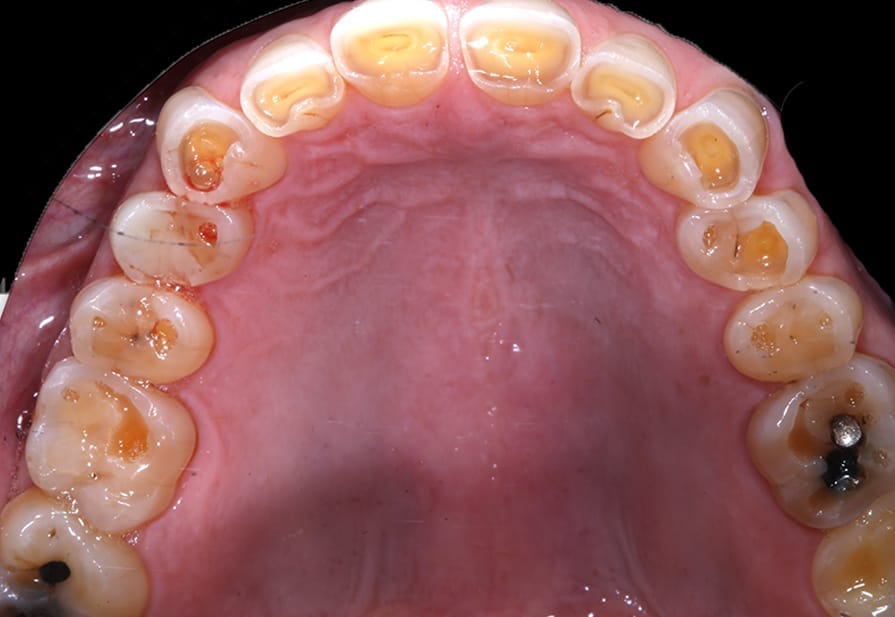
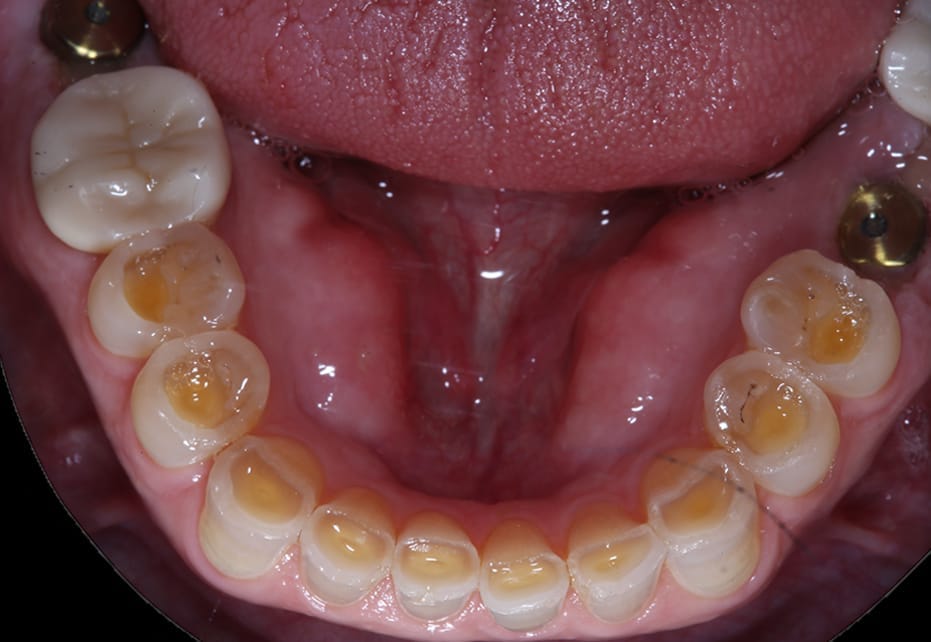
The views from above are the ones that matter. The wear had gone through the enamel and into the dentine, the softer tissue underneath. Once a mouth reaches that phase, wear accelerates. What took years starts taking months.
That is why this needed intervening in quickly, before he lost the teeth altogether.
Retracted, from each side and the front
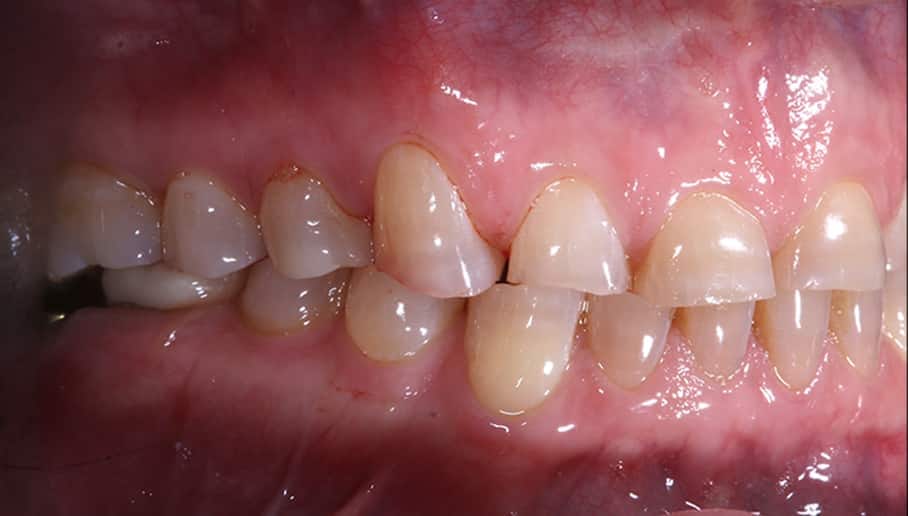
From above
Attrition, abrasion, erosion
Teeth wear for reasons that are rarely singular. Grinding. Acid erosion. Brushing too hard. Sleep apnea.
Then the body compensates, which is the part most people never hear. As the teeth shorten, it builds bone, gum and cementum, and the teeth erupt further into the closing space. So the bite height often does not drop at all. Something subtler happens instead: the gum visually thickens while the teeth get shorter.
His mouth was doing both. Real collapse of the bite, wear on top of it, and compensation running alongside.
The questions that come before the plan
How much of this is compensation? Have the spaces closed? How much room is there to open the bite, and will opening it disturb the joints? And how much root length is hiding under the gum, long enough to anchor a restoration?
Rebuilding worn teeth to their original size is one of the central sciences of prosthodontic training. The difficulty is not the building. It is knowing what you are building into.
Why sleep is part of a dental diagnosis
Grinding is not really a dental habit. Sleep research reclassified it as a sleep related movement disorder years ago. Episodes cluster around micro arousals, the brief surfacings out of deep sleep nobody remembers, and a body fighting for air arouses again and again, clenching and grinding while it does. This is why the sleep literature keeps finding tooth wear alongside disordered breathing.
The prosthodontic literature supplies the other half. Bruxism is one of the most consistently reported risk factors for mechanical failure in full mouth reconstruction: chipped ceramic, fractures, loosened screws. The forces that destroyed the original teeth are still in the room when the new ones go in.
So it was diagnosed and treated alongside the teeth, in coordination with a sleep physician. It works in both directions too: opening a bite correctly can improve the airway in its own right. With he that was managed from the start, and it is a large part of why the restoration is still doing its job.
Uncover the teeth rather than remove them
He had more going for him than the photographs suggest. His gums were healthy, with no gum disease, and beneath those three or four millimeter teeth were long, solid roots.
So the plan was to find the tooth that was already there, in two stages. First, temporaries with the bite opened back up, which restored the space and made clear what remained to solve, because the gummy smile was still there.
Second, crown lengthening, aesthetic and functional, designed before it was performed and executed through surgical guides that place the gum exactly where the final restorations need it. Reshaping the gum and the small bony housing around it exposes the good tooth structure underneath and captures the length to support new teeth.
Which is what avoids overtreatment: removing every tooth and putting a relatively young man into implants or dentures, more aggressive than his situation ever called for.
The guides
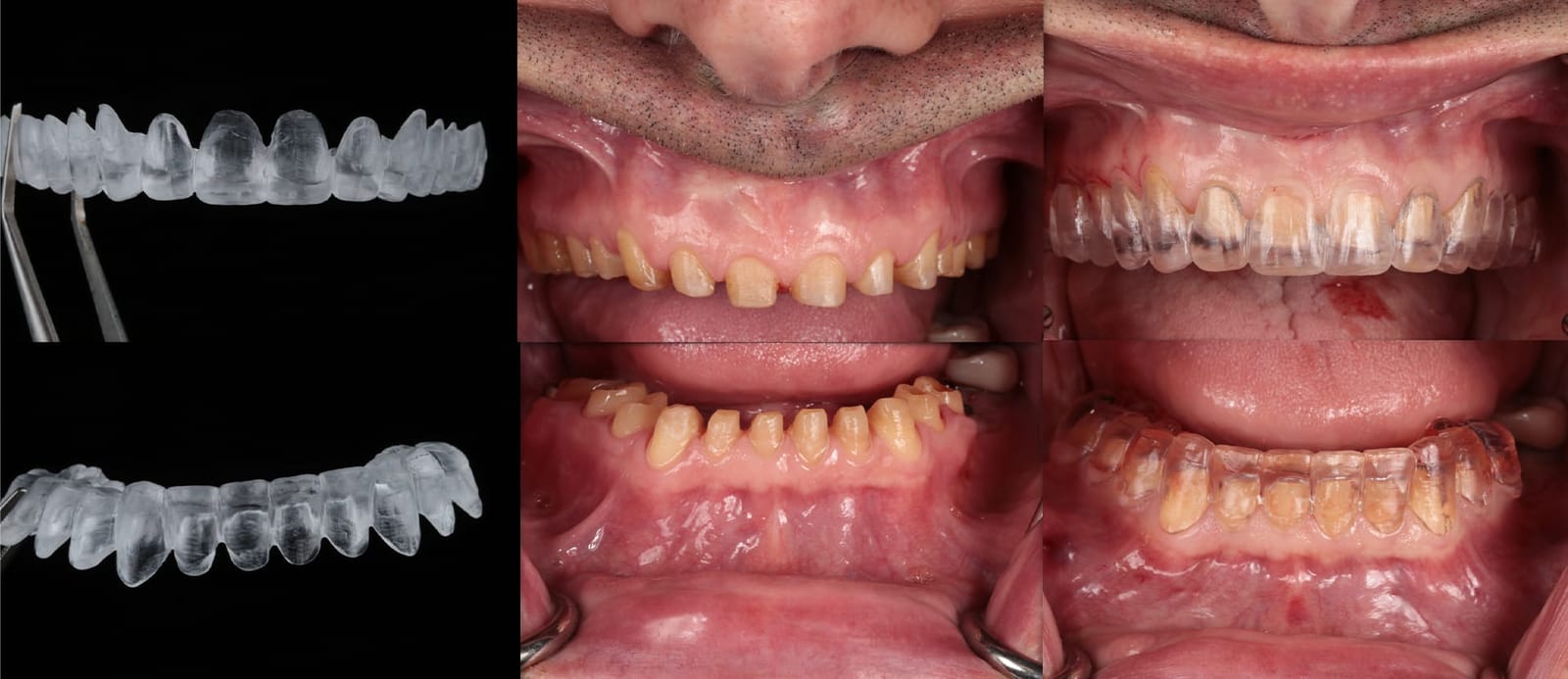
The structure uncovered
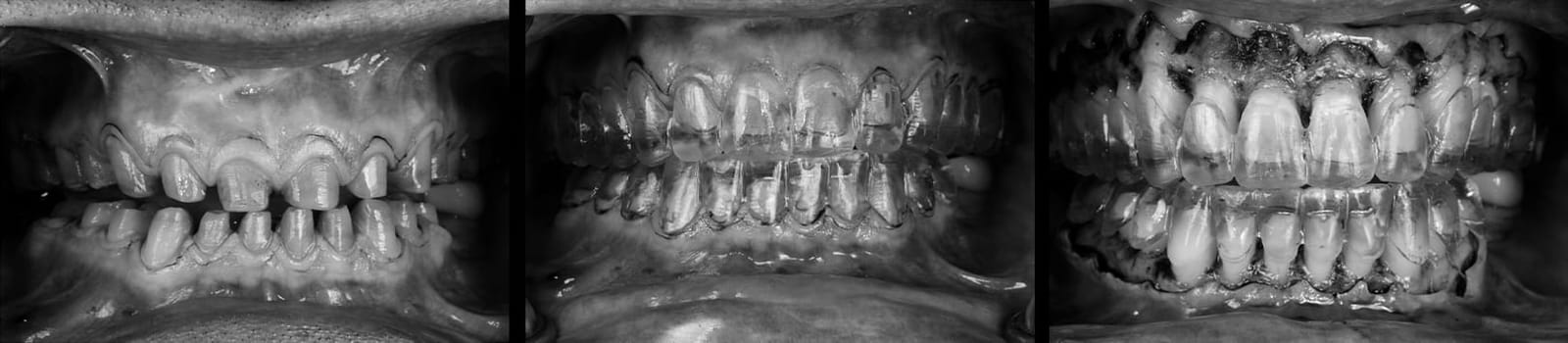
Ideal tooth heights, tested before they are made permanent
With the tissue healing, he went into provisional restorations at ideal tooth heights, and lived in them.
Full function, aesthetics and phonetics were tested, understood and improved on. Nothing final was made until he approved what he was already wearing.

Where the detail decides the decade
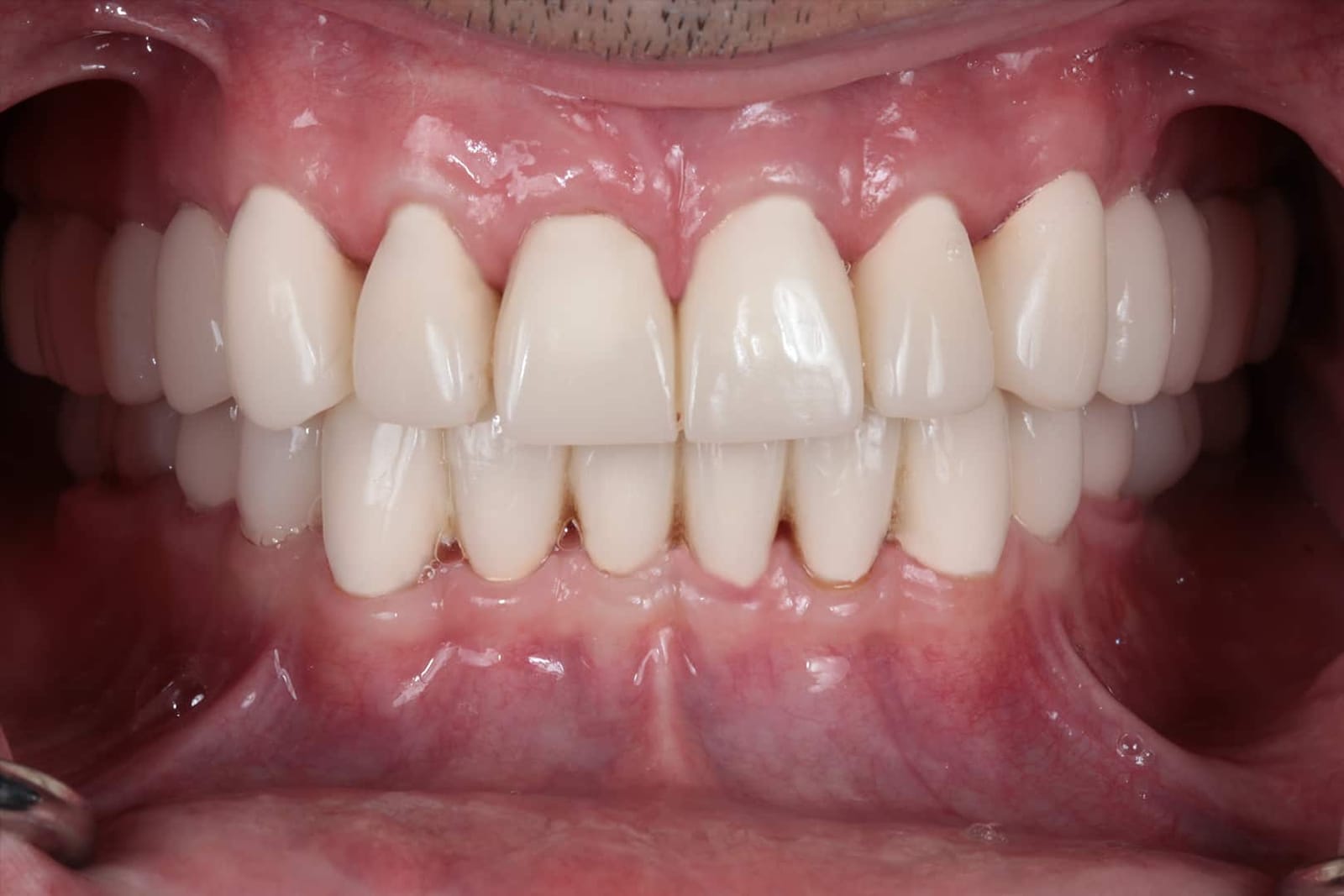
The final ceramics were built to ideal shape and contour, with the bite opened into its ideal position.
They are controlled rather than simply fitted. Crown margins that seat perfectly, so the gum is never irritated. Proper contacts between the teeth. Correct emergence. A smile that works as a smile, and a bite that works as a bite.
None of that is visible in a photograph. All of it is why the result is still there.
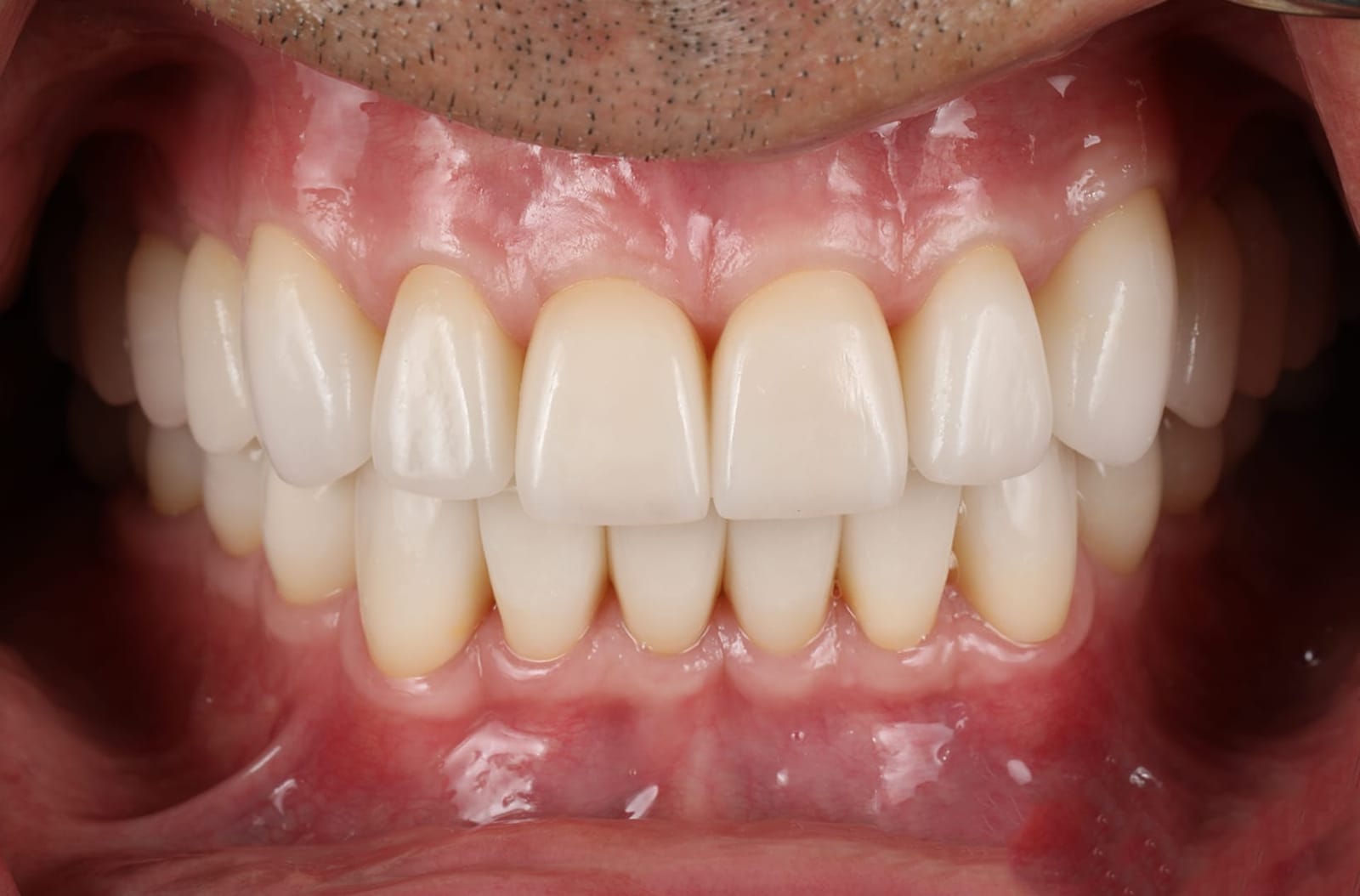
Where the margins sit
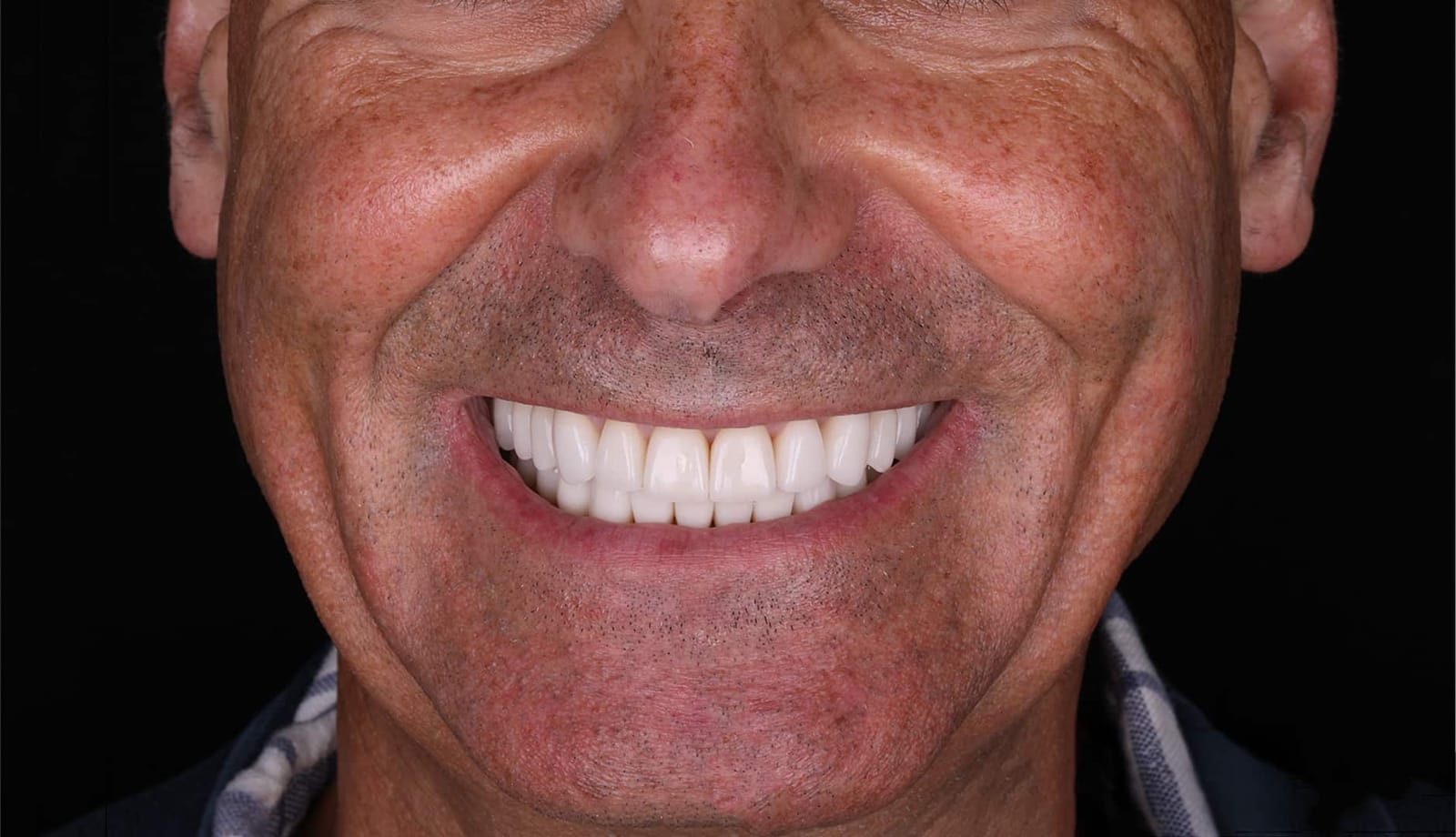
The wear is cured
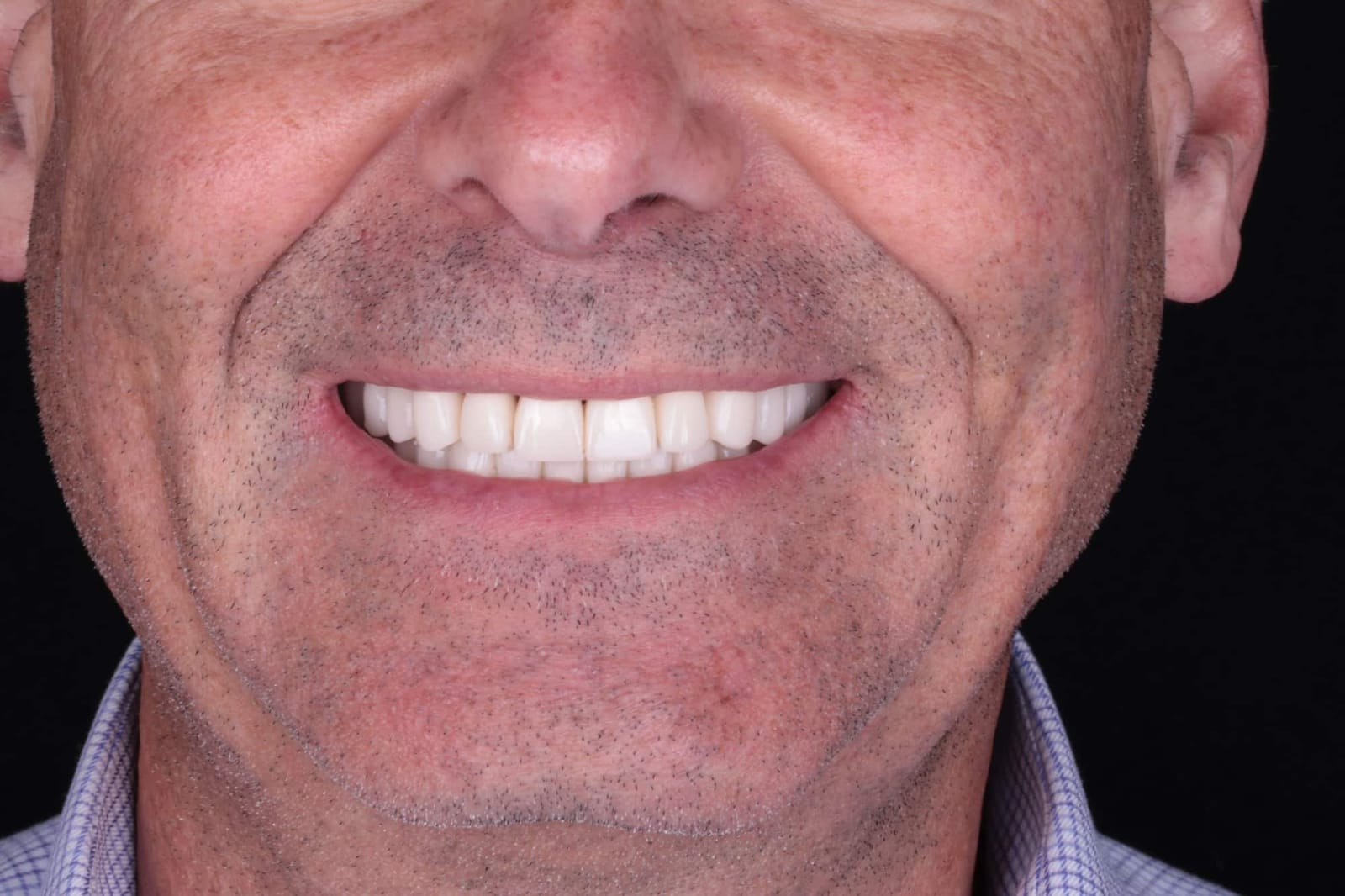
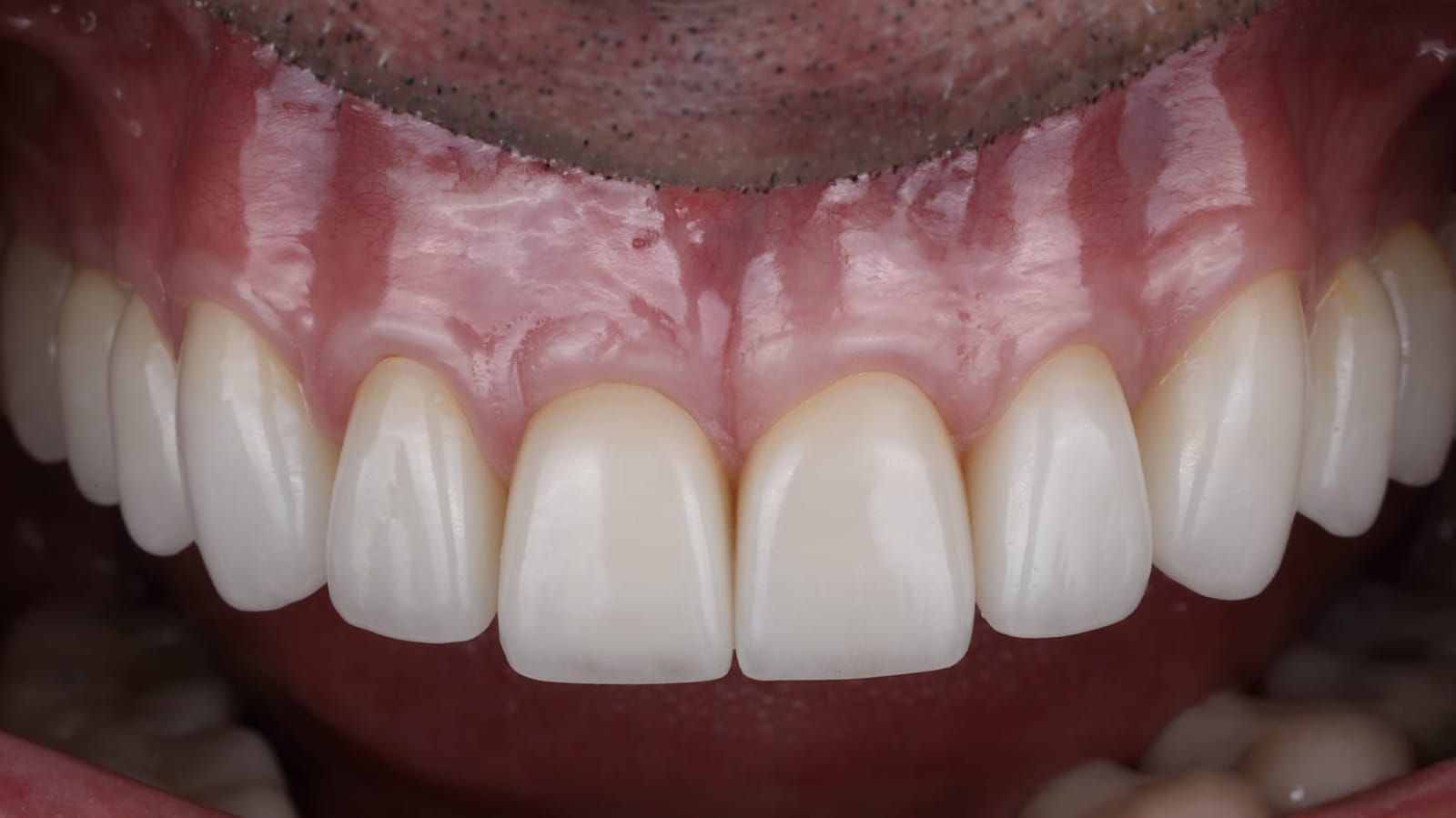
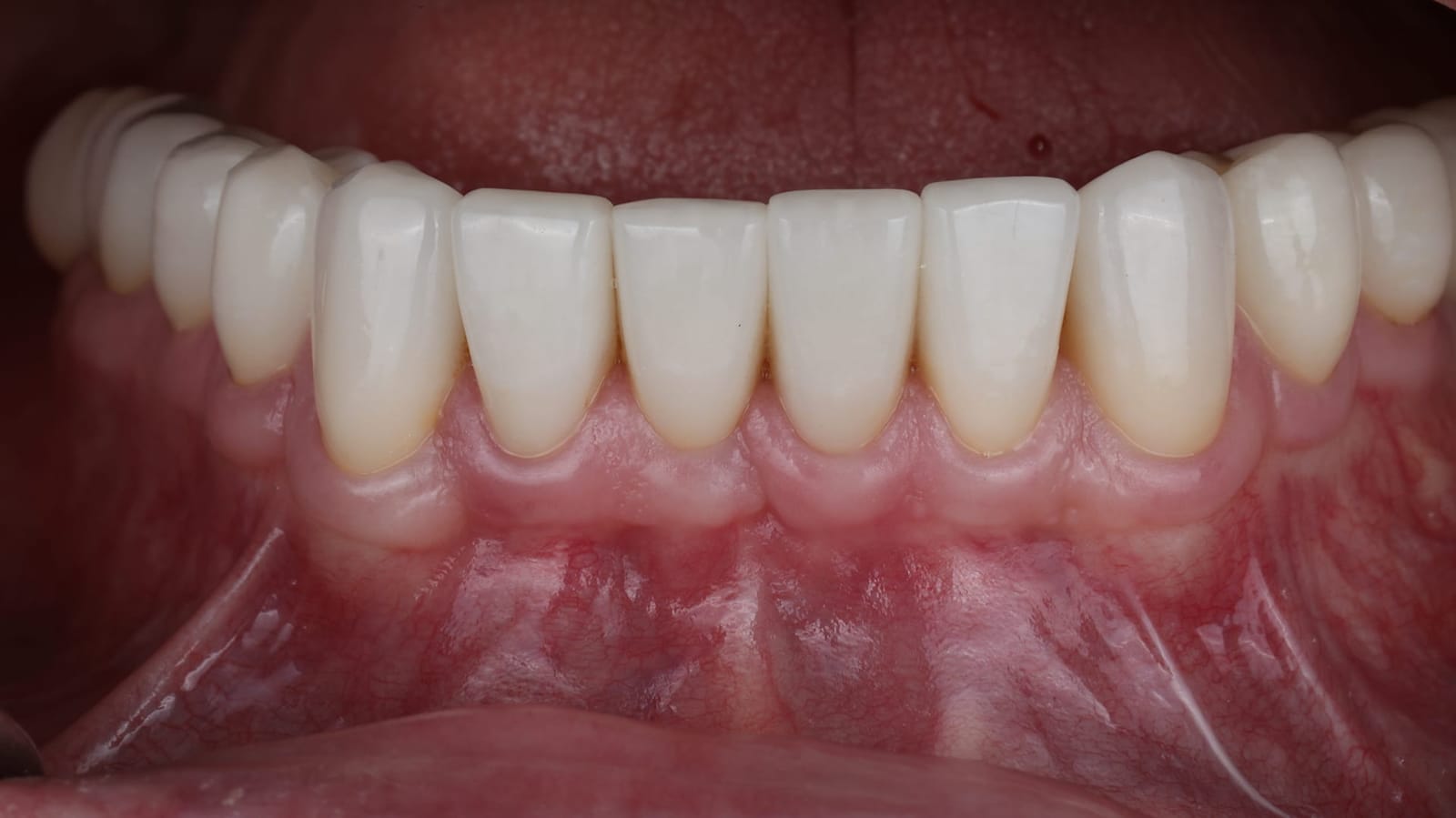
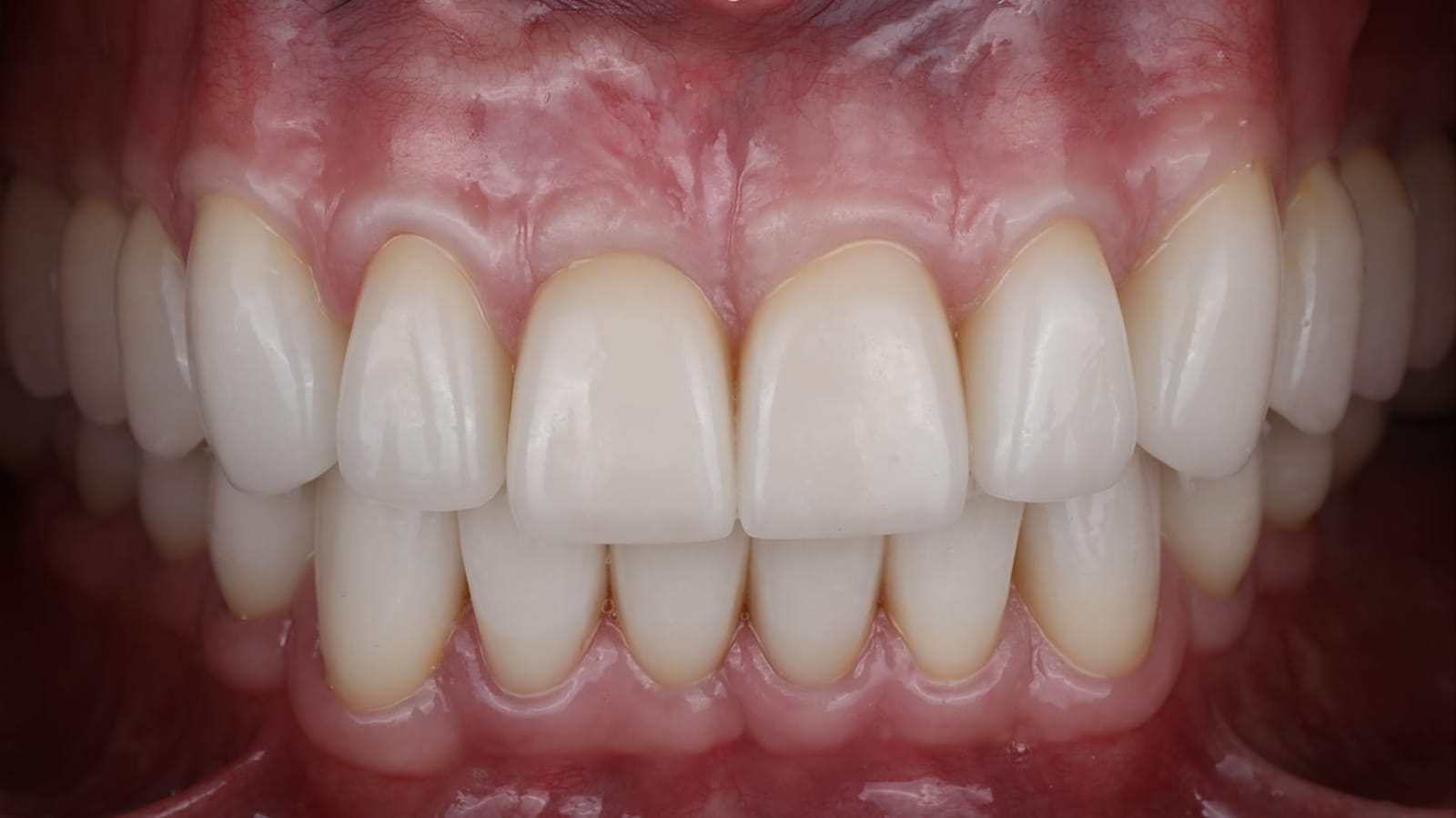
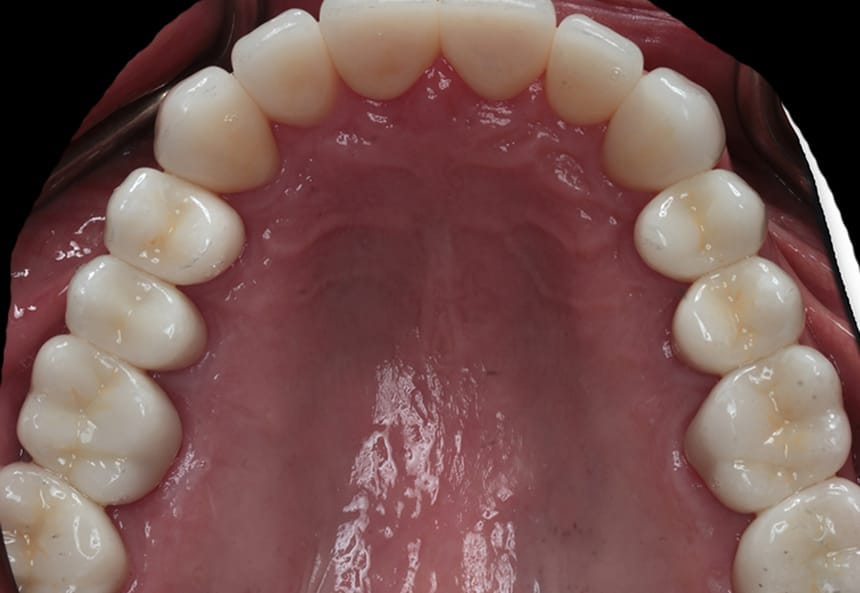
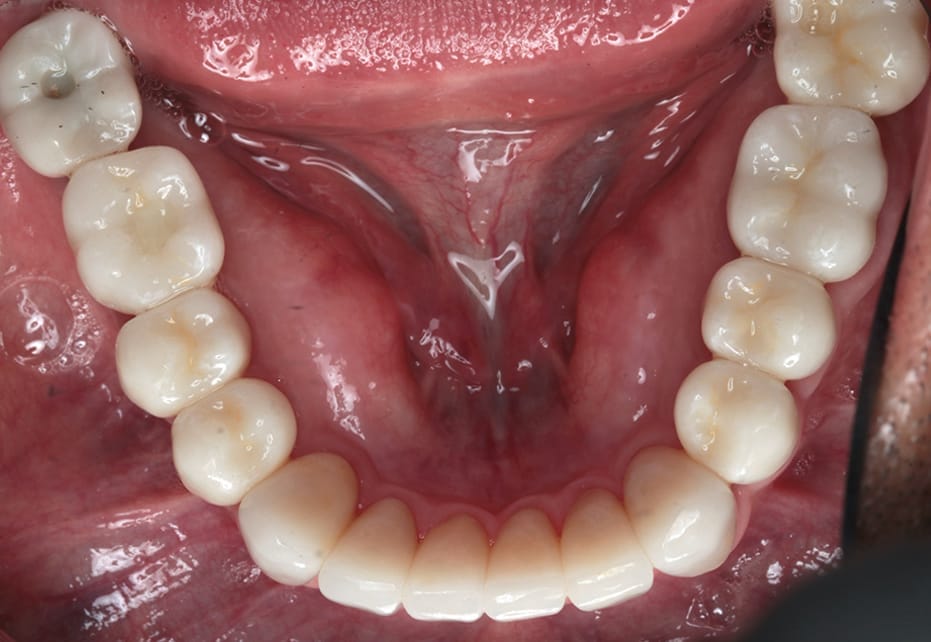
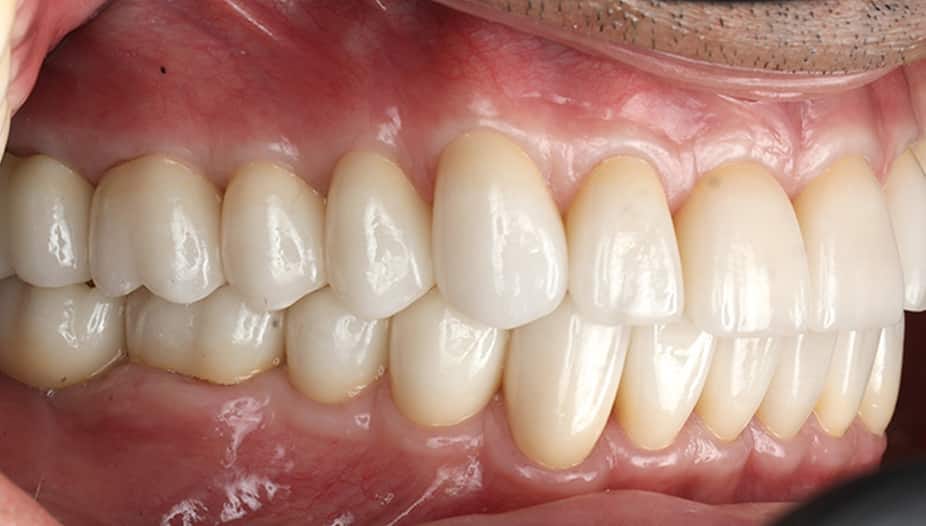
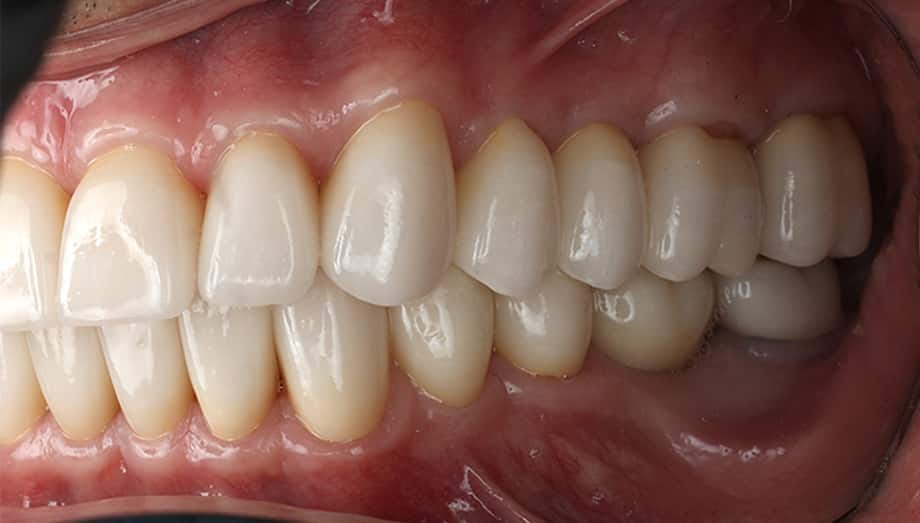
The bite restored, the space recovered, the tooth heights corrected, the breathing improved. From above, the wear is gone and the biting surfaces are strong, stable and even.
What the photographs show is more than dentistry. His demeanor, his face and his vitality have all changed. He looks youthful, and he is a more vibrant person for it.
Front on
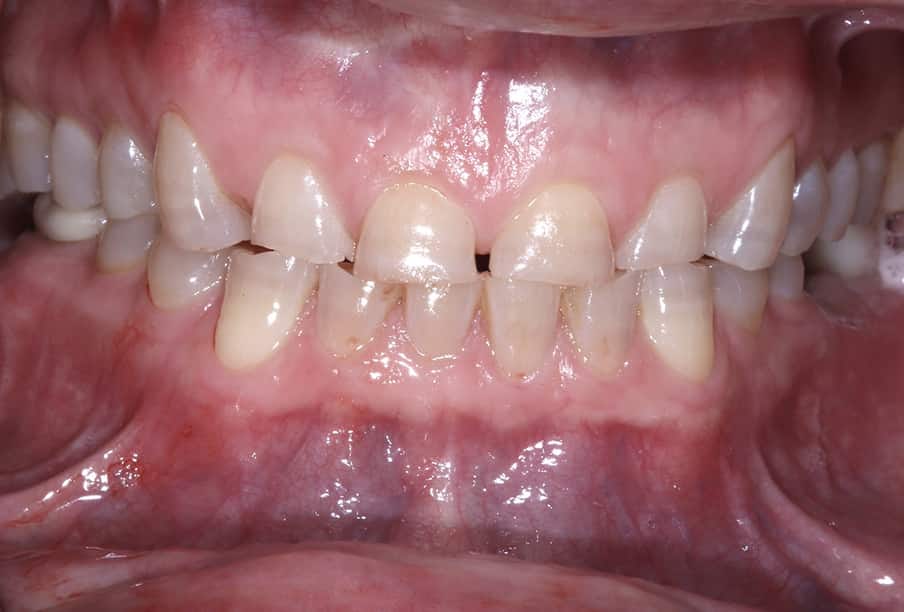
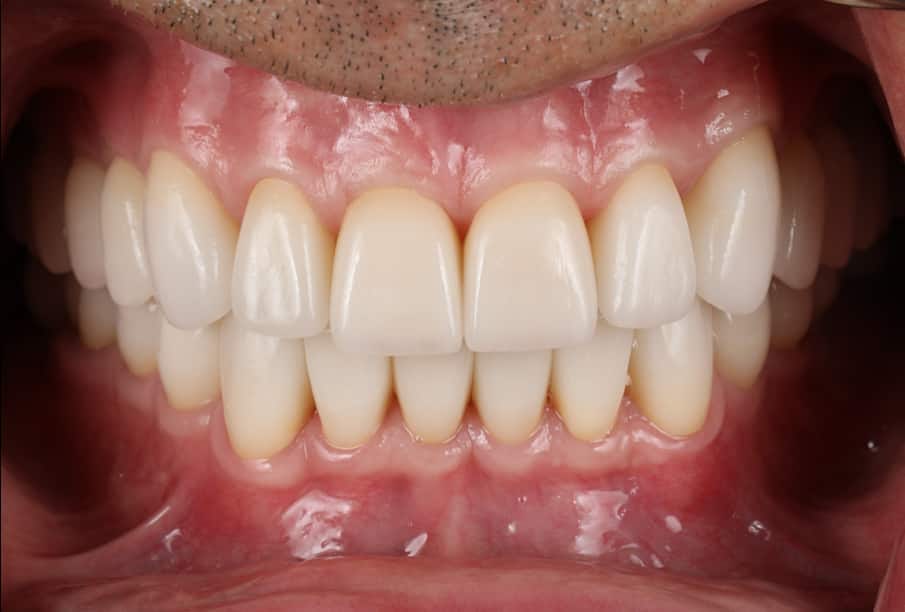
The upper arch
The lower arch
From the side
The smile
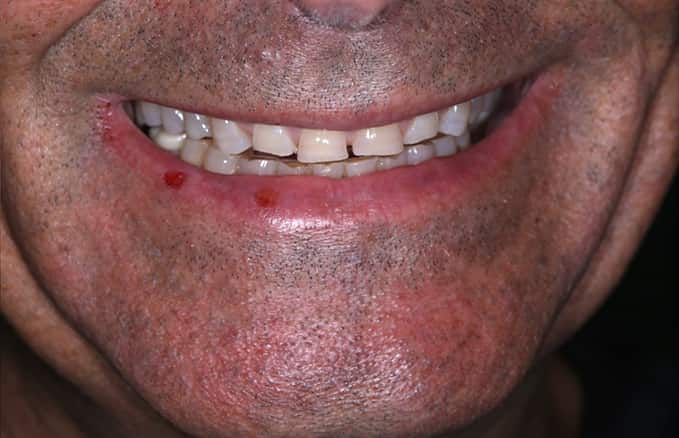
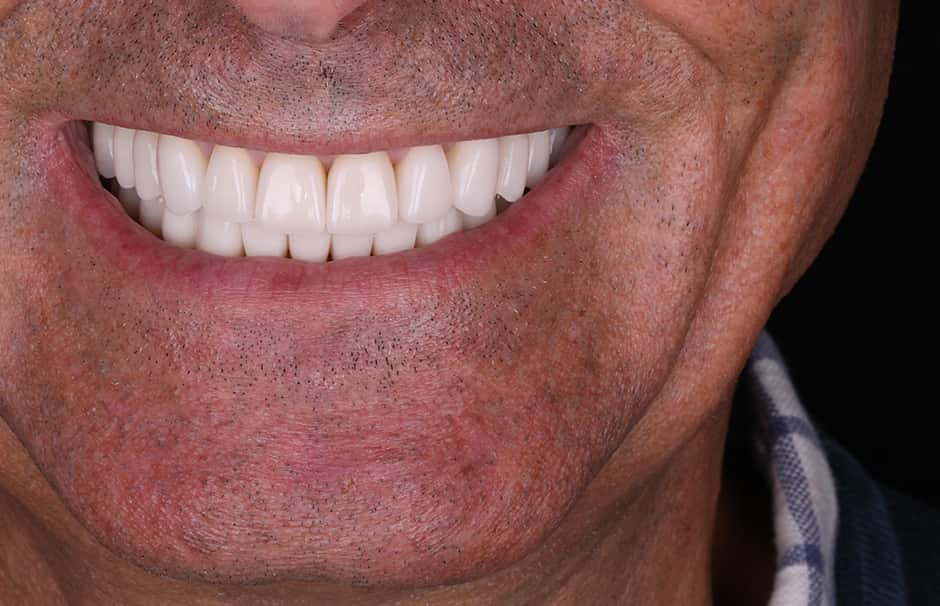
The face
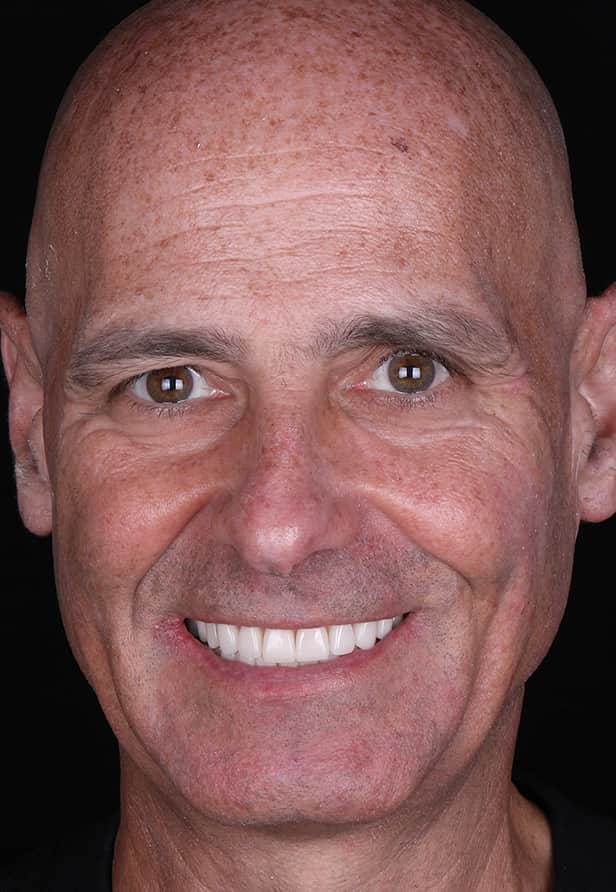
We see everybody, regularly
He was reviewed at four years and looked great. He has now been functioning in this restoration for five to six years with very few problems, because the functional and medical causes were treated alongside the teeth.
Many patients treated the same way have been followed for ten, fifteen and twenty years. They are all holding up nicely.
If your teeth can be saved, they get saved
A prosthodontist can save teeth when saving them is the right answer, and there is nothing better than your own teeth.
That decision is made openly with you: the prognosis, the risks, the benefits, and an honest cost-benefit analysis of every route available. For severe wear, the right answer is often this one. A classical full mouth reconstruction, supported by your own teeth.
Every case is planned around one person's anatomy. Individual results vary, and what was right for this patient may not be right for you.