FP-3 Case 5 · All-on-X · Reconstruction
Five Years Without Teeth
She had not had teeth in five years. Somewhere in those years she had stopped going out, and her sons brought her in.
She had become reclusive, and then she had become depressed, and the two fed each other the way they do.
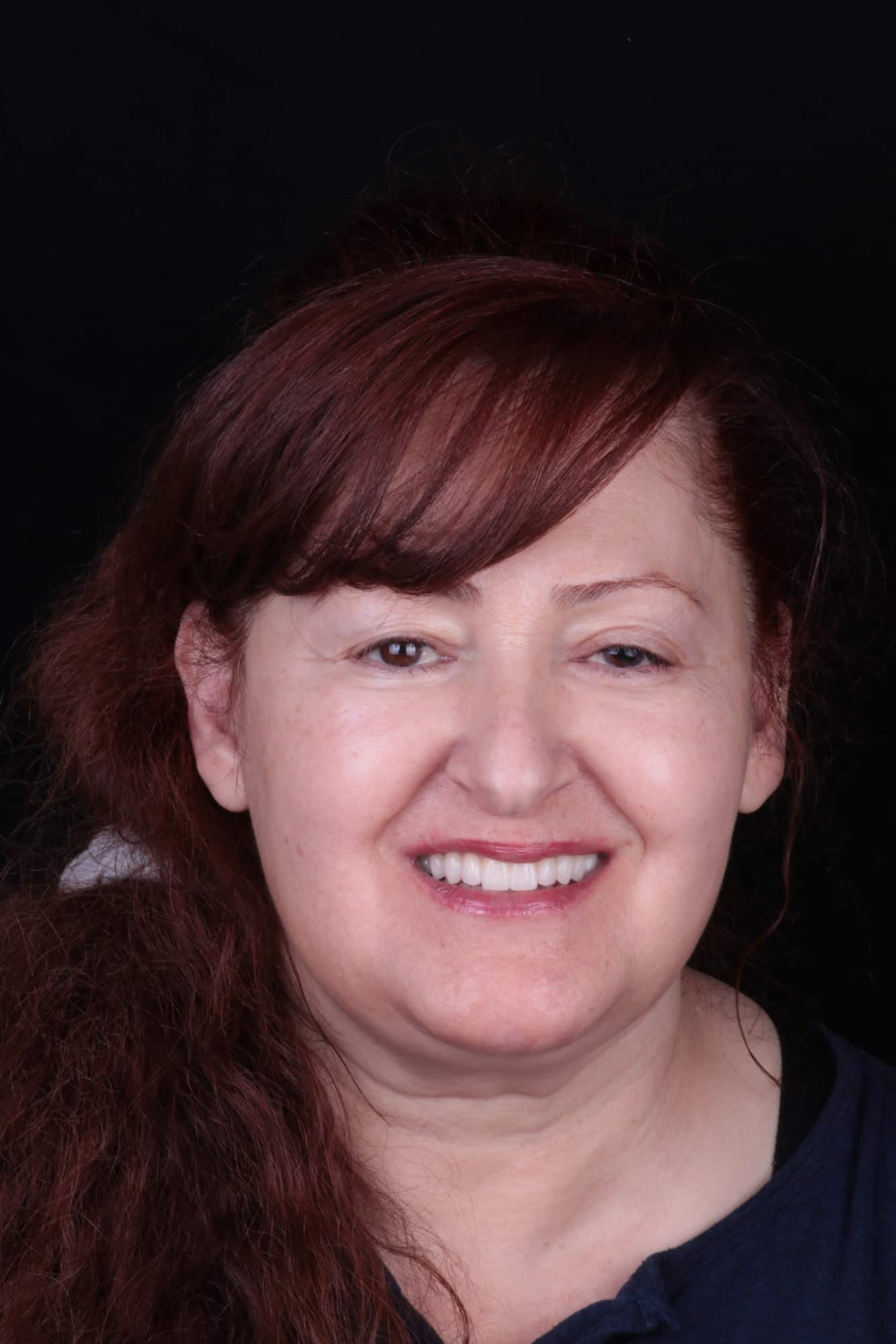
Every door already closed
She had been told no more than once.
Not enough bone. Too frail for the surgery. Unable to sit in a chair long enough for the treatment that was being described to her, because of an accident that had left her back unable to tolerate it. The painkillers she was given afterward had produced a severe dry mouth, and her teeth had dissolved away over the following years.
She had also decided, firmly, that she would not wear dentures under any circumstances.
Which left her with nothing at all, and no route back.
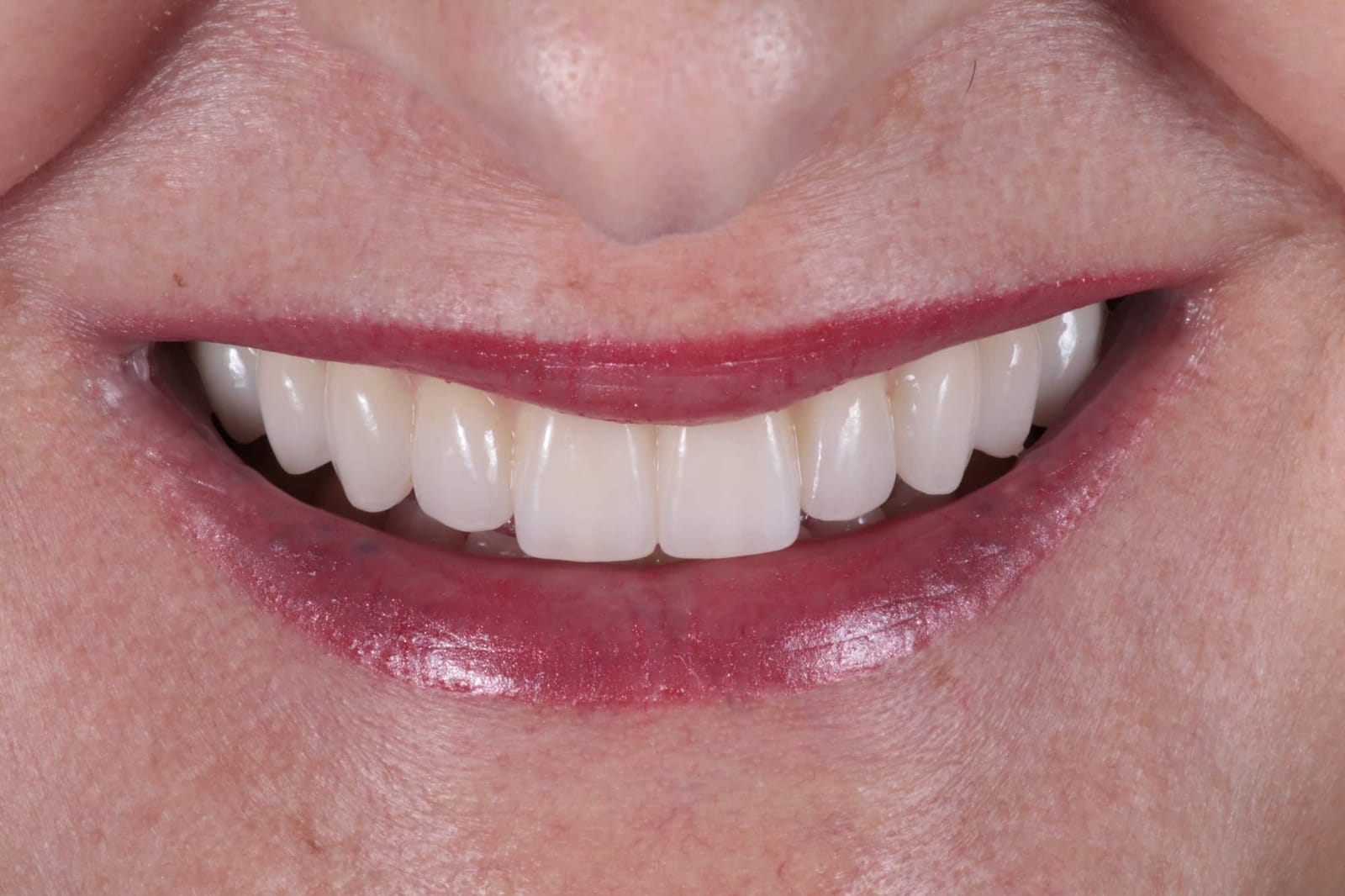
Her smile
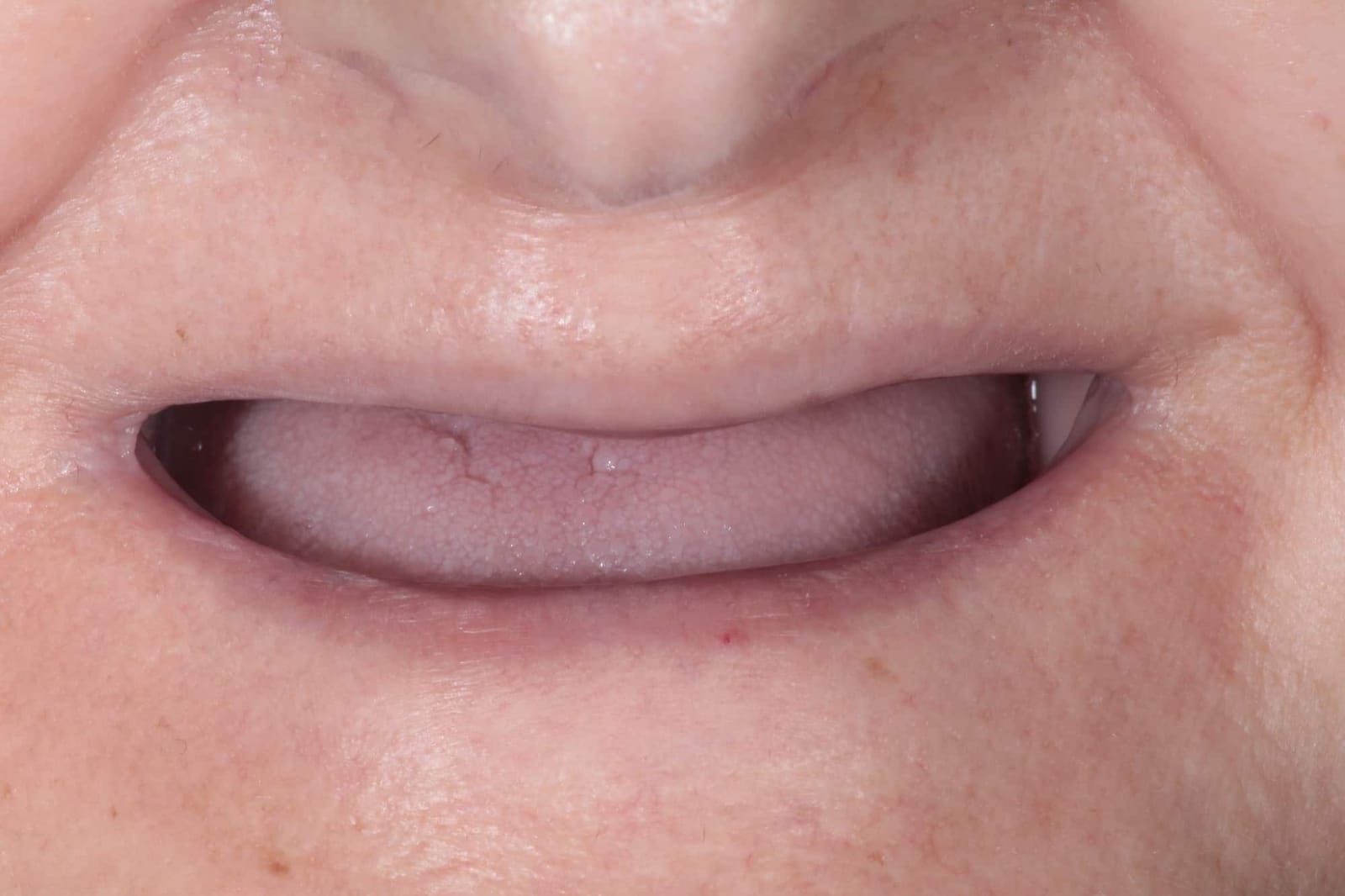
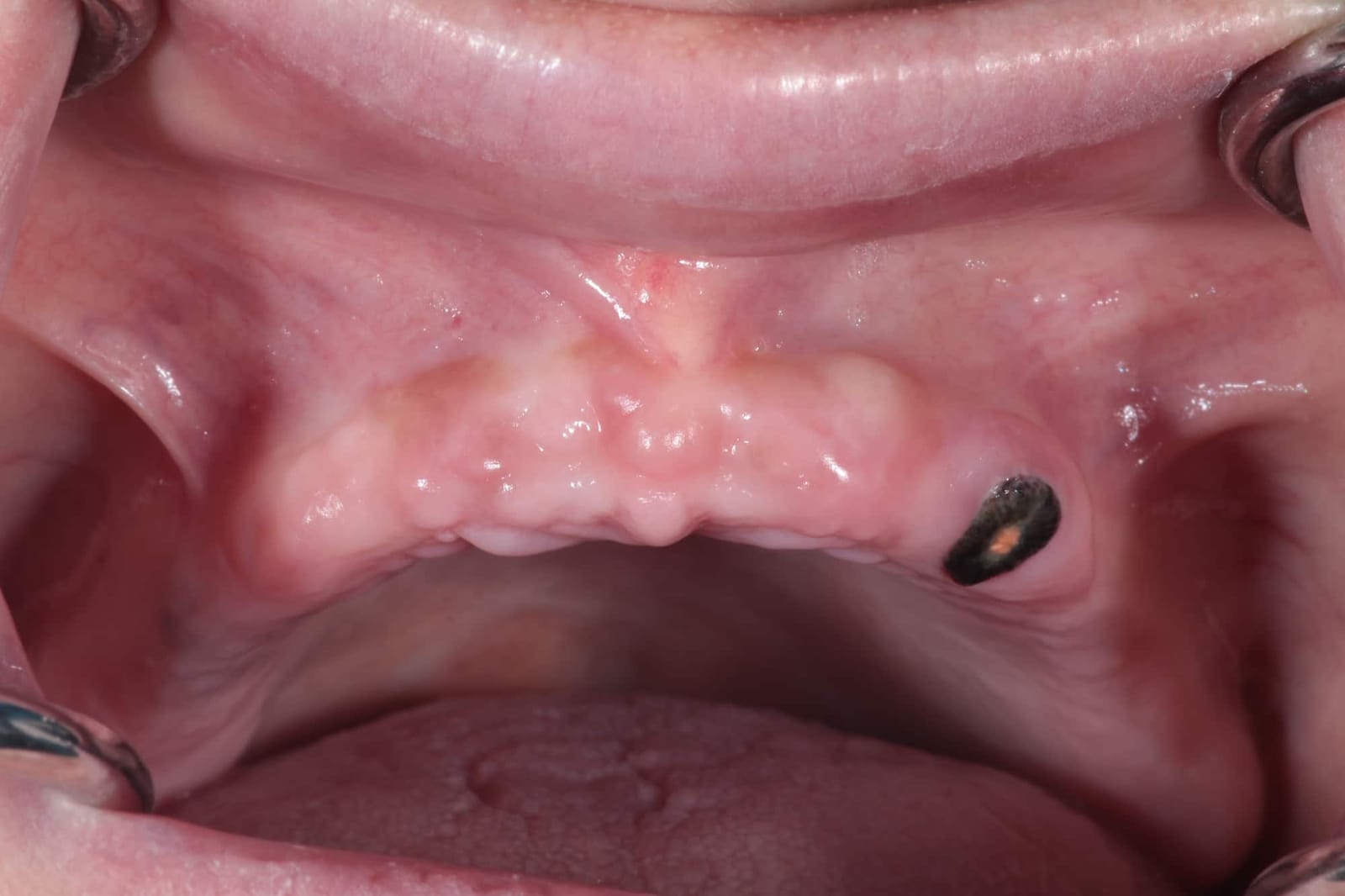
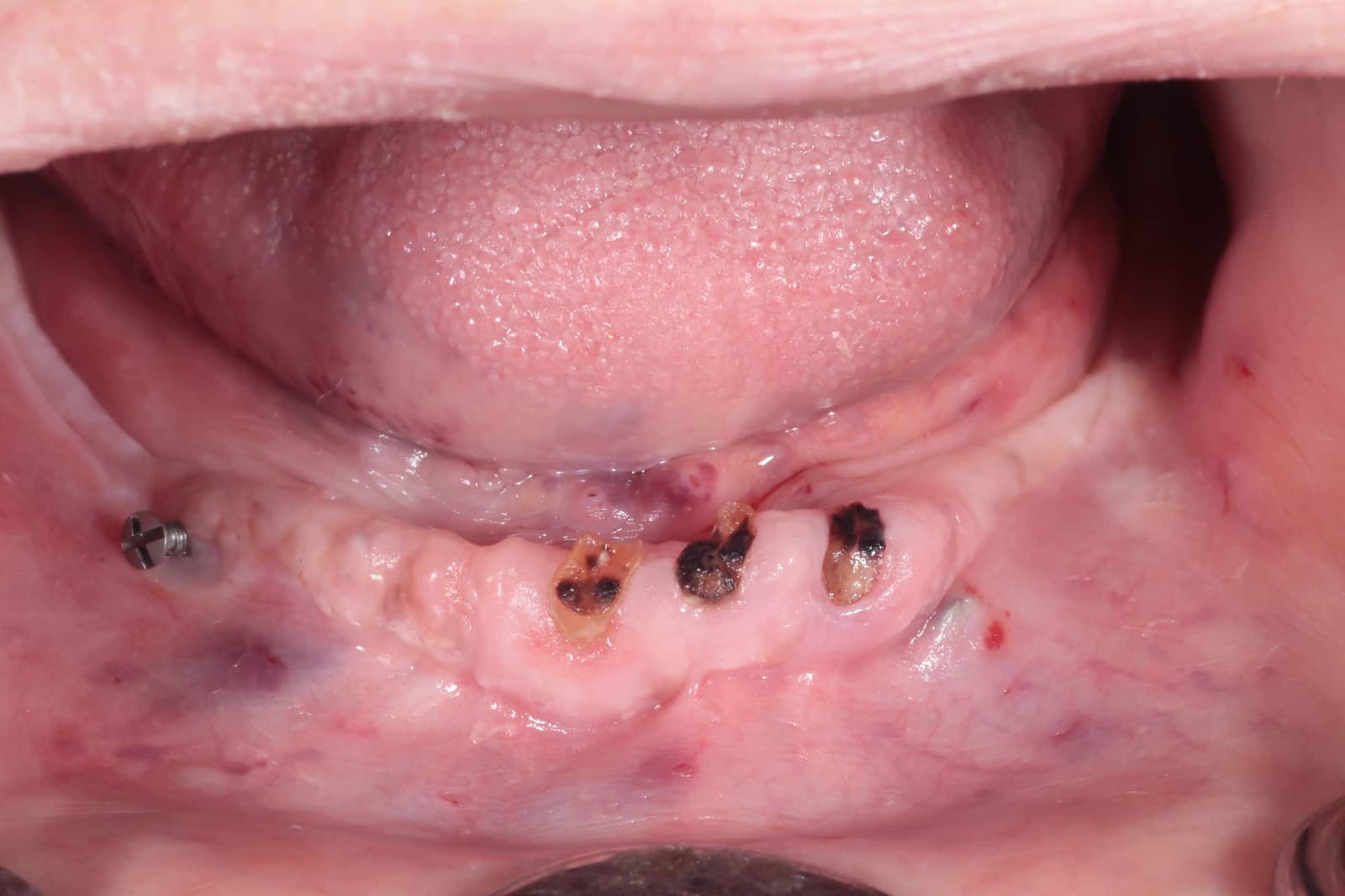
On arrival
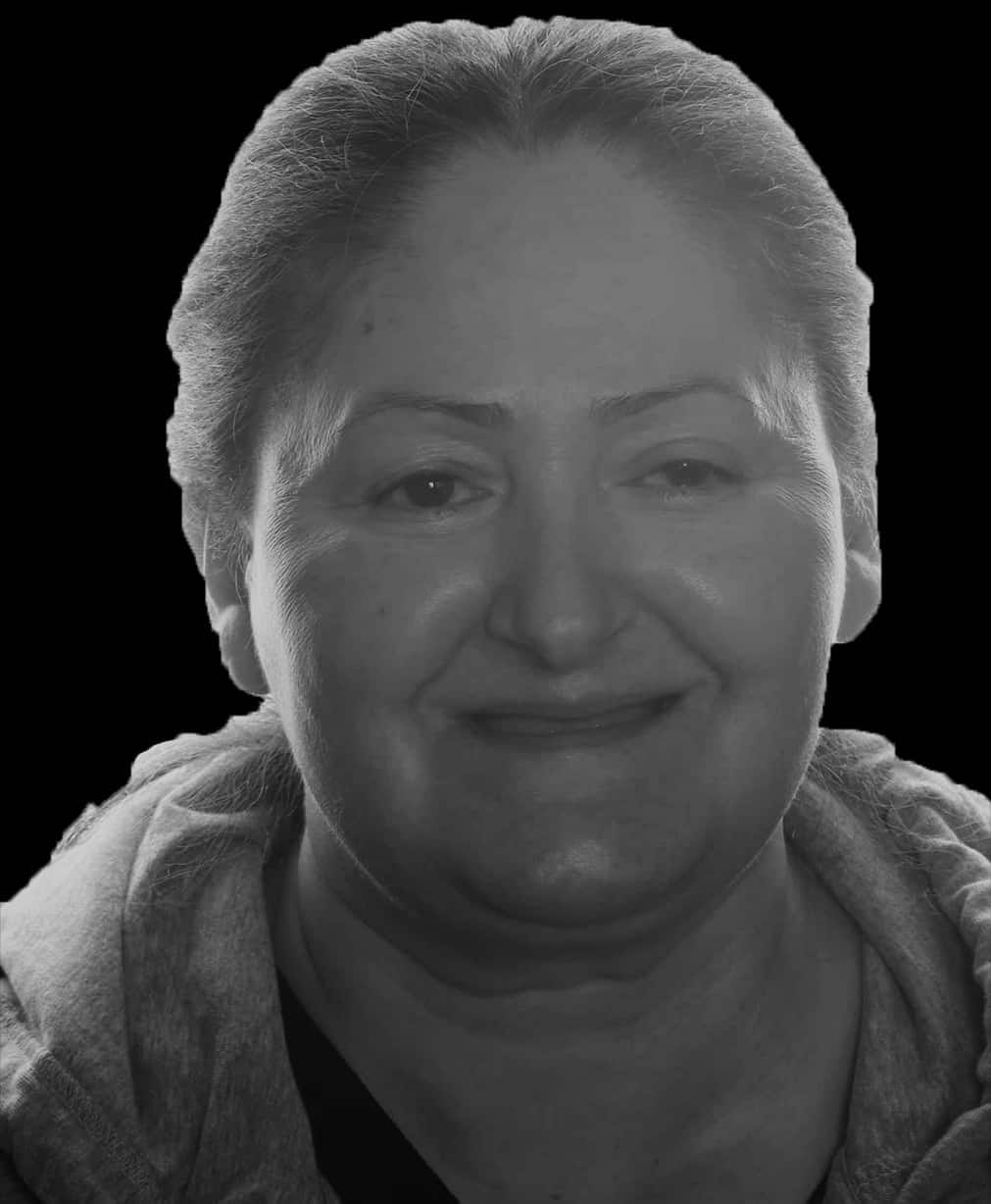
Find the plan that fits the person
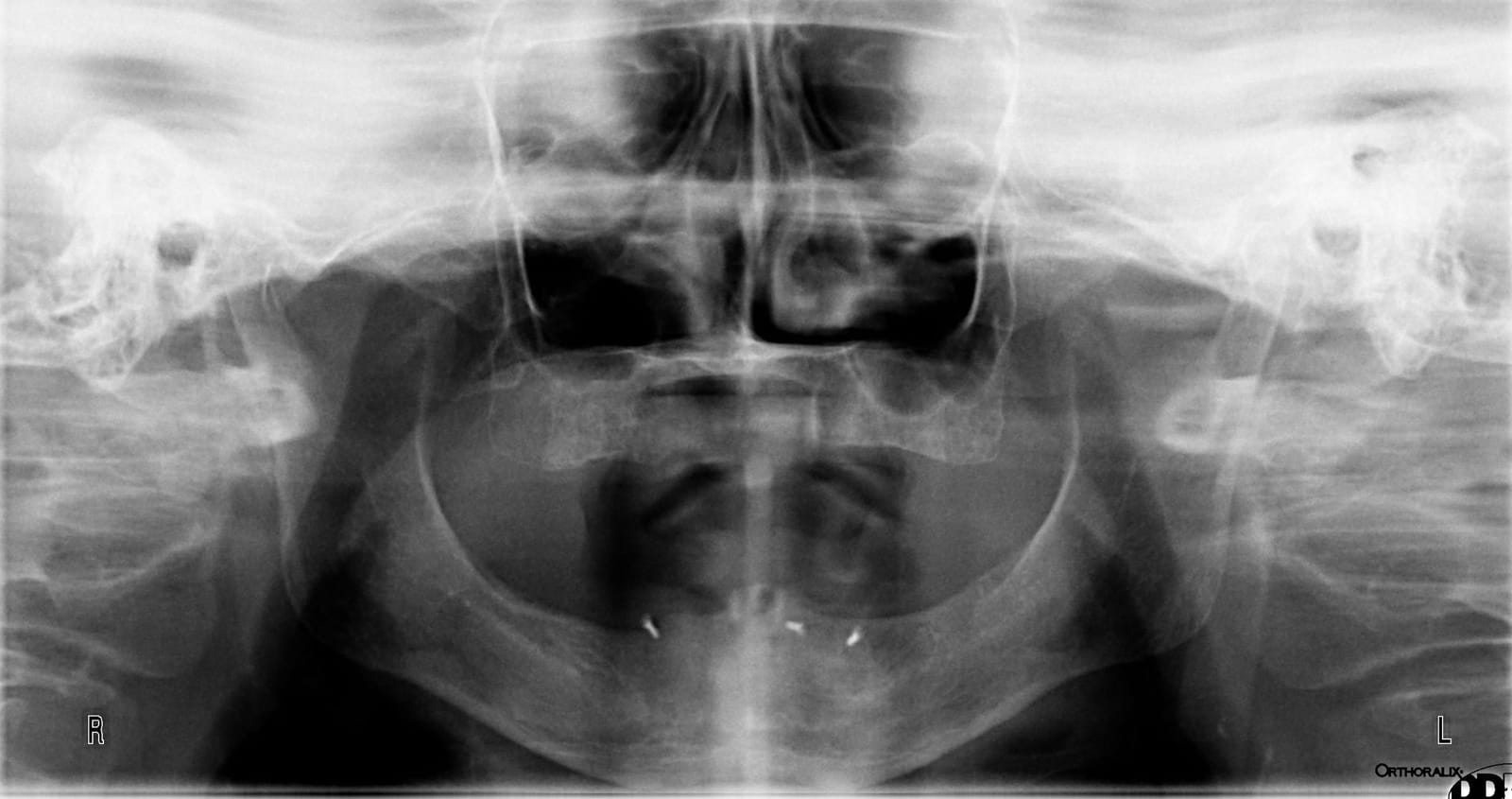
There was bone available in her jaws. Not a great deal, but enough, and in the right places.
The constraint that actually shaped this case was not her anatomy. It was her back. Any plan requiring long procedures, staged surgeries and repeated healing was a plan she could not physically complete, however good it looked on paper.
So the question became what could be achieved without invading the deeper structures, and without asking her to endure what she could not endure.
Before
The panoramic radiograph
Ten teeth, by design
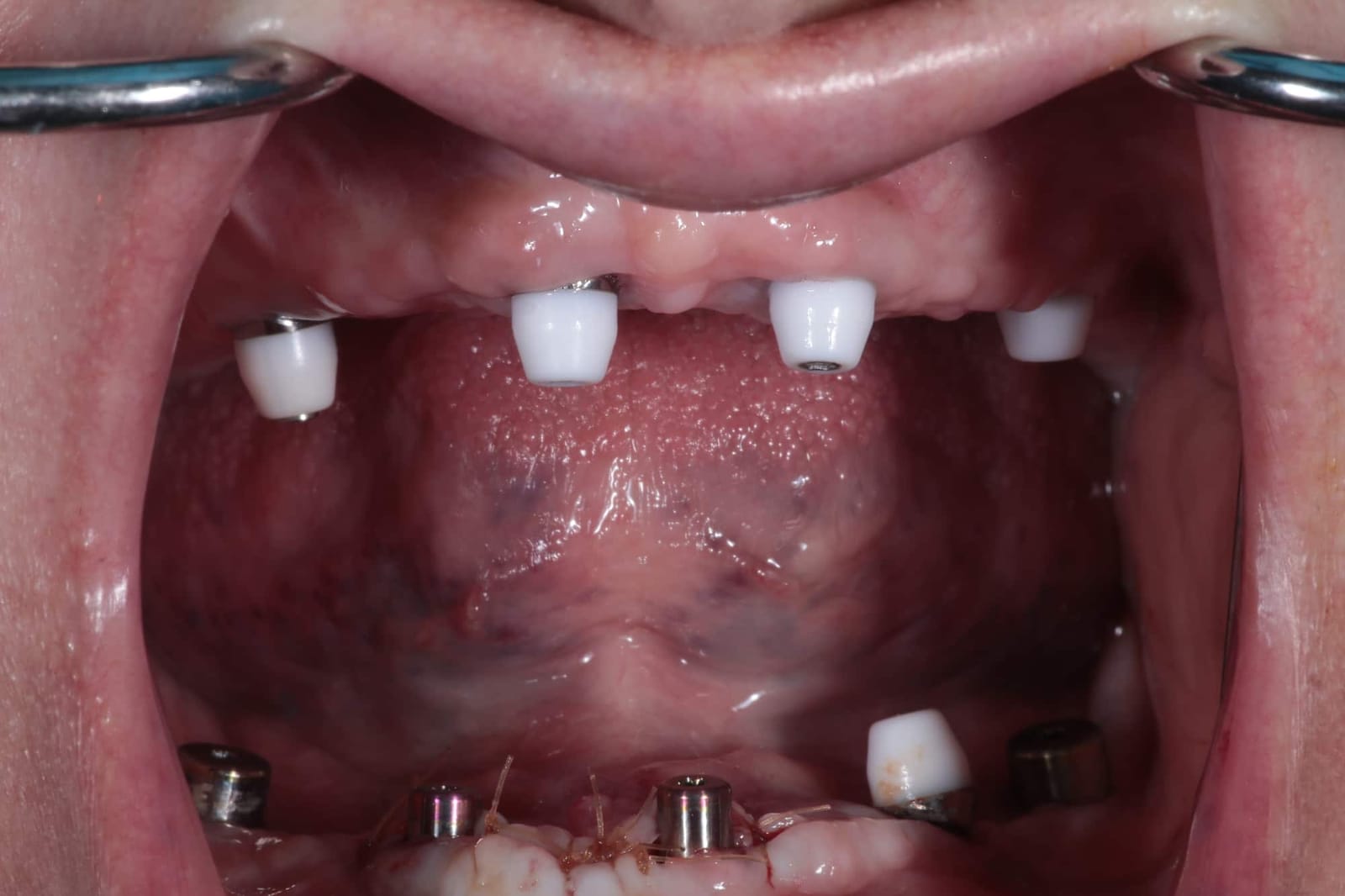
Four implants per jaw, regular implants of regular size, distributed for support. No zygomatic implants. No pterygoid implants. No sinus lift. No additional surgery of any kind.
The compromise, and it was discussed openly, was ten teeth per jaw rather than a full complement.
That is the shortened dental arch, and it is not a shortcut. The evidence behind it is substantial, including Dr. Reshad's own published work in the California Dental Association literature. Ten teeth per jaw, correctly sized and properly managed, is all most people need to chew and to smile.
What it avoids is the difficult surgery, the longer healing, and the cost that comes with both. For her, that was the entire difference between possible and impossible.
Chair time as a clinical constraint
Her treatment was completed in two short procedures.
Experience is what compresses chair time without compromising the work, and here that experience was not a convenience. It was the reason she could be treated at all.
Teeth again
She received her teeth immediately, within a day of the implants being placed.
After five years, she walked out able to chew.
Living with them, and being watched
The temporaries did the work temporaries do. Four months of getting used to the function, the form, the phonetics, the shape. Four months of observation, to see how she adapted, whether she liked the aesthetics, and whether she wanted anything changed.
Underneath, the soft tissue matured and the implants integrated into the bone. Osseointegration. She did beautifully throughout.
Four months on
Zirconium, made for her face
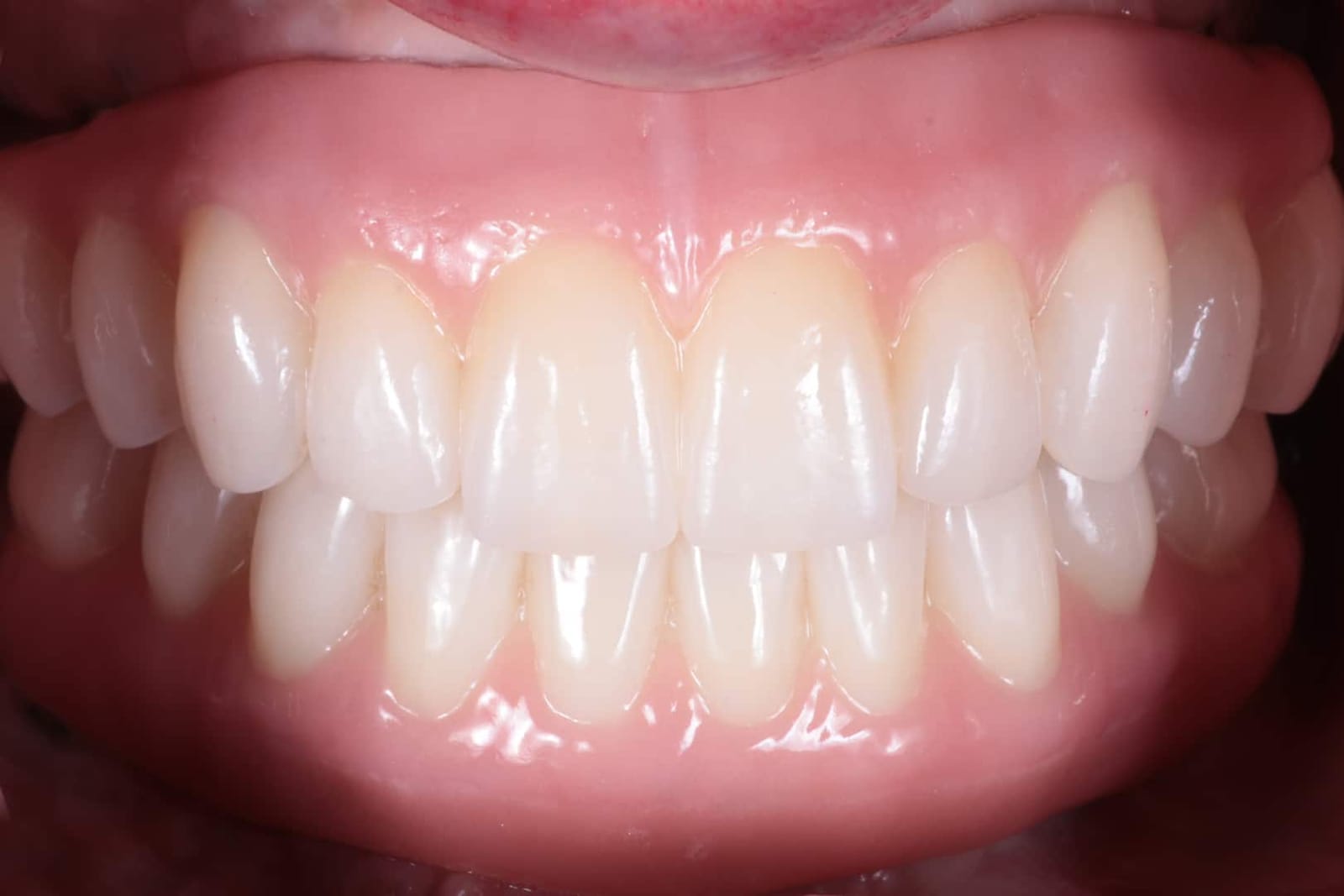
Once the implants had integrated and every parameter had been tested, the finals were made in zirconium, harder and more beautiful than the provisional material, by one of our master technicians.
That is a promise here rather than a feature. Every technician on the team builds bespoke ceramics for the individual: face shape, face size, the position of the smile, and the patient's own requests for texture, form, color and reflection.
Her whole treatment was finished within six months.
The design does the hiding
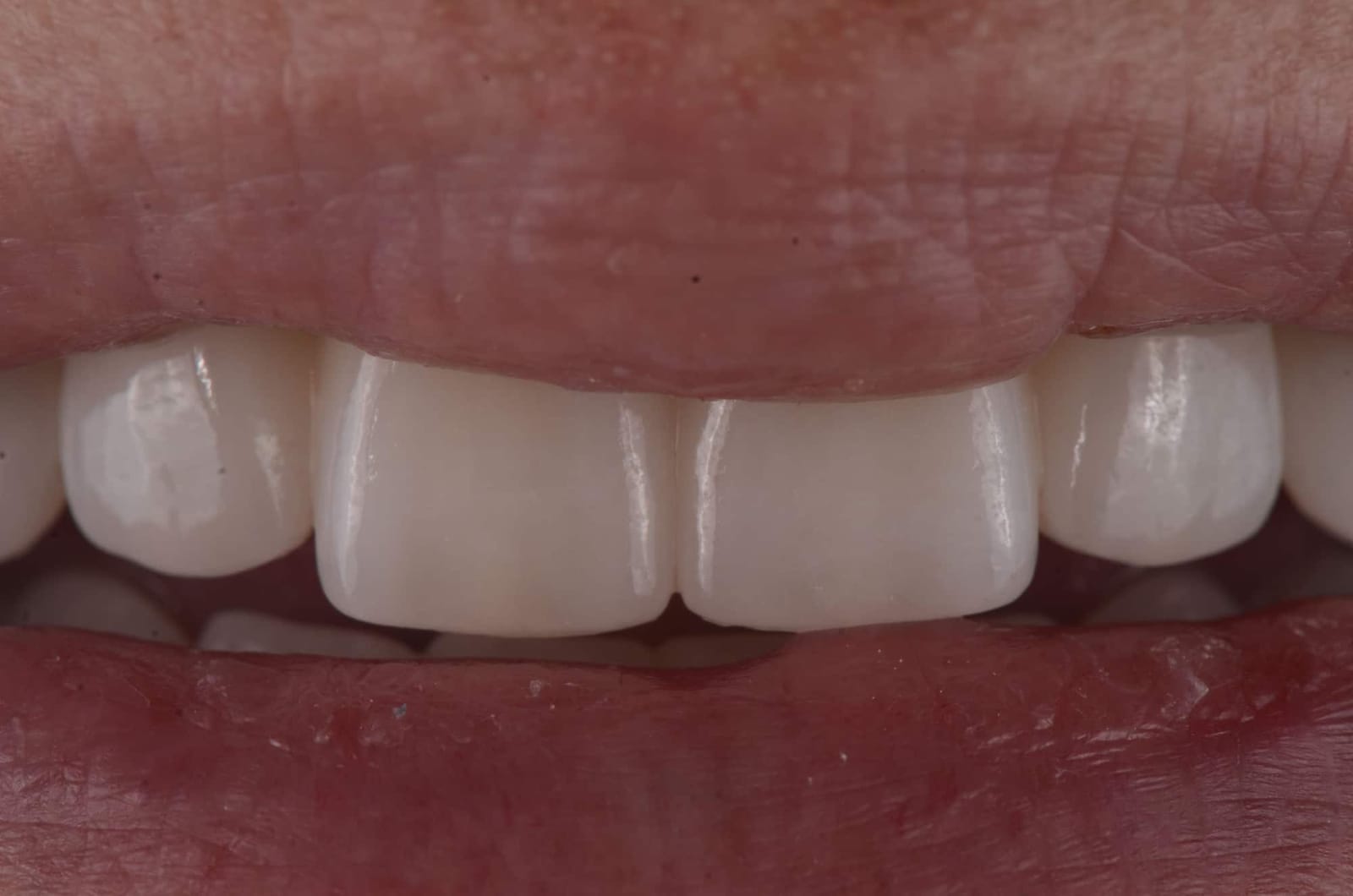
Look at her smile and count. You will not, because it never occurs to you to.
A shortened arch is designed so that the smile shows no more than the teeth it has. Done properly, nobody knows, including the person wearing it.
Still enjoying them
Treatment was carried out more than ten years ago, and she is still enjoying the same teeth.
The woman who arrived had not eaten properly in five years, had stopped seeing people, and had been told by everyone she asked that there was nothing to be done.
Her sons brought her in. She walked out with a smile, and then she went back to her life.
Ten years on
Her smile
Every case is planned around one person's anatomy. Individual results vary, and what was right for this patient may not be right for you.