Single Front Tooth Implant Case 5 · Implants
Six Decisions Below the Gum
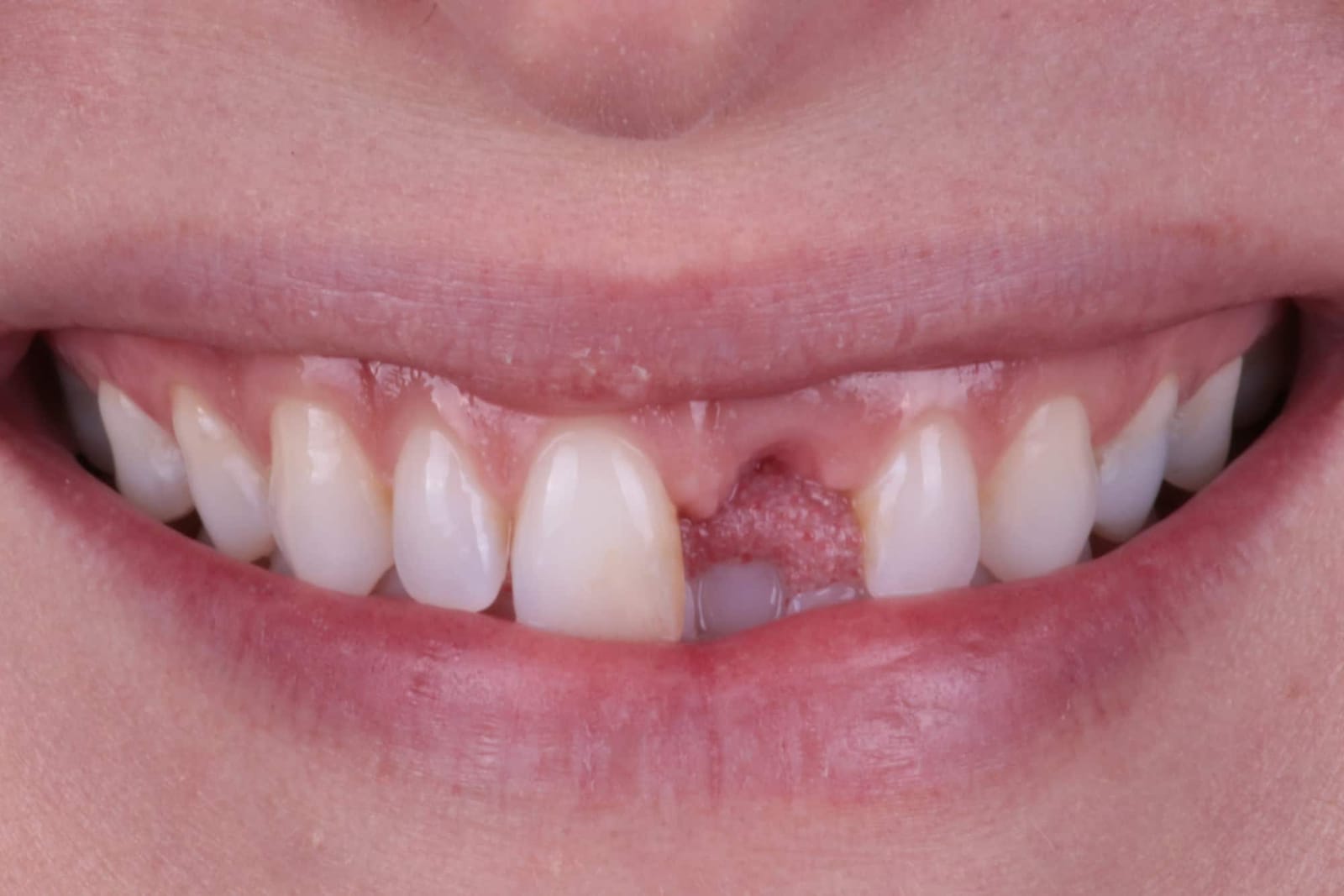
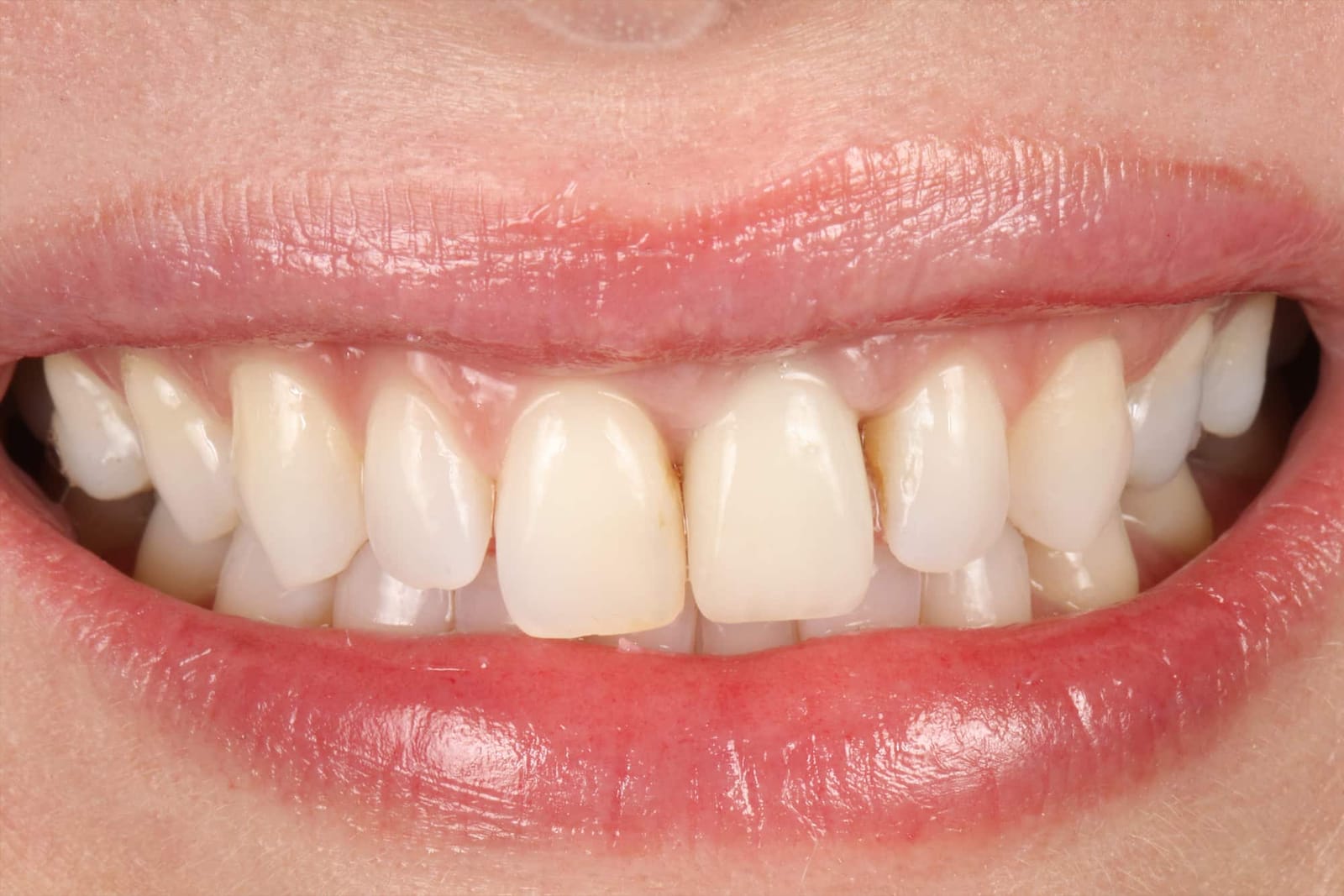
One upper front tooth replaced on an implant. Whether it reads as a tooth is decided below the gum.
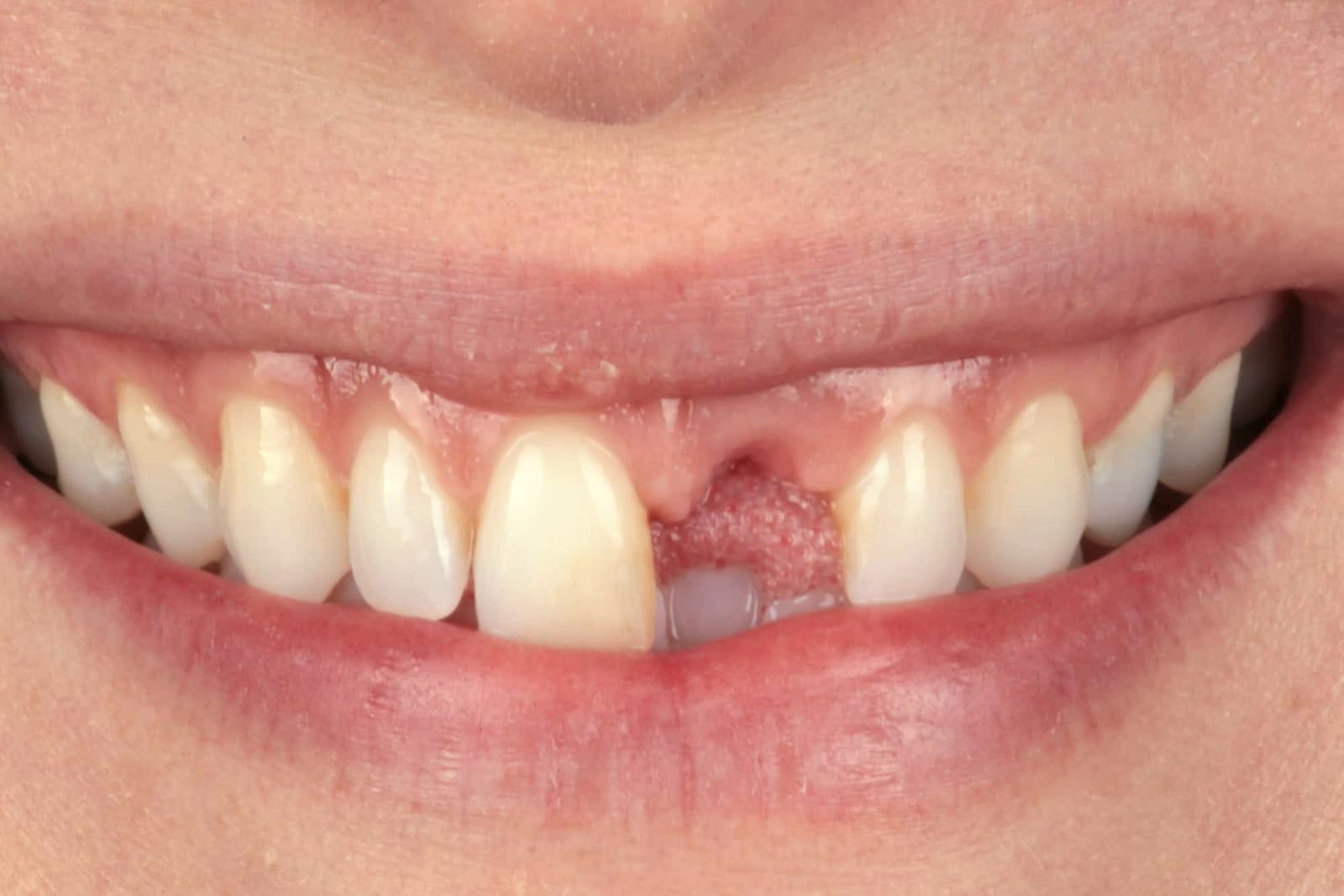
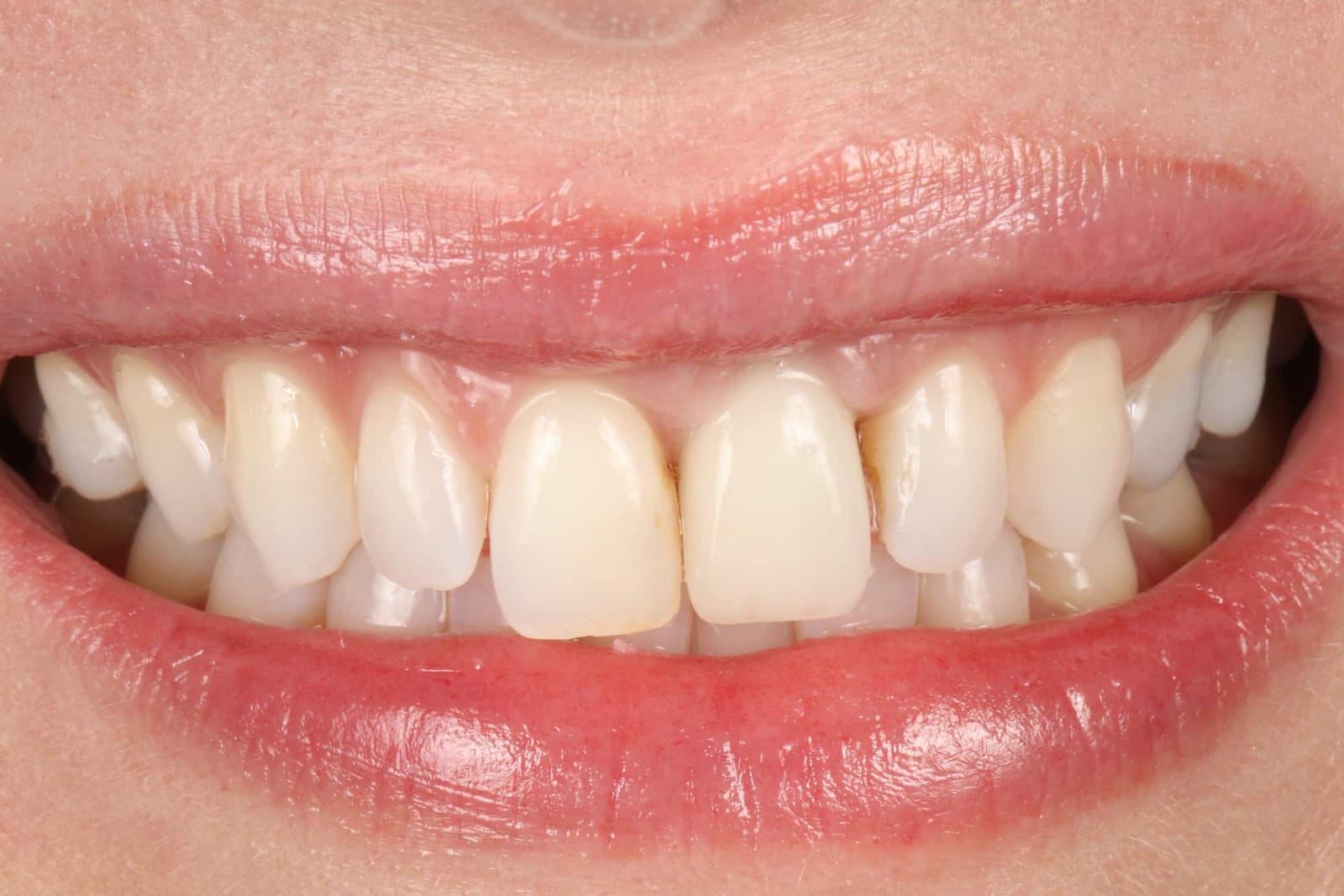
Her face


Her smile
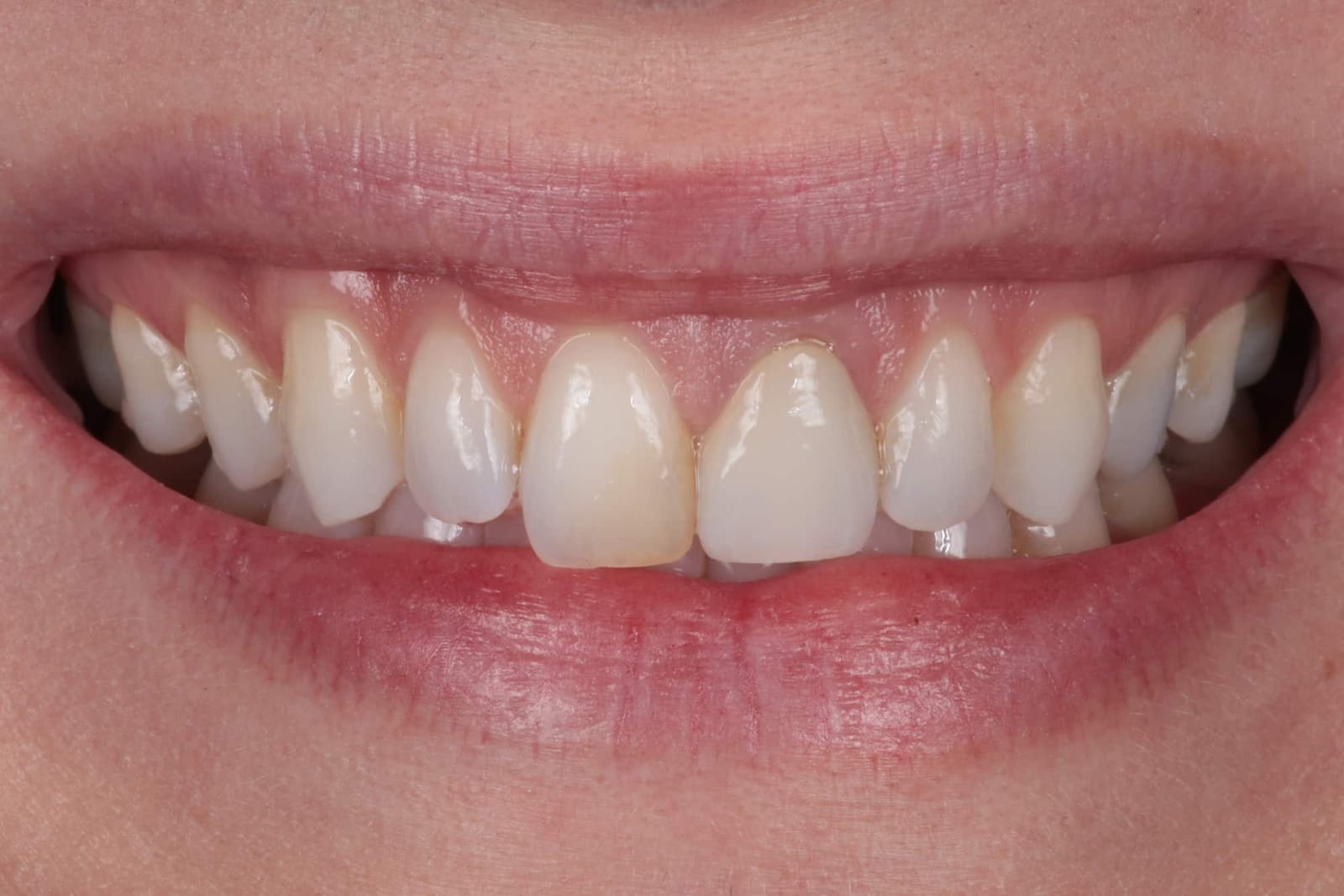
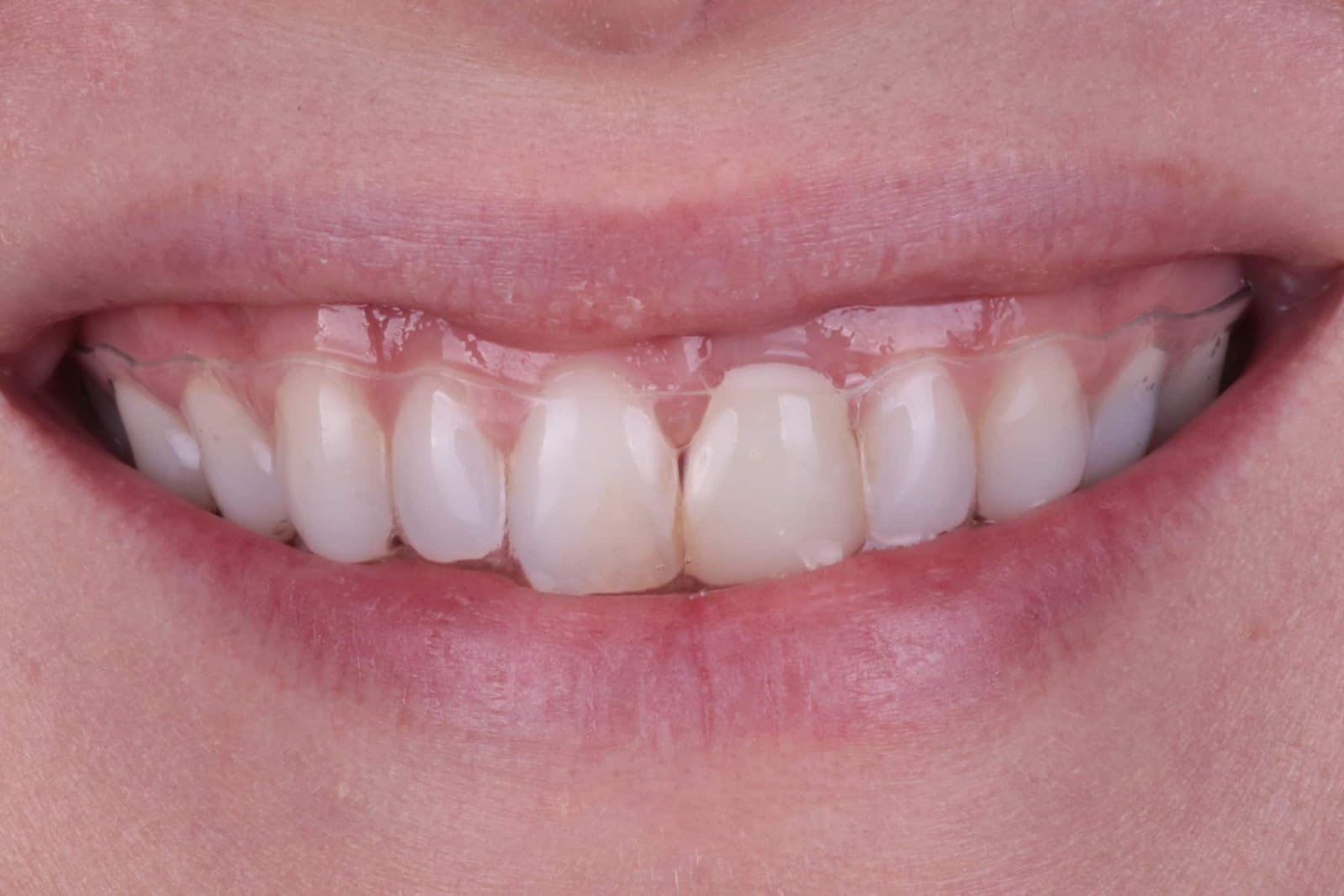
The implant site
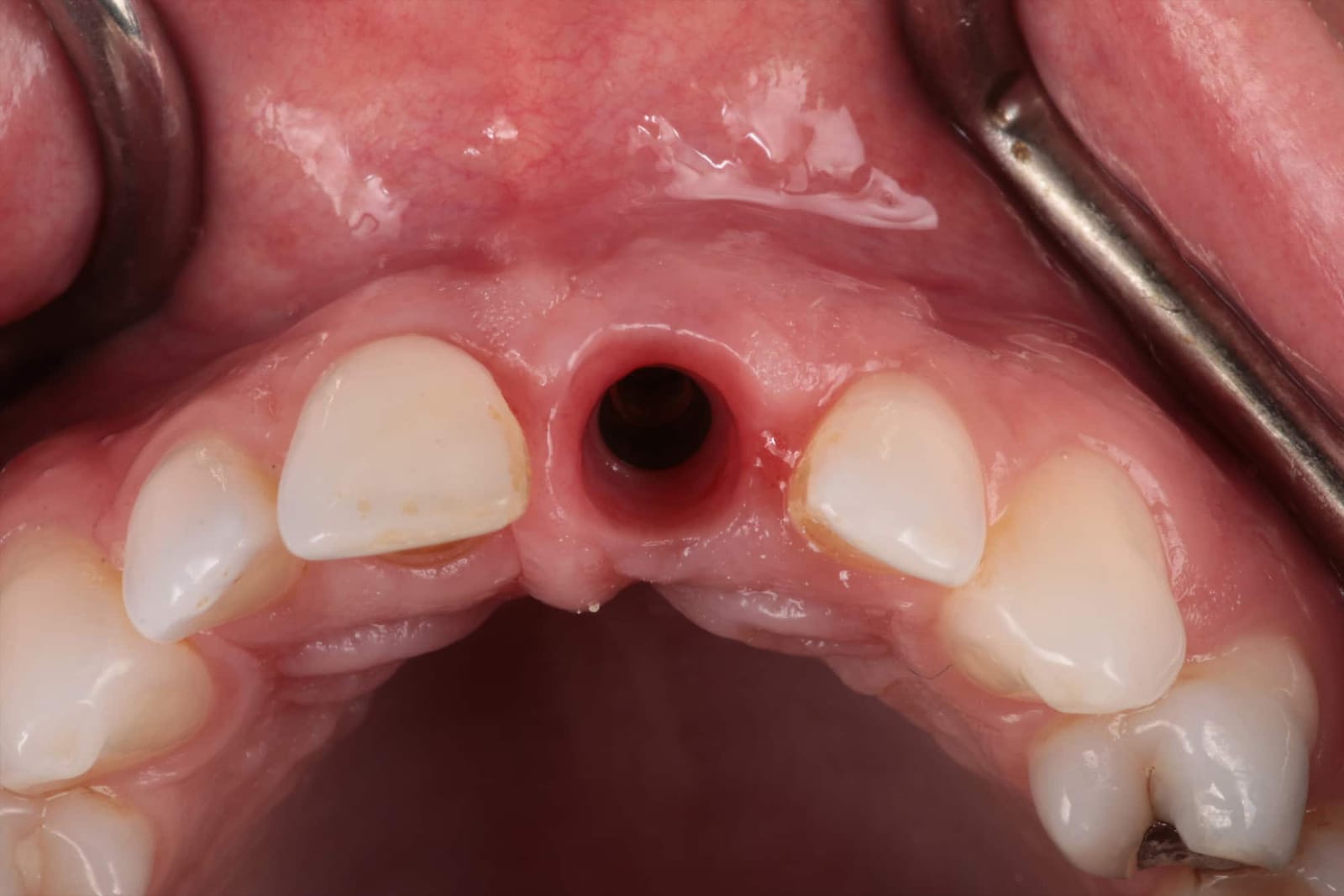
Six decisions below the gum
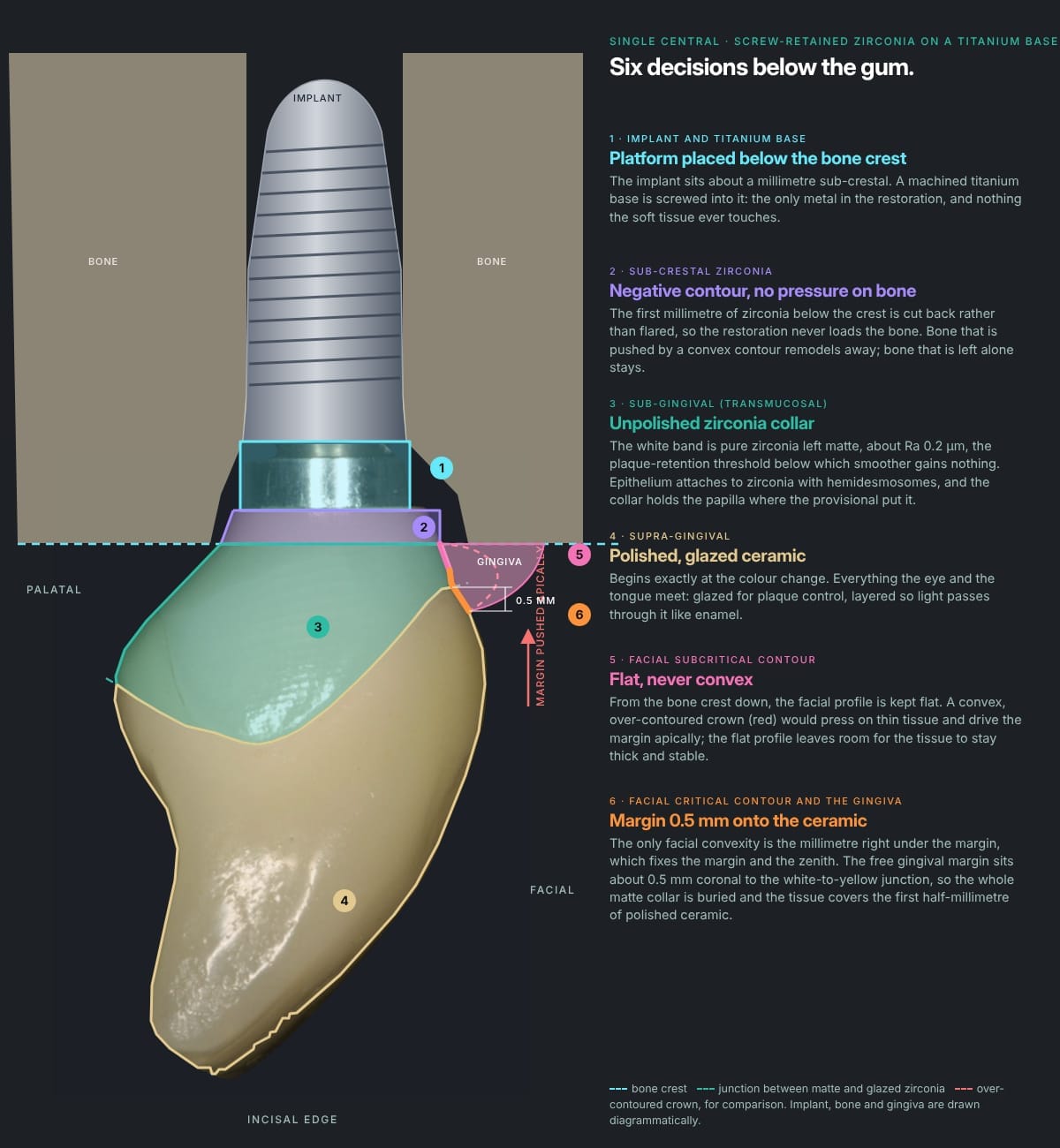
Six decisions below the gum.
Single central, screw-retained zirconia on a titanium base.
1 · Implant and titanium base. Platform placed below the bone crest. The implant sits about a millimetre sub-crestal. A machined titanium base is screwed into it: the only metal in the restoration, and nothing the soft tissue ever touches.
2 · Sub-crestal zirconia. Negative contour, no pressure on bone. The first millimetre of zirconia below the crest is cut back rather than flared, so the restoration never loads the bone. Bone that is pushed by a convex contour remodels away; bone that is left alone stays.
3 · Sub-gingival (transmucosal). Unpolished zirconia collar. The white band is pure zirconia left matte, about Ra 0.2 µm, the plaque-retention threshold below which smoother gains nothing. Epithelium attaches to zirconia with hemidesmosomes, and the collar holds the papilla where the provisional put it.
4 · Supra-gingival. Polished, glazed ceramic. Begins exactly at the colour change. Everything the eye and the tongue meet: glazed for plaque control, layered so light passes through it like enamel.
5 · Facial subcritical contour. Flat, never convex. From the bone crest down, the facial profile is kept flat. A convex, over-contoured crown would press on thin tissue and drive the margin apically; the flat profile leaves room for the tissue to stay thick and stable.
6 · Facial critical contour and the gingiva. Margin 0.5 mm onto the ceramic. The only facial convexity is the millimetre right under the margin, which fixes the margin and the zenith. The free gingival margin sits about 0.5 mm coronal to the white-to-yellow junction, so the whole matte collar is buried and the tissue covers the first half-millimetre of polished ceramic.
Up close
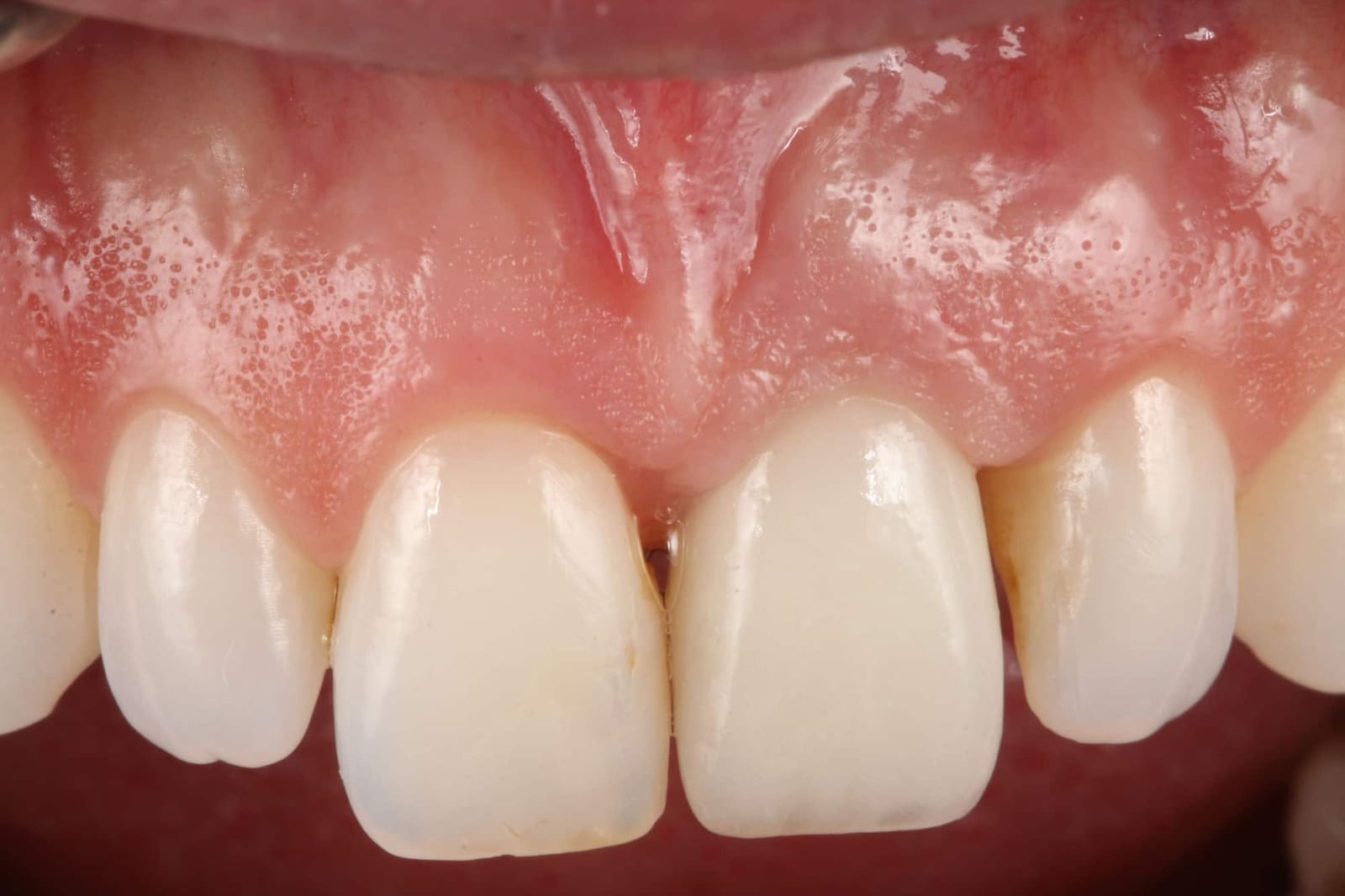
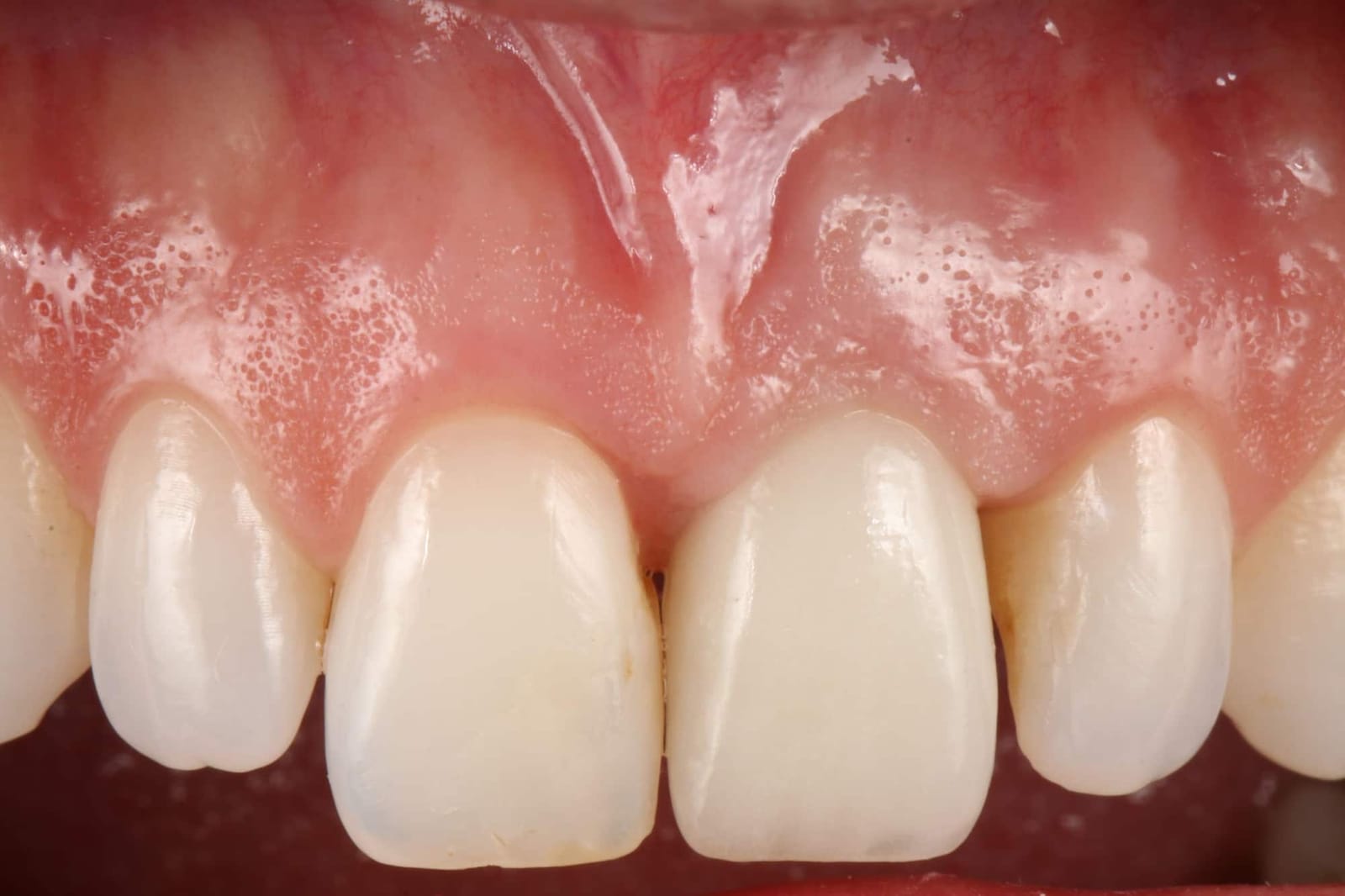
Before and after
Every case is planned around one person's anatomy. Individual results vary, and what was right for this patient may not be right for you.