Tooth and Implant Case 10 · Implants · Reconstruction
Back Teeth First
He had been losing his back teeth slowly, one at a time, and the rest of his mouth was paying for it.
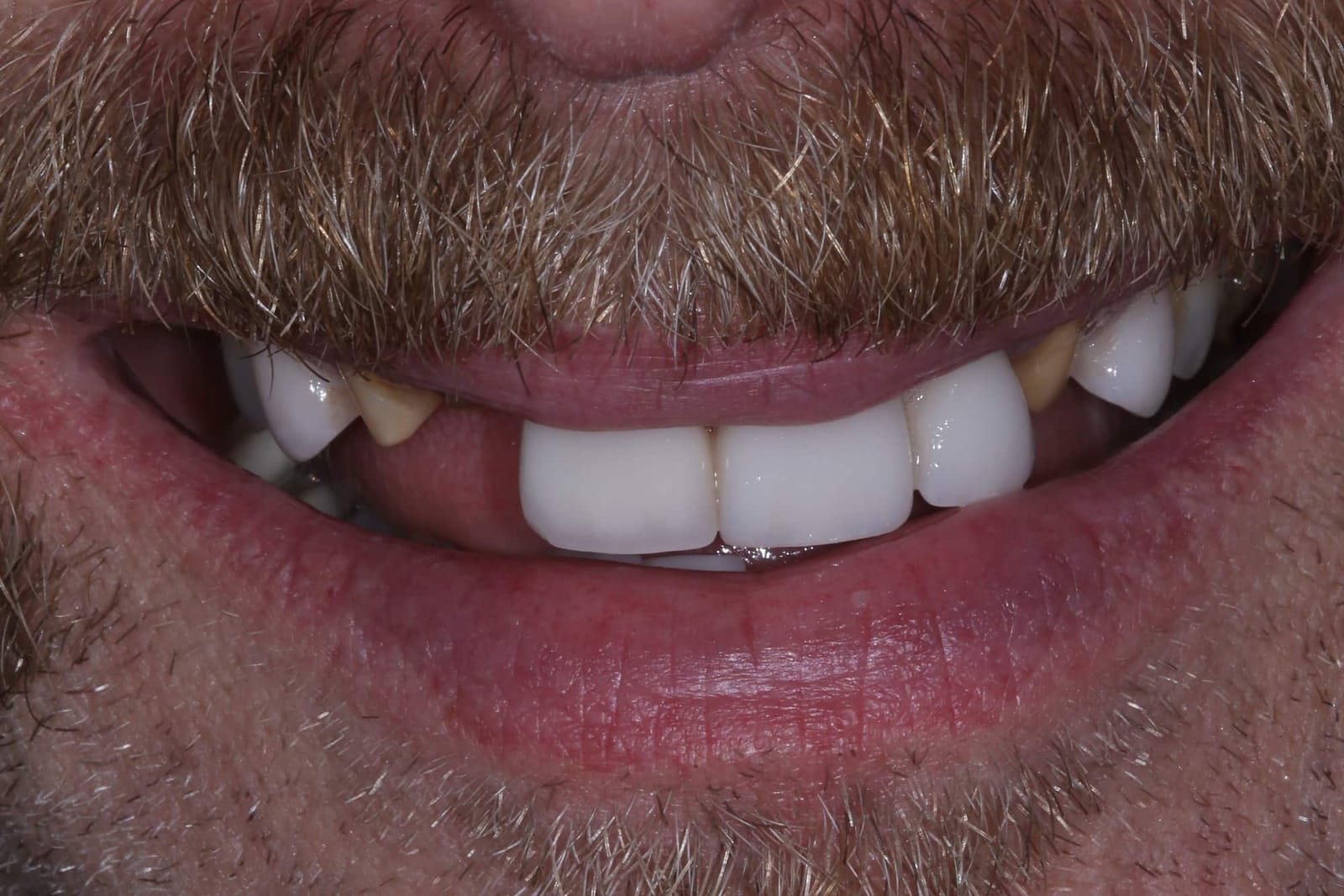
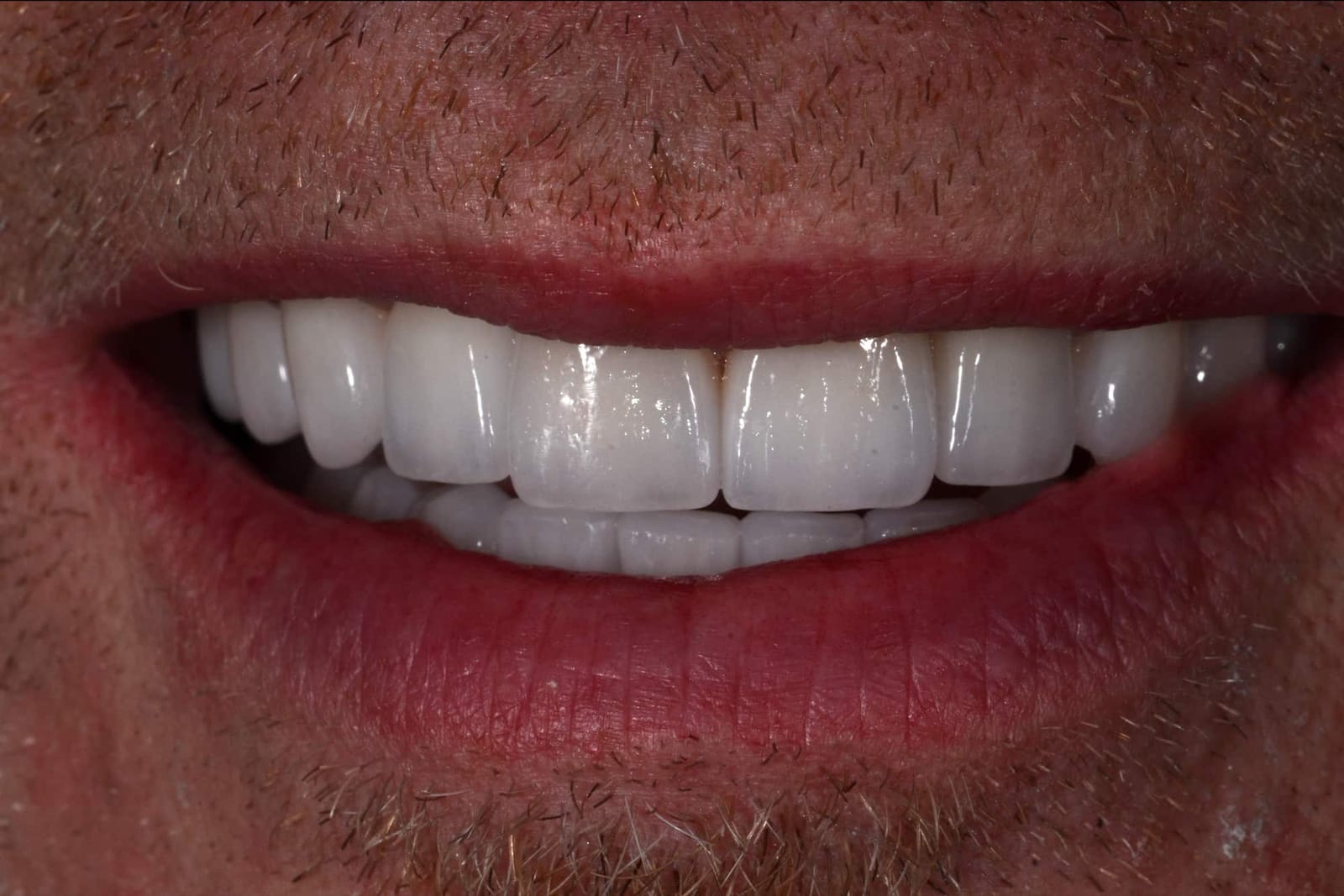
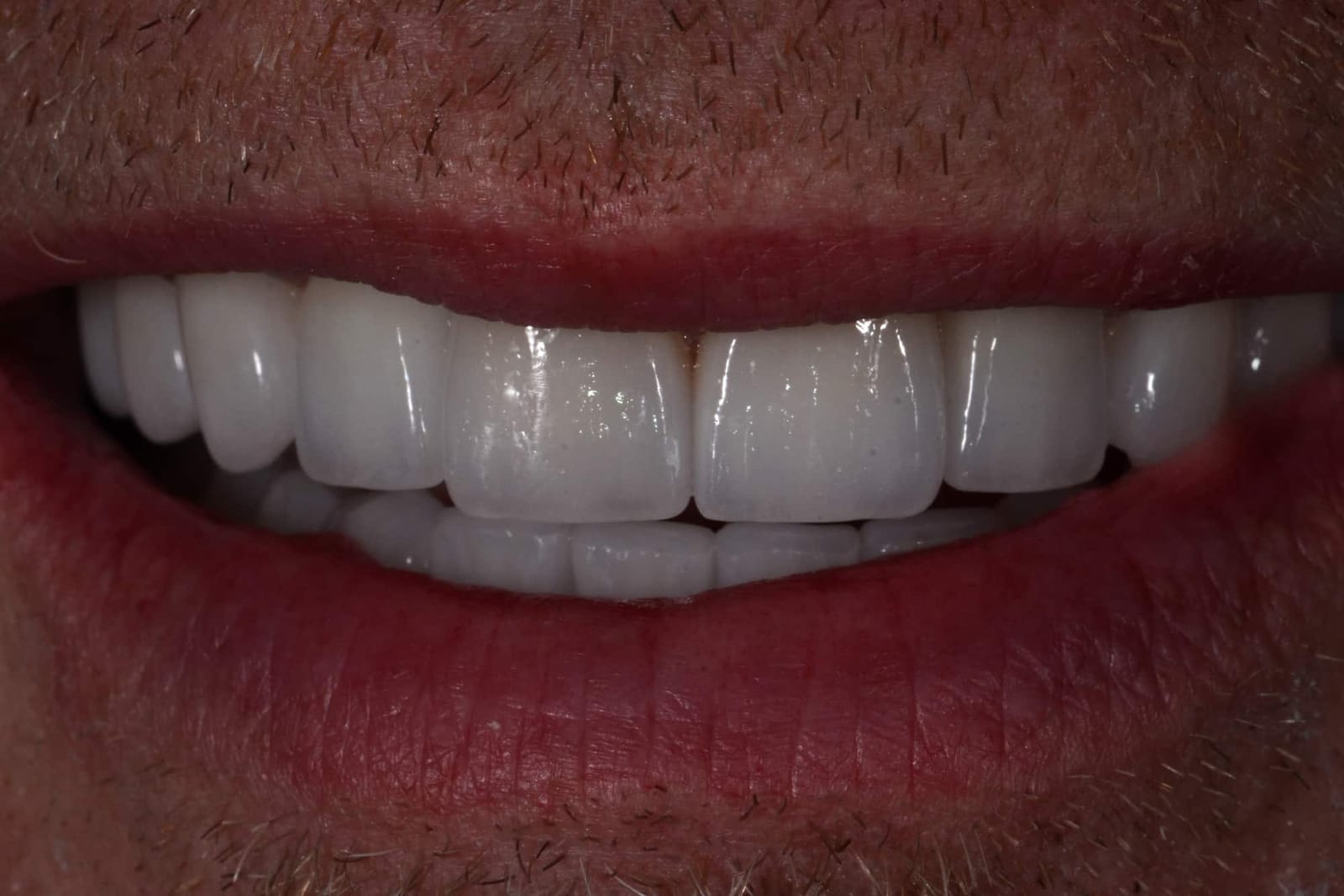
The smile
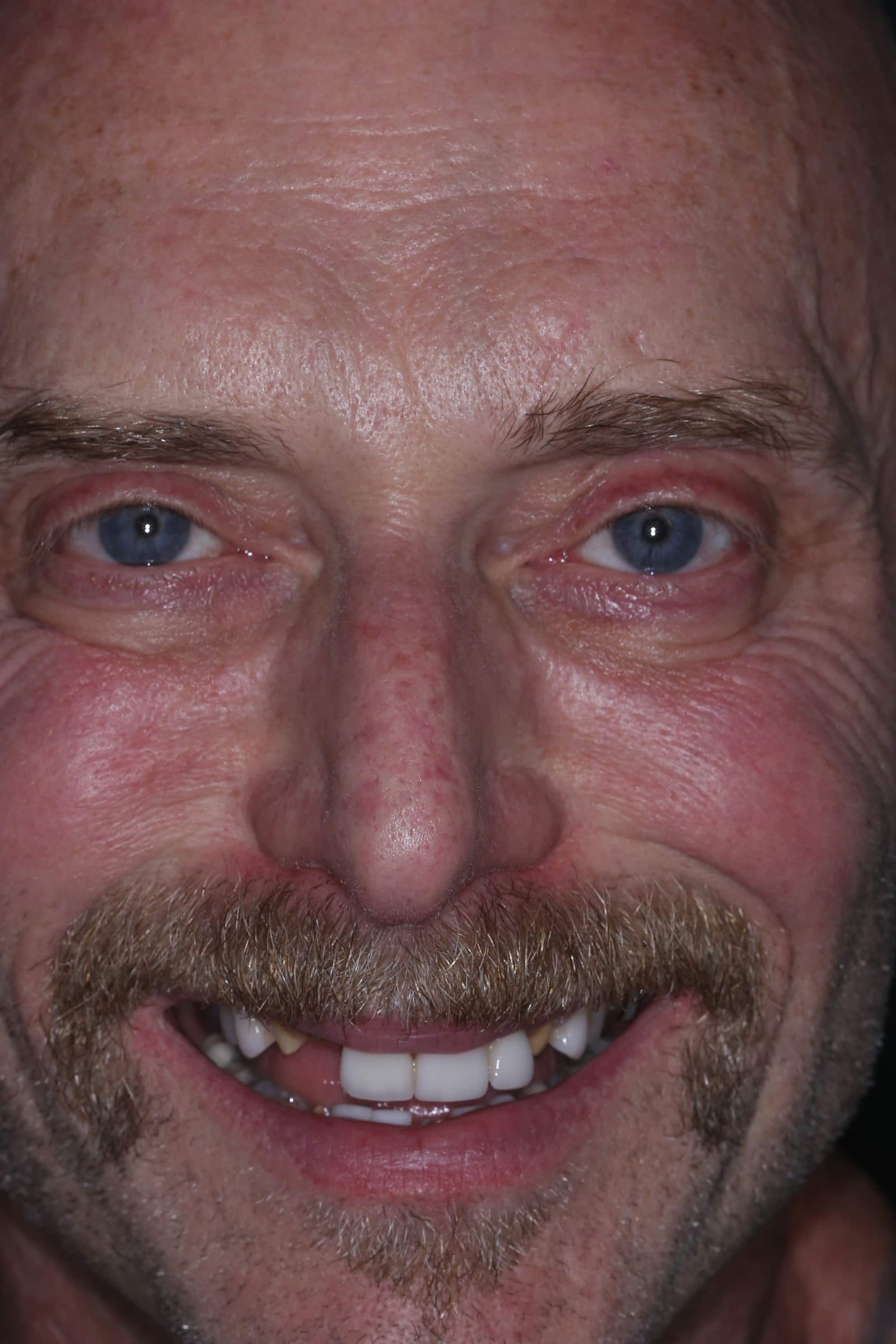
His face
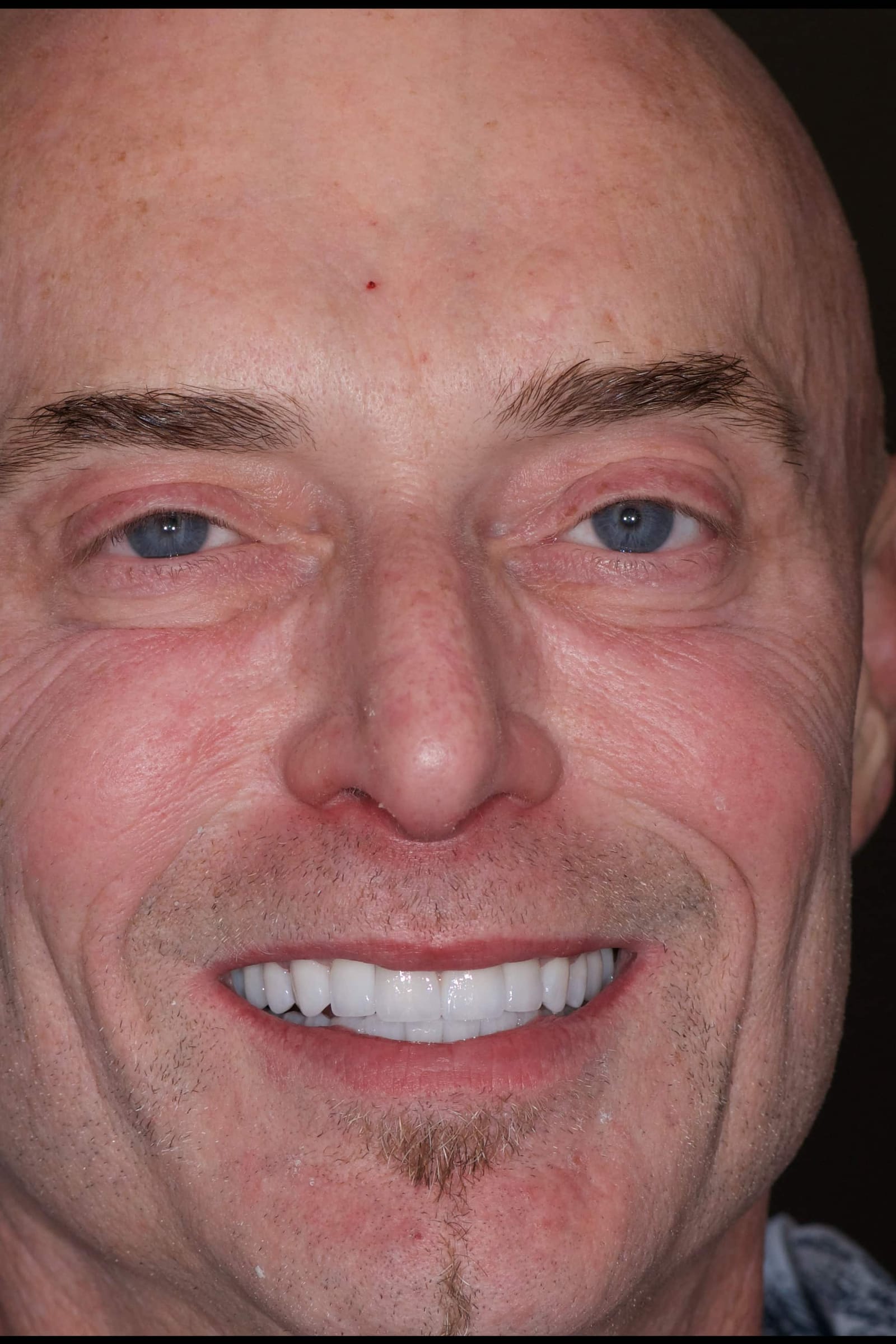
A bite that had been closing for years.
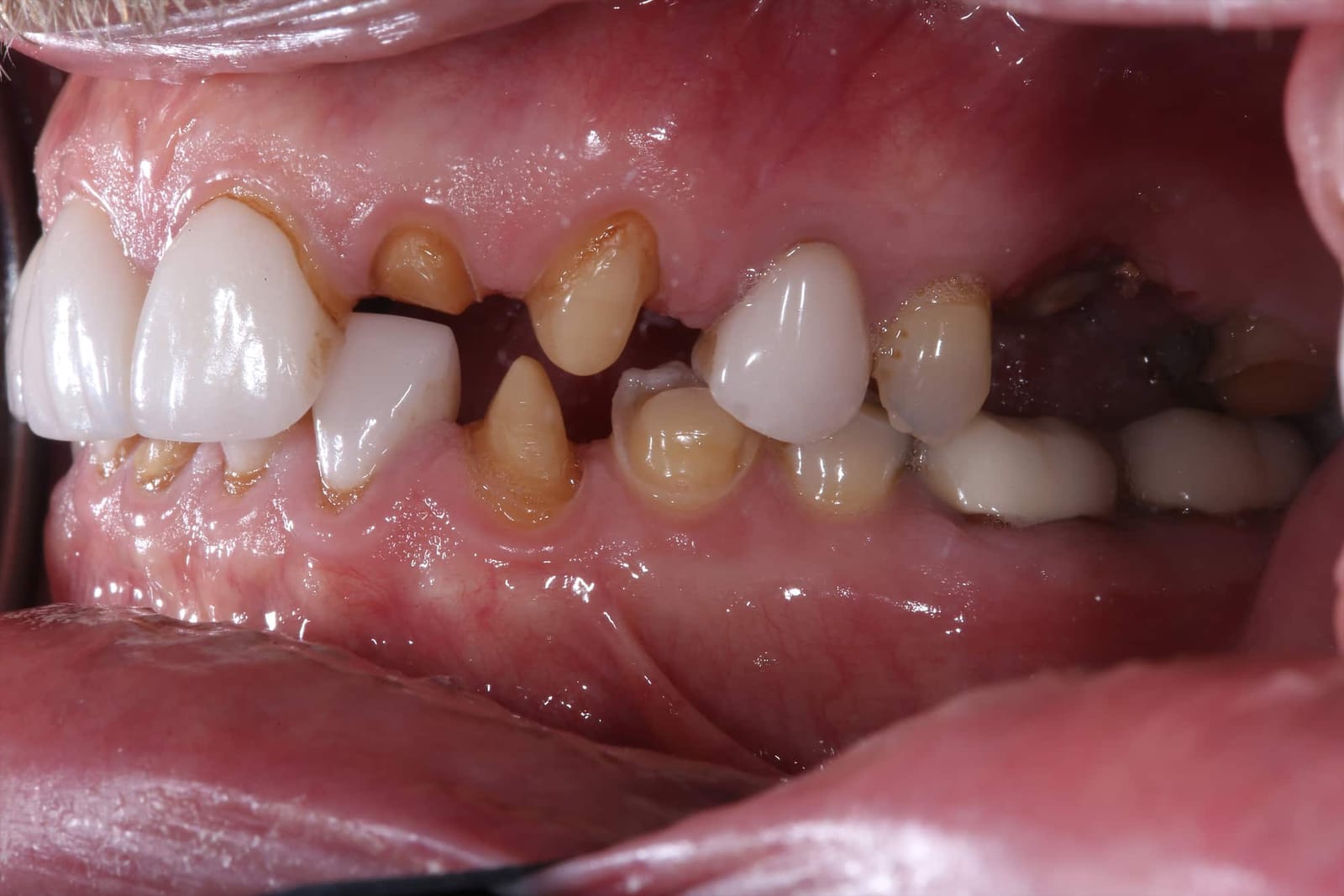
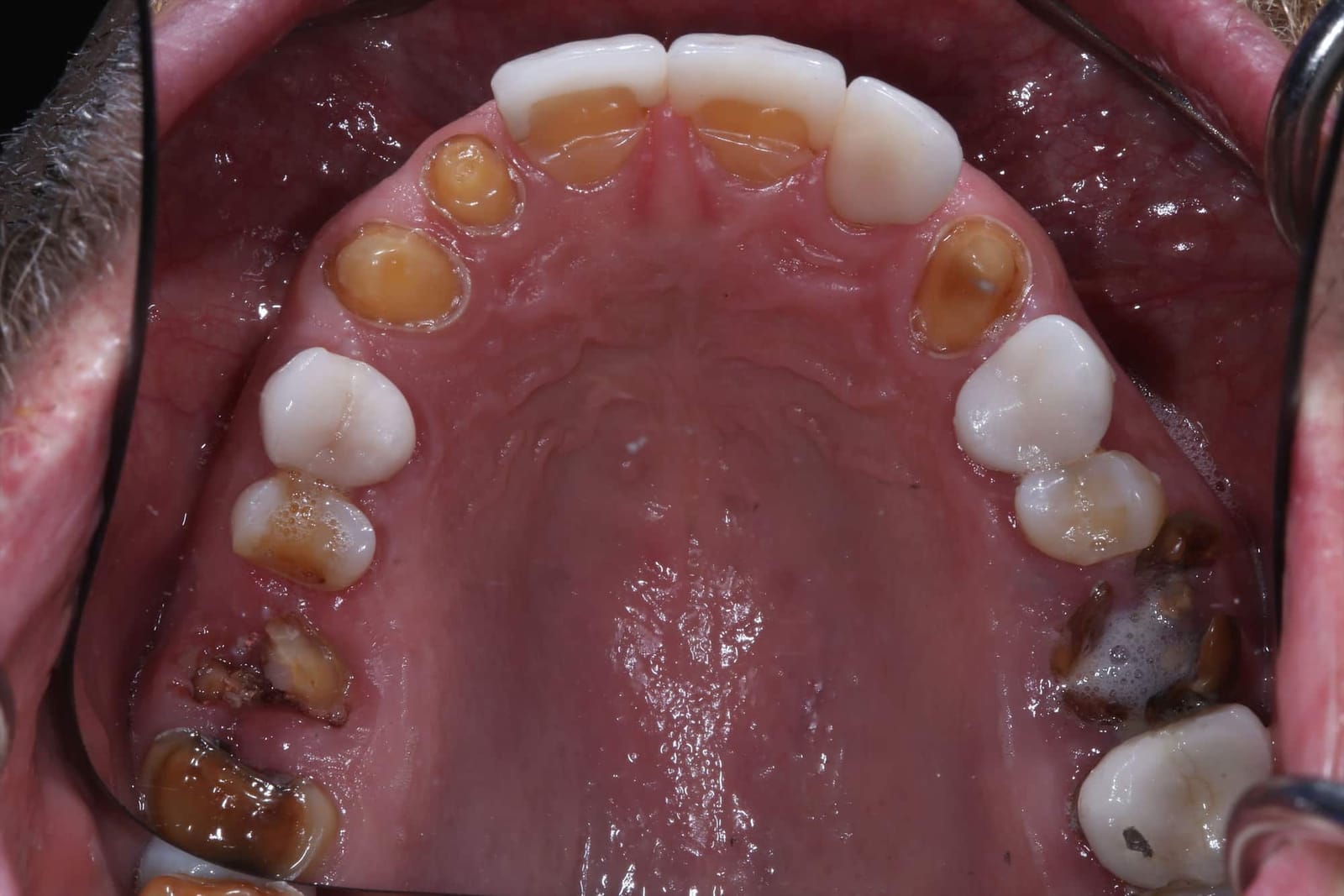
He came to Dr. Reshad with teeth that were crumbling. He had been losing his back teeth slowly, one at a time, and the rest of his mouth was paying for it.
The back teeth protect the front teeth. Once they go, the lower front teeth drift up and in, the space between the upper and lower front teeth closes, and the lower face loses height. Every bite now lands on the front teeth, which were never built to take it. They break down faster, and the jaw joint can start to ache.
He was clear about one thing. He wanted to keep as many of his own teeth as possible.
Lips held back
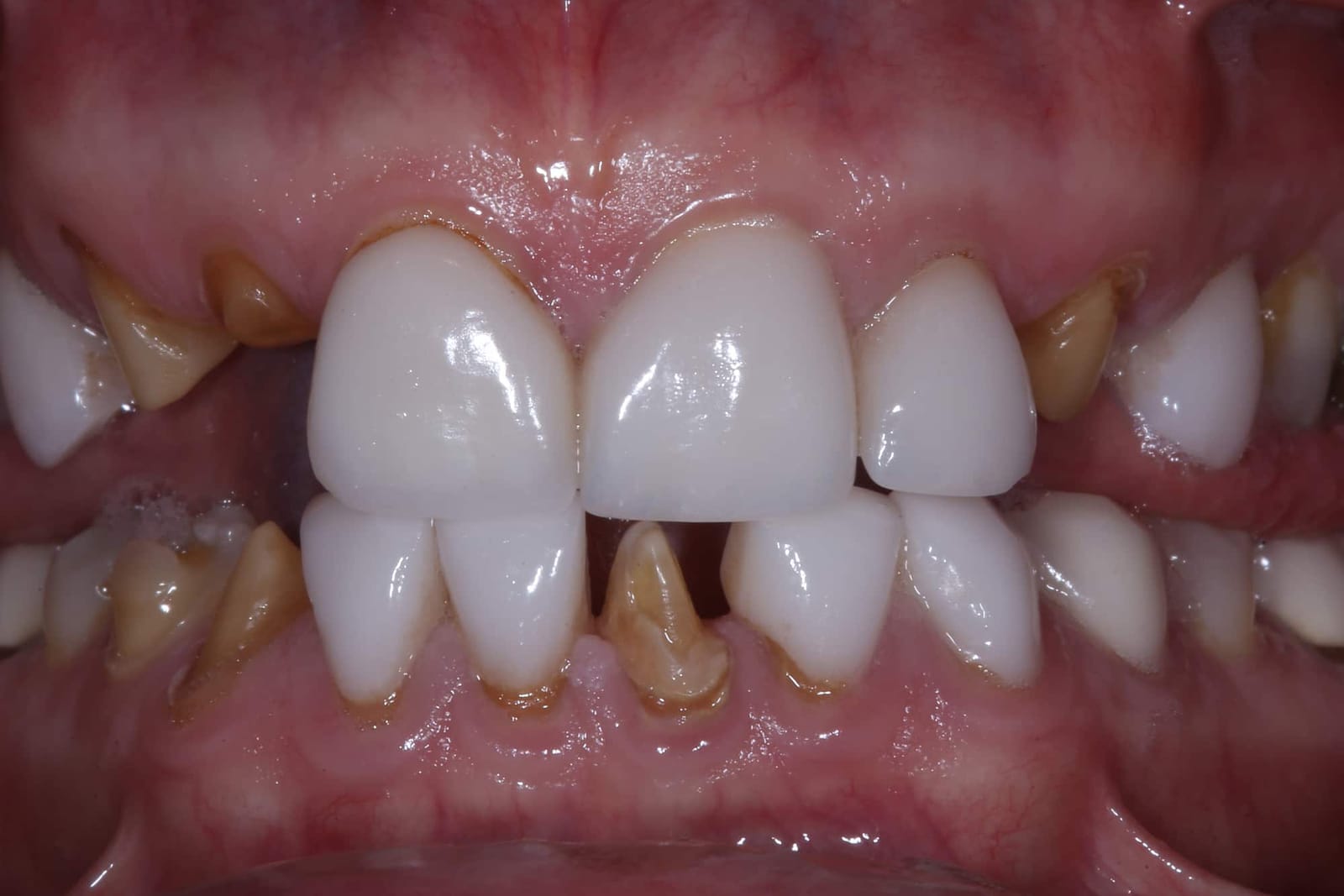
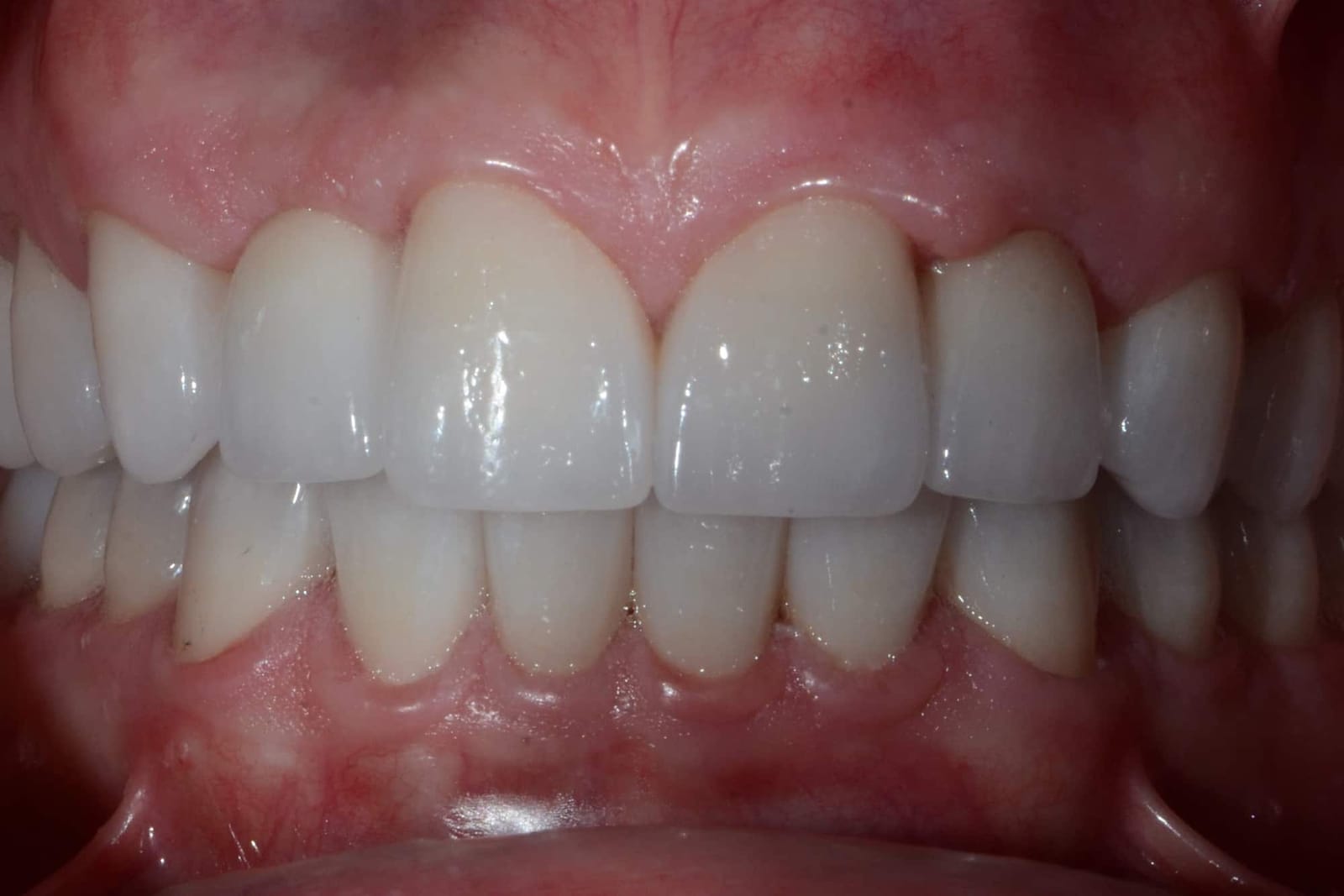
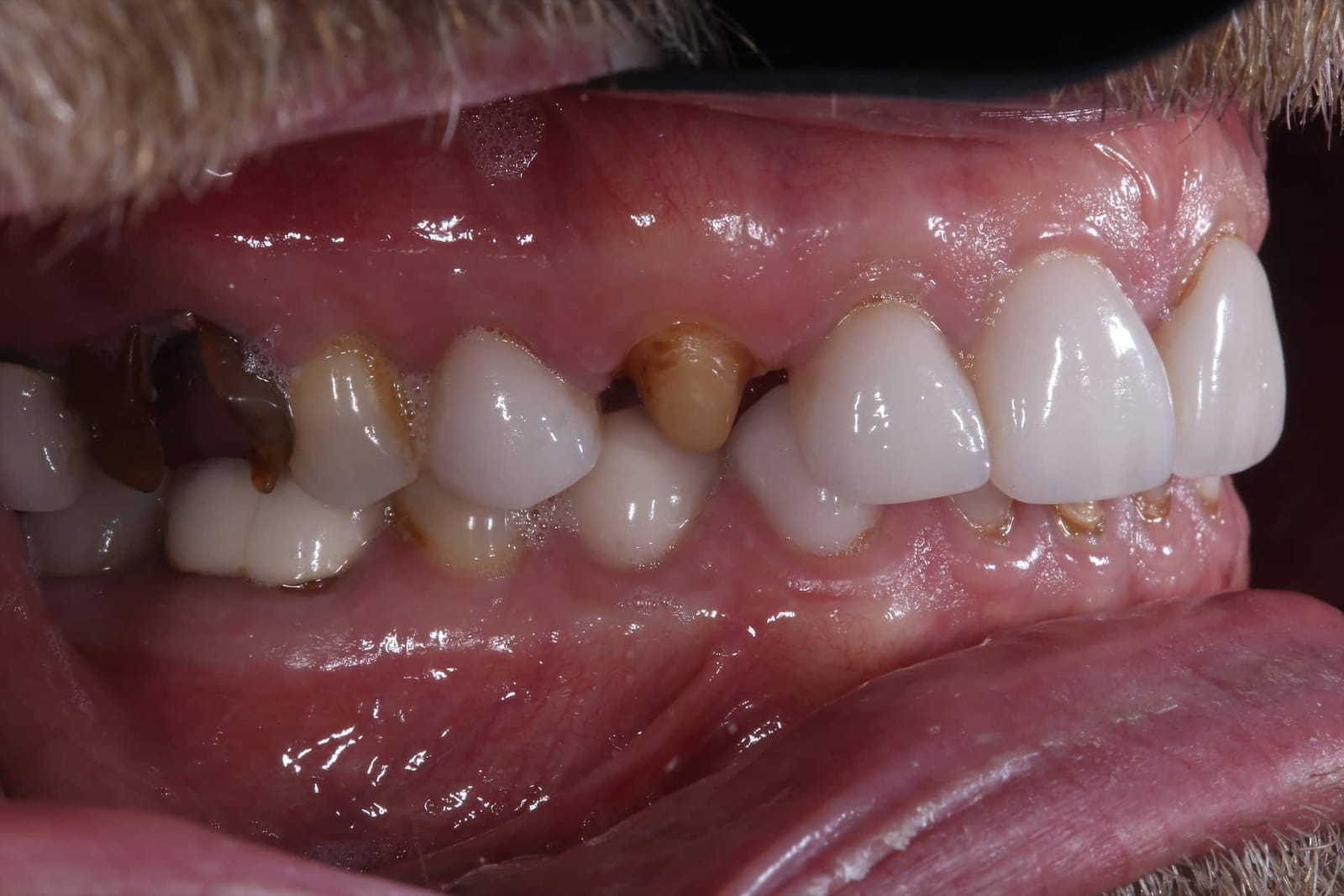
Loss of posterior support. A collapsing vertical dimension.
Dr. Reshad's diagnosis was a classic pattern: missing back support, a bite that had collapsed inward, and front teeth fenced in by their own position, with no room to be rebuilt properly.
For many offices the simple route is to remove everything and place a full-arch implant bridge. That was not what he wanted, and it was not what his mouth needed. A prosthodontist is trained to save teeth and restore them, not only to replace them.
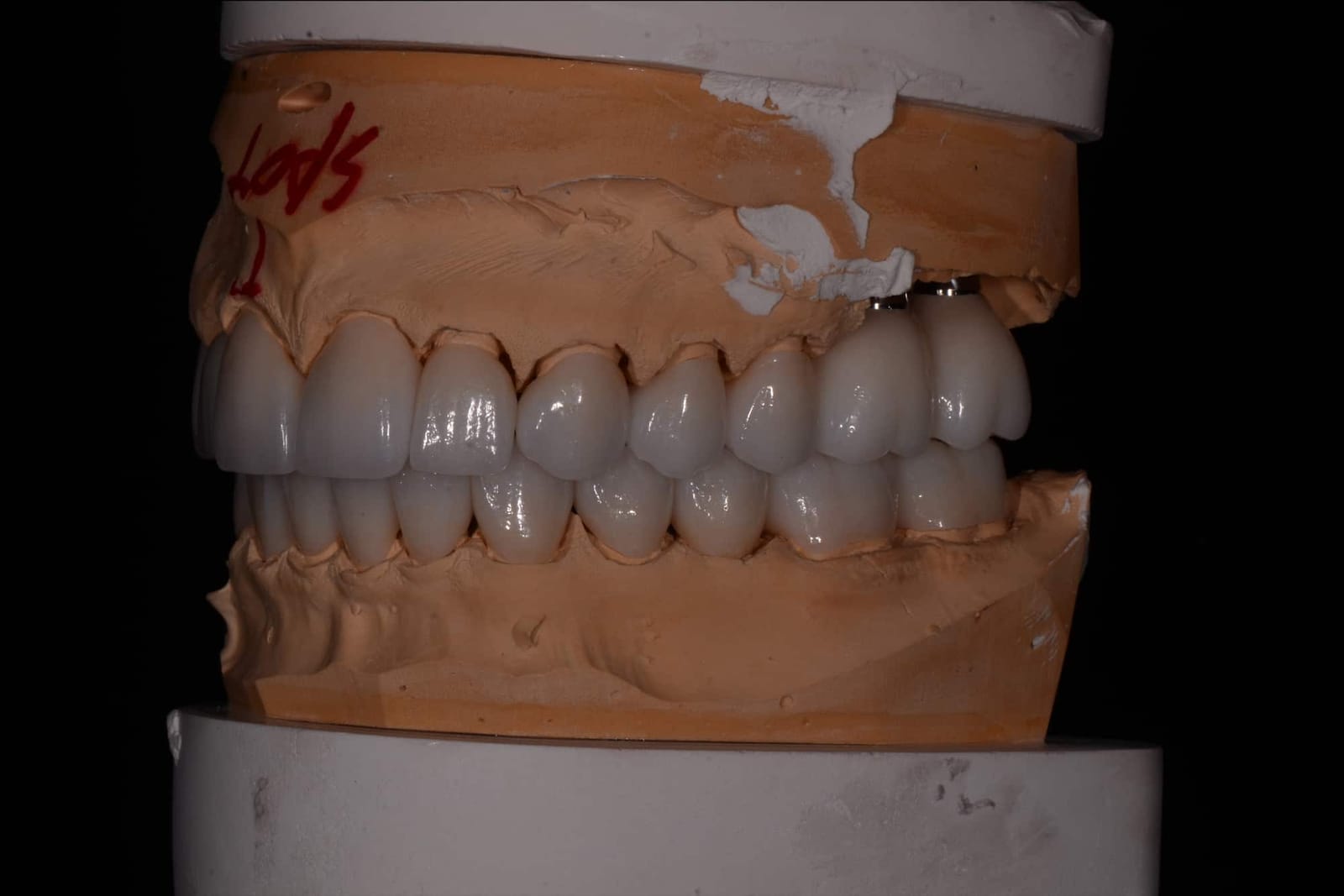
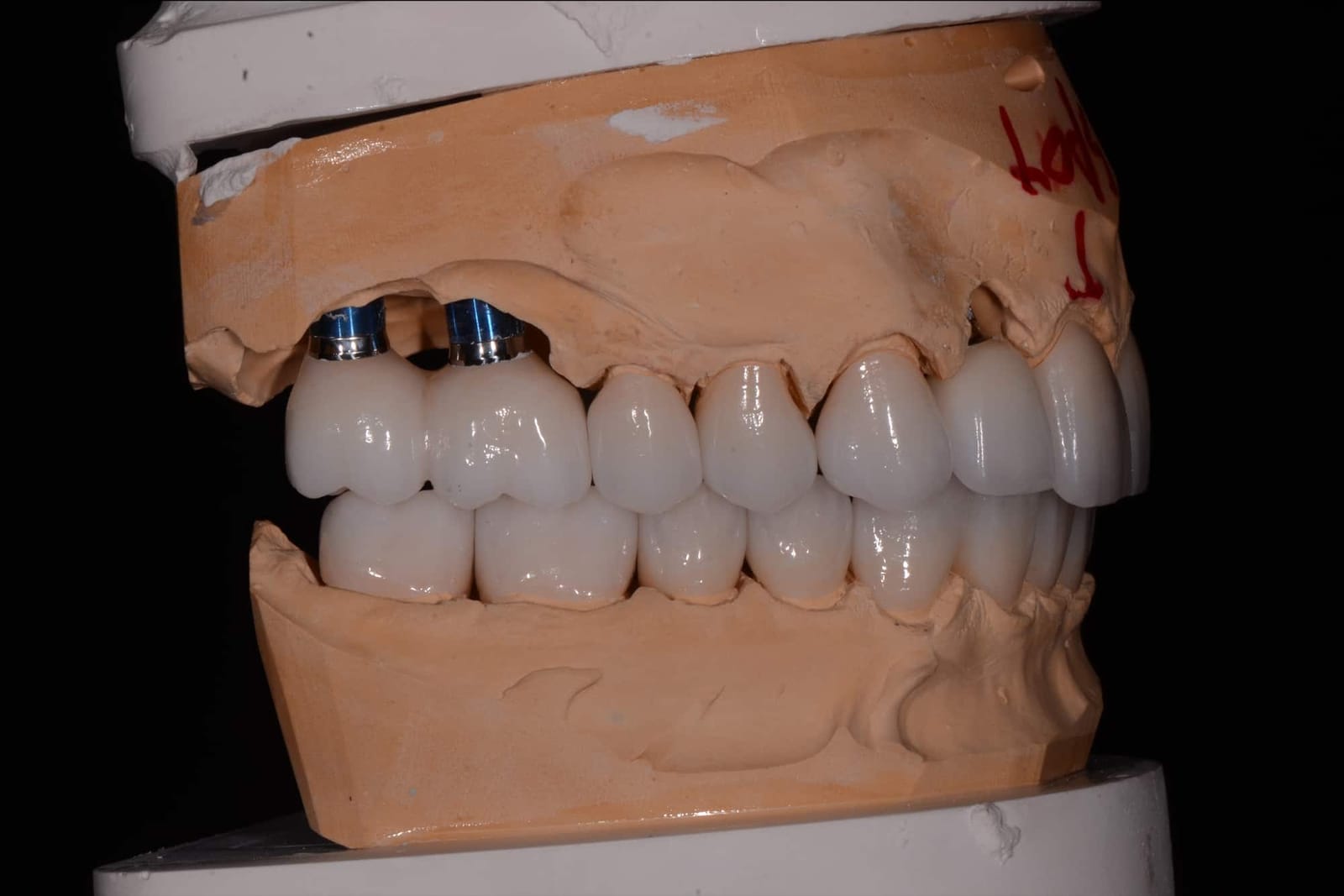
From the side
From above
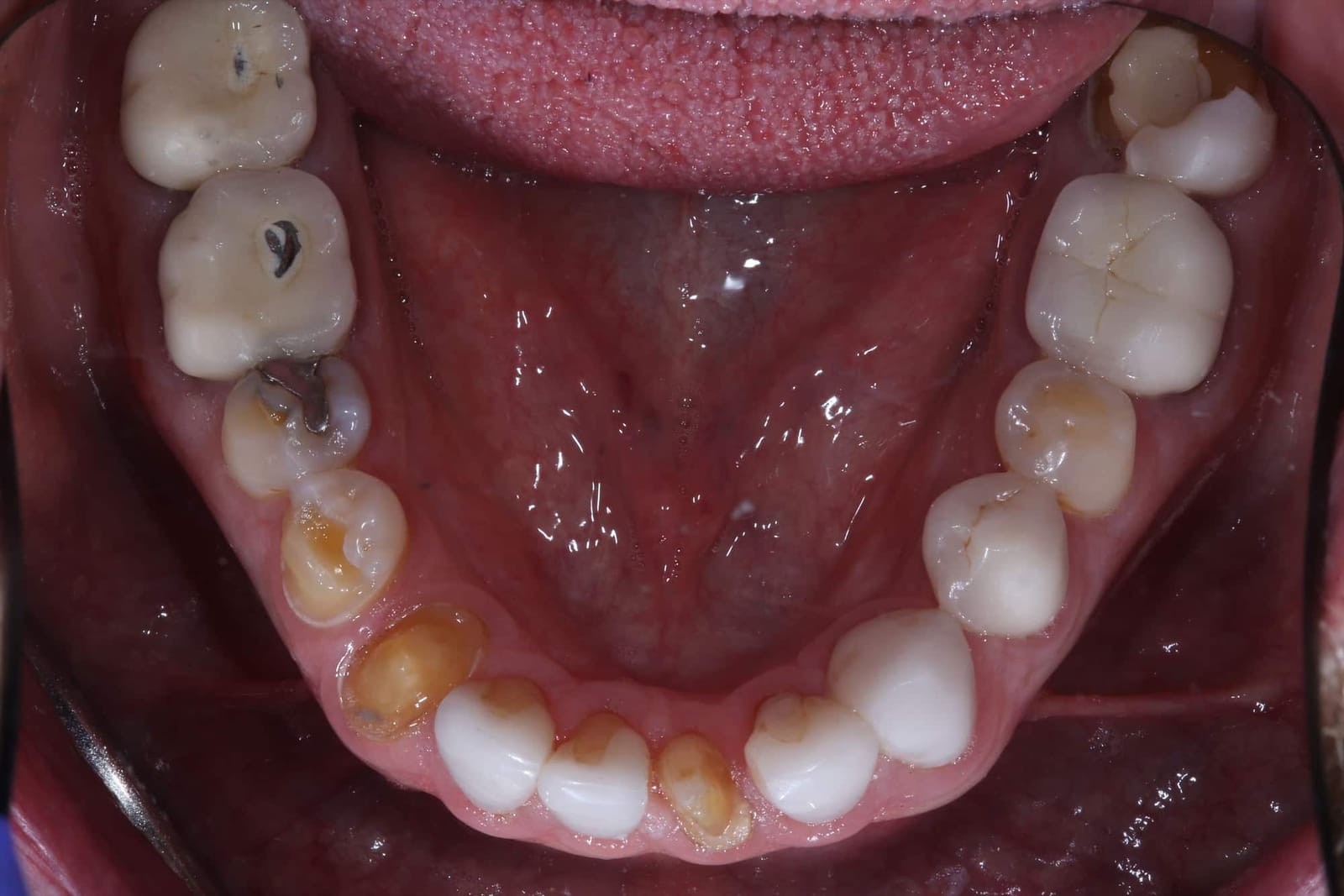
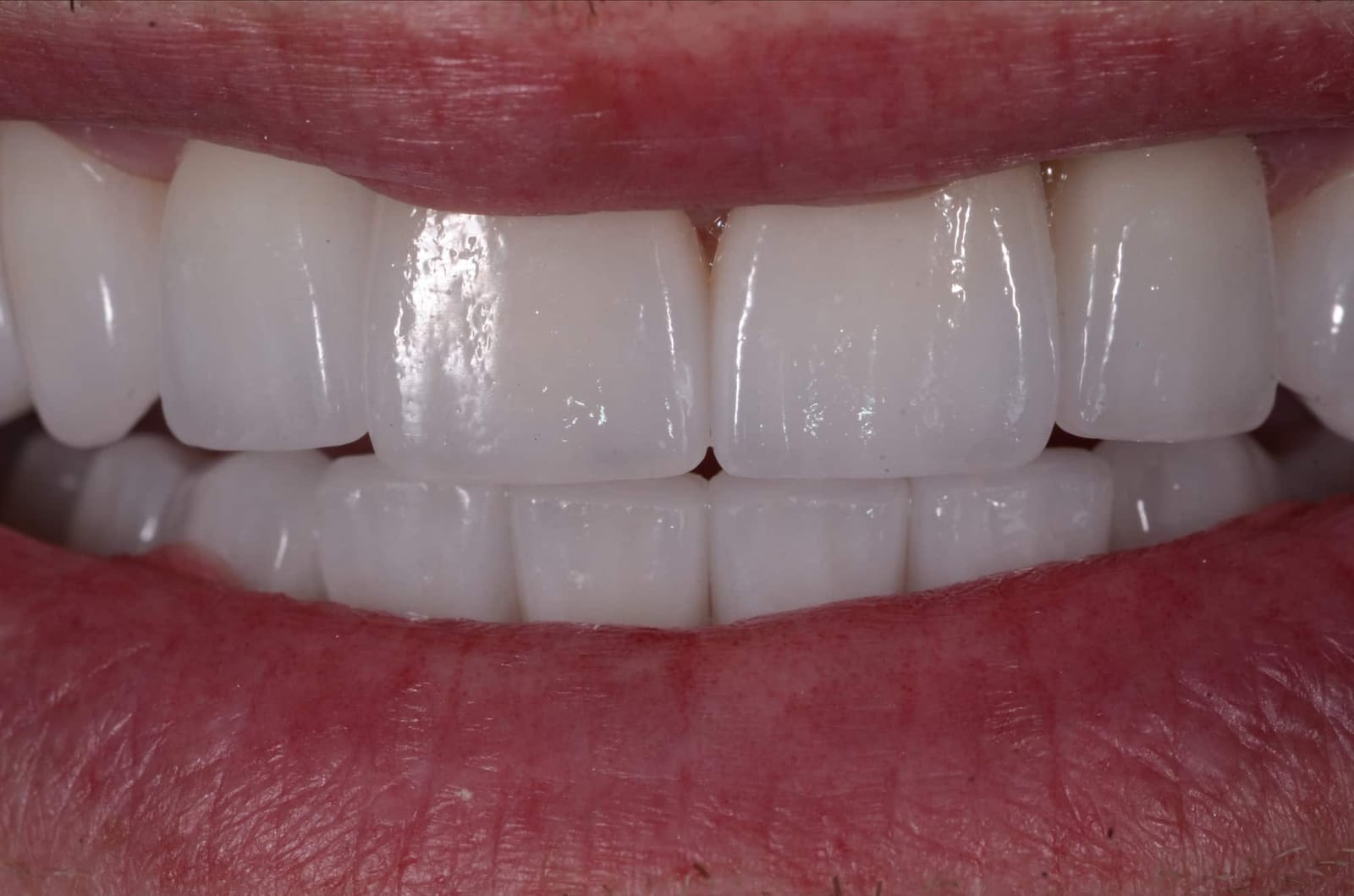
Up close
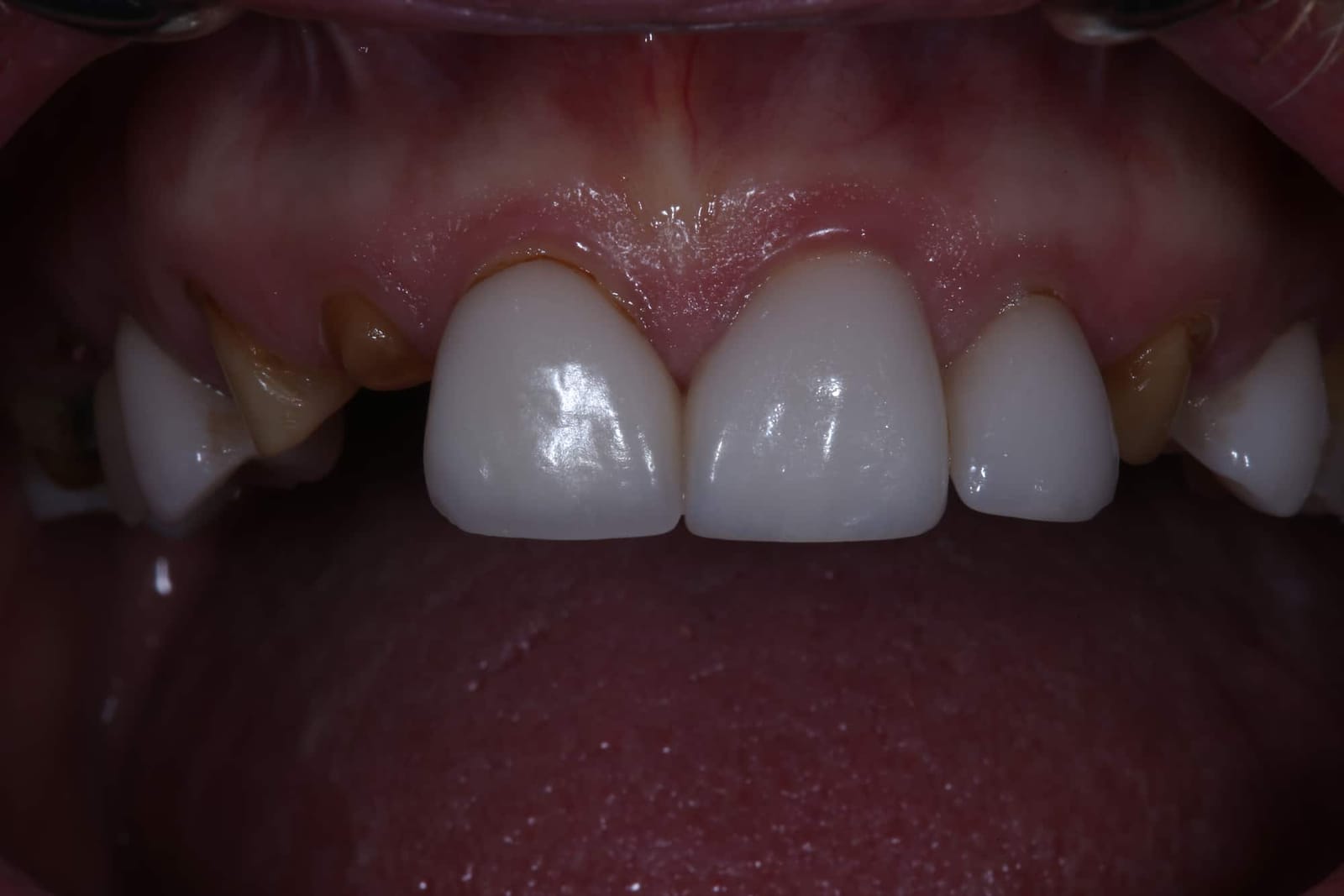
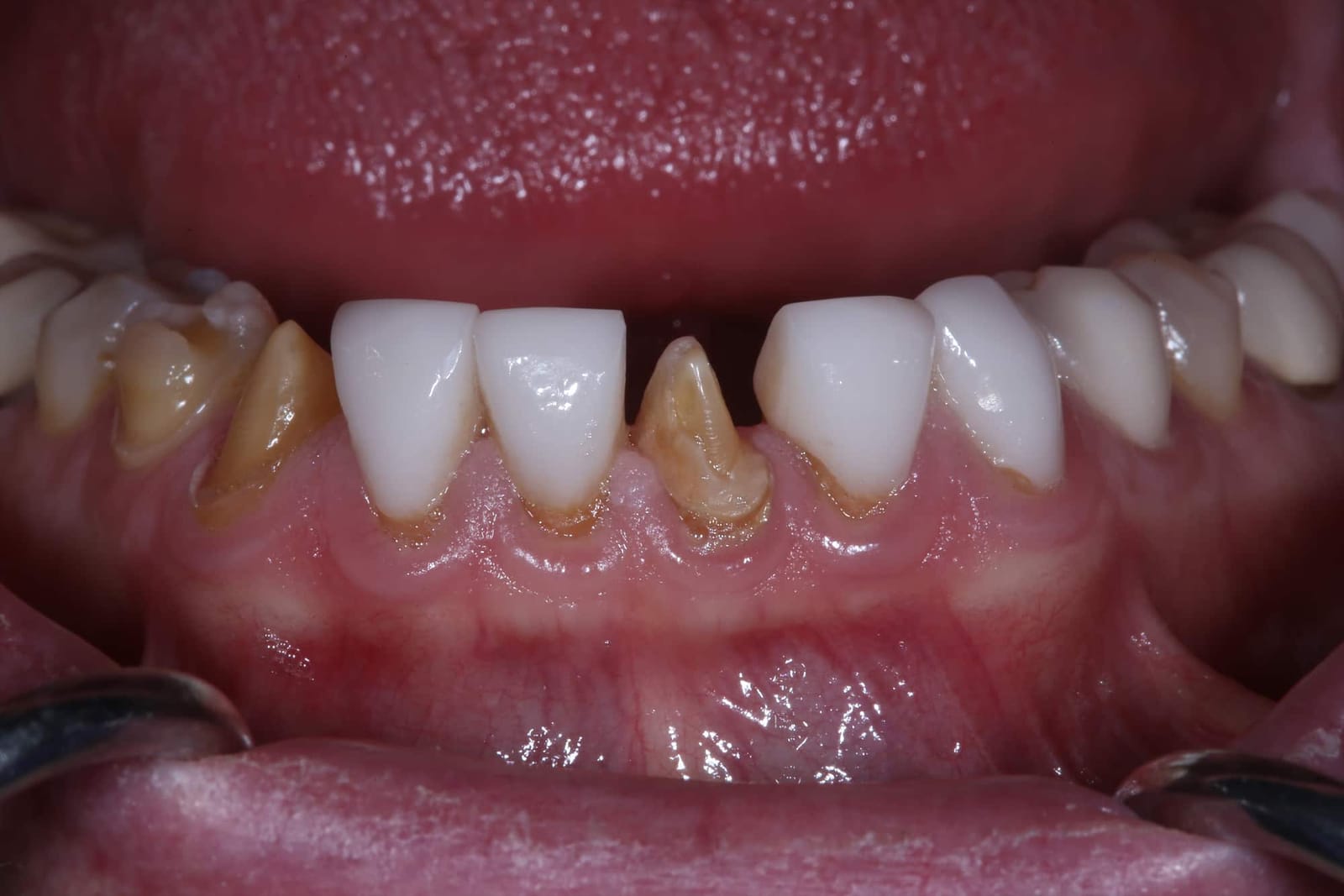
Rebuild the back. Then open the front.
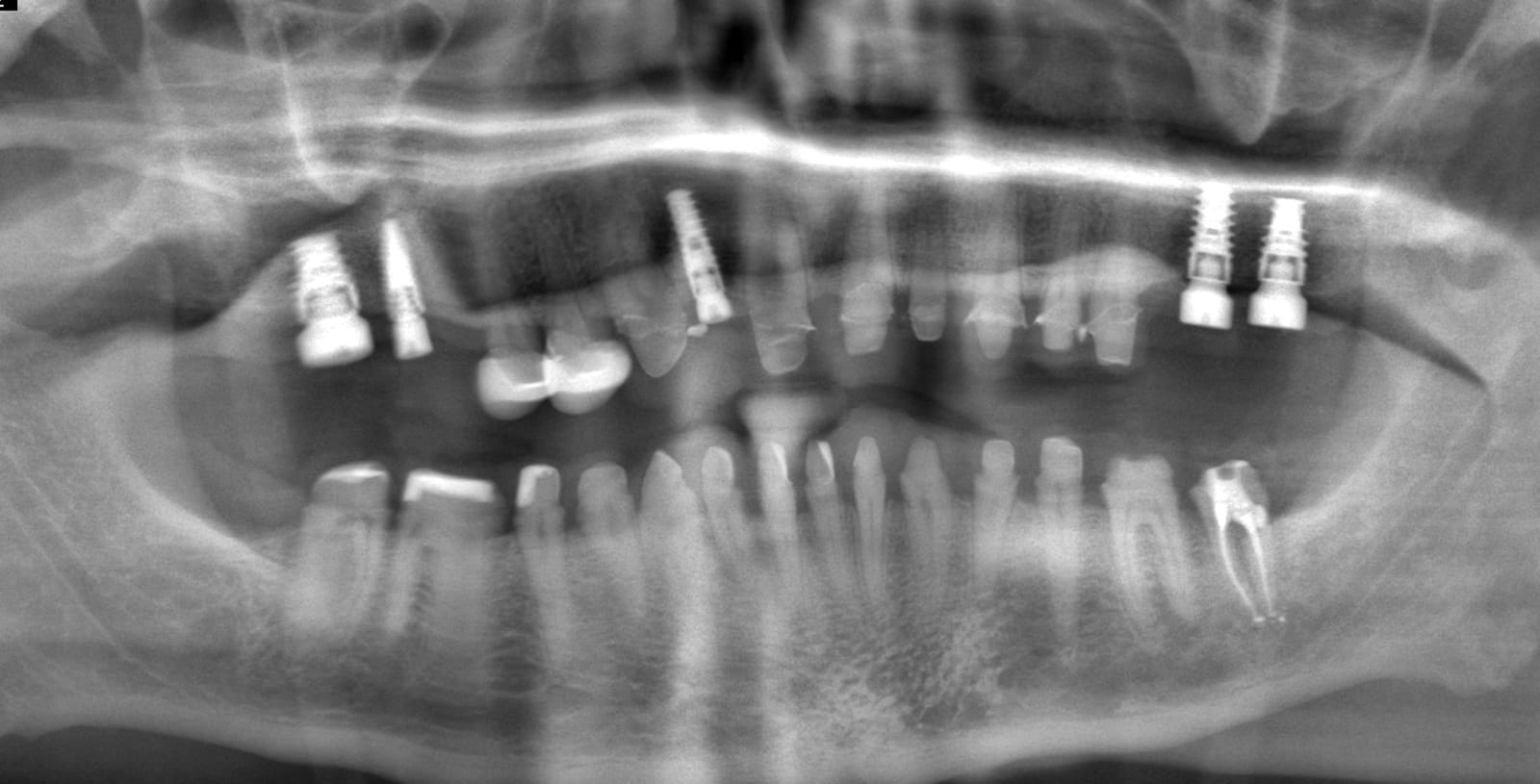
The reconstruction started where the problem started. Sinus lifts were performed and implants placed in the back of the mouth to restore the support that had been lost.
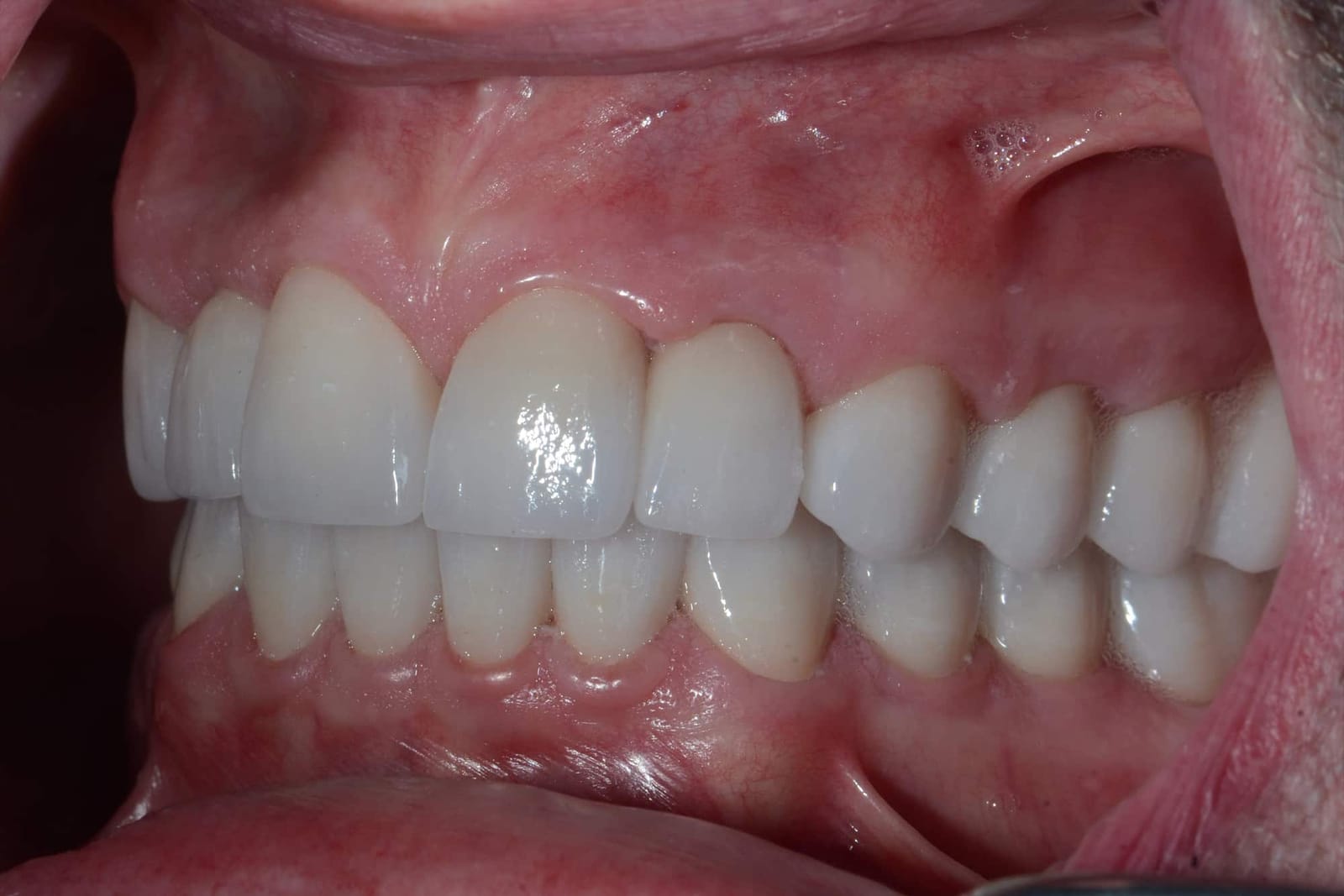
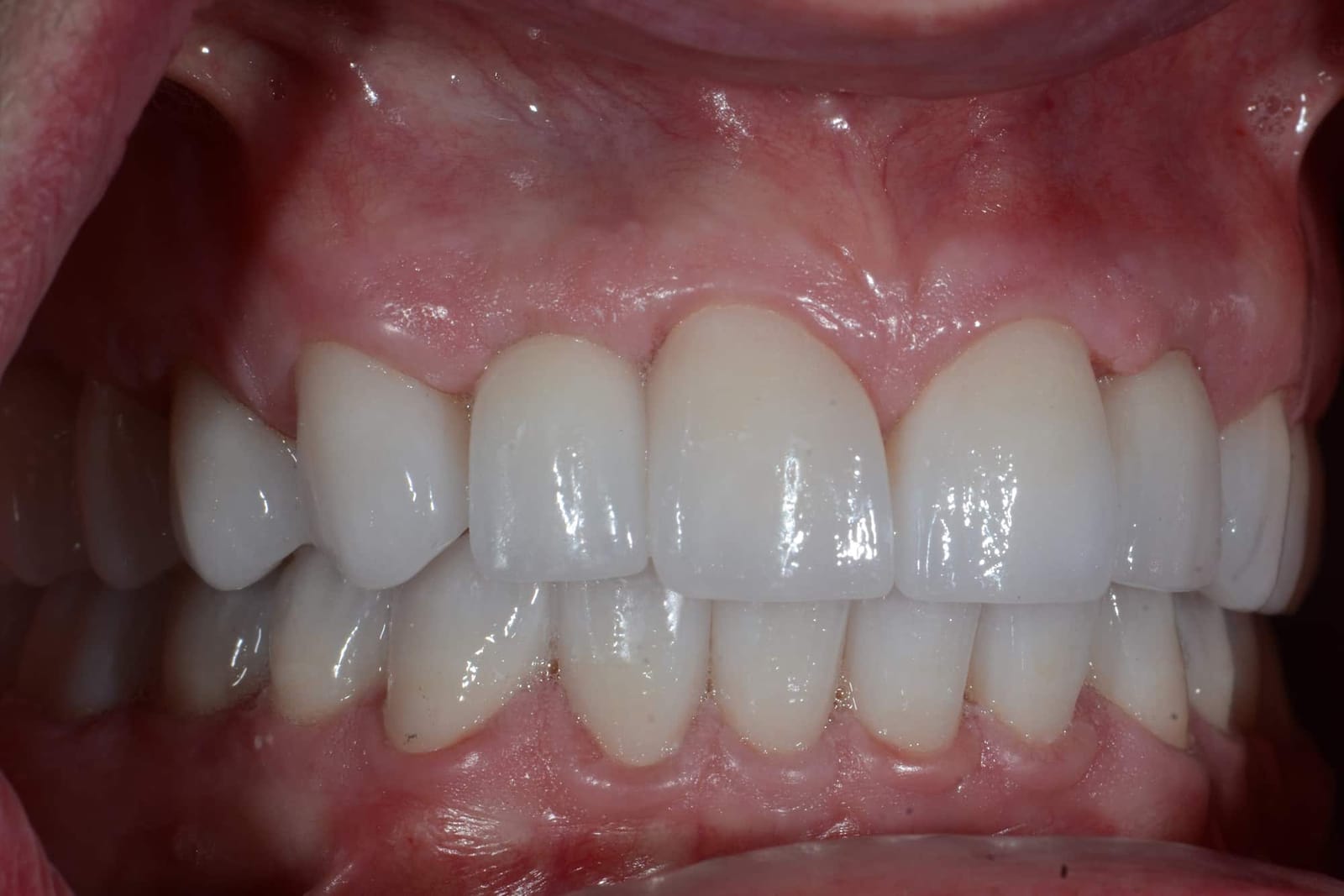
With that foundation in place, provisional teeth were fitted across the arch. They did two jobs at once. They opened the bite to the correct height, and they let Dr. Reshad and the patient evaluate shape, function, and appearance before anything was final. The gum lines were brought to the right place. The fenced-in front teeth were given room.
Only then were the final restorations made.
On the model
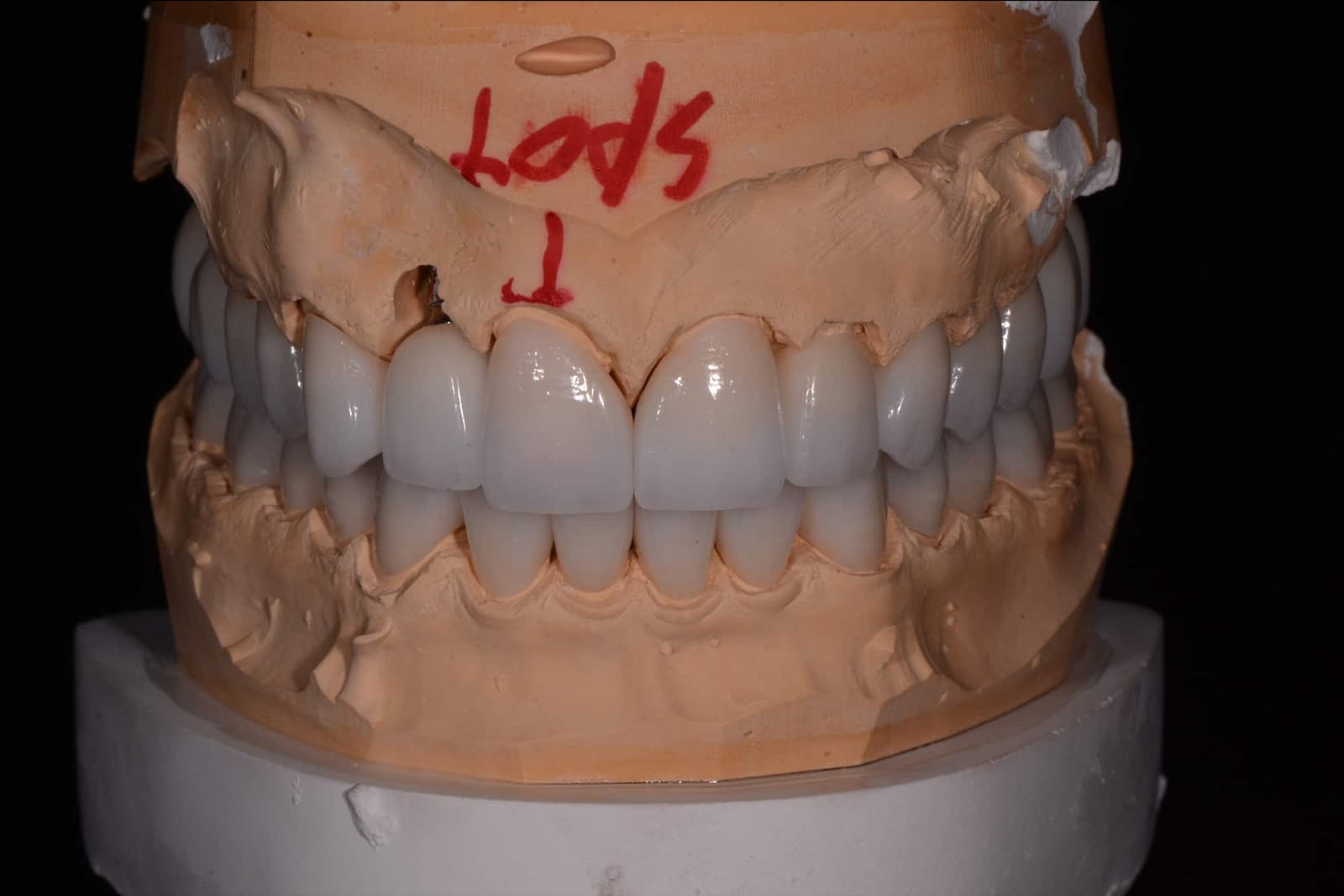
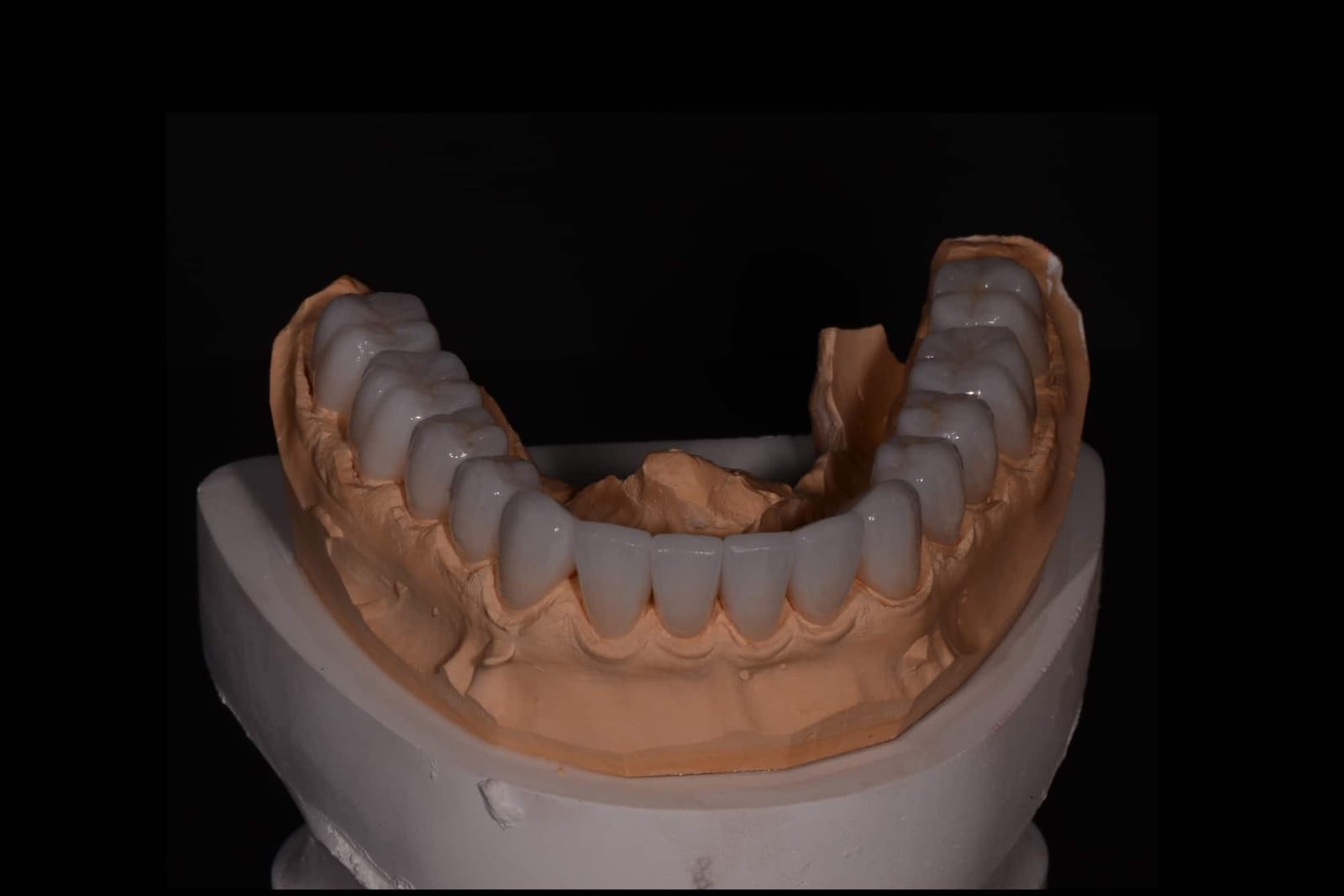
On the model, from each side
On the model, up close
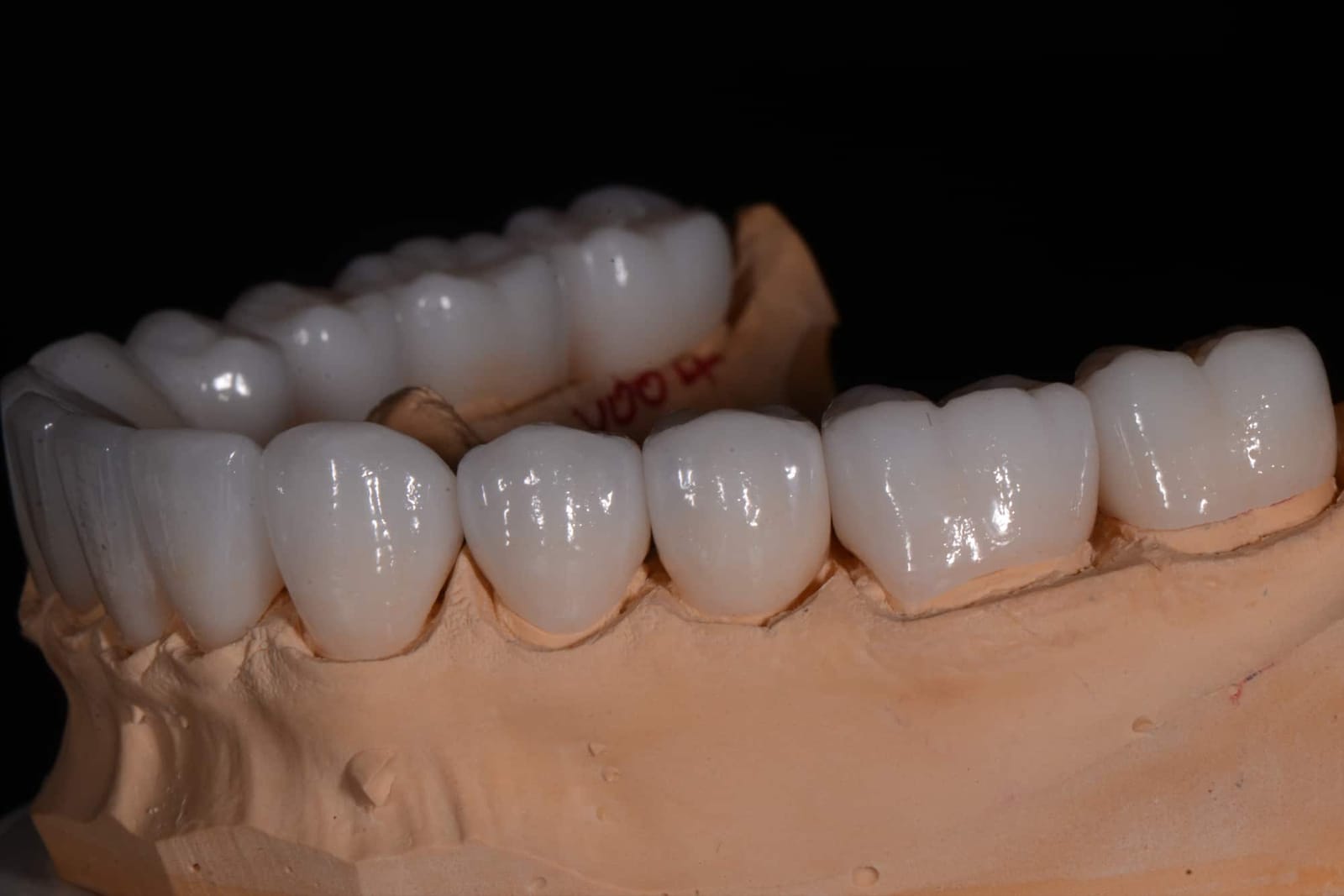
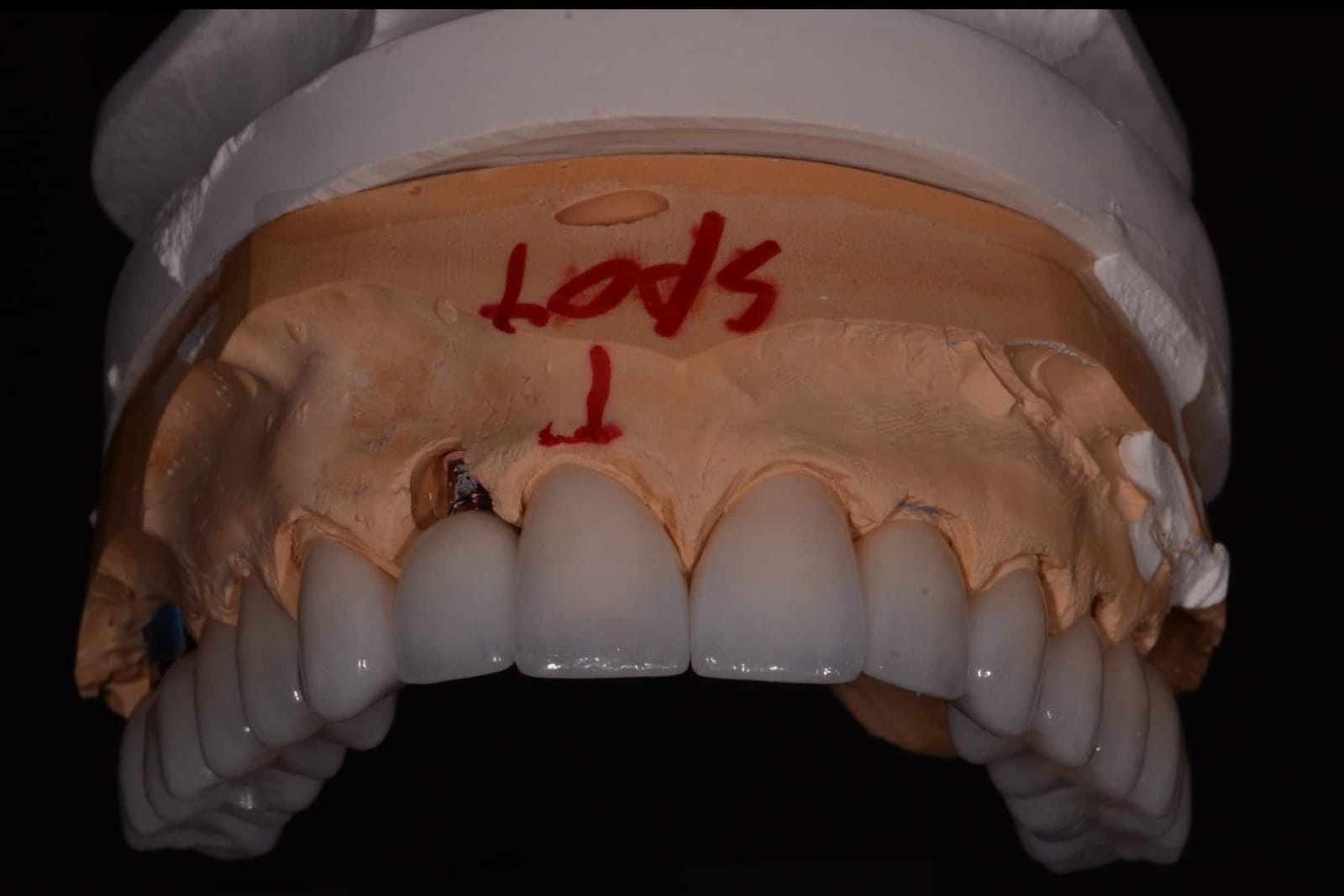
Arranged like he had just finished braces.
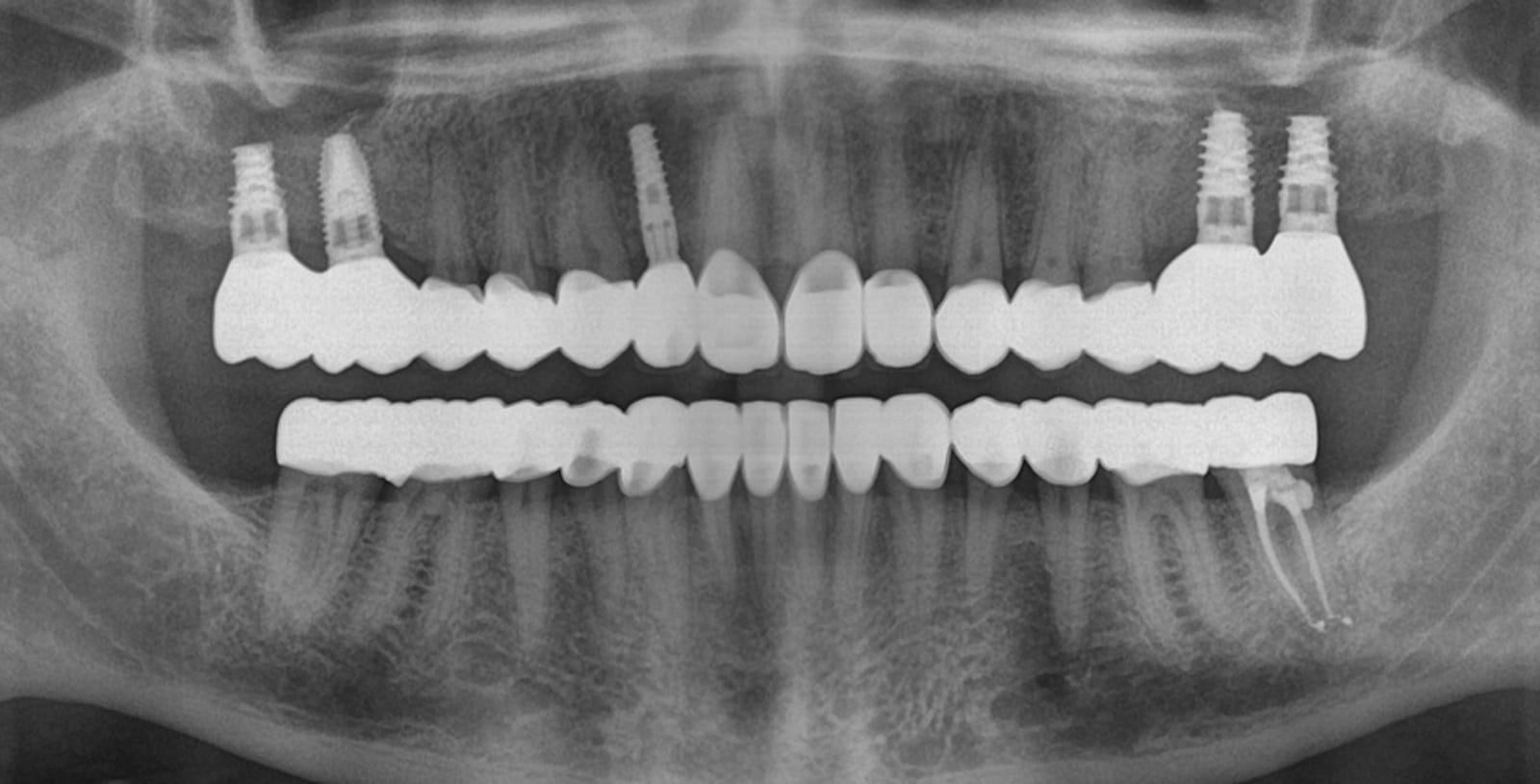
He went from a broken-down dentition to a stable one. The front teeth now sit in a clean arrangement with shallow guidance, so they steer the bite without taking its full force. The back teeth meet in multiple points of contact, each cusp rebuilt to the right height and angle, so the bite locks in and stays put.
These are the same principles an orthodontist works to after braces come off: low forces, good alignment, nothing moving. Here they were built into the teeth themselves.
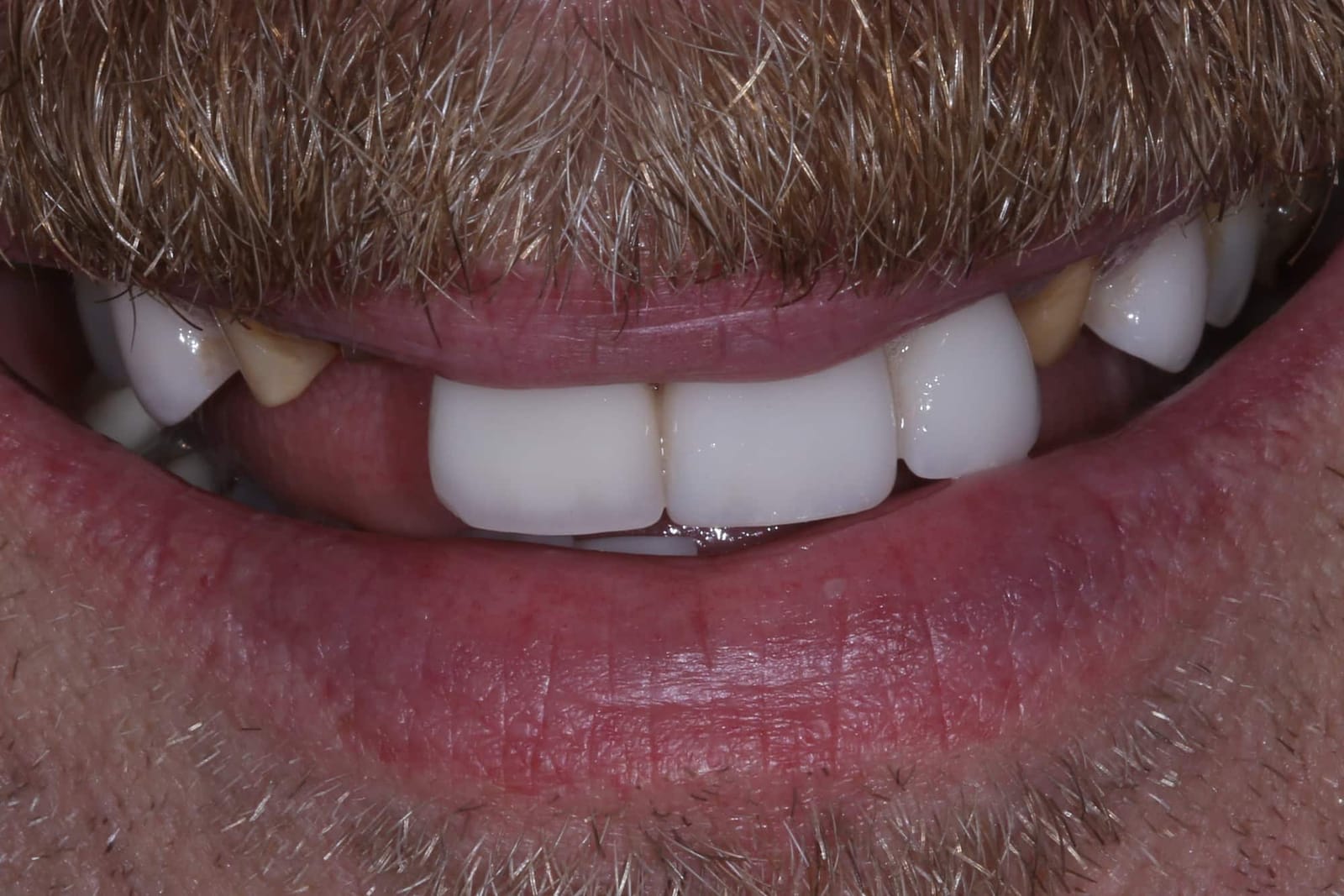
He has had these teeth for one to two years. They are stable and they look like his.
From the side

The radiographs
The work starts the day the teeth go in.
Longevity is the point. Over ten or fifteen years a heavily used tooth might need attention, and in rare cases one might be replaced with an implant. With this much support in the back, that is unlikely.
What keeps it that way is simple. Hygiene visits every three to four months, where small bite changes are caught and adjusted in minutes. A night guard, because grinding accelerates fatigue in any restoration. And attention to the things that cause decay: diet, sugar frequency, and the right toothpaste and mouthwash if the risk changes. For patients who prefer not to use fluoride, there are alternatives, and the risks and benefits of each are discussed so the decision is an informed one.
The easy answer to a collapsing bite is to take the teeth out.
The right answer, when the teeth can be saved, is to understand why they were failing and fix that first. His front teeth were not the problem. The missing back teeth were. A prosthodontist is trained to read the whole mouth, rebuild the support, reopen the bite, and give the patient back his own teeth in a stable arrangement that can last.
Before and after
Every case is planned around one person's anatomy. Individual results vary, and what was right for this patient may not be right for you.