Tooth and Implant Case 9 · Implants · Reconstruction · Bite & TMJ
Teeth Worn to the Dentin, a Bite Rebuilt
On the surface it is a smile, a before and after any dentist could claim. It is a lot more than that. It is a bite rebuilt from the inside out so that it lasts.
He had been referred by his periodontist with teeth worn down to the dentin and a bite that had collapsed. His upper front teeth closed completely over the lowers, a fence at the front of the mouth that was wearing his teeth away and aching in his jaw.
Dr. Reshad saved the teeth. With the periodontist he lengthened the crowns to reach sound tooth, placed implants only where teeth were already missing, opened the bite and rebuilt both arches at a new, tested jaw position: twenty-eight zirconia restorations, with a night guard to protect them. The after photographs are the six-month review.
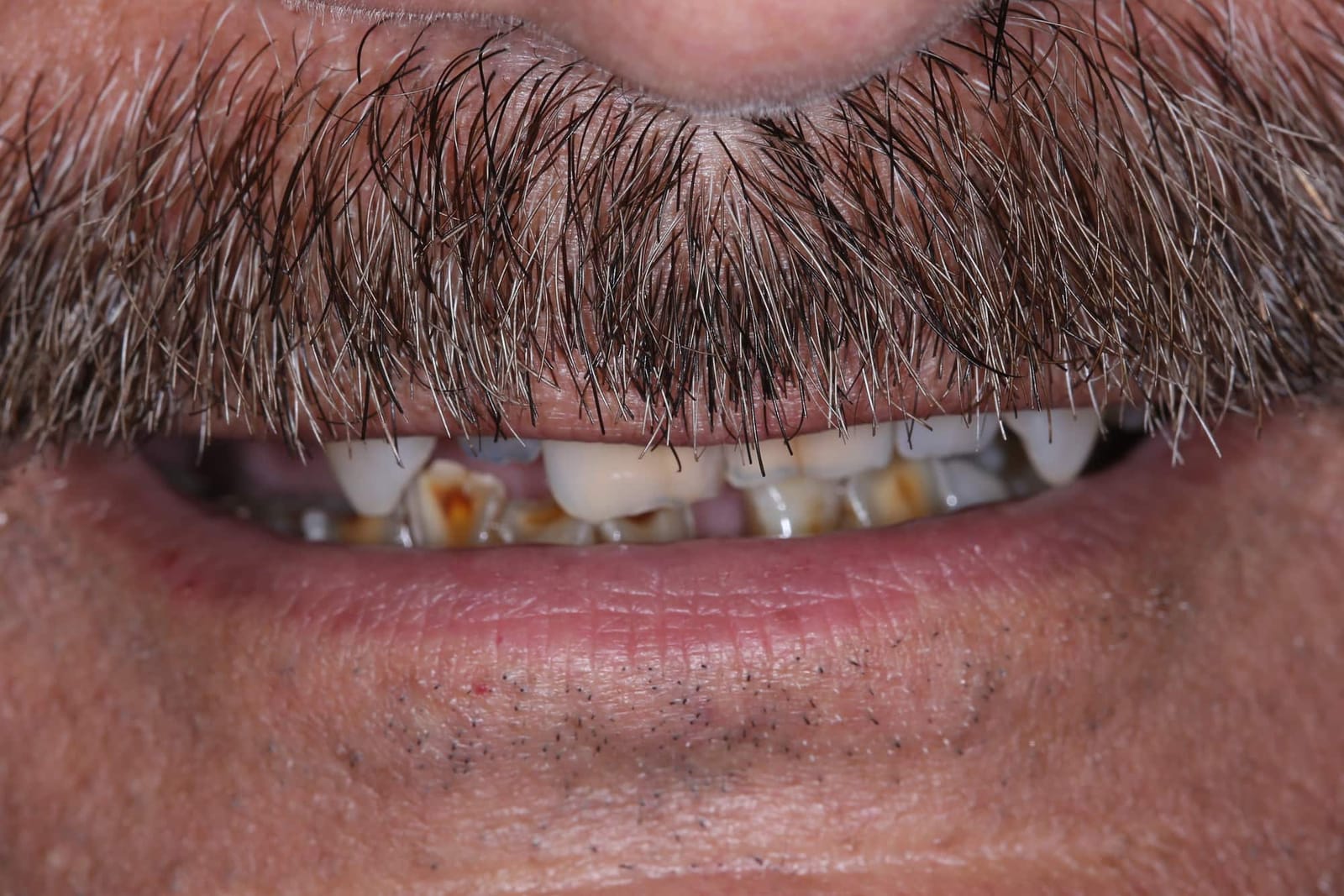
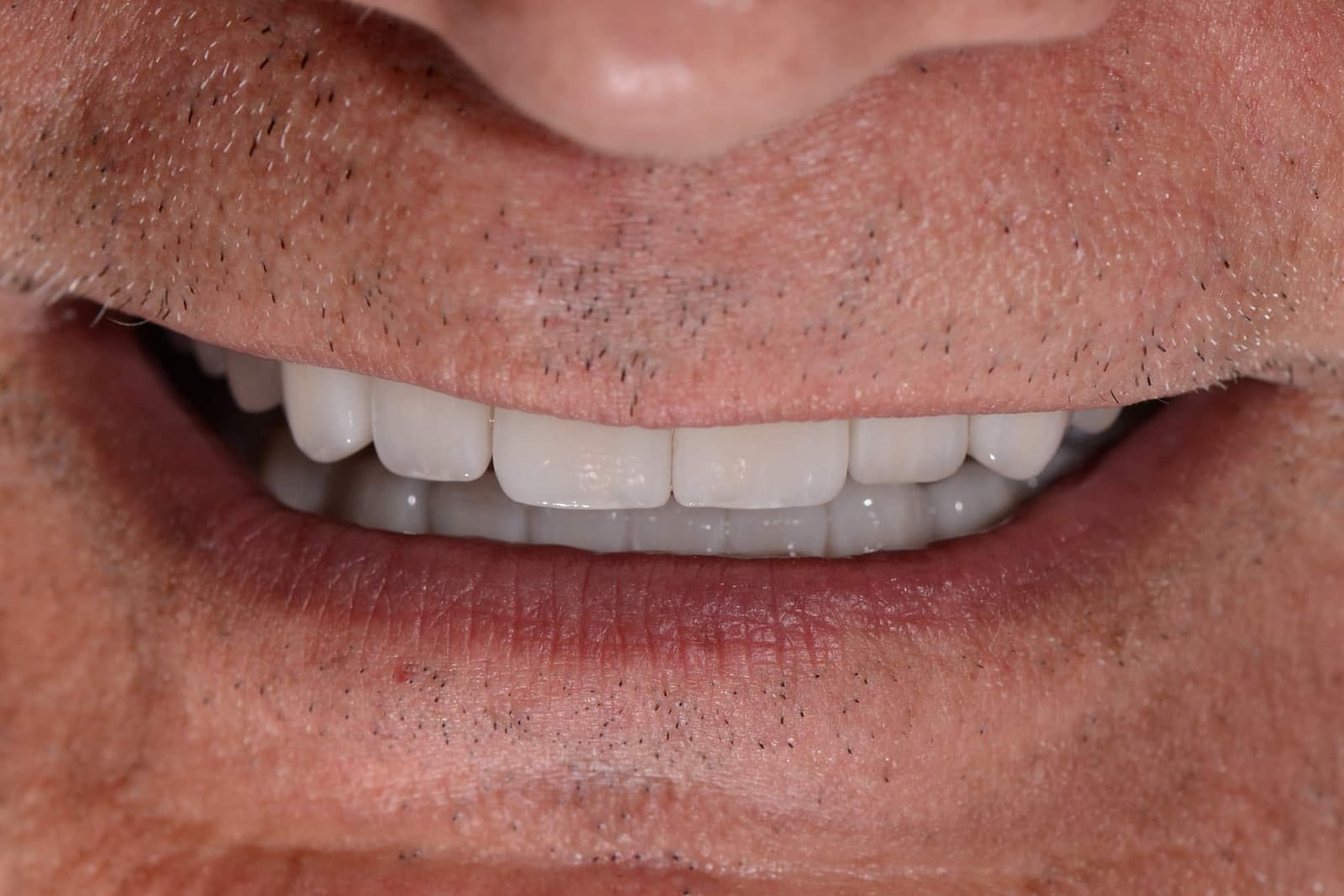
The smile
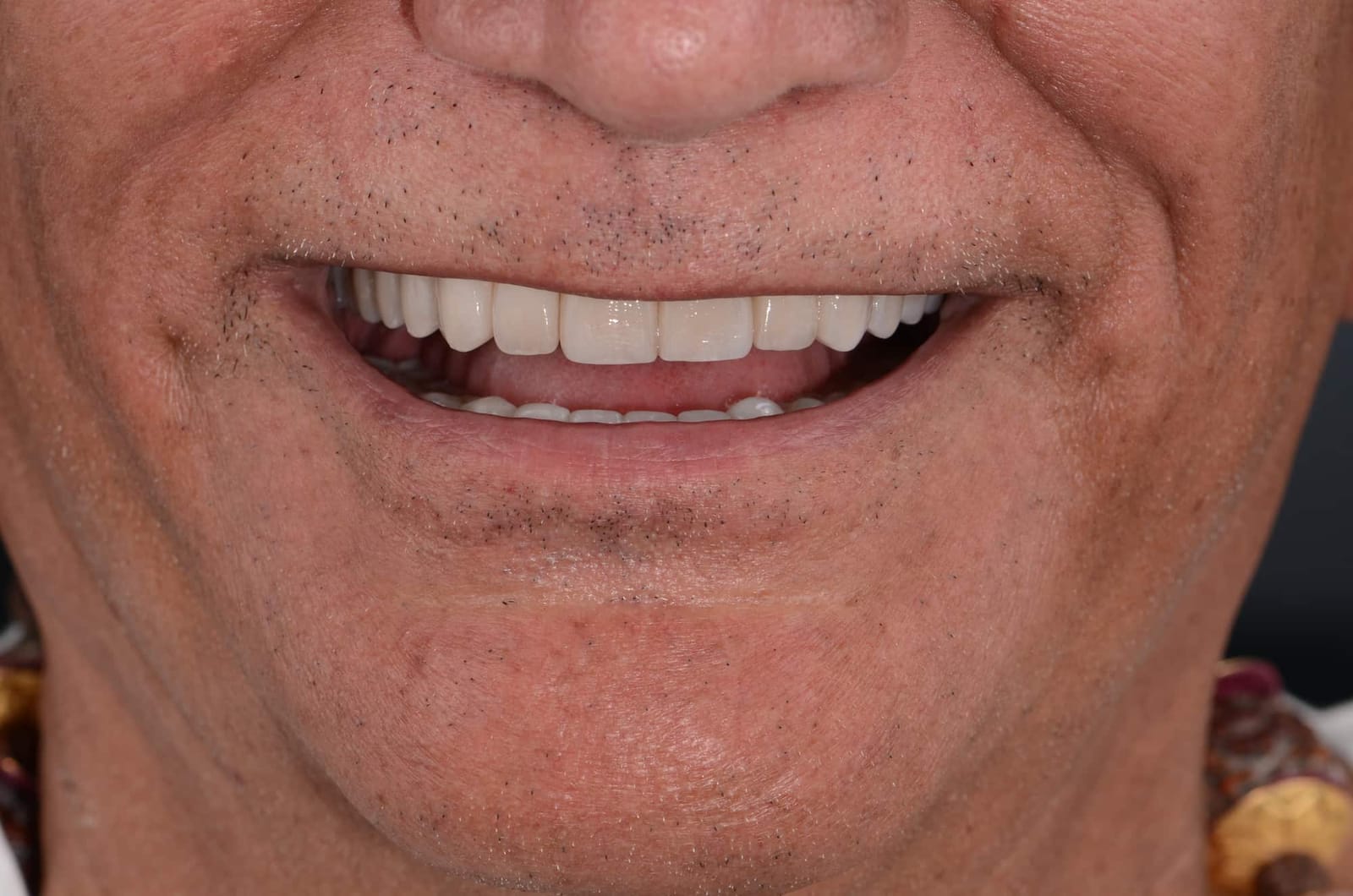
His face
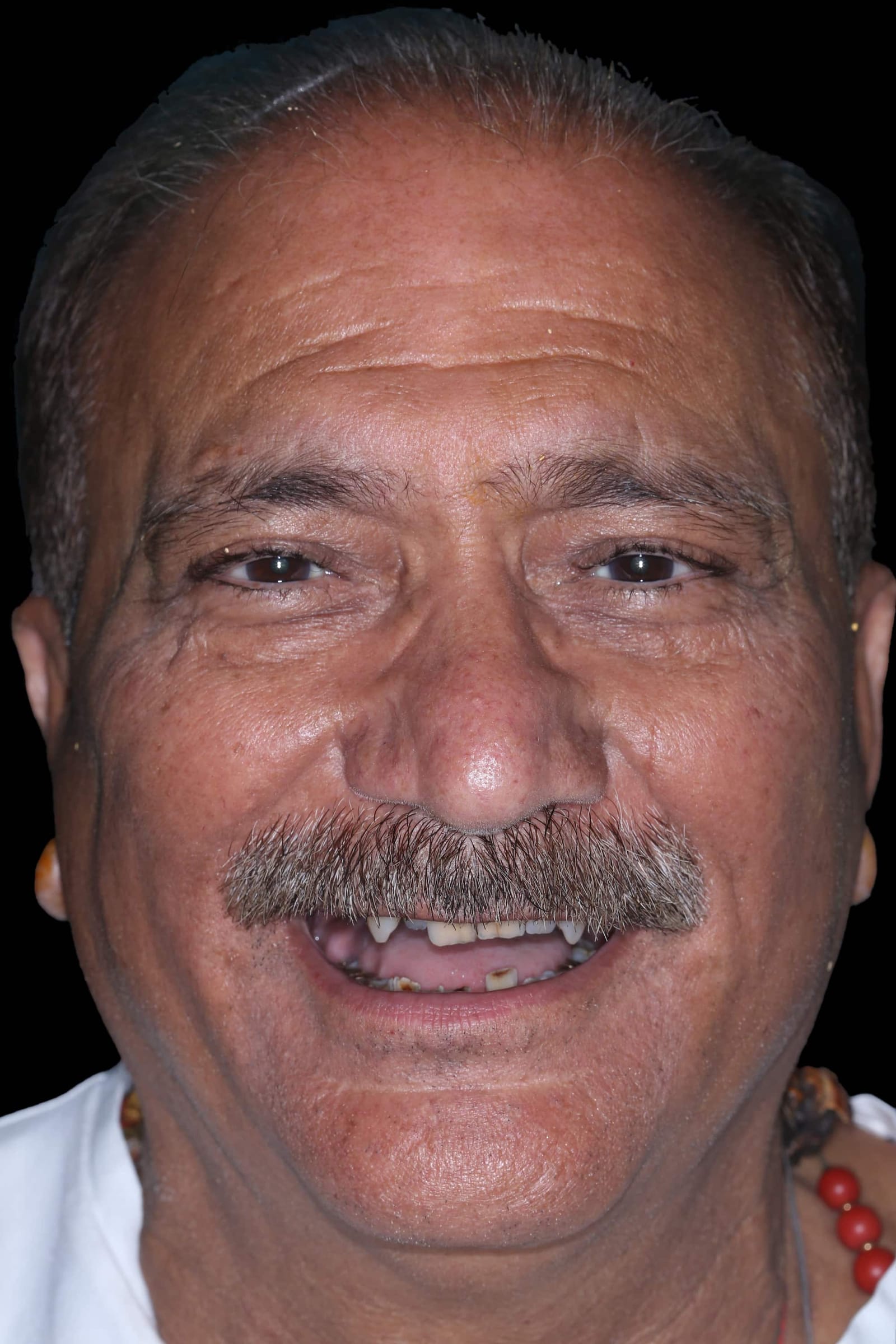

Lips held back
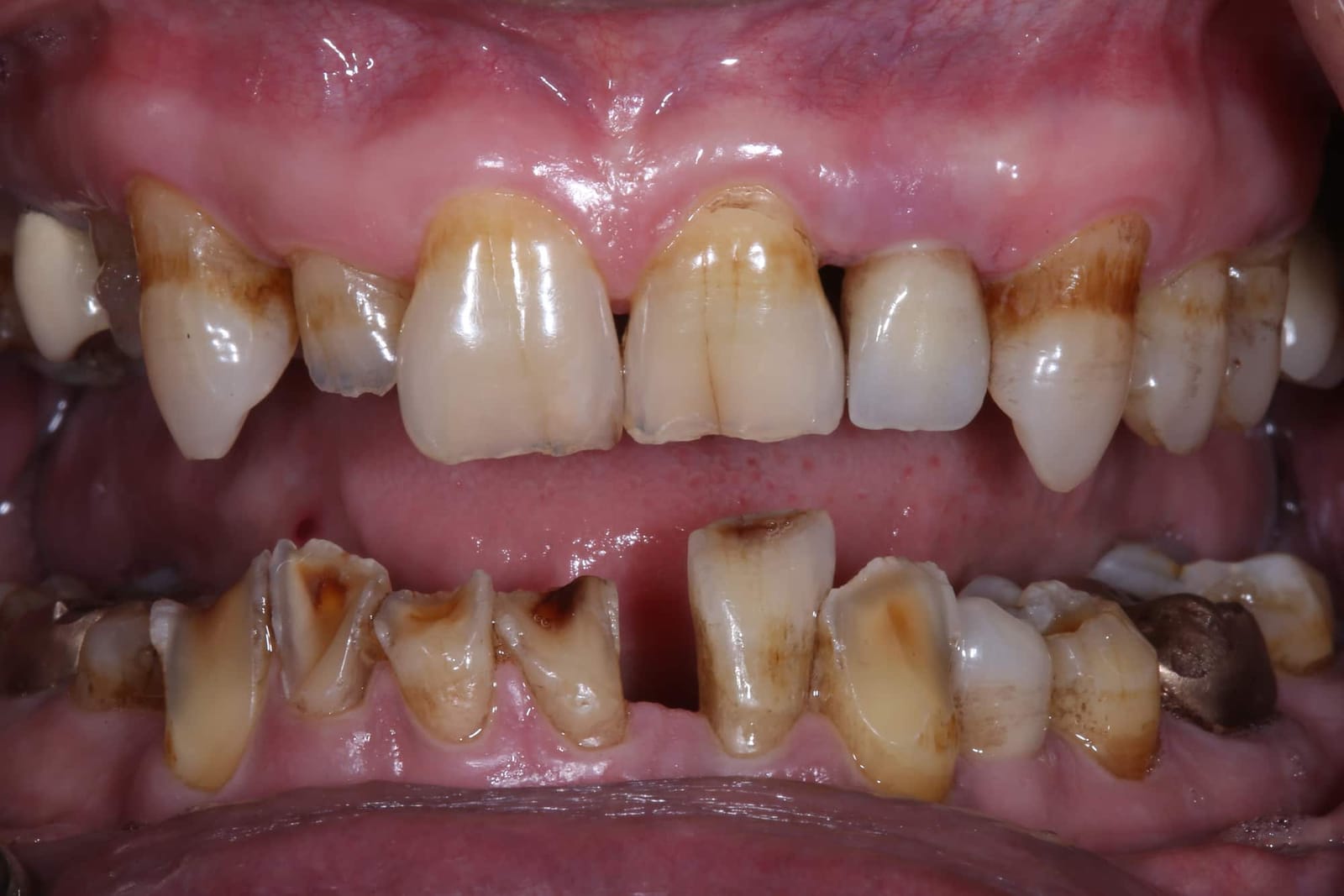
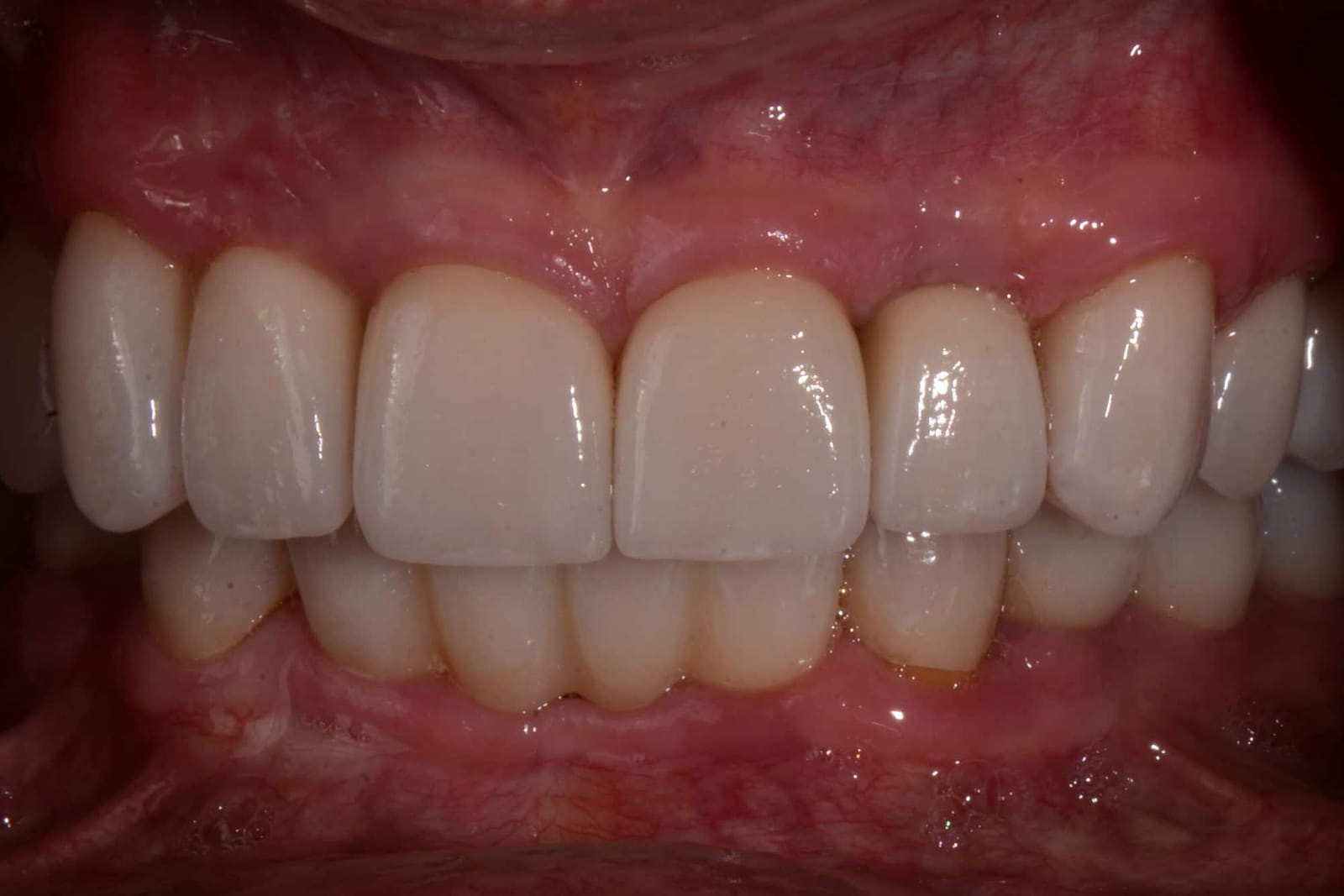
Not a smile makeover. A bite rebuilt.
Aesthetically it looks as if he was simply given teeth. His teeth now show. He has a broad smile he never had before, and he used to wear a moustache to hide the old one. For his son's wedding, he shaved it off. Small things like that transform a life.
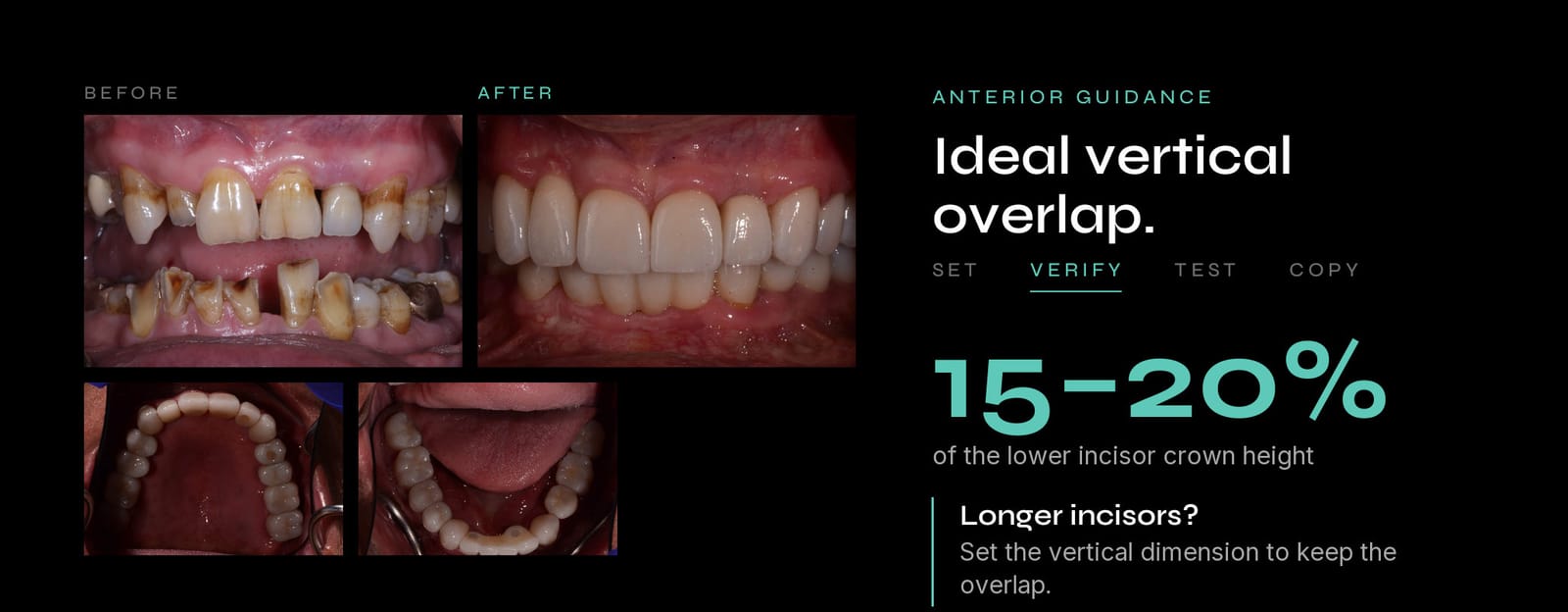
What was going on inside his mouth is the classic situation that, according to the American College of Prosthodontists, should be referred to a prosthodontist. The front teeth were so overclosed that none of his lower front teeth showed when he bit together. Ideally the upper front teeth cover ten to fifteen percent of the lowers. Here it was more than a hundred.
From the side
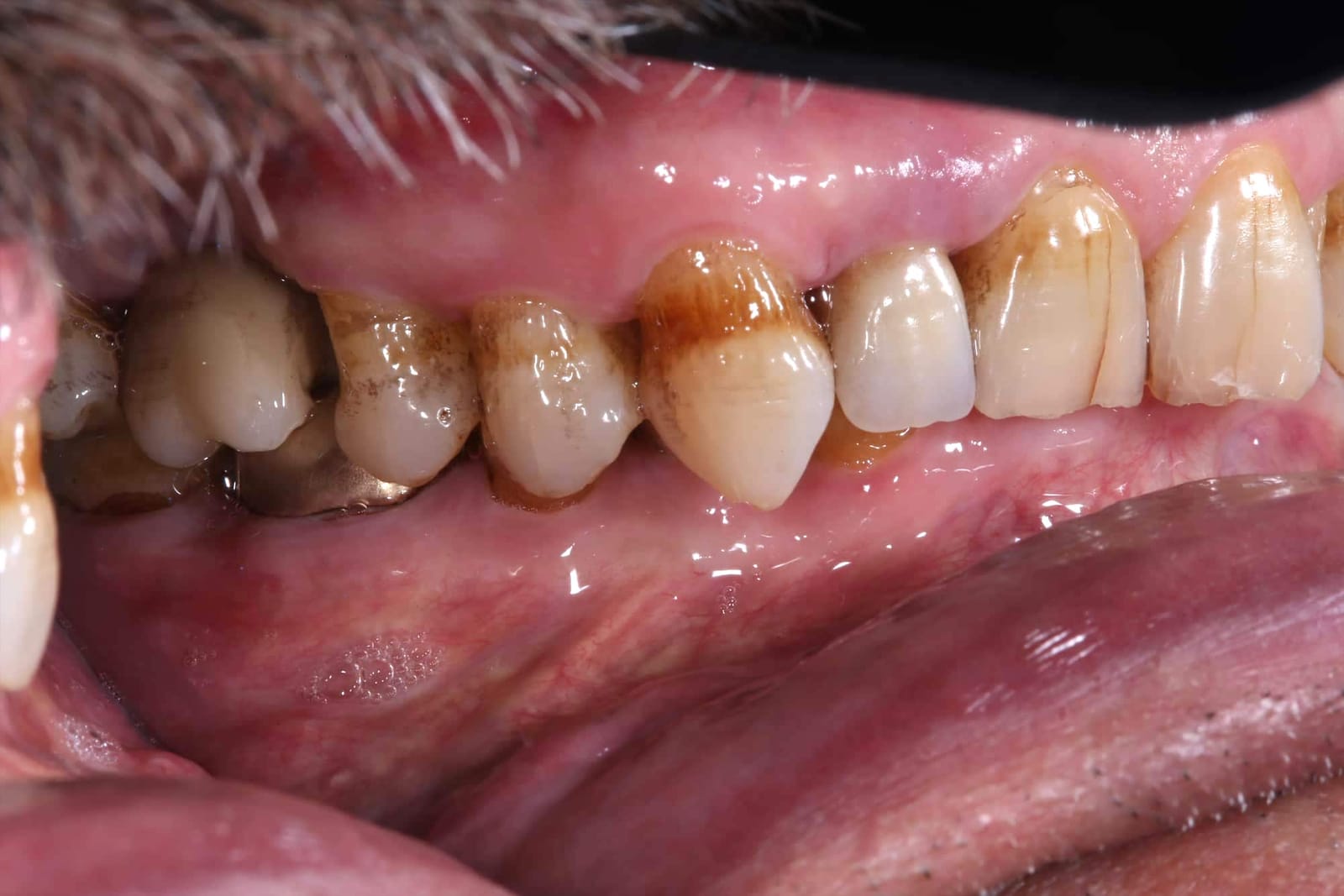
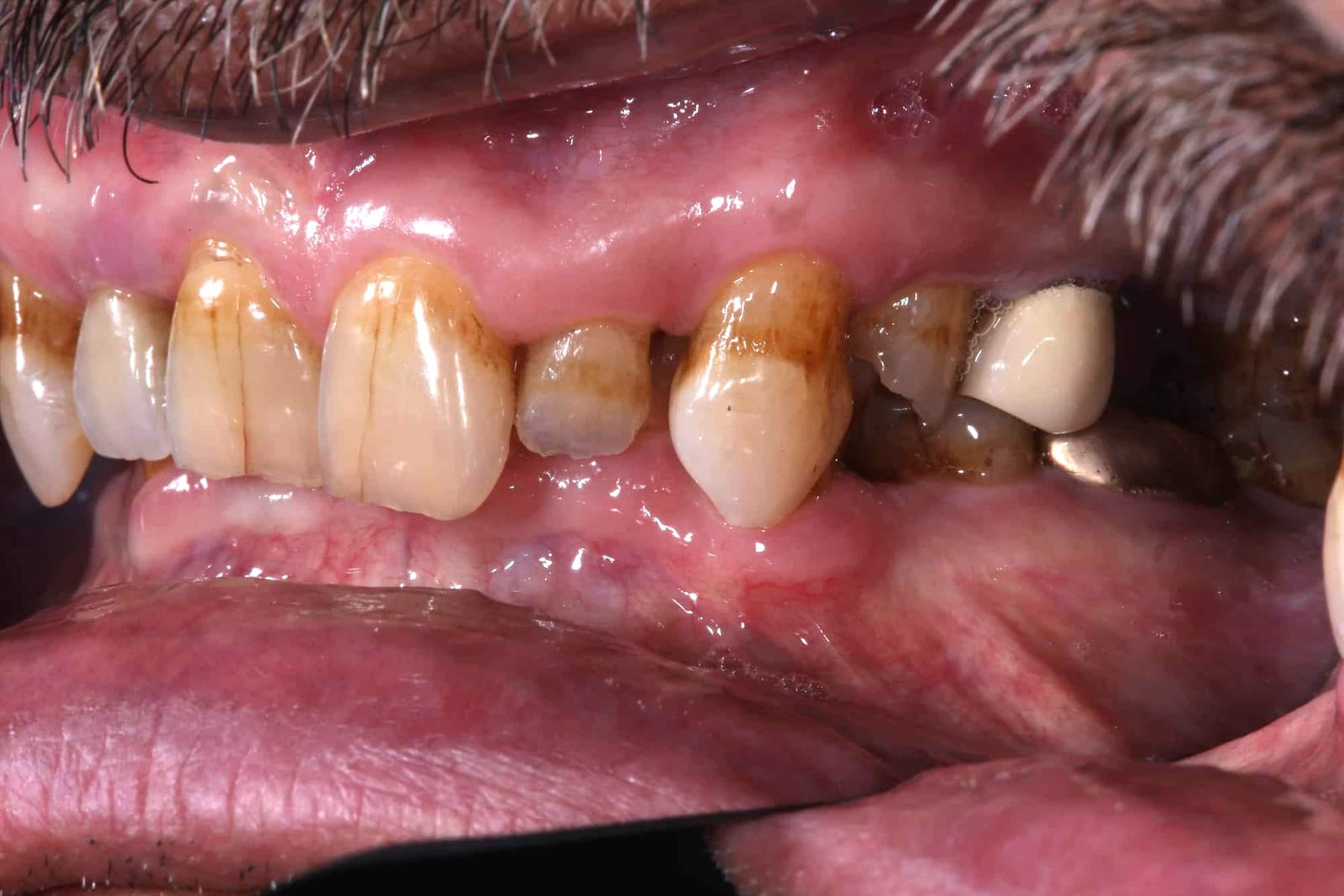
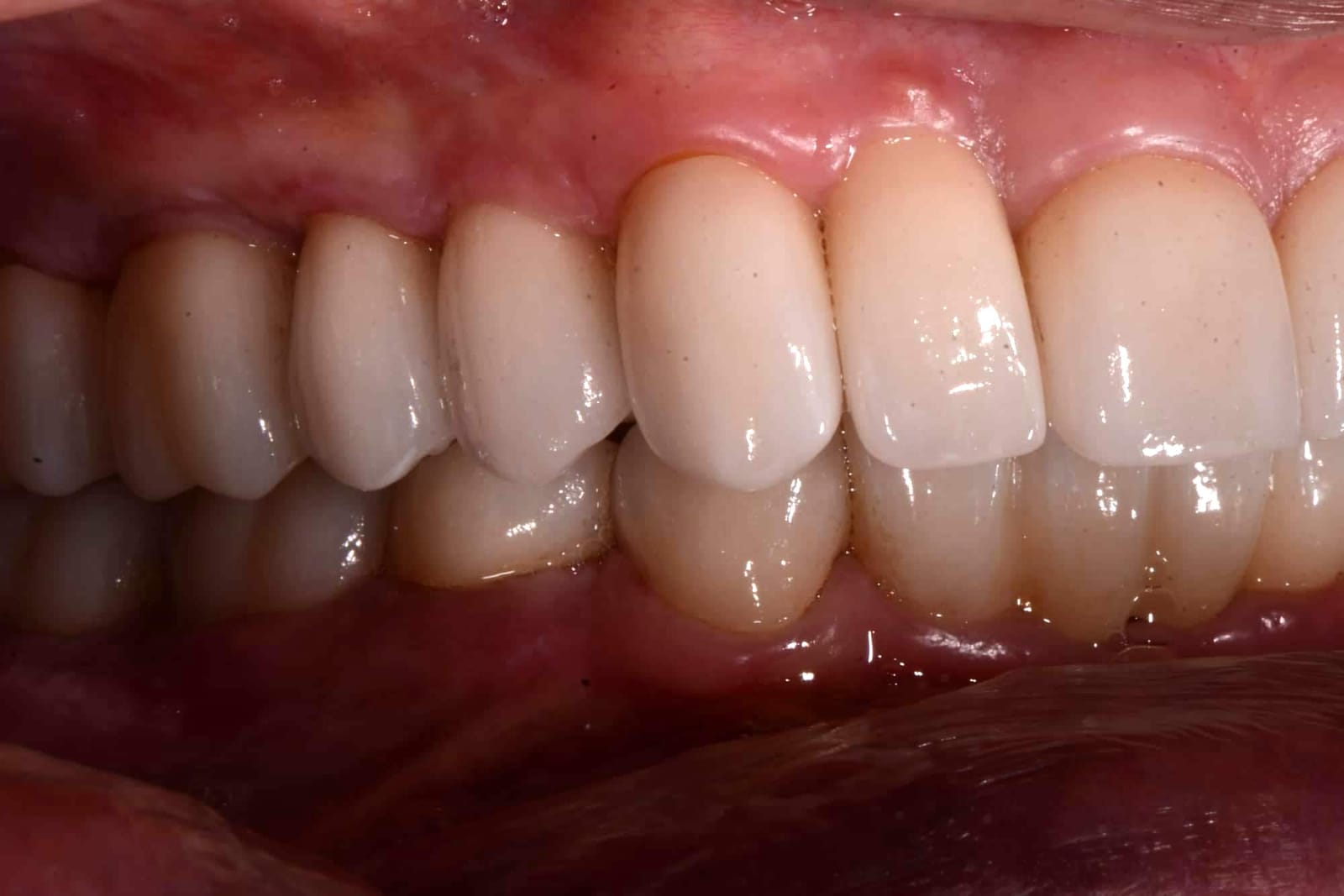
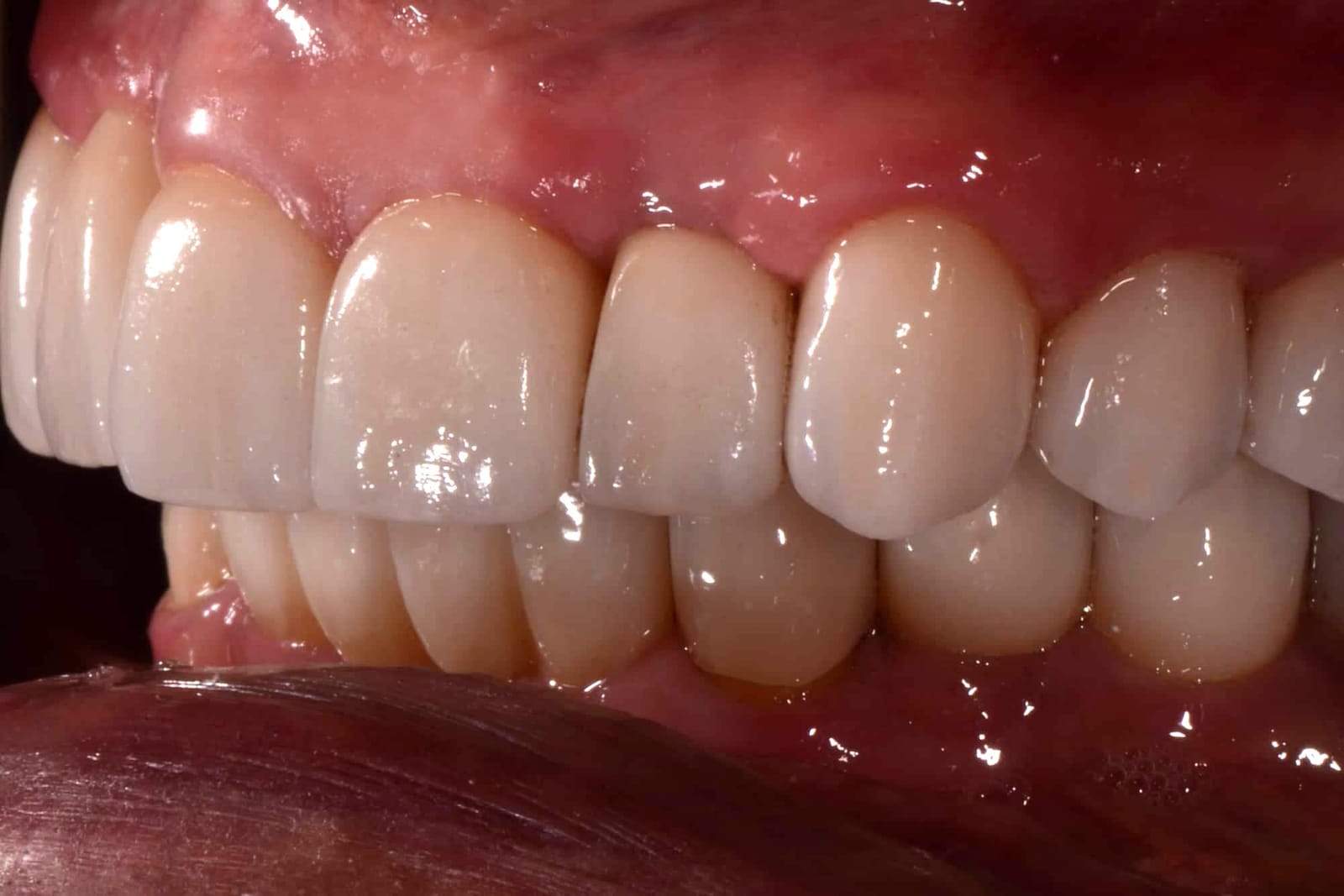
A fence at the front of the mouth.
That much overlap creates a fence. The front teeth rub against each other every time the jaw moves, so things break at the front. The fence also drives excessive force into the back of the mouth, which loads the jaw muscles and brings on TMJ problems and jaw pain, exactly what he had. The biting surfaces in the before frames show massive wear, most of it from the overclosure.
Opening that fence released the tension. The muscles settled, the jaw ache went, and the front teeth will no longer wear and break down the way they were. These are structural changes, and they belong under the care of a prosthodontist: the moment the bite is opened, every contact between the teeth has to be rebuilt from measured jaw movements on a fully adjustable articulator.
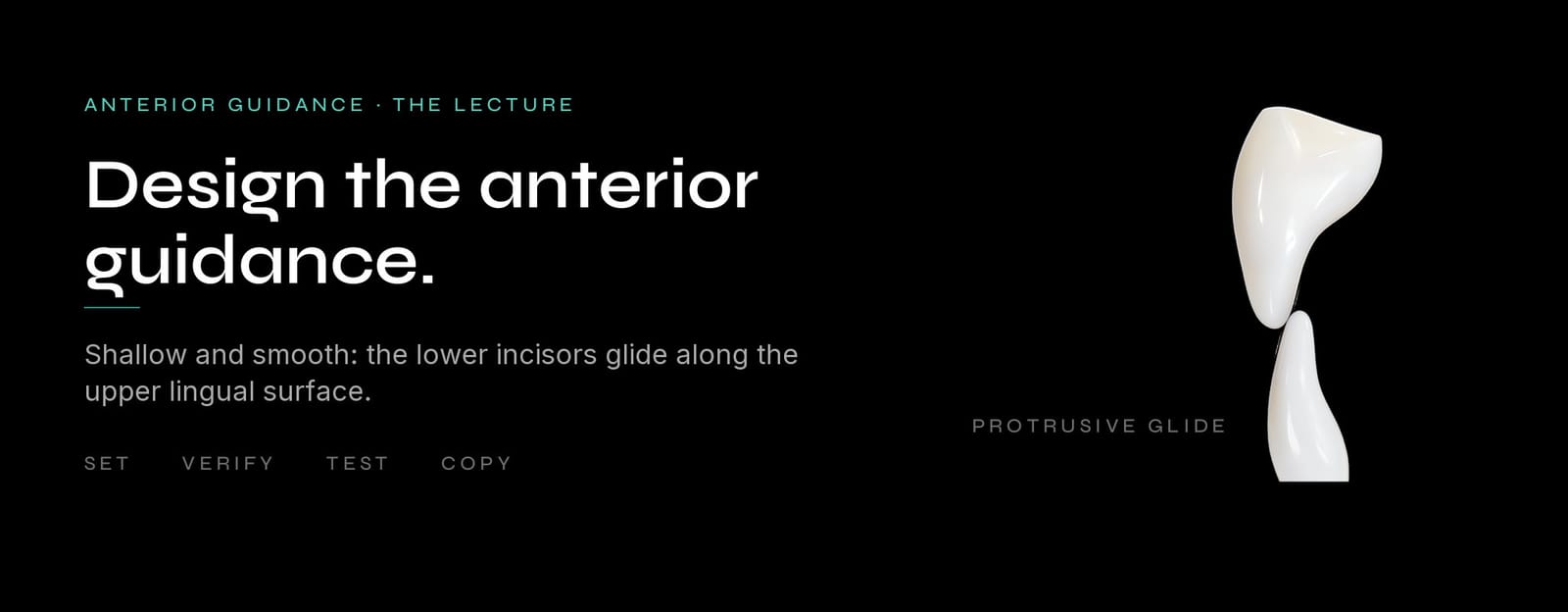
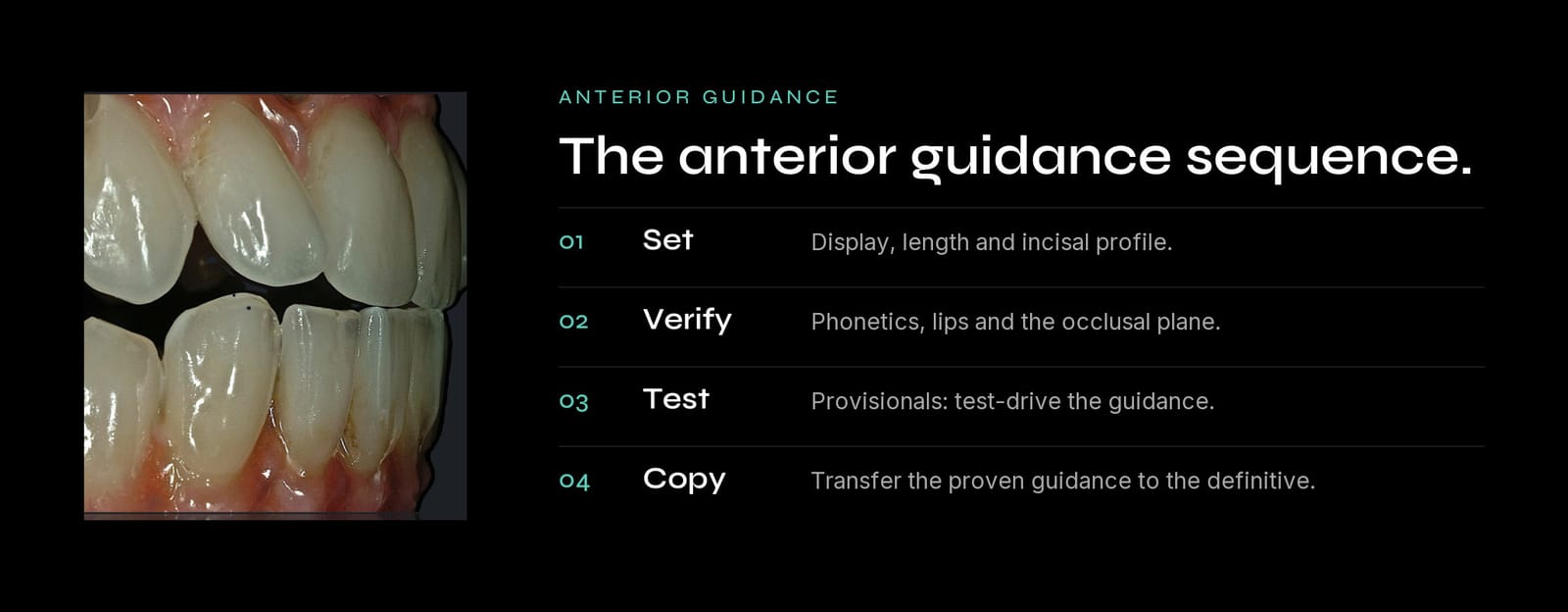
The front teeth are designed, not guessed.
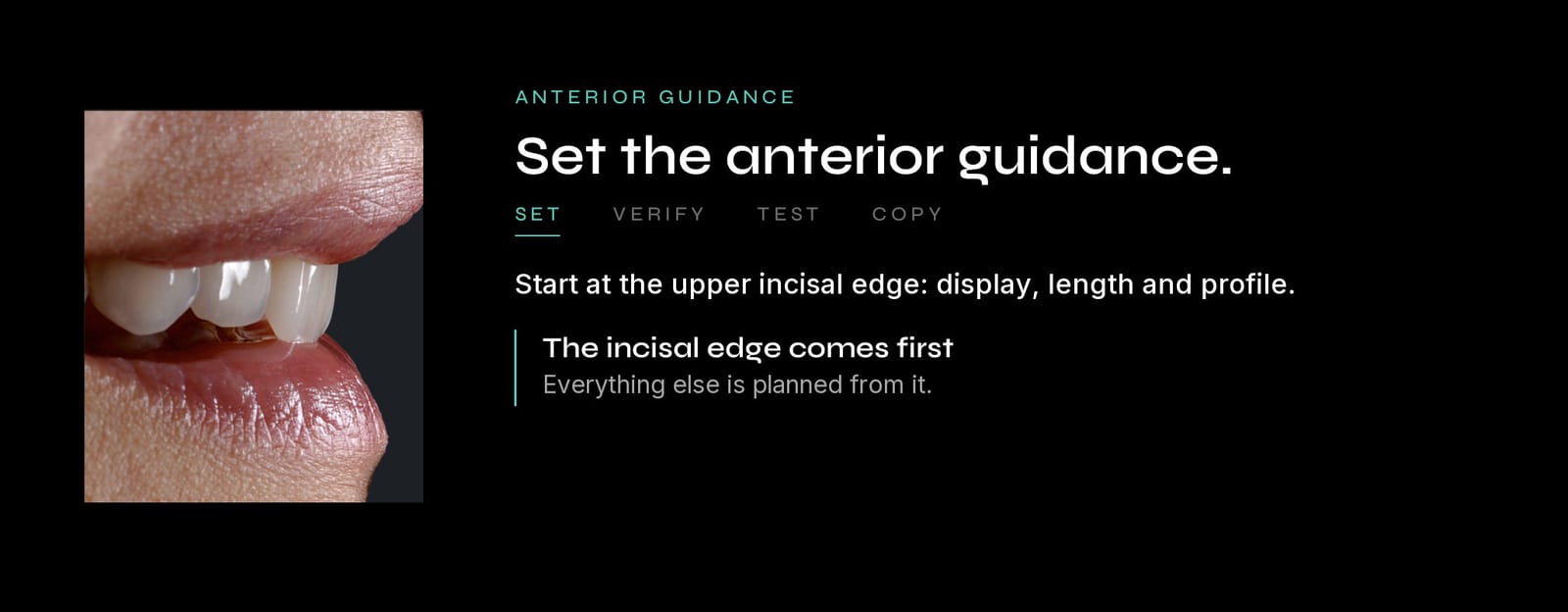
The aim is a shallow, smooth anterior guidance: when the jaw slides forward, the lower incisors glide along the inside of the uppers with nothing catching. In Dr. Reshad's practice that is a four-step sequence. Set, verify, test, copy.
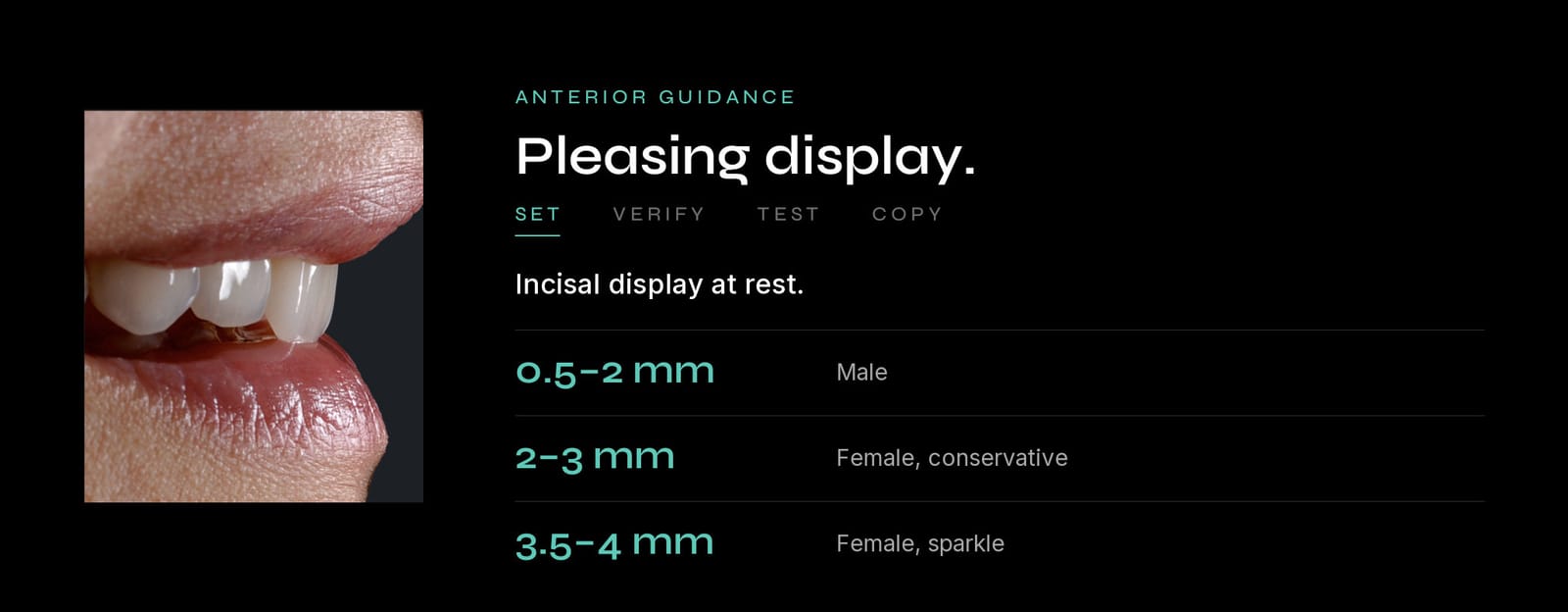
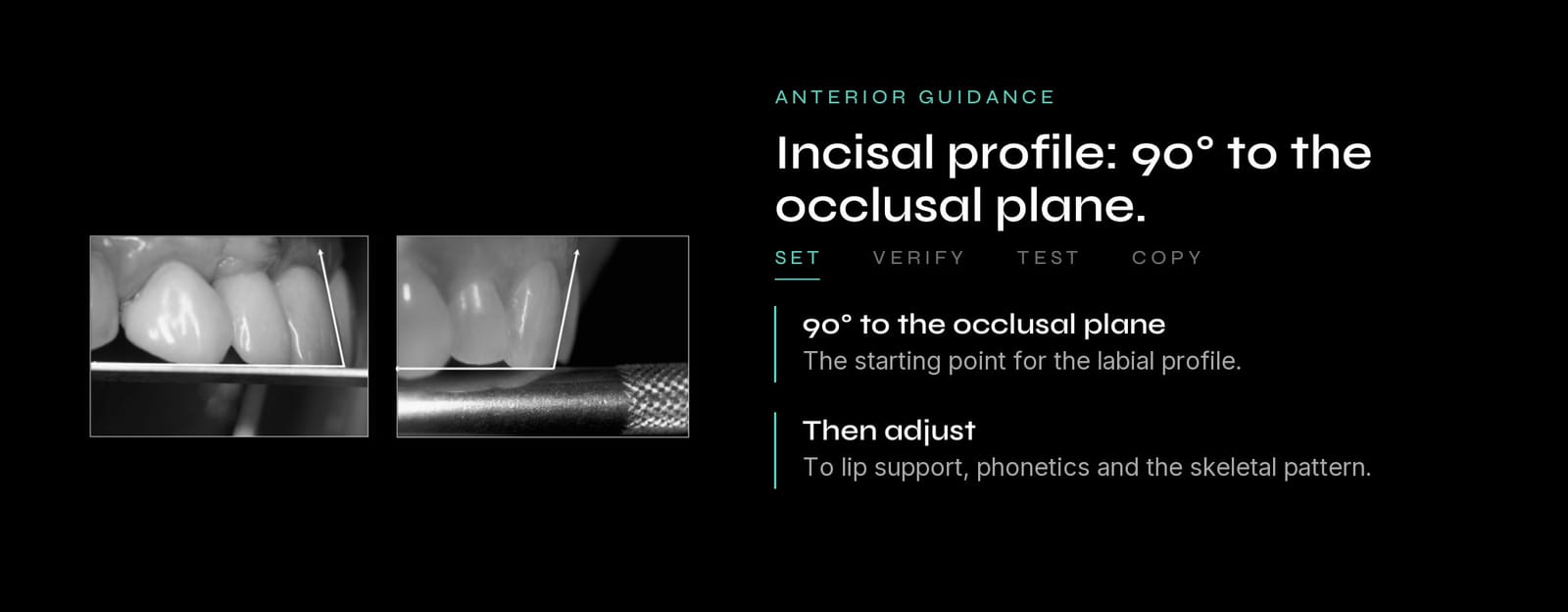
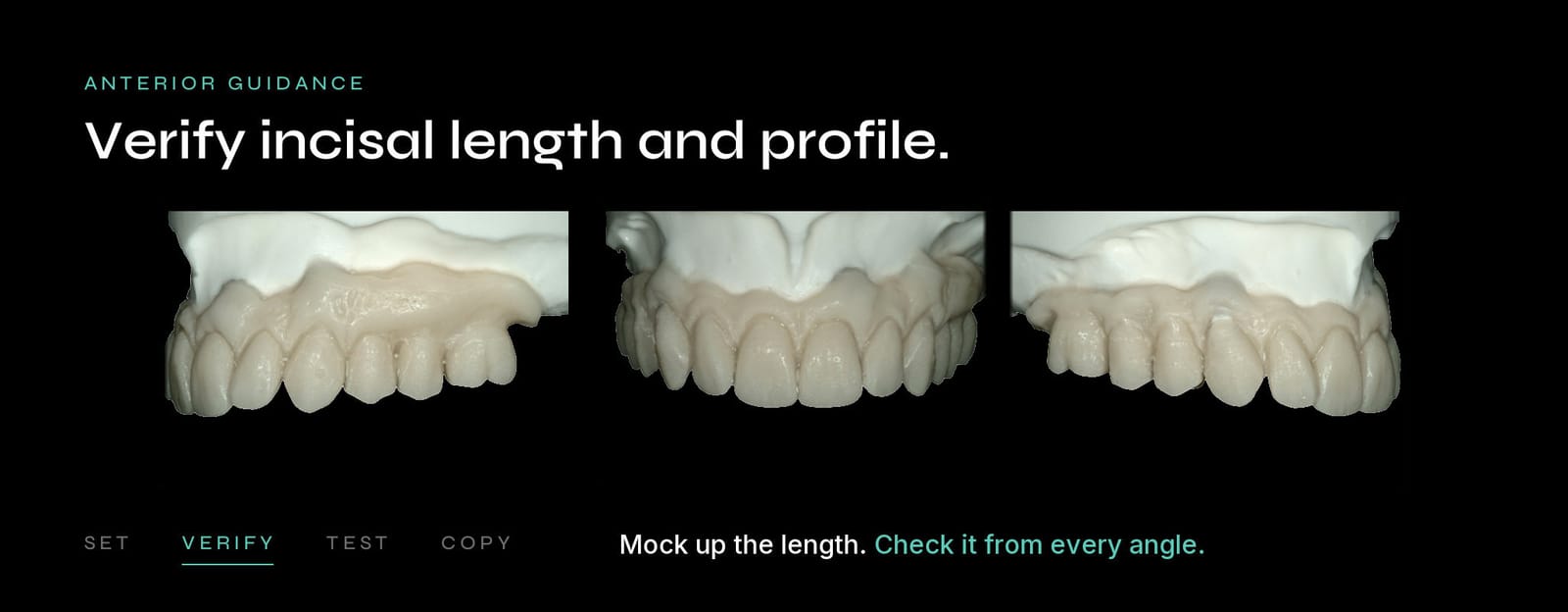
Set starts at the upper incisal edge, because everything else is planned from it: how much tooth shows at rest, how long the teeth are, and the profile of the edge, which begins at ninety degrees to the occlusal plane and is then adjusted to the lip, to speech and to the skeleton. Verify checks the mock-up from every angle and against phonetics. Test hands the guidance to provisionals for months. Copy transfers what proved itself into the final ceramic.
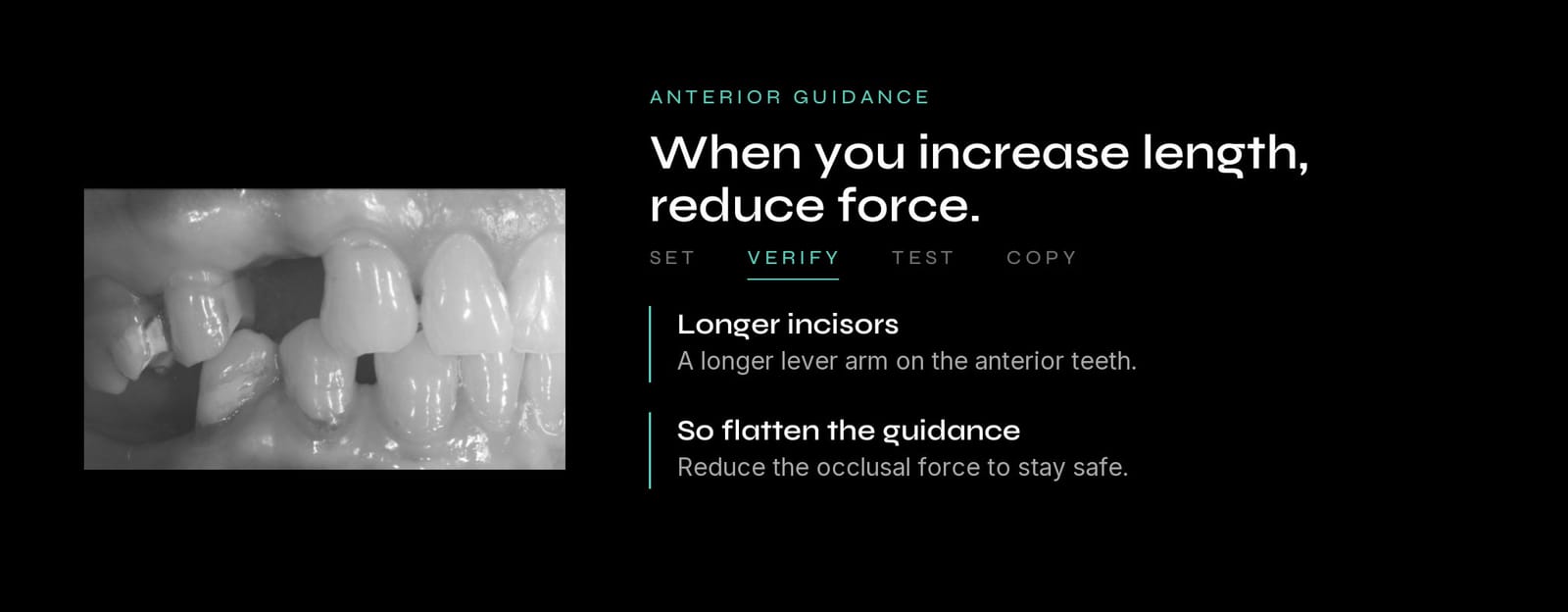
Longer teeth are a longer lever arm, so when length goes up the guidance has to flatten to keep the force down. The ideal vertical overlap is fifteen to twenty percent of the lower incisor's crown height, and when the incisors are made longer the vertical dimension is set to keep that overlap. That is exactly what his mouth needed: open the bite, lengthen the teeth, keep the overlap moderate.
Open the fence.
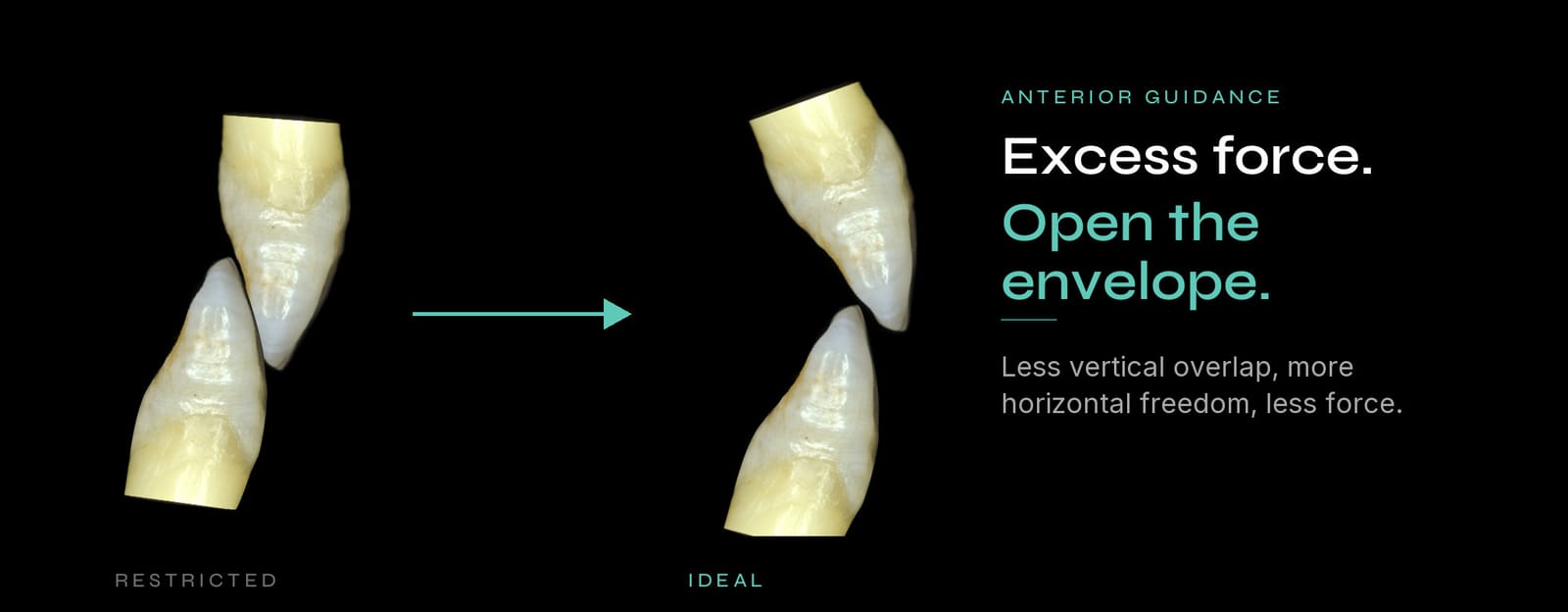
Anterior implants cannot feel. A deep, steep anterior relationship fences the mandible in and turns every protrusive movement into a bending load on the implant. His lower front teeth were replaced on implants, so the fence had to be opened before they went in: the overbite reduced, a millimetre of overjet, the guidance flattened so the lower incisors leave centric without touching.
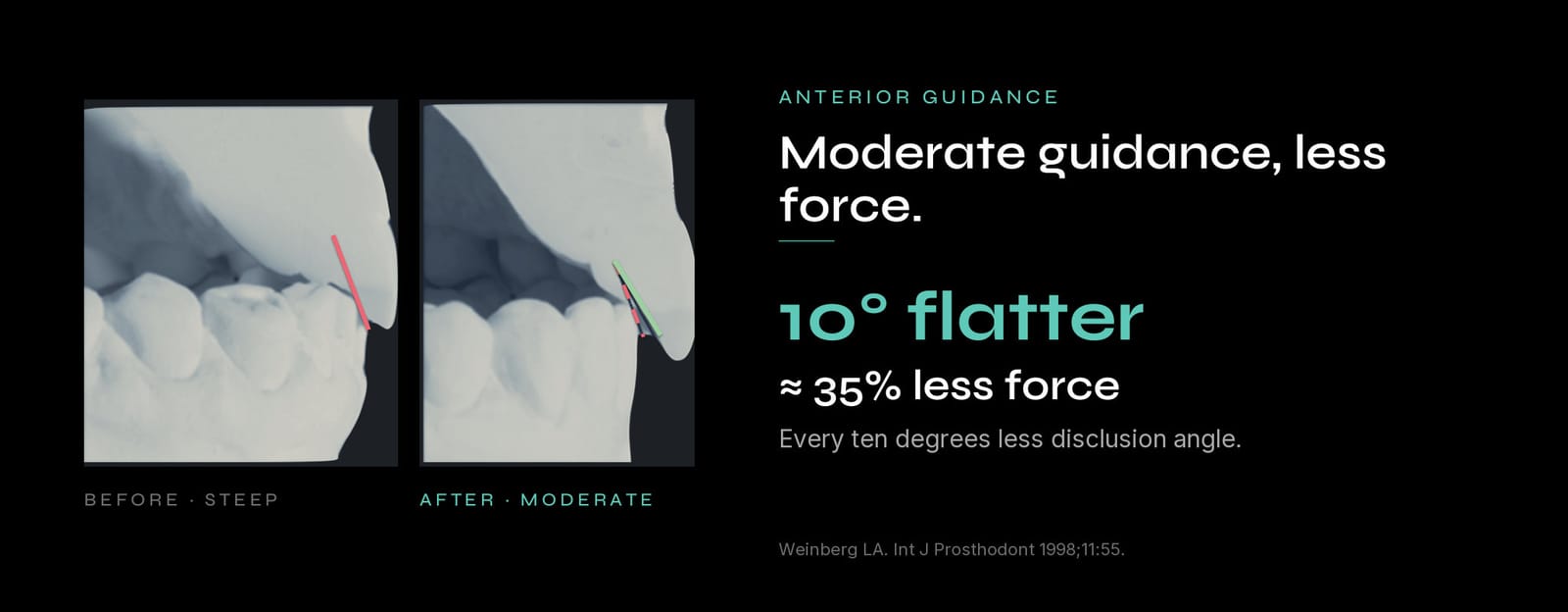
Less vertical overlap means more horizontal freedom and less force. Every ten degrees flatter in the disclusion angle is roughly thirty-five percent less force on the front teeth. That margin is what lets the ceramic and the implants last.
From above
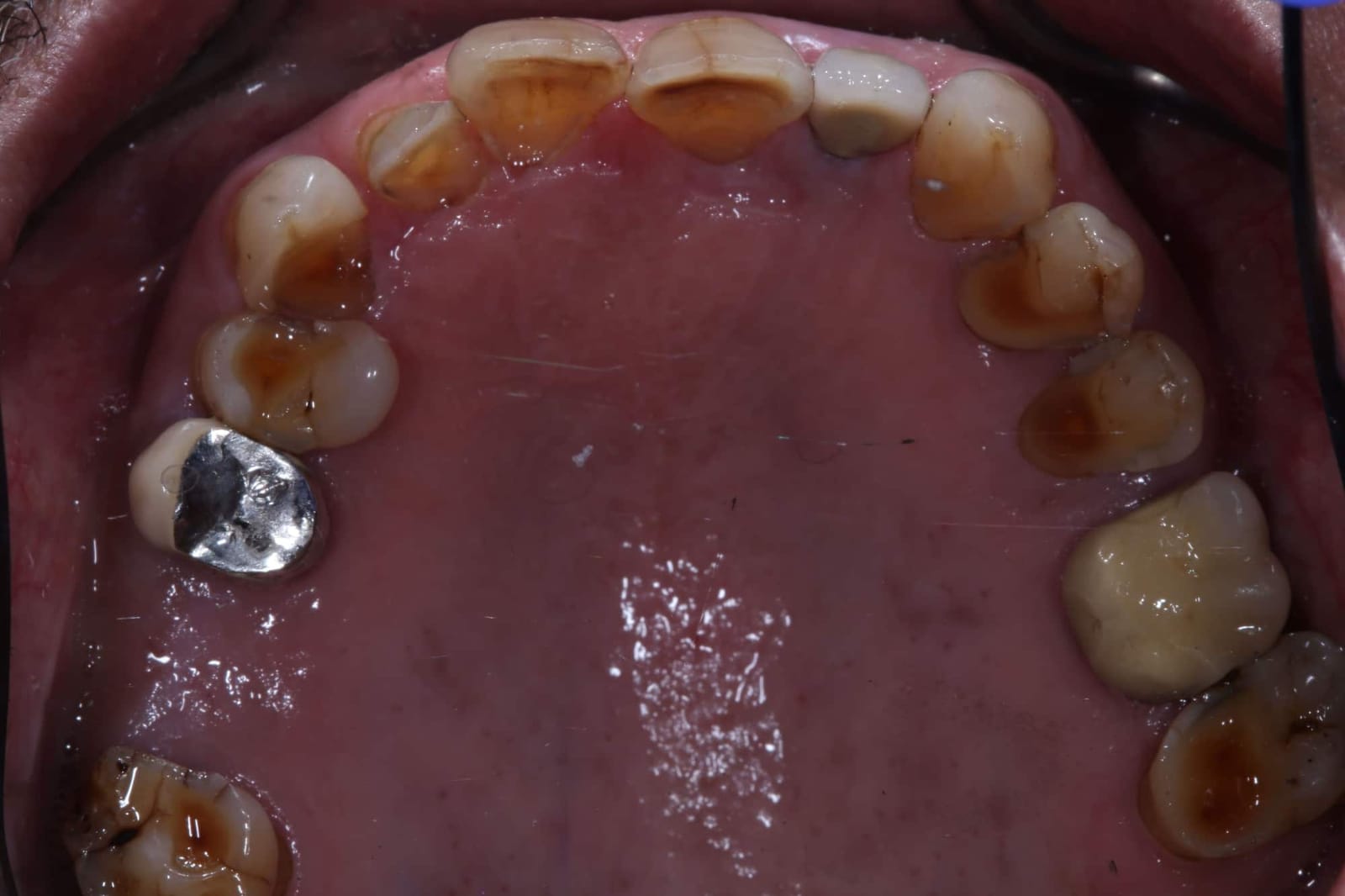
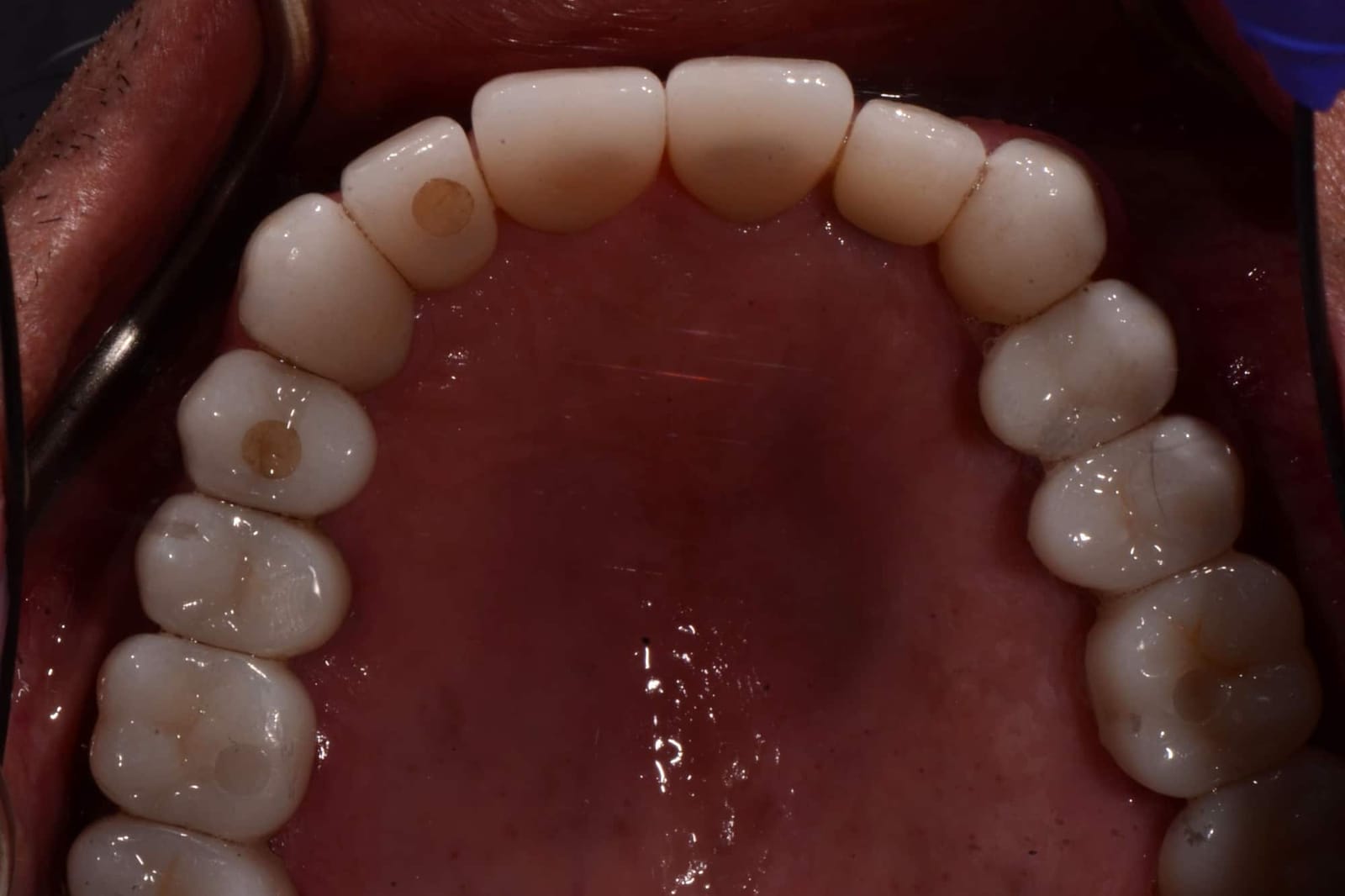
The lower arch
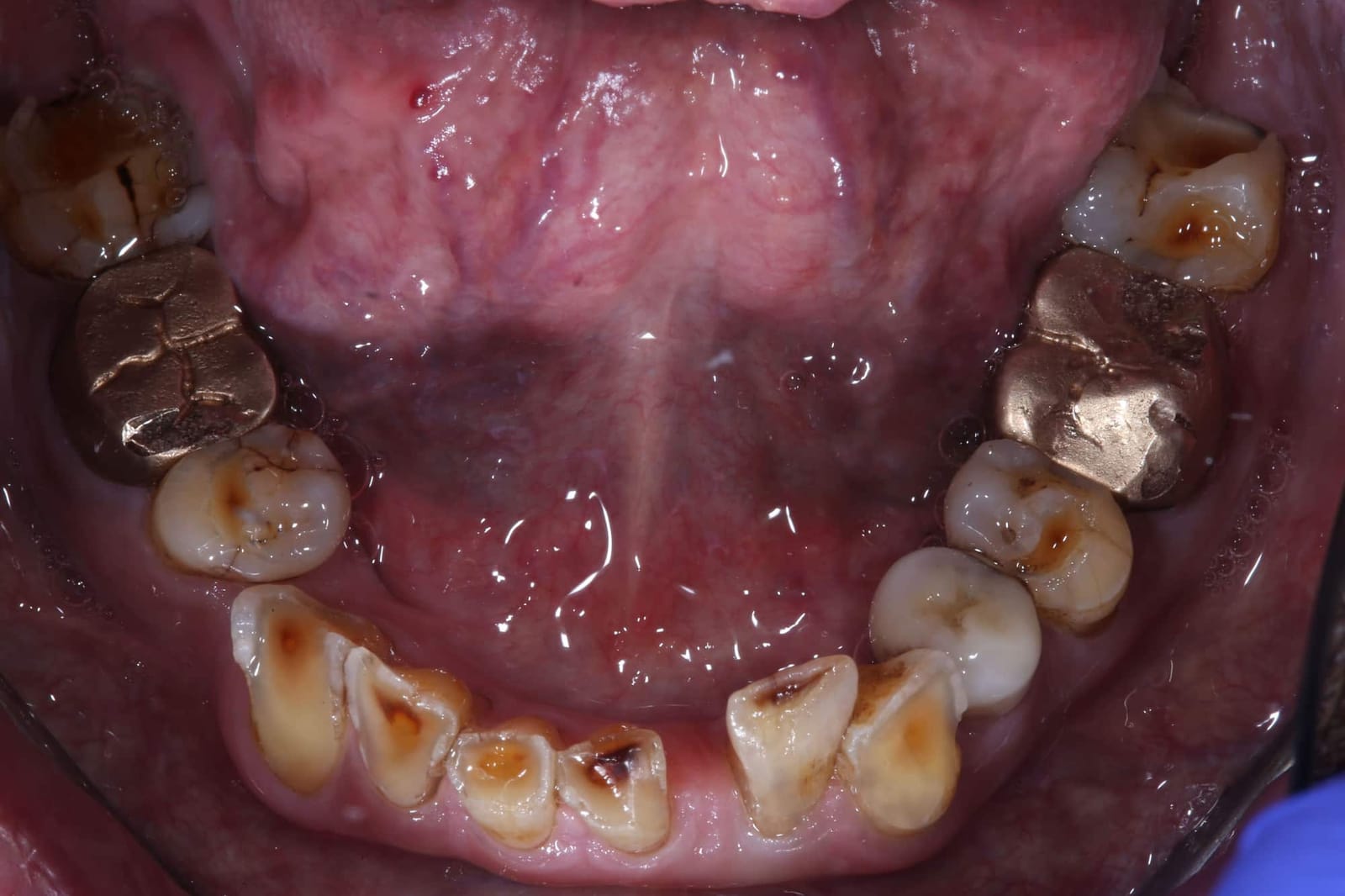
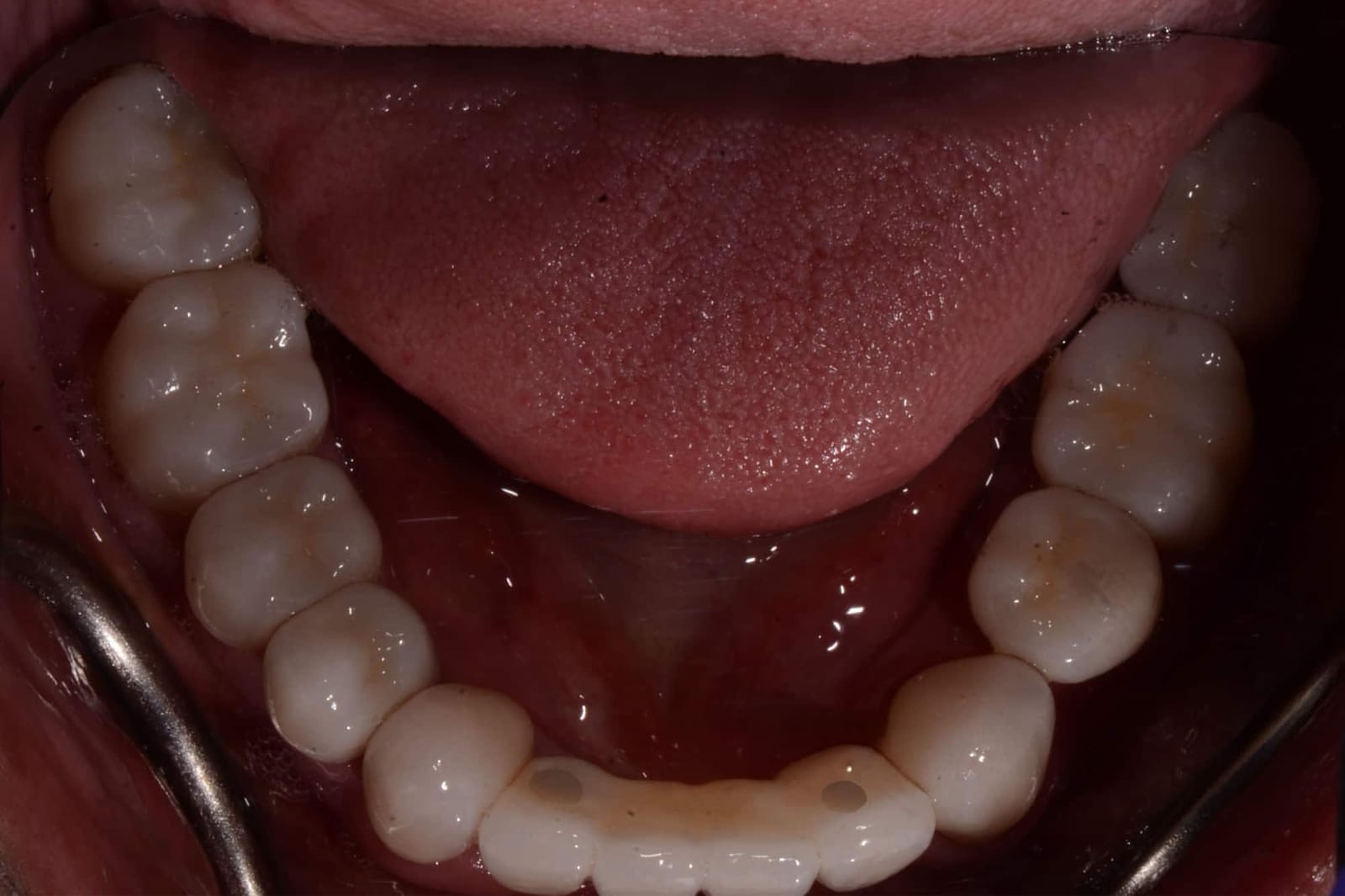
On black
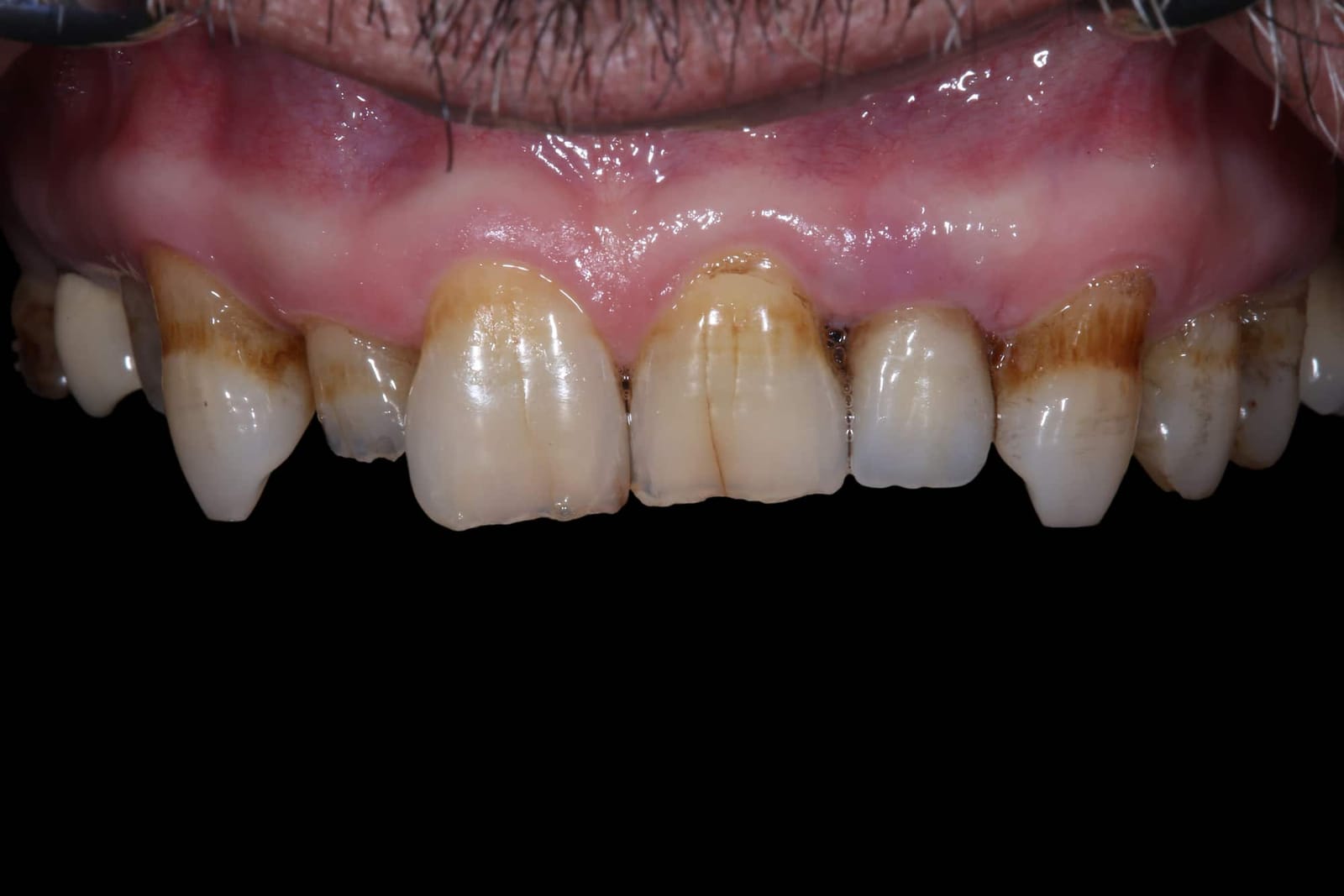
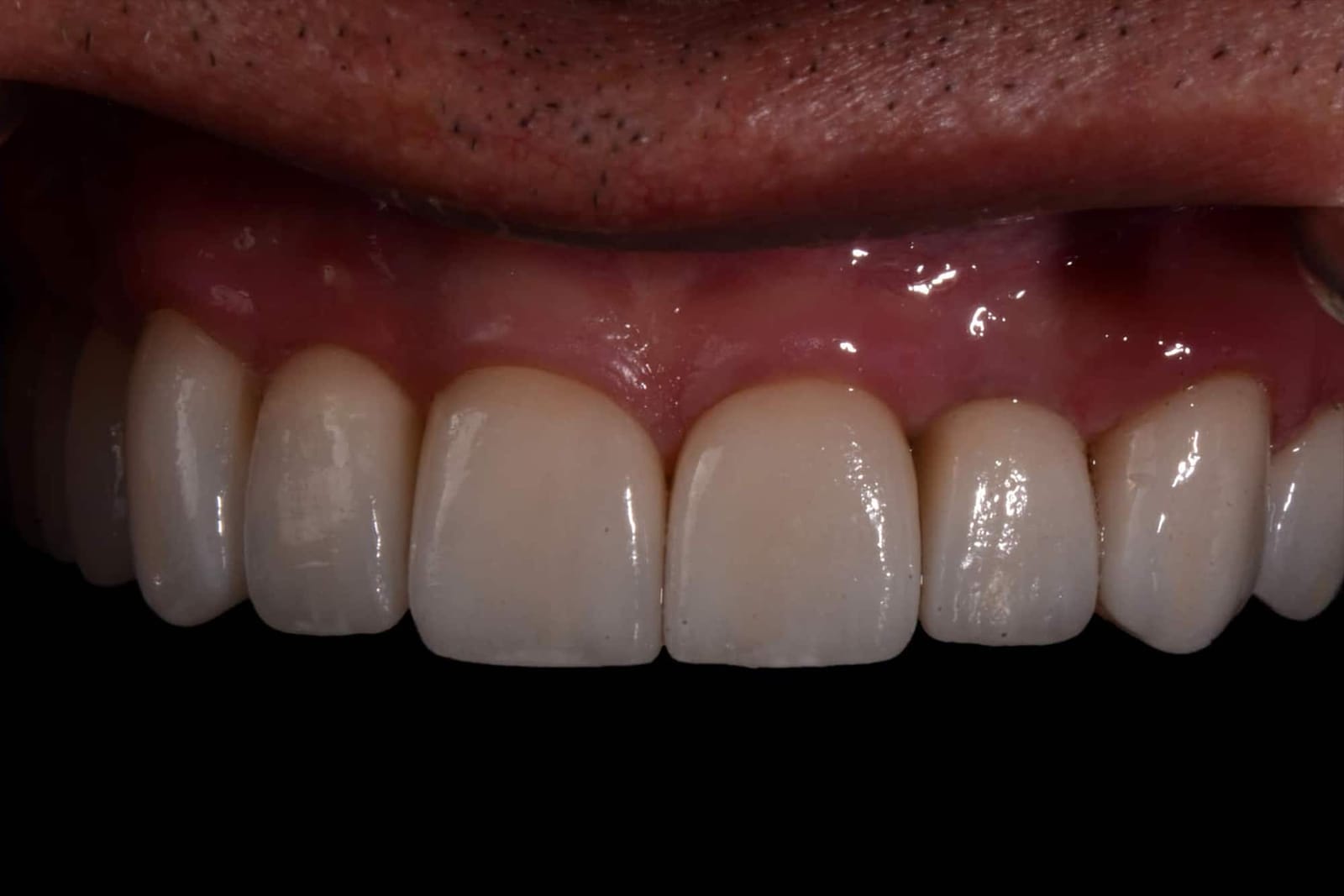
The easy option was to take everything out.
This was a collapse case, a wear case, with very short teeth. Most would extract everything and place a full set of implants. A prosthodontist has the skills to rebuild even badly damaged teeth, and that is what was done.
With the periodontist, a functional crown lengthening moved the gum margins up to expose sound tooth structure to build on. Implants went only where teeth were already missing. Opening the bite gave a second source of space, and the front teeth were repositioned to give moderate anterior guidance.
The final restoration
From a severe overclosure to something close to ideal.
The front teeth now meet in near-perfect positions, within the limits of a Class II patient, with about a thirty percent overlap of the upper front teeth over the lower. He has an even occlusal plane, a wide, functional smile with shallow guidance, and restored teeth and implants that work together.
He is comfortable, with no cheek or tongue biting, and has lived with his new teeth without a complication.
In profile
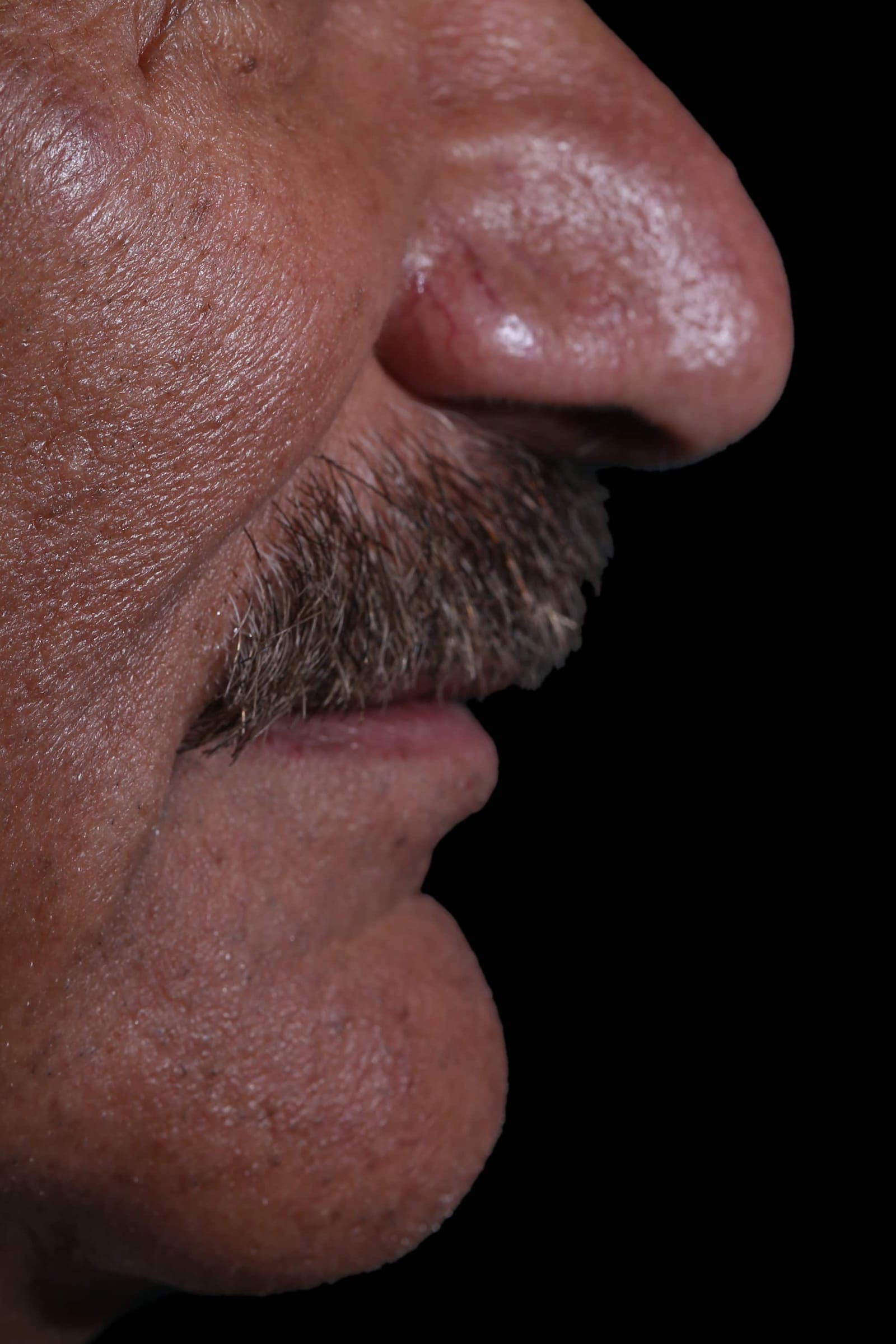
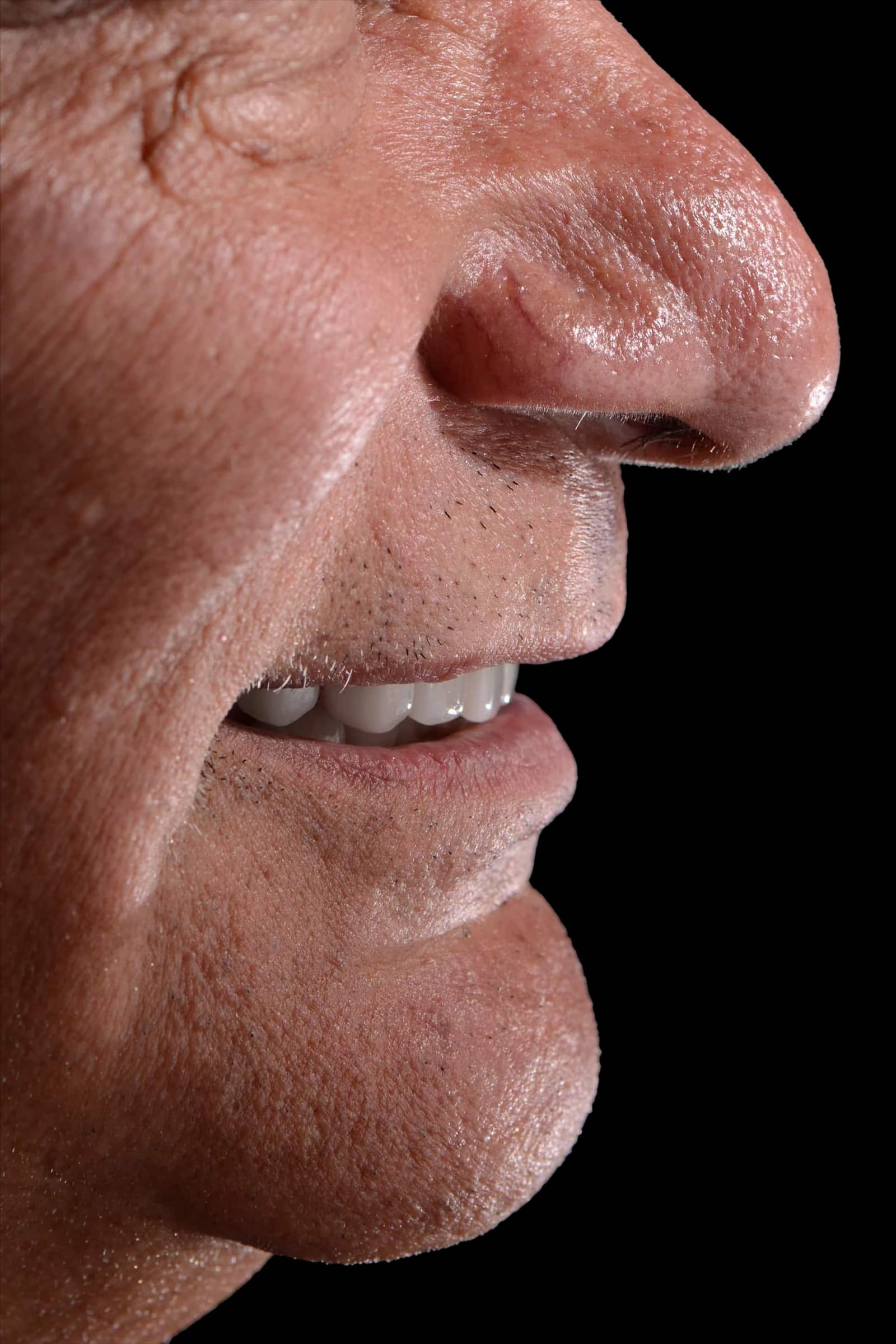
Younger, fresher, breathing better.
The side profiles show it. The lower half of his face no longer looks collapsed. The middle and lower thirds are in proportion, and his lip support, smile and face height are transformed.
A prosthodontist does not just put on crowns, bridges or implants. The work is combining all of them in the most conservative way, with the best long-term plan, so that the reconstruction hopefully never has to be revisited, and if it does, only for a minor repair. Function, aesthetics and health, restored in time for the wedding and for the years after it.
The radiographs
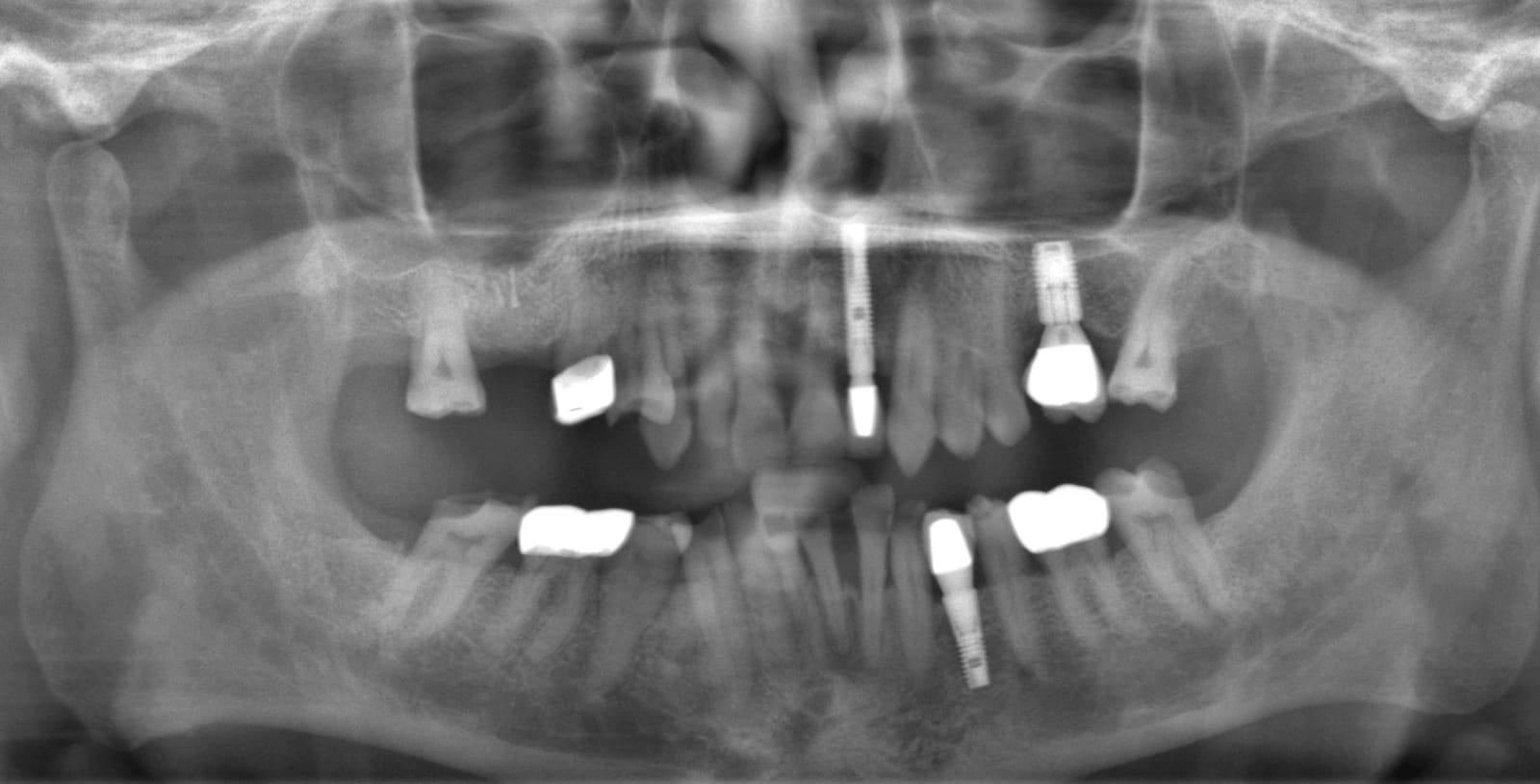
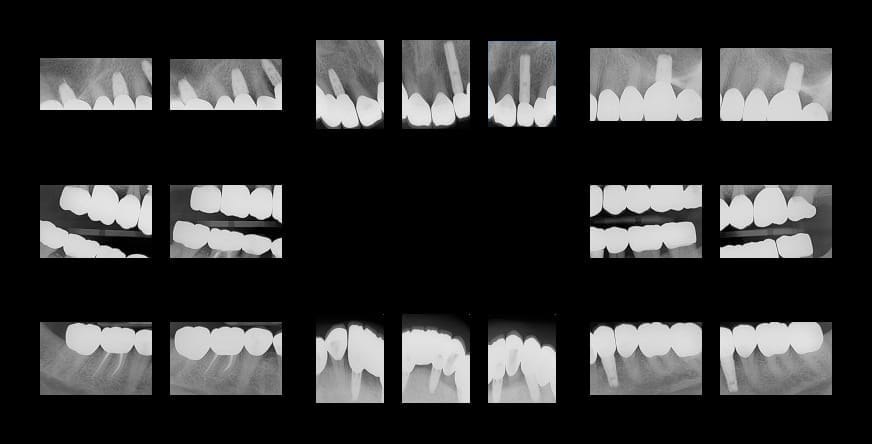
Before and after
Every case is planned around one person's anatomy. Individual results vary, and what was right for this patient may not be right for you.