Interdisciplinary Case 3 · Implants · Reconstruction · Interdisciplinary · Bite & TMJ
A Jaw Moved, a Mouth Rebuilt
Her upper jaw was too small and sat too far back. Her lower jaw sat too far forward. Before anyone could rebuild her teeth, the jaws themselves had to move.
This is a true interdisciplinary case, with Dr. Reshad as the quarterback: a complex reconstruction built around orthognathic surgery, with the teeth and the bone rebuilt afterwards on her own teeth and on implants.
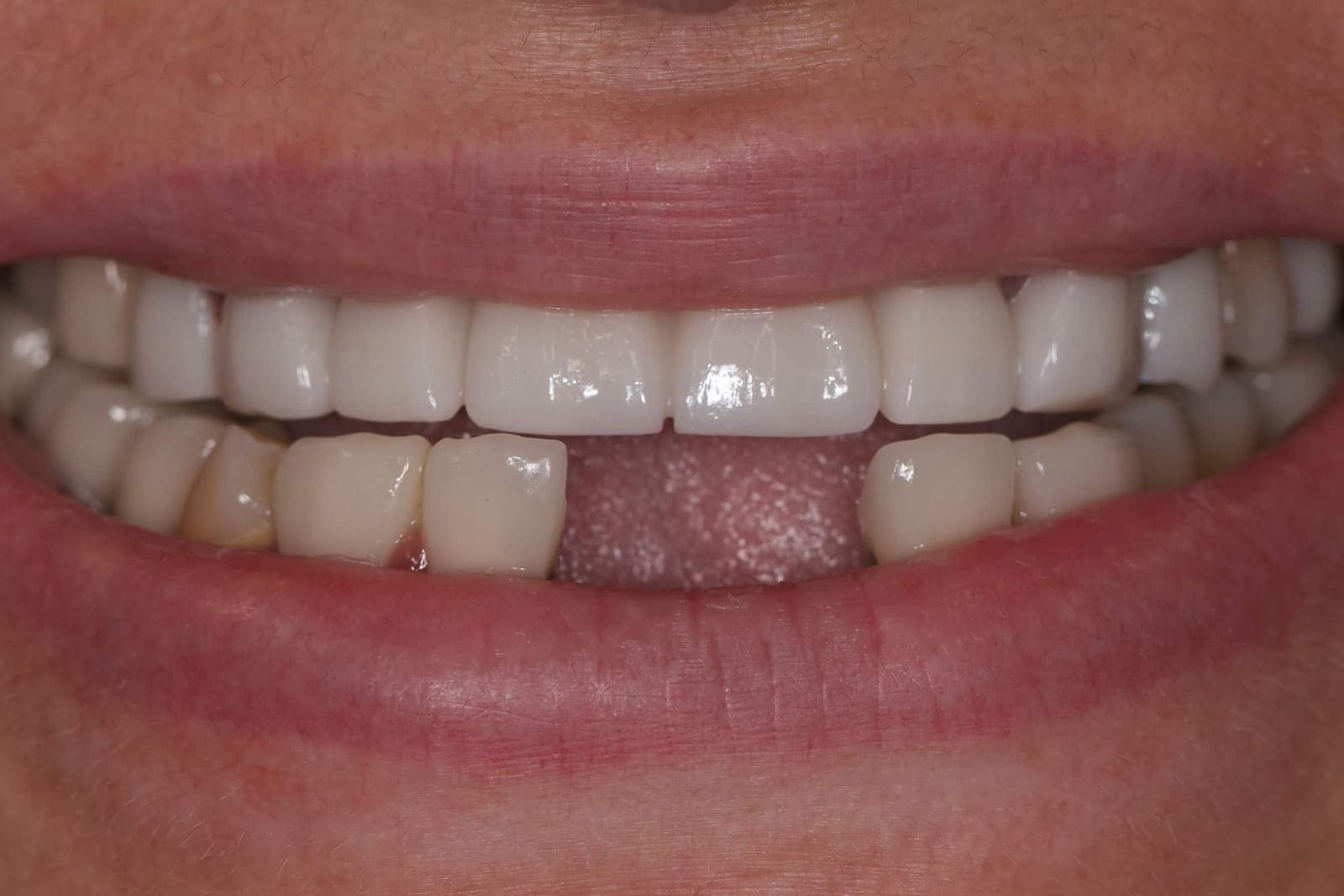
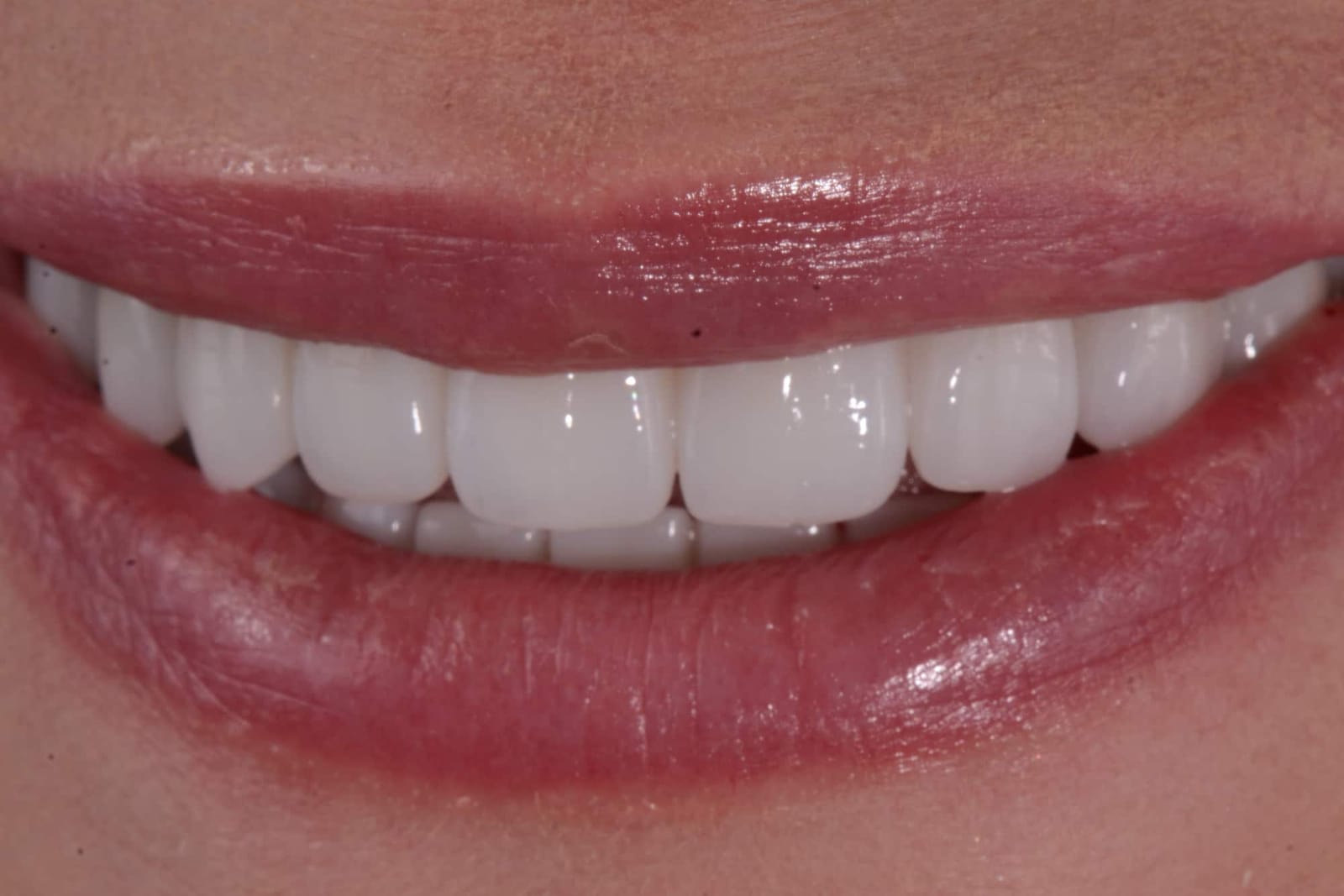
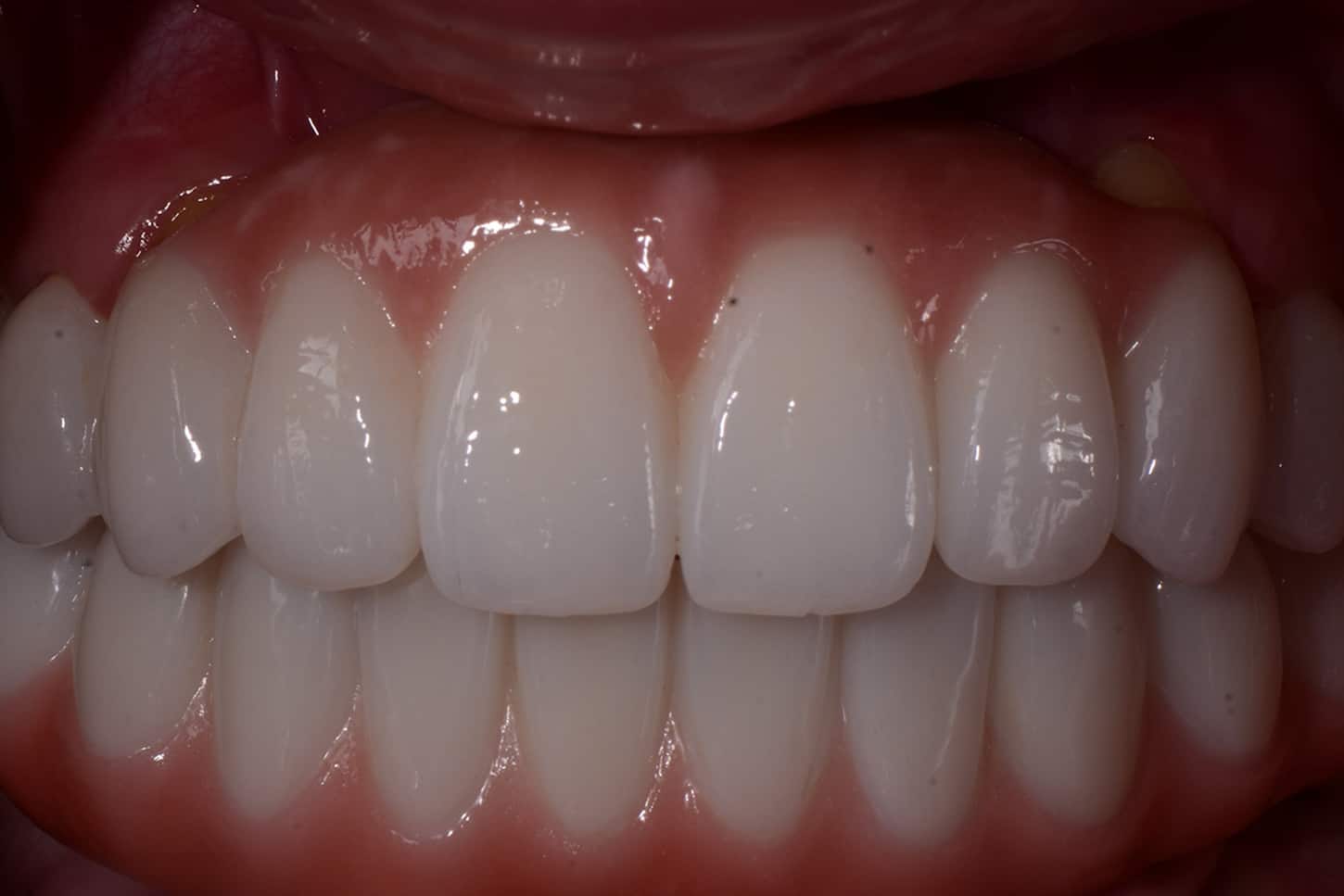
The plan ran in phases over about two years. Every old restoration came off so each tooth could be judged on what was left of it. Metal-reinforced provisionals held a new, opened bite through the surgery, and only when the jaws had healed in their new positions was the final work made: twenty-eight all-ceramic restorations, a lip with support behind it again, and a bite that closes where it should.
The lower jaw no longer leads.
In profile the change is the whole story. Before, the lower jaw sat ahead of the upper and the chin led the face. After the surgery and the reconstruction the upper lip has something behind it, the chin sits back where it belongs, and the middle and lower thirds of the face are in proportion.
Her face
Lips held back
A severe Class III, and a mouth that could not meet.
In the before profile her lower jaw stands ahead of her upper lip. That is a severe Class III skeletal relationship: the upper jaw is small and collapsed, so the upper teeth sit collapsed behind it, the upper lip has lost its support and the nose turns downward. The mandible protrudes, and the face reads as concave.
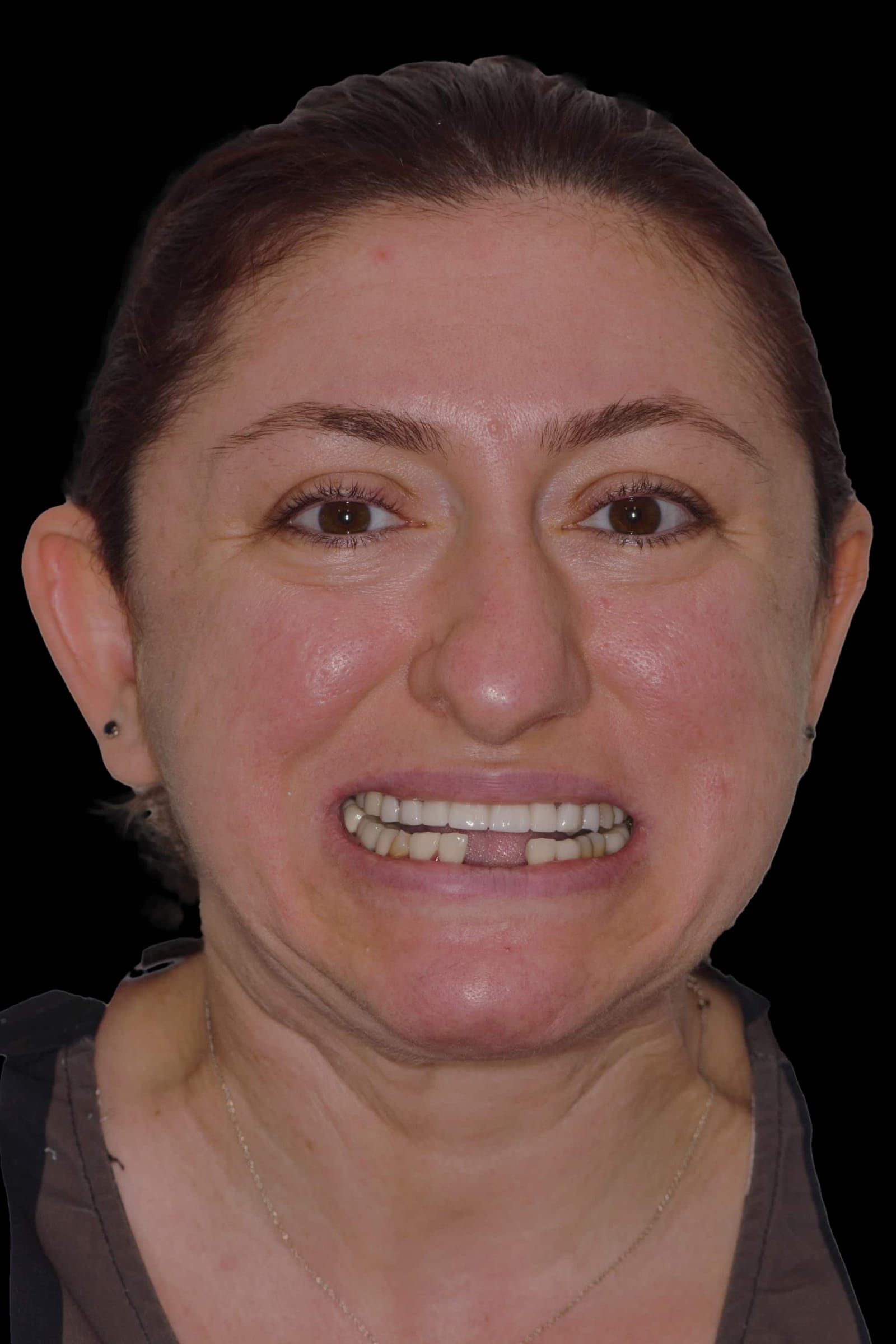
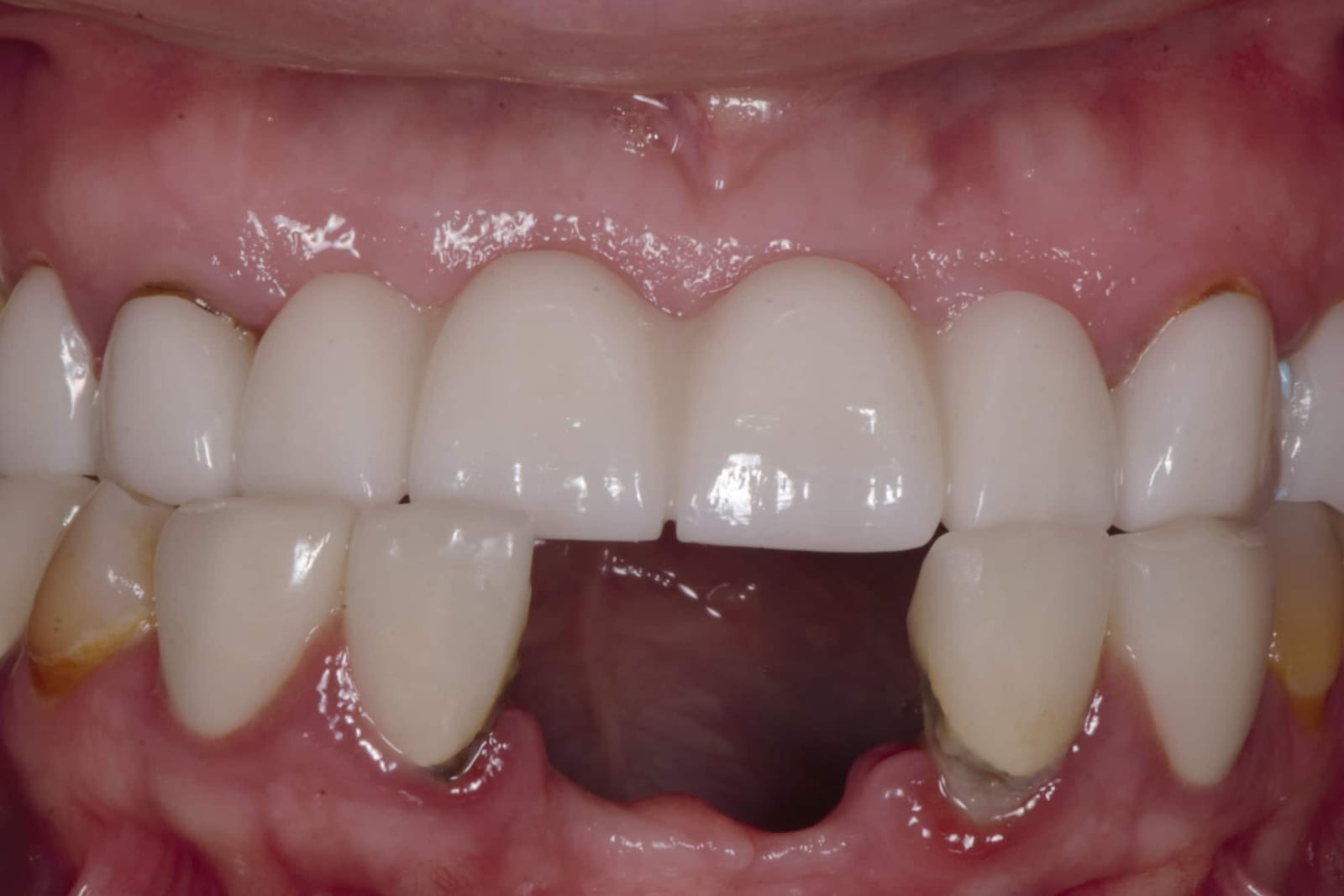
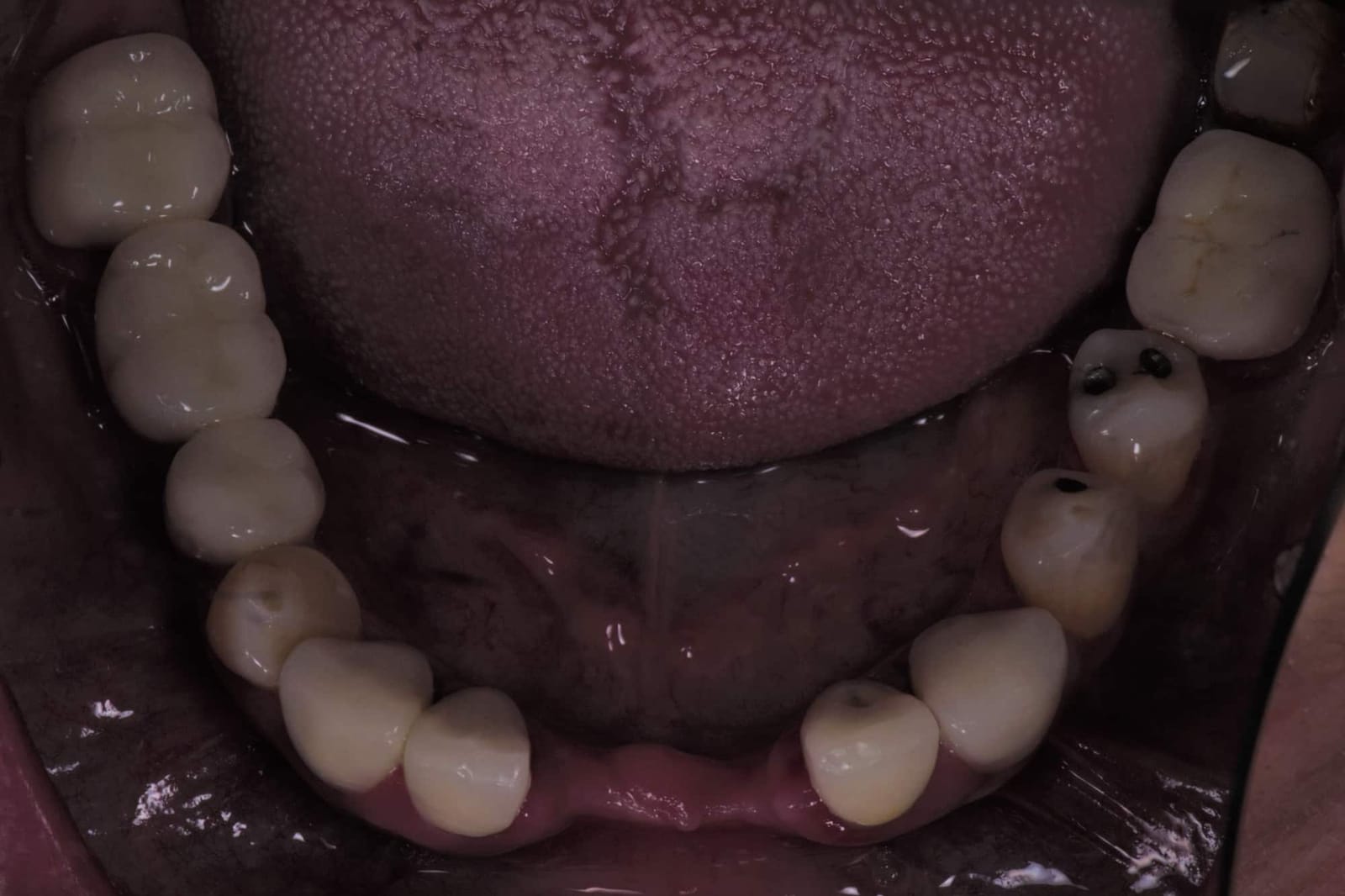
Inside, a lifetime of crowns, posts and root canals had left little tooth to build on, the lower front teeth were gone, and the bite did not meet. No amount of dentistry alone could fix a problem that started in the bones.
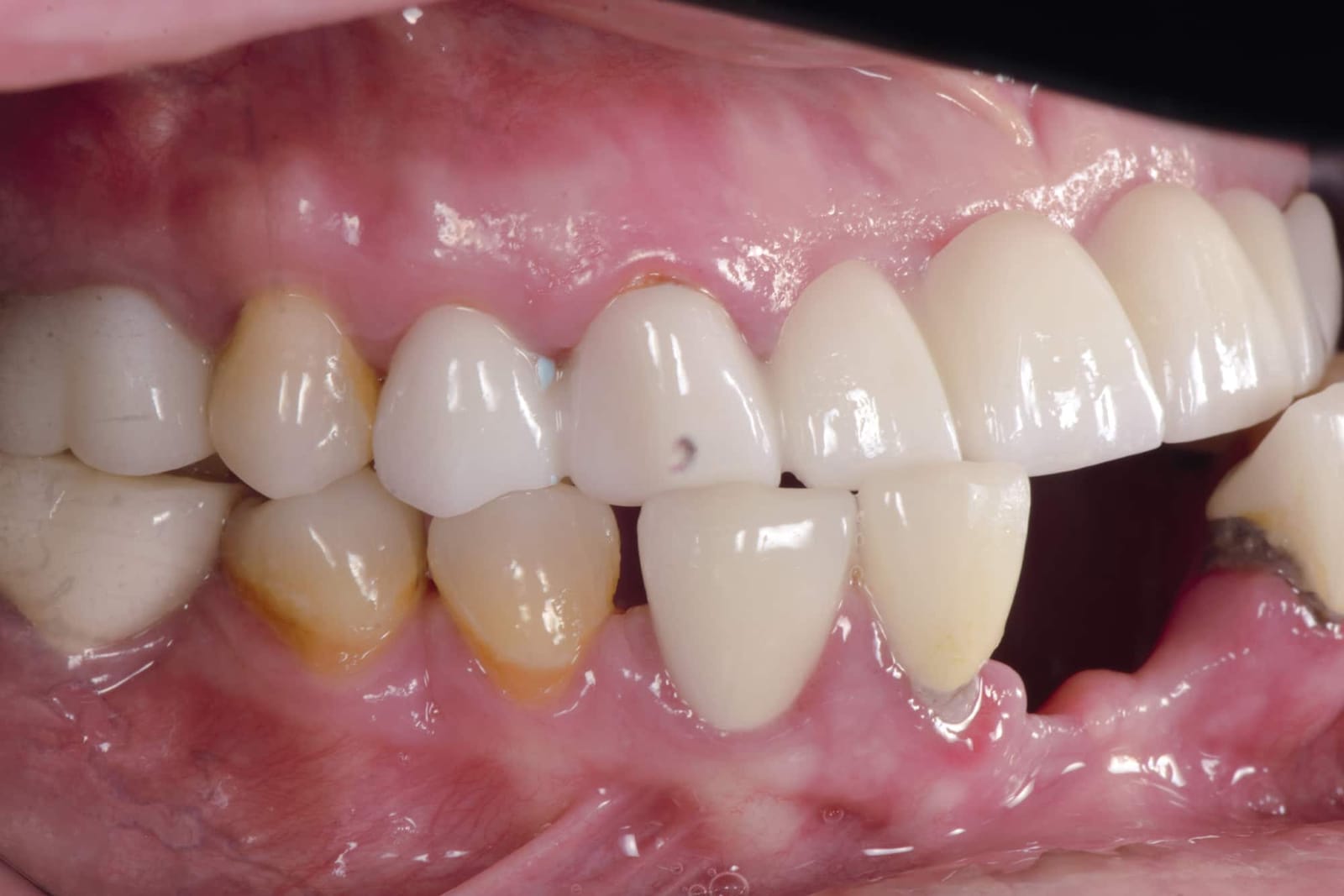
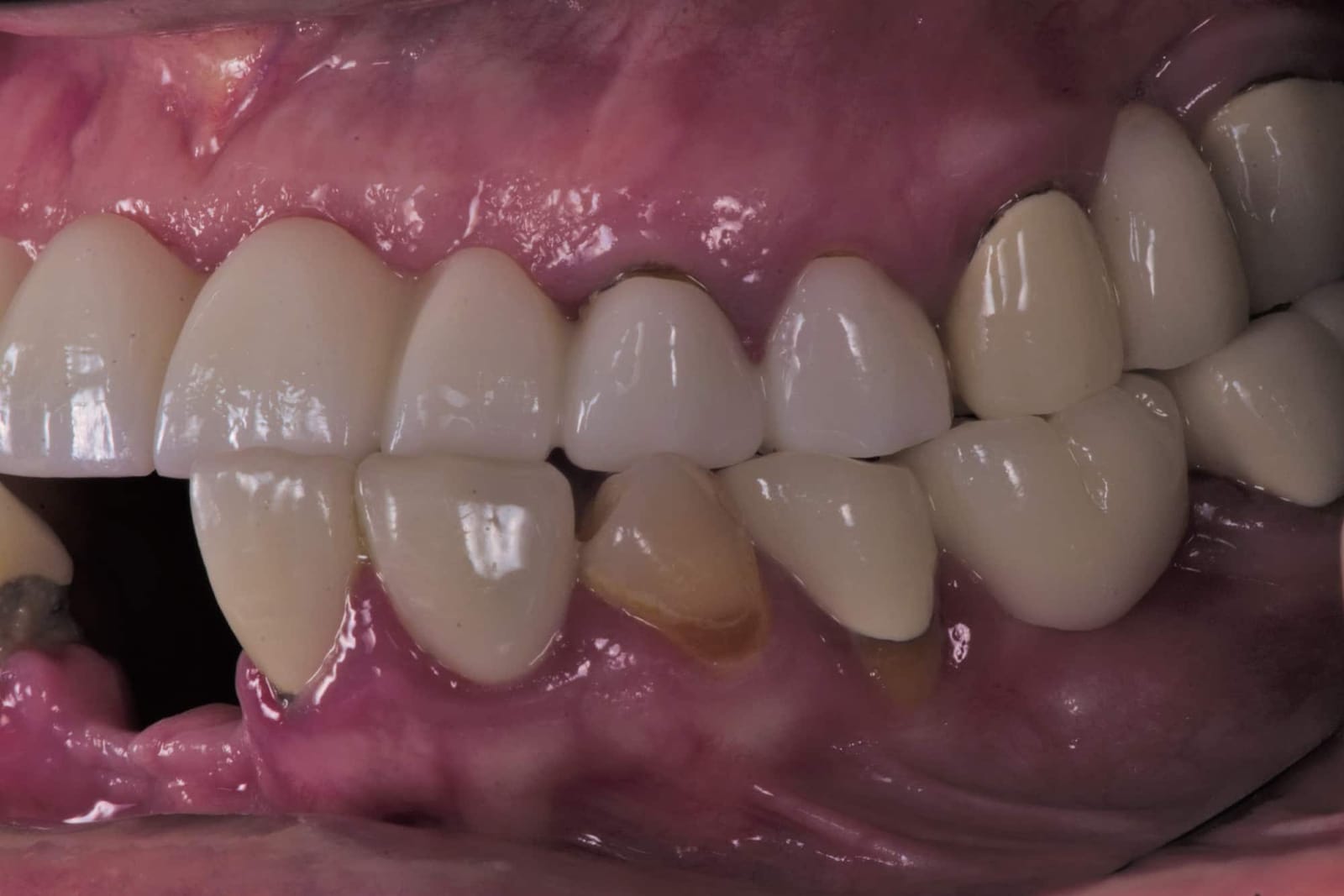
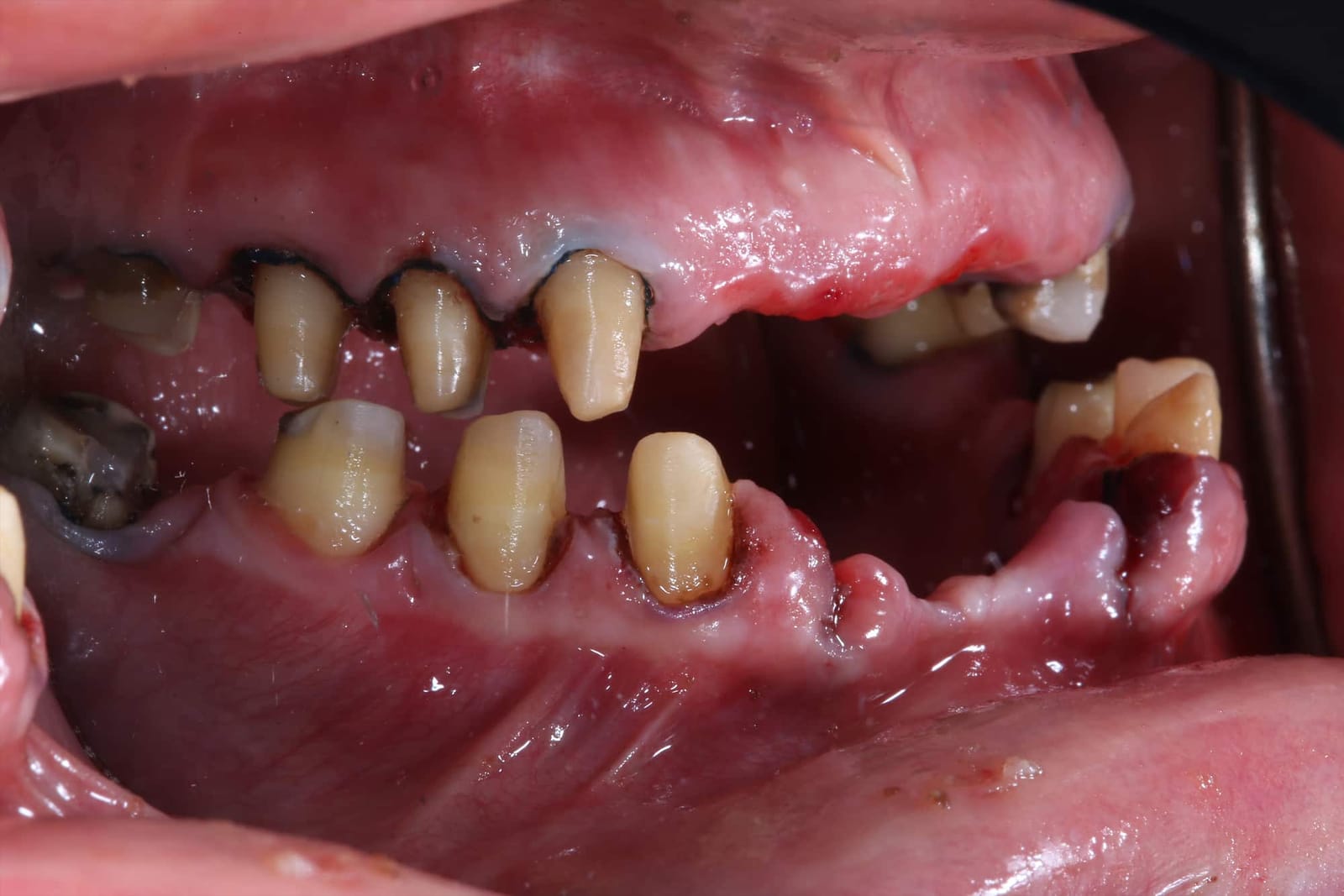
From the side
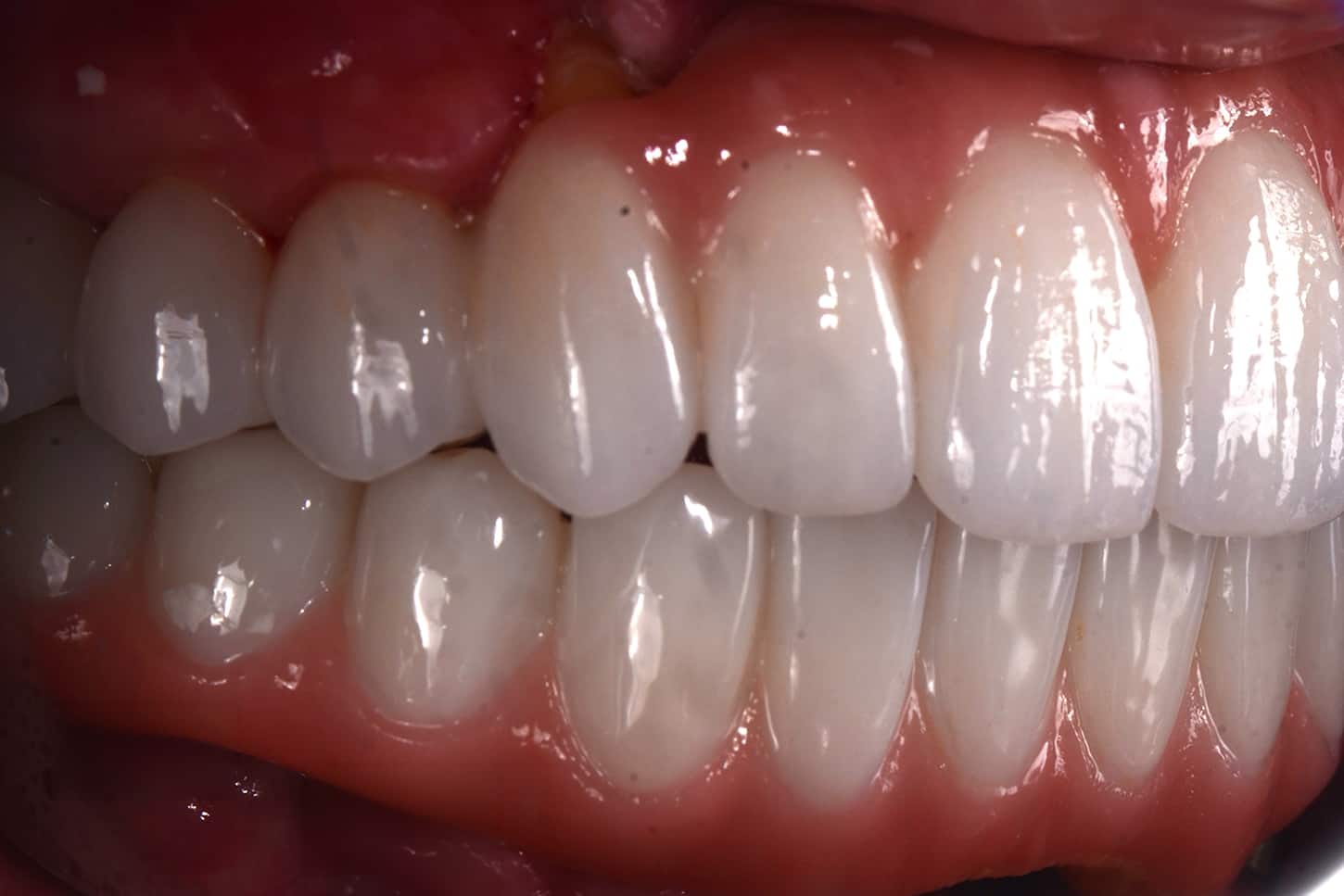
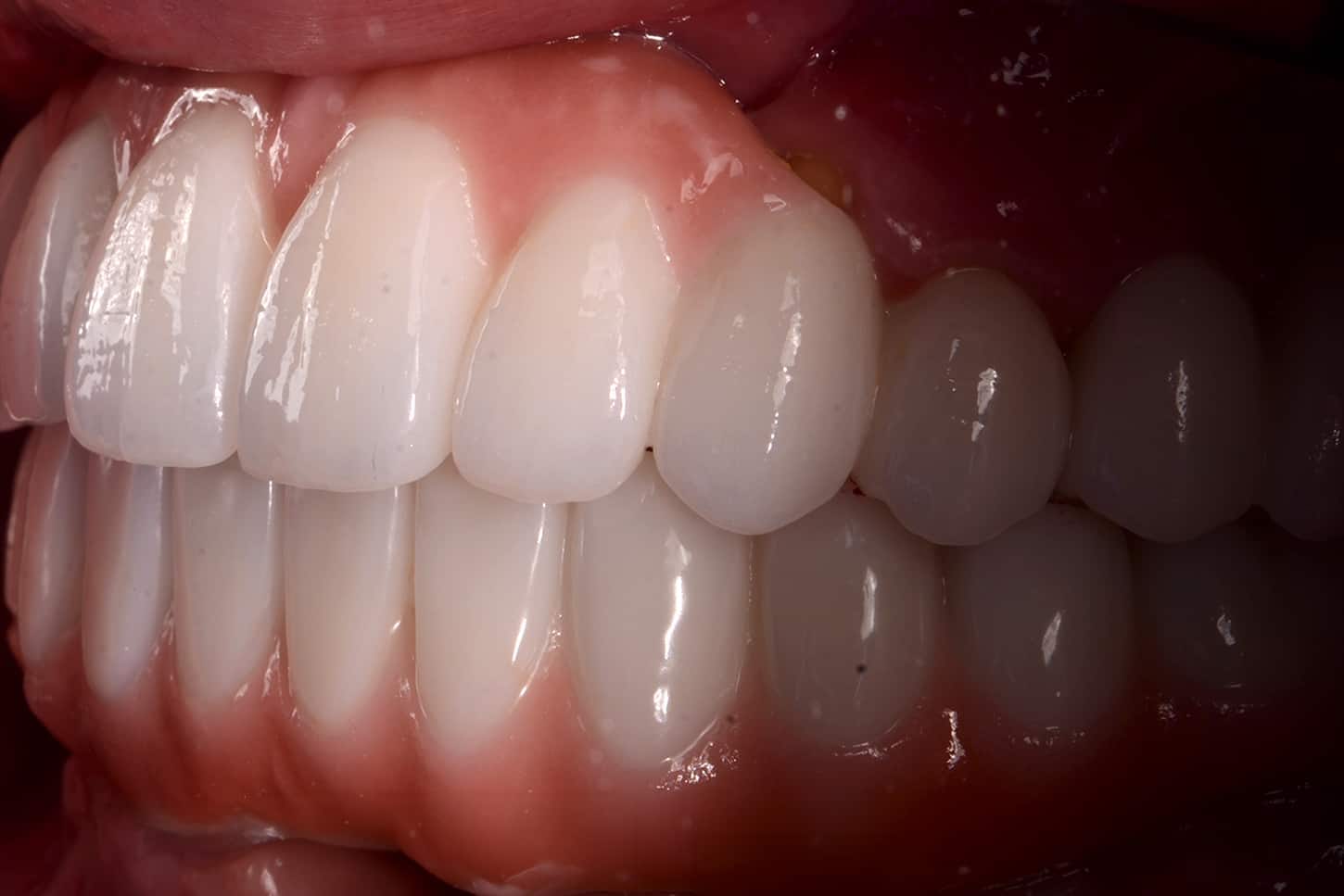
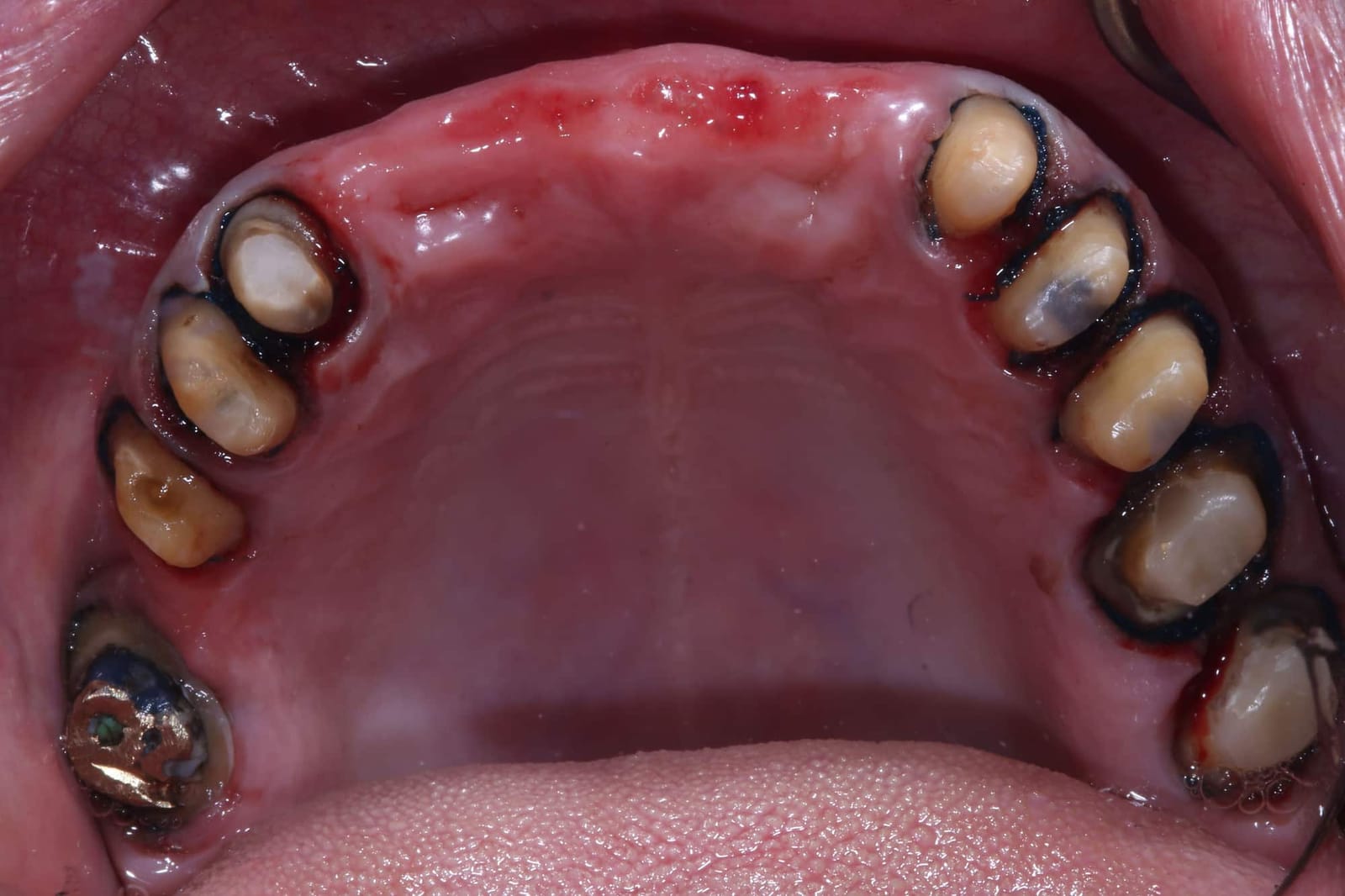
From above
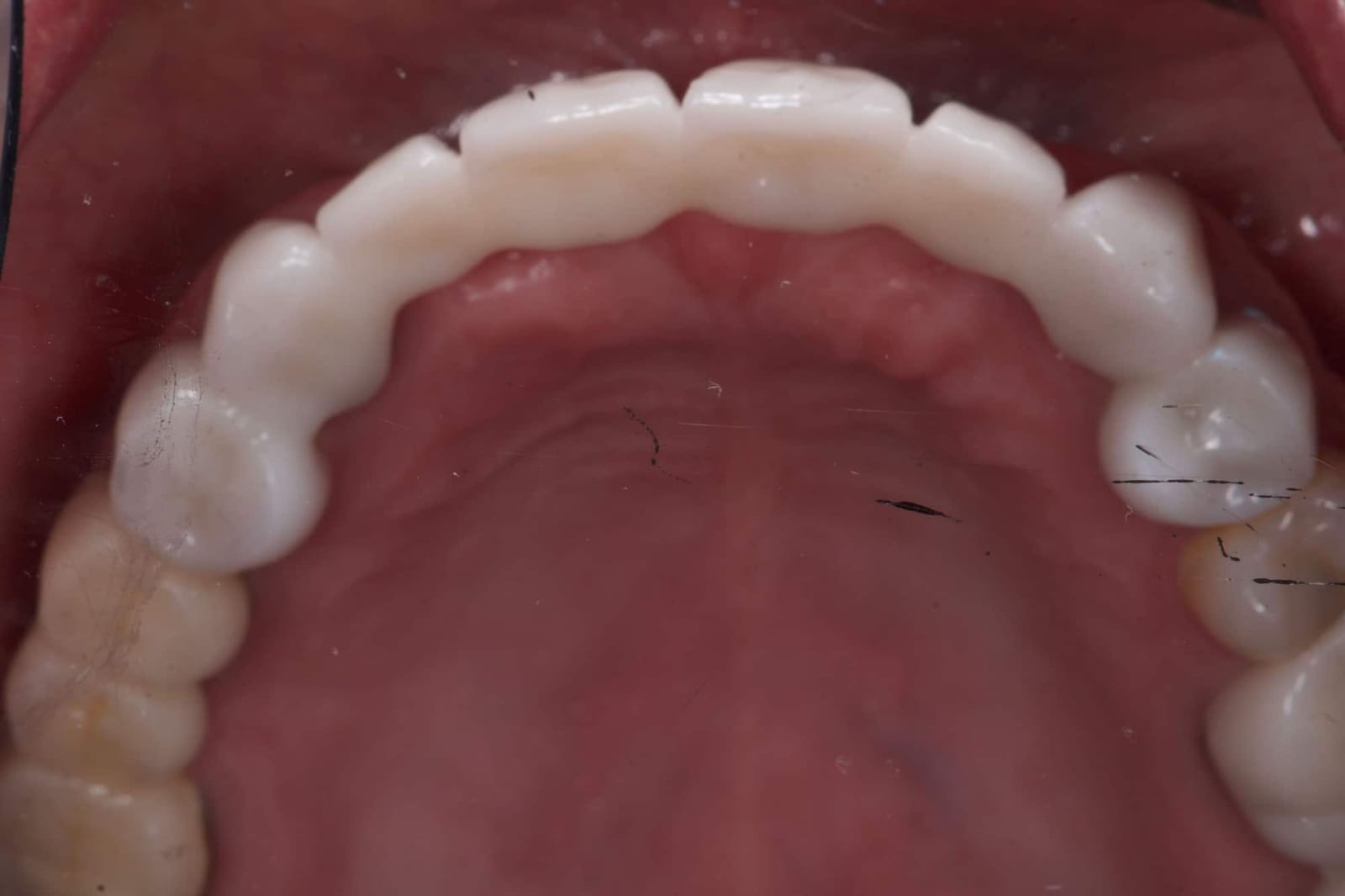
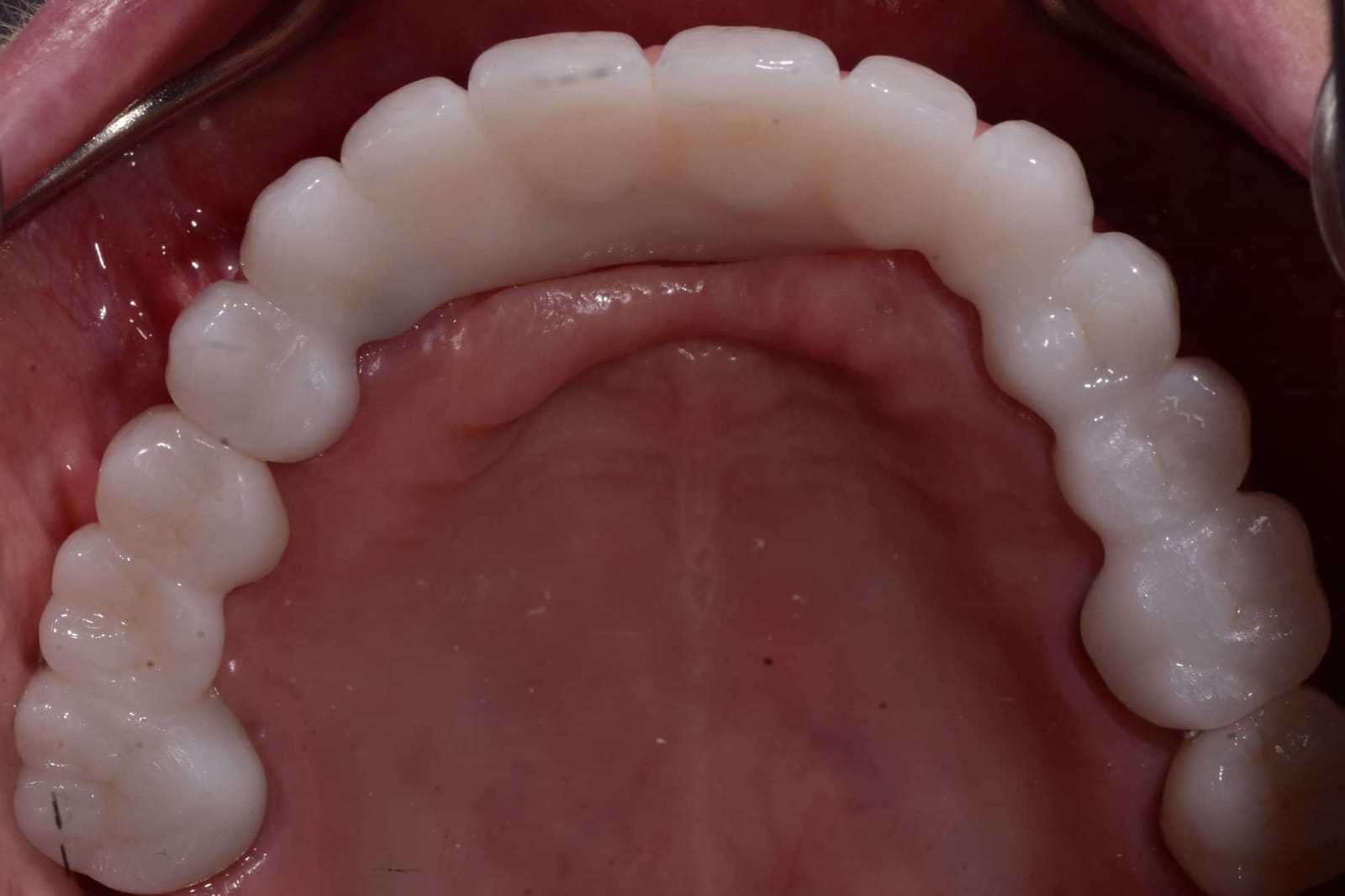
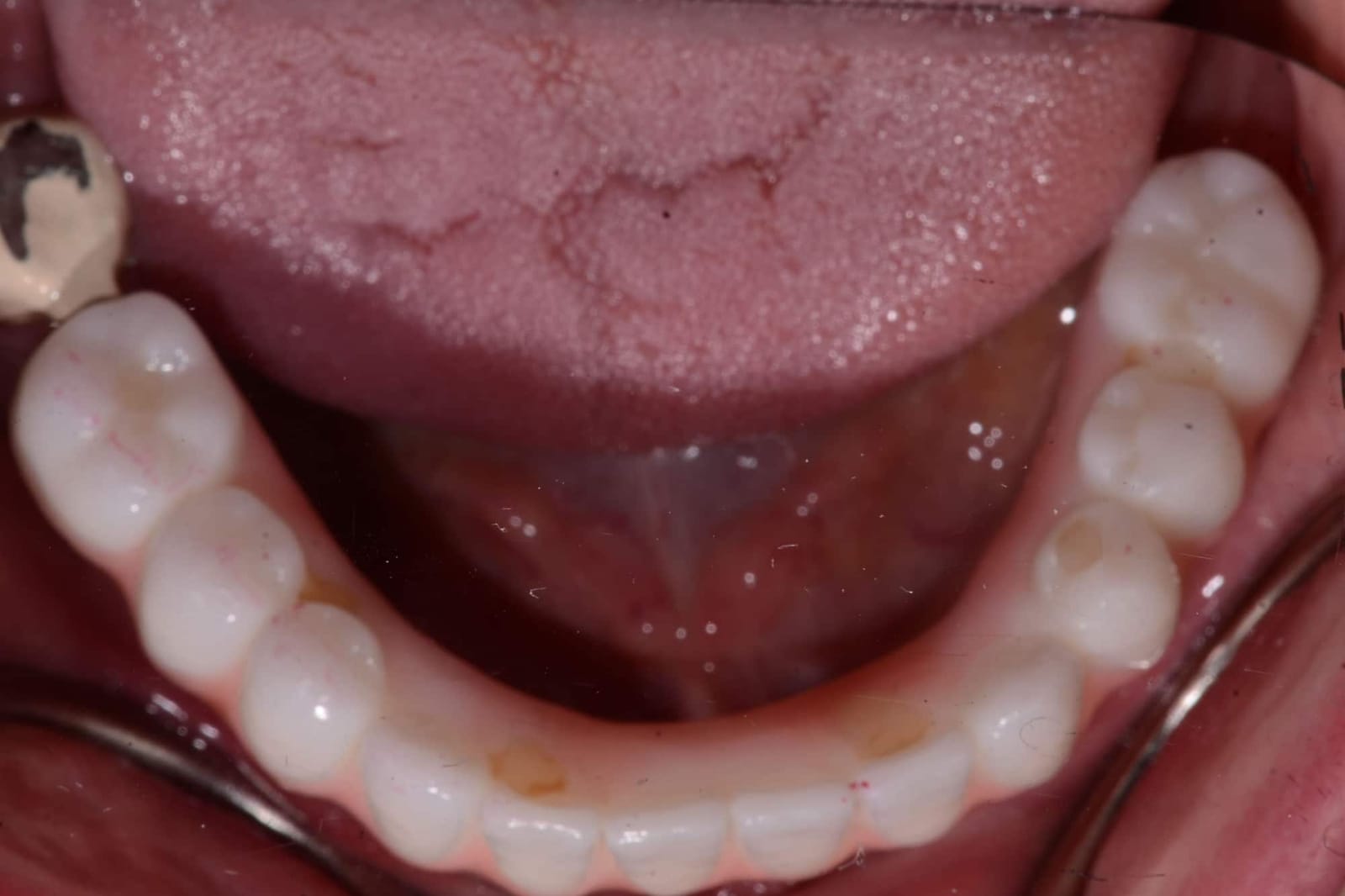
The lower arch
The teeth prepared
Dr. Reshad defined the problem. The surgeon moved the jaws.
Dr. Reshad worked with a maxillofacial surgeon from the start, defining what was wrong and exactly where he wanted each jaw to end up. Surgical guides were made and handed to the surgeon: how far forward the upper jaw should come, how far back the lower jaw should go.
Through the surgery and the healing she was never without fixed teeth. The provisionals carried the new bite, and the frames here show the remaining teeth prepared for the work that followed.
The final restoration
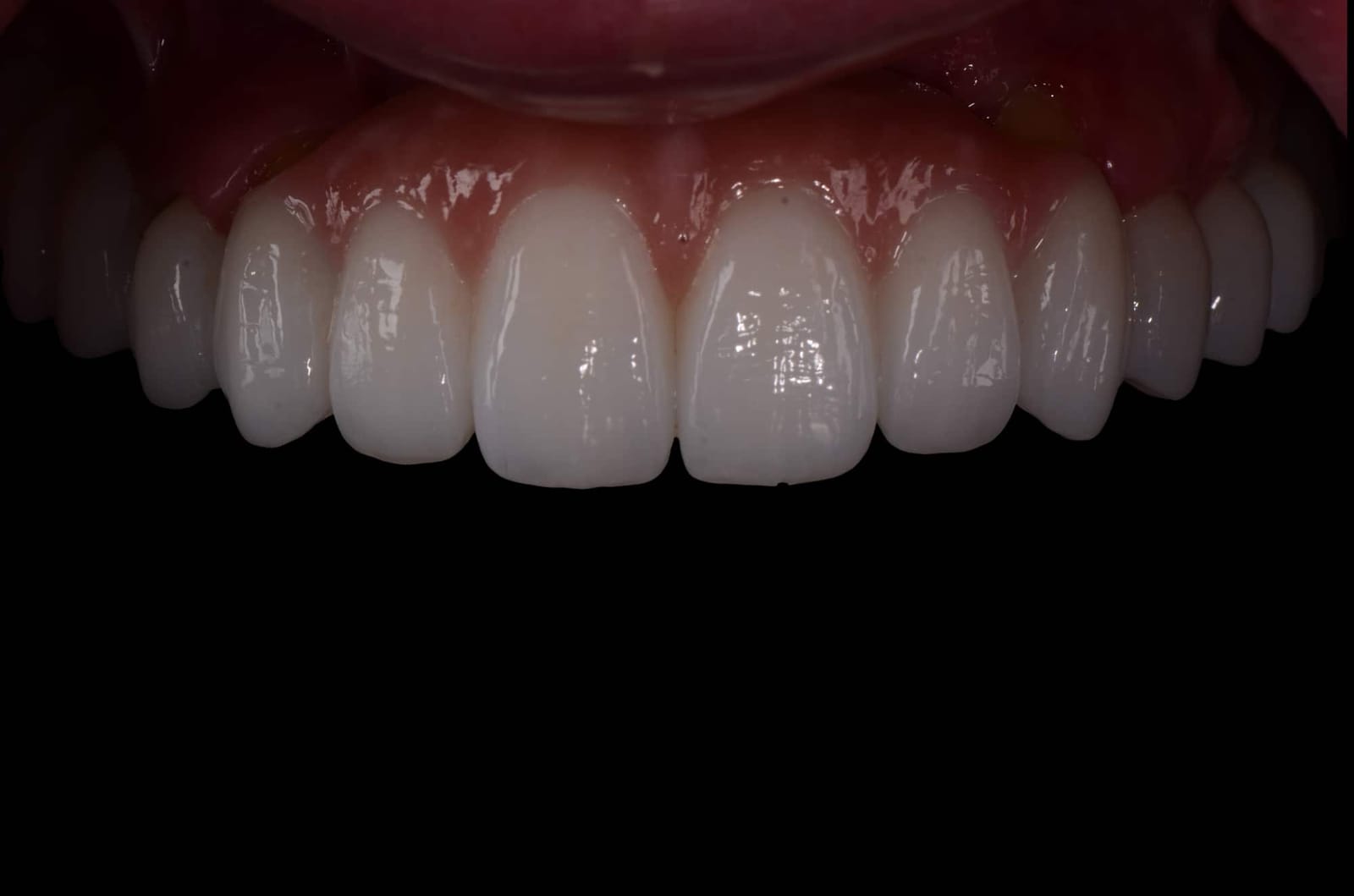
No implants in the upper jaw. A fixed bridge instead.
The surgery made matters harder in one respect: the upper jaw could not take dental implants. The blood supply to the moved bone and the extent of the surgery ruled them out. Dr. Reshad had to restore a severely diminished upper jaw with a tooth-borne reconstruction.
Sometimes the implant option simply is not there, and a prosthodontist has to give a patient fixed teeth with sophisticated bridgework on the teeth that remain. That is what the upper arch is. The implants went where they could: in the lower jaw, where the front teeth had been lost.
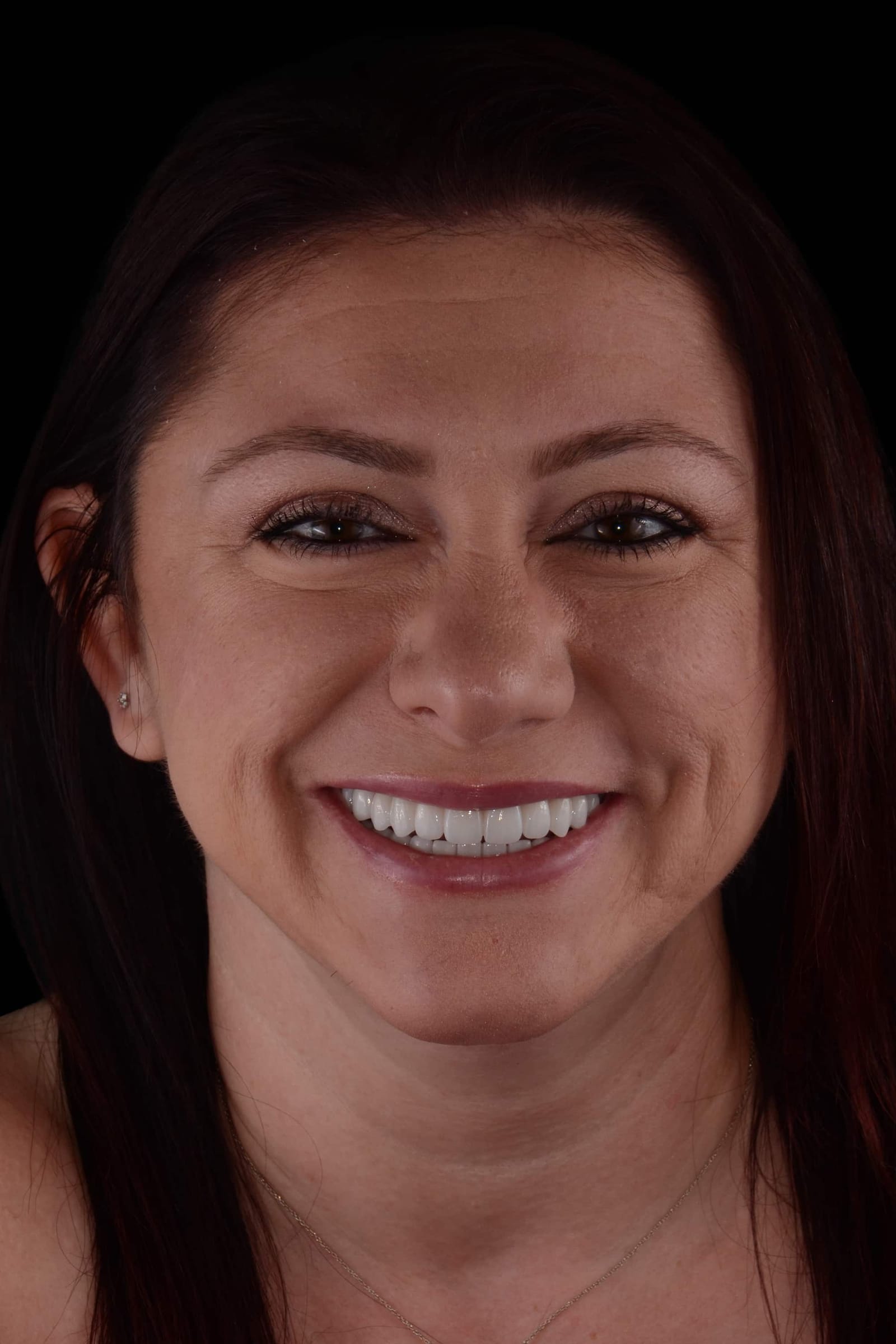
The result reaches past the teeth. The lower jaw no longer leads. The upper lip has something behind it. The middle and lower thirds of the face are back in proportion, and the smile is the last thing you notice, which is how it should be.
An interdisciplinary case like this only works when one person is responsible for the end result and plans backwards from it. That is the prosthodontist's role, and it is why the surgeon's work and the dentistry fit together instead of merely following each other.
The radiographs
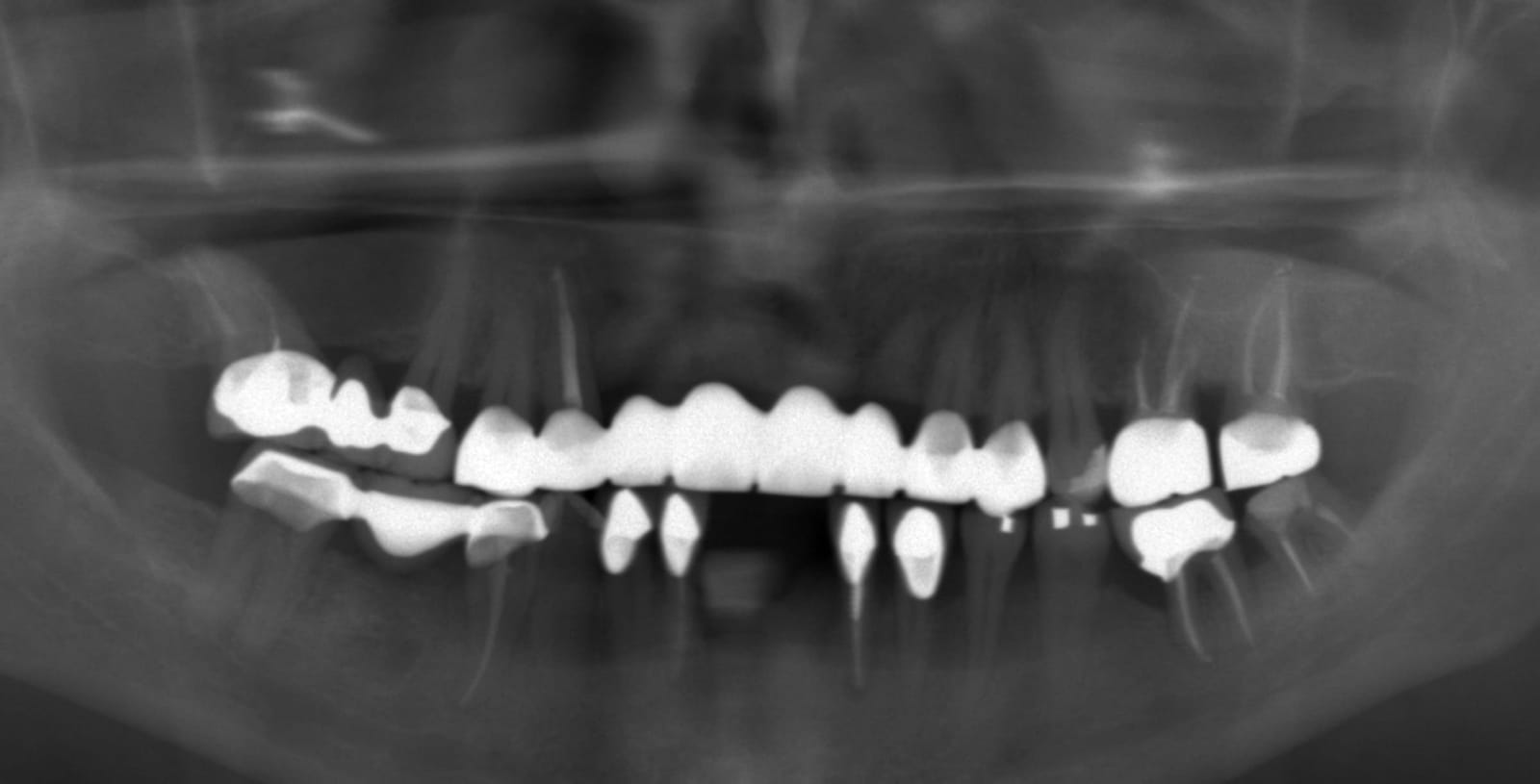
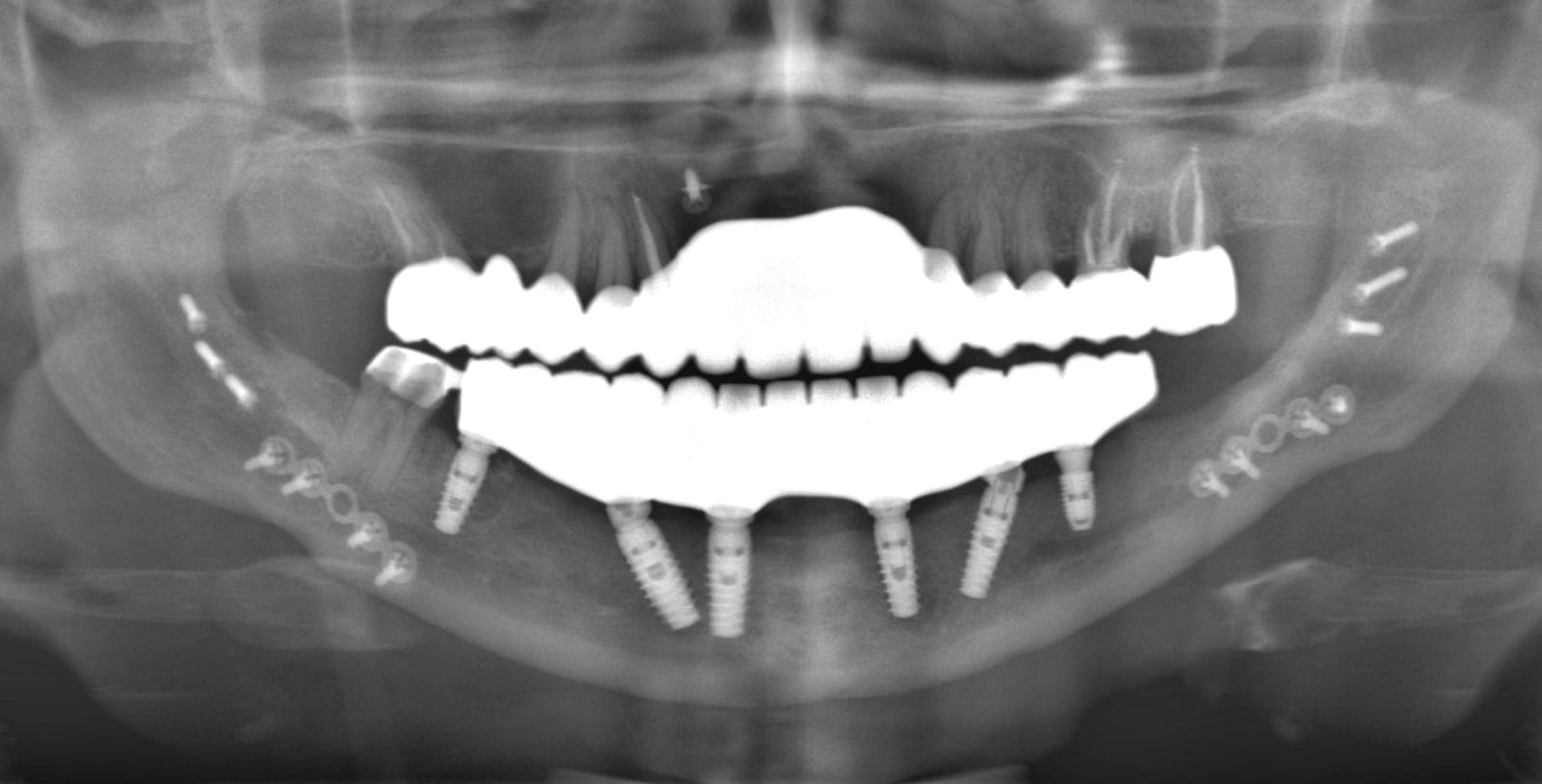
Before and after
Every case is planned around one person's anatomy. Individual results vary, and what was right for this patient may not be right for you.