FP-1 Case 8 · Implants · Reconstruction
The Smile That Could Not Hide Anything
She was young, with her whole life ahead of her, and her mouth was coming apart.
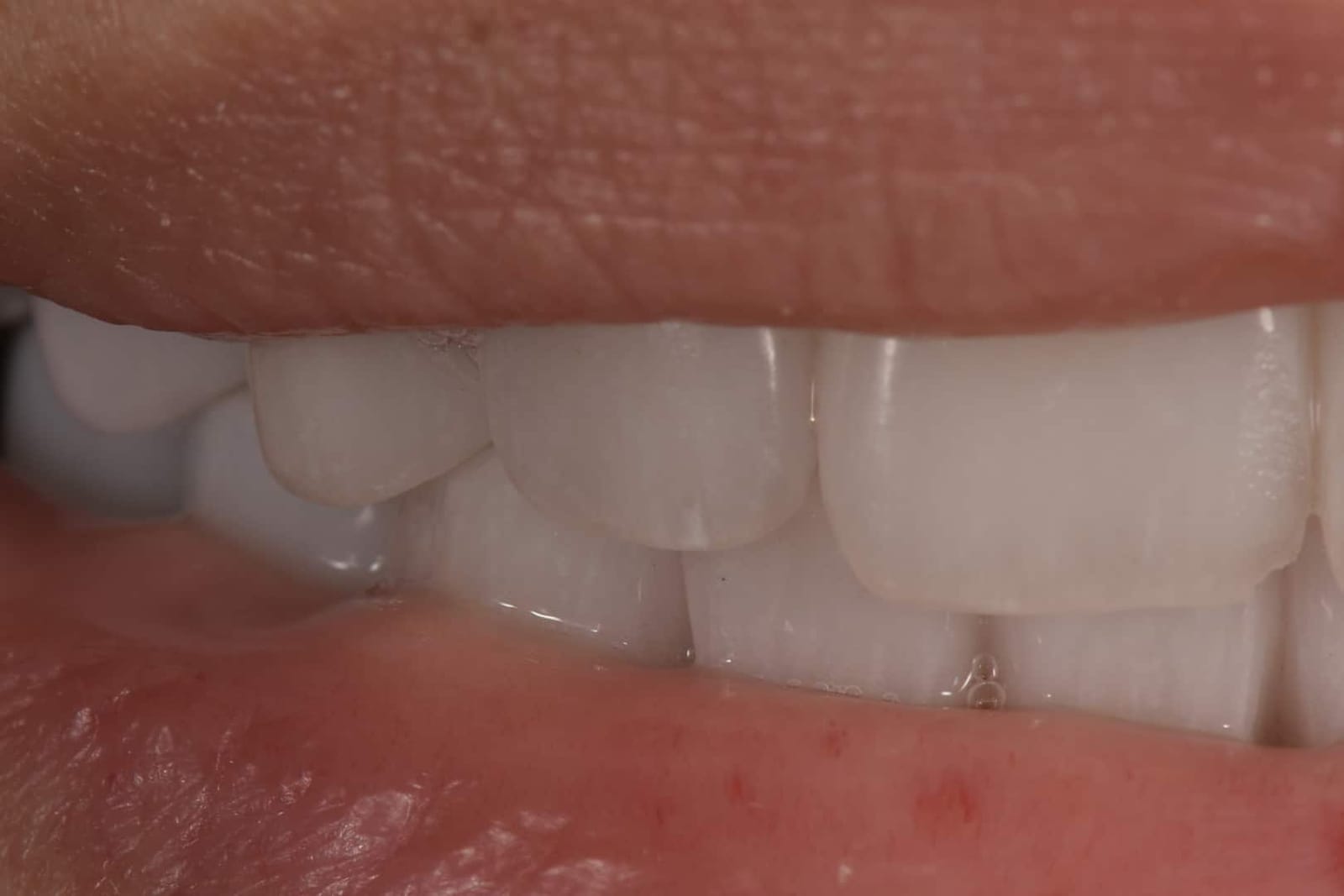
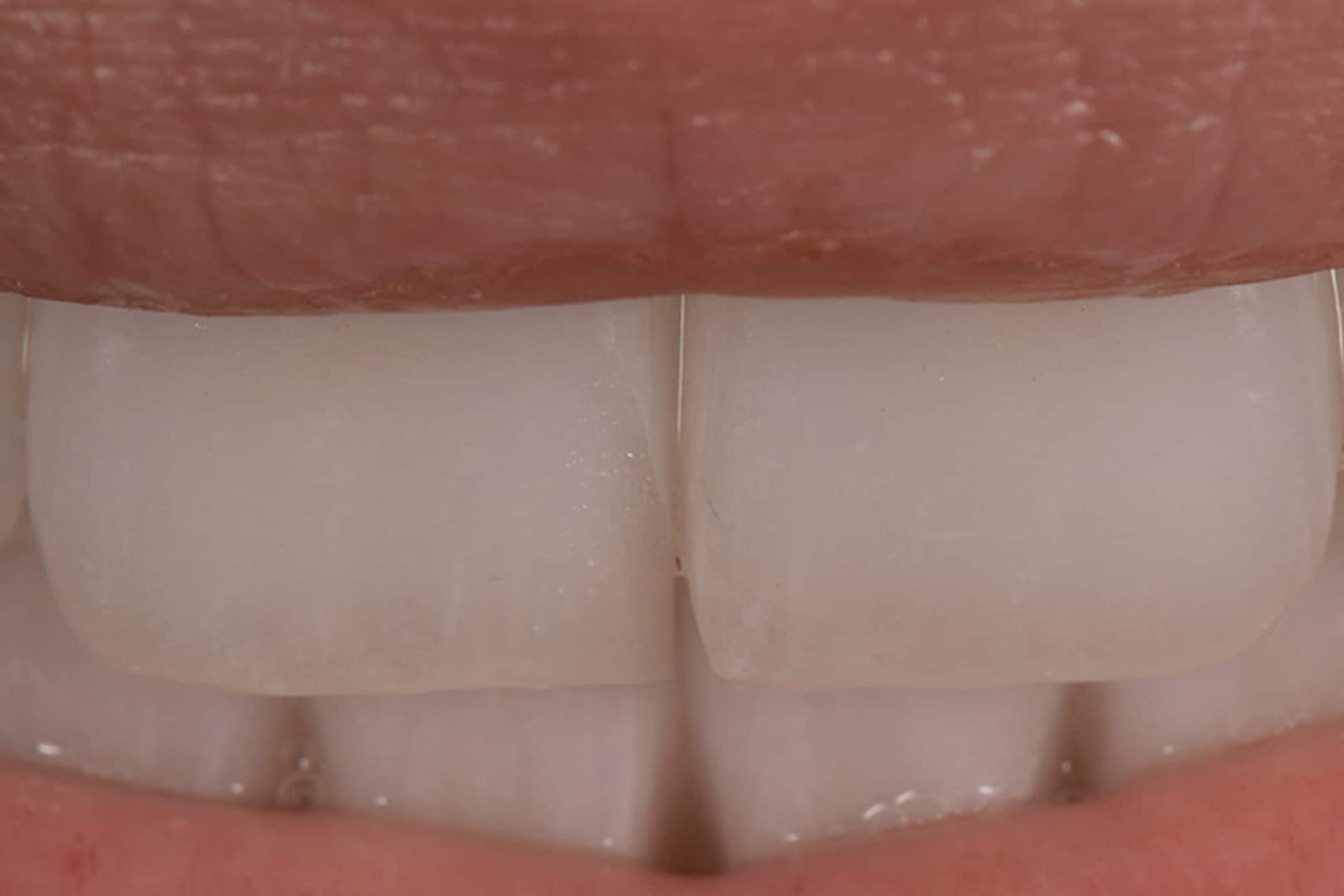
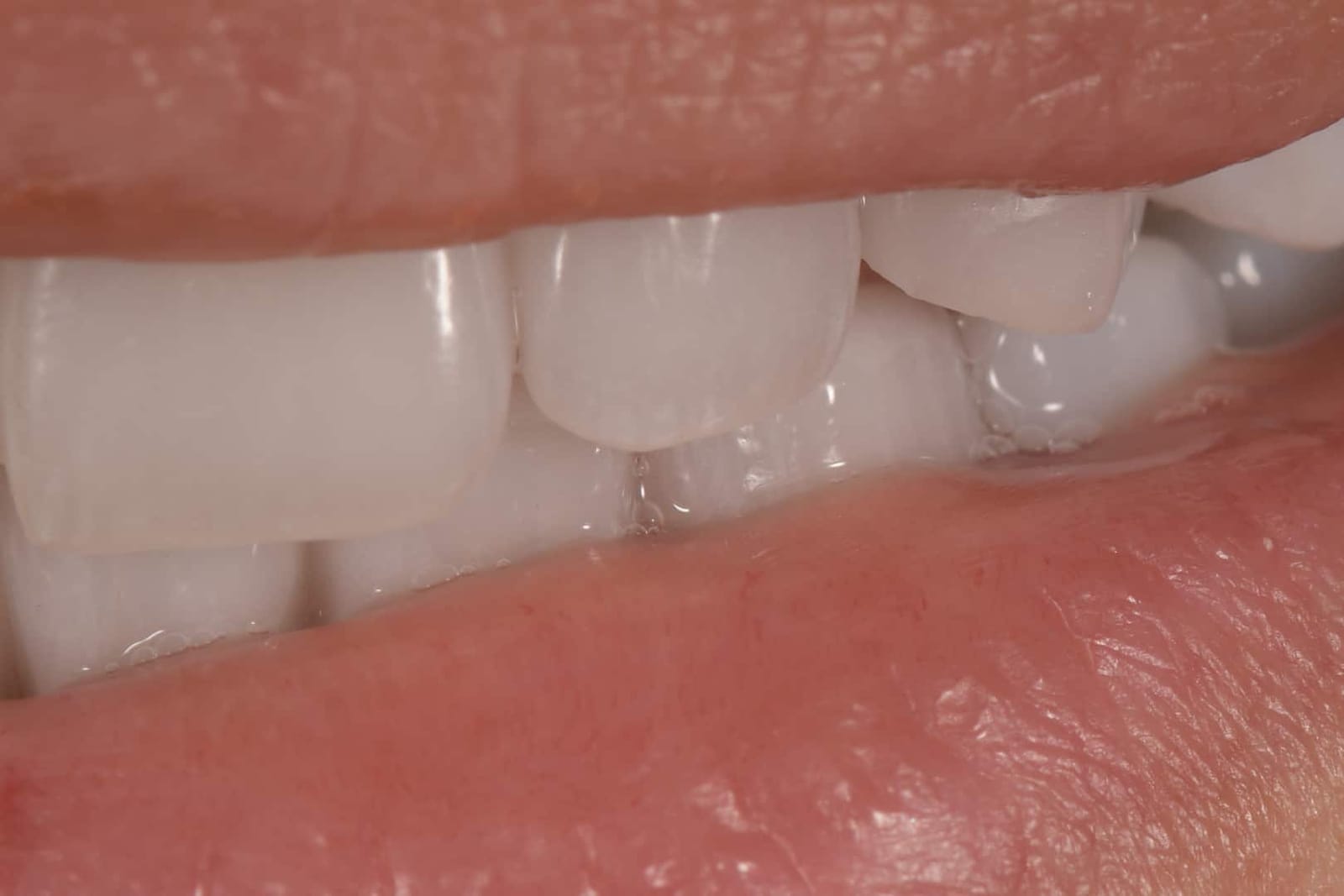
Two referrals, one collapsed bite.
She came to Dr. Reshad from New York, referred by two separate doctors in two different states. She was young, with her whole life ahead of her, and her mouth was coming apart.
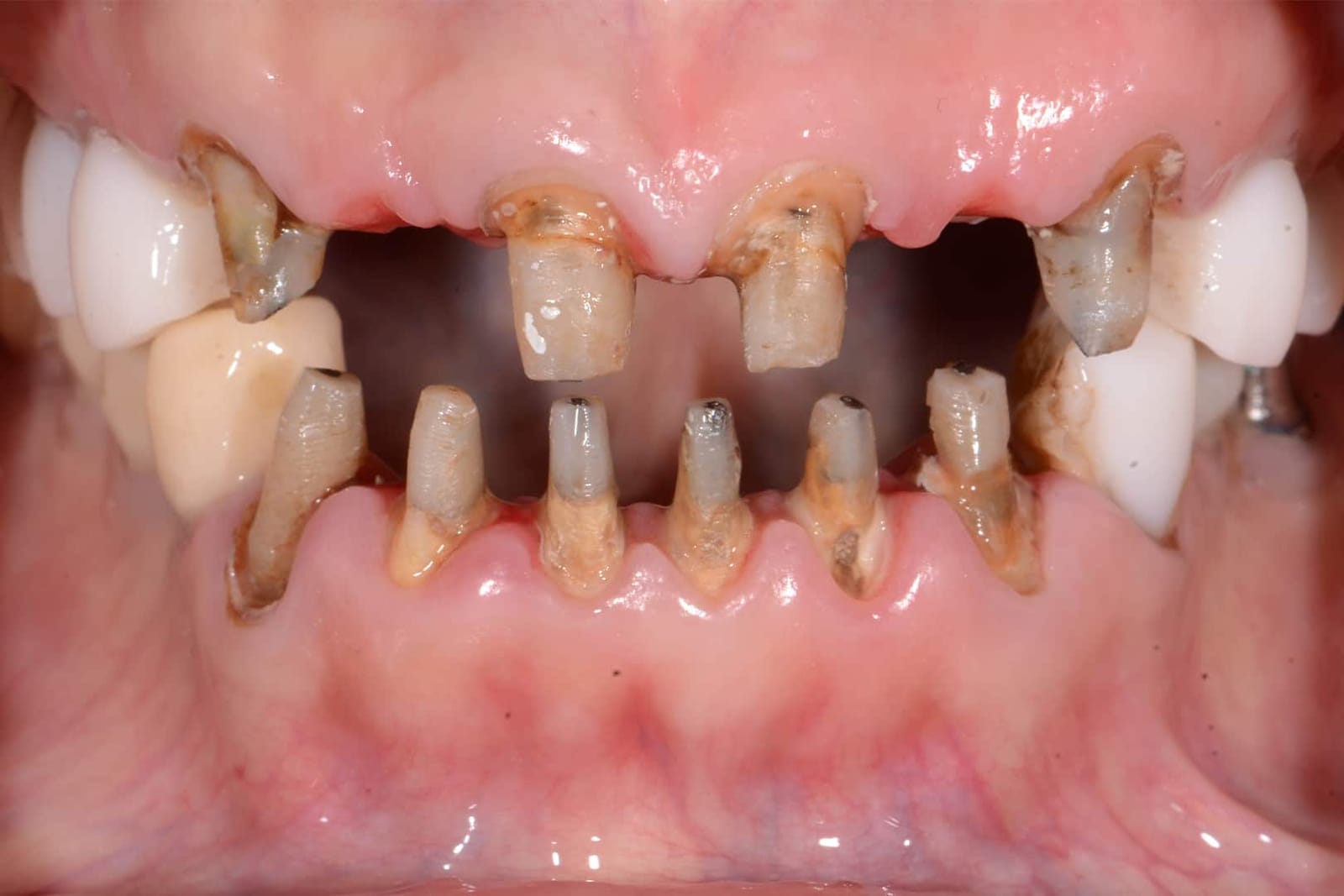
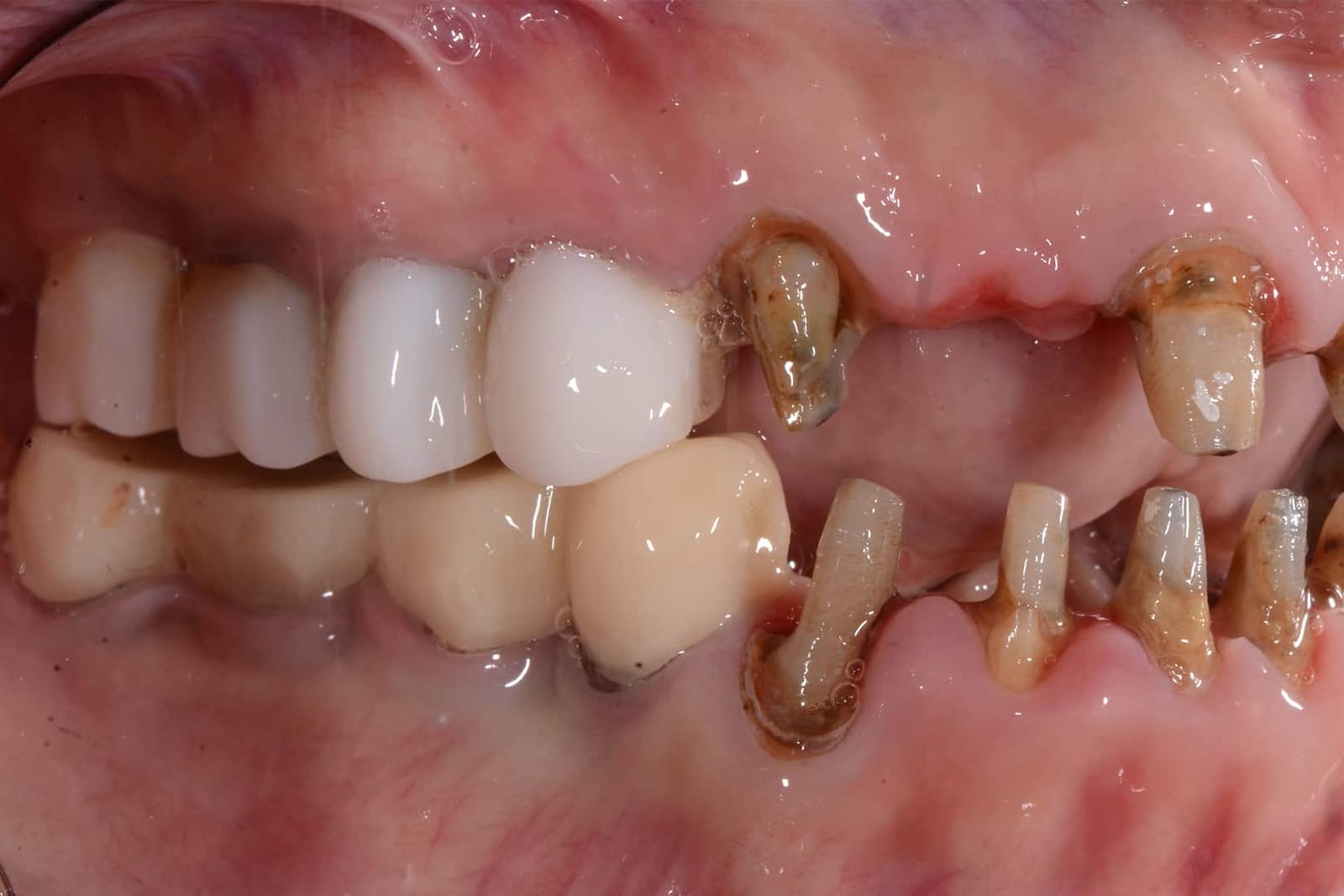
Implants had already been placed across the back of her mouth. The teeth built on top of them were breaking down. The bite had collapsed. The front teeth, the only natural teeth she had left, had decayed under their crowns to below the level of the bone.
Losing your teeth in your thirties is not only a dental problem. It is one more part of life slipping out of your control.
The smile
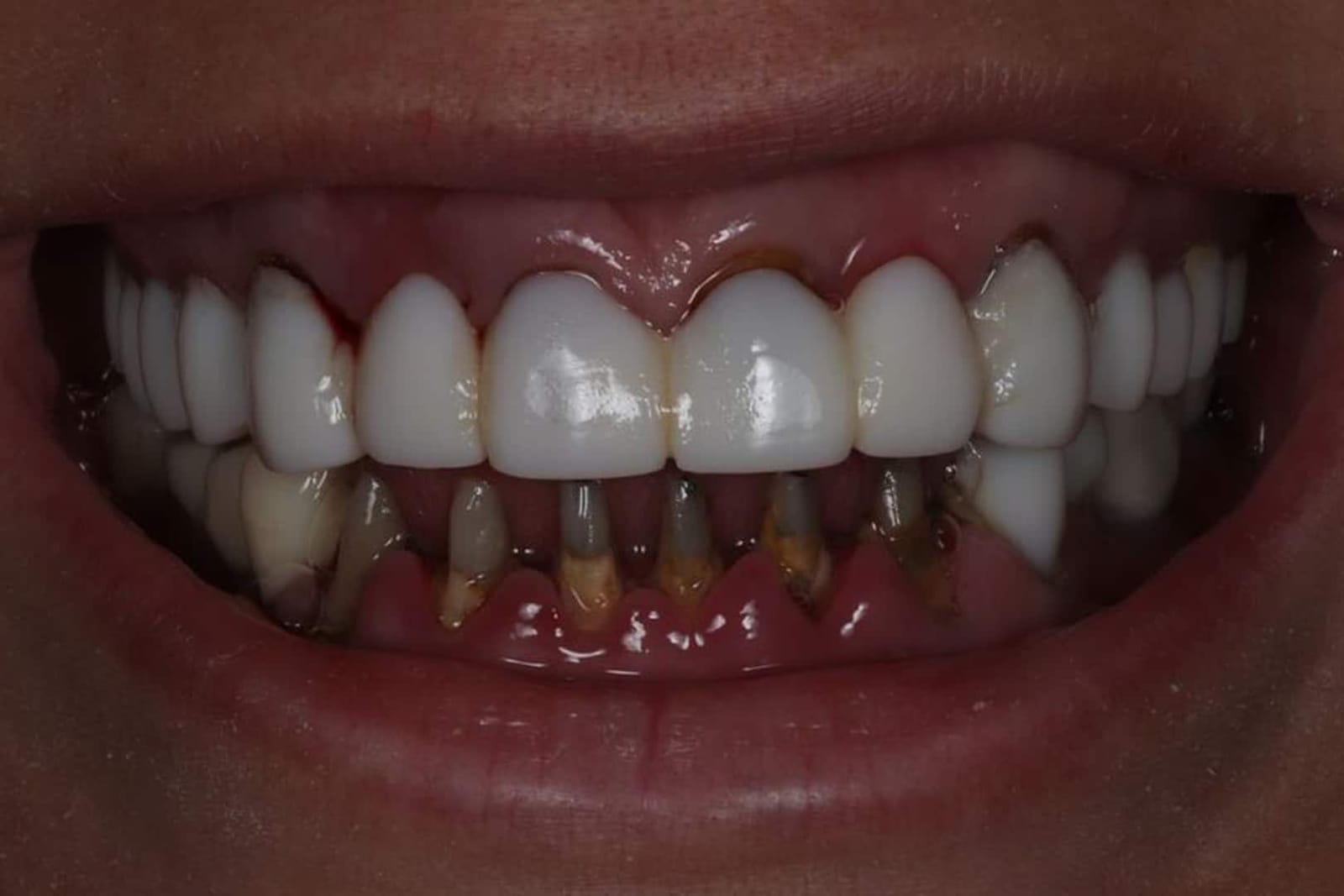
Full mouth
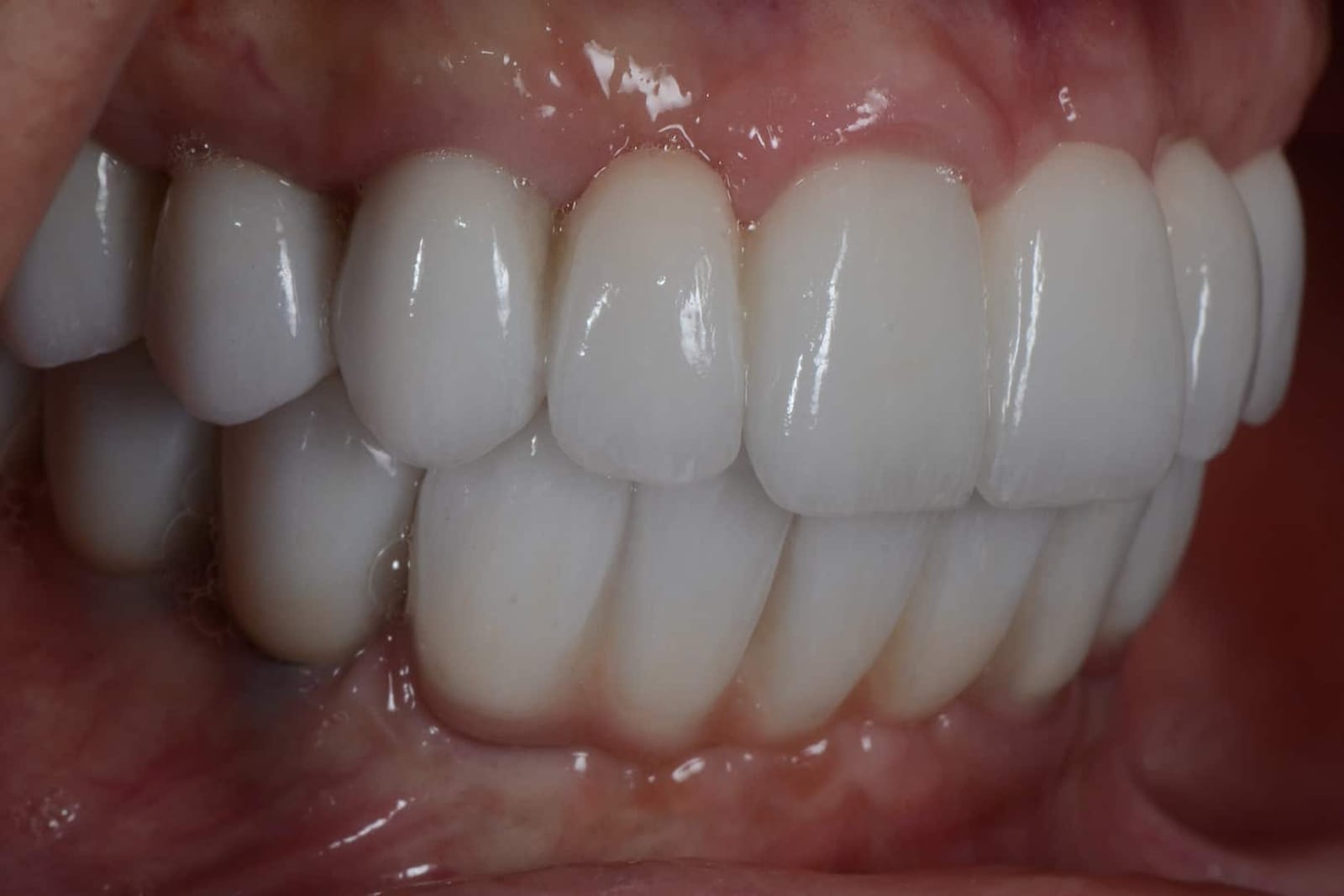
From the side
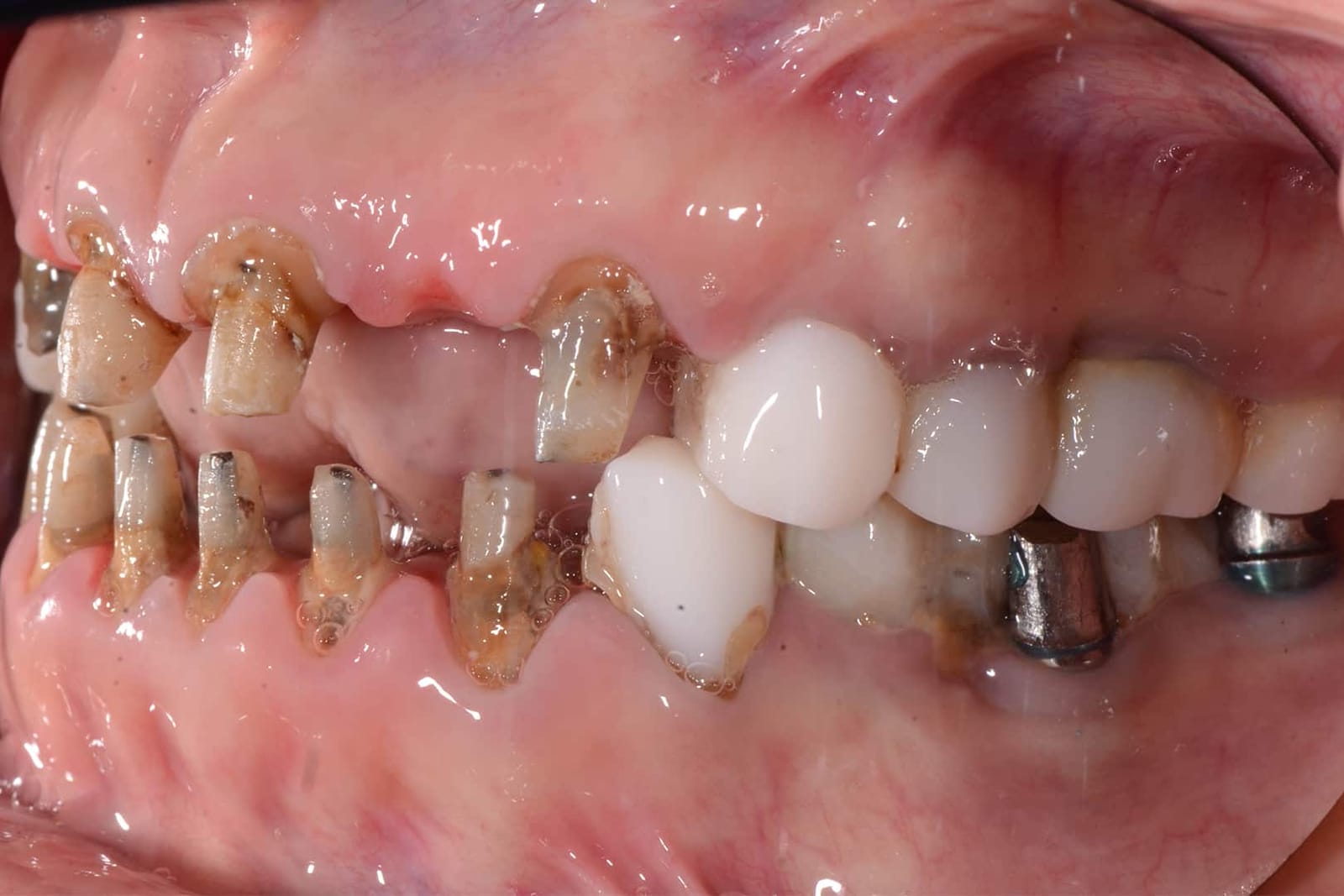
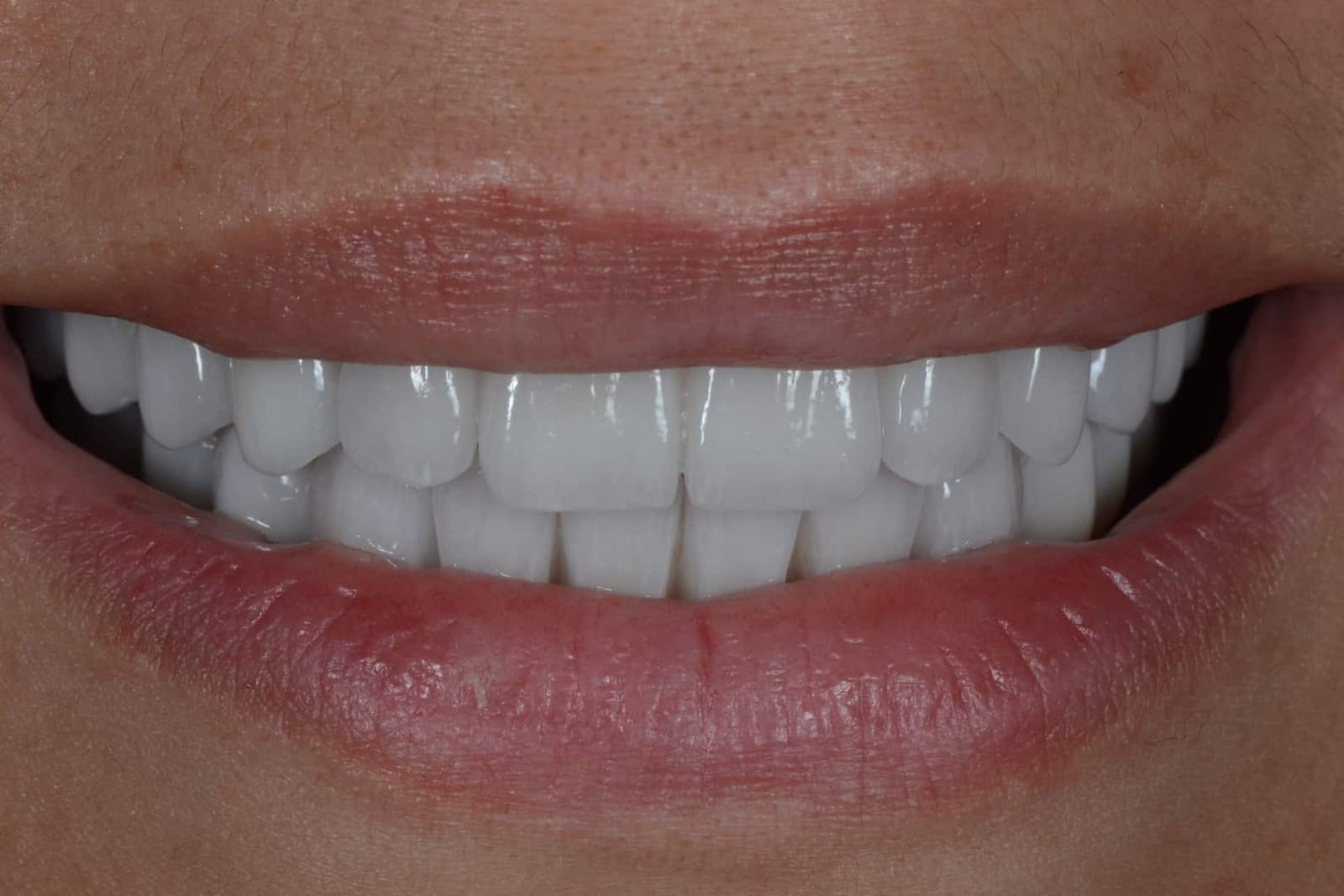
A smile line that shows everything.
She has an extremely high smile line. When she smiles she shows her gums and well beyond them. The junction between teeth and gum is on full display.
In a case like this there is no margin for error. Any gum or bone lost in treatment will be seen. Any pink ceramic used to imitate gum will catch the light differently from real tissue, and the line between the two will be visible every time she smiles.
Most full-arch implant cases are built with pink ceramic. For her, that was not an option.
Transition slowly. Protect every millimeter of tissue.
The failing front teeth were removed and new implants placed. She was never without fixed teeth. A provisional phase carried her through, with the prototypes shaped and reshaped until the gums settled exactly where they needed to be.
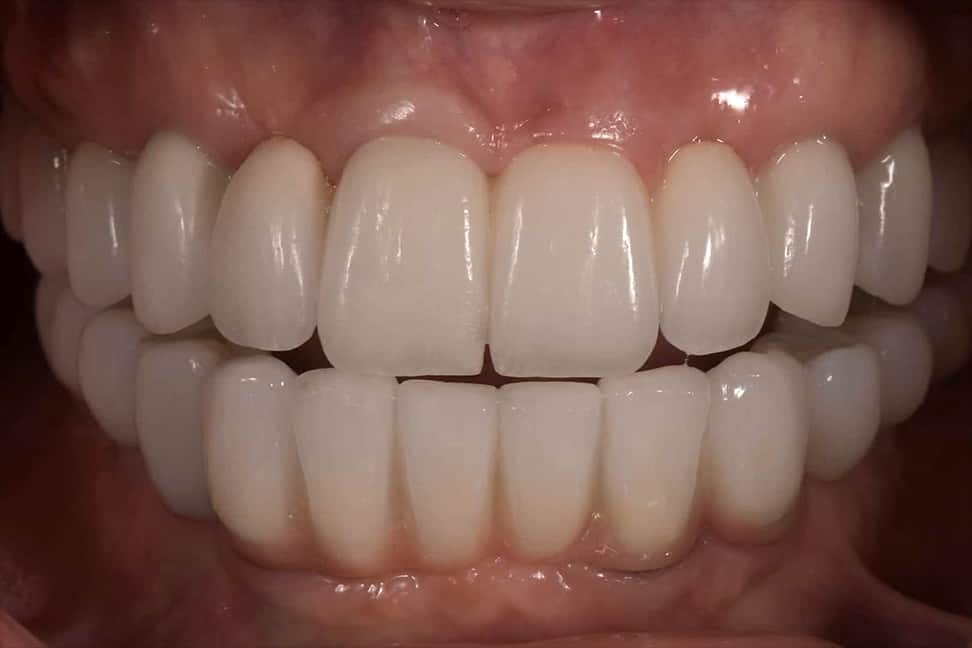
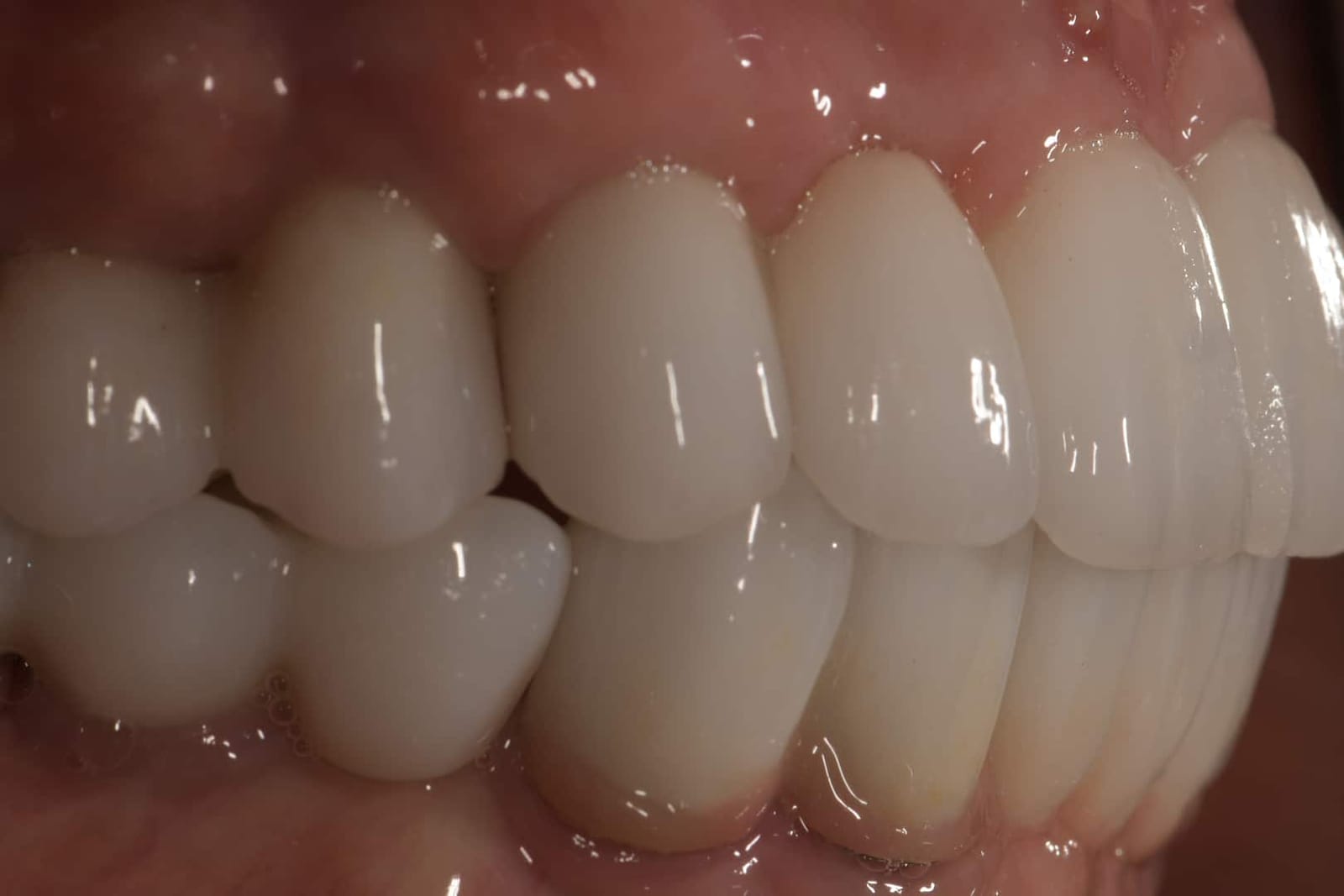
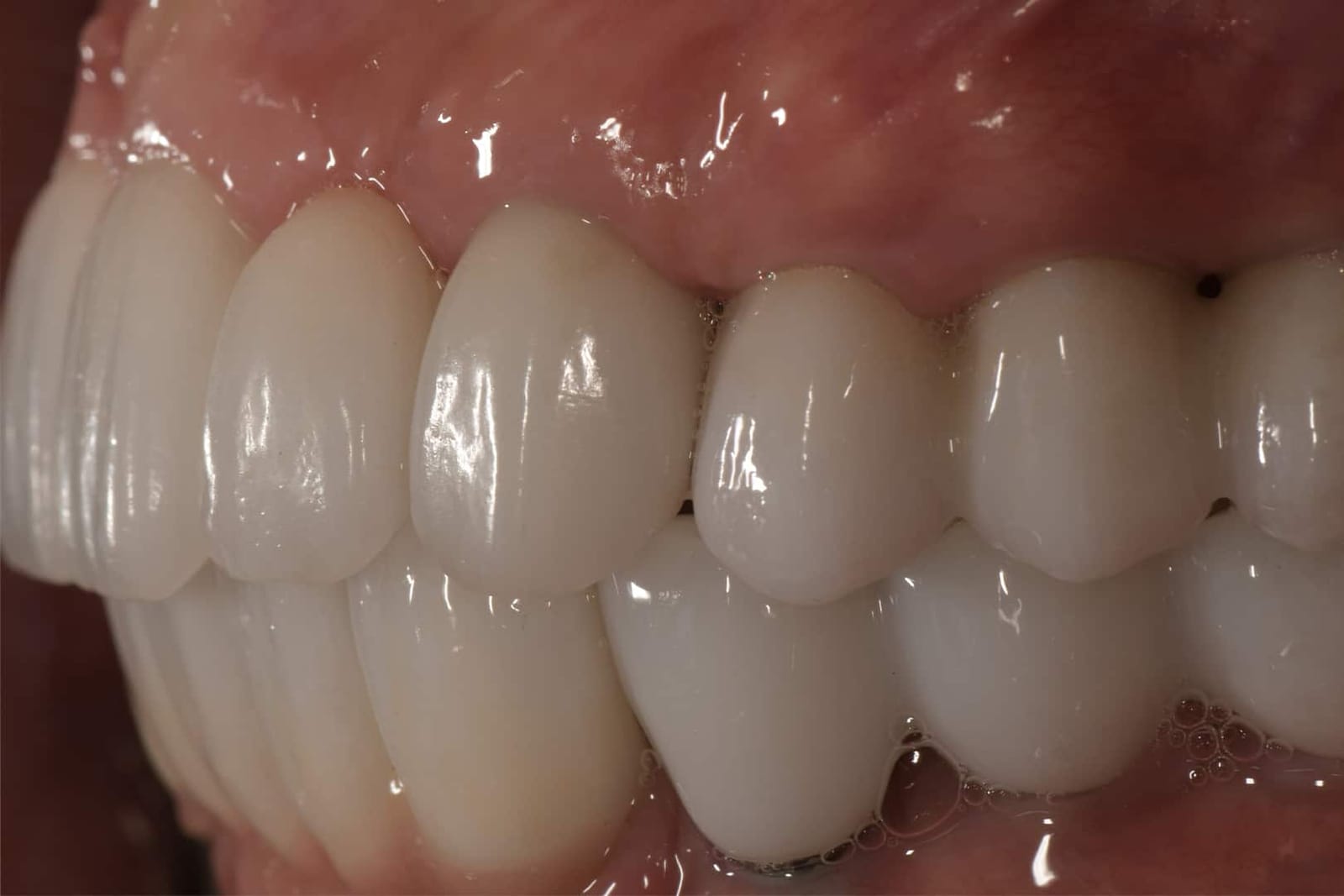
The final restoration is an FP1: ceramic teeth emerging directly from her own gum tissue, with no pink ceramic anywhere. She was not made worse off than she arrived. Her natural smile was kept.
Some of the implants placed by previous dentists were more than she needed. Rather than remove them, Dr. Reshad left them sleeping under the gum. For a young patient, they are insurance for the decades ahead.
The final restoration
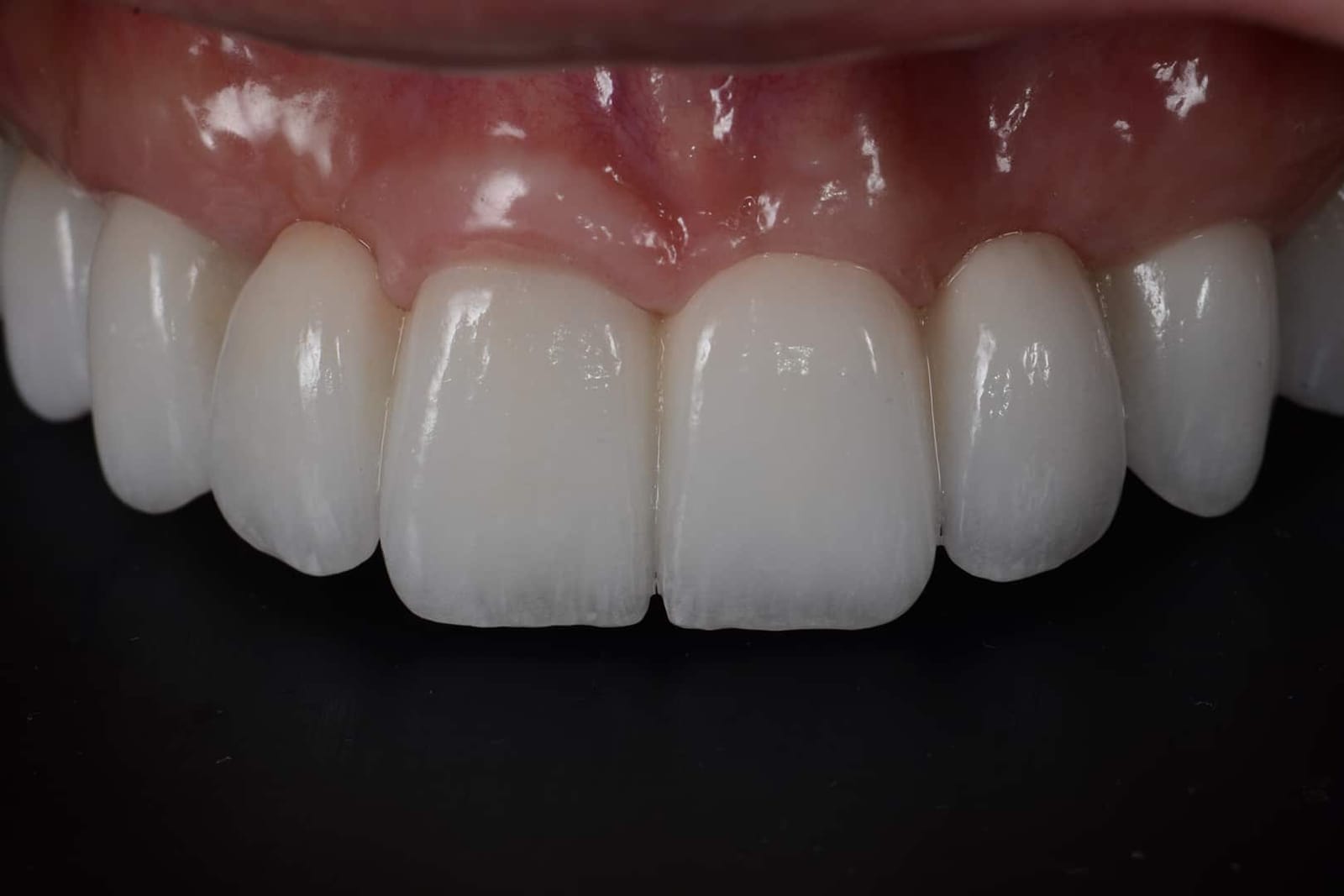
Teeth together, lips held back
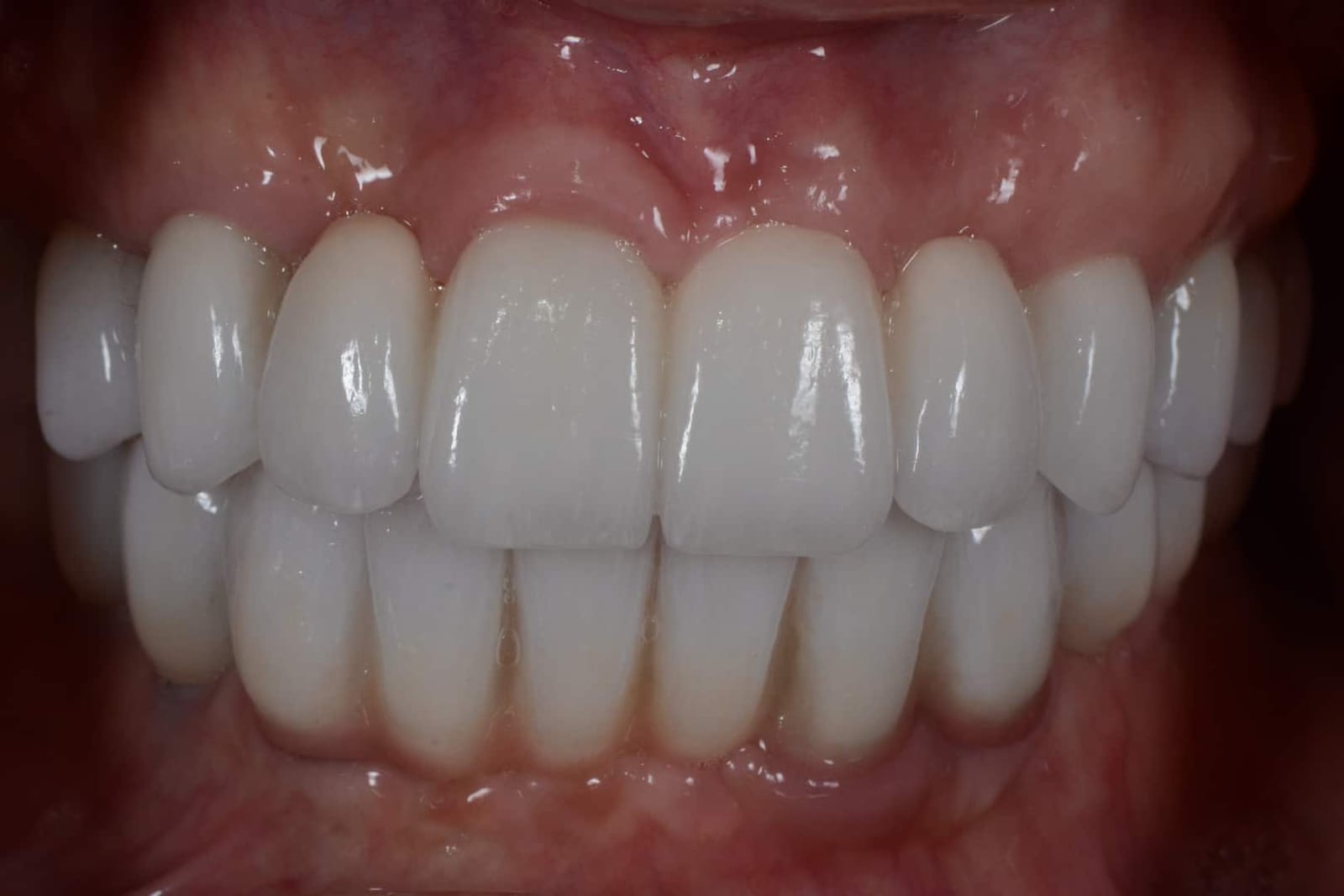
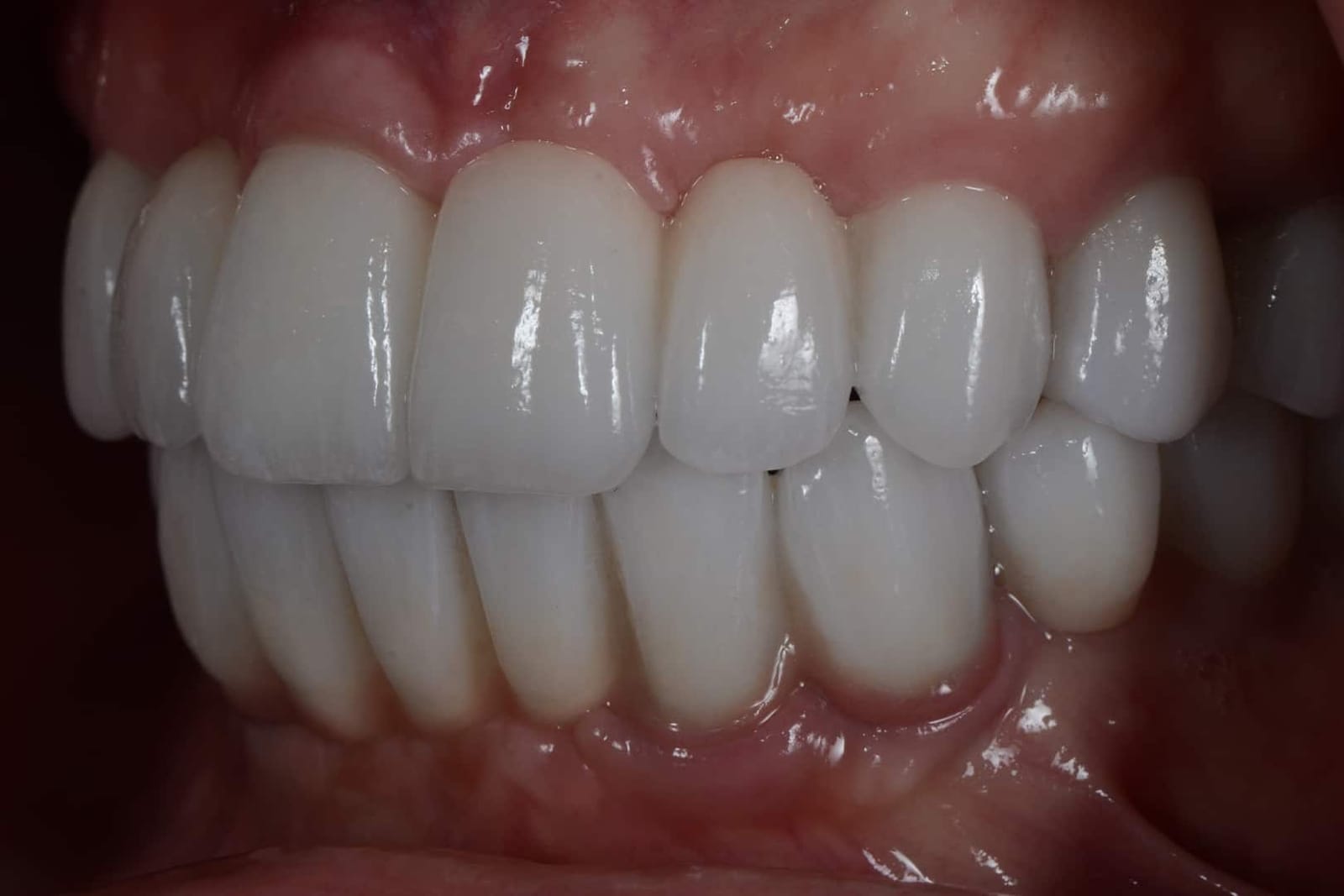
Where the teeth meet the gum
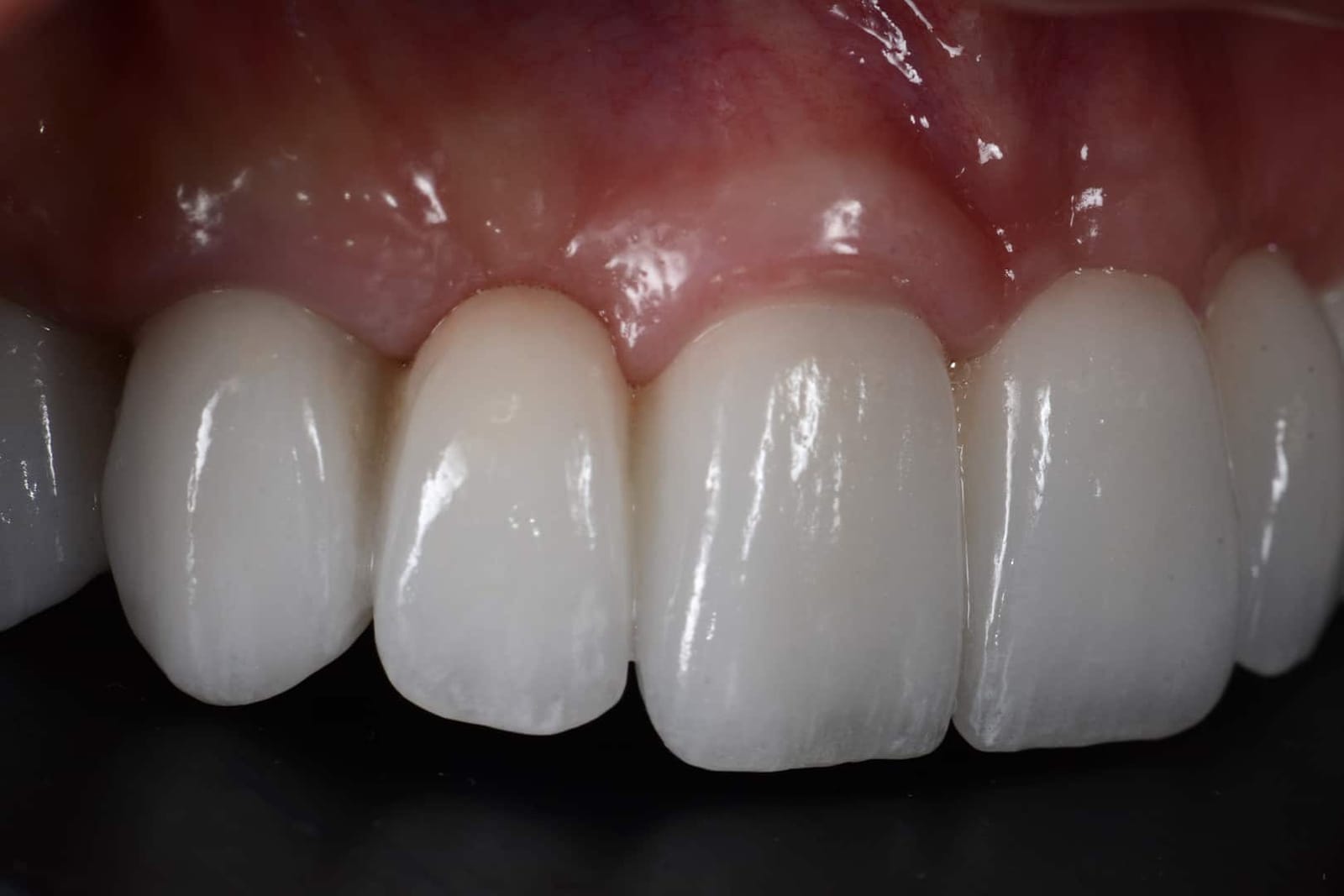
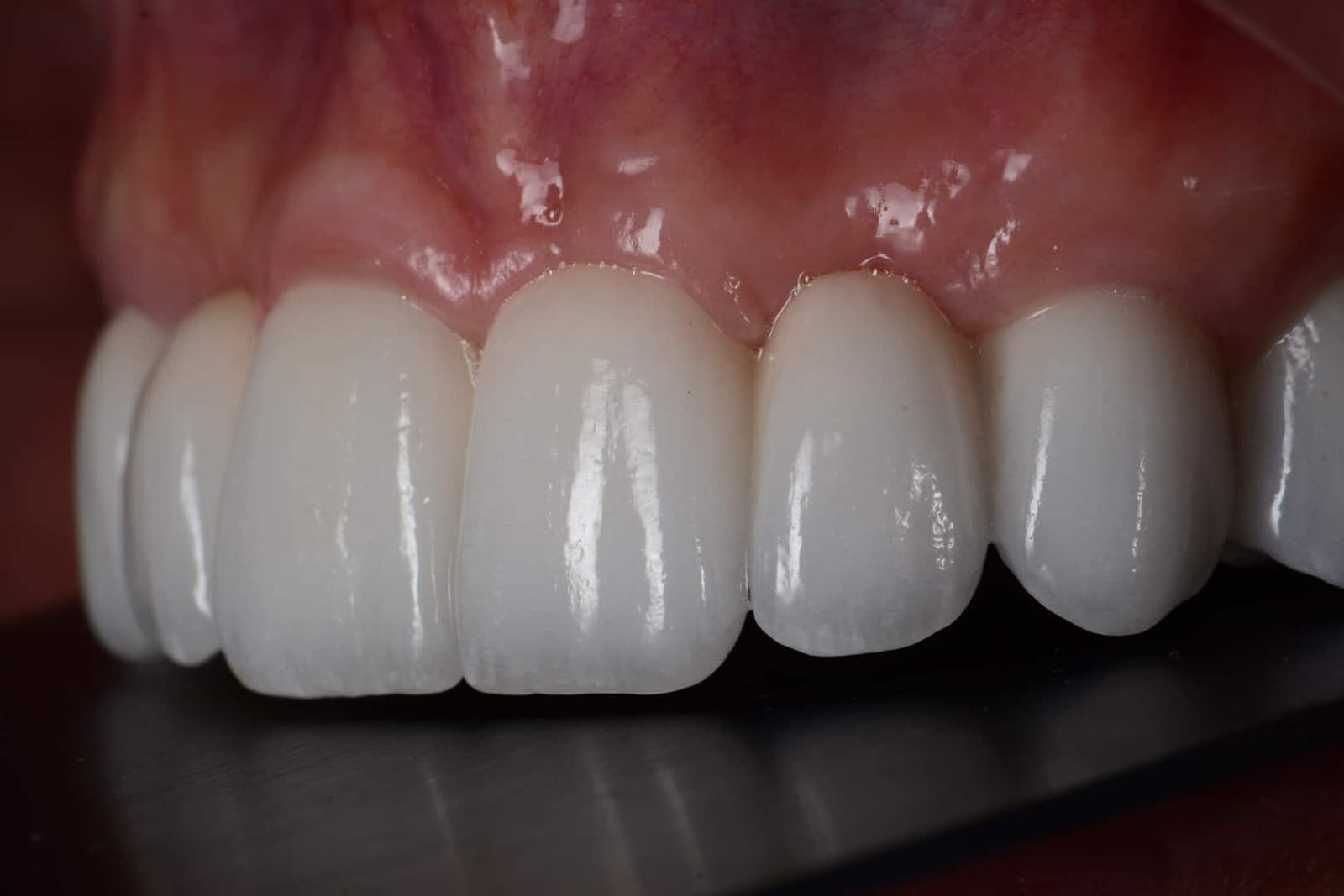
The smile
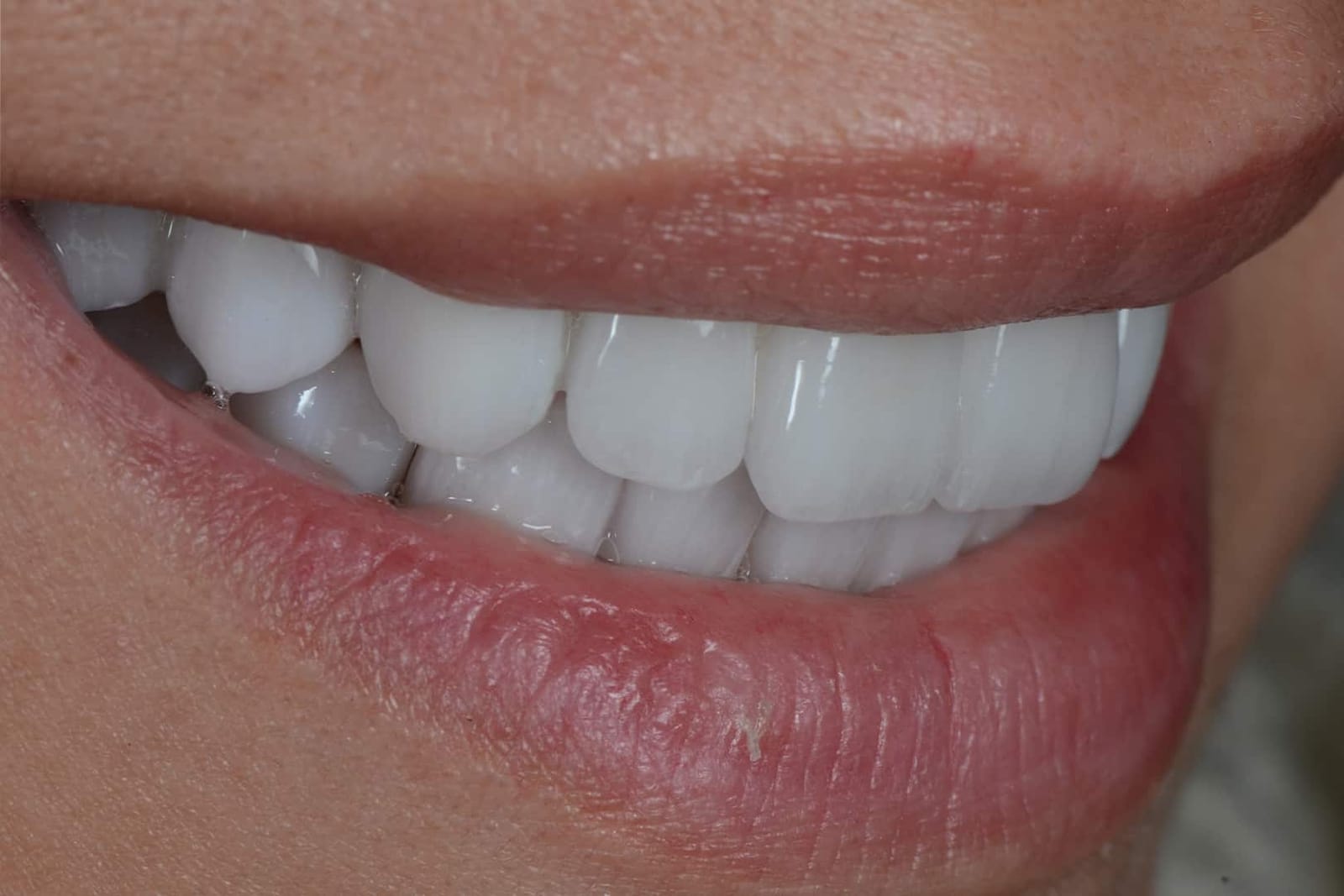
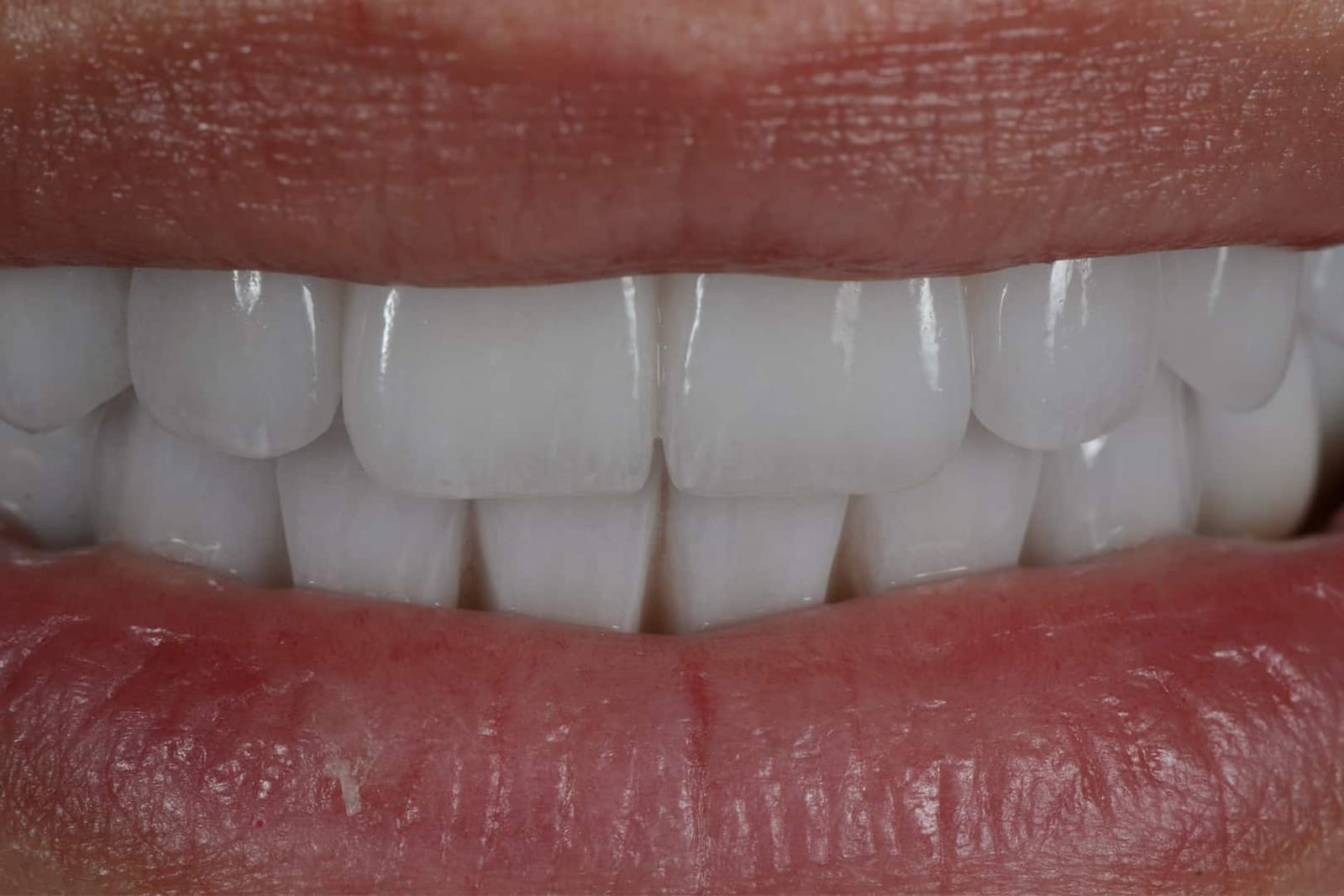
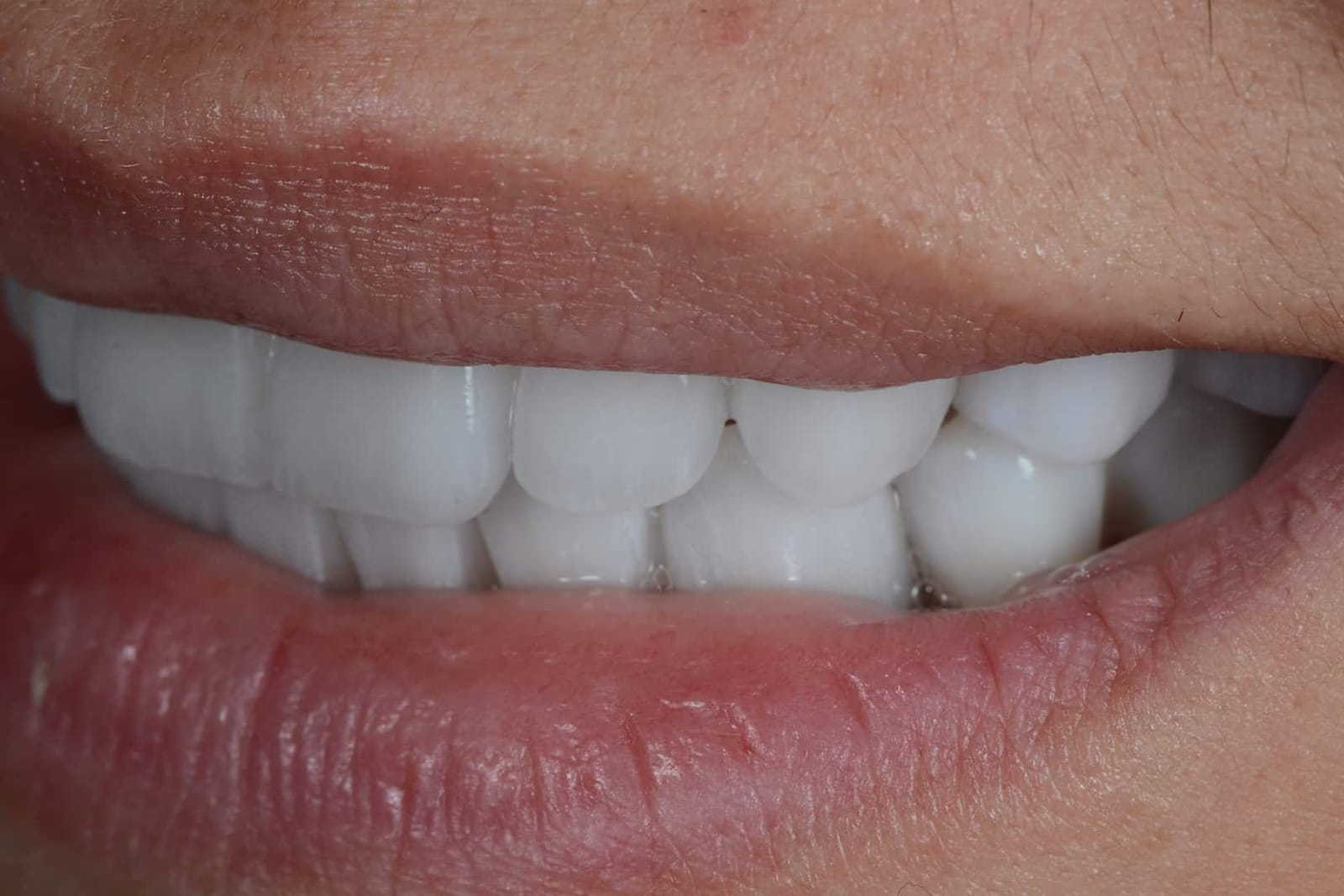
Still maturing. Still hers.
Dr. Reshad is still seeing her. Ten years later the reconstruction is functioning, healthy, and in her words she is extremely happy with it.
She flies in from New York three times a year for cleaning, a check of the tissue around the implants, and a check of the bite. That last one matters most. Implants do not move and ceramic does not flex, so small bite adjustments over time are what keep everything intact.
She has friends who had similar implant work elsewhere. Odors, fractures, pieces breaking off. Hers has had none of it, and the difference is maintenance. The patients who disappear from recall are the ones who come back with problems.
She also grinds her teeth. Dr. Reshad's practice runs a specific protection protocol for bruxism around implants, because grinding is one of the most reliable ways to destroy both teeth and the ceramic on top of them.
Panoramic x-ray
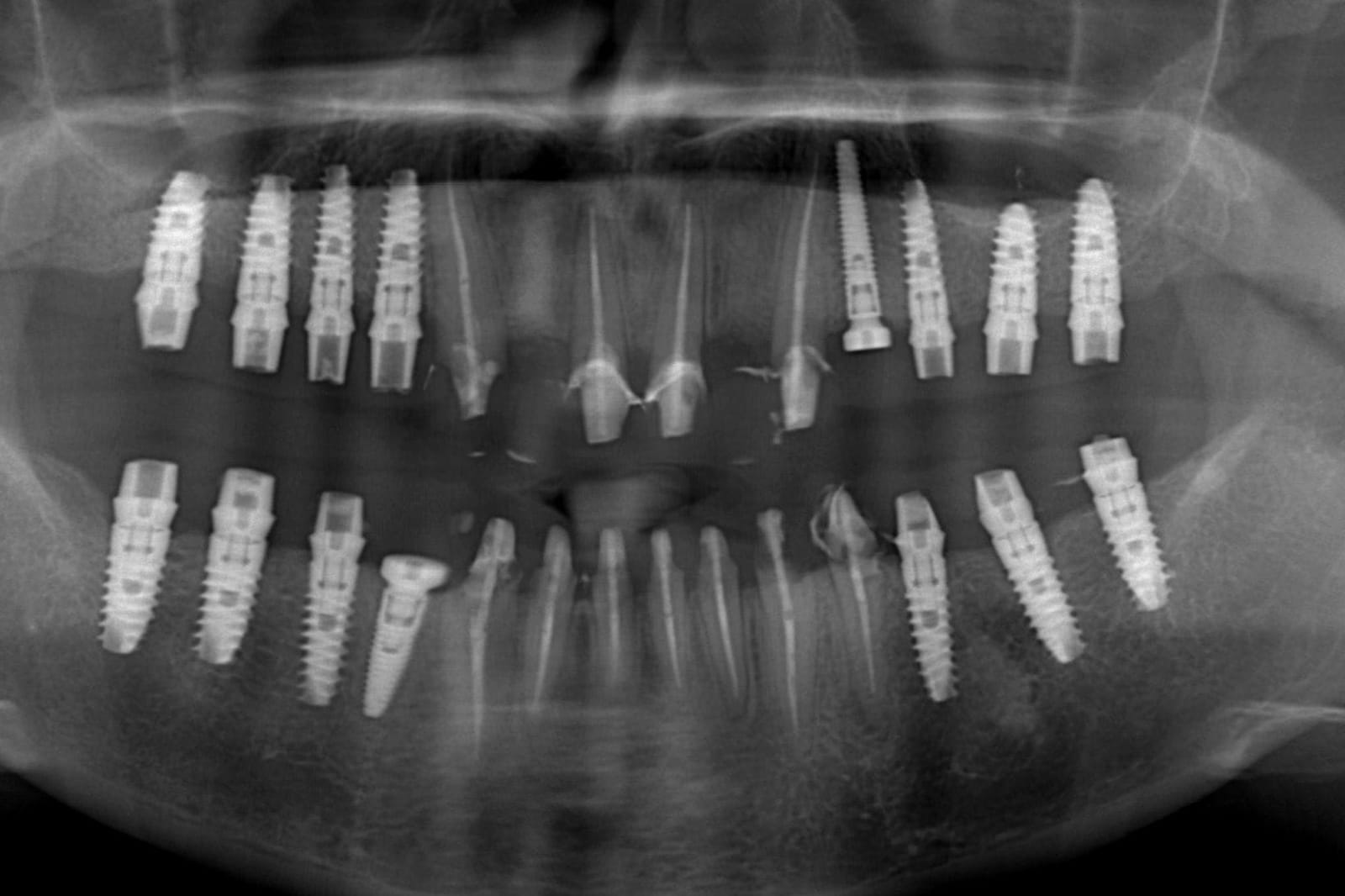
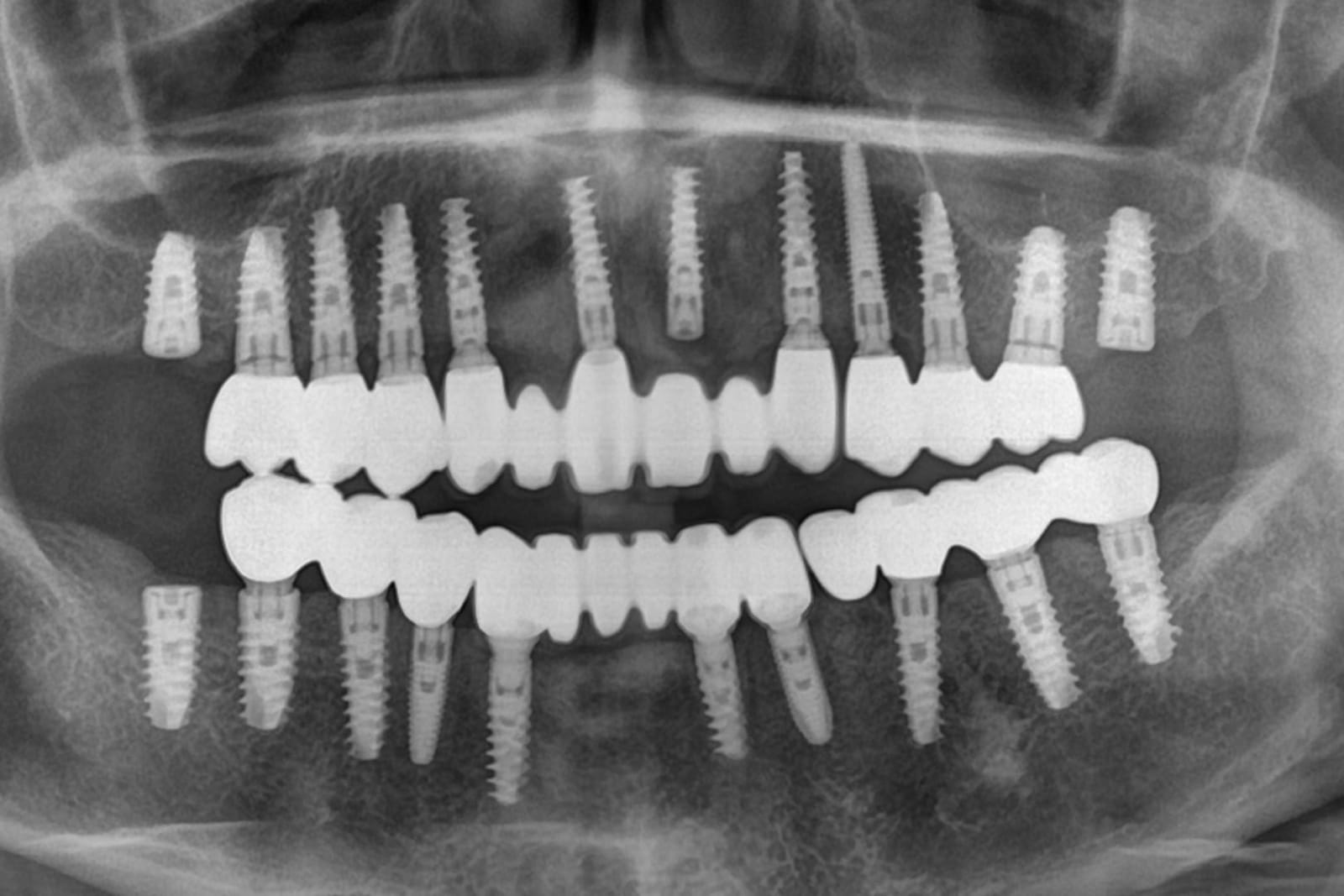
Every photograph from here on was taken ten years after treatment.
Teeth together, and the upper front teeth
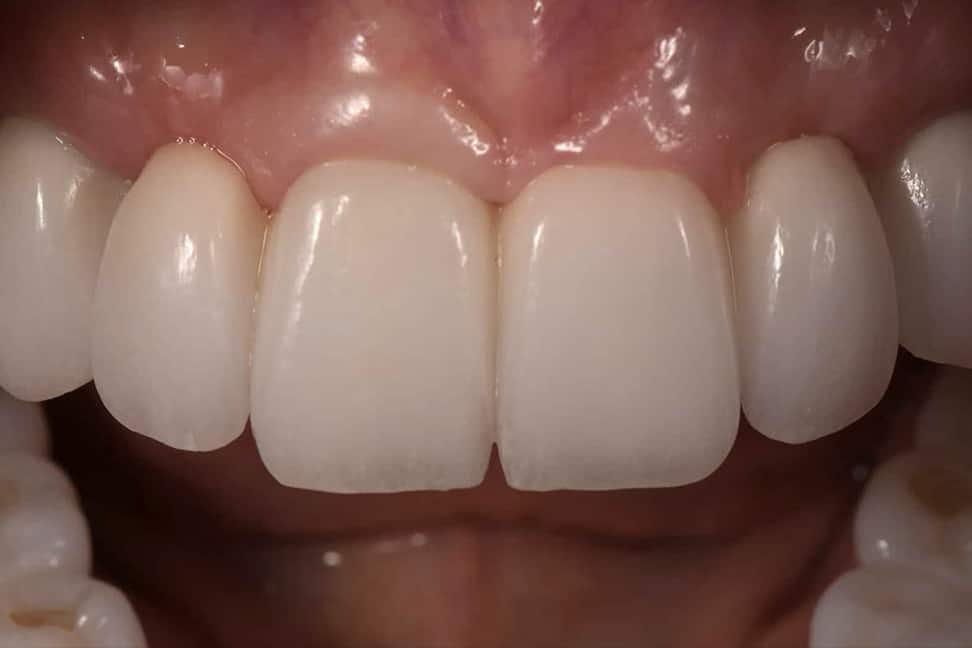
The smile
The work starts the day you get your teeth.
The goal is not to redo a reconstruction at ten years. It is to reach twenty-five years with, at most, a minor repair. That takes two commitments: the practice's, in how the case is planned and built, and the patient's, in coming back.
She chose Los Angeles over one of the largest medical hubs in the world because, for a complex full-mouth implant revision, this is the kind of case Dr. Reshad is known for.
A revision case means inheriting someone else's decisions.
The implants were already in. The bite was already lost. A prosthodontist plans the end result first, then works back through what can be kept, what must be replaced, and what can be left in reserve. In a smile that hides nothing, that planning is the difference between a result that looks like teeth and one that looks like dentistry.
And when a case like this arrives before anyone else has started, with full control from the first visit, the result can be better still.
Before and after
Final smile.
Every case is planned around one person's anatomy. Individual results vary, and what was right for this patient may not be right for you.