FP-2 Case 1 · Reconstruction · Implants
Rebuilding a Bite After Trauma
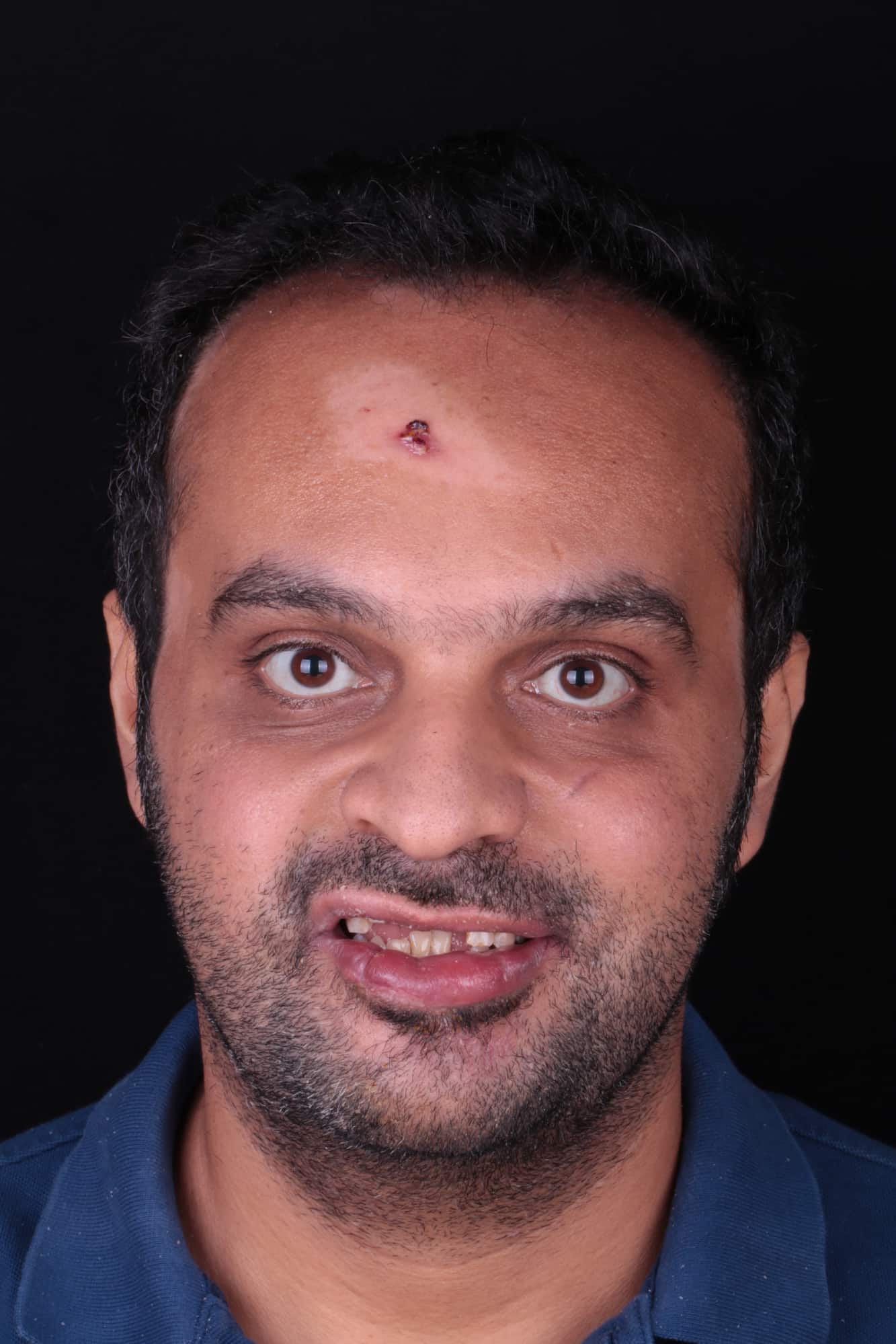
A gas canister exploded in his face.
It fractured his jaw and his skull. He was unconscious, and then he was in hospital, and by every reasonable measure he should not have walked out of it. He did.
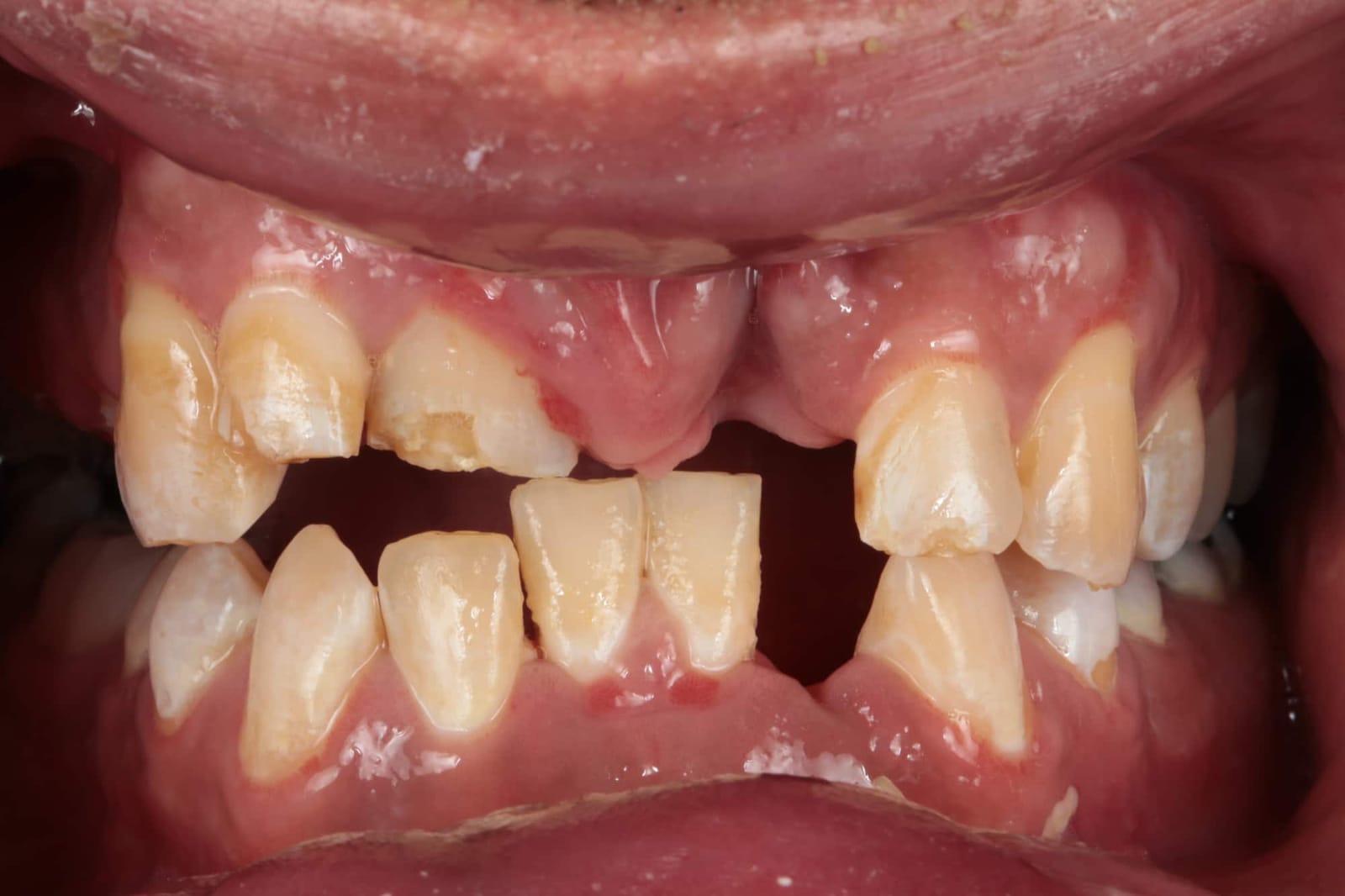
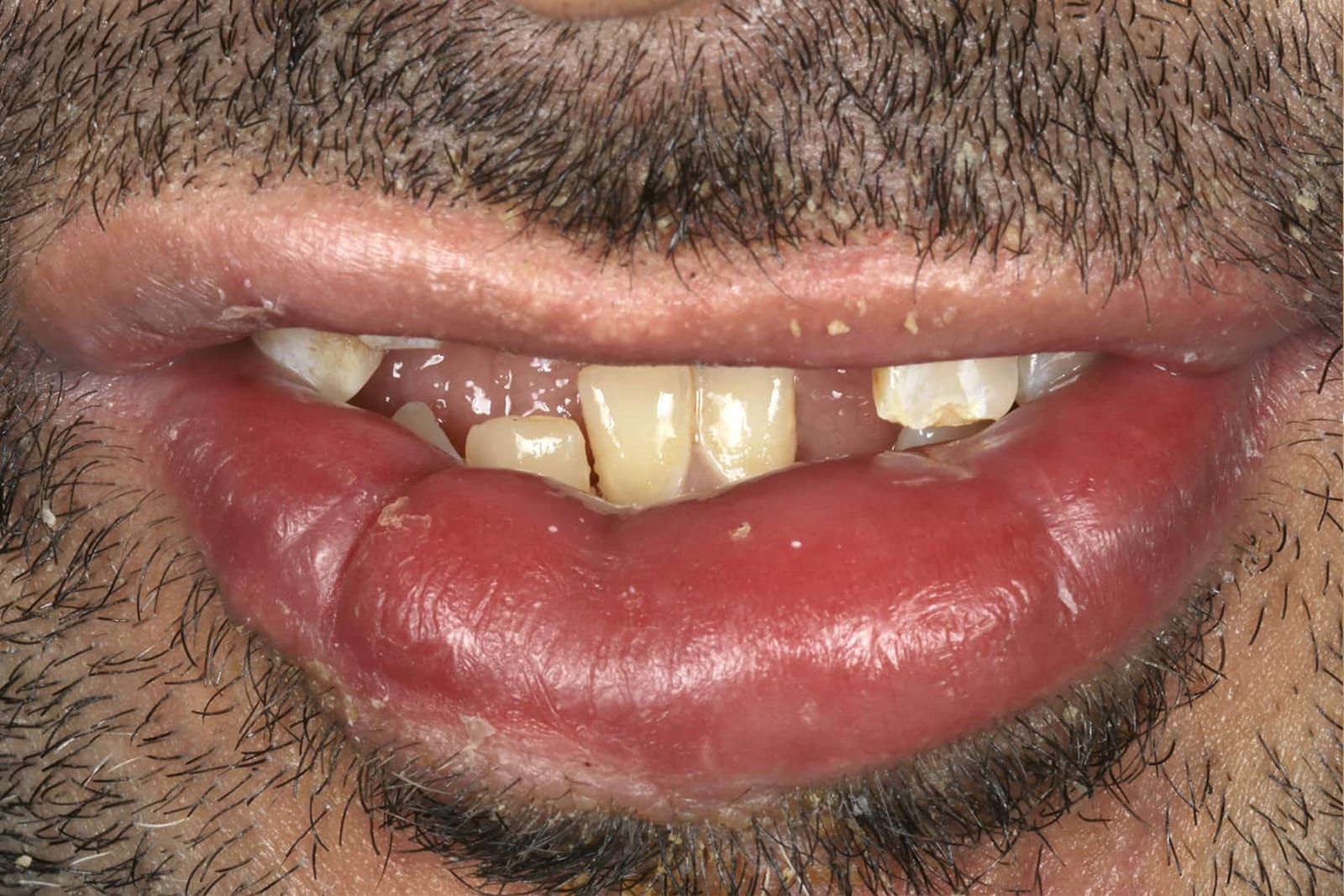
What did not survive was his dentition. The trauma destroyed it completely.
Two teeth touching
Surgery rebuilt his jaw. That was the emergency, and it was handled.
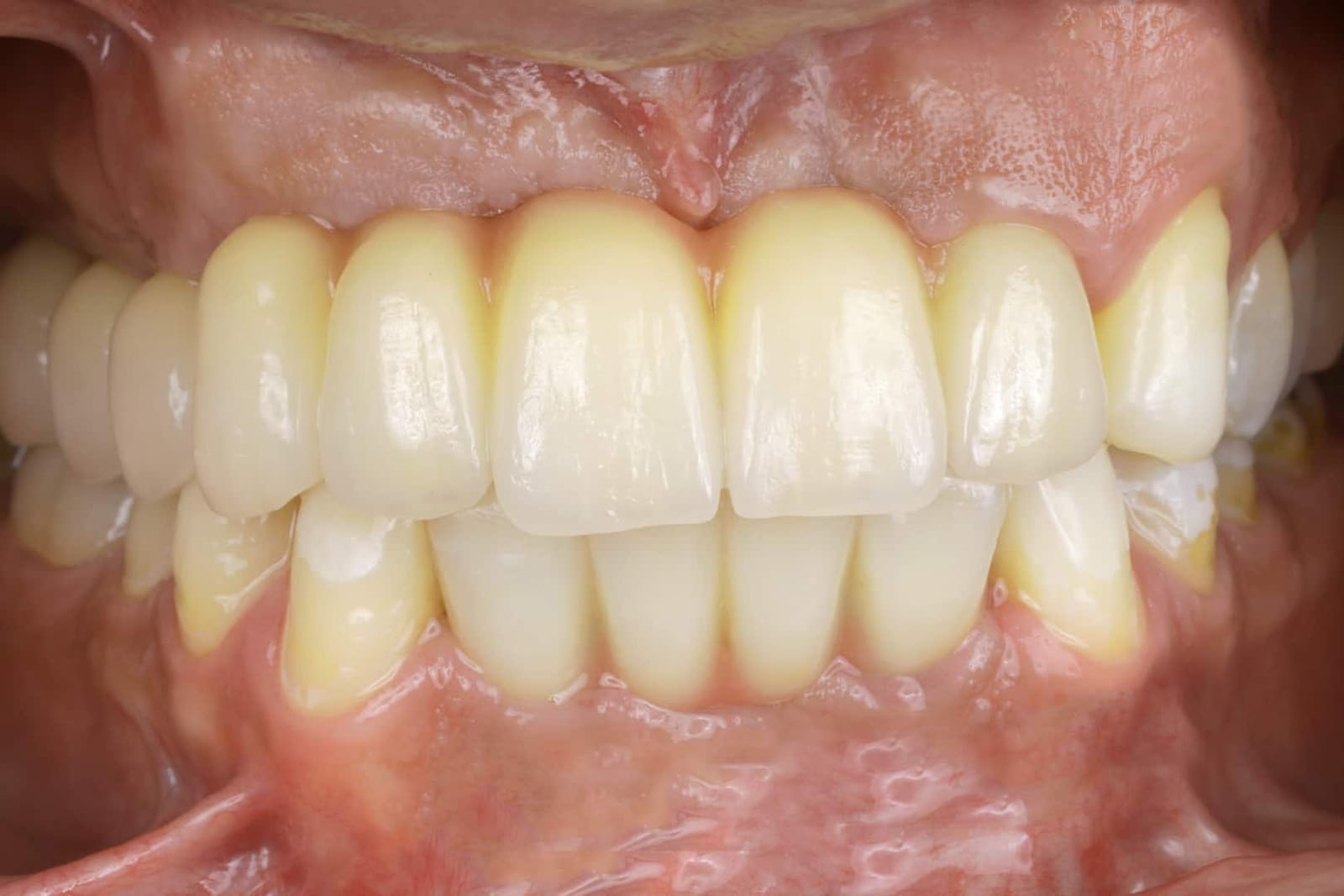
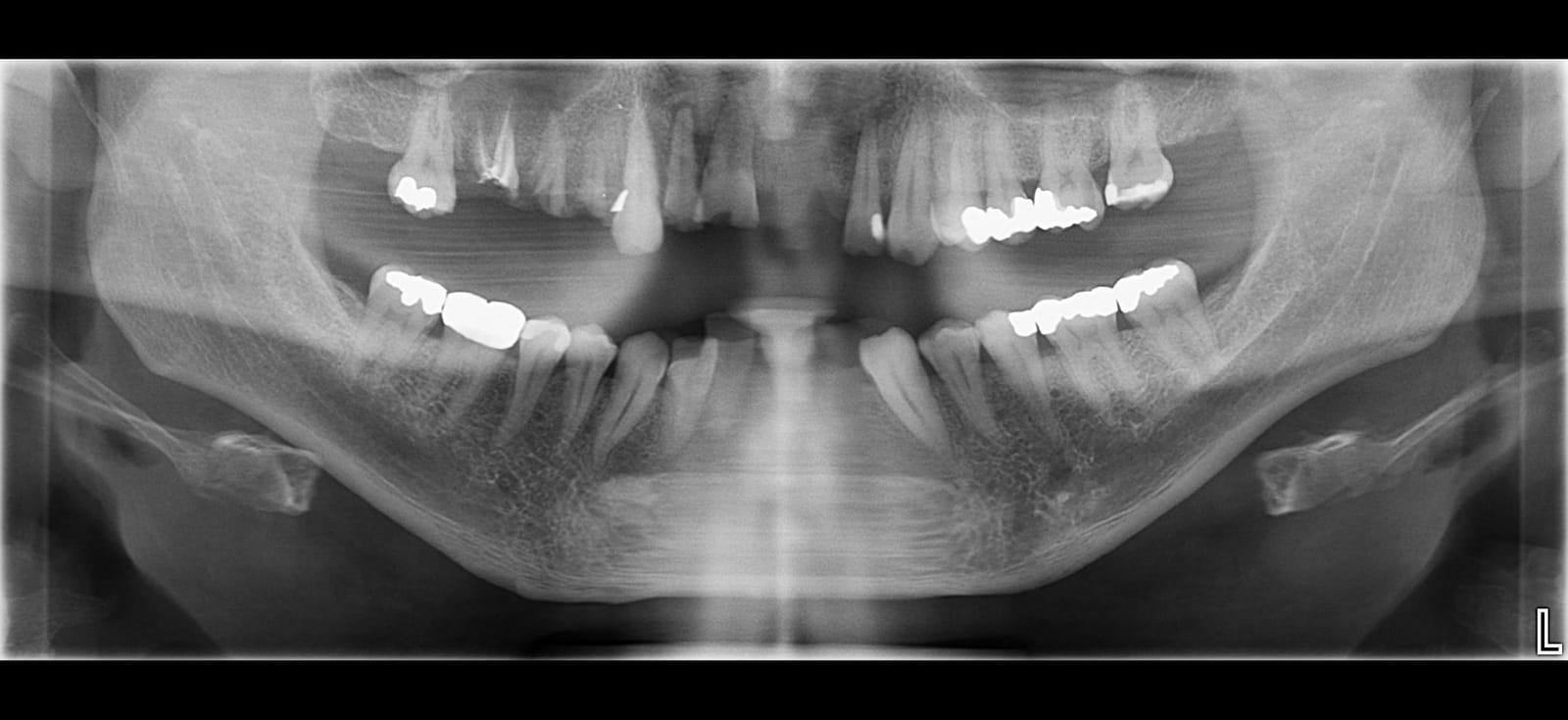
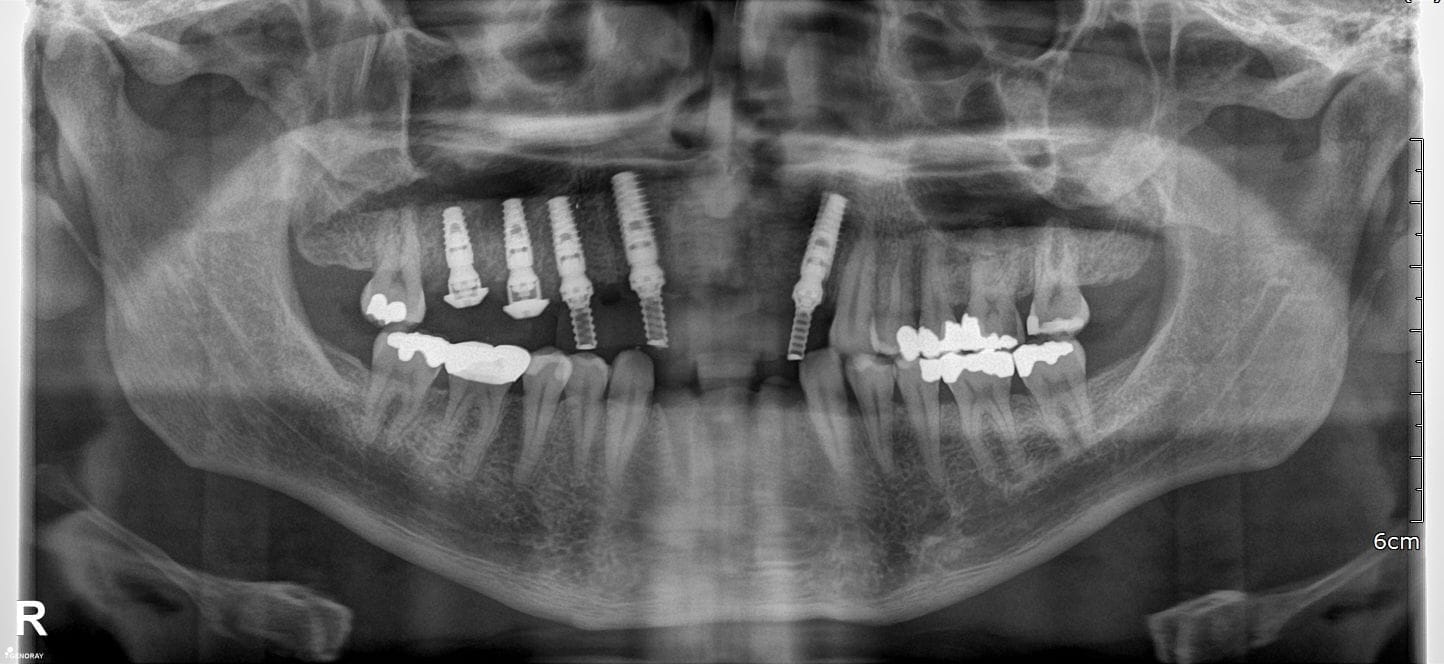
What it left him with was a mouth where almost nothing met. Out of a full dentition, two back teeth made contact. Everything else passed by in the air.
A bite is not a detail. It is how you eat, how you speak, how your face holds itself when you are not thinking about it. He could do all three, uncomfortably, and every one of them reminded him of what had happened.
Surviving the explosion was the first problem. Living afterward was the one still in front of him.
Where a case like this belongs
He was referred to Dr. Reshad for comprehensive rehabilitation.
Trauma cases are their own category. There is no wear pattern to read, no slow collapse to reverse, no original arrangement still faintly present to work back toward. There is what the injury left, and there is the question of what a mouth should be, answered from the face rather than from the remains.
Which is precisely what prosthodontic training exists for.
Save what can be saved
The instinct in a destroyed mouth is to clear it and start again. That was not the plan.
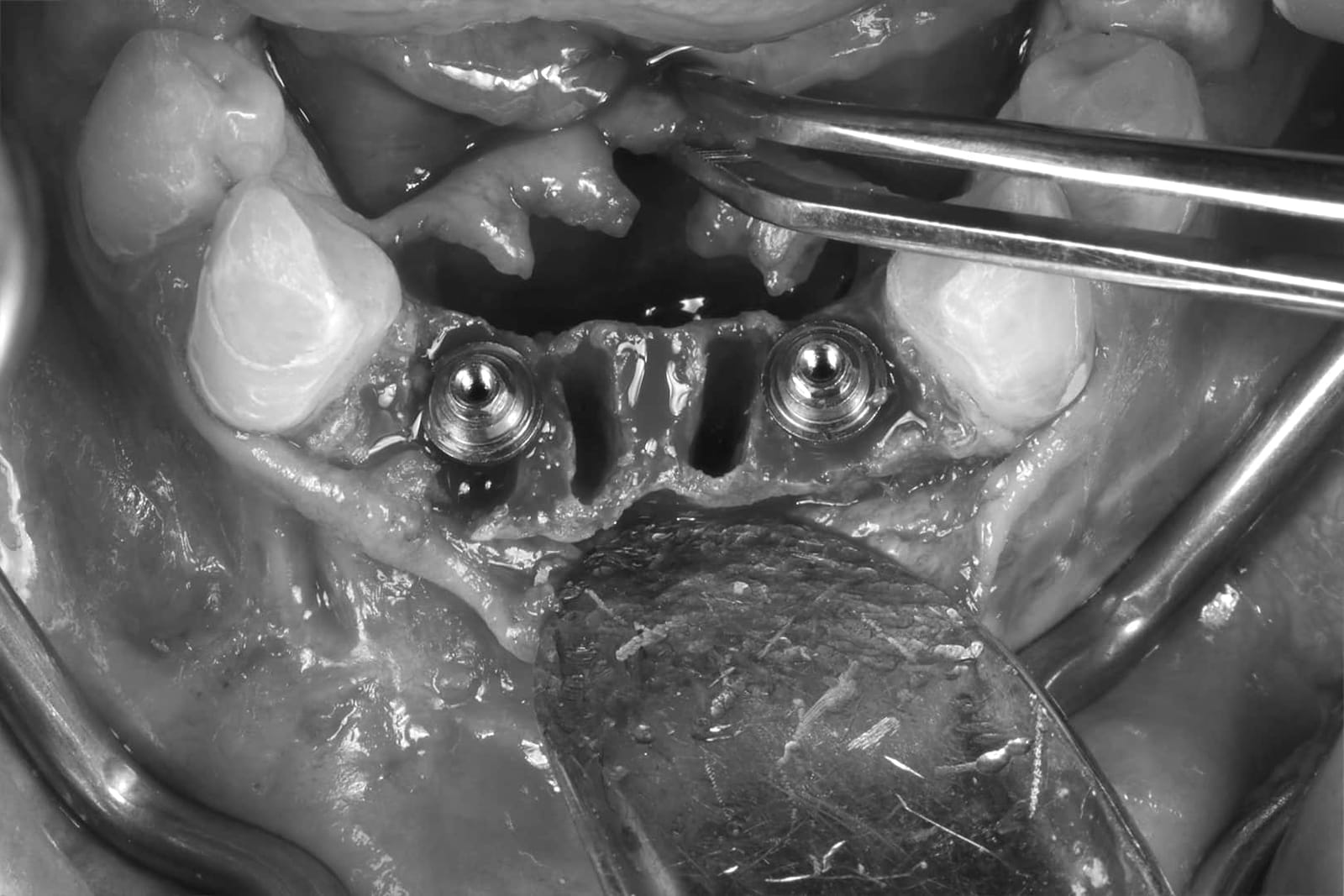
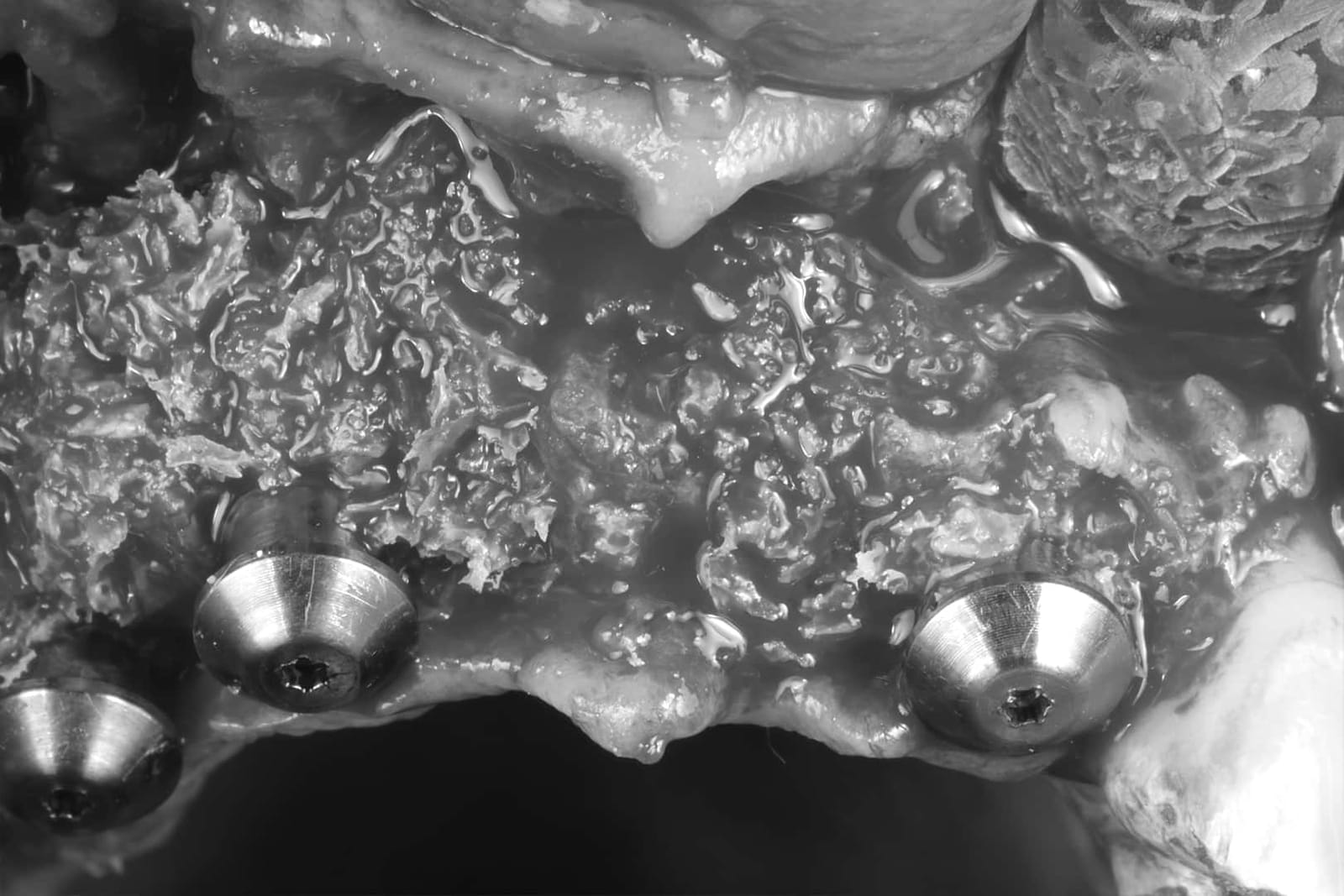
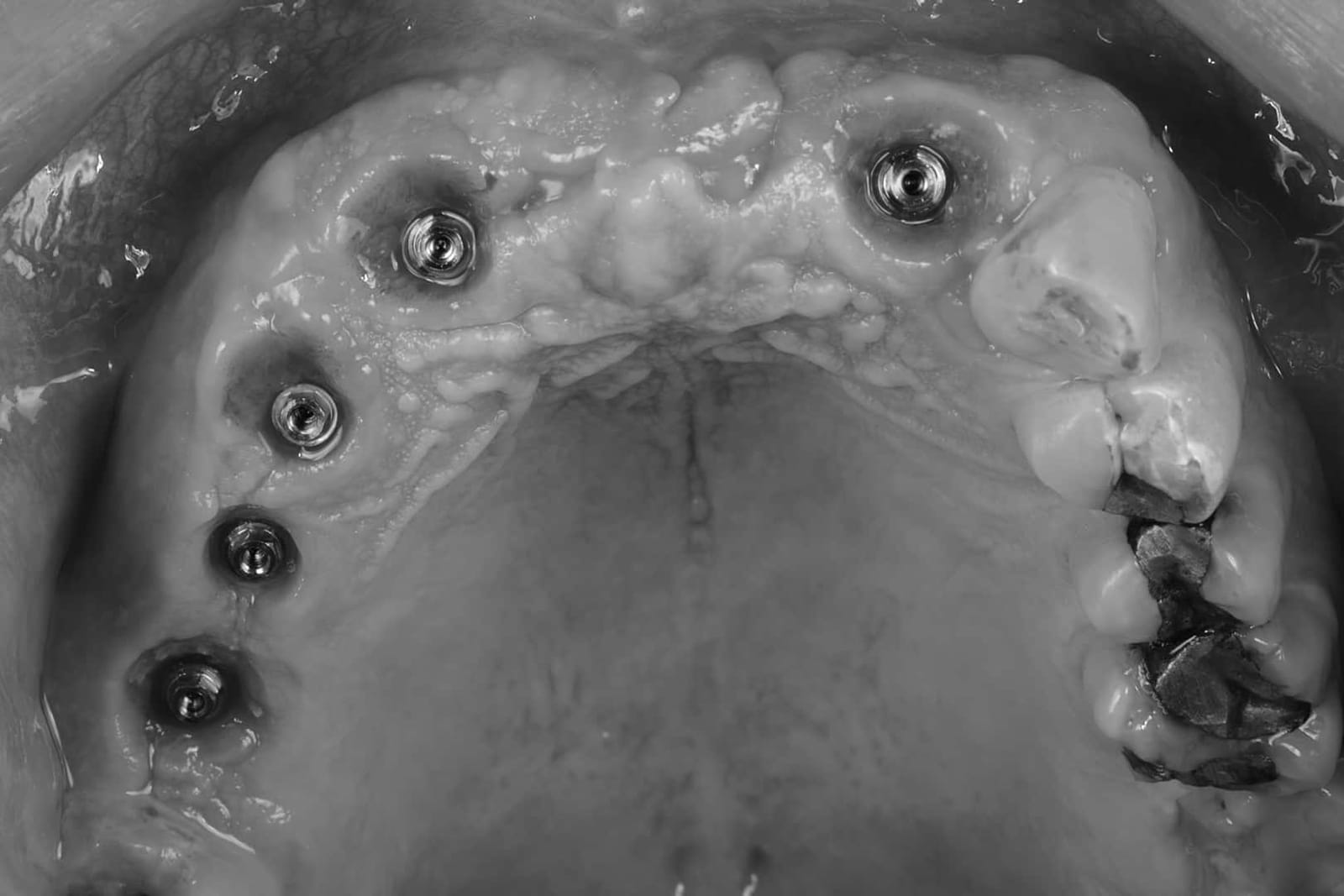
Every remaining tooth was assessed for what it could still contribute, and as many as possible were salvaged. Implants went in where teeth could not be saved, positioned to carry the bite that had to be rebuilt around them.
The bite itself was designed before any of it was placed. Wax ups established the tooth form and the relationship between the jaws, so the target existed as an object before it existed in his mouth.
Arriving at the right bite, in stages
A bite this comprehensively lost cannot be handed back in one step. The jaw has been through trauma and surgery, and it needs to be led rather than instructed.
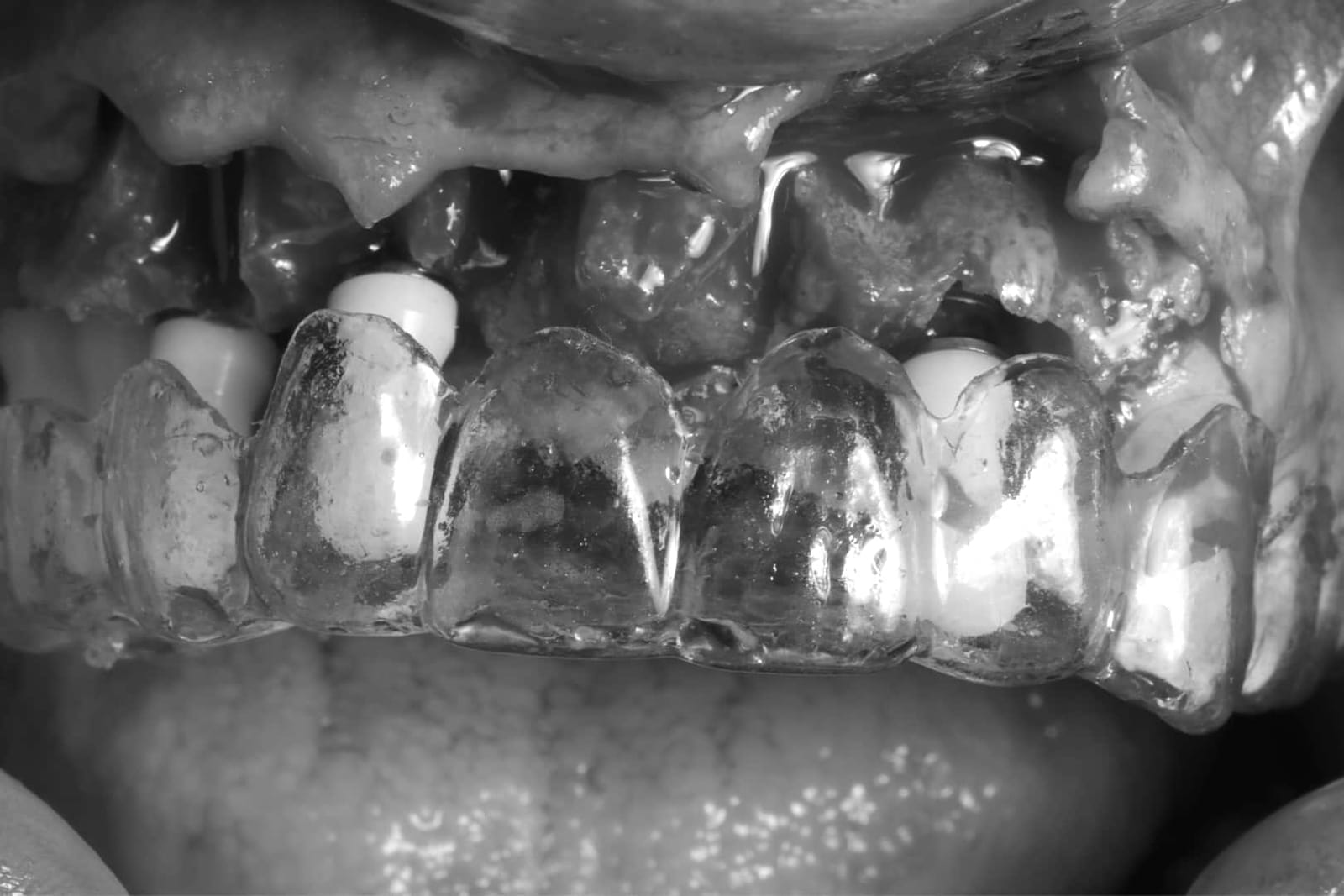
So he moved through a series of temporaries, each one testing function, aesthetics and phonetics in his own mouth, in his own life. Chewing. Speaking. How it looked. What felt wrong, and where.
Each set informed the next. The bite was adjusted gradually toward the position it needed to occupy, with the implants integrating underneath, until nothing about the design was still a question.
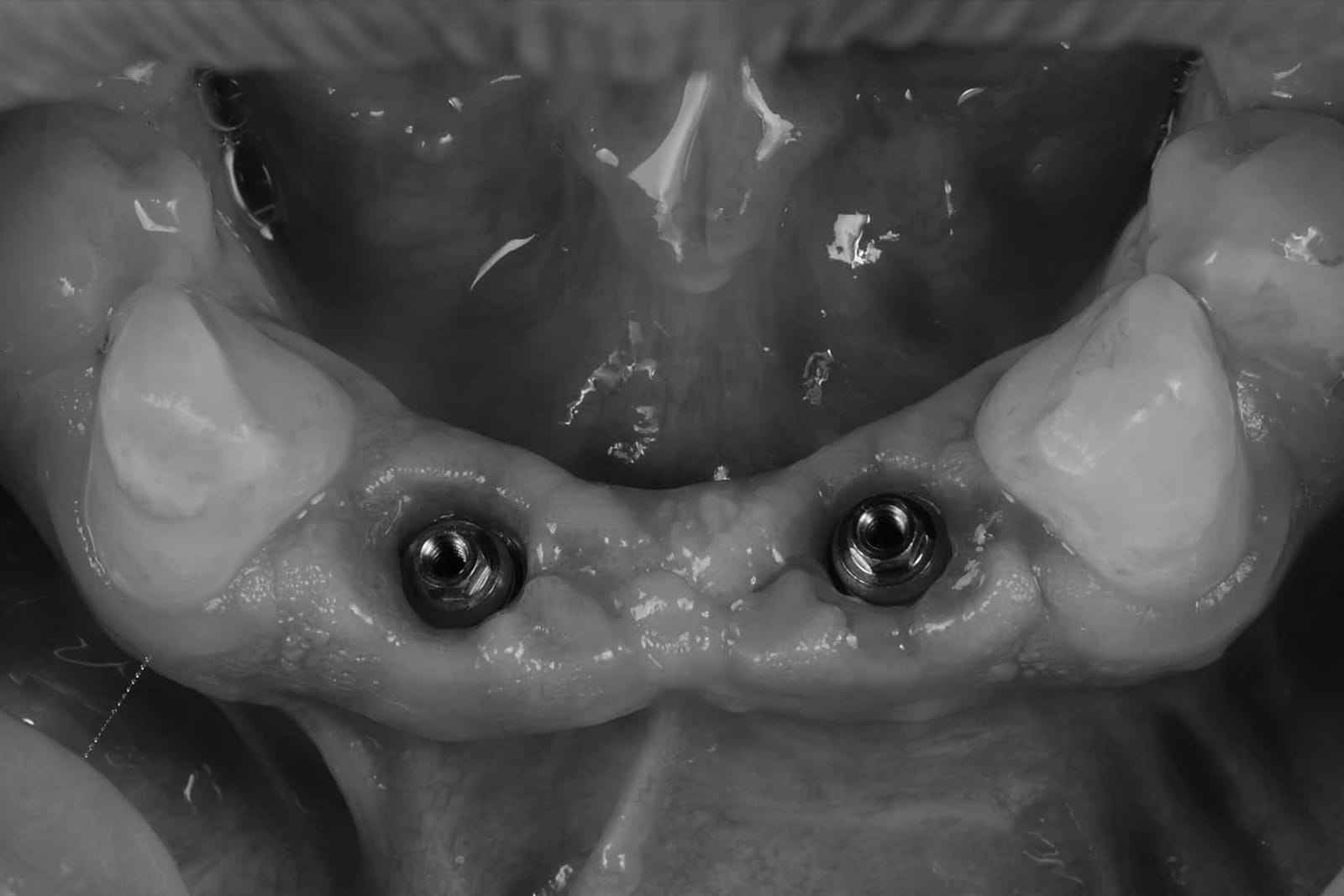
Zirconia, once everything was proven
With the implants fully integrated and the bite settled, the final restorations were made in zirconia.
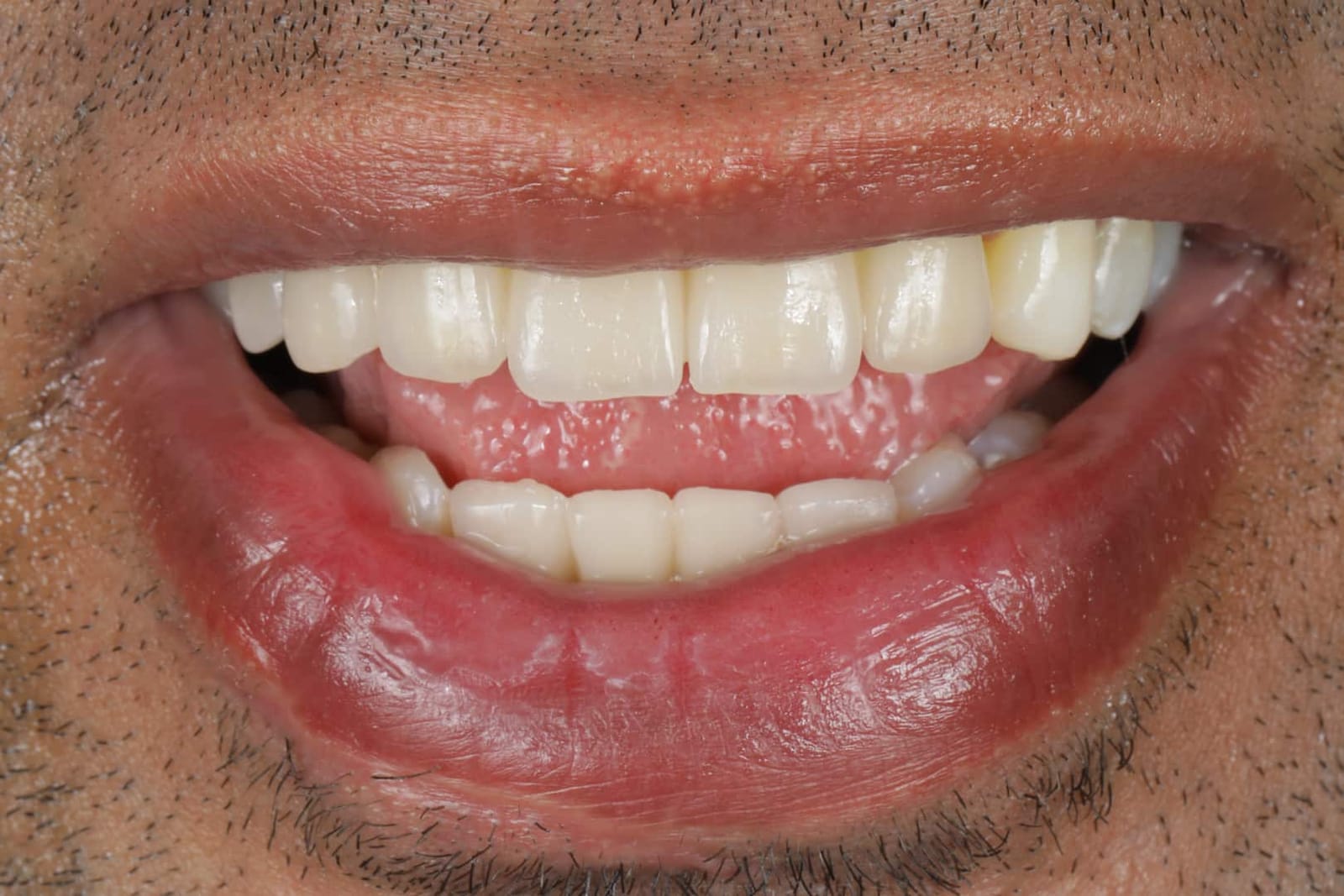
Strong, harmonious, natural looking. Built to the design he had already been living in for months, rather than to a plan drawn on the day.
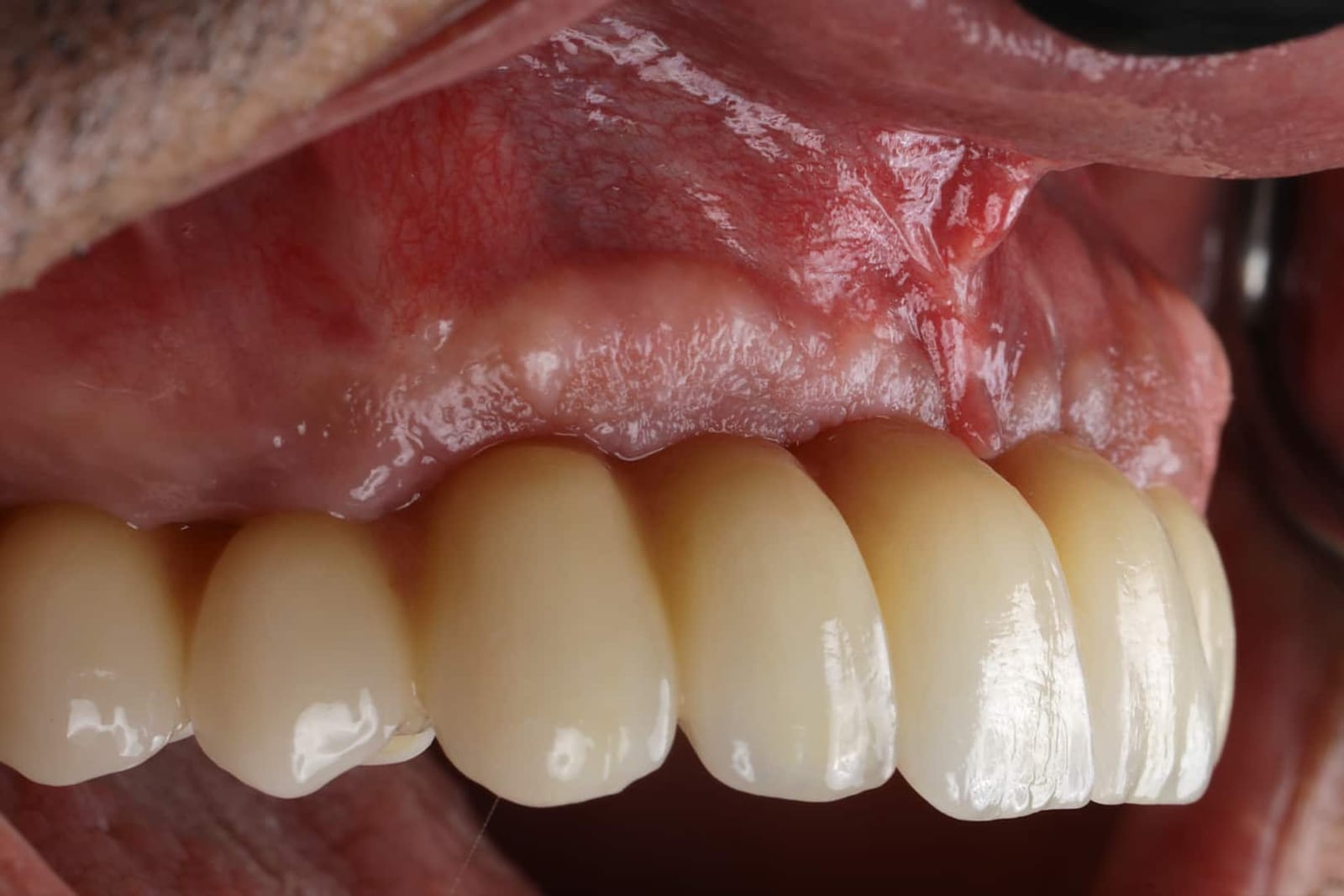
Comfortable, and unremarkable
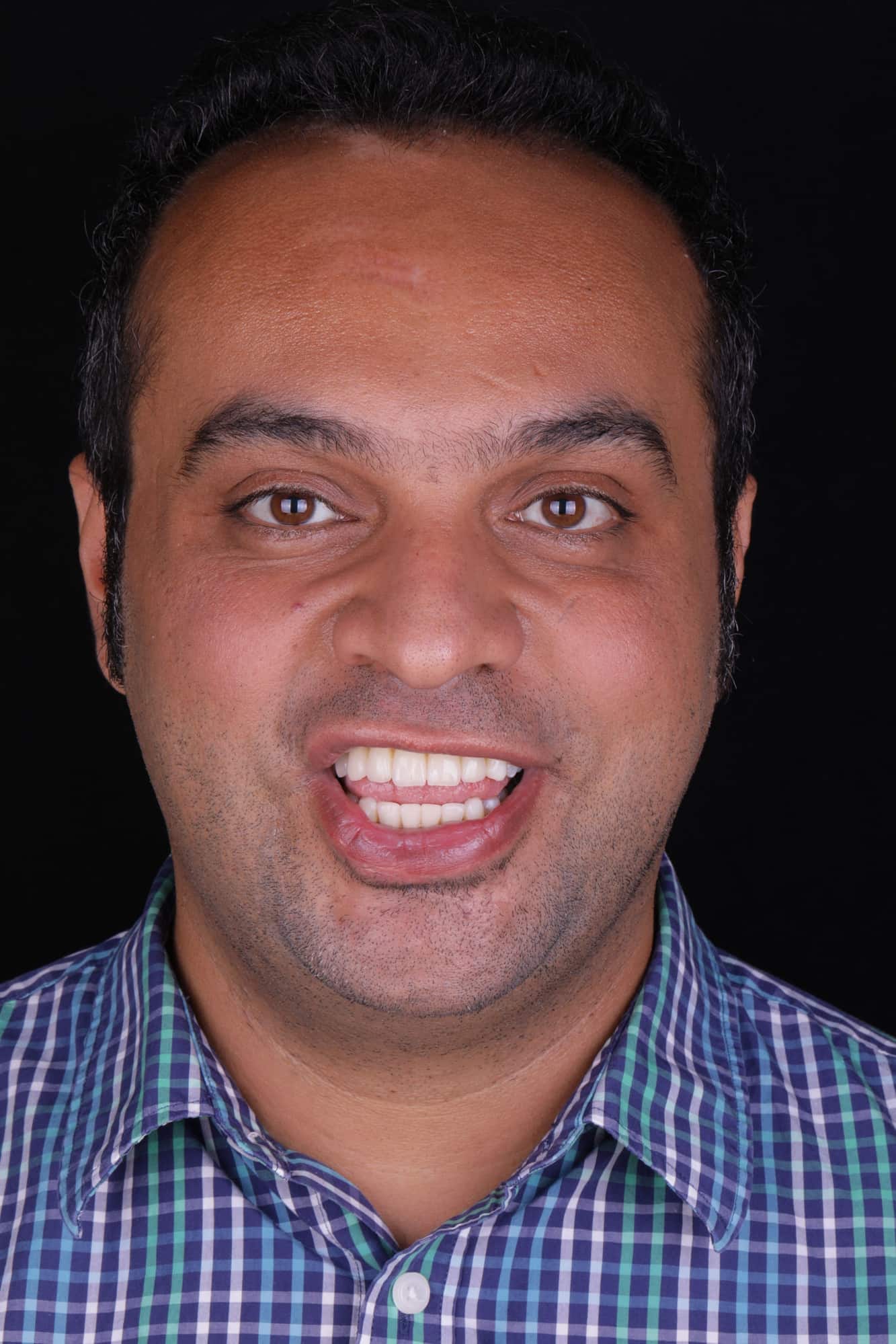
The work was completed back in 2018. He functions comfortably and has a beautiful smile.
What that sentence contains is a man who eats without thinking about eating, speaks without managing it, and looks in a mirror without being returned to the worst day of his life.
The result is what careful planning, precision and long term vision produce. The point of it is that none of that is visible any more.
The bite
The radiographs
The smile
Someone has to hold the whole thing
Trauma is treated by several specialists, and the surgery that saves you is not the treatment that gives you your life back.
Rebuilding a bite from almost nothing means deciding what to keep, what to replace, where implants belong, how the jaws should meet, and how to move a healing mouth toward that position without forcing it. Those decisions have to be made by one person, holding all of them at once, against a plan set at the beginning.
That is what a prosthodontist does.
Every case is planned around one person's anatomy. Individual results vary, and what was right for this patient may not be right for you.