Front Teeth Case 6 · Cosmetic · Minimally Invasive
Rebuilding Without Drilling
She asked for bonding on her front teeth.
They were chipping, they had been chipping for a while, and she wanted them fixed. It is a reasonable request and a completely understandable one.
It also would not have worked. Bonding the front of those teeth, or veneering them, would have failed, because the damage was not on the front.
It was coming from the inside.
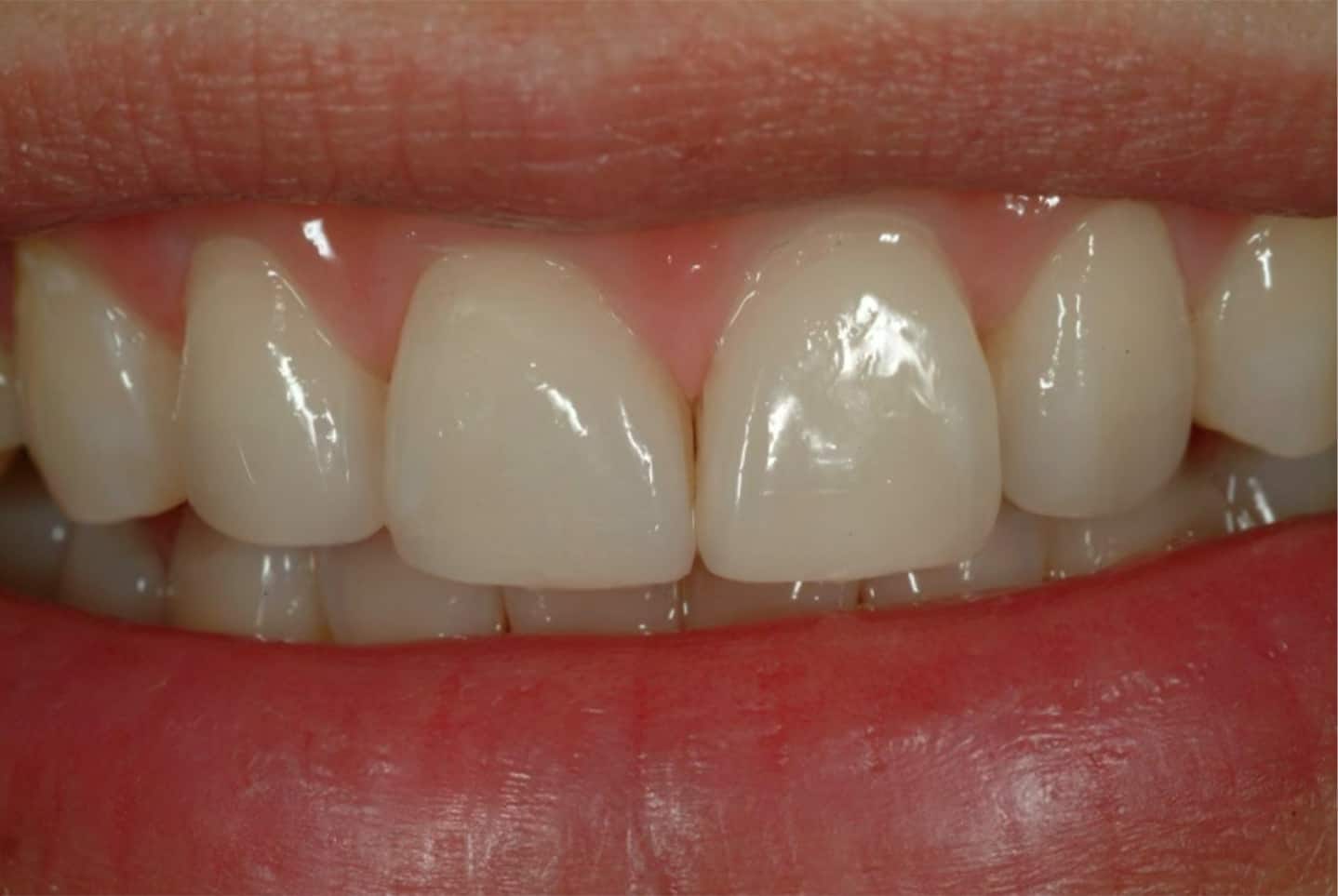
Erosion from behind
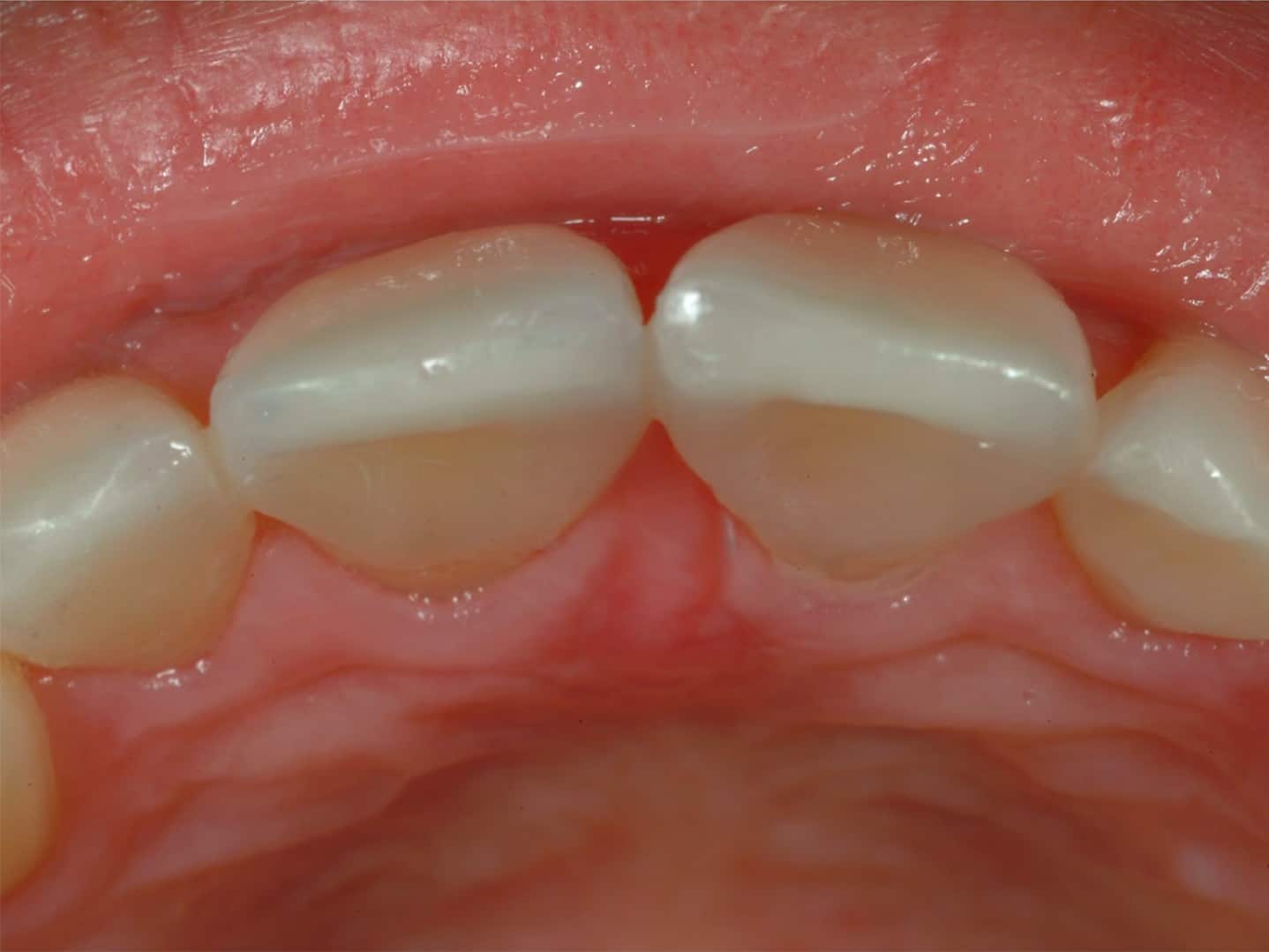
Look at the palatal surfaces, the backs of her upper front teeth, and the story is there.
Acid was reaching them. Stomach acid arriving at the inside of the upper front teeth thins them from behind, invisibly, for a long time. The tooth keeps its front surface and loses its substance. Then, eventually, the edges begin to chip and shorten, because there is no longer enough tooth left to hold them.
By the time a patient notices chipping, the erosion has been running for years.
Before treatment
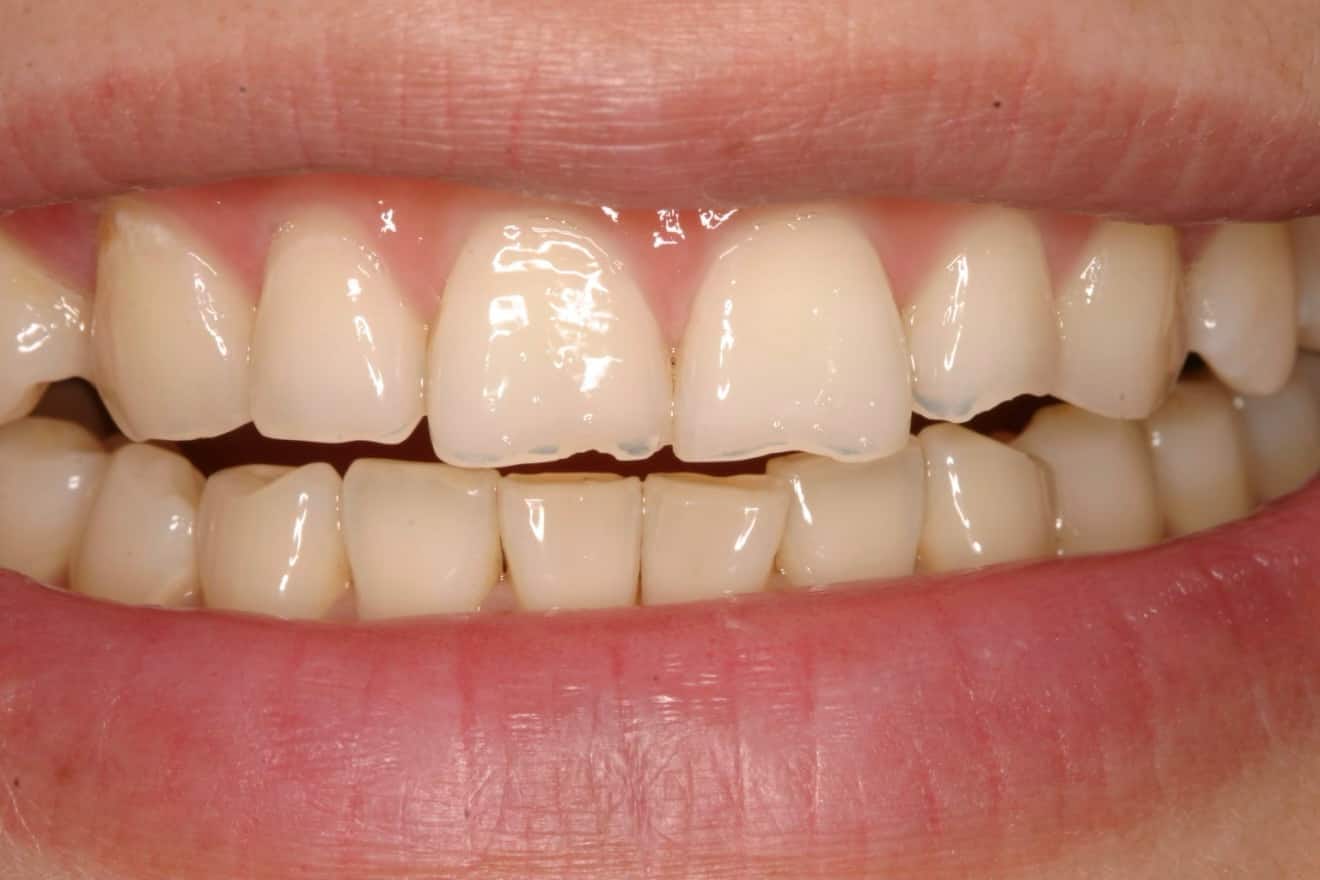
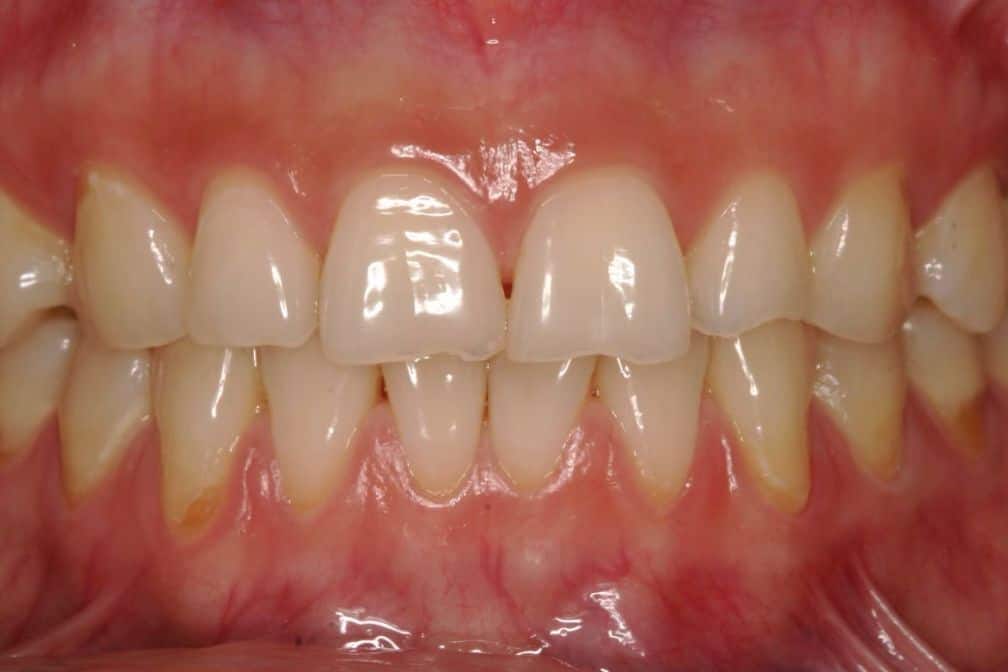
The front teeth, close
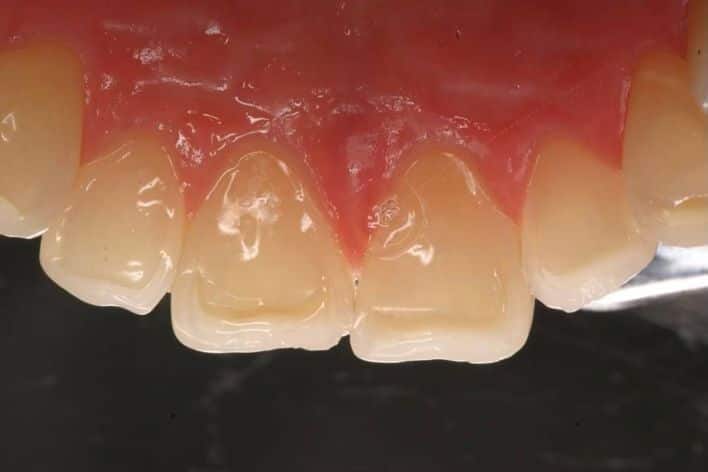
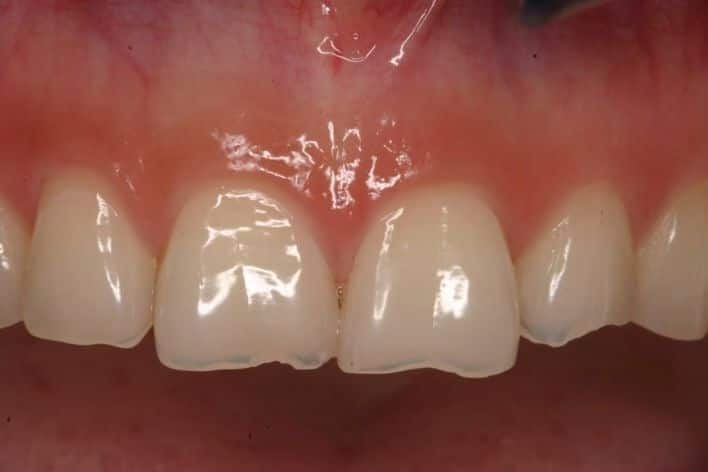
The teeth are the symptom
Nothing gets restored until the cause is identified and being treated, because otherwise the acid simply destroys the new work as well.
Acid erosion of this pattern has several sources. Gastroesophageal reflux disease is the most common, and in middle aged men it is frequently associated with alcohol use. In younger patients, and particularly in young women, the pattern can point toward an eating disorder.
There is a compounding factor worth knowing. Repeated vomiting inflames the salivary glands and leaves the mouth drier, and saliva is what neutralizes acid and remineralizes enamel. So the acid arrives and the defense against it is reduced at the same time. The damage accelerates.
Wear progressing at this rate at a young age is pathological. It is a disease process with a medical cause that needs medical care, and that referral is part of the treatment. It comes before any dentistry.
There is no room left
Here is what makes this difficult to treat, and it is counterintuitive.
When teeth wear down, the space does not stay open waiting to be filled. The body compensates. This is dentoalveolar compensation, and the prosthodontic literature has studied it extensively.
Her back teeth held the bite height, so the bite never closed down. But at the front, as the upper teeth thinned and shortened, the lower front teeth erupted upward to keep contact. The distance between the necks of her upper and lower front teeth closed, and closed, until there was no restorative space at all.
Not enough room for a crown. Not enough room for a veneer. Not enough room to place a filling.
The conventional answer at that point is to prepare teeth, or to reconstruct the whole mouth to create the space. Neither was what she needed.
Why the whole mouth did not need treating
This is what separates her case from a generalized wear case like the full-mouth reconstruction on this site, where every tooth was worn and the whole mouth required rebuilding.
Hers is differential wear. Only the front teeth were affected. The back teeth were sound.
Treating the whole mouth to solve a problem confined to six teeth is overtreatment, and it is the more common route precisely because it is the easier one.
Extrusion and intrusion
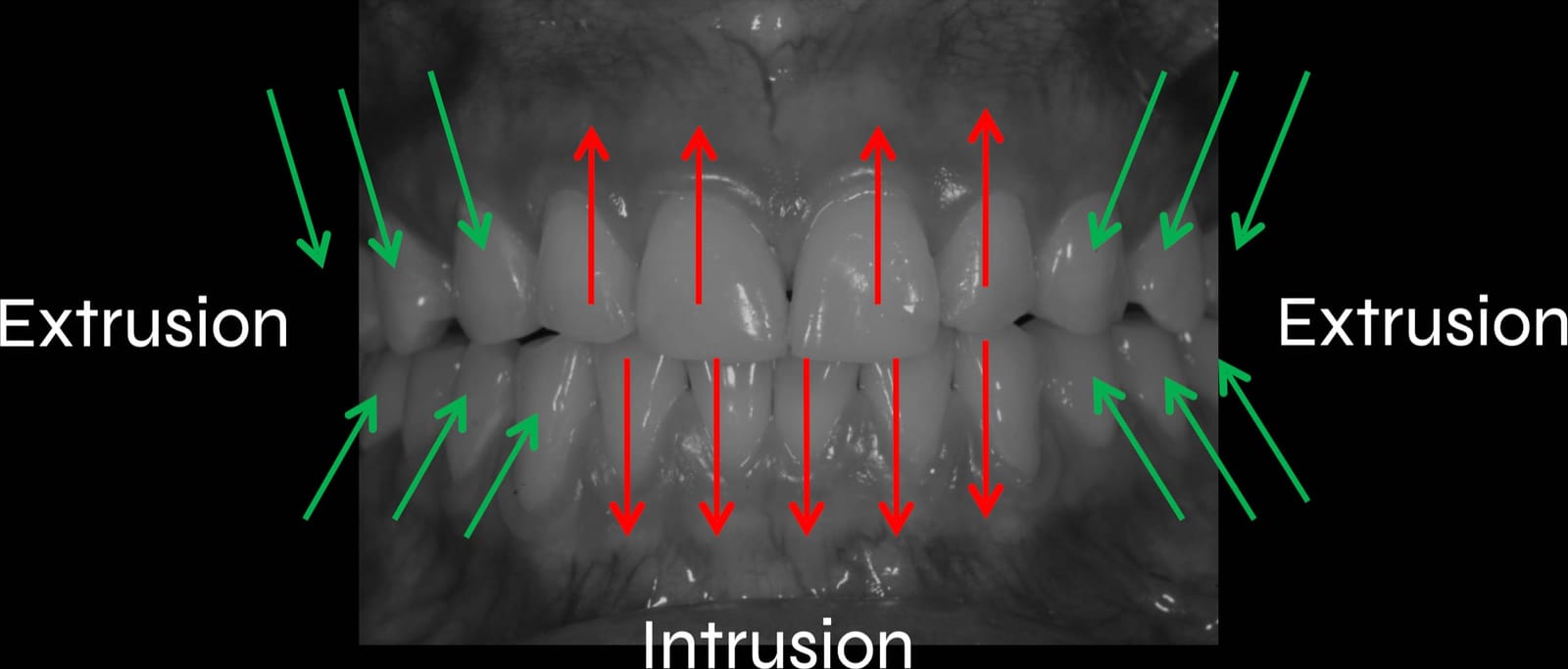
Create the space instead of cutting for it
Professor Bjørn Dahl, in Norway, published the alternative in 1975, for exactly this situation: advanced localized wear with nowhere left to restore into.
The principle is to build the worn teeth back to their proper full contour and let them sit slightly proud, so that only the front teeth contact and the back teeth are held momentarily apart. Dahl used metal originally. Today it is done in composite, bonded directly.
Then the mouth does the rest. Over the following months the back teeth erupt upward until they meet again, and the front teeth intrude slightly into their sockets. Both movements contribute, and the majority of the change comes from the posterior teeth erupting rather than from the front teeth being pushed in. The occlusion re establishes itself, at the new dimension, with the space now genuinely there.
Dr. Reshad spent a year at the Eastman Dental Institute building these cases, and the technique has to be executed in a specific way to work.
Six stages, in section
The animation below follows one upper and one lower front tooth in section, and the back teeth beside them, through the six stages of the Dahl concept. The nerve, bone and movements are illustrated and exaggerated for clarity.
- A healthy bite: the lower incisor rests against the palatal surface of the upper incisor. The back teeth hold the height of the bite.
- Erosion from behind: acid reaches the palatal surfaces of the upper front teeth and thins them from the inside. The edges shorten and begin to chip. On its own, this would open a space between the upper and lower front teeth.
- The space closes itself: the space never stays open. The lower front teeth erupt to keep contact while the back teeth hold the bite. There is now no room for a crown, a veneer or even a filling.
- Composite, left slightly proud: composite is bonded directly onto the worn teeth, rebuilt to full contour and left slightly long. Only the front teeth now meet. The back teeth are held apart.
- The mouth does the rest: over the following weeks the back teeth erupt until they meet again, and the front teeth intrude slightly into their sockets. Most of the change comes from the back teeth.
- New space, nothing drilled: the back teeth are in contact again at the new height. The space for the restoration was created biologically, and every tooth she walked in with is intact.
Fifty years of it
The Dahl concept has been in the literature since 1975 and studied repeatedly since.
Posterior occlusion re establishes in around six months on average. Reported success rates run from the mid eighties to one hundred percent, with several reviews placing it in the mid nineties and above.
The advantages are the reason it persists. No extensive tooth preparation. Tooth structure and pulp vitality preserved. No orthodontic appliances required. Adequate restorative space created where there was none. And reversibility in the early stages, which almost no other approach to tooth wear offers.
Zero tooth reduction
At day zero her front teeth had no space at all.
Composite resin was built directly in her mouth to full contour, extended across the biting edges and onto the facial surfaces to rebuild the structure she had lost, then polished to a high finish. It looks beautiful, and not one tooth was drilled.
For a period afterward, only her front teeth touched. She reported no problems, which is typical. Then the back teeth began to come up, and by day sixty four the posterior contact had fully re established.
Her teeth are functional, her bite is closed, her front teeth are the right size again, and her own tooth structure is entirely intact beneath it.
Only the front teeth touch, then the back teeth return
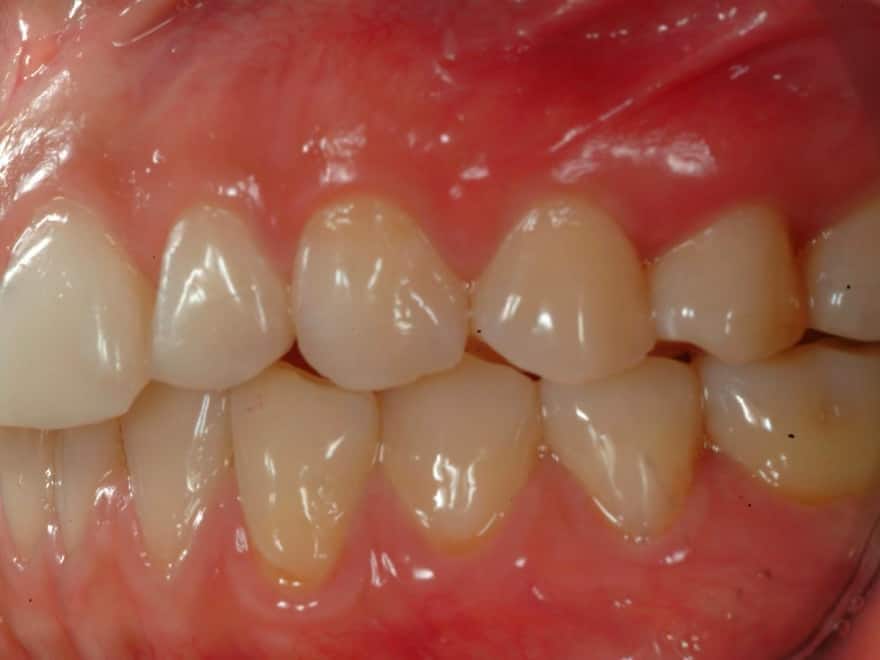
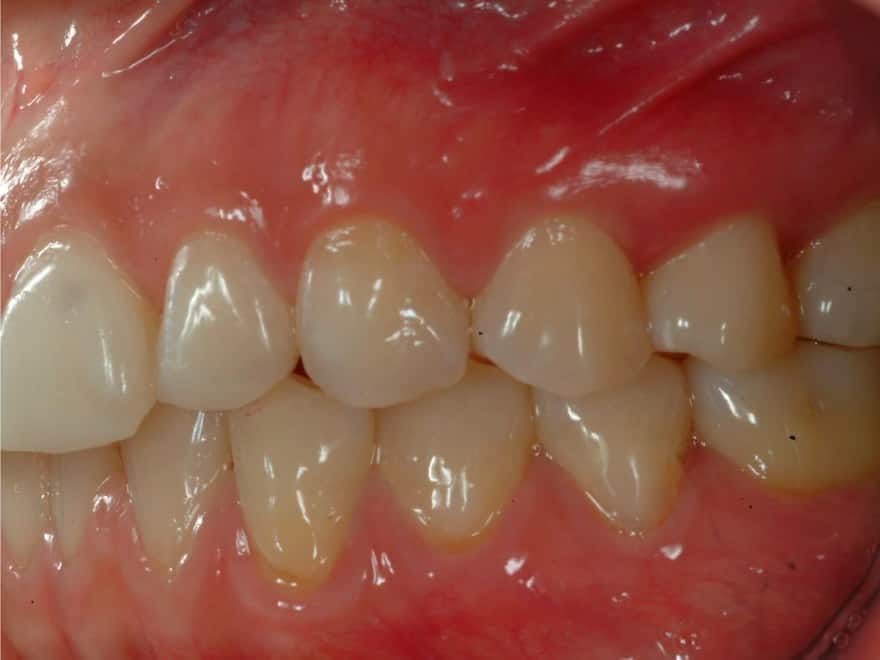
After treatment
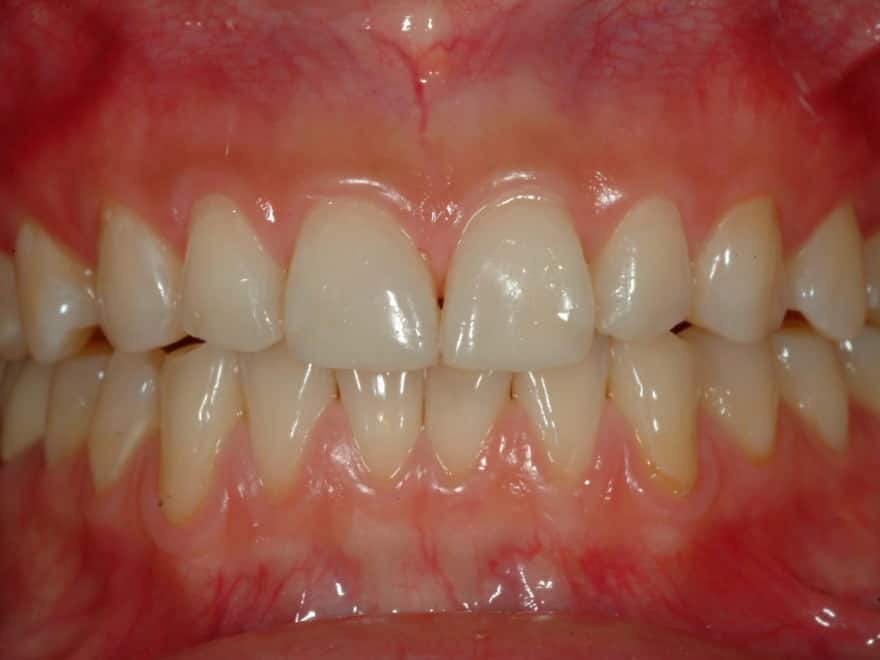
Before and after
Three disciplines in one appointment
What was actually delivered here is biomimetic dentistry, cosmetic dentistry and a form of orthodontics, achieved with bonded composite and a technique published half a century ago.
That combination requires knowing how jaws move as teeth wear, how the body compensates for that wear, how much space can be created biologically rather than surgically, and how to build composite to a contour that will survive her bite. It also requires recognizing that the disease driving all of it is medical rather than dental.
The easy version of this case is twenty veneers and a reconstruction. The right version left her with every tooth she walked in with.
Every case is planned around one person's anatomy. Individual results vary, and what was right for this patient may not be right for you.