Tooth-Borne Case 7 · Reconstruction · Crowns
An Upper Jaw That Finally Shows
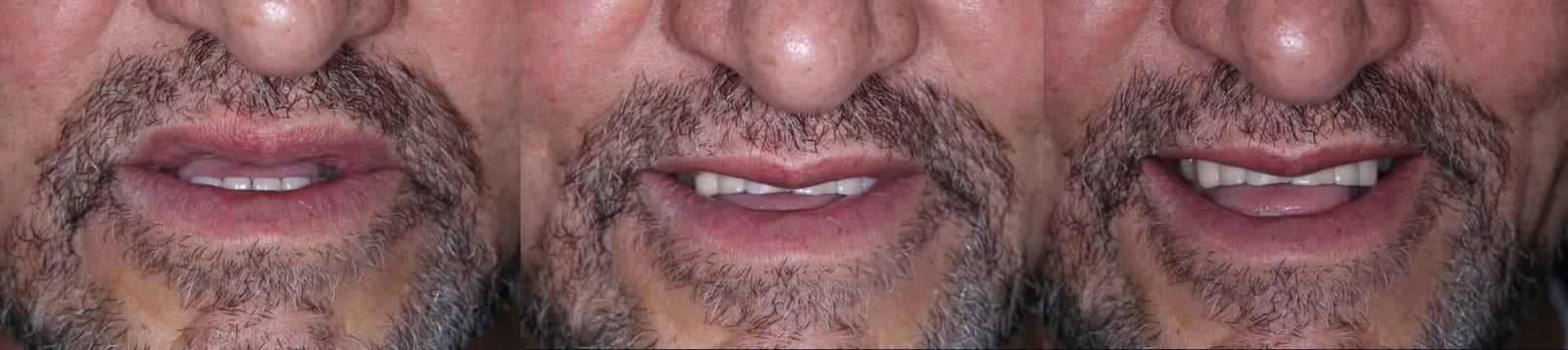
When he smiled, only his lower teeth showed.
His lower jaw sat forward of his upper one, far enough that his upper teeth disappeared behind it. To anyone looking at him, it read as a jaw pushed out. It looked, in his own words, as though he had no upper front teeth at all.
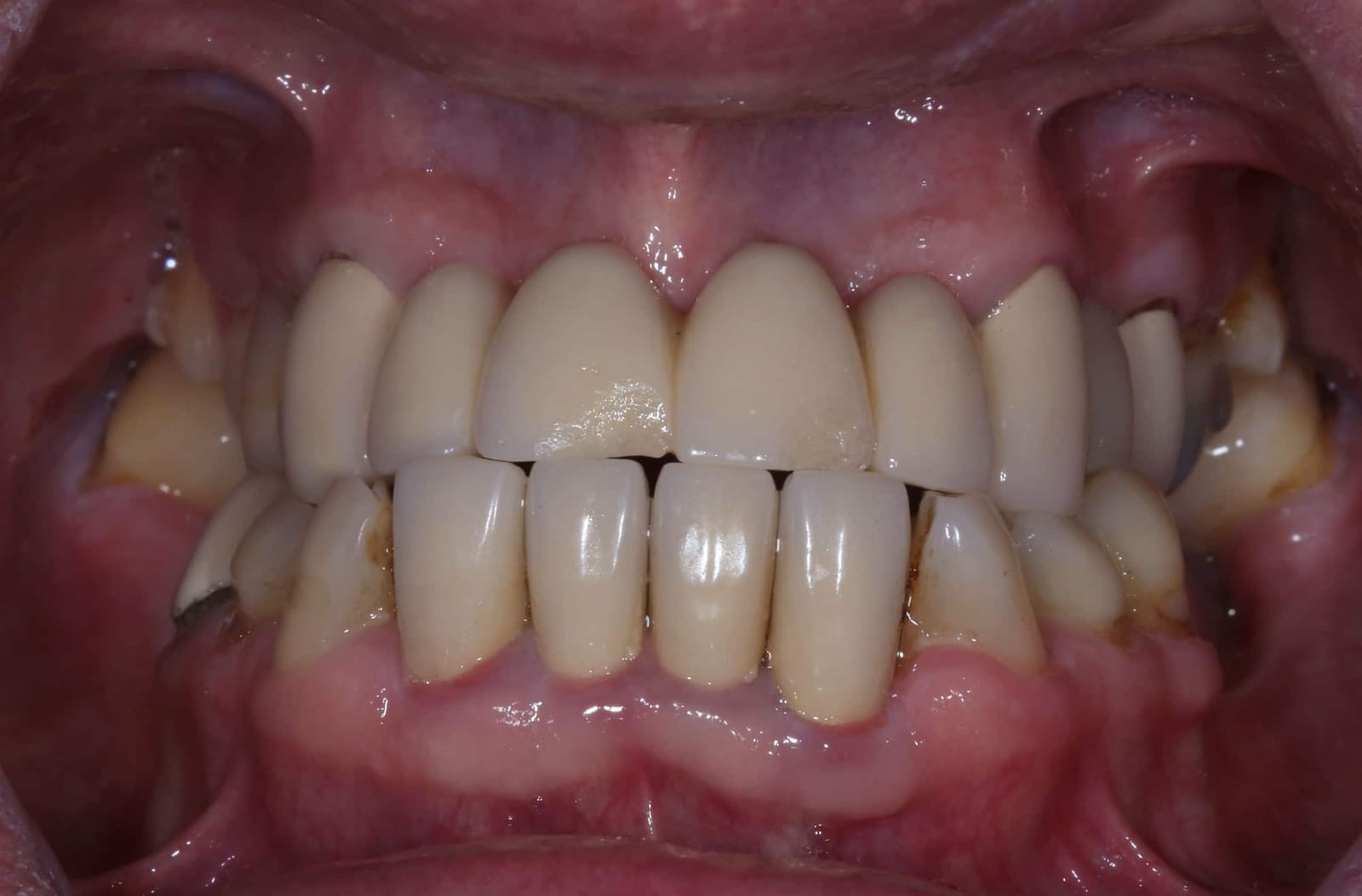
He was also losing teeth, and his bite was beginning to collapse.
But the thing he actually said, the sentence he arrived with, was simpler than any of that. He had always wanted to show real teeth when he smiled, and nobody had been able to give him that.
What follows is a full mouth reconstruction carried by his own teeth.
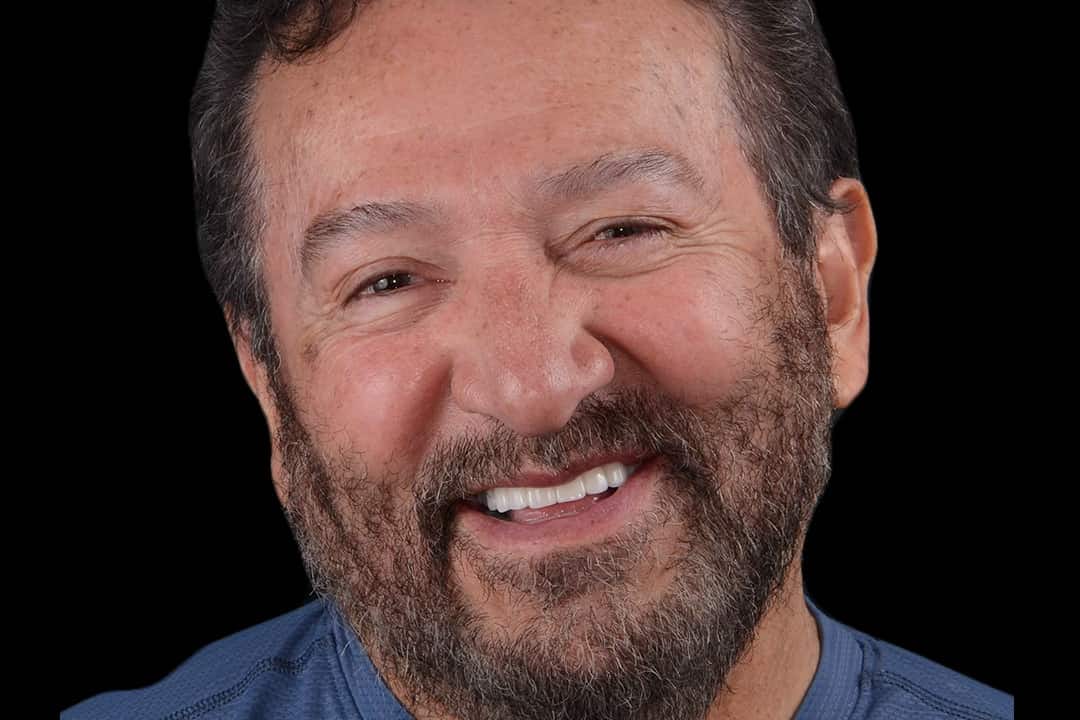
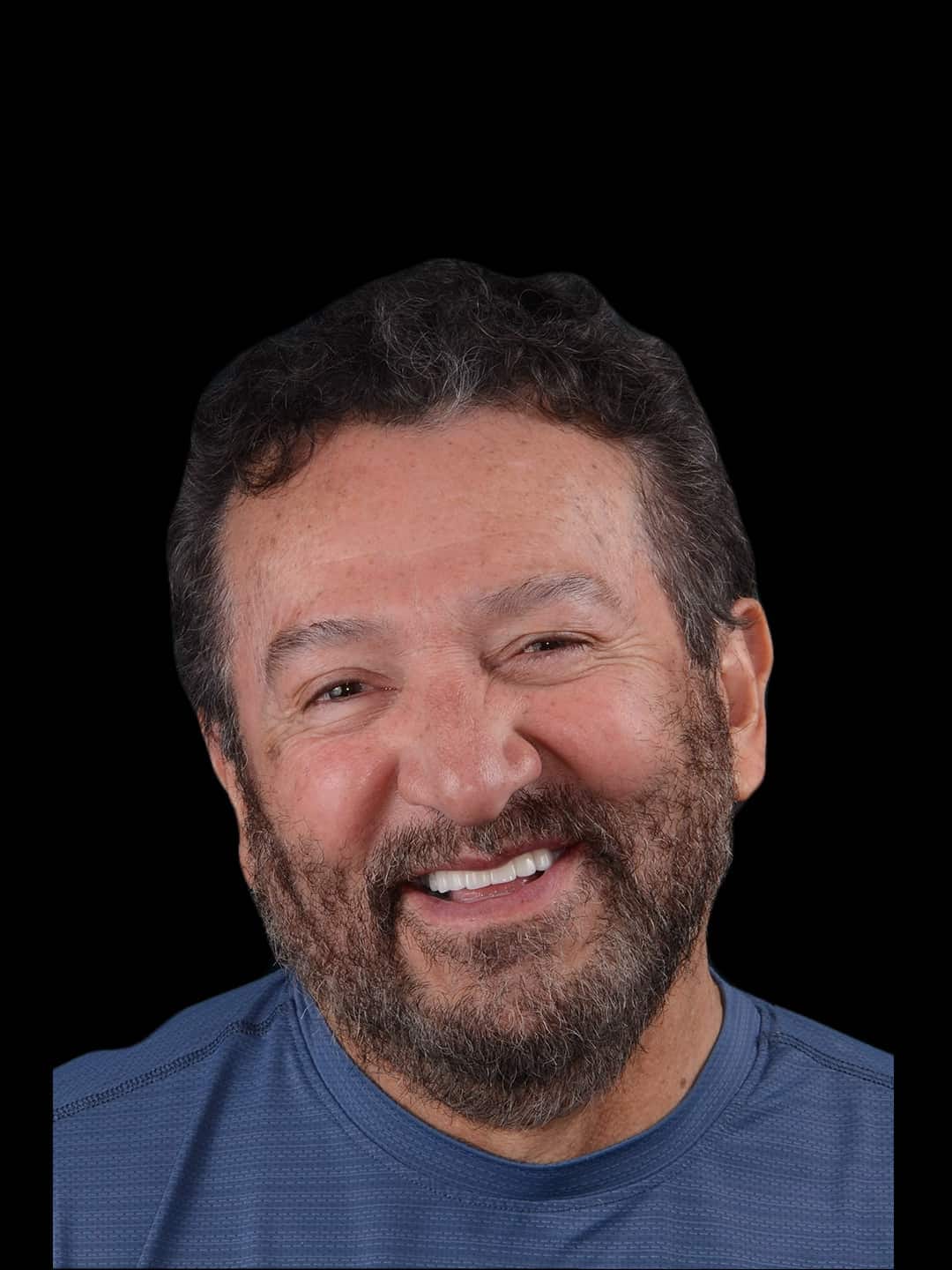
Before and after
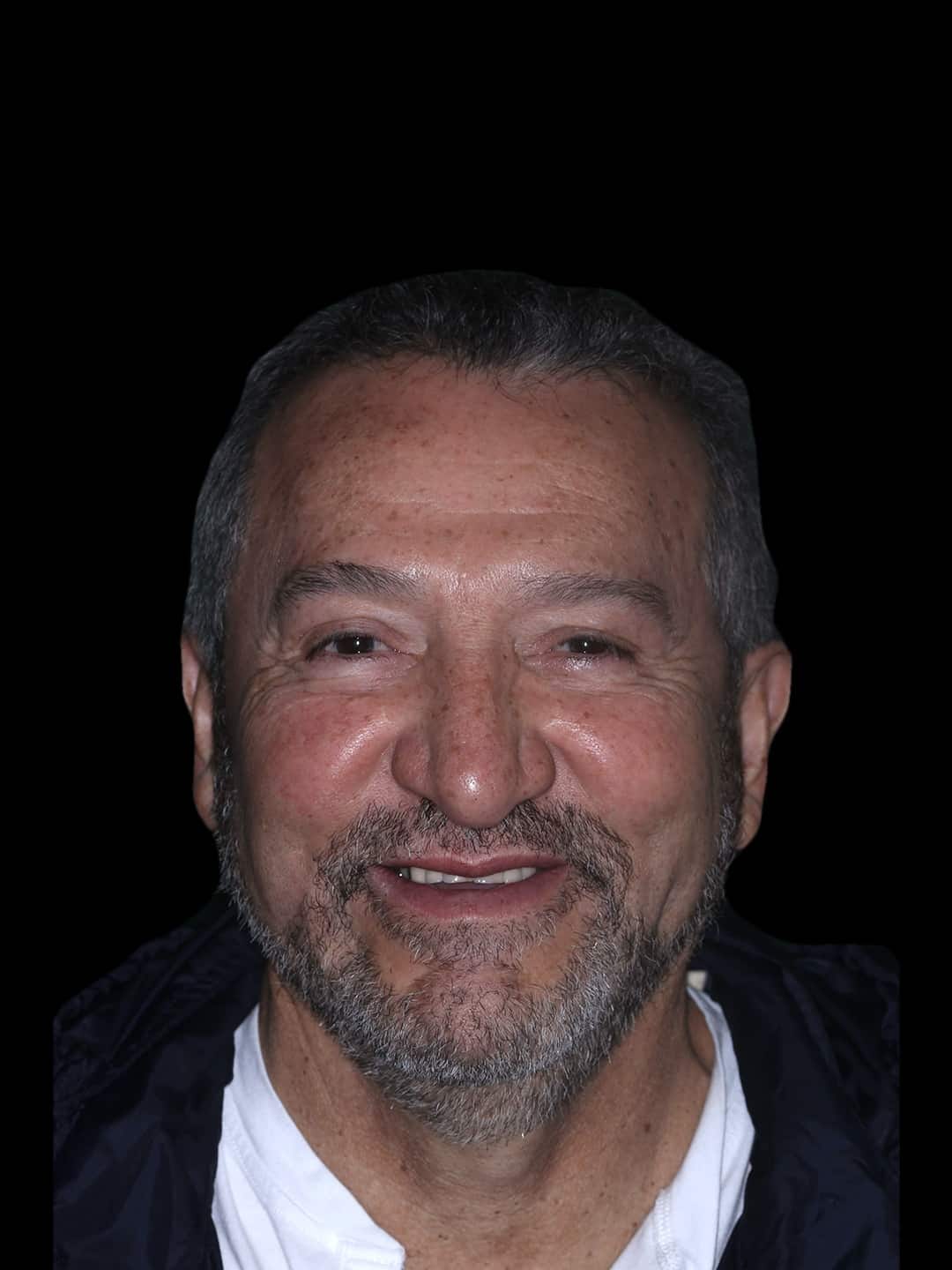
Class III, and what it means
Jaw relationships are classified by how the upper and lower jaws sit relative to one another.
In a Class I relationship the two are in proportion, and the upper front teeth overlap the lower ones as they should. In Class II the lower jaw sits back. In Class III the lower jaw sits forward of the upper, and in a severe Class III the upper jaw is smaller and set considerably further back.
That is what he had. Not a dental problem sitting on a normal skeleton, but a skeleton whose proportions had been that way his whole life, and teeth doing their best within it.
This is a category of case that rarely appears on dental websites, because most practices refer it away.
Three views at arrival
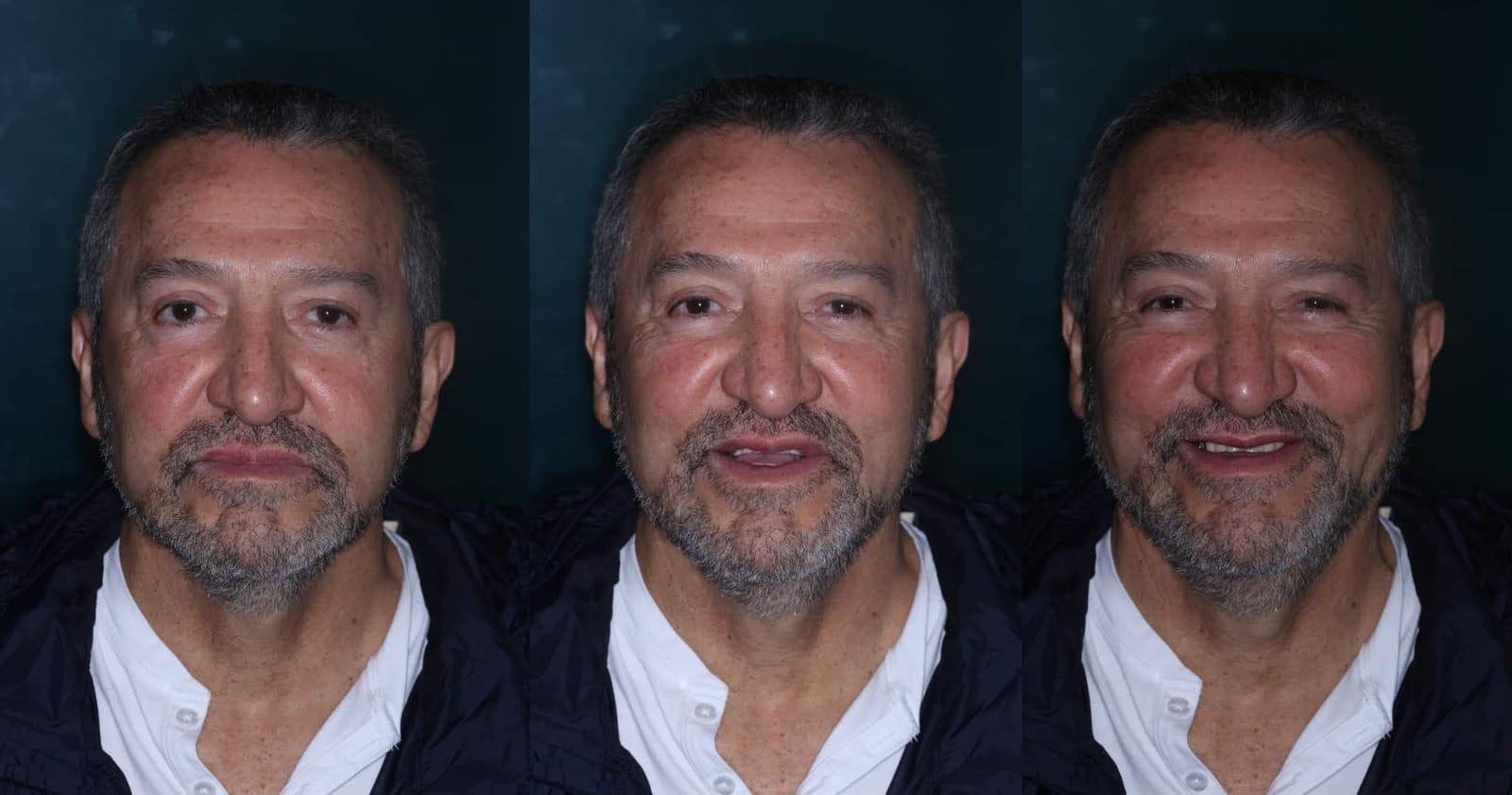
Only the lower teeth showing
And why it was not his answer
The correct way to fix a severe Class III is orthognathic surgery: the upper and lower jaws are surgically separated and repositioned into their proper relationship.
Every option was discussed with him, that one included.
He did not want it. He is at the stage of life where he intends to enjoy his years rather than spend them recovering, and he was clear that he did not want extensive bone grafting at the front of his upper jaw either. What he wanted to know was whether there was another way.
A patient declining the textbook route is not the end of the conversation. It is the beginning of a harder one.
A bridge on his own teeth
A prosthodontist is, in the most literal sense, an engineer of the mouth. So the answer was engineered.
A bridge across the front, carried entirely by his own teeth. No implants. No grafting.
A bridge spanning canine to canine, and slightly beyond, can serve a patient extremely well when it is designed properly. Designed carelessly it fails, which is why the design is the whole thing: where the forces land, what carries them, and how the span behaves under a bite.
The bridge in the laboratory
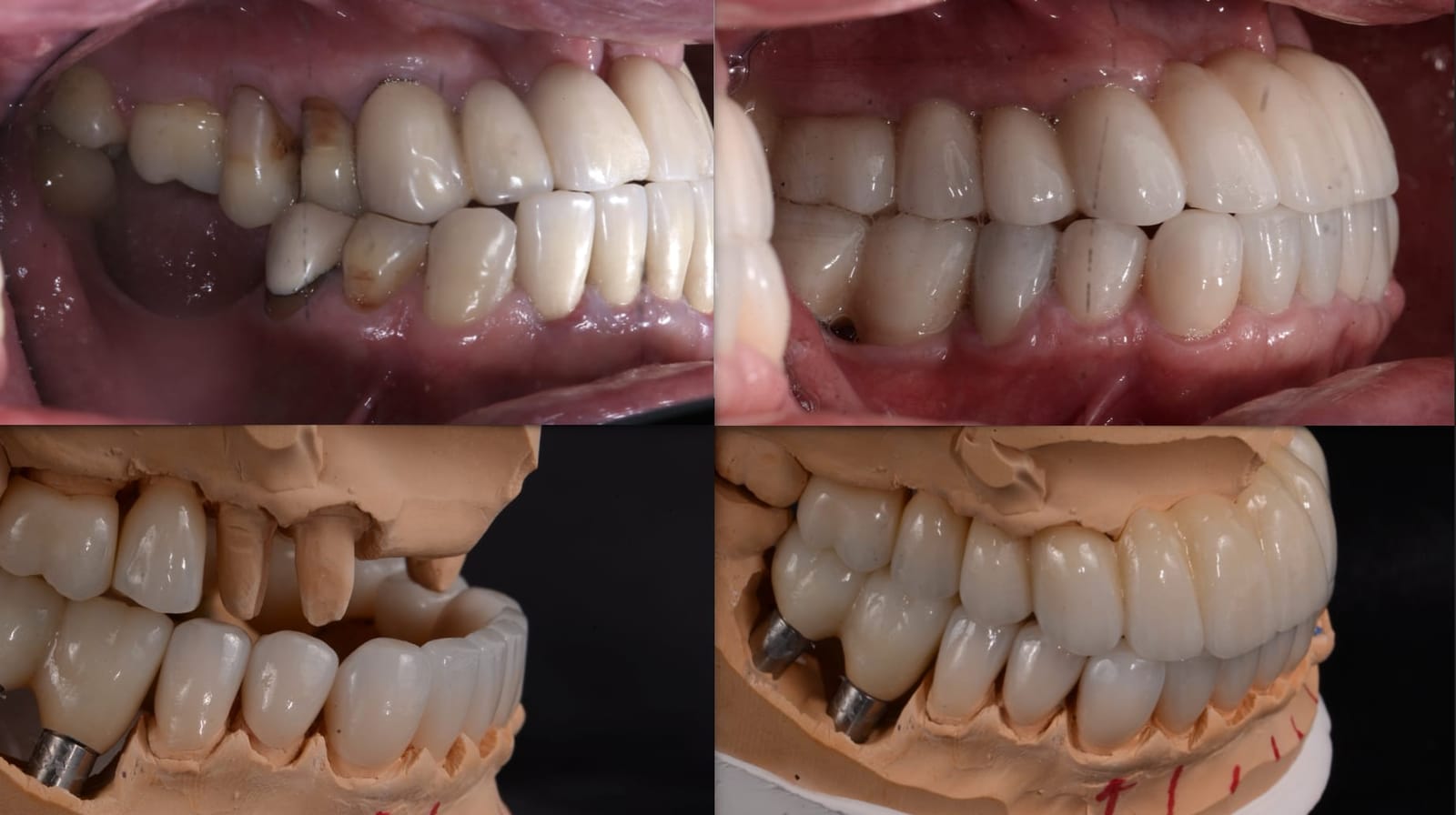
So the front is not doing everything
There was one non negotiable condition. He was missing teeth at the back, and a complex restoration at the front cannot be left to absorb the load of a mouth with no posterior support.
So implants were placed in the lower posterior region to restore that support and protect the front from being overloaded.
This is the same principle that runs through every case here. Posterior support first, then the aesthetics in front of it. It is what makes the front work rather than merely look right.
The honest test
Rather than promise him the result, he was asked to prove it.
He wore the bridge as a temporary for six to nine months, and the reasoning was explained to him plainly: temporaries fail far sooner than definitive restorations do. If a temporary survives this design, at this span, under his forces, then the final version is likely to be there for at least a decade.
The temporary did well. Only then was the definitive made.
Where the volume went
The side view shows the scale of the correction.
Considerable volume was added, built out beneath the necks of the upper teeth to replace the structure his anatomy never had. That is an FP2 design: a fixed restoration replacing the teeth and part of the missing tissue with them, contoured so it can be cleaned properly and the gum stays healthy.
That bulk does not show when he smiles, and he was entirely comfortable with the trade. What did show was his collapsed upper lip, and the added volume is exactly what now supports it.
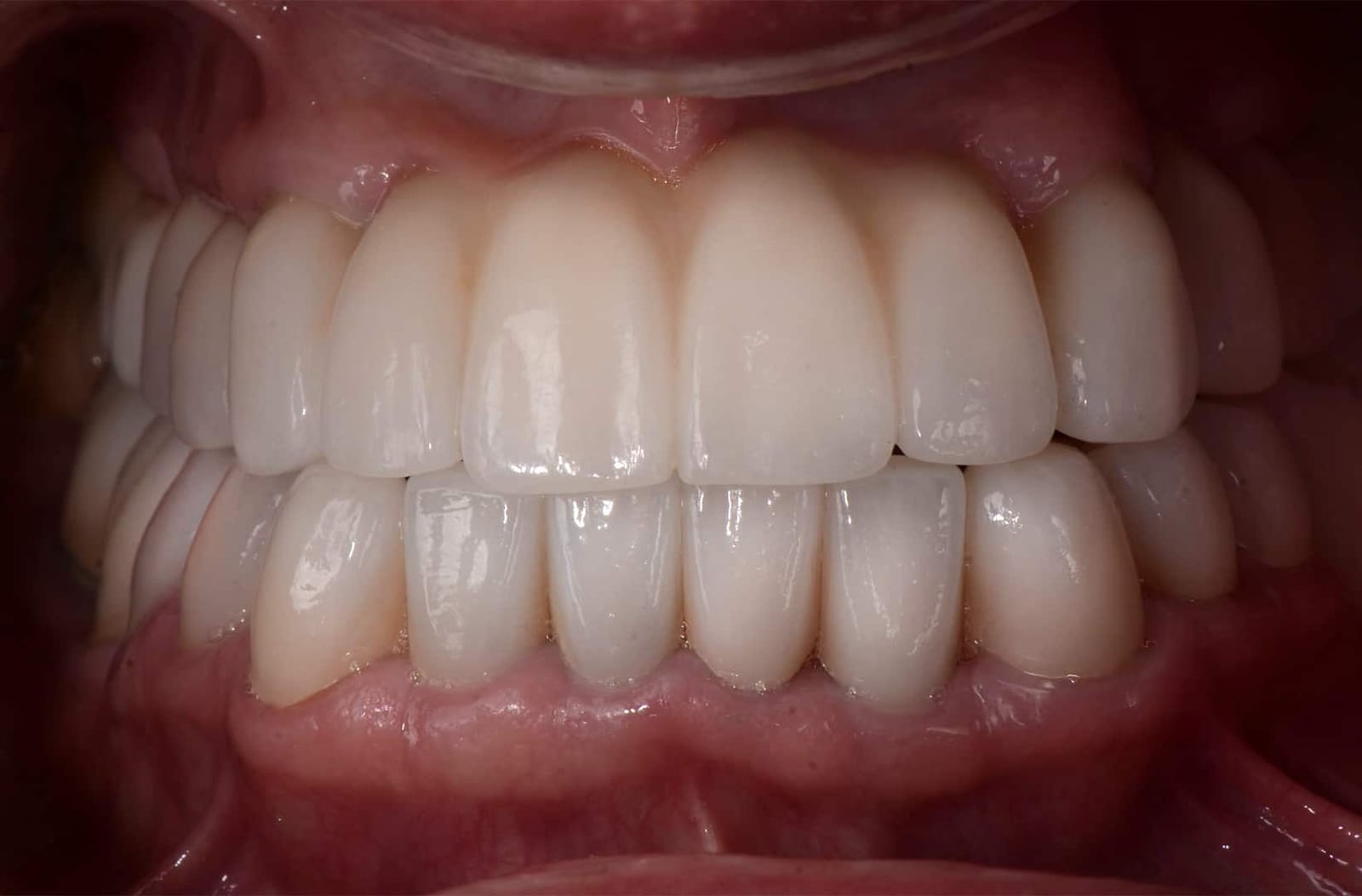
After many decades, an upper jaw that shows
His lower teeth no longer appear to jut forward. His upper teeth do what upper teeth should, which is come first.
Class III skeletal base, converted to a Class I incisor relationship. His lip has support. His bite is stable and carried at the back. His smile is balanced.
No jaw surgery. No grafting at the front. His own teeth, still his.
Retracted, before and after
A reconstruction carried by his own teeth
Converting a patient from one skeletal classification to another, prosthetically, with control, is among the most complex undertakings in prosthodontics.
What makes this one remarkable is what it stands on. The correction is carried by his own teeth. Implants were used only to restore the posterior support that protects them, and nothing at the front was replaced by anything artificial.
It requires knowing exactly which tools apply, how much correction the anatomy will tolerate, where the forces will go afterward, and how to keep the biology healthy while adding that much volume. Done without that understanding it fails quickly and takes teeth with it.
Done properly it stands, and a man who has never shown his upper teeth finally does.
Before and after
Every case is planned around one person's anatomy. Individual results vary, and what was right for this patient may not be right for you.