Tooth-Borne Case 1 · Reconstruction · Implants
She Did Not Want Them All Taken Out
She had been told the same thing everywhere. Not enough bone, take everything out, All-on-4. She wanted to keep as many of her own teeth as she could.
She wanted to replace only what was actually missing. Nobody had offered her a plan that did both.
What she came in with
A loose, uncomfortable denture, and a list of things she had stopped mentioning to people.
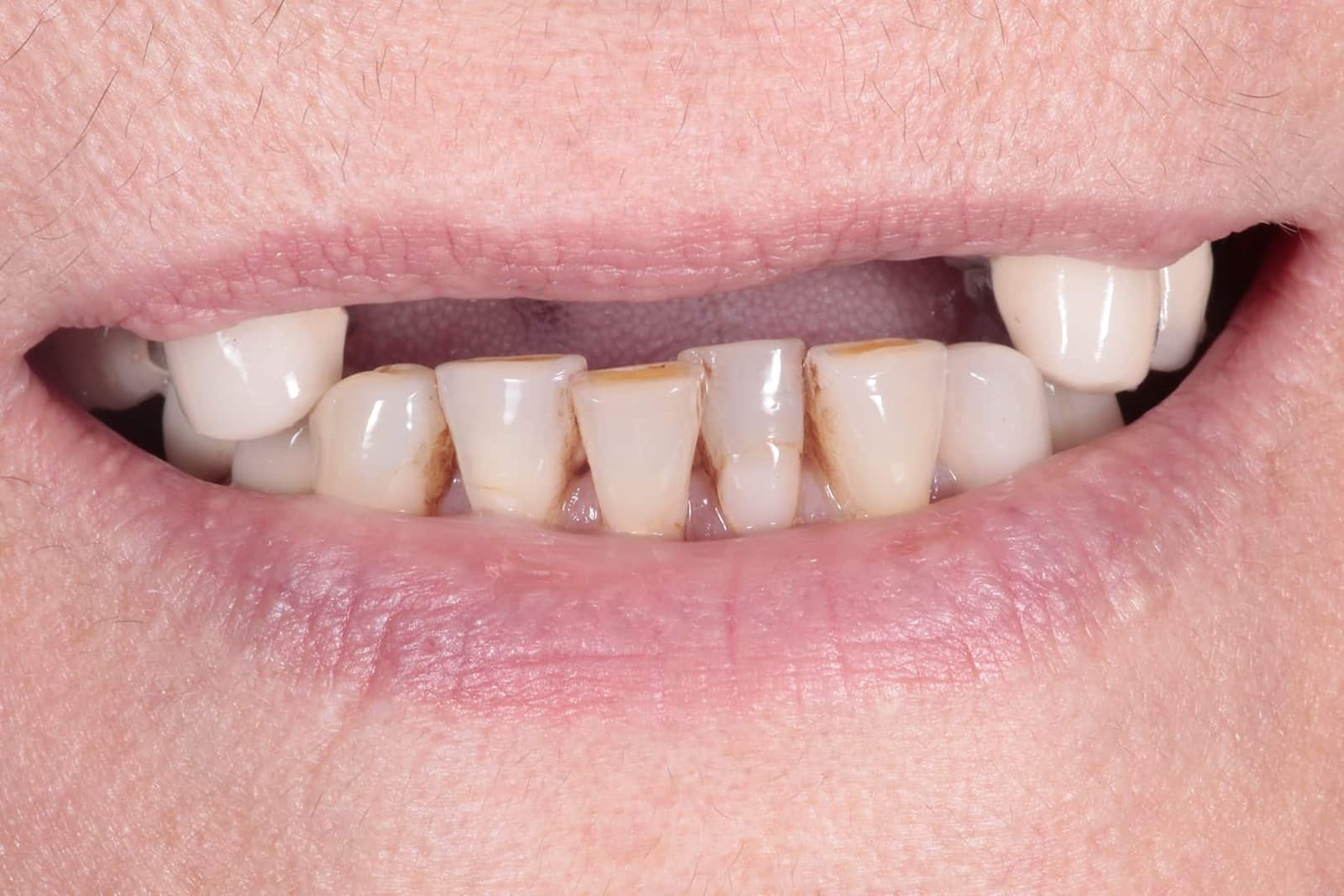
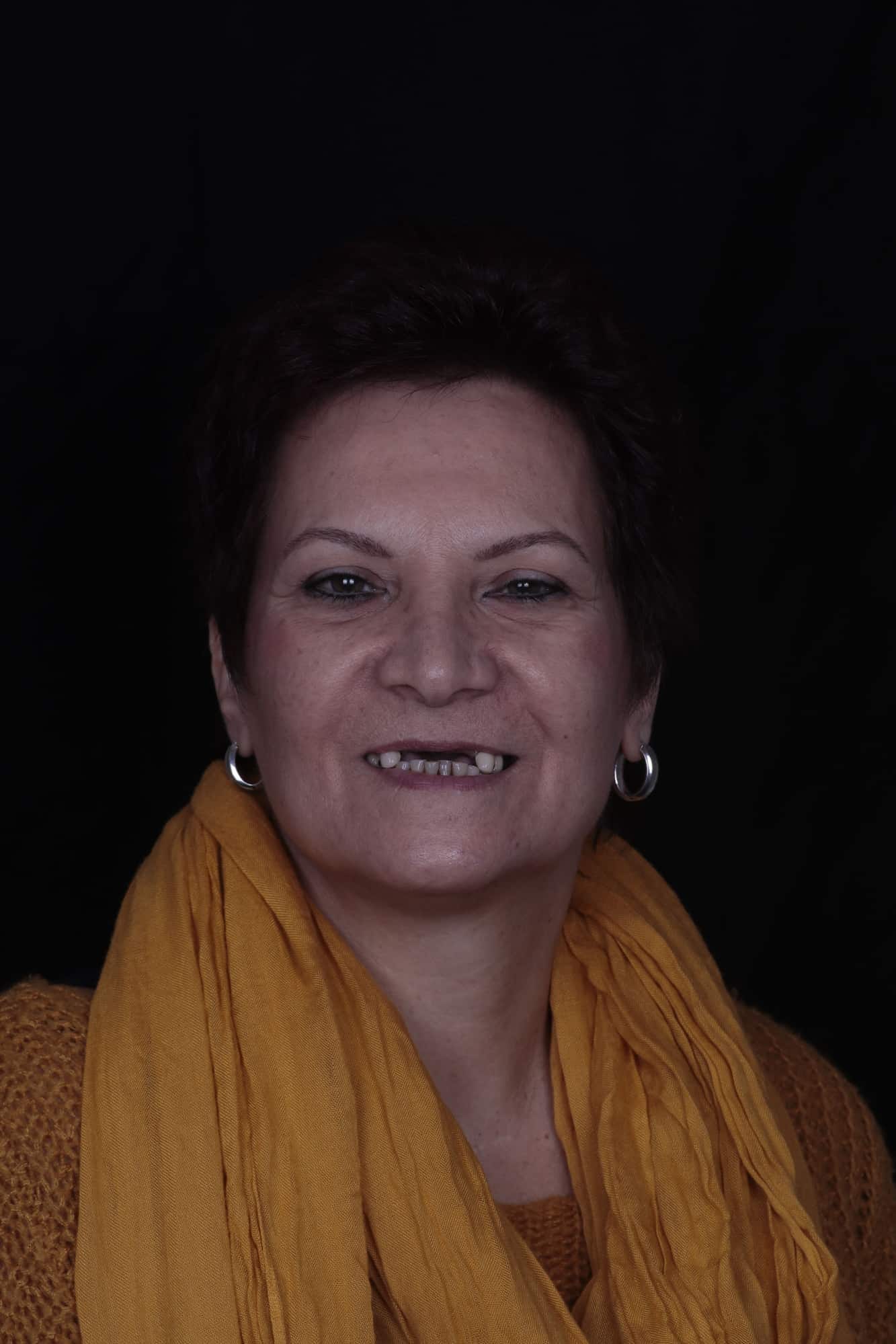
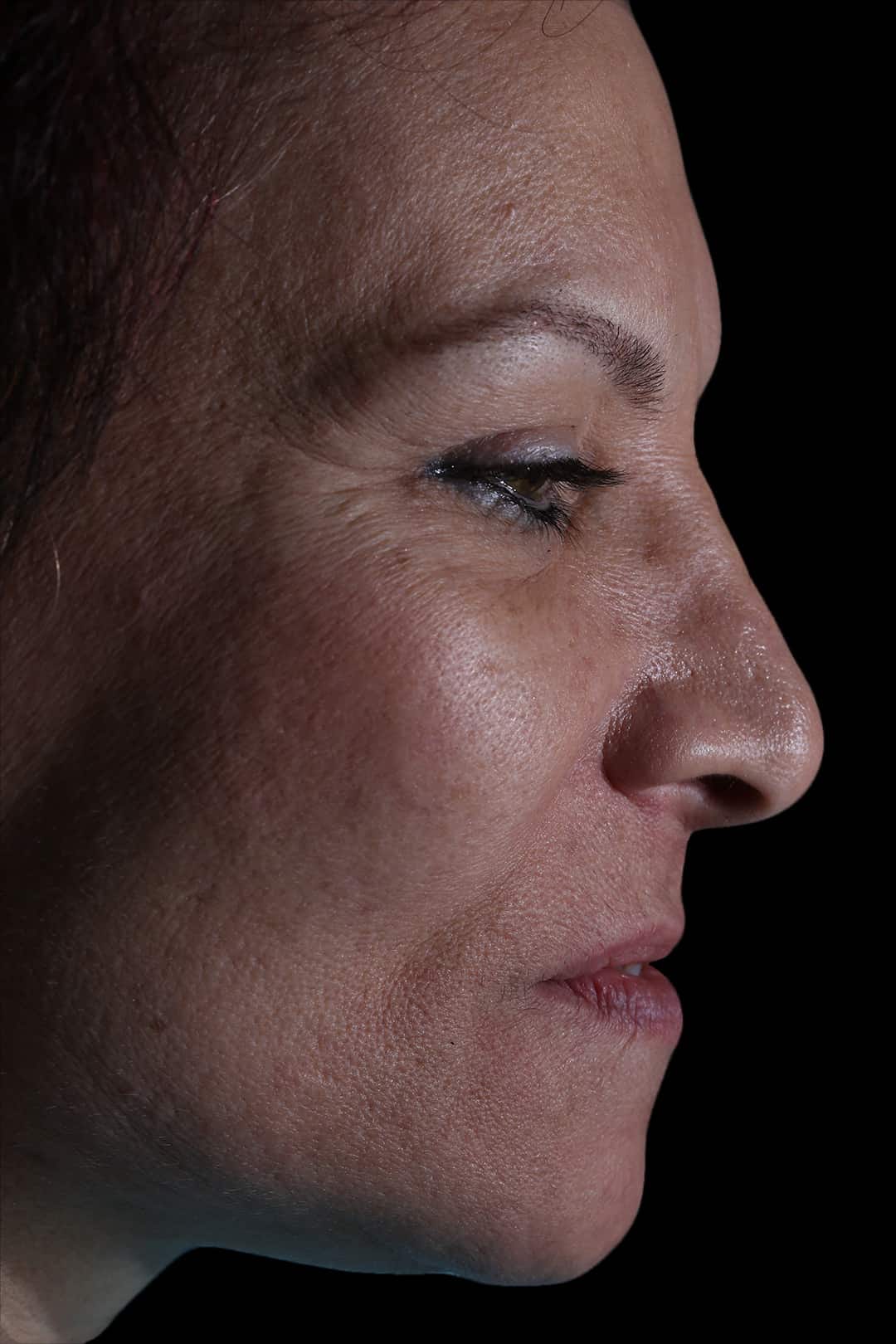
She barely showed her teeth when she smiled, and when she did there was a dark space where teeth should have been. Her upper teeth curved upward while her lower lip curved down, a reverse smile line, which is the arrangement that makes a smile look tired rather than warm.
Her lip had no support behind it. She felt she looked older than she was. Food caught under her teeth.
Every one of those is fixable. None of them is fixable by accident.
Her smile
On arrival
In profile
Managing what sits in between
A practice built around implants knows two moves: take everything out and place implants, or place an implant here and there.
The ground in between, where some of your own teeth are worth keeping and implants belong among them, is a different discipline. It means preparing natural teeth and building on implants in the same arch, deciding where implants go and how they should emerge, and restoring teeth that have to sit convincingly beside them.
A prosthodontist assesses the person as a whole, builds one plan out of every available treatment, and runs it with a team of specialists. The quarterback of restorative and implant dentistry.
She is exactly that case.
Wax first, surgery second
The lip support she needed and the smile she wanted came first, in wax.
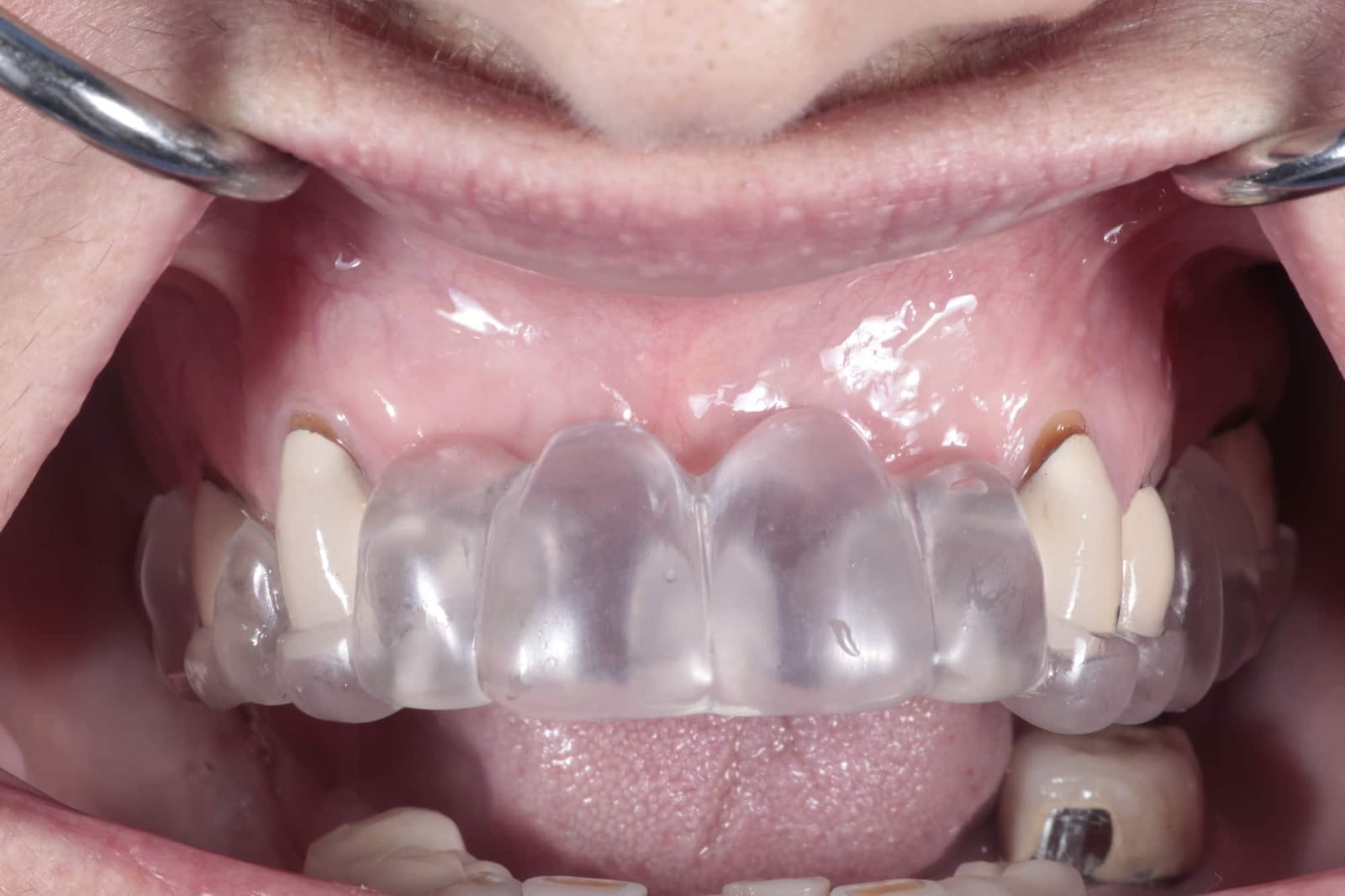
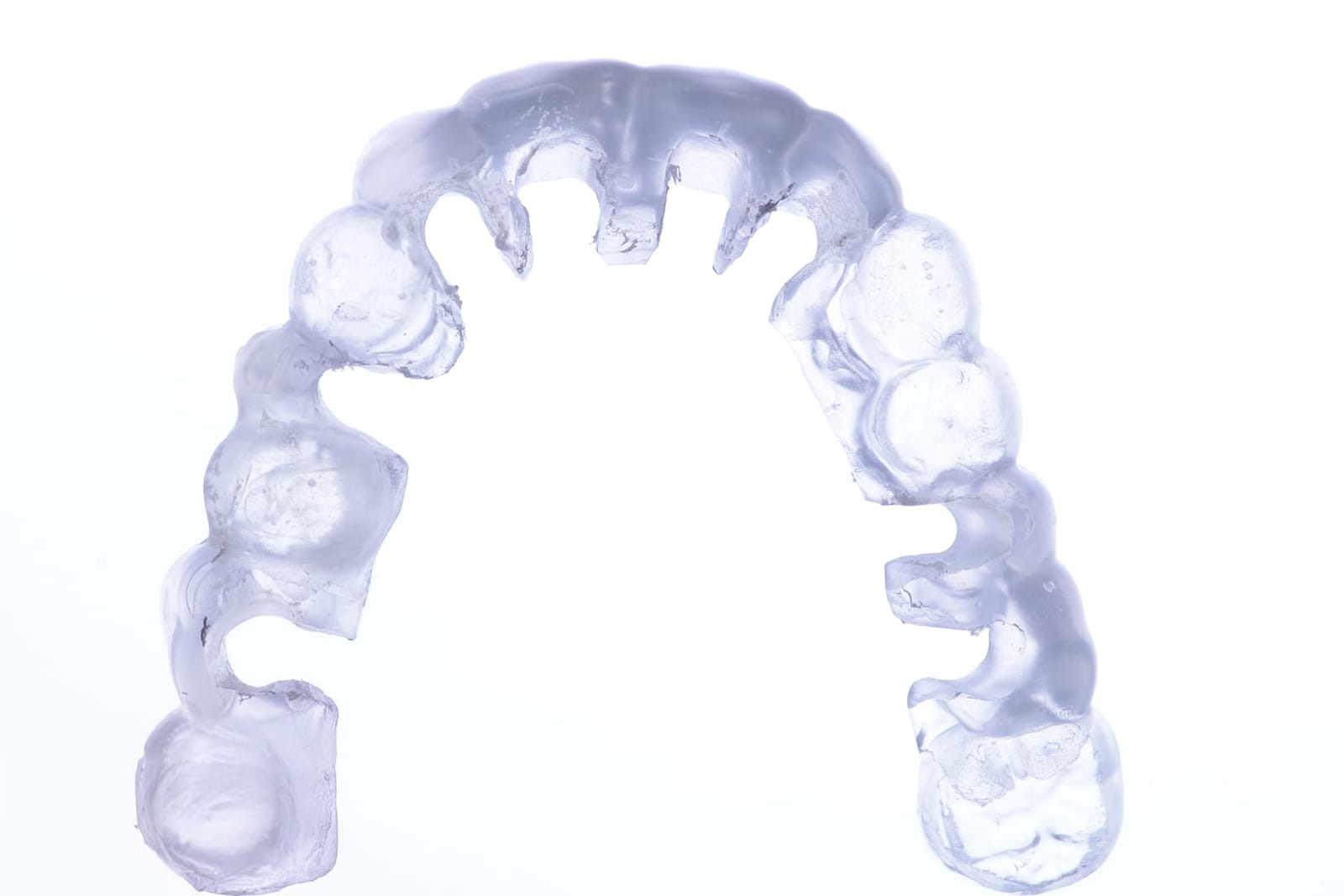
The teeth were waxed to the position they should finally occupy and tried in her own mouth, so the target could be seen and agreed rather than described. From that, a surgical guide was produced for the surgeon.
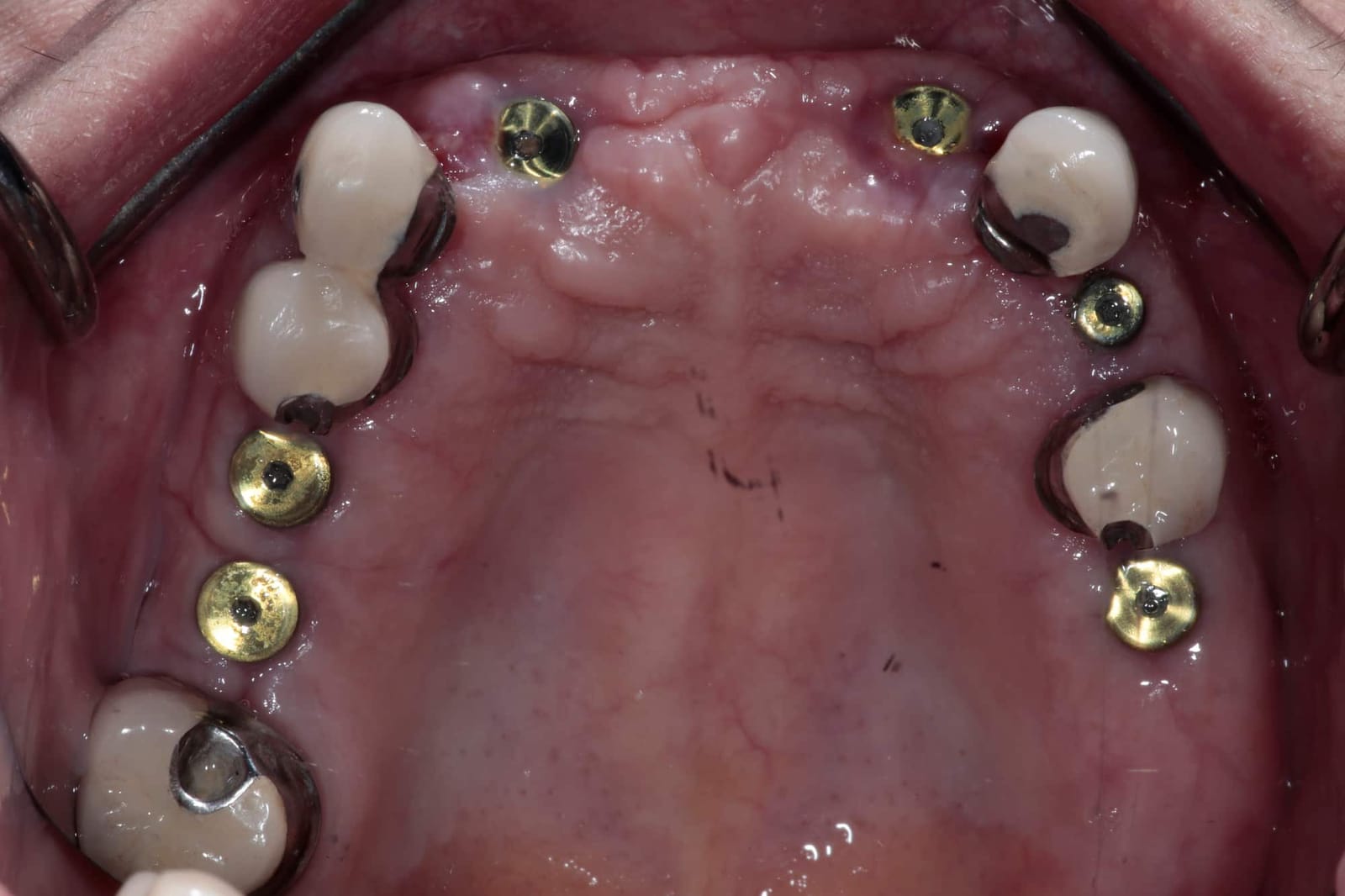
Bone and soft tissue were then developed, and implants placed through that guide, positioned according to where her future teeth needed to be. Not according to where the bone happened to be most convenient.
That is the reversal that changes a case. The implants serve the smile, not the other way around.
The surgical guide
The implants, healed
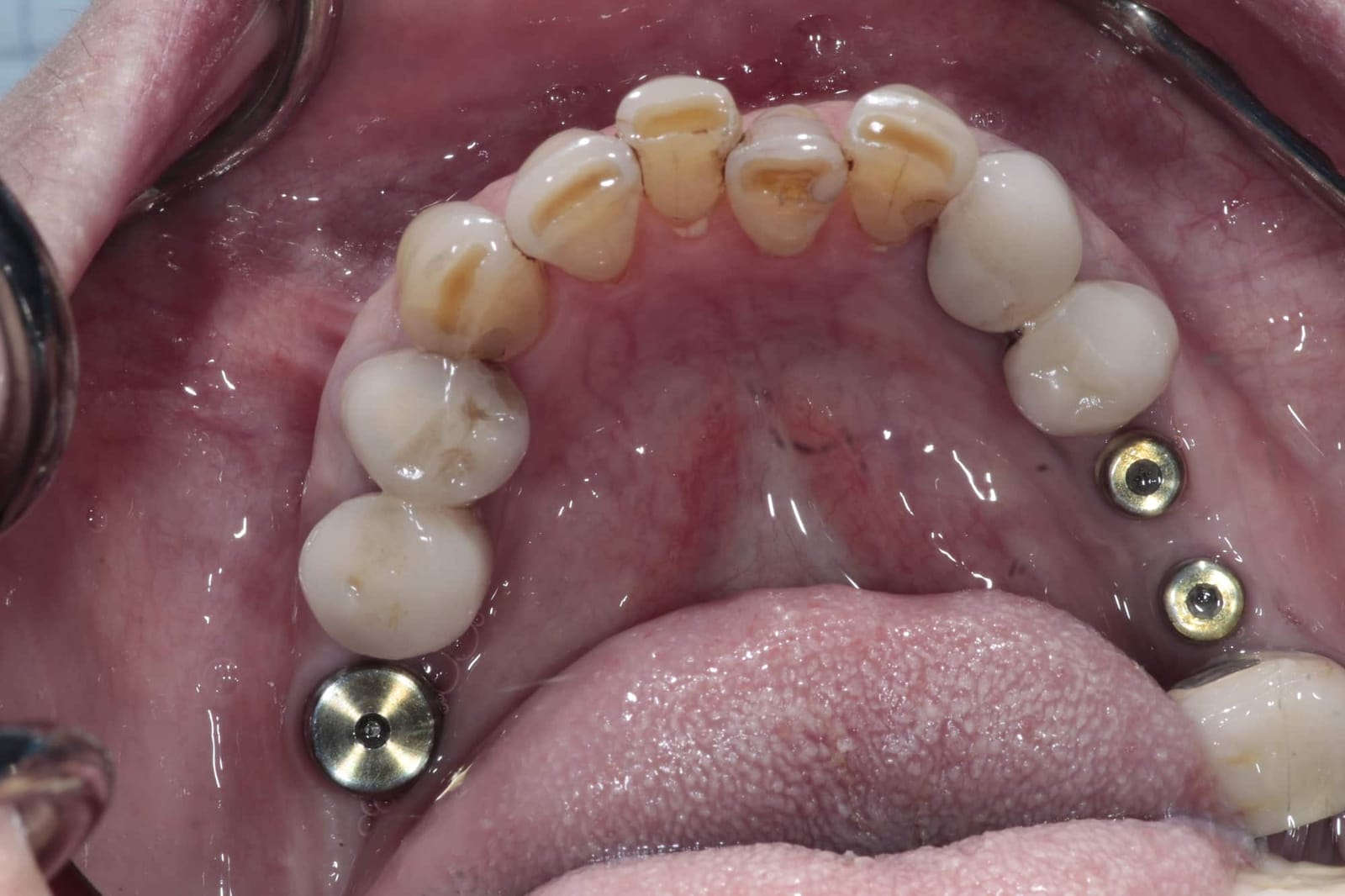
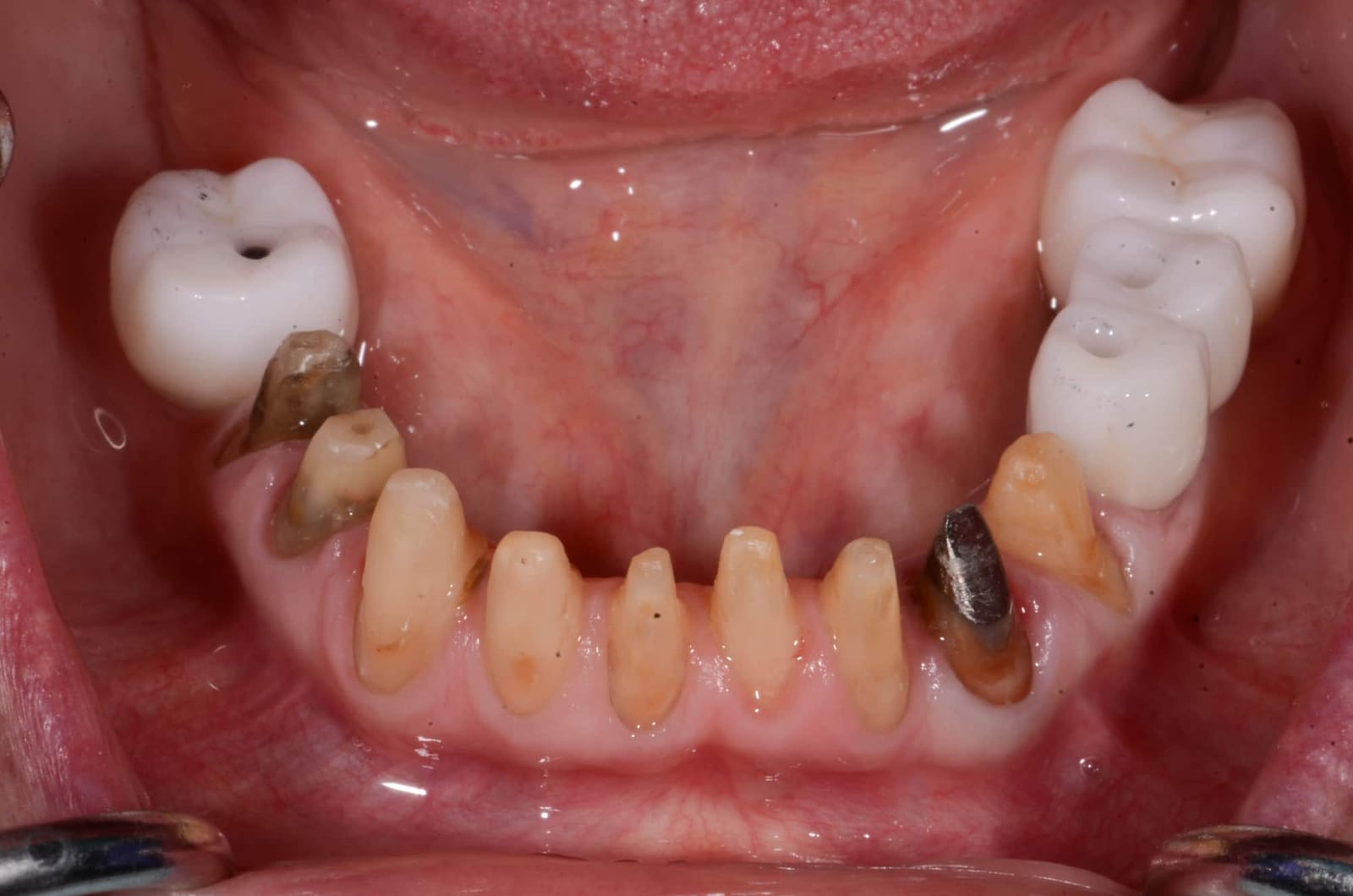
Prepared, not extracted
Many of her teeth were kept.
They were damaged rather than lost, and damaged teeth can be restored. They were prepared for crowns with minimal reduction, the kind of preparation that supports a restoration for decades without stripping the tooth to do it.
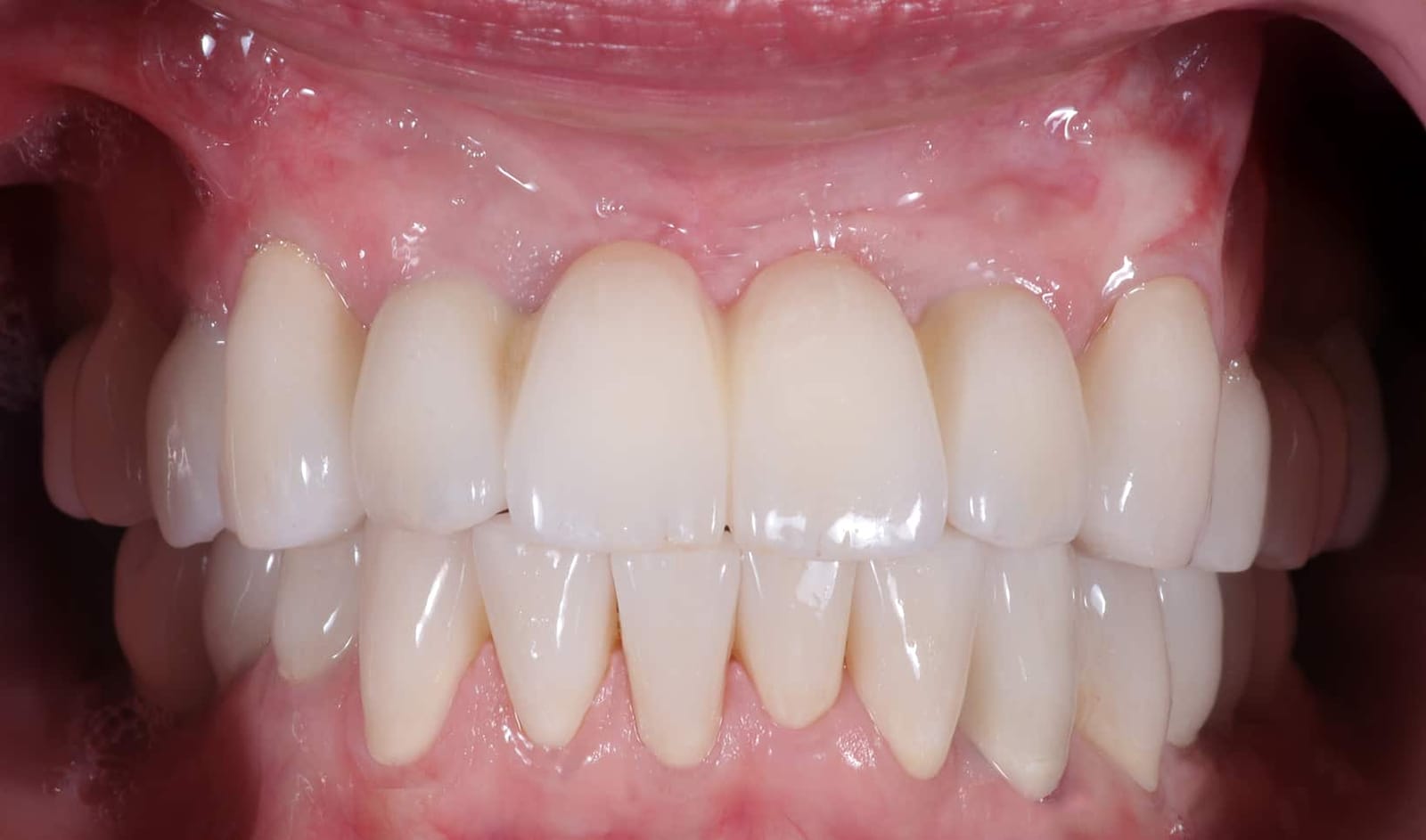
So the final arch is a combination: crowns on her own teeth, restorations on implants, all of it designed to read as one set of teeth.
Almost the final, months early
In the provisionals her teeth already looked close to ideal, within minor refinements of what she wanted for the final.
That is the point of designing from a wax up. By the time she was wearing them, there was very little left to decide and nothing left to guess.
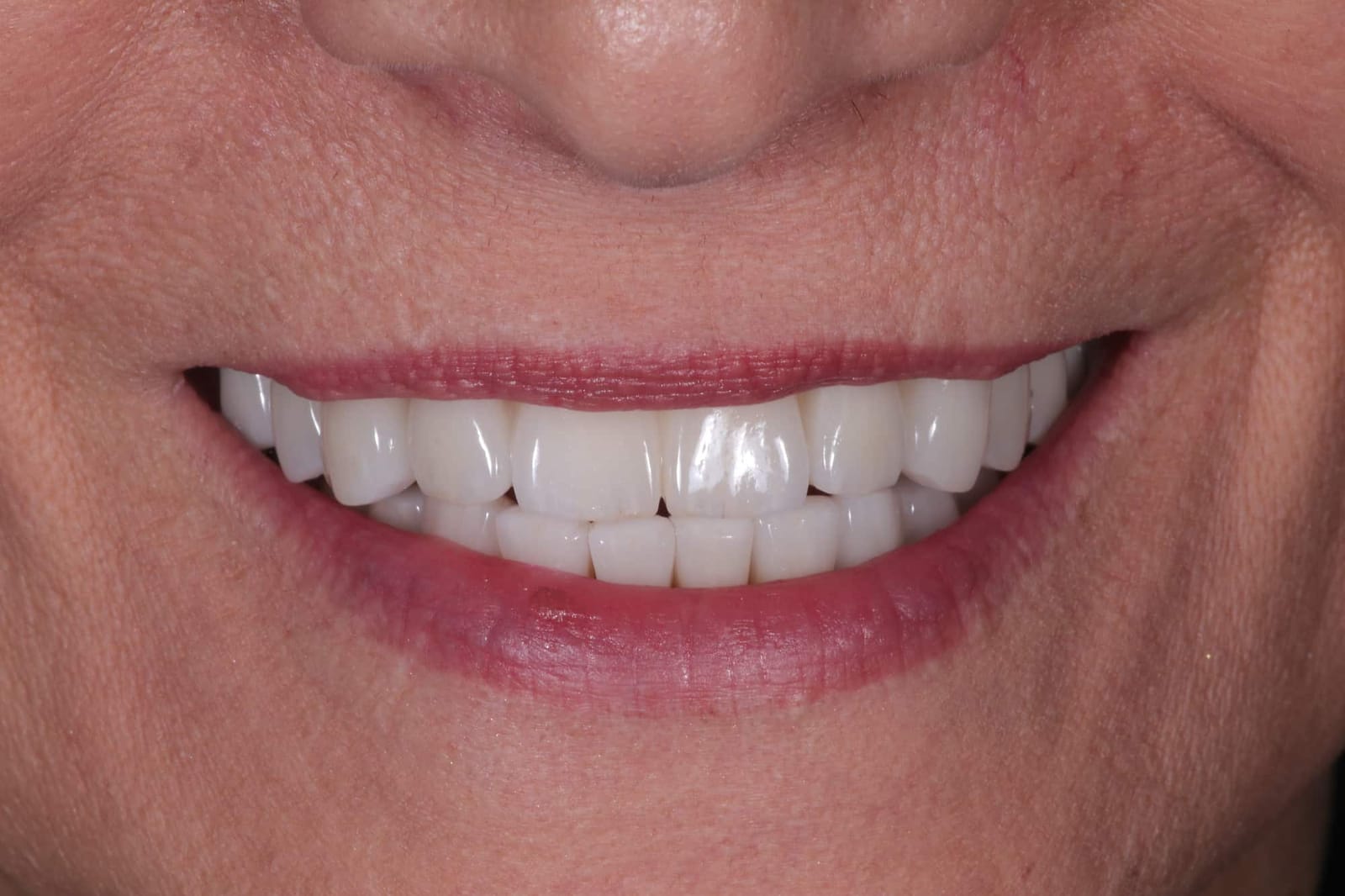
The smile line, corrected
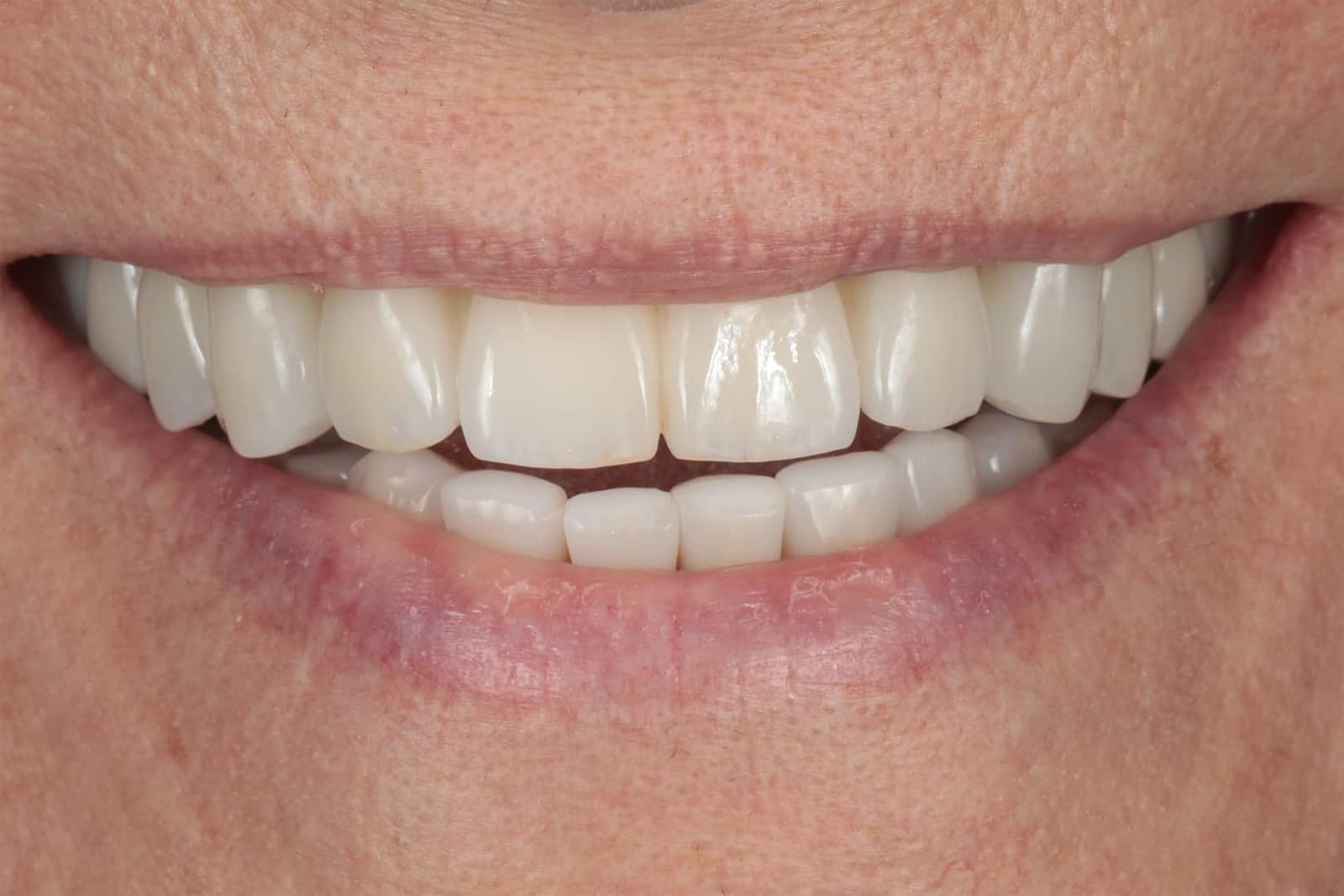
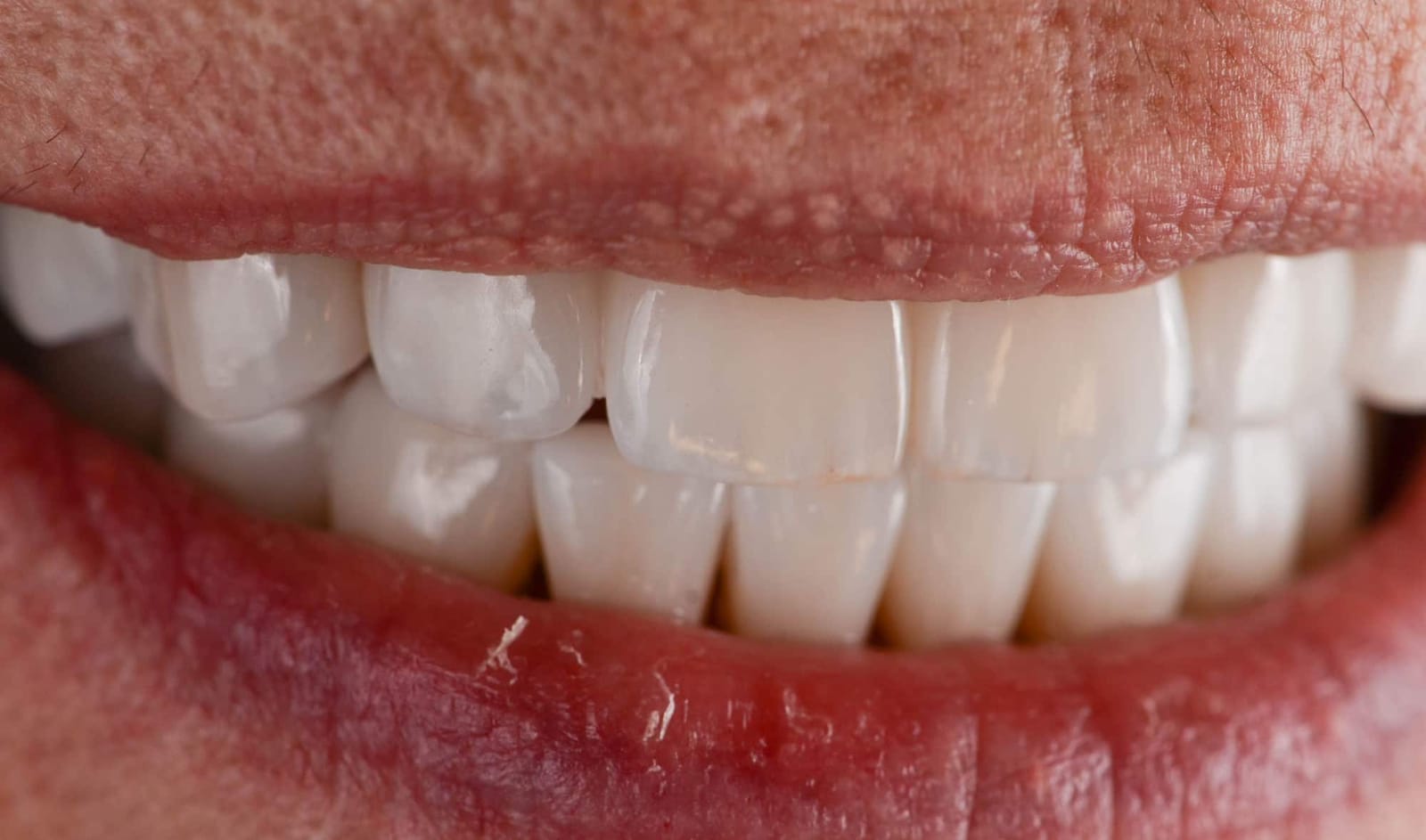
The final restorations sit in harmony with her smile.
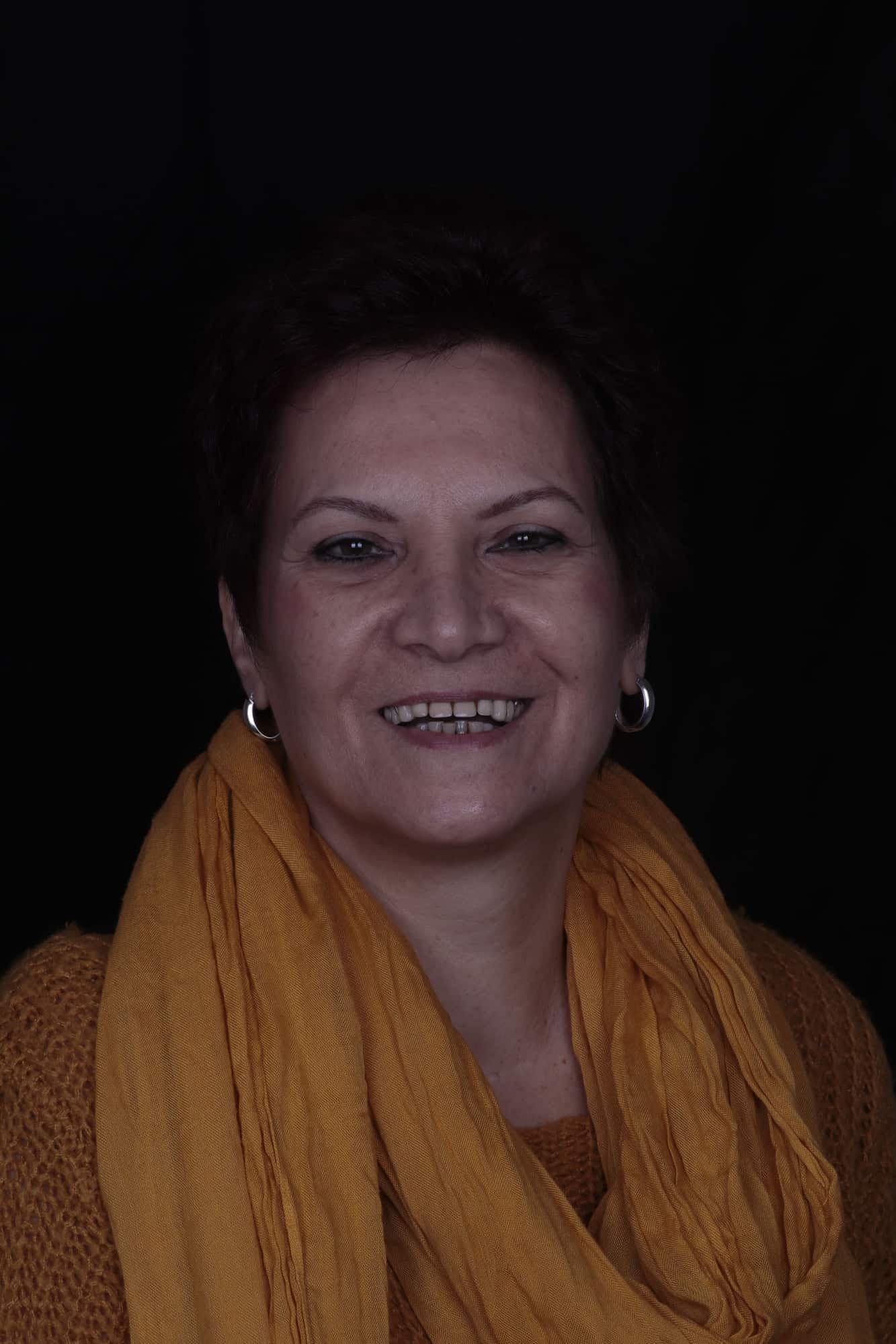
The lip support is restored, so the face has its structure back. The reverse smile line is gone, and the dark space with it. Aesthetics and function, both re established.
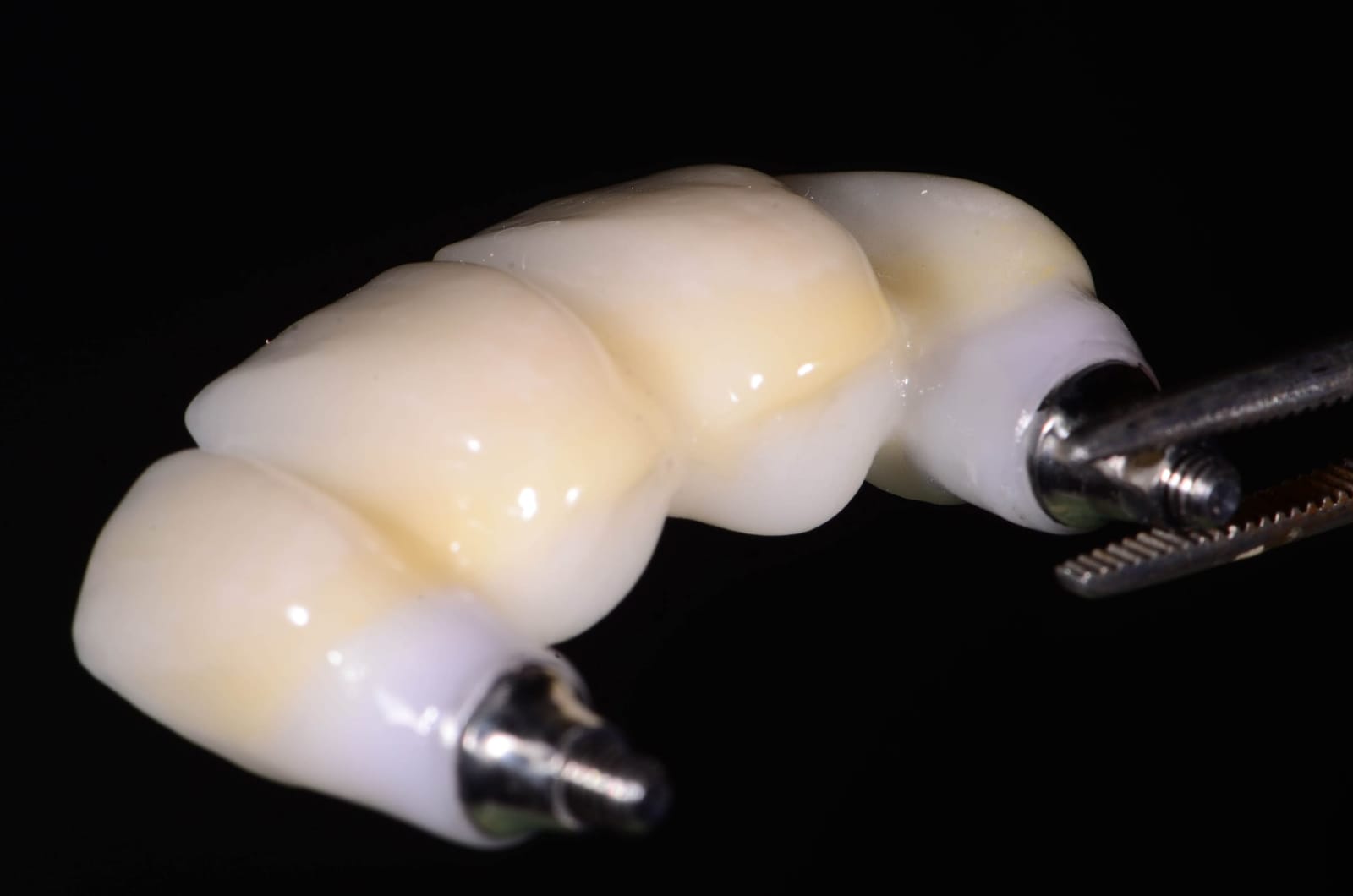
The finals
No complications, no revisions
It is now a decade since her treatment.
She still comes in regularly, and in ten years there have been no complications and no additional treatment. Not a repair, not a remake.
That outcome is achievable far more often than patients are led to believe, provided the rules are followed. Dentistry produces the occasional surprise, and always will. The aim is to treat people so thoroughly at the start that there is very little to revise afterward.
She kept her teeth. She got her smile. Ten years on, neither has needed touching.
Her smile
Every case is planned around one person's anatomy. Individual results vary, and what was right for this patient may not be right for you.