FP-1 Case 4 · Implants · Reconstruction
Unlocking the Jaw Before Rebuilding the Teeth
His bite had collapsed so far that his lower jaw had slid forward and locked to the left.
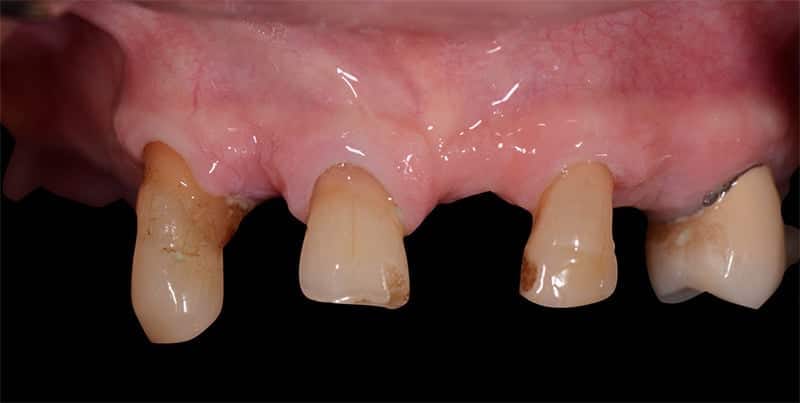
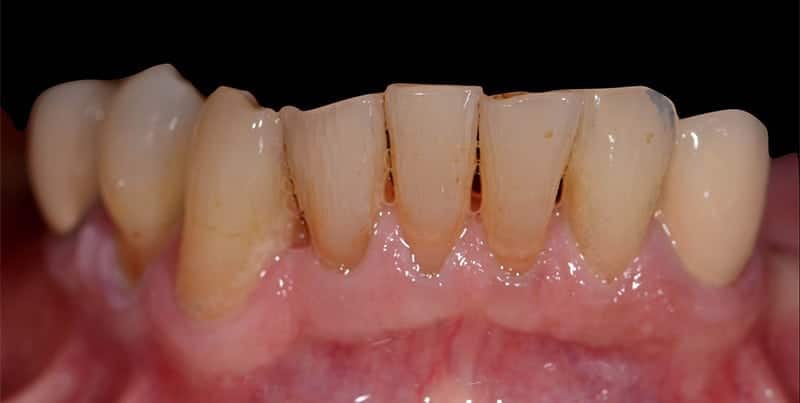
He came to Dr. Reshad with what prosthodontists call loss of posterior support: a severely collapsed bite and an appearance he was embarrassed by. He could not chew properly, he had missing and worn-down teeth, and he did not want to smile.
What made his situation harder was that the collapse had gone so far that his lower jaw had moved forward and become locked to the left.
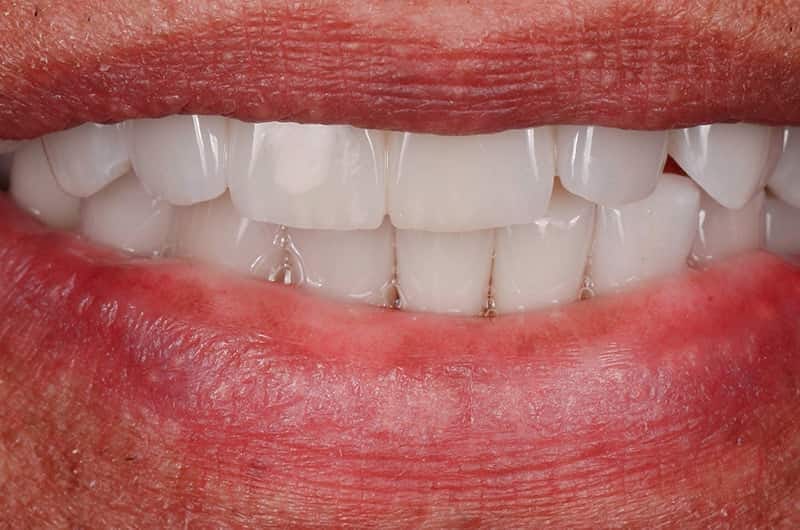
Before and after
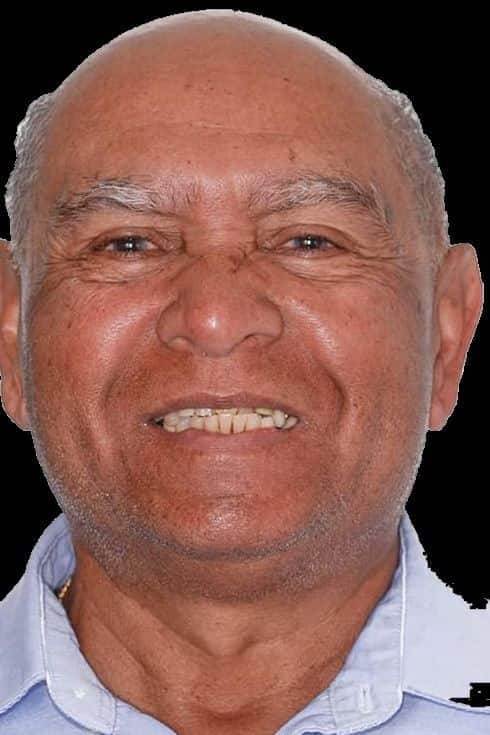
What was left to work with
Missing teeth, worn teeth, and a bite that had lost its back-tooth support entirely.
At arrival
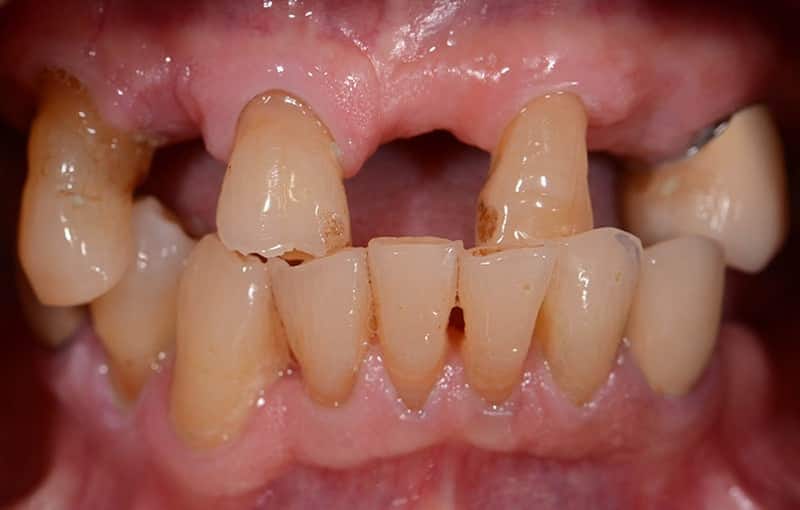
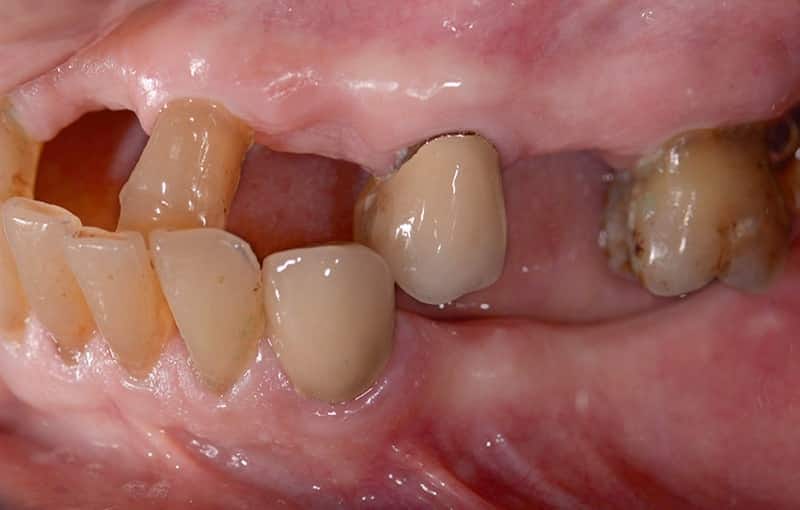
Upper and lower
Putting the jaw back where it belongs
Dr. Reshad was able to manipulate his jaw and, with some therapeutic aids, reposition it into a stable, correct and comfortable position, what prosthodontists call centric relation. Managing the jaw into its most physiological, healthy and functional position is prosthodontic work.
Once it was clear that he could adapt to his stabilized jaw in that position, and chew and function there, treatment could move forward. Implants and long-term temporaries gave him the bite support his new teeth would need.
Classical dentistry, implants where they were needed
In spite of his advanced breakdown, he was treated with a combination of classical crown and bridge work and dental implants. A one-piece bridge was made for the upper jaw, now stabilized, and a couple of additional implants were placed on the upper right.
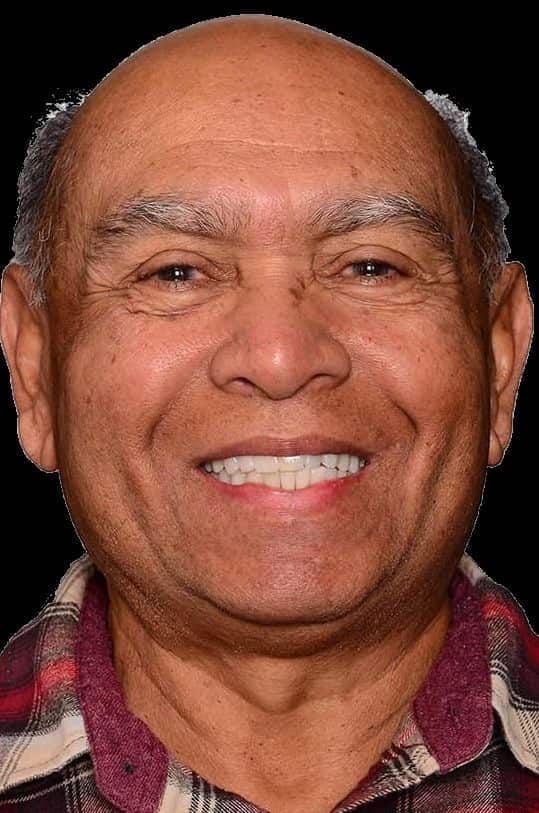
The lower jaw was restored with a combination of teeth and implants, which re-established his bite. He can now chew, function and speak well, and he has the confidence to face the world with his new smile.
After treatment
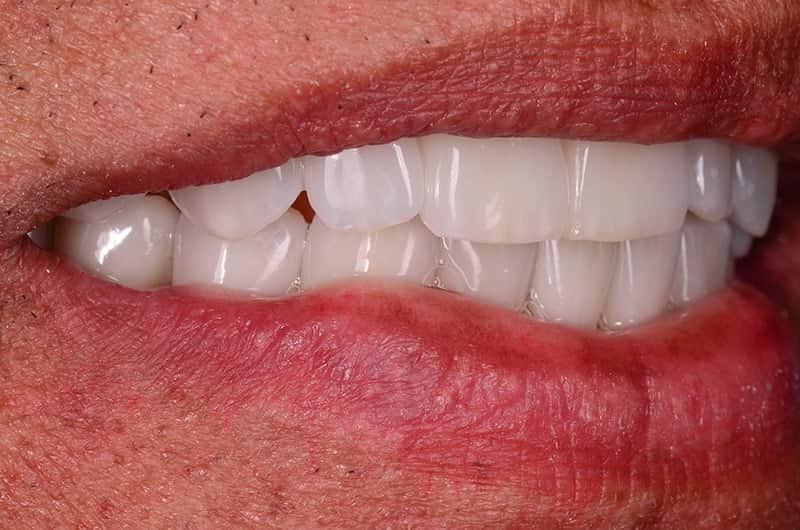
Before and after
Every case is planned around one person's anatomy. Individual results vary, and what was right for this patient may not be right for you.