FP-3 Case 18 · Full-Arch Reconstruction · Implants · Dry Mouth
The Cause Was Not His Teeth
It was keeping him awake.
His teeth hurt. His gums were sore. The implants in his lower front teeth were painful, bleeding, and producing a smell he could not explain. The necks of his teeth had gone dark.
He did not arrive with a theory. He arrived asking what could be done, which is the honest position when nothing you have been told has made sense of it.
Precision and advanced dentistry for optimal function and longevity.
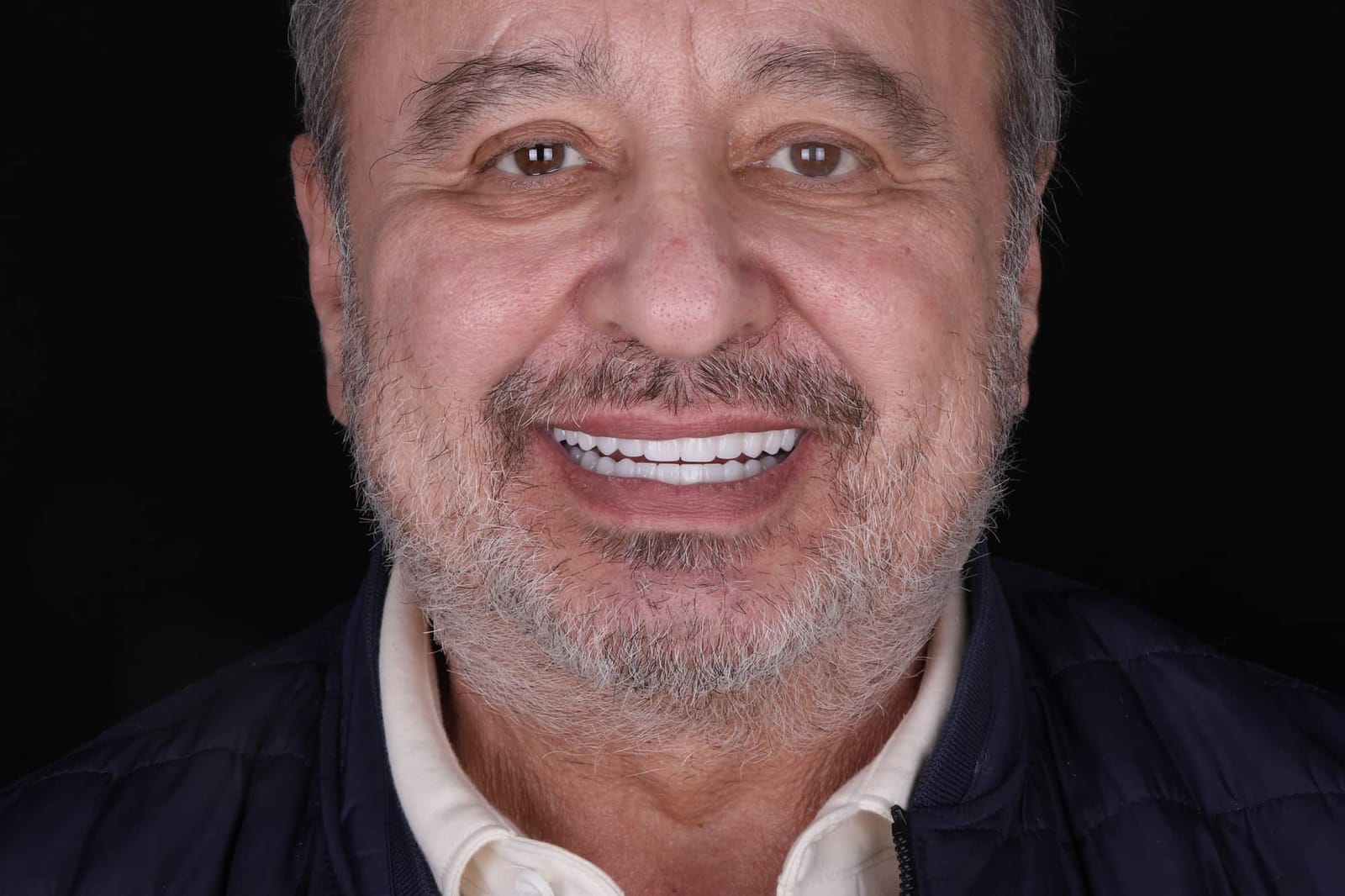
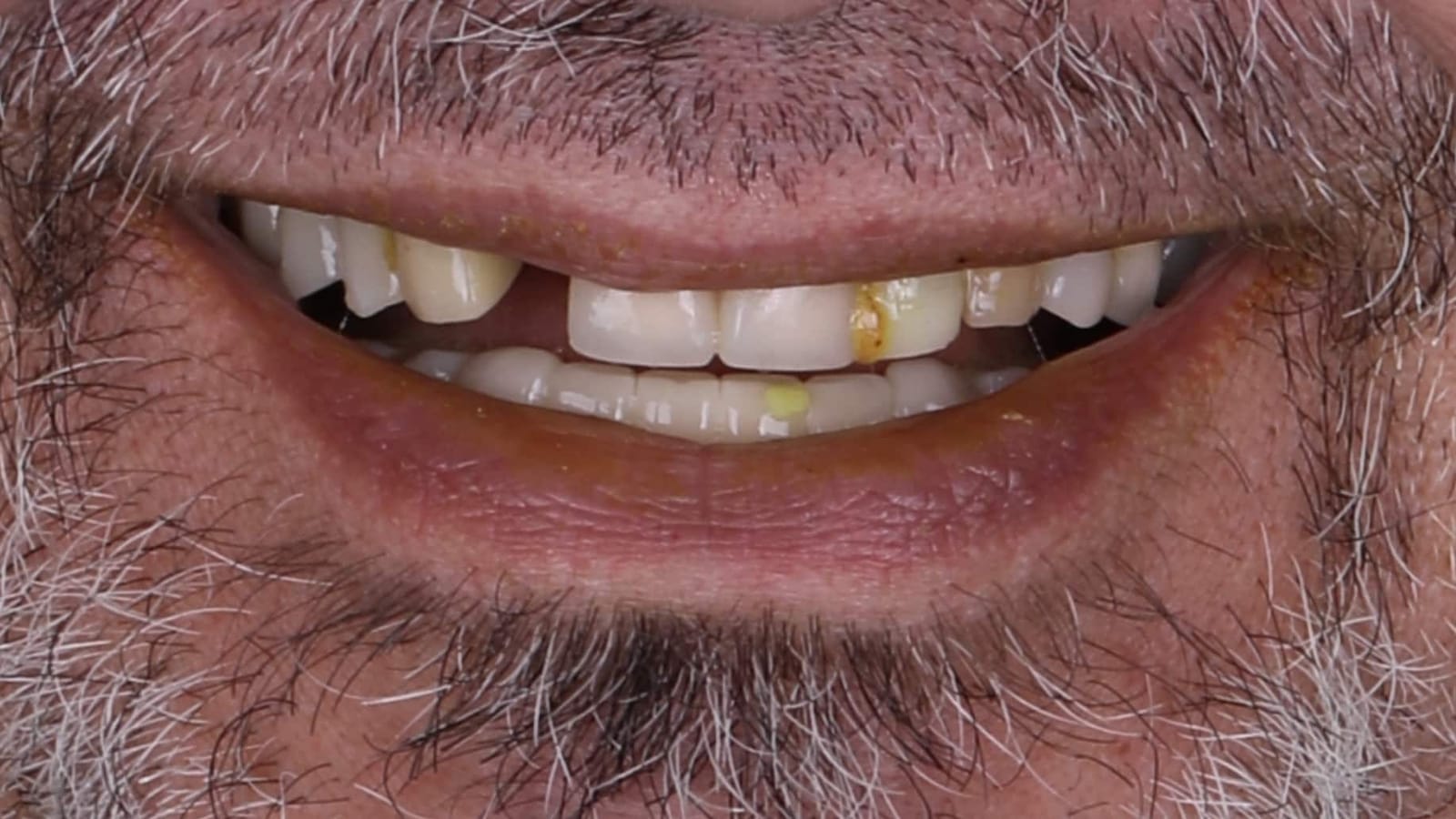
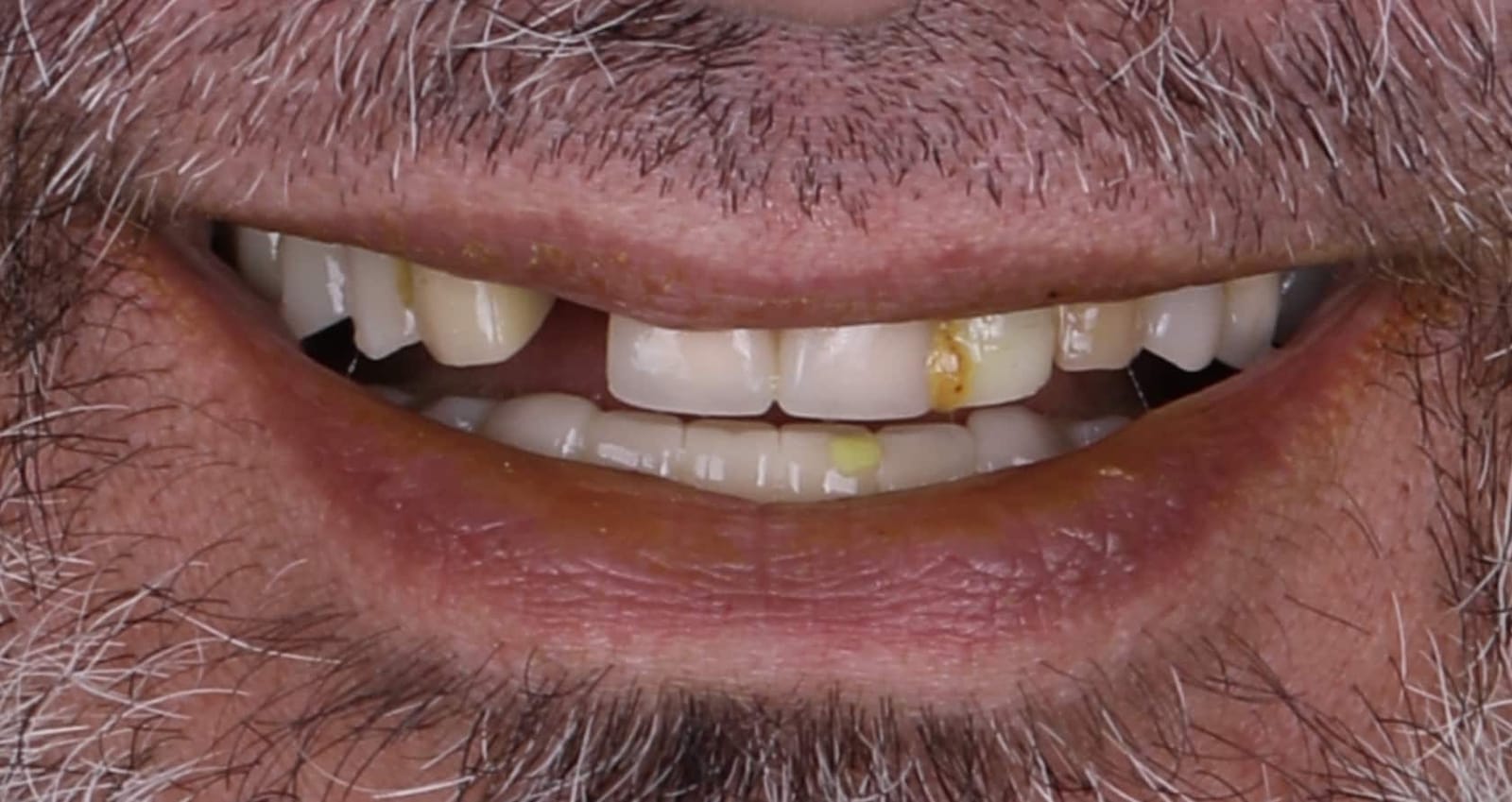
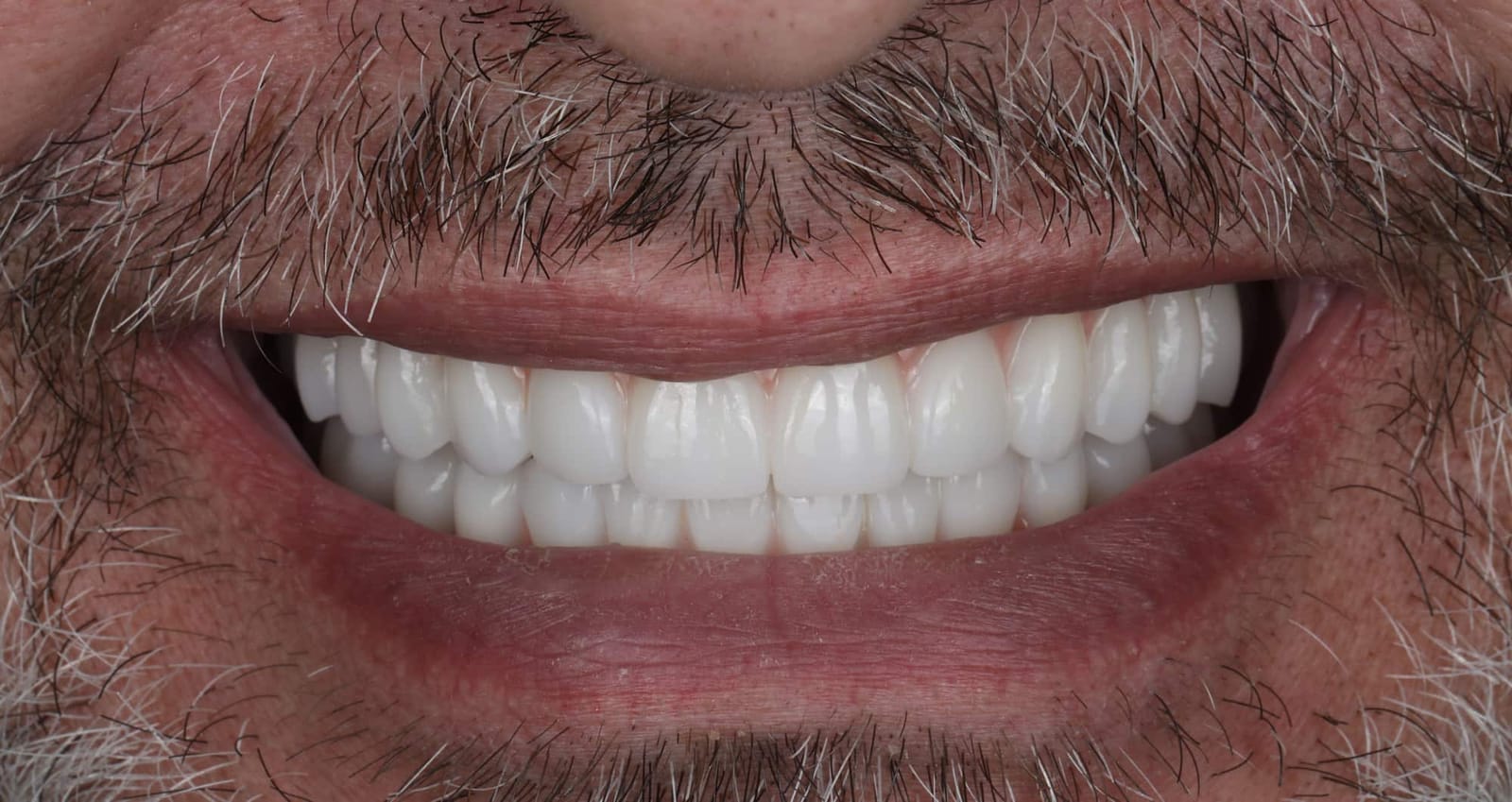
Before and after
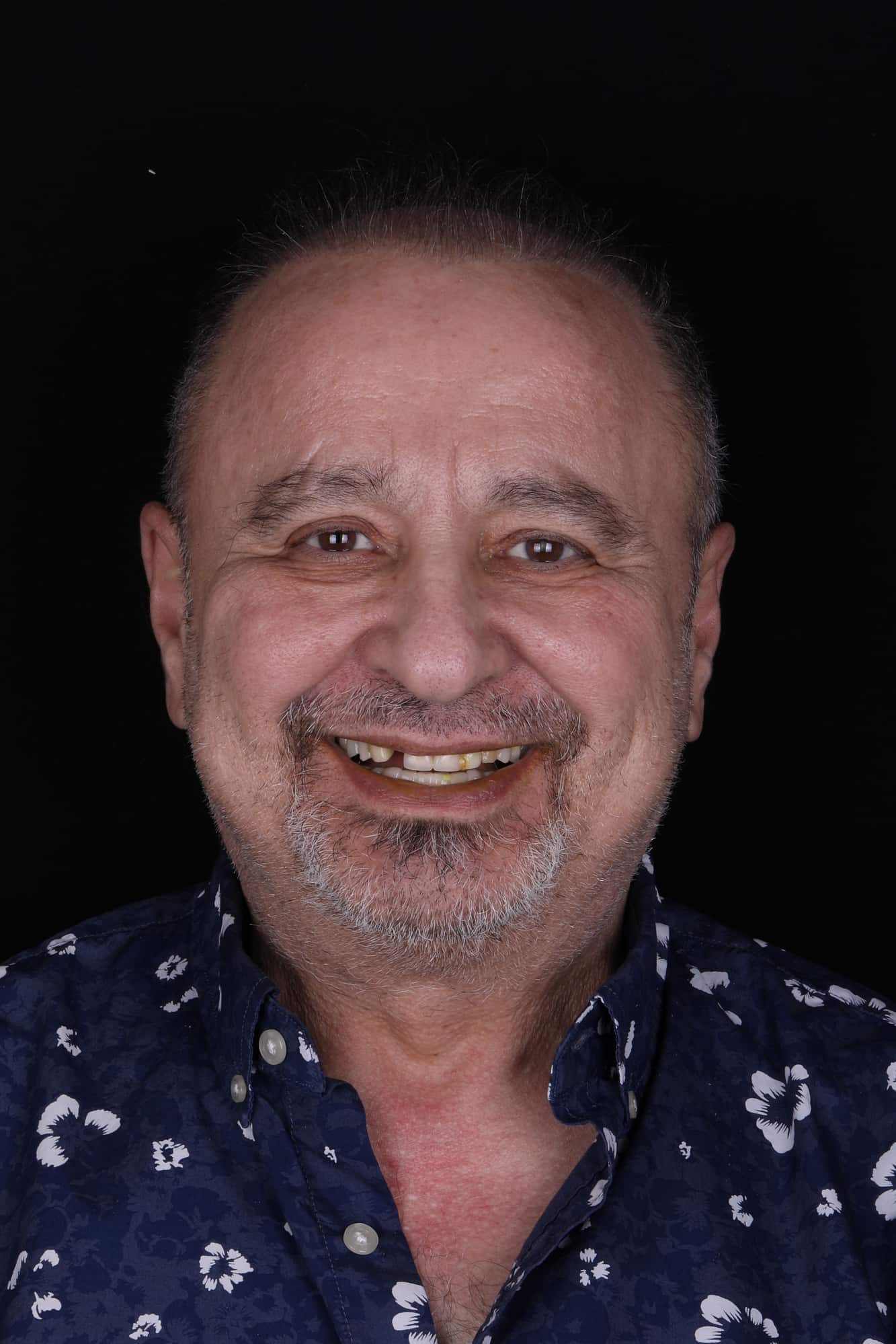
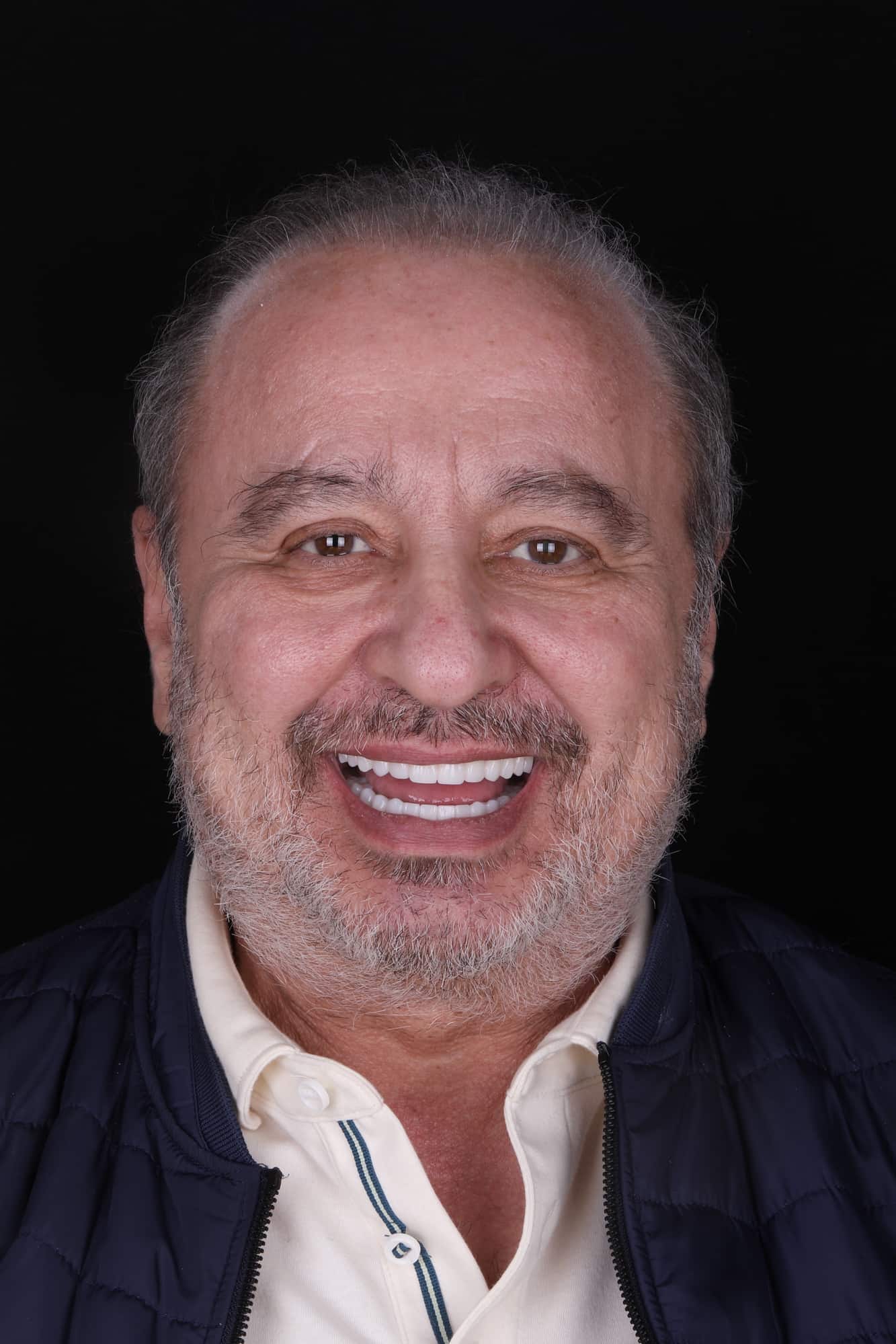
Dry mouth, and what it does
The examination found rampant caries. Decay across the roots of his teeth, and in places it had already spread beneath the bone.
The cause was dry mouth.
Saliva is not incidental. It buffers acid, clears food, and carries the minerals that repair enamel every day. Take it away and decay stops being an occasional event and becomes continuous. It attacks the roots first, at the necks of the teeth, which is exactly where his darkening was.
Dry mouth has many causes. Hundreds of medications produce it. So do certain drugs, mouth breathing, and sleep apnea. Finding which one is at work is the difference between treating a mouth and treating a symptom.
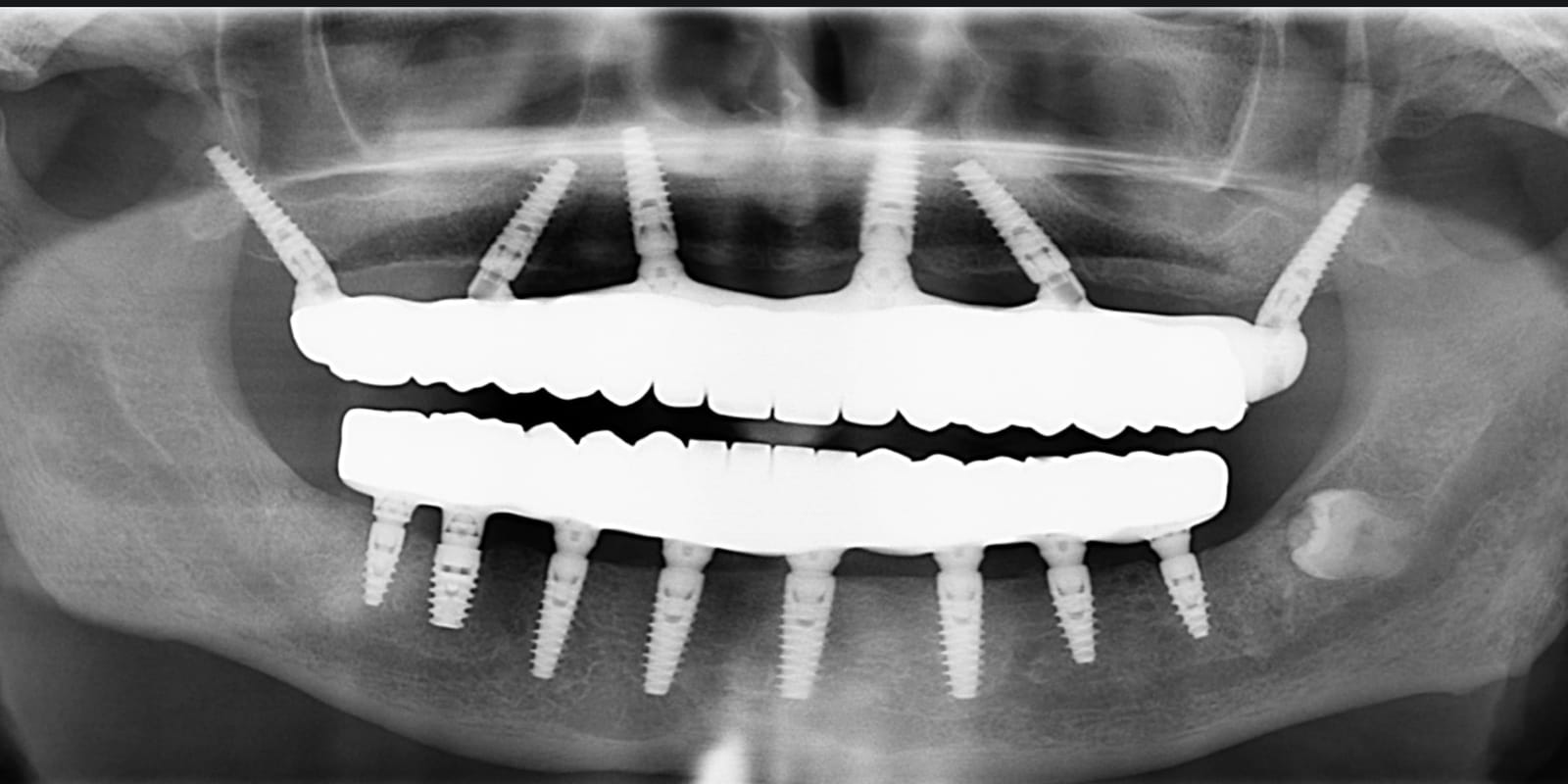
Panoramic radiograph at arrival
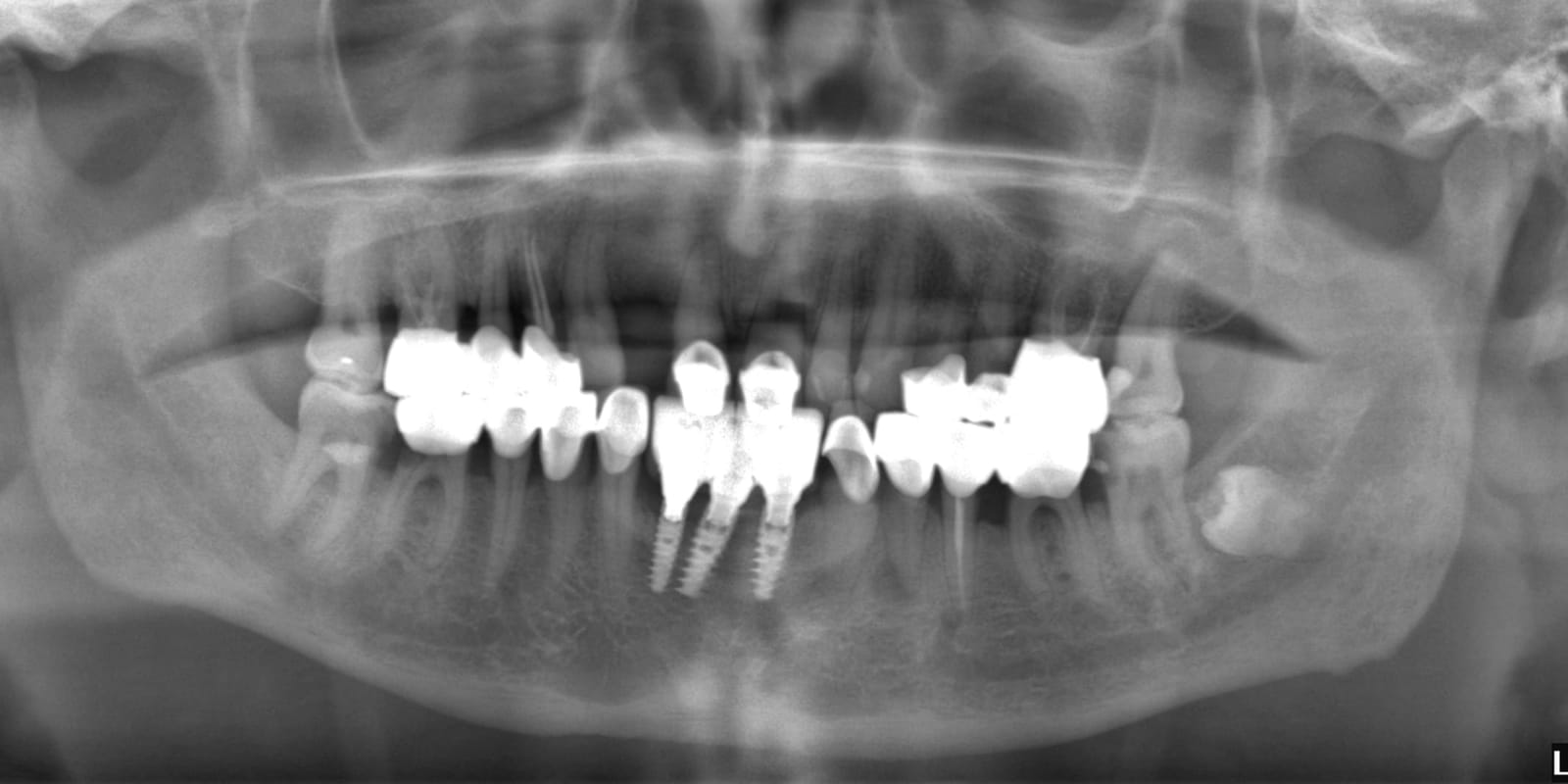
At arrival
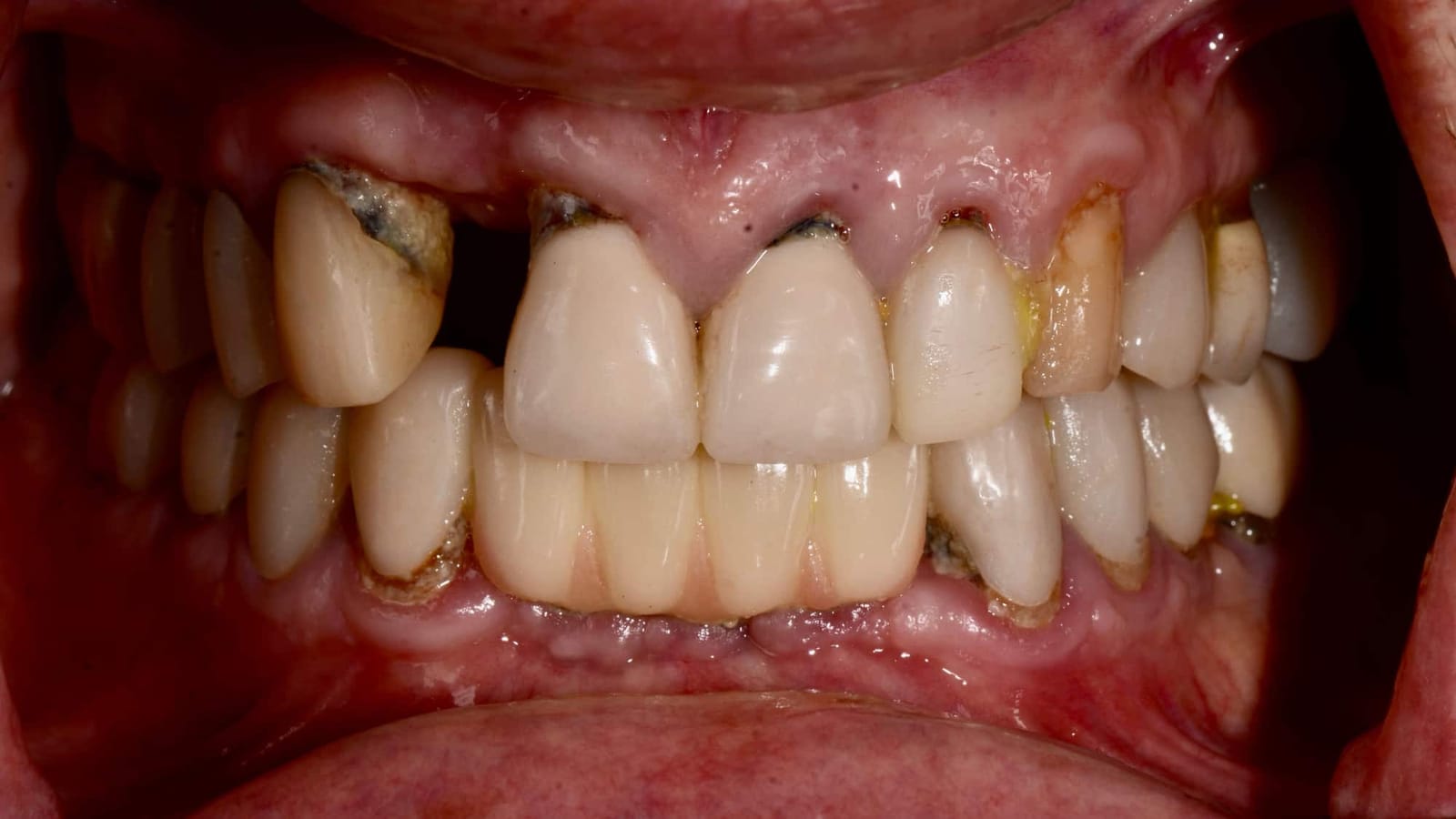
Dry mouth is preventable damage
Patients with dry mouth are placed on a specific preventive regimen here, because this outcome is avoidable when the condition is identified early.
He was not our patient at the time. By the time he reached us the decay had gone under the bone and taken some of it with it.
That is the whole argument for diagnosing a dry mouth rather than treating the cavities it produces, one at a time, forever.
Enough bone to build on
Detailed assessment found adequate bone volume for implants despite the damage.
The remaining teeth were not salvageable, so they were removed, and the plan was designed from the teeth he should have rather than from what was left.
Anchored in the skull base
He received pterygoid implants, which means they are specialized implants in the back of the mouth, in the upper jaw. They allow additional support for the system.
They allow longevity in the system, because if anything fails in front of them we will always have two implants anchored in the very strong skull base bone in the back. That will mean that even twenty years later, if we have a failure, we will still have enough implants all around to function if we need to transition to additional implants in the distant future.
Finally, having implants so far back allows the maximum chewing surface for patients, with possibly the full complement of teeth, with minimal risk.
But you need to know what you are doing, and that is what we do at Dr. Reshad's office.
The pterygoid implants, on the radiograph
Immediate function
Implants were placed and loaded immediately, with provisional restorations delivered within a day.
He went from teeth that hurt and bled to a fixed set he could chew on, in a single transition. That is immediate loading, and it works when the planning, the force distribution and the design of the teeth above are all correct.
Testing it, then changing it
Four months of integration, with the gum levels settling and the provisionals carrying the design.
During that time the form, function, phonetics and aesthetics were all evaluated in his own life, and he told us what he wanted. He asked for additional chewing surface on one side of the lower arch, and that was built in at a slightly later stage.
That is the reason the phase exists. A request like that is impossible to anticipate and simple to accommodate, if you ask before anything is permanent.
Refined, approved, then made
At four months, across a couple of visits and with his input, he wore a series of prototypes: refined provisionals showing exactly what the finished teeth would be.
Only after his approval was the final made.
Zirconia on a titanium bar
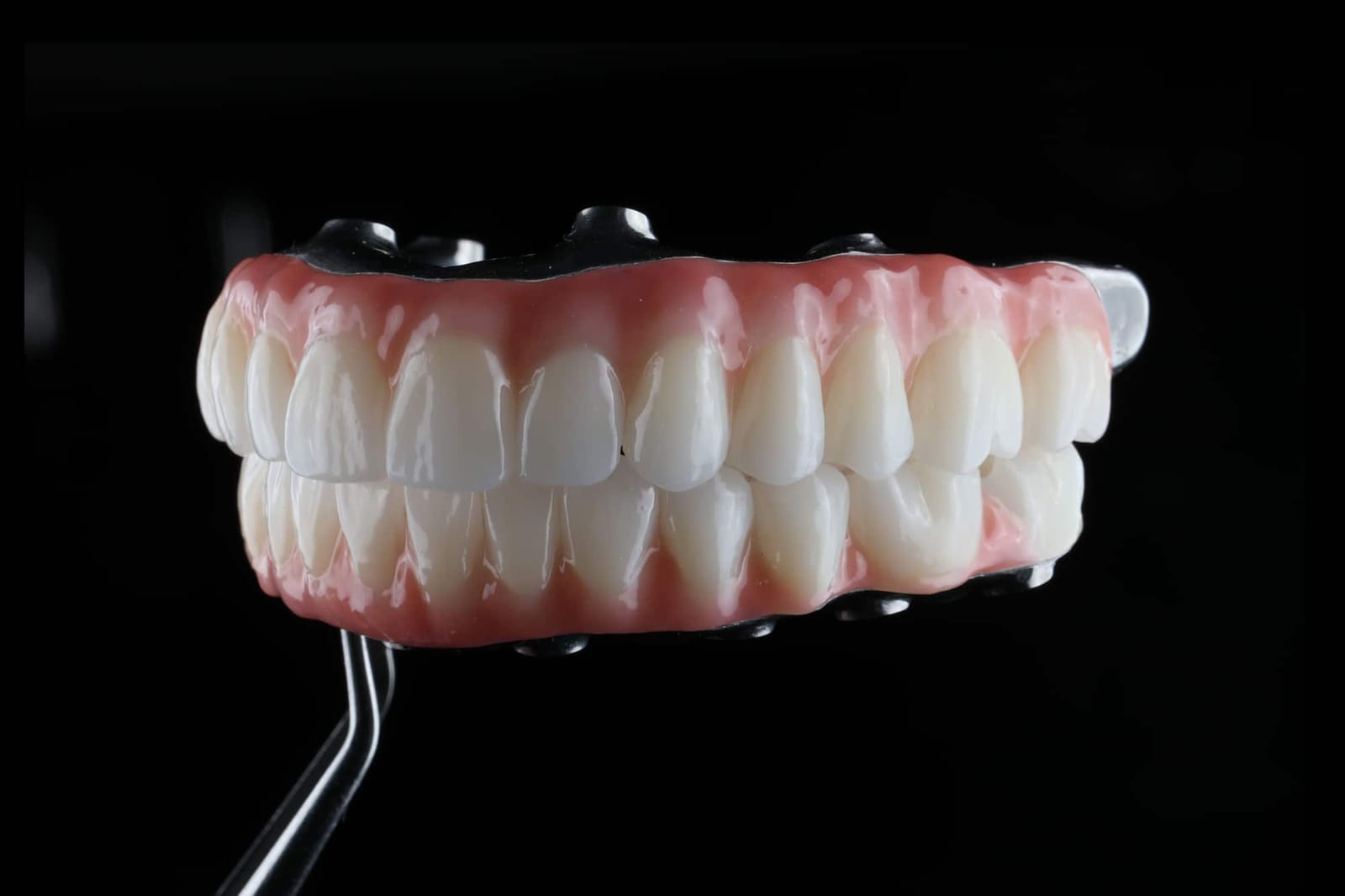
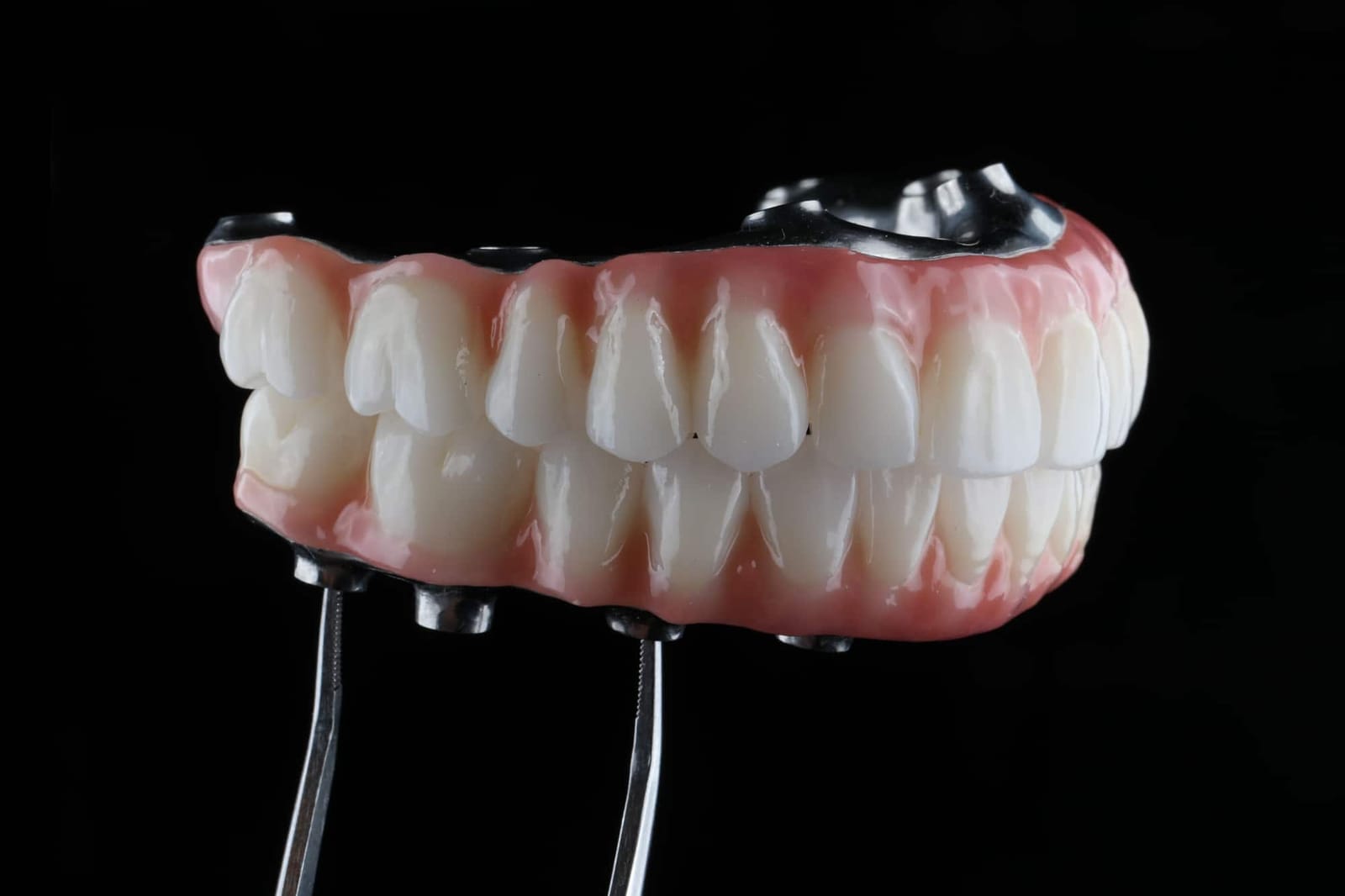
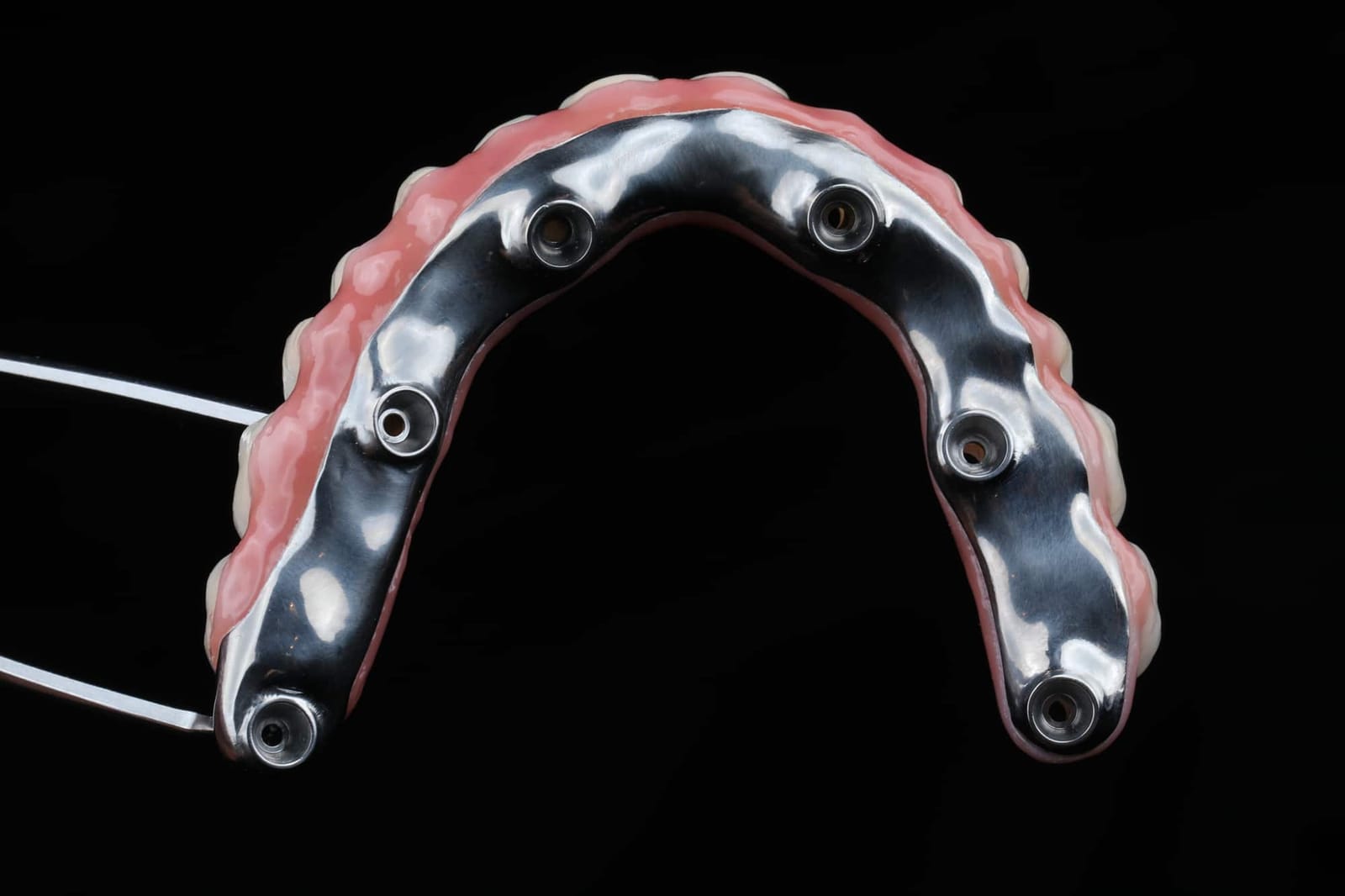
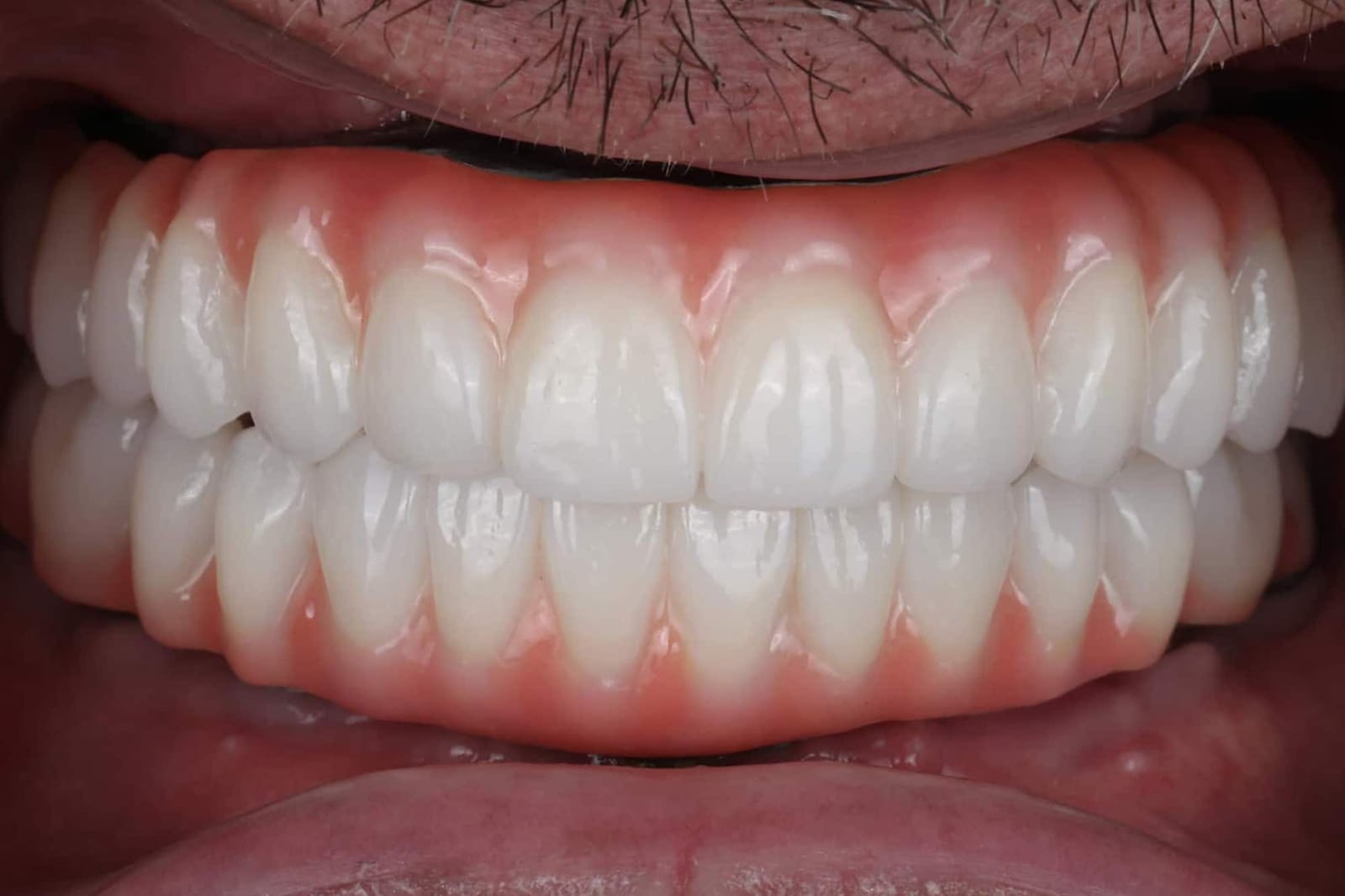
The definitive restorations are zirconia, carried on a titanium bar.
That bar is the structural reason this works. A full arch of teeth is a long span under considerable force, and titanium provides the strength and the precise fit to carry it without flexing. The zirconia above it provides everything else: strength at the surface, no layering to chip away, and an appearance that holds.
This combination is now the best documented approach for full arch work, with survival data across five and ten years behind it.
The finished prostheses
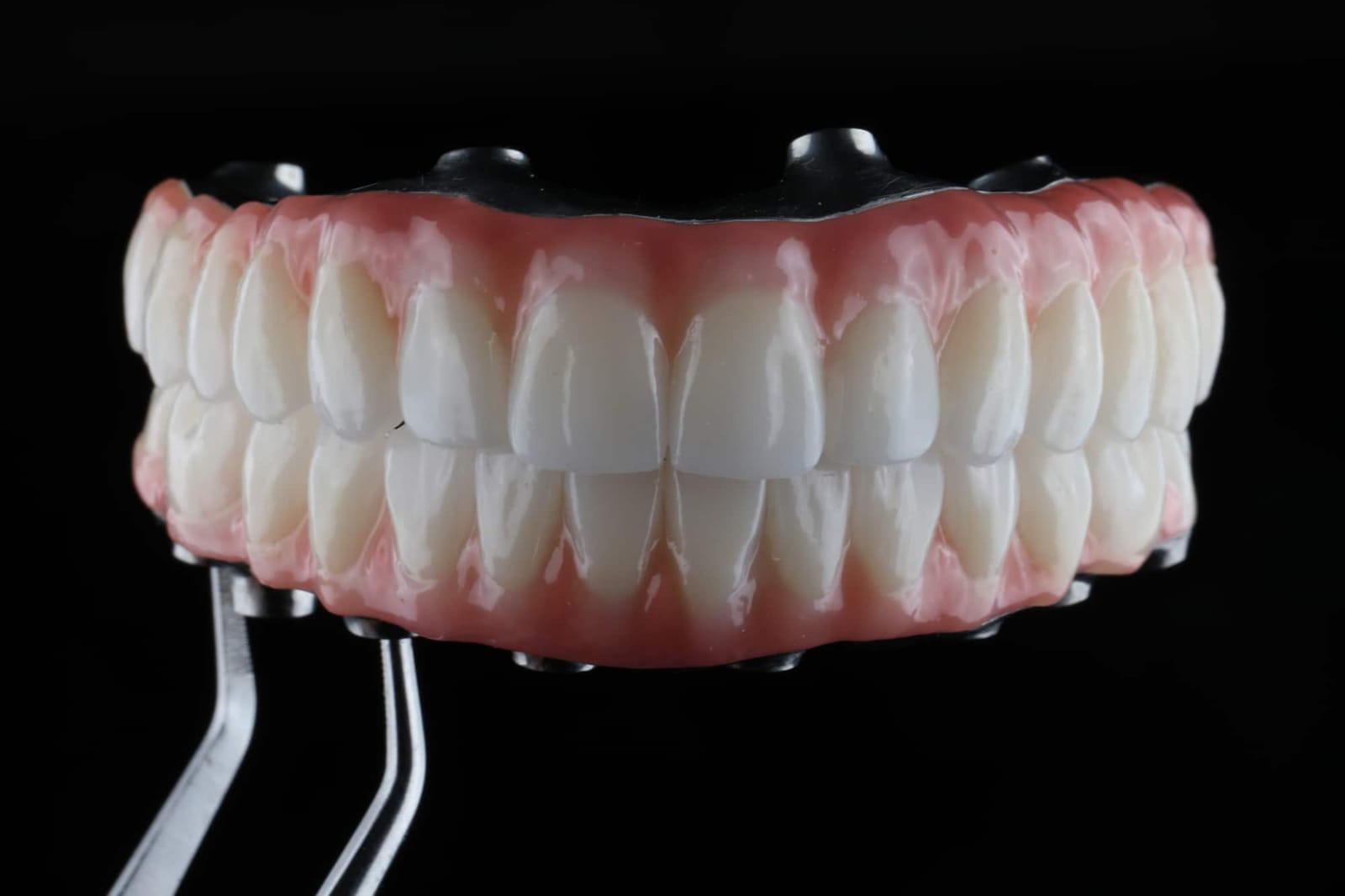
From each side
The titanium bar
The condition did not go away
It is important to be straight about this. His dry mouth persists, because the underlying cause has not disappeared.
What changes is the consequence. Implants do not decay. The mechanism that destroyed his teeth has nothing to attack in the same way, so the risk profile is entirely different.
The maintenance protocol is different too, adapted for a dry mouth rather than a normal one, and it matters. Followed properly, we expect these restorations to give him a very long time.
Treating the cause, then rebuilding around it
He could have had the decay drilled and filled for years while the real problem continued underneath.
Finding the cause, understanding what it will keep doing, choosing a reconstruction that is resistant to it, and then adapting his maintenance to the condition he still has, is a different kind of care than repairing teeth as they break.
He is not thinking about his teeth any more, which is the point of all of it.
Before and after
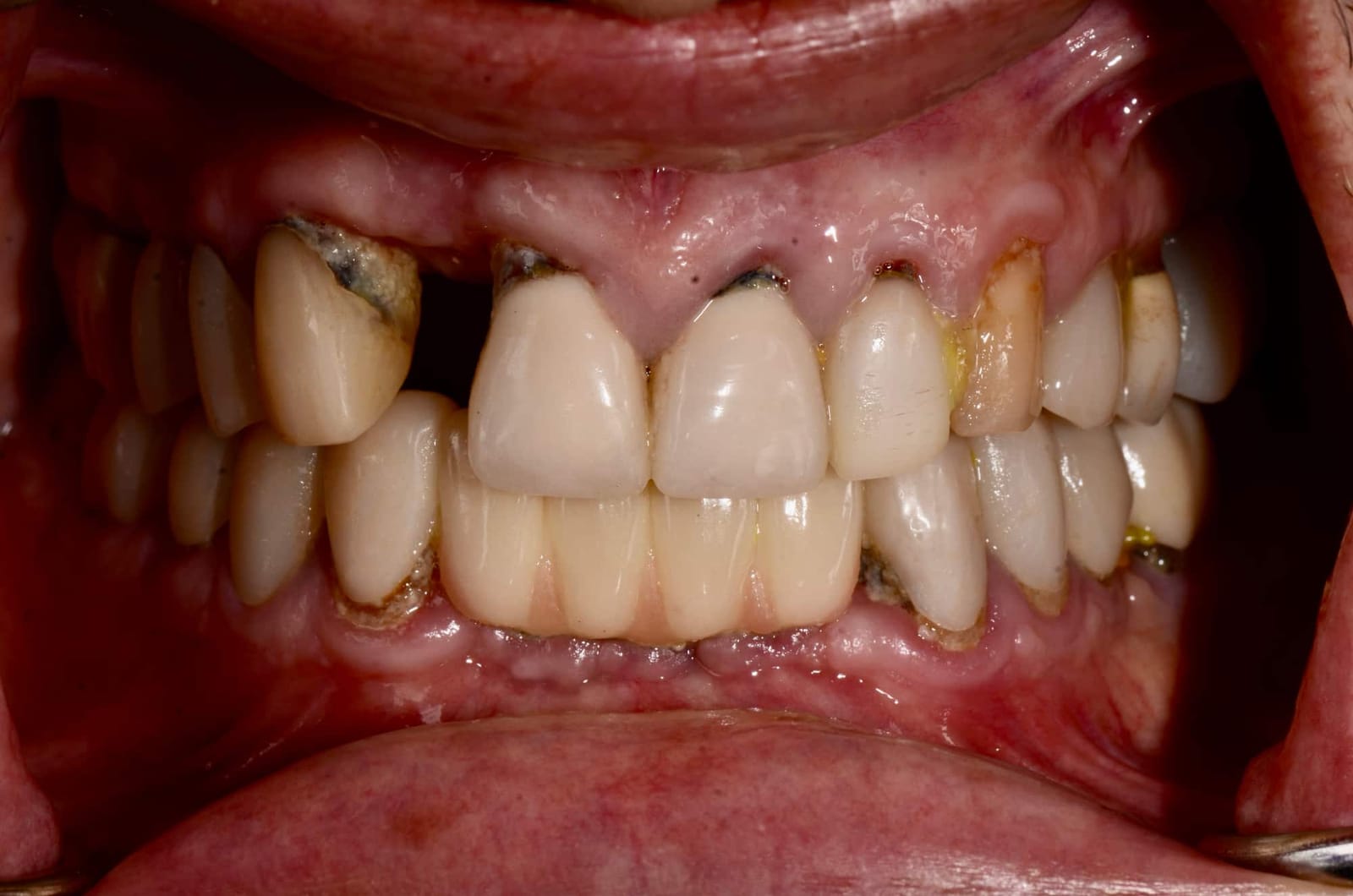
The smile
Every case is planned around one person's anatomy. Individual results vary, and what was right for this patient may not be right for you.