Interdisciplinary Case 1 · Orthodontics · Implants · Crown Lengthening
Three Specialties, One Plan
Her smile sat crooked, and one side showed far more gum than the other. No single treatment could have fixed it.
Her front teeth did not line up with the middle of her face, and the gum line ran at a different height on each side. There was a gap where an upper tooth was missing, and the teeth on either side had drifted toward it.
Each of those problems belongs to a different specialty. Moving teeth is orthodontics. Reshaping bone and gum is surgery. Replacing a missing tooth is implant work. Treated one at a time, in the wrong order, they undo each other.
So they were planned together, from the finished smile backwards.
Three problems wearing one face
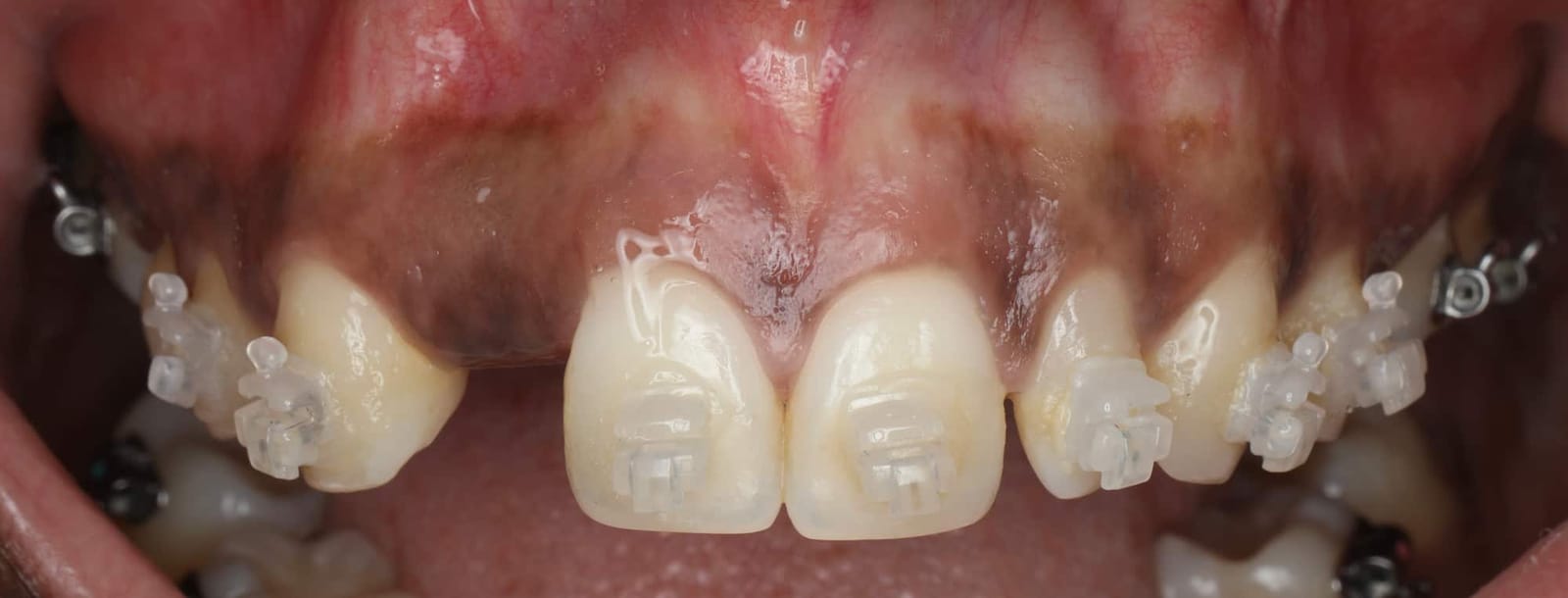
Seen straight on, the midline between her front teeth sat off to one side, and the whole block of upper front teeth was tipped — so the edges of her teeth ran at a slant against her lips rather than parallel to them.
Above them, the gum was the other half of the problem. On one side it sat low over the teeth, covering them; on the other it sat where it should. That is what made the smile look uneven even before anyone counted the teeth.
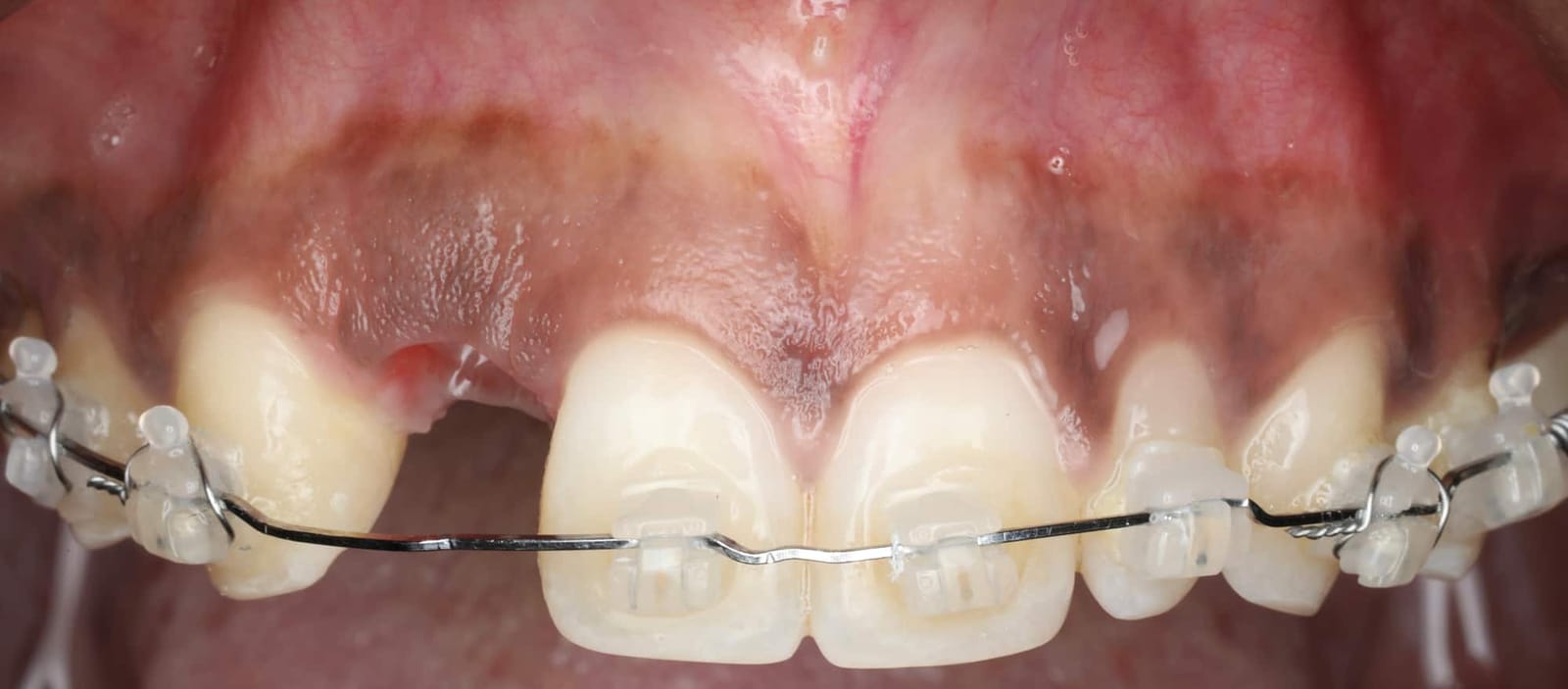
And one upper tooth was missing. The space it had left was not empty for long — the teeth beside it had leaned in and closed most of it down.

The upper arch at arrival
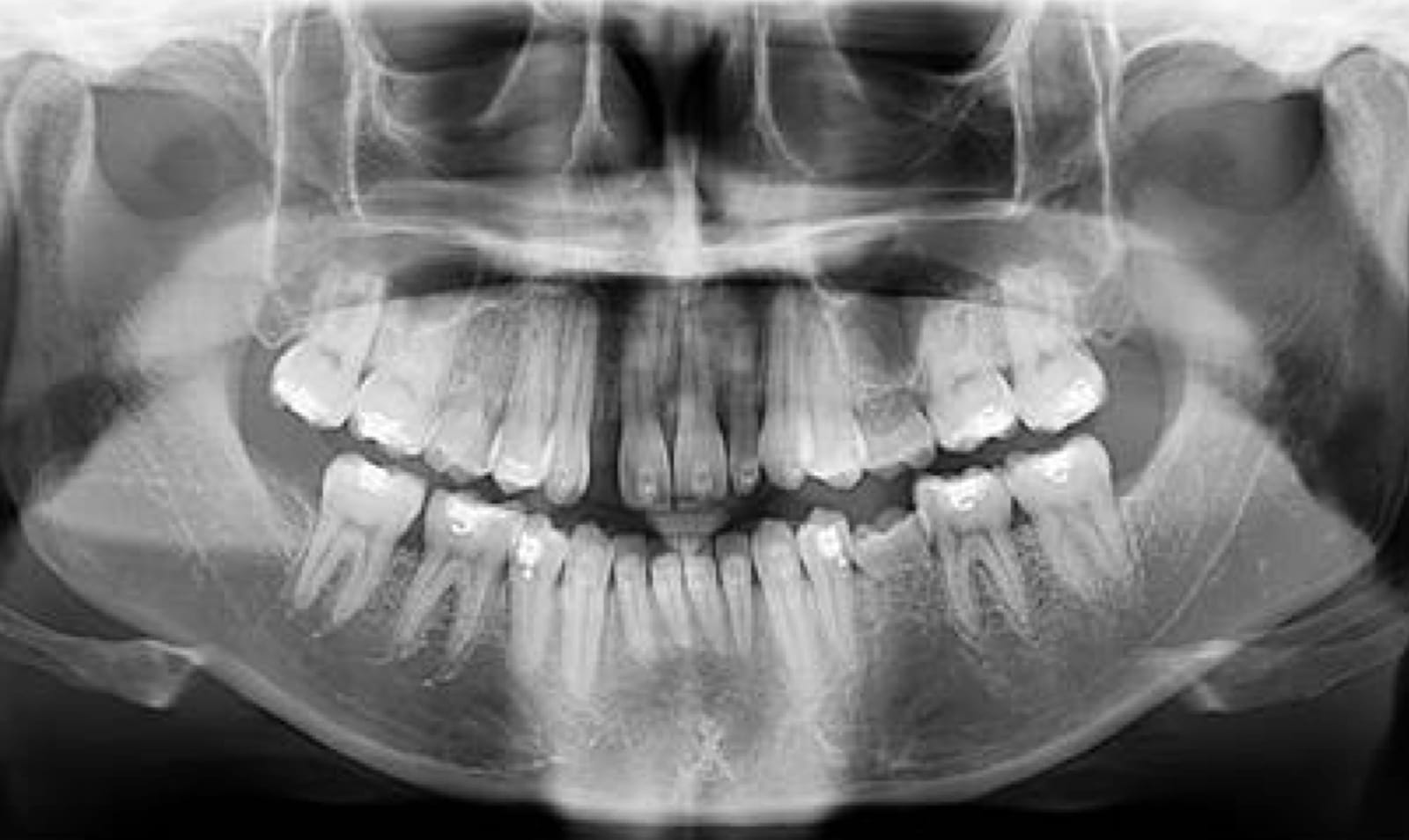
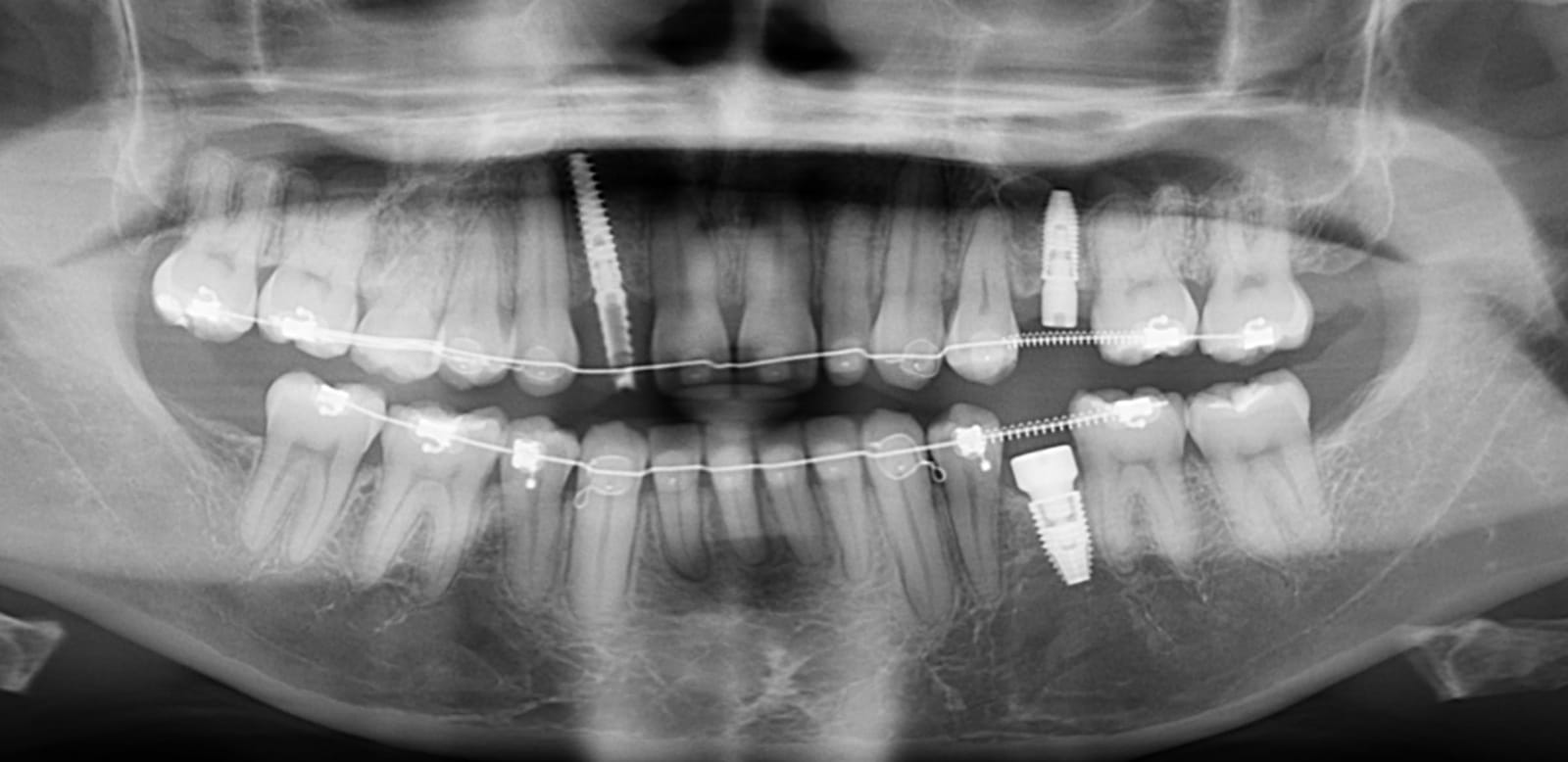
Panoramic radiograph
Nothing is built until the teeth are where they belong
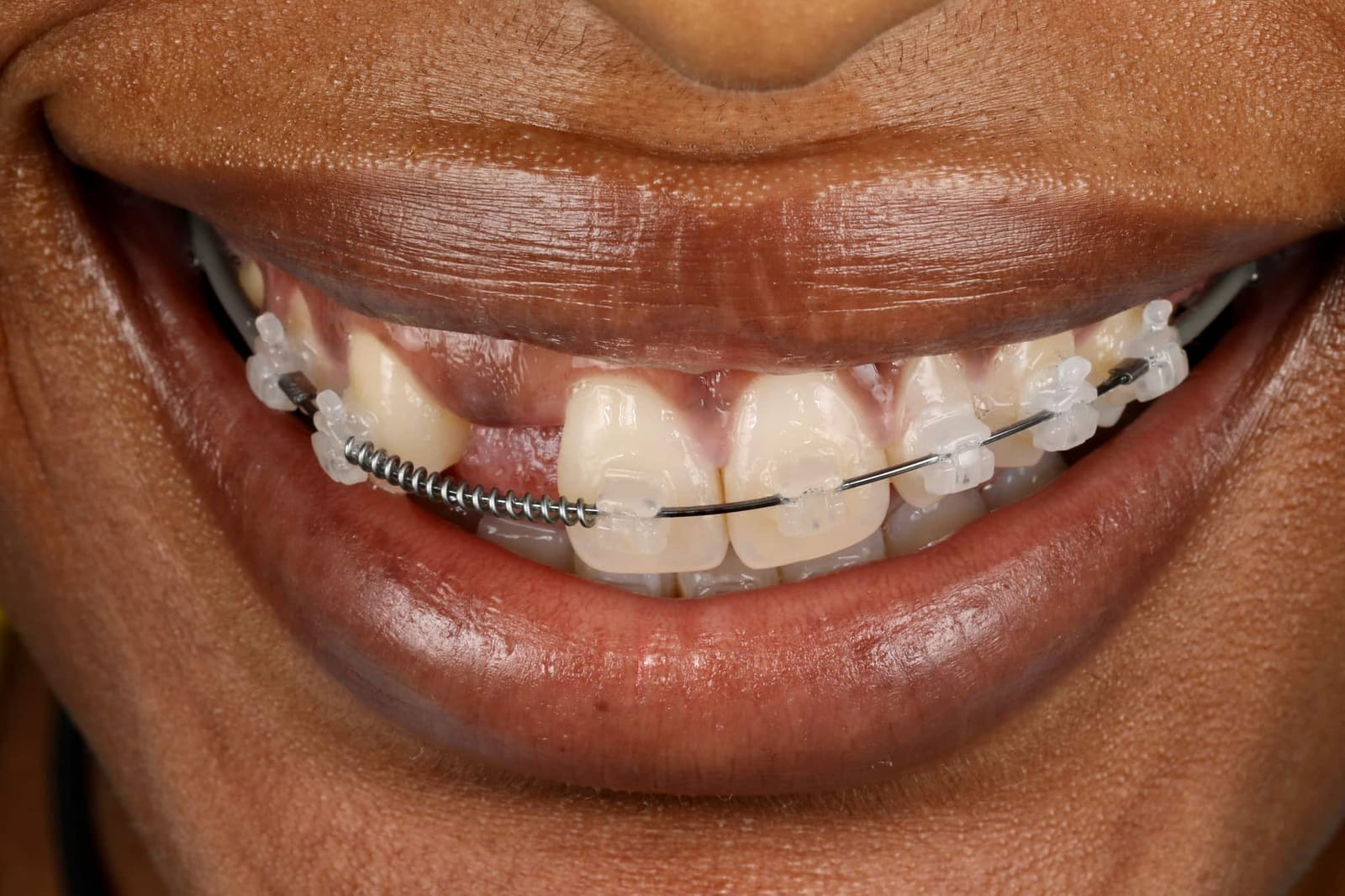
Braces went on first, and they did two jobs at once. They brought the midline back under the middle of her face and levelled the tipped block of front teeth, so the edges finally ran parallel to her lower lip.
At the same time they pushed the neighbouring teeth back apart, re-opening the space for the missing tooth to its correct width. An implant cannot be placed into a gap that is the wrong size — the tooth made for it would be too narrow or too wide, and no amount of skill at the restorative end recovers that.
This is the part of an interdisciplinary case that takes the longest and shows the least. Nothing about the smile looks finished here. It is simply being put where the rest of the plan needs it.
Mid-treatment
Panoramic radiograph, orthodontic stage
The gum was not the problem — the bone under it was
Gum follows bone. Where it sat too low over the teeth, it was doing so because the bone beneath it sat too low as well. Trimming the gum alone would have looked right for a few weeks and then grown back to the level the bone told it to.
So the gum was lifted away and the bone itself was reshaped — taken back to a scalloped contour that rises and falls between the teeth the way it is meant to. The gum was then laid back over the new shape and sutured.
In the same operation, the implant was placed into the space the braces had opened. Doing both at once meant one surgery and one healing period instead of two.
Then everyone waits
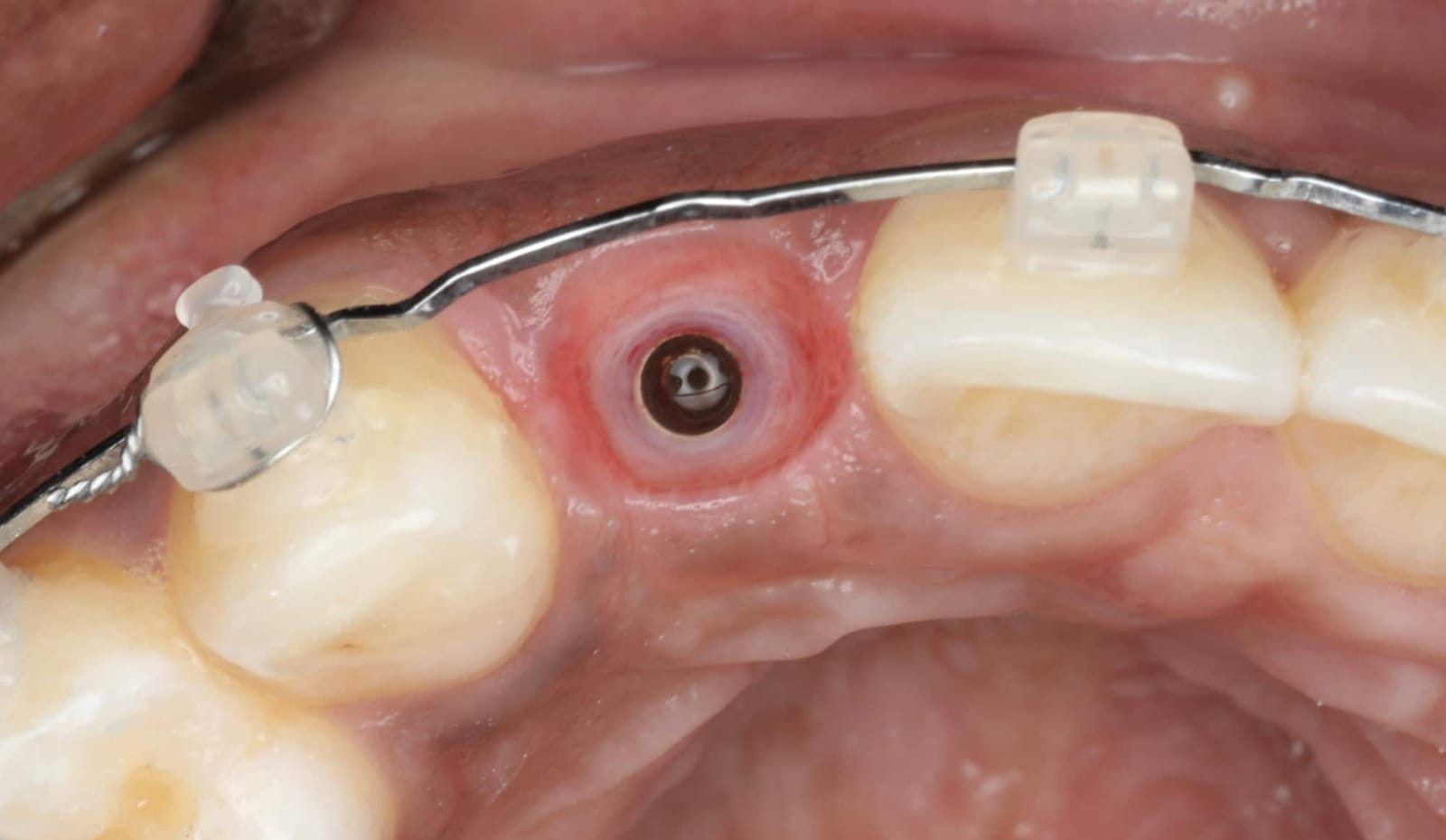
An implant is not a screw that is simply tight in the bone. Bone has to grow onto its surface and lock it in place, and that takes months. The reshaped gum needs the same time to settle at its new height and stay there.
Nothing final is made during that period. The braces stayed on, holding the space at exactly the width the new tooth would need.
Healed, space held
From above
One plan, finished
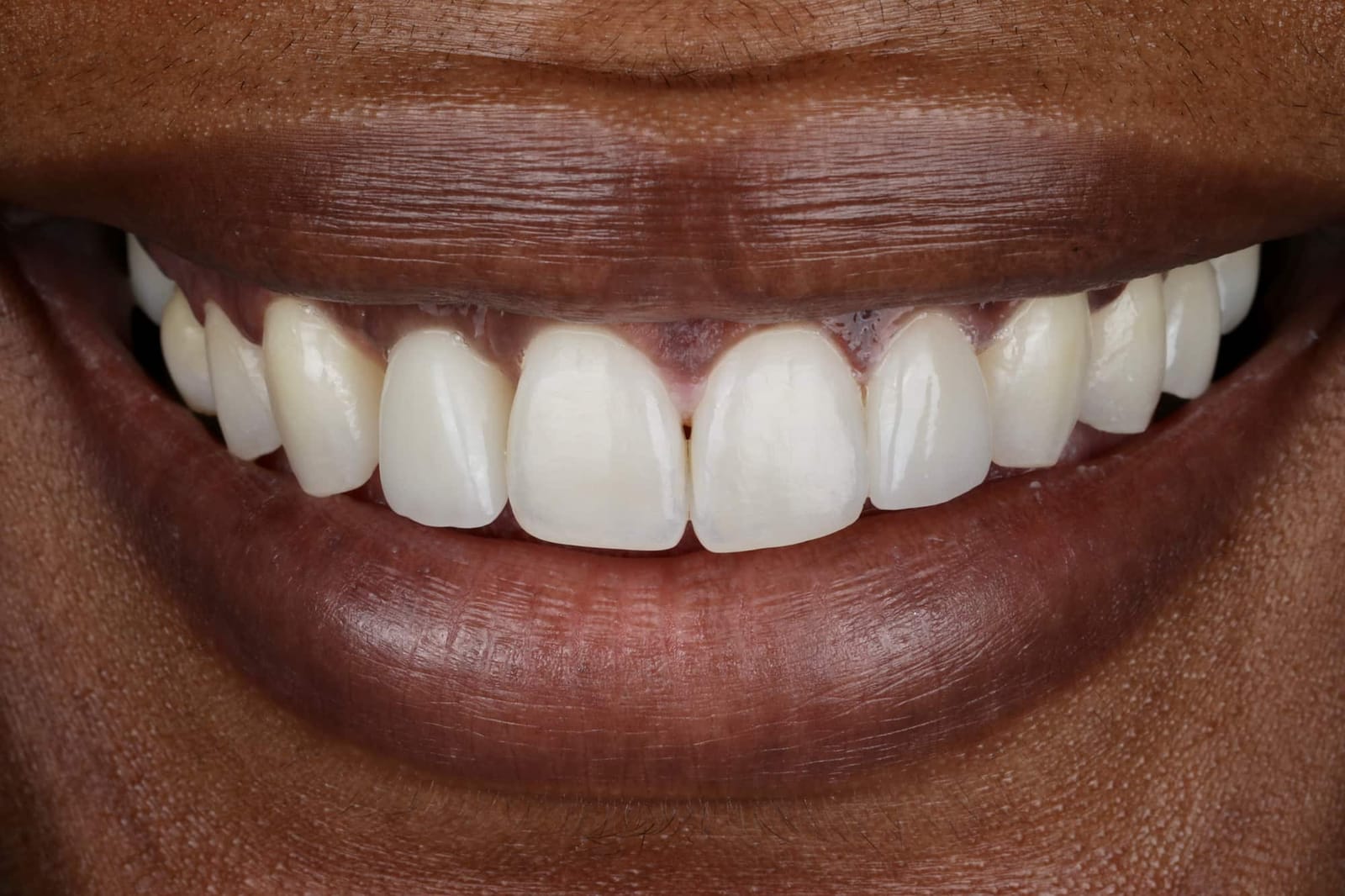
The midline sits under the middle of her face. The edges of the upper teeth run parallel to her lower lip. The gum line is at the same height on both sides, and the tooth that was missing is there.
None of those four things was fixed by the treatment that fixed the others. That is what interdisciplinary means in practice: not more treatment, but treatment in an order that lets each part hold.
The finished arch
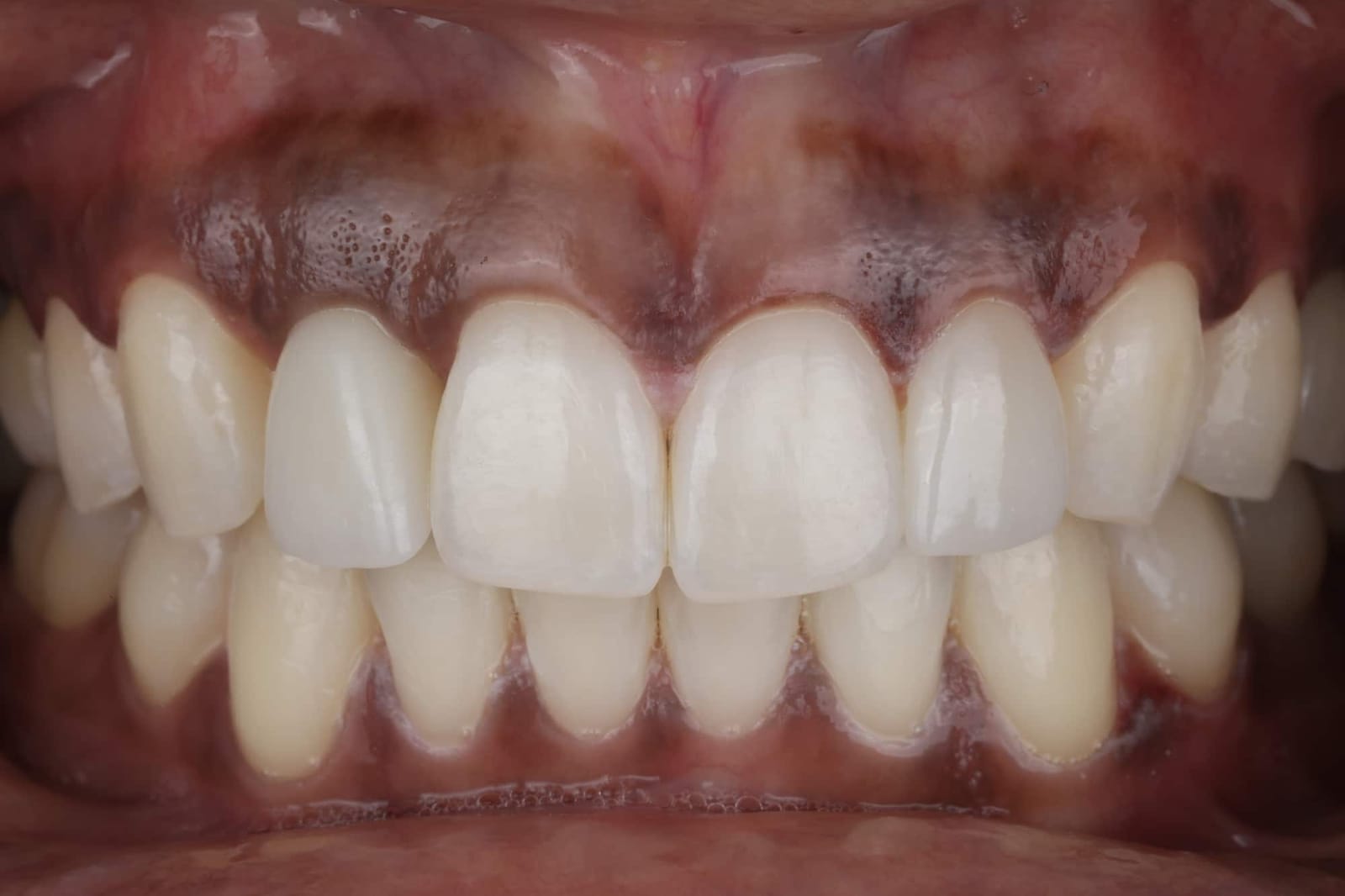
The finished smile
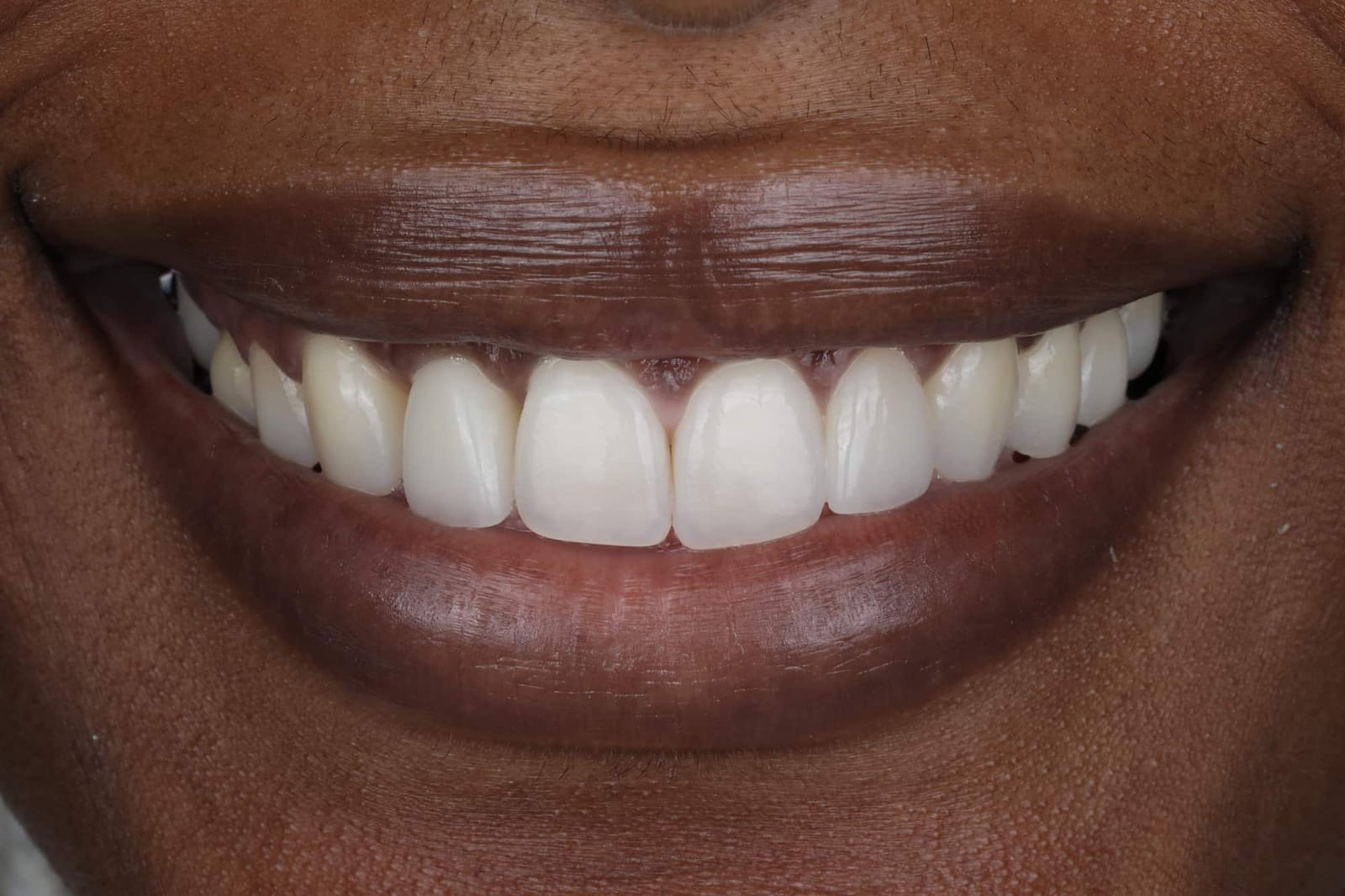
Before and after

The smile
Every case is planned around one person's anatomy. Individual results vary, and what was right for this patient may not be right for you.