FP-3 Case 17 · Implants · Reconstruction
Two Jaws, One Surgical Day
Teeth loosening, drifting apart, and a smile she had stopped showing.
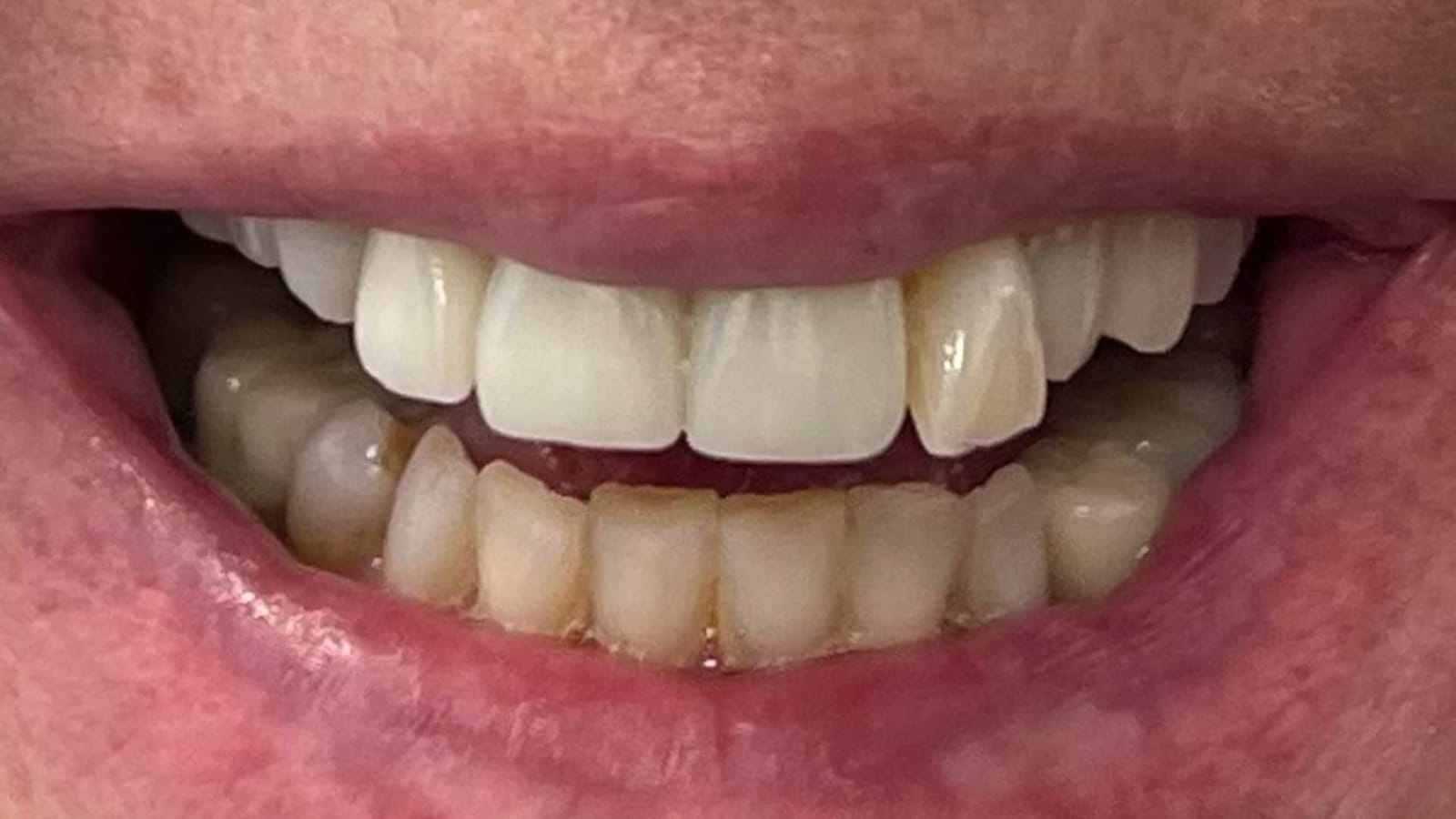
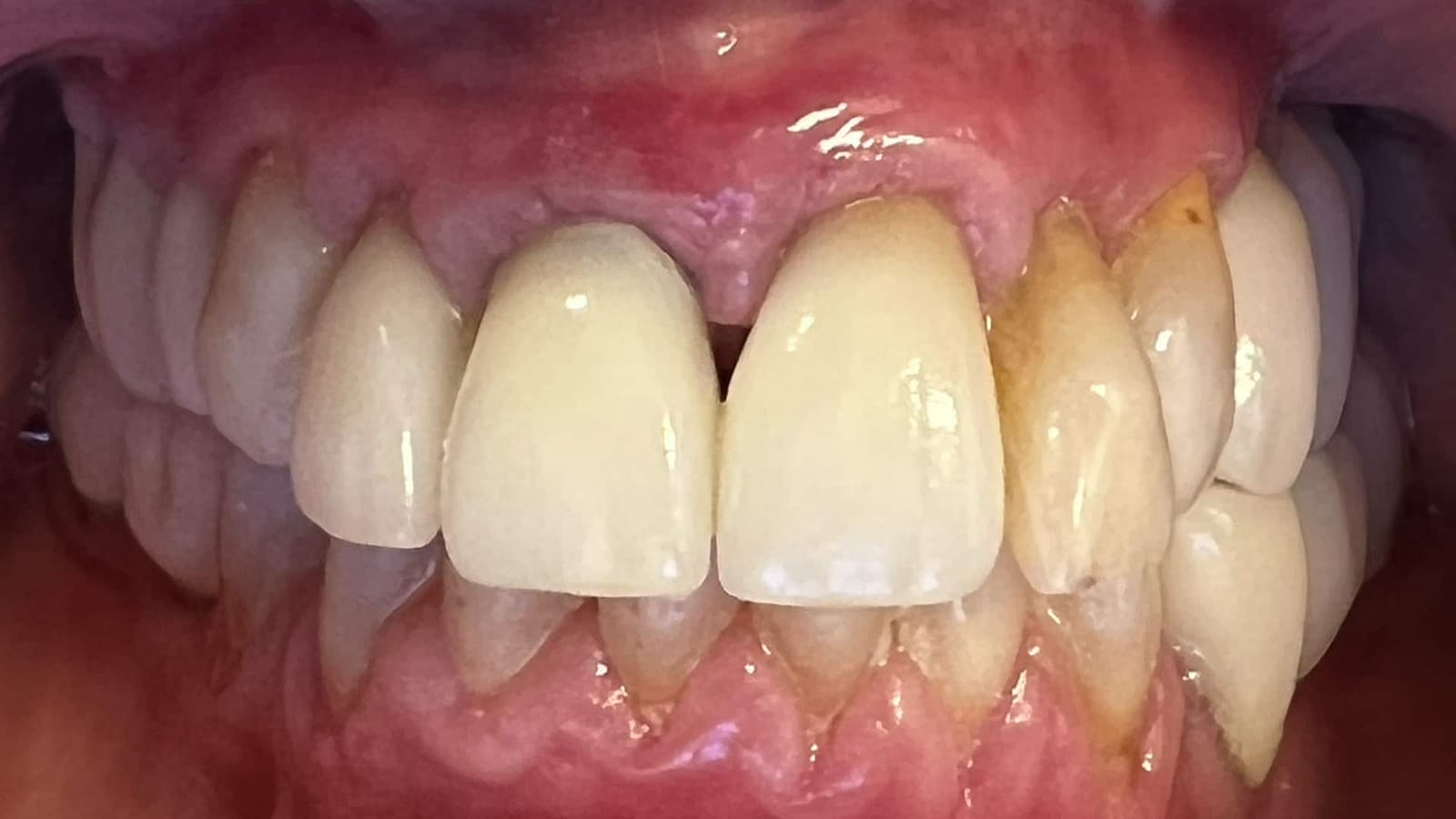
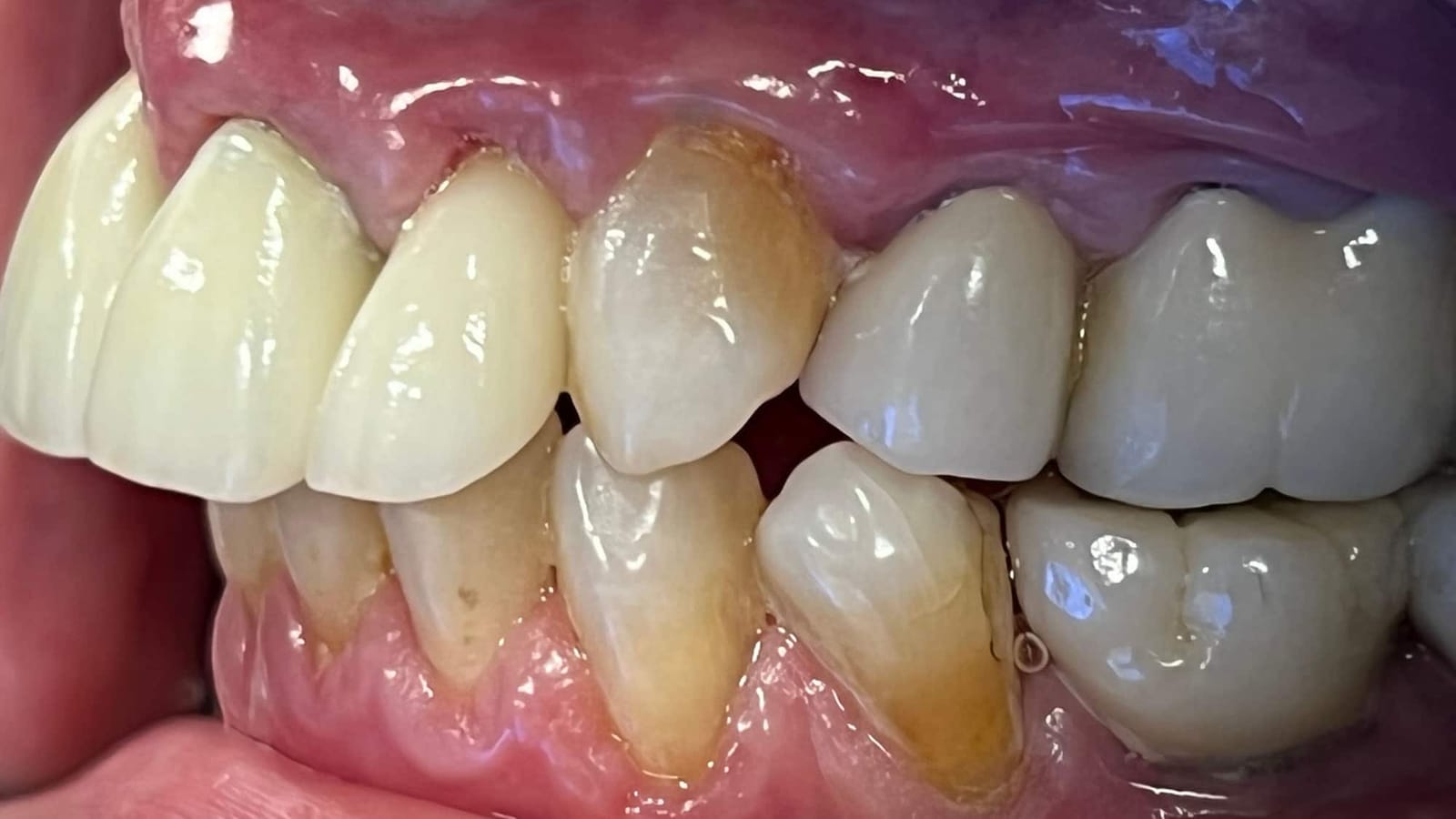
Periodontal disease had taken the bone from around her natural teeth. Without it, they had loosened and splayed outward, and the ones that remained were breaking down. She was referred for the planning, design and reconstruction of both jaws.
What she asked for was simple. Teeth tucked back in where they belonged, the color corrected, and the natural smile she had lost.

Before and after
What she came in with
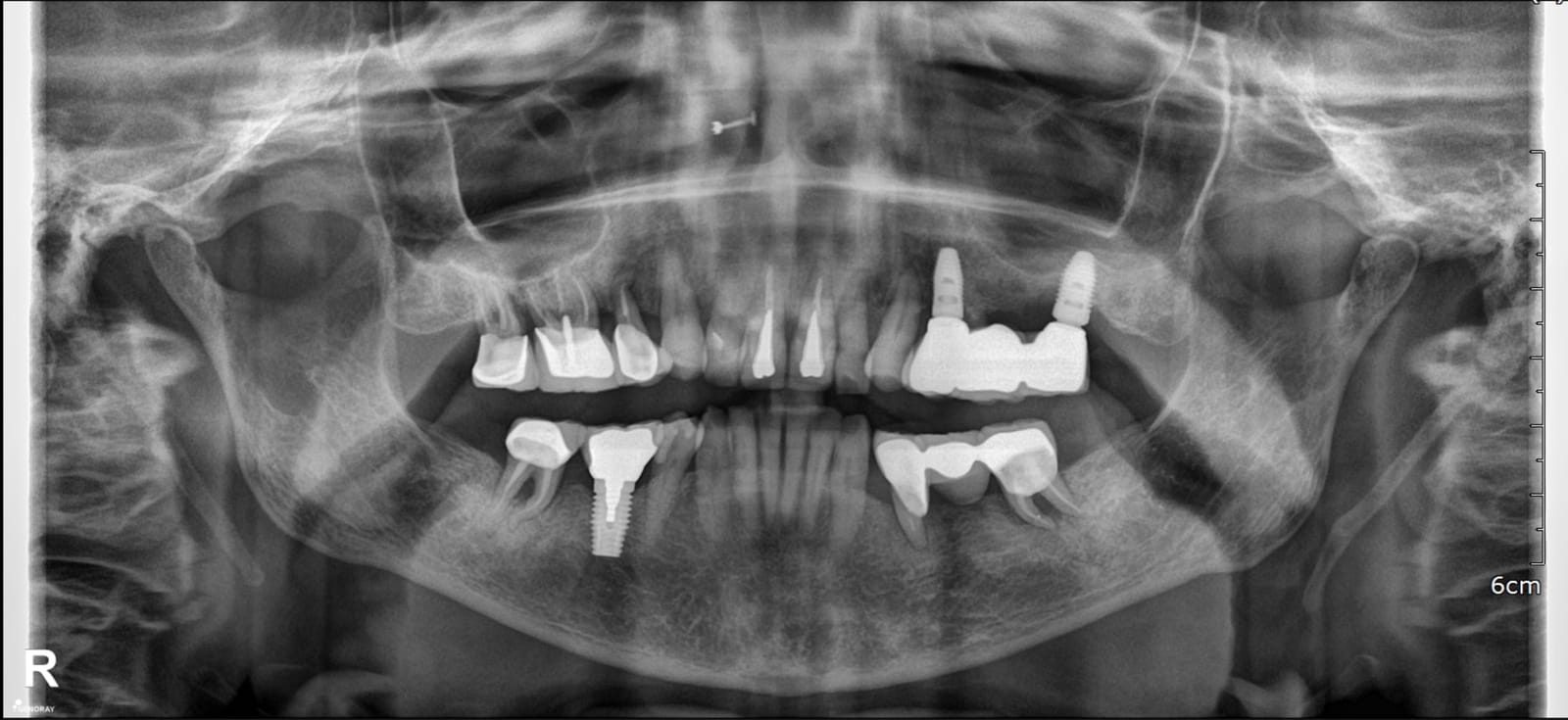
A mouth already partway through its history. Some implants placed years earlier. Around them, natural teeth that gum disease was steadily loosening, and restorations failing on top of them.
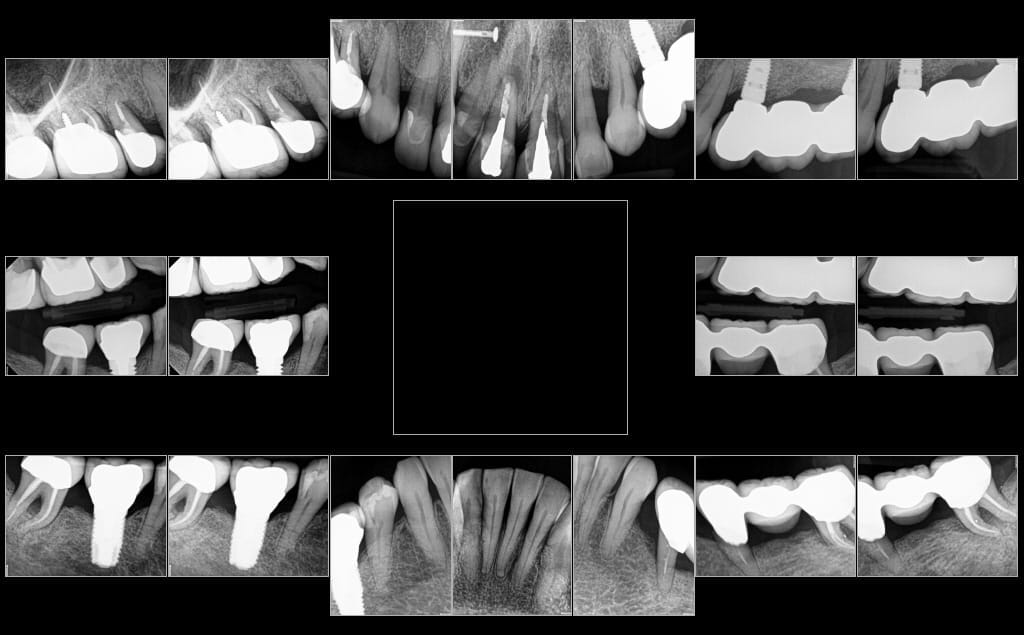
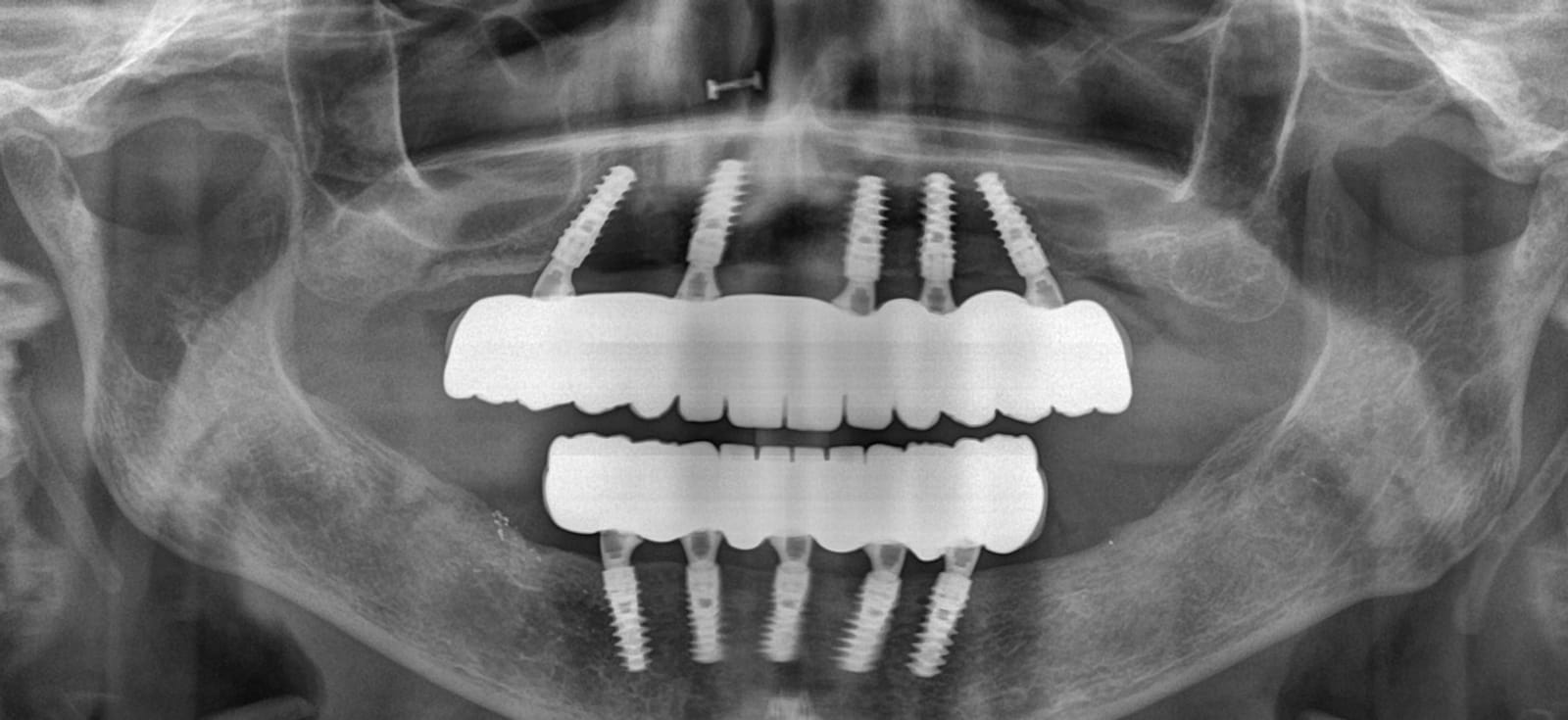
The radiographs show it plainly. Bone lost around the roots, and teeth left with nothing to hold them straight. Once teeth begin to splay, they do not come back on their own.
Panoramic radiograph
Full-mouth series
Two jaws, designed as one
Rebuilding one arch is difficult. Rebuilding both, against each other, is a different order of problem. The upper and lower have to be designed together, so that the bite, the lip support, the tooth display and the speech all arrive at the same place at once.
That is prosthodontic territory. The finished result is envisioned first, through scans and measurements, and the implants are planned to serve that result rather than the other way round.
Implants placed to the design, not to the space
With the end point established, implants were positioned evenly across both jaws, each one where the future teeth needed it.
That even distribution is what lets a provisional go in the same day and carry function from the first hour.
Everything behind her in a day
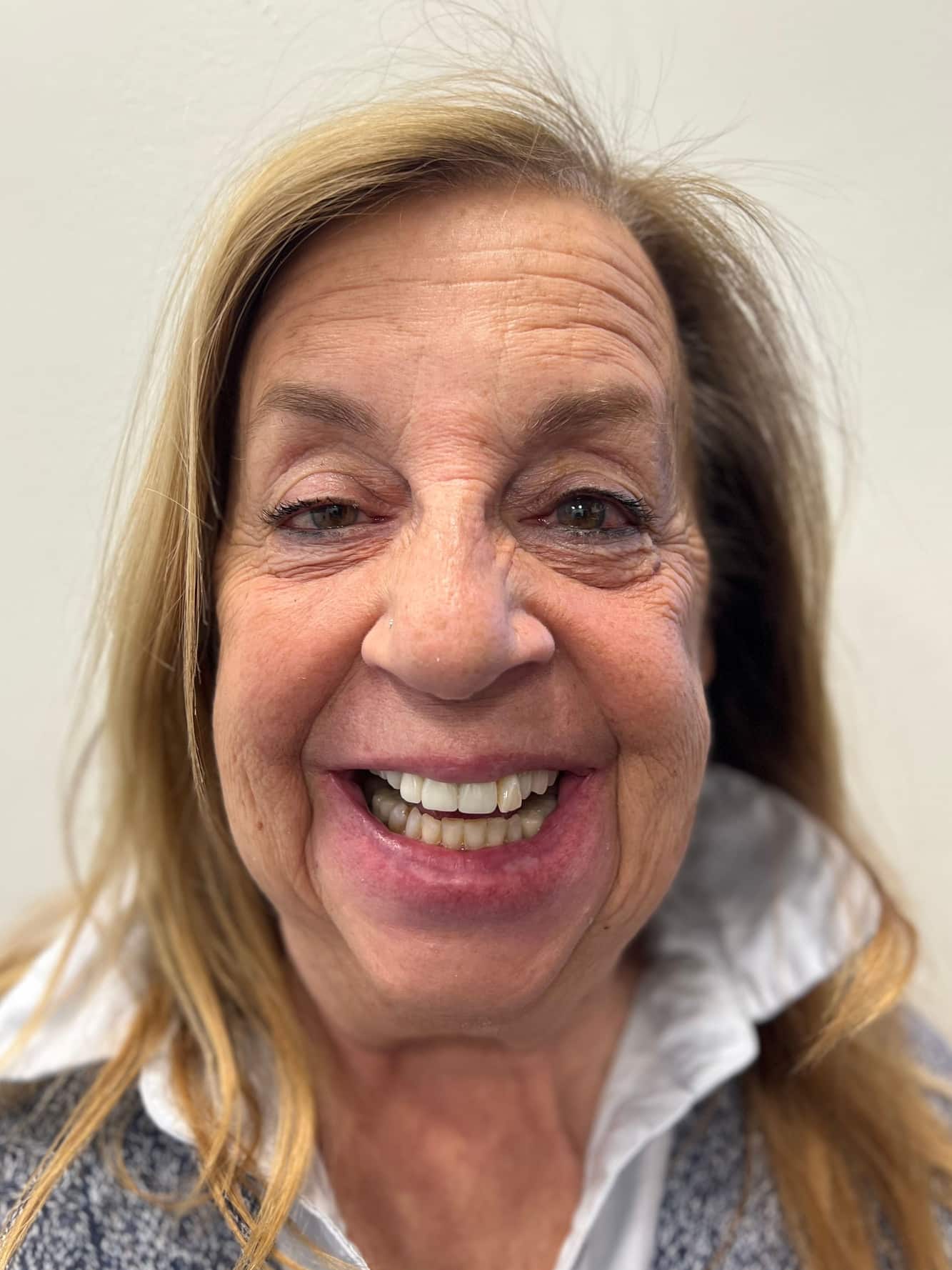
Because the surgery was planned to the design, all of it happened in a single surgical appointment. The failing teeth removed. The new implants placed. And before she went home, a full set of provisional teeth fitted and working.
The transformation was immediate. Her smile, her well-being, the way she carried herself. All of it changed the same afternoon.
Before and after

The temporaries are the study
She lived in those provisionals for four months while the implants integrated. That is not waiting. That is the test.
Form, function, aesthetics and phonetics were all evaluated in her own mouth, with her own feedback. Then something unusual happened. She was so happy with the provisionals that only minor changes were needed. The finals were made as a refinement of what she was already wearing, in a material that is harder, stiffer, stronger and more aesthetic.
Digital, then physical, then back again
The final restorations began as a digital design built from the approved provisional: scanned, refined on screen, and milled.
With CAD/CAM technology and the proper science of digital dentistry, a treatment of this scale becomes organized and accurate to a degree hand work cannot match. Every parameter set in the temporary was carried into the final. Put the two side by side and the correspondence is the point.
Upper and lower
Polished, not glazed
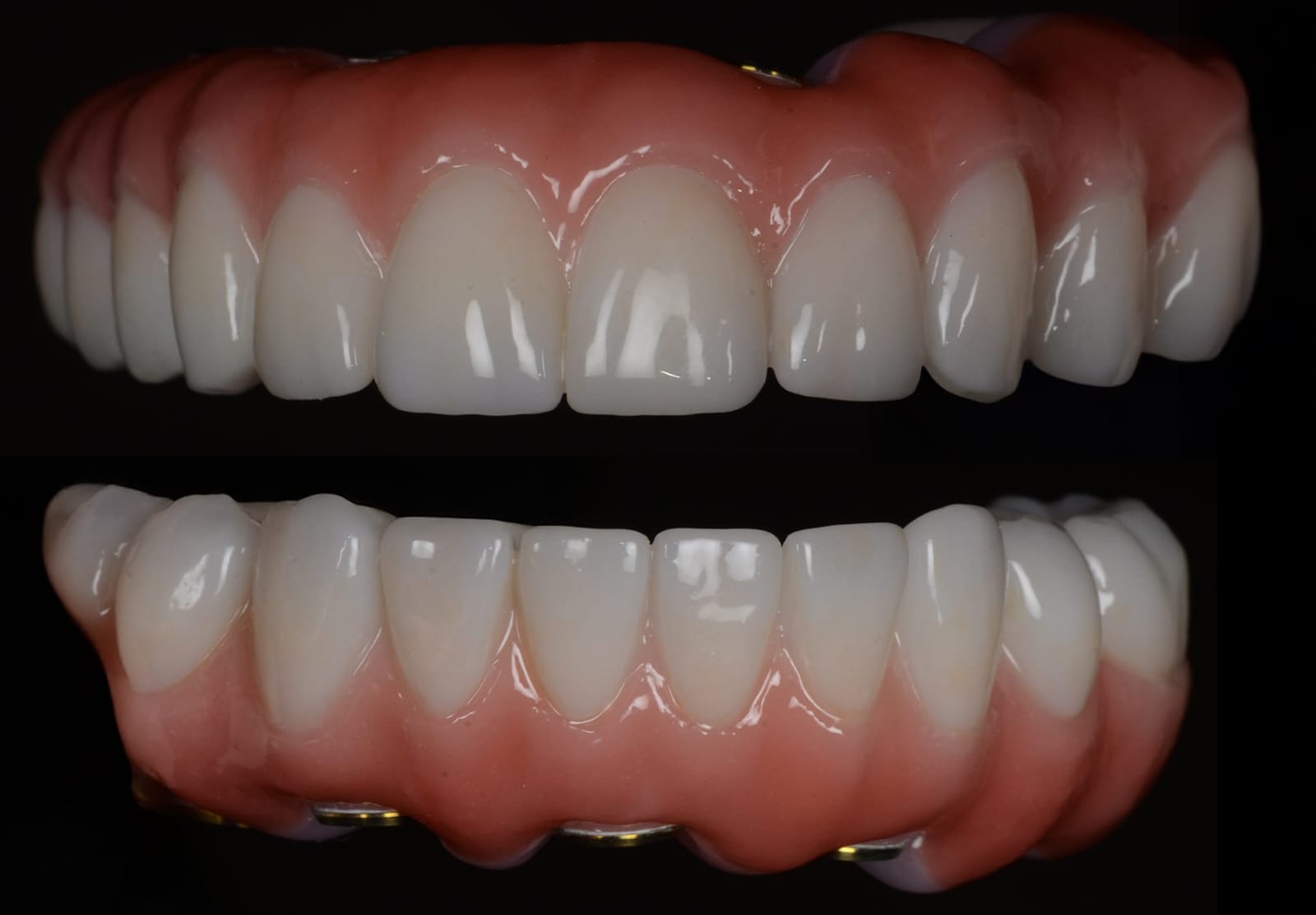
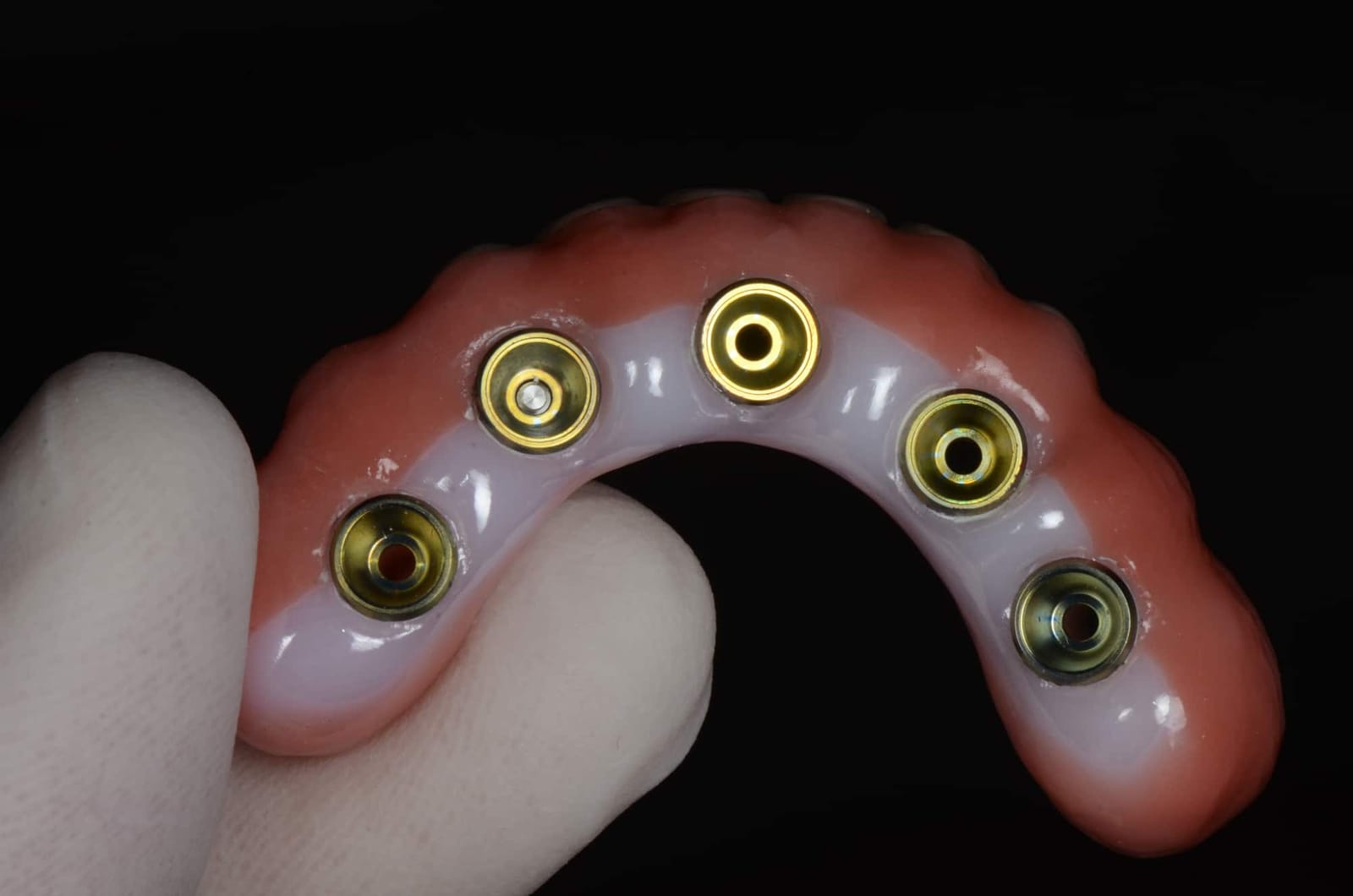
Where the restoration meets the gum, the zirconia, the white substructure, is left unglazed and polished to a very specific degree. That surface allows intimate tissue contact with no plaque entrapment. The shape at that junction matters as much as the surface: contoured so the tissue seals against it and can be kept clean.
It is the part nobody photographs, and it is what keeps the gum healthy for years.
The fitting surface
Why the lower arch stops where it does
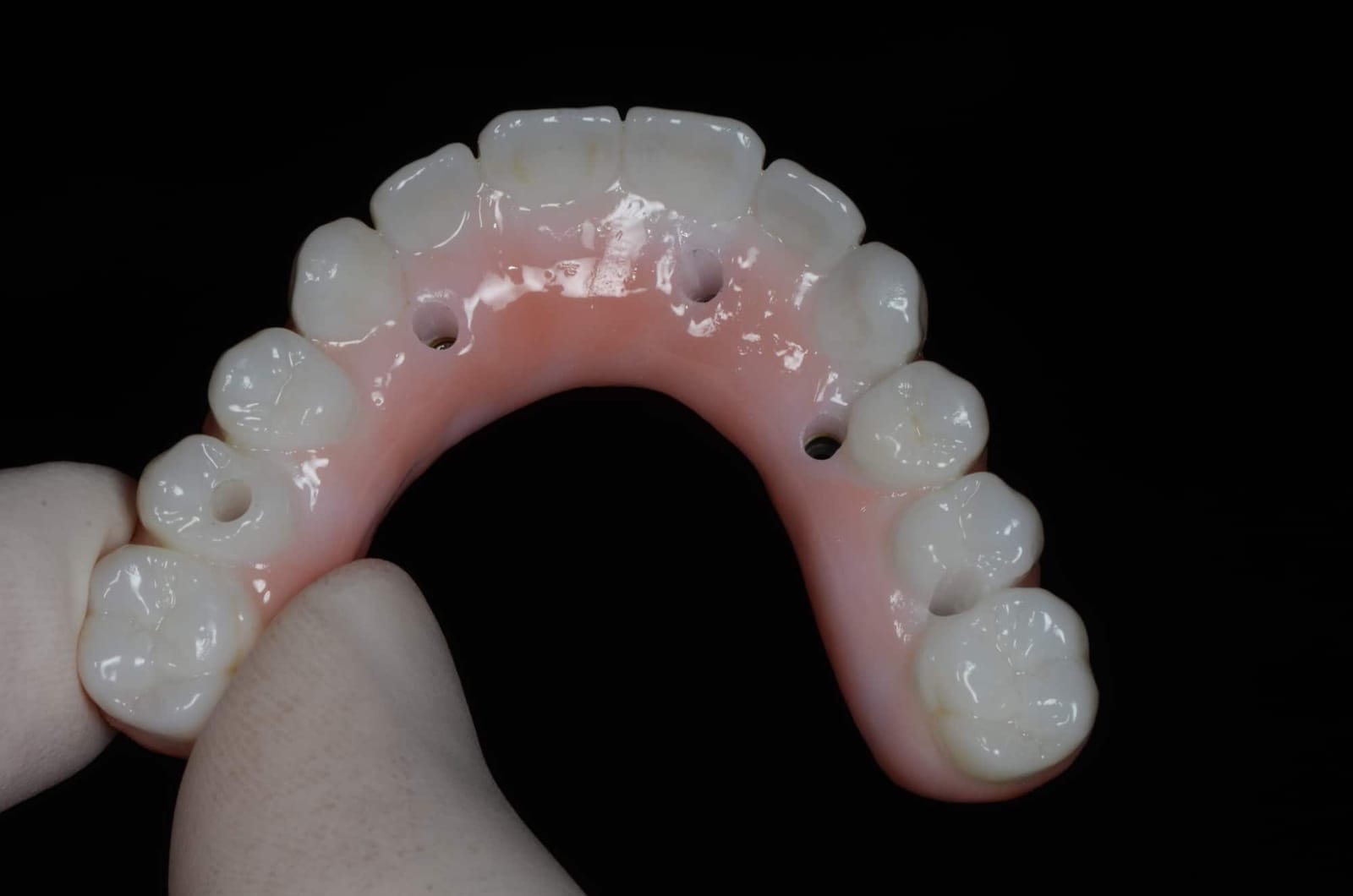
Large nerves run through the lower jaw, and there are places where they prohibit extending the teeth all the way back. Often it is not necessary. Many patients have excellent chewing function and quality of life with ten lower teeth, and she is a perfect example.
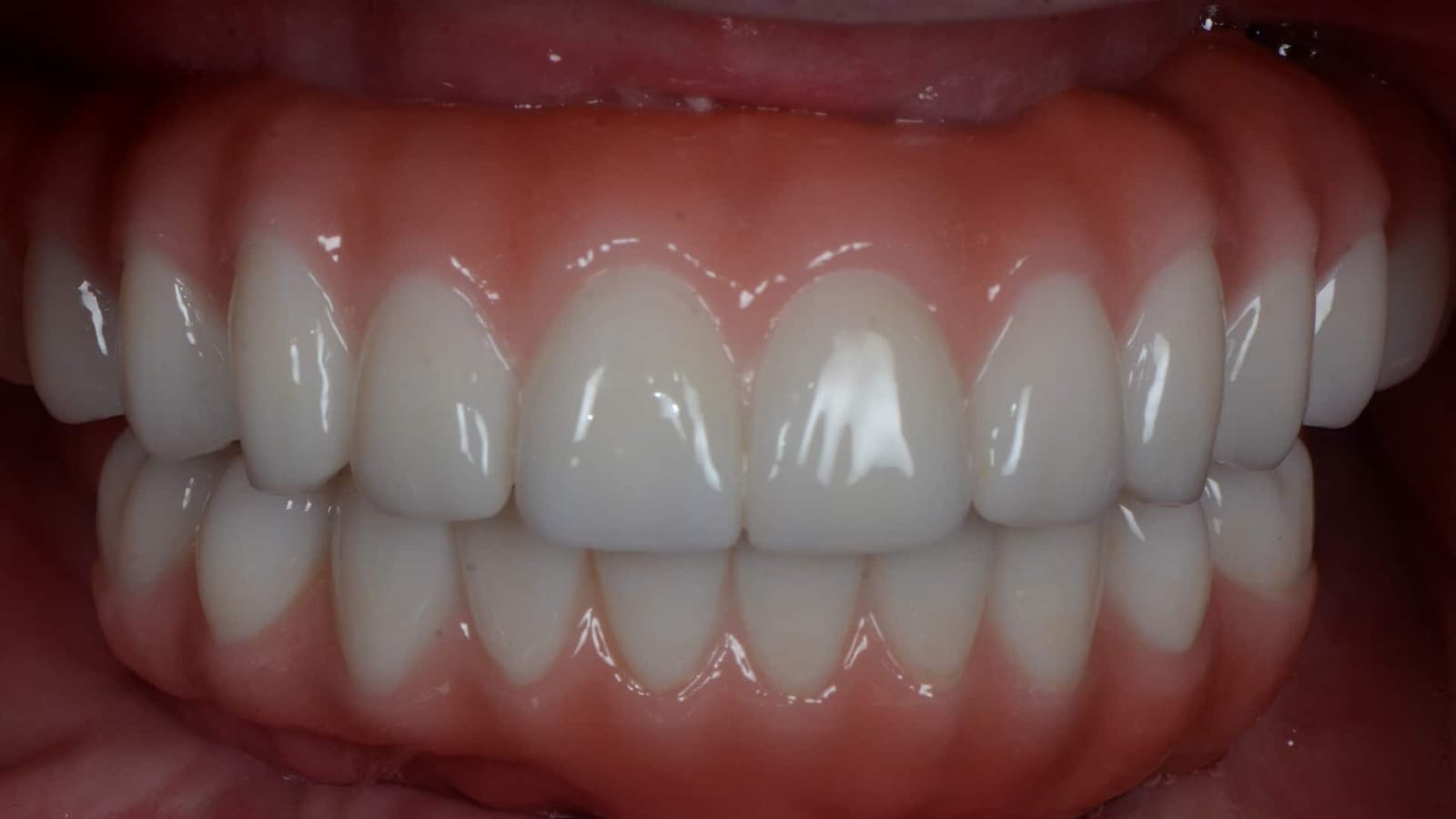
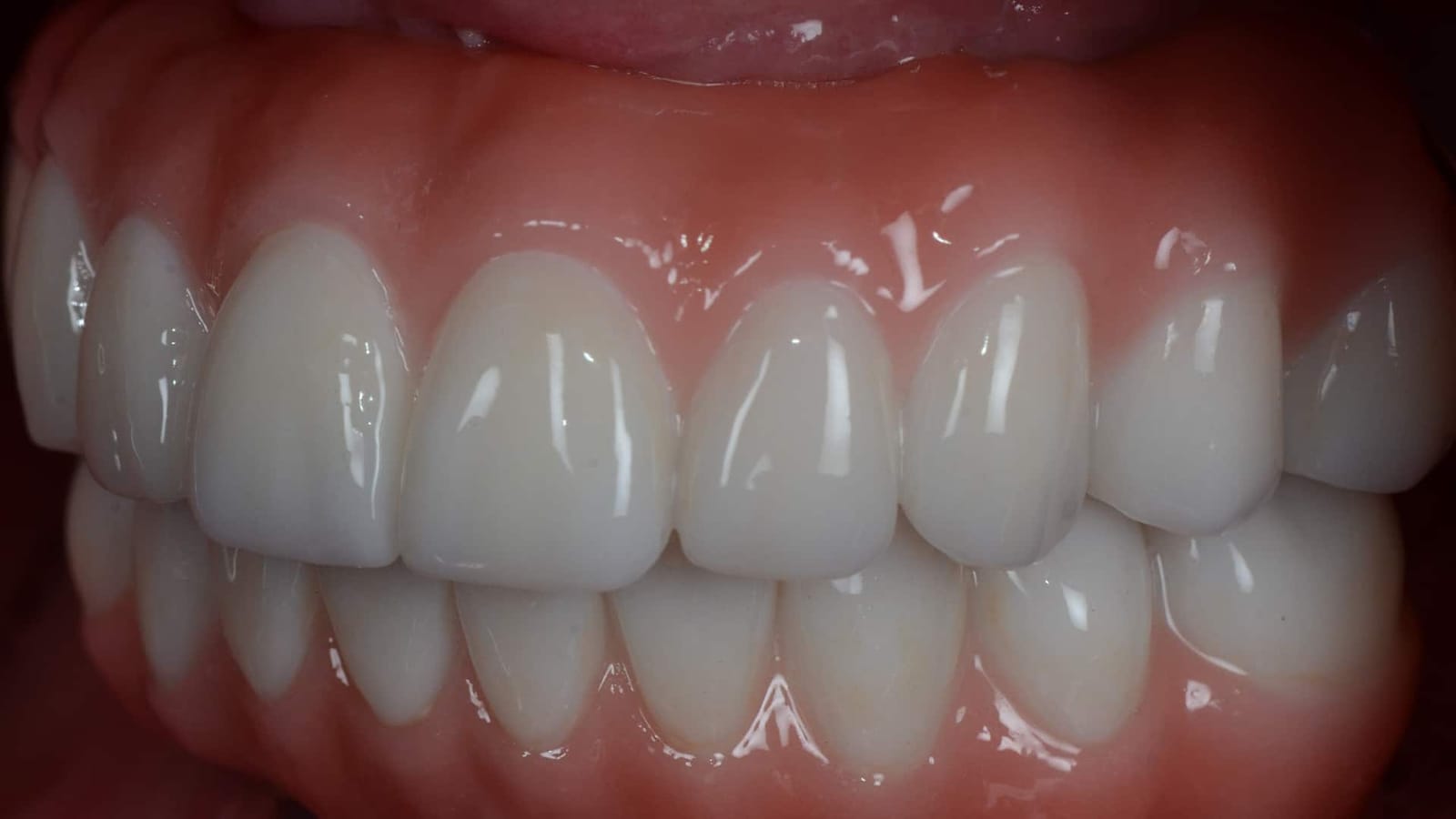
The upper arch was given twelve teeth for a wider smile. The lower, ten. Comfortable, functional and cleanable.
From above
Six to nine months, very few visits
One surgical appointment. Four months in provisionals. Two or three visits to make the finals. Start to finish, six to nine months.
With proper planning, that is what it takes to transform a patient's life.
Planned once, executed once
None of this comes from speed. It comes from knowing where you are going before anything is touched. Meticulous planning, the end decided first, and execution that follows it.
Teeth put in that way go in and stay in.
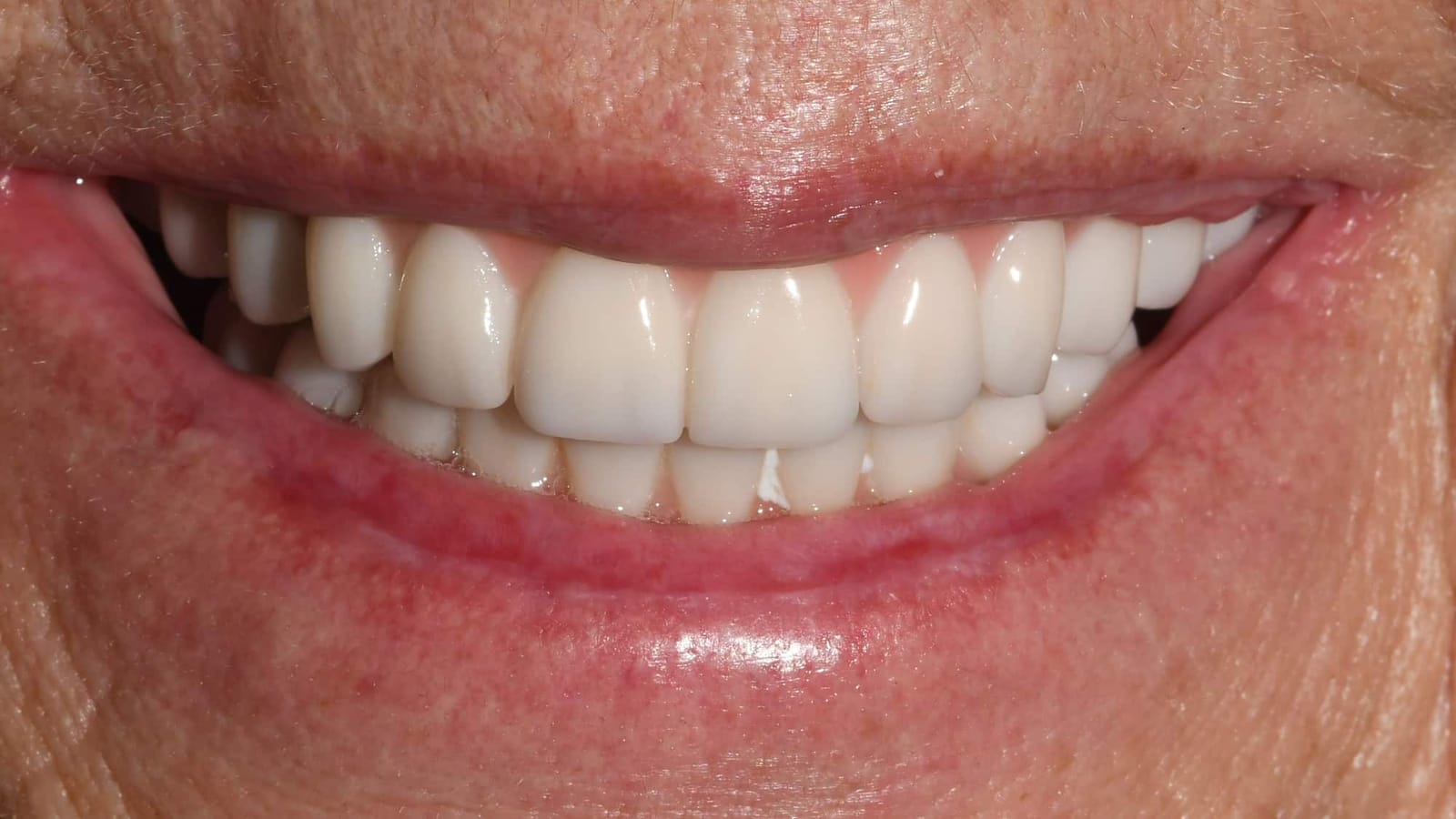
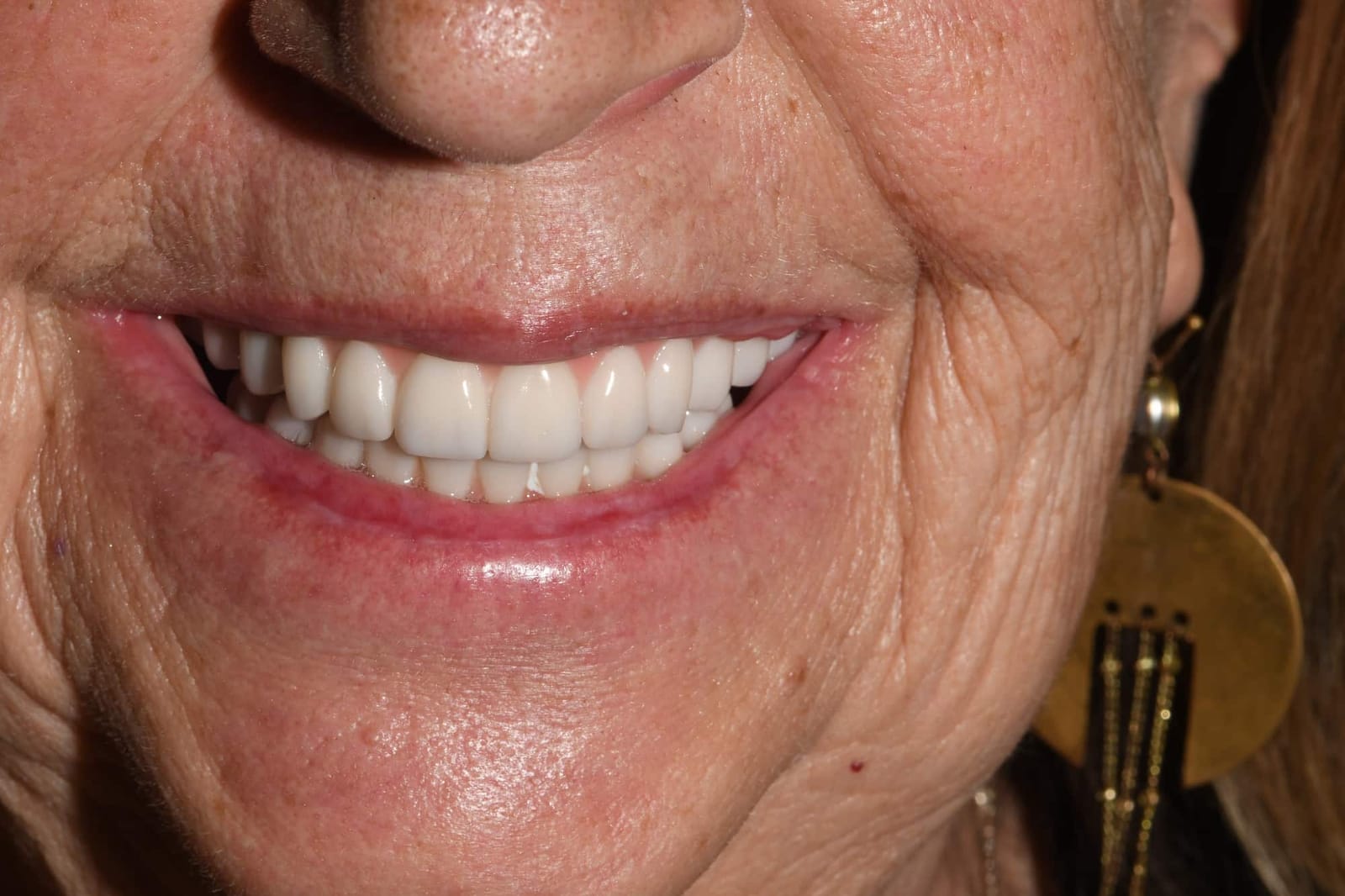
The smile she asked for
From the front and from the side, the splayed, failing teeth are gone. In their place, an arch that sits back where it belongs, in the color she wanted, supported by implants placed to a design.
This is what a reconstruction is for. Not the ceramics. The person who comes back.
Full mouth
From the side
Panoramic radiograph
Before and after
Every case is planned around one person's anatomy. Individual results vary, and what was right for this patient may not be right for you.