Single Front Tooth Implant Case 1 · Implants · Cosmetic
Replicating Nature
She wanted the tooth she grew up with, divot and all.
Not every patient wants a new smile. Some want the minimum done, and are happy with the small irregularities their own teeth have always had. Those deviations can be copied rather than corrected, replicated in ceramic by a technician working the way an artist does.
Here that meant a divot at the edge of one front tooth. She had grown up with it, it was lost when that tooth was crowned, and she wanted it back so the two front teeth would match each other the way they used to. Not twenty teeth that all agree and are perfectly symmetrical. The arrangement she already had.
That takes an understanding of shape rather than a shade guide, and it is what makes a restoration harmonious enough to simply blend in.
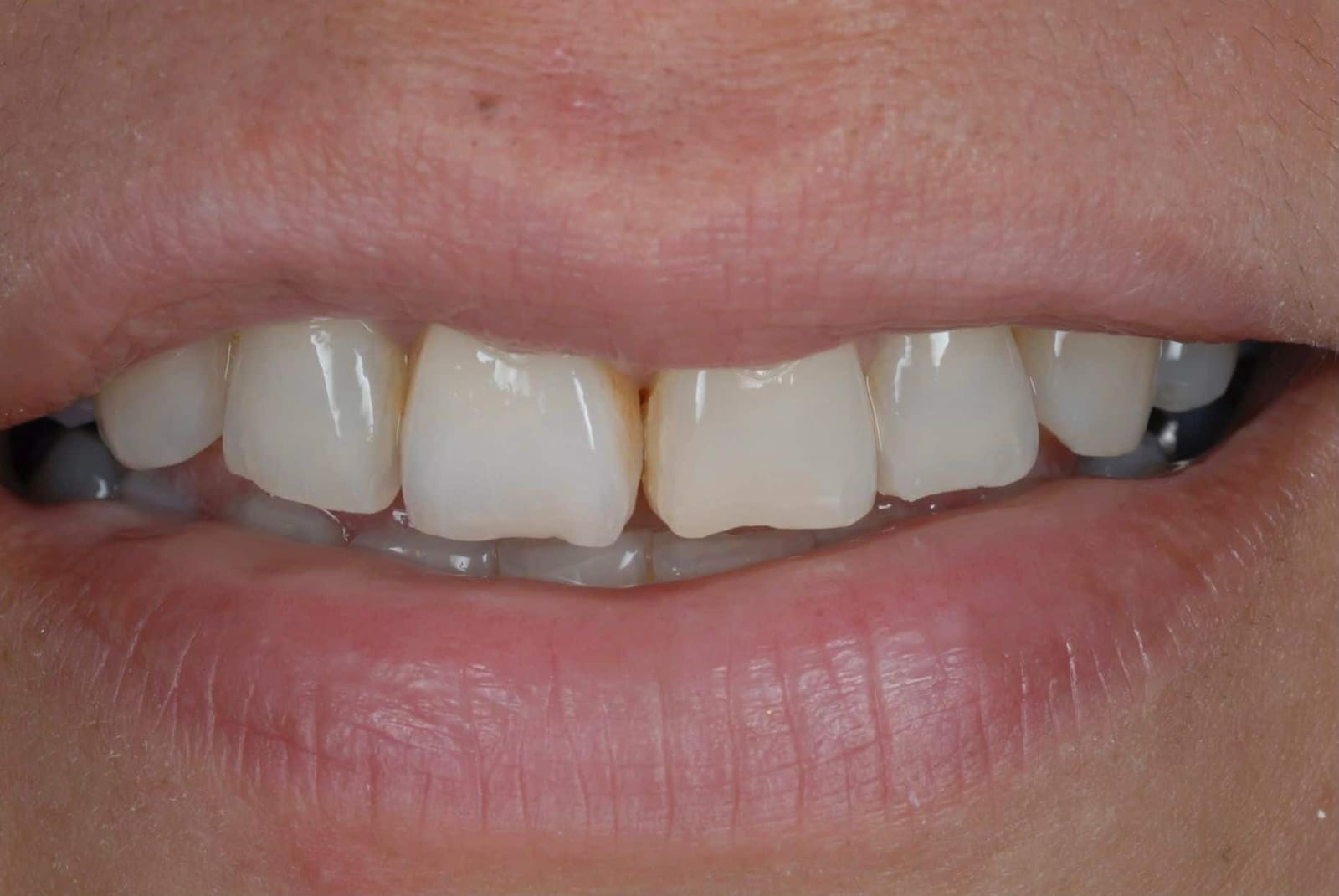
Before and after
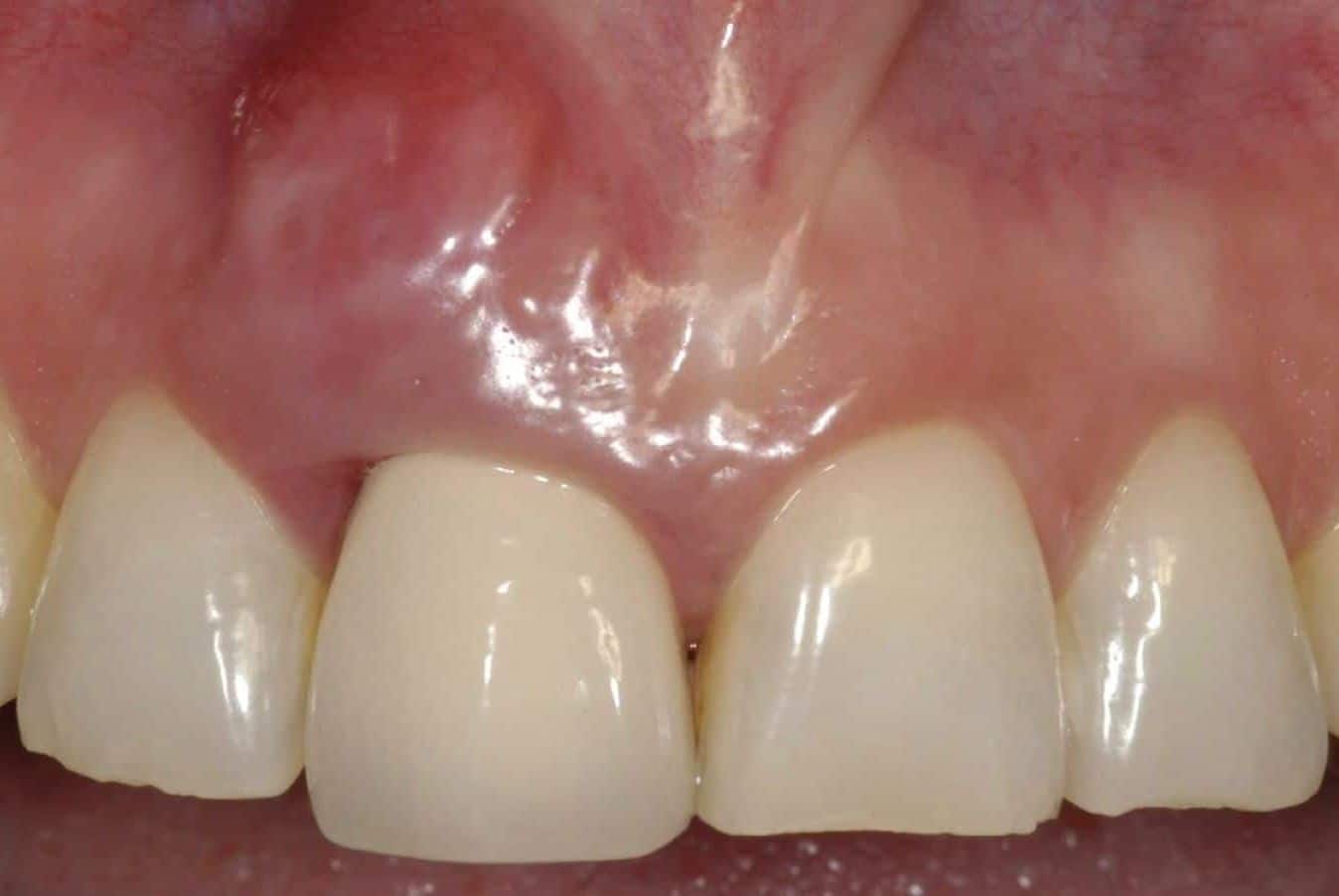
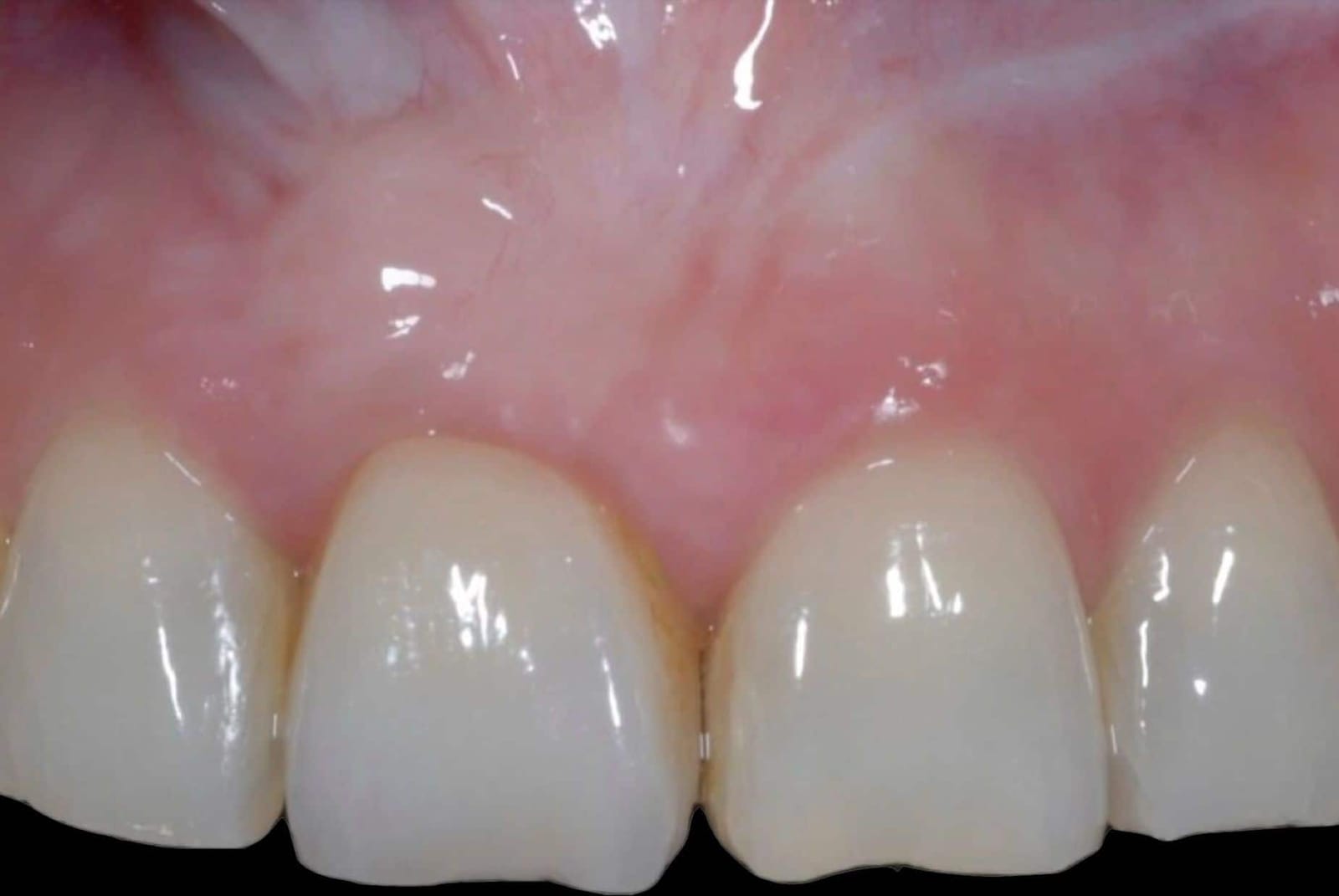
Different foundations behave differently
A natural tooth and an implant carry light in completely different ways.
A tooth has a root, dentine, and its own color running through it. An implant has titanium beneath it and a completely different structure above. Put a restoration on each, made the same way, and the two will not match, because what sits underneath them is not the same.
Match them for a photograph and they still separate in daylight, or under a restaurant light, or in the mirror at home. The match has to hold in every lighting condition or it does not hold at all.
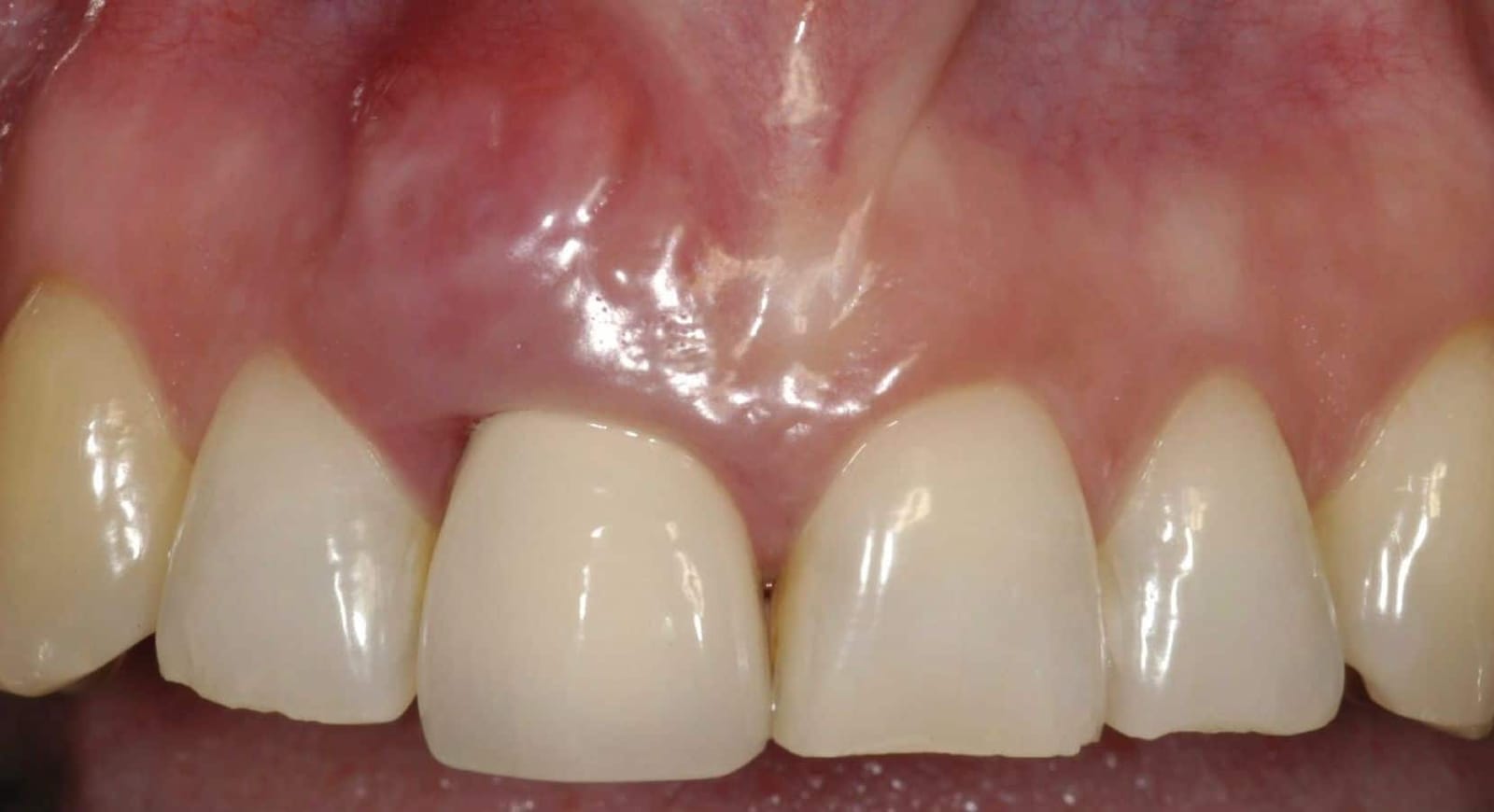
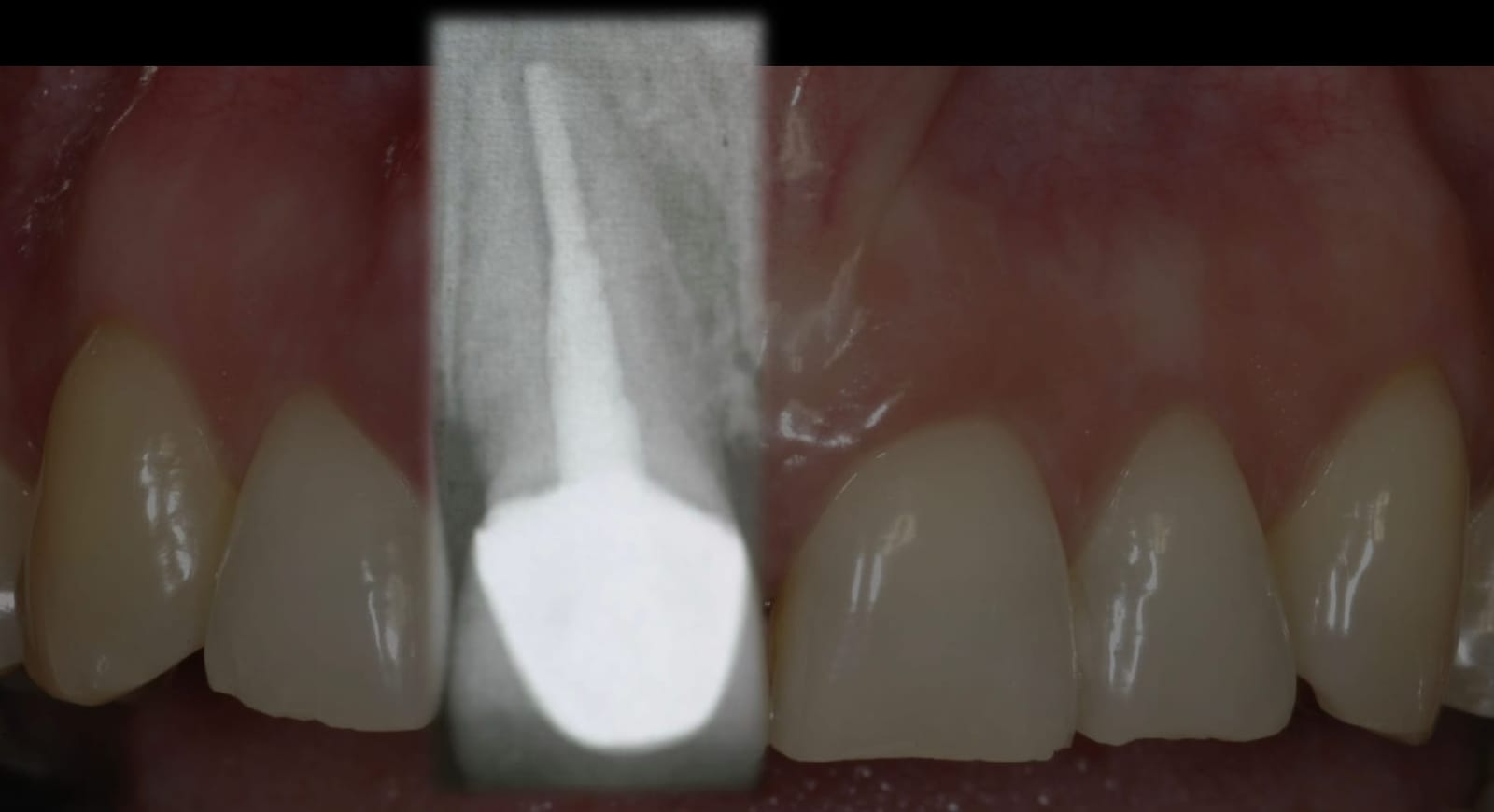
The same view, and the radiograph underneath it
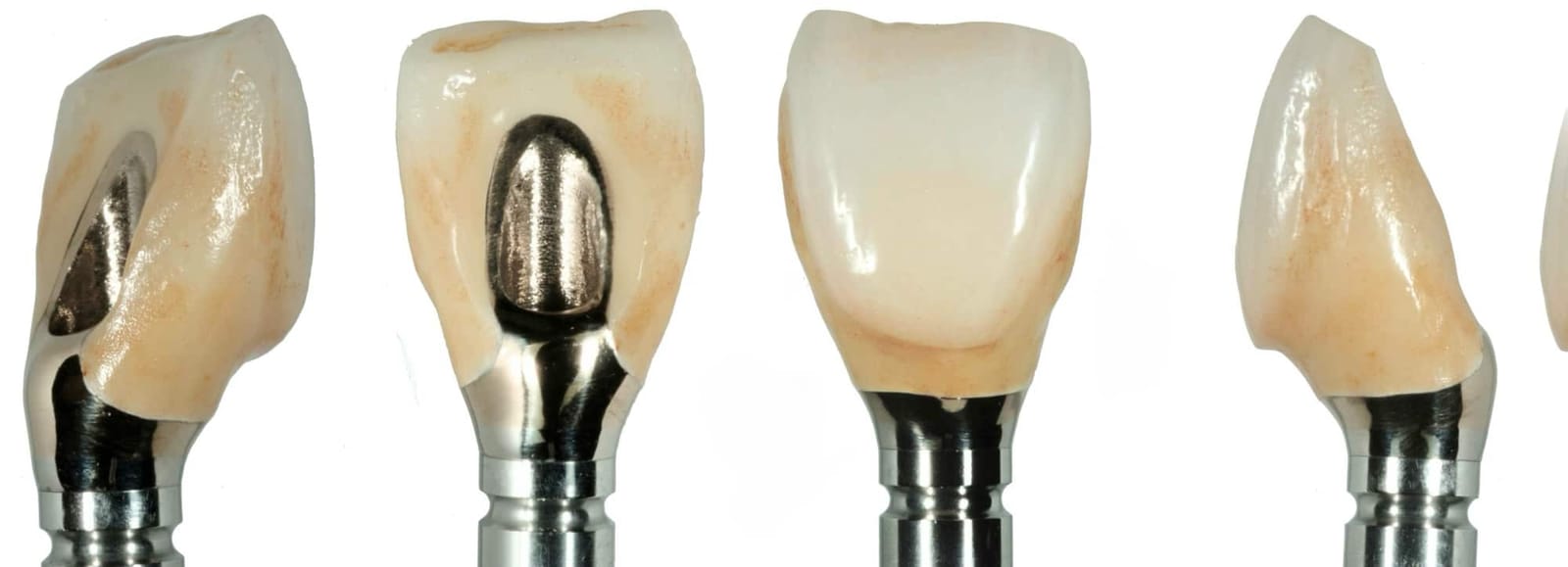
Why gold, and not zirconia
There was a further complication here. The tooth structure underneath was discolored, and discolored badly enough that even zirconia could not fully block it.
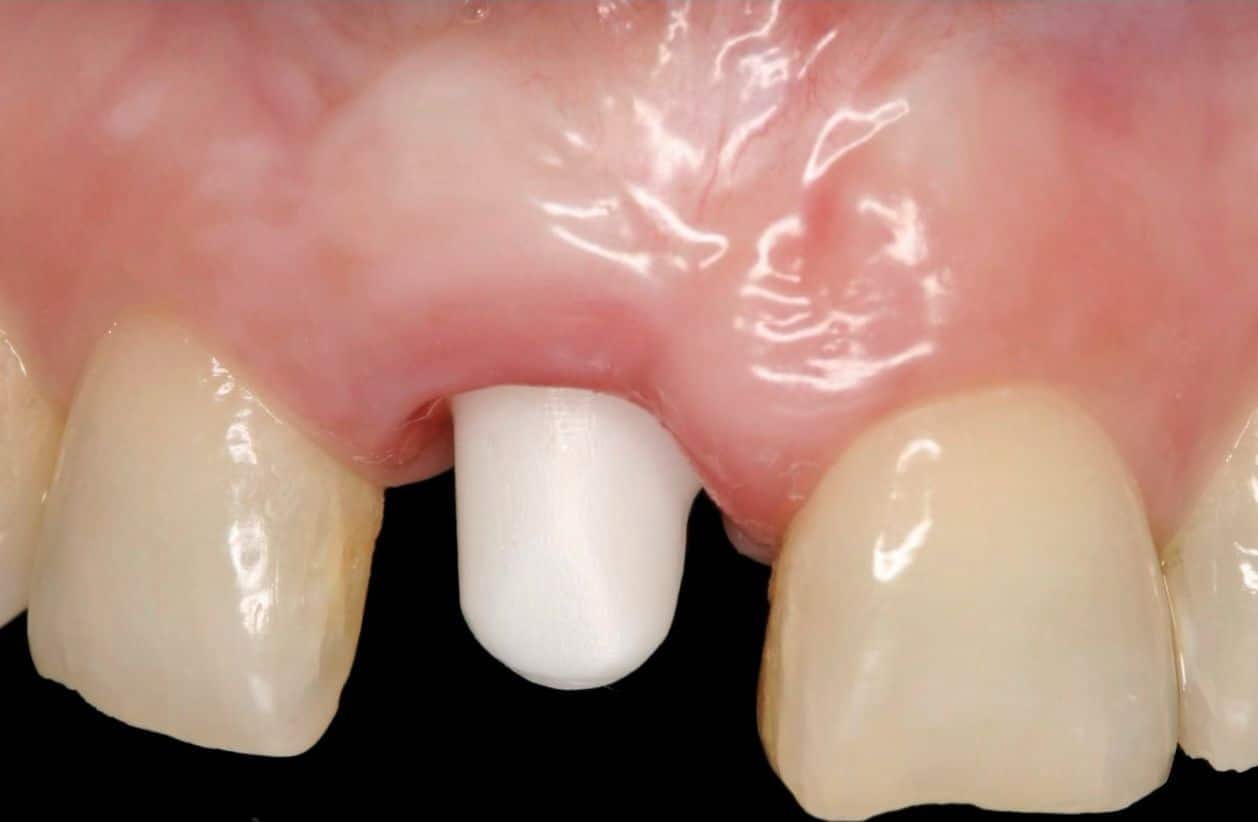
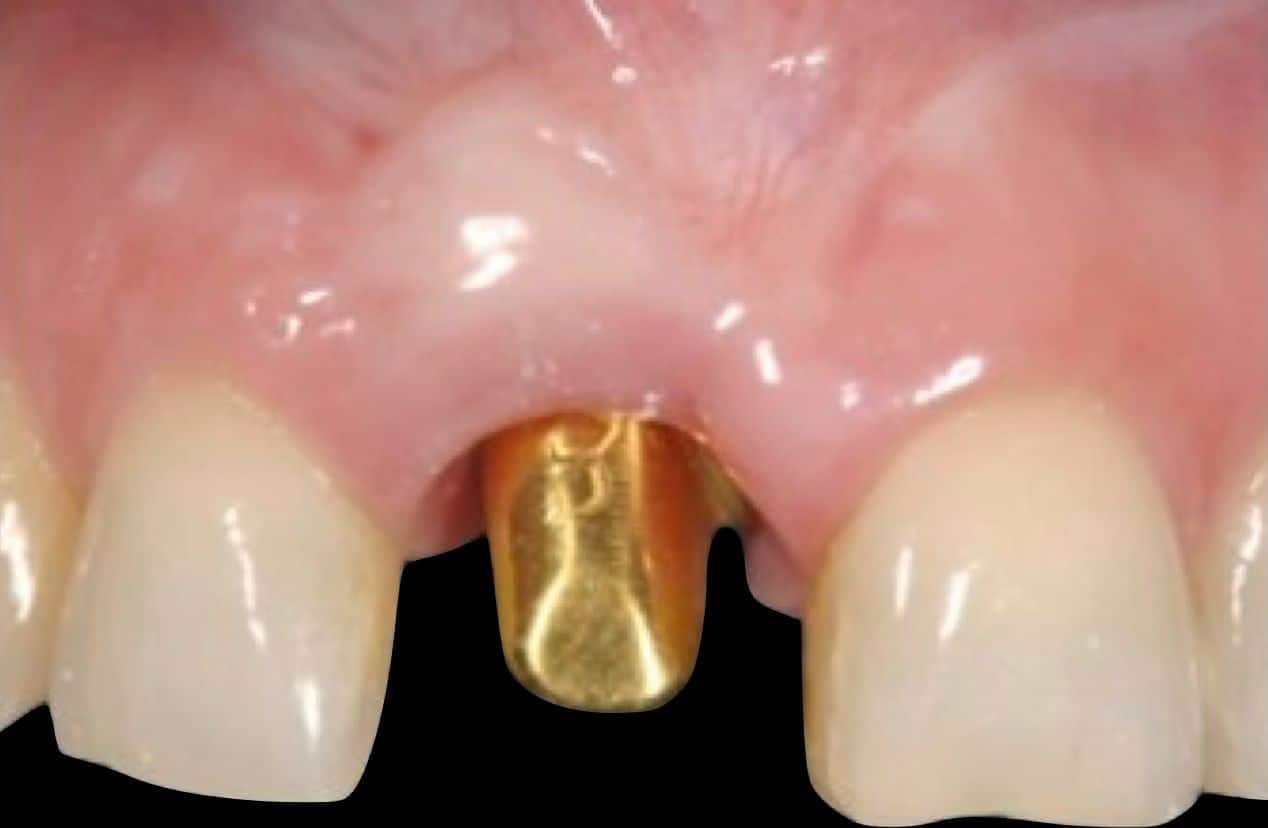
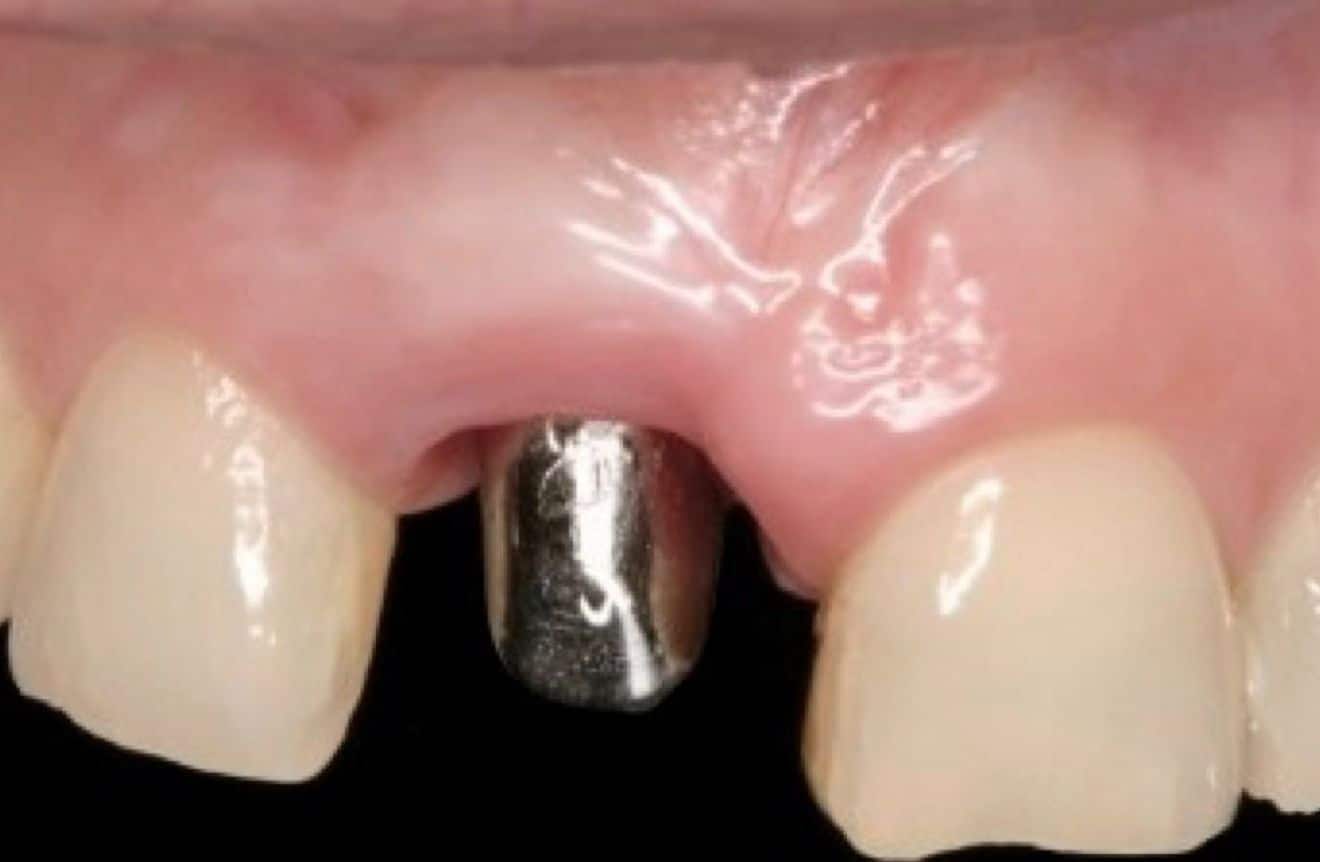
So a gold alloy substructure was used instead, for strength and for the opacity the situation demanded. Over that, opaque ceramic to stop the darkness beneath from reaching the surface, and only then the layering that produces a tooth.
The material is chosen for the problem in front of us rather than by default. Sometimes the older answer is the right one.
Three substructures, one of them right
The only way to control the match
Both restorations were built at the same time, in the same hands, and finished as a pair.
That is what makes the match possible. Made separately, two units on two foundations almost always diverge somewhere. Made together, the difference between them can be compensated for deliberately, layer by layer, until they read as neighbors rather than as two pieces of work.
The site, shaped before anything is made
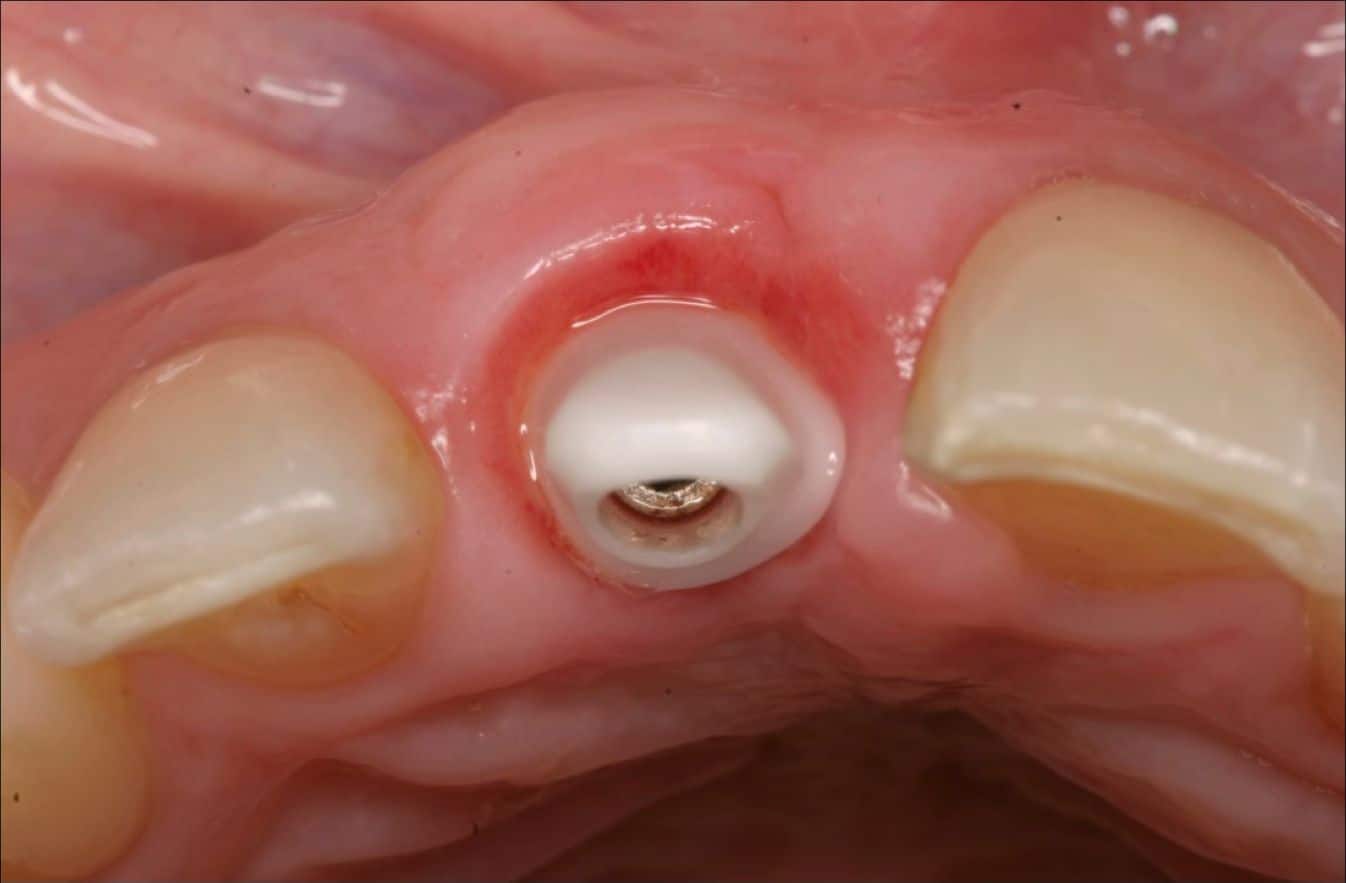
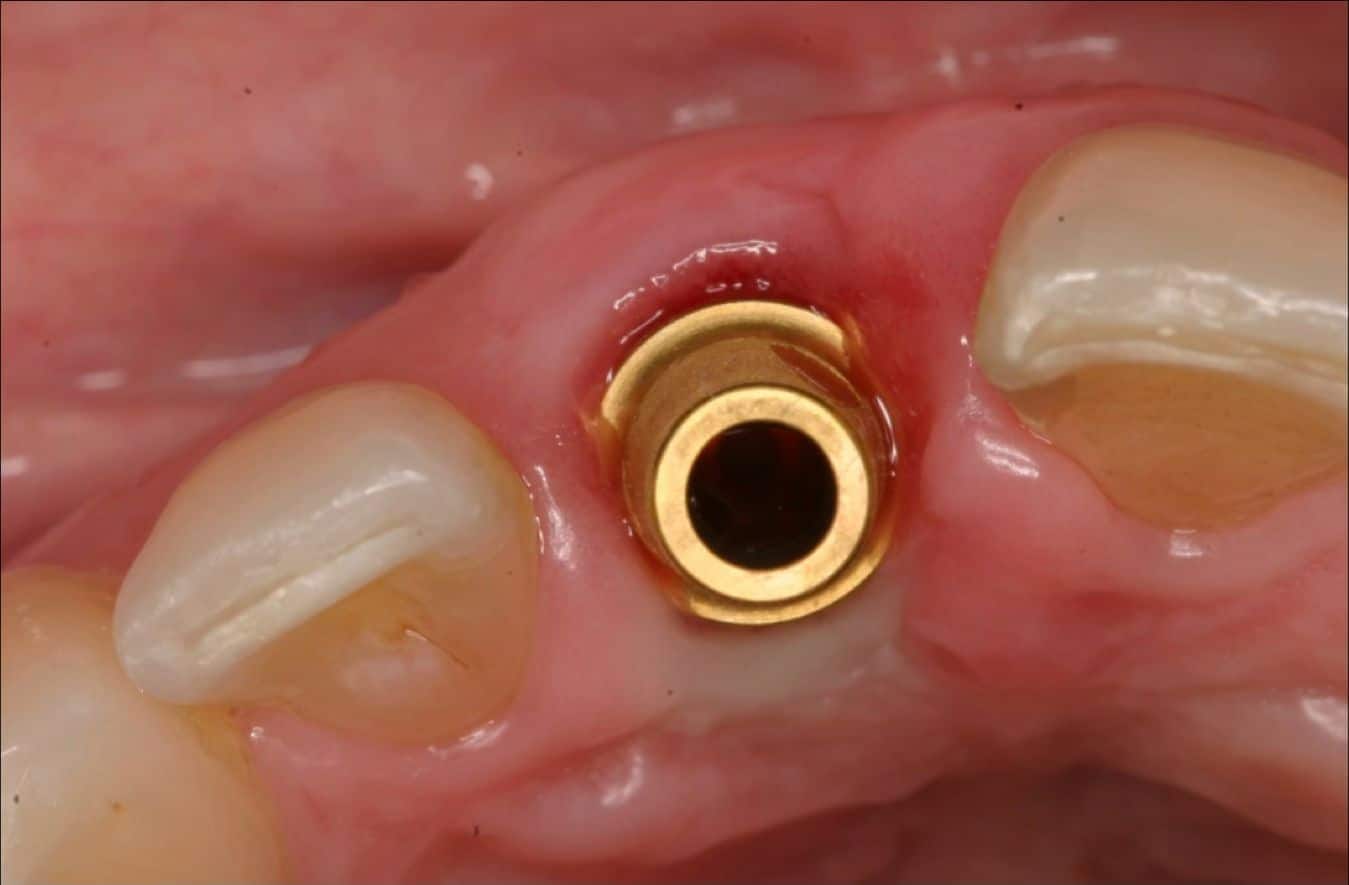
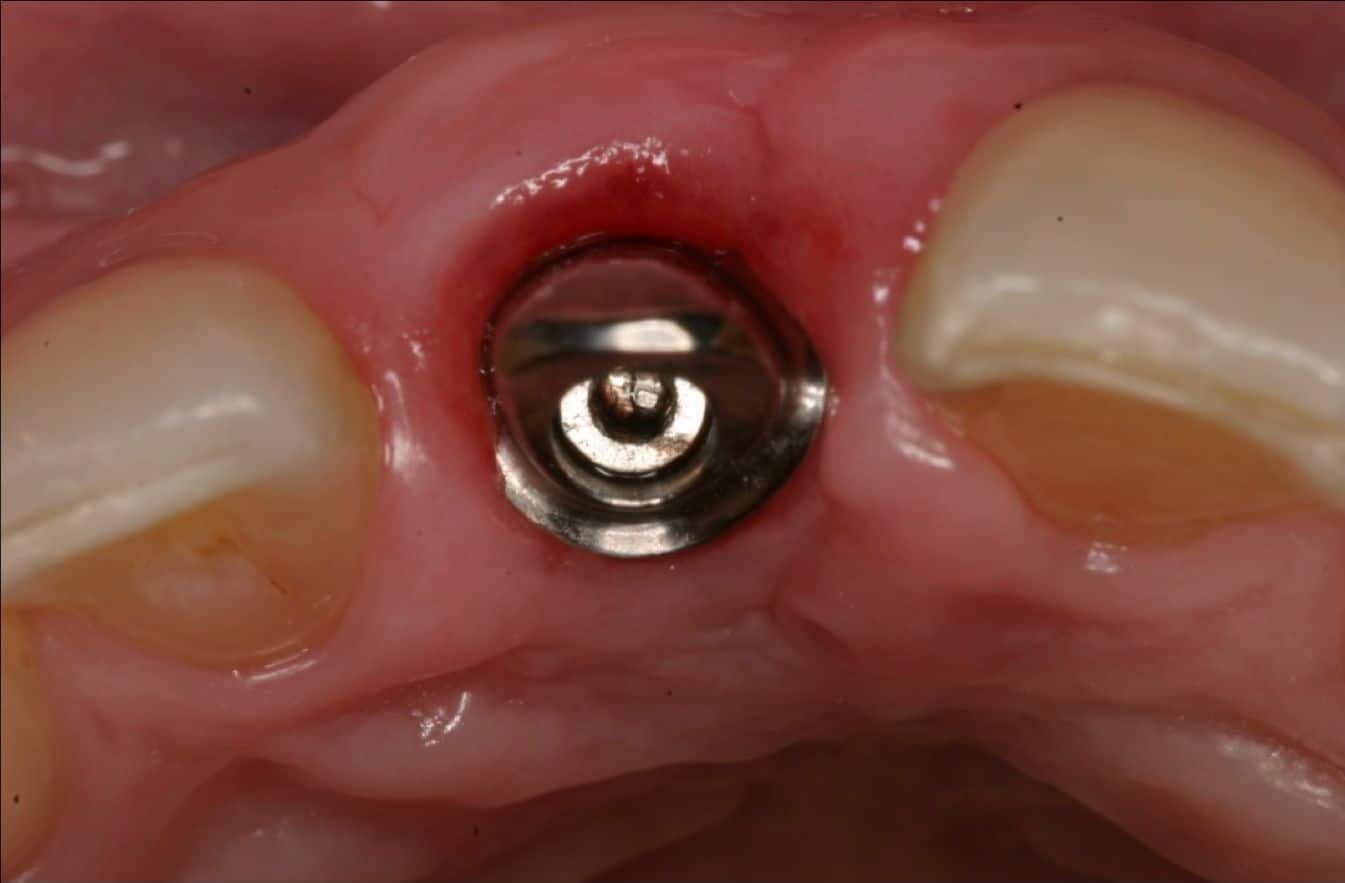
Where an implant gives itself away
The last thing is the tissue.
An implant restoration has to appear to grow out of the gum exactly as the tooth beside it does. Same contour, same height, same way the tissue meets it. If the emergence is wrong, the crown can be perfect and the eye will still know.
Here it is not wrong. The implant emerges as naturally as the tooth next to it, and neither announces itself.
The crown, off the mouth
Two disciplines in two adjacent teeth
One tooth is restorative dentistry. The other is implant dentistry. Making them indistinguishable requires knowing what each substrate does to light, which material blocks what, how thick every layer must be, and how tissue behaves around each.
That is the whole skill, spent on two teeth most people will never look at twice. Which is the point.
Every case is planned around one person's anatomy. Individual results vary, and what was right for this patient may not be right for you.