Front Teeth Case 3 · Reconstruction · Implants
Rebuilding a Smile After the Damage
The impact took the teeth on one side, and the bone beneath them.
The impact came from his right.
It took the teeth on that side, and it did not stop there. The bone beneath them was cracked through, more than once. There was very little of his upper jaw left to build anything on.
He was a young man living in Arizona. He was referred here by a prominent periodontist, after the periodontist had done the part that had to come first.
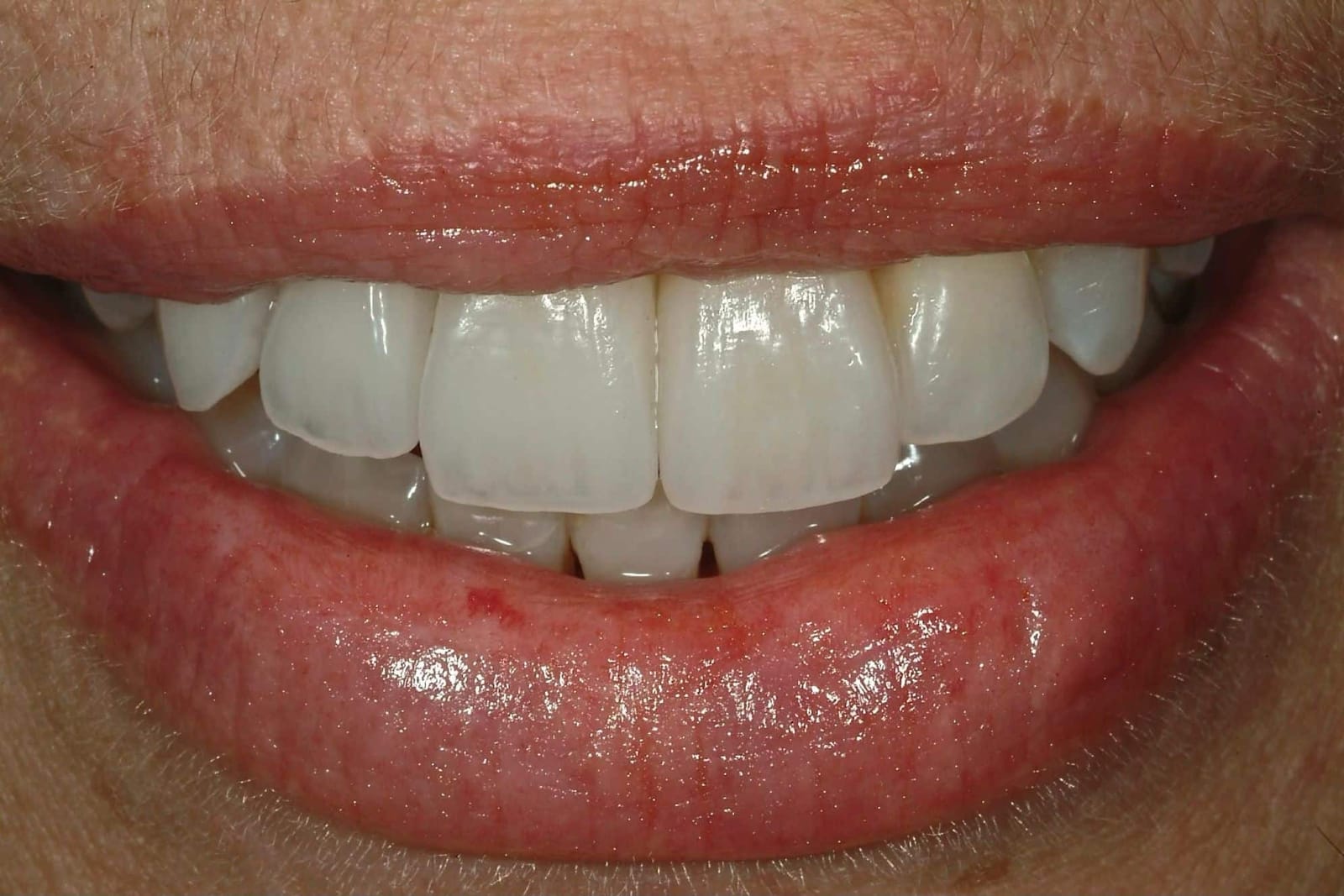
Before and after
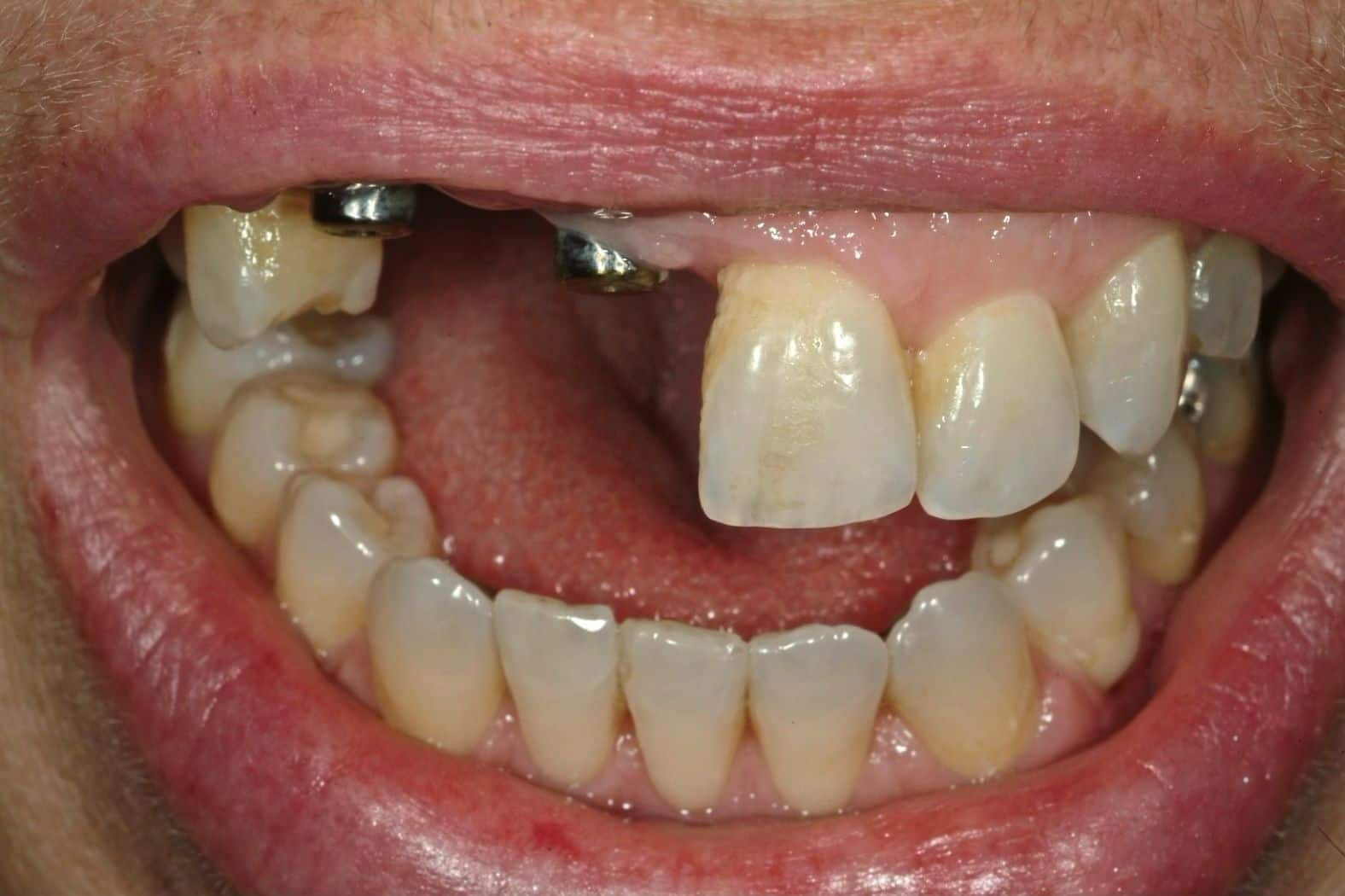
What the surgeon rebuilt
His jaw had to be reconstructed before it could receive implants at all.
Extensive grafting rebuilt the bone. Soft tissue was added to replace some of what had been lost with it. It was skilled work and it made the case possible.
It also had a limit. Grafted bone can be rebuilt toward the ideal, not always to it, and the implants went into what the anatomy would allow rather than into what the teeth would have preferred.
After the implants were already placed
Dr. Reshad received the case with the implants already in the bone.
That is a particular kind of problem. The positions were what the damage permitted, and they were difficult. Most consequentially, the screw access channels emerged through the fronts of the teeth, right where the smile is, which meant they could not be restored conventionally at all.
And this was fifteen to seventeen years ago, without the technologies available now.
On arrival
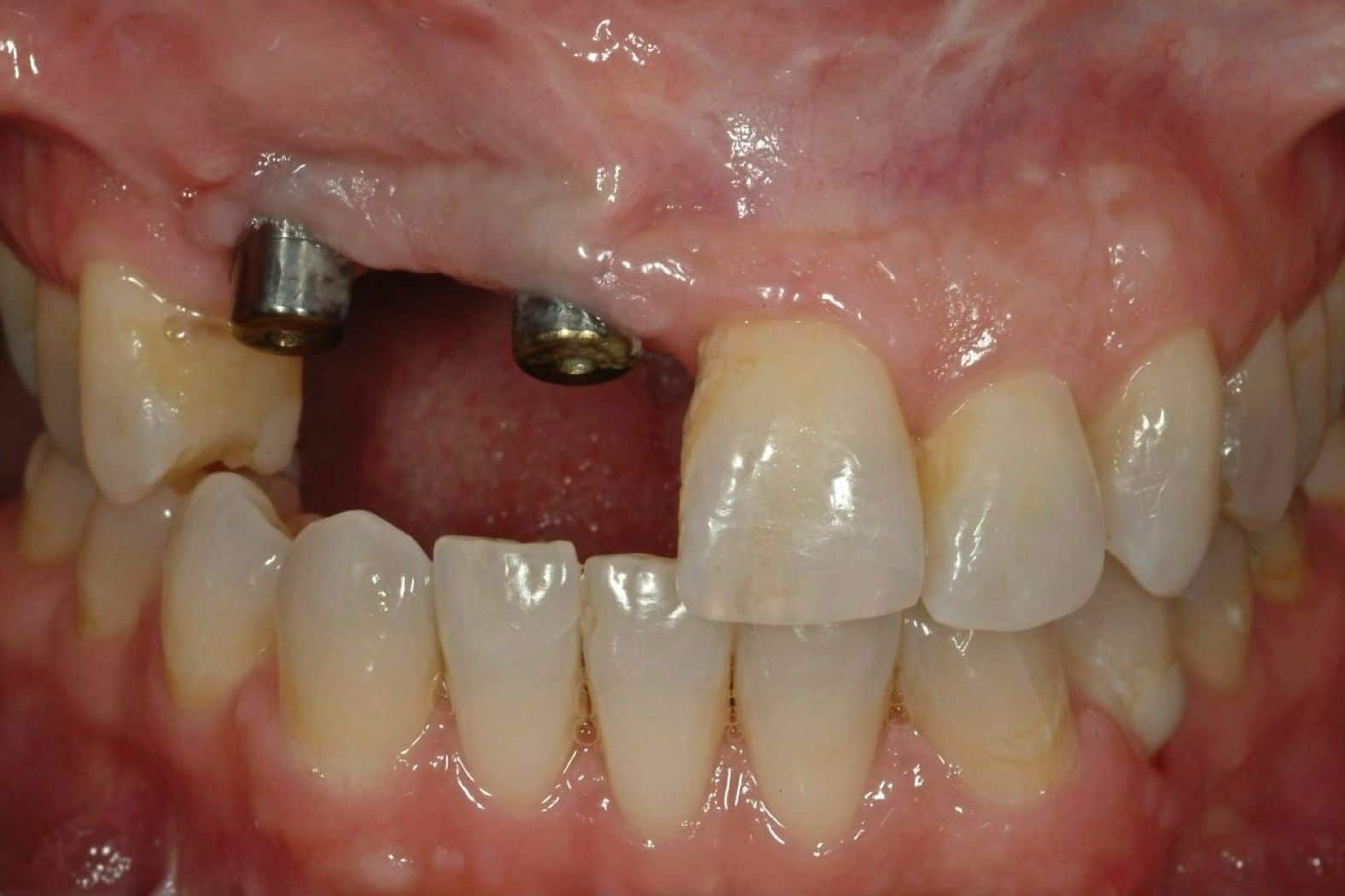
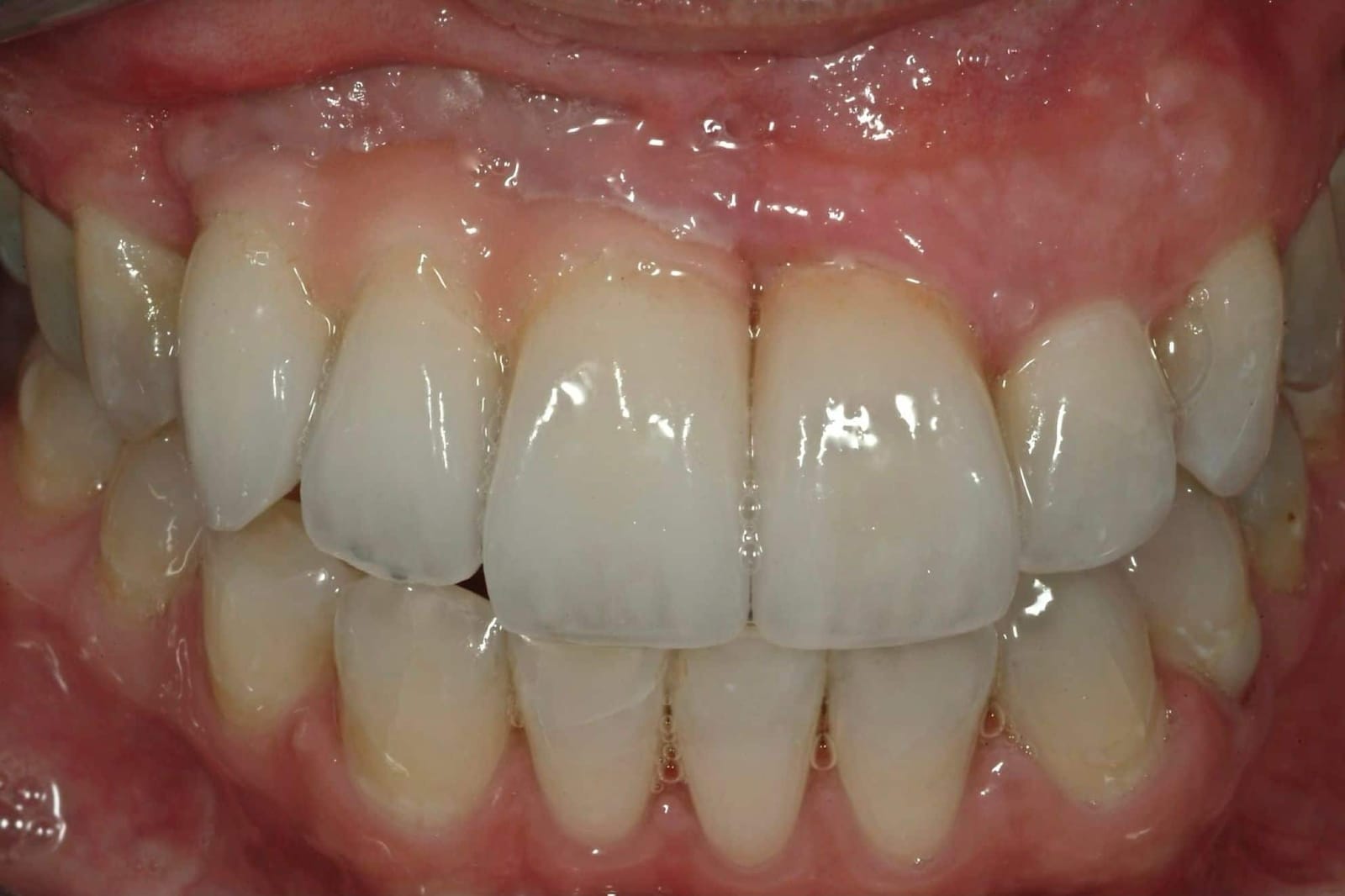
What the restoration had to solve
The list is worth laying out, because each item alone would be a case.
- The screw access had to be redirected away from the front surfaces of the teeth.
- The smile line had to be reestablished so it follows the curve of the lower lip, which is what makes a smile read as natural rather than assembled.
- The two central incisors had to regain their dominance, because a smile without it never looks right.
- Tooth number nine, his own front tooth on the left, had been intruded by the impact and sat too short. It needed height, and he wanted that height.
- And the lip needed support, so the face did not read as collapsed on the damaged side, while the tissue around everything stayed healthy and cleansable.
All of that had to be solved simultaneously, and the result had to look like nothing had ever happened.
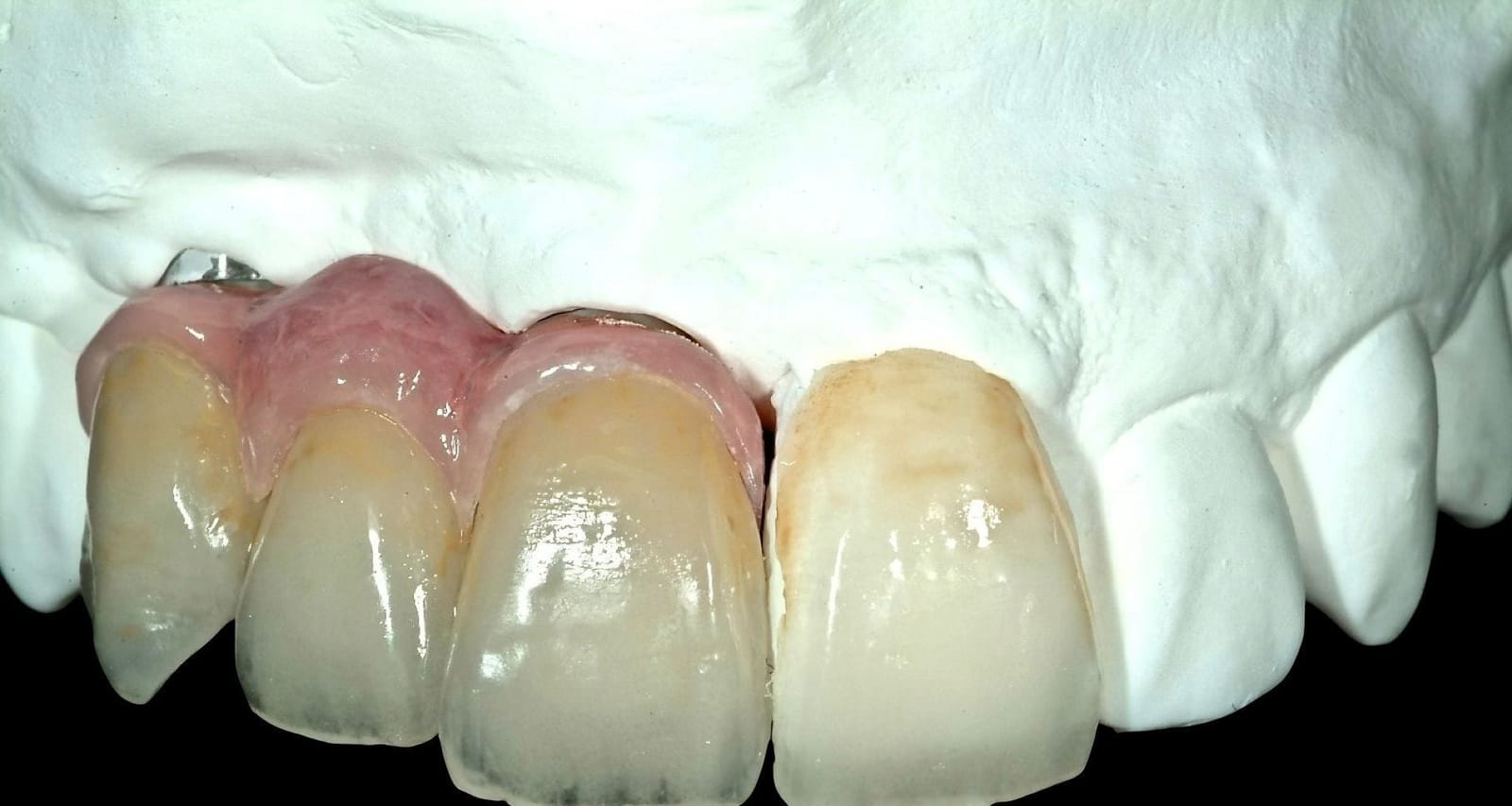
A ceramic primary framework
The solution was a technique Dr. Reshad developed and published in the Journal of Prosthetic Dentistry.
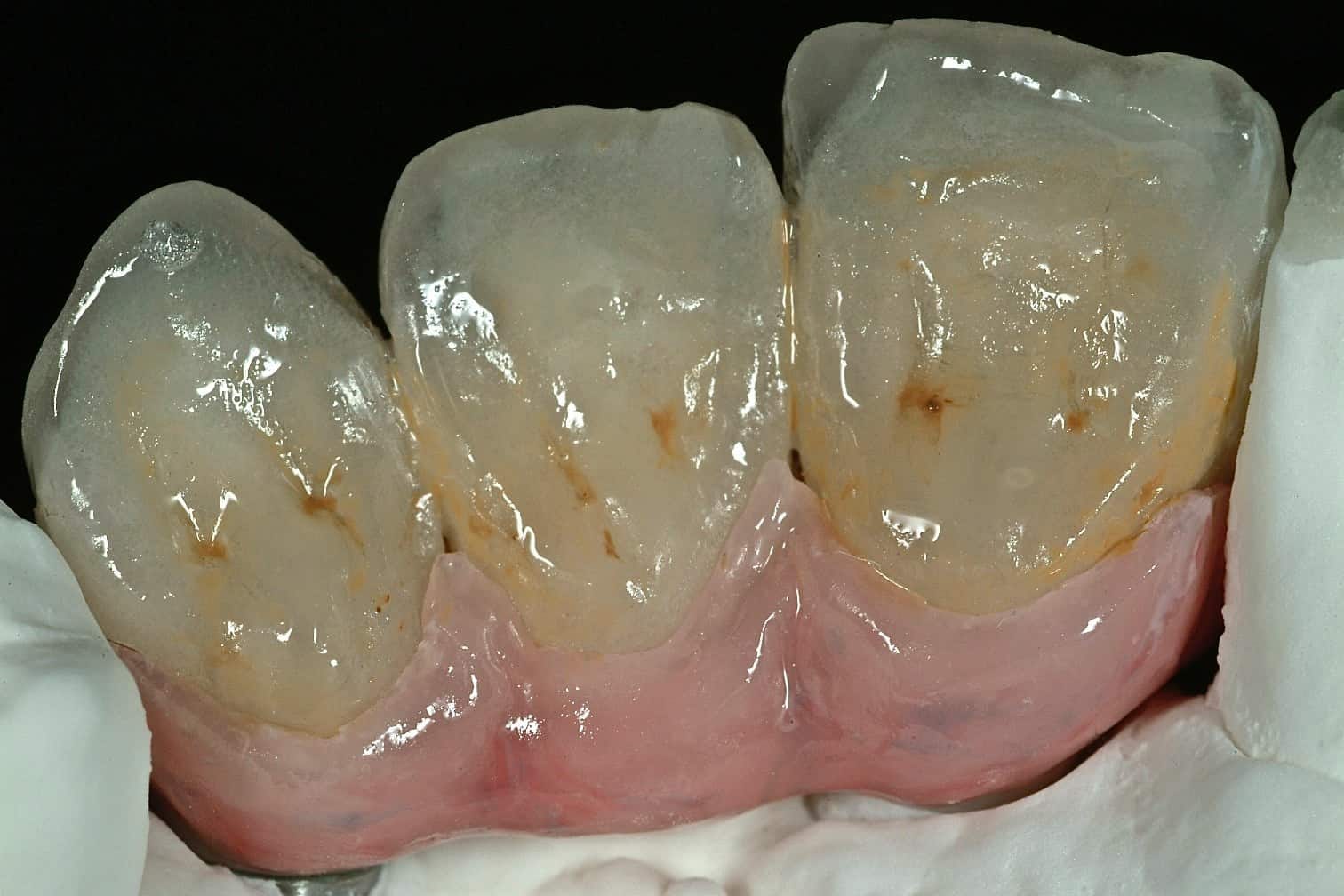
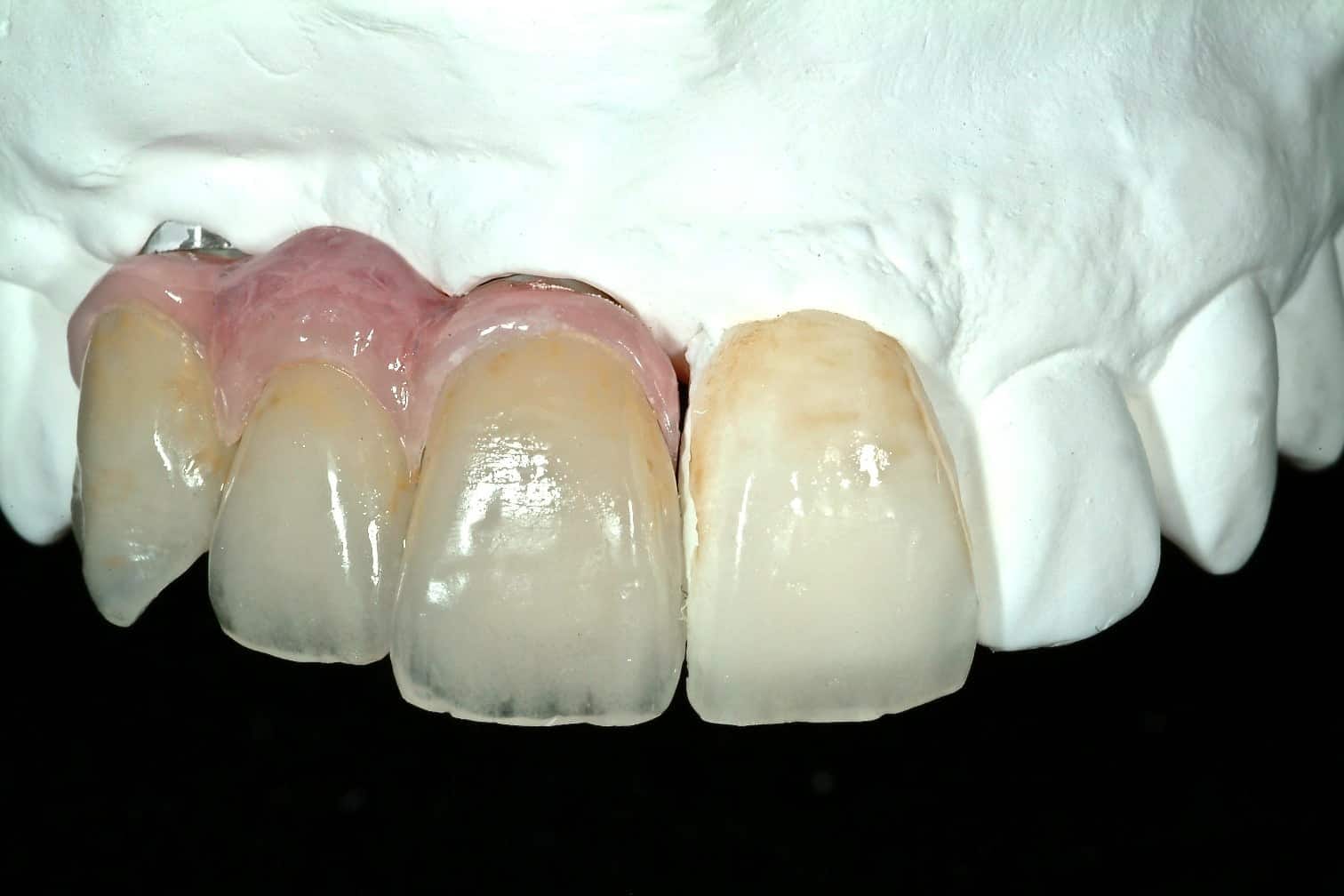
A primary framework re angulates the implant trajectories into something restorable, and the teeth are delivered on top of it. Here the framework was made in zirconium rather than metal, because this is the aesthetic zone and metal has no business sitting under a front tooth. Light travels through the whole assembly instead of stopping at a gray core.
The framework, and what goes on it
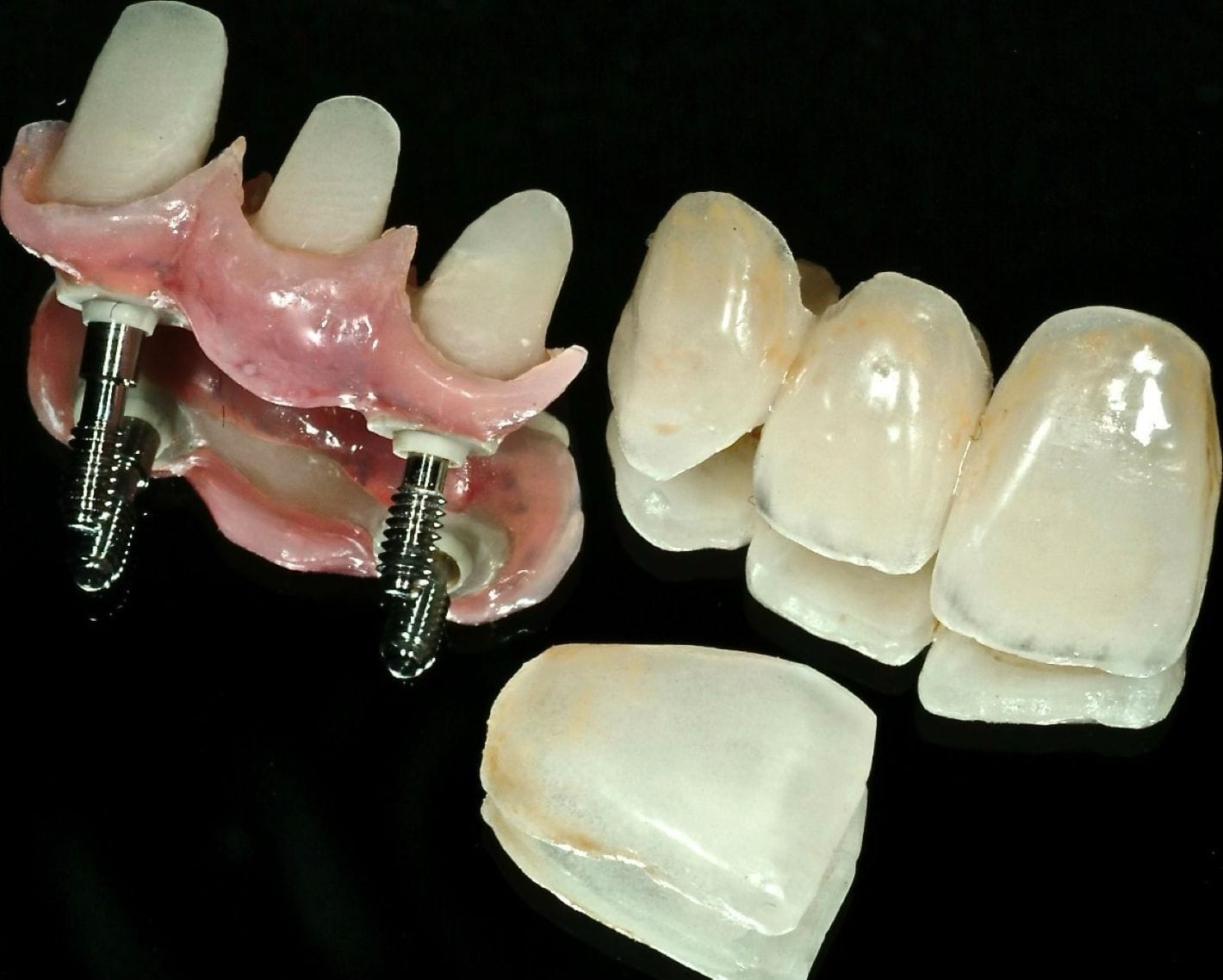
Everything decided in wax first
Form. Shape. Contour. Speech. All of it established in a wax up before anything was made.
That wax up was then converted, by specific technique, into provisional restorations he wore in his own mouth. He lived with the design, looked at it in his own mirror, and told us what he wanted changed.
Those refinements went into the final. The provisional exists to be argued with.
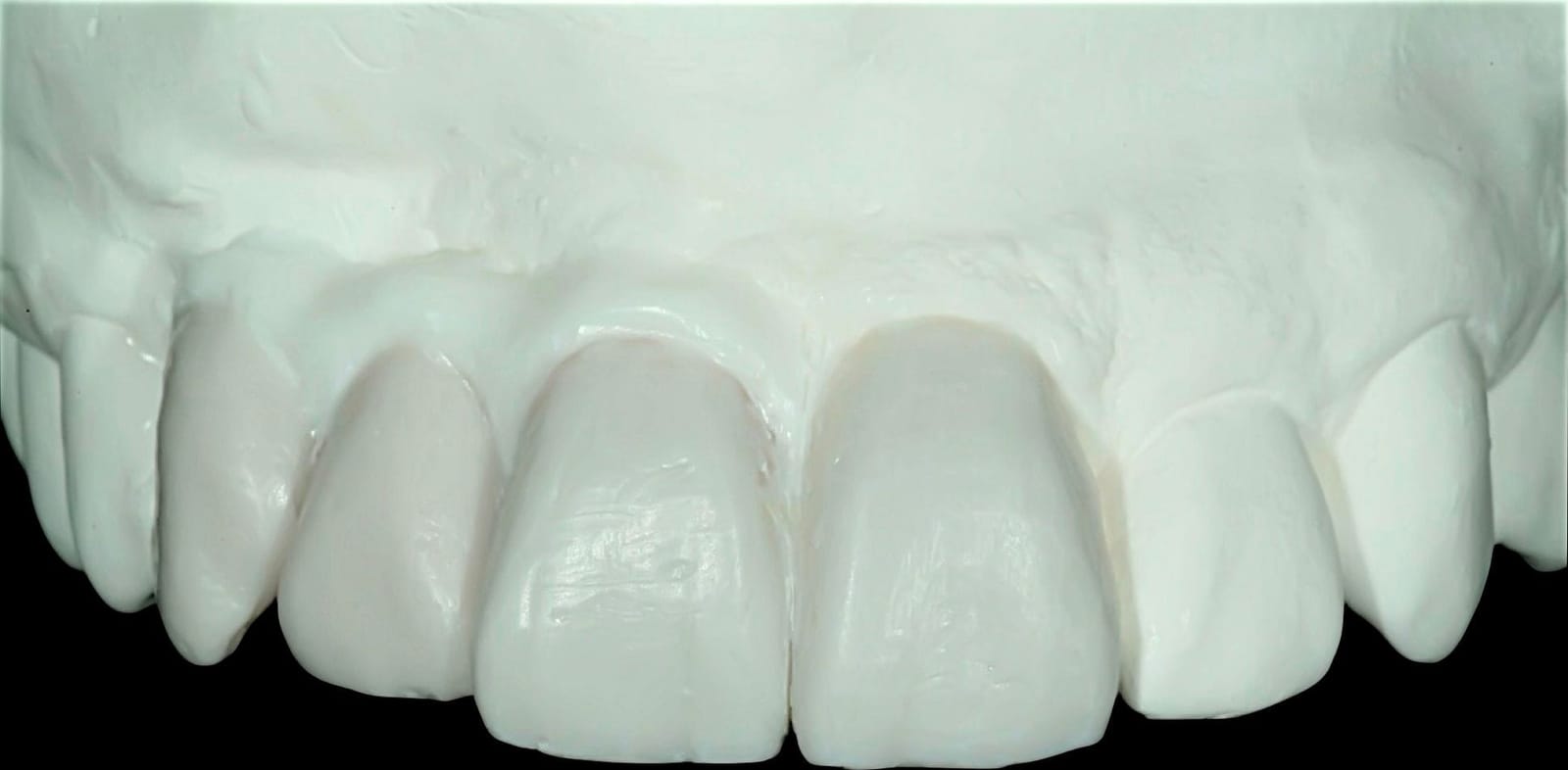
From wax to ceramic
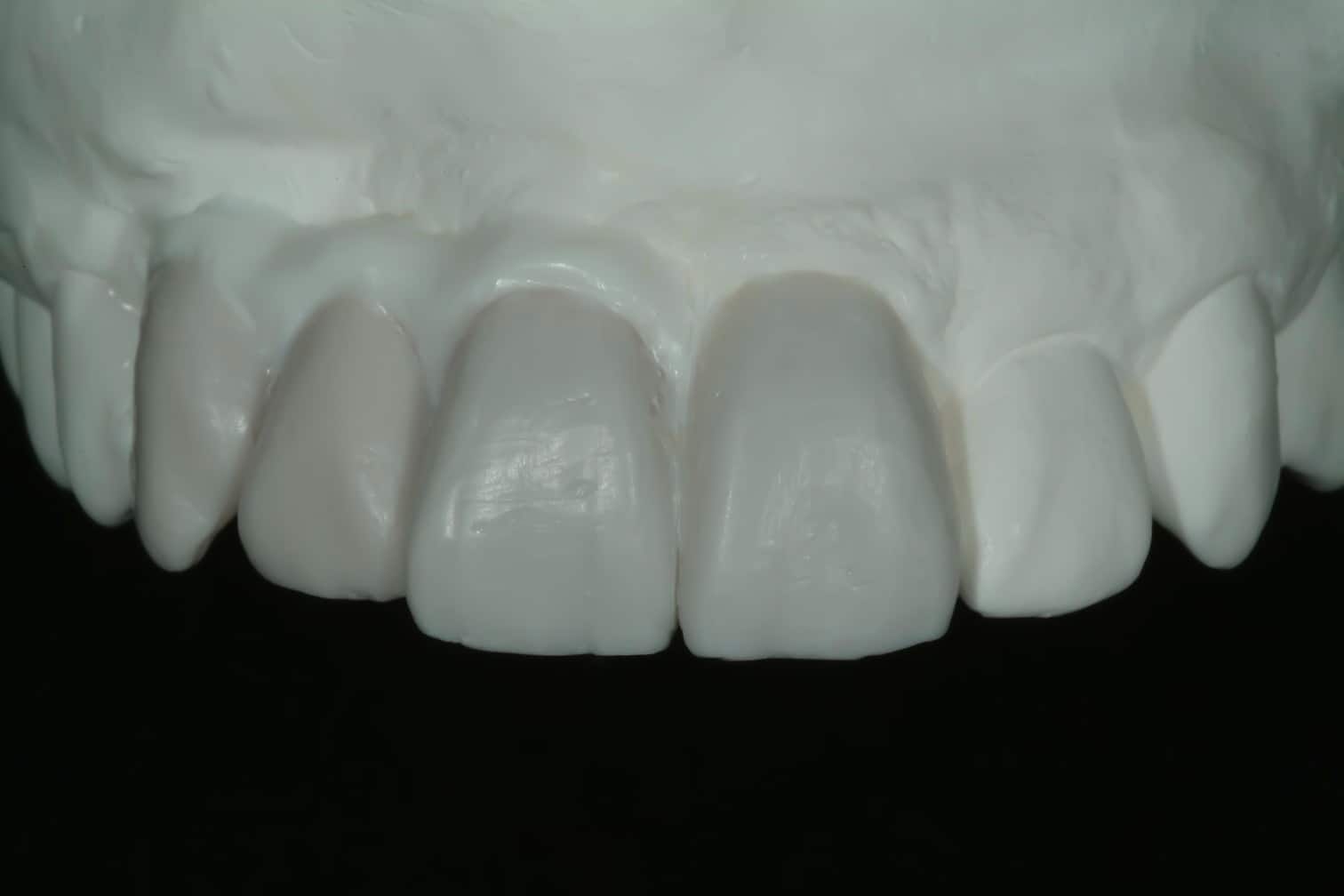
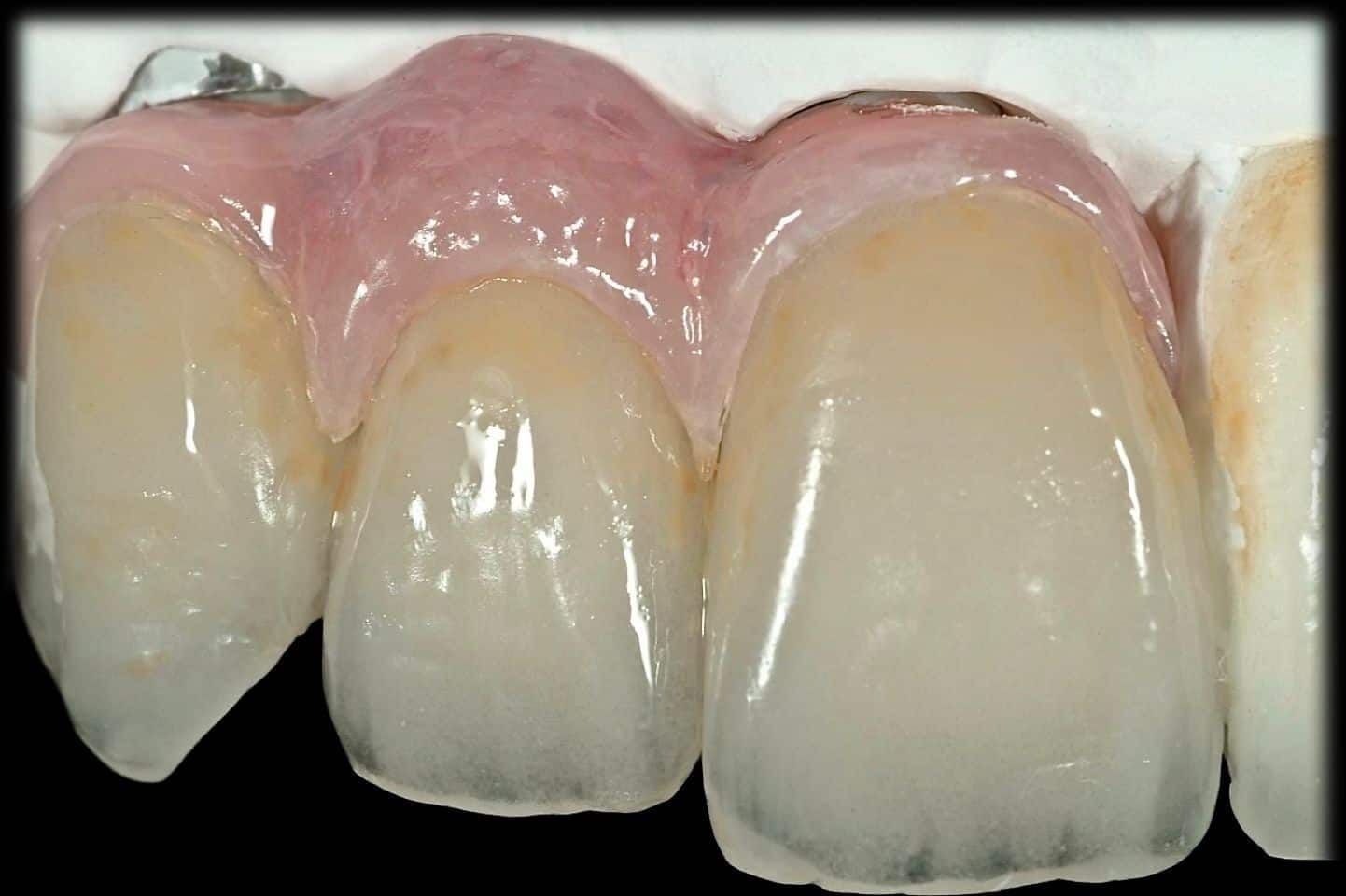
Implants and his own tooth, in the same firing
Here is the part that is genuinely difficult.
The restorations sit on two entirely different foundations: implants on one side, his own natural tooth at number nine, which needed a veneer. Those substrates transmit light differently, and work made separately for each almost always shows a color difference between them.
So everything was fabricated at the same time, including the veneer, because that is the only way to hold control across all of it.
That is possible only if you know precisely what the material does. What it is, how thick it is at every point, how translucent it is, and how much of the substrate underneath will show through. Control those and you can compensate for the difference between an implant and a tooth rather than hoping it will not show.
This is what Dr. Reshad teaches, and it is what allows a case like this to be delivered together, faster, with confidence rather than by trial.
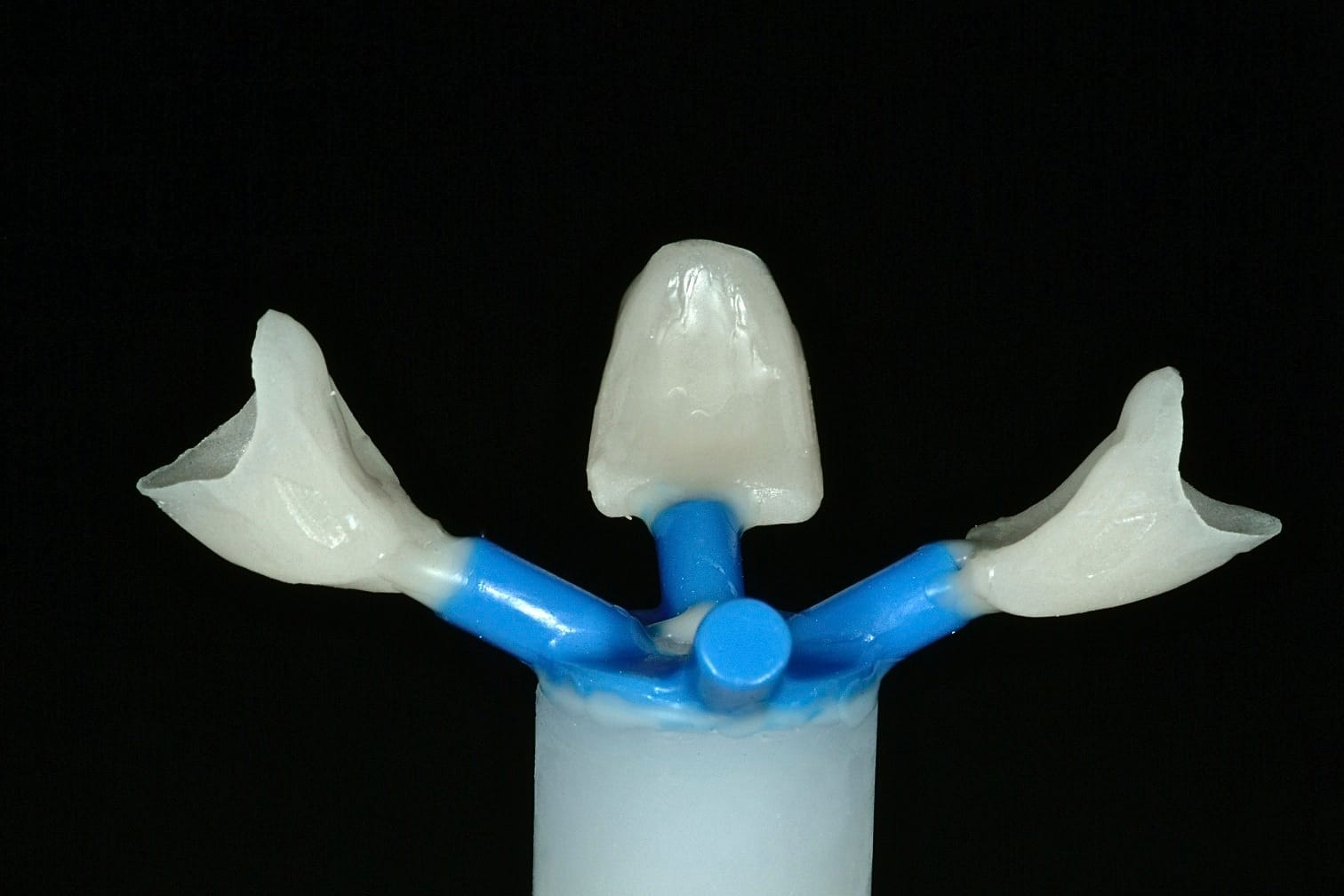
Layering ceramic is what gives the tooth life
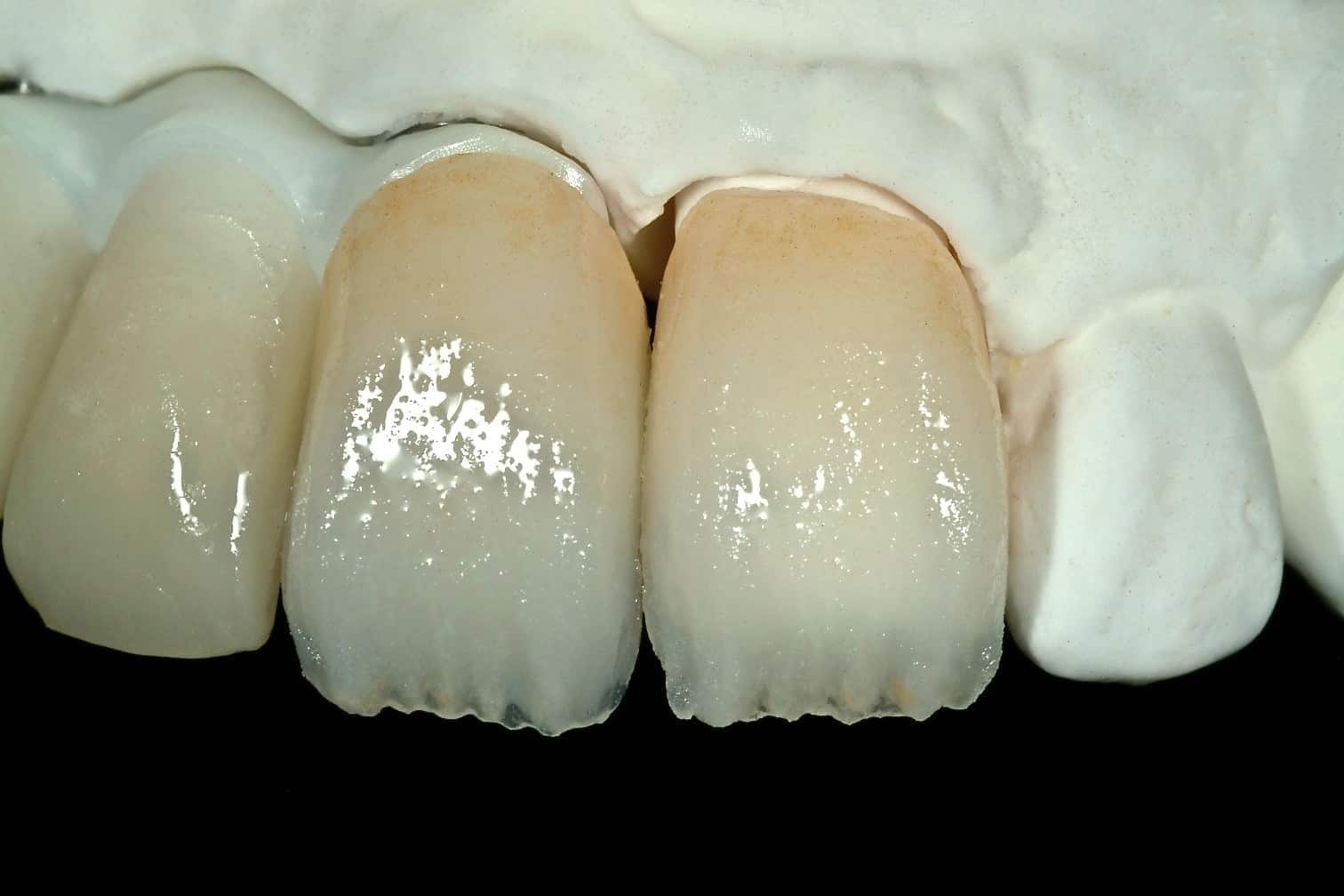
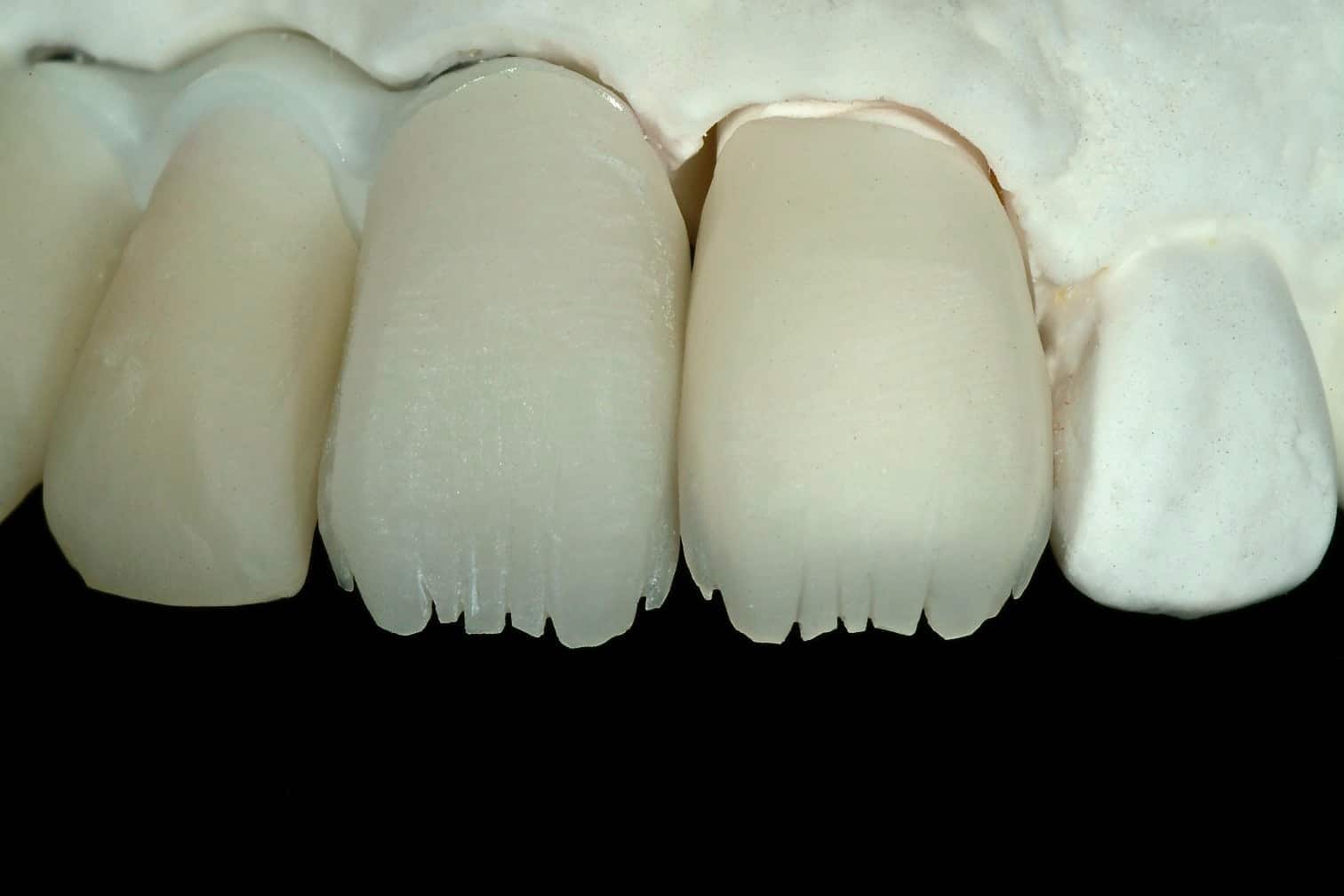
What sits underneath decides the color
As if nothing had happened
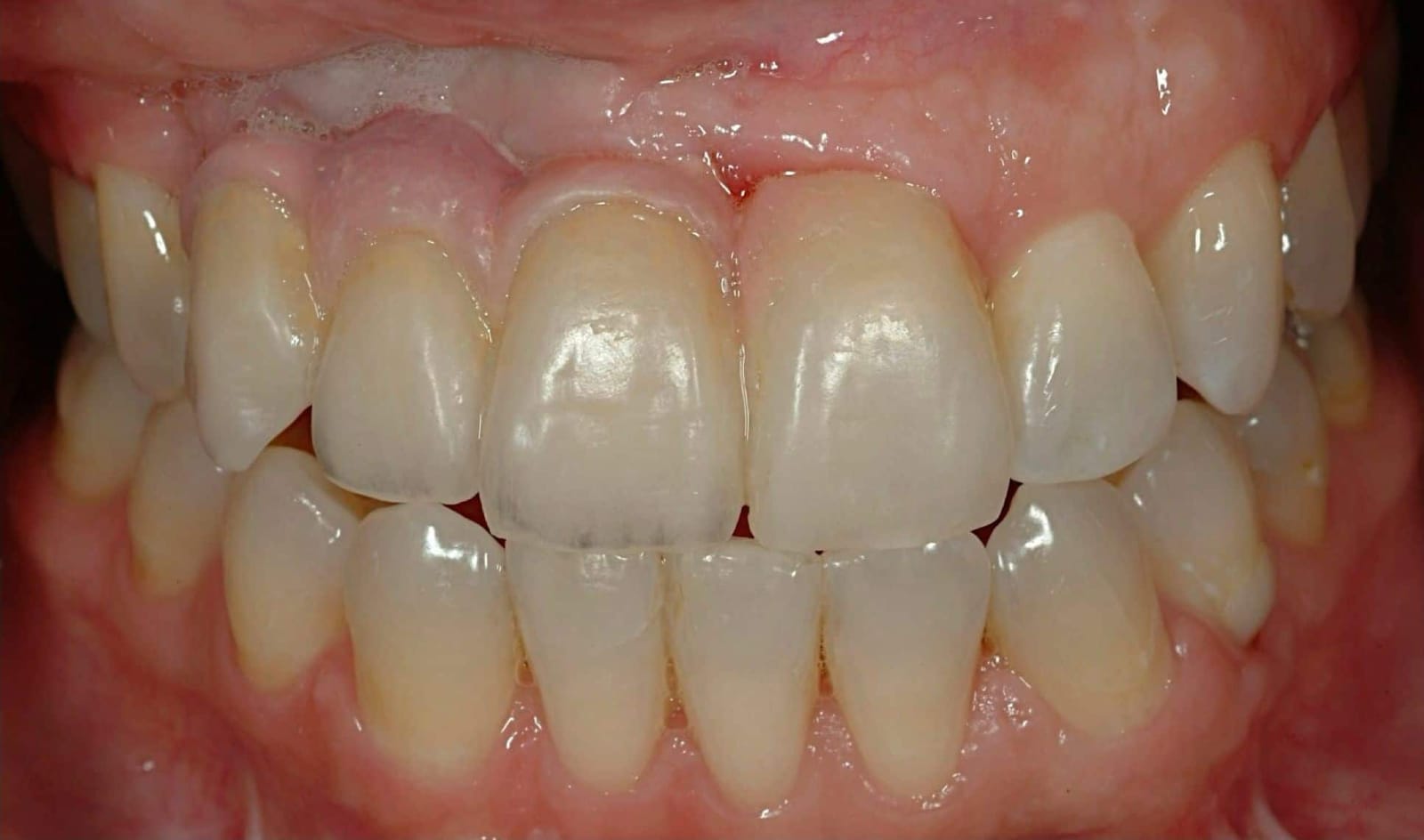
No color differential between the implant restorations and his own tooth. The smile follows his lower lip. The centrals are dominant. The lip has its support back.
It is cleansable, the tissue is healthy, and he can speak properly.
He has been functioning in it ever since. A young man with an extreme defect caused by a collision, whose face gives away nothing about it.
Temporaries phase
Before and after
The last person in the chain
A case like this passes through several hands. The surgeon does the part nobody else can do, and does it under real constraints.
What is left at the end is whatever the anatomy would permit, and someone has to turn that into teeth that look like they grew there. Sometimes the existing techniques cannot do it, and the answer has to be engineered and then submitted to the literature.
That is what happened here.
Every case is planned around one person's anatomy. Individual results vary, and what was right for this patient may not be right for you.