FP-3 Case 16 · Implants · Reconstruction
One Material
He came in ready.
Not persuaded, not talked into it. He had reached the stage where the state of his mouth was a barrier to the rest of his life, and he had decided to be done with it.
There is a moment in a failing dentition when patching stops being kindness. Every crown sits on a tooth already in decline, and every repair buys months rather than years. He had arrived at that moment on his own.
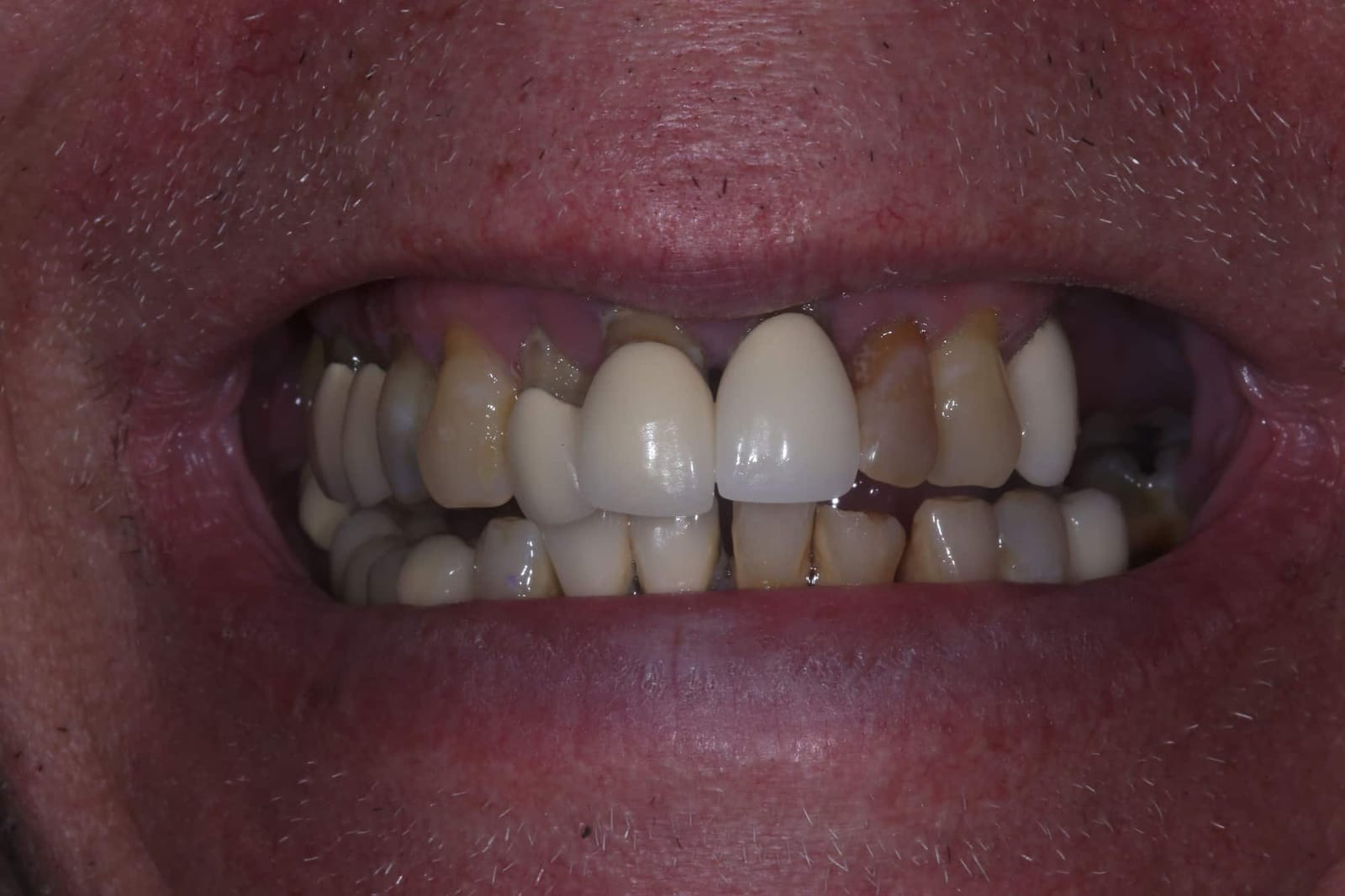
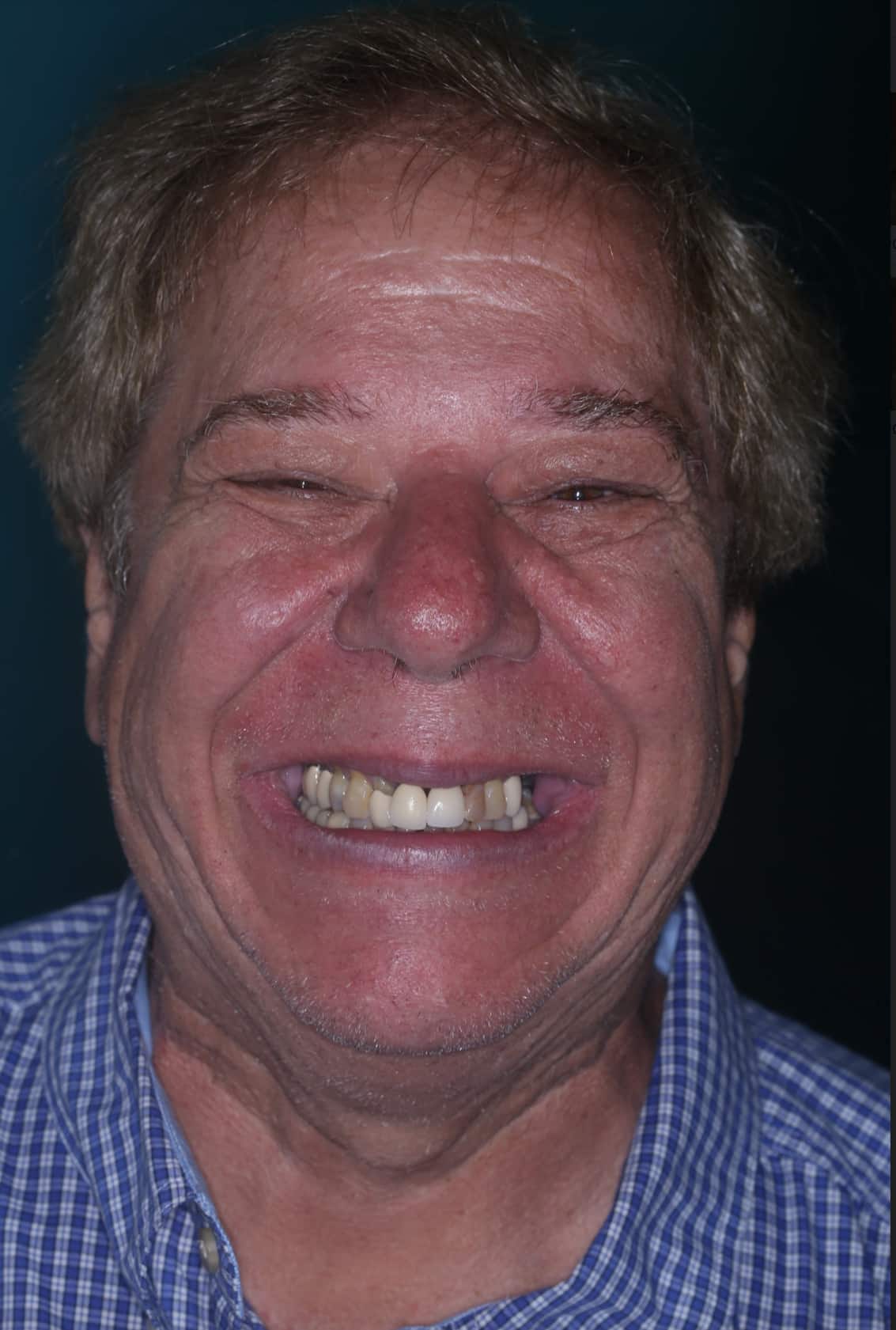
Every era of previous dentistry, still on duty
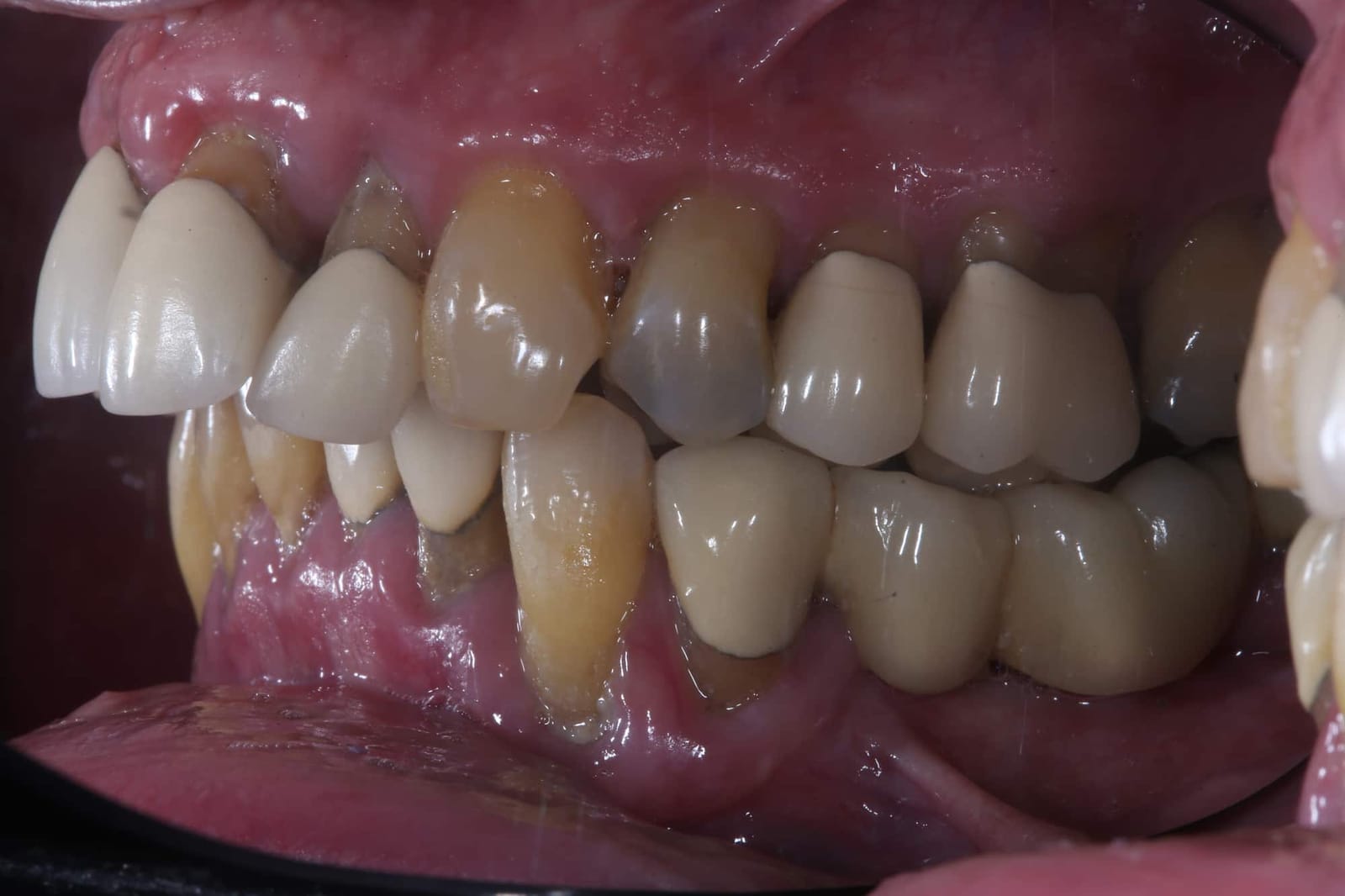
Up close the story is everywhere at once. Crowns from different decades in different materials. Margins gone dark where metal meets a receding gum. Teeth drifting as their neighbors left. Old bridgework carrying more than it was ever designed to carry.
Underneath it, decay, gum disease and bone loss.
And the two complaints he led with, which are the ones people only mention when they trust you. Bad breath he could not fix, and a taste in his mouth he could not get rid of, all day, every day. Both come from infection, and infection is what happens when a dentition has been failing long enough.
No single tooth here was an emergency. That is what makes this stage dangerous. It never forces the decision. It just keeps collecting.
On arrival
Reading the whole jaw, not the next tooth
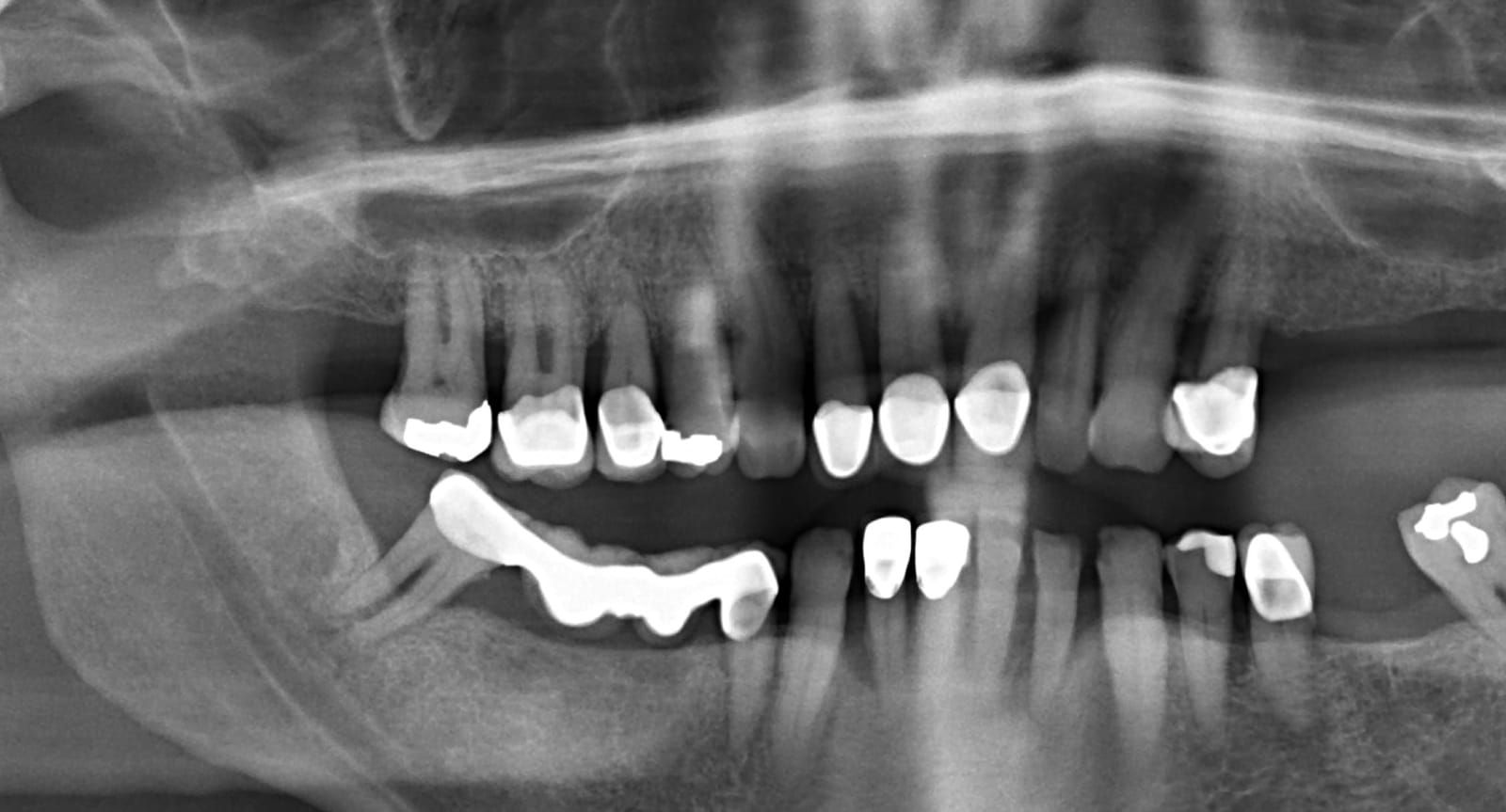
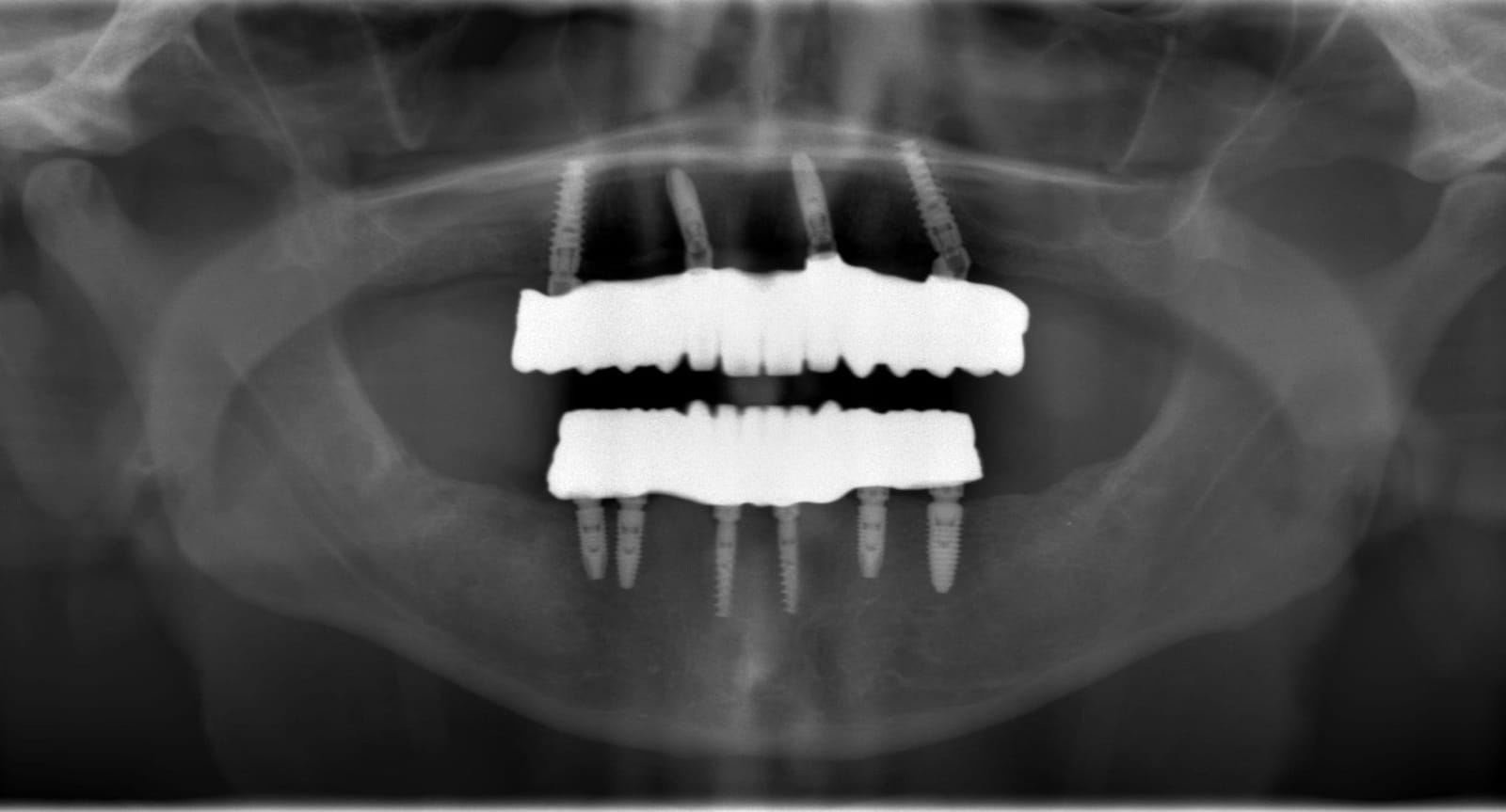
The radiographs said what the mouth had only been hinting at. Bone support in retreat around the key teeth, failing roots beneath the old bridgework, and not enough sound foundation left to justify rebuilding tooth by tooth.
So the question changed. Not which teeth can be saved, but what the next twenty years should stand on.
He already knew the answer, which made the conversation an easier one than it usually is.
The radiographs
Designed first, then built in one material
He wanted a fresh smile, not a reproduction of what he had been living with. So the teeth were designed first, with his input, and the implants were positioned to serve that design rather than the other way around.
He went straight into provisionals and lived in them while the implants integrated. That phase does two jobs: his mouth adapts to teeth in new positions, and we learn what the finals need to know. Form, function, phonetics, aesthetics. Only then were they made.
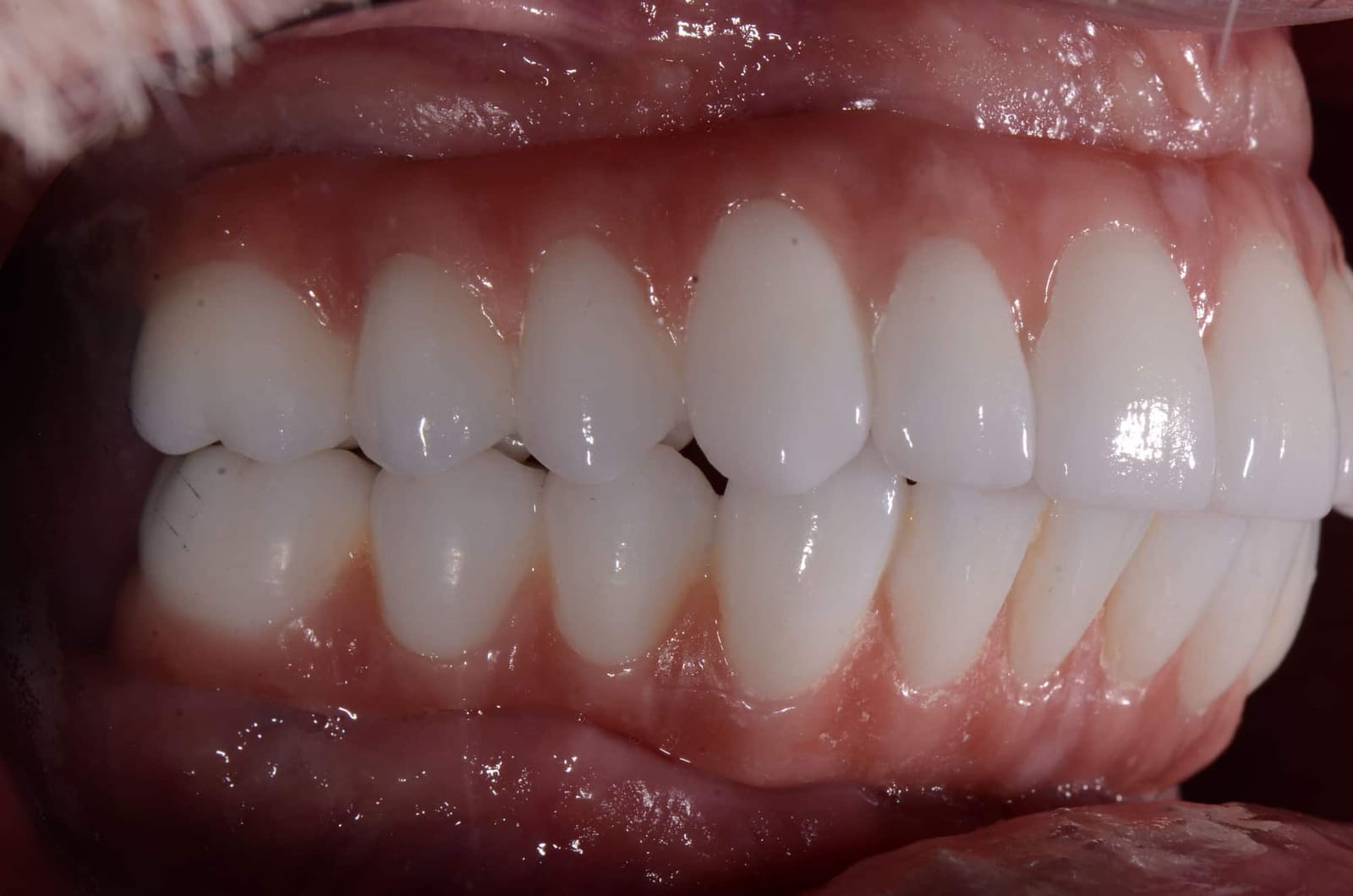
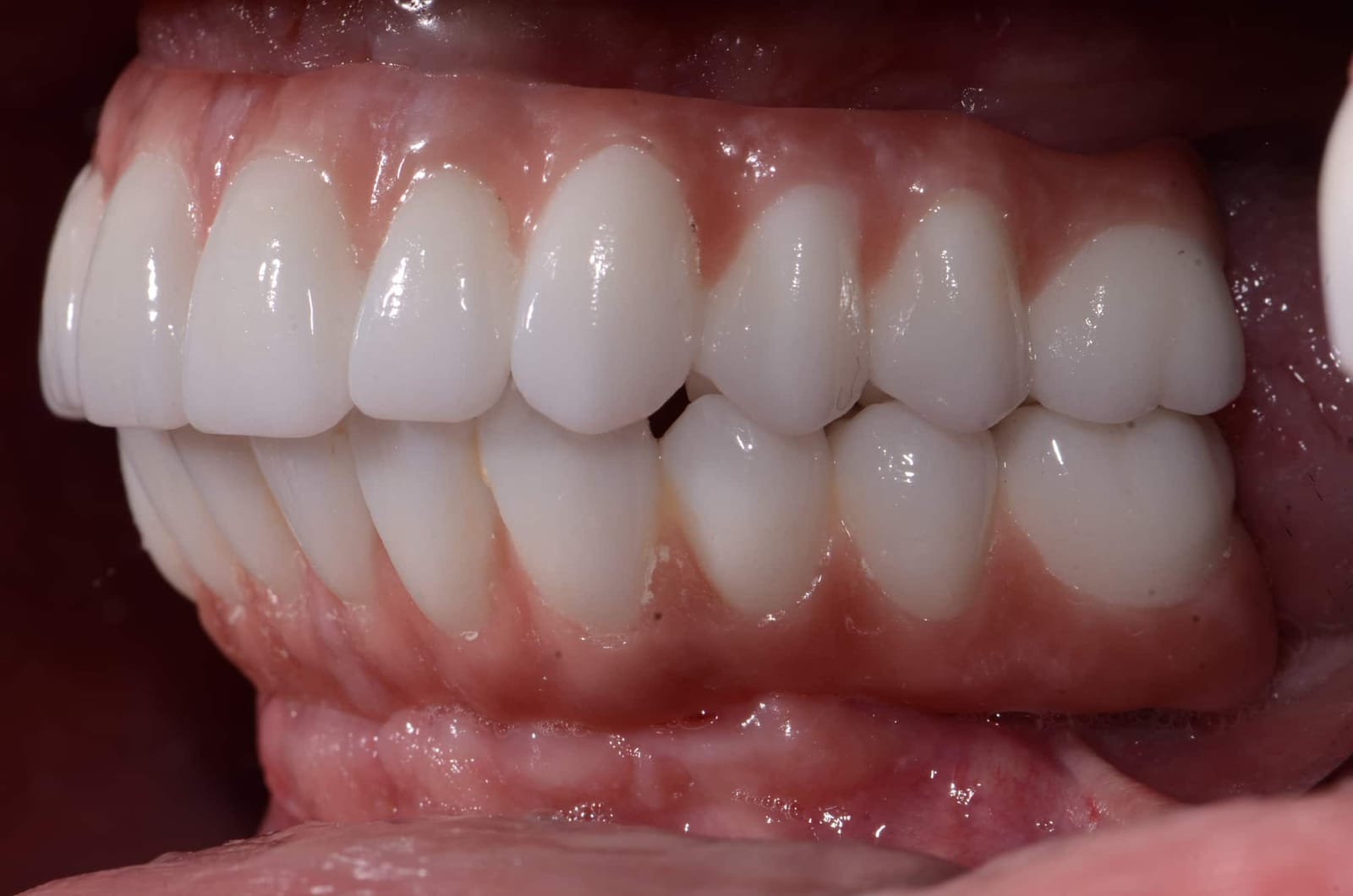
Layered porcelain chips. Acrylic wears. Pink composite stains. Every one of those failures happens at a junction between two materials, and monolithic zirconia has none — each arch is milled from a single blank, colored through its depth and polished rather than layered. What is not there cannot chip off.
Hard against hard carries its own risk, driving load into the jaw joints if handled carelessly. So both arches were designed as one bite rather than as two prostheses: which teeth meet first, how the front teeth guide the jaw, where force is lightened on purpose. The material is not the decision. The occlusal design around it is.
Ten years on, a mouth with one age again
This was among the earlier monolithic zirconia full arch cases, made when the material was arriving rather than established. Dr. Reshad was part of that movement. What is now the best documented full arch ceramic available was, at the time, a judgment made ahead of the field.
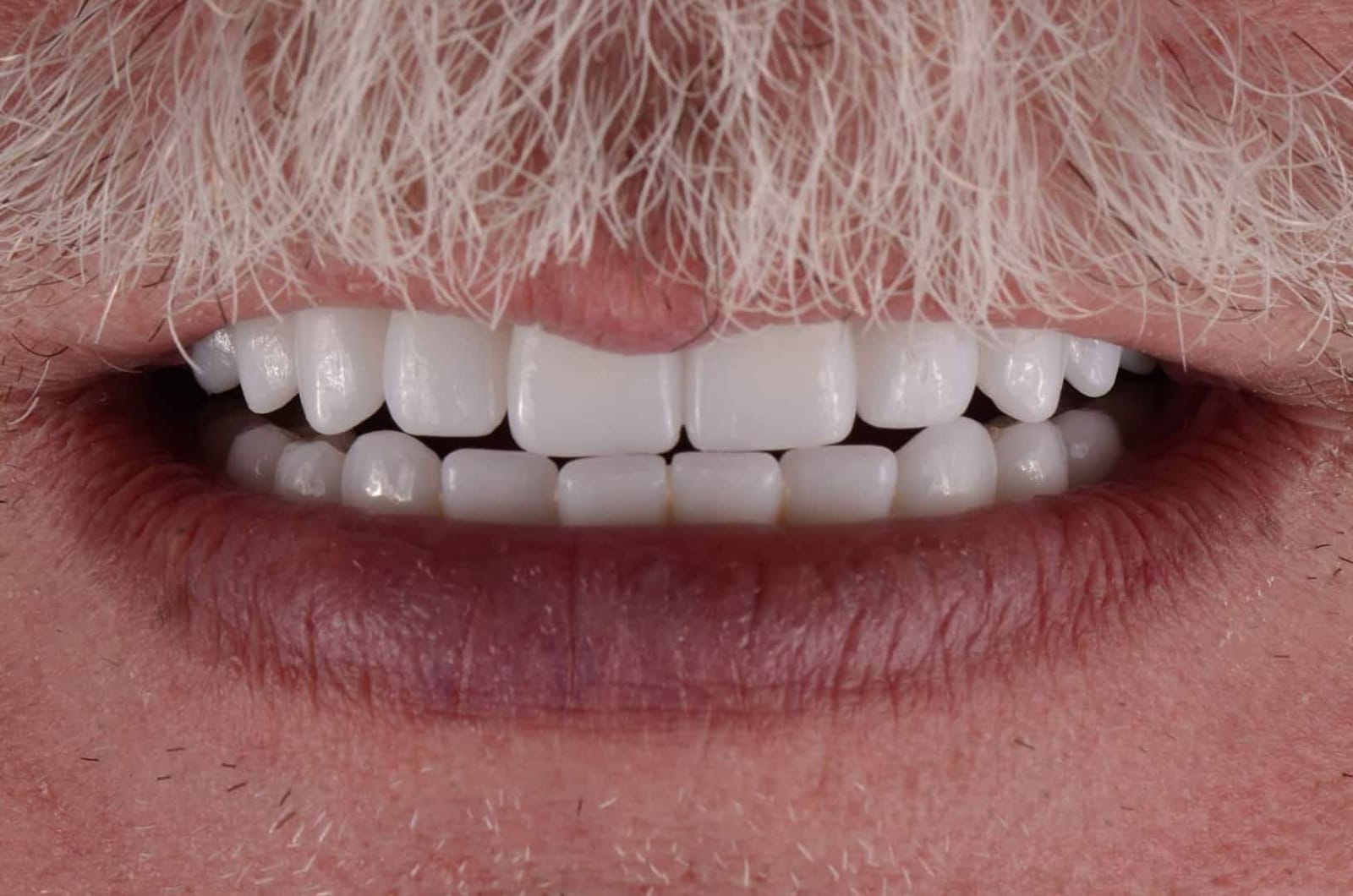
The decades of mismatched dentistry are gone, and the cycle of patch and re-patch with them. The breath is gone. The taste is gone. What he has instead is cleanable as a single surface and repairable at the screw rather than at the tooth.
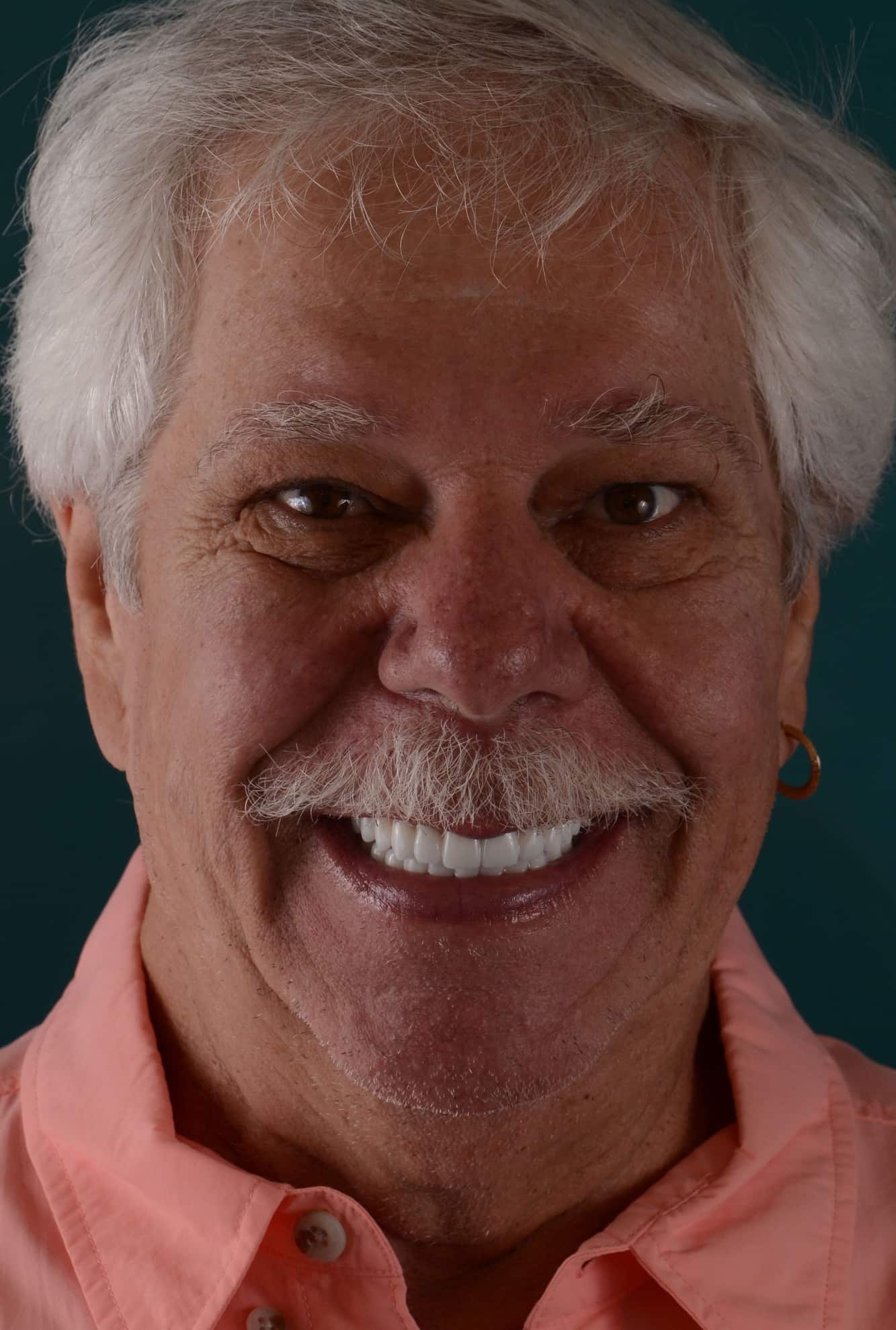
Nearly ten years on, he is functioning well in it. The smile no longer needs managing.
The finished work
Choosing the material is the easy part
Anyone can specify zirconia. It is the most requested material in implant dentistry.
Knowing how to run it in both arches against itself, how to design the guidance so the joints are protected, how to contour the underside so it stays clean and speech works, and how to prove all of it in a provisional before anything becomes permanent, is a different discipline.
That is the difference between a material and a result.
Before and after
The patient, on camera
Every case is planned around one person's anatomy. Individual results vary, and what was right for this patient may not be right for you.