Case 29 · Implants · Reconstruction
No More Dentures
She had been in loose dentures for years.
Which is a particular kind of daily management. You learn what you can eat and what you cannot risk. You learn how to laugh without committing to it. And you carry, permanently, the awareness that the teeth in your mouth are not attached to you.
What she wanted was teeth that were.
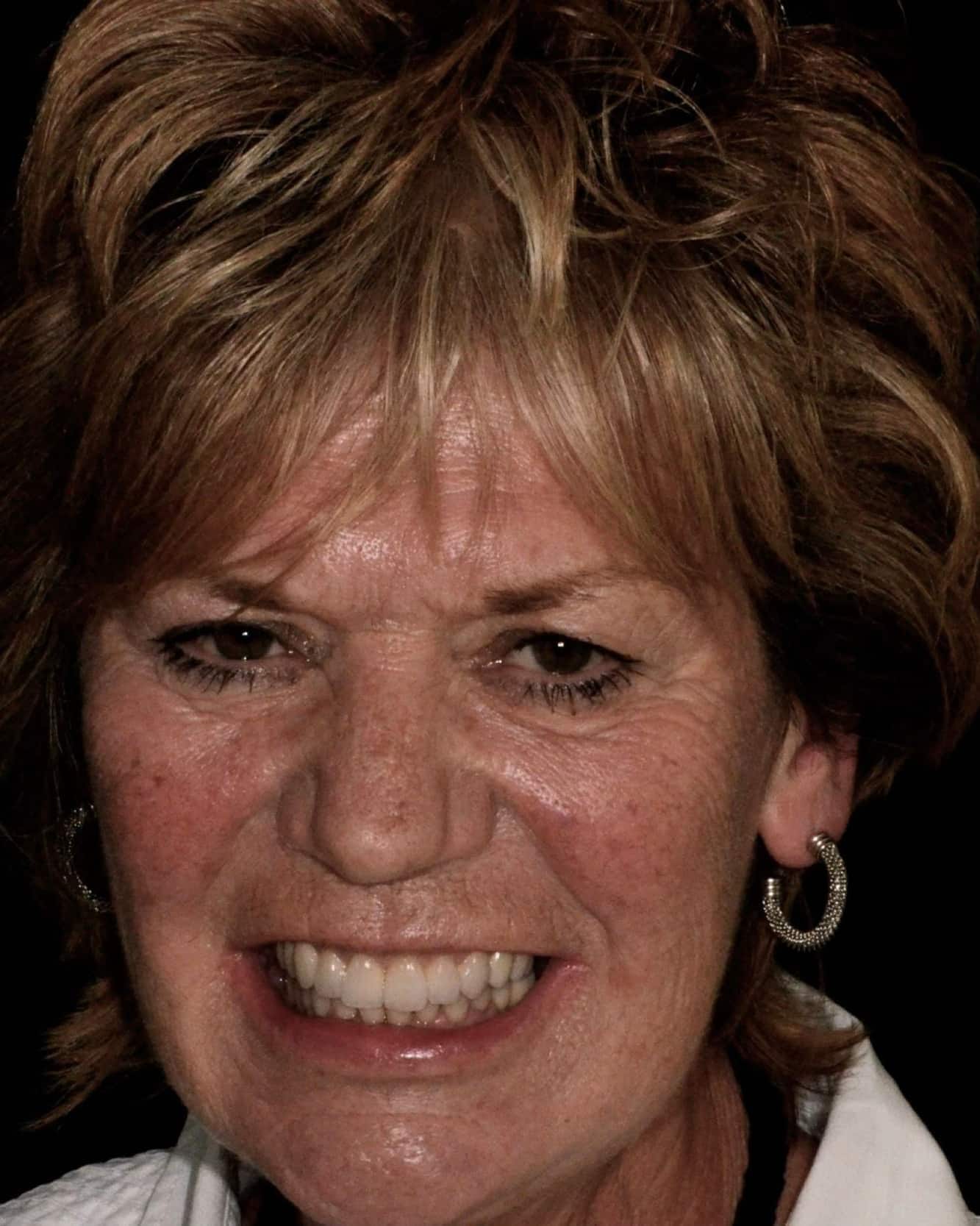
Before and after
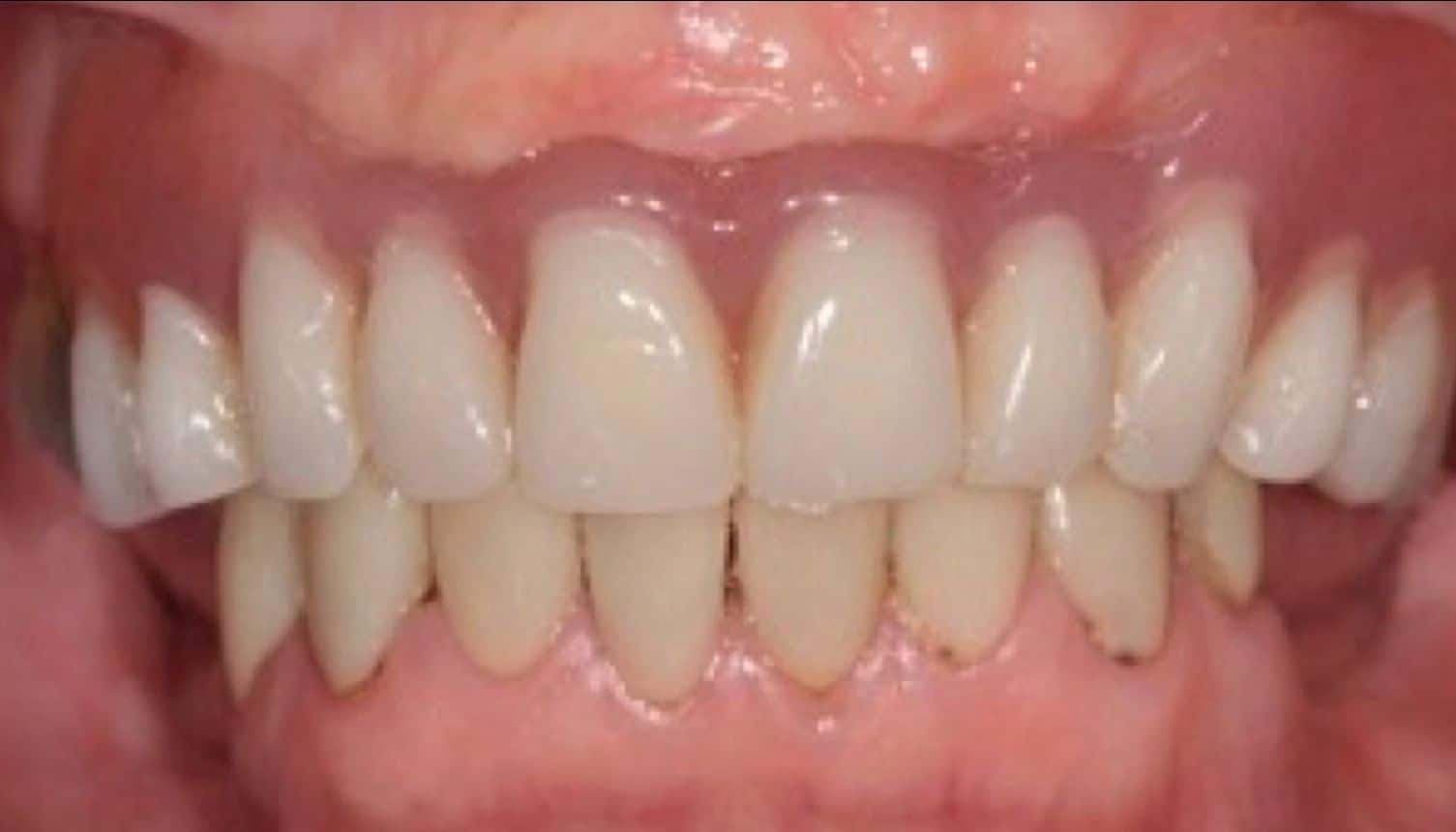
A jaw relationship that rules things out
She also had a severe jaw discrepancy, and that is what made this case genuinely difficult.
When an upper jaw loses teeth the bone does not simply thin. It resorbs upward and backward, retreating away from the lip it used to support. The profile flattens, then begins to fold inward. In her case that process was well advanced, so where her bone now sat and where her teeth needed to be were two quite different places.
There is an angle between the nose and the upper lip that records this. Hers measured around 155 degrees: a profile asking for more support than her remaining bone could give.
The question was not whether she could have new teeth. It was whether fixed teeth were honestly possible at all.
Placing implants where the bone happens to be
Here is what happens if you plan this case from the anatomy rather than from the teeth.
You place the implants where the bone currently is, high and far back. The tooth then has to reach down and forward to meet the smile, and between the head of the implant and the neck of the tooth you create a large shelf.
That shelf is a food trap. Permanently. We see patients who have arrived with exactly that, and it cannot be cleaned, so it collects, and the tissue around it suffers for the rest of the restoration's life.
It is not a complication. It is a planning decision, made once, that the patient then lives with.
Reading the face before planning the teeth
So the planning started from the ideal tooth position, where her teeth should be, and everything else was worked backward from there.
That requires a sagittal plane evaluation: the jaws studied from the side, mounted and measured, establishing how far forward and how far down the new teeth have to sit, and what has to happen to the bone to make room for them. It is part of prosthodontic training precisely because you cannot see a three dimensional problem from the front.
We also walked the honest menu with her, including the routes we advised against. Reducing the ridge to create room. Major jaw surgery to move the whole maxilla forward. Bone grafting, slow and not always stable in this pattern of loss. A removable prosthesis with a flange to prop the lip, which is honest and reversible and removable. Or continuing to patch, which is the road she had already been on.
And the sentence we say out loud because it is true: if a fixed design cannot be cleaned, cannot be supported, or cannot support the lip, then the right answer is a removable prosthesis. The plan has to survive that sentence.
Hers did.
Why the emergence is flat
The critical instruction to the surgeon was not only where to place the implants. It was how deep.
Placed deeper, to the level the plan demanded, the restoration emerges from the tissue almost flat rather than climbing out of a bulge. That is what makes it feel natural, and it is what stops food collecting at the junction between the restoration and her own gum.
The surgical guide was made from the analysis. The surgery executes the drawing.
Provisional
Her smile in the provisional
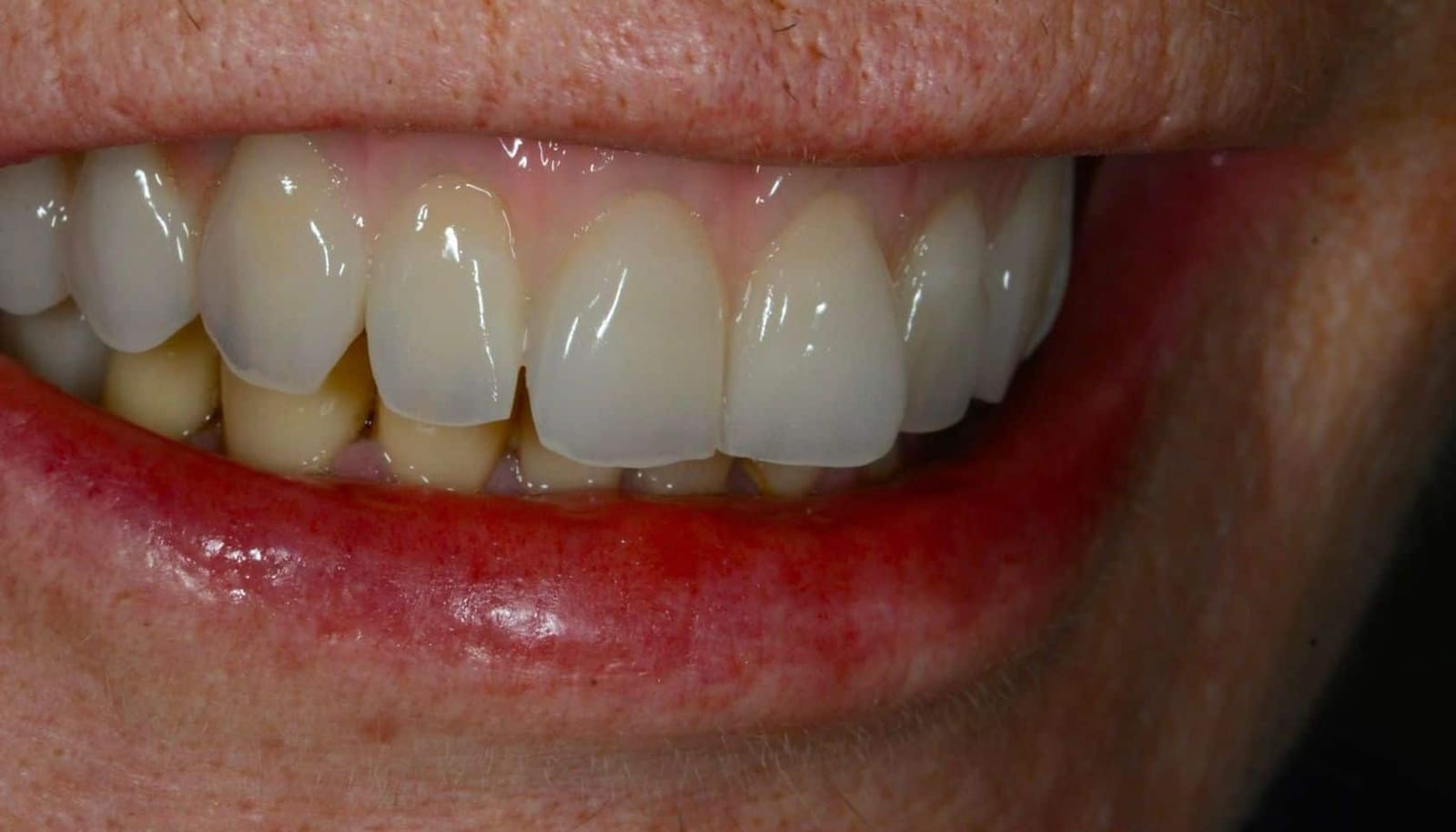
She did not leave without teeth
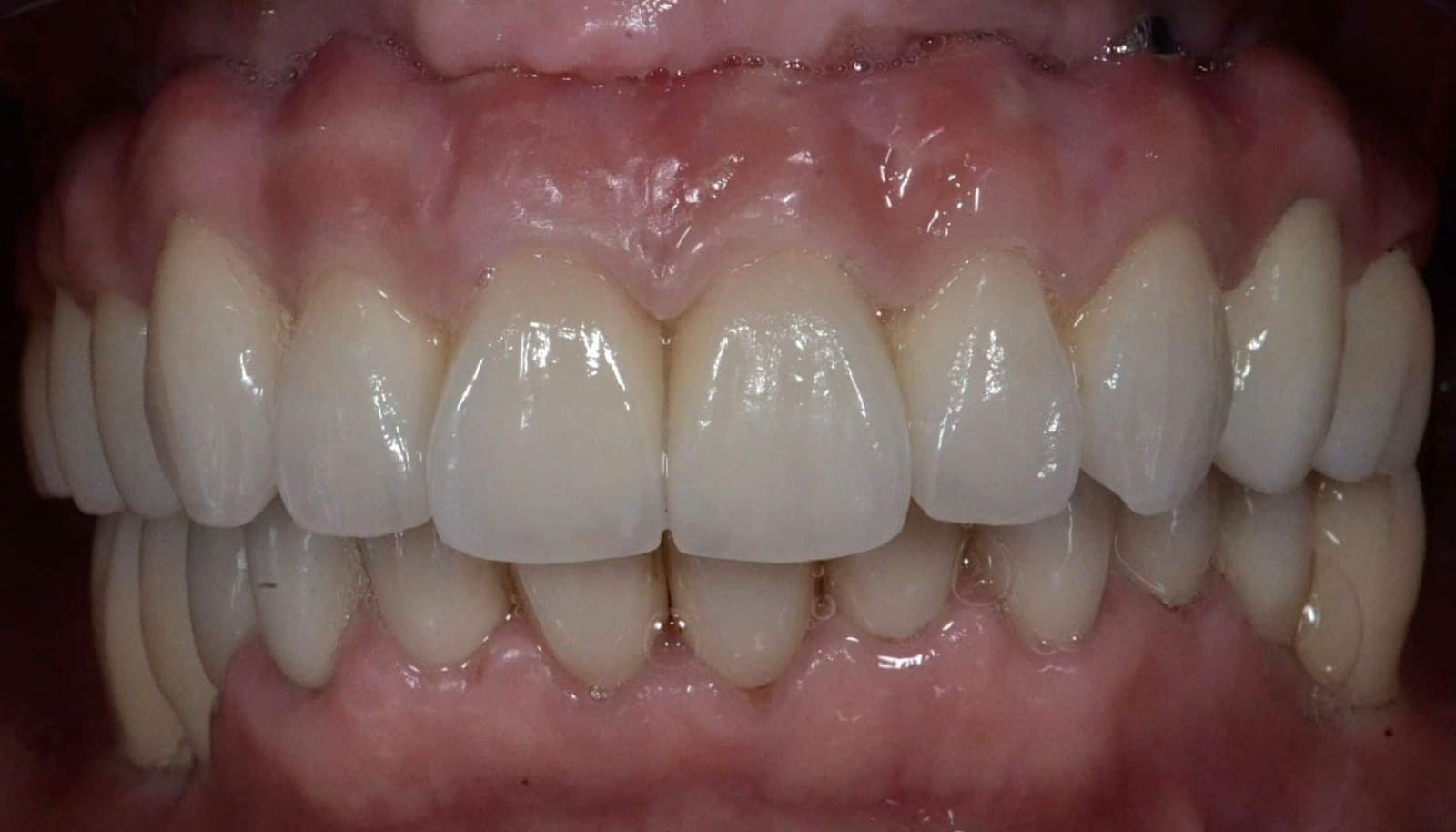
The implants were loaded immediately. Within a day of surgery she had fixed provisional restorations and was functioning.
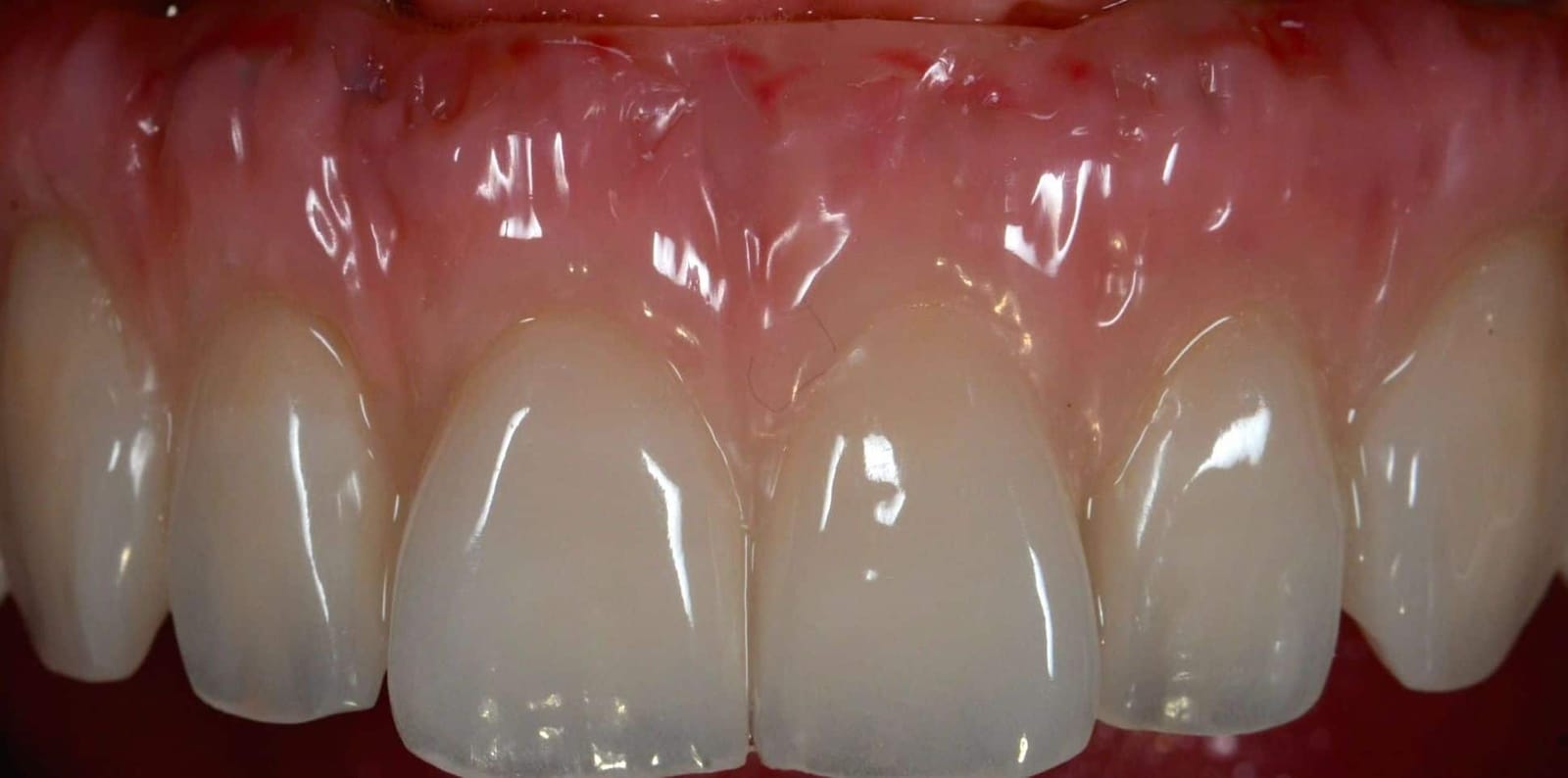
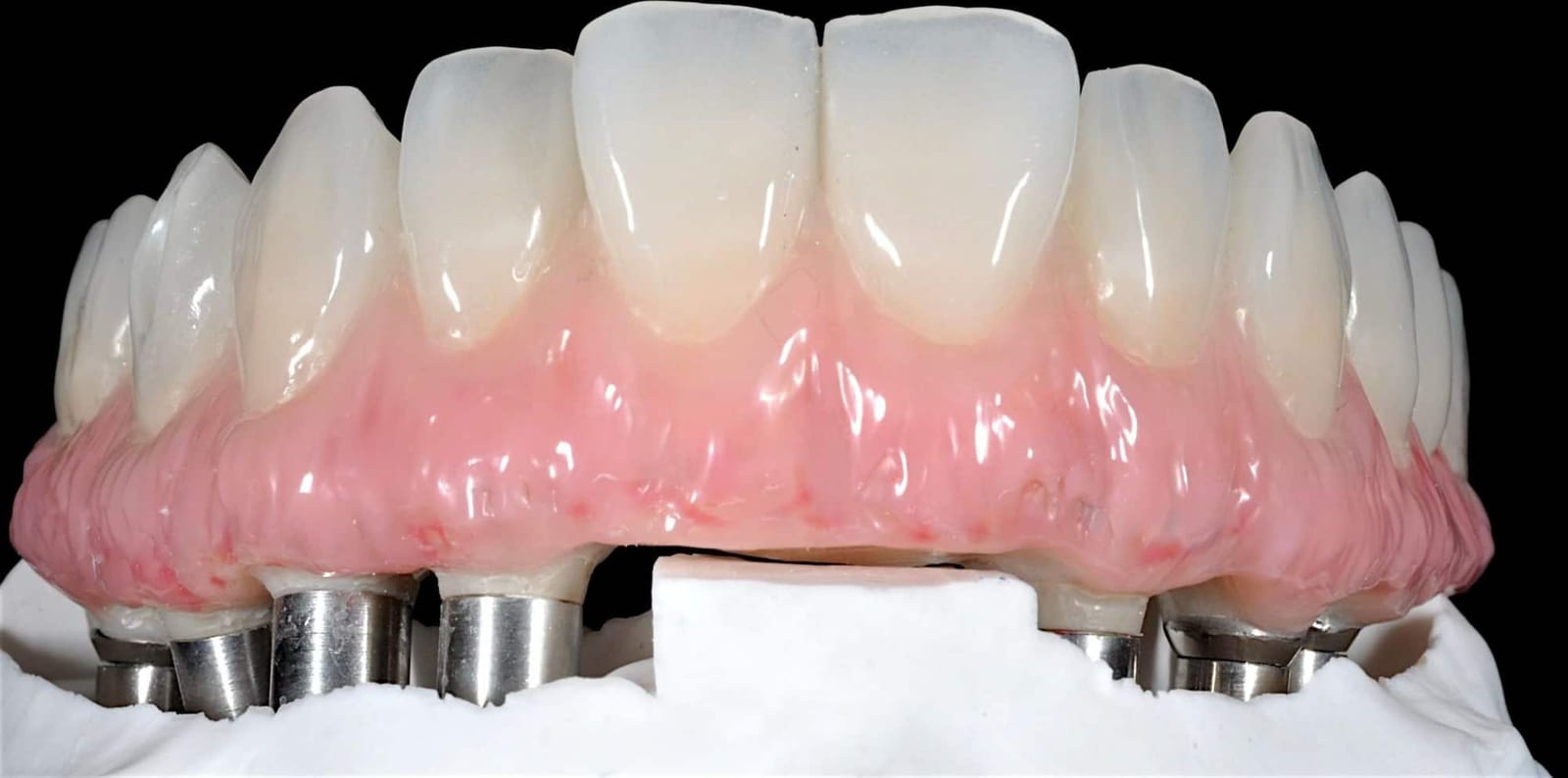
Those provisionals are not placeholders. They are made by master technicians, to Dr. Reshad's directive, to a standard that lets a patient live properly while wearing them. Hers carried aesthetics, form, function and phonetics that could be tested in her own life over the following four months while the implants integrated.
They were also shaping the tissue the whole time, sculpting the receiving sites the final teeth would emerge from.
The provisional
Taking it off to check the theory
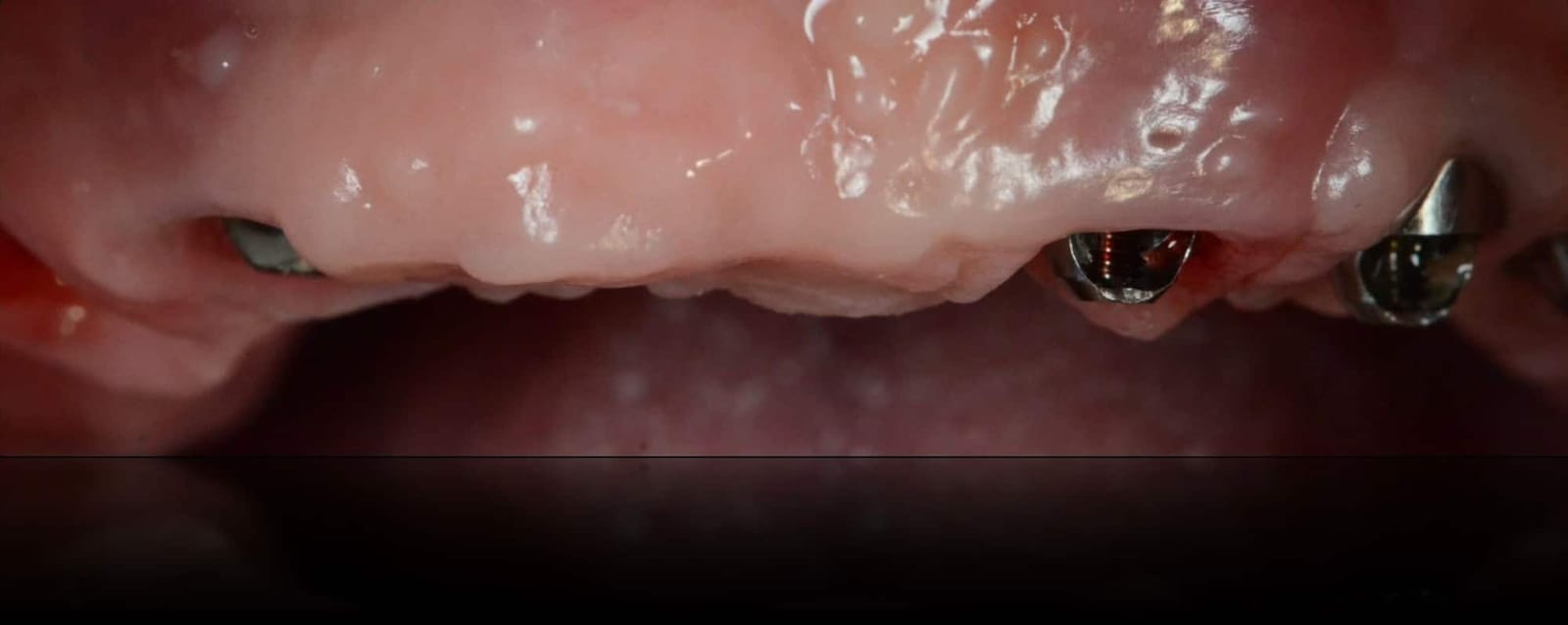
At four months the provisional came out, which is how you find out whether the plan was right rather than assuming it.
The tissue was healthy. No redness, no inflammation, strong and well formed gum with the emergence profiles exactly as designed.
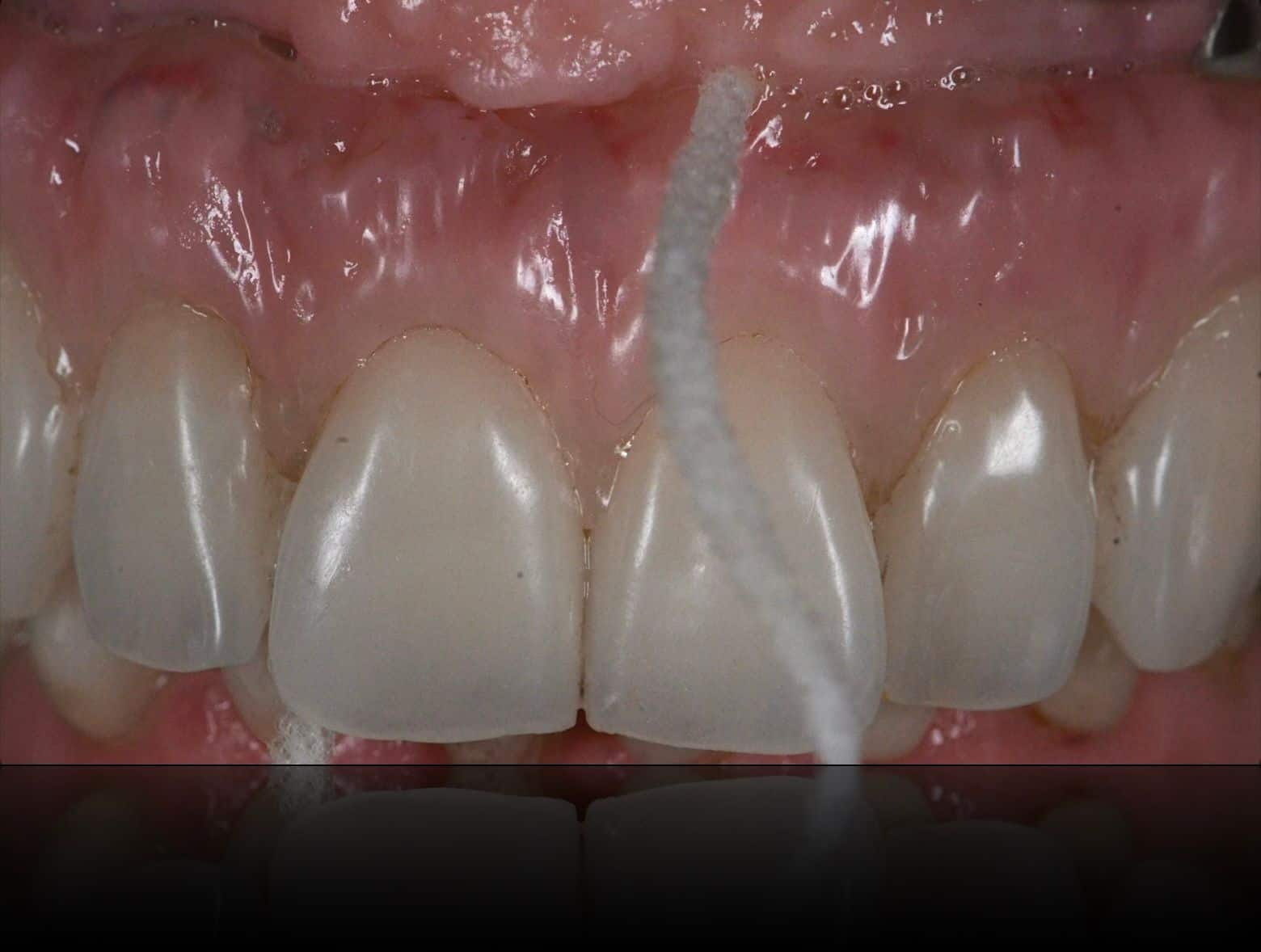
And it was cleansable, which she proved rather than promised. Floss passes through the restoration, and she demonstrated her technique at every checkup. A design that cannot be cleaned fails eventually no matter how good it looks on delivery.
The tissue, four months on
Floss passes through
No deviation from the plan
The wax up for the definitive restoration is an almost exact copy of the provisional.
She had requested no changes, and none were needed, because every parameter had already been tested for four months in her own mouth. Sometimes a case deviates at this point. This one did not.
The definitive was designed at full contour first, with the screw access planned through the teeth and the whole arch verified against the bite, then finished. Nothing about the final shape was left for the last step to discover.
The wax-up, and the definitive on the model
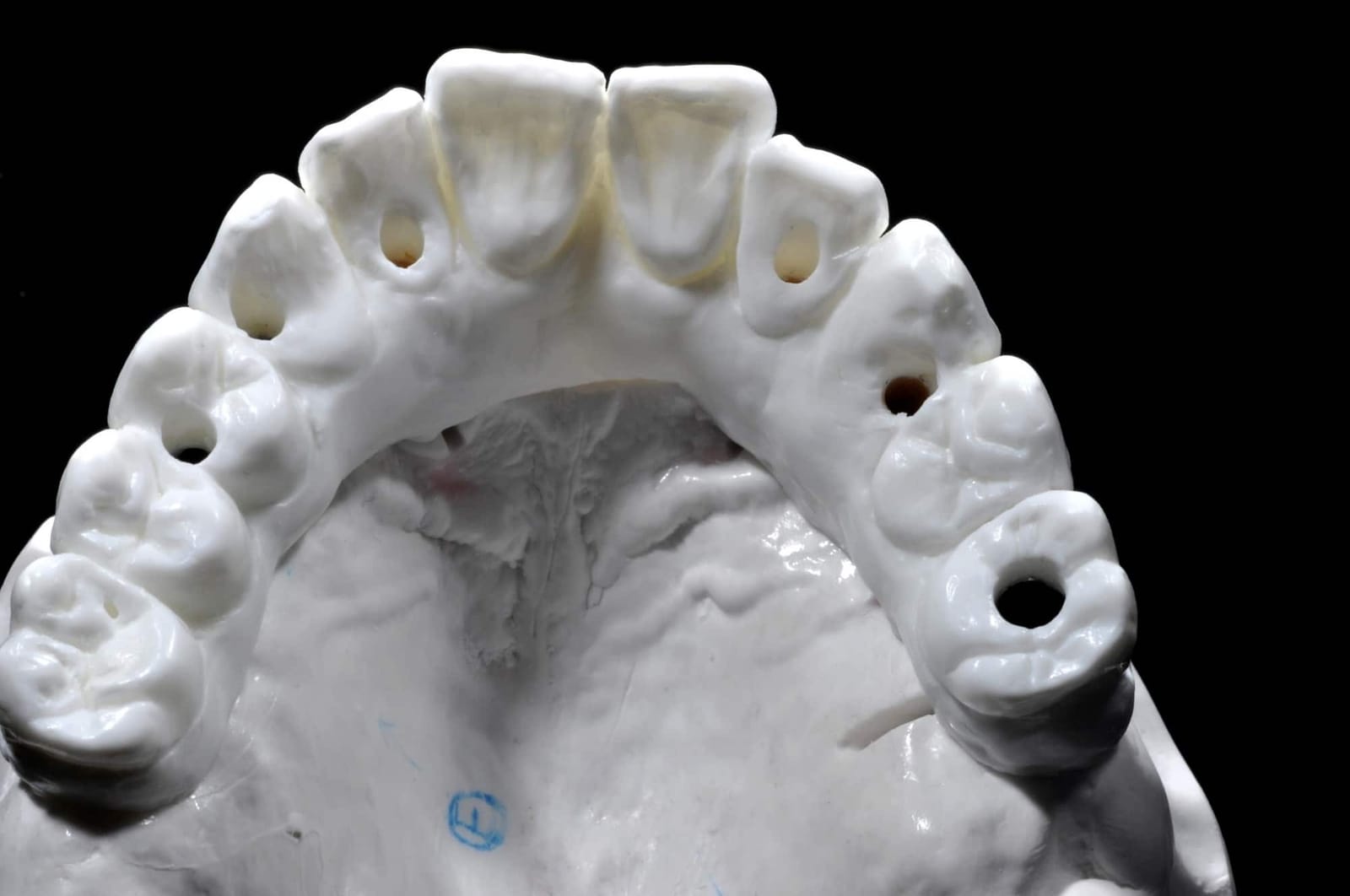
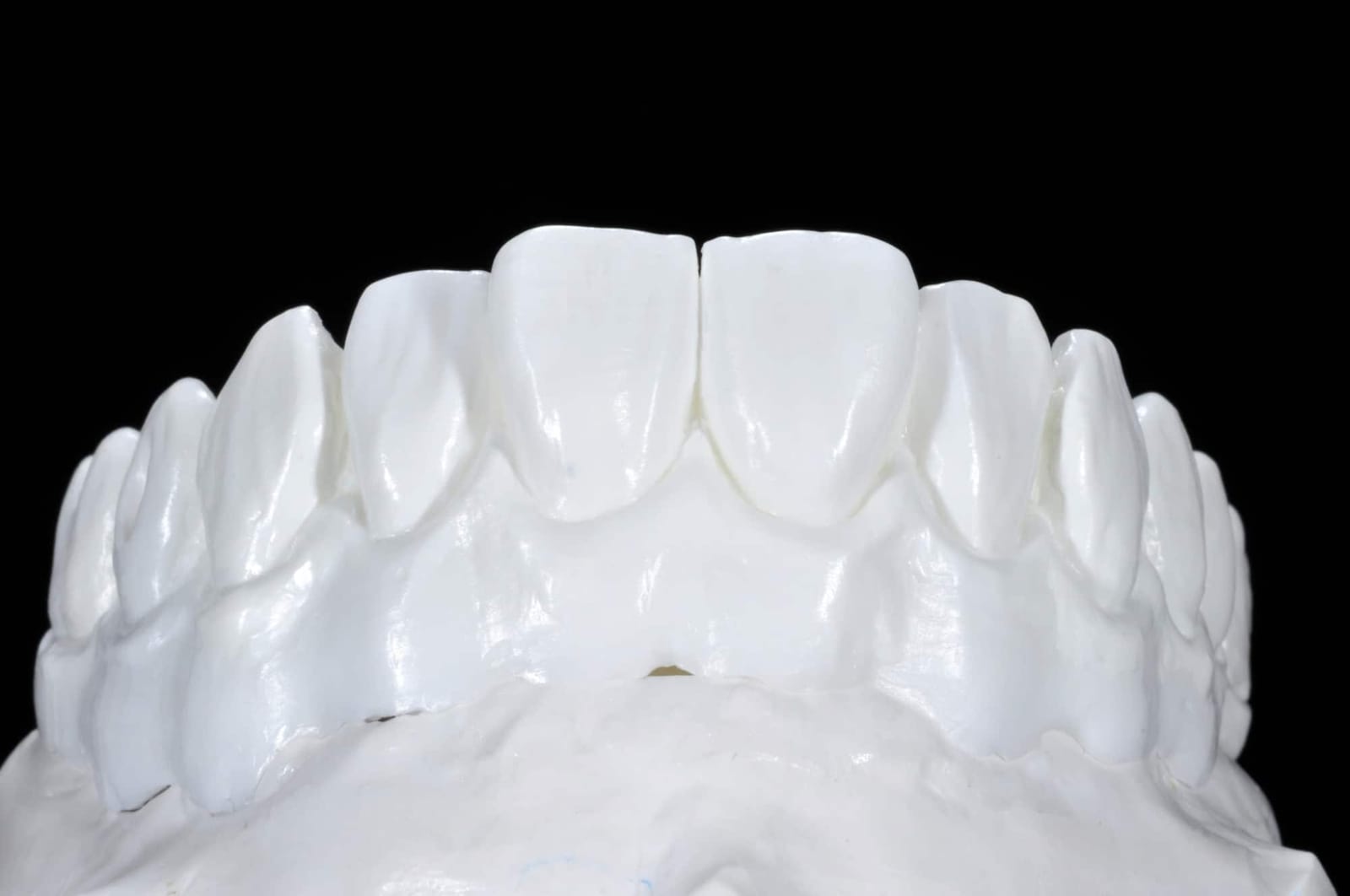
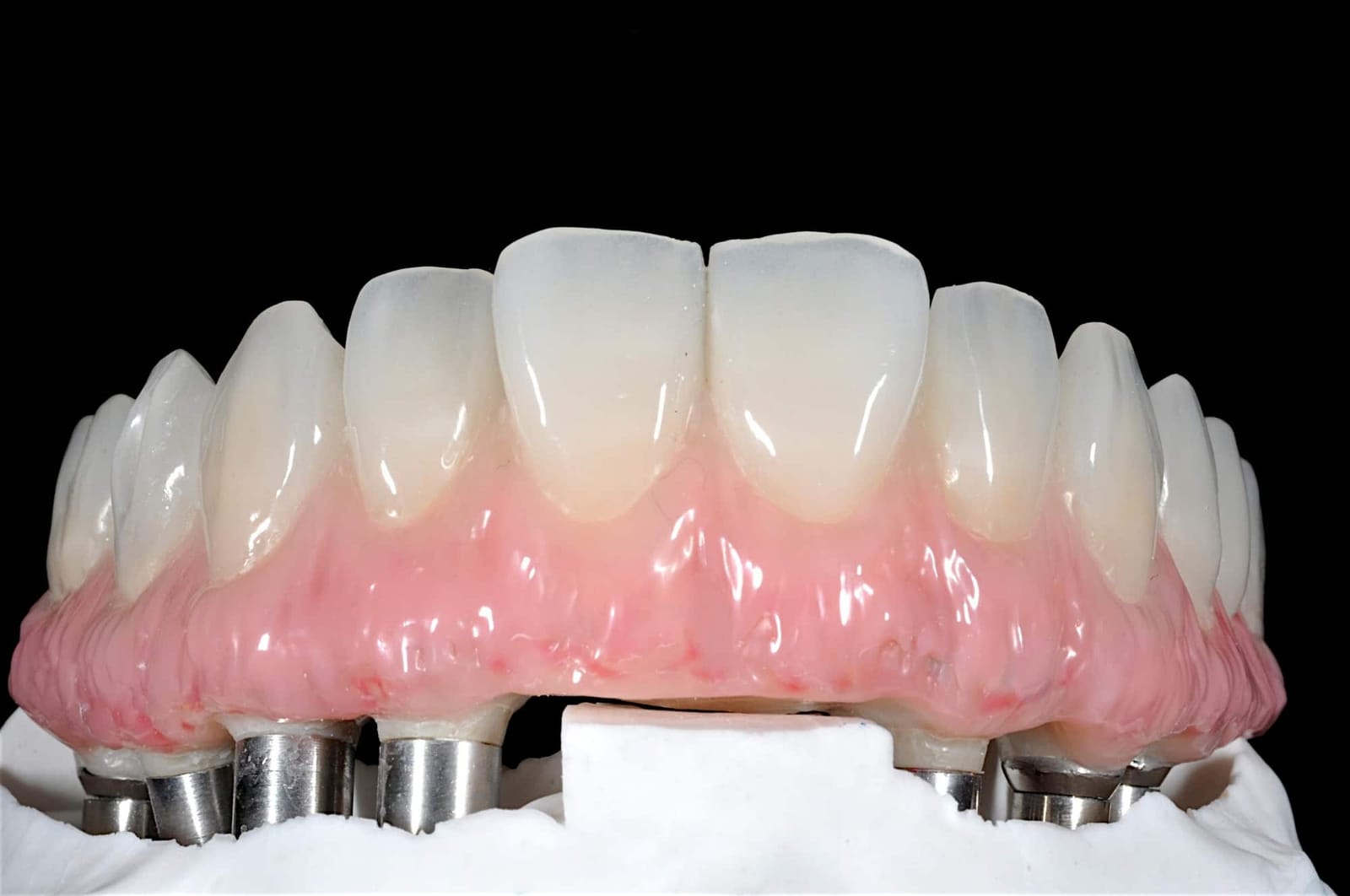
The wax-up, close
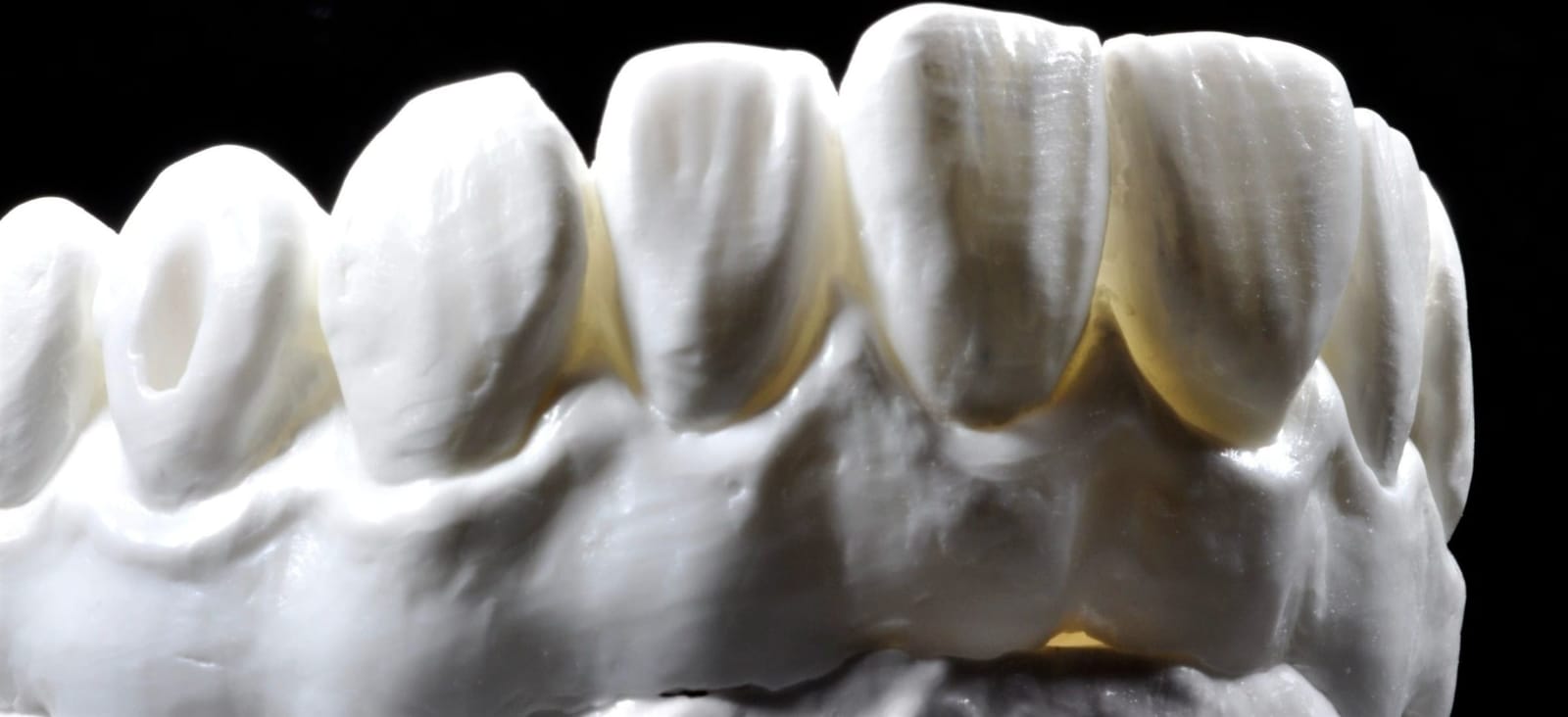
The teeth she had as a teenager
She has the smile she had as a young woman, in the design she chose, fixed and attached to her, as close to real teeth as it is possible to get.
The photographs here were taken five years after treatment. The reconstruction itself was completed fourteen to fifteen years ago.
The definitive restoration
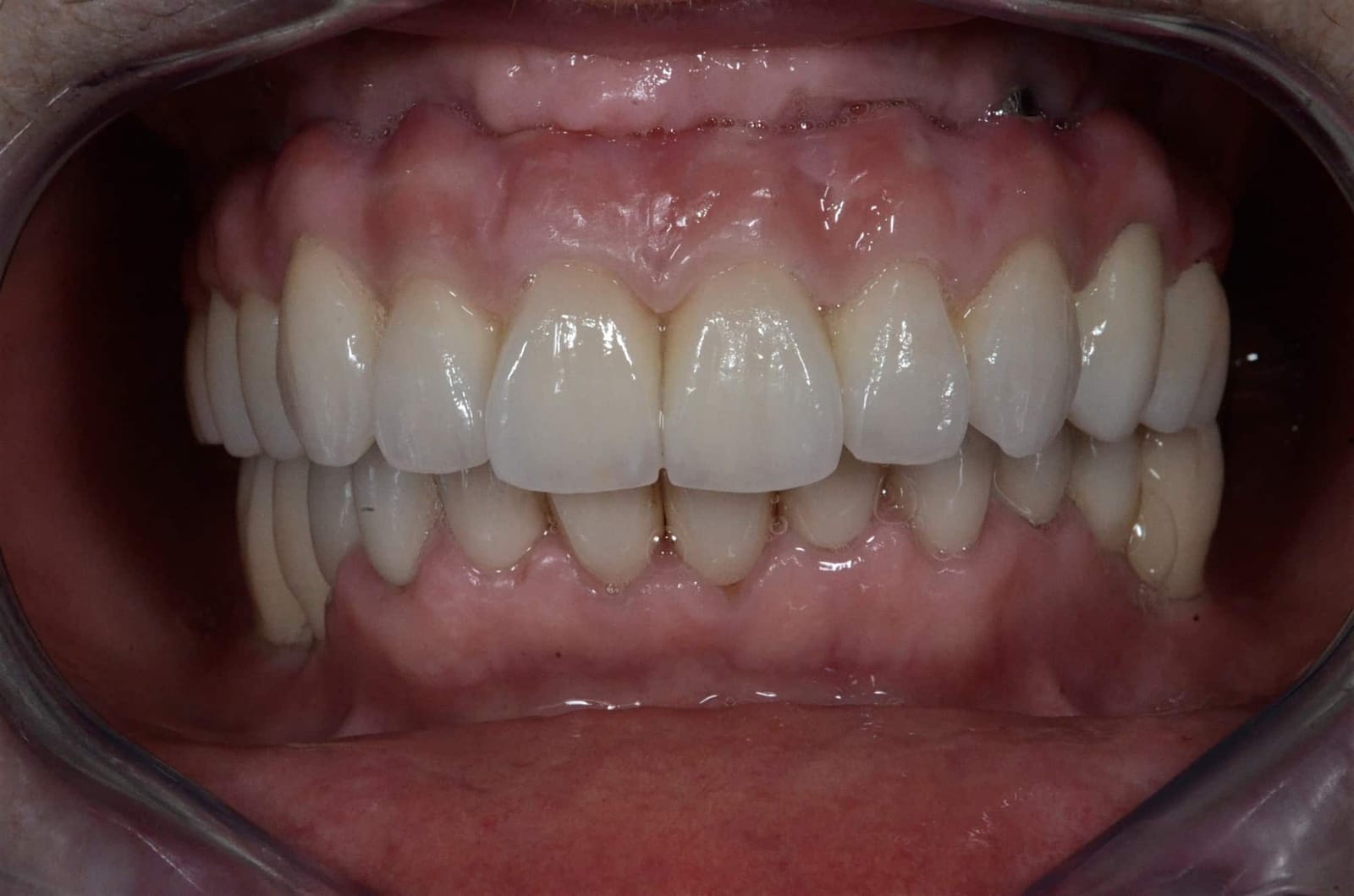
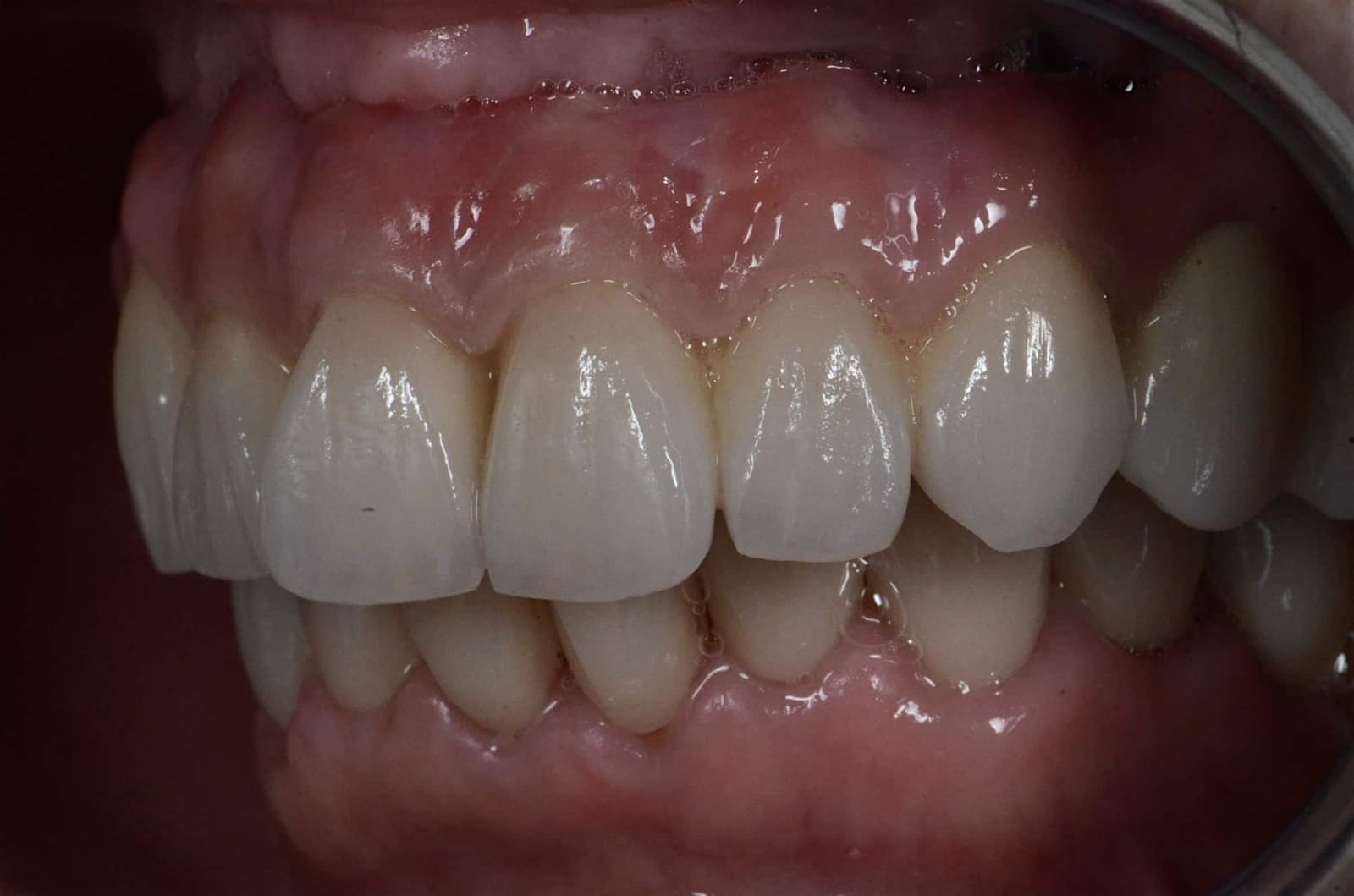
From the side
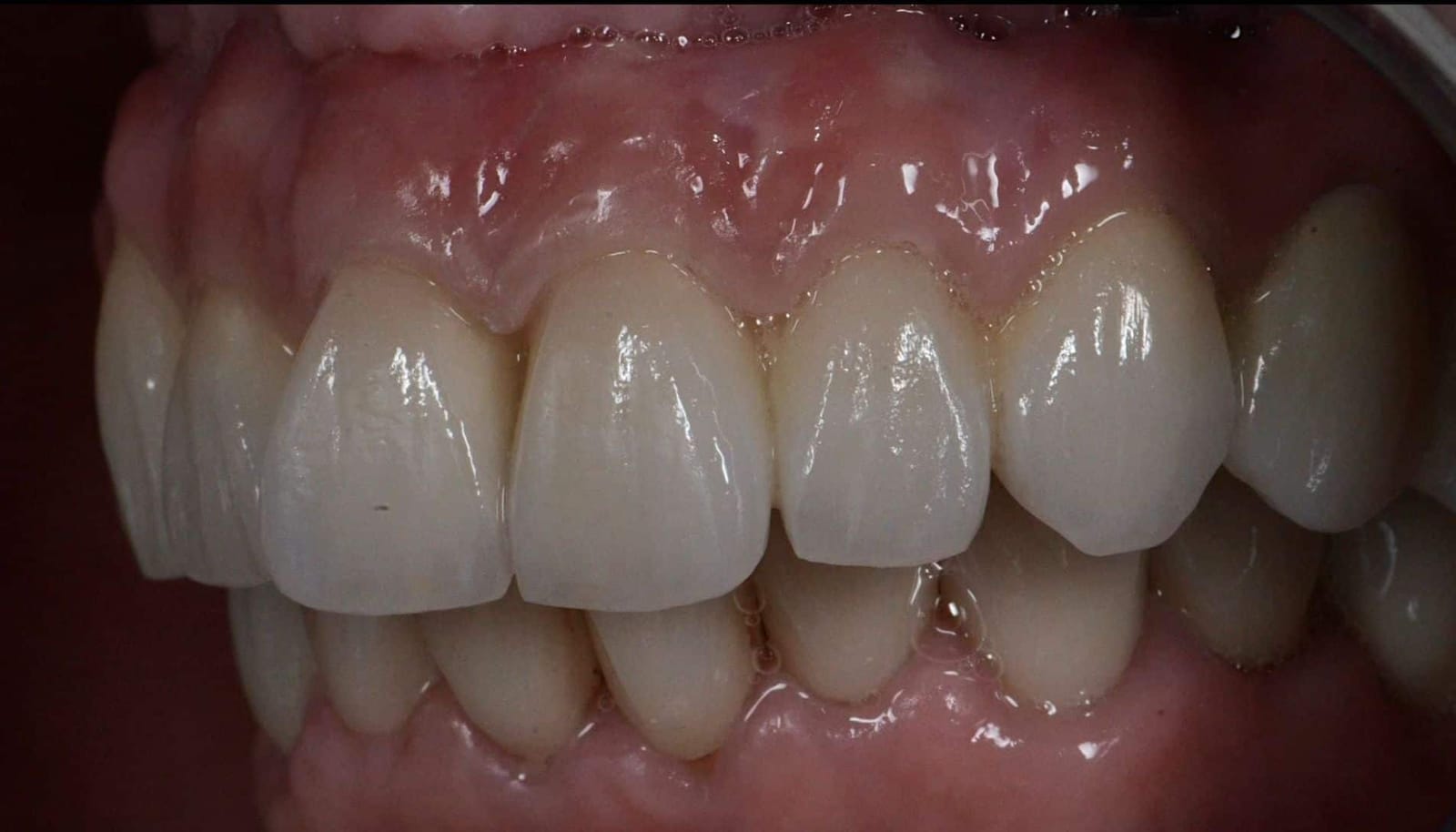
Her face

Nobody should be thinking about their teeth
We hear the same sentence constantly. I cannot socialize. I cannot enjoy my life. It is a barrier.
Teeth should not be doing that to anyone. No one should be spending their attention on their own mouth.
She is confident and she enjoys her life, and her teeth are not a factor in either. That is the entire point of the work.
Before and after

Every case is planned around one person's anatomy. Individual results vary, and what was right for this patient may not be right for you.