Case 28 · Implants · Reconstruction
The Mandibular Case, Published in 2009
He could not eat and he could not speak.
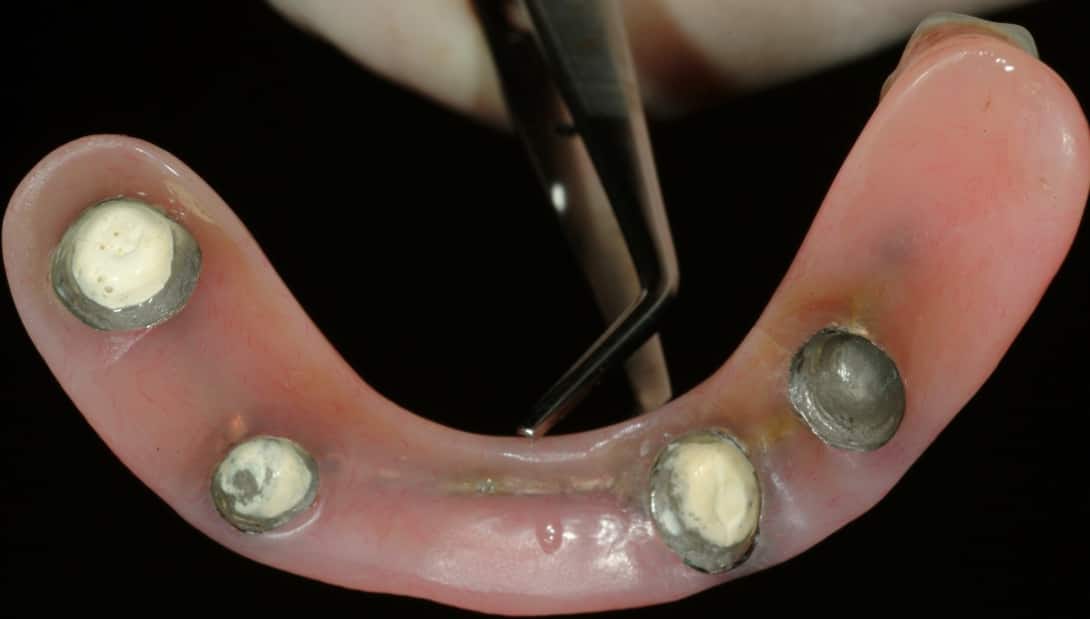
His lower denture was loose, and a loose lower denture is the least forgiving prosthesis in dentistry. There is almost nothing for it to hold onto, so it moves when you chew, moves when you talk, and every year of bone loss makes it move more.
He was fifty nine, and he wanted teeth that stayed where he put them.
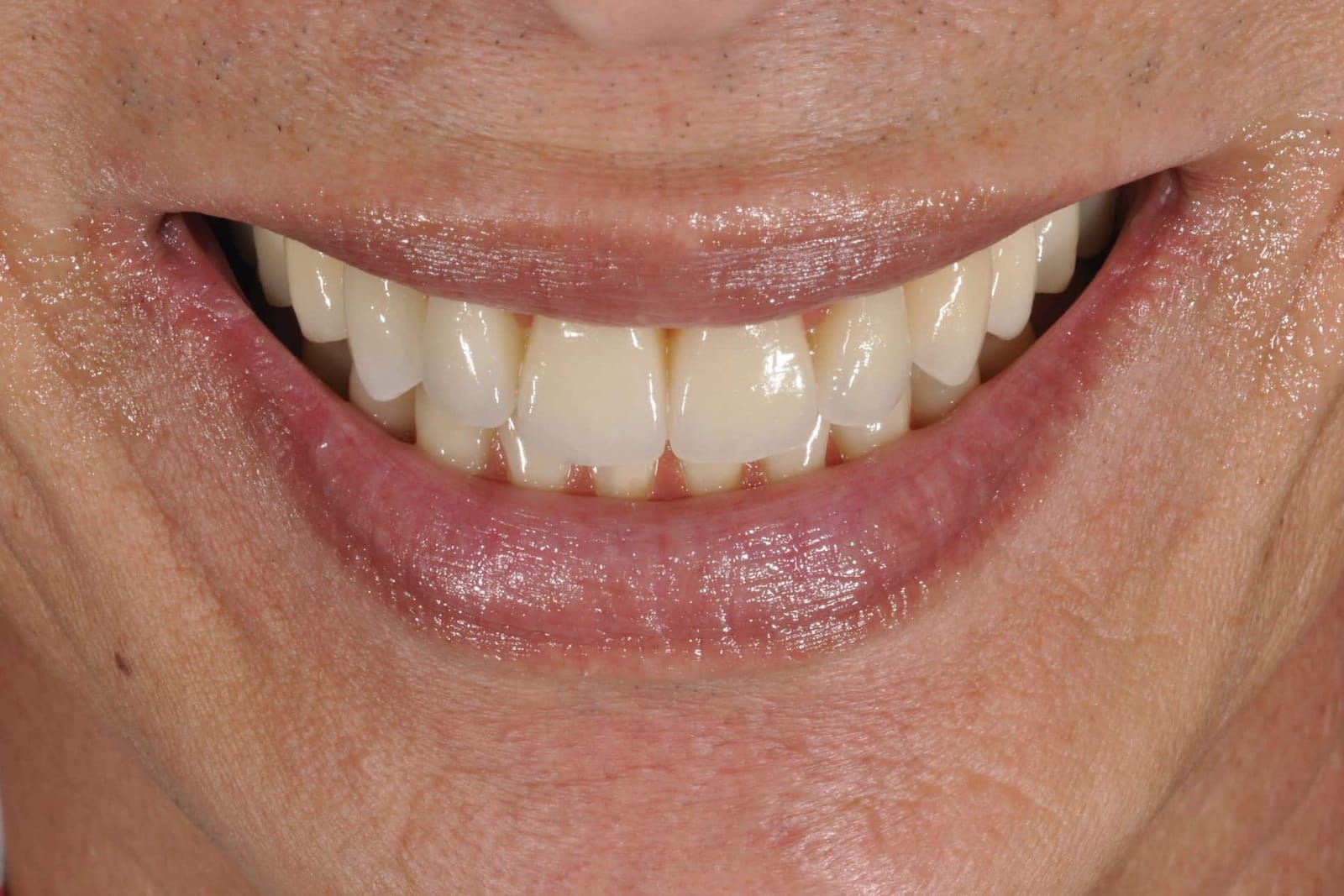
Before and after
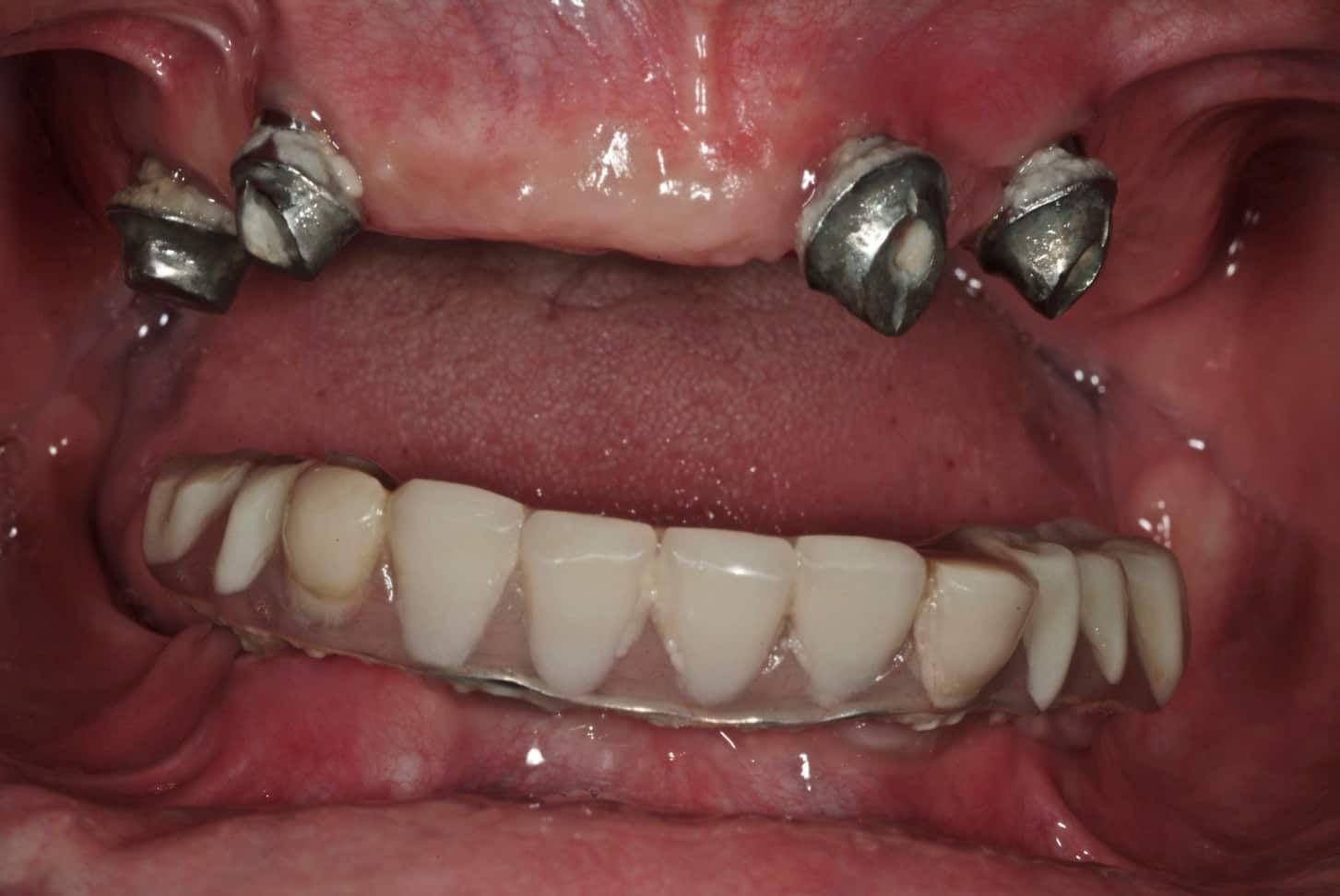
An empty lower jaw against a full upper one
His upper teeth were his own, and intact. That sounds like good fortune and is in fact the complication.
Natural upper teeth generate substantial force, and all of it lands on the lower ridge. An edentulous mandible opposing a complete natural maxilla is one of the hardest situations in prosthodontics, and it is why his denture had never worked and never would.
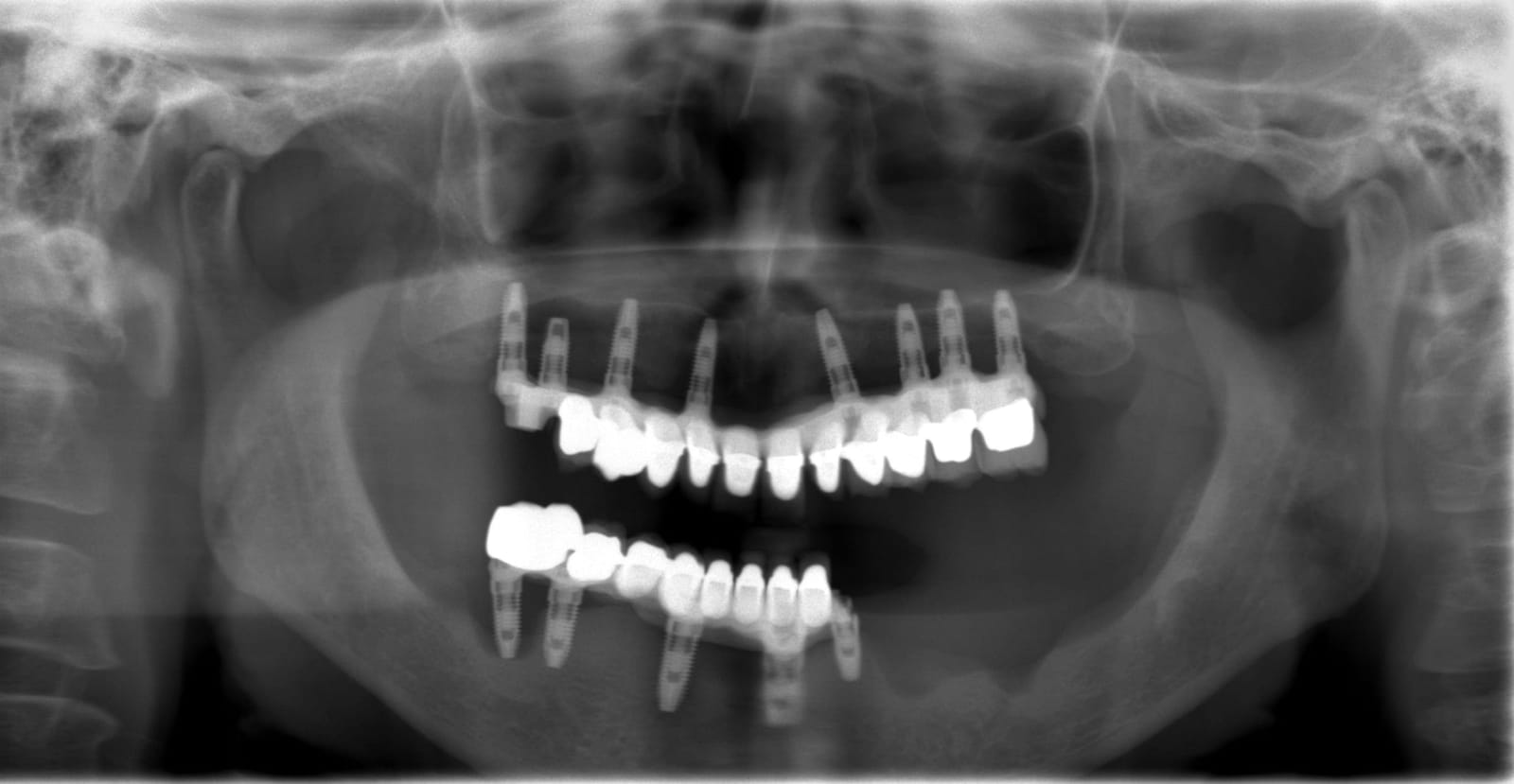
The bone told the rest. The CT scan showed insufficient height and width above the nerve at the back of the lower jaw, so implants could not be placed there at all. Everything had to be anchored at the front, between the mental foramina, and the back teeth would have to be carried out to them.
By the recognized classification, he was the most compromised category of edentulous patient there is.
The old prosthesis
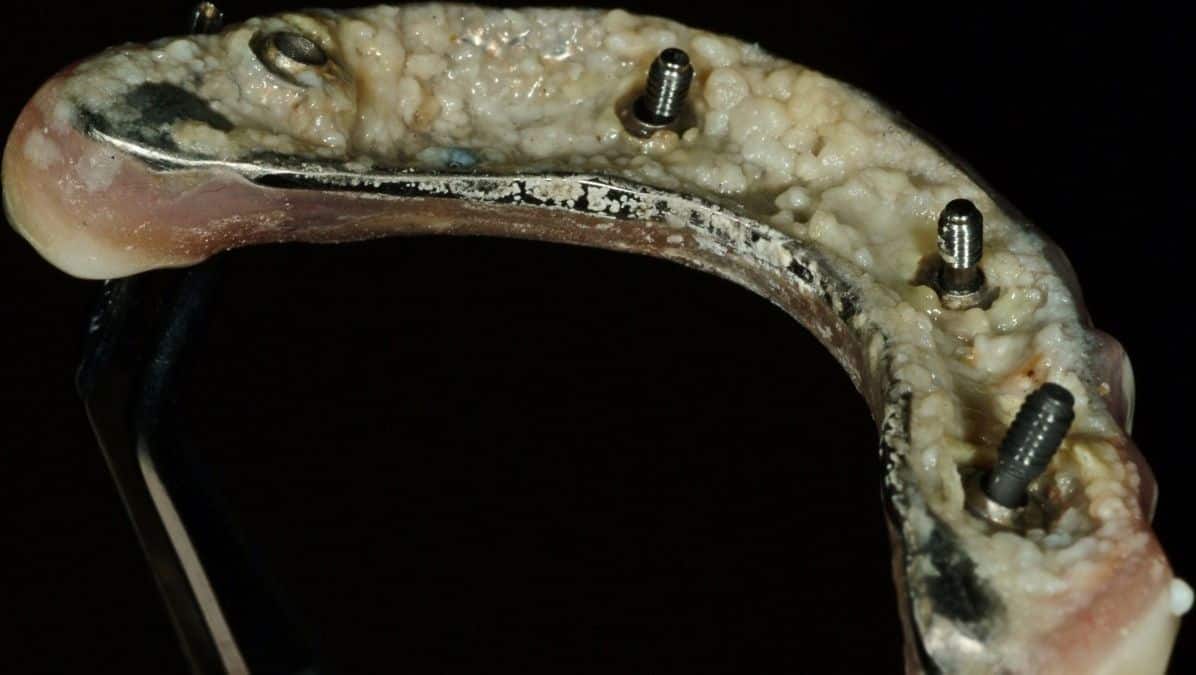
Five implants, and where they sat mattered more than how many
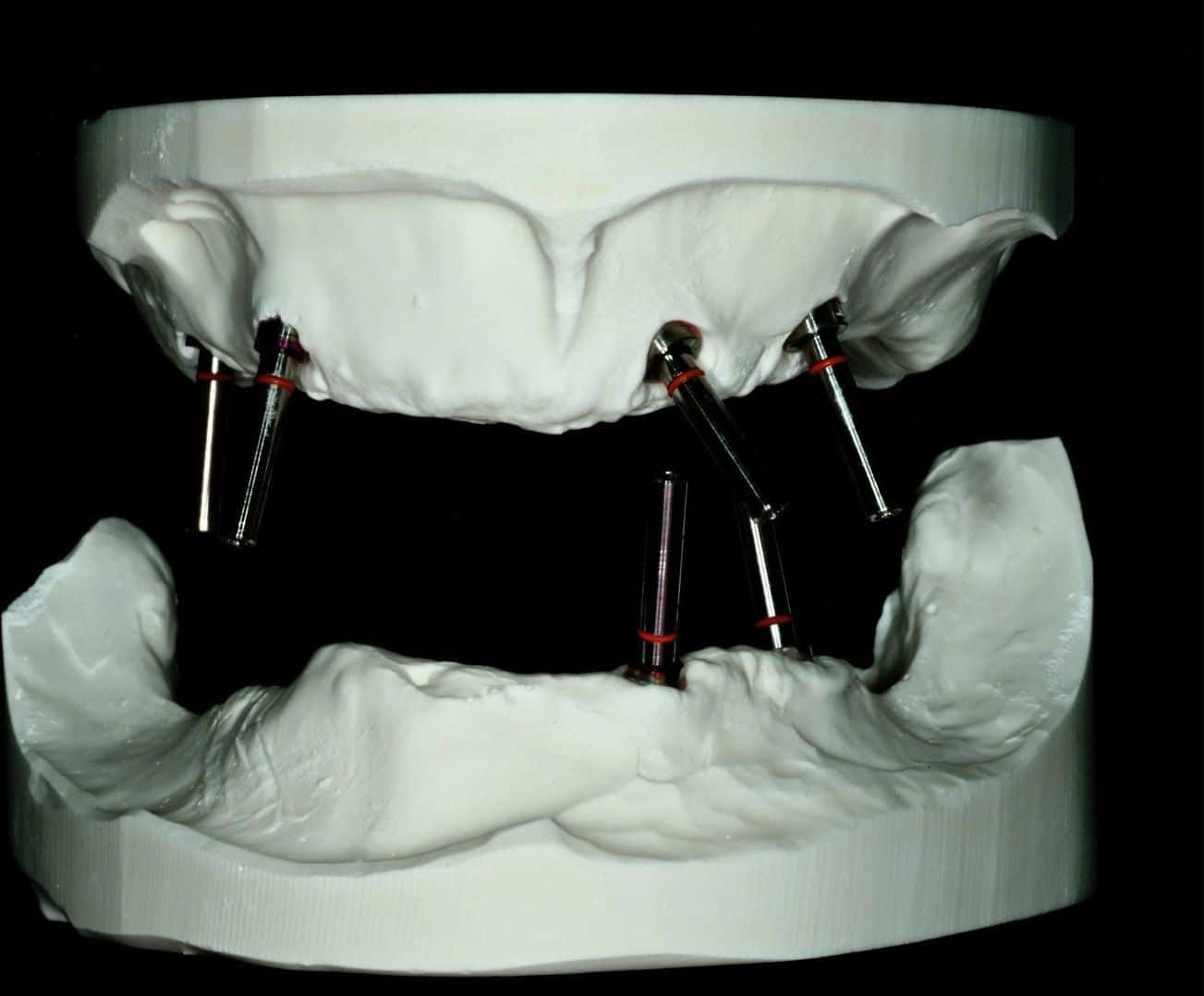
Five implants, placed in the symphysis at the front of the jaw.
The positions were not chosen for convenience. They were spread deliberately to maximize the anteroposterior distance between them, because that spread is what determines how much the prosthesis can safely reach backward and how the forces from those upper teeth are carried.
And they were placed to a surgical guide made from a diagnostic tooth arrangement. The teeth were designed first, and the surgery executed that drawing.
The mounted models
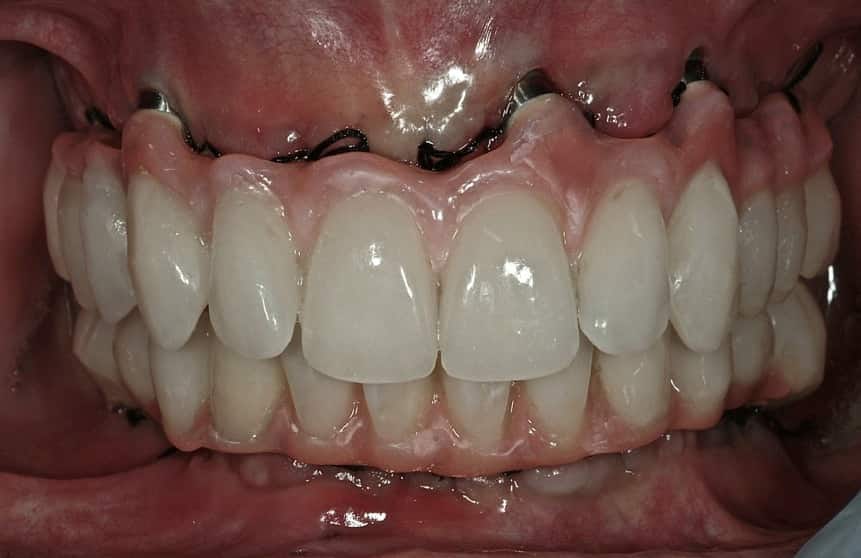
He did not leave without teeth
The implants were loaded immediately. A fixed, screw retained provisional went in on the day of surgery.
After years of a denture that moved, he left with teeth that did not, and functioned in them for the three months the implants took to integrate.
The temporaries
Why the framework was milled rather than cast
The traditional version of this restoration is a cast gold framework carrying acrylic denture teeth. It works, and it carries real problems: prohibitive alloy cost, complex laboratory procedures, and the dimensional errors that come with casting, investment expansion and soldering.
In 2006 CAD/CAM was arriving rather than established, and Dr. Reshad was among the clinicians working at that front edge. The solution here was to mill the framework instead.
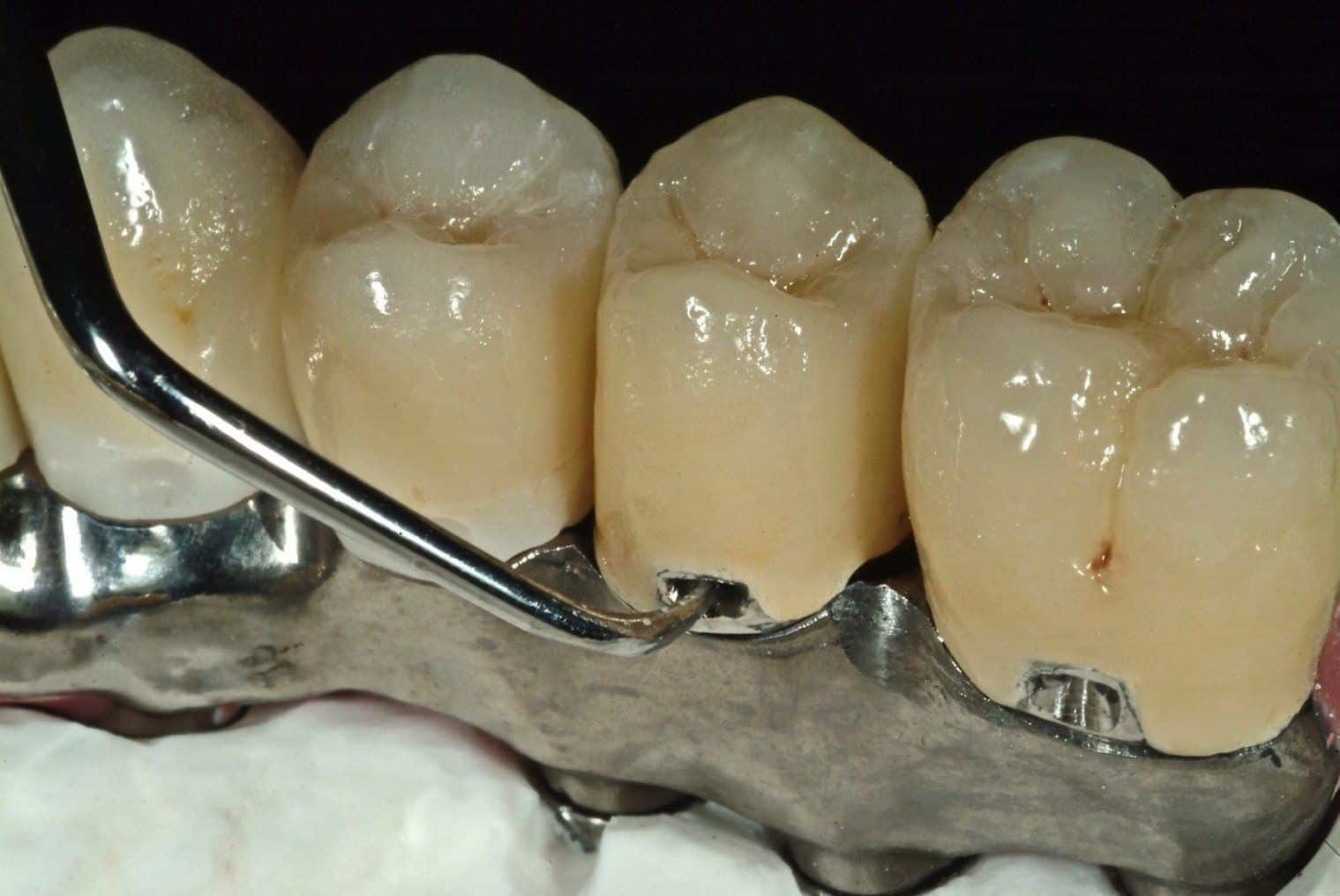
A CAD/CAM milled titanium bar, cut from solid rather than cast, which removes the casting errors entirely. Onto that bar, individual zirconia crowns, each one cemented separately. And pink composite replacing the gum tissue the years had taken.
The technique was published in 2009 in the Journal of Prosthetic Dentistry, the most cited journal in the specialty, with Domenico Cascione and Amir Aalam, out of USC.
The milled bar
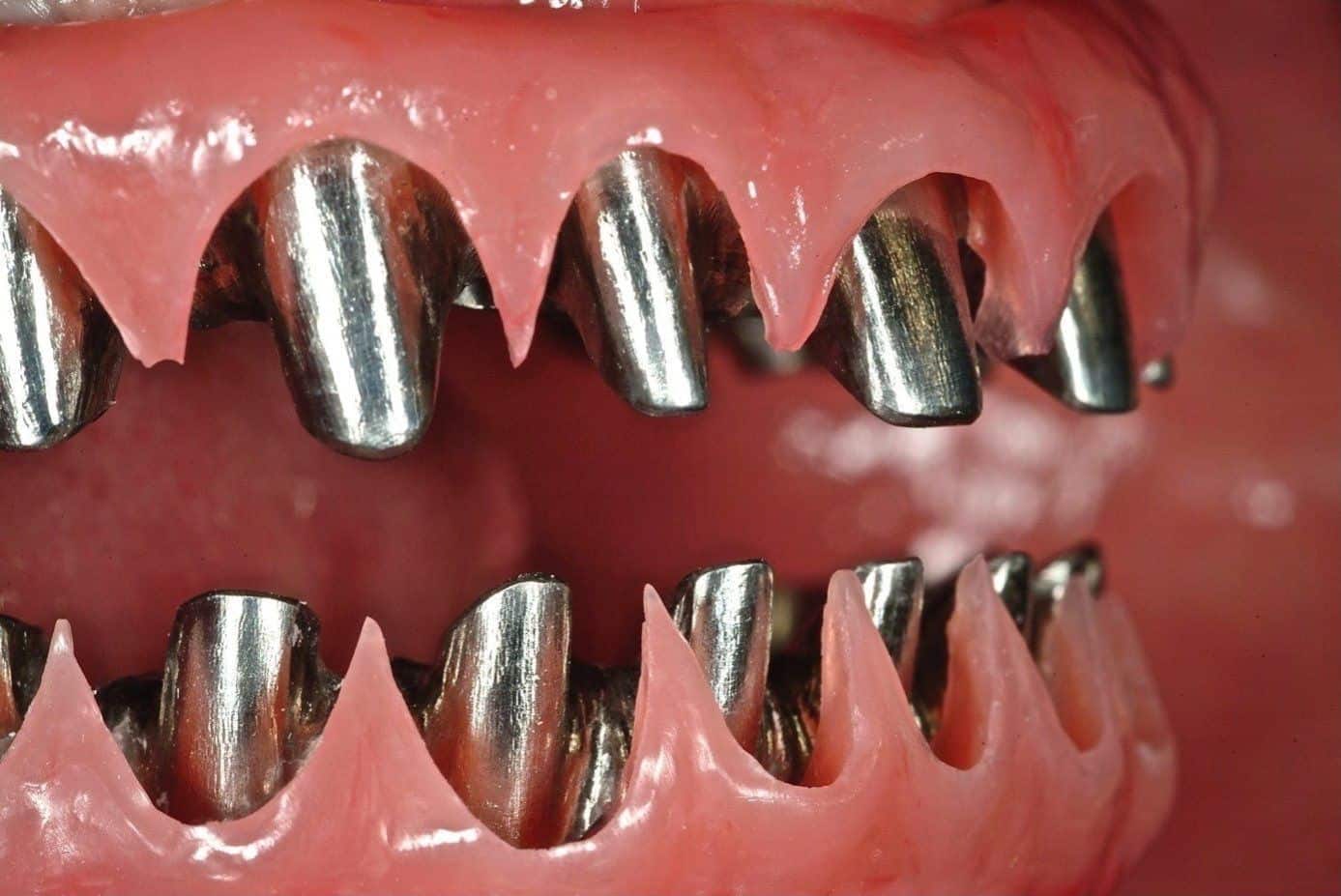
The decision the whole design turns on
A single piece ceramic arch is simpler to make. It is also one object, and when one object fails, the whole thing fails.
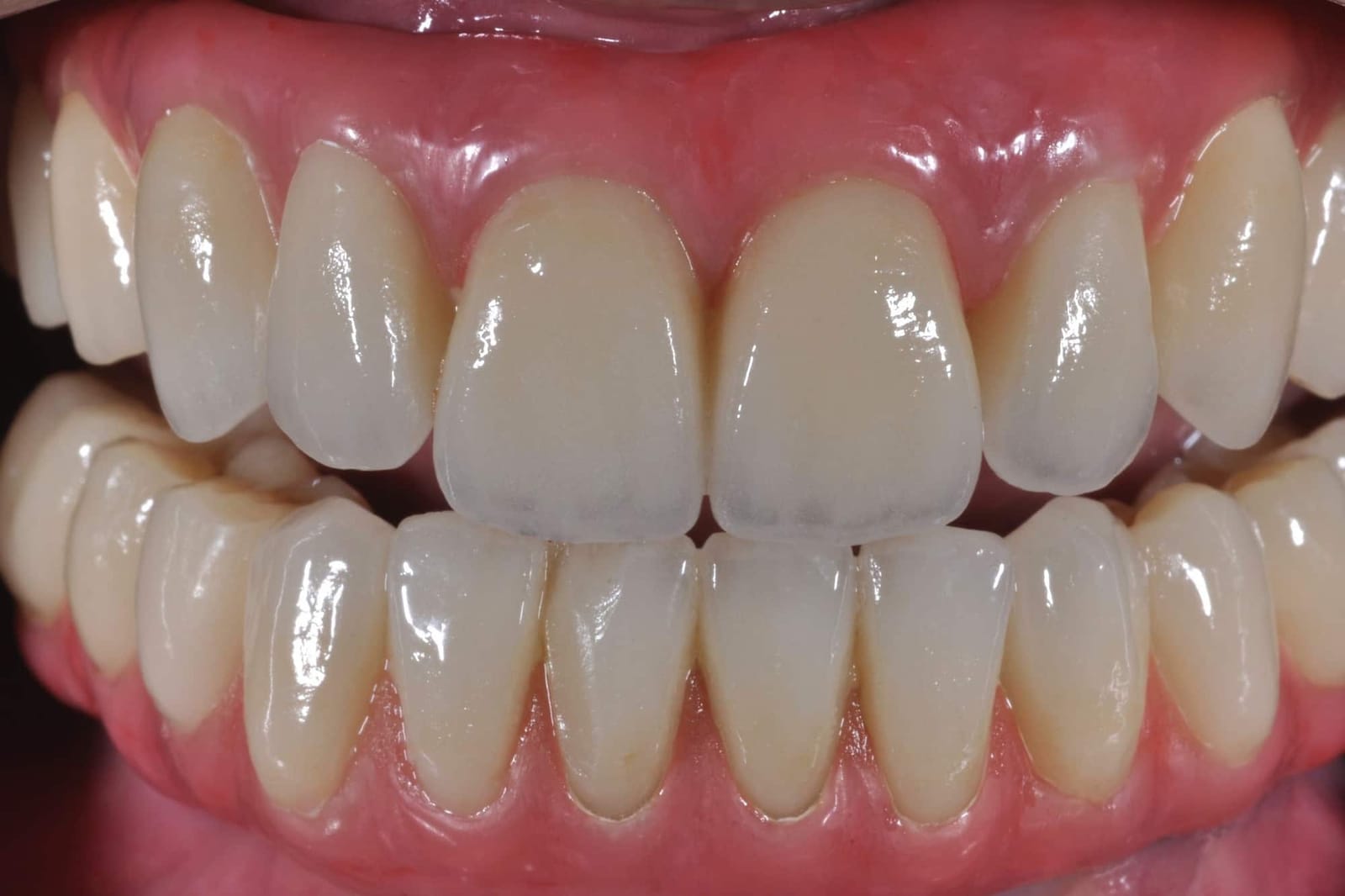
Individual crowns behave differently. If one restoration fails it comes off, is remade, and goes back, without touching the other eleven. Each is fired on its own, so the ceramic is not fighting the distortion that comes with firing a long span. And the opaque zirconia core does a quiet second job: it blocks the gray of the titanium underneath, which is the reason work like this usually looks like work.
The paper is candid about the cost of that choice too. Because the access holes are covered by crowns, removing the entire prosthesis means sacrificing a few of them. Retrievability at the level of a single unit was traded against retrievability of the whole. For a restoration where single unit repairs are the likely event, that is the right trade.
Gum that reads as gum
The pink composite was not chosen off a shade guide.
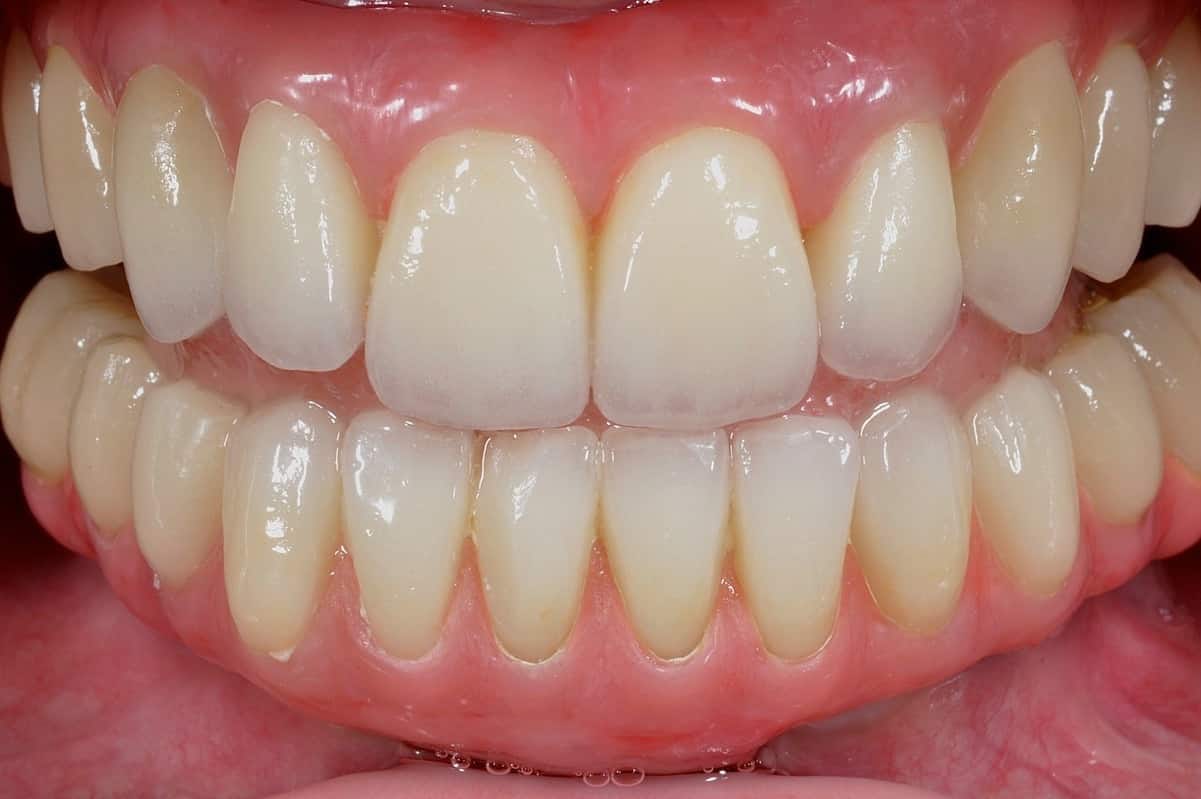
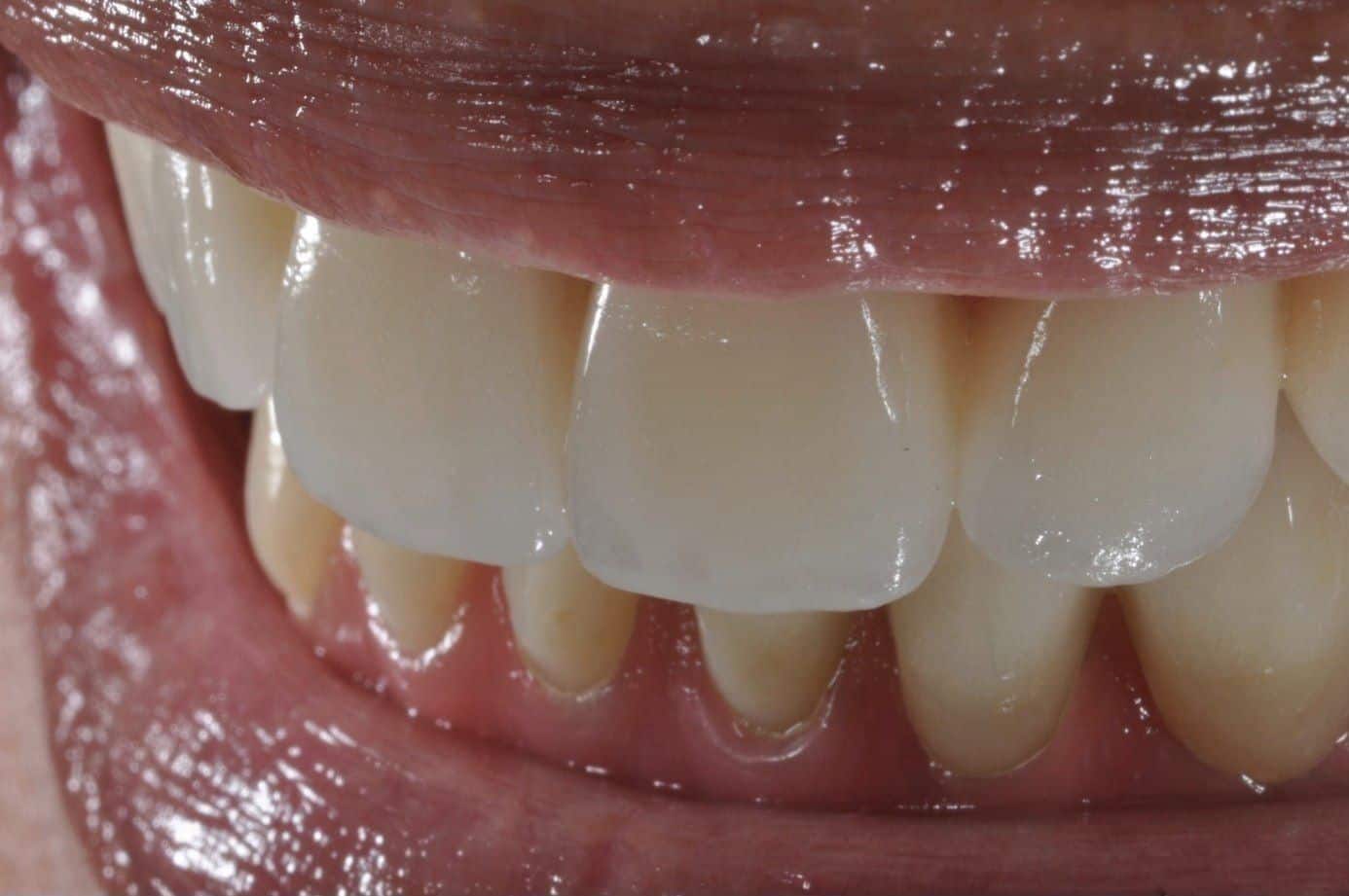
Four different shades were photographed against his own tissue at different heights in the mouth, assessed on screen, then mixed to match how the color actually changes from the gum line upward.
And the crown margins were deliberately terminated one millimeter below the height of that pink composite, all the way around. That single millimeter is what stops the eye finding the junction between tooth and tissue.
The finished work, close
Designed to keep ceramic in compression
Ceramic is enormously strong under compression and vulnerable under tension. So the occlusion was built to keep it compressed: a mutually protected scheme, with the front teeth separating the back ones the moment the jaw moves sideways or forward.
Centric relation was recorded with an anterior deprogrammer at the planned vertical dimension before any of it was finalized. His upper right premolar, drifted and tilted, was restored to function as a canine so the right side had proper guidance to work against.
He was also given an occlusal device to protect against wear and fracture at night, and taught interproximal cleaning with floss designed for the job. A restoration like this is a partnership with the person wearing it.
What the record says
At the one year recall there were no clinical complications.
There was no staining at the junction between the composite and the ceramic, which the paper names as the design's most likely weak point, and he remained satisfied with how the restoration looked and worked.
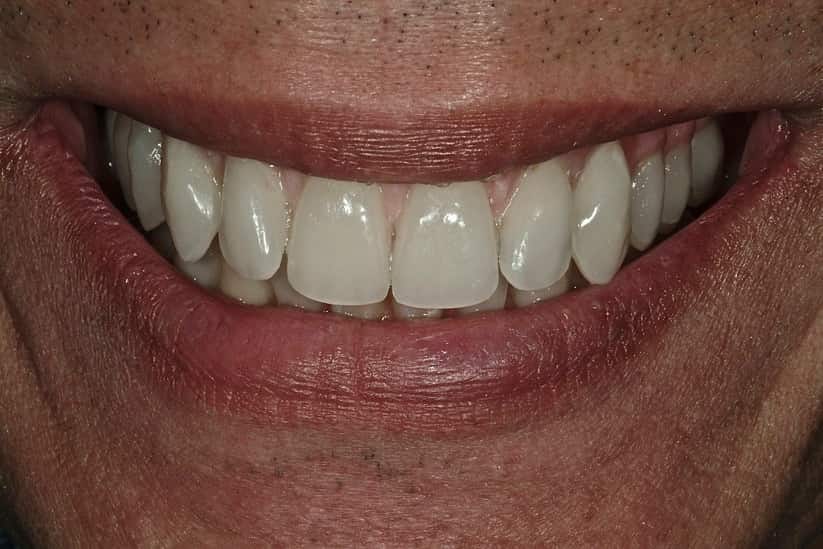
The smile
The radiograph
The technique he published is not the one he uses
Here is the honest part.
Dr. Reshad no longer builds this restoration this way. Materials improved, and monolithic zirconia in particular has removed the very junctions this design had to manage carefully. Pink composite stains and loses its sheen over years, which was the accepted compromise of its generation and is no longer necessary.
The right response to better evidence is to move on from your own published work rather than defend it. This technique solved a problem at the moment it needed solving, and it taught the field something in the process.
When the existing answer is not good enough
Most of dentistry is selecting from what exists. Occasionally what exists is not adequate, and something has to be engineered.
What separates that from improvisation is what happens next: writing it up, submitting it to peer review, stating the disadvantages alongside the advantages, and letting the field judge it. This technique went through that process and is in the literature under his name.
That is a different kind of claim from a photograph.
Before and after
His smile
Every case is planned around one person's anatomy. Individual results vary, and what was right for this patient may not be right for you.