Veneers Case 2 · Cosmetic · Ceramic Mini Wings
The Spaces Gum Surgery Left
He arrived with a list of things he did not want.
No veneers. Nothing on the fronts of his teeth. No drilling. And no bonding, because he had lived with bonding before and watched it wear, chip and stain.
What he did want was a solution to the dark spaces between his teeth. He had come to find out whether one existed on those terms.
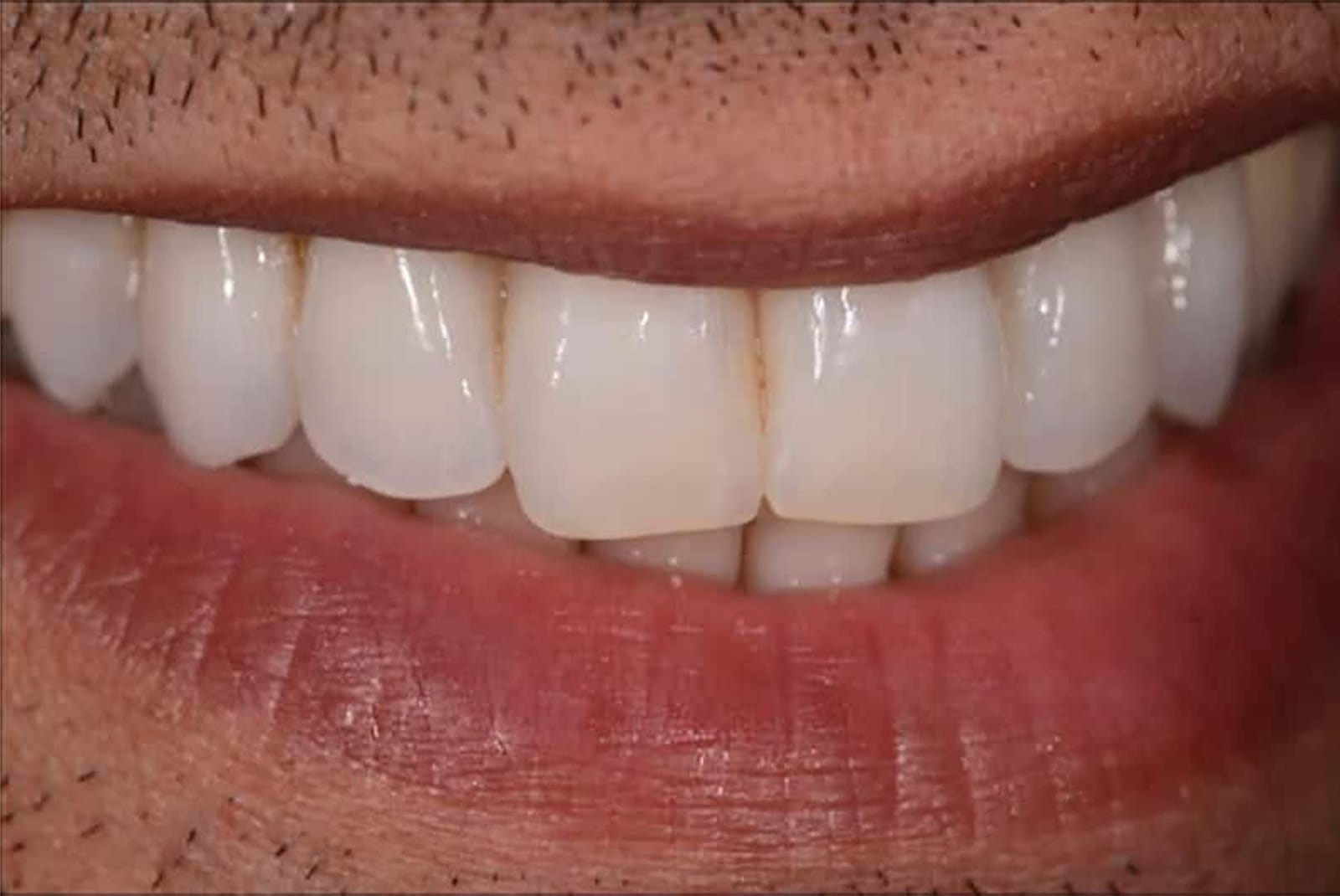
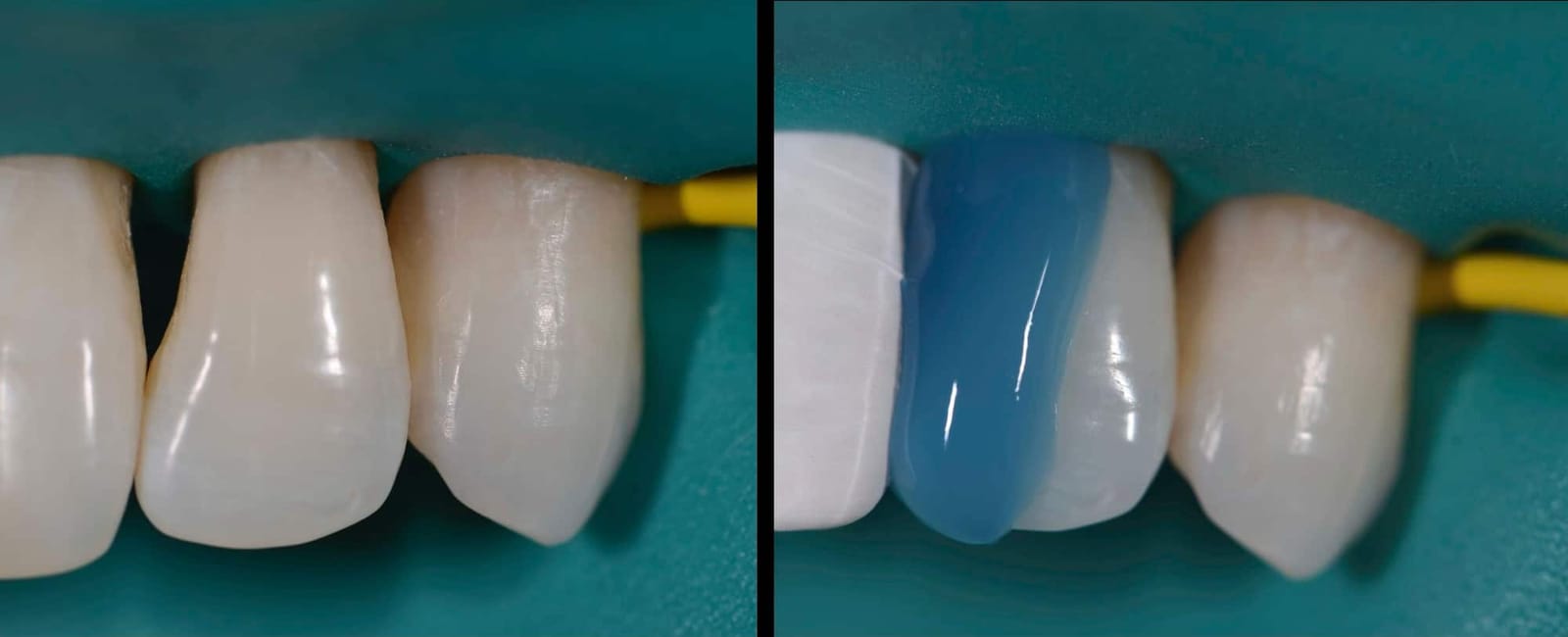
Before and after
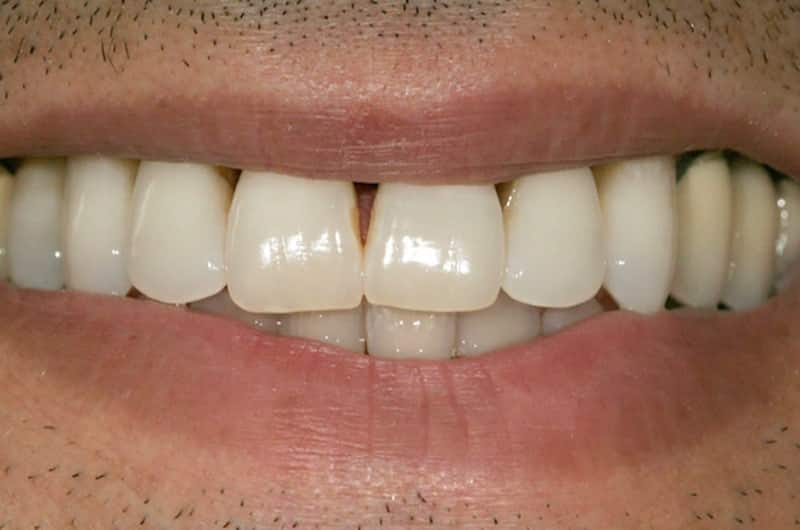
What the surgery had left behind
Gum disease had done a great deal of damage, and the surgery that treated it had removed tissue in order to save the teeth.
Necessary work, with an unavoidable consequence. His teeth were now long and narrow, with large dark triangles opening between them. The disease was under control. The appearance was not.
This is one of the most common questions in dentistry that patients are told has no good answer.
On arrival
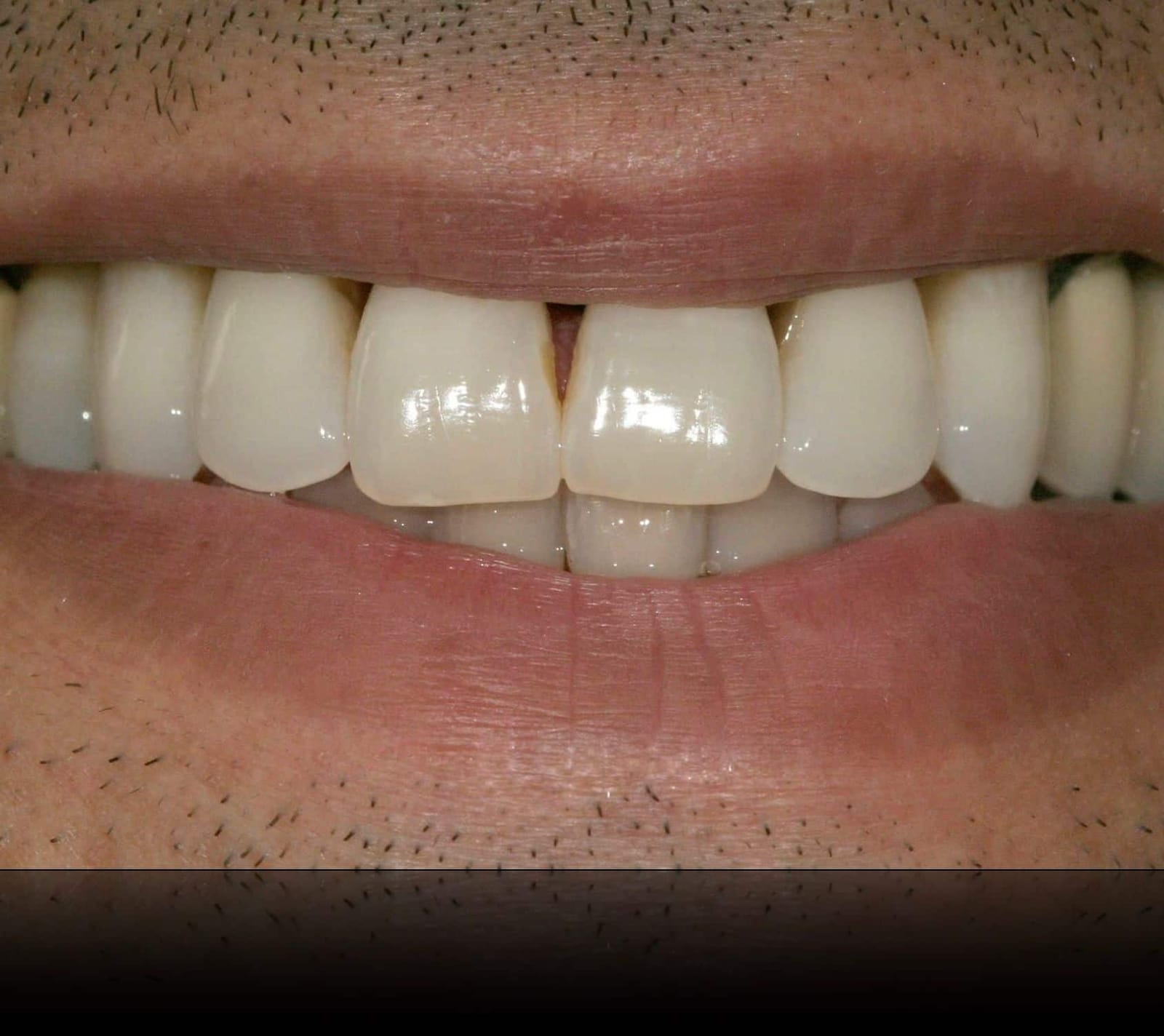
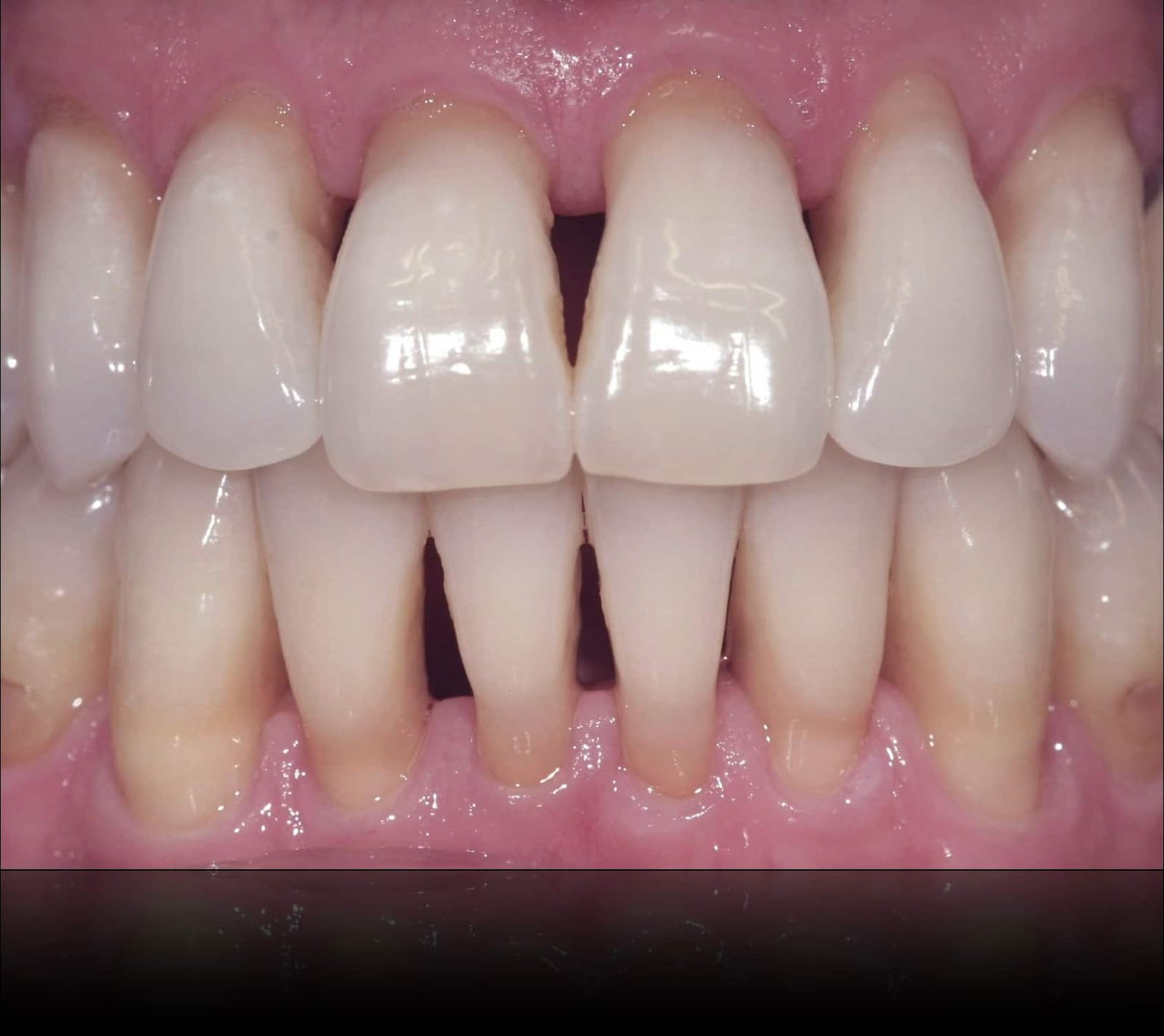
Why his conditions were reasonable
Veneers would mean preparing the fronts of healthy teeth to solve a problem that exists at their sides.
Bonding would fail the way it had failed before, staining at the margins and chipping under load.
He was not being difficult. He was describing, accurately, why the standard options were wrong for his situation.
Mini wings
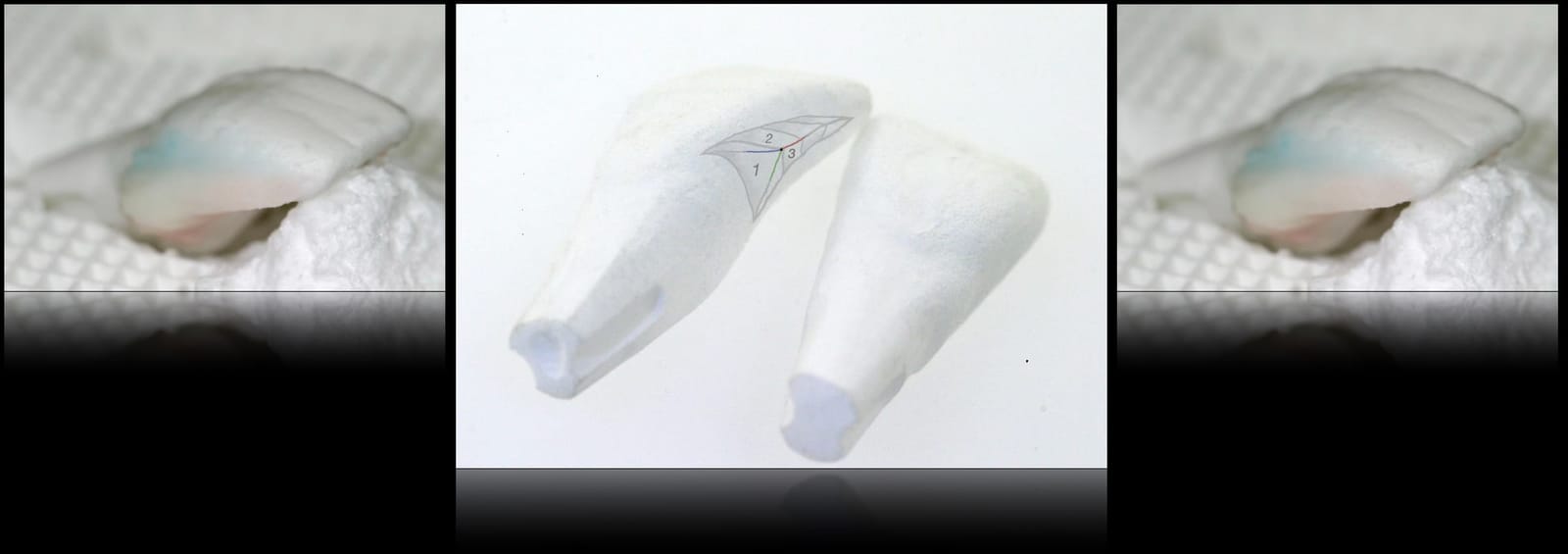
Dr. Reshad developed a technique for exactly this: individual feldspathic ceramic mini wings, tiny projections made to fit into the space between two teeth and bond to their sides.
Nothing goes on the front of the tooth. Nothing is drilled. Each wing is fabricated on a stone model of his own teeth, shaped to close its particular space, and bonded into place adhesively.
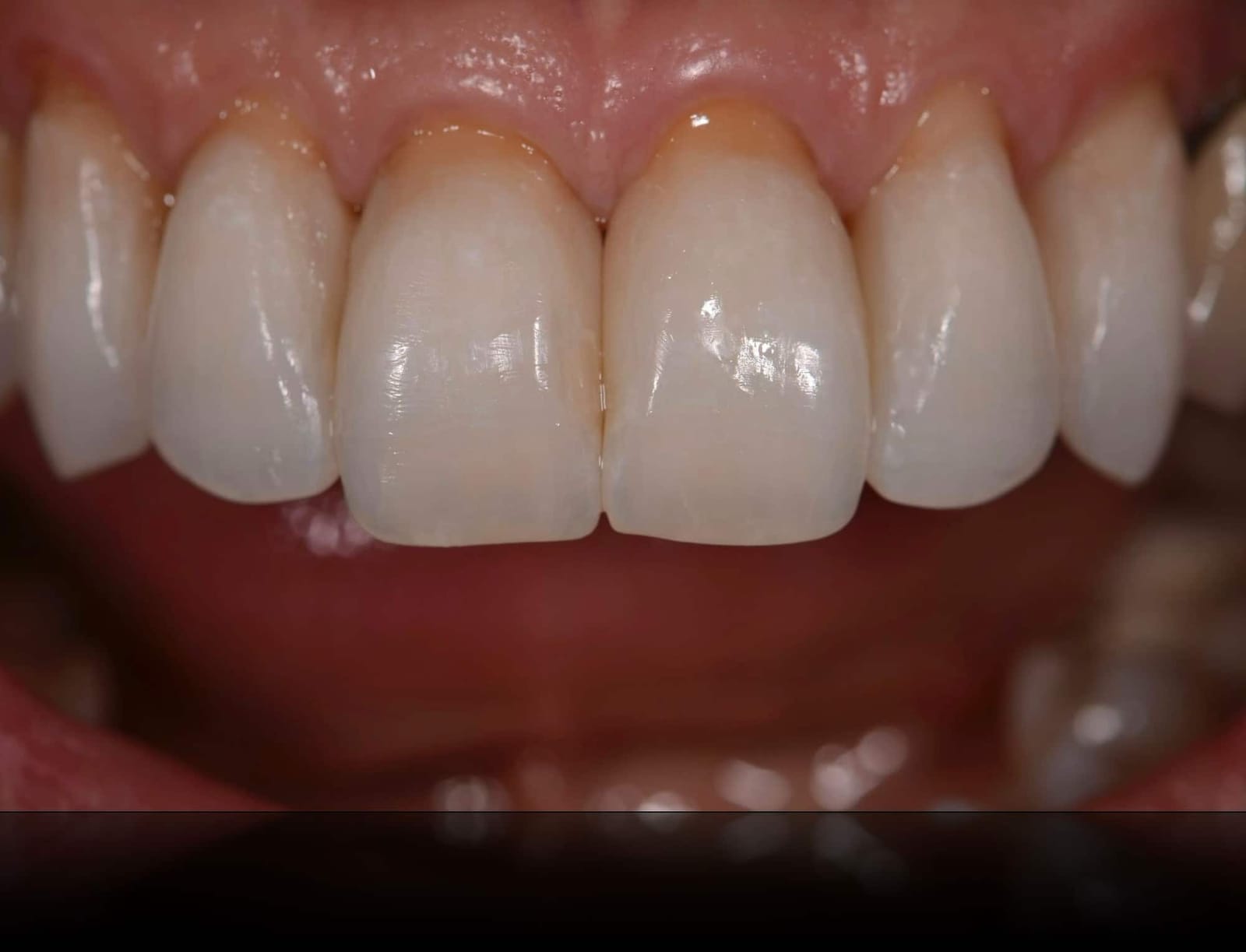
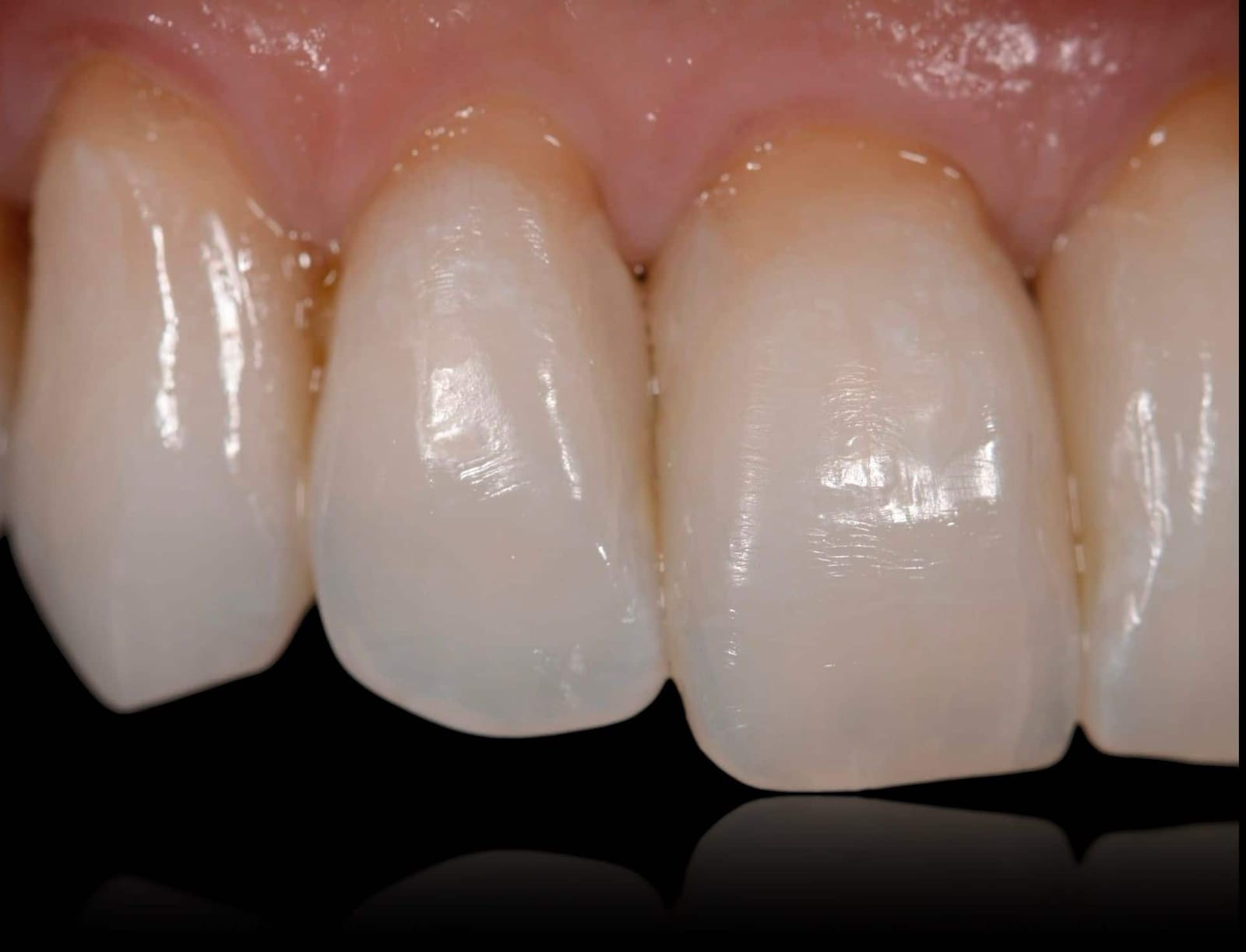
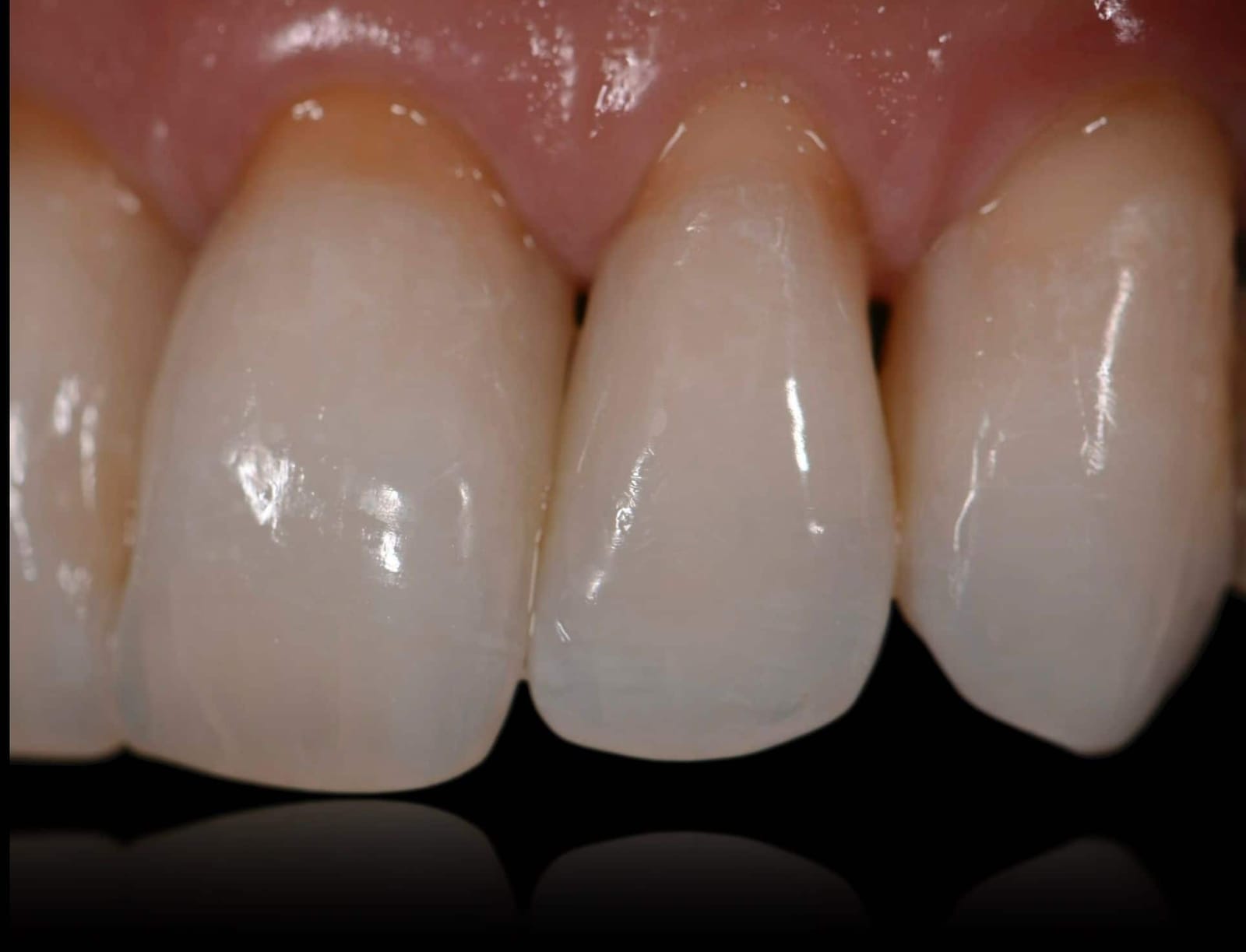
The dark triangles close. The teeth themselves remain untouched.
The wing, tried in
Why the wings are a different color
Here is the part that decides whether this works or merely functions.
Closing a triangle makes a tooth wider. A wider tooth looks wider, and a row of long, wide teeth looks wrong in a different way than a row of gaps.
So the wings are not the color of the tooth. Along the sides, and deeper toward the gum, a more opaque ceramic is used. Layered correctly, it absorbs light where the front surface reflects it. The eye reads the reflective zone as the tooth and the darker flanks as shadow, so the tooth still appears narrow.
It is wider. It does not look wider. That is achieved entirely through material, gradation and opacity, and it is the difference between closing a space and restoring a smile.
The wings
Forty five minutes a tooth
Nothing about the delivery is quick, and that is deliberate.
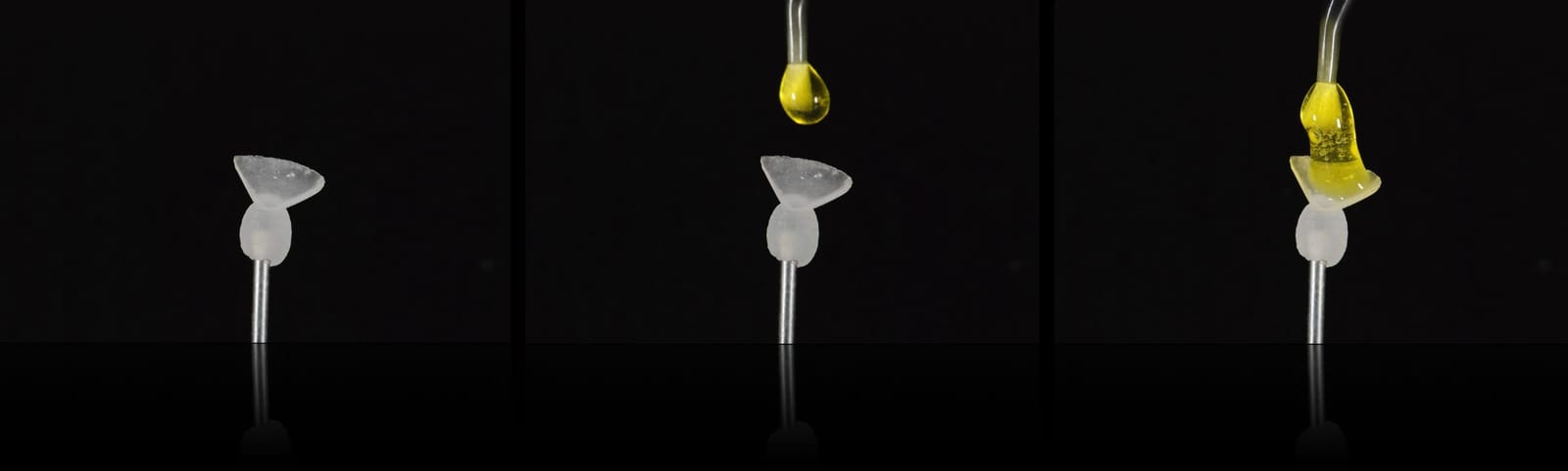
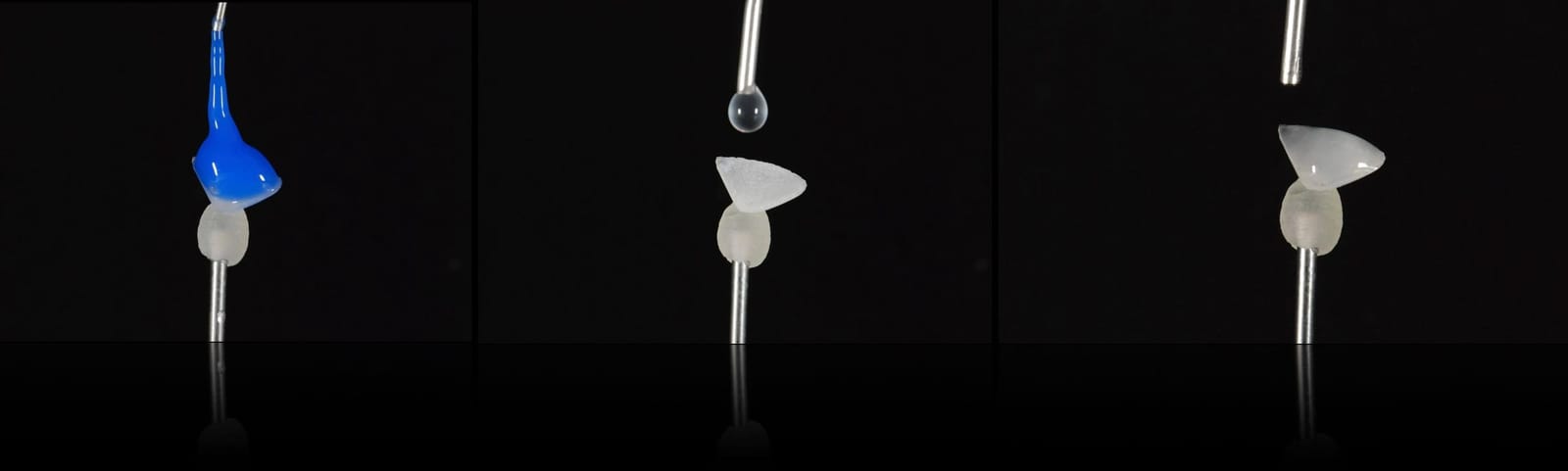
The gum is retracted and the field isolated so no moisture reaches the bond. The ceramic is treated with specific surface techniques to prepare it. The tooth is prepared chemically rather than mechanically. Then the two are bonded in a precise sequence of steps.
Each individual wing takes around forty five minutes to bond. Done to that standard, they last a very long time.
The bonding sequence
Science, art, technology, biology
The materials have to be understood. The bonding chemistry has to be understood. The optics have to be designed. And the biology has to be respected, so the tissue underneath stays healthy and he can clean between his teeth properly.
Miss any one of those and the result is a short lived improvement that damages something. Get all four right and it looks natural, stays clean and lasts.
Everything he asked for, and nothing he refused
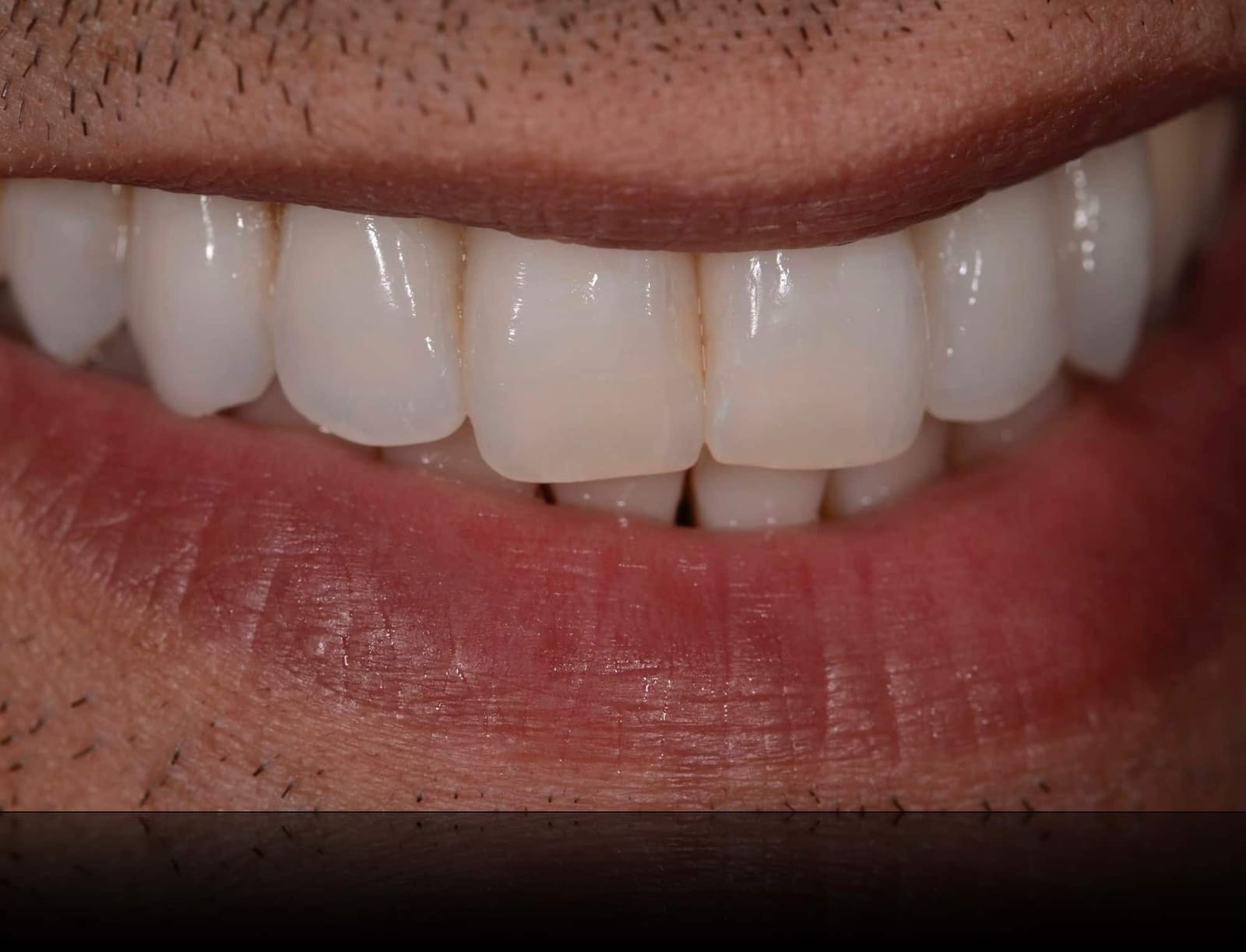
The spaces are closed. The teeth look proportionate from the front and from the side.
No veneers. Nothing on the fronts of his teeth. No drilling. No bonding of the kind that had already failed him.
He set the conditions, and the answer was found inside them.
The finished work
Before and after
Every case is planned around one person's anatomy. Individual results vary, and what was right for this patient may not be right for you.