Front Teeth Case 2 · Cosmetic · Reconstruction
Rebuilding After the Patchwork
She had an accident, and then she had repairs.
Her front teeth had been patched up in stages by others, and the result was a smile that no longer agreed with itself. Teeth of different sizes. Teeth in different positions. Teeth of different colors.
She traveled from Spain to have it put right.
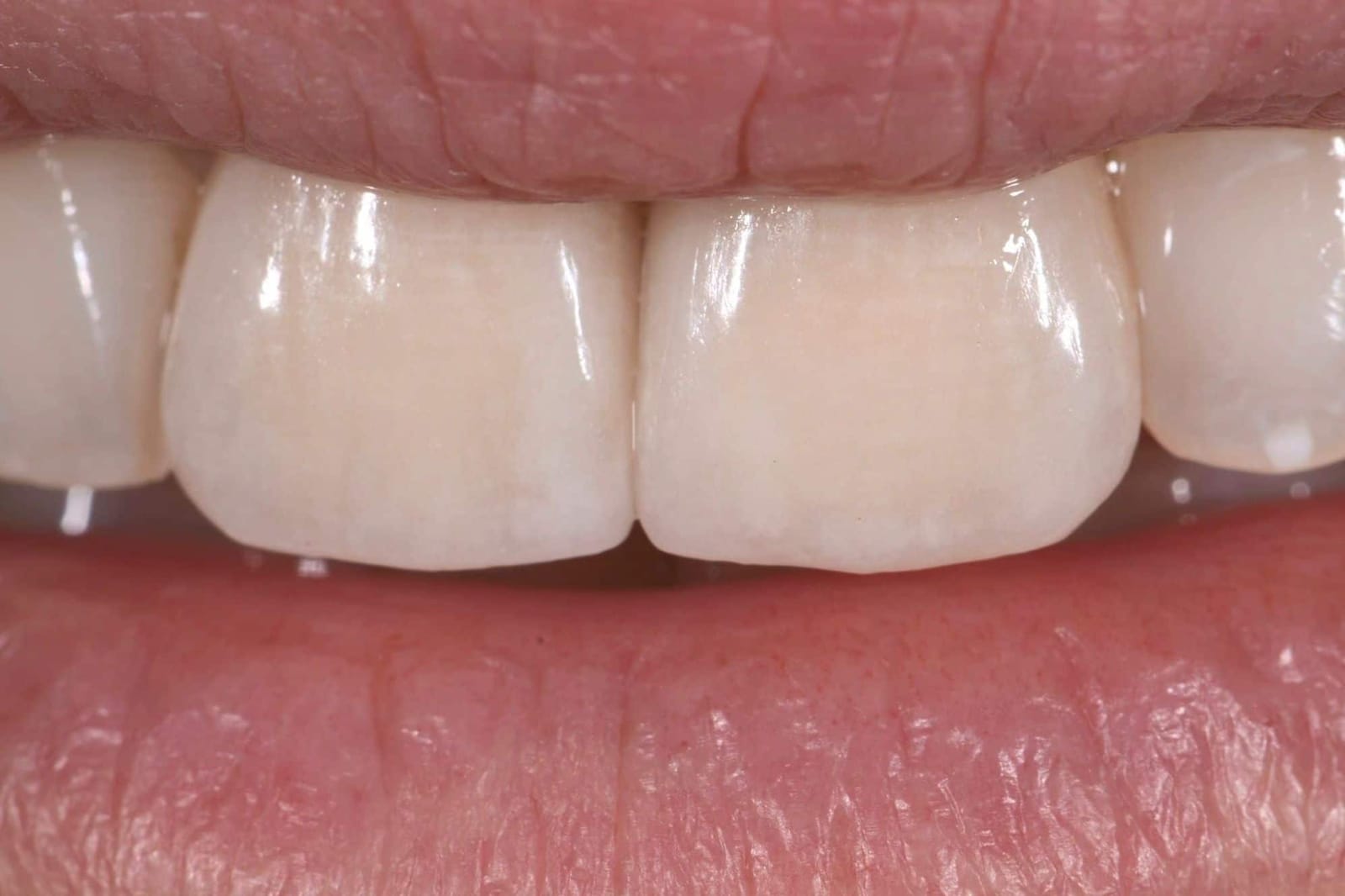
Before and after
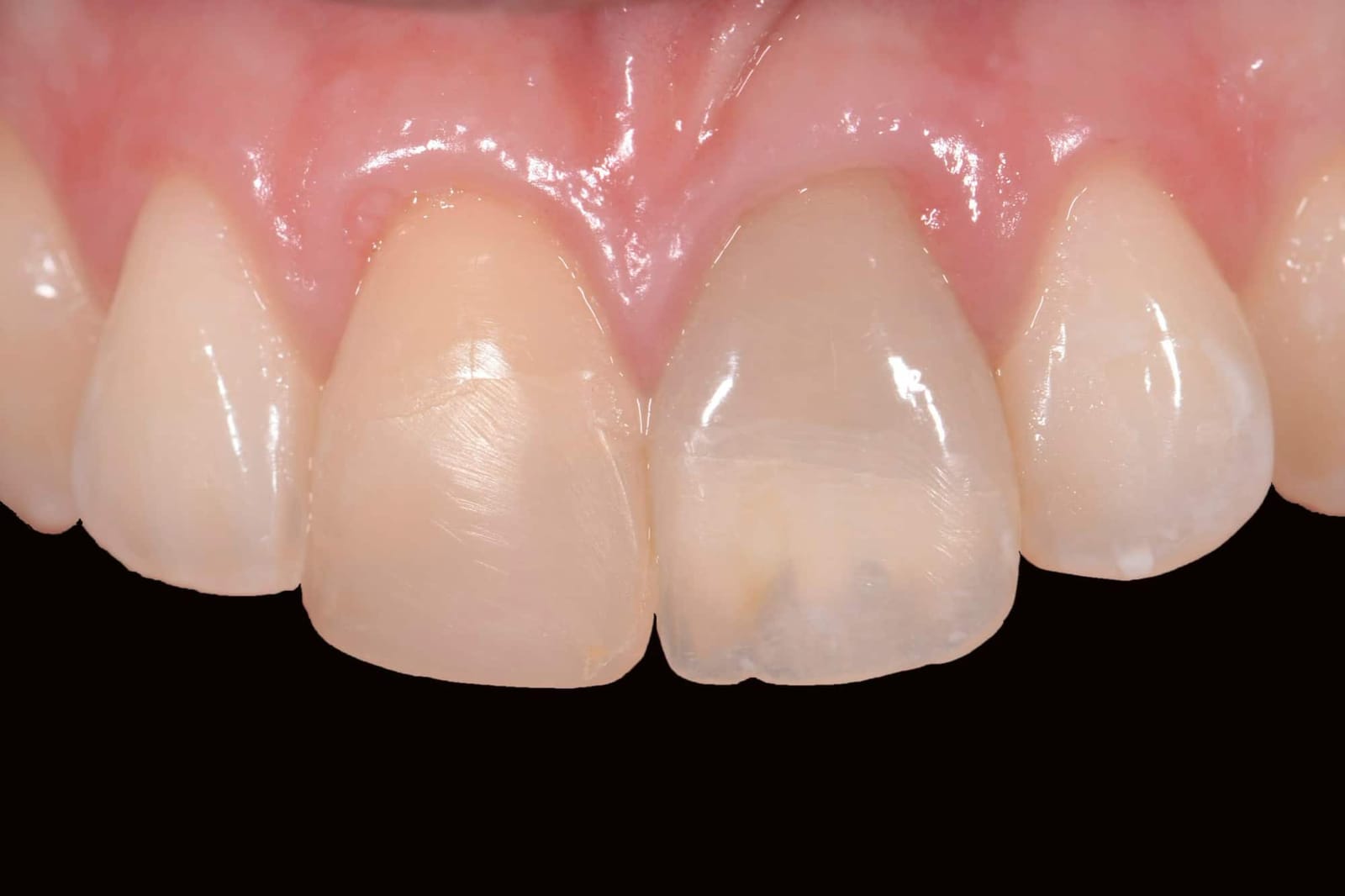
Not one color, but several inside each tooth
The mismatch was not simply that one tooth was darker than the next.
Trauma had killed teeth, and a dead tooth does not discolor evenly. Each one carried several colors within it, shifting from the neck to the edge, so there was no single shade to match against and no single shade to hide.
The damage was severe enough that the teeth needed full coverage restorations, which meant preparing them. And preparing a discolored tooth exposes the discoloration.
That is the whole problem of this case.
Inside each tooth
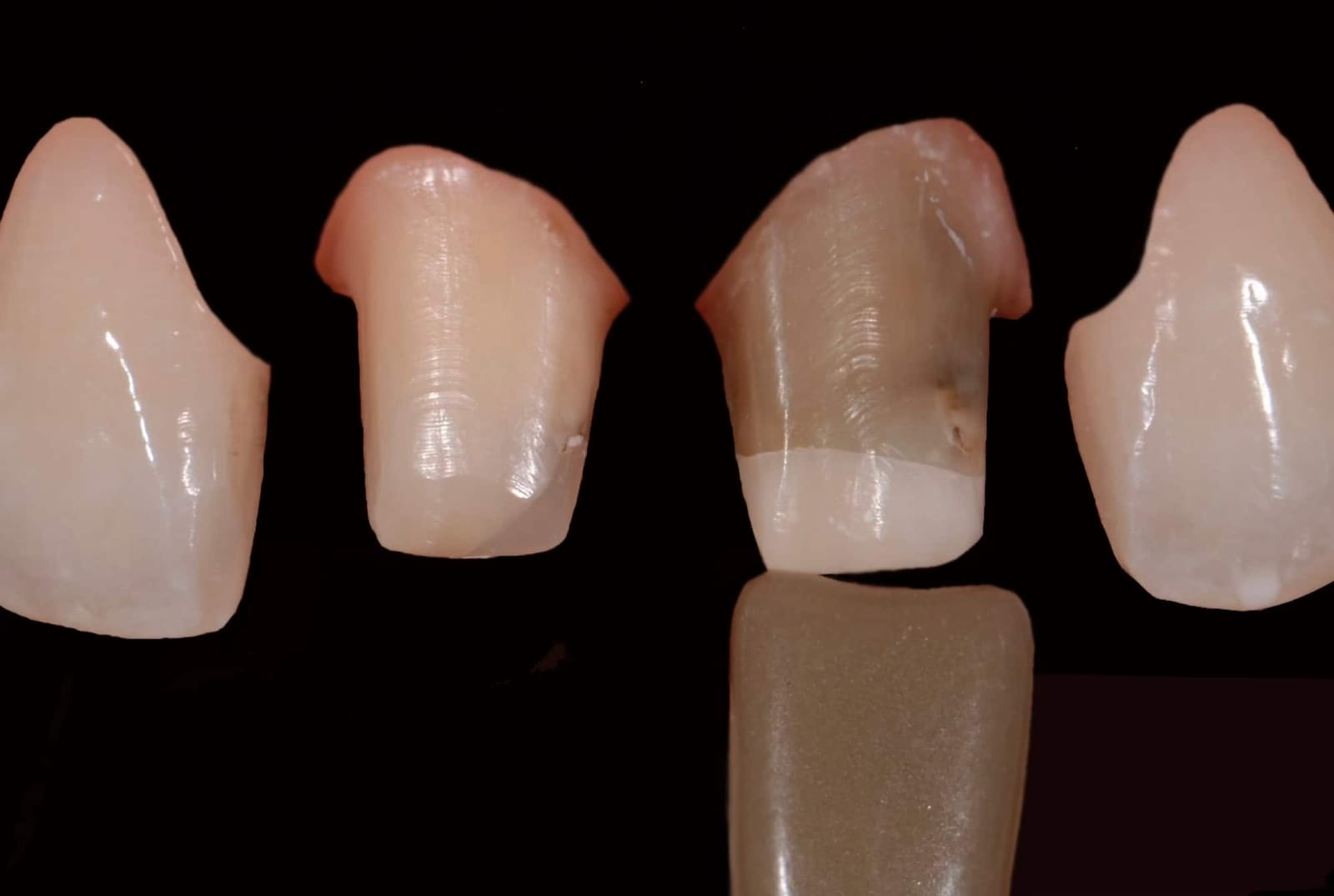
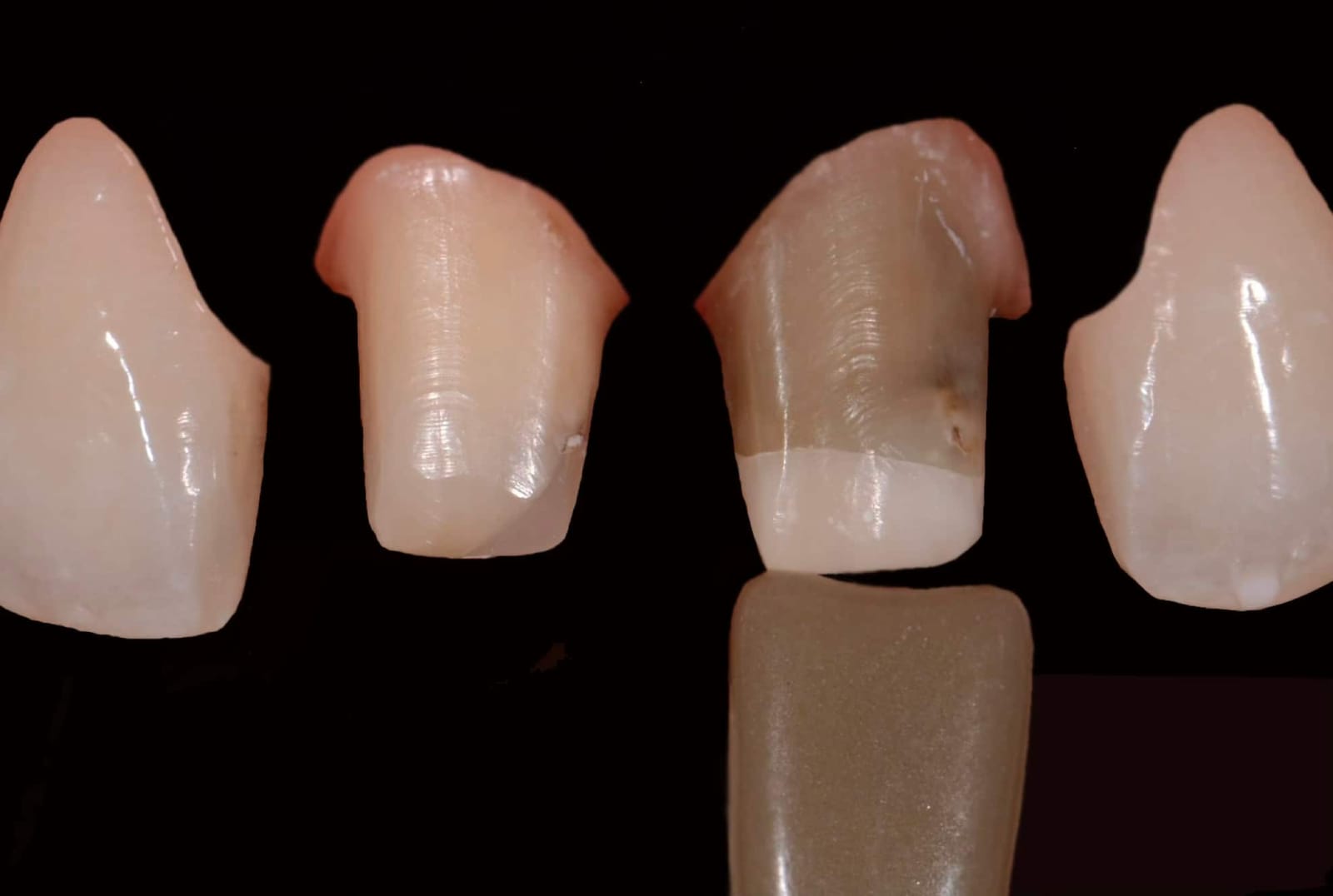
You cannot match what you cannot see
A laboratory builds a restoration on a stone model. A stone model is white.
So the technician works over a clean, pale foundation while the real tooth waiting in the mouth is brown, gray, and dark. Everything looks correct on the bench and then goes dull, or blue, or lifeless the moment it is seated. This is why so many single restorations on discolored teeth never look right, however skilled the ceramist.
Make the model the color of the tooth
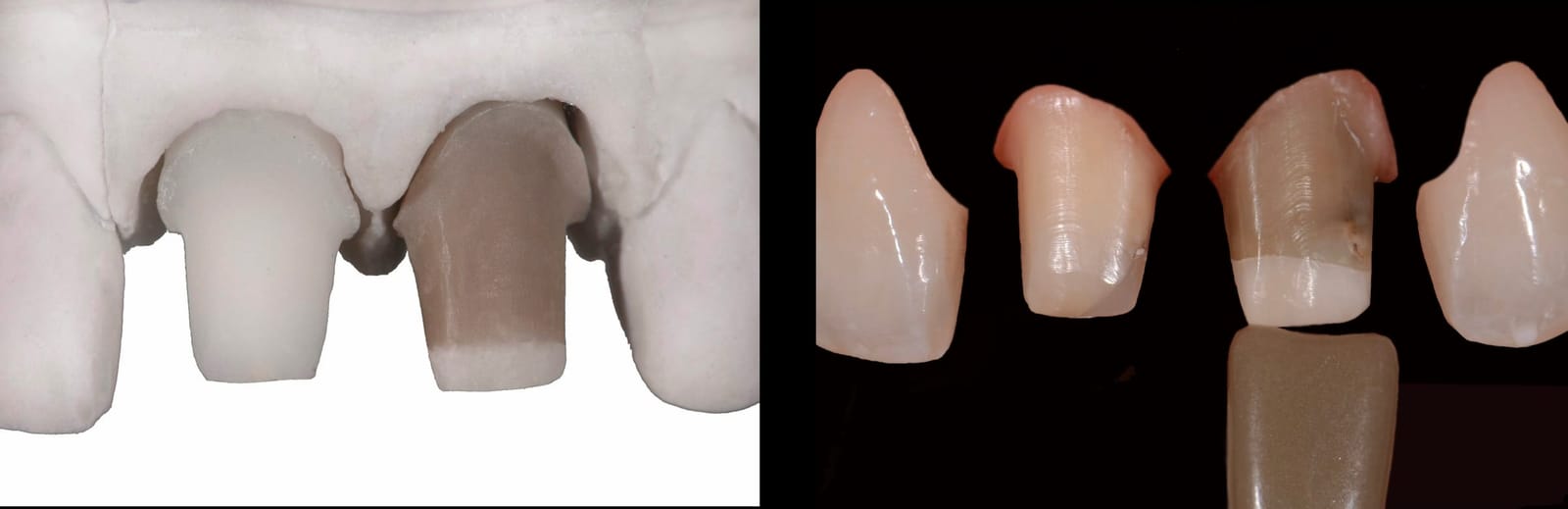
The models were dyed.
Using specialized dyes kept in the office, the stone models were made to match the value and color of the dead tooth structure underneath, so the laboratory was building over the same darkness that exists in her mouth rather than over white plaster.
What is made on the bench now behaves exactly as it will behave when it is fitted. Nothing is being guessed at.
The dyed model
Mask first, then build beauty
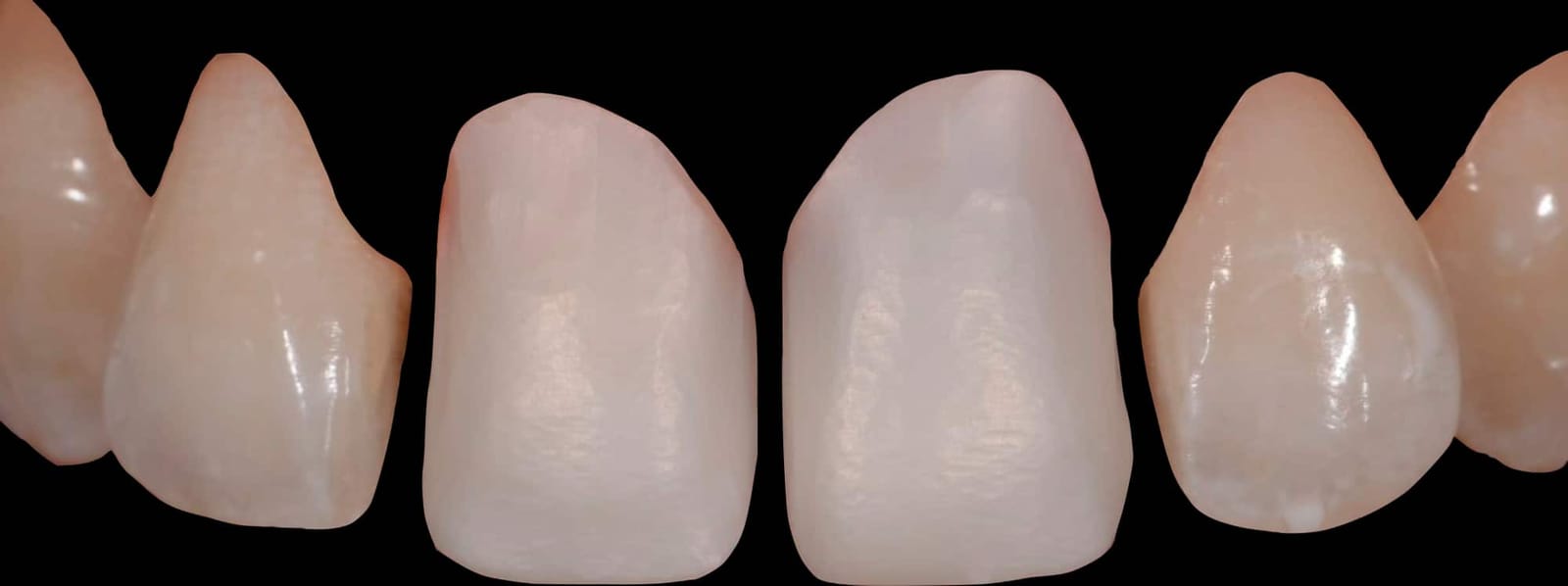
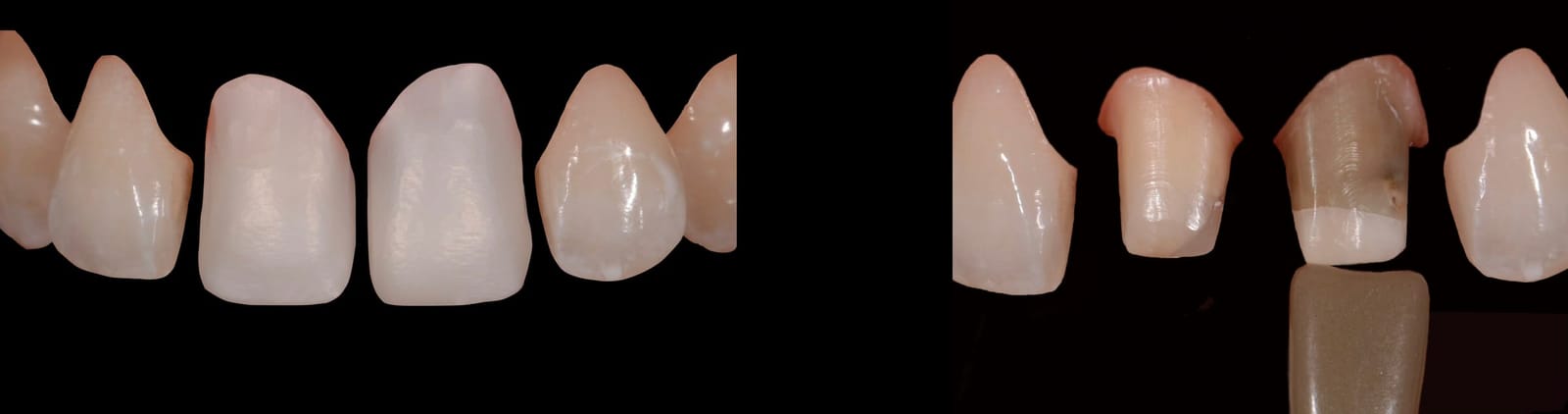
The first layer is not there to be beautiful. It is there to stop the discoloration coming through.
An opaque substructure was made and seated over the darkened preparations, and it masks them completely. Only once the foundation reads as neutral can the color, translucency and character of a natural tooth be built on top of it.
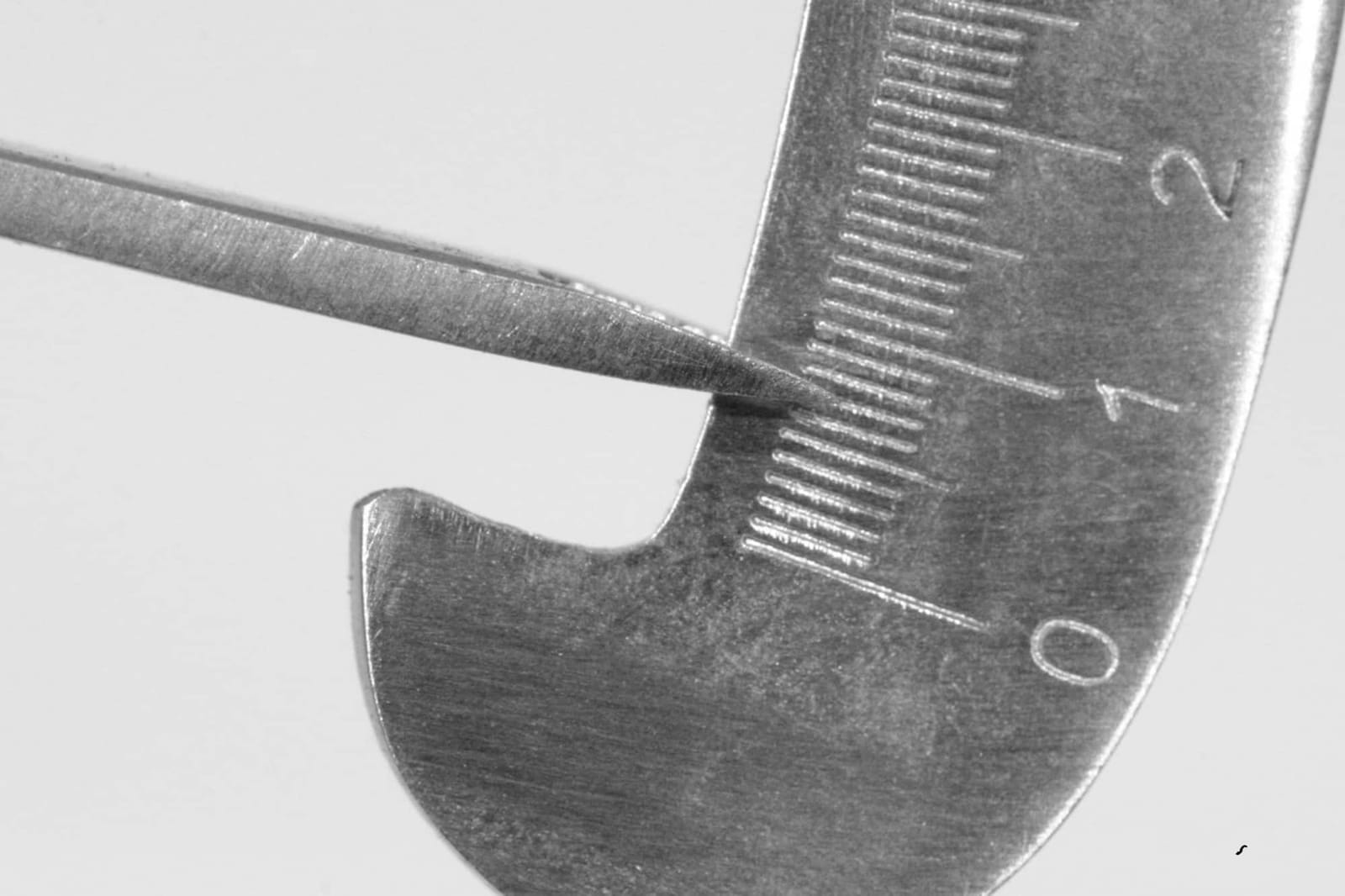
How thick that masking layer needs to be, to block what is underneath without robbing the restoration of life, is a question Dr. Reshad has researched directly. That figure is not a guess in this practice.
The masking substructure
The thickness, measured
The smile she originally had
Color, translucency, shape and tooth position, restored to what she asked for.
Nothing about it announces itself. The teeth do not look discolored and they do not look mismatched, and just as importantly they do not look manufactured. The gum lines read naturally rather than as a row of identical arches.
Harmony and balance, restored in a European register, because that is what suited her.
Designed for the person, not to a formula
A smile should reflect the person wearing it: their expectations, their features, where they come from, and what they actually want.
No two patients here receive the same teeth. That is only possible with meticulous, step by step attention through every stage, from dyeing a model to match a dead tooth, to placing a gum line so it does not look drawn on.
Before and after
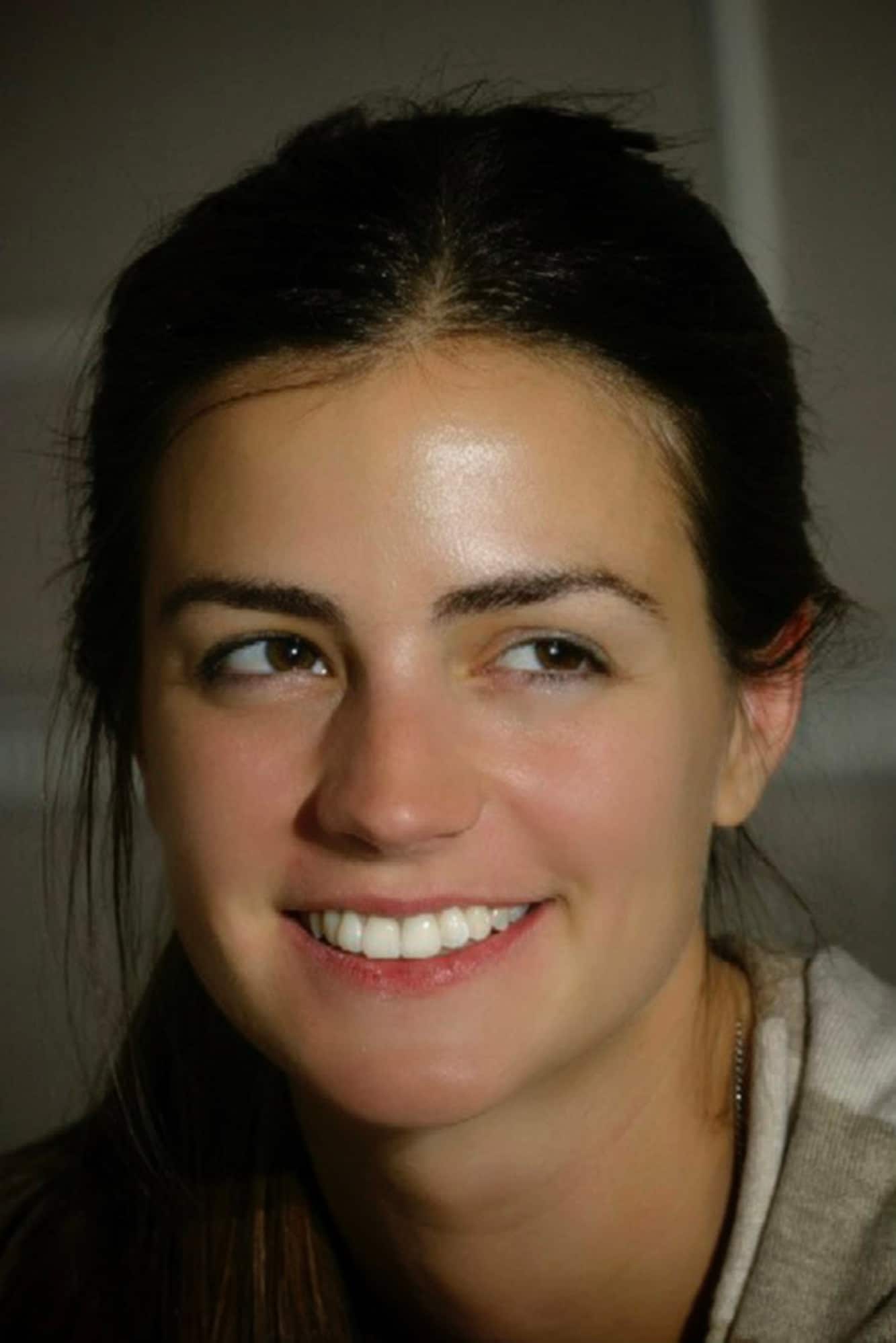
Her face
Every case is planned around one person's anatomy. Individual results vary, and what was right for this patient may not be right for you.