Veneers Case 1 · Cosmetic · Veneers
Twenty Years of Veneers
The bonding kept failing.
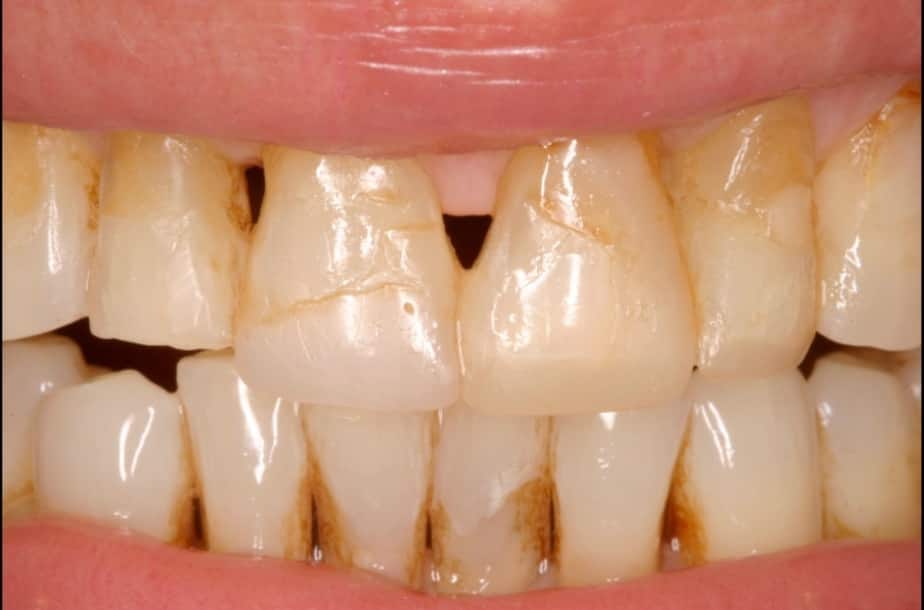
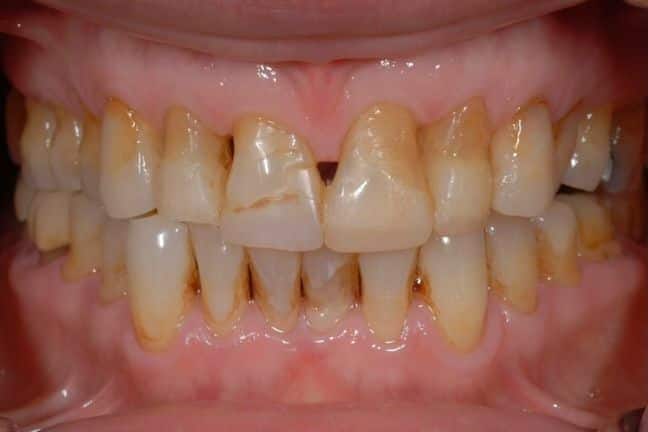
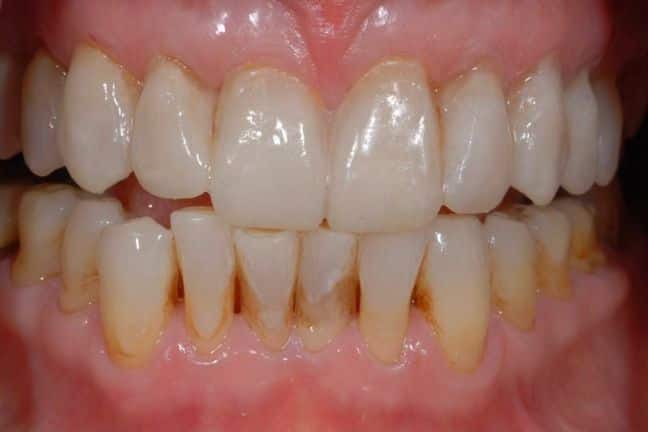
She had a great deal of it, across the fronts of her teeth and around the necks where they meet the gum. It stained. It chipped. It was repaired, and then it failed again, the way repairs do when nobody has established why the first one broke.
She had dark spaces opening between her teeth. Her teeth were sensitive. And she was tired of a problem that kept coming back.
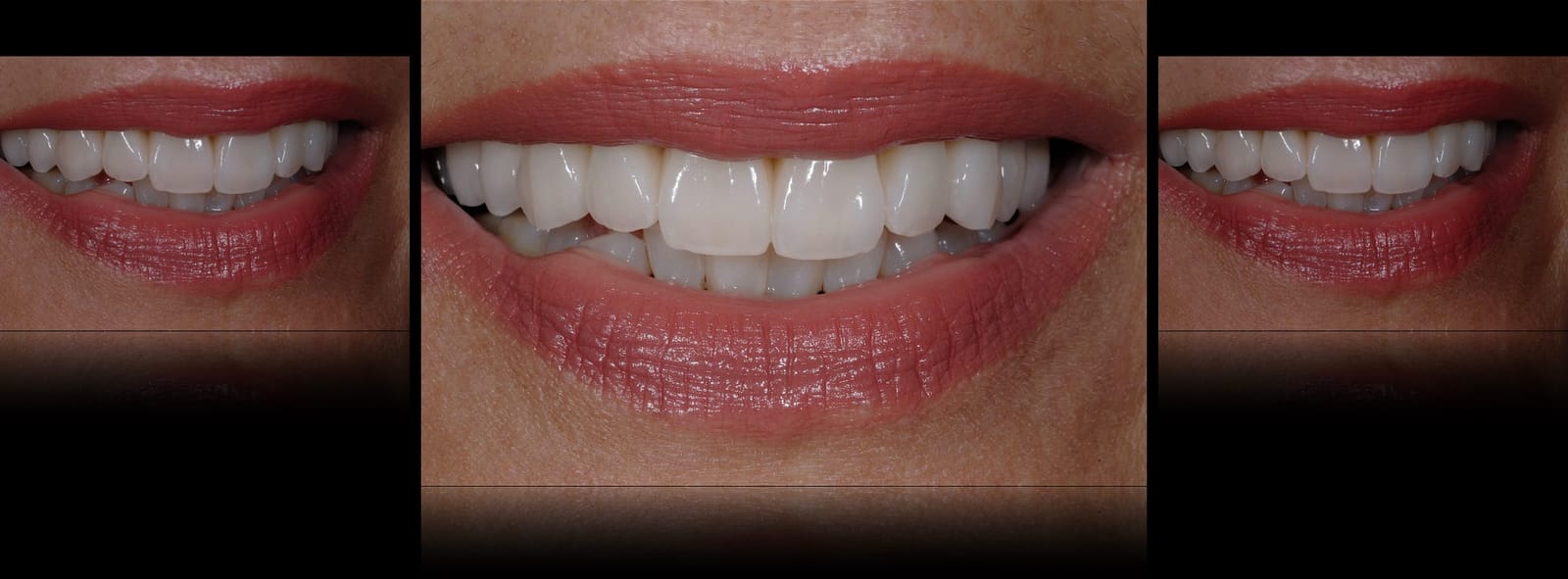
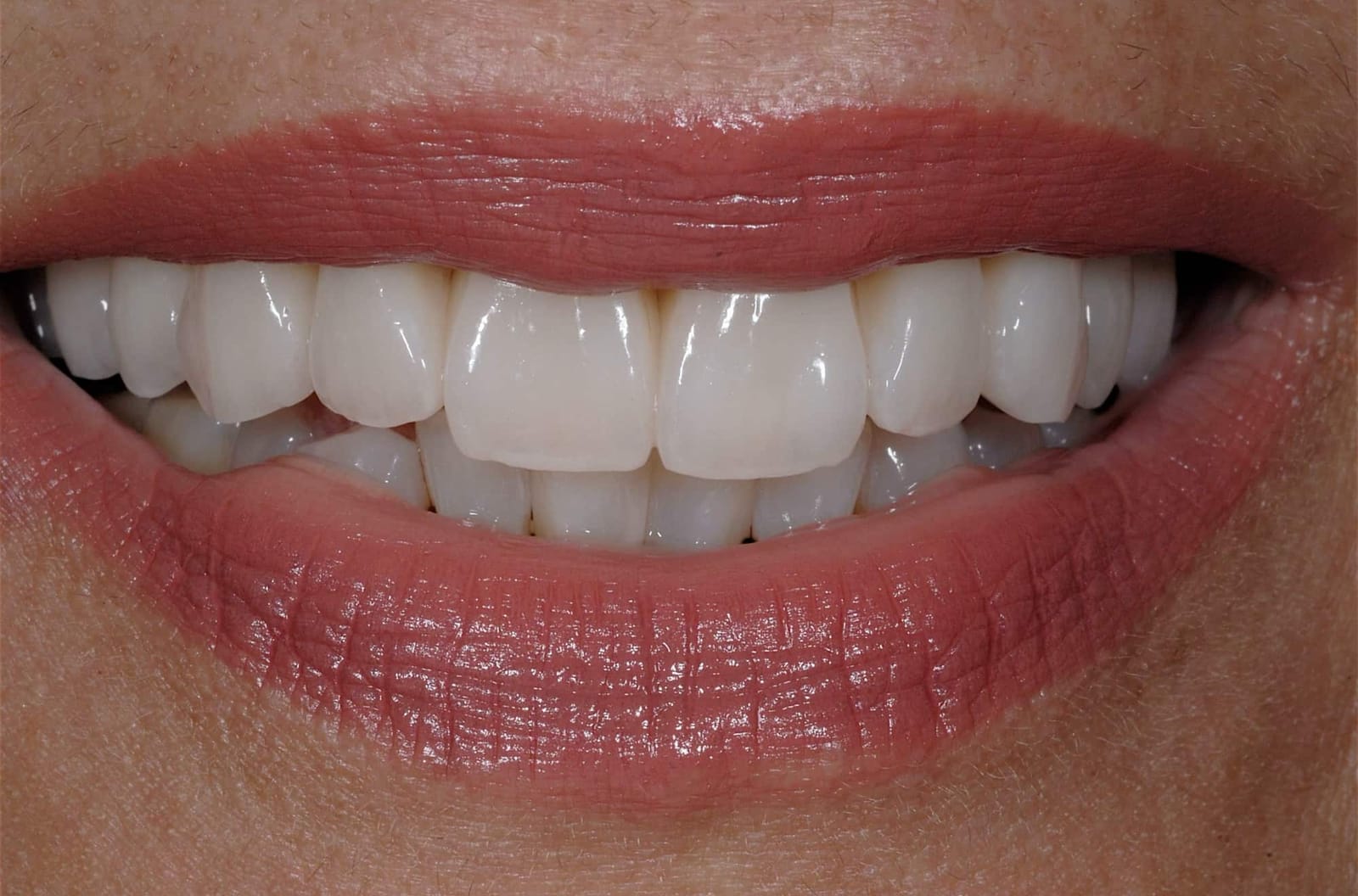
Before and after
What was actually causing it
A thorough examination found the answer, and it was not in her teeth.
It was acid erosion, driven by a highly acidic vegetarian diet. Vinegar, lemon, citrus, a great deal of fruit and vegetables. Healthy food, dissolving the front surfaces of her teeth.
The telling detail is what was not damaged. The palatal surfaces, the insides of her upper teeth, were intact. That pattern is a signature: it tells you the acid was arriving from outside, in what she ate and drank, rather than from within.
The whole treatment turned on that observation.
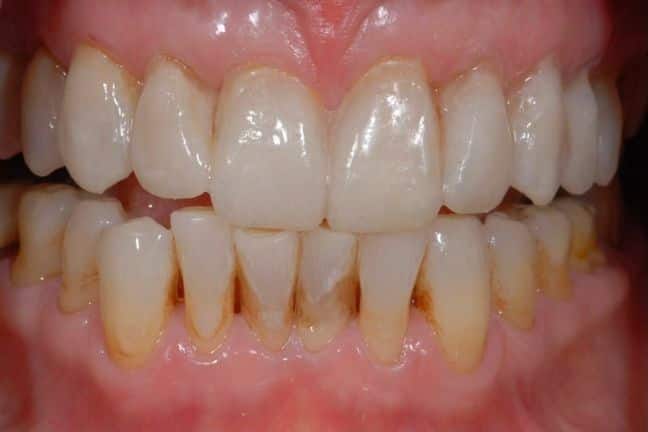
The bonding at arrival
Records
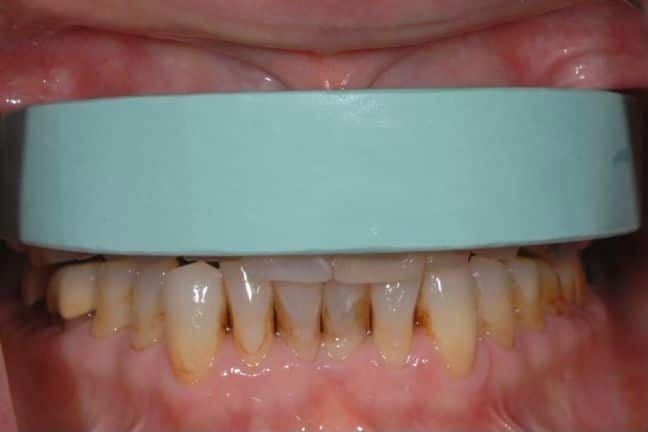
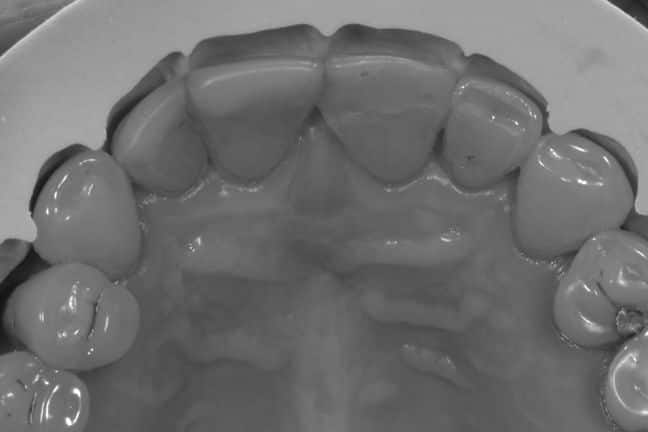
Only the front needed restoring
Because the damage was confined to the fronts of the teeth, only the fronts needed restoring.
That meant adhesive veneers with minimal reduction, rather than crowns. Her own tooth structure, the healthy majority of it, stayed exactly where it was.
Diagnosis is what earns a patient the conservative option. Without it, the safe assumption is always to prepare more.
Technique, before anything is added
The old composite bonding had to come off first, and how that is done matters more than it sounds.
Removed correctly, with immediate dentin sealing applied to the freshly exposed surfaces, the tooth is protected and the bond to what comes next is far stronger and far more durable. Removed carelessly, everything built on top inherits the problem.
Working through the mock-up
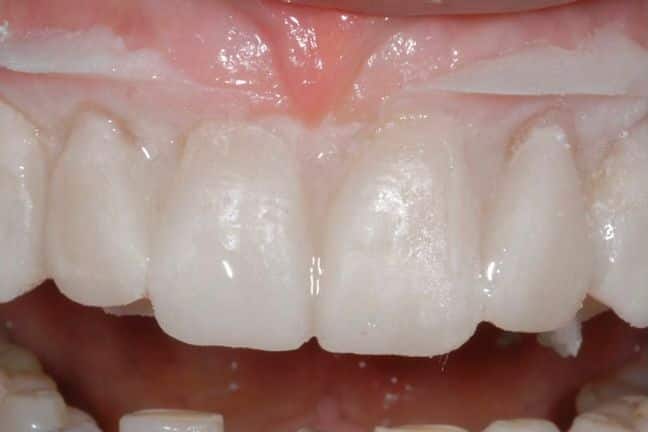
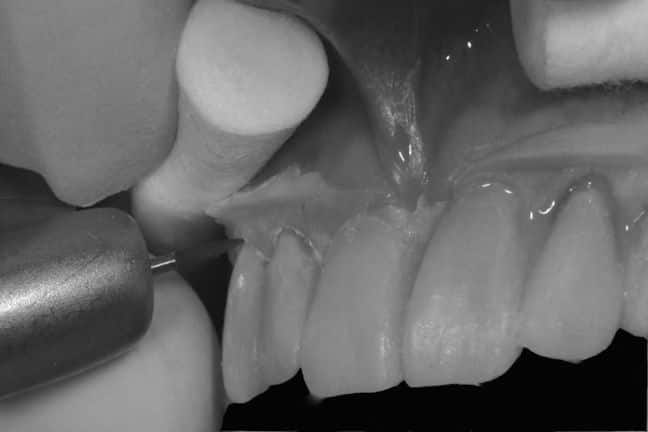
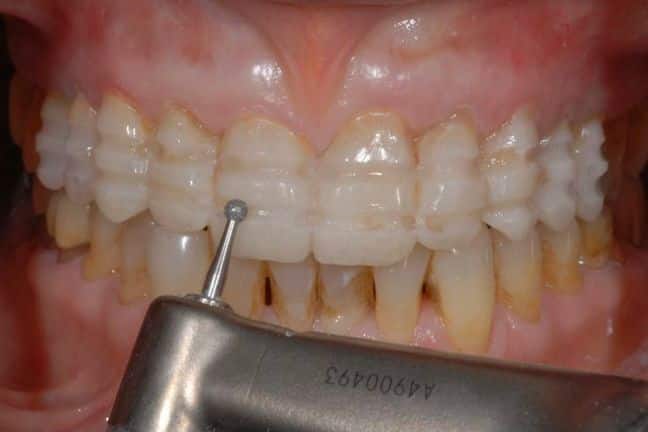
During treatment, then prepared
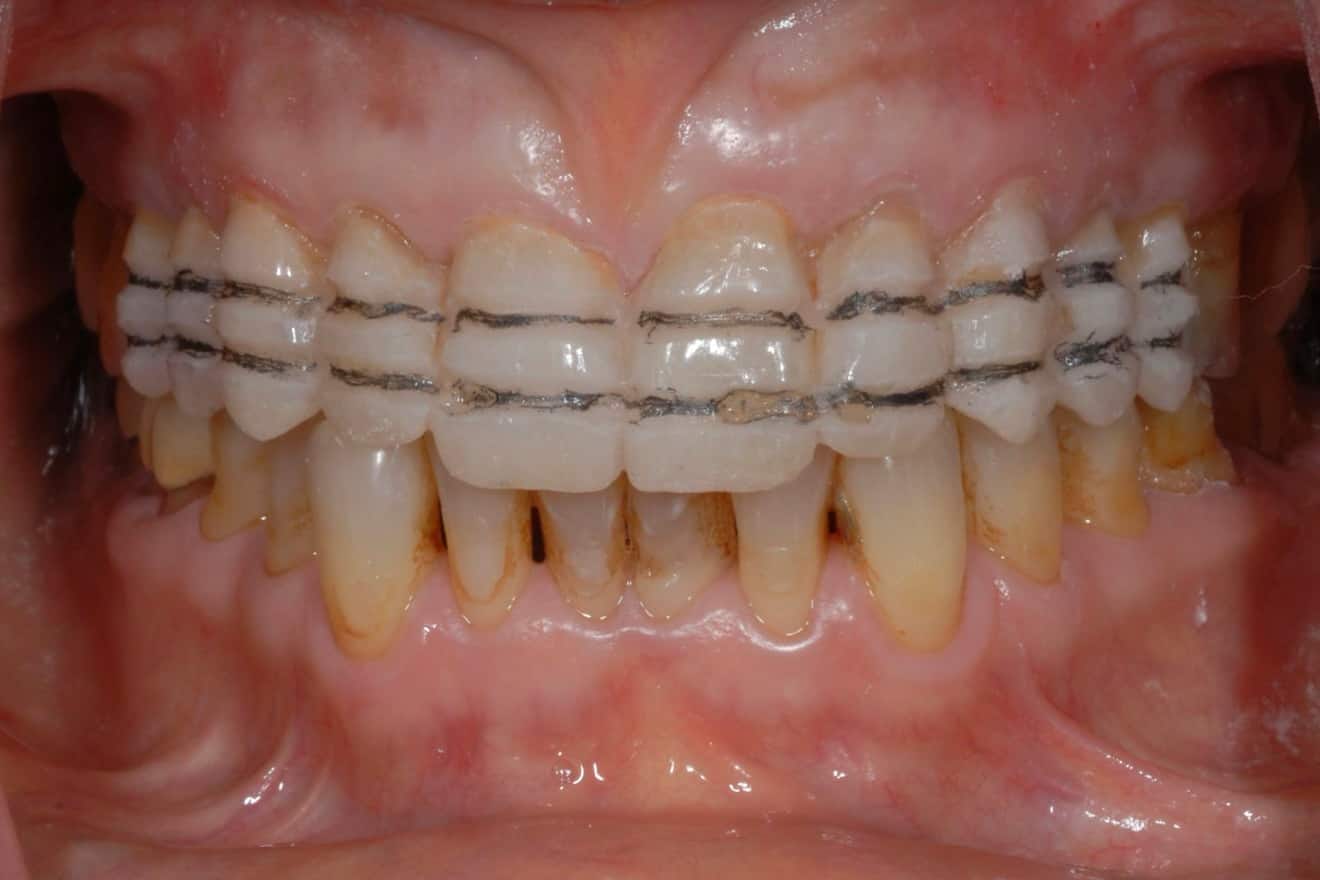
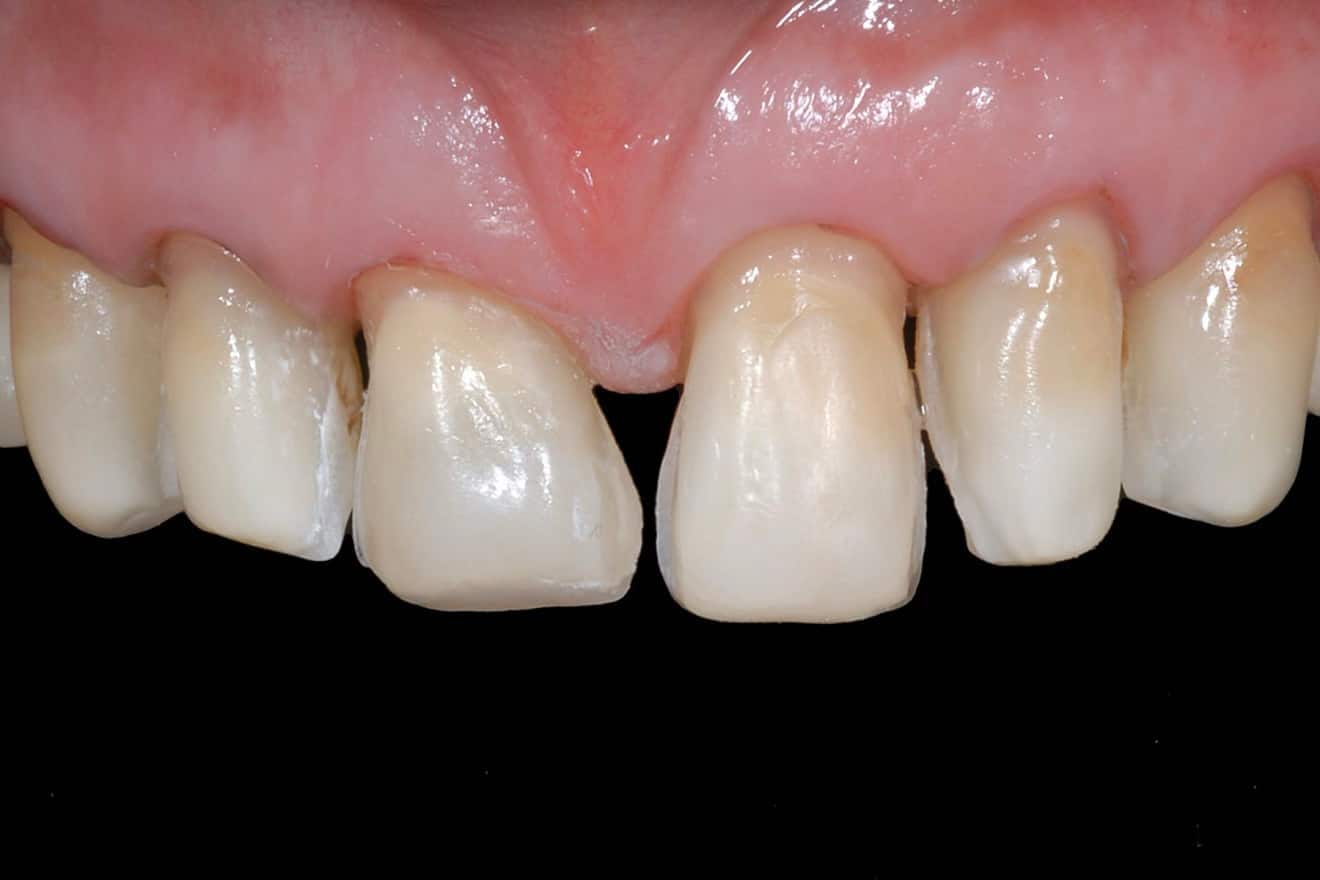
Wax first, then worn
Reconstruction begins in the laboratory, not the mouth.
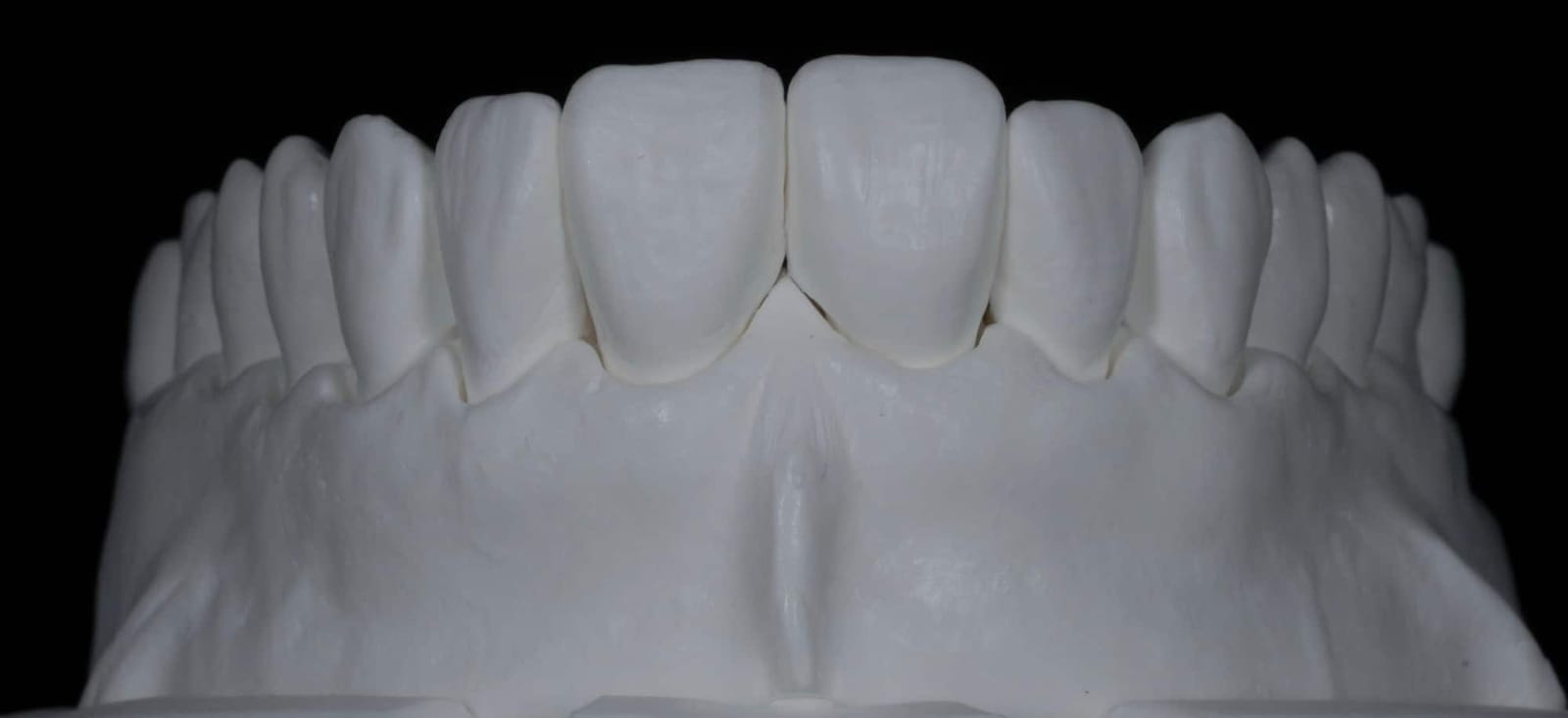
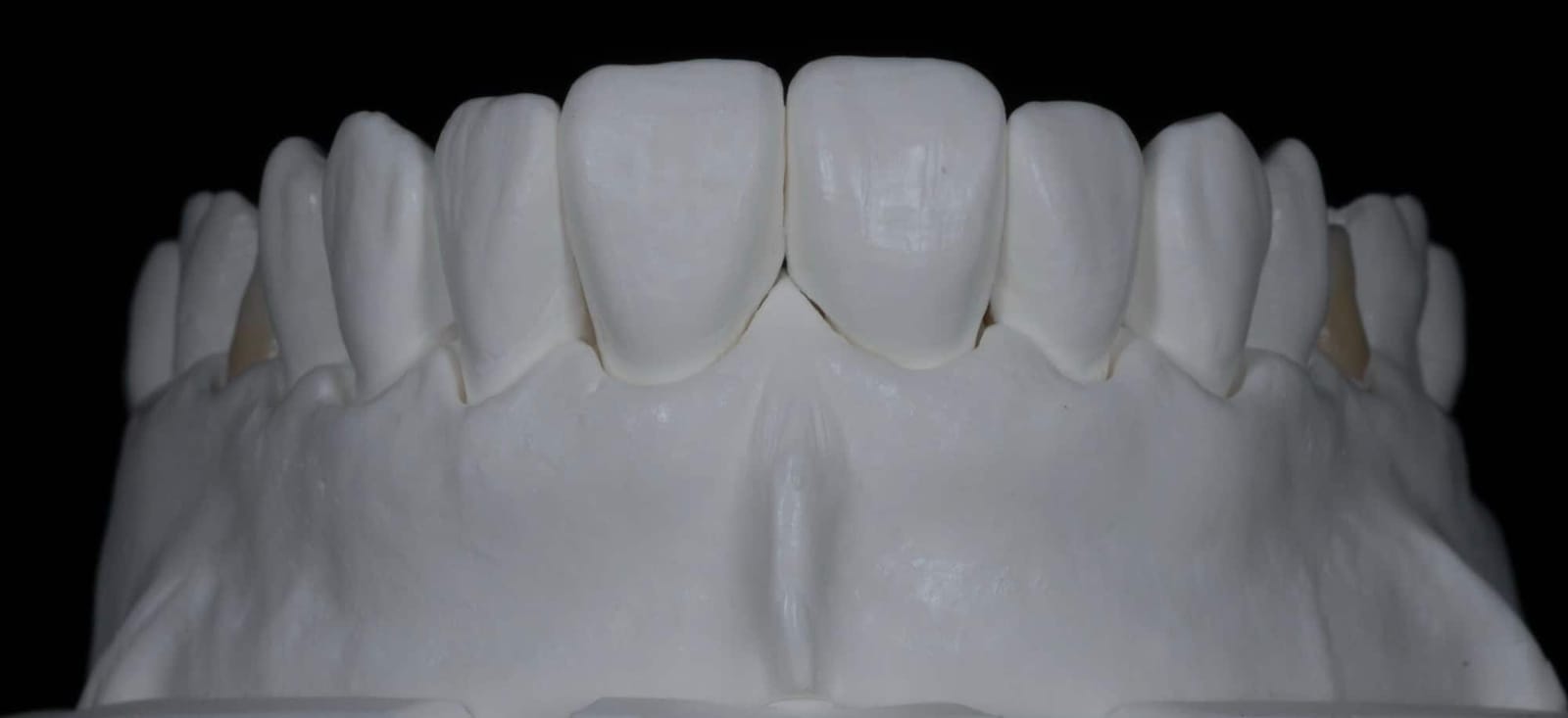
The studies were converted into a diagnostic wax up, built on a stone model, so the intended result existed as an object that could be examined from every angle. This is what we believe the teeth should be, informed by what she had told us she wanted.
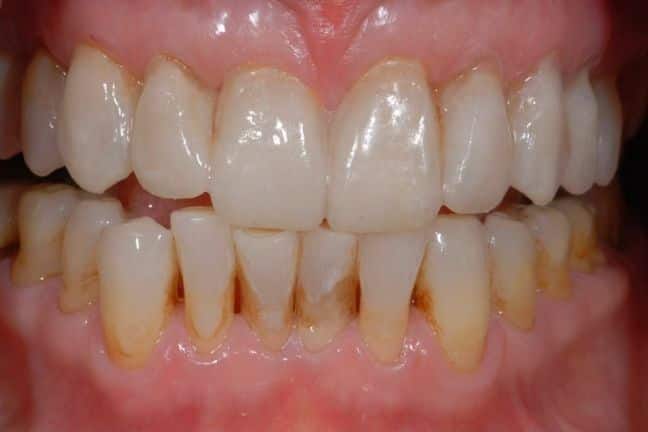
But a patient cannot see wax on a model and know how it will feel on her own face. So the wax up was converted, accurately, into a mock up: a resin version worn over her own teeth, before anything irreversible was done.
She wore her new smile and approved it while every tooth underneath was still untouched.
The wax-up against the mouth
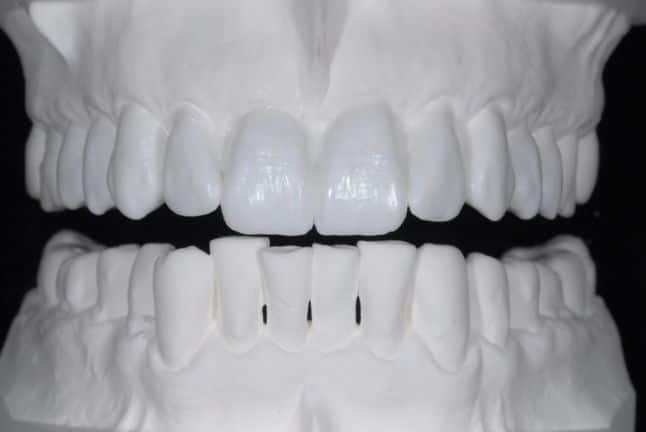
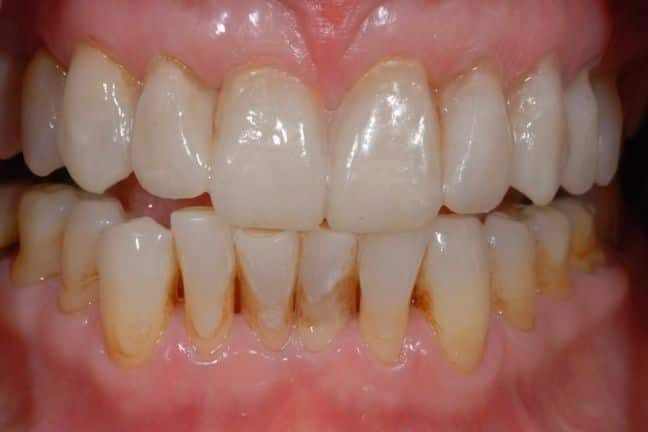
The wax-up
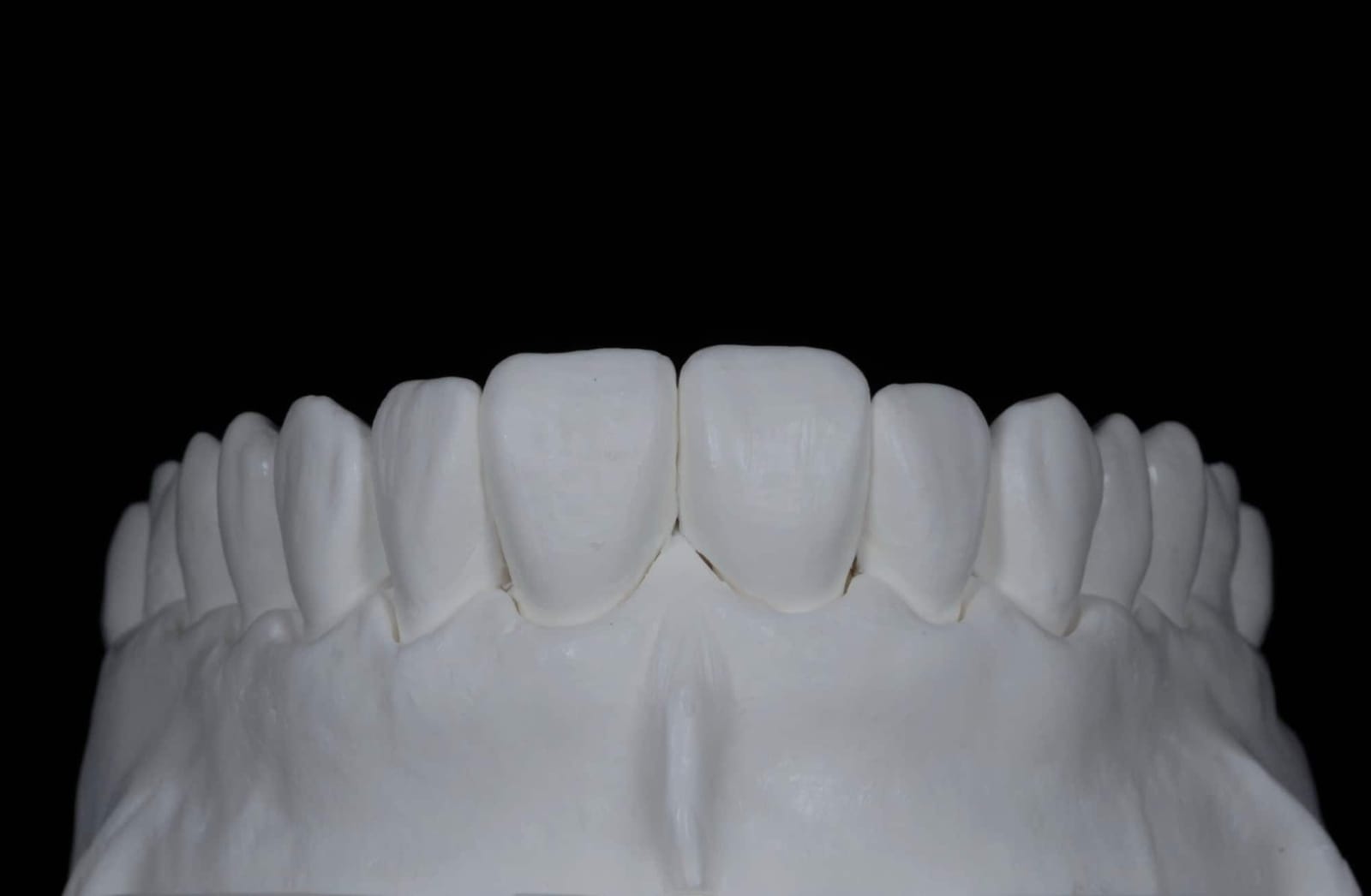
The mock-up, worn
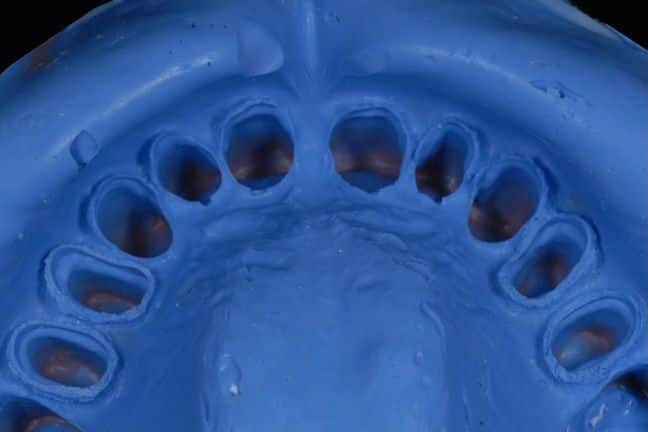
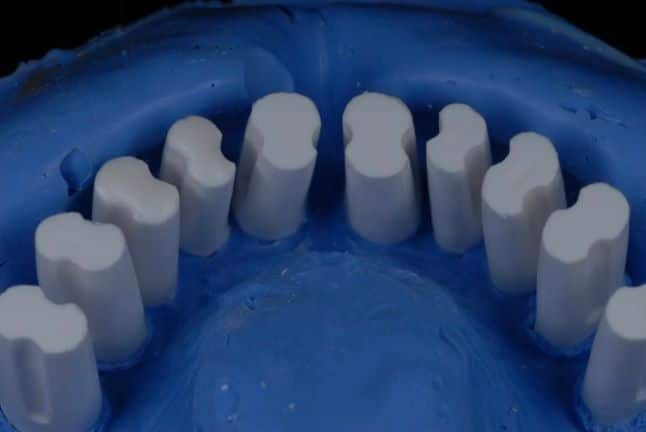
Impression, dies, model
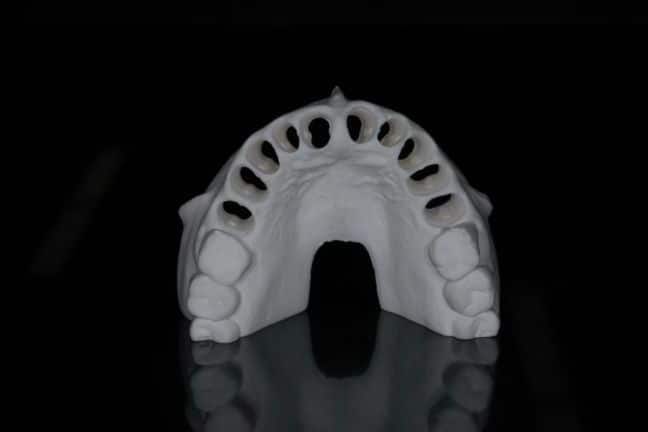
Diagnostic wax-up, final wax-up
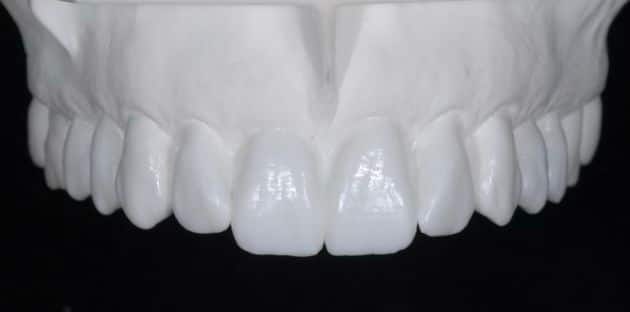
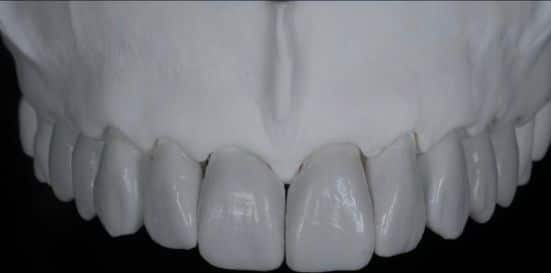
The wax-up, tooth by tooth
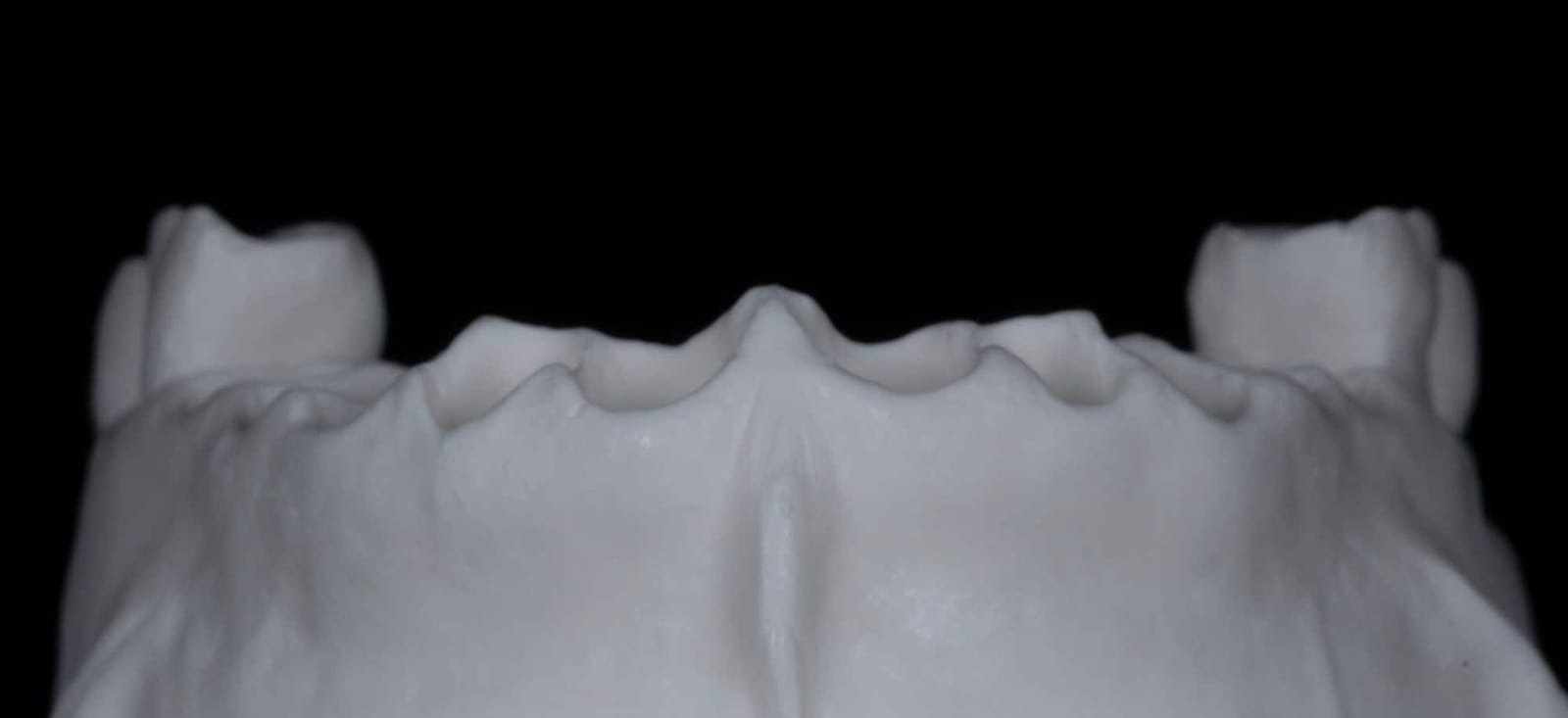
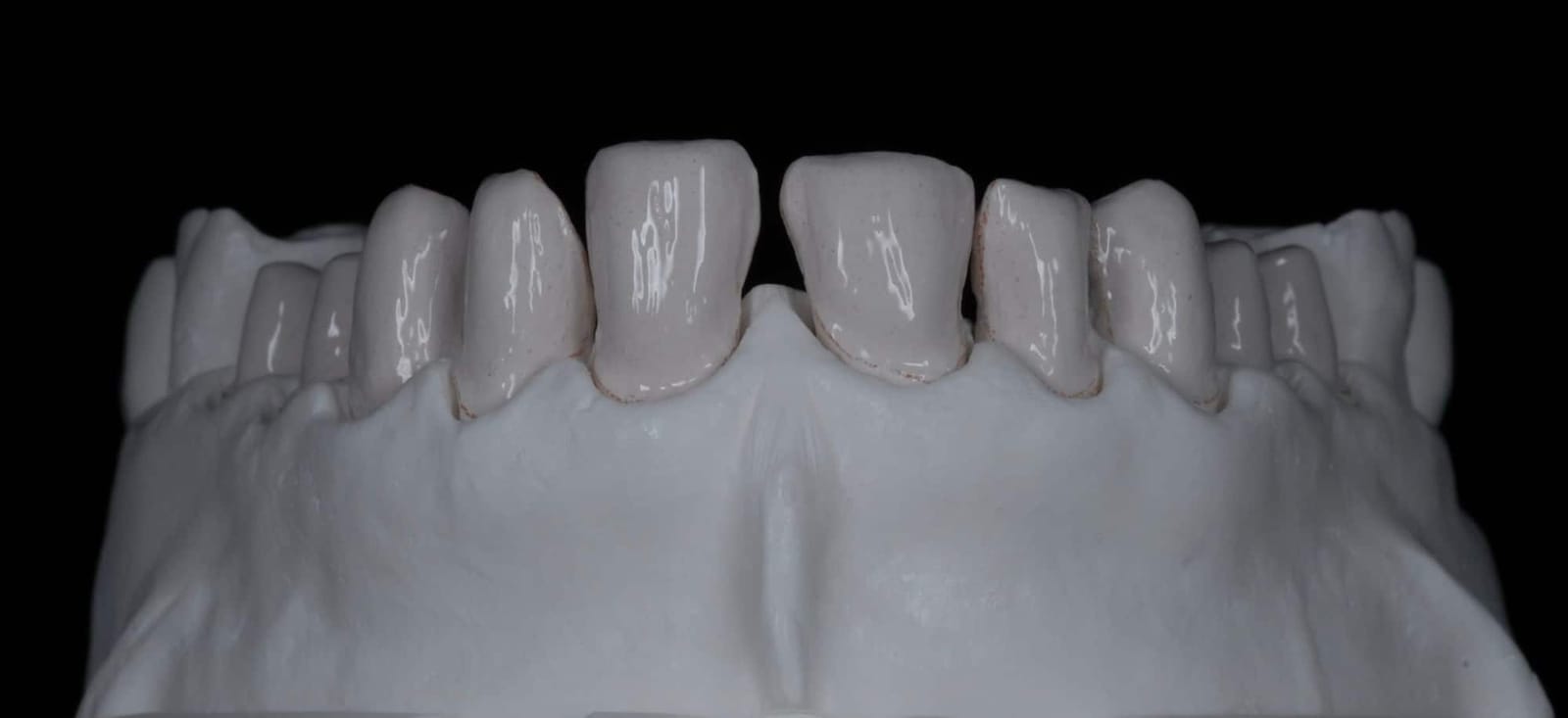
Chosen for this case, not by habit
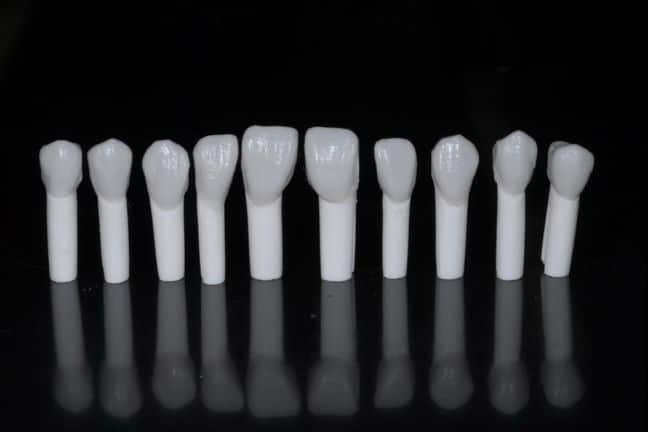
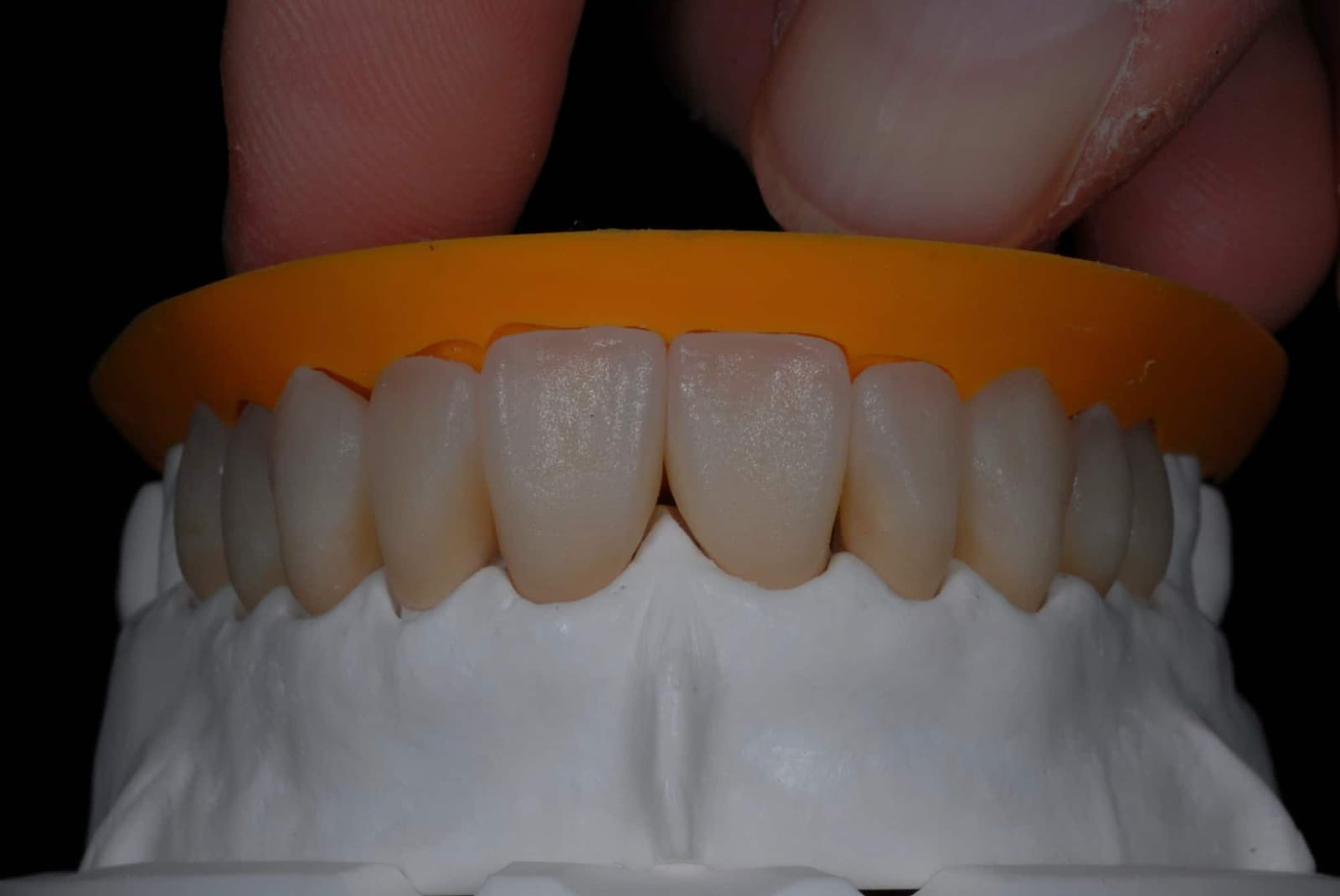
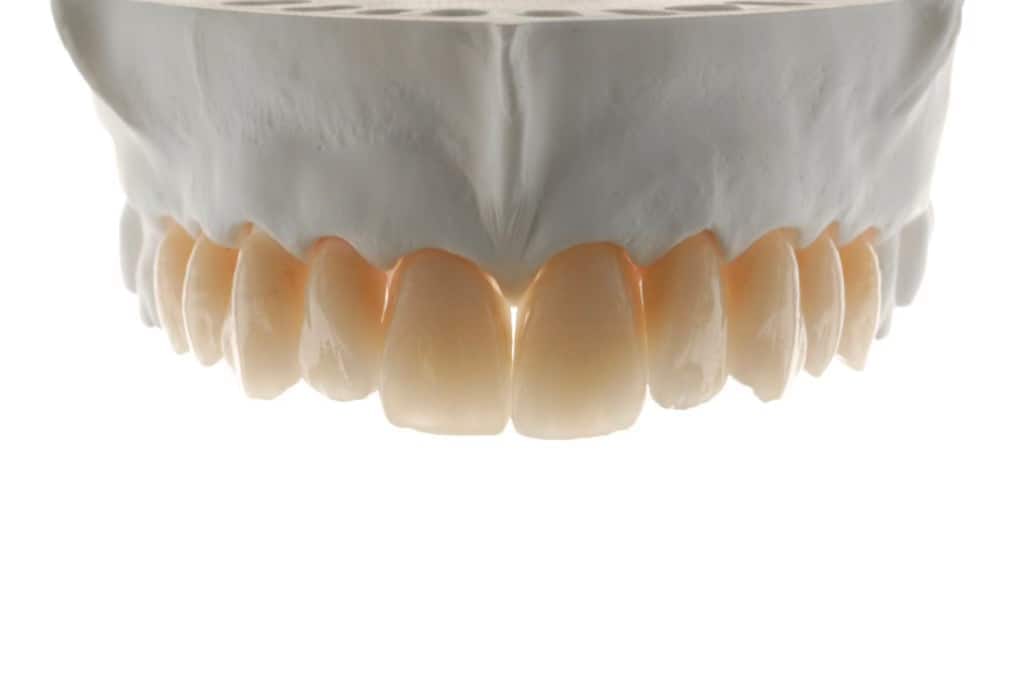
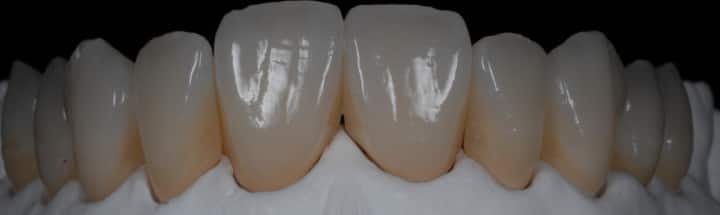
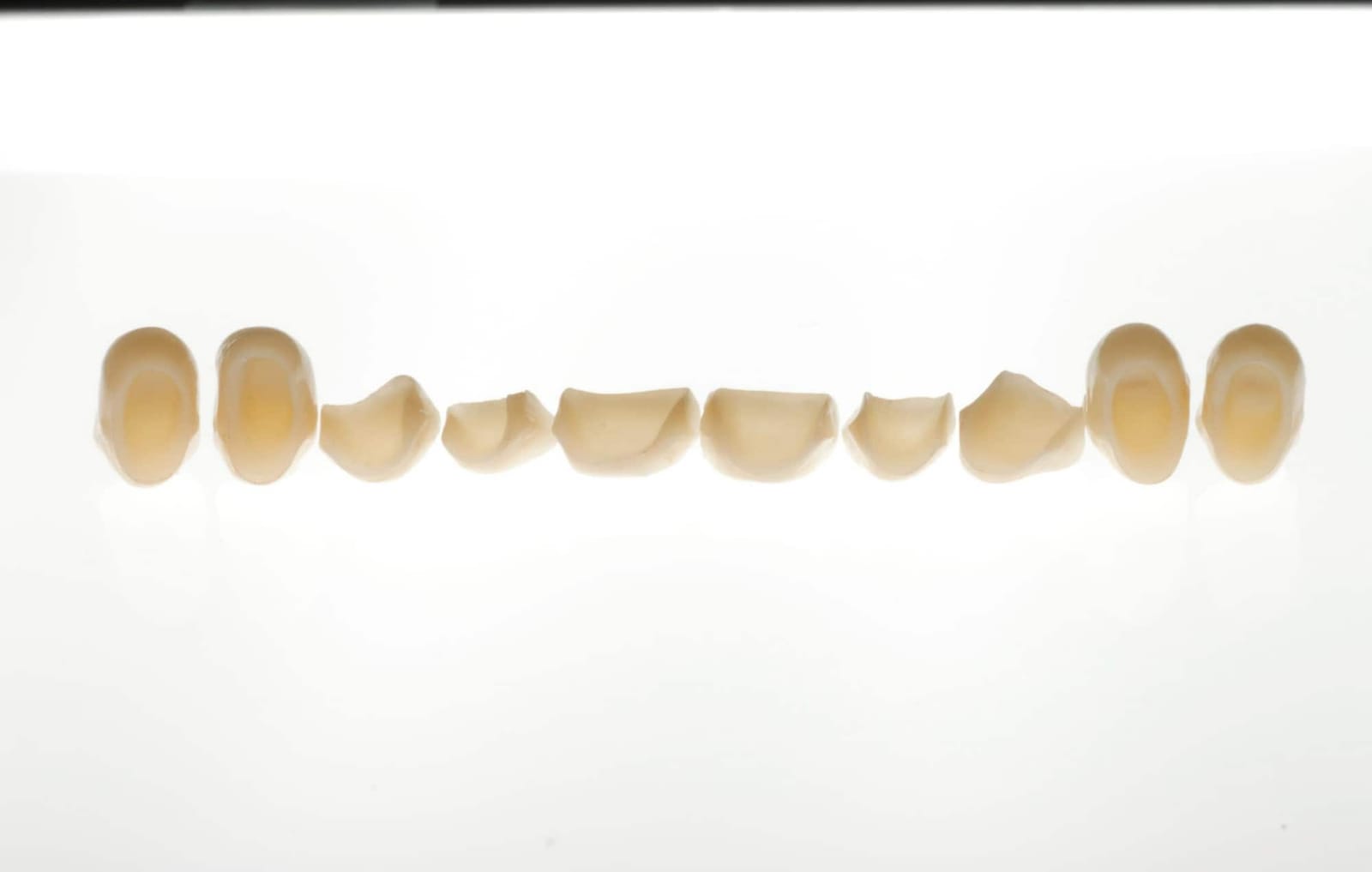
Ten restorations, made in lithium disilicate.
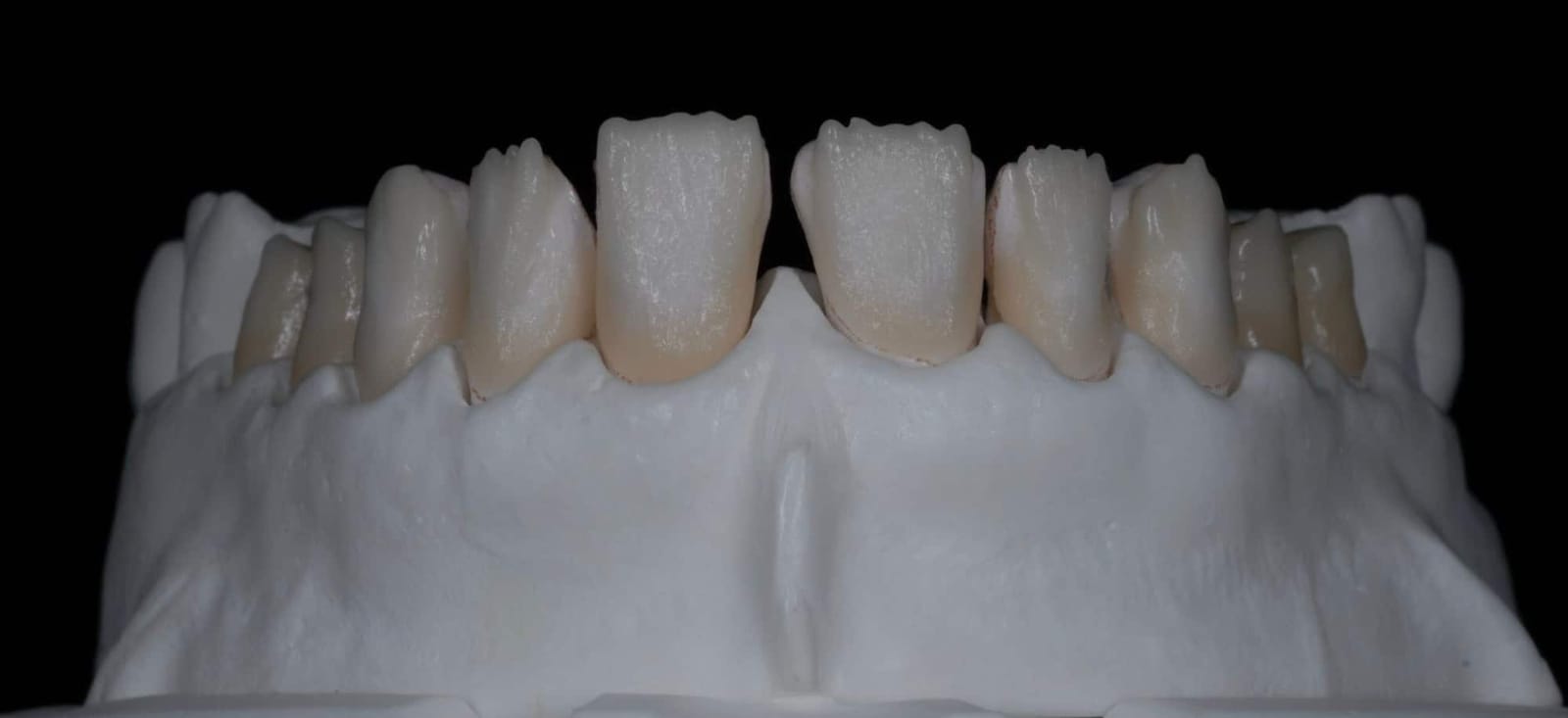
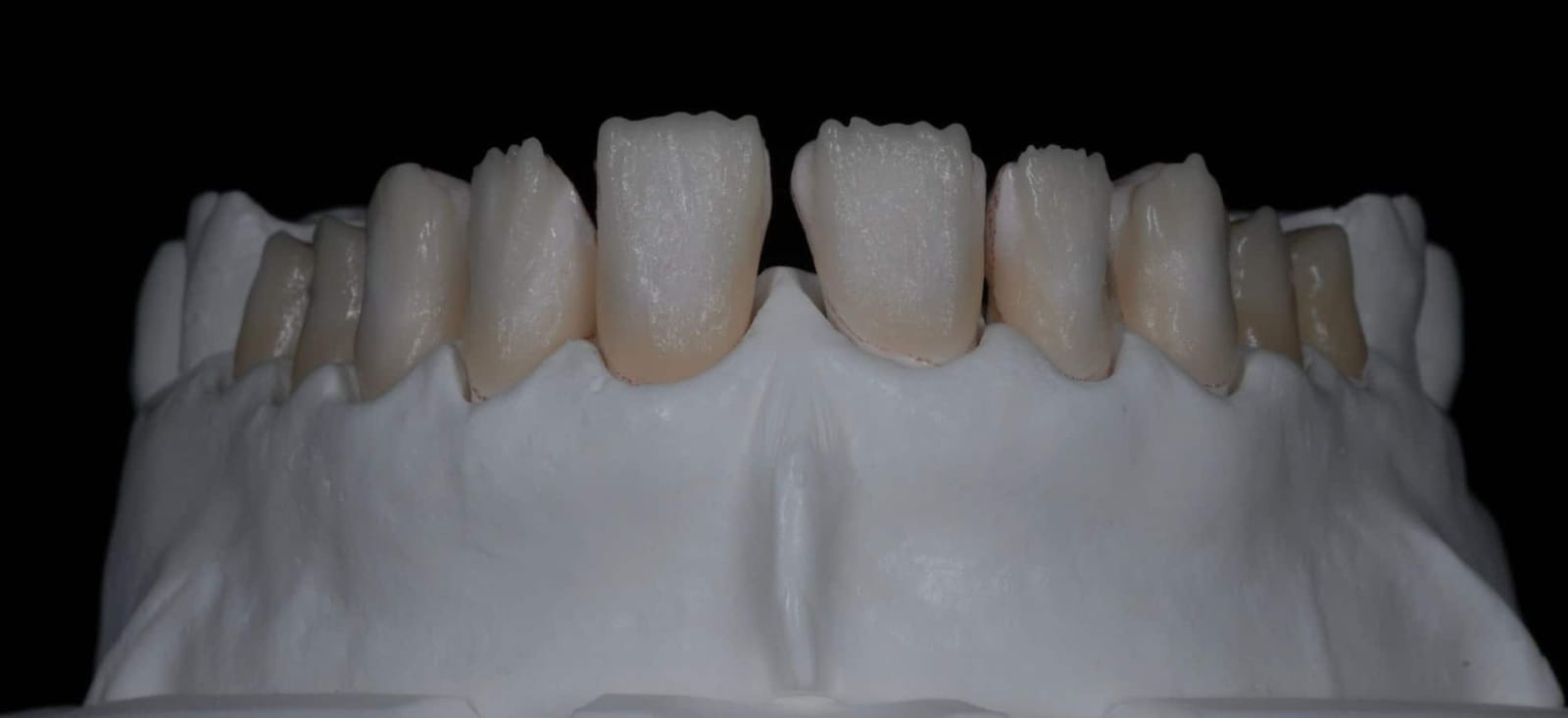
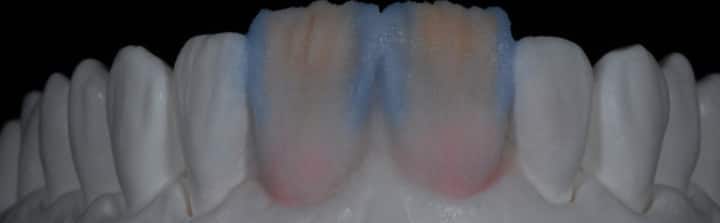
A prosthodontist keeps a range of materials available and selects for the situation. Some cases call for feldspathic ceramic, layered by hand for maximum subtlety. This one called for lithium disilicate: strong, beautiful, and consistent across ten units, which is what produces a harmonious smile rather than ten individually excellent teeth that do not agree with each other.
The veneers
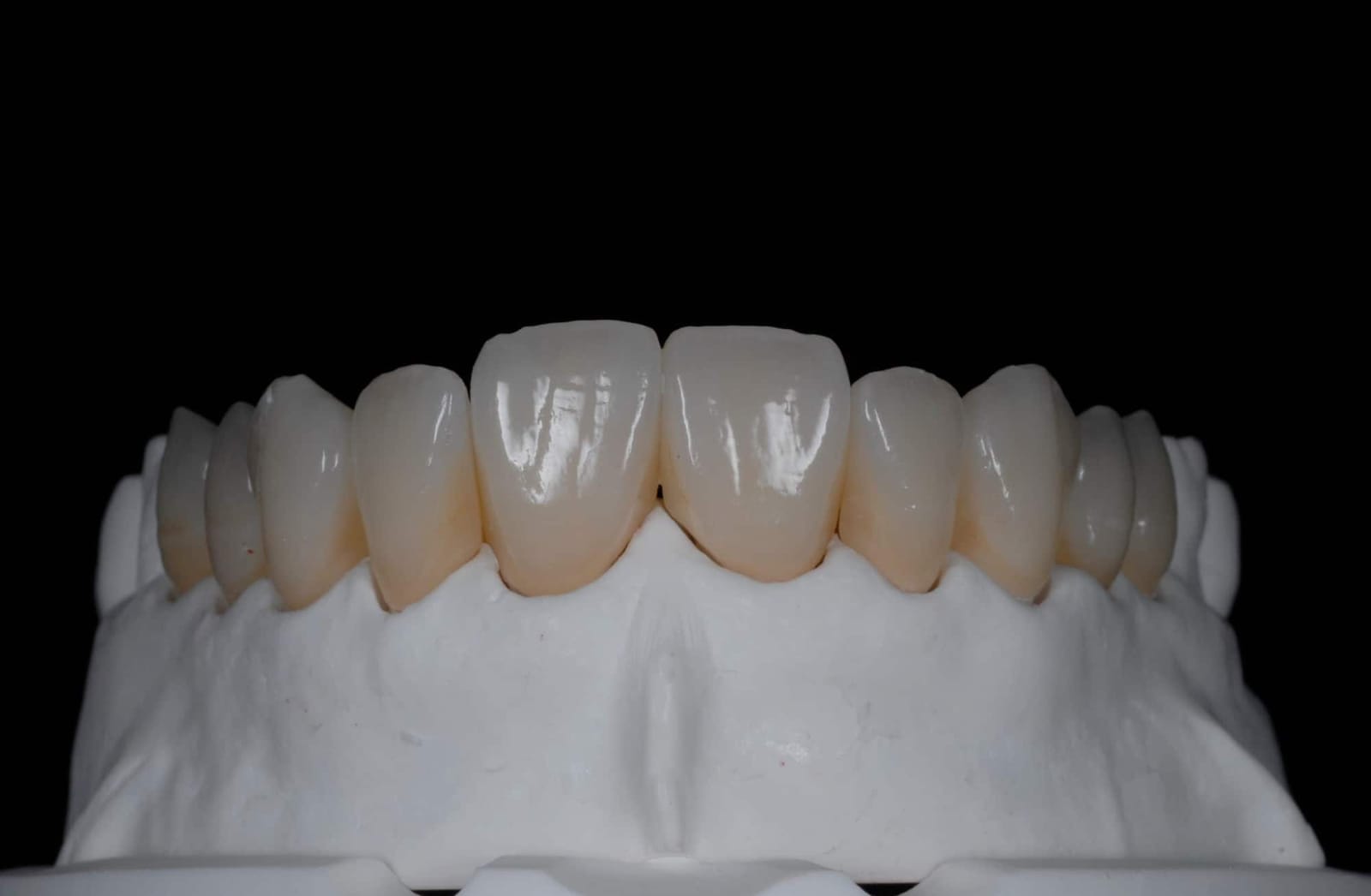
Layering the ceramic
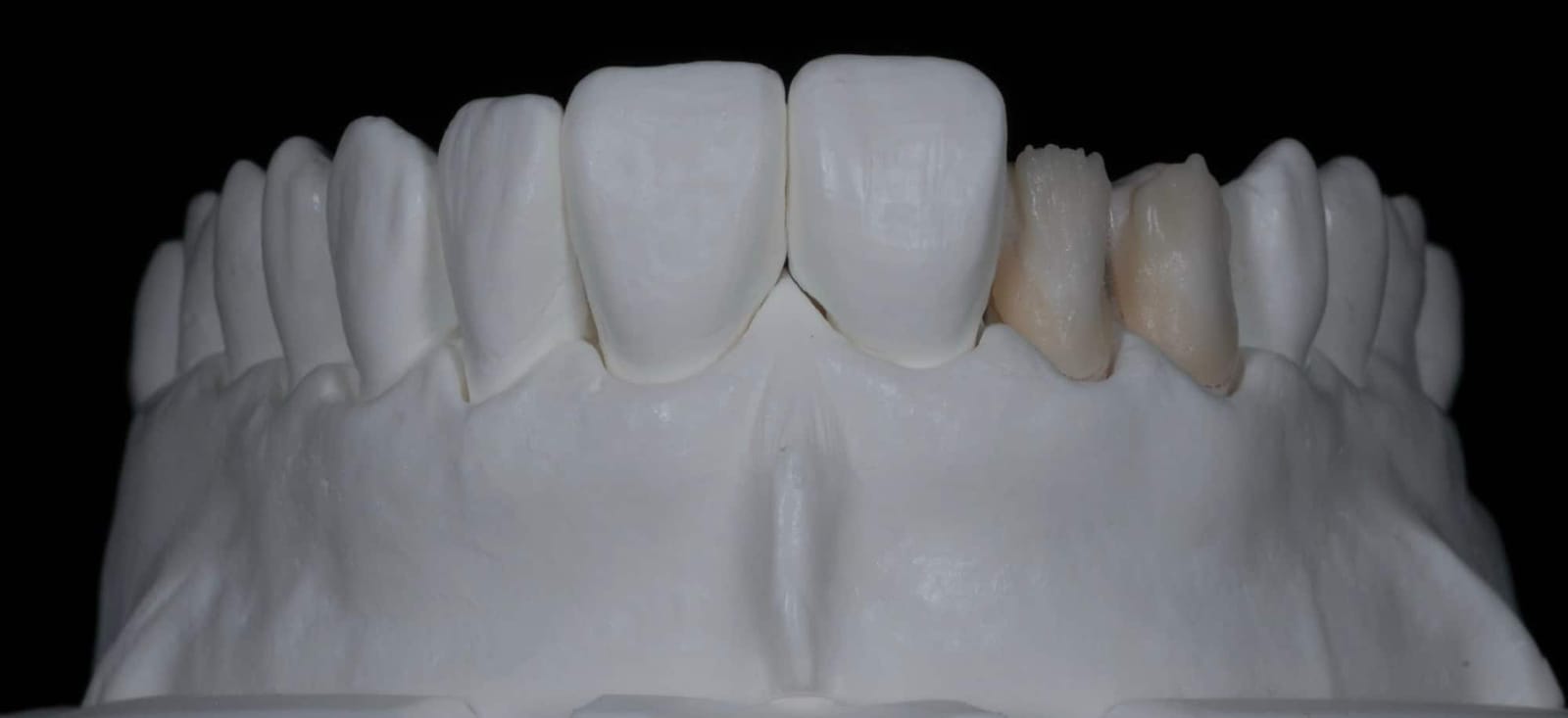
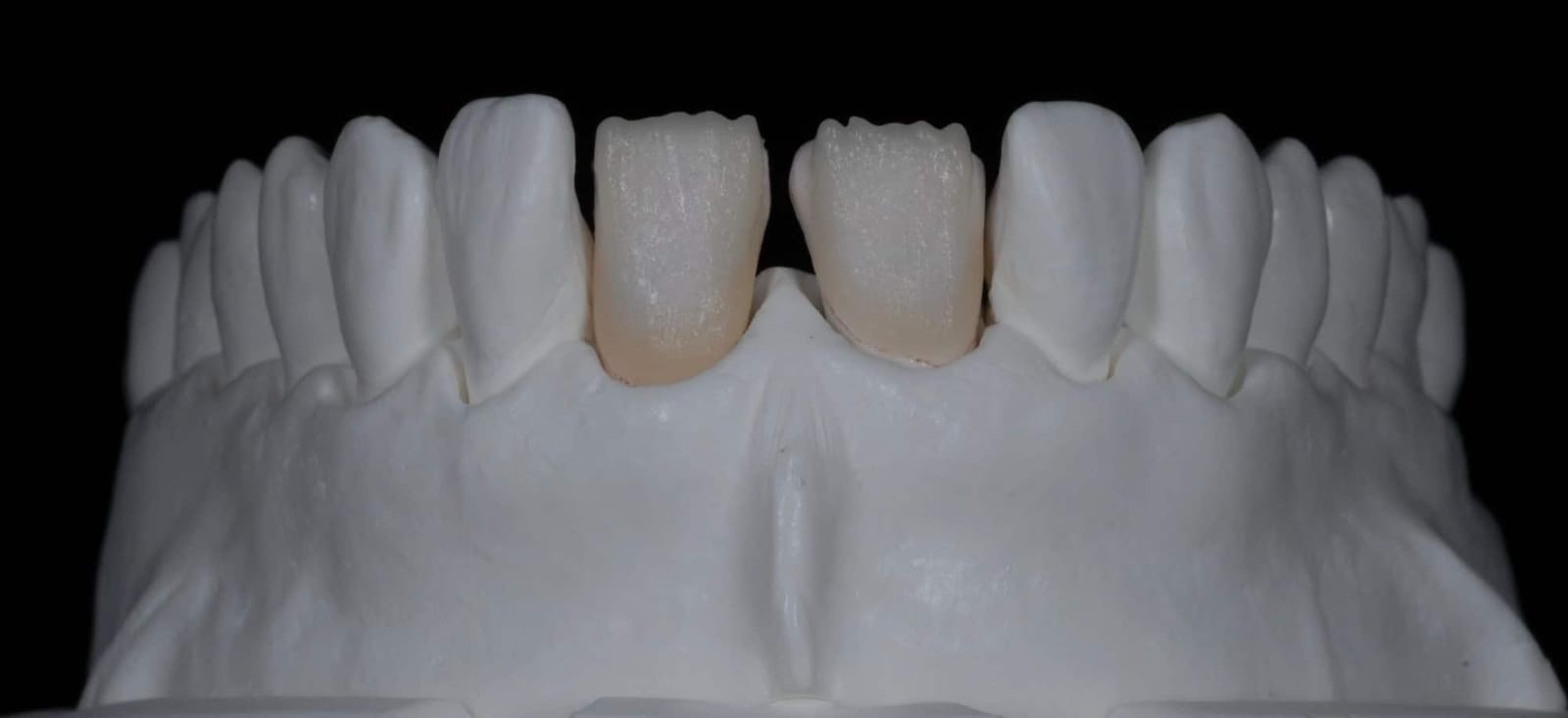
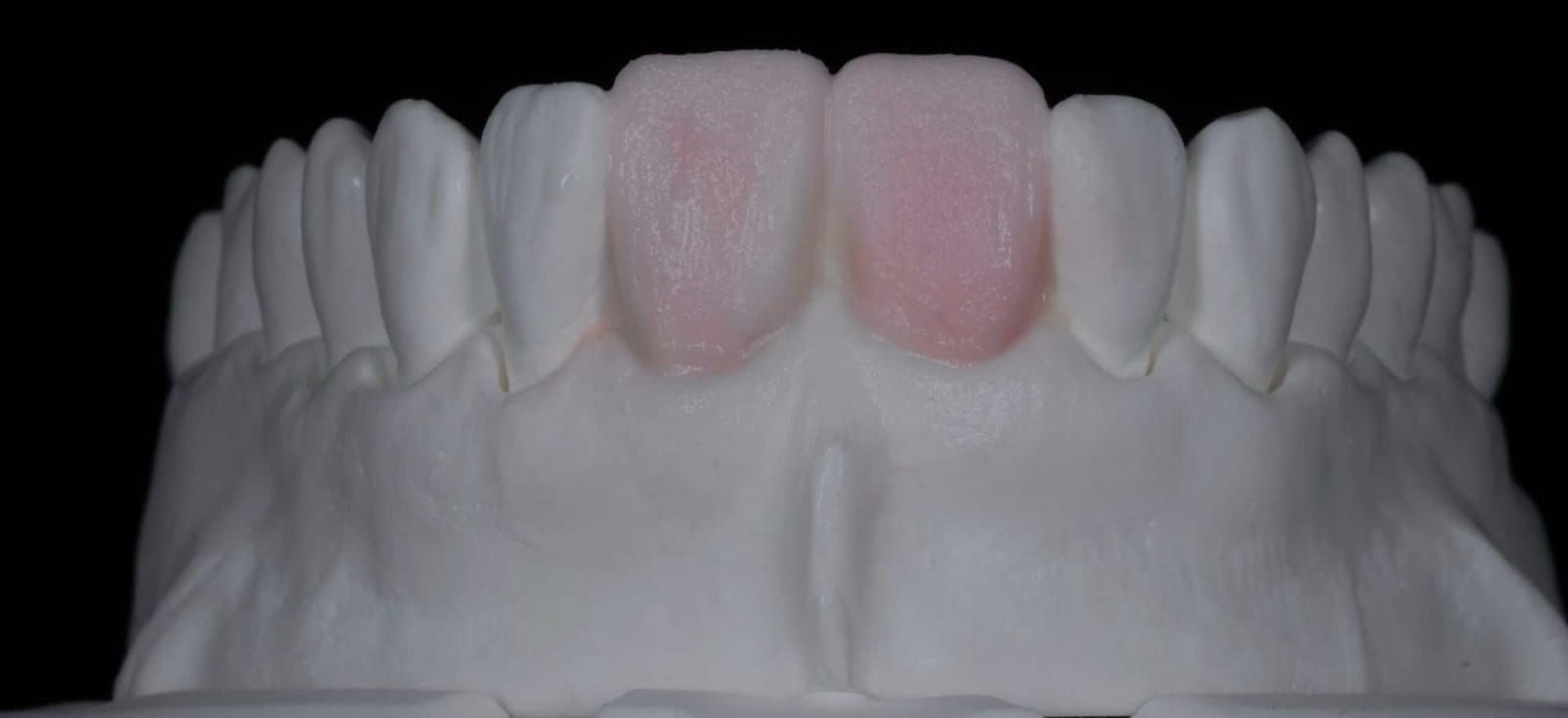
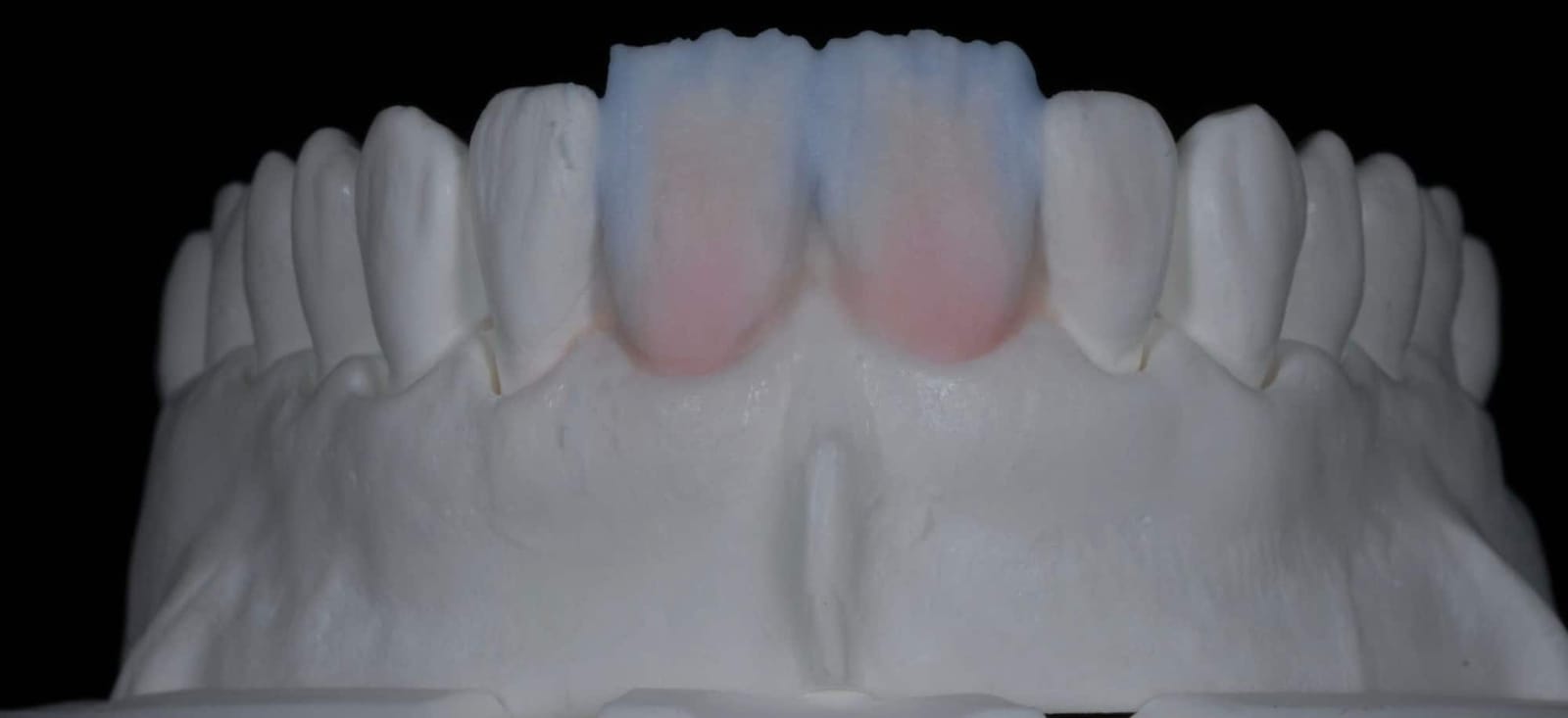
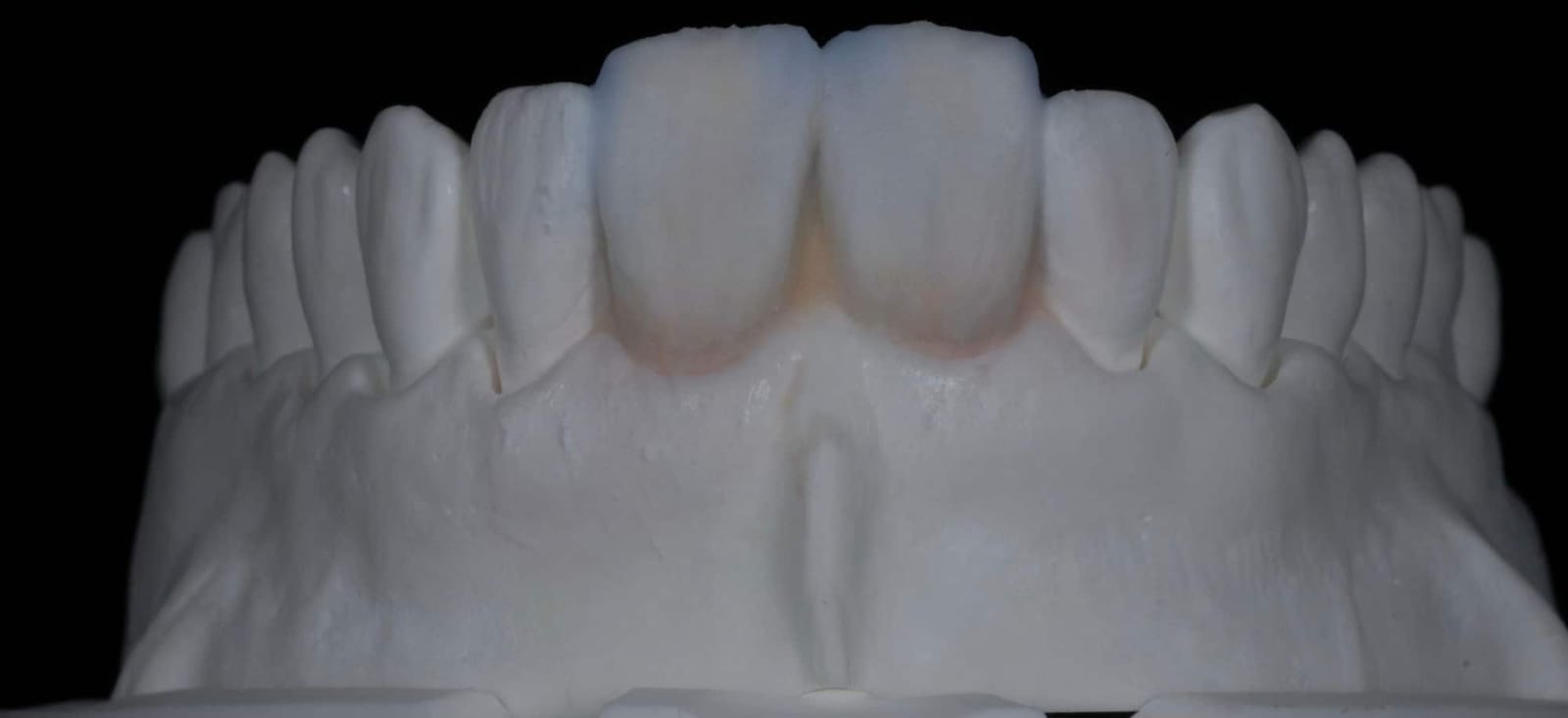
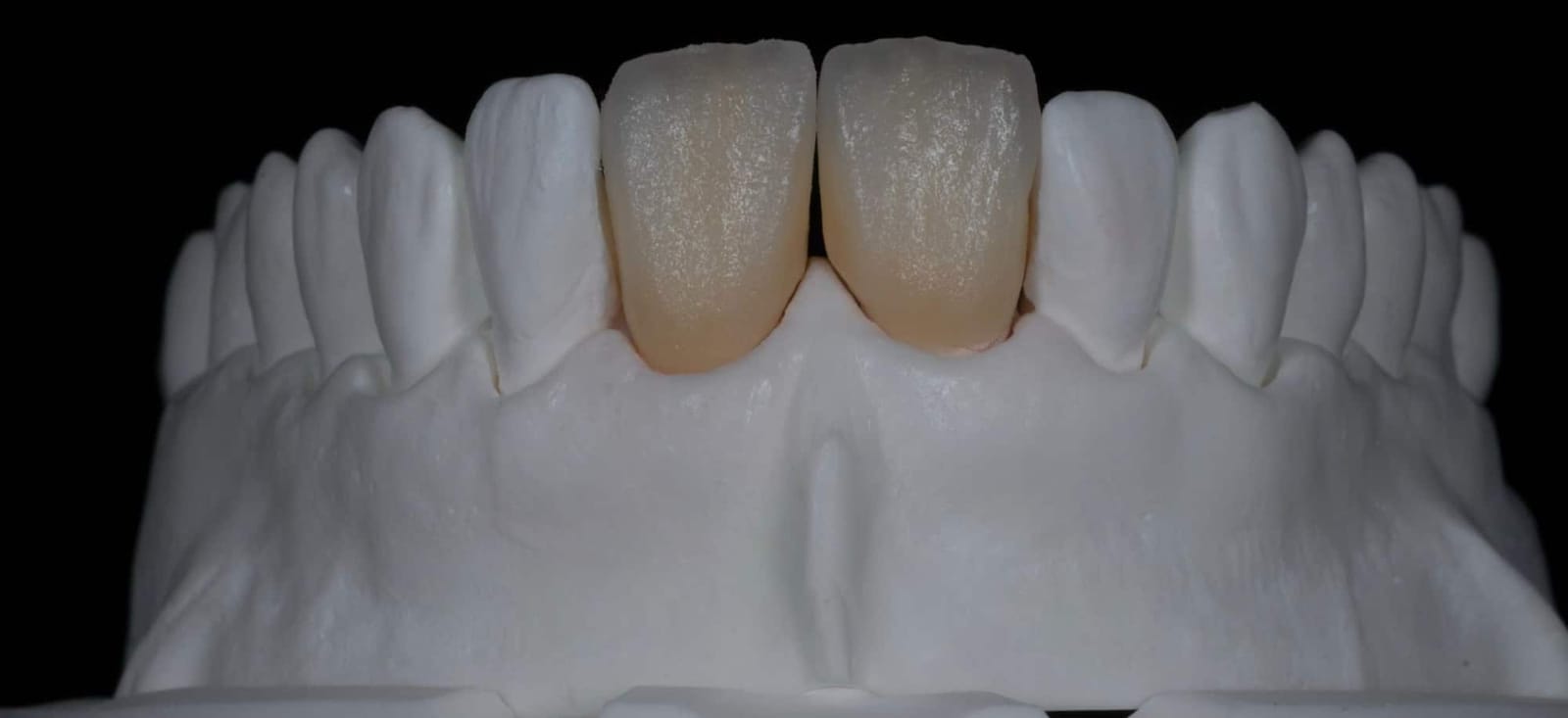
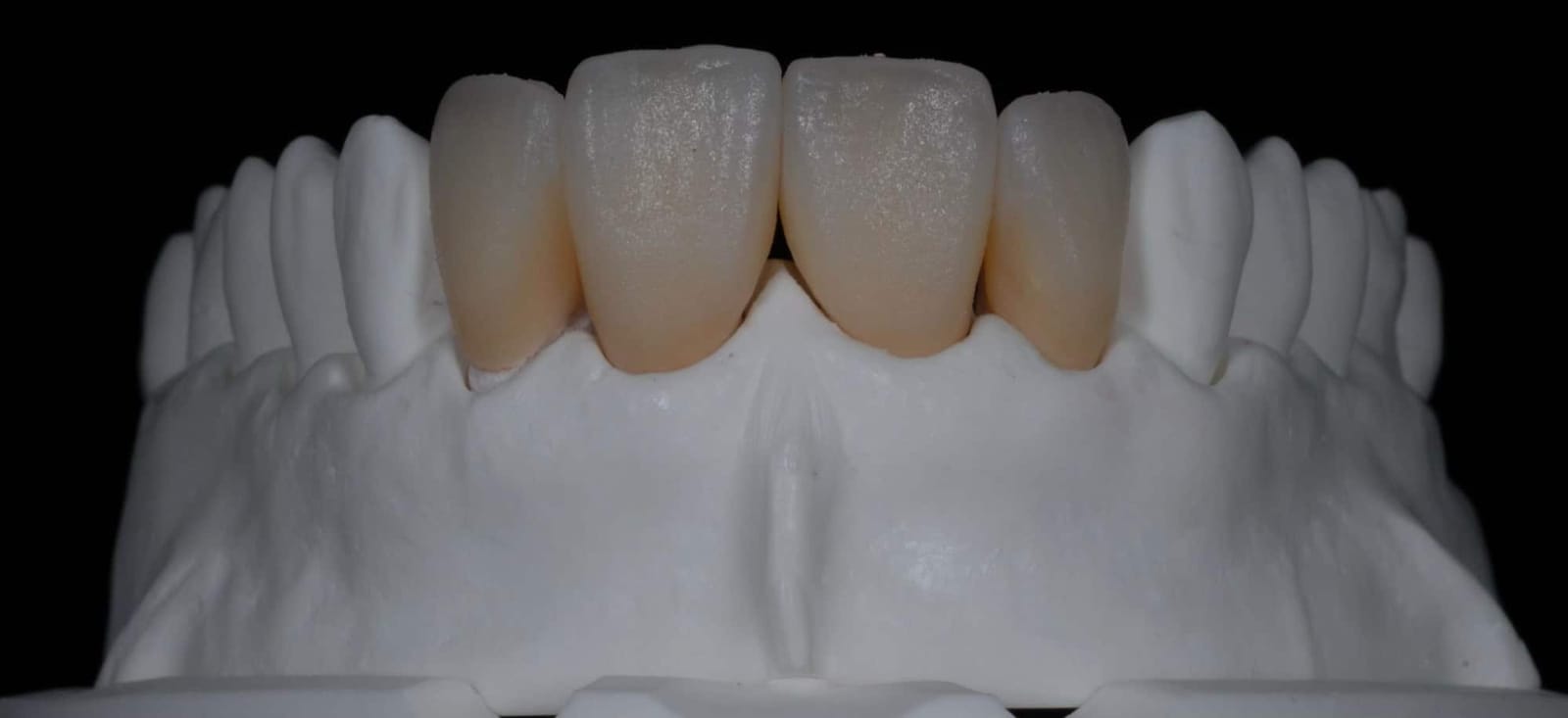
Layering, close
Finished, on the model
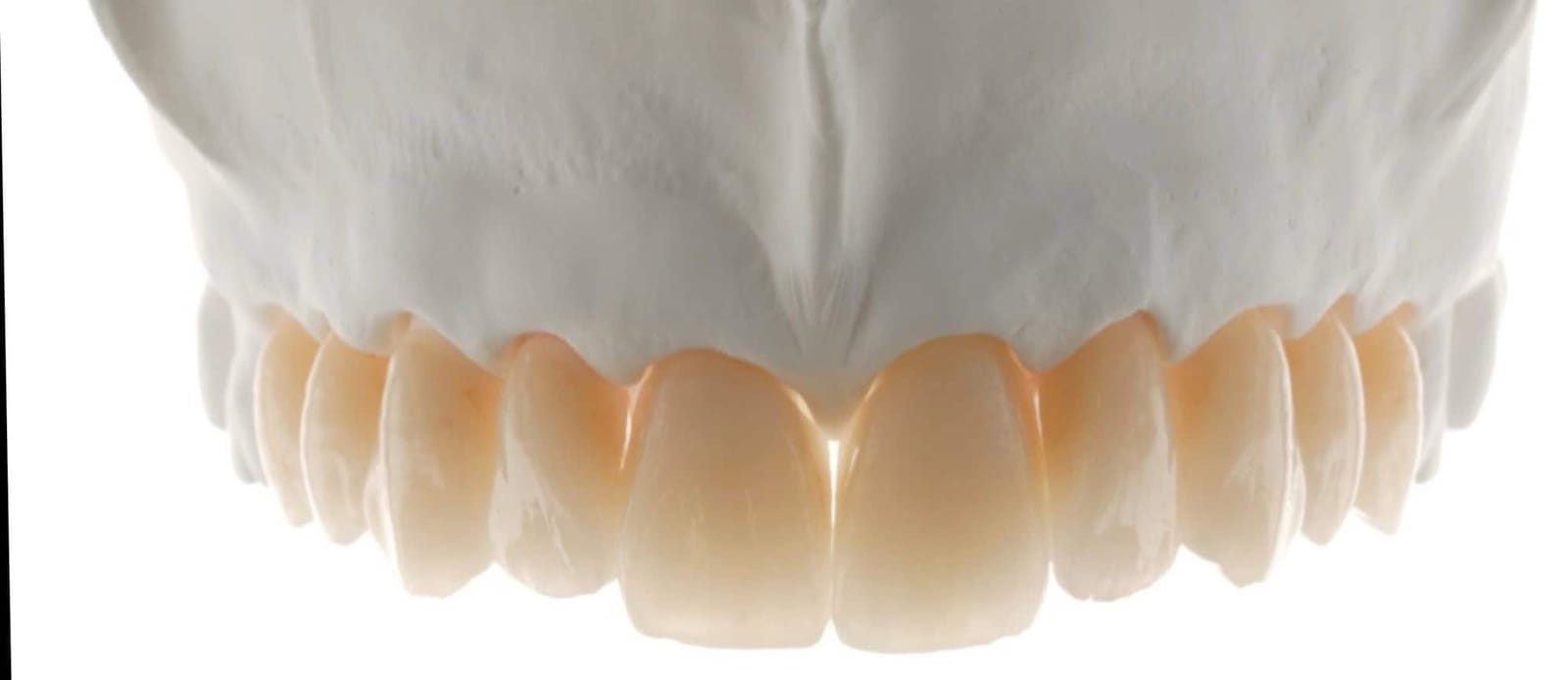
How the dark triangles were closed
Her black triangles needed to disappear, and there is a specific technique for that.
Small projections extend from the sides of the veneers, wings that reach into the space between the teeth. They close the triangle and restore a natural contour, and they are shaped so the area stays cleansable rather than trapping what it is meant to hide.
Closing a black triangle is easy. Closing one that stays healthy is the skill.
From the incisal edge
Still the same smile
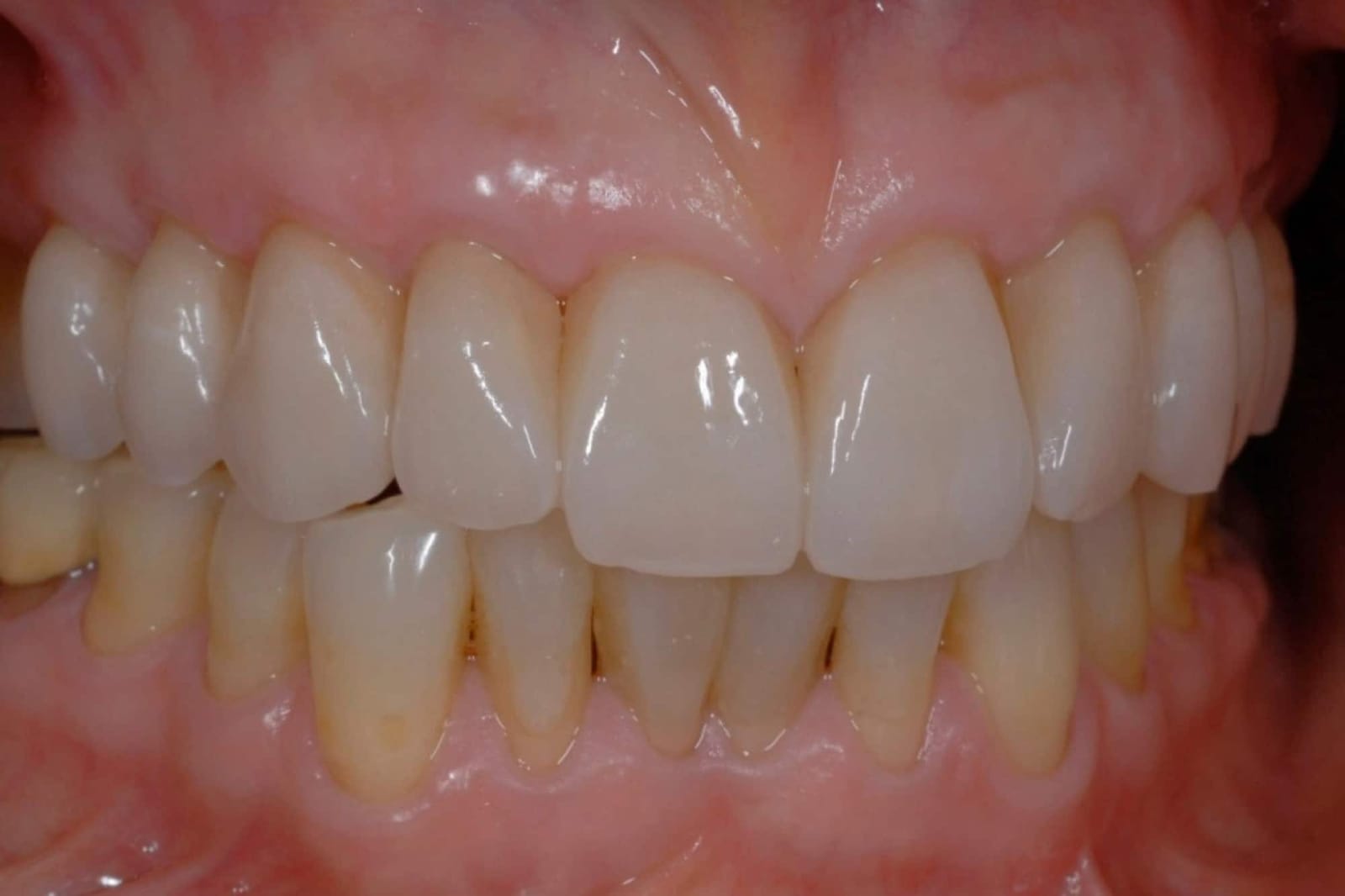
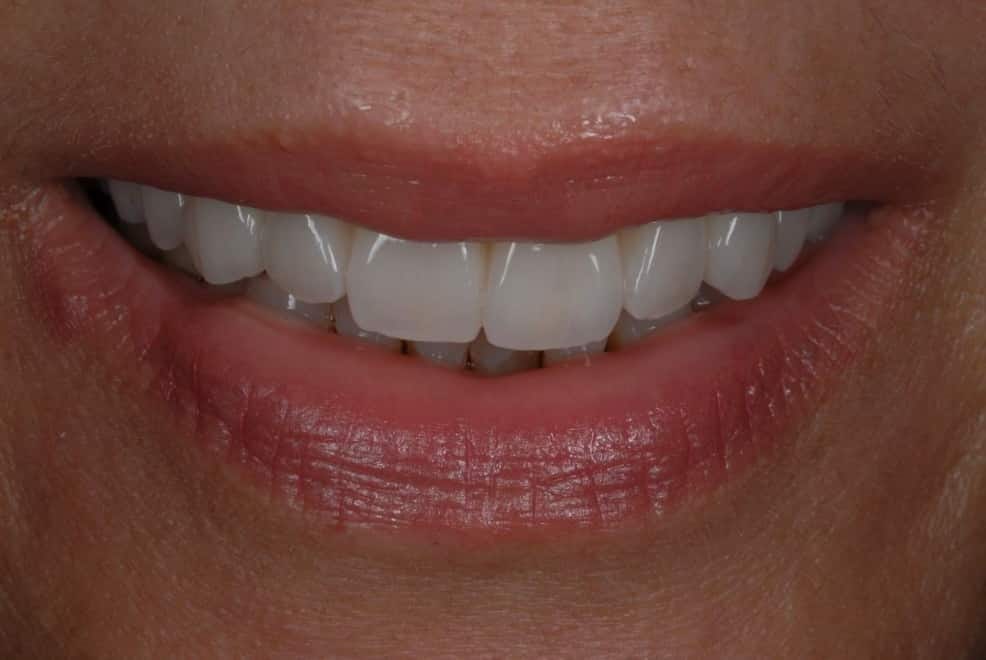
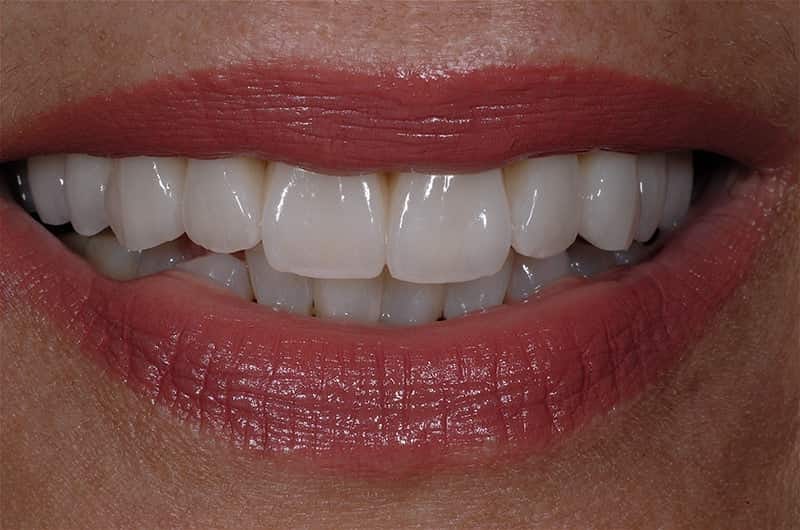
These restorations have been in service for two decades.
The triangles are still closed. The veneers still look the way they looked. At the twenty year mark one or two crowns at the back needed replacing, and that is the entire maintenance history.
Good restorative dentistry, with the right diagnosis and the right materials, gives a patient what they asked for aesthetically and then keeps giving it. Twenty years on, she looks the same.
Two years on
The finished veneers
The ten veneers
Her face


The diagnosis decided everything
Every good decision in this case followed from one finding: that the insides of her teeth were untouched.
That is what made minimal preparation possible, what determined the material, and what meant the repairs finally stopped failing. Without it she would have received more bonding, or more aggressive treatment than she needed, and the acid would have kept working.
Find the cause, and the treatment becomes conservative.
Before and after
Every case is planned around one person's anatomy. Individual results vary, and what was right for this patient may not be right for you.