Single Front Tooth Case 1 · Cosmetic · Crowns
One Crown, and Everything It Touches
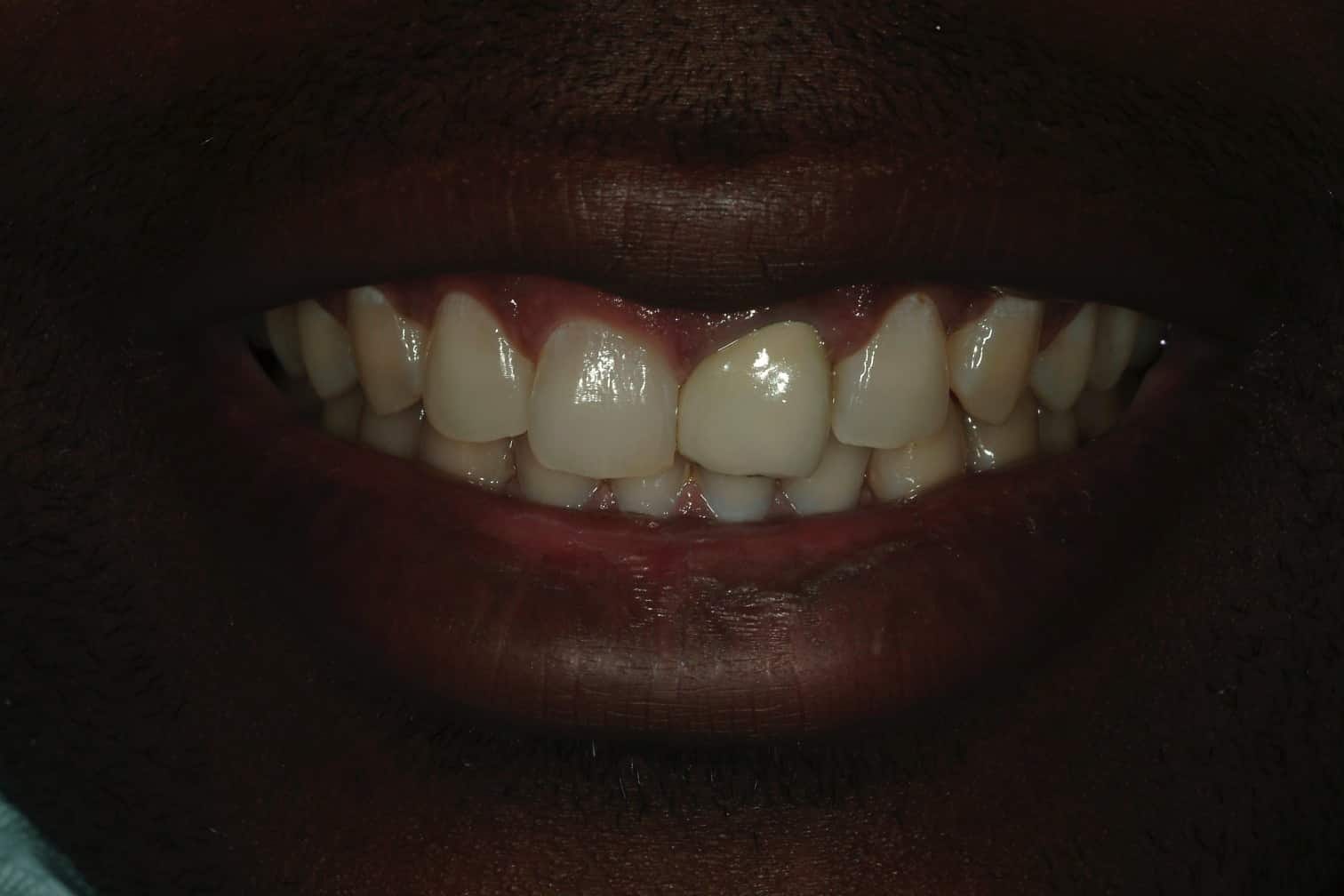
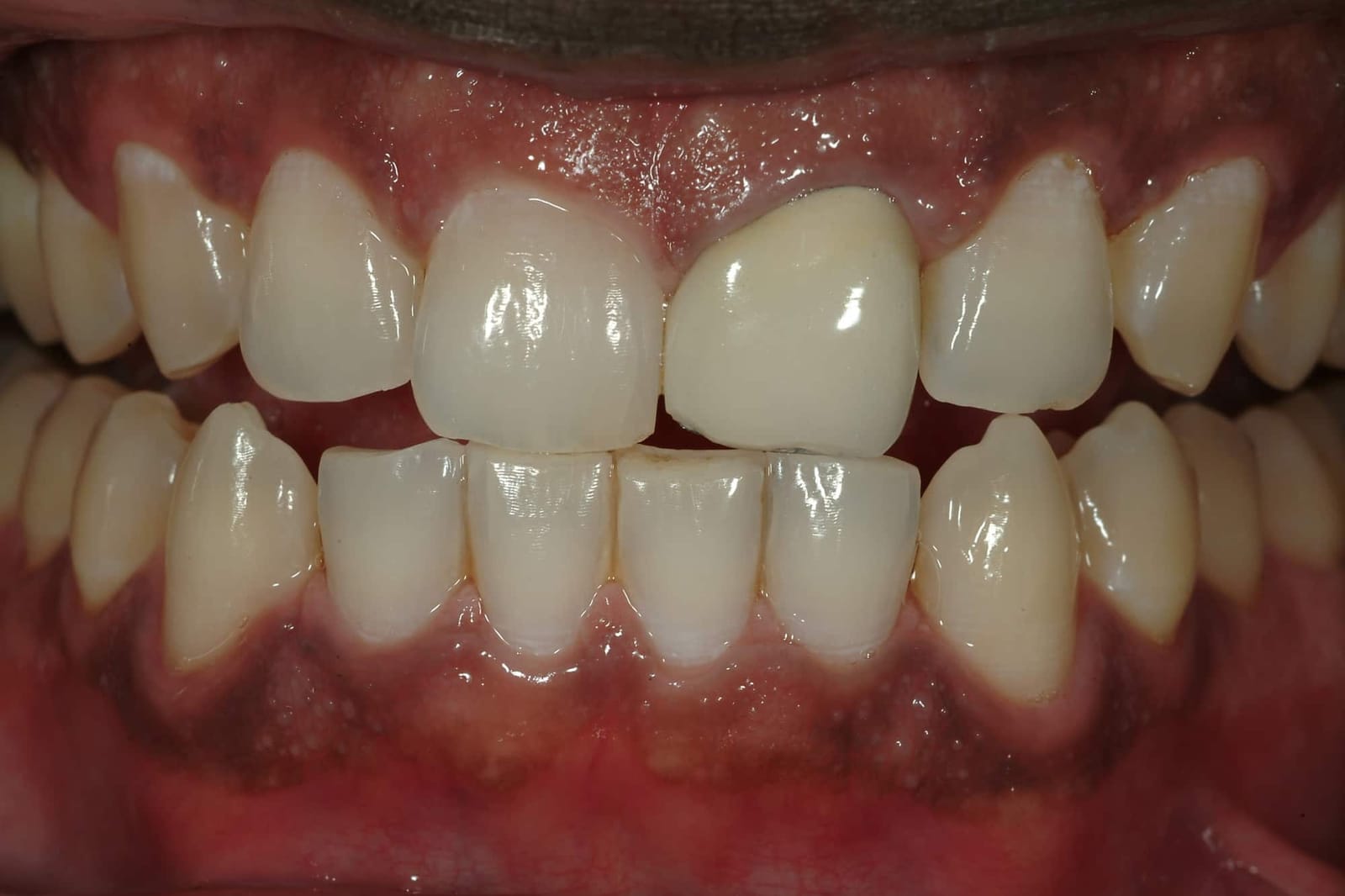
One tooth. An old crown at the front, with a black line at the gum.
It is the smallest kind of case there is, and among the least forgiving. A single crown sits beside its own twin, in daylight, in every photograph anyone takes of you. There is nowhere for it to hide.

What was wrong with it
The color was off. That much anyone could see.
The shape was wrong too, in a way most people feel rather than identify: the crowned tooth was wider than the natural tooth beside it, so the space between his front teeth was uneven and the smile sat slightly out of balance.
And it was doing damage. The metal beneath was darkening the root and shadowing the gum above it, and the tissue around it was irritated and inflamed. This is what an aging crown does quietly, over years, while everyone concentrates on the color.
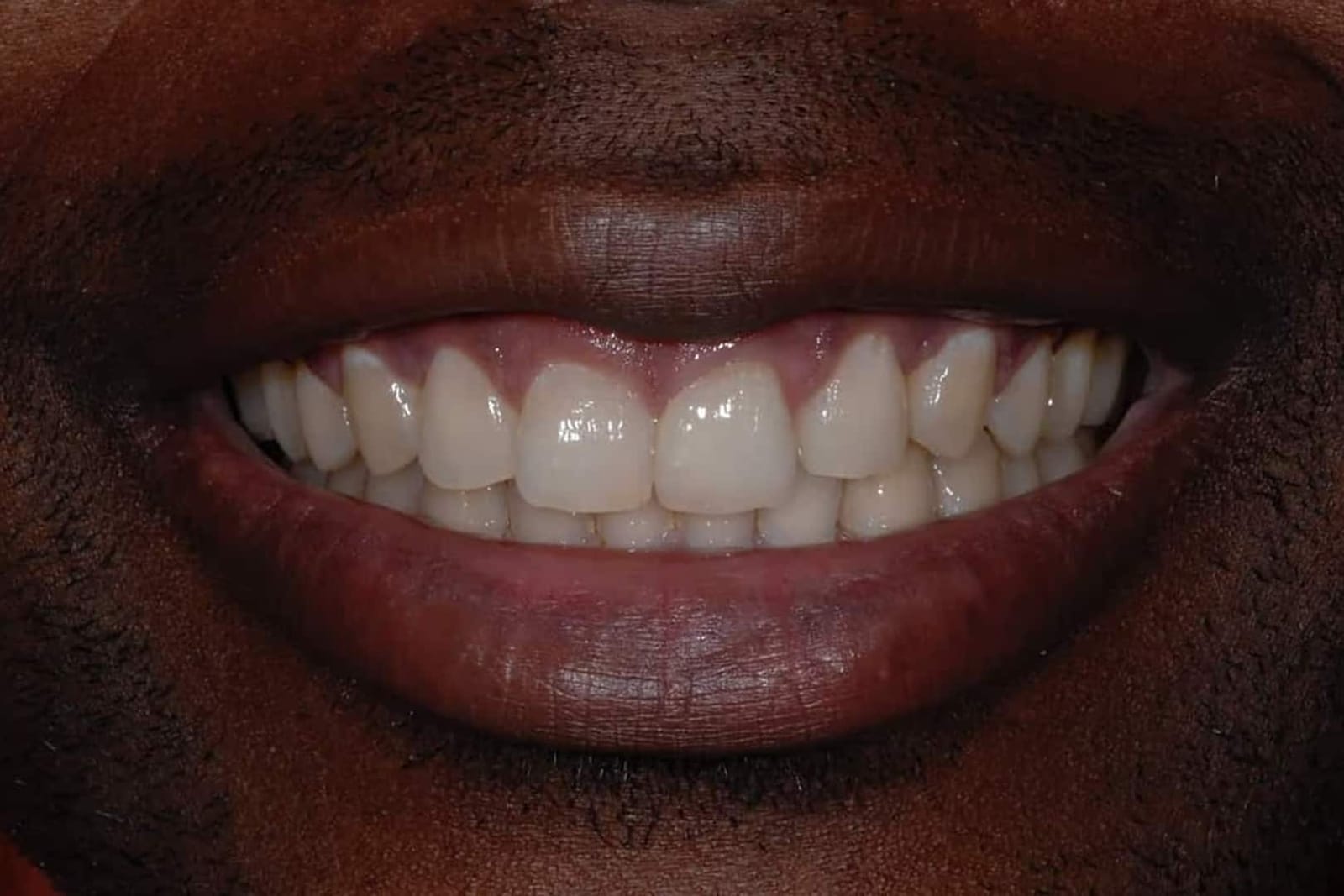
Before and after
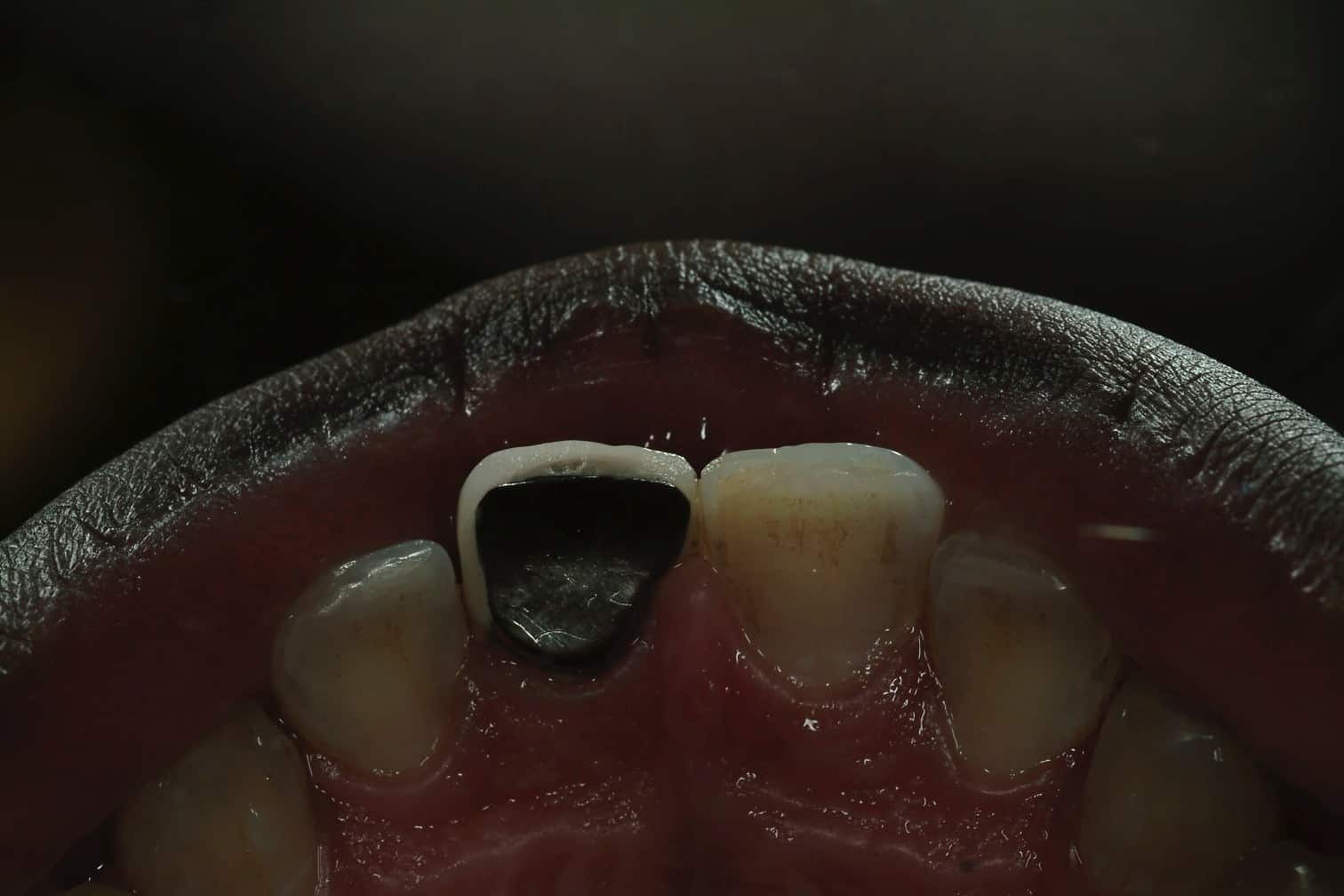
Where the old crown was failing
Look at the fitting surface of the old crown and the problem is obvious: metal, and contours that were never conducive to healthy tissue.
The replacement was built in ceramic, with contours designed for health and for function first, natural all the way around the tooth rather than only across the front. The gum can sit against it properly, and it can be cleaned properly.
That is not visible in the after photograph. It is the reason there will still be a good after photograph in fifteen years.
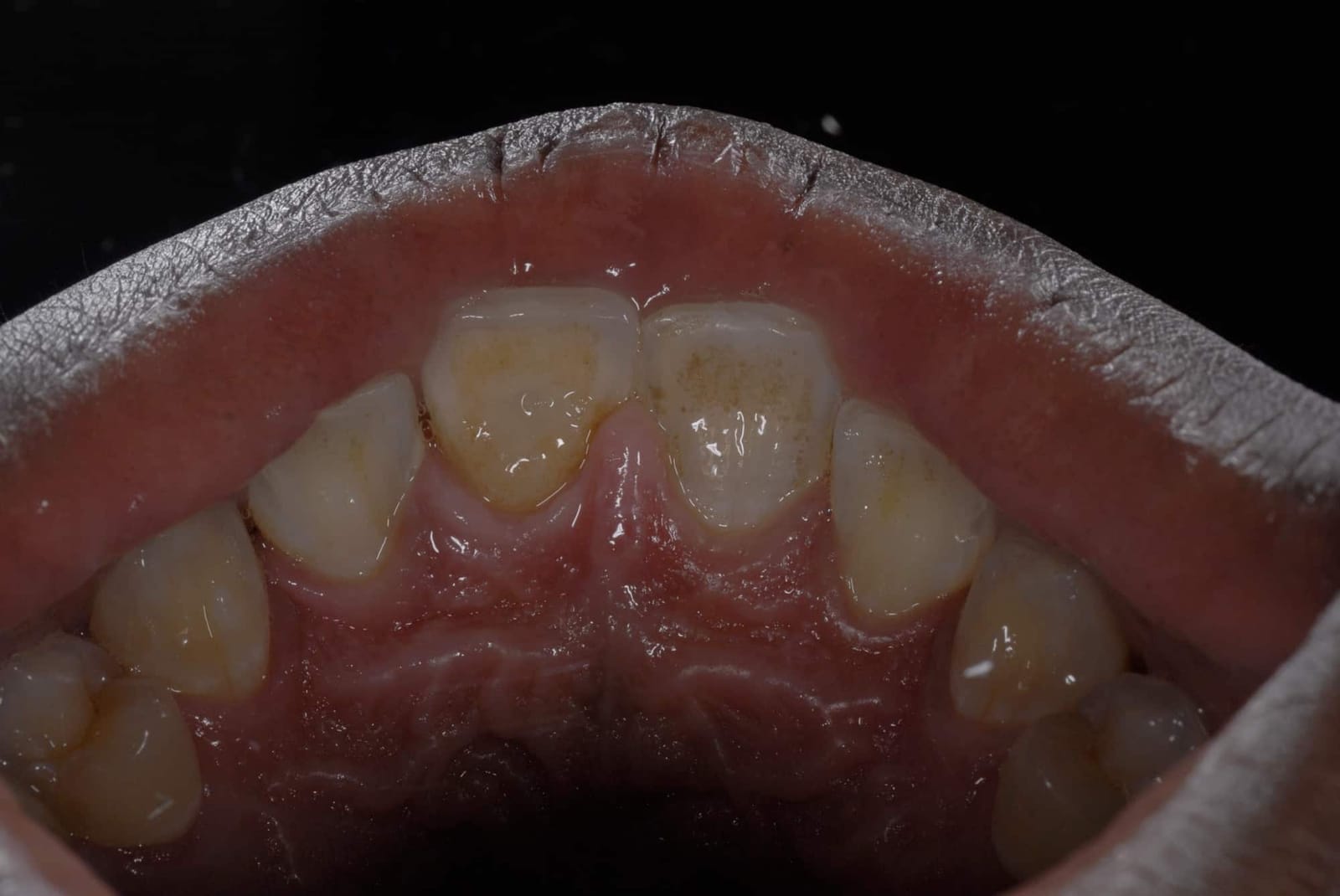
Why matching one tooth is difficult
Here is the thing patients are rarely told: getting the color right depends on getting the shape right.
Shape governs how light travels into a tooth, through it, and back out. If the form is even slightly off the natural tooth structure it is imitating, the light behaves differently, and the tooth reads as false even when the shade is technically correct.
That is why a crown can be matched perfectly on a shade guide and still look wrong in the mouth. Both have to be solved together, and it has to hold in every lighting condition rather than in the one where the photograph was taken.
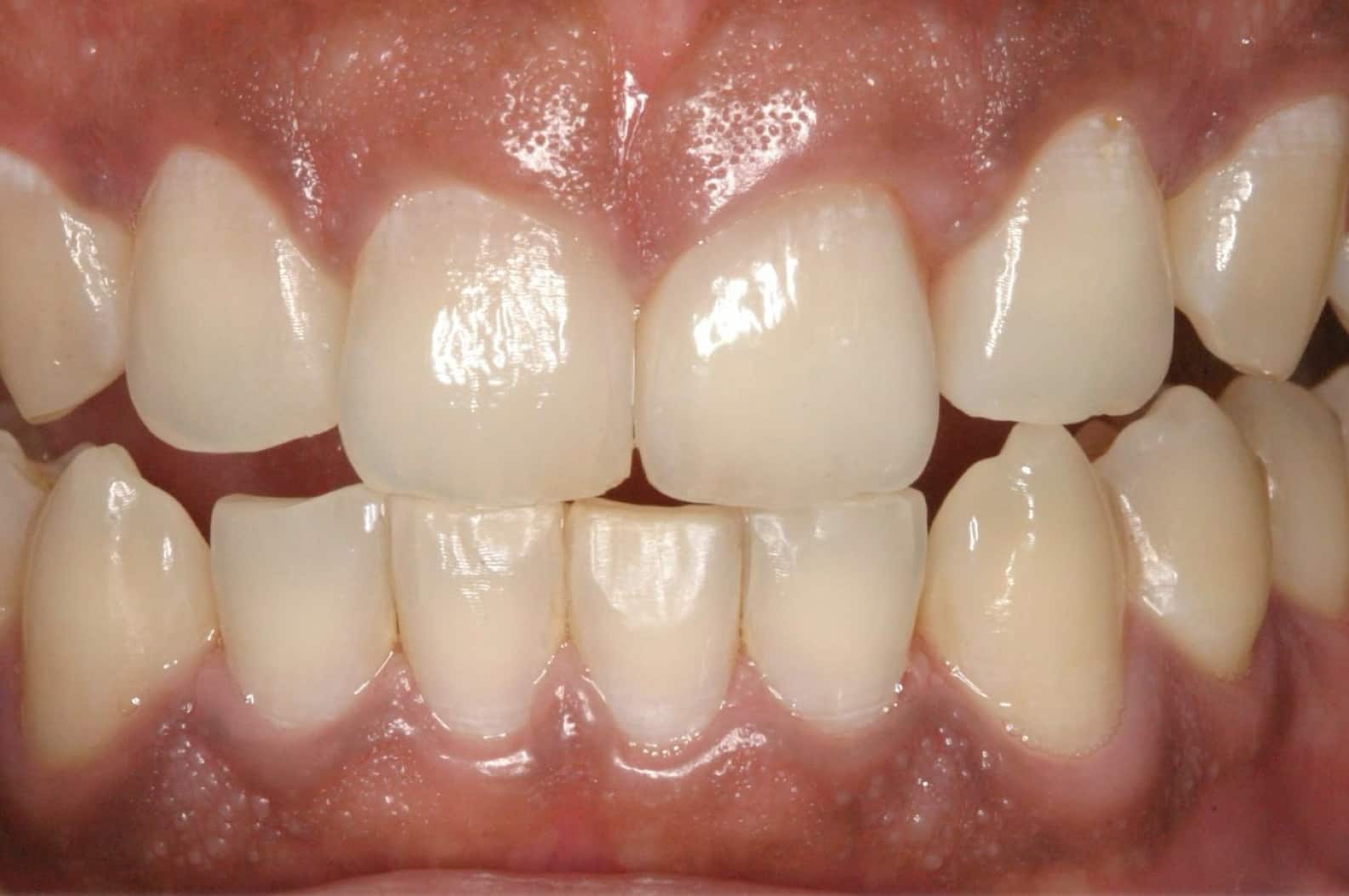
Indistinguishable, and healthier
The dark margin is gone, along with the shadowing in the root and the gum. The proportions are corrected, so the space between the front teeth is even.
And it matches, in daylight, indoors and in photographs.
He is a university professor, which is to say his face is in front of an audience most days. That is the standard the work had to meet.
His face

The smallest cases test the most
Replacing one front crown looks trivial and is not. It requires understanding what sits underneath, choosing among ceramics that behave differently from one another, knowing how each transmits light at each thickness, and designing contours the gum will accept for years.
All of that, for one tooth, so nobody ever notices it.
Before and after
Every case is planned around one person's anatomy. Individual results vary, and what was right for this patient may not be right for you.