Tooth and Implant Case 2 · Implants · Veneers
Twenty Years, and Still Immaculate
She arrived with composite bondings that kept staining and chipping.
Not because composite is a bad material, but because nothing had been done about the reason they were breaking. Her bite was destroying them, so each repair failed the way the last one had. By the time she came in, one front tooth was damaged beyond saving and had to be removed.
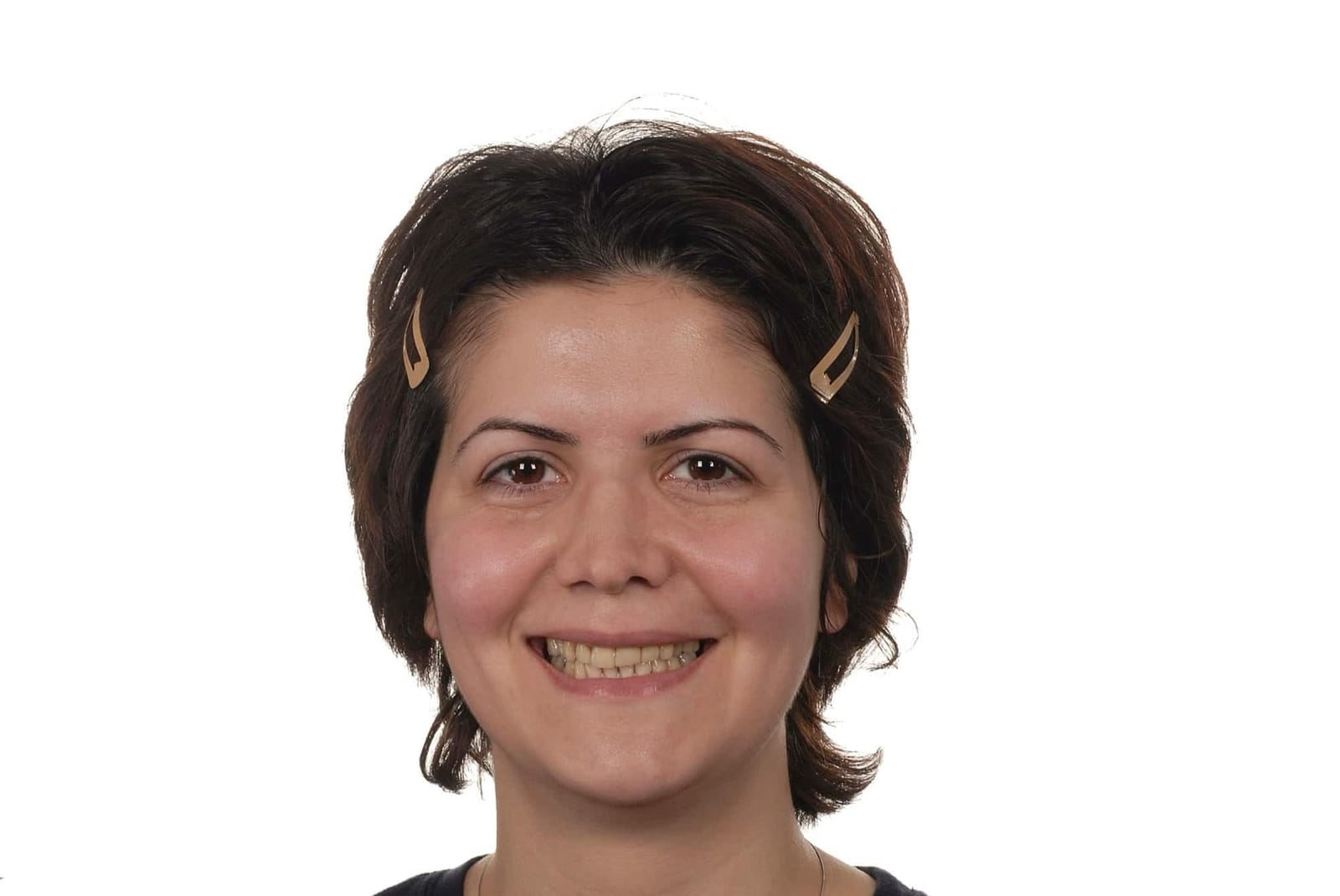
Her midline was canted. Her smile was narrow, with dark spaces at the corners. And she was now missing a front tooth.
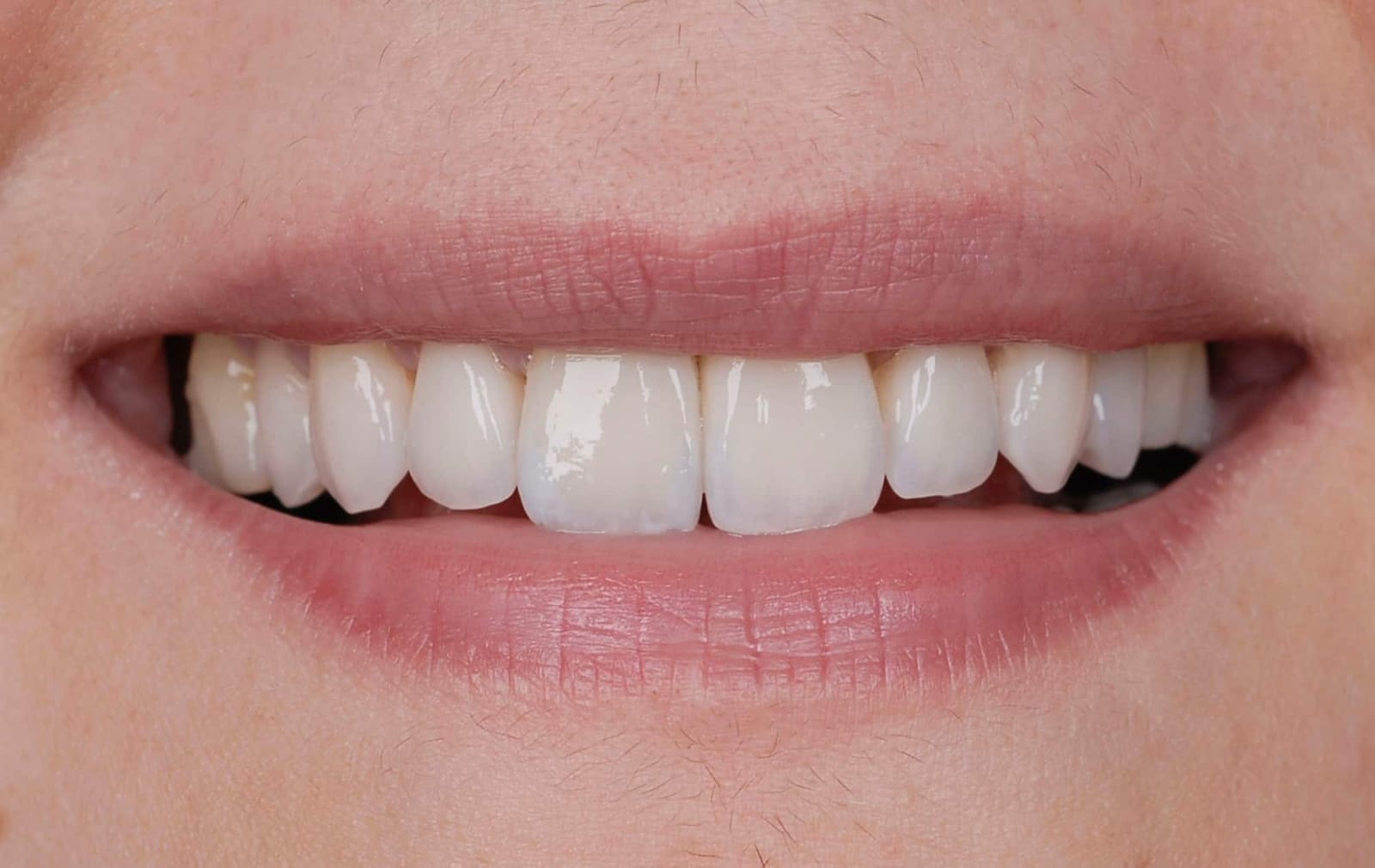
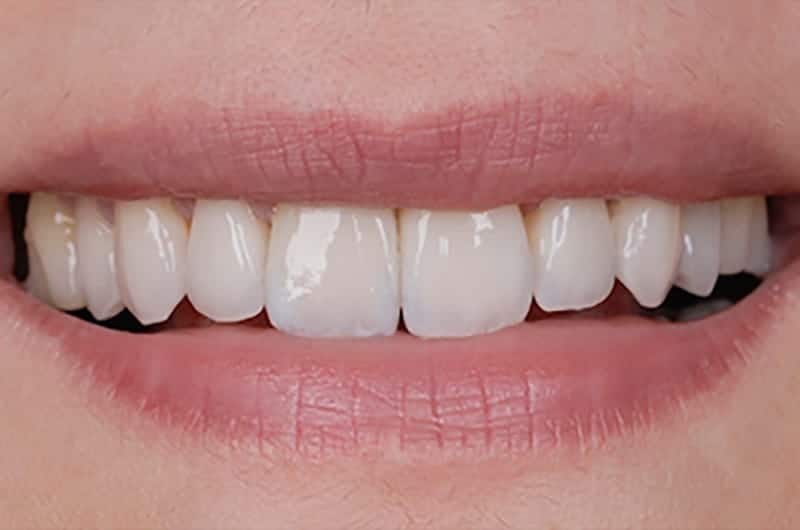
Before and after
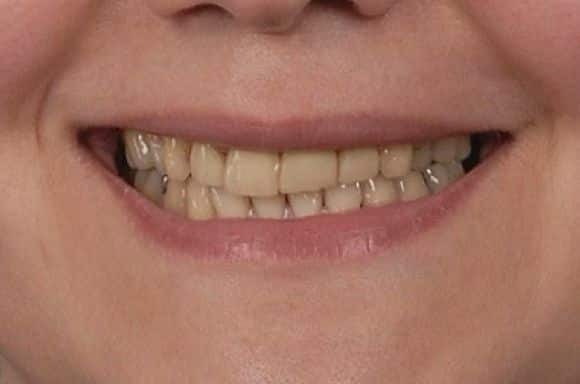
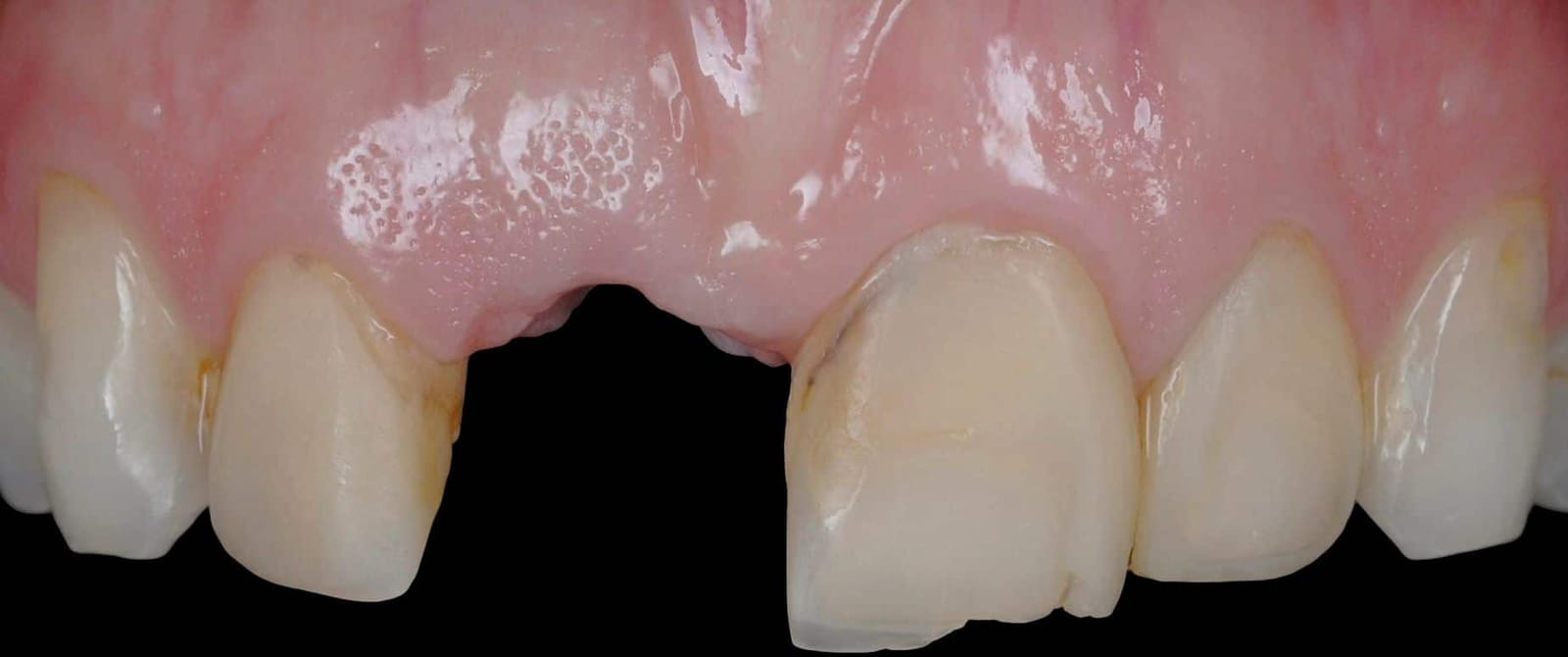
Why the bondings kept failing
Anyone can replace a chipped restoration. It chips again.
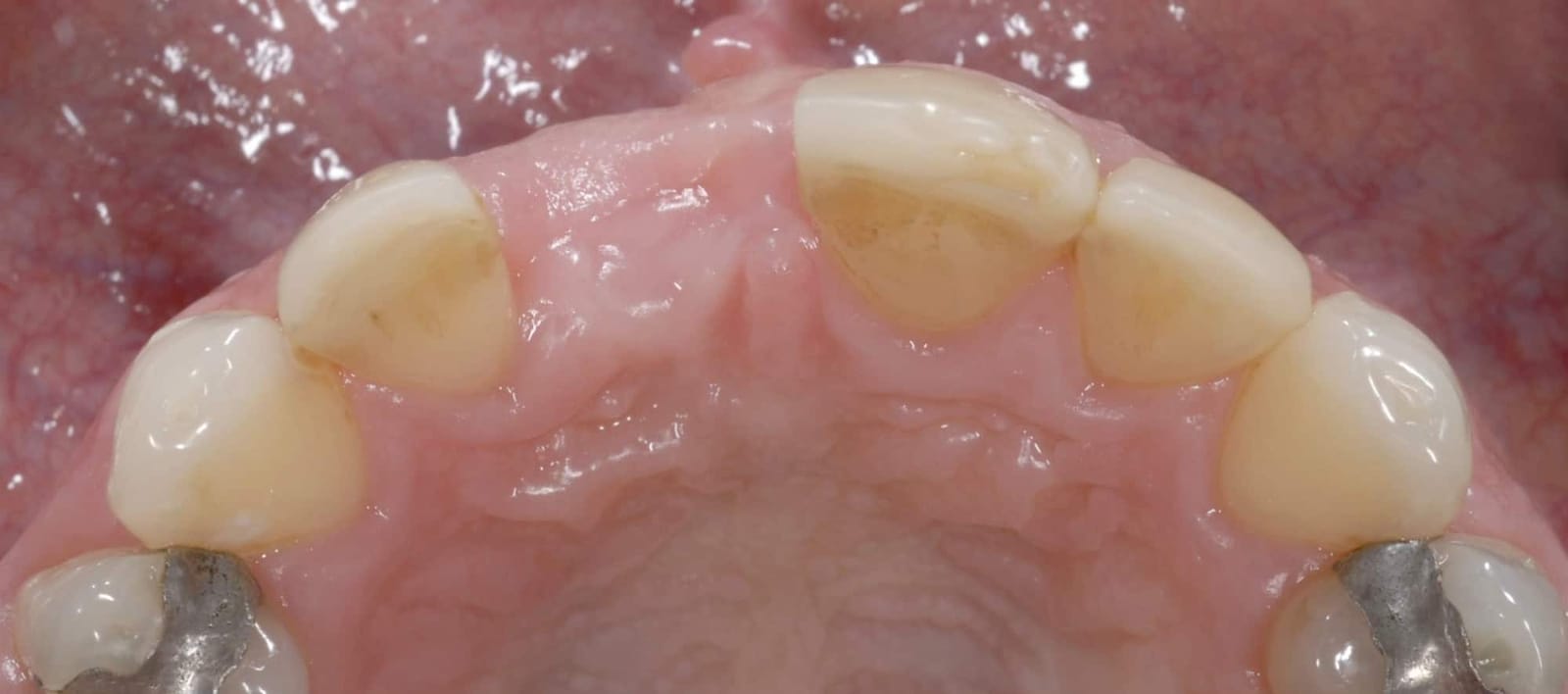
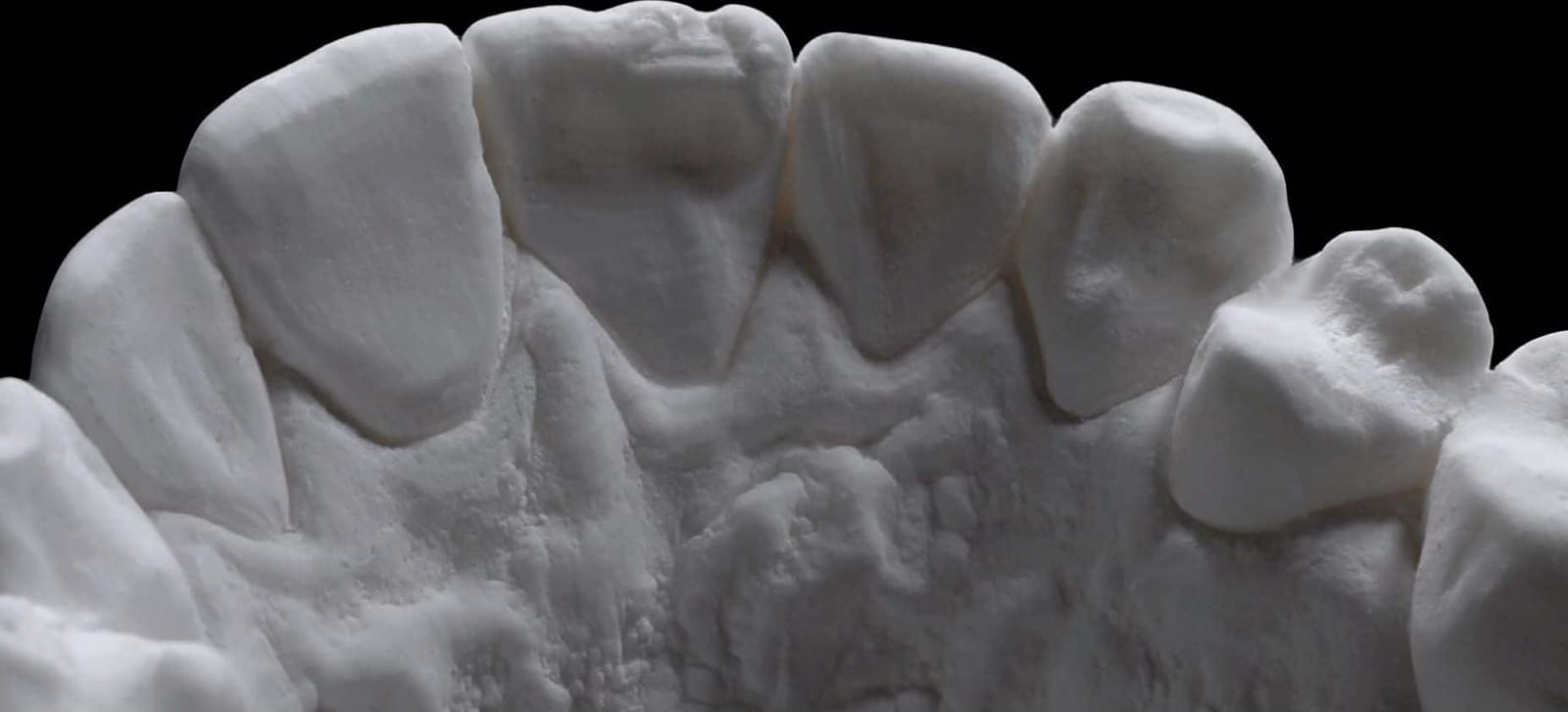
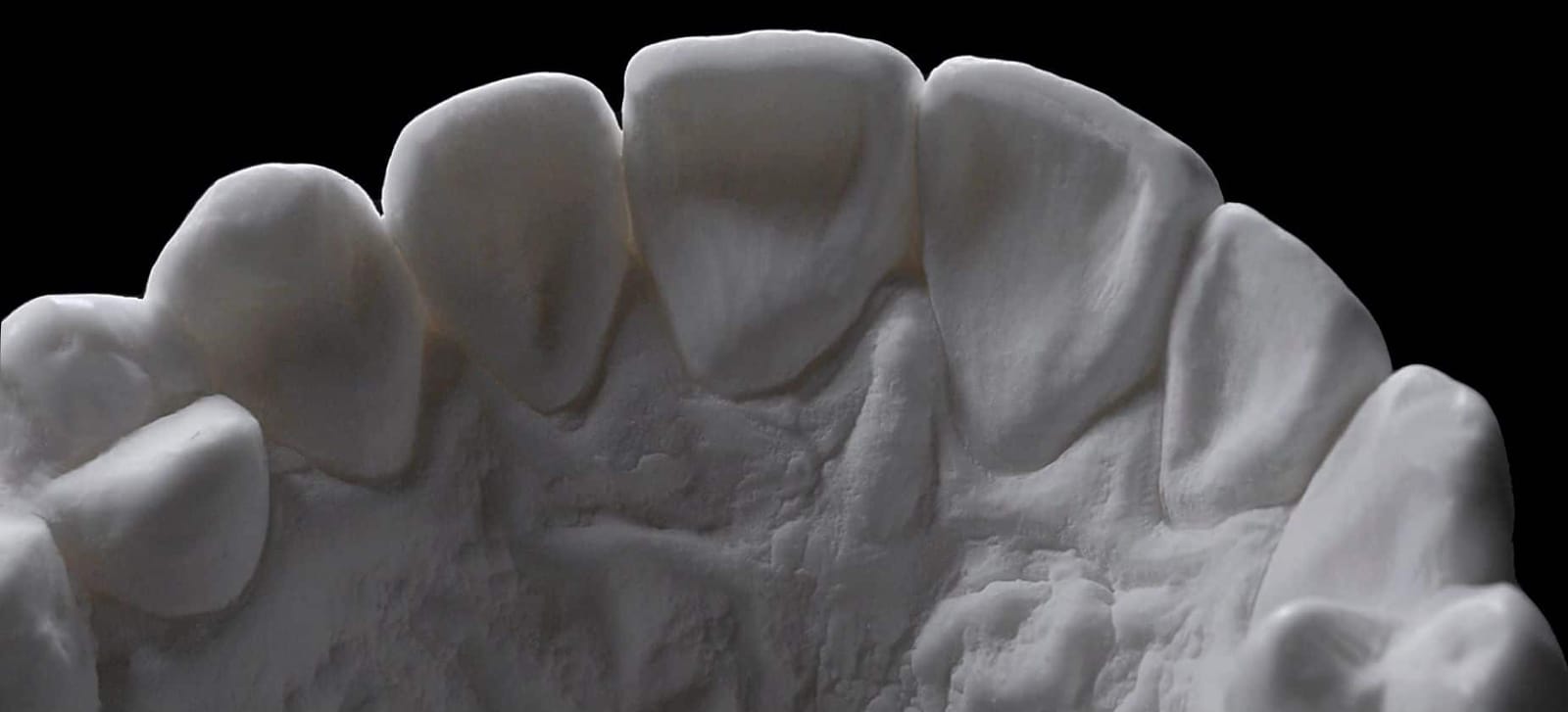
What actually decides whether front teeth survive is the surface nobody photographs: the palatal side of the upper teeth, where the lower front teeth slide against them. The slopes and contours back there determine how the jaw moves, where force lands, and whether the front teeth are being ground away every time she moved her jaw.
So the redesign started there. Every tooth was designed in three dimensions, the full three hundred and sixty degrees around it, and only then was the front of it considered. The part you see is the icing. It is the inside that decides whether the icing survives.
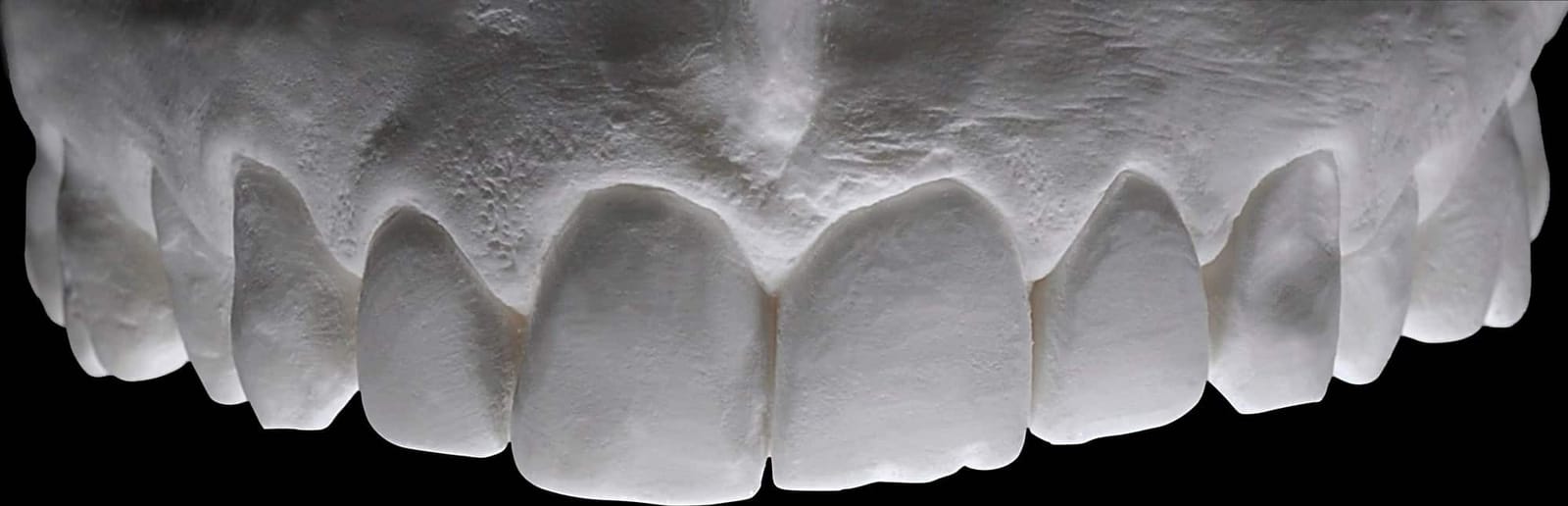
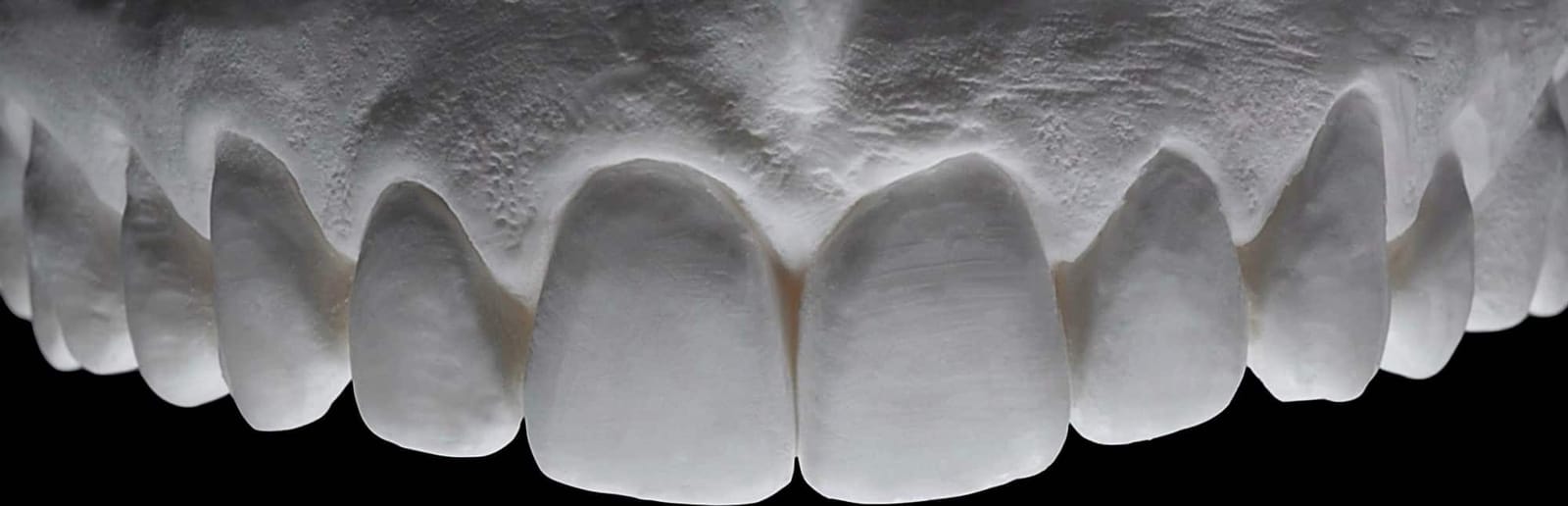
Designed in wax before anything was touched
Stone models, then a wax up, establishing the new tooth positions, the corrected midline, the widened smile and the guidance surfaces that would protect it, all before a single tooth was prepared.
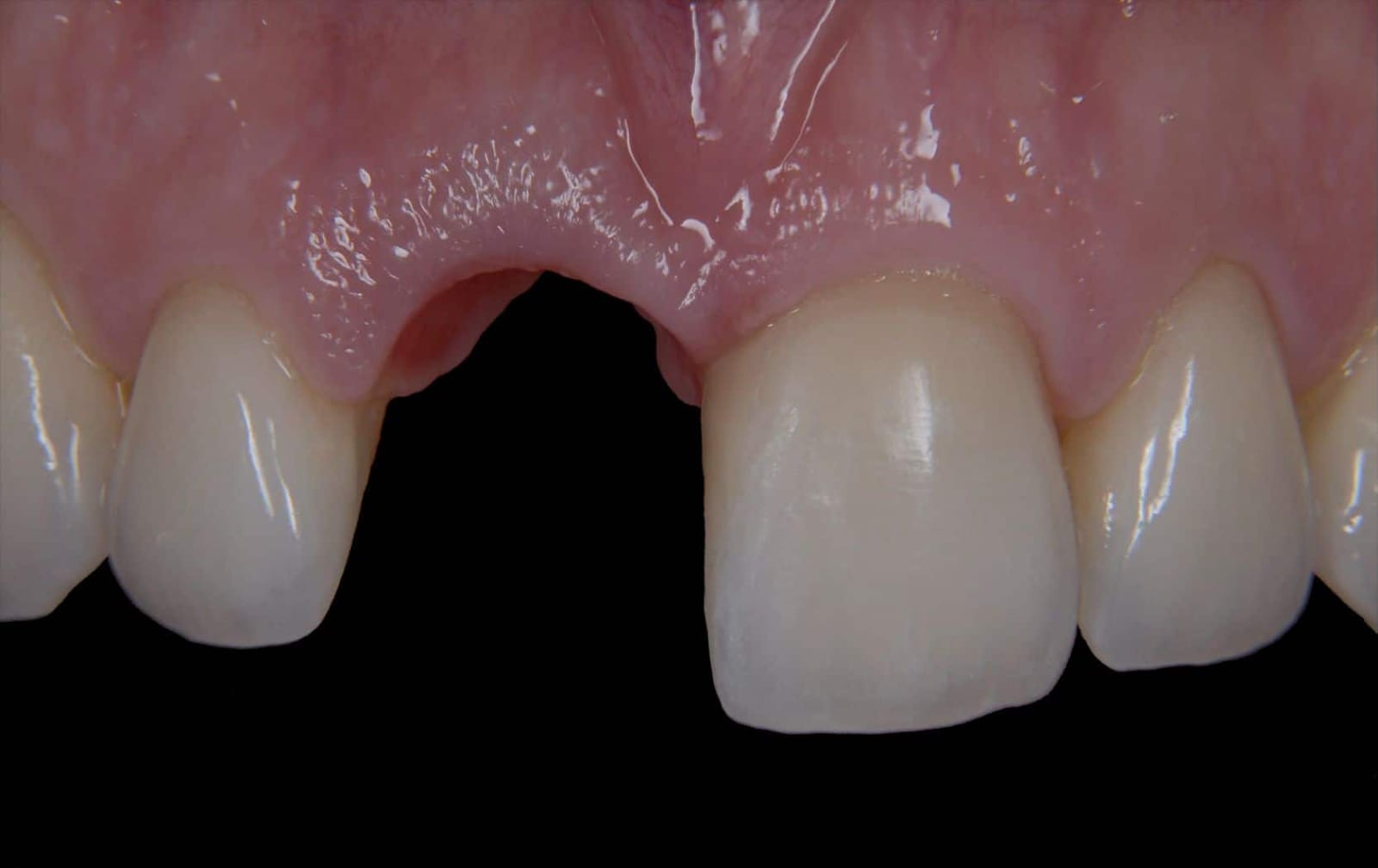
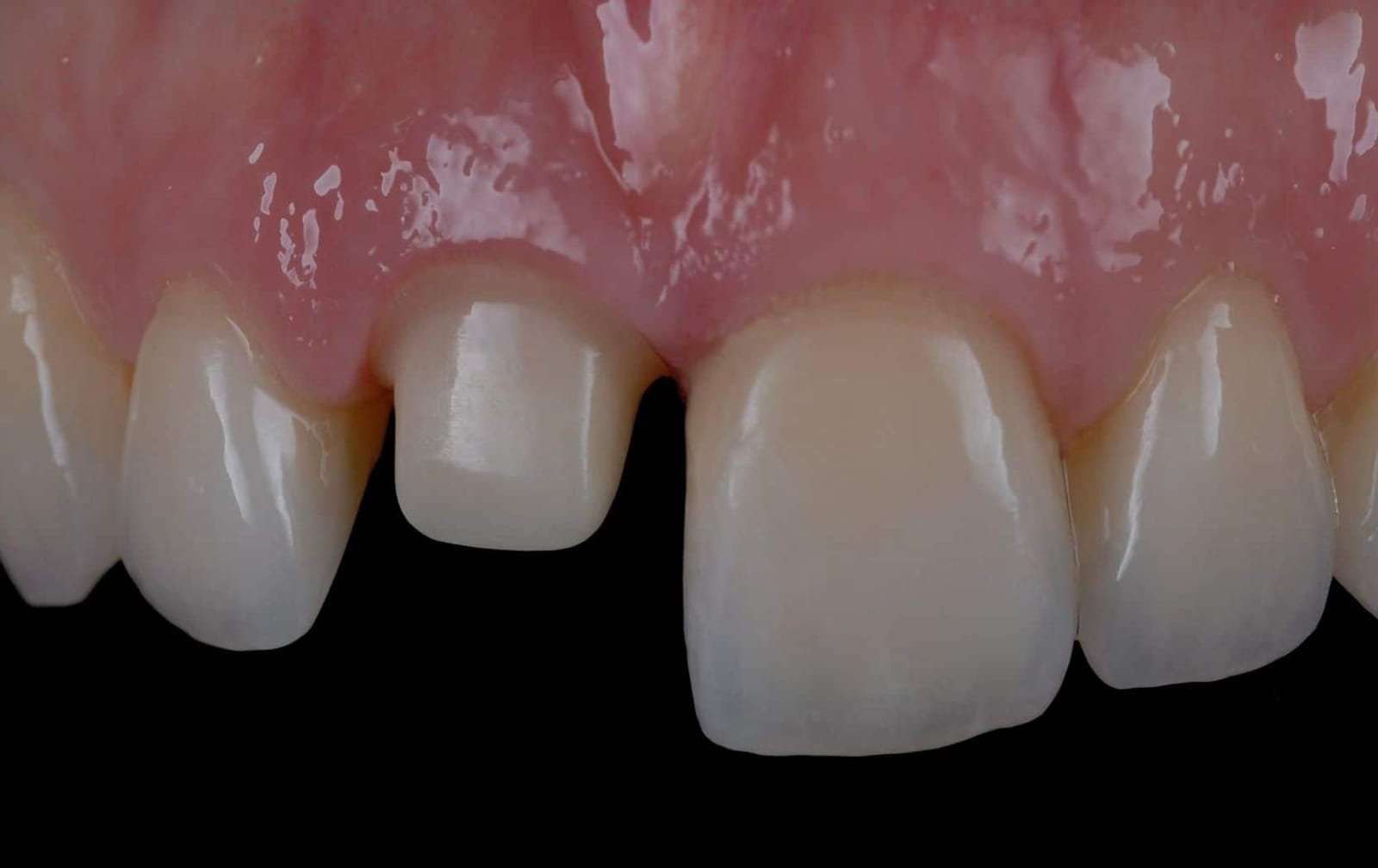
Veneers across the upper teeth. An implant to replace the missing front tooth, at position number nine, the central incisor. And the bite corrected as part of the same design rather than left as it was.
Veneers first, and there is a reason
Porcelain changes after it is fitted. It hydrates, it warms, and it takes up color from the tooth structure beneath. What leaves the laboratory is not quite what you will be looking at a week later.
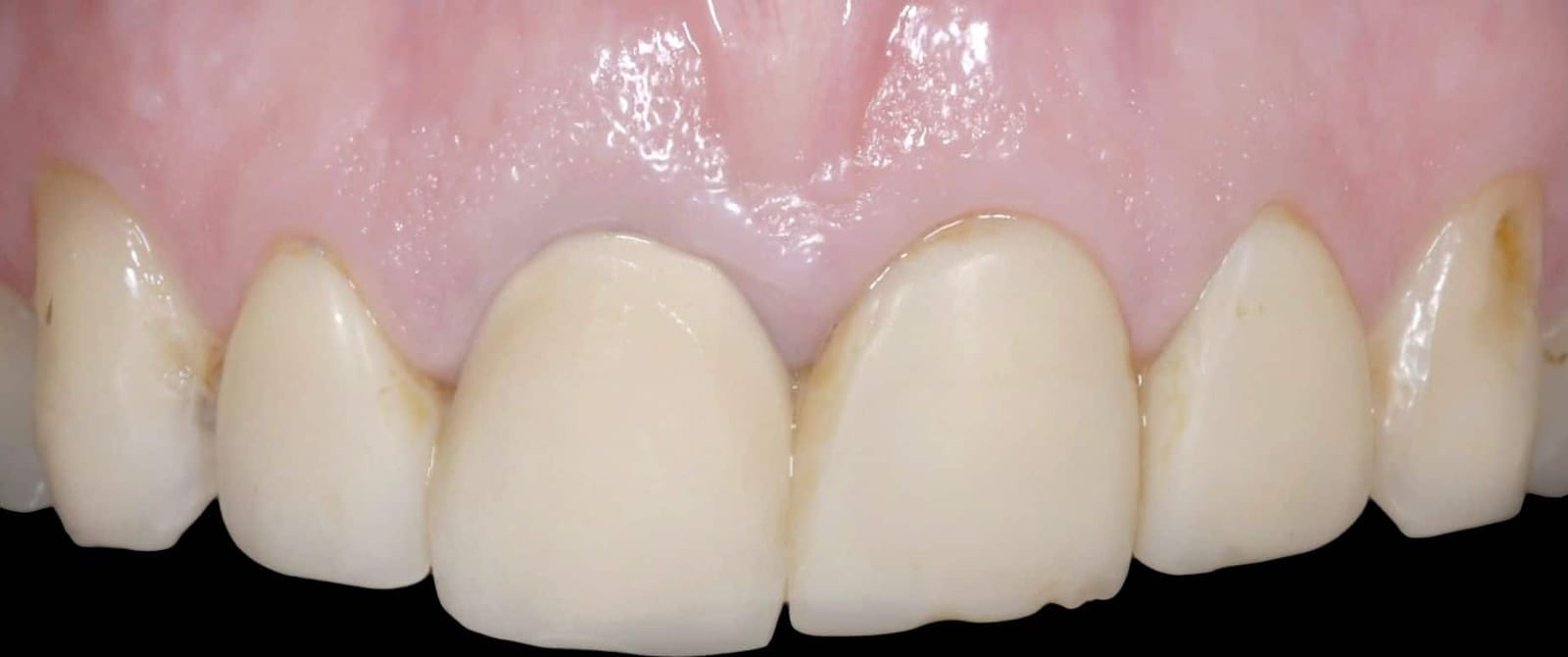
So the veneers went in first and were allowed to mature into their final color. Meanwhile the implant carried a provisional whose only job was to shape the gum, precisely, so that the tissue around it would end up neither too high nor too low against its neighbors.
Only once both of those had settled was the custom abutment made, matched to the color of the new veneers so that even the substructure beneath the crown reads as the same material as the teeth beside it. The final crown went in last.
Get that order wrong and the implant tooth sits a shade apart from its neighbors permanently.
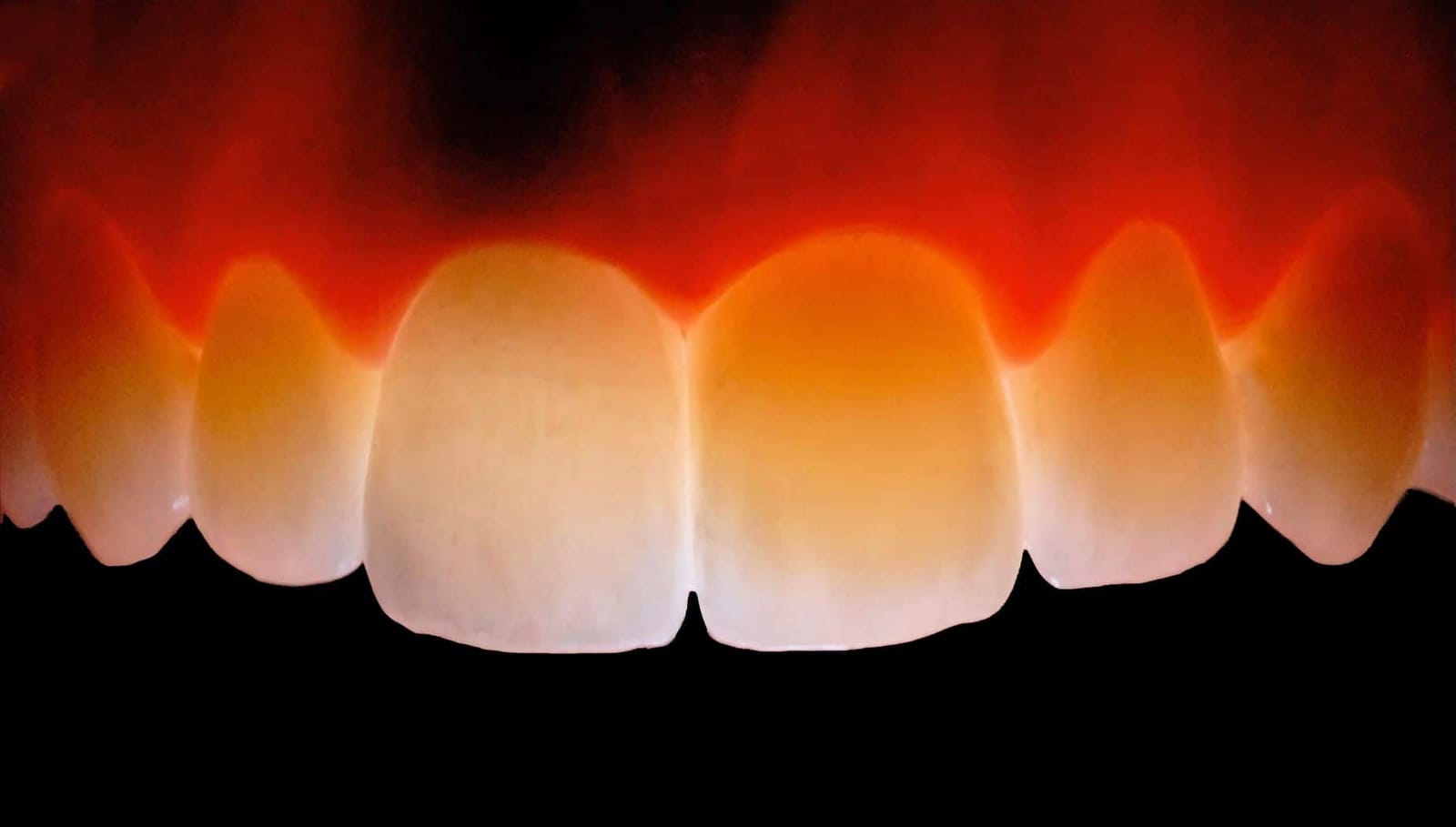
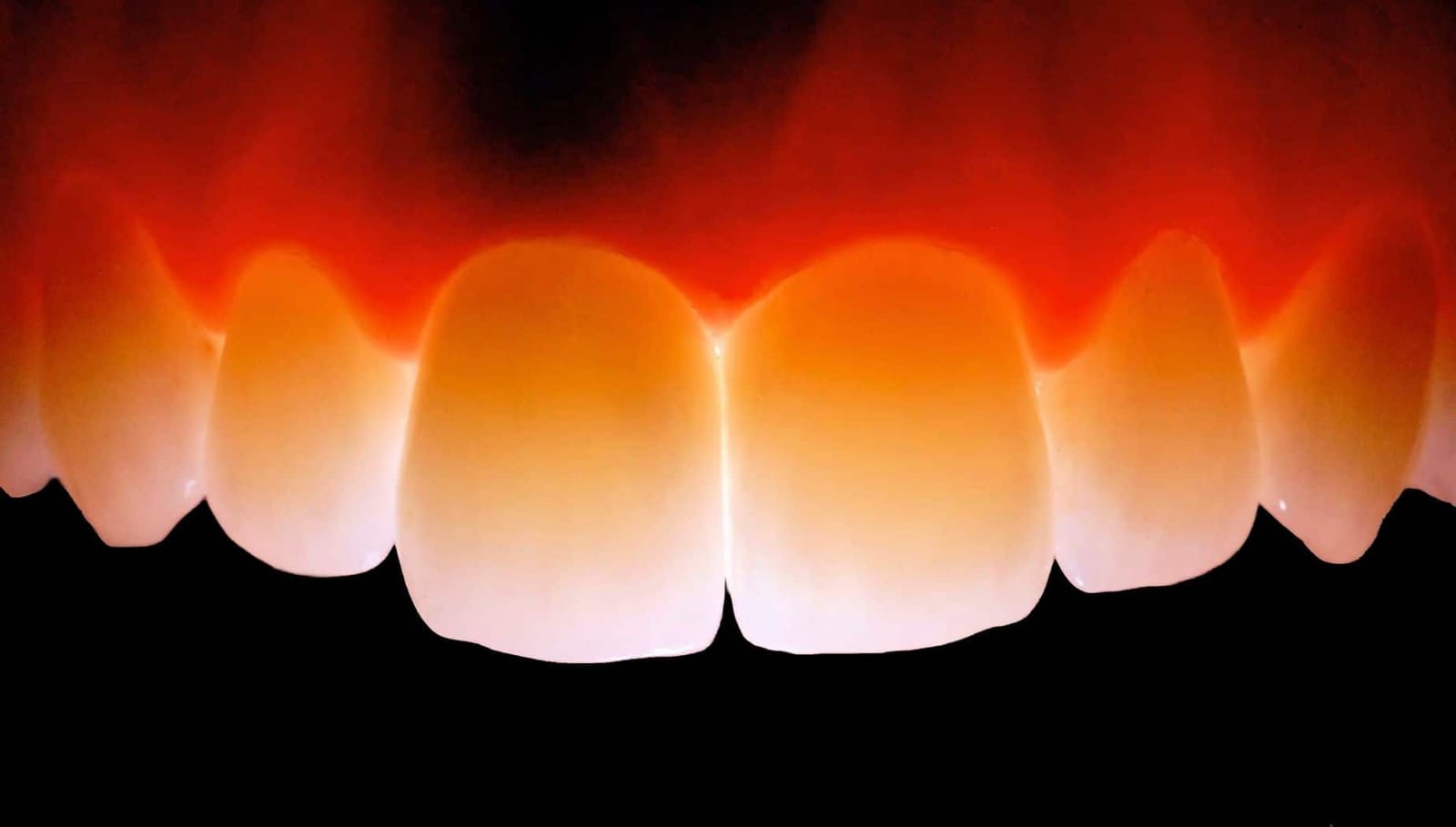
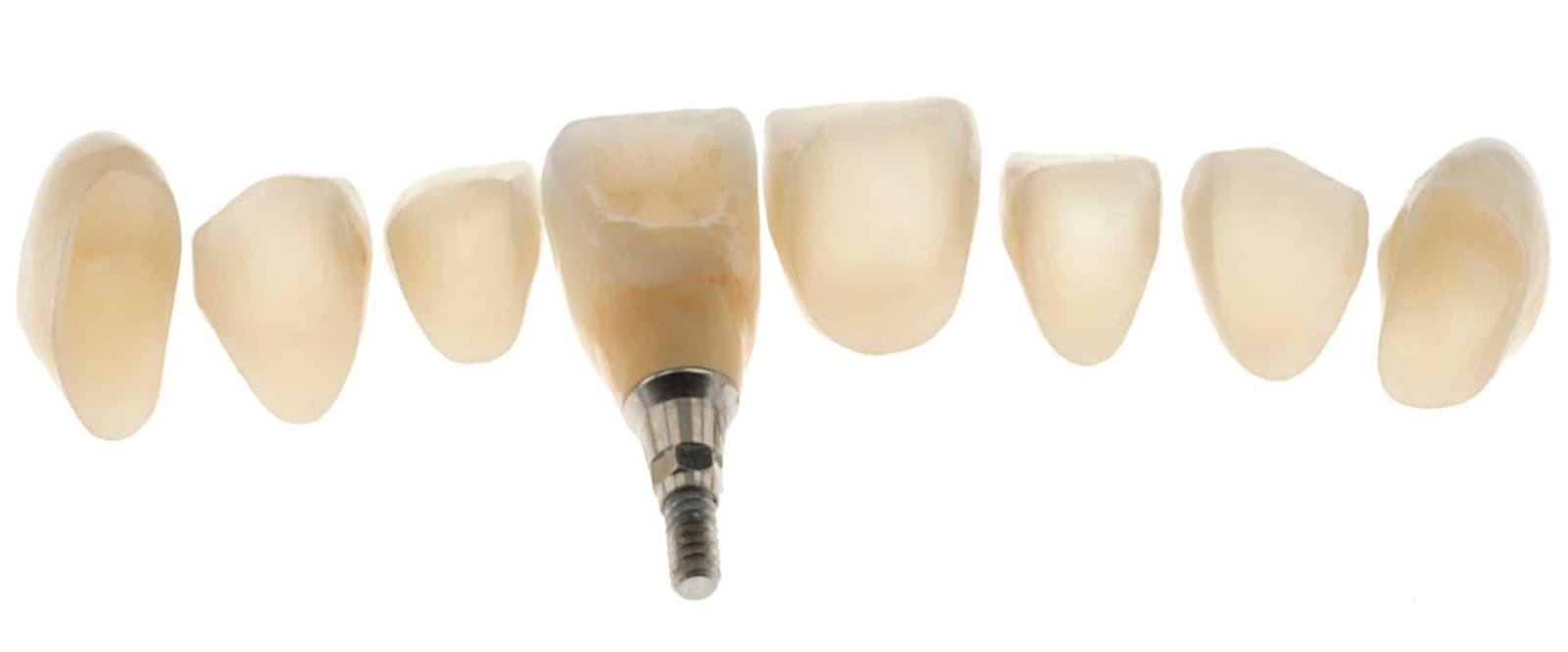
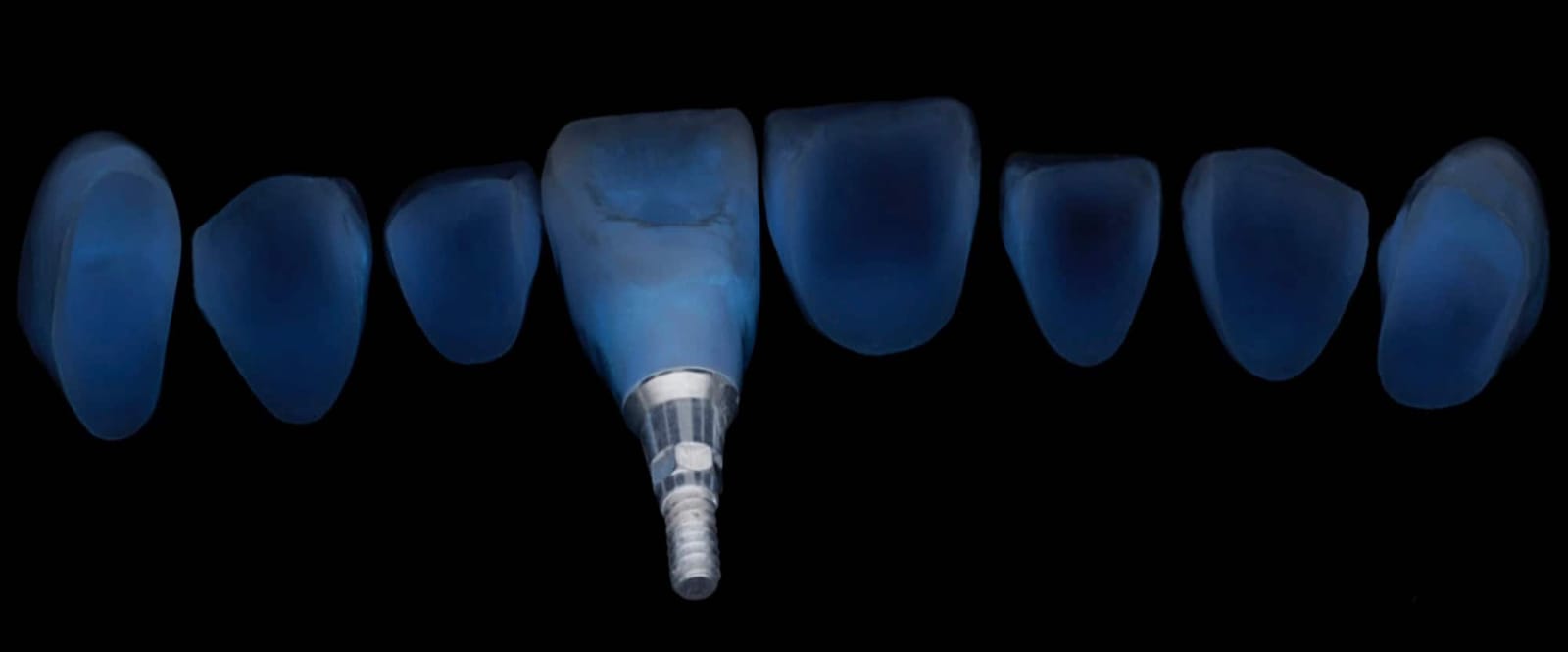
Under transmitted light
The implant site
Why the finished crown looks different from the temporary
Put the temporary and the final crown side by side and they transmit light differently from within.
That difference is the entire skill. A restoration can be matched for a photograph in a studio and betray itself in daylight, in a restaurant, under a bathroom light. Understanding how each material carries light, at each thickness, is what makes a restoration look right in every condition rather than in one.
Even under ultraviolet light, where mismatches are impossible to hide, everything reads as one mouth.
Accuracy measured in microns
Two working models did two different jobs.
One controlled the contacts between the teeth and around the implant, so no dark triangles open between them, now or in ten years. The other verified position and stability, to an accuracy of under five microns.
That is a twentieth of the width of a human hair, and it is the reason nothing about the finished result drifted.
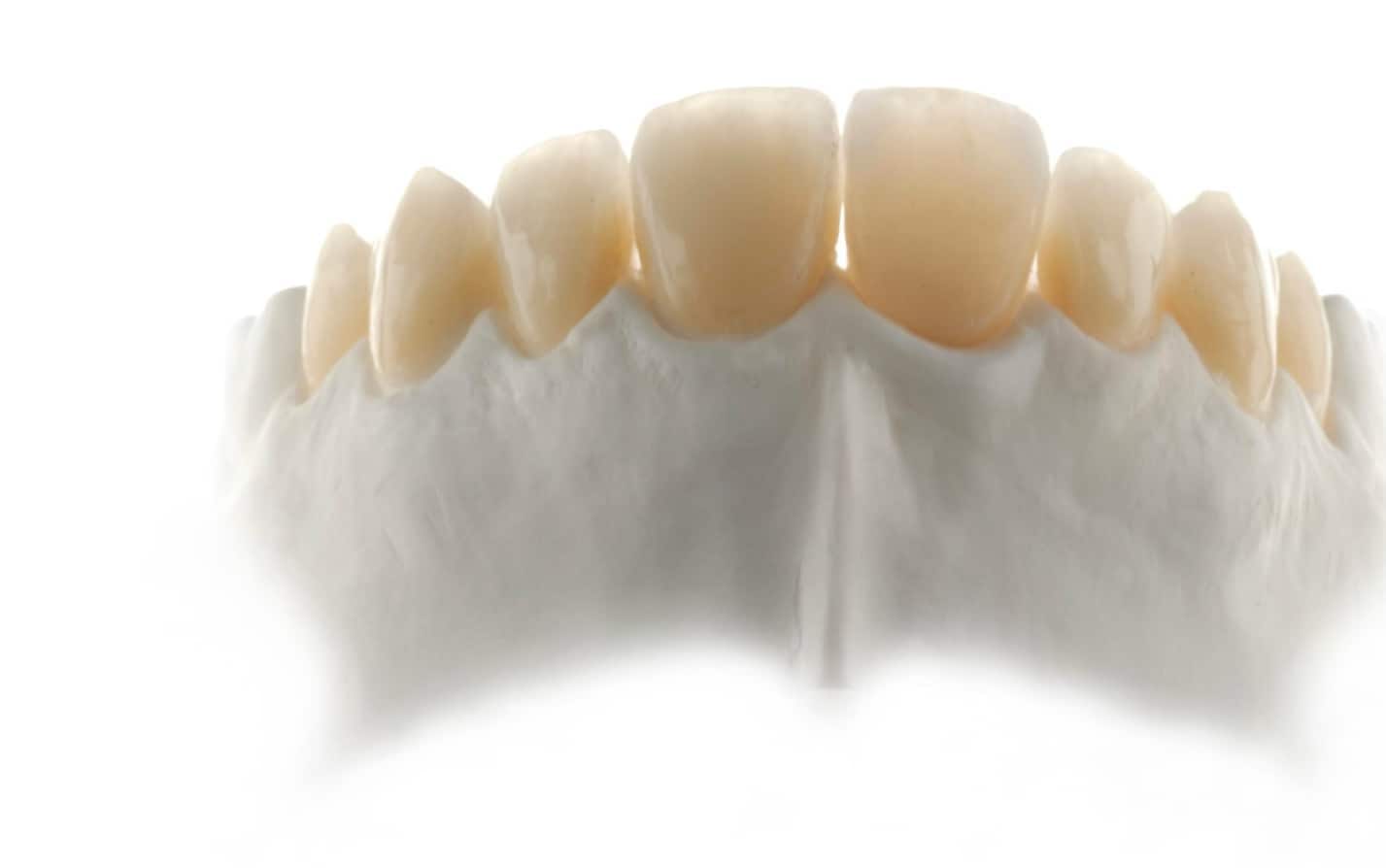
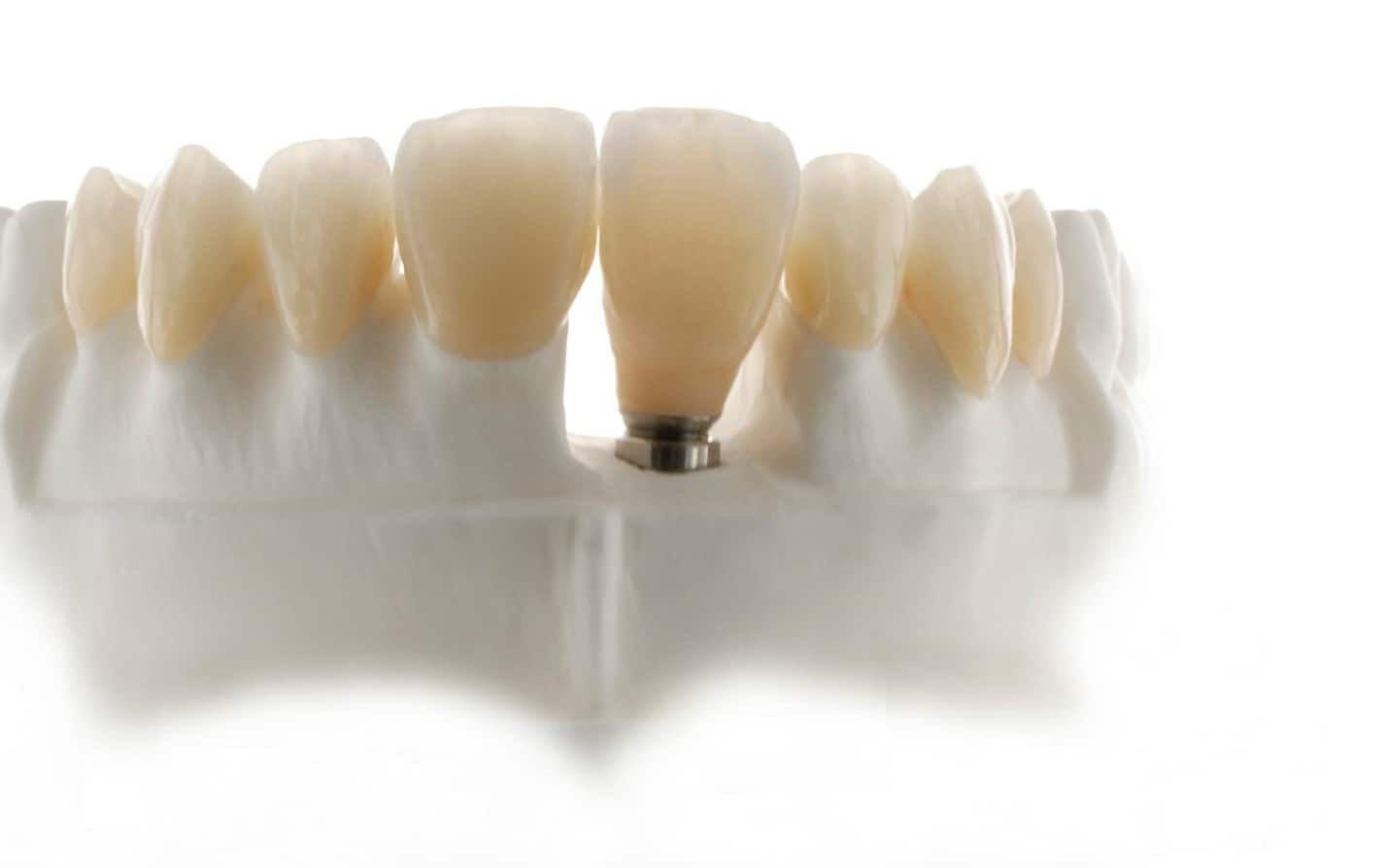
From the front, and from the side
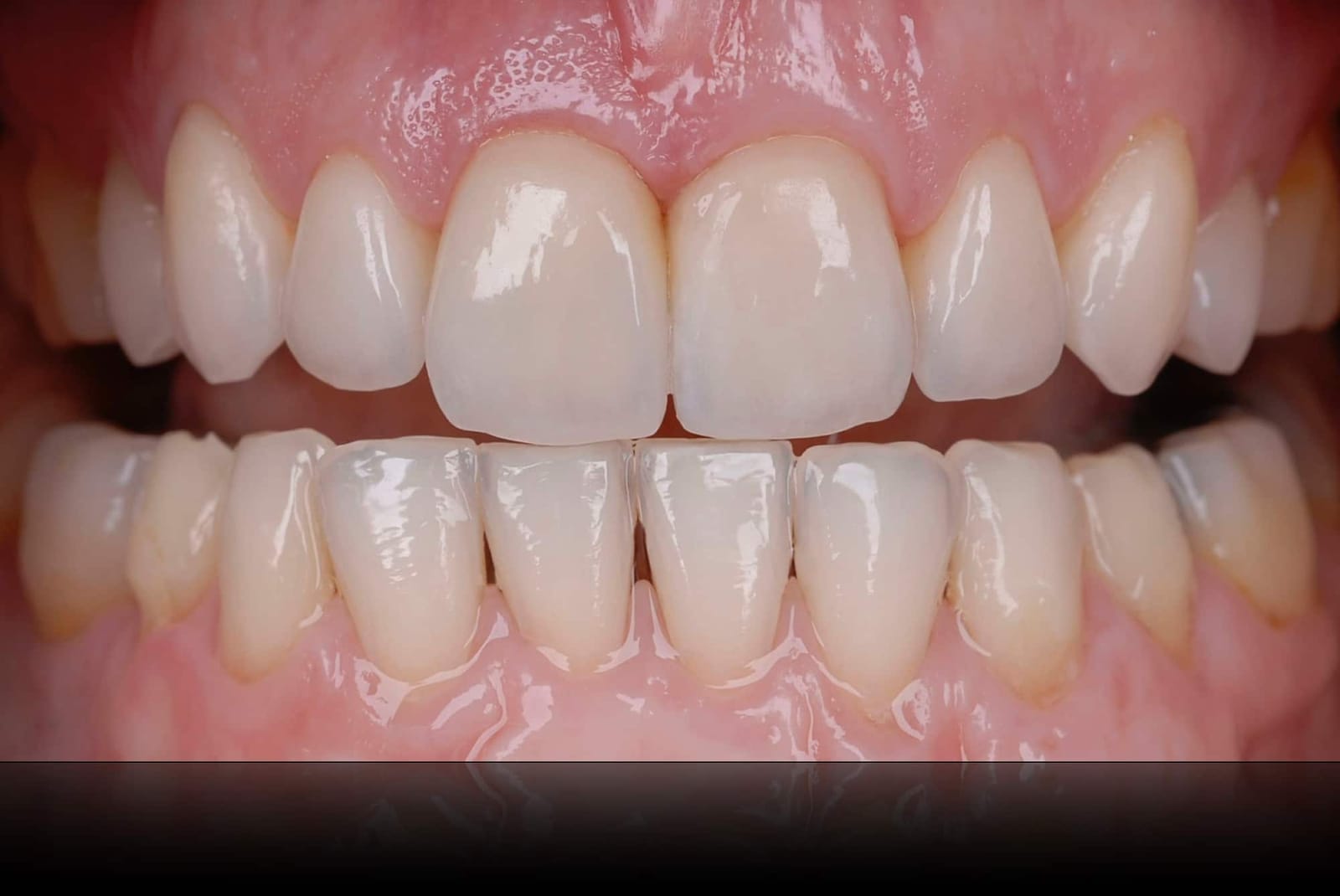
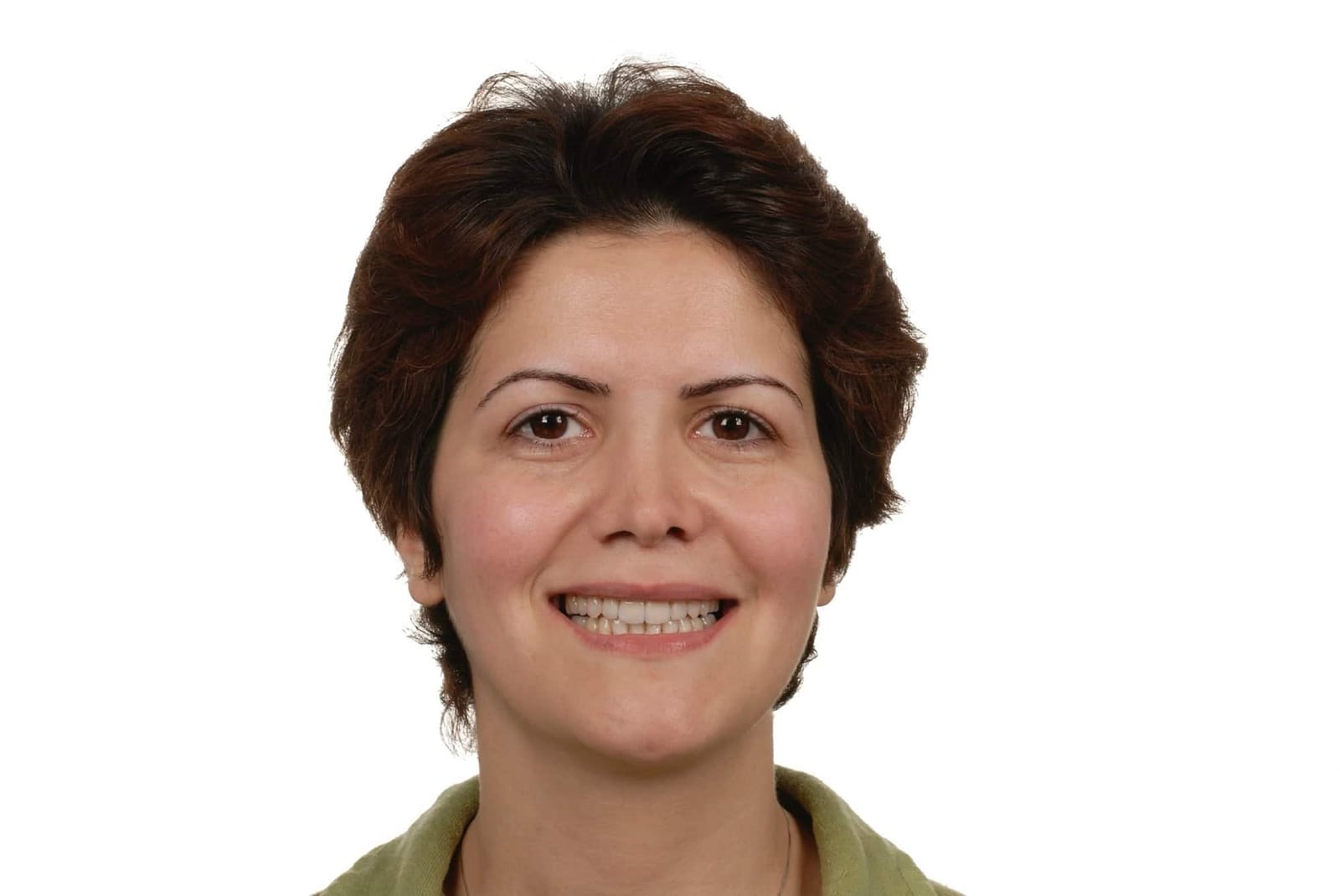
The midline is corrected. The smile is wider, with the dark corners filled. The upper and lower teeth meet and slide the way they are meant to, so the teeth protect each other rather than wear each other down.
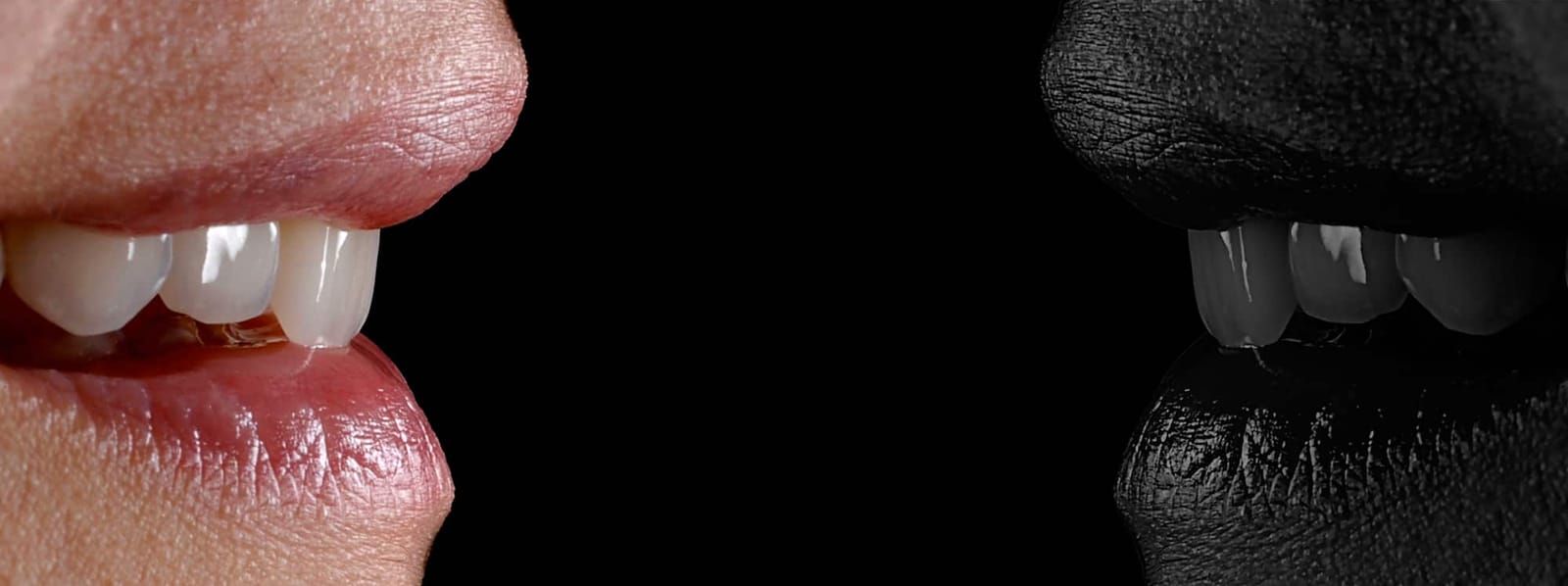
And it works in profile, which matters more than most people realize, because that is how you are usually seen. The line of the teeth follows the lower lip. It reads correctly from the side, not only face on.
The upper teeth
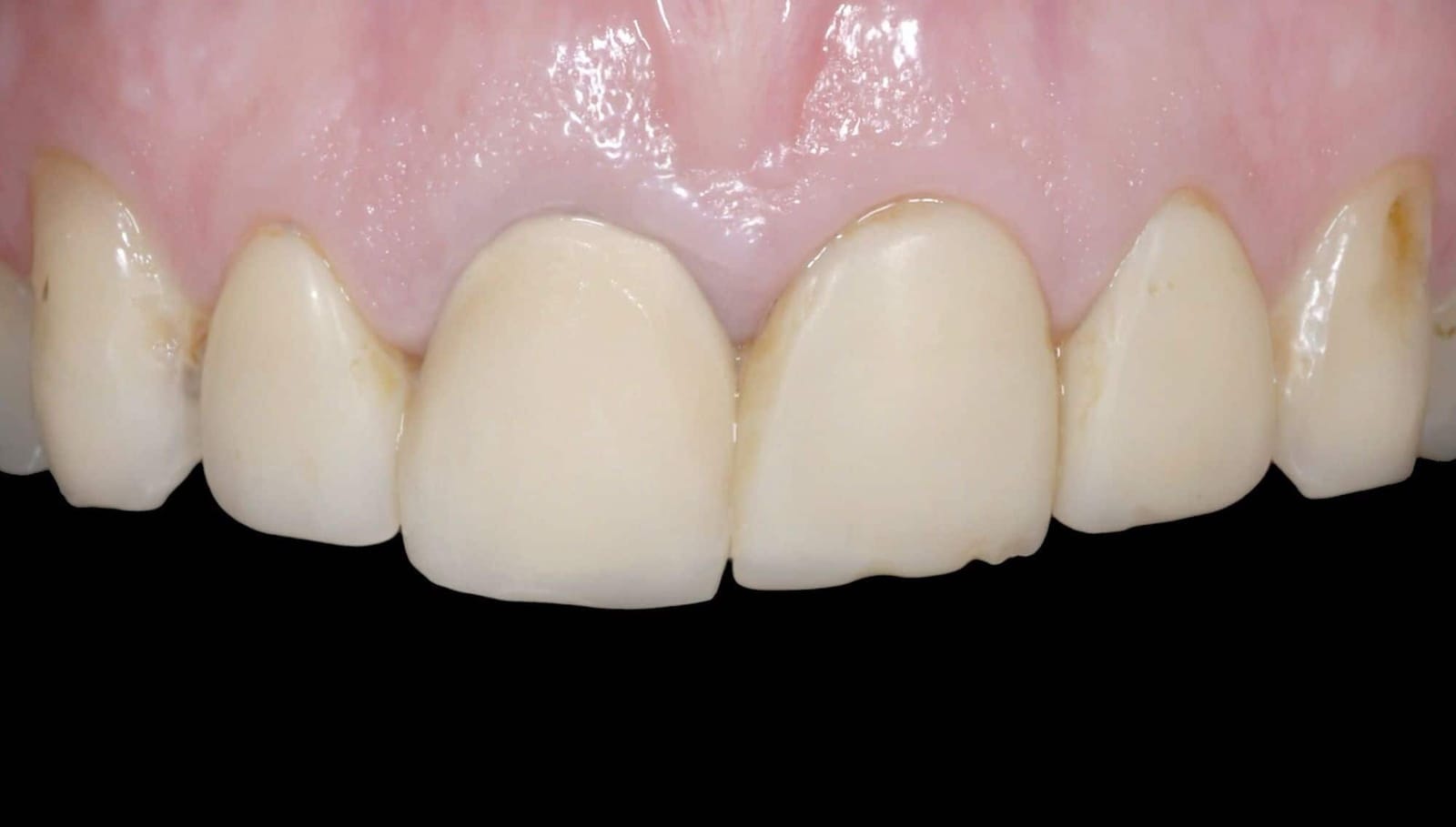
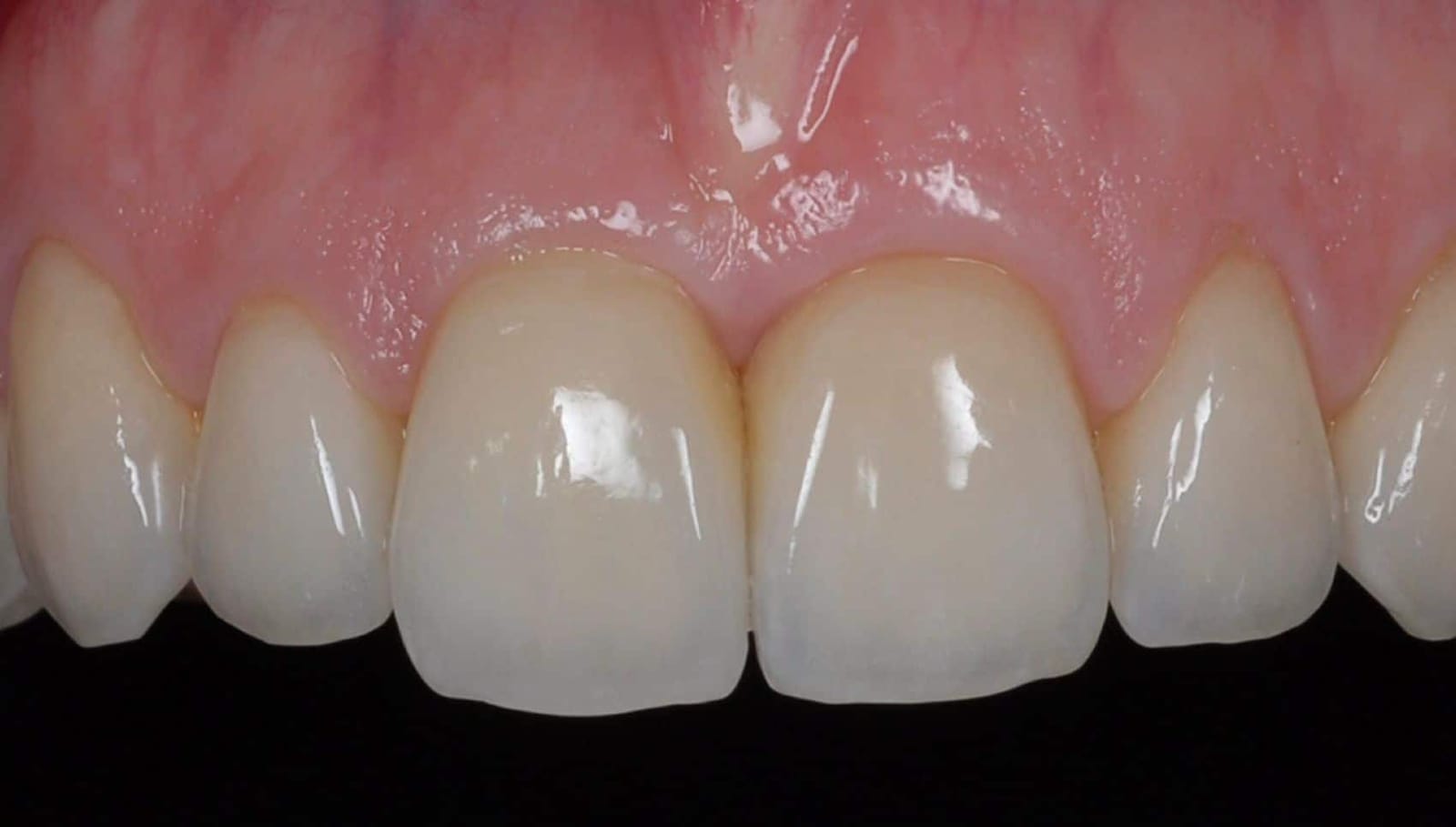
The real measure
This case was completed just over two decades ago. It is still strong, and it still looks immaculate.
Not because of the porcelain. Because the surfaces that guide her bite were designed correctly before any of the porcelain was made, so nothing has been chipping away at it since.
That is the difference between an aesthetic result and a result that is still aesthetic twenty years later.
Her face
The part you cannot see is the part that lasts
A dentist can place an implant. A dentist can make veneers. Running both in one arch, in the right order, with the materials matched across different foundations and the bite redesigned while it happens, is a different discipline.
She arrived with restorations that kept breaking because nobody had asked why. Twenty years on, nothing has broken.
Before and after
Every case is planned around one person's anatomy. Individual results vary, and what was right for this patient may not be right for you.