FP-3 Case 3 · Reconstruction · Implants
When the Bridges Would Not Stop Failing
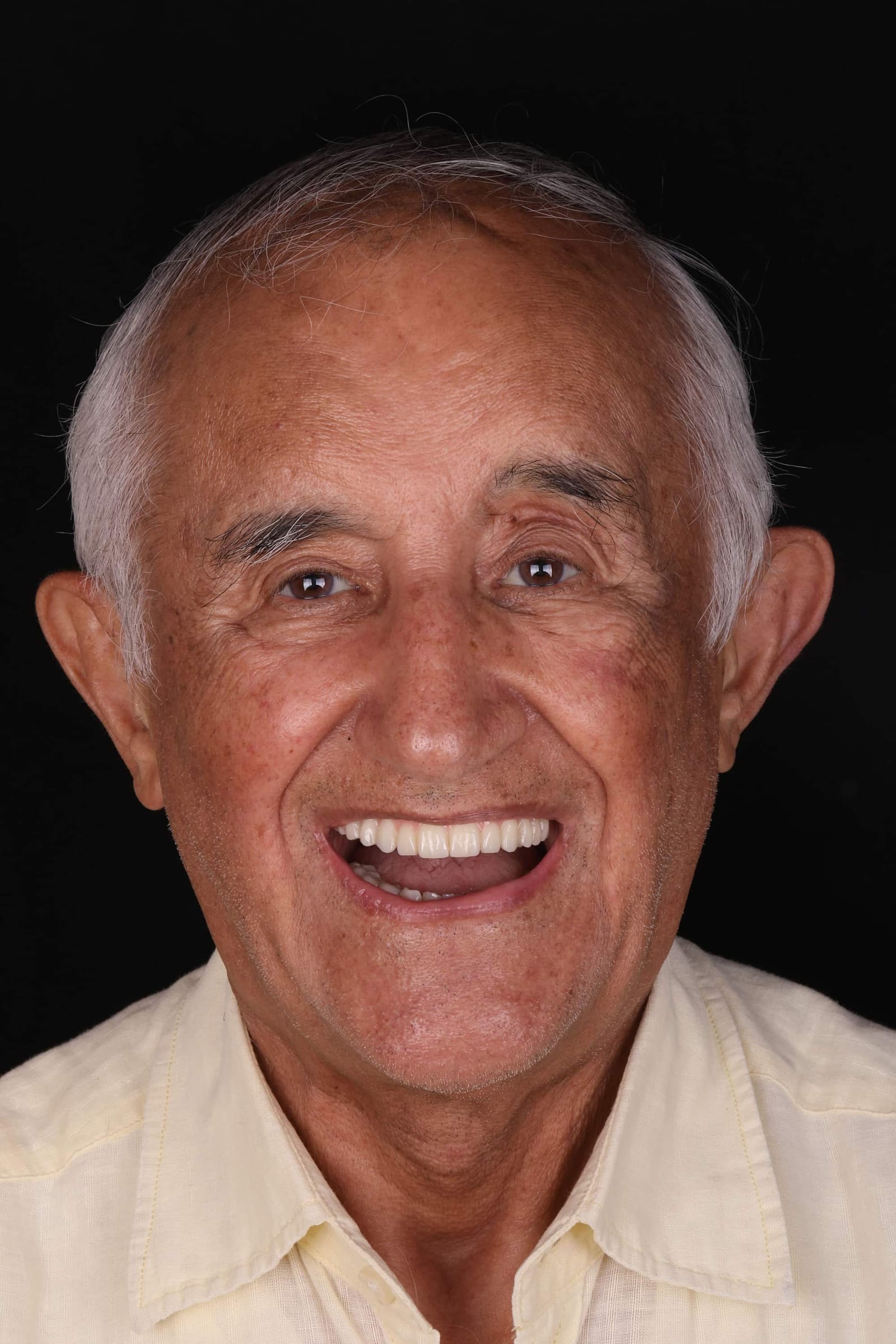
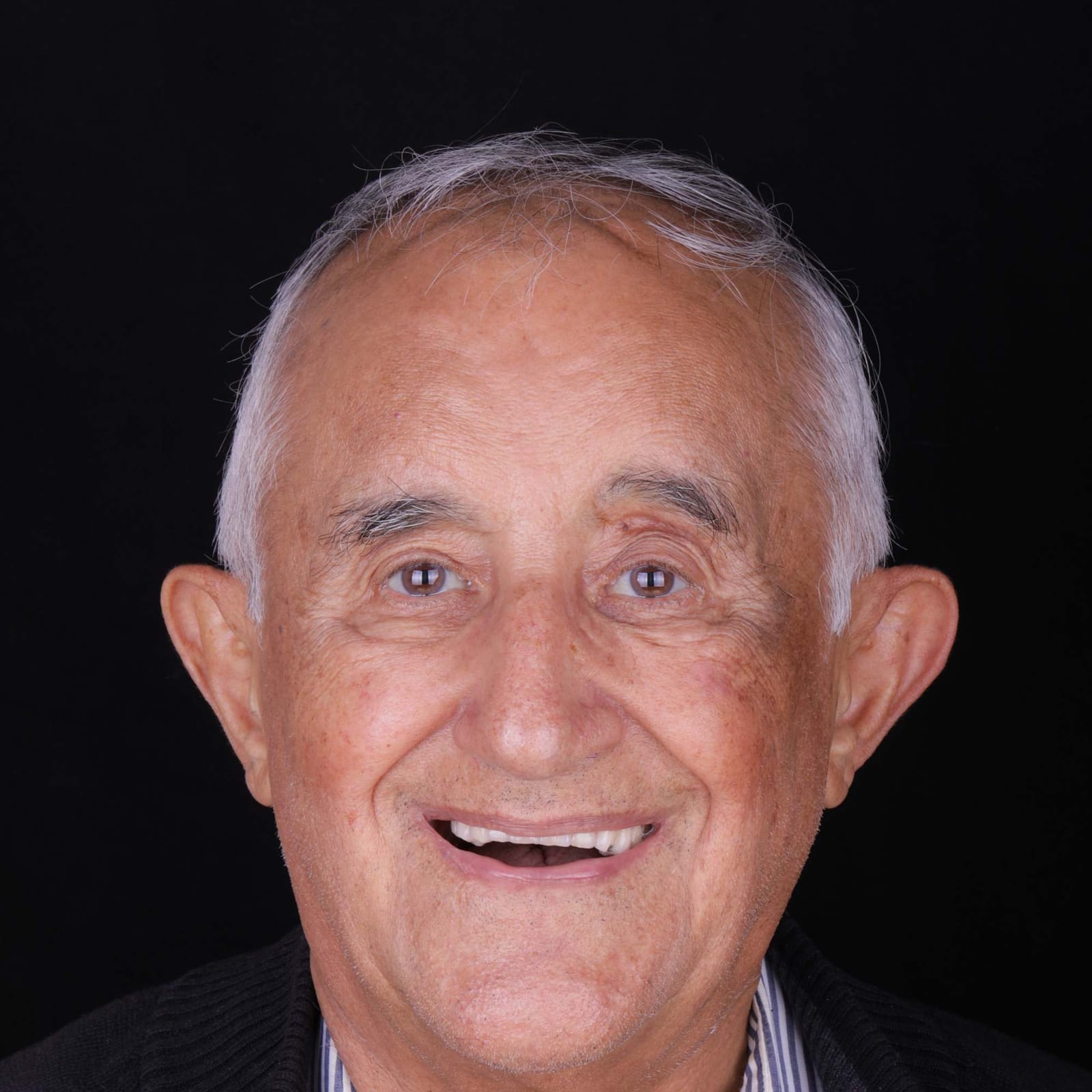
He had stopped eating properly, stopped going out, and was losing weight. His upper lip had collapsed inward, and he showed none of his upper front teeth when he smiled.
When his bridges wouldn't stop failing
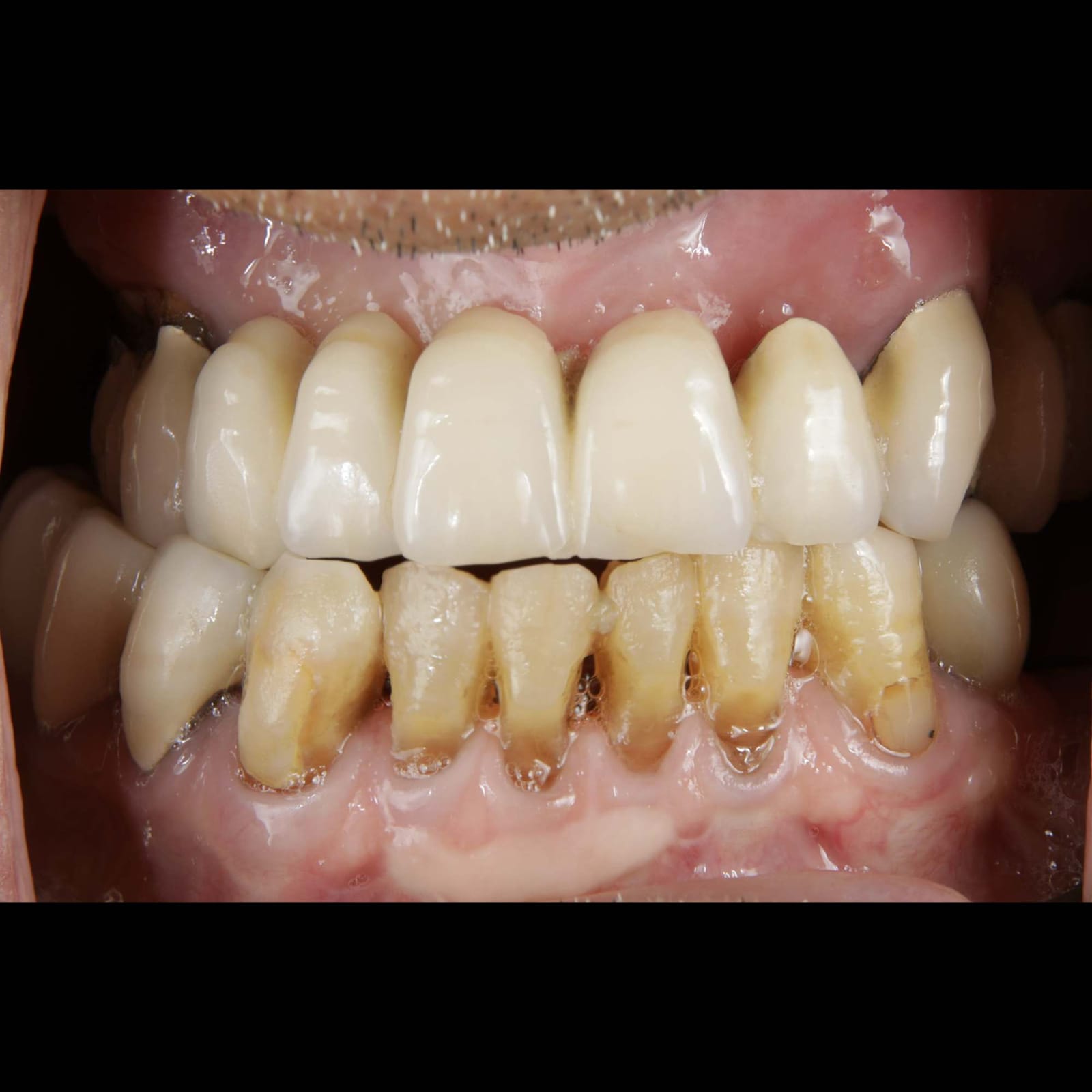
He came to us with loose bridges in his upper jaw. The teeth underneath were failing and fracturing, and no matter what was done, the bridgework kept coming loose. He couldn't bite properly. He was biting his own tongue and cheeks by accident. And he described his face as feeling like it had collapsed in on itself.
His words, not a chart
What wasn't working, day to day
- His upper lip had caved inward
- His lip kept getting trapped between his front teeth
- He was constantly biting his own cheek and tongue
- His teeth felt unstable, like they could come loose at any moment, in public
What he wished he could see in the mirror
- He showed none of his upper front teeth when he smiled
- He wanted his lip to look full again, and a smile that felt strong and natural
What it was costing him
- He'd lost a significant, worrying amount of weight. He described it as "wasting away"
- Not being able to eat properly was affecting his health and his family life
- He'd pulled back from the world, skipping social situations he used to enjoy
What he wanted was simple, really: to eat without fear, to smile without hiding, and to go out without worrying his teeth might fail him. He wanted it done right, and he wanted it done once.
A smile that was quietly out of alignment
Looking closely, his smile was visibly skewed. When we design a smile, we measure against the interpupillary line, the line between the pupils of the eyes. Ideally, the edges of the front teeth should run parallel to it. His didn't. The plane tilted up on one side and dropped on the left.
Working within what the lower jaw allows
Here's something that has to be said honestly, before treatment ever starts: when you're rebuilding one jaw, the other jaw sets the boundaries. If the lower arch is itself uneven or compromised, you can make a real, meaningful improvement to the upper, but you can't fully correct the tilt on your own.
So that's exactly what we told him. We could stabilize his upper jaw and make a substantial improvement, but his lower arch was off, and we'd be working around that. His bite, his jaw movement, and his smile all had to be balanced together, getting as close to ideal as his lower arch would allow.
Every implant planned before surgery ever starts
We began with a complete set of records: his teeth, his soft tissue, and a CT scan. Working alongside the rest of his care team, we designed a custom jig that seats against the roof of his mouth and is gently secured in place with small screws.
That palatal jig becomes our fixed reference point for the entire case. A series of guides locks into it, letting us place each implant exactly where we planned, not a millimeter too far forward, not too far back. Getting that front-to-back position right is what creates the space the final restoration actually needs to fit properly.

Precisely where we planned them
With the guides doing their job, each implant went in exactly where it had been designed to go.
The temporary teeth — fixed, in a single day
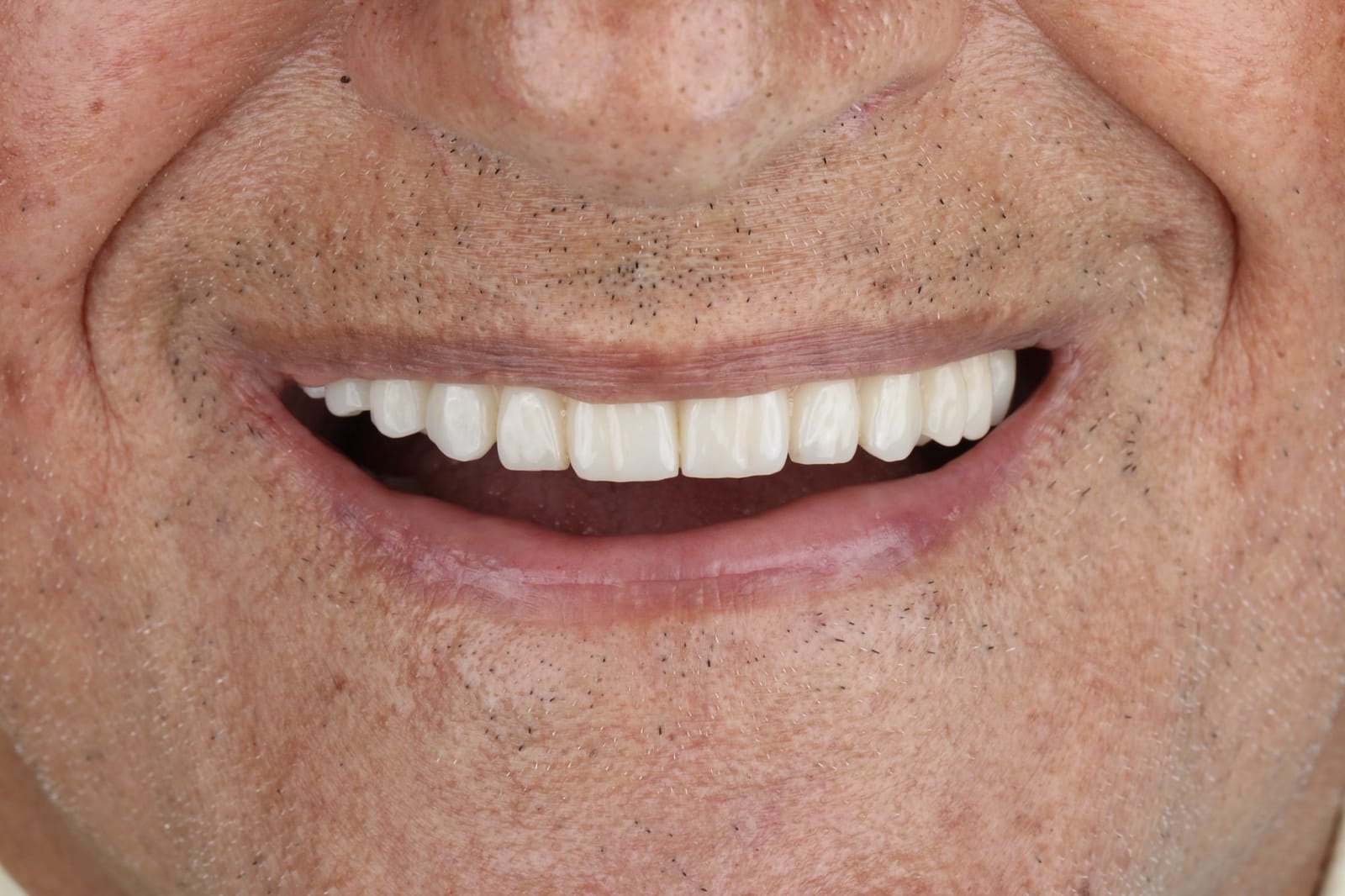
Within 24 hours, a man whose teeth were loose, failing, and a source of daily anxiety had a fixed, screw-retained set of teeth secured to his new implants. That one day changed his quality of life. He had teeth he could actually chew with, speak with, and be seen with.
The surgery was behind him
Once his provisional was in place, the surgical part of his journey was done. Everything from that point forward was simply about refining: unscrewing and reseating the restoration as we worked toward the final result.
The temporary does real work
The provisional gave us time to evaluate his smile, his function, and his speech before anything became permanent. Done properly, a patient gets teeth immediately, and both the implants and the eventual restoration are protected for the long run. It's the same approach as the case before this one: teeth right away, refine from there, no going back to surgery.
Two skill sets that rarely live in one clinician
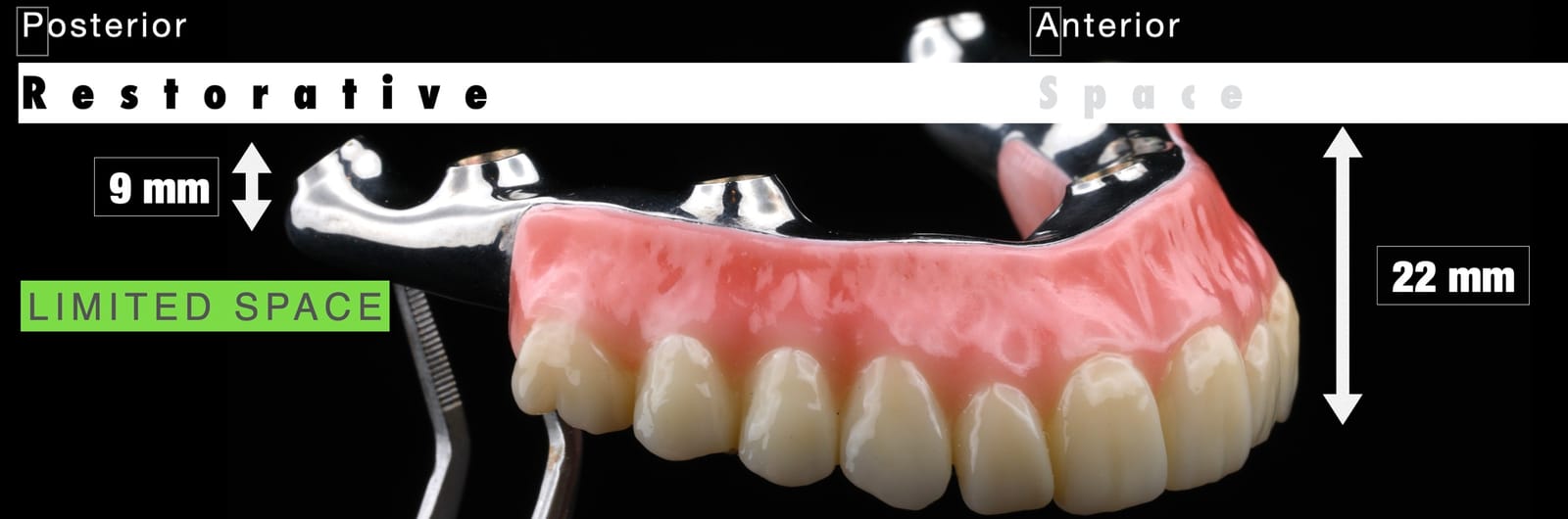
What made the difference here is something not every provider brings to the table: real command of aesthetics and smile design, paired with a deep, working knowledge of biomaterials. Dr. Reshad actually taught biomaterials science at USC during his tenure as chairman of fixed and operative dentistry.
That combination is what lets him balance biology, material strength, and function all at once. The result doesn't just look good: it's engineered to hold up. Not just for a year or two, but with an eye toward 10, 15, even 20 years down the line.
Prosthodontics, at its core, is applied engineering
Every measurement, every design decision in a case like this, is engineering applied to the science of prosthodontics: load, material choice, geometry, tolerance. That's exactly why a reconstruction like this belongs with a prosthodontist.
Someone has to see the whole picture
A prosthodontist is the only specialist trained extensively in full-mouth reconstruction, including cases like his, where a patient is losing teeth or transitioning fully to implants. Cases like this carry a long list of moving parts, and the prosthodontist is the one coordinating across every specialist involved, the quarterback of the whole plan.
We design every case from the finish line backward. We decide exactly where treatment needs to end up, then work back to where we start, the way an architect designs the finished building first, then directs the crew on how to build it.
The provisional is the blueprint
Careful planning is what lets us build provisionals partway through treatment. That provisional is where we test the aesthetics, the function, the speech, and the patient's own preferences, before anything is set in stone. By the time we sign off on it, we already know the final result will deliver.
What changes between the temporary and the final: the material
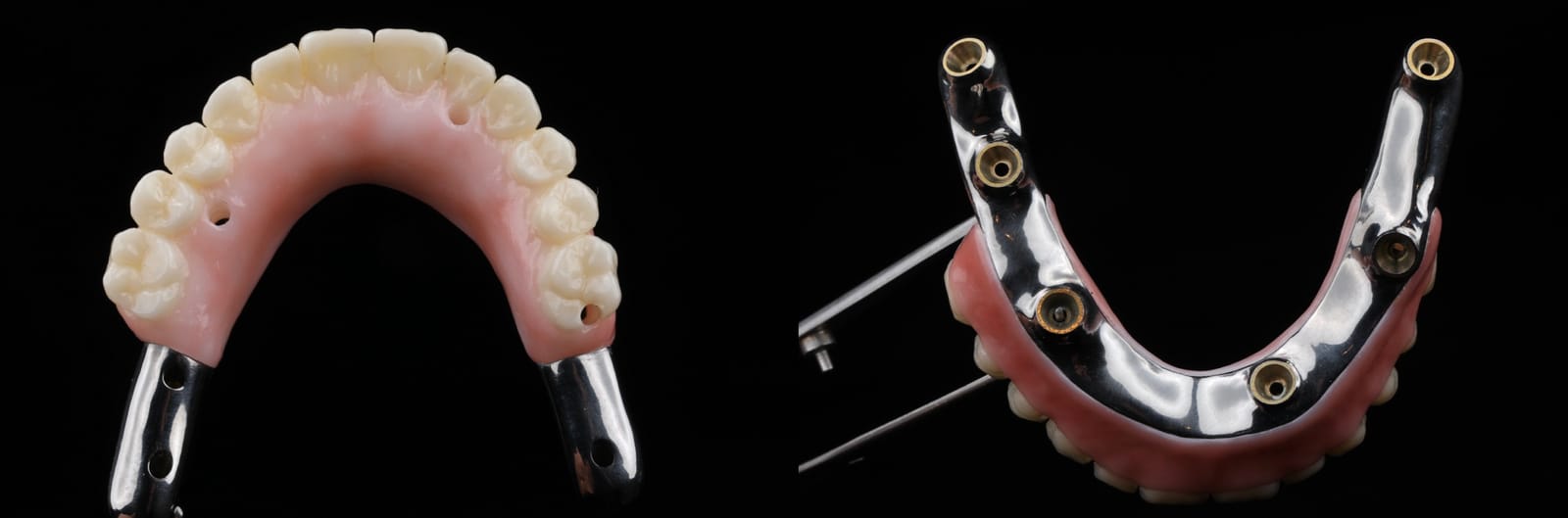
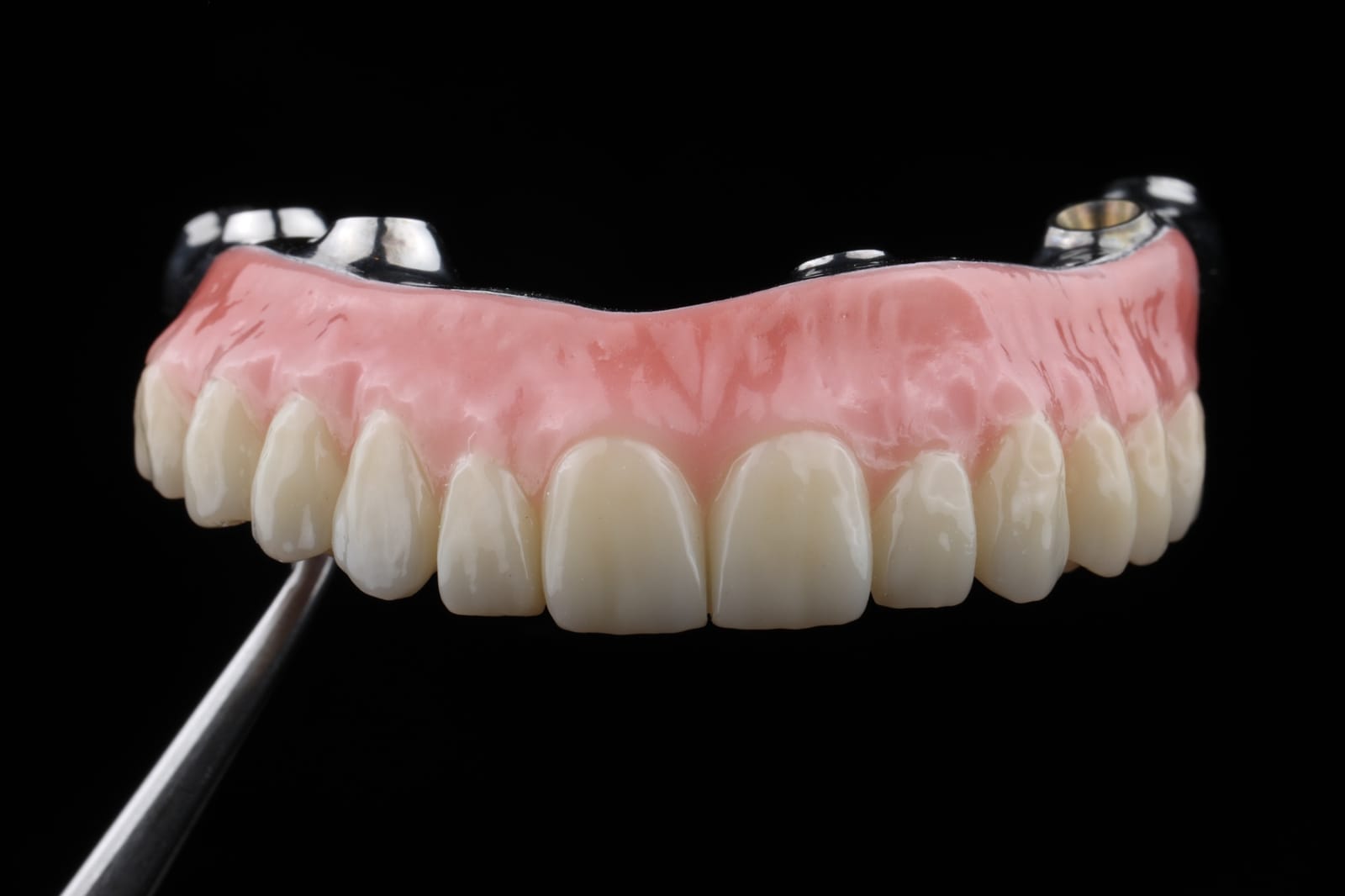
- Temporary: a milled acrylic resin, strong, reliable, built to hold up during testing
- Final: typically a combination of titanium and zirconia
Designed correctly by a prosthodontist working alongside a master technician, restorations like these avoid chipping and fracture in the vast majority of cases.
Before & After
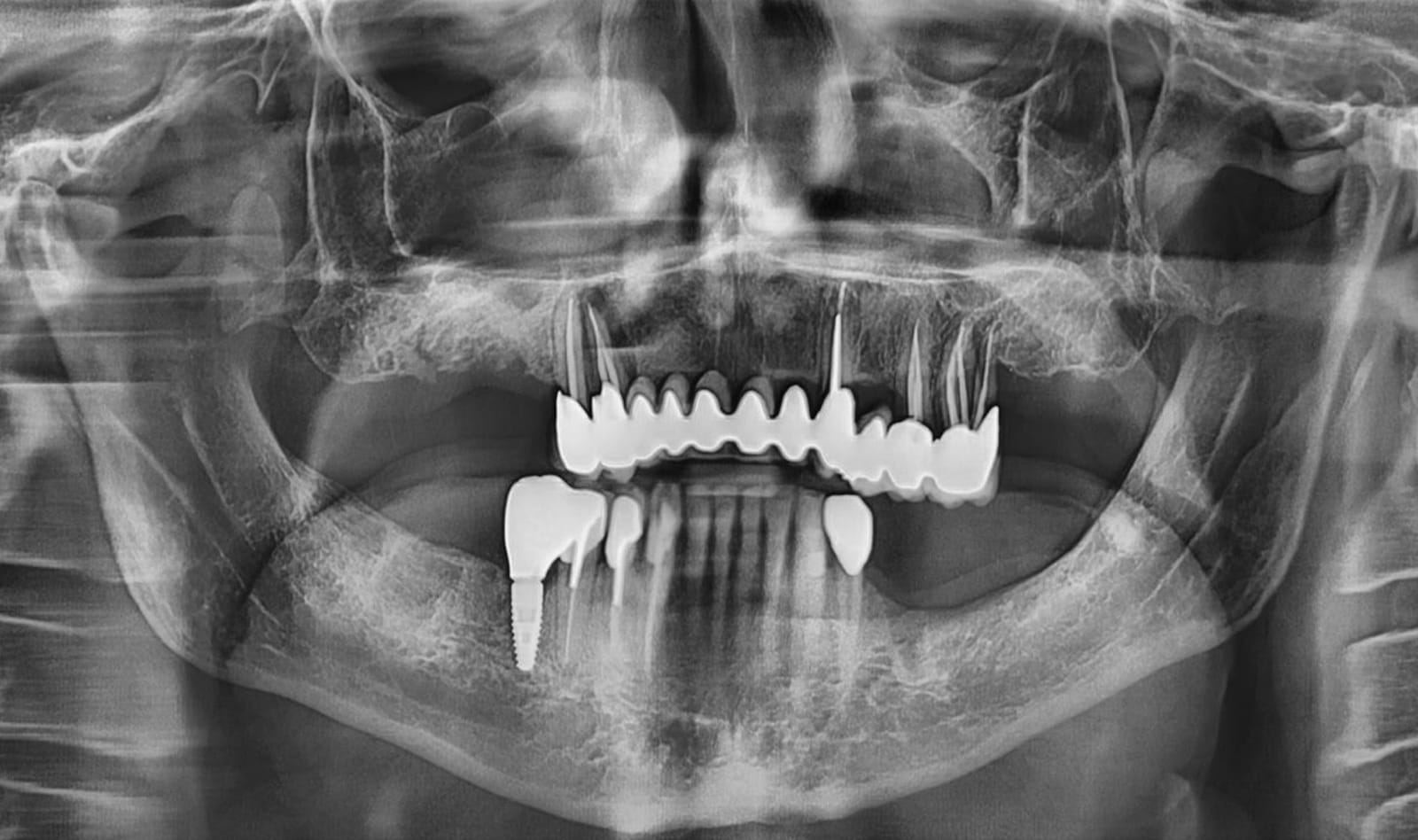
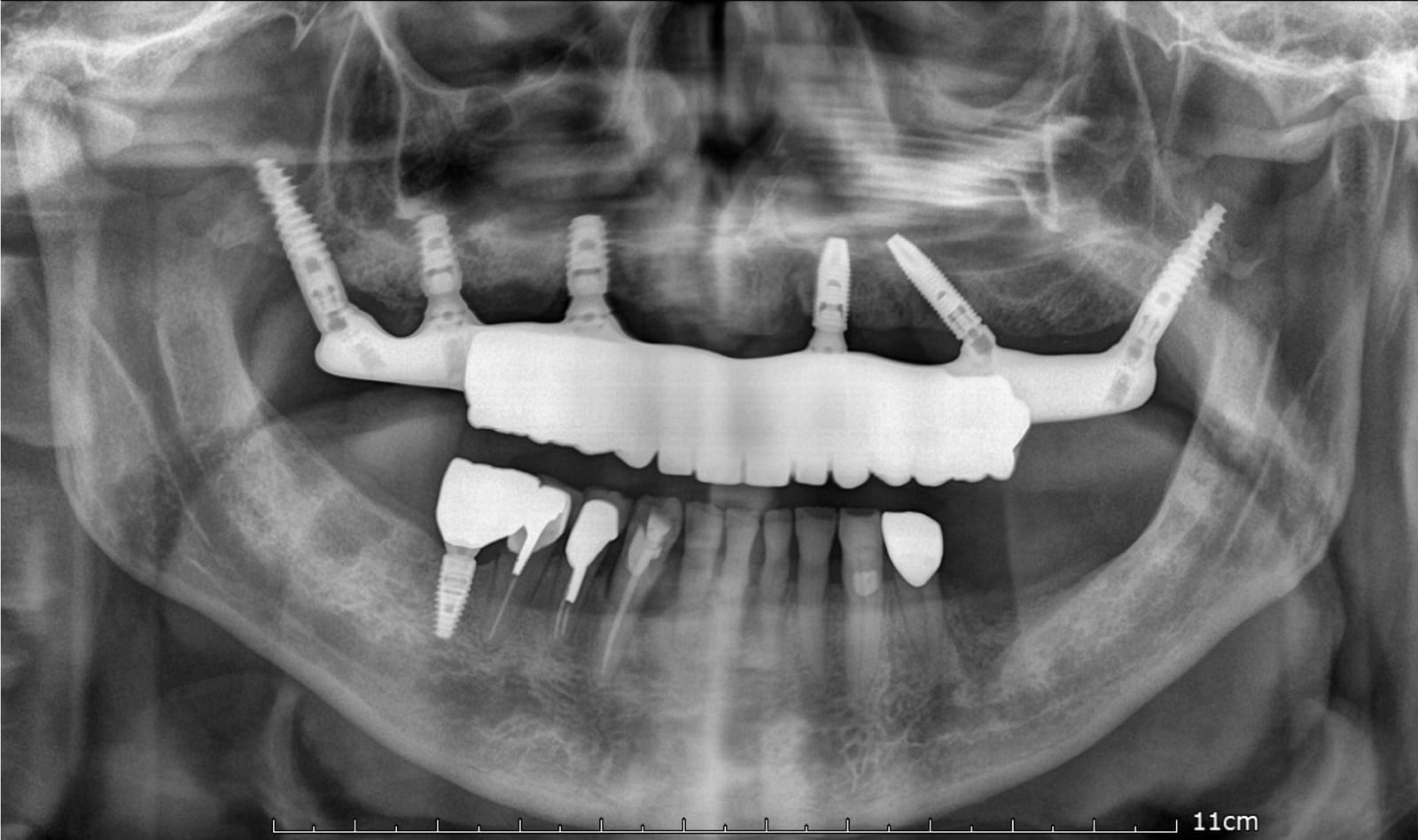
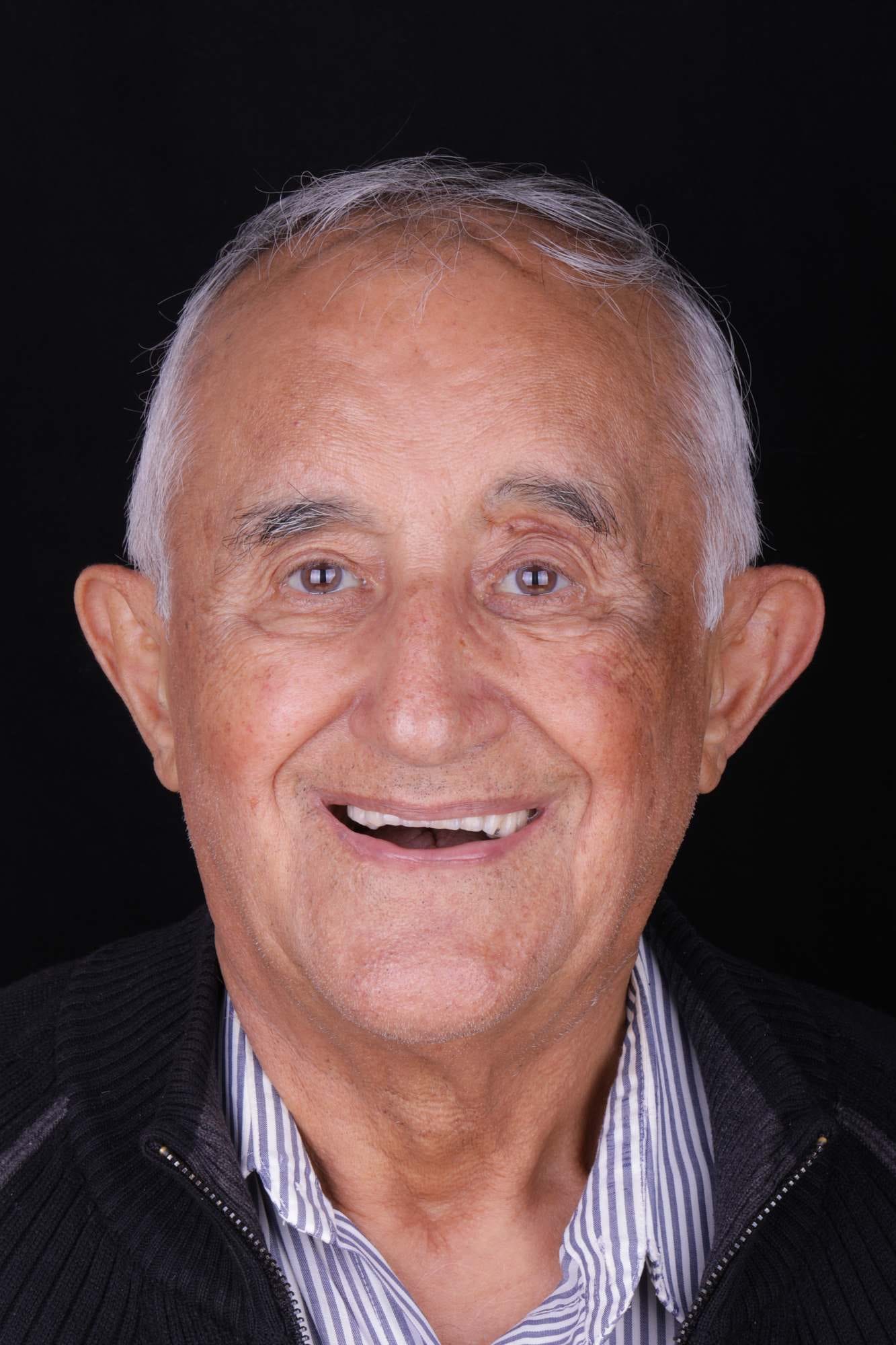
Six years later, still holding strong
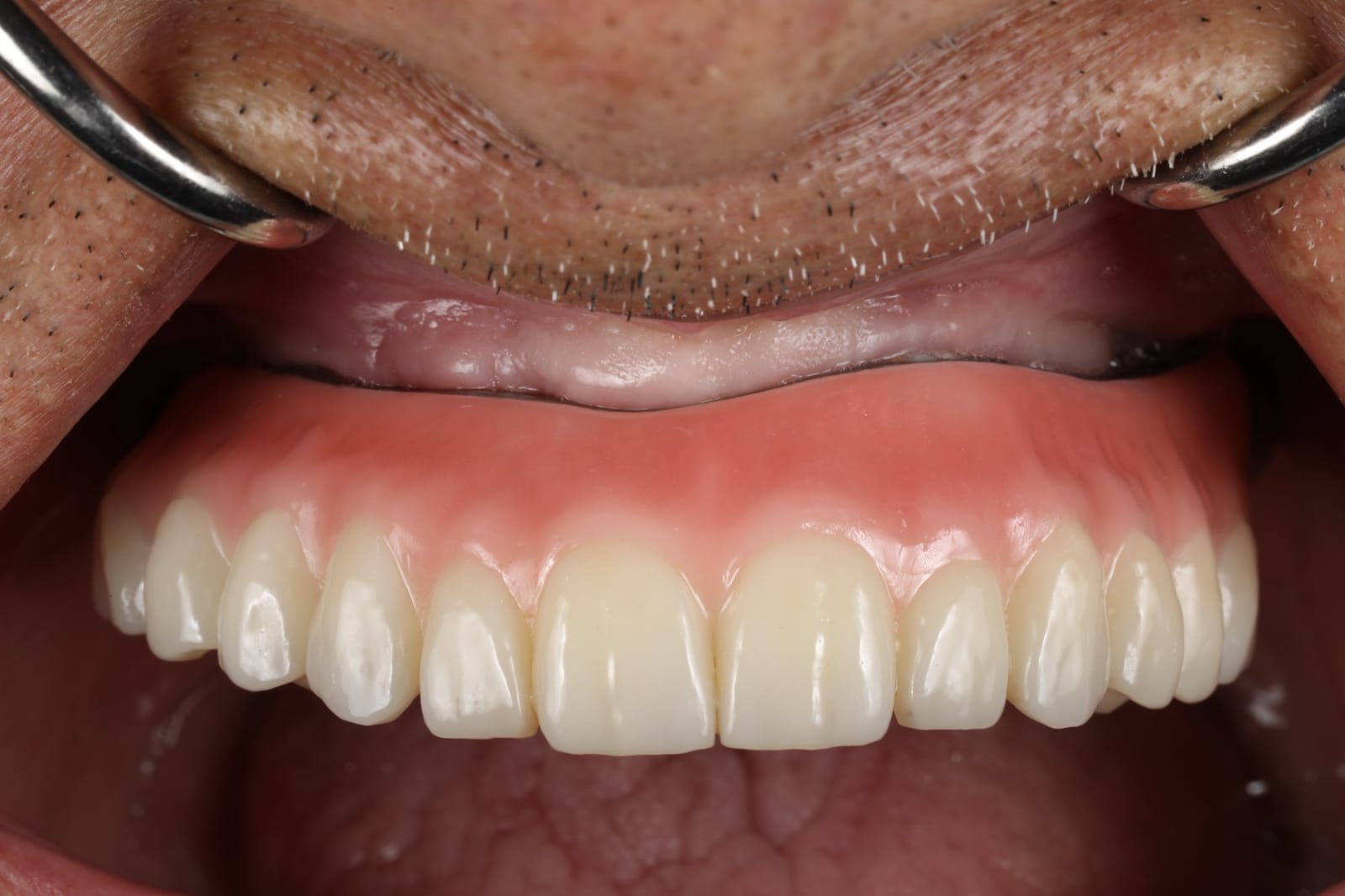
This case was completed six to seven years ago, and it's still functioning well today. He came in struggling to eat, hiding his smile, and losing weight he couldn't afford to lose. All of it was reversed, with a real, lasting improvement in his quality of life.
Every case is planned around one person's anatomy. Individual results vary, and what was right for this patient may not be right for you.