FP-3 Case 10 · All-on-X · Implants
A Second Opinion, and What It Confirmed
She had been with the same dentist for ten years.
Then she was told every upper tooth would have to come out.
After a decade of care, that lands as a shock rather than a diagnosis. She wanted a second opinion, and she was right to want one. What she deserved was not a different answer. It was a better explanation, and a better plan.
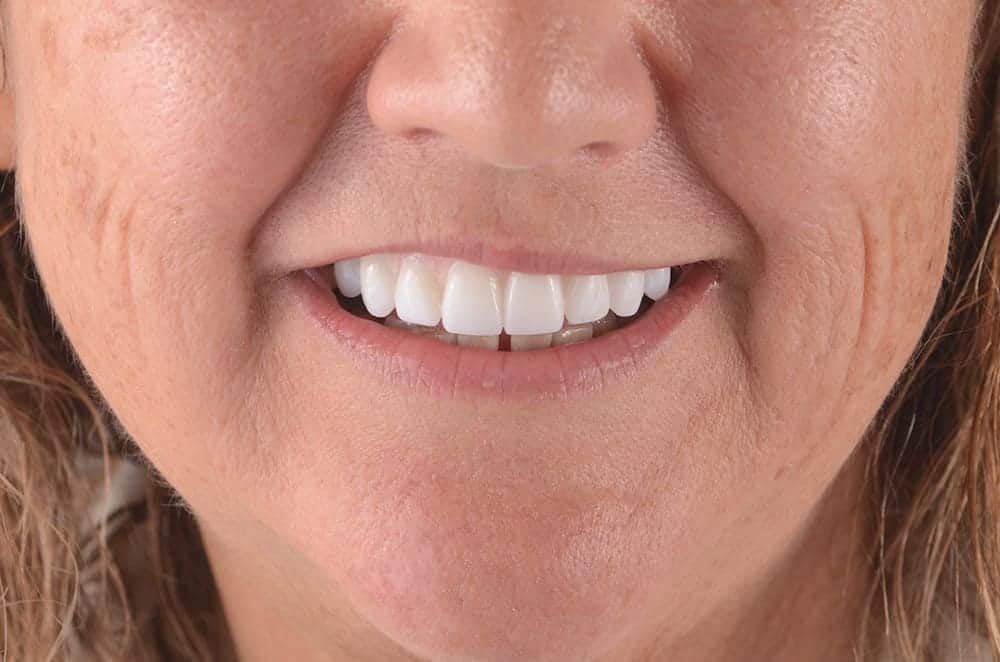
What the examination confirmed
Her dentist was correct about the condition of her mouth. By the time she reached us the gum disease had progressed too far for the teeth to be saved.
The upper bone had gone soft and infected, and much of it was already lost. Her sinuses were pneumatized, enlarged to the point where implants could not be placed in the usual way.
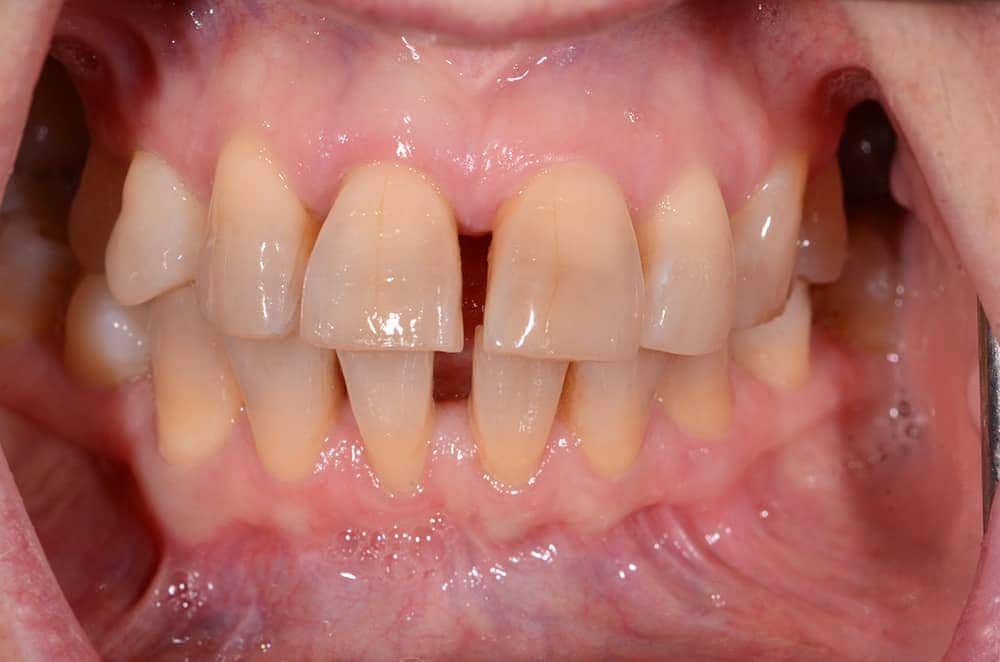
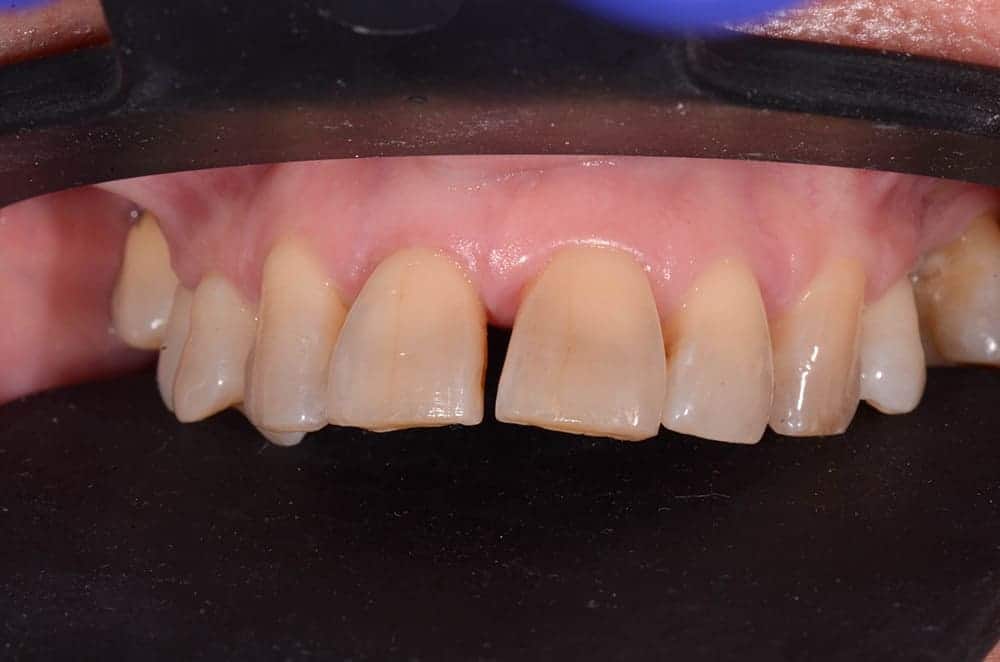
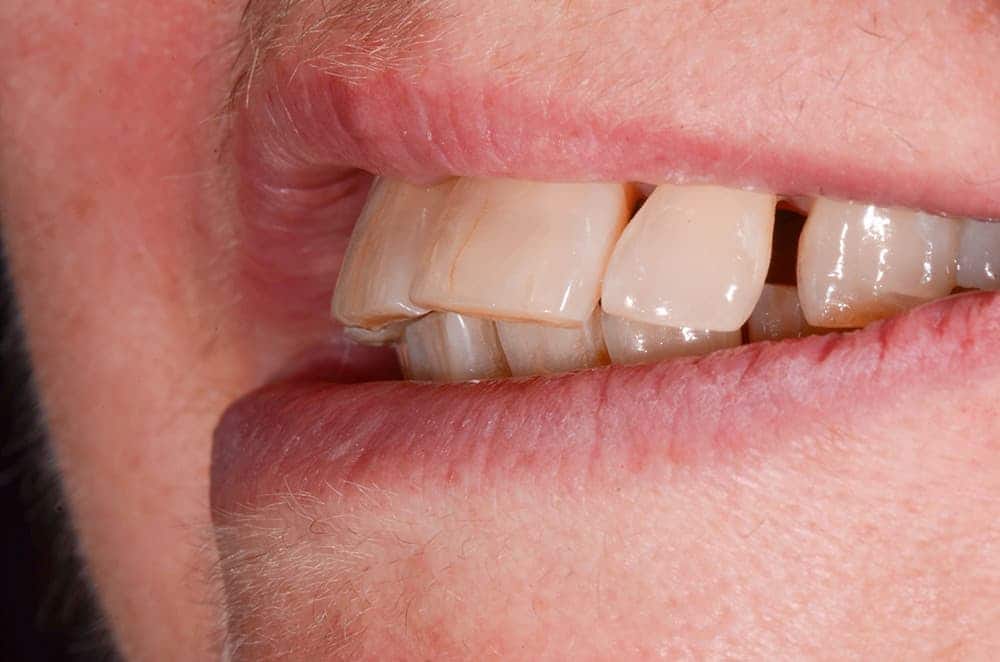
And her upper front teeth had splayed forward, opening a gap at the front that never closed. An anterior open bite.
Her smile
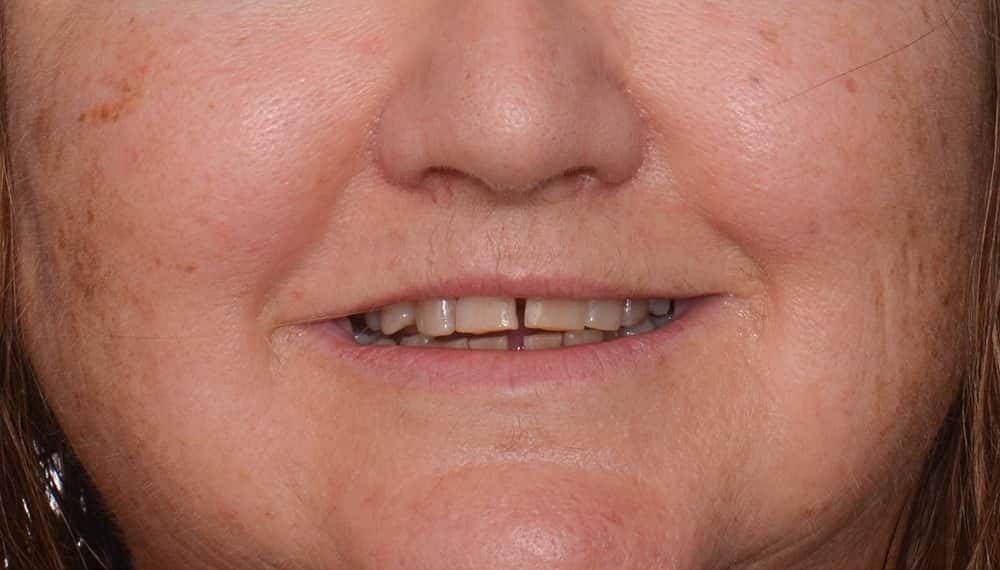
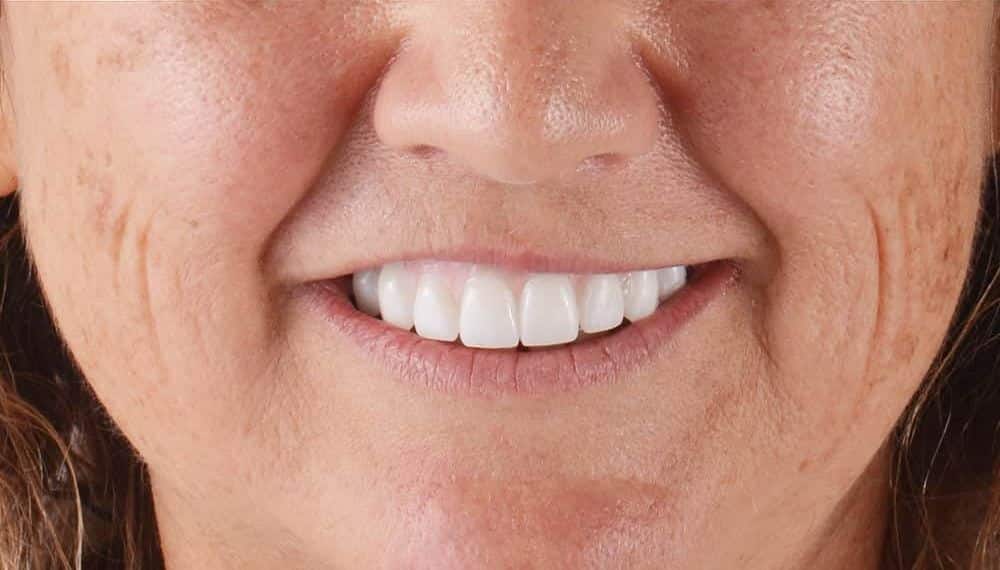
The second opinion, confirmed
The upper bone had become soft and infected, and a lot of the bone had already been lost. The teeth had become splayed and pushed out forward, creating an unsightly appearance and causing a large gap in the front called an anterior open bite. In addition, her sinuses were all pneumatized, which means they had all become very enlarged, making it difficult to place implants in the usual way.
On arrival
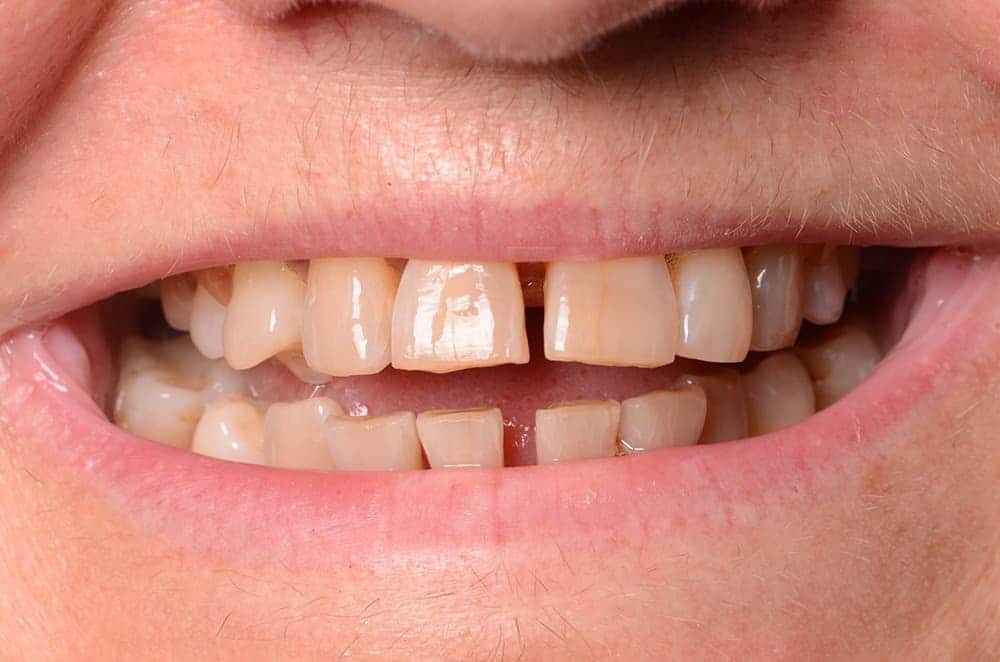
Why the front teeth splay
That splaying is not a coincidence, and it is not cosmetic. It is the signature of a collapsed bite.
When posterior support is lost, the back teeth stop carrying the load and it transfers forward onto teeth never designed to take it. The upper front teeth are pushed outward, and the bite opens at the front as they go.
Dr. Reshad published on this in the Journal of the California Dental Association in 2008, on the influence of posterior occlusion when restoring anterior teeth. Understanding loss of posterior support is fundamental to prosthodontics, because the training to manage it sits in one specialty.
Design to the finish, not to the start
Here is the consequence most patients never hear.
If a case like this is planned from where the teeth currently sit, the new teeth and the implants beneath them end up angled forward too, in the same splayed position the disease created. The result looks wrong and behaves worse, and by then it is built in.
Everything has to be redesigned and redirected toward the future tooth positions instead. Knowing the end point before placing anything is what separates a reconstruction that works from one that repeats the problem in a stronger material.
Angled implants, and teeth the same day
Her enlarged sinuses ruled out conventional placement, so the implants were tilted, angled precisely to pass by the sinus cavities and anchor in the bone that remained.
Four implants, strategically positioned, carrying a full upper arch.
The implants were placed the same day as the extractions, and she received temporaries the same day too. She functioned throughout, and carried on with her life while the treatment ran.
The result
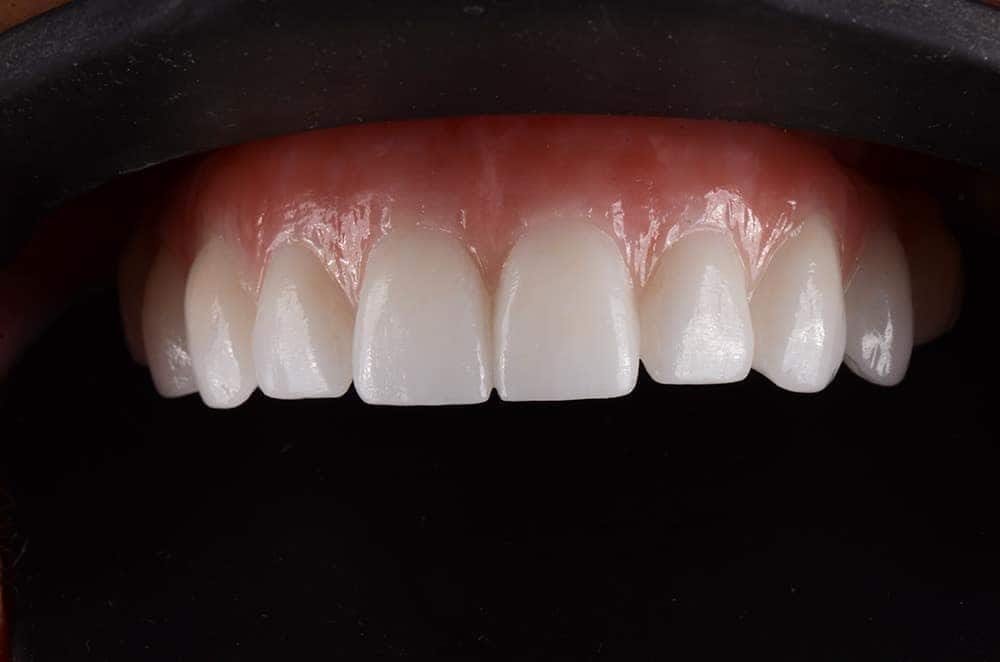
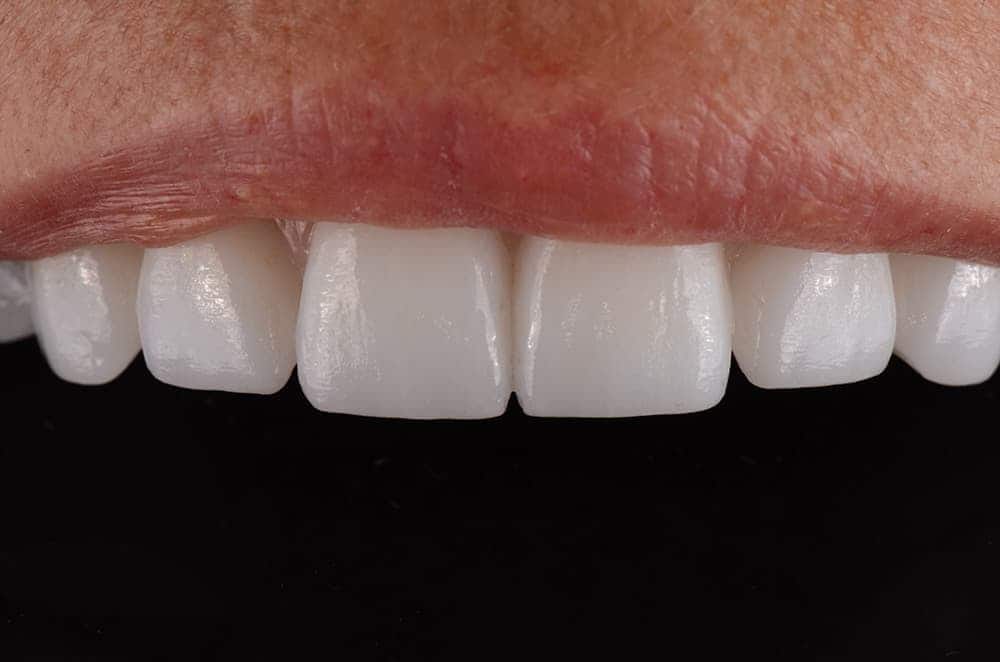
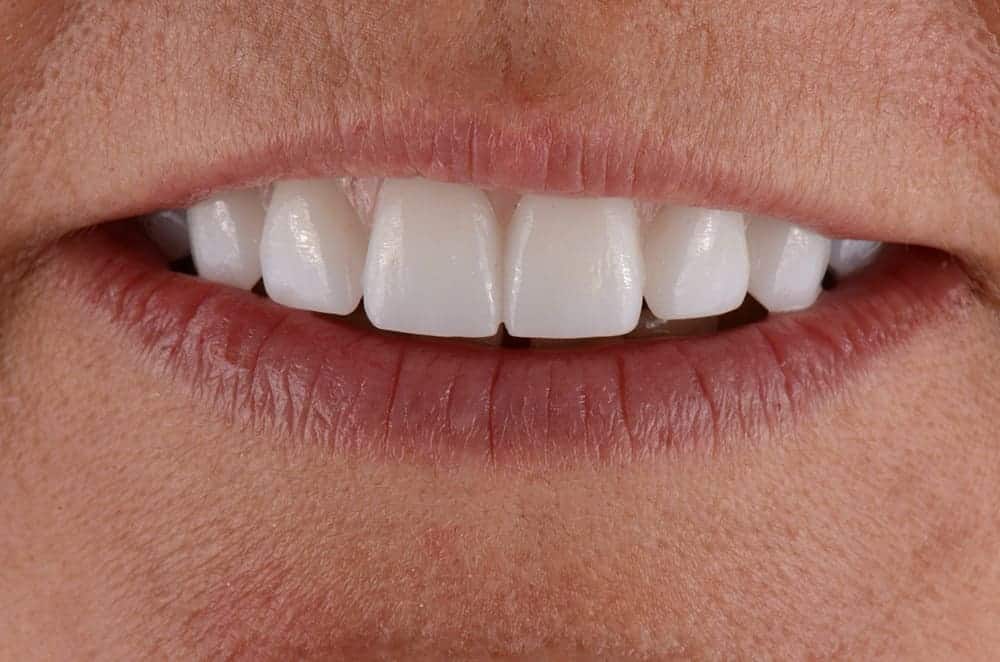
She designed it with us
After six months of healing in the provisionals, she wanted a hand in her own smile.
She wanted it functional and beautiful, and she wanted it brighter and whiter than what she had lived with, for a more youthful look.
That is what the provisional phase is for. Her feedback and our input, worked out over months in her own face rather than decided in an afternoon.
More than the smile
She tells us she is dating again. Traveling. Living better.
The smile inspired her to lose weight she had wanted to lose and to take up a healthier life alongside it. Good prosthodontic care improved her appearance, and then it improved a good deal more than that.
We also gained a friend. We are always glad to see her when she comes in for a checkup.
Every case is planned around one person's anatomy. Individual results vary, and what was right for this patient may not be right for you.