FP-3 Case 9 · All-on-X · Implants
When the First Reconstruction Fails
He drove a long way to sit in the chair.
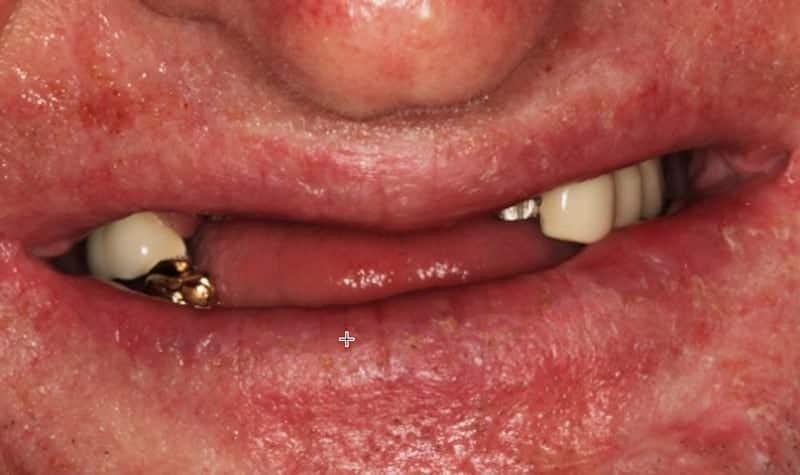
A couple of years earlier he had received an implant reconstruction. Within months it began to loosen, and then it did not stop. The teeth came away, and some of the implants came away with them.
By the time he reached us he had lost both. No teeth in his mouth, and less bone than he started with.
Worse than he had been told
His own understanding of his situation was that he needed the work redone. The examination said otherwise.
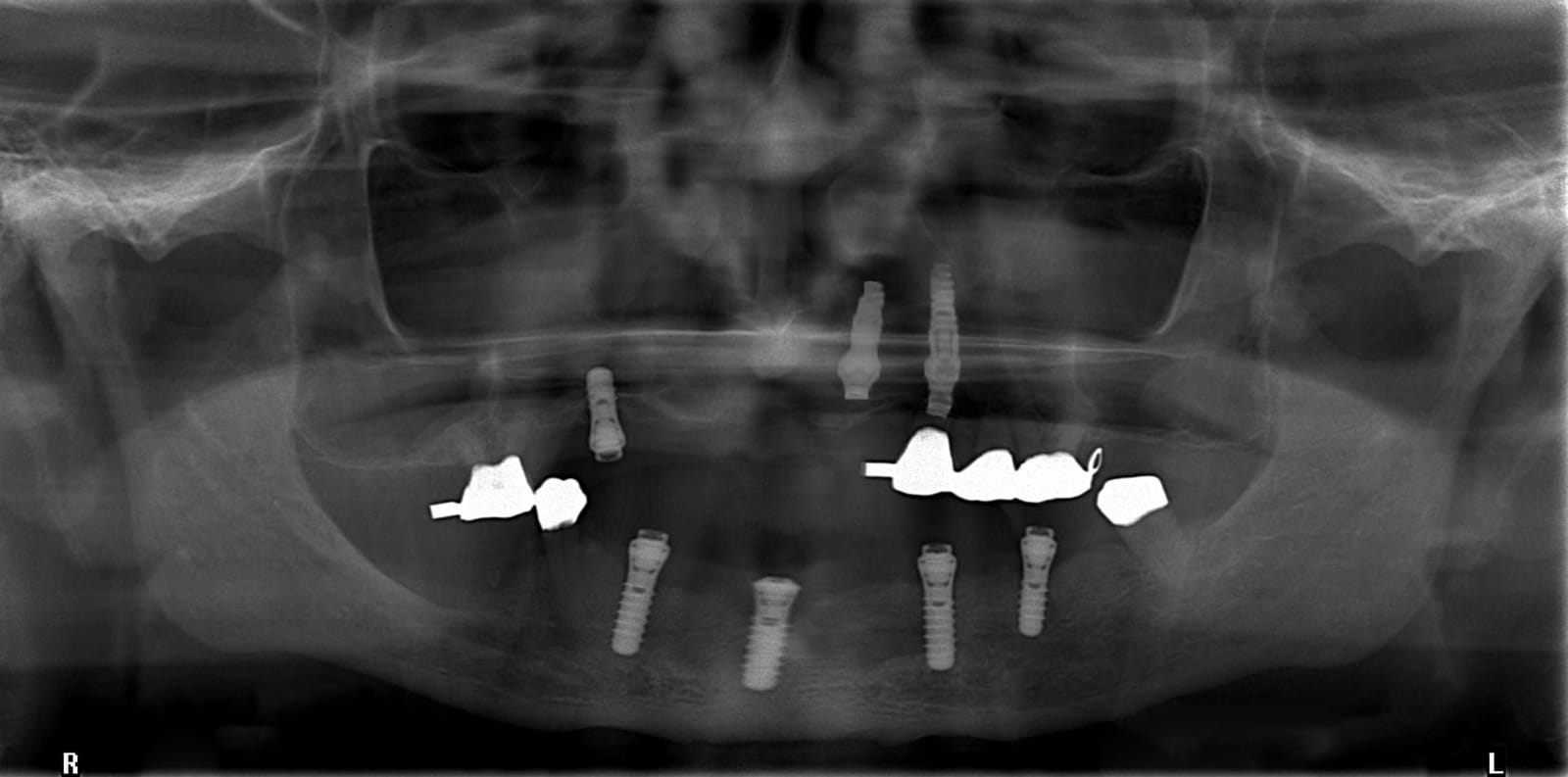
His upper jaw had severely resorbed, worn away by surgeries that had not been carried out in the most ideal way. What bone remained sat under enlarged sinuses, and between the two there was essentially nothing left to place an implant into.
That is the point at which most practices refer a patient onward, or start describing a long program of grafting.
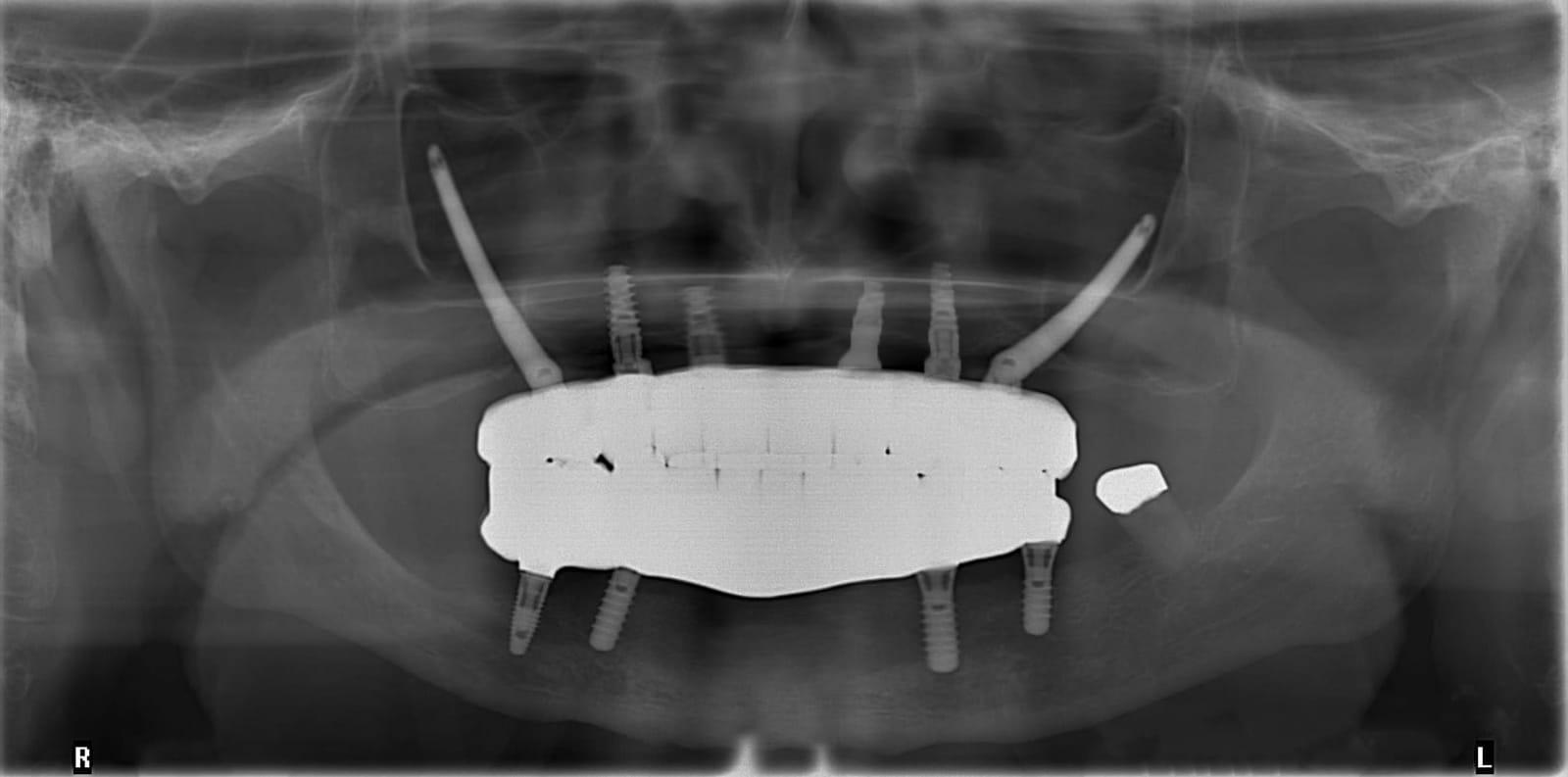
Pre-existing radiograph
To get on with his life
He was clear about it. He did not want years of visits, staged surgeries, sinus lifts and waiting.
That request is not an obstacle to good treatment. It is information. It tells you which of the technically valid routes is the right route for this person, and planning that ignores it produces a plan the patient never finishes.
Good bone, in an unexpected place
There was strong, good quality bone available at the base of his cheekbones.
Zygomatic implants were placed into it, reaching past the resorbed jaw and the sinuses entirely, to give him back teeth. Additional implants went in between them, with bone grafting alongside.
The strategy is simple to state and difficult to execute: stop trying to build where the bone has gone, and anchor into where it still is.
Immediate function
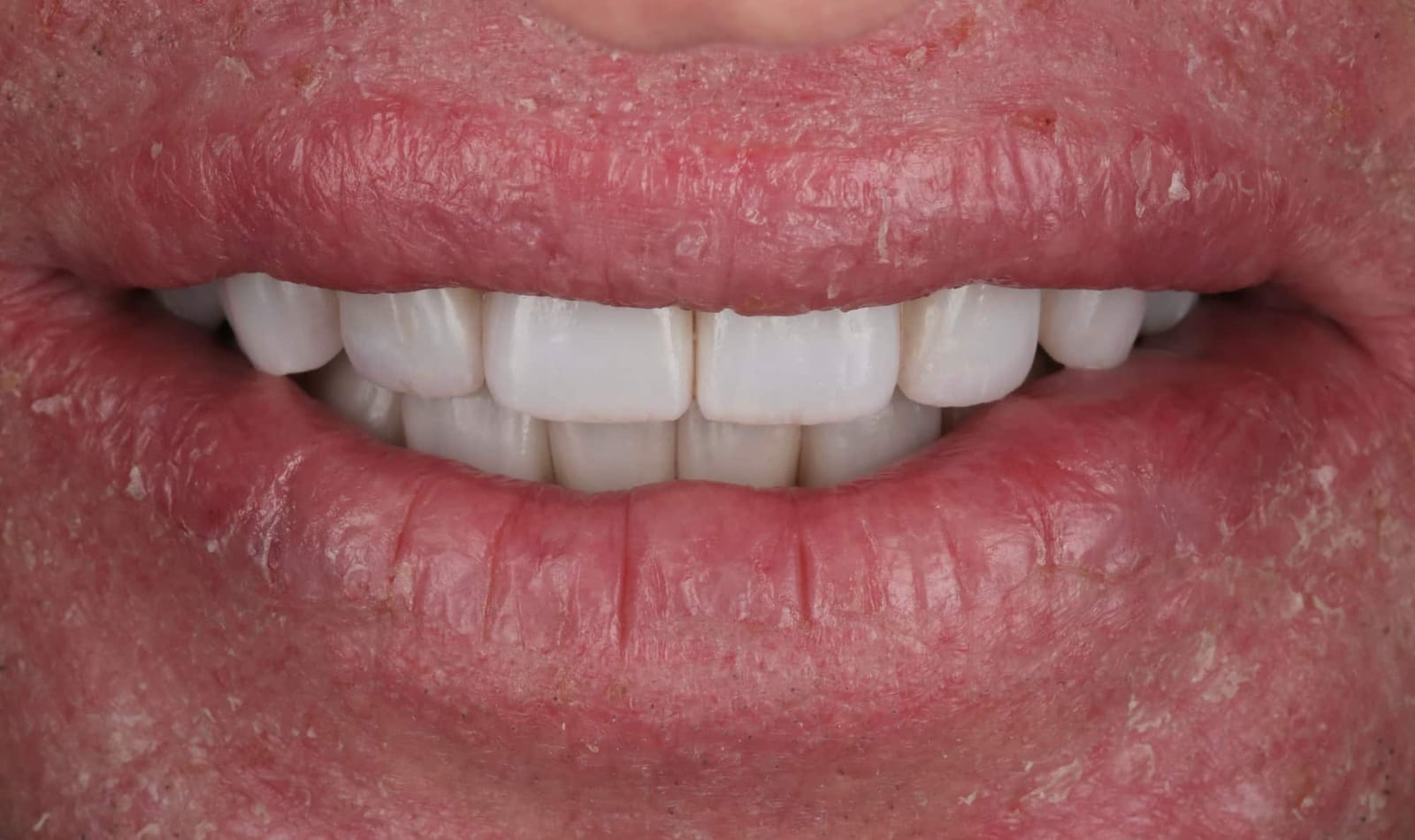
He left with a full set of teeth he could chew on. The provisional was delivered within the same day.
This is immediate load, and it is not a shortcut. It works when the forces, the distribution of the implants and the design of the teeth above them are all properly understood. Handled that way, he could eat, speak and get on with his life from that day forward, which was the whole of what he had asked for.
Confirming before finalizing
The waiting period is not passive. Throughout it the implants are monitored to confirm they are integrating as intended.
At four months, everything had. Only then did the final phase begin.
Correcting the angles underneath
This is where a case like his is won.
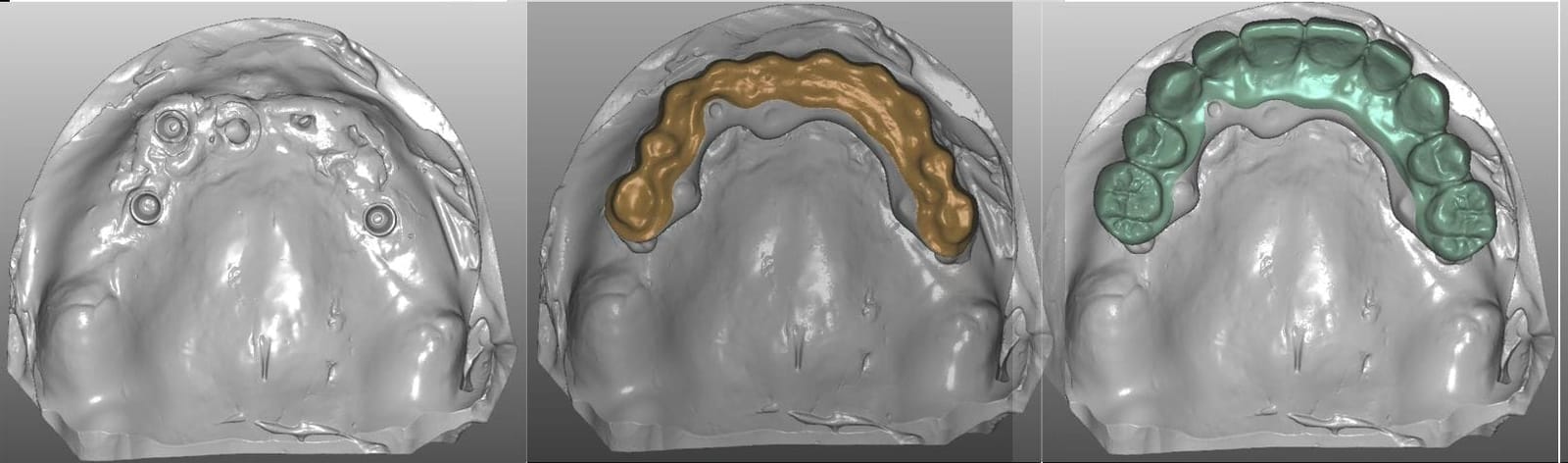
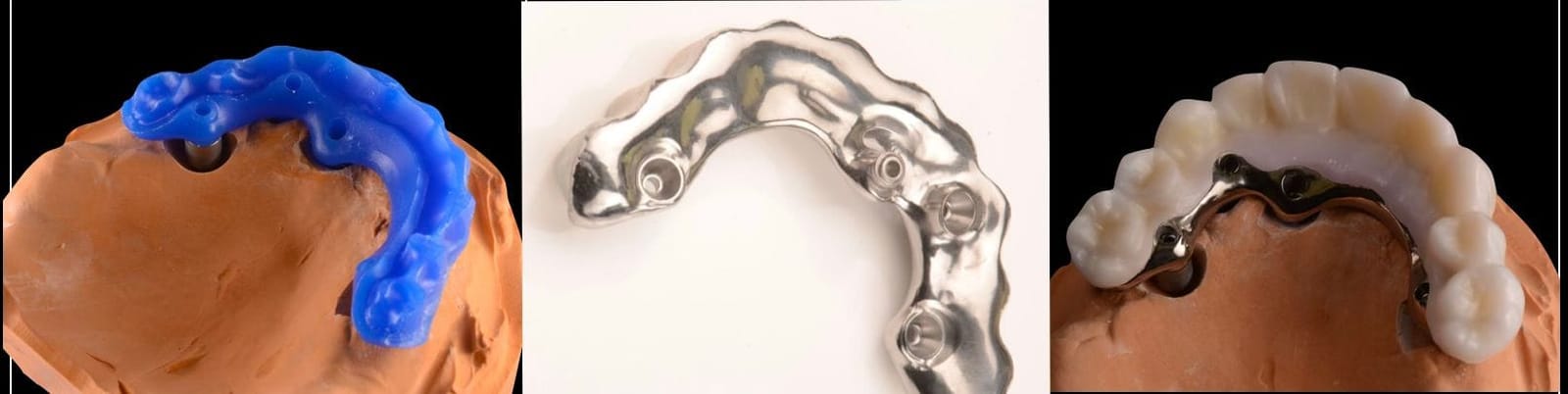
A primary framework, milled in titanium, forms the substructure. Its job is to correct the difficult angles the anatomy forces on the implant positions, and to convert them into something a restoration can sit on properly.
A secondary framework carries the teeth, and it seats onto the first.
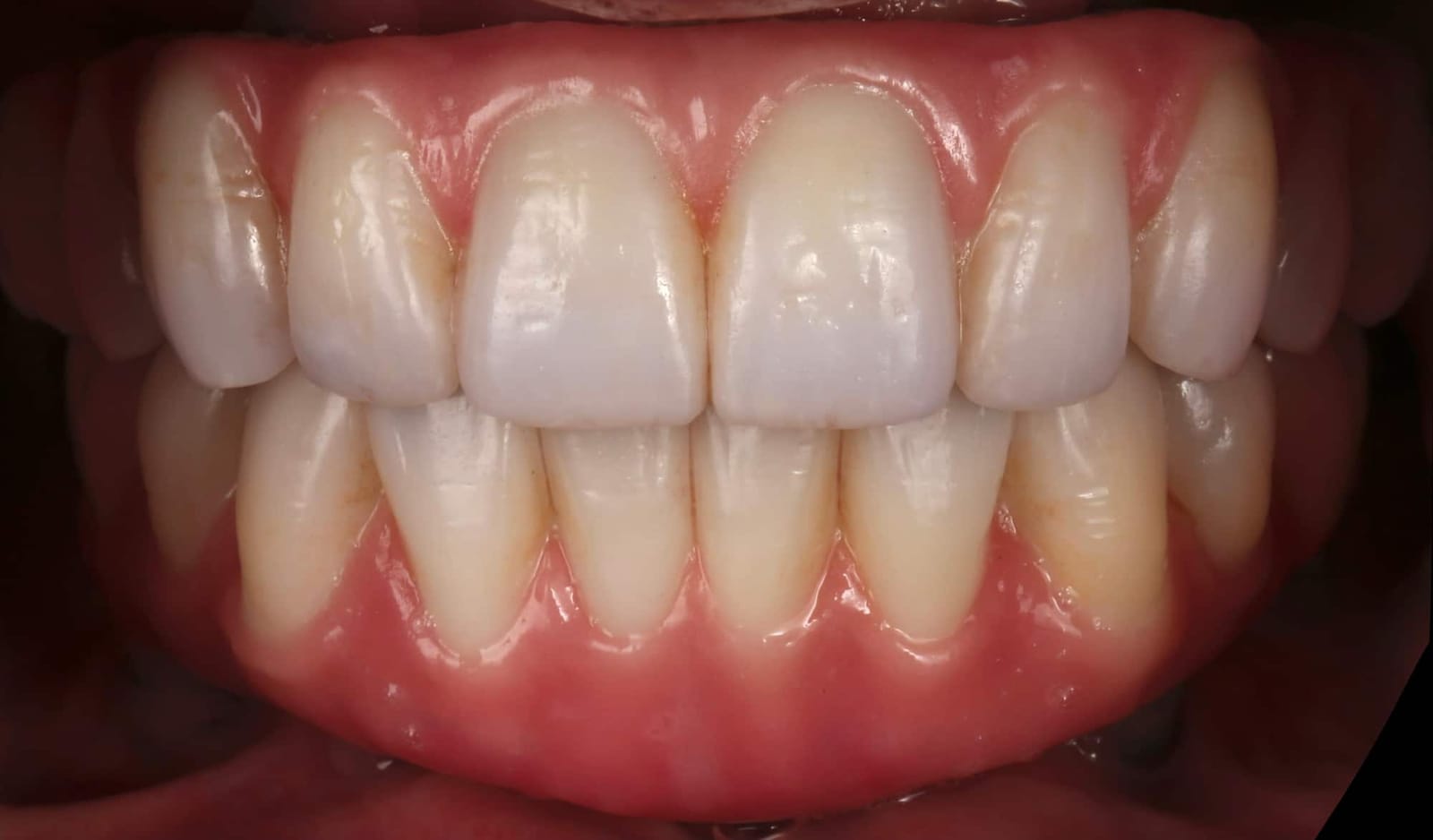
Done correctly, the patient sees none of this. They see teeth that look right, fit well, and stay.
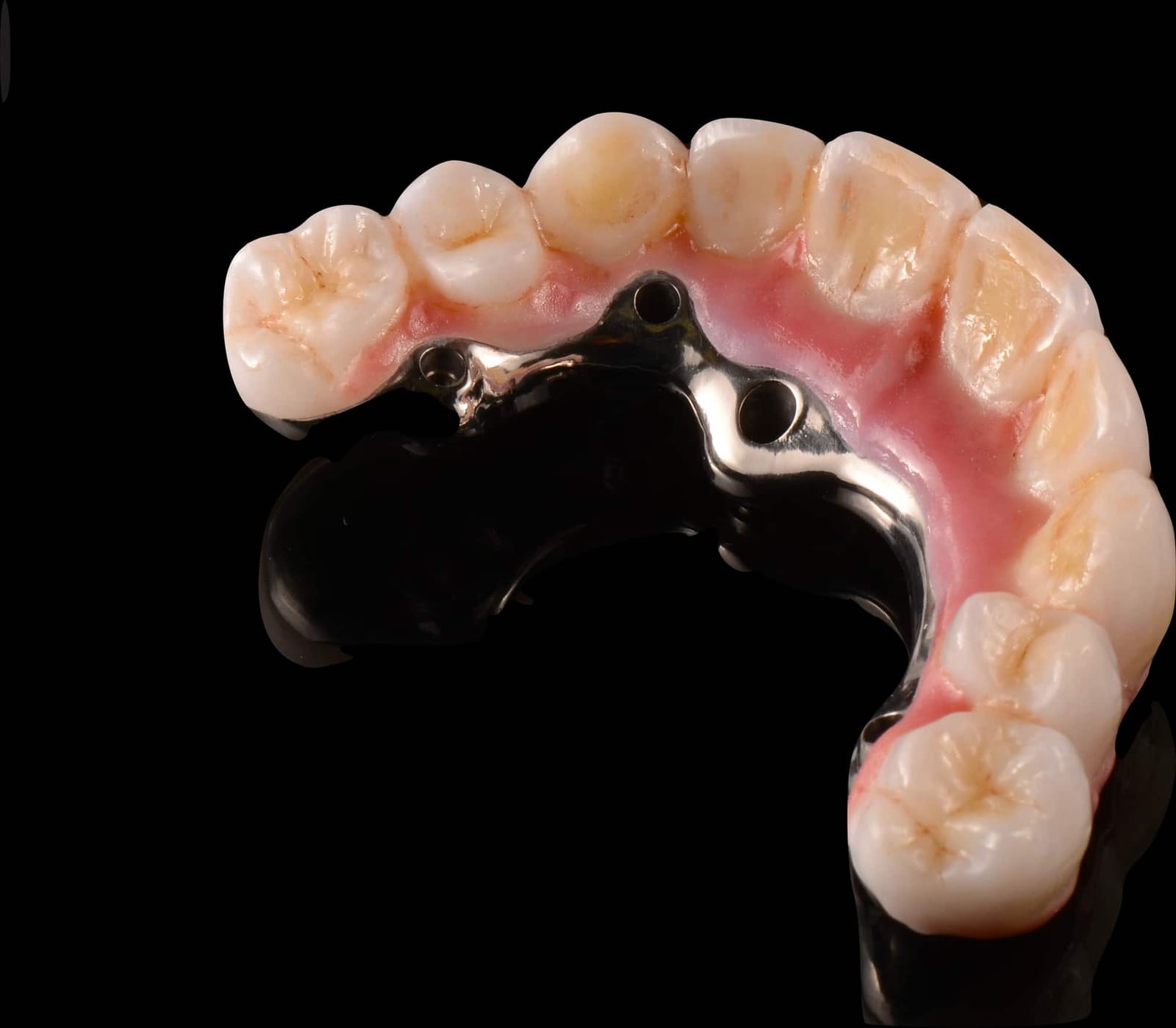
Verified before it reaches the mouth
Building those frameworks moves between two worlds repeatedly.
Digital design and milling, then back into the analog world on stone models of his own mouth for verification, then into digital again as the structure develops. Nothing advances on the assumption that the previous step was accurate. It is proven on a physical cast first.
That verification is what allows severely resorbed and genuinely complicated cases to be fitted and delivered with ease and comfort, rather than adjusted repeatedly in the chair.
Eleven years of service
This treatment was completed eleven years ago, and it has served him ever since.
For a man who arrived having already lost one reconstruction, and the bone that went with it, that is the measure that matters.
A failed case is a different problem
Redoing failed implant work is not the same job as doing it the first time. There is less bone, altered anatomy, and a patient who has already spent trust and money on something that did not hold.
It takes reading what the previous treatment left behind, finding the anatomy that can still be used, respecting what the patient actually wants from their life, and engineering a structure that compensates for positions nobody would have chosen.
That combination is prosthodontics.
The radiographs
The smile
Every case is planned around one person's anatomy. Individual results vary, and what was right for this patient may not be right for you.