FP-3 Case 8 · All-on-X · Implants
The Teeth That Kept Breaking
Her teeth kept breaking.
Not once, not memorably, but repeatedly, in the ordinary course of using them. An All-on-4 restoration done elsewhere that fractured at the front again and again, until living with it became a matter of waiting for the next time.
She disliked the shape. She disliked the form. She disliked her smile. And underneath all of it was a suspicion that nobody had found the actual problem.
She was right.

What she came in with
She came to Dr. Reshad with a list, which is usually a sign that a patient has been managing something for a long time.
The breakages. The shape and form of the teeth. The aesthetics. And the sense that her lips had collapsed, that her face had lost its support.
That last one deserves care. The profile photograph showing the collapse was taken with the teeth out. What it reveals is a significant deficiency in the jaw structure itself, and that deficiency is exactly why the previous dentist struggled to rebuild her smile. There was less to build onto than the case appeared to offer.
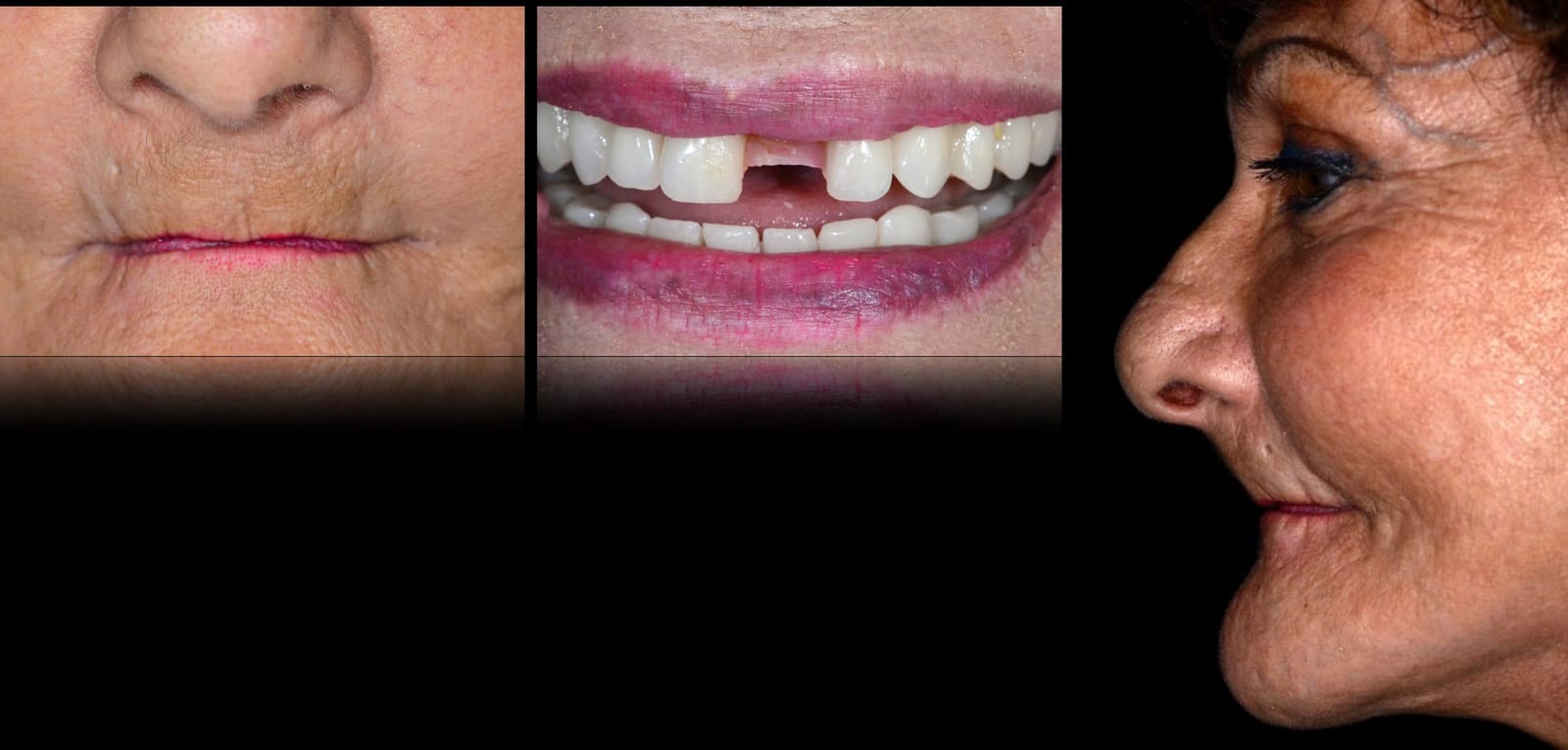
Why they kept breaking
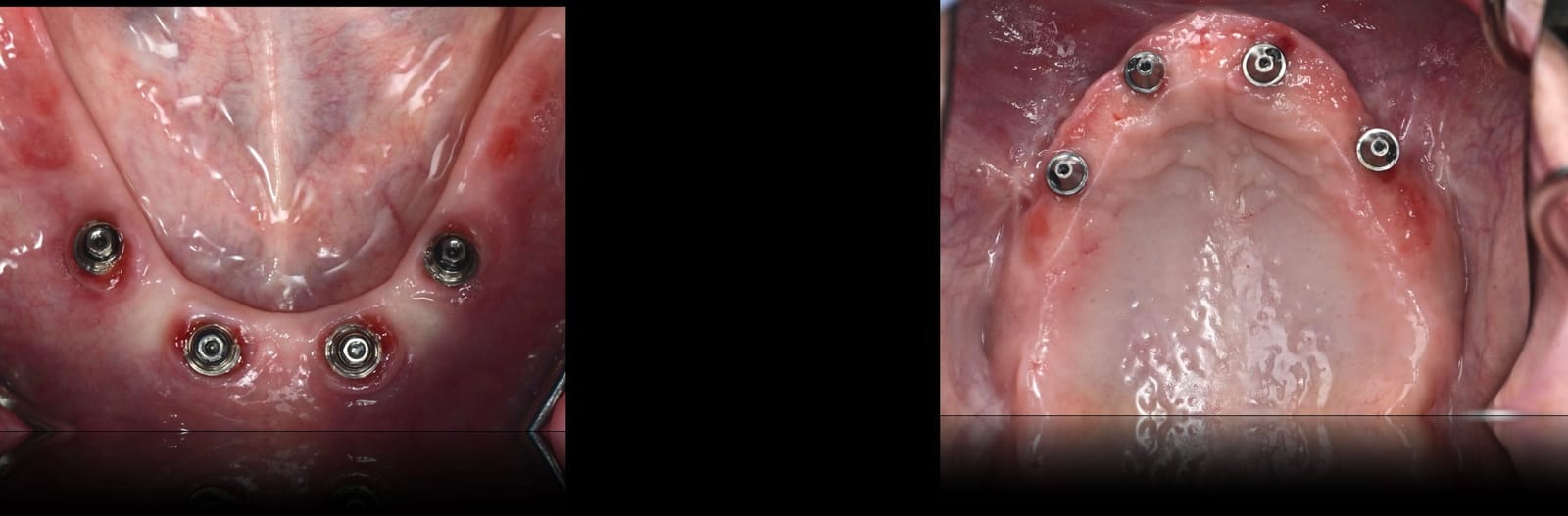
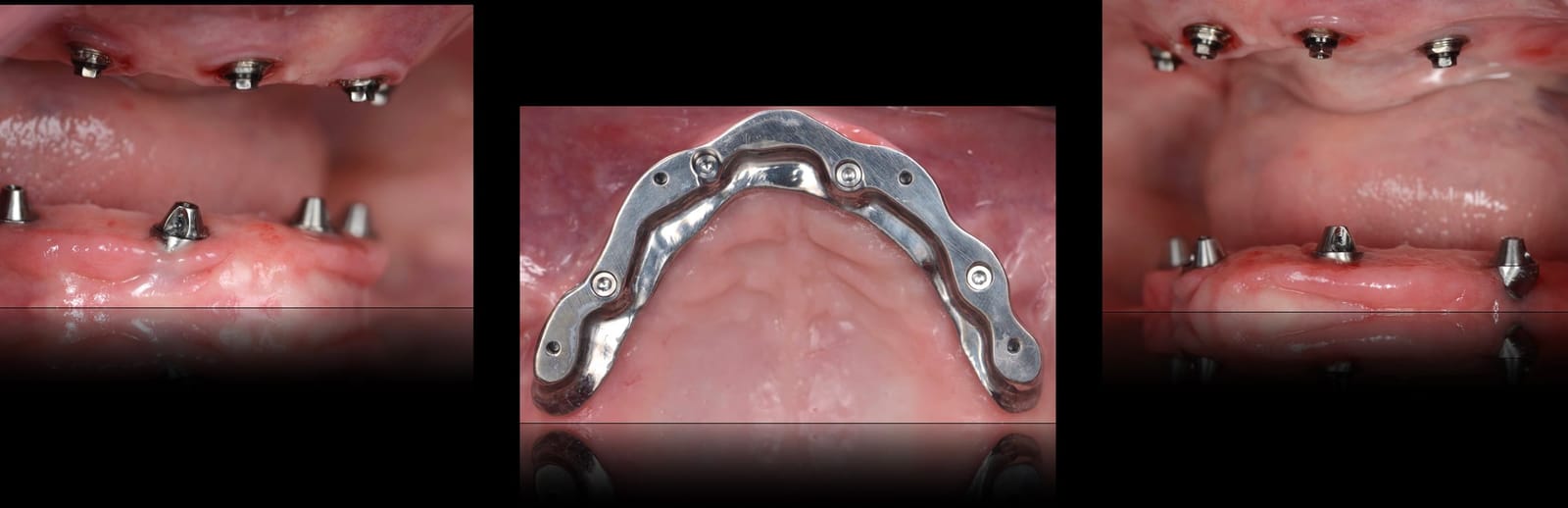
The existing implants were badly placed.
Their angles brought the screw access holes out through the front of the upper teeth, which is the last place they can be. It means either a visible hole in the front surface of a front tooth, or ceramic thinned to nothing in order to hide one.
That is the whole explanation for the breakages. The teeth were not failing because of the material or bad luck. They were failing because there was no room left for them to be strong.
Nothing built on those implants would have lasted, however beautifully it was made.
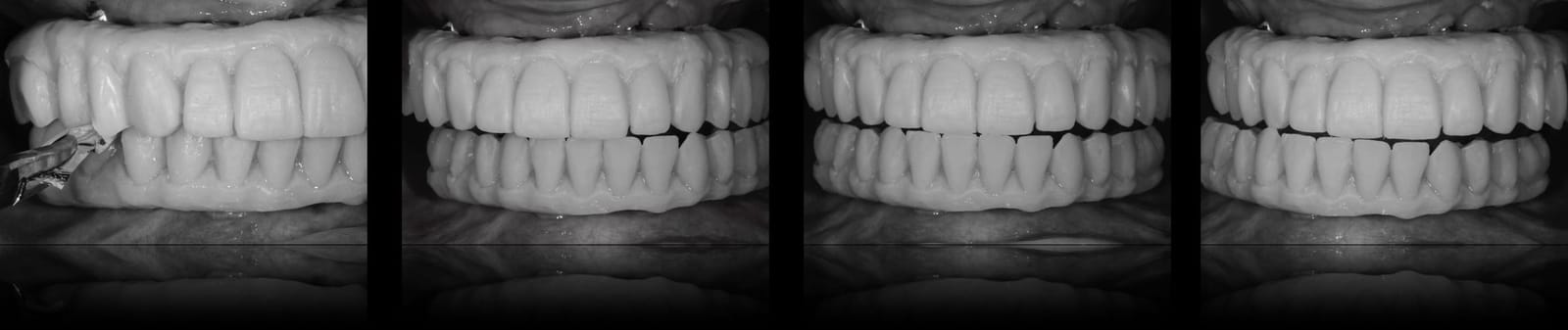
Wearing the design before committing to it
The first step was measurement. Every piece of information collected, the whole face and mouth recorded, before anything was designed.
From that, a prototype: a set of teeth that is an almost exact replica of the intended final restoration, made in plastic.
She wore it. Used it. Ate and spoke in it and looked at it in her own mirror. Form, function, aesthetics, speech, phonetics, all decided by the person who would be living with them, over time rather than in a chair.
Only after her approval does anything become permanent. Then the plastic design is converted into the same design in far harder and more beautiful materials.
Redirecting the screws
This is where her case was actually solved.
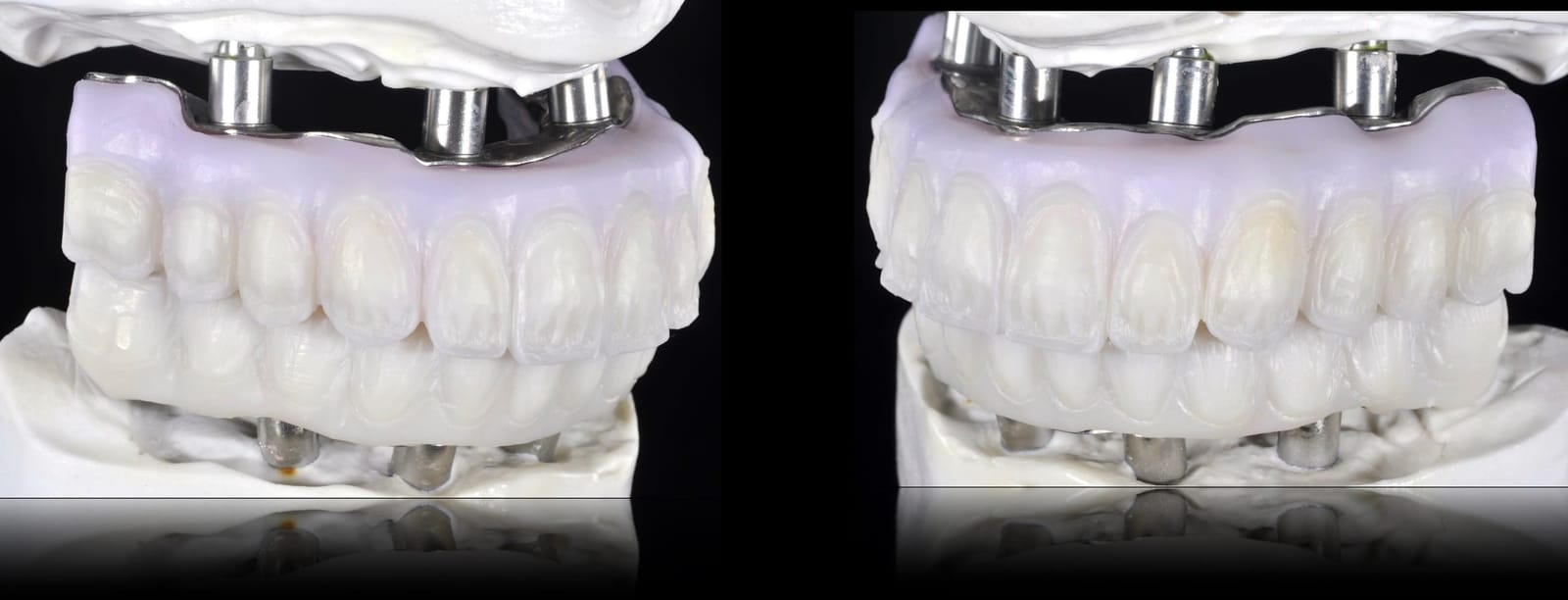
Specialized frameworks were designed to re-angulate the screw access, drawing it away from the front of the teeth and out of the aesthetic zone entirely.
Once the screws no longer emerge through the front surfaces, the ceramic teeth can be full thickness, unbroken, and shaped for her face rather than around a compromise. No holes. Nothing thinned. Nothing waiting to fracture.
The engineering underneath is what allowed the aesthetics on top.
Where the artistry happens
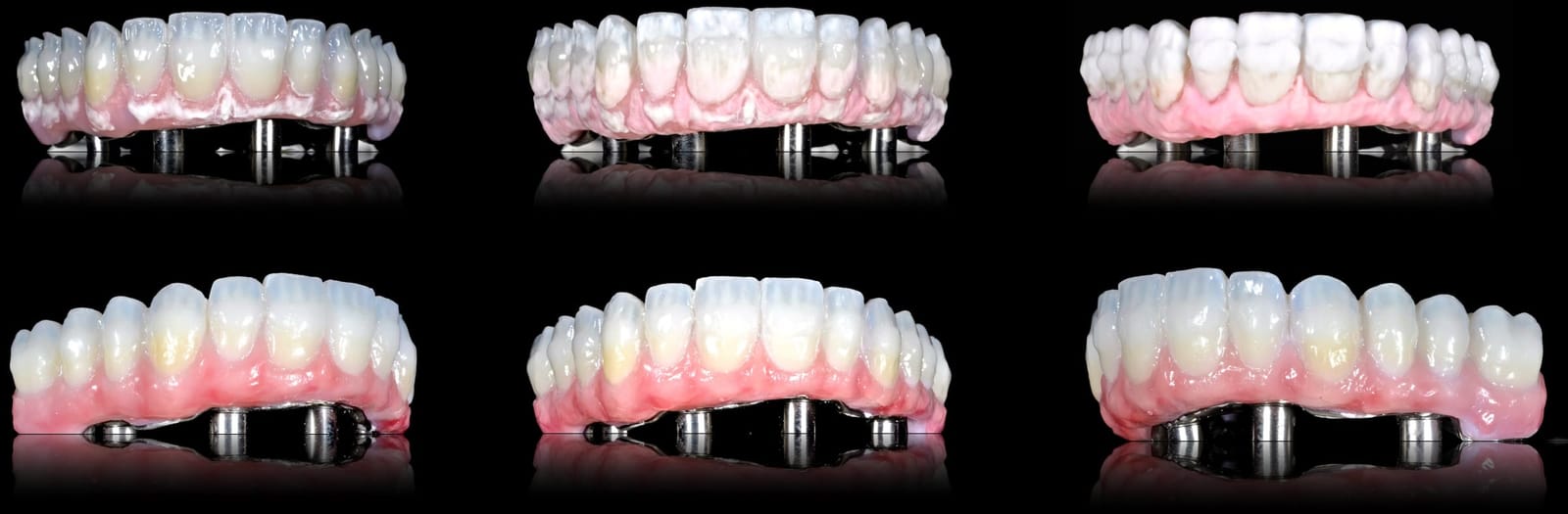
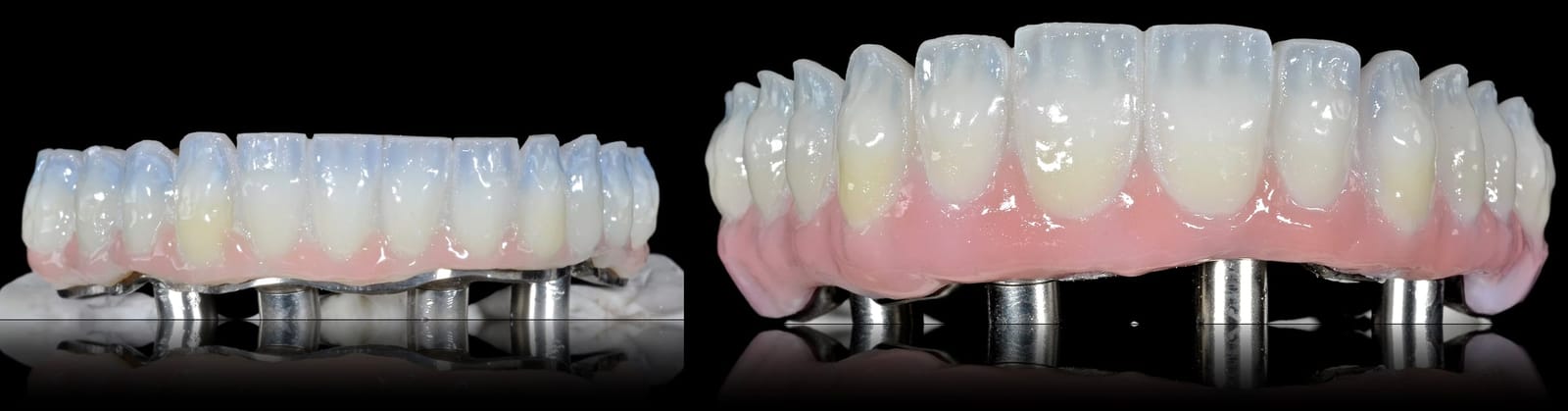
The frameworks are baked, then layered.
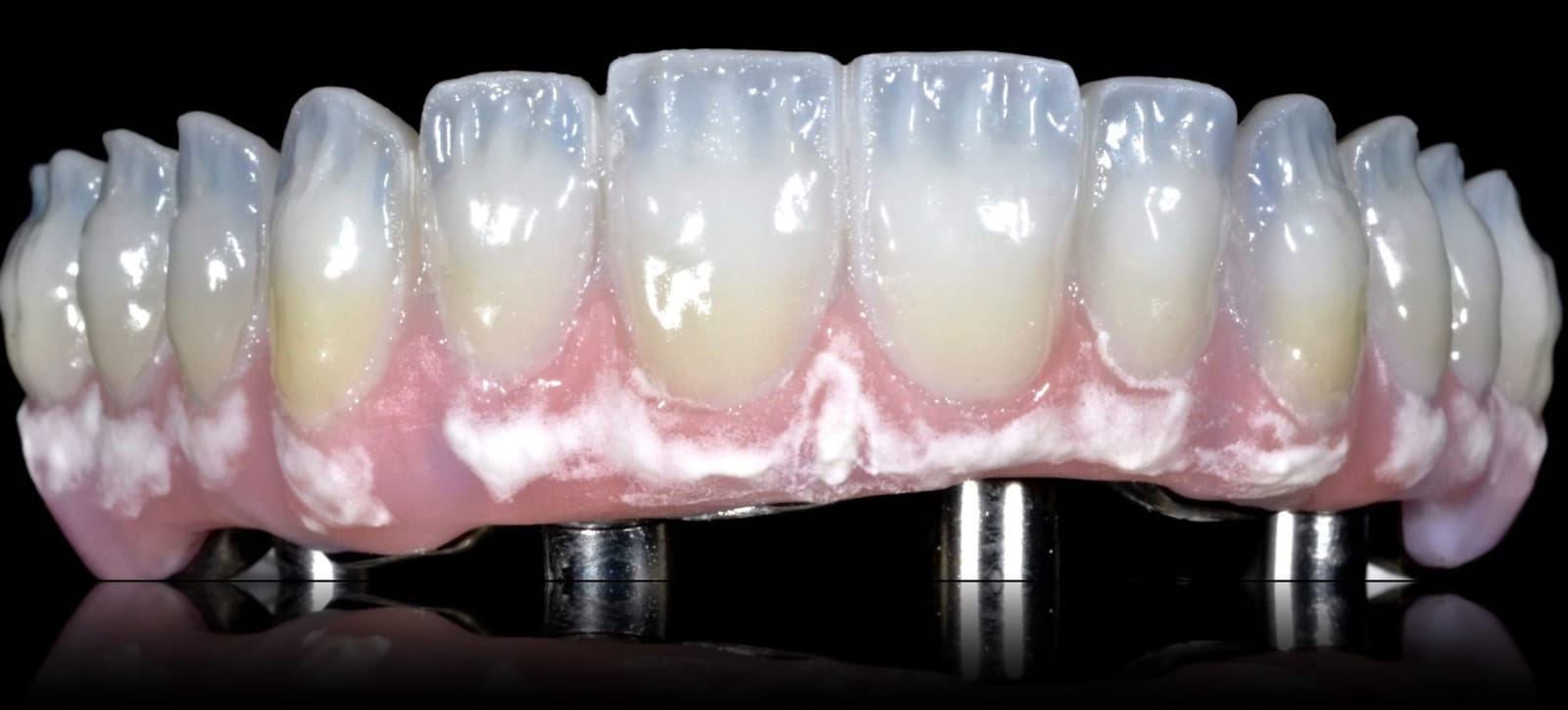
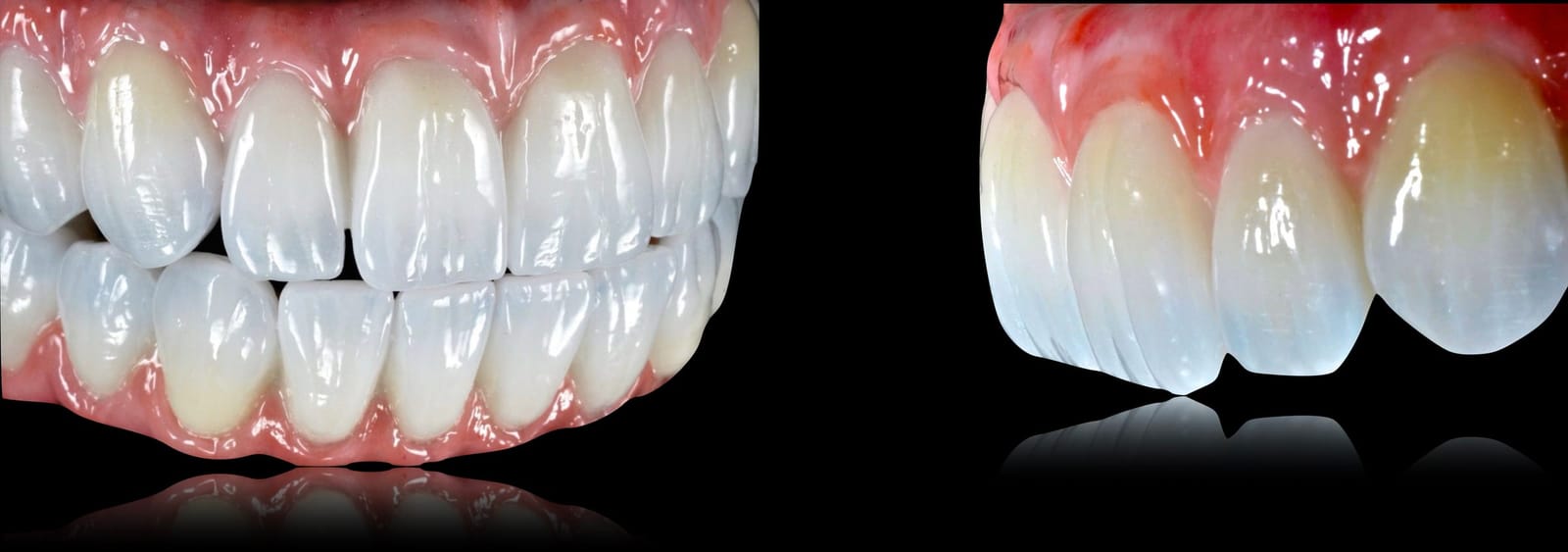
Zirconia gives the strength. Everything that makes a tooth look alive is built on top of it, layer by layer, by hand: translucency, depth, the way light enters and returns.
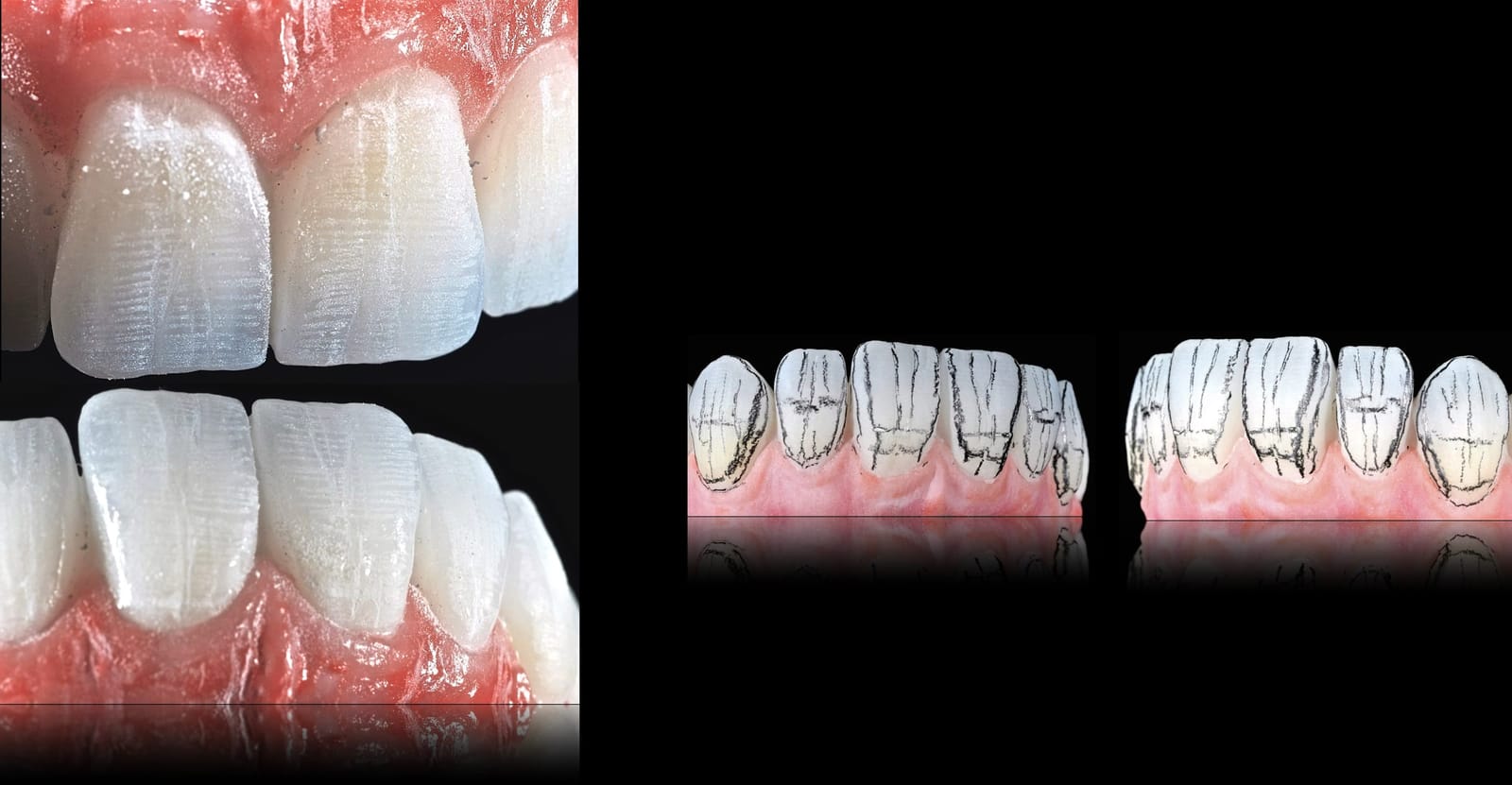
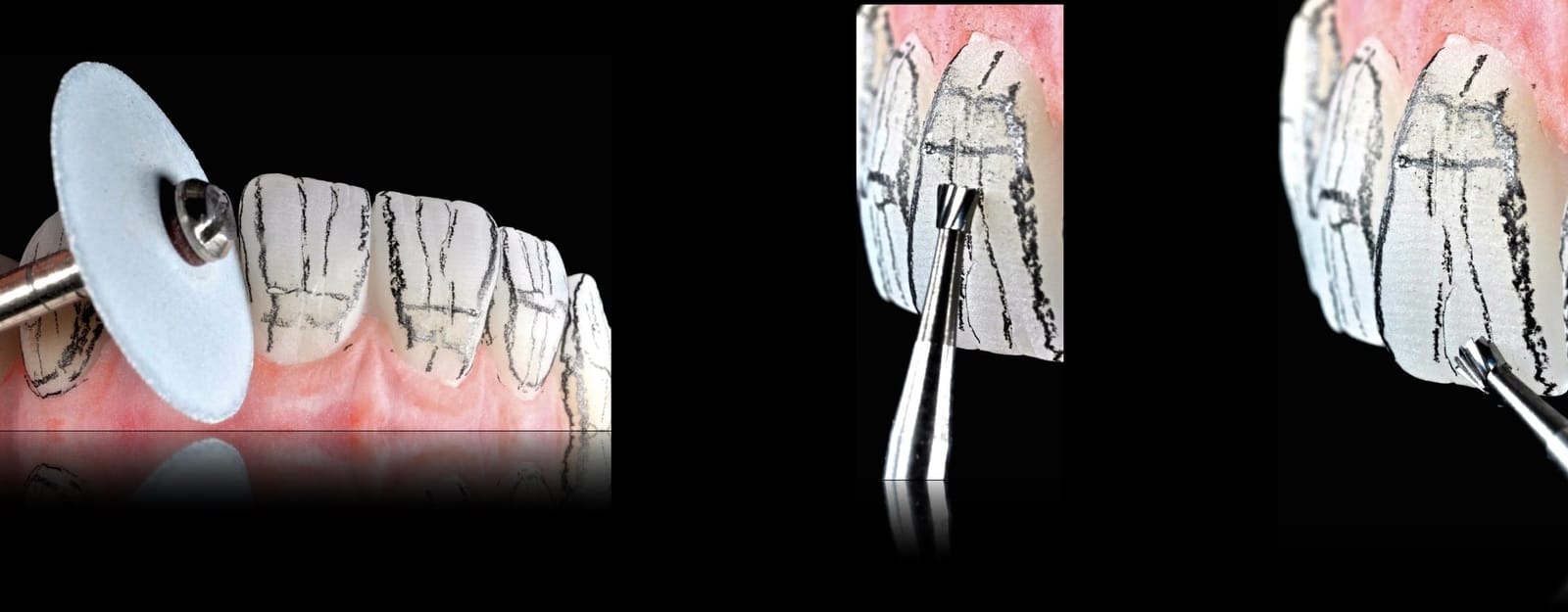
The macro shape is drawn and designed first, the anatomy of each tooth. Then micro texturing goes in, the fine surface detail that catches light and produces reflection. Then refinement of both, shape and texture together, until the teeth stop reading as ceramic.
Strong framework underneath. Artistry above it. Neither works without the other.
Nothing has broken
The transformation shows in the photographs: restorations that are proportionate, aesthetic, and finally supporting her face the way teeth are supposed to.
She has been wearing them for thirteen years.
For someone who arrived because her teeth kept breaking, that number is the entire point.
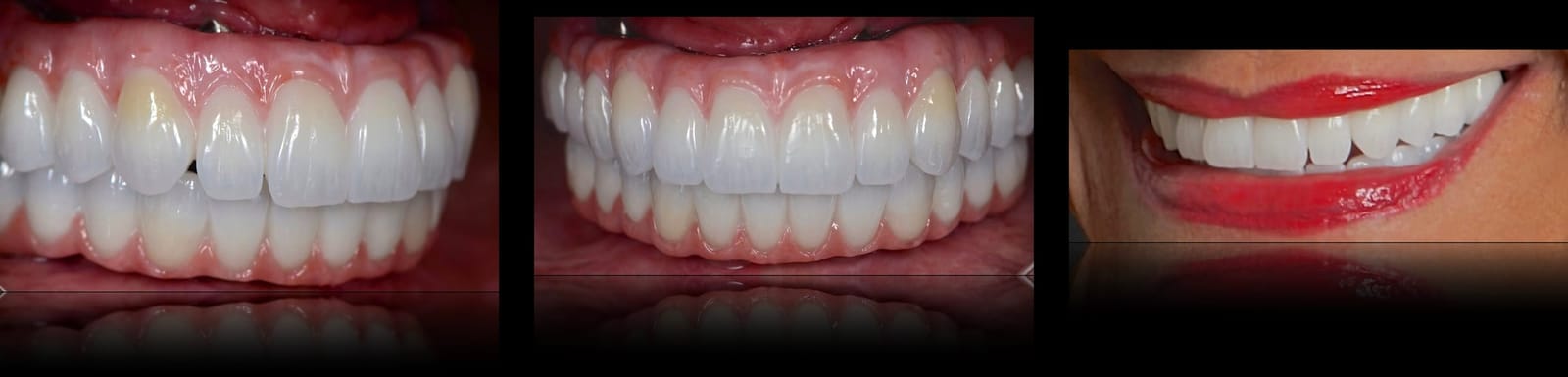
Her smile
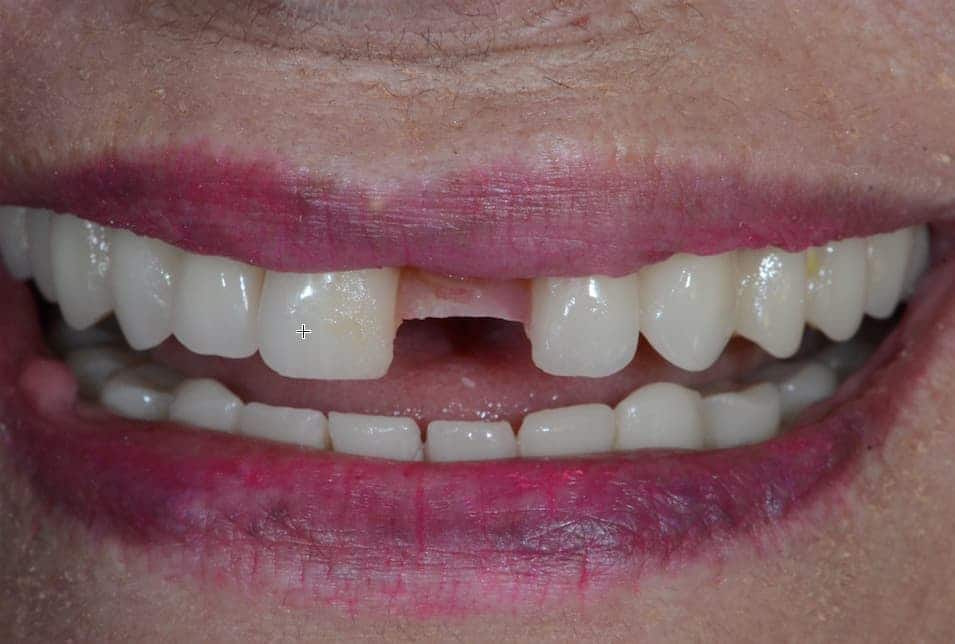
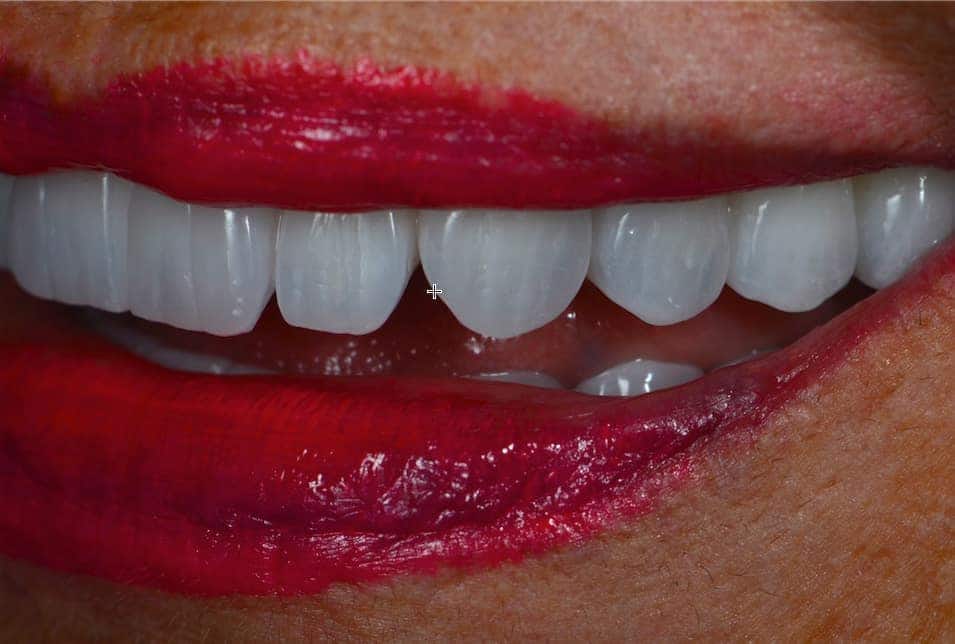
In profile
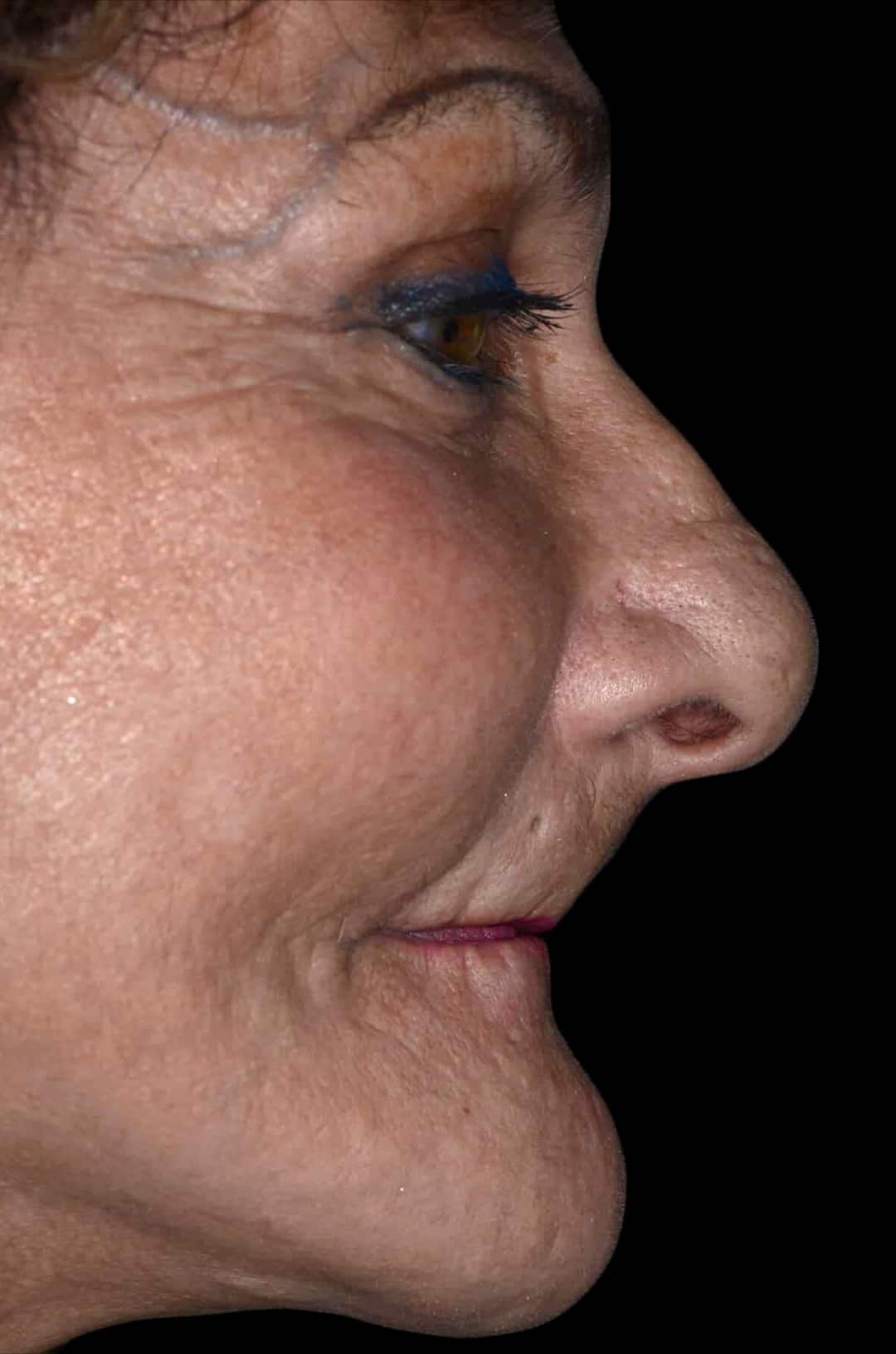
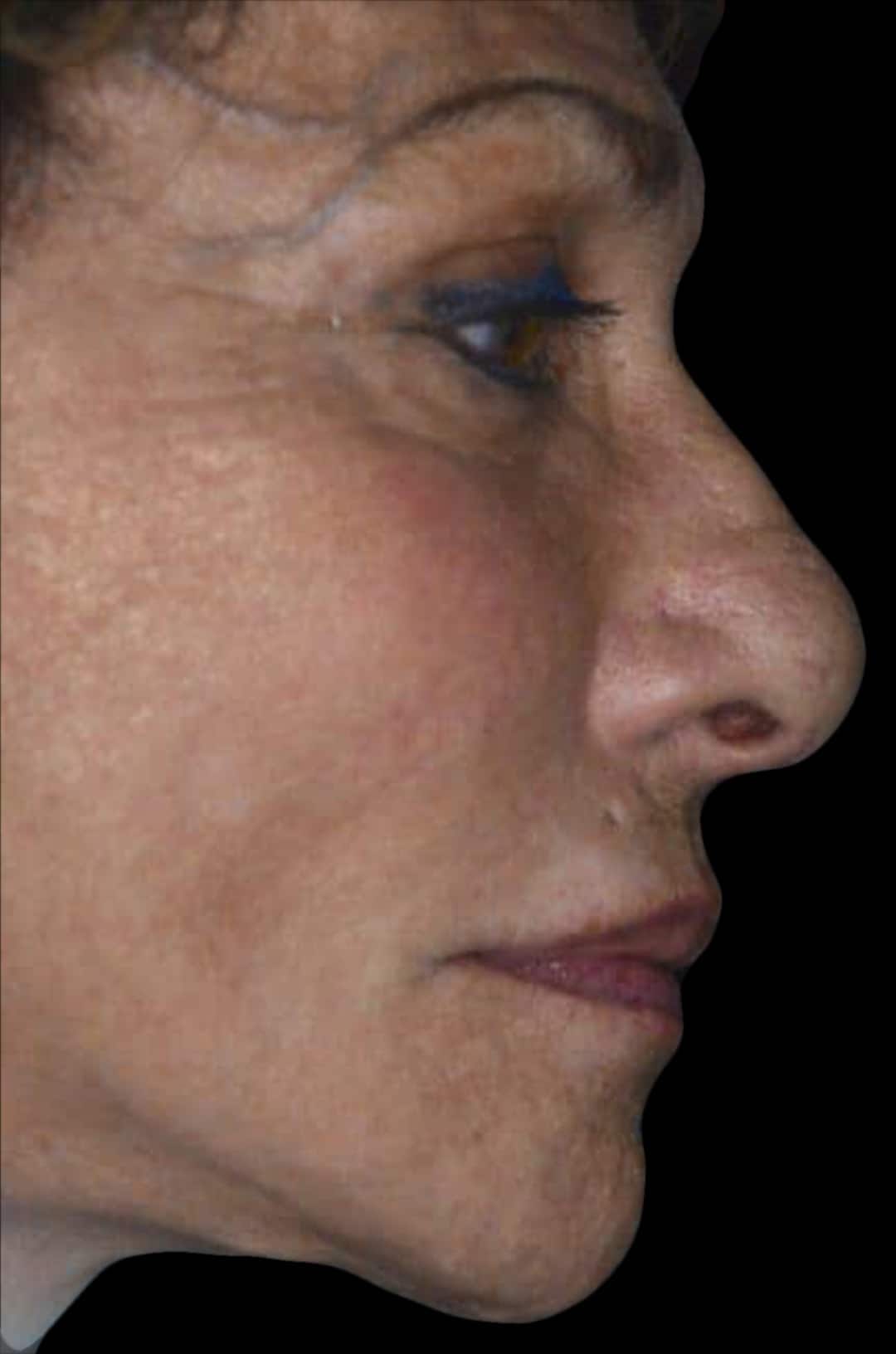


Solve the cause, not the symptom
Anyone can replace a fractured tooth. It fractures again.
Finding out why it fractured, in this case implant angulation that pushed the access holes into the front of the smile, and then engineering a framework that moves the problem somewhere it does no harm, is a different discipline. It requires understanding the mechanics and the aesthetics as one problem, because that is what they are.
That is what a prosthodontist is trained to do.
Featured on LA news
Every case is planned around one person's anatomy. Individual results vary, and what was right for this patient may not be right for you.