FP-1 Case 3 · Implants · Reconstruction
Making Replacement Teeth Emerge Like Real Ones
Replacement teeth designed to emerge from the gums the way natural teeth do.
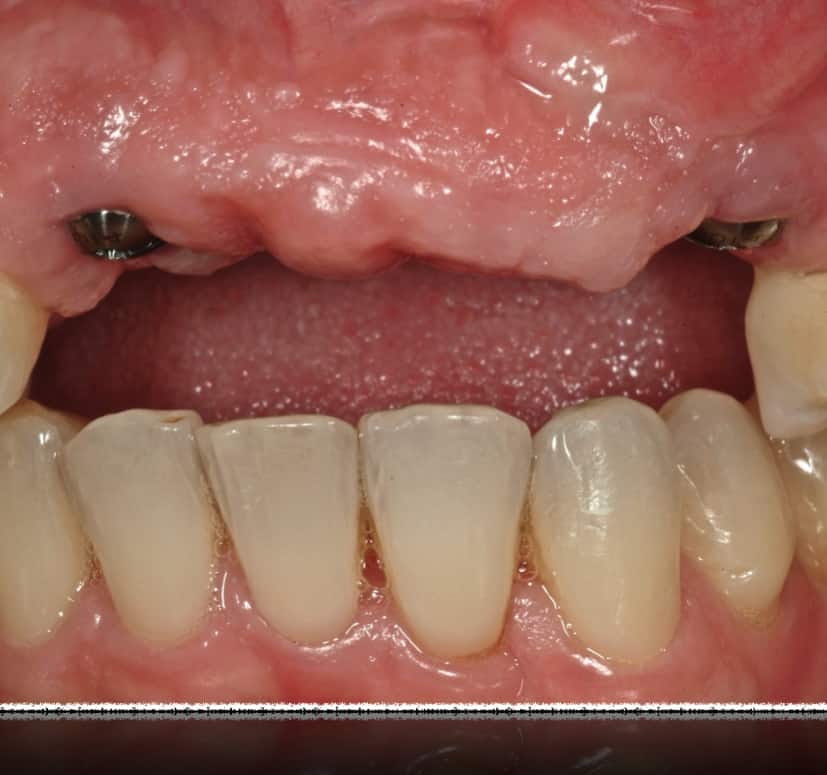
Two implants, ready to be restored
This patient came to us with two implants already placed and ready to restore.
The gums are uneven from the surgeries, the grafting and the healing that came before. They do not look like real gums. Developing them into something that does — scalloped, the way tissue sits around natural teeth — takes a specific technique.
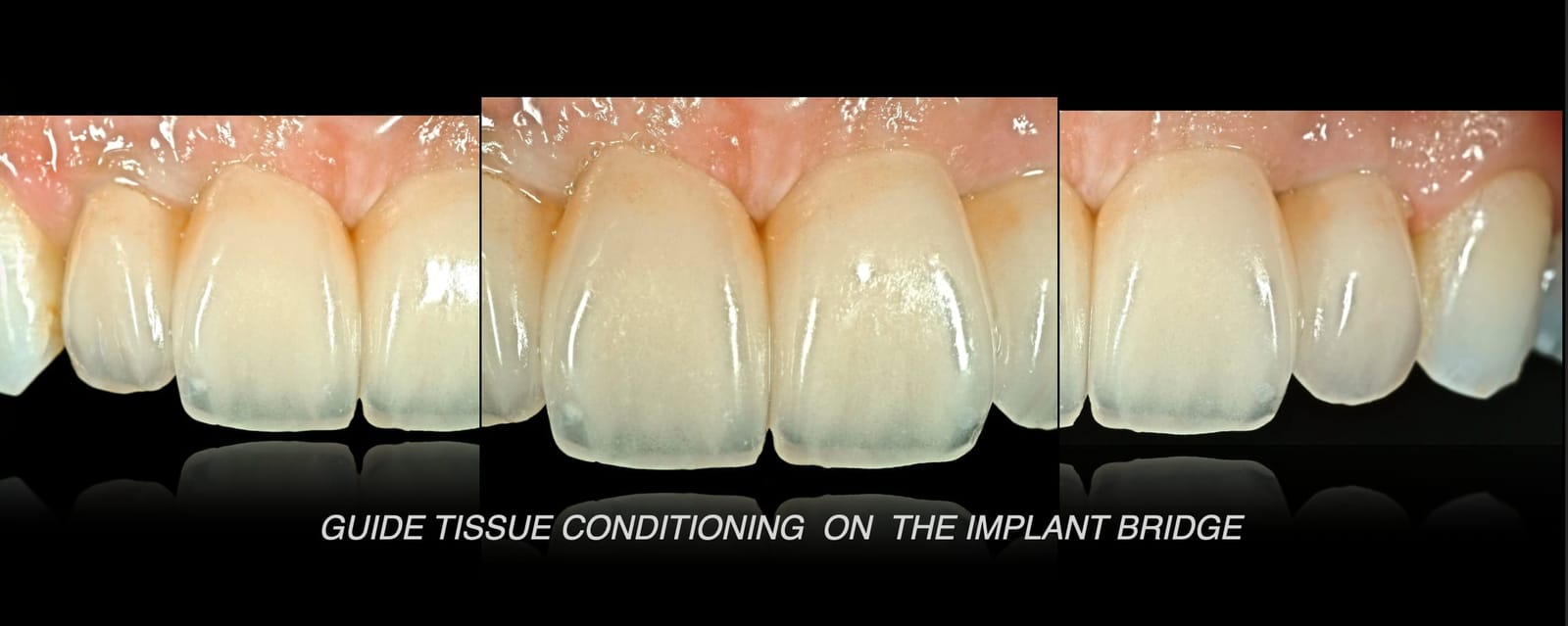
Before
Two of those teeth are implants and two are dummy teeth — pontics. The way they have been designed and developed, it looks completely natural. It is impossible to tell which are the false teeth or where the implants are.
These cases have lasted over 10 years and beyond, because of a technique Dr. Reshad published over 20 years ago and has been developing and perfecting since. It is his own personal technique, published in peer-reviewed journals.
It is atraumatic, and it is convenient for the patient once the implants are in place. It stands the test of time and it is hygienic — good for the gums, good for the teeth, and it looks stunning and natural.
What the patient actually experiences
We take a mold of the implants. That is the whole of it for the patient — a simple impression.
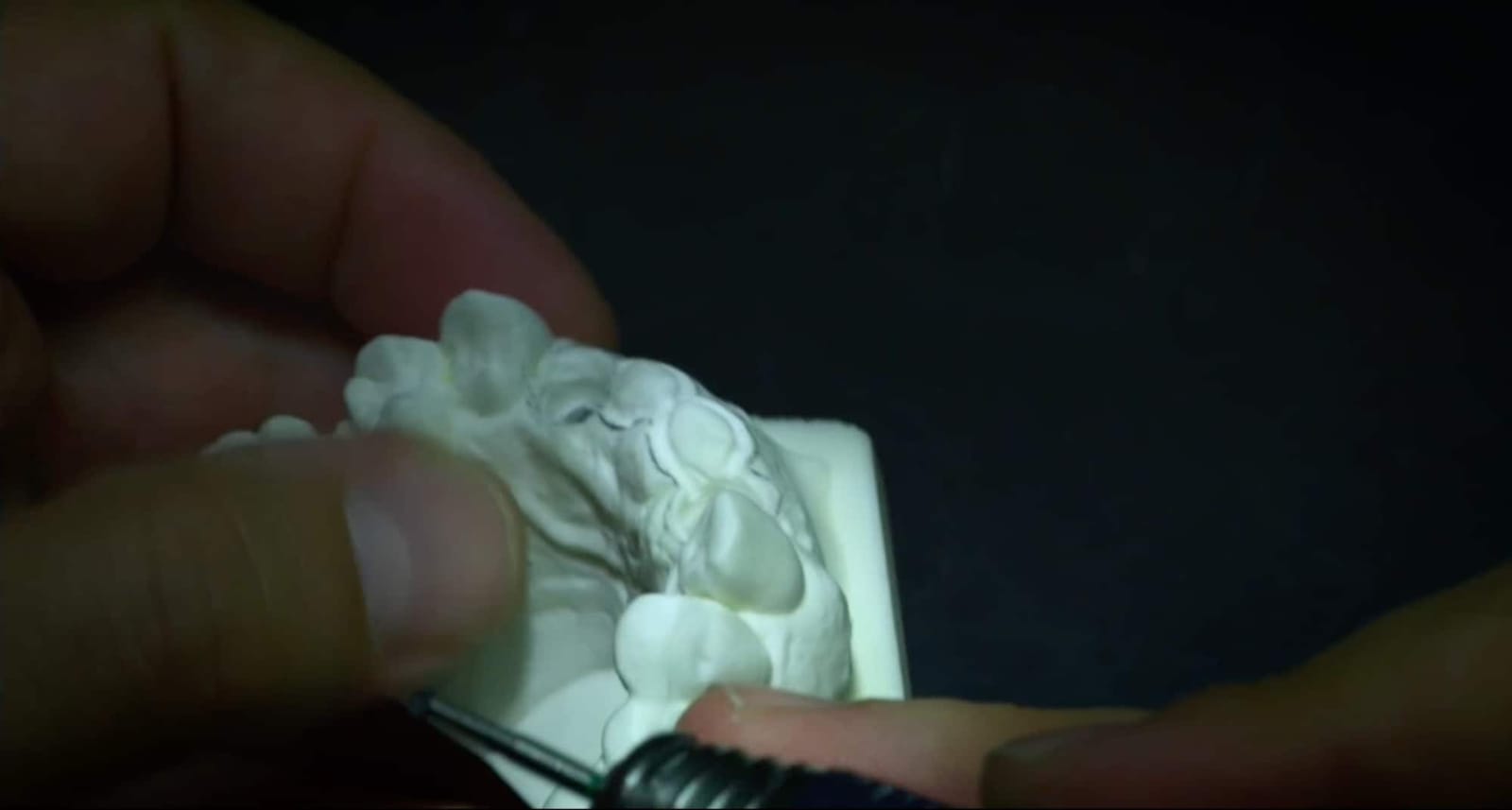
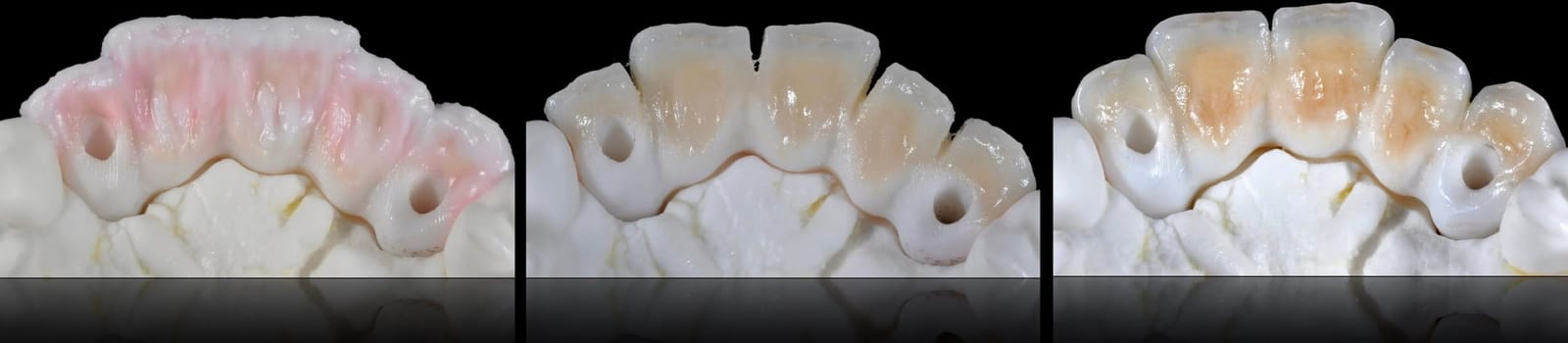
Then the work moves to the laboratory, onto models of the gums and implants, where the shape the gum should take is designed on the cast. The provisionals are made to compress and adapt the tissue into that shape, so the gum forms its own natural scallop.
From the wax-up we create the tooth shapes, compress acrylic resin onto them and build layered temporaries. The patient wears those, and after about a month the tissue has formed the scalloping — hygienic and healthy. Our long-term research shows that this is exceptionally healthy if you use Dr. Reshad's patented technique.
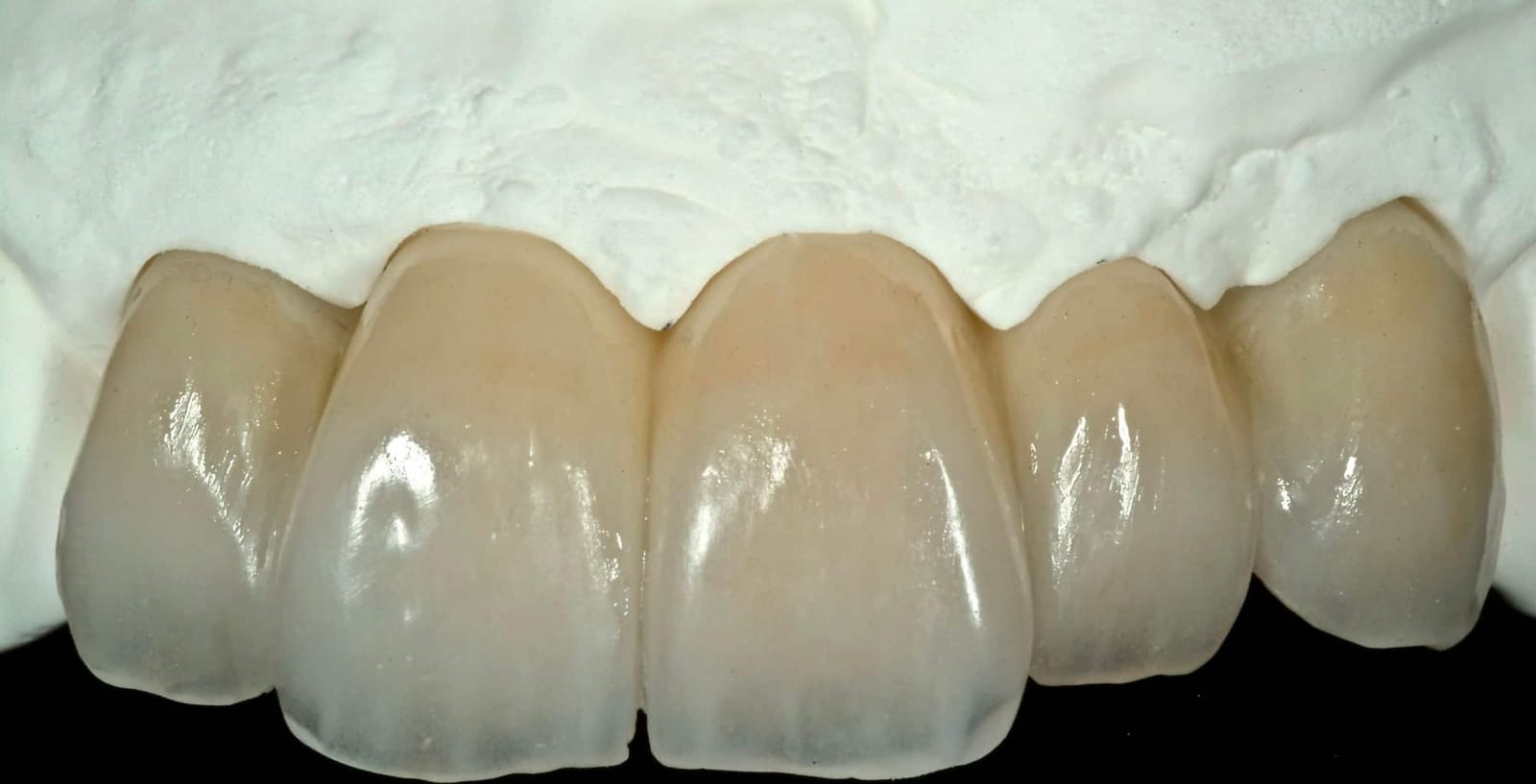
Three pontics, two implants, one appearance
Three of those teeth are pontics — dummy teeth. Two are attached to the implants.
The teeth, the implants and the pontics all have to read as one thing. The temporaries are what blend them together.
What she asked for
She asked for a very specific design language: her teeth as they had been before she lost them. Her original shapes.
Not everyone wants straight, piano-like teeth. This is a strong, dominant smile design, and it is what she wanted. She designed it, and she got it.
A pressure sequence, corner by corner
The temporary raises the gum in the areas where the dummy teeth sit. There is a specific pressure sequence for each little corner where a pontic goes.
Done properly, the tissue goes white for about fifteen minutes. It is almost a pinching process. Before the end of the appointment the blanching disappears, the tissue comes back nice and pink, and the patient goes home.
The frame around the picture
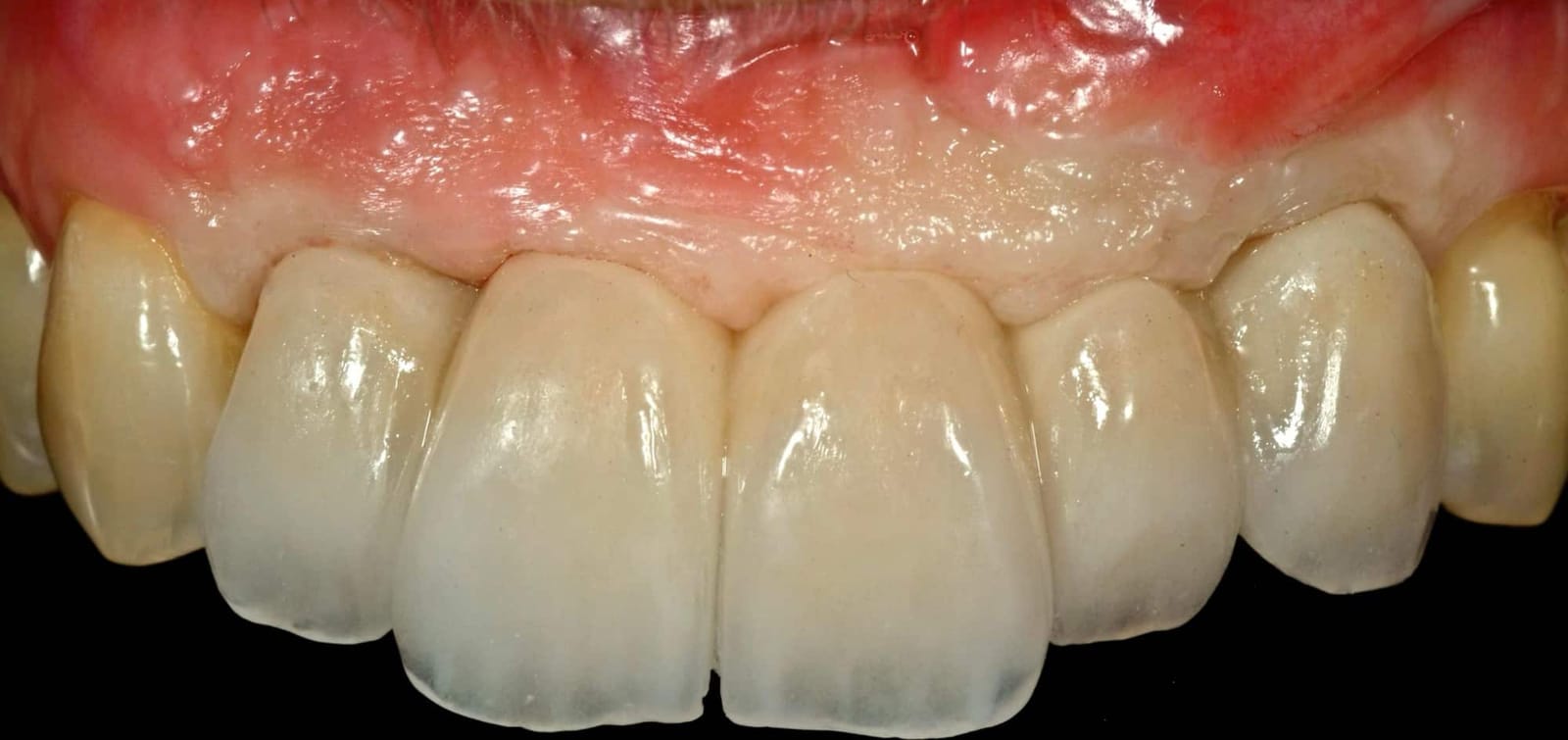
She came back after about a month, with the tissue given the chance to reshape, reform and stabilize.
What it has created is a framework around the teeth. It is like anything — if the frame is correct, the picture always looks better, and that is the job of the gums. The thickness is right, which is what gives comfort, health and hygiene.
It looks healthy. The gums are a light pink. There is no bleeding. Everything has been done correctly, and we have created the pseudo-papilla scallop the final teeth are inserted into.
How a pontic meets the tissue
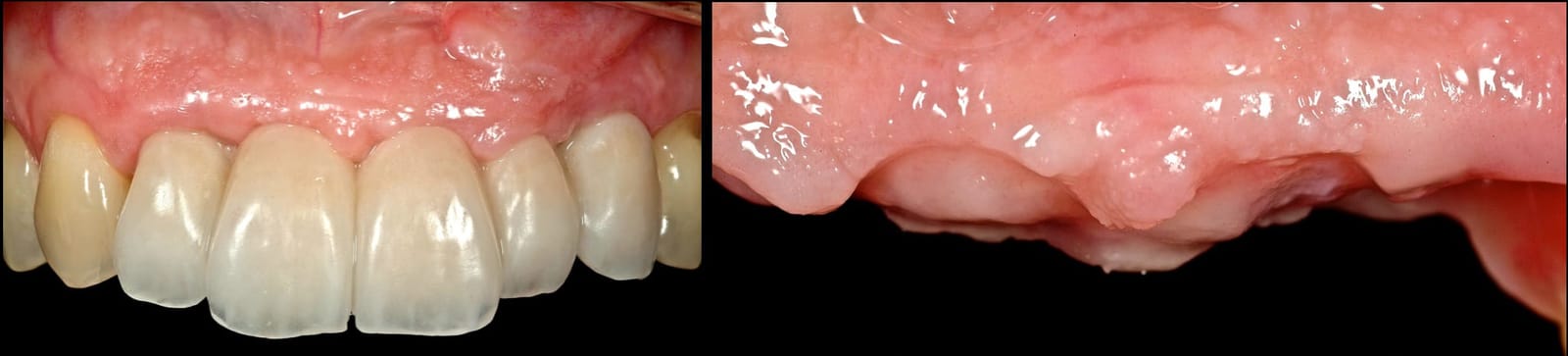
We section the teeth and look at how the pontic adapts to the tissue, where the bone underlying it sits, and how it is pressurized to make a comfortable connection through the gum.
The way it emerges is what makes it healthy. The spaces are closed and it is cleansable. The study shows these sites stay healthy and hygienic with no plaque accumulation, which means no smell. It is almost like natural teeth underneath the pontic sites.
The natural appearance she asked for
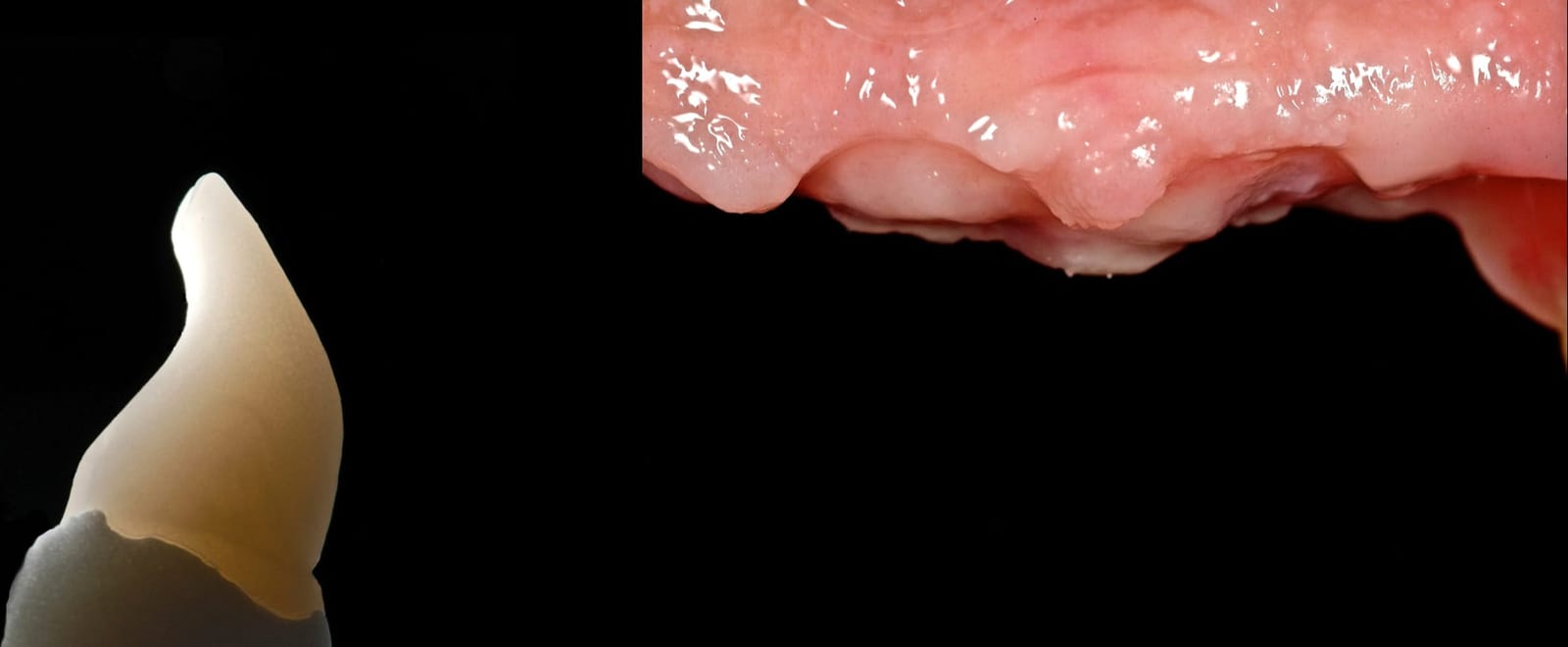
The case as she was wearing it — the natural appearance she asked us to replicate from her original teeth.
The provisional is the plan for the final
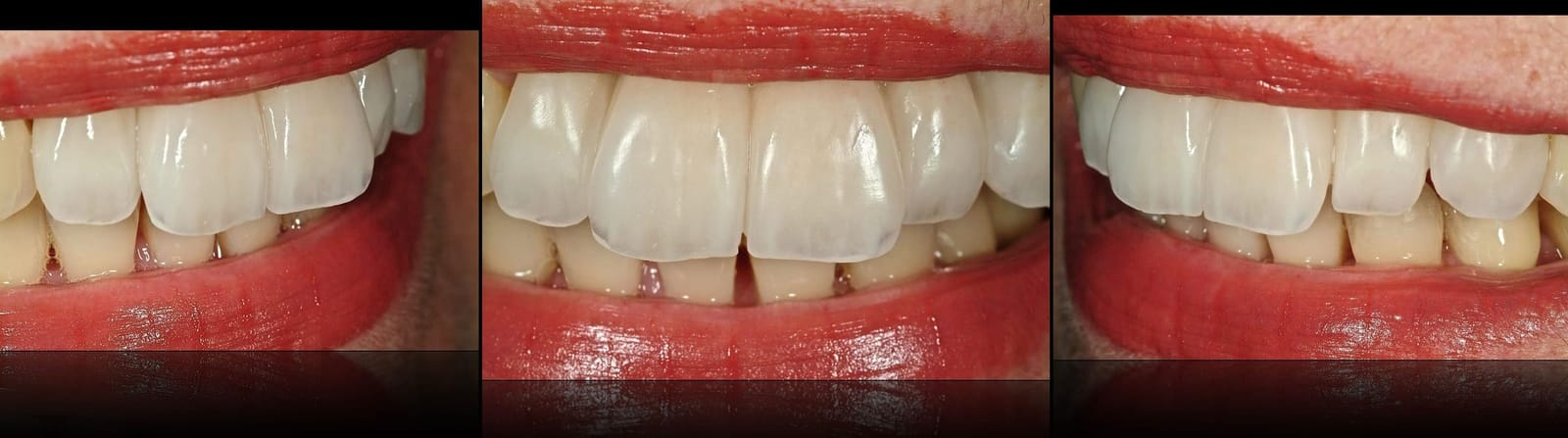
Now that we know the provisionals look right, there are stringent rules for copying them, and we are respectful of that. The provisional restoration is the blueprint for the final.
Only the elements of the provisional that are perfect are carried across. Minor modifications for the patient's aesthetic needs go into the final and can still be changed. Generally we have the power to control the shape and stay faithful to the original provisional design.
No injections, no uncomfortable steps
She comes in for us to inspect. There is no removal, no injections, no repeated uncomfortable steps. She comes in to tell us about the aesthetics, the speech and the function.
If everything is normal we do not even unscrew the temporaries. We already have what we need from the one original impression, and we can go straight on to finalise the teeth in ceramic.
And what the studies found
These are the layering techniques that go into getting the ceramics right.
The clinical photographs here are from our scientific publications. One of them shows that tissues developed with this pontic technique — a novel pontic technique designed by Dr. Reshad — are extremely healthy in terms of immunology, biology and bacteriology. On all parameters of biology it is healthy and sound.
So we move to the final knowing everything will stay healthy for extended periods. It smells fresh and it feels good.

And sixteen years of them
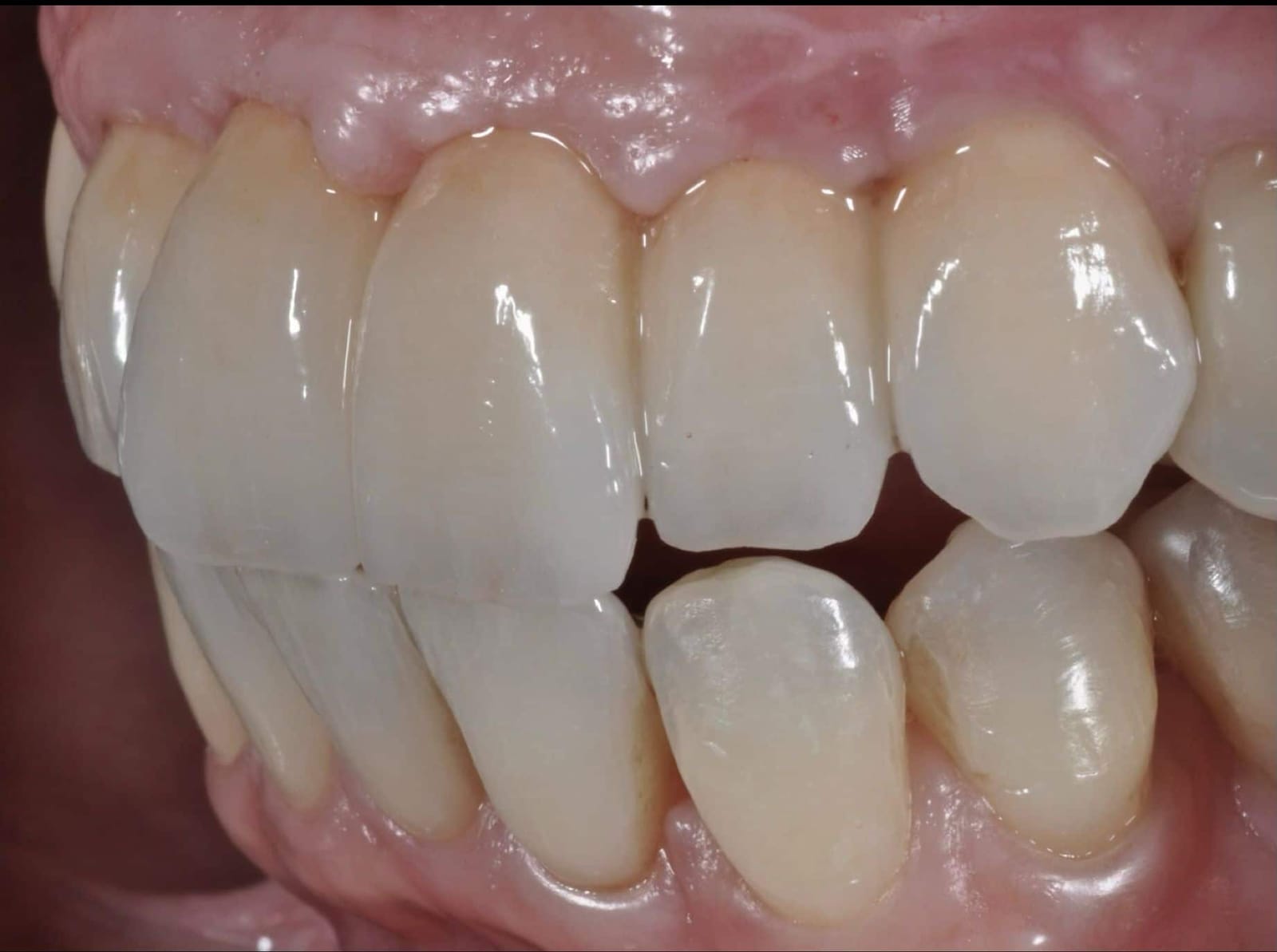
The final restorations in place, with the pontic teeth emerging naturally, a few years on.
This patient is now at the sixteen-year mark, still returning to us with healthy teeth and healthy pontic designs.
Pontic sites highlightedimplant and tooth sites shown for comparison
| Site | A.a. | P.g. | P. interm | T. fors | Camp | Eubac | Fuso | P. micro | Enter | Beta hem | Yeast | Eik corr | Staph | D. pneu | |
|---|---|---|---|---|---|---|---|---|---|---|---|---|---|---|---|
| 1 | Implant(11) | ||||||||||||||
| Pontic(9) | 3.1 | 3.8 | 4.6 | 3.8 | 2.3 | ||||||||||
| Tooth(6) | 3.6 | 4.5 | |||||||||||||
| 2 | Implant(8) | 5.4 | 2.3 | 1.5 | |||||||||||
| Pontic(7) | |||||||||||||||
| Tooth(10) | 5.4 | 1.5 | 1.5 | ||||||||||||
| 3 | Implant(7) | 3.1 | 4.6 | 5.4 | |||||||||||
| Pontic(8) | 2.3 | 2.3 | 4.6 | ||||||||||||
| Tooth(11) | 6.9 | ||||||||||||||
| 4 | Implant(7) | ||||||||||||||
| Pontic(8) | 6.9 | ||||||||||||||
| Tooth(10) | |||||||||||||||
| 5 | Implant(7) | 0.03 | |||||||||||||
| Pontic(8) | |||||||||||||||
| Tooth(11) | 3.3 | 8.3 | 0.03 | ||||||||||||
| 6 | Implant(6) | 7.0 | 1.2 | ||||||||||||
| Pontic(8) | 10.0 | 4.0 | |||||||||||||
| Tooth(4) | 4.0 | 2.4 | 0.3 | 4.0 |
A blank cell means the organism was tested at that site and not detected. Site numbers are tooth positions.
What the fluid around the teeth showed
The same study went further than bacteria. The fluid in the crevice around each site — implant, pontic and natural tooth — was sampled and profiled in the laboratory for the signalling molecules tissue releases when it is irritated.
IL-8 is one of the best known of them: a molecule tissue produces to call inflammatory cells in. The table shows the concentration measured at each site, patient by patient. A blank cell means the molecule was not detected there.
Pontic column highlightedvalues in pg/µl · a blank cell means tested and not detected
| Patient | In service | Implant | Pontic | Tooth |
|---|---|---|---|---|
| 1 | 1 yr + | 1340.9 | 172.6 | |
| 2 | 1 yr + | 50 | 1426.7 | 48.8 |
| 3 | 1 yr + | 45.7 | 2.1 | 1527.5 |
| 4 | 1 yr + | 8 | 41.5 | 1.9 |
| 5 | ~4 wks | 98.6 | 3960.4 | 910.6 |
| 6 | ~4 wks | 2773.8 | 678.8 | 361.4 |
Concentrations vary widely between patients and sites — shown as measured, patient by patient. Restorations in patients 1-4 had been in service at least a year at sampling; patients 5 and 6 were sampled about four weeks after treatment.
Less of a response, with time
MIG is a chemokine, part of the immune system's messaging. In the four patients whose restorations had been in service for at least a year, it was detected at just one pontic site; in the two patients sampled about four weeks after treatment, every kind of site was still active.
The doctor's own note on the data says it plainly: the chemokine levels were less frequently detected in the pontic sites when compared to implants and teeth, and the trend is that there is less of an immune response with time. Tissue that has settled around its restoration goes quiet.
Five and six patients are a small series, and these are observations rather than a clinical trial. They are shown because they are the actual measurements behind the design decisions on this page.
Pontic column highlightedvalues in pg/µl · a blank cell means tested and not detected
| Patient | In service | Implant | Pontic | Tooth |
|---|---|---|---|---|
| 1 | 1 yr + | 9.4 | 7.3 | |
| 2 | 1 yr + | 1.9 | 6.2 | |
| 3 | 1 yr + | 3.9 | ||
| 4 | 1 yr + | |||
| 5 | ~4 wks | 2.7 | 212.2 | 4.5 |
| 6 | ~4 wks | 13.9 | 922.9 | 66 |
In the four longest-served patients the pontic column is almost entirely blank — the doctor's summary note on the data: chemokine levels were less frequently detected at pontic sites than at implants and teeth, with less immune response over time.
Made by master technicians
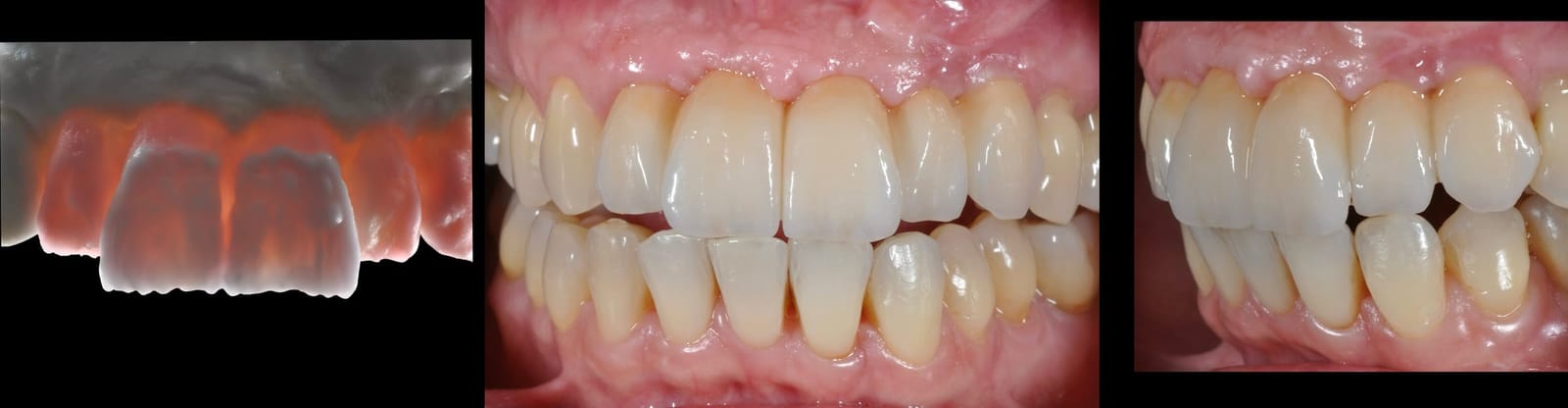
We work only with master dental technicians who can layer ceramic that is both strong and beautiful.
Those are the final teeth in her mouth, and from every angle they look natural — as real as prosthetic teeth can be.
What goes into getting the proportions right
A smile is a unique combination of a lot of things:
- lip support
- following the edge of the upper teeth
- following the lower lip
- the curvature of the lower lip
And the patient has to be given proper support, so we look at:
- the facial structures
- the length of the face
- the distance between the pupils
Those are the factors that go into getting the golden proportions correct.
Patient input is part of the design
There is one more factor, and it is the patient's input during the provisional and the final phase. That input changes through treatment. Hers and her immediate family's were both taken into account as the definitive prosthesis slowly developed. It is a work of art, and a work in progress.
Sometimes a patient arrives with a fixed idea of the final outcome, then sees the provisionals and decides they want something slightly different. With these techniques, and the level of control a prosthodontist has, you can get what you want, and we can work with you as your needs change.
It is like a dress. Online it might be exactly what you think you want; on you, you might feel differently. Aesthetics are subjective, and that is something we can build into your prosthesis and make into something quite exquisite.
The final smile
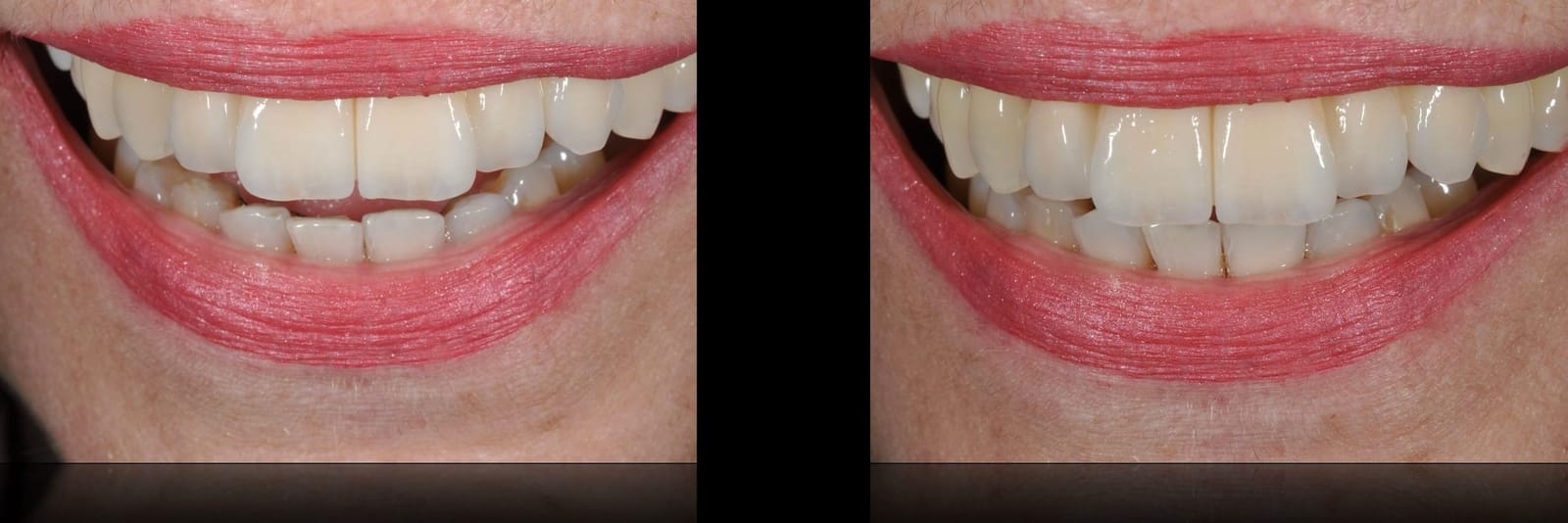
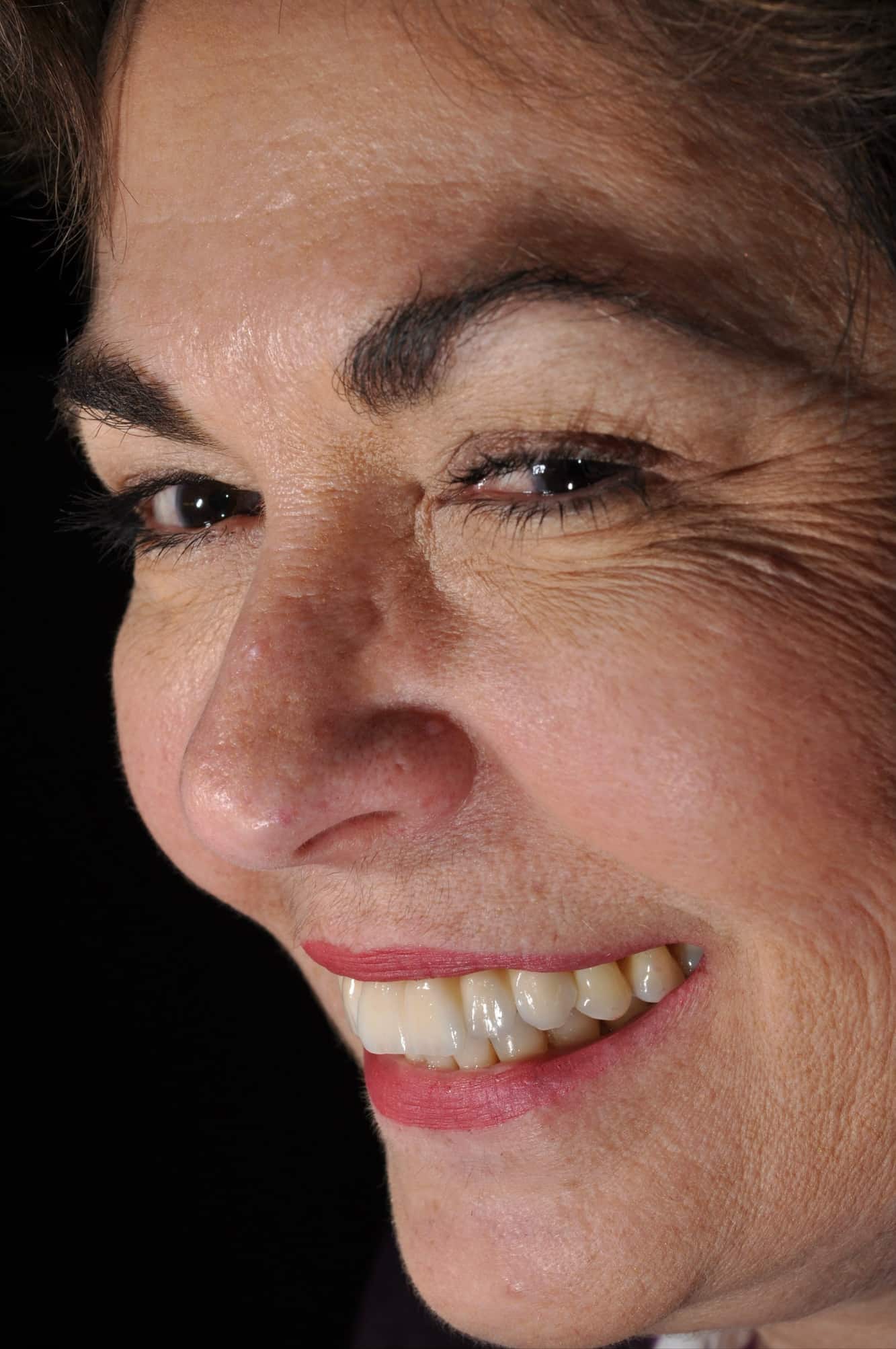
Every case is planned around one person's anatomy. Individual results vary, and what was right for this patient may not be right for you.