FP-3 Case 2 · All-on-X · Implants
Planned Before Anything Is Touched
She’s already been through the treatment once. And she was miserable.
Her jaw hurt. She couldn't open and close it properly. And every time she caught her smile in the mirror, she hated what she saw.
Here's the thing: there's no such thing as a standard mouth.
She had been given the standard treatment anyway: four implants, one protocol, the plan built to fit most people.
It didn't fit her.
She came to us in pain, unable to bite down normally, and unable to look at her own reflection without wincing.
She came to us after having an all-on-four procedure done elsewhere. She was in real discomfort. Her jaw didn't sit right, opening and closing was a daily struggle, and beyond the function issues, she just wasn't happy with how her smile looked. She needed someone to actually solve the problem, not patch it again.
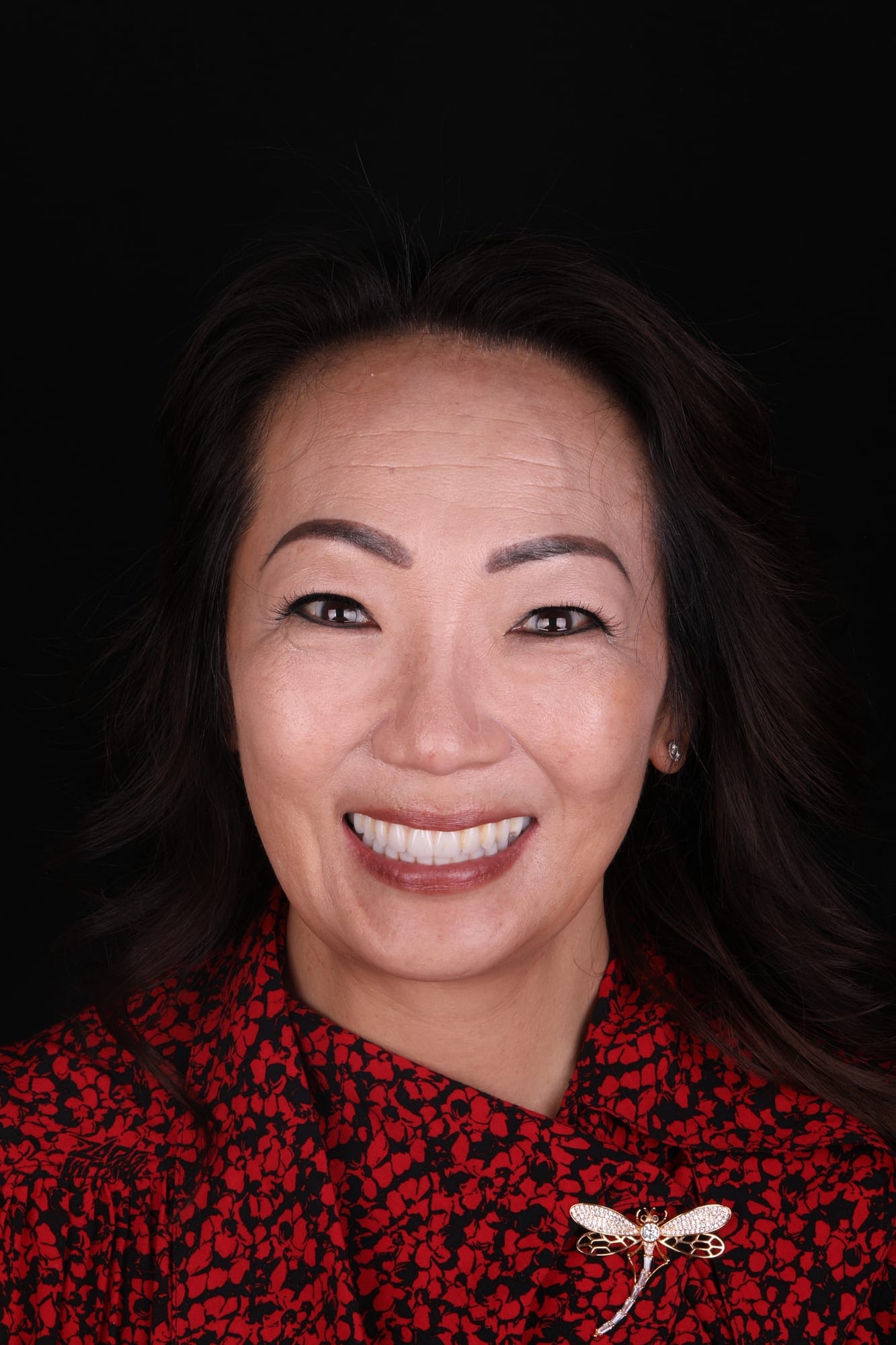
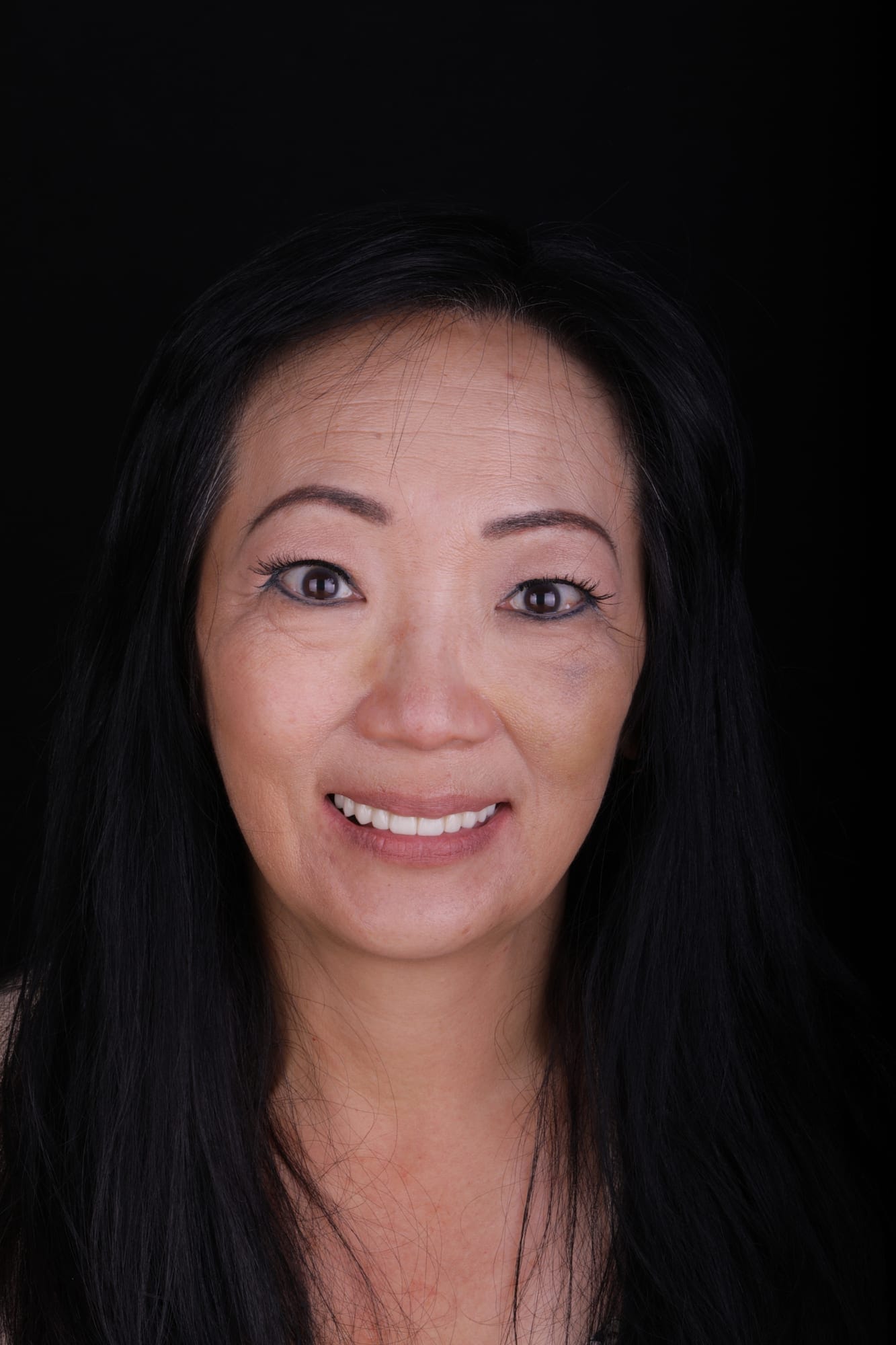
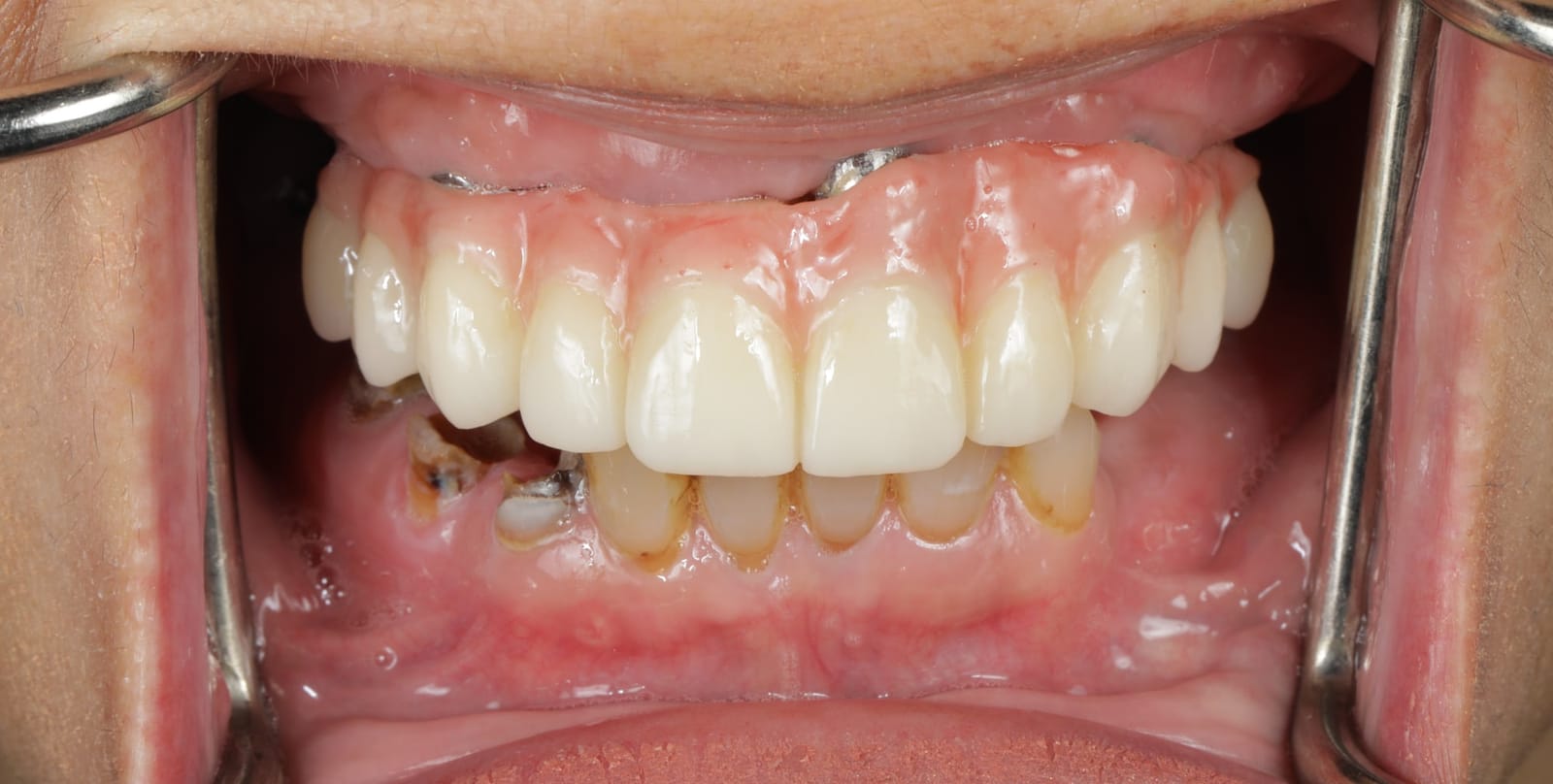
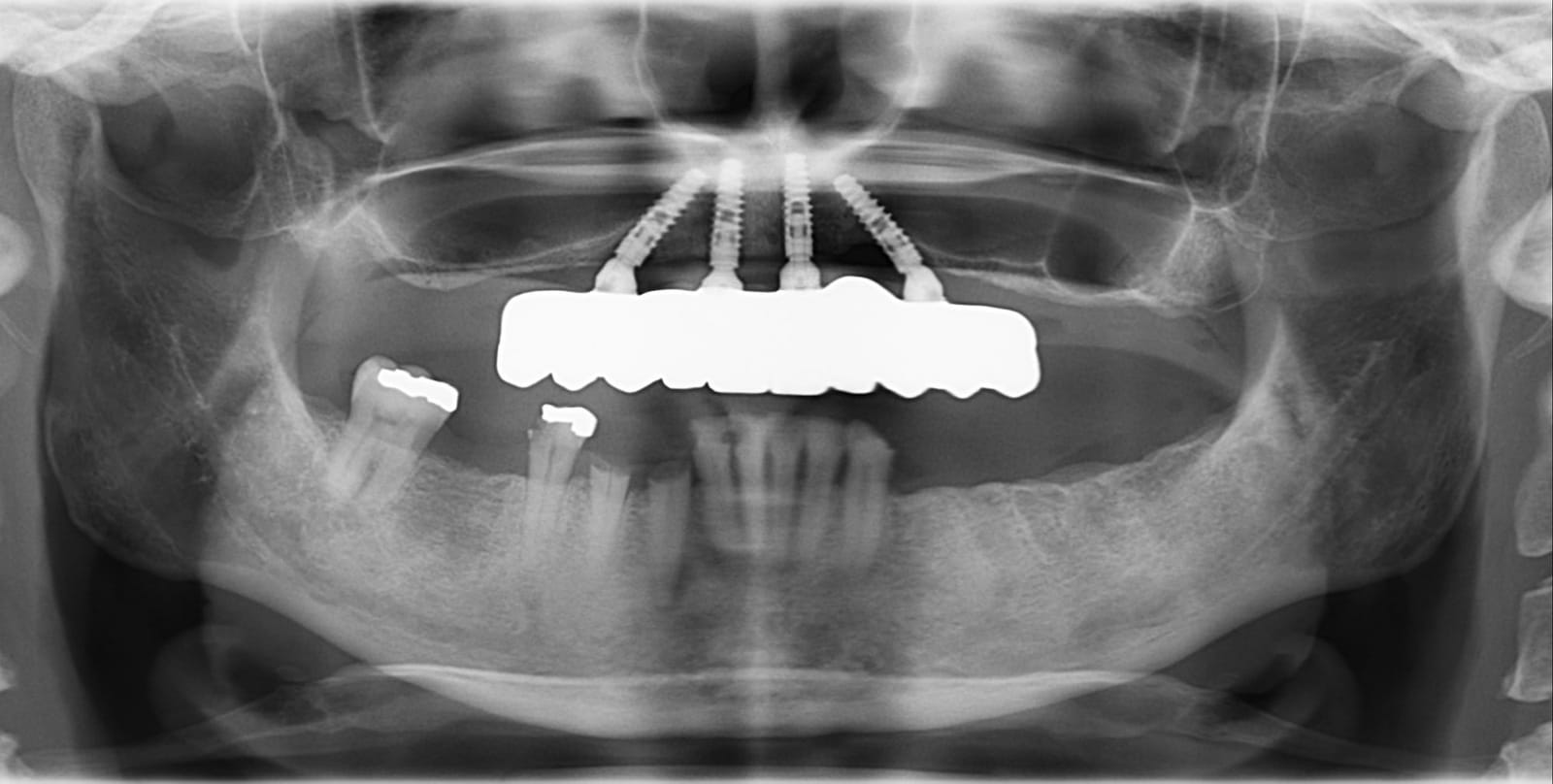
We plan everything before we touch anything
We start with three scans, of three completely different things: your face, captured in 3D. Your teeth, gums, and bite. And your bone, from a CT scan.
On their own, each of those tells you something useful. Merged together, they tell you everything.
Because the real question was never just "where should the teeth go?" It's "where should the teeth go, given where your bone actually is, and given where your smile naturally sits in your face?" Those three things have to agree with each other, and until they exist in one combined model, you're really just estimating how they relate.
This is where a prosthodontist's training matters. Every implant position, every angle, every depth gets decided inside that model, long before any instrument comes near you. Then we refine it. Again and again, until the plan and the outcome are the same thing.
Four implants were not going to be enough
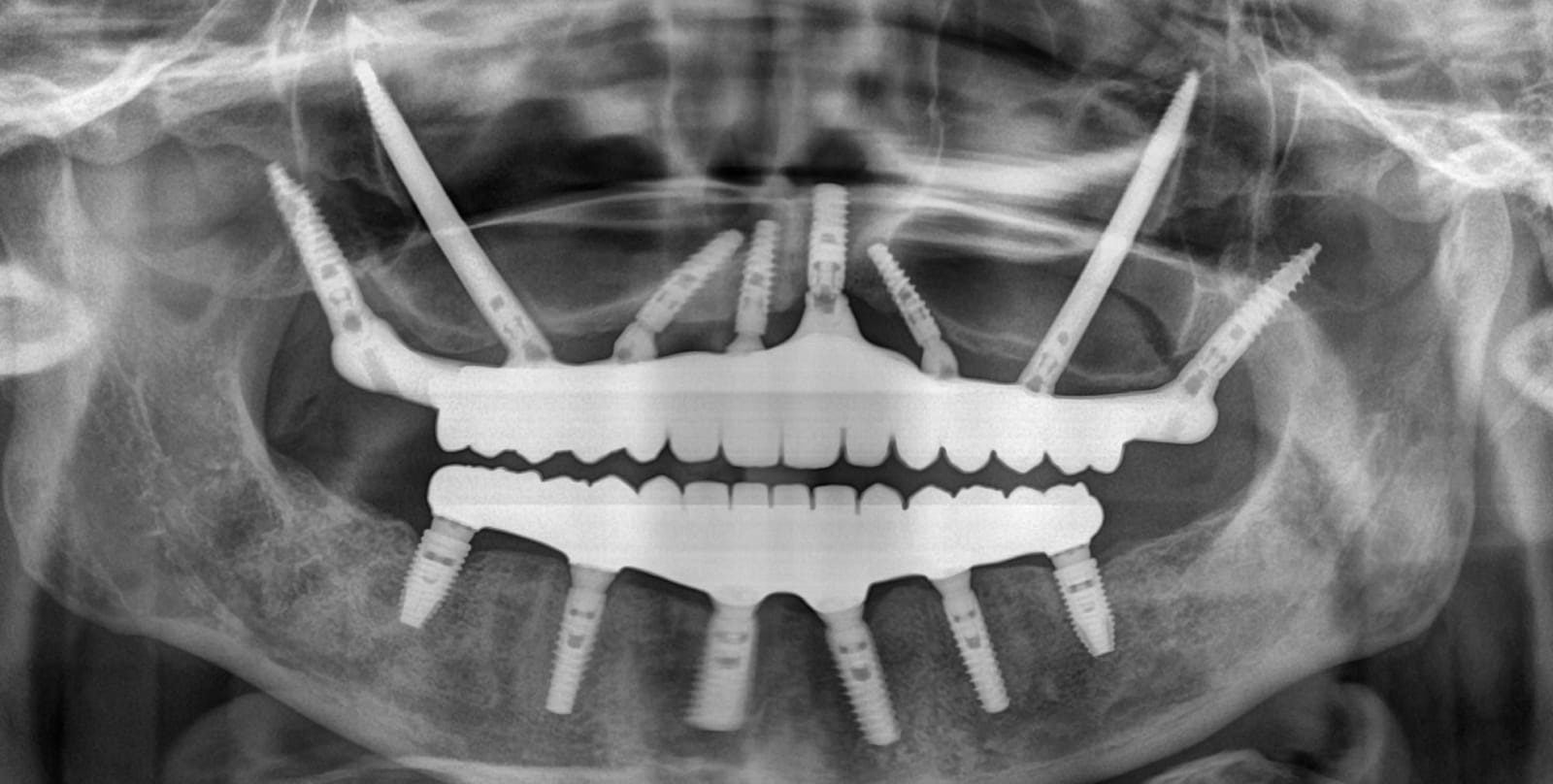
A thorough evaluation made the problem clear pretty quickly: giving her back proper function, and a smile she actually liked, was going to take more than four implants per jaw.
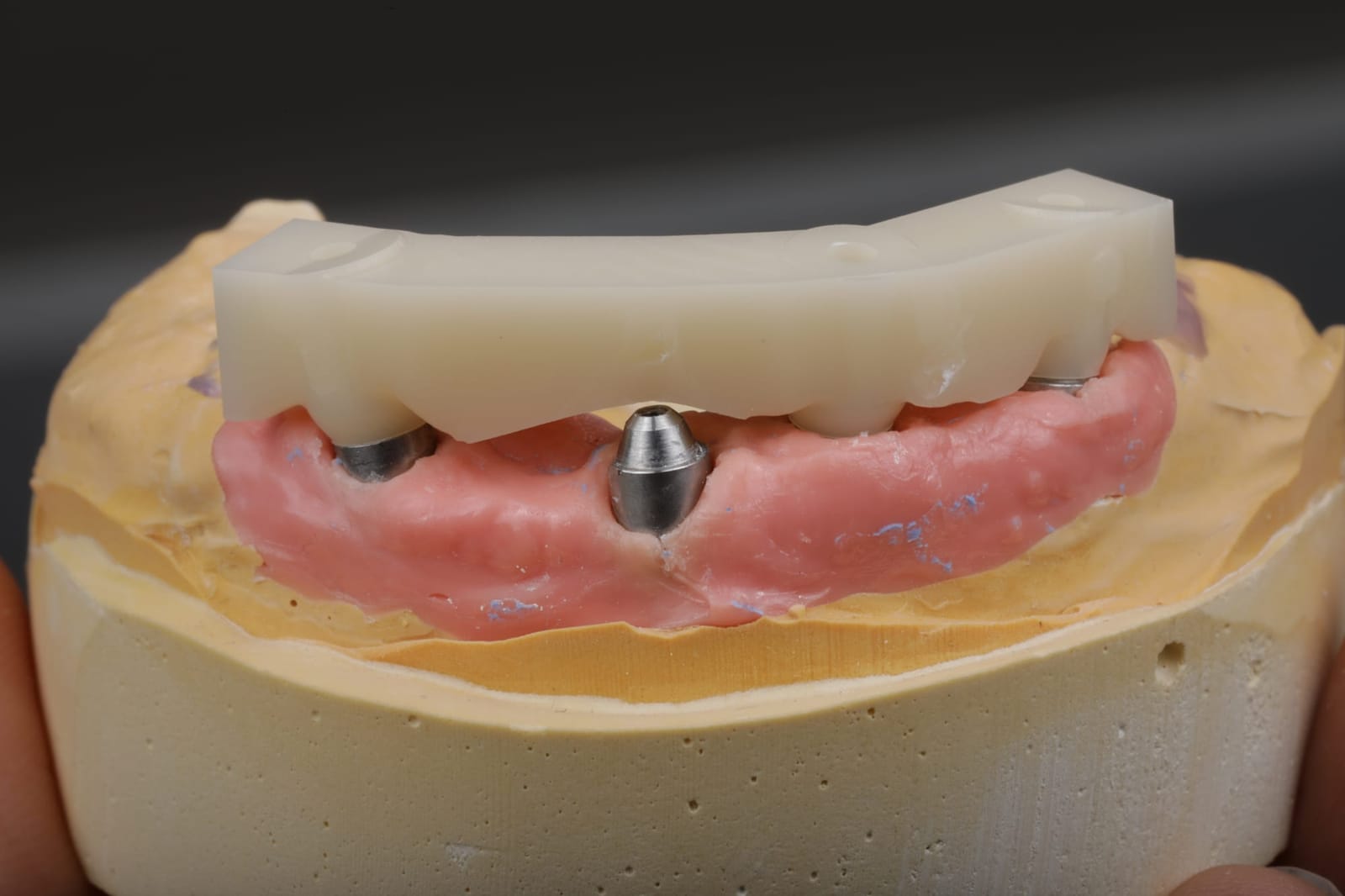
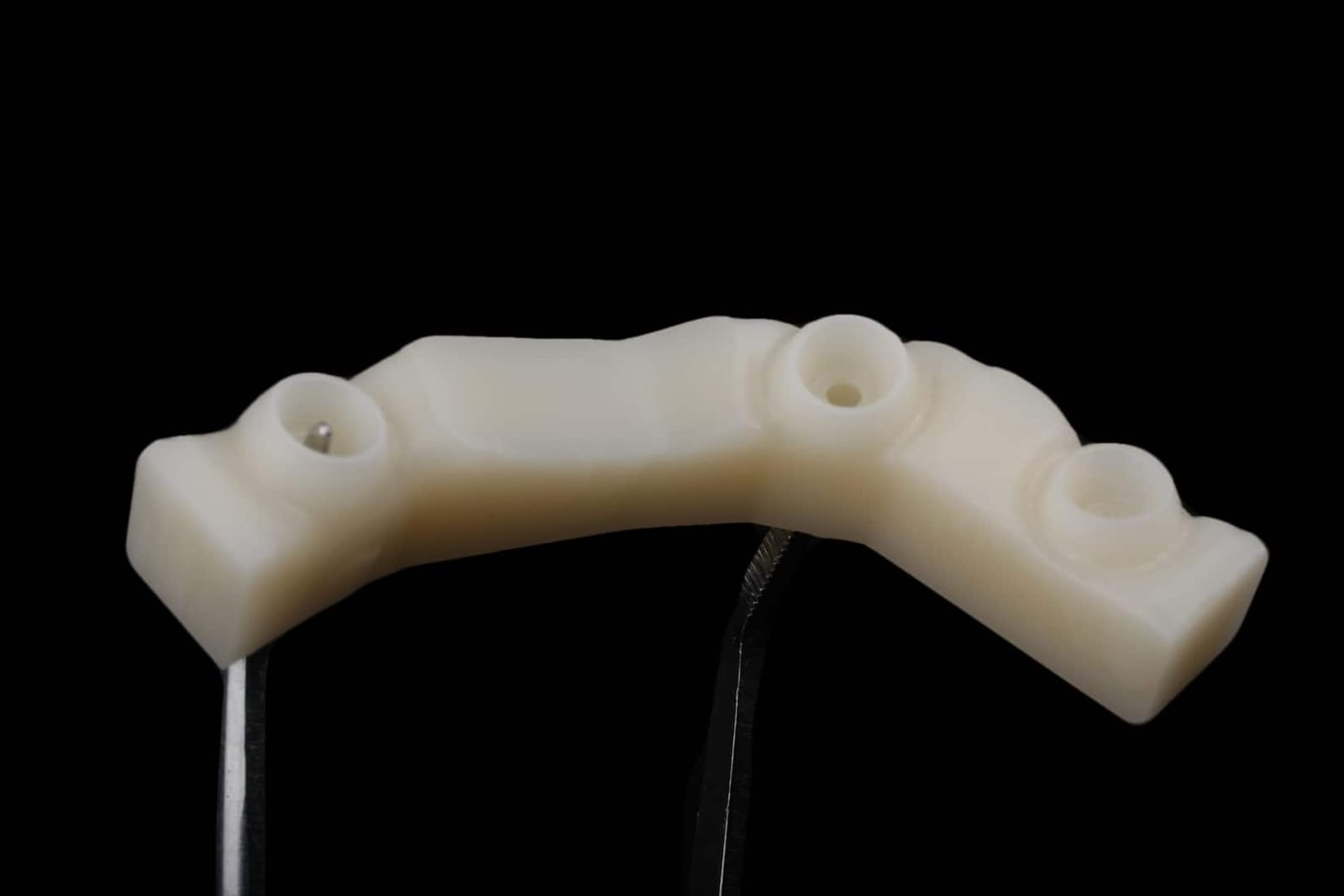
Reaching further back than usual
In her upper jaw, we placed zygomatic and pterygoid implants, anchoring into the cheekbone and the posterior pterygoid bone, to extend the arch of teeth further back. That gave her the support she needed and allowed for the right number of teeth for real chewing, a natural look, and long-term stability.
Skull-based implant dentistry
We started with detailed analysis: understanding her chief complaints, the biological limits we were working within, and a close CT scan that showed us exactly where bone was available, including in the back of the mouth, around the cheek, and further back in the jaw than most plans ever look.
That let us design her new teeth to sit exactly where they needed to be, and then work backward to plan implant placement into those deeper positions, with our surgical and prosthetic team working hand in hand the whole way through.
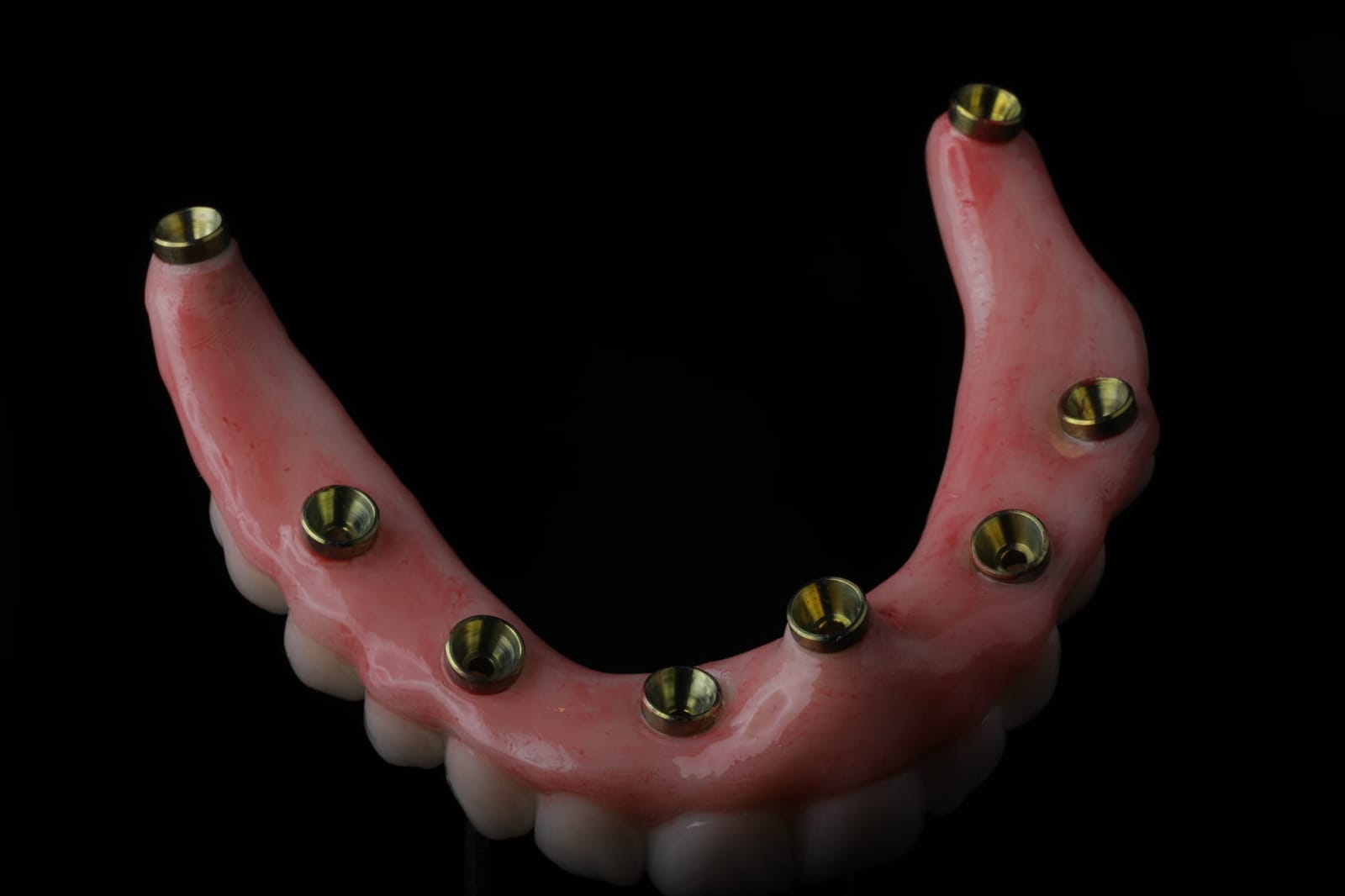
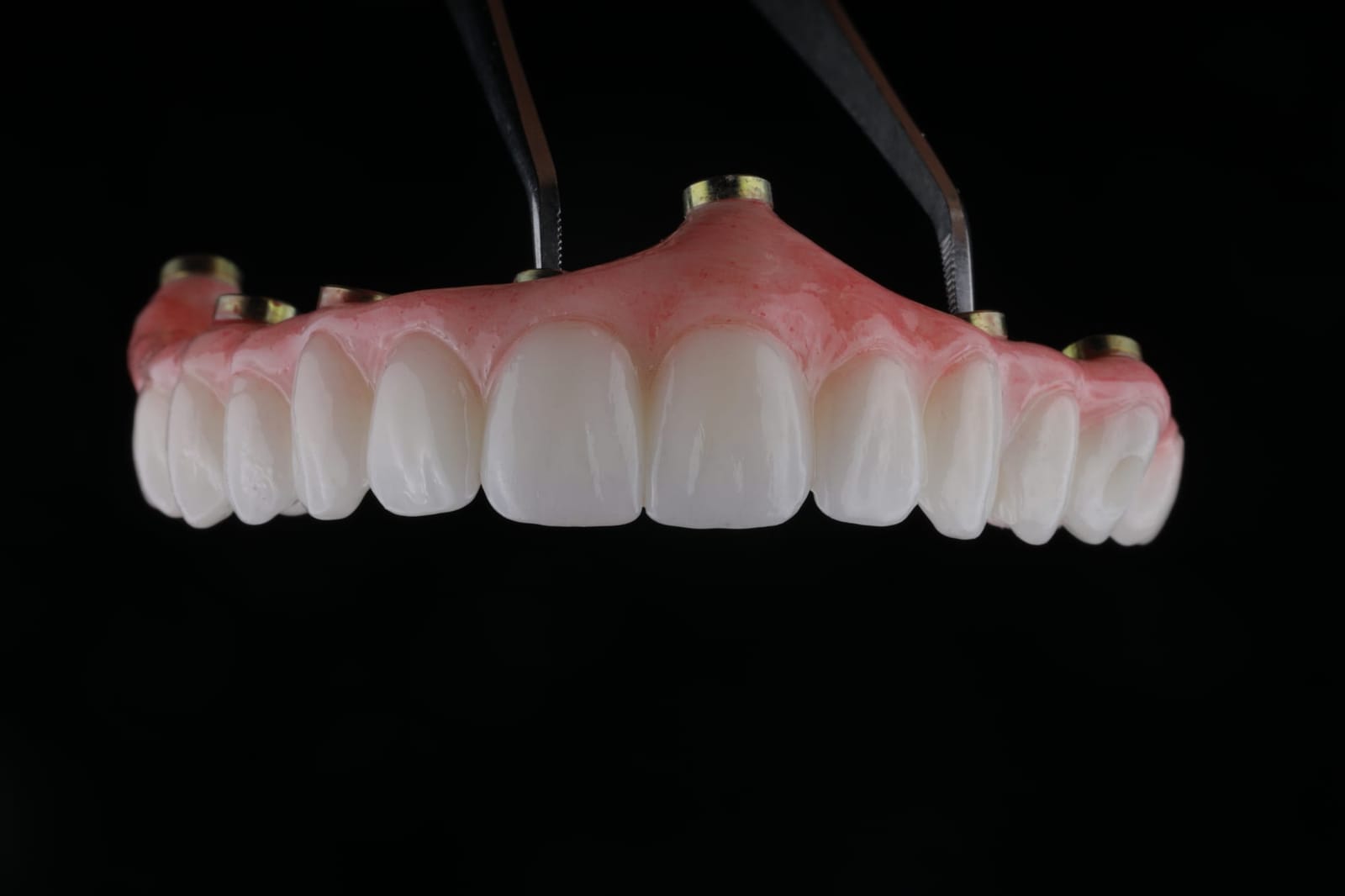
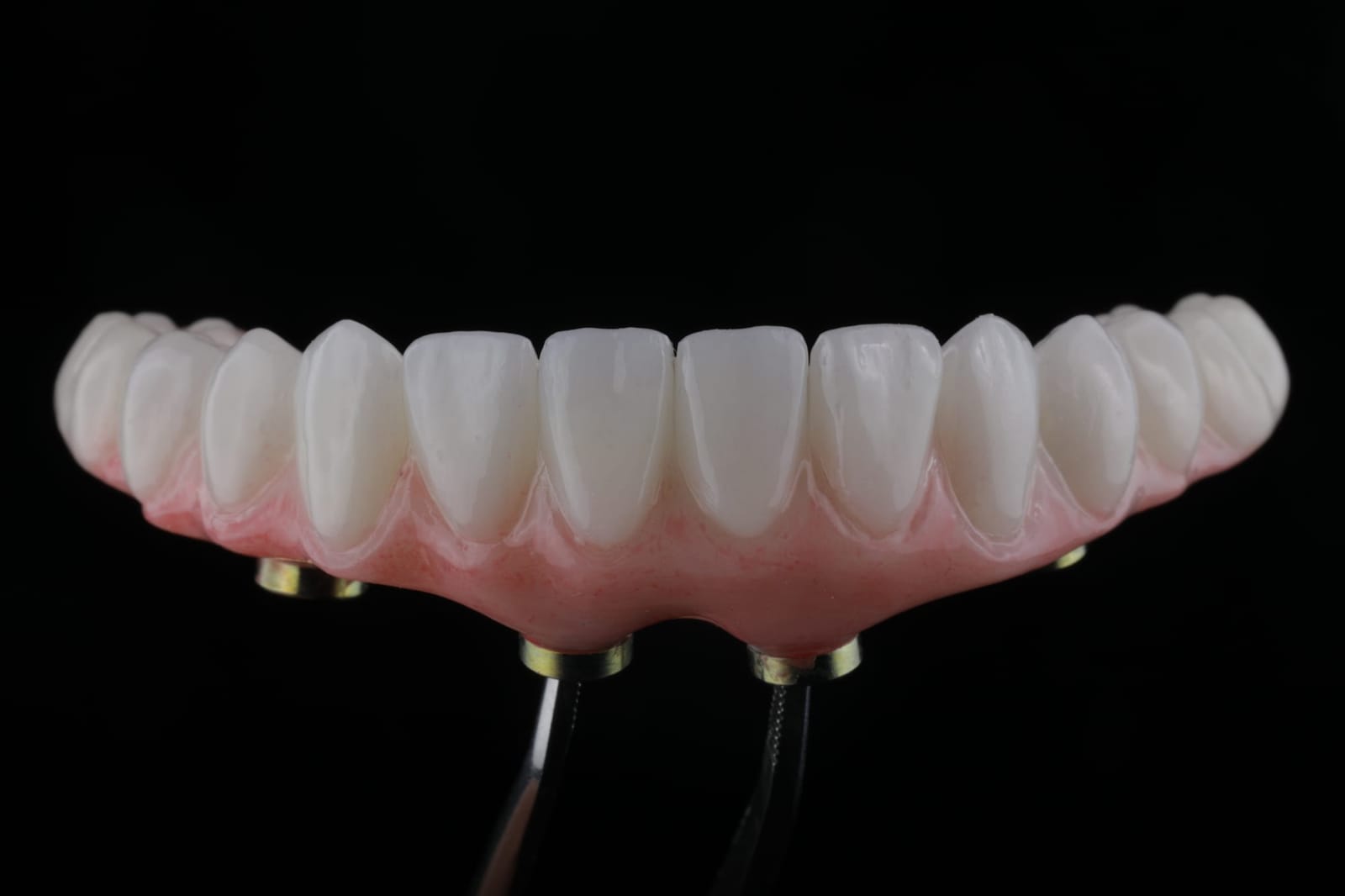
We design the smile before we build anything
The plan always starts with the face, not the teeth. Her facial structure and proportions. Her smile line and lip line. The angle her bite naturally wants to sit at. What she told us she wanted, and what her own anatomy would realistically allow.
Get that part right, and the finished result ends up looking almost exactly like what we designed on day one.
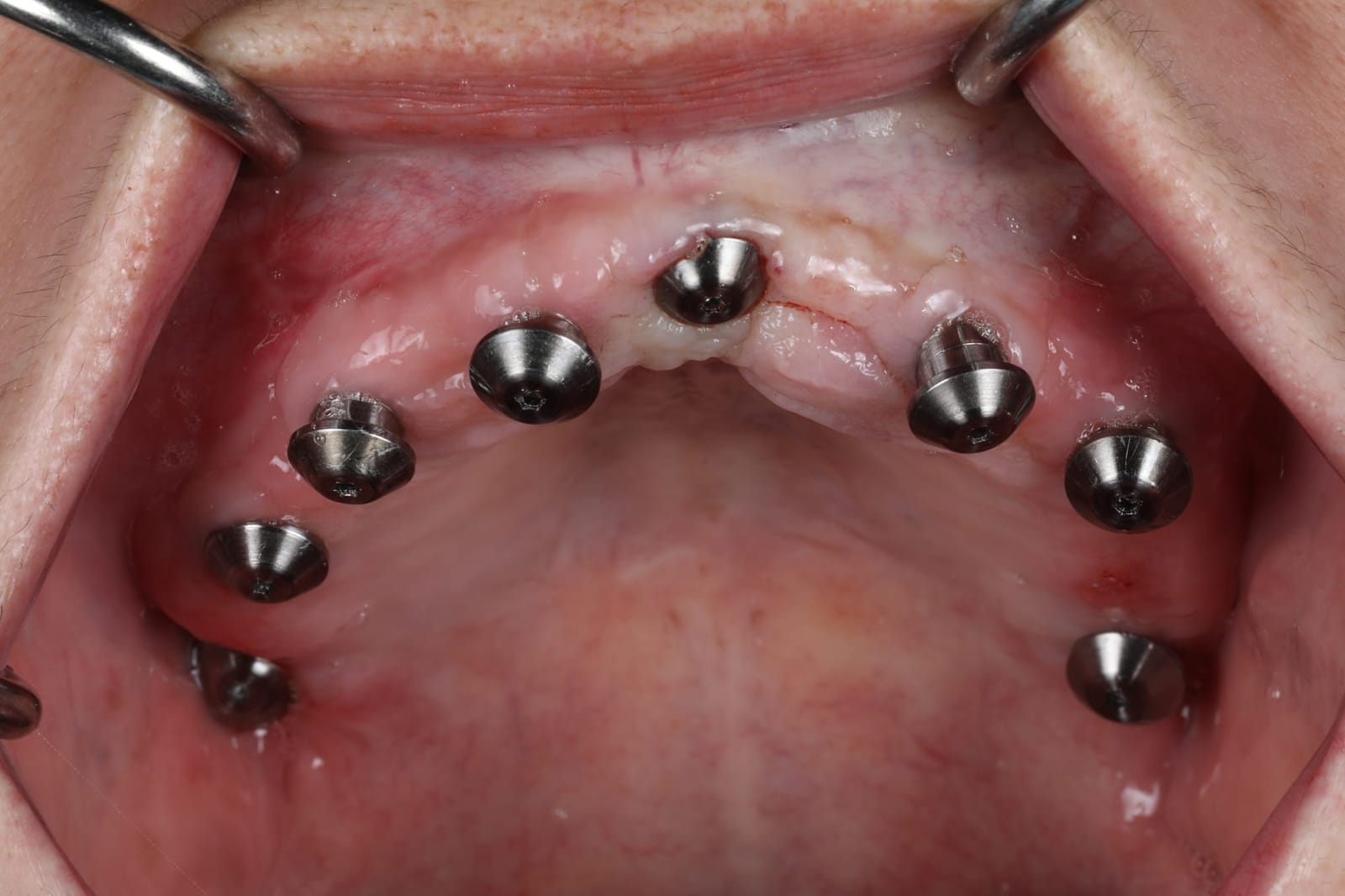
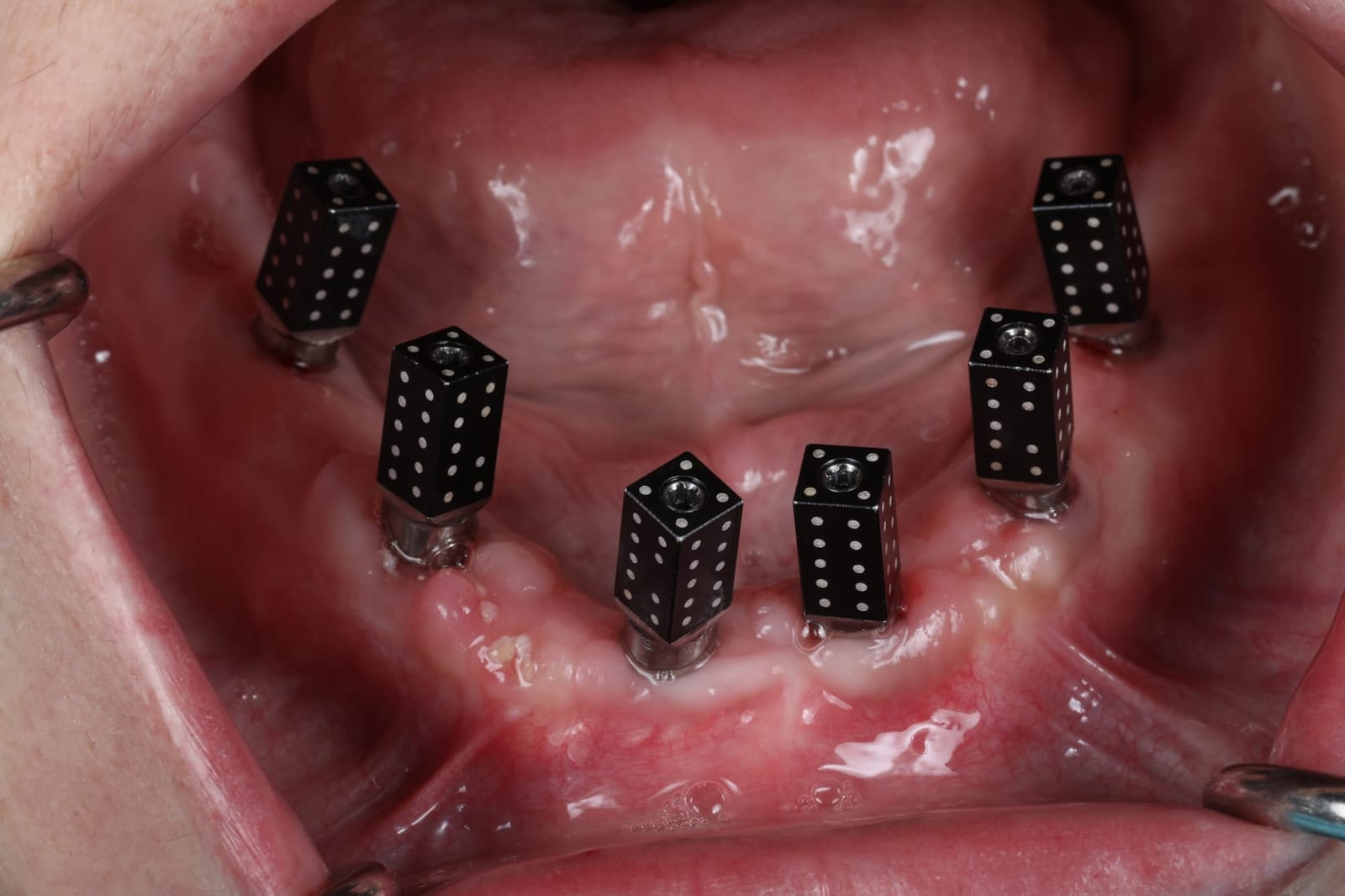
Teeth the same day
She walked out of surgery with a fixed set of teeth already in place. In most cases, this happens within 24 hours, often the same day as surgery itself. She could eat and speak again almost immediately.
That surprises people, and honestly, it should. Loading implants right away only works when you truly understand four things: how much force an implant can handle, how long it holds up, how the implants are distributed across the jaw, and how the teeth on top are designed and reinforced. Done that way, the research backs it up: immediate function performs as well as, or better than, waiting for implants to heal unloaded first.
Four months to make sure, and to change her mind
The temporary phase isn't a waiting room. It's the test drive.
While her implants fused with the bone, she lived with her new teeth. She talked, tested her speech, ate real meals. She saw how they looked in her own face, in her own lighting, over months rather than a single appointment. Her family weighed in on the color, the shape, the overall look.
By the time we built her final restoration, nothing was a guess. She decided she wanted a brighter shade, and we could make that call with total confidence, because it came from four months of living with the result, not four minutes in a chair. That's why the temporary and final teeth look slightly different in the photos. That change was hers to make.
The material choice, backed by data, not a guess
Dr. Reshad isn't only a clinician. He's also an educator and researcher, published in peer-reviewed journals, including a study comparing how different materials hold up in full-mouth reconstruction over time. The chart tells the story.
Her case used the material shown in blue: a titanium framework with a zirconia superstructure, built to his specific design standards. It outperforms the alternatives at five years, and still does at ten.
Knowing which material to use, when, and why, is a huge part of what separates a restoration that lasts a decade from one that doesn't. What's in her mouth today was chosen from data Dr. Reshad collected himself.
her material highlightedfour alternatives shown for comparison, ranked as published
| Framework | Survival · 5 years | Survival · 10 years | Total complications |
|---|---|---|---|
| Ti-bar zirconia | 97.5% | 95.25% | 19% |
| Monolithic zirconia | 97.5% | 95% | 16.5% |
| Layered zirconia | 94% | 89% | 48% |
| CoCr + layered | 93% | 86.5% | 51% |
| Ti-acrylic resin | 87% | 80.6% | 58.5% |
Screw-retained implant-supported fixed prostheses, combined maxilla and mandible, five- and ten-year evidence. From the plate's own summary: zirconia shows the best survival and fewest complications — titanium-bar and monolithic zirconia carry roughly three times fewer complications than acrylic, with no catastrophic framework fracture in titanium-bar and failures always repairable.
Scanned directly, straight into the next phase
Dr. Reshad stays at the leading edge of dental education and digital technology, not for its own sake, but because it's how we deliver care that's genuinely evidence-based: the most comfortable, efficient experience we can give a patient, without ever lowering the bar on the work itself.
Digital scanning is one of those tools. It's fast, it's easy on the patient, and it lets us scan the implants directly and move straight into the next phase, which is exactly what produces a restoration that actually fits.
That level of precision is what lets us walk into the final phase with confidence, knowing the only thing left between us and the aesthetics, form, and function we planned for is fine-tuning.
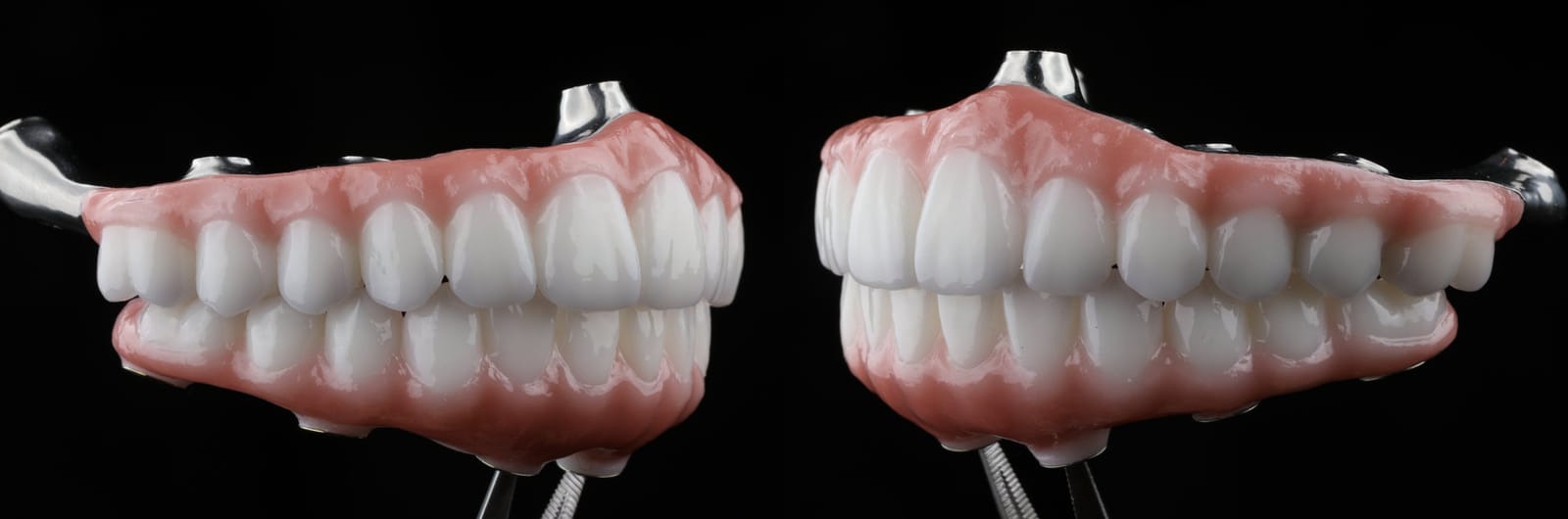
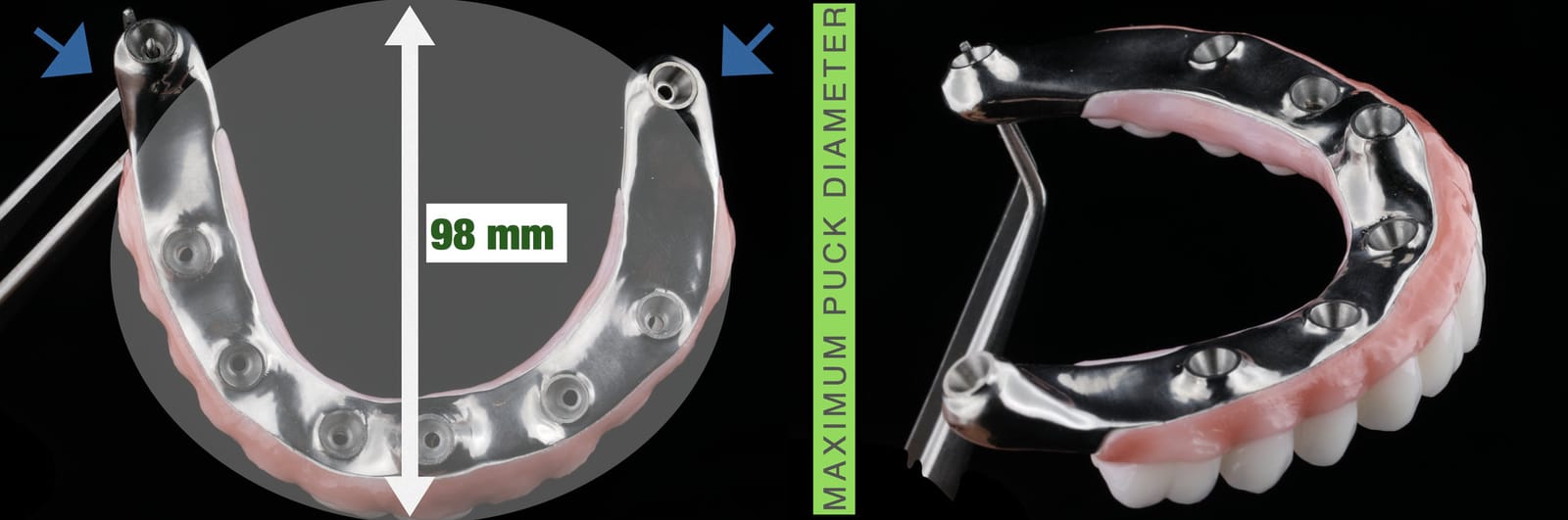
Planned as one connected system
This is the part implant placement alone doesn't cover. We plan the implant positions, the bite relationships, and the occlusion together, so the jaw moves smoothly and comfortably. And because we understand materials at a deep level, the teeth aren't just functional the day they go in: they're built to stay strong and stable for years to come.
Before & After
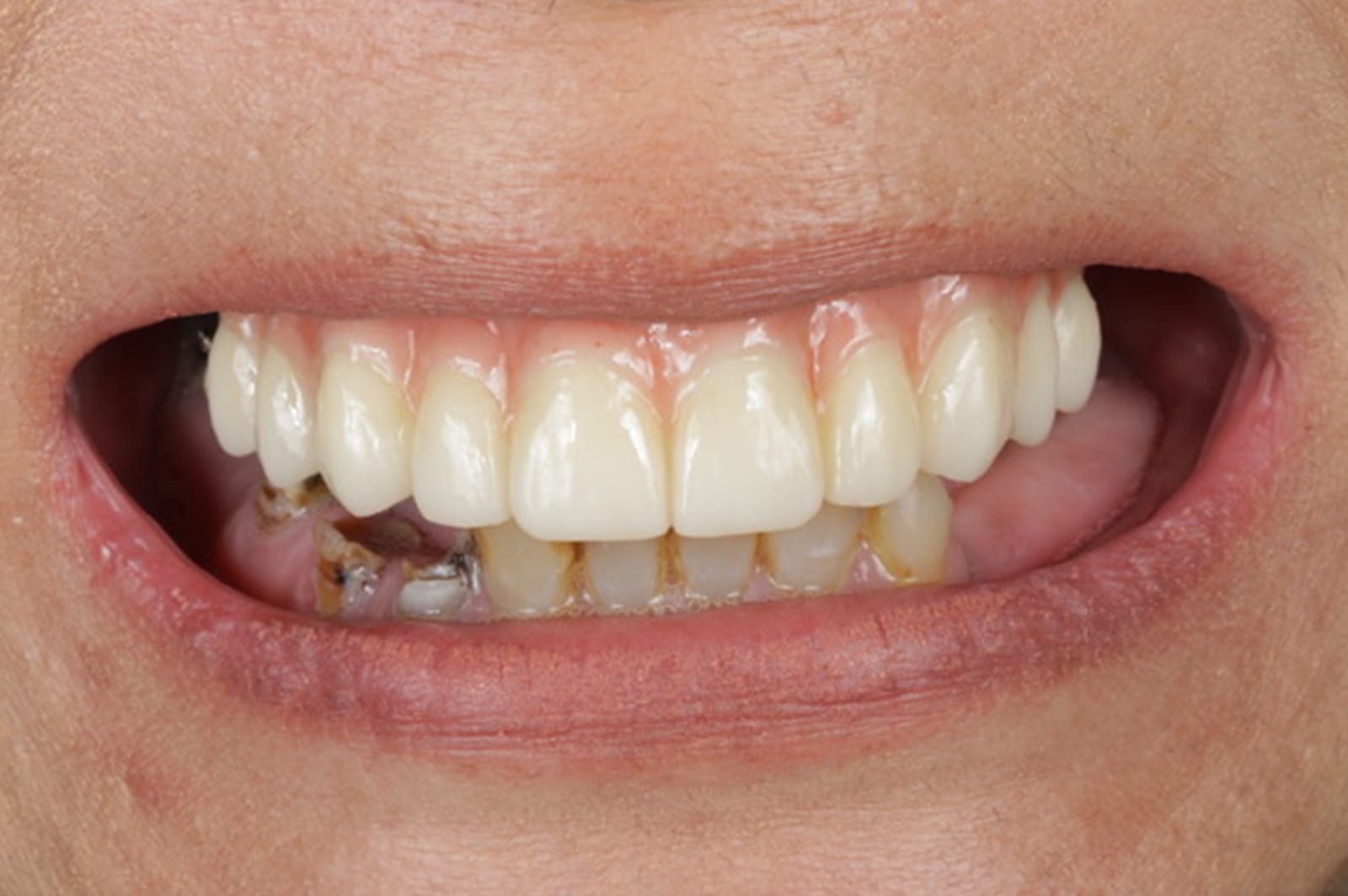
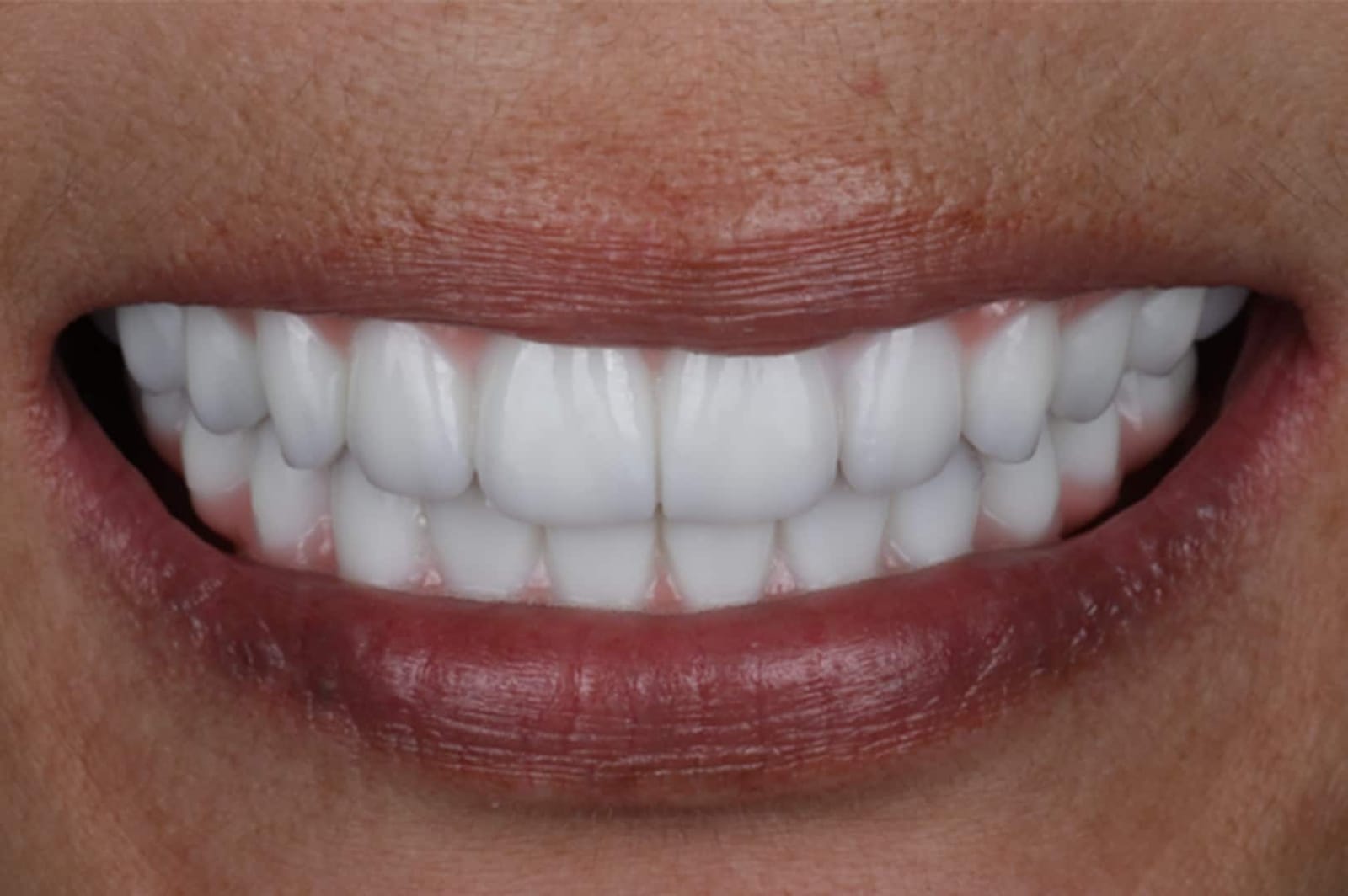
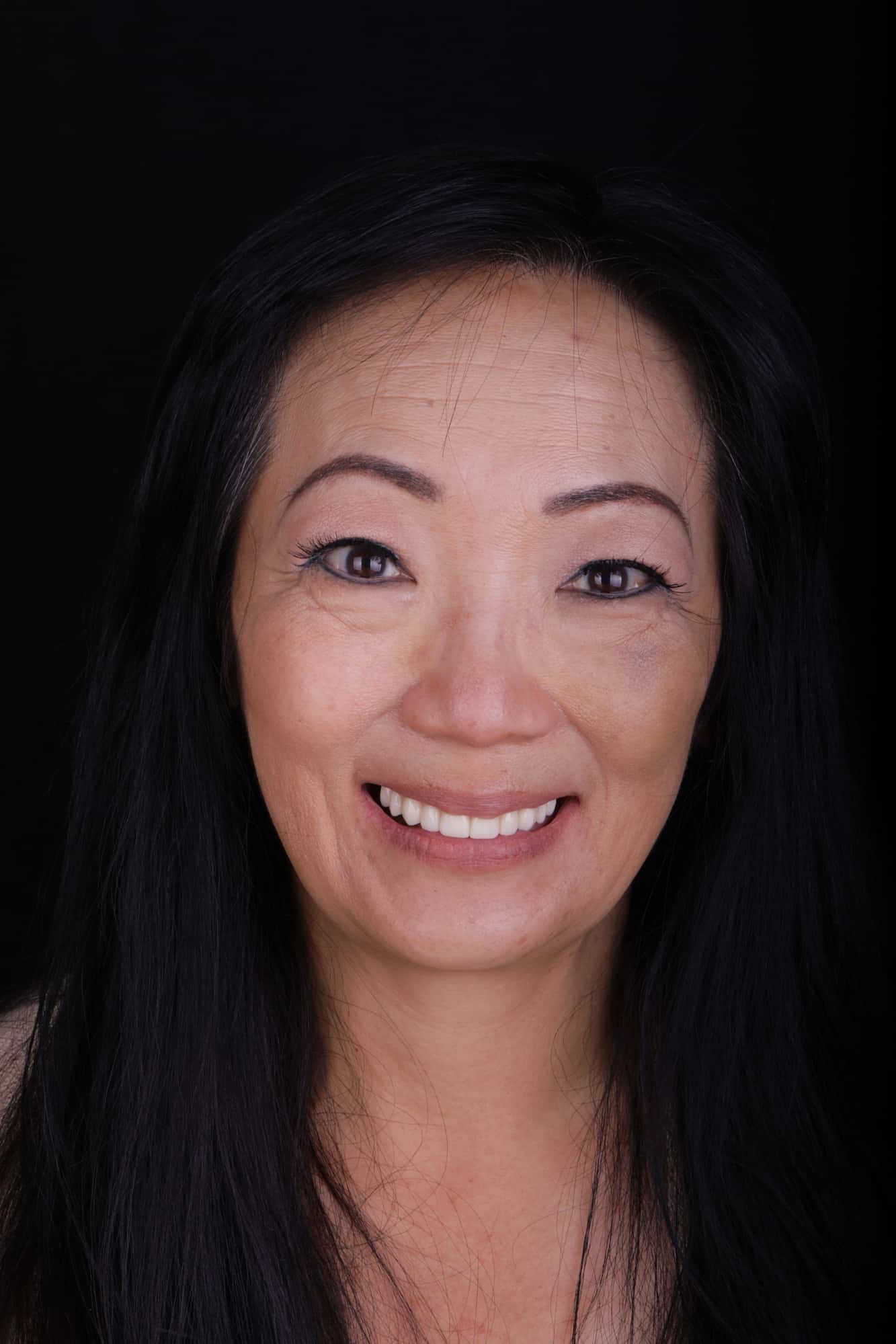
More than treatment: precision, longevity, real rehabilitation
This isn't just a fix. It's precision, longevity, and true oral rehabilitation, built around one person's specific anatomy.
Every case is planned around the individual in front of us. What was right for her may not be right for you, and that's exactly the point.
Every case is planned around one person's anatomy. Individual results vary, and what was right for this patient may not be right for you.